z
Algorithm
classification
z

 Algorithms that use a similar problem-solving approach
can be grouped together
 ‣A classification scheme for algorithms
 Classification is neither exhaustive nor disjoint
 The purpose is not to be able to classify an algorithm
as one type or another, but to highlight the various
ways in which a problem can be attacked
z
A short list of categories
 Algorithm types we will consider include:
 1.Simple recursive algorithms
 2.Backtracking algorithms
 3.Divide and conquer algorithms
 4.Dynamic programming algorithms
 5.Greedy algorithms
 6.Branch and bound algorithms
 7.Brute force algorithms
 8.Randomized algorithms
z
Simple Recursive Algorithms
 A simple recursive algorithm:
 1.Solves the base cases directly
 2.Recurs with a simpler subproblem
 3.Does some extra work to convert the solution to the simpler subproblem
into a solution to the given problem
 These are “simple” because several of the other algorithm types are
inherently recursive
z
Backtracking algorithms
 Uses a depth-first recursive search
 ‣ Test to see if a solution has been found, and if so, returns it;
otherwise
 ‣ For each choice that can be made at this point,
 Make that choice
 Recurse If the recursion returns a solution, return it
 ‣ If no choices remain, return failure
z
Divide and Conquer
 A divide and conquer algorithm consists of two parts:
 ‣ Divide the problem into smaller subproblems of the same type,
and solve these subproblems recursively
 ‣ Combine the solutions to the subproblems into a solution to the
original problem
 Traditionally, an algorithm is only called “divide and conquer” if
it contains at least two recursive calls
z
Examples

 Quicksort:
 ‣Partition the array into two parts (smaller numbers in one part, larger
numbers in the other part)
 ‣Quicksort each of the parts
 ‣No additional work is required to combine the two sorted parts
 Mergesort:
 ‣Cut the array in half, and mergesort each half
 ‣Combine the two sorted arrays into a single sorted array by merging them
z
Dynamic Programming
 A dynamic programming algorithm “remembers” past results and uses them
to find new results
 ‣ Memorization
 Dynamic programming is generally used for optimization problems
 ‣ Multiple solutions exist, need to find the “best” one
 ‣ Requires “optimal substructure” and “overlapping subproblems” •
 Optimal substructure: Optimal solution can be constructed from optimal
solutions to subproblems
 • Overlapping subproblems: Solutions to subproblems can be stored and
reused in a bottom-up fashion
 This differs from Divide and Conquer, where subproblems generally need
not overlap
z
Greedy algorithms

 An optimization problem is one in which you want to find, not just a
solution, but the best solution
 A “greedy algorithm” sometimes works well for optimization
problems
 A greedy algorithm works in phases: At each phase:
 ‣You take the best you can get right now, without regard for future
consequences
 ‣You hope that by choosing a local optimum at each step, you will
end up at a global optimum
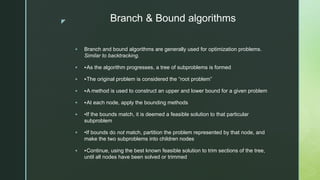
z Branch & Bound algorithms
 Branch and bound algorithms are generally used for optimization problems.
Similar to backtracking.
 ‣As the algorithm progresses, a tree of subproblems is formed
 ‣The original problem is considered the “root problem”
 ‣A method is used to construct an upper and lower bound for a given problem
 ‣At each node, apply the bounding methods
 •If the bounds match, it is deemed a feasible solution to that particular
subproblem
 •If bounds do not match, partition the problem represented by that node, and
make the two subproblems into children nodes
 ‣Continue, using the best known feasible solution to trim sections of the tree,
until all nodes have been solved or trimmed
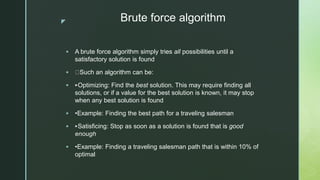
z Brute force algorithm
 A brute force algorithm simply tries all possibilities until a
satisfactory solution is found
 Such an algorithm can be:
 ‣Optimizing: Find the best solution. This may require finding all
solutions, or if a value for the best solution is known, it may stop
when any best solution is found
 •Example: Finding the best path for a traveling salesman
 ‣Satisficing: Stop as soon as a solution is found that is good
enough
 •Example: Finding a traveling salesman path that is within 10% of
optimal
z
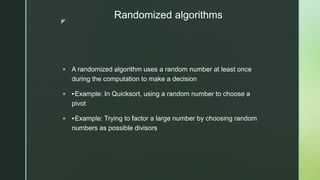
Randomized algorithms
 A randomized algorithm uses a random number at least once
during the computation to make a decision
 ‣Example: In Quicksort, using a random number to choose a
pivot
 ‣Example: Trying to factor a large number by choosing random
numbers as possible divisors
z
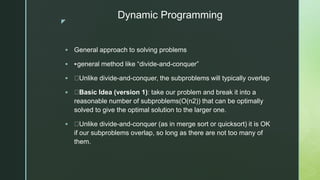
Dynamic Programming
 General approach to solving problems
 ‣general method like “divide-and-conquer”
 Unlike divide-and-conquer, the subproblems will typically overlap
 Basic Idea (version 1): take our problem and break it into a
reasonable number of subproblems(O(n2)) that can be optimally
solved to give the optimal solution to the larger one.
 Unlike divide-and-conquer (as in merge sort or quicksort) it is OK
if our subproblems overlap, so long as there are not too many of
them.
z

algo classification.pptx

  • 1.
  • 2.
    z   Algorithms thatuse a similar problem-solving approach can be grouped together  ‣A classification scheme for algorithms  Classification is neither exhaustive nor disjoint  The purpose is not to be able to classify an algorithm as one type or another, but to highlight the various ways in which a problem can be attacked
  • 3.
    z A short listof categories  Algorithm types we will consider include:  1.Simple recursive algorithms  2.Backtracking algorithms  3.Divide and conquer algorithms  4.Dynamic programming algorithms  5.Greedy algorithms  6.Branch and bound algorithms  7.Brute force algorithms  8.Randomized algorithms
  • 4.
    z Simple Recursive Algorithms A simple recursive algorithm:  1.Solves the base cases directly  2.Recurs with a simpler subproblem  3.Does some extra work to convert the solution to the simpler subproblem into a solution to the given problem  These are “simple” because several of the other algorithm types are inherently recursive
  • 5.
    z Backtracking algorithms  Usesa depth-first recursive search  ‣ Test to see if a solution has been found, and if so, returns it; otherwise  ‣ For each choice that can be made at this point,  Make that choice  Recurse If the recursion returns a solution, return it  ‣ If no choices remain, return failure
  • 6.
    z Divide and Conquer A divide and conquer algorithm consists of two parts:  ‣ Divide the problem into smaller subproblems of the same type, and solve these subproblems recursively  ‣ Combine the solutions to the subproblems into a solution to the original problem  Traditionally, an algorithm is only called “divide and conquer” if it contains at least two recursive calls
  • 7.
    z Examples   Quicksort:  ‣Partitionthe array into two parts (smaller numbers in one part, larger numbers in the other part)  ‣Quicksort each of the parts  ‣No additional work is required to combine the two sorted parts  Mergesort:  ‣Cut the array in half, and mergesort each half  ‣Combine the two sorted arrays into a single sorted array by merging them
  • 8.
    z Dynamic Programming  Adynamic programming algorithm “remembers” past results and uses them to find new results  ‣ Memorization  Dynamic programming is generally used for optimization problems  ‣ Multiple solutions exist, need to find the “best” one  ‣ Requires “optimal substructure” and “overlapping subproblems” •  Optimal substructure: Optimal solution can be constructed from optimal solutions to subproblems  • Overlapping subproblems: Solutions to subproblems can be stored and reused in a bottom-up fashion  This differs from Divide and Conquer, where subproblems generally need not overlap
  • 9.
    z Greedy algorithms   Anoptimization problem is one in which you want to find, not just a solution, but the best solution  A “greedy algorithm” sometimes works well for optimization problems  A greedy algorithm works in phases: At each phase:  ‣You take the best you can get right now, without regard for future consequences  ‣You hope that by choosing a local optimum at each step, you will end up at a global optimum
  • 10.
    z Branch &Bound algorithms  Branch and bound algorithms are generally used for optimization problems. Similar to backtracking.  ‣As the algorithm progresses, a tree of subproblems is formed  ‣The original problem is considered the “root problem”  ‣A method is used to construct an upper and lower bound for a given problem  ‣At each node, apply the bounding methods  •If the bounds match, it is deemed a feasible solution to that particular subproblem  •If bounds do not match, partition the problem represented by that node, and make the two subproblems into children nodes  ‣Continue, using the best known feasible solution to trim sections of the tree, until all nodes have been solved or trimmed
  • 11.
    z Brute forcealgorithm  A brute force algorithm simply tries all possibilities until a satisfactory solution is found  Such an algorithm can be:  ‣Optimizing: Find the best solution. This may require finding all solutions, or if a value for the best solution is known, it may stop when any best solution is found  •Example: Finding the best path for a traveling salesman  ‣Satisficing: Stop as soon as a solution is found that is good enough  •Example: Finding a traveling salesman path that is within 10% of optimal
  • 12.
    z Randomized algorithms  Arandomized algorithm uses a random number at least once during the computation to make a decision  ‣Example: In Quicksort, using a random number to choose a pivot  ‣Example: Trying to factor a large number by choosing random numbers as possible divisors
  • 13.
    z Dynamic Programming  Generalapproach to solving problems  ‣general method like “divide-and-conquer”  Unlike divide-and-conquer, the subproblems will typically overlap  Basic Idea (version 1): take our problem and break it into a reasonable number of subproblems(O(n2)) that can be optimally solved to give the optimal solution to the larger one.  Unlike divide-and-conquer (as in merge sort or quicksort) it is OK if our subproblems overlap, so long as there are not too many of them.
  • 14.