THREE LENSES FOR UNDERSTANDING CHANGE 
AIMS COMMUNITY COLLEGE FALL CONVOCATION 
AUGUST 14, 2014 
Eric Meade 
@ericmeade 
www.ericmeade.com 
ericmeade@gmail.com
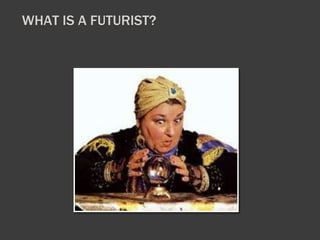
WHAT IS A FUTURIST?
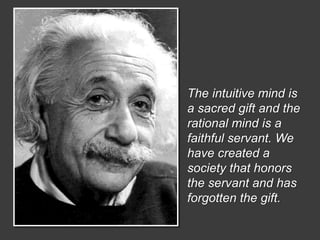
The intuitive mind is 
a sacred gift and the 
rational mind is a 
faithful servant. We 
have created a 
society that honors 
the servant and has 
forgotten the gift.
THREE LENSES 
• Linear 
• Systems 
• Complex
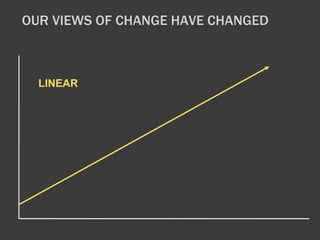
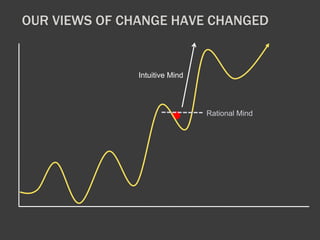
OUR VIEWS OF CHANGE HAVE CHANGED 
LINEAR
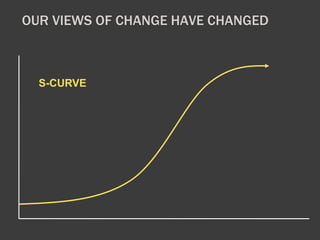
OUR VIEWS OF CHANGE HAVE CHANGED 
S-CURVE
OUR VIEWS OF CHANGE HAVE CHANGED 
Rational Mind 
Intuitive Mind
Three Lenses for Understanding Change 
LINEAR CHANGE AT AIMS CC: 
A 50-YEAR CASE STUDY
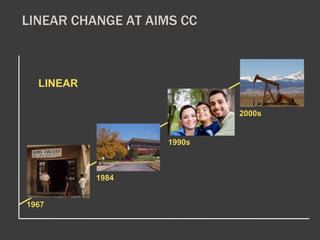
LINEAR CHANGE AT AIMS CC 
LINEAR 
1967 
1984 
1990s 
2000s
QUESTIONS FOR YOU 
• What trends have you seen over the last 50 
years at Aims CC? 
• Which of these trends do you expect to continue 
in the years ahead? 
• Based on that, what do you think is likely to be 
true of Aims CC in 2030?
Three Lenses for Understanding Change 
SYSTEMS CHANGE IN EDUCATION: 
A 500-YEAR CASE STUDY
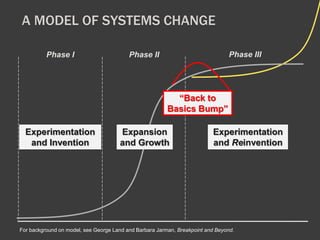
A MODEL OF SYSTEMS CHANGE 
Phase I Phase II Phase III 
Experimentation 
and Invention 
“Back to 
Basics Bump” 
Experimentation 
and Reinvention 
Expansion 
and Growth 
For background on model, see George Land and Barbara Jarman, Breakpoint and Beyond.
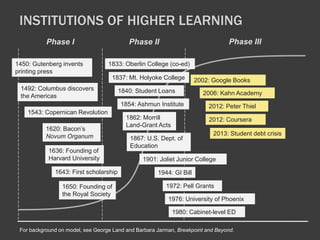
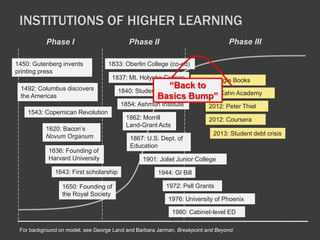
INSTITUTIONS OF HIGHER LEARNING 
Phase I Phase II Phase III 
1450: Gutenberg invents 
printing press 
1492: Columbus discovers 
the Americas 
1543: Copernican Revolution 
1620: Bacon’s 
Novum Organum 
1833: Oberlin College (co-ed) 
1837: Mt. Holyoke College 
1636: Founding of 
Harvard University 
1643: First scholarship 
1650: Founding of 
the Royal Society 
1840: Student Loans 
1854: Ashmun Institute 
1862: Morrill 
Land-Grant Acts 
1867: U.S. Dept. of 
Education 
2002: Google Books 
2006: Kahn Academy 
2012: Peter Thiel 
2012: Coursera 
2013: Student debt crisis 
1901: Joliet Junior College 
1944: GI Bill 
1972: Pell Grants 
1976: University of Phoenix 
1980: Cabinet-level ED 
For background on model, see George Land and Barbara Jarman, Breakpoint and Beyond.
INSTITUTIONS OF HIGHER LEARNING 
Phase I Phase II Phase III 
1450: Gutenberg invents 
printing press 
1492: Columbus discovers 
the Americas 
1543: Copernican Revolution 
1620: Bacon’s 
Novum Organum 
1833: Oberlin College (co-ed) 
1837: Mt. Holyoke College 
1636: Founding of 
Harvard University 
1643: First scholarship 
1650: Founding of 
the Royal Society 
“Back to 
1840: Student Loans 
Basics Bump” 
1854: Ashmun Institute 
1862: Morrill 
Land-Grant Acts 
1867: U.S. Dept. of 
Education 
2002: Google Books 
2006: Kahn Academy 
2012: Peter Thiel 
2012: Coursera 
2013: Student debt crisis 
1901: Joliet Junior College 
1944: GI Bill 
1972: Pell Grants 
1976: University of Phoenix 
1980: Cabinet-level ED 
For background on model, see George Land and Barbara Jarman, Breakpoint and Beyond.
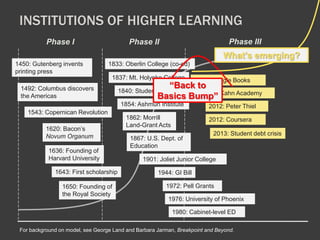
INSTITUTIONS OF HIGHER LEARNING 
Phase I Phase II Phase III 
1450: Gutenberg invents 
printing press 
1492: Columbus discovers 
the Americas 
1543: Copernican Revolution 
1620: Bacon’s 
Novum Organum 
1833: Oberlin College (co-ed) 
1837: Mt. Holyoke College 
1636: Founding of 
Harvard University 
1643: First scholarship 
1650: Founding of 
the Royal Society 
“Back to 
1840: Student Loans 
Basics Bump” 
1854: Ashmun Institute 
1862: Morrill 
Land-Grant Acts 
1867: U.S. Dept. of 
Education 
What’s emerging? 
2002: Google Books 
2006: Kahn Academy 
2012: Peter Thiel 
2012: Coursera 
2013: Student debt crisis 
1901: Joliet Junior College 
1944: GI Bill 
1972: Pell Grants 
1976: University of Phoenix 
1980: Cabinet-level ED 
For background on model, see George Land and Barbara Jarman, Breakpoint and Beyond.
QUESTIONS FOR YOU 
• Based on this discussion, what do you think is 
likely to be true of institutions of higher learning 
in 2030? 
• What are the implications of this future for Aims 
CC?
Three Lenses for Understanding Change 
COMPLEX SYSTEMS CHANGE: 
A 5,000-YEAR CASE STUDY
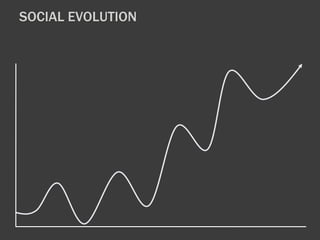
SOCIAL EVOLUTION
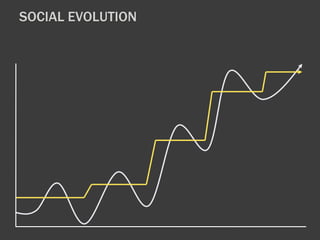
SOCIAL EVOLUTION
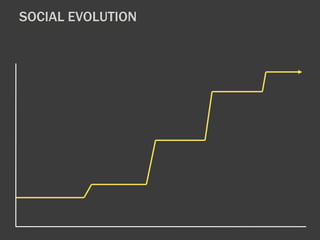
SOCIAL EVOLUTION
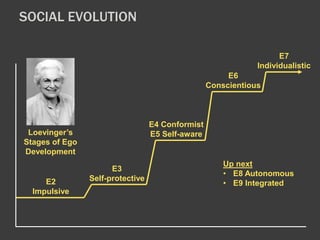
SOCIAL EVOLUTION 
E2 
Impulsive 
E3 
Self-protective 
E4 Conformist 
E5 Self-aware 
E6 
Conscientious 
E7 
Individualistic 
Up next 
• E8 Autonomous 
• E9 Integrated 
Loevinger’s 
Stages of Ego 
Development
Stage Description 
Integrated Maslow's self-actualizing person 
LOEVINGER’S EGO STAGES 
Autonomous "recognition of other people's need for autonomy... a deepened 
respect for other people and their need to find their own way and 
even make their own mistakes" 
Individualistic "There is a greater tolerance for individual differences... [and] the 
concept of people as having and being different in different roles." 
Conscientious "... recognition of multiple possibilities in situations leads to a sense 
of choice; decisions are made for reasons. The person strives for 
goals, tries to live up to ideas, and to improve the self." 
Self-aware "The person has become aware that not everyone, including his or 
her own self, conforms perfectly all the time to the characteristics 
that stereotypes seem to demand." 
Conformist "Rules are accepted just because they are the rules... There is a 
right way and a wrong way, and it is the same for everybody all the 
time, or at least for broad classes of people described in 
demographic terms." 
Self-protective "... more or less opportunistic hedonism; they lack long-term goals 
and ideals. They want immediate gratification and, if they can, will 
exploit others for their ends." 
Impulsive "... physical needs and impulses, dependent on others for control. 
There is little sense of causation. Rules are poorly understood."
Stage Description 
Integrated Maslow's self-actualizing person 
LOEVINGER’S EGO STAGES 
Autonomous "recognition of other people's need for autonomy... a deepened 
respect for other people and their need to find their own way and 
even make their own mistakes" 
Individualistic "There is a greater tolerance for individual differences... [and] the 
concept of people as having and being different in different roles." 
Conscientious "... recognition of multiple possibilities in situations leads to a sense 
of choice; decisions are made for reasons. The person strives for 
goals, tries to live up to ideas, and to improve the self." 
Self-aware "The person has become aware that not everyone, including his or 
her own self, conforms perfectly all the time to the characteristics 
that stereotypes seem to demand." 
Conformist "Rules are accepted just because they are the rules... There is a 
right way and a wrong way, and it is the same for everybody all the 
time, or at least for broad classes of people described in 
demographic terms." 
Self-protective "... more or less opportunistic hedonism; they lack long-term goals 
and ideals. They want immediate gratification and, if they can, will 
exploit others for their ends." 
Impulsive "... physical needs and impulses, dependent on others for control. 
There is little sense of causation. Rules are poorly understood."
Stage Description 
Integrated Maslow's self-actualizing person 
LOEVINGER’S EGO STAGES 
Autonomous "recognition of other people's need for autonomy... a deepened 
respect for other people and their need to find their own way and 
even make their own mistakes" 
Individualistic "There is a greater tolerance for individual differences... [and] the 
concept of people as having and being different in different roles." 
Conscientious "... recognition of multiple possibilities in situations leads to a sense 
of choice; decisions are made for reasons. The person strives for 
goals, tries to live up to ideas, and to improve the self." 
Self-aware "The person has become aware that not everyone, including his or 
her own self, conforms perfectly all the time to the characteristics 
that stereotypes seem to demand." 
Conformist "Rules are accepted just because they are the rules... There is a 
right way and a wrong way, and it is the same for everybody all the 
time, or at least for broad classes of people described in 
demographic terms." 
Self-protective "... more or less opportunistic hedonism; they lack long-term goals 
and ideals. They want immediate gratification and, if they can, will 
exploit others for their ends." 
Impulsive "... physical needs and impulses, dependent on others for control. 
There is little sense of causation. Rules are poorly understood."
Stage Description 
Integrated Maslow's self-actualizing person 
LOEVINGER’S EGO STAGES 
Autonomous "recognition of other people's need for autonomy... a deepened 
respect for other people and their need to find their own way and 
even make their own mistakes" 
Individualistic "There is a greater tolerance for individual differences... [and] the 
concept of people as having and being different in different roles." 
Conscientious "... recognition of multiple possibilities in situations leads to a sense 
of choice; decisions are made for reasons. The person strives for 
goals, tries to live up to ideas, and to improve the self." 
Self-aware "The person has become aware that not everyone, including his or 
her own self, conforms perfectly all the time to the characteristics 
that stereotypes seem to demand." 
Conformist "Rules are accepted just because they are the rules... There is a 
right way and a wrong way, and it is the same for everybody all the 
time, or at least for broad classes of people described in 
demographic terms." 
Self-protective "... more or less opportunistic hedonism; they lack long-term goals 
and ideals. They want immediate gratification and, if they can, will 
exploit others for their ends." 
Impulsive "... physical needs and impulses, dependent on others for control. 
There is little sense of causation. Rules are poorly understood."
Stage Description 
Integrated Maslow's self-actualizing person 
LOEVINGER’S EGO STAGES 
Autonomous "recognition of other people's need for autonomy... a deepened 
respect for other people and their need to find their own way and 
even make their own mistakes" 
Individualistic "There is a greater tolerance for individual differences... [and] the 
concept of people as having and being different in different roles." 
Conscientious "... recognition of multiple possibilities in situations leads to a sense 
of choice; decisions are made for reasons. The person strives for 
goals, tries to live up to ideas, and to improve the self." 
Self-aware "The person has become aware that not everyone, including his or 
her own self, conforms perfectly all the time to the characteristics 
that stereotypes seem to demand." 
Conformist "Rules are accepted just because they are the rules... There is a 
right way and a wrong way, and it is the same for everybody all the 
time, or at least for broad classes of people described in 
demographic terms." 
Self-protective "... more or less opportunistic hedonism; they lack long-term goals 
and ideals. They want immediate gratification and, if they can, will 
exploit others for their ends." 
Impulsive "... physical needs and impulses, dependent on others for control. 
There is little sense of causation. Rules are poorly understood."
Stage Description 
Integrated Maslow's self-actualizing person 
LOEVINGER’S EGO STAGES 
Autonomous "recognition of other people's need for autonomy... a deepened 
respect for other people and their need to find their own way and 
even make their own mistakes" 
Individualistic "There is a greater tolerance for individual differences... [and] the 
concept of people as having and being different in different roles." 
Conscientious "... recognition of multiple possibilities in situations leads to a sense 
of choice; decisions are made for reasons. The person strives for 
goals, tries to live up to ideas, and to improve the self." 
Self-aware "The person has become aware that not everyone, including his or 
her own self, conforms perfectly all the time to the characteristics 
that stereotypes seem to demand." 
Conformist "Rules are accepted just because they are the rules... There is a 
right way and a wrong way, and it is the same for everybody all the 
time, or at least for broad classes of people described in 
demographic terms." 
Self-protective "... more or less opportunistic hedonism; they lack long-term goals 
and ideals. They want immediate gratification and, if they can, will 
exploit others for their ends." 
Impulsive "... physical needs and impulses, dependent on others for control. 
There is little sense of causation. Rules are poorly understood."
Stage Description 
Integrated Maslow's self-actualizing person 
LOEVINGER’S EGO STAGES 
Autonomous "recognition of other people's need for autonomy... a deepened 
respect for other people and their need to find their own way and 
even make their own mistakes" 
Individualistic "There is a greater tolerance for individual differences... [and] the 
concept of people as having and being different in different roles." 
Conscientious "... recognition of multiple possibilities in situations leads to a sense 
of choice; decisions are made for reasons. The person strives for 
goals, tries to live up to ideas, and to improve the self." 
Self-aware "The person has become aware that not everyone, including his or 
her own self, conforms perfectly all the time to the characteristics 
that stereotypes seem to demand." 
Conformist "Rules are accepted just because they are the rules... There is a 
right way and a wrong way, and it is the same for everybody all the 
time, or at least for broad classes of people described in 
demographic terms." 
Self-protective "... more or less opportunistic hedonism; they lack long-term goals 
and ideals. They want immediate gratification and, if they can, will 
exploit others for their ends." 
Impulsive "... physical needs and impulses, dependent on others for control. 
There is little sense of causation. Rules are poorly understood."
Stage Description 
Integrated Maslow's self-actualizing person 
LOEVINGER’S EGO STAGES 
Autonomous "recognition of other people's need for autonomy... a deepened 
respect for other people and their need to find their own way and 
even make their own mistakes" 
Individualistic "There is a greater tolerance for individual differences... [and] the 
concept of people as having and being different in different roles." 
Conscientious "... recognition of multiple possibilities in situations leads to a sense 
of choice; decisions are made for reasons. The person strives for 
goals, tries to live up to ideas, and to improve the self." 
Self-aware "The person has become aware that not everyone, including his or 
her own self, conforms perfectly all the time to the characteristics 
that stereotypes seem to demand." 
Conformist "Rules are accepted just because they are the rules... There is a 
right way and a wrong way, and it is the same for everybody all the 
time, or at least for broad classes of people described in 
demographic terms." 
Self-protective "... more or less opportunistic hedonism; they lack long-term goals 
and ideals. They want immediate gratification and, if they can, will 
exploit others for their ends." 
Impulsive "... physical needs and impulses, dependent on others for control. 
There is little sense of causation. Rules are poorly understood."
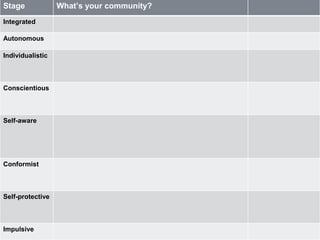
Stage What’s your community? 
Integrated 
LOEVINGER’S EGO STAGES 
Autonomous 
Individualistic 
Conscientious 
Self-aware 
Conformist 
Self-protective 
Impulsive
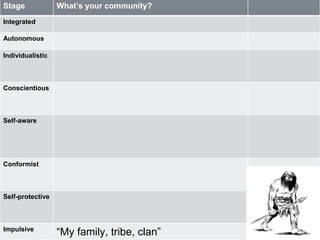
Stage What’s your community? 
Integrated 
LOEVINGER’S EGO STAGES 
Autonomous 
Individualistic 
Conscientious 
Self-aware 
Conformist 
Self-protective 
Impulsive “My family, tribe, clan”
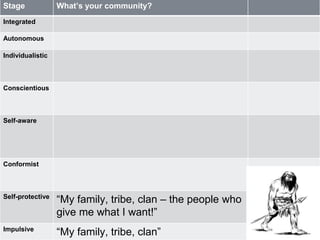
Stage What’s your community? 
Integrated 
Autonomous 
Individualistic 
Conscientious 
Self-aware 
Conformist 
Self-protective “My family, tribe, clan – the people who 
give me what I want!” 
Impulsive “My family, tribe, clan”
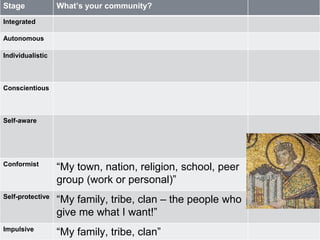
Stage What’s your community? 
Integrated 
Autonomous 
Individualistic 
Conscientious 
Self-aware 
Conformist “My town, nation, religion, school, peer 
group (work or personal)” 
Self-protective “My family, tribe, clan – the people who 
give me what I want!” 
Impulsive “My family, tribe, clan”
Stage What’s your community? 
Integrated 
Autonomous 
Individualistic 
Conscientious 
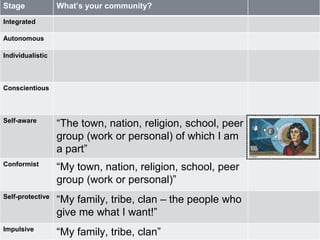
Self-aware “The town, nation, religion, school, peer 
group (work or personal) of which I am 
a part” 
Conformist “My town, nation, religion, school, peer 
group (work or personal)” 
Self-protective “My family, tribe, clan – the people who 
give me what I want!” 
Impulsive “My family, tribe, clan”
Stage What’s your community? 
Integrated 
Autonomous 
Individualistic 
Conscientious “People who are as successful as I am 
and share my motivations” 
Self-aware “The town, nation, religion, school, peer 
group (work or personal) of which I am 
a part” 
Conformist “My town, nation, religion, school, peer 
group (work or personal)” 
Self-protective “My family, tribe, clan – the people who 
give me what I want!” 
Impulsive “My family, tribe, clan”
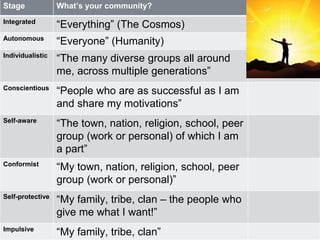
Stage What’s your community? 
Integrated 
Autonomous 
Individualistic “The many diverse groups all around 
me, across multiple generations” 
Conscientious “People who are as successful as I am 
and share my motivations” 
Self-aware “The town, nation, religion, school, peer 
group (work or personal) of which I am 
a part” 
Conformist “My town, nation, religion, school, peer 
group (work or personal)” 
Self-protective “My family, tribe, clan – the people who 
give me what I want!” 
Impulsive “My family, tribe, clan”
Stage What’s your community? 
Integrated 
Autonomous “Everyone” (Humanity) 
Individualistic “The many diverse groups all around 
me, across multiple generations” 
Conscientious “People who are as successful as I am 
and share my motivations” 
Self-aware “The town, nation, religion, school, peer 
group (work or personal) of which I am 
a part” 
Conformist “My town, nation, religion, school, peer 
group (work or personal)” 
Self-protective “My family, tribe, clan – the people who 
give me what I want!” 
Impulsive “My family, tribe, clan”
Stage What’s your community? 
Integrated “Everything” (The Cosmos) 
Autonomous “Everyone” (Humanity) 
Individualistic “The many diverse groups all around 
me, across multiple generations” 
Conscientious “People who are as successful as I am 
and share my motivations” 
Self-aware “The town, nation, religion, school, peer 
group (work or personal) of which I am 
a part” 
Conformist “My town, nation, religion, school, peer 
group (work or personal)” 
Self-protective “My family, tribe, clan – the people who 
give me what I want!” 
Impulsive “My family, tribe, clan”
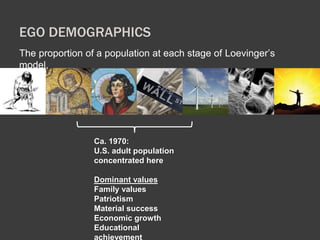
EGO DEMOGRAPHICS 
The proportion of a population at each stage of Loevinger’s 
model. 
Ca. 1970: 
U.S. adult population 
concentrated here 
Dominant values 
Family values 
Patriotism 
Material success 
Economic growth 
Educational 
achievement
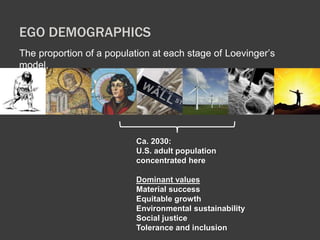
EGO DEMOGRAPHICS 
The proportion of a population at each stage of Loevinger’s 
model. 
Ca. 2030: 
U.S. adult population 
concentrated here 
Dominant values 
Material success 
Equitable growth 
Environmental sustainability 
Social justice 
Tolerance and inclusion
TABLE DISCUSSION 
In the projected U.S. ego demographics of 2030: 
• What is the meaning of: 
– Community 
– Education 
– Institution 
– Learning 
• How might Aims Community College serve its 
vision and mission in 2030? How might the 
vision or mission have changed?
Three Lenses for Understanding Change 
PRACTICAL APPLICATION
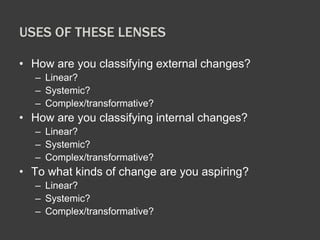
USES OF THESE LENSES 
• How are you classifying external changes? 
– Linear? 
– Systemic? 
– Complex/transformative? 
• How are you classifying internal changes? 
– Linear? 
– Systemic? 
– Complex/transformative? 
• To what kinds of change are you aspiring? 
– Linear? 
– Systemic? 
– Complex/transformative?
THANK YOU 
Eric Meade 
Visioning • Futuring • Planning • Coaching 
ericmeade@gmail.com 
www.ericmeade.com 
571-201-5379

Aims community college fall 2014 convocation keynote speech

  • 1.
    THREE LENSES FORUNDERSTANDING CHANGE AIMS COMMUNITY COLLEGE FALL CONVOCATION AUGUST 14, 2014 Eric Meade @ericmeade www.ericmeade.com ericmeade@gmail.com
  • 2.
    WHAT IS AFUTURIST?
  • 3.
    The intuitive mindis a sacred gift and the rational mind is a faithful servant. We have created a society that honors the servant and has forgotten the gift.
  • 4.
    THREE LENSES •Linear • Systems • Complex
  • 5.
    OUR VIEWS OFCHANGE HAVE CHANGED LINEAR
  • 6.
    OUR VIEWS OFCHANGE HAVE CHANGED S-CURVE
  • 7.
    OUR VIEWS OFCHANGE HAVE CHANGED Rational Mind Intuitive Mind
  • 8.
    Three Lenses forUnderstanding Change LINEAR CHANGE AT AIMS CC: A 50-YEAR CASE STUDY
  • 9.
    LINEAR CHANGE ATAIMS CC LINEAR 1967 1984 1990s 2000s
  • 10.
    QUESTIONS FOR YOU • What trends have you seen over the last 50 years at Aims CC? • Which of these trends do you expect to continue in the years ahead? • Based on that, what do you think is likely to be true of Aims CC in 2030?
  • 11.
    Three Lenses forUnderstanding Change SYSTEMS CHANGE IN EDUCATION: A 500-YEAR CASE STUDY
  • 12.
    A MODEL OFSYSTEMS CHANGE Phase I Phase II Phase III Experimentation and Invention “Back to Basics Bump” Experimentation and Reinvention Expansion and Growth For background on model, see George Land and Barbara Jarman, Breakpoint and Beyond.
  • 14.
    INSTITUTIONS OF HIGHERLEARNING Phase I Phase II Phase III 1450: Gutenberg invents printing press 1492: Columbus discovers the Americas 1543: Copernican Revolution 1620: Bacon’s Novum Organum 1833: Oberlin College (co-ed) 1837: Mt. Holyoke College 1636: Founding of Harvard University 1643: First scholarship 1650: Founding of the Royal Society 1840: Student Loans 1854: Ashmun Institute 1862: Morrill Land-Grant Acts 1867: U.S. Dept. of Education 2002: Google Books 2006: Kahn Academy 2012: Peter Thiel 2012: Coursera 2013: Student debt crisis 1901: Joliet Junior College 1944: GI Bill 1972: Pell Grants 1976: University of Phoenix 1980: Cabinet-level ED For background on model, see George Land and Barbara Jarman, Breakpoint and Beyond.
  • 15.
    INSTITUTIONS OF HIGHERLEARNING Phase I Phase II Phase III 1450: Gutenberg invents printing press 1492: Columbus discovers the Americas 1543: Copernican Revolution 1620: Bacon’s Novum Organum 1833: Oberlin College (co-ed) 1837: Mt. Holyoke College 1636: Founding of Harvard University 1643: First scholarship 1650: Founding of the Royal Society “Back to 1840: Student Loans Basics Bump” 1854: Ashmun Institute 1862: Morrill Land-Grant Acts 1867: U.S. Dept. of Education 2002: Google Books 2006: Kahn Academy 2012: Peter Thiel 2012: Coursera 2013: Student debt crisis 1901: Joliet Junior College 1944: GI Bill 1972: Pell Grants 1976: University of Phoenix 1980: Cabinet-level ED For background on model, see George Land and Barbara Jarman, Breakpoint and Beyond.
  • 16.
    INSTITUTIONS OF HIGHERLEARNING Phase I Phase II Phase III 1450: Gutenberg invents printing press 1492: Columbus discovers the Americas 1543: Copernican Revolution 1620: Bacon’s Novum Organum 1833: Oberlin College (co-ed) 1837: Mt. Holyoke College 1636: Founding of Harvard University 1643: First scholarship 1650: Founding of the Royal Society “Back to 1840: Student Loans Basics Bump” 1854: Ashmun Institute 1862: Morrill Land-Grant Acts 1867: U.S. Dept. of Education What’s emerging? 2002: Google Books 2006: Kahn Academy 2012: Peter Thiel 2012: Coursera 2013: Student debt crisis 1901: Joliet Junior College 1944: GI Bill 1972: Pell Grants 1976: University of Phoenix 1980: Cabinet-level ED For background on model, see George Land and Barbara Jarman, Breakpoint and Beyond.
  • 17.
    QUESTIONS FOR YOU • Based on this discussion, what do you think is likely to be true of institutions of higher learning in 2030? • What are the implications of this future for Aims CC?
  • 18.
    Three Lenses forUnderstanding Change COMPLEX SYSTEMS CHANGE: A 5,000-YEAR CASE STUDY
  • 19.
  • 20.
  • 21.
  • 22.
    SOCIAL EVOLUTION E2 Impulsive E3 Self-protective E4 Conformist E5 Self-aware E6 Conscientious E7 Individualistic Up next • E8 Autonomous • E9 Integrated Loevinger’s Stages of Ego Development
  • 23.
    Stage Description IntegratedMaslow's self-actualizing person LOEVINGER’S EGO STAGES Autonomous "recognition of other people's need for autonomy... a deepened respect for other people and their need to find their own way and even make their own mistakes" Individualistic "There is a greater tolerance for individual differences... [and] the concept of people as having and being different in different roles." Conscientious "... recognition of multiple possibilities in situations leads to a sense of choice; decisions are made for reasons. The person strives for goals, tries to live up to ideas, and to improve the self." Self-aware "The person has become aware that not everyone, including his or her own self, conforms perfectly all the time to the characteristics that stereotypes seem to demand." Conformist "Rules are accepted just because they are the rules... There is a right way and a wrong way, and it is the same for everybody all the time, or at least for broad classes of people described in demographic terms." Self-protective "... more or less opportunistic hedonism; they lack long-term goals and ideals. They want immediate gratification and, if they can, will exploit others for their ends." Impulsive "... physical needs and impulses, dependent on others for control. There is little sense of causation. Rules are poorly understood."
  • 24.
    Stage Description IntegratedMaslow's self-actualizing person LOEVINGER’S EGO STAGES Autonomous "recognition of other people's need for autonomy... a deepened respect for other people and their need to find their own way and even make their own mistakes" Individualistic "There is a greater tolerance for individual differences... [and] the concept of people as having and being different in different roles." Conscientious "... recognition of multiple possibilities in situations leads to a sense of choice; decisions are made for reasons. The person strives for goals, tries to live up to ideas, and to improve the self." Self-aware "The person has become aware that not everyone, including his or her own self, conforms perfectly all the time to the characteristics that stereotypes seem to demand." Conformist "Rules are accepted just because they are the rules... There is a right way and a wrong way, and it is the same for everybody all the time, or at least for broad classes of people described in demographic terms." Self-protective "... more or less opportunistic hedonism; they lack long-term goals and ideals. They want immediate gratification and, if they can, will exploit others for their ends." Impulsive "... physical needs and impulses, dependent on others for control. There is little sense of causation. Rules are poorly understood."
  • 25.
    Stage Description IntegratedMaslow's self-actualizing person LOEVINGER’S EGO STAGES Autonomous "recognition of other people's need for autonomy... a deepened respect for other people and their need to find their own way and even make their own mistakes" Individualistic "There is a greater tolerance for individual differences... [and] the concept of people as having and being different in different roles." Conscientious "... recognition of multiple possibilities in situations leads to a sense of choice; decisions are made for reasons. The person strives for goals, tries to live up to ideas, and to improve the self." Self-aware "The person has become aware that not everyone, including his or her own self, conforms perfectly all the time to the characteristics that stereotypes seem to demand." Conformist "Rules are accepted just because they are the rules... There is a right way and a wrong way, and it is the same for everybody all the time, or at least for broad classes of people described in demographic terms." Self-protective "... more or less opportunistic hedonism; they lack long-term goals and ideals. They want immediate gratification and, if they can, will exploit others for their ends." Impulsive "... physical needs and impulses, dependent on others for control. There is little sense of causation. Rules are poorly understood."
  • 26.
    Stage Description IntegratedMaslow's self-actualizing person LOEVINGER’S EGO STAGES Autonomous "recognition of other people's need for autonomy... a deepened respect for other people and their need to find their own way and even make their own mistakes" Individualistic "There is a greater tolerance for individual differences... [and] the concept of people as having and being different in different roles." Conscientious "... recognition of multiple possibilities in situations leads to a sense of choice; decisions are made for reasons. The person strives for goals, tries to live up to ideas, and to improve the self." Self-aware "The person has become aware that not everyone, including his or her own self, conforms perfectly all the time to the characteristics that stereotypes seem to demand." Conformist "Rules are accepted just because they are the rules... There is a right way and a wrong way, and it is the same for everybody all the time, or at least for broad classes of people described in demographic terms." Self-protective "... more or less opportunistic hedonism; they lack long-term goals and ideals. They want immediate gratification and, if they can, will exploit others for their ends." Impulsive "... physical needs and impulses, dependent on others for control. There is little sense of causation. Rules are poorly understood."
  • 27.
    Stage Description IntegratedMaslow's self-actualizing person LOEVINGER’S EGO STAGES Autonomous "recognition of other people's need for autonomy... a deepened respect for other people and their need to find their own way and even make their own mistakes" Individualistic "There is a greater tolerance for individual differences... [and] the concept of people as having and being different in different roles." Conscientious "... recognition of multiple possibilities in situations leads to a sense of choice; decisions are made for reasons. The person strives for goals, tries to live up to ideas, and to improve the self." Self-aware "The person has become aware that not everyone, including his or her own self, conforms perfectly all the time to the characteristics that stereotypes seem to demand." Conformist "Rules are accepted just because they are the rules... There is a right way and a wrong way, and it is the same for everybody all the time, or at least for broad classes of people described in demographic terms." Self-protective "... more or less opportunistic hedonism; they lack long-term goals and ideals. They want immediate gratification and, if they can, will exploit others for their ends." Impulsive "... physical needs and impulses, dependent on others for control. There is little sense of causation. Rules are poorly understood."
  • 28.
    Stage Description IntegratedMaslow's self-actualizing person LOEVINGER’S EGO STAGES Autonomous "recognition of other people's need for autonomy... a deepened respect for other people and their need to find their own way and even make their own mistakes" Individualistic "There is a greater tolerance for individual differences... [and] the concept of people as having and being different in different roles." Conscientious "... recognition of multiple possibilities in situations leads to a sense of choice; decisions are made for reasons. The person strives for goals, tries to live up to ideas, and to improve the self." Self-aware "The person has become aware that not everyone, including his or her own self, conforms perfectly all the time to the characteristics that stereotypes seem to demand." Conformist "Rules are accepted just because they are the rules... There is a right way and a wrong way, and it is the same for everybody all the time, or at least for broad classes of people described in demographic terms." Self-protective "... more or less opportunistic hedonism; they lack long-term goals and ideals. They want immediate gratification and, if they can, will exploit others for their ends." Impulsive "... physical needs and impulses, dependent on others for control. There is little sense of causation. Rules are poorly understood."
  • 29.
    Stage Description IntegratedMaslow's self-actualizing person LOEVINGER’S EGO STAGES Autonomous "recognition of other people's need for autonomy... a deepened respect for other people and their need to find their own way and even make their own mistakes" Individualistic "There is a greater tolerance for individual differences... [and] the concept of people as having and being different in different roles." Conscientious "... recognition of multiple possibilities in situations leads to a sense of choice; decisions are made for reasons. The person strives for goals, tries to live up to ideas, and to improve the self." Self-aware "The person has become aware that not everyone, including his or her own self, conforms perfectly all the time to the characteristics that stereotypes seem to demand." Conformist "Rules are accepted just because they are the rules... There is a right way and a wrong way, and it is the same for everybody all the time, or at least for broad classes of people described in demographic terms." Self-protective "... more or less opportunistic hedonism; they lack long-term goals and ideals. They want immediate gratification and, if they can, will exploit others for their ends." Impulsive "... physical needs and impulses, dependent on others for control. There is little sense of causation. Rules are poorly understood."
  • 30.
    Stage Description IntegratedMaslow's self-actualizing person LOEVINGER’S EGO STAGES Autonomous "recognition of other people's need for autonomy... a deepened respect for other people and their need to find their own way and even make their own mistakes" Individualistic "There is a greater tolerance for individual differences... [and] the concept of people as having and being different in different roles." Conscientious "... recognition of multiple possibilities in situations leads to a sense of choice; decisions are made for reasons. The person strives for goals, tries to live up to ideas, and to improve the self." Self-aware "The person has become aware that not everyone, including his or her own self, conforms perfectly all the time to the characteristics that stereotypes seem to demand." Conformist "Rules are accepted just because they are the rules... There is a right way and a wrong way, and it is the same for everybody all the time, or at least for broad classes of people described in demographic terms." Self-protective "... more or less opportunistic hedonism; they lack long-term goals and ideals. They want immediate gratification and, if they can, will exploit others for their ends." Impulsive "... physical needs and impulses, dependent on others for control. There is little sense of causation. Rules are poorly understood."
  • 31.
    Stage What’s yourcommunity? Integrated LOEVINGER’S EGO STAGES Autonomous Individualistic Conscientious Self-aware Conformist Self-protective Impulsive
  • 32.
    Stage What’s yourcommunity? Integrated LOEVINGER’S EGO STAGES Autonomous Individualistic Conscientious Self-aware Conformist Self-protective Impulsive “My family, tribe, clan”
  • 33.
    Stage What’s yourcommunity? Integrated Autonomous Individualistic Conscientious Self-aware Conformist Self-protective “My family, tribe, clan – the people who give me what I want!” Impulsive “My family, tribe, clan”
  • 34.
    Stage What’s yourcommunity? Integrated Autonomous Individualistic Conscientious Self-aware Conformist “My town, nation, religion, school, peer group (work or personal)” Self-protective “My family, tribe, clan – the people who give me what I want!” Impulsive “My family, tribe, clan”
  • 35.
    Stage What’s yourcommunity? Integrated Autonomous Individualistic Conscientious Self-aware “The town, nation, religion, school, peer group (work or personal) of which I am a part” Conformist “My town, nation, religion, school, peer group (work or personal)” Self-protective “My family, tribe, clan – the people who give me what I want!” Impulsive “My family, tribe, clan”
  • 36.
    Stage What’s yourcommunity? Integrated Autonomous Individualistic Conscientious “People who are as successful as I am and share my motivations” Self-aware “The town, nation, religion, school, peer group (work or personal) of which I am a part” Conformist “My town, nation, religion, school, peer group (work or personal)” Self-protective “My family, tribe, clan – the people who give me what I want!” Impulsive “My family, tribe, clan”
  • 37.
    Stage What’s yourcommunity? Integrated Autonomous Individualistic “The many diverse groups all around me, across multiple generations” Conscientious “People who are as successful as I am and share my motivations” Self-aware “The town, nation, religion, school, peer group (work or personal) of which I am a part” Conformist “My town, nation, religion, school, peer group (work or personal)” Self-protective “My family, tribe, clan – the people who give me what I want!” Impulsive “My family, tribe, clan”
  • 38.
    Stage What’s yourcommunity? Integrated Autonomous “Everyone” (Humanity) Individualistic “The many diverse groups all around me, across multiple generations” Conscientious “People who are as successful as I am and share my motivations” Self-aware “The town, nation, religion, school, peer group (work or personal) of which I am a part” Conformist “My town, nation, religion, school, peer group (work or personal)” Self-protective “My family, tribe, clan – the people who give me what I want!” Impulsive “My family, tribe, clan”
  • 39.
    Stage What’s yourcommunity? Integrated “Everything” (The Cosmos) Autonomous “Everyone” (Humanity) Individualistic “The many diverse groups all around me, across multiple generations” Conscientious “People who are as successful as I am and share my motivations” Self-aware “The town, nation, religion, school, peer group (work or personal) of which I am a part” Conformist “My town, nation, religion, school, peer group (work or personal)” Self-protective “My family, tribe, clan – the people who give me what I want!” Impulsive “My family, tribe, clan”
  • 40.
    EGO DEMOGRAPHICS Theproportion of a population at each stage of Loevinger’s model. Ca. 1970: U.S. adult population concentrated here Dominant values Family values Patriotism Material success Economic growth Educational achievement
  • 41.
    EGO DEMOGRAPHICS Theproportion of a population at each stage of Loevinger’s model. Ca. 2030: U.S. adult population concentrated here Dominant values Material success Equitable growth Environmental sustainability Social justice Tolerance and inclusion
  • 42.
    TABLE DISCUSSION Inthe projected U.S. ego demographics of 2030: • What is the meaning of: – Community – Education – Institution – Learning • How might Aims Community College serve its vision and mission in 2030? How might the vision or mission have changed?
  • 43.
    Three Lenses forUnderstanding Change PRACTICAL APPLICATION
  • 44.
    USES OF THESELENSES • How are you classifying external changes? – Linear? – Systemic? – Complex/transformative? • How are you classifying internal changes? – Linear? – Systemic? – Complex/transformative? • To what kinds of change are you aspiring? – Linear? – Systemic? – Complex/transformative?
  • 45.
    THANK YOU EricMeade Visioning • Futuring • Planning • Coaching ericmeade@gmail.com www.ericmeade.com 571-201-5379