Agroforestry
By
Shyam Kumar Chaudhary
(Under Secretary, Department of Forest)
Masters in Forestry UPLB, Philippines
Agroforestry
Main features of the presentation
1. Introduction
2. Importance of agrofrestry and applications system
3. Appropriate technologies for agroforestry
4. Agroforestry practices in Nepal
5. SALT technology
6. Agroforestry systems in other countries
7. Existing Legal Provision and present condition of agroforestry in Nepal
8. Challenges of agroforestry
9. Achievements
10. Possible solutions
11. Conclusion
12. References
1. Introduction
Agroforestry
Definitions
Agroforestry could be defined as a practice of raising both
tree and agricultural crops simultaneously in a given space
and time. In the Nepalese perspective agroforestry is an old
age practice. Recently, it has been receiving considerable
attention due to the evidence that trees and agricultural crops
could be managed simultaneously and guaranteed and
sustainability of agricultural system. (Nepal forestry Handbook,
2067 B. S.)
Cont’d
Agroforestry is a land use management system in which
trees or shrubs are grown around crops or pastureland. It
combined agricultural and forestry technologies to create
more and diverse, productive, profitable, healthy and
sustainable land-use systems. (Encyclopedia)
Cont’d
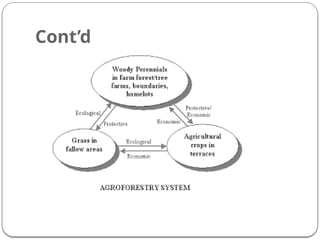
 Agroforestry is a collective name for land-use systems and
technologies where woody perennials (trees, shrubs, palms,
bamboos, etc.) are deliberately used on the same land-
management units as agricultural crops and/or animals, in
some form of spatial arrangement or temporal sequence. In
agroforestry systems there are both ecological and
economical interactions between the different components
(Lundgren and Raintree, 1982).
Cont’d
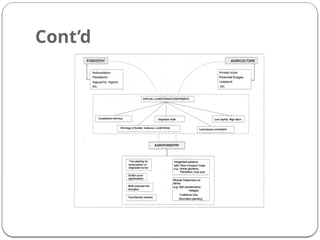
 This definition implies that:
 agroforestry normally involves two or more species of plants
(or plants and animals), at least one of which is a woody
perennial;
 an agroforestry system always has two or more outputs;
 the cycle of an agroforestry system is always more than one
year; and
 even the simplest agroforestry system is more complex,
ecologically (structurally and functionally) and economically,
than a monocropping system.
Cont’d
Cont’d
Cont’d
 The theoretical base for agroforestry comes from ecology via
agroecology from this perspective agroforestry is one of the
three land-use science.The two are agriculture and forestry.
2. Importance and applications
Benefits
Ecoscaping-Agroforestry can be advantageous over
conventional and forest production methods. They can offer
increased productivity, economic benefits, and more diversity in
the ecological goods and services provided.
Biodiversity in agroforestry systems in typically higher than in
conventional agricultural systems.With two or more interacting
plant species in a given area. It creates a more complex habitat
that can support a wider variety of birds, and other animals.
Depending upon the application, impacts of agroforestry can
incude
Cont’d
 Reducing poverty through increased production of wood and
other products
 Contributing to food security by restoring the soil fertility for
food crops
 Cleaner water through reduced nutrient and soil runoff
 Countering global warming and the risk of hunger by increasing
the number of drought-resistant trees and the subsequent
production of fruit, nuts and edible oils
Cont’d
 Reducing deforestation and pressure on woodlands by providing
farm-grown fuelwood
 Reducing or eliminating the need for toxic chemicals
(insecticides, herbicides etc.)
 Through more diverse farm outputs, improved human nutrition
 In situation where people have limited access to mainstream
medicines, providing growing spaces for medical plants
Cont’d
 Increased crop stability
 Multifunctional site use i. e. crop production and animal grazing
 Typically more drought resistant
 Stabilizes depleted soils from erosion
 Bioremediation
Cont’d
Other benefits from agroforestry practice
 Carbon sequestration
 Odour, dust and noise reduction
 Green space and visual aesthetics
 Enhancement or maintenance of wildlife habitat
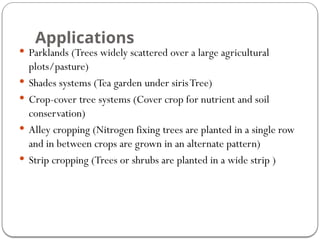
Applications
 Parklands (Trees widely scattered over a large agricultural
plots/pasture)
 Shades systems (Tea garden under sirisTree)
 Crop-cover tree systems (Cover crop for nutrient and soil
conservation)
 Alley cropping (Nitrogen fixing trees are planted in a single row
and in between crops are grown in an alternate pattern)
 Strip cropping (Trees or shrubs are planted in a wide strip )
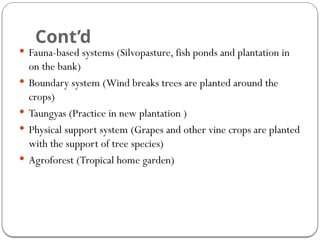
Cont’d
 Fauna-based systems (Silvopasture, fish ponds and plantation in
on the bank)
 Boundary system (Wind breaks trees are planted around the
crops)
 Taungyas (Practice in new plantation )
 Physical support system (Grapes and other vine crops are planted
with the support of tree species)
 Agroforest (Tropical home garden)
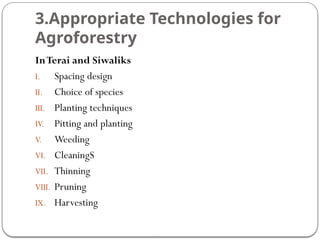
3.Appropriate Technologies for
Agroforestry
InTerai and Siwaliks
I. Spacing design
II. Choice of species
III. Planting techniques
IV. Pitting and planting
V. Weeding
VI. CleaningS
VII. Thinning
VIII. Pruning
IX. Harvesting
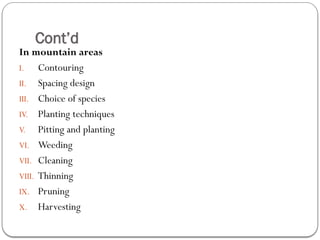
Cont’d
In mountain areas
I. Contouring
II. Spacing design
III. Choice of species
IV. Planting techniques
V. Pitting and planting
VI. Weeding
VII. Cleaning
VIII. Thinning
IX. Pruning
X. Harvesting
4.Agroforestry practices in Nepal
A. Farm based agroforestry system
 Home garden
( e.g. Sisso with banana, pine apple, turmeric etc. in terai and kutmiro, khanyu,
gogan+vegetable in hilly areas)
 Trees in and around agricultural fields in rain fed areas (khanyu, kavro,
kutmiro trees in the border of terraces and maize, millets, pulses etc in the
center of the border trees)
 Woodlots (on the top of the agricultural field and on the bank of river to
protect from soil erosion in the hilly areas)
 Commercial crops under tree (e.g. tea under siris in the eastern terai and
cardamom under utis in the eastern hilly areas)
 Intercropping with horticultural crops (mango +agricultural crops in terai)
 Silvofishery system (Sisso, Ipil-Ipil plants raise on the bank of fish ponds )
Cont’d
B. Forest based agroforestry system
Tanungya system
Started by GoN in 1972 atTamagadhi Bara district Eucalyptus
+ Sissoo +Teak with pulses, mustard and other crops
Forest-based agroforestry
Non-wood forest products in agroforestry
Shifting cultivation
Silvopastural practices
Specific agricultural practices associated with forests
Agroforestry Program in Nepal
 The government started at first Agroforestry in 1972 at
Tamagadhi of Bara district as aTaungya System (Sissoo +Teak +
agricultural crops)
 Sagarnath Forest Development project in Sarlahi and Mahotari
districts (Eucalyptus species + Agricultural crops)
 Ratuwamai Plantation project Jhapa
(Forest trees with maize)
Choice of tree species for agroforestry
 Immediate and future use from the products
 The quality and condition of planting site
 Whether potentiality promising species are available
 Potential combination possibility among trees, crops and
livestock
 Technical skills and labor involved in managing the trees
What is current situation of these forests
now ?
TamagadhiTaungya Plantation
 TheTaungya people are still there
 Main forest spp. are sissoo and teak with pulse and mustard
 They are removing the forest crops and giving priority to
agricultural crops
 Those areas are converting into agricultural land
 Those areas are changing into permanent settlement
Cont’d
Sagarnath Forest Development Project
 Main forest trees Eucalyptus camadulensis and Eucalyptus teriticornis
 Agricultural Crops – Mustered and pulses
 More than 2500 ha. areas are under the encroachment
 DoF only cannot solve the problem
 No agroforestry system is adopted
Causes of unsuccessful the program
 No, long term vision of the government
 No, continuity to the program
 Government has no priority to manage that area as a good forest
 Political instability
 Political parties used them as a vote bank
 Government could not give alternatives for the settlement No
good relationship betweenTaungya people and forest employee
 The government could not realize them as helper
5.Sloping Agricultural Land
Technology(SALT)
 Sloping Agricultural LandTechnology (SALT-1)
Multistoried sequential cropping
Alley cropping
In-row tillage
Making anA-frame
Cont’d
 Preparing agroforestry plantations
Selection of hedgerow species
Uses of grasses in (SoilWater Conservation) SWC
Vetiver grass in SWC
Controlling unnecessary weeds
Use pesticide
Fire control in the uplands
Cont’d
 Annual cropping system
Selection of cover crops
Upland rice cultivation with agroforestry
Upland cropping system
Root crops for food, feed and income
Cultural management of pest infestation
 Seeds and plant propagation
Timing of seed collection
Seed processing
Cont’d
 Seed quality testing
Hastening seed germination
Seed treatment for better and faster germination
Seed longevity
Seed storage
Tree nursery: establishment and management
Vegetative propagation of fruit trees
Rooting of cuttings in homemade chambers
Out planting trees
Cont’d
Livestock production
SimpleAgro-livestockTechnology (SALT-2)
Plant-based livestock medication
Low-cost goat housing
Intensive feed garden
 Home-lot technologies
Medicinal uses of upland vegetation
Bio-intensive gardening with agroforestry
Mini-pond for water-limited areas
Fertilizer from livestock and farm waste
Liquid fertilizer from leguminous trees
Basket composting
Cont’d
Trees and their management
Sustainable agroforest land technology (SALT-3)
Trees for farm boundaries
Pruning of trees
Fruit trees for harsh environments
Bagging of young fruits
Growing bamboos
Shelterbelts
Cont’d
 Bank stabilization
Neglected species with potential for agroforestry
Assessing the usefulness of indigenous trees for agroforestry
Commonly used agroforestry species
Middle to high understorey shade-tolerant species
Nitrogen-fixing tree profiles
Properties of some fuelwood species
Conserving available fuelwood
 Lack of apparent profit potential
 Lack of demonstration sites
 Expense of additional management
 Lack of training or expertise
 Lack of knowledge about where to market products
 Lack of technical assistance
 Cannot afford adoption or start up costs, including costs of
time
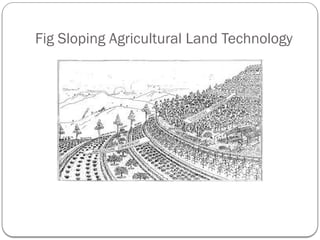
Fig Sloping Agricultural Land Technology
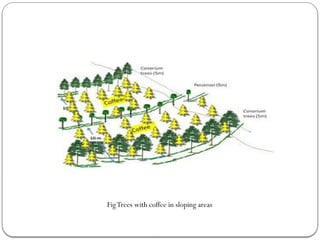
FigTrees with coffee in sloping areas
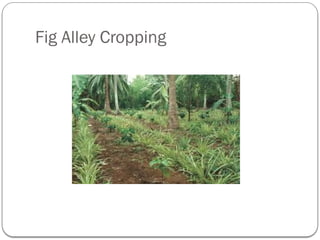
Fig Alley Cropping
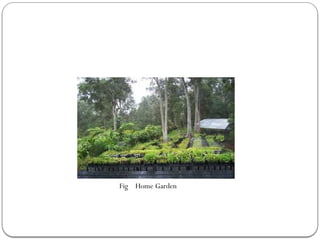
Fig Home Garden
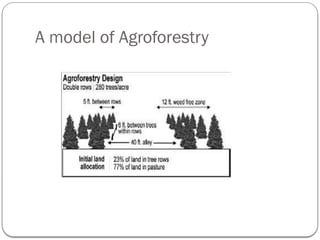
A model of Agroforestry
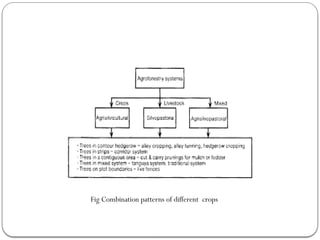
Fig Combination patterns of different crops
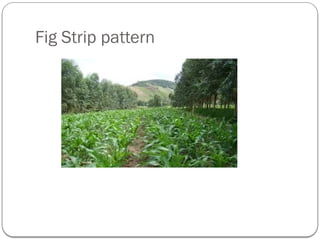
Fig Strip pattern
Cont’d
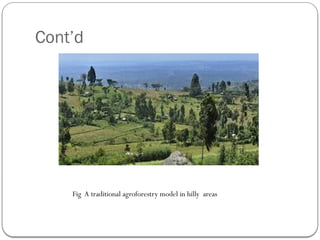
Fig A traditional agroforestry model in hilly areas
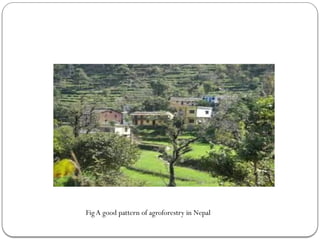
Fig A good pattern of agroforestry in Nepal
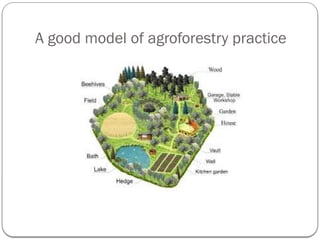
A good model of agroforestry practice
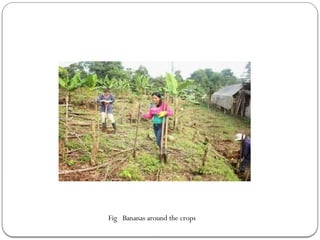
Fig Bananas around the crops
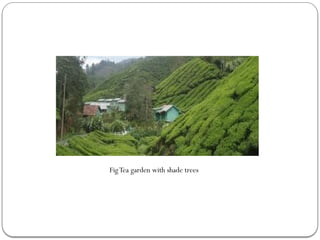
FigTea garden with shade trees
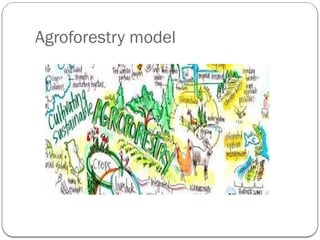
Agroforestry model
Cont’d
B. Forest based agroforestry system
Tanungya system
Started by GoN in 1972 atTamagadhi Bara district
Eucalyptus+Sissoo+Teak with pulses, mustard and other crops
Forest-based agroforestry
Non-wood forest products in agroforestry
Shifting cultivation
Silvopastural practices
Specific agricultural practices associated with forests
Agroforestry Program in Nepal
 The government started at first Agroforestry in 1972 at
Tamagadhi of Bara district as aTaungya System (Sissoo +Teak +
agricultural crops)
 Sagarnath Forest Development project in Sarlahi and Mahotari
districts (Eucalyptus species + Agricultural crops)
 Ratuwamai Plantation project Jhapa
(Forest trees with maize)
What is current situation of these forests now ?
TamagadhiTaungya Plantation
 TheTaungya people are still there
 Main forest spp. are sissoo and teak with pulse and mustard
 They are removing the forest crops and giving priority to
agricultural crops
 Those areas are converting into agricultural land
 Those areas are changing into permanent settlement
Cont’d
Sagarnath Forest Development Project
 Main forest trees Eucalyptus camadulensis and Eucalyptus teriticornis
 Agricultural Crops – Mustered and pulses
 More than 2500 ha. areas are under the encroachment
 DoF only cannot solve the problem
 No agroforestry system is adopted
Causes of unsuccessful the program
 No, long term vision of the government
 No, continuity to the program
 Government has no priority to manage that area as a good forest
 Political instability
 Political parties used them as a vote bank
 Government could not give alternatives for the settlement
Cont’d
 No good relationship betweenTaungya people and forest
employee
 The government could not realize them as helper
Choice of tree species for agroforestry
 Immediate and future use from the products
 The quality and condition of planting site
 Whether potentiality promising species are available
 Potential combination possibility among trees, crops and
livestock
 Technical skills and labor involved in managing the trees
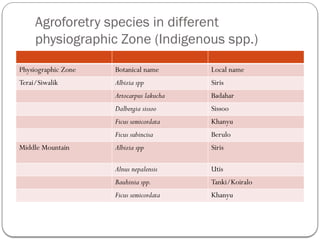
Agroforetry species in different
physiographic Zone (Indigenous spp.)
Physiographic Zone Botanical name Local name
Terai/Siwalik Albizia spp Siris
Artocarpus lakucha Badahar
Dalbergia sissoo Sissoo
Ficus semicordata Khanyu
Ficus subincisa Berulo
Middle Mountain Albizia spp Siris
Alnus nepalensis Utis
Bauhinia spp. Tanki/Koiralo
Ficus semicordata Khanyu
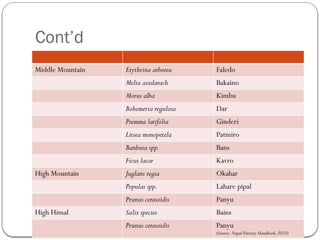
Cont’d
Middle Mountain Erythrina arborea Faledo
Melia azedarach Bakaino
Morus alba Kimbu
Bohemeria regulosa Dar
Premma latifolia Ginderi
Litsea monopetela Patmiro
Banbusa spp. Bans
Ficus lacor Kavro
High Mountain Juglans regia Okahar
Populas spp. Lahare pipal
Prunus cerasoidis Panyu
High Himal Salix species Bains
Prunus cerasoidis Panyu
(Source- Nepal Forestry Handbook,2010)
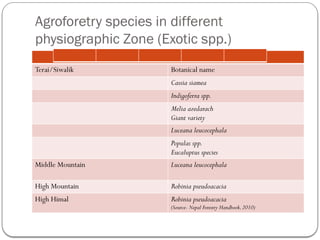
Agroforetry species in different
physiographic Zone (Exotic spp.)
Terai/Siwalik Botanical name
Cassia siamea
Indigoferra spp.
Melia azedarach
Giant variety
Luceana leucocephala
Populas spp.
Eucaluptus species
Middle Mountain Luceana leucocephala
High Mountain Robinia pseudoacacia
High Himal Robinia pseudoacacia
(Source- Nepal Forestry Handbook,2010)
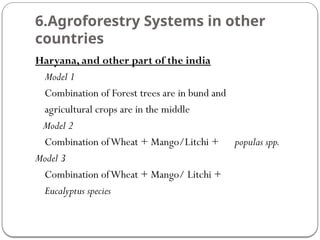
6.Agroforestry Systems in other
countries
Haryana, and other part of the india
Model 1
Combination of Forest trees are in bund and
agricultural crops are in the middle
Model 2
Combination ofWheat + Mango/Litchi + populas spp.
Model 3
Combination ofWheat + Mango/ Litchi +
Eucalyptus species
Cont’d
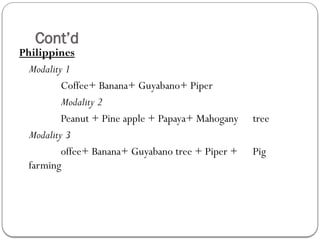
Philippines
Modality 1
Coffee+ Banana+ Guyabano+ Piper
Modality 2
Peanut + Pine apple + Papaya+ Mahogany tree
Modality 3
offee+ Banana+ Guyabano tree + Piper + Pig
farming
7.Existing Legal Provisions for the
agroforestry
Jfg P]gdf ePsf] k|fjwfg
Jfg P]g, @)$( sf] kl/R5]b ^ sf] sa'lnolt jg ;DalGw
Joj:yfsf] bkmf #! -3_ df jgsf] ;+/If0f / ljsf; x'g] u/L
s[lif jg afnL sfo{ ;+rfng ug{
sa'lnolt jgdf nfu' ul/Psf] s[lif jg k|0ffnLx?
?v lj?jfx? ;+u 3fF;x? nufpg]
?v lj?jfx? ;+u kmnkm"nsf lj?jfx? Nfufpg]
?v lj?jf ;+u 3fF; tyf kz'kfng ug]{
?v lj?jf ;+u kf]v/L agfP/ df5f kfng ug]{
8. Challenges
 Agroforestry is relevant to almost all environments and
is a potential response to common problems around the
globe, and agroforestry systems can be advantageous
compared to conventional agriculture or forestry.
 Lack of developed markets for products
 Unfamiliarity with technologies
 Lack of awareness of successful agroforestry examples
 Competition between trees, crops, and animals
 Lack of financial assistance
Cont’d
 Lack of knowledge about where to market products
 Lack of technical assistance
 Cannot afford adoption or start up costs, including costs of
time
 Unfamiliarity with alternative marketing approaches
 Unavailability of information about agroforestry
 Apparent inconvenience
9.Achievements
 Very good results of Leasehold Program
 Improved in livelihood of marginalized people who are
involved in leasehold forestry group
 Improved in the environmental condition of the forest
 Increased in the no of livestock
 Increased awareness level of the community
 Relationship between forest organization and leasehold
forest groups has increased
Cont’d
 Institutional development of the Leasehold Forest User
Group (LFUG)
 International recognition of Leasehold Forestry in
short time
 Learning for the private forestry
10.Possible Solutions
Making policy, laws and necessary directives for the
development of leasehold forestry
Agroforestry Programs should be given both Forest
and Agriculture ministry
Frequent co-ordination should be done between Forest
ministry and agriculture ministry and also at the
different levels of the corresponding departments
Planning should be done jointly at the district level
Cont’d
Agroforestry program should given to private farmers
too
Action researches should be conducted at the field
level
Necessary technologies/trainings should be provided
to local level staffs and also to private farmers by
concerning organizations according to their need
Appropriate laws and policies should be prepared for
the groups and private farmers to sell their products in
the market easily
Cont’d
 If possible, financial supports should be provided to
the farmers that they can develop their enterprise
11. Conclusion
Agroforestry – This system can be advantageous over
conventional agricultural and forest production
methods. They can offer increased productivity,
economic benefits and more diversity in the ecological
goods and services provided. This system is typically
higher than conventional agricultural systems with two
or more interacting plant species in a given land area.
This system very suitable in the different physiographic
zones of Nepal for the improvement of physical
condition as well as well being of all people.
Jfg P]g, @)$( df lghL jg ;DalGw
Joj:yf
lghL jg – eGgfn] k|rlnt sfg"g jdf]lhd s'g} JolStsf]
xs k'Ug] lghL hUufdf nufO{ x'sf{Psf] jf ;+/If0f
ul/Psf] jg ;Demg' k5{ .
lghL jg k|a4{gsfnflu b]lvPsf ;d:ofx?
!= pTkfbg cl3sf] ;d:of
@= pTkfbgdf ;d:of
#= pTkfbg kl5sf] ;d:of
qmdzM
!= pTkfbg cl3sf] ;d:of
!=! Kfl/efiff c:ki6 /x]sf]
!=@ aLp÷la?jfsf] u'0f:t/
!=# ;/sf/sf] k|fyldstfdf g/xg'
!=$ s[ifsnfO{ dfu cg';f/sf] tflndsf] Joj:yf gx'g'
!=% k|hftLdf k|ltaGw nufpg'
@= pTkfbgdf ;d:of
@=! Jfg ;Da4{gdf / /f]u nfu]sf] cj:yfdf ;/ ;Nnfx ;dodf
pknAw
u/fpg g;Sg'
qmdzM
@=! Jfg k|df0fLs/0fdf Wofg glbg'
#= pTkfbg kl5sf] ;d:of
#=! lghL Jfgsf] sf7df klg cf];f/ k;f/df nfdf] k|s[of k'/f
ug{' kg]{
#=@ lghL jgsf] k|df0fLs/0f x'g g;s]/ prLt d"No kfpg
g;Sg'
#=# lghL jgsf] of]ubfgsf] sxL pNn]v gx'g'
#=$ xs c;'/lIft / ladfsf] Joj:yf gx'g'
#=% sfj{g Jofkf/df ;/sf/n] lghL jg wgLx?nfO{ ;xefuL
u/fpg g;Sg'
qmdzM
#=^ jg k}bfjf/df cfwfl/t pBf]u :yfkgsf nflu b"/L
lgwf{/0fsf]
k|fjwfg emGeml6nf]
#=& lghL jg ljsf;sfnflu ;/sf/n] nufgLsf]nflu pko'St
jftfj/0f tof/
ug{ g;Sg'
lghL jg k|a4{gsfnflu ePsf gLlt
lgodx?
s= gLltut Joj:yf
 g]kfnsf] cGtl/d ;+ljwfg, @)^# n] ;Dkltsf] :jtGq xs
sfod u/]sf]
 Jfg ljsf; u'? of]hgf, @)$% n] lghL jgnfO{ klxnf] k|
fyldstfdf /fv]sf]
 jg P]g, @)$( df lghL jgsf] :yfkgfsf] Joj:yf u/]sf]
 lghL jg ljsf; lgb]{lzsf, @)^* s]xL pbf/ /x]sf]
 /fli6«o e"–pkof]u gLlt, @)^( n] lghL jgsf] Joj:yf
u/]sf]
qmdzM
v= ;+:yfut Joj:yf
 Jfg ljefun] cfkm} / dftxtsf lgsfox?af6 lgMz'Ns lj?jf ljt/0f ug]{ u/]sf]
 lghL jg btf{sfnflu lhNnf jg sfof{nox?af6 ;xof]u x+'b} cfPsf]
 lghL jgdf tof/ eO{ laqmL lat/0fsf ;Dk"0f{ k|s[of -s6fg, d'5fg, ;+sng tyf
cf];f/ k;f/_ df O{nfsf, ;]S6/ tyf lh= j= sf= n] ;xof]u ug]{ u/]sf]
u= Eff}lts pknAwL
 xfn;Dd pknAw tYof+s cg';f/, @$%% j6f lghL jg btf{ eO{ @#^) x]= lghL
jg :yfkgf ePsf] 5 .
 lghL jgaf6 k|r'/ dfqfdf hgtfx?nfO{ jg k}bfjf/x? pknAw x'b} cfPsf] 5 .
 lghL :t/df klg lghL jg g;{/Lx?af6 Joj;flos ?kdf lj?jfx? pTkfbg eO{ hgtfx?
nfO{ pknAw x+'b} cfPsf] 5 .
3= cfly{s cj:yf
 g]kfn ljZj Jofkf/ ;+u7gsf] ;b:o ePsf] 5 .
 jg ljsf; sf]ifdf lghL jgsf] sf7 bfp/fsf] laqmLaf6 7"nf] /sd hDdf ePsf] 5 .
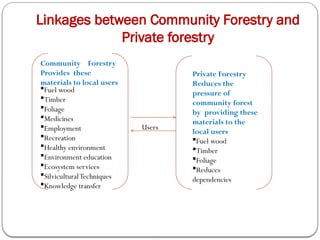
Linkages between Community Forestry and
Private forestry
Fuel wood
Timber
Foliage
Medicines
Employment
Recreation
Healthy environment
Environment education
Ecosystem services
SilviculturalTechniques
Knowledge transfer
Community Forestry
Provides these
materials to local users
Private Forestry
Reduces the
pressure of
community forest
by providing these
materials to the
local users
Fuel wood
Timber
Foliage
Reduces
dependencies
Users
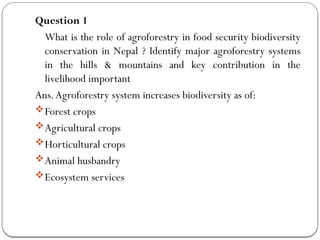
Question 1
What is the role of agroforestry in food security biodiversity
conservation in Nepal ? Identify major agroforestry systems
in the hills & mountains and key contribution in the
livelihood important
Ans.Agroforestry system increases biodiversity as of:
Forest crops
Agricultural crops
Horticultural crops
Animal husbandry
Ecosystem services
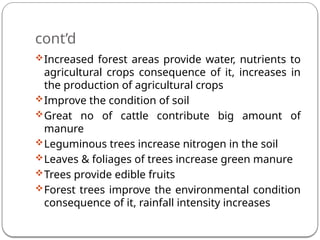
cont’d
Increased forest areas provide water, nutrients to
agricultural crops consequence of it, increases in
the production of agricultural crops
Improve the condition of soil
Great no of cattle contribute big amount of
manure
Leguminous trees increase nitrogen in the soil
Leaves & foliages of trees increase green manure
Trees provide edible fruits
Forest trees improve the environmental condition
consequence of it, rainfall intensity increases
Cont’d
 Due to improvement of agroforestry increases
in the production of the land
 More production more security of food
A. Major agroforestry systems in the hills
In context of Nepal, most of the agroforestry
systems are conventional types
Few systems are given below
1. In eastern Nepal (e. g. siris as a upper storey
and tea is in under storey) can be seen in Ilam,
Panchthar, Dhankuta, Terhathum districts.
Cont’d
2. Cardamom farming
In combination of Alnus nepalensis +cardamom
District (Ilam, Panchthar Taplejung, Dhankutta,
Sankhuwasabha, Terhathum, Bhojpur etc.
3. Home garden
In combination of kutmiro, khanyu, gogan trees in
boundary and vegetables in hilly areas)
4. Alley croping in rainfed areas in combination
Badahar+ gogan+Dar+Millet/Maize
5. In combination of Tree spp. and Coffee in Gulmi,
Arghakhanchi and palpa districts
Cont’d
6. Woodlots are on the top and below
agricultural field and on the bank of river to
protect from soil erosion in the all hilly areas of
Nepal)
In combination with rice/wheat and fodder trees
(kutmiro, badahar etc.)
B. In Mountain areas
1. Silvopasture – Scattered trees + pasture land + animals
(Yak, sheep, cow, horses) in all over the mountain areas
2. Alley cropping- in combination with painyu with jau
3. Potato with painyu
4. Bains with potato, maize, jau, wheat
Question 2
What are the problem & prospects of agroforestry in present political scenario
in Nepal ? Elaborate your answer with Sagarnath &Tamagadhi forest plantation
.
Ans.
History of Sagarnath and Tamagadhi plantation
1.Sagarnath Forest Development Committee
 Started in aiming to supply fuelwood in kathmandu valley
 More than 10,000.00 ha.
 Degraded mixed forest main sp was sal
 Taungya System had adopted
 Main spp. Eucalyptus camadulensis and Eucalyptus tereticornis
Cont’d
Coppice system is used
More than 2500 ha. Areas are under the
encroachment
Tried many times to remove them from there
by the District forest Office Sarlahi and
Sagarnath office in co-ordination with CDO and
police force however, no any achievement
History of Tamagadhi Plantation Area
Started since, 1972
Encroachers started to settle there illegally
GoN decided to settle there and introduced
TAUNGYA system
Planted major forest spp. Teak and sissoo and
agricultural crops are mustard and pulses
Now there is no any system
People are still settling there
They are removing trees and haphazard thinning
for their agricultural crops
Condition of the forest is deteriorating day by day
Cont’d
No good relationship with forest employee and
the settlers
They want to get out from there
Cont’d
Problems
 Only DFO and Sagarnath project staffs feel it is the big
problem
 Other members of the committee do not take it
seriously
 Encroachers are the voters of the local party members
 Local leaders do not take interest to evacuate them
from the project area
 Local administration do not take the burden seriously
 It is not functioning well even then the cabinet is not
amending the present structure
Cont’d
Present Political scenario
 No political commitment by the ministry
 Cabinet’s decisions are not implement in the field
A committee is already formed in the chairmanship of CDO and other
members are as follows
1) CDO…………………………………………………………. .Co-ordinator
2) Local Development officer (DDC)…………………………Member
3) District police officer Chief (Nepal Police)………........Member
4) District Police officer Chief (Armed Police Force)……Member
5) District Land Revenue Officer (Malpot Office)………..Member
6) District Cadastral Survey officer (Napiko Office)…….Member
7) Major 5 Parties political leaders at local level ………. Member
8) Local journalist……………………………………………….. ..Member
9) District Forest Officer (District Forest office)……….. Secretary
Cont’d
In present scenario, the encroachment evacuate
committee is not functioning well
All the committee members are not realizing
their responsibilities as forest organization
No commitment of the political leaders to take it
seriously
Political instability
Different political parties have different ideology
and do not recognize other parties ideology
consequent of it, cabinet’s decisions are not
implemented

Agroforestry for forestry student to .pptx

  • 1.
    Agroforestry By Shyam Kumar Chaudhary (UnderSecretary, Department of Forest) Masters in Forestry UPLB, Philippines
  • 2.
    Agroforestry Main features ofthe presentation 1. Introduction 2. Importance of agrofrestry and applications system 3. Appropriate technologies for agroforestry 4. Agroforestry practices in Nepal 5. SALT technology 6. Agroforestry systems in other countries 7. Existing Legal Provision and present condition of agroforestry in Nepal 8. Challenges of agroforestry 9. Achievements 10. Possible solutions 11. Conclusion 12. References
  • 3.
    1. Introduction Agroforestry Definitions Agroforestry couldbe defined as a practice of raising both tree and agricultural crops simultaneously in a given space and time. In the Nepalese perspective agroforestry is an old age practice. Recently, it has been receiving considerable attention due to the evidence that trees and agricultural crops could be managed simultaneously and guaranteed and sustainability of agricultural system. (Nepal forestry Handbook, 2067 B. S.)
  • 4.
    Cont’d Agroforestry is aland use management system in which trees or shrubs are grown around crops or pastureland. It combined agricultural and forestry technologies to create more and diverse, productive, profitable, healthy and sustainable land-use systems. (Encyclopedia)
  • 5.
    Cont’d  Agroforestry isa collective name for land-use systems and technologies where woody perennials (trees, shrubs, palms, bamboos, etc.) are deliberately used on the same land- management units as agricultural crops and/or animals, in some form of spatial arrangement or temporal sequence. In agroforestry systems there are both ecological and economical interactions between the different components (Lundgren and Raintree, 1982).
  • 6.
    Cont’d  This definitionimplies that:  agroforestry normally involves two or more species of plants (or plants and animals), at least one of which is a woody perennial;  an agroforestry system always has two or more outputs;  the cycle of an agroforestry system is always more than one year; and  even the simplest agroforestry system is more complex, ecologically (structurally and functionally) and economically, than a monocropping system.
  • 7.
  • 8.
  • 9.
    Cont’d  The theoreticalbase for agroforestry comes from ecology via agroecology from this perspective agroforestry is one of the three land-use science.The two are agriculture and forestry.
  • 10.
    2. Importance andapplications Benefits Ecoscaping-Agroforestry can be advantageous over conventional and forest production methods. They can offer increased productivity, economic benefits, and more diversity in the ecological goods and services provided. Biodiversity in agroforestry systems in typically higher than in conventional agricultural systems.With two or more interacting plant species in a given area. It creates a more complex habitat that can support a wider variety of birds, and other animals. Depending upon the application, impacts of agroforestry can incude
  • 11.
    Cont’d  Reducing povertythrough increased production of wood and other products  Contributing to food security by restoring the soil fertility for food crops  Cleaner water through reduced nutrient and soil runoff  Countering global warming and the risk of hunger by increasing the number of drought-resistant trees and the subsequent production of fruit, nuts and edible oils
  • 12.
    Cont’d  Reducing deforestationand pressure on woodlands by providing farm-grown fuelwood  Reducing or eliminating the need for toxic chemicals (insecticides, herbicides etc.)  Through more diverse farm outputs, improved human nutrition  In situation where people have limited access to mainstream medicines, providing growing spaces for medical plants
  • 13.
    Cont’d  Increased cropstability  Multifunctional site use i. e. crop production and animal grazing  Typically more drought resistant  Stabilizes depleted soils from erosion  Bioremediation
  • 14.
    Cont’d Other benefits fromagroforestry practice  Carbon sequestration  Odour, dust and noise reduction  Green space and visual aesthetics  Enhancement or maintenance of wildlife habitat
  • 15.
    Applications  Parklands (Treeswidely scattered over a large agricultural plots/pasture)  Shades systems (Tea garden under sirisTree)  Crop-cover tree systems (Cover crop for nutrient and soil conservation)  Alley cropping (Nitrogen fixing trees are planted in a single row and in between crops are grown in an alternate pattern)  Strip cropping (Trees or shrubs are planted in a wide strip )
  • 16.
    Cont’d  Fauna-based systems(Silvopasture, fish ponds and plantation in on the bank)  Boundary system (Wind breaks trees are planted around the crops)  Taungyas (Practice in new plantation )  Physical support system (Grapes and other vine crops are planted with the support of tree species)  Agroforest (Tropical home garden)
  • 17.
    3.Appropriate Technologies for Agroforestry InTeraiand Siwaliks I. Spacing design II. Choice of species III. Planting techniques IV. Pitting and planting V. Weeding VI. CleaningS VII. Thinning VIII. Pruning IX. Harvesting
  • 18.
    Cont’d In mountain areas I.Contouring II. Spacing design III. Choice of species IV. Planting techniques V. Pitting and planting VI. Weeding VII. Cleaning VIII. Thinning IX. Pruning X. Harvesting
  • 19.
    4.Agroforestry practices inNepal A. Farm based agroforestry system  Home garden ( e.g. Sisso with banana, pine apple, turmeric etc. in terai and kutmiro, khanyu, gogan+vegetable in hilly areas)  Trees in and around agricultural fields in rain fed areas (khanyu, kavro, kutmiro trees in the border of terraces and maize, millets, pulses etc in the center of the border trees)  Woodlots (on the top of the agricultural field and on the bank of river to protect from soil erosion in the hilly areas)  Commercial crops under tree (e.g. tea under siris in the eastern terai and cardamom under utis in the eastern hilly areas)  Intercropping with horticultural crops (mango +agricultural crops in terai)  Silvofishery system (Sisso, Ipil-Ipil plants raise on the bank of fish ponds )
  • 20.
    Cont’d B. Forest basedagroforestry system Tanungya system Started by GoN in 1972 atTamagadhi Bara district Eucalyptus + Sissoo +Teak with pulses, mustard and other crops Forest-based agroforestry Non-wood forest products in agroforestry Shifting cultivation Silvopastural practices Specific agricultural practices associated with forests
  • 21.
    Agroforestry Program inNepal  The government started at first Agroforestry in 1972 at Tamagadhi of Bara district as aTaungya System (Sissoo +Teak + agricultural crops)  Sagarnath Forest Development project in Sarlahi and Mahotari districts (Eucalyptus species + Agricultural crops)  Ratuwamai Plantation project Jhapa (Forest trees with maize)
  • 22.
    Choice of treespecies for agroforestry  Immediate and future use from the products  The quality and condition of planting site  Whether potentiality promising species are available  Potential combination possibility among trees, crops and livestock  Technical skills and labor involved in managing the trees
  • 23.
    What is currentsituation of these forests now ? TamagadhiTaungya Plantation  TheTaungya people are still there  Main forest spp. are sissoo and teak with pulse and mustard  They are removing the forest crops and giving priority to agricultural crops  Those areas are converting into agricultural land  Those areas are changing into permanent settlement
  • 24.
    Cont’d Sagarnath Forest DevelopmentProject  Main forest trees Eucalyptus camadulensis and Eucalyptus teriticornis  Agricultural Crops – Mustered and pulses  More than 2500 ha. areas are under the encroachment  DoF only cannot solve the problem  No agroforestry system is adopted
  • 25.
    Causes of unsuccessfulthe program  No, long term vision of the government  No, continuity to the program  Government has no priority to manage that area as a good forest  Political instability  Political parties used them as a vote bank  Government could not give alternatives for the settlement No good relationship betweenTaungya people and forest employee  The government could not realize them as helper
  • 26.
    5.Sloping Agricultural Land Technology(SALT) Sloping Agricultural LandTechnology (SALT-1) Multistoried sequential cropping Alley cropping In-row tillage Making anA-frame
  • 27.
    Cont’d  Preparing agroforestryplantations Selection of hedgerow species Uses of grasses in (SoilWater Conservation) SWC Vetiver grass in SWC Controlling unnecessary weeds Use pesticide Fire control in the uplands
  • 28.
    Cont’d  Annual croppingsystem Selection of cover crops Upland rice cultivation with agroforestry Upland cropping system Root crops for food, feed and income Cultural management of pest infestation  Seeds and plant propagation Timing of seed collection Seed processing
  • 29.
    Cont’d  Seed qualitytesting Hastening seed germination Seed treatment for better and faster germination Seed longevity Seed storage Tree nursery: establishment and management Vegetative propagation of fruit trees Rooting of cuttings in homemade chambers Out planting trees
  • 30.
    Cont’d Livestock production SimpleAgro-livestockTechnology (SALT-2) Plant-basedlivestock medication Low-cost goat housing Intensive feed garden  Home-lot technologies Medicinal uses of upland vegetation Bio-intensive gardening with agroforestry Mini-pond for water-limited areas Fertilizer from livestock and farm waste Liquid fertilizer from leguminous trees Basket composting
  • 31.
    Cont’d Trees and theirmanagement Sustainable agroforest land technology (SALT-3) Trees for farm boundaries Pruning of trees Fruit trees for harsh environments Bagging of young fruits Growing bamboos Shelterbelts
  • 32.
    Cont’d  Bank stabilization Neglectedspecies with potential for agroforestry Assessing the usefulness of indigenous trees for agroforestry Commonly used agroforestry species Middle to high understorey shade-tolerant species Nitrogen-fixing tree profiles Properties of some fuelwood species Conserving available fuelwood
  • 33.
     Lack ofapparent profit potential  Lack of demonstration sites  Expense of additional management  Lack of training or expertise  Lack of knowledge about where to market products  Lack of technical assistance  Cannot afford adoption or start up costs, including costs of time
  • 34.
    Fig Sloping AgriculturalLand Technology
  • 35.
    FigTrees with coffeein sloping areas
  • 36.
  • 37.
  • 38.
    A model ofAgroforestry
  • 39.
    Fig Combination patternsof different crops
  • 40.
  • 41.
    Cont’d Fig A traditionalagroforestry model in hilly areas
  • 42.
    Fig A goodpattern of agroforestry in Nepal
  • 43.
    A good modelof agroforestry practice
  • 44.
  • 45.
    FigTea garden withshade trees
  • 46.
  • 48.
    Cont’d B. Forest basedagroforestry system Tanungya system Started by GoN in 1972 atTamagadhi Bara district Eucalyptus+Sissoo+Teak with pulses, mustard and other crops Forest-based agroforestry Non-wood forest products in agroforestry Shifting cultivation Silvopastural practices Specific agricultural practices associated with forests
  • 49.
    Agroforestry Program inNepal  The government started at first Agroforestry in 1972 at Tamagadhi of Bara district as aTaungya System (Sissoo +Teak + agricultural crops)  Sagarnath Forest Development project in Sarlahi and Mahotari districts (Eucalyptus species + Agricultural crops)  Ratuwamai Plantation project Jhapa (Forest trees with maize)
  • 50.
    What is currentsituation of these forests now ? TamagadhiTaungya Plantation  TheTaungya people are still there  Main forest spp. are sissoo and teak with pulse and mustard  They are removing the forest crops and giving priority to agricultural crops  Those areas are converting into agricultural land  Those areas are changing into permanent settlement
  • 51.
    Cont’d Sagarnath Forest DevelopmentProject  Main forest trees Eucalyptus camadulensis and Eucalyptus teriticornis  Agricultural Crops – Mustered and pulses  More than 2500 ha. areas are under the encroachment  DoF only cannot solve the problem  No agroforestry system is adopted
  • 52.
    Causes of unsuccessfulthe program  No, long term vision of the government  No, continuity to the program  Government has no priority to manage that area as a good forest  Political instability  Political parties used them as a vote bank  Government could not give alternatives for the settlement
  • 53.
    Cont’d  No goodrelationship betweenTaungya people and forest employee  The government could not realize them as helper
  • 54.
    Choice of treespecies for agroforestry  Immediate and future use from the products  The quality and condition of planting site  Whether potentiality promising species are available  Potential combination possibility among trees, crops and livestock  Technical skills and labor involved in managing the trees
  • 55.
    Agroforetry species indifferent physiographic Zone (Indigenous spp.) Physiographic Zone Botanical name Local name Terai/Siwalik Albizia spp Siris Artocarpus lakucha Badahar Dalbergia sissoo Sissoo Ficus semicordata Khanyu Ficus subincisa Berulo Middle Mountain Albizia spp Siris Alnus nepalensis Utis Bauhinia spp. Tanki/Koiralo Ficus semicordata Khanyu
  • 56.
    Cont’d Middle Mountain Erythrinaarborea Faledo Melia azedarach Bakaino Morus alba Kimbu Bohemeria regulosa Dar Premma latifolia Ginderi Litsea monopetela Patmiro Banbusa spp. Bans Ficus lacor Kavro High Mountain Juglans regia Okahar Populas spp. Lahare pipal Prunus cerasoidis Panyu High Himal Salix species Bains Prunus cerasoidis Panyu (Source- Nepal Forestry Handbook,2010)
  • 57.
    Agroforetry species indifferent physiographic Zone (Exotic spp.) Terai/Siwalik Botanical name Cassia siamea Indigoferra spp. Melia azedarach Giant variety Luceana leucocephala Populas spp. Eucaluptus species Middle Mountain Luceana leucocephala High Mountain Robinia pseudoacacia High Himal Robinia pseudoacacia (Source- Nepal Forestry Handbook,2010)
  • 58.
    6.Agroforestry Systems inother countries Haryana, and other part of the india Model 1 Combination of Forest trees are in bund and agricultural crops are in the middle Model 2 Combination ofWheat + Mango/Litchi + populas spp. Model 3 Combination ofWheat + Mango/ Litchi + Eucalyptus species
  • 59.
    Cont’d Philippines Modality 1 Coffee+ Banana+Guyabano+ Piper Modality 2 Peanut + Pine apple + Papaya+ Mahogany tree Modality 3 offee+ Banana+ Guyabano tree + Piper + Pig farming
  • 60.
    7.Existing Legal Provisionsfor the agroforestry Jfg P]gdf ePsf] k|fjwfg Jfg P]g, @)$( sf] kl/R5]b ^ sf] sa'lnolt jg ;DalGw Joj:yfsf] bkmf #! -3_ df jgsf] ;+/If0f / ljsf; x'g] u/L s[lif jg afnL sfo{ ;+rfng ug{ sa'lnolt jgdf nfu' ul/Psf] s[lif jg k|0ffnLx? ?v lj?jfx? ;+u 3fF;x? nufpg] ?v lj?jfx? ;+u kmnkm"nsf lj?jfx? Nfufpg] ?v lj?jf ;+u 3fF; tyf kz'kfng ug]{ ?v lj?jf ;+u kf]v/L agfP/ df5f kfng ug]{
  • 61.
    8. Challenges  Agroforestryis relevant to almost all environments and is a potential response to common problems around the globe, and agroforestry systems can be advantageous compared to conventional agriculture or forestry.  Lack of developed markets for products  Unfamiliarity with technologies  Lack of awareness of successful agroforestry examples  Competition between trees, crops, and animals  Lack of financial assistance
  • 62.
    Cont’d  Lack ofknowledge about where to market products  Lack of technical assistance  Cannot afford adoption or start up costs, including costs of time  Unfamiliarity with alternative marketing approaches  Unavailability of information about agroforestry  Apparent inconvenience
  • 63.
    9.Achievements  Very goodresults of Leasehold Program  Improved in livelihood of marginalized people who are involved in leasehold forestry group  Improved in the environmental condition of the forest  Increased in the no of livestock  Increased awareness level of the community  Relationship between forest organization and leasehold forest groups has increased
  • 64.
    Cont’d  Institutional developmentof the Leasehold Forest User Group (LFUG)  International recognition of Leasehold Forestry in short time  Learning for the private forestry
  • 65.
    10.Possible Solutions Making policy,laws and necessary directives for the development of leasehold forestry Agroforestry Programs should be given both Forest and Agriculture ministry Frequent co-ordination should be done between Forest ministry and agriculture ministry and also at the different levels of the corresponding departments Planning should be done jointly at the district level
  • 66.
    Cont’d Agroforestry program shouldgiven to private farmers too Action researches should be conducted at the field level Necessary technologies/trainings should be provided to local level staffs and also to private farmers by concerning organizations according to their need Appropriate laws and policies should be prepared for the groups and private farmers to sell their products in the market easily
  • 67.
    Cont’d  If possible,financial supports should be provided to the farmers that they can develop their enterprise
  • 68.
    11. Conclusion Agroforestry –This system can be advantageous over conventional agricultural and forest production methods. They can offer increased productivity, economic benefits and more diversity in the ecological goods and services provided. This system is typically higher than conventional agricultural systems with two or more interacting plant species in a given land area. This system very suitable in the different physiographic zones of Nepal for the improvement of physical condition as well as well being of all people.
  • 69.
    Jfg P]g, @)$(df lghL jg ;DalGw Joj:yf lghL jg – eGgfn] k|rlnt sfg"g jdf]lhd s'g} JolStsf] xs k'Ug] lghL hUufdf nufO{ x'sf{Psf] jf ;+/If0f ul/Psf] jg ;Demg' k5{ . lghL jg k|a4{gsfnflu b]lvPsf ;d:ofx? != pTkfbg cl3sf] ;d:of @= pTkfbgdf ;d:of #= pTkfbg kl5sf] ;d:of
  • 70.
    qmdzM != pTkfbg cl3sf];d:of !=! Kfl/efiff c:ki6 /x]sf] !=@ aLp÷la?jfsf] u'0f:t/ !=# ;/sf/sf] k|fyldstfdf g/xg' !=$ s[ifsnfO{ dfu cg';f/sf] tflndsf] Joj:yf gx'g' !=% k|hftLdf k|ltaGw nufpg' @= pTkfbgdf ;d:of @=! Jfg ;Da4{gdf / /f]u nfu]sf] cj:yfdf ;/ ;Nnfx ;dodf pknAw u/fpg g;Sg'
  • 71.
    qmdzM @=! Jfg k|df0fLs/0fdfWofg glbg' #= pTkfbg kl5sf] ;d:of #=! lghL Jfgsf] sf7df klg cf];f/ k;f/df nfdf] k|s[of k'/f ug{' kg]{ #=@ lghL jgsf] k|df0fLs/0f x'g g;s]/ prLt d"No kfpg g;Sg' #=# lghL jgsf] of]ubfgsf] sxL pNn]v gx'g' #=$ xs c;'/lIft / ladfsf] Joj:yf gx'g' #=% sfj{g Jofkf/df ;/sf/n] lghL jg wgLx?nfO{ ;xefuL u/fpg g;Sg'
  • 72.
    qmdzM #=^ jg k}bfjf/dfcfwfl/t pBf]u :yfkgsf nflu b"/L lgwf{/0fsf] k|fjwfg emGeml6nf] #=& lghL jg ljsf;sfnflu ;/sf/n] nufgLsf]nflu pko'St jftfj/0f tof/ ug{ g;Sg'
  • 73.
    lghL jg k|a4{gsfnfluePsf gLlt lgodx? s= gLltut Joj:yf  g]kfnsf] cGtl/d ;+ljwfg, @)^# n] ;Dkltsf] :jtGq xs sfod u/]sf]  Jfg ljsf; u'? of]hgf, @)$% n] lghL jgnfO{ klxnf] k| fyldstfdf /fv]sf]  jg P]g, @)$( df lghL jgsf] :yfkgfsf] Joj:yf u/]sf]  lghL jg ljsf; lgb]{lzsf, @)^* s]xL pbf/ /x]sf]  /fli6«o e"–pkof]u gLlt, @)^( n] lghL jgsf] Joj:yf u/]sf]
  • 74.
    qmdzM v= ;+:yfut Joj:yf Jfg ljefun] cfkm} / dftxtsf lgsfox?af6 lgMz'Ns lj?jf ljt/0f ug]{ u/]sf]  lghL jg btf{sfnflu lhNnf jg sfof{nox?af6 ;xof]u x+'b} cfPsf]  lghL jgdf tof/ eO{ laqmL lat/0fsf ;Dk"0f{ k|s[of -s6fg, d'5fg, ;+sng tyf cf];f/ k;f/_ df O{nfsf, ;]S6/ tyf lh= j= sf= n] ;xof]u ug]{ u/]sf] u= Eff}lts pknAwL  xfn;Dd pknAw tYof+s cg';f/, @$%% j6f lghL jg btf{ eO{ @#^) x]= lghL jg :yfkgf ePsf] 5 .  lghL jgaf6 k|r'/ dfqfdf hgtfx?nfO{ jg k}bfjf/x? pknAw x'b} cfPsf] 5 .  lghL :t/df klg lghL jg g;{/Lx?af6 Joj;flos ?kdf lj?jfx? pTkfbg eO{ hgtfx? nfO{ pknAw x+'b} cfPsf] 5 . 3= cfly{s cj:yf  g]kfn ljZj Jofkf/ ;+u7gsf] ;b:o ePsf] 5 .  jg ljsf; sf]ifdf lghL jgsf] sf7 bfp/fsf] laqmLaf6 7"nf] /sd hDdf ePsf] 5 .
  • 75.
    Linkages between CommunityForestry and Private forestry Fuel wood Timber Foliage Medicines Employment Recreation Healthy environment Environment education Ecosystem services SilviculturalTechniques Knowledge transfer Community Forestry Provides these materials to local users Private Forestry Reduces the pressure of community forest by providing these materials to the local users Fuel wood Timber Foliage Reduces dependencies Users
  • 76.
    Question 1 What isthe role of agroforestry in food security biodiversity conservation in Nepal ? Identify major agroforestry systems in the hills & mountains and key contribution in the livelihood important Ans.Agroforestry system increases biodiversity as of: Forest crops Agricultural crops Horticultural crops Animal husbandry Ecosystem services
  • 77.
    cont’d Increased forest areasprovide water, nutrients to agricultural crops consequence of it, increases in the production of agricultural crops Improve the condition of soil Great no of cattle contribute big amount of manure Leguminous trees increase nitrogen in the soil Leaves & foliages of trees increase green manure Trees provide edible fruits Forest trees improve the environmental condition consequence of it, rainfall intensity increases
  • 78.
    Cont’d  Due toimprovement of agroforestry increases in the production of the land  More production more security of food A. Major agroforestry systems in the hills In context of Nepal, most of the agroforestry systems are conventional types Few systems are given below 1. In eastern Nepal (e. g. siris as a upper storey and tea is in under storey) can be seen in Ilam, Panchthar, Dhankuta, Terhathum districts.
  • 79.
    Cont’d 2. Cardamom farming Incombination of Alnus nepalensis +cardamom District (Ilam, Panchthar Taplejung, Dhankutta, Sankhuwasabha, Terhathum, Bhojpur etc. 3. Home garden In combination of kutmiro, khanyu, gogan trees in boundary and vegetables in hilly areas) 4. Alley croping in rainfed areas in combination Badahar+ gogan+Dar+Millet/Maize 5. In combination of Tree spp. and Coffee in Gulmi, Arghakhanchi and palpa districts
  • 80.
    Cont’d 6. Woodlots areon the top and below agricultural field and on the bank of river to protect from soil erosion in the all hilly areas of Nepal) In combination with rice/wheat and fodder trees (kutmiro, badahar etc.) B. In Mountain areas 1. Silvopasture – Scattered trees + pasture land + animals (Yak, sheep, cow, horses) in all over the mountain areas 2. Alley cropping- in combination with painyu with jau 3. Potato with painyu 4. Bains with potato, maize, jau, wheat
  • 81.
    Question 2 What arethe problem & prospects of agroforestry in present political scenario in Nepal ? Elaborate your answer with Sagarnath &Tamagadhi forest plantation . Ans. History of Sagarnath and Tamagadhi plantation 1.Sagarnath Forest Development Committee  Started in aiming to supply fuelwood in kathmandu valley  More than 10,000.00 ha.  Degraded mixed forest main sp was sal  Taungya System had adopted  Main spp. Eucalyptus camadulensis and Eucalyptus tereticornis
  • 82.
    Cont’d Coppice system isused More than 2500 ha. Areas are under the encroachment Tried many times to remove them from there by the District forest Office Sarlahi and Sagarnath office in co-ordination with CDO and police force however, no any achievement
  • 83.
    History of TamagadhiPlantation Area Started since, 1972 Encroachers started to settle there illegally GoN decided to settle there and introduced TAUNGYA system Planted major forest spp. Teak and sissoo and agricultural crops are mustard and pulses Now there is no any system People are still settling there They are removing trees and haphazard thinning for their agricultural crops Condition of the forest is deteriorating day by day
  • 84.
    Cont’d No good relationshipwith forest employee and the settlers They want to get out from there
  • 85.
    Cont’d Problems  Only DFOand Sagarnath project staffs feel it is the big problem  Other members of the committee do not take it seriously  Encroachers are the voters of the local party members  Local leaders do not take interest to evacuate them from the project area  Local administration do not take the burden seriously  It is not functioning well even then the cabinet is not amending the present structure
  • 86.
    Cont’d Present Political scenario No political commitment by the ministry  Cabinet’s decisions are not implement in the field A committee is already formed in the chairmanship of CDO and other members are as follows 1) CDO…………………………………………………………. .Co-ordinator 2) Local Development officer (DDC)…………………………Member 3) District police officer Chief (Nepal Police)………........Member 4) District Police officer Chief (Armed Police Force)……Member 5) District Land Revenue Officer (Malpot Office)………..Member 6) District Cadastral Survey officer (Napiko Office)…….Member 7) Major 5 Parties political leaders at local level ………. Member 8) Local journalist……………………………………………….. ..Member 9) District Forest Officer (District Forest office)……….. Secretary
  • 87.
    Cont’d In present scenario,the encroachment evacuate committee is not functioning well All the committee members are not realizing their responsibilities as forest organization No commitment of the political leaders to take it seriously Political instability Different political parties have different ideology and do not recognize other parties ideology consequent of it, cabinet’s decisions are not implemented
Editor's Notes