(NU) - The dusty stereotype of
grandparents spending their 70s
and 80s in a nursing home is fad-
ing fast, replaced by stories of sky-
diving seniors and engaged elders
contributing to their communities.
Today’s seniors are consider-
ably healthier and more active
than their grandparents, and they
are remaining in their own homes
far longer than generations past.
Of course, healthy eating and
daily activity are keys to inde-
pendent living into advanced age,
but researchers also point to less
obvious, equally important indi-
cators. These include maintain-
ing a sense of purpose, using the
health care system effectively,
adapting the home environment
and, perhaps most importantly,
staying socially active with fam-
ily, friends, and the community.
“In our experience, the com-
bination of healthy lifestyle
choices and social engagement is
critical to people extending their
independent living years,” says
Dr. Philip Painter, chief medical
officer for Humana at Home, Hu-
mana’s chronic disease manage-
ment program that helps nearly
1 million people deal with dia-
betes, congestive heart failure and
other conditions.
Aging at home means think-
ing beyond medications and med-
ical procedures, utilizing the
health care system effectively and
taking advantage of the tools it
offers, Painter adds.
As value becomes more im-
portant in our health care system,
primary care physicians are act-
ing as quarterbacks of their pa-
tients’health, overseeing and co-
ordinating all aspects of care,
including resources for social en-
gagement and unexpected med-
ication side effects.
Some medications, for exam-
ple, affect appetite and nutrient
absorption. Loneliness and grief
can also play a role in malnour-
ishment, leading to additional
health issues, which is why it’s
important to keep in touch with
your doctor and let him or her act
as an overall health counselor.
The health plans people
choose also help with successful
aging at home. Some plans, for
example, include exercise and/or
wellness programs.
It’s also a good idea to consult
experts, often found through lo-
cal senior service agencies, on
making homes safer by reducing
tripping hazards such as rugs and
cords; installing grab bars and
hand rails where needed; and im-
proving lighting.
Besides the advanced emer-
gency alert systems that some
health companies employ, others
like Humana are testing new tech-
nologies to help people more safe-
ly transition from hospital to home
after a surgery and prevent unnec-
essary readmissions. By being
open-minded to the vast array of
telehealth tools, you can stay con-
nected and in your home longer.
Visit Humana.com/learning-
center for additional information
and health tips.
ForeverYoung: How Seniors Can
Stay Happy and Healthy at Home
SENIORS
NewsUSA
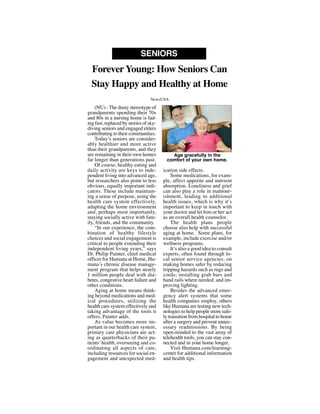
Age gracefully in the
comfort of your own home.
NewsUSA

AgingAtHome

  • 1.
    (NU) - Thedusty stereotype of grandparents spending their 70s and 80s in a nursing home is fad- ing fast, replaced by stories of sky- diving seniors and engaged elders contributing to their communities. Today’s seniors are consider- ably healthier and more active than their grandparents, and they are remaining in their own homes far longer than generations past. Of course, healthy eating and daily activity are keys to inde- pendent living into advanced age, but researchers also point to less obvious, equally important indi- cators. These include maintain- ing a sense of purpose, using the health care system effectively, adapting the home environment and, perhaps most importantly, staying socially active with fam- ily, friends, and the community. “In our experience, the com- bination of healthy lifestyle choices and social engagement is critical to people extending their independent living years,” says Dr. Philip Painter, chief medical officer for Humana at Home, Hu- mana’s chronic disease manage- ment program that helps nearly 1 million people deal with dia- betes, congestive heart failure and other conditions. Aging at home means think- ing beyond medications and med- ical procedures, utilizing the health care system effectively and taking advantage of the tools it offers, Painter adds. As value becomes more im- portant in our health care system, primary care physicians are act- ing as quarterbacks of their pa- tients’health, overseeing and co- ordinating all aspects of care, including resources for social en- gagement and unexpected med- ication side effects. Some medications, for exam- ple, affect appetite and nutrient absorption. Loneliness and grief can also play a role in malnour- ishment, leading to additional health issues, which is why it’s important to keep in touch with your doctor and let him or her act as an overall health counselor. The health plans people choose also help with successful aging at home. Some plans, for example, include exercise and/or wellness programs. It’s also a good idea to consult experts, often found through lo- cal senior service agencies, on making homes safer by reducing tripping hazards such as rugs and cords; installing grab bars and hand rails where needed; and im- proving lighting. Besides the advanced emer- gency alert systems that some health companies employ, others like Humana are testing new tech- nologies to help people more safe- ly transition from hospital to home after a surgery and prevent unnec- essary readmissions. By being open-minded to the vast array of telehealth tools, you can stay con- nected and in your home longer. Visit Humana.com/learning- center for additional information and health tips. ForeverYoung: How Seniors Can Stay Happy and Healthy at Home SENIORS NewsUSA Age gracefully in the comfort of your own home. NewsUSA