Applying scientific thinking
in the service of society
African Open Science Platform
Presented by Ina Smith - @ismonet
Project Manager, African Open Science Platform
SANLiC 2019, Cape Town
25 June 2019
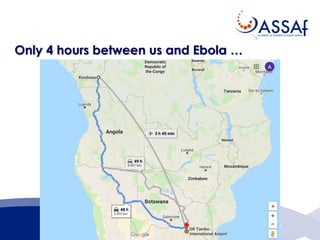
Only 4 hours between us and Ebola …
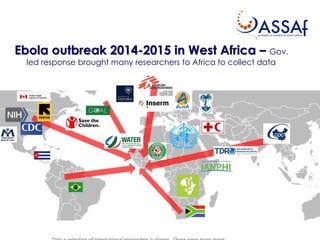
Ebola outbreak 2014-2015 in West Africa – Gov.
led response brought many researchers to Africa to collect data
Ebola outbreak 2014-2015
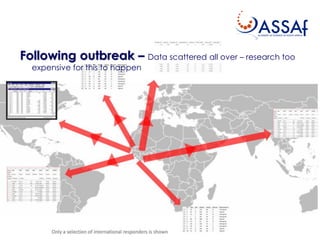
Following outbreak – Data scattered all over – research too
expensive for this to happen
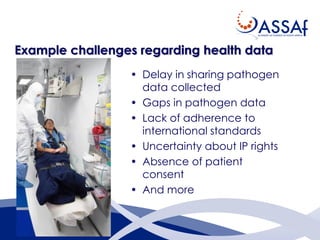
Example challenges regarding health data
• Delay in sharing pathogen
data collected
• Gaps in pathogen data
• Lack of adherence to
international standards
• Uncertainty about IP rights
• Absence of patient
consent
• And more
Collaboration among countries, institutions, projects,
researchers – sharing resources; free flow of data,
research, knowledge
Trust relationships, openness, transparency – trusting
others for having your best interest at heart, and not
because of the profits they can make from your
research
Key to address challenges – principles
supported through AOSP
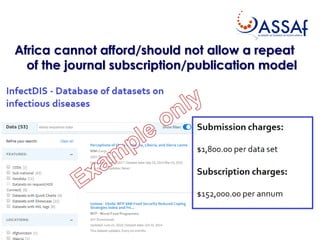
Africa cannot afford/should not allow a repeat
of the journal subscription/publication model
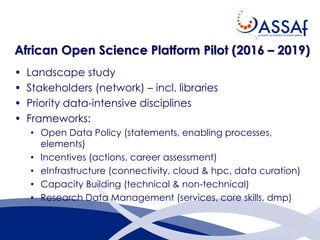
African Open Science Platform Pilot (2016 – 2019)
• Landscape study
• Stakeholders (network) – incl. libraries
• Priority data-intensive disciplines
• Frameworks:
• Open Data Policy (statements, enabling processes,
elements)
• Incentives (actions, career assessment)
• eInfrastructure (connectivity, cloud & hpc, data curation)
• Capacity Building (technical & non-technical)
• Research Data Management (services, core skills, dmp)
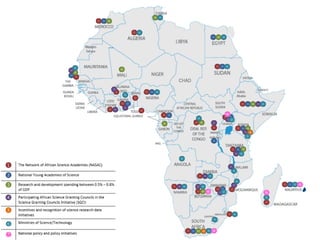
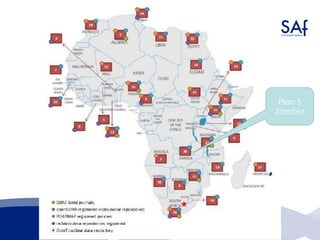
Plan S
Zambia
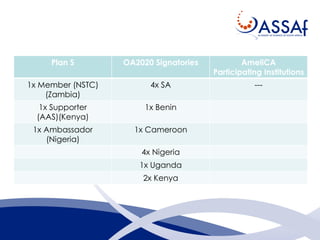
Plan S OA2020 Signatories AmeliCA
Participating Institutions
1x Member (NSTC)
(Zambia)
4x SA ---
1x Supporter
(AAS)(Kenya)
1x Benin
1x Ambassador
(Nigeria)
1x Cameroon
4x Nigeria
1x Uganda
2x Kenya
What is Open Science?
“Open Science is the practice of science in
such a way that others can collaborate and
contribute, where research data, lab notes
and other research processes are freely
available, under terms that enable reuse,
redistribution and reproduction of the research
and its underlying data and methods.” - FOSTER
Project, funded by the European Commission
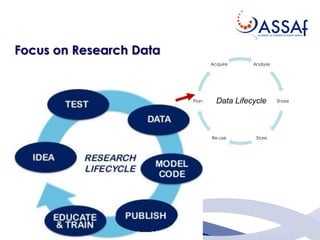
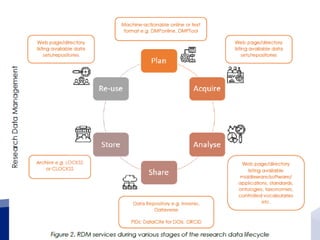
Analyse
Share
StoreRe-use
Plan
Acquire
Data Lifecycle
Focus on Research Data
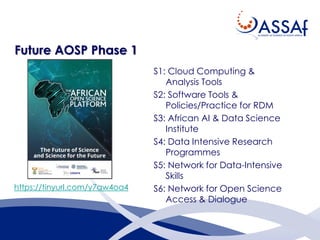
Future AOSP Phase 1
S1: Cloud Computing &
Analysis Tools
S2: Software Tools &
Policies/Practice for RDM
S3: African AI & Data Science
Institute
S4: Data Intensive Research
Programmes
S5: Network for Data-Intensive
Skills
S6: Network for Open Science
Access & Dialogue
https://tinyurl.com/y7aw4oa4
Future AOSP Phase 1 Vision
“African scientists are at the cutting edge of
contemporary, data-intensive science as a
fundamental resource for a modern society. They
are innovative global exponents and advocates of
Open Science, and leaders in addressing African
and Global Challenges.”
Source: The Future of Science and Science of the Future
https://tinyurl.com/y7aw4oa4
Similar to European Open Science Cloud
"We are not building the future EOSC from scratch,
but will be starting from what members of the
community worked in the last years: inclusiveness is
going to be critical, especially in regions whose
voice has not been heard enough so far." -
Cathrin Stöver, Chief Collaboration Officer, GÉANT
Future AOSP Phase 1 Mission
“The Platform is:
•a federated system that provides scientists and
other societal actors with the means to find, deposit,
manage, share and reuse data, software and
metadata in pursuing their interests;
•a network providing connective tissue between
dispersed actors in ….”
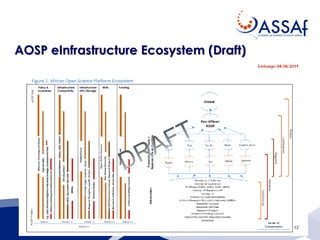
AOSP eInfrastructure Ecosystem (Draft)
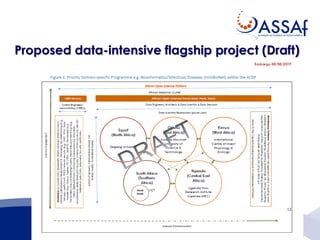
Proposed data-intensive flagship project (Draft)
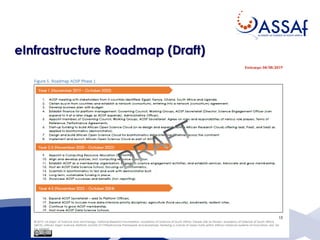
eInfrastructure Roadmap (Draft)
South Africa White Paper on STI
“As part of its commitment to African STI cooperation,
South Africa will also work to advance the open science
agenda elsewhere on the continent and within regional
frameworks. The strategic role of the African Open
Science Platform, hosted by the Academy of Science of
South Africa, which promotes African-wide
development and coordination of data policies, data
training and data infrastructure, will be leveraged with
the support of the DST and the National Research
Foundation (NRF).”
STI Strategy for Africa 2024 - Priorities for the
African research community
1. disease prevention & control;
2. climate resilience (disaster risk);
3. environmental protection (biosphere, hydrosphere);
4. food and nutritional security;
5. smart resilient cities;
6. achieving sustainability goals;
7. improved knowledge production;
8. improved intra-Africa research collaboration.
SGCI Statement of Principles and Actions: Social
and Economic Impact of Research (2018)
“Governance, Risk Management and Compliance
(GRC) participants should support and advocate for the
development and use of Open Science platforms that
widen access to knowledge and allow integrated
problem solving at a potentially transformative (as
opposed to incremental) scale.
GRC participants should commit funding towards the
development of the human capital necessary for
leveraging the potential of Big Data, as well as invest in
the infrastructure required materialising Open Science
platforms.”
Africa cannot have enough trusted, well curated
FAIR data – as open as possible, as closed necessary
Data can exist without information, but information
cannot exist without data – data the evidence
Pro-actively address data as part of 4IR – data-
driven research
Start somewhere – build our own reputable research
infrastructures, reduce unhealthy dependence on
the North
Thank you!
ina@assaf.org.za
http://africanopenscience.org.za

African Open Science Platform

  • 1.
    Applying scientific thinking inthe service of society African Open Science Platform Presented by Ina Smith - @ismonet Project Manager, African Open Science Platform SANLiC 2019, Cape Town 25 June 2019
  • 2.
    Only 4 hoursbetween us and Ebola …
  • 3.
    Ebola outbreak 2014-2015in West Africa – Gov. led response brought many researchers to Africa to collect data
  • 4.
    Ebola outbreak 2014-2015 Followingoutbreak – Data scattered all over – research too expensive for this to happen
  • 5.
    Example challenges regardinghealth data • Delay in sharing pathogen data collected • Gaps in pathogen data • Lack of adherence to international standards • Uncertainty about IP rights • Absence of patient consent • And more
  • 6.
    Collaboration among countries,institutions, projects, researchers – sharing resources; free flow of data, research, knowledge Trust relationships, openness, transparency – trusting others for having your best interest at heart, and not because of the profits they can make from your research Key to address challenges – principles supported through AOSP
  • 7.
    Africa cannot afford/shouldnot allow a repeat of the journal subscription/publication model
  • 10.
    African Open SciencePlatform Pilot (2016 – 2019) • Landscape study • Stakeholders (network) – incl. libraries • Priority data-intensive disciplines • Frameworks: • Open Data Policy (statements, enabling processes, elements) • Incentives (actions, career assessment) • eInfrastructure (connectivity, cloud & hpc, data curation) • Capacity Building (technical & non-technical) • Research Data Management (services, core skills, dmp)
  • 11.
  • 12.
    Plan S OA2020Signatories AmeliCA Participating Institutions 1x Member (NSTC) (Zambia) 4x SA --- 1x Supporter (AAS)(Kenya) 1x Benin 1x Ambassador (Nigeria) 1x Cameroon 4x Nigeria 1x Uganda 2x Kenya
  • 13.
    What is OpenScience? “Open Science is the practice of science in such a way that others can collaborate and contribute, where research data, lab notes and other research processes are freely available, under terms that enable reuse, redistribution and reproduction of the research and its underlying data and methods.” - FOSTER Project, funded by the European Commission
  • 14.
  • 16.
    Future AOSP Phase1 S1: Cloud Computing & Analysis Tools S2: Software Tools & Policies/Practice for RDM S3: African AI & Data Science Institute S4: Data Intensive Research Programmes S5: Network for Data-Intensive Skills S6: Network for Open Science Access & Dialogue https://tinyurl.com/y7aw4oa4
  • 17.
    Future AOSP Phase1 Vision “African scientists are at the cutting edge of contemporary, data-intensive science as a fundamental resource for a modern society. They are innovative global exponents and advocates of Open Science, and leaders in addressing African and Global Challenges.” Source: The Future of Science and Science of the Future https://tinyurl.com/y7aw4oa4
  • 18.
    Similar to EuropeanOpen Science Cloud "We are not building the future EOSC from scratch, but will be starting from what members of the community worked in the last years: inclusiveness is going to be critical, especially in regions whose voice has not been heard enough so far." - Cathrin Stöver, Chief Collaboration Officer, GÉANT
  • 19.
    Future AOSP Phase1 Mission “The Platform is: •a federated system that provides scientists and other societal actors with the means to find, deposit, manage, share and reuse data, software and metadata in pursuing their interests; •a network providing connective tissue between dispersed actors in ….”
  • 20.
  • 21.
  • 22.
  • 23.
    South Africa WhitePaper on STI “As part of its commitment to African STI cooperation, South Africa will also work to advance the open science agenda elsewhere on the continent and within regional frameworks. The strategic role of the African Open Science Platform, hosted by the Academy of Science of South Africa, which promotes African-wide development and coordination of data policies, data training and data infrastructure, will be leveraged with the support of the DST and the National Research Foundation (NRF).”
  • 24.
    STI Strategy forAfrica 2024 - Priorities for the African research community 1. disease prevention & control; 2. climate resilience (disaster risk); 3. environmental protection (biosphere, hydrosphere); 4. food and nutritional security; 5. smart resilient cities; 6. achieving sustainability goals; 7. improved knowledge production; 8. improved intra-Africa research collaboration.
  • 25.
    SGCI Statement ofPrinciples and Actions: Social and Economic Impact of Research (2018) “Governance, Risk Management and Compliance (GRC) participants should support and advocate for the development and use of Open Science platforms that widen access to knowledge and allow integrated problem solving at a potentially transformative (as opposed to incremental) scale. GRC participants should commit funding towards the development of the human capital necessary for leveraging the potential of Big Data, as well as invest in the infrastructure required materialising Open Science platforms.”
  • 26.
    Africa cannot haveenough trusted, well curated FAIR data – as open as possible, as closed necessary Data can exist without information, but information cannot exist without data – data the evidence Pro-actively address data as part of 4IR – data- driven research Start somewhere – build our own reputable research infrastructures, reduce unhealthy dependence on the North
  • 27.