Information Processing Approach
ContentsOverview of the information processing approachMemory systemsInformation processing in the child
OverviewHuman mind is like a computerLimited capacity associated with ‘hardware’ and ‘software’	- Eg. Hardware of the mind  nervous system, software  strategies, mental ‘programmes’ that affect information processingEmphasizes basic mental processes involved in attention, perception, memory, and decision making
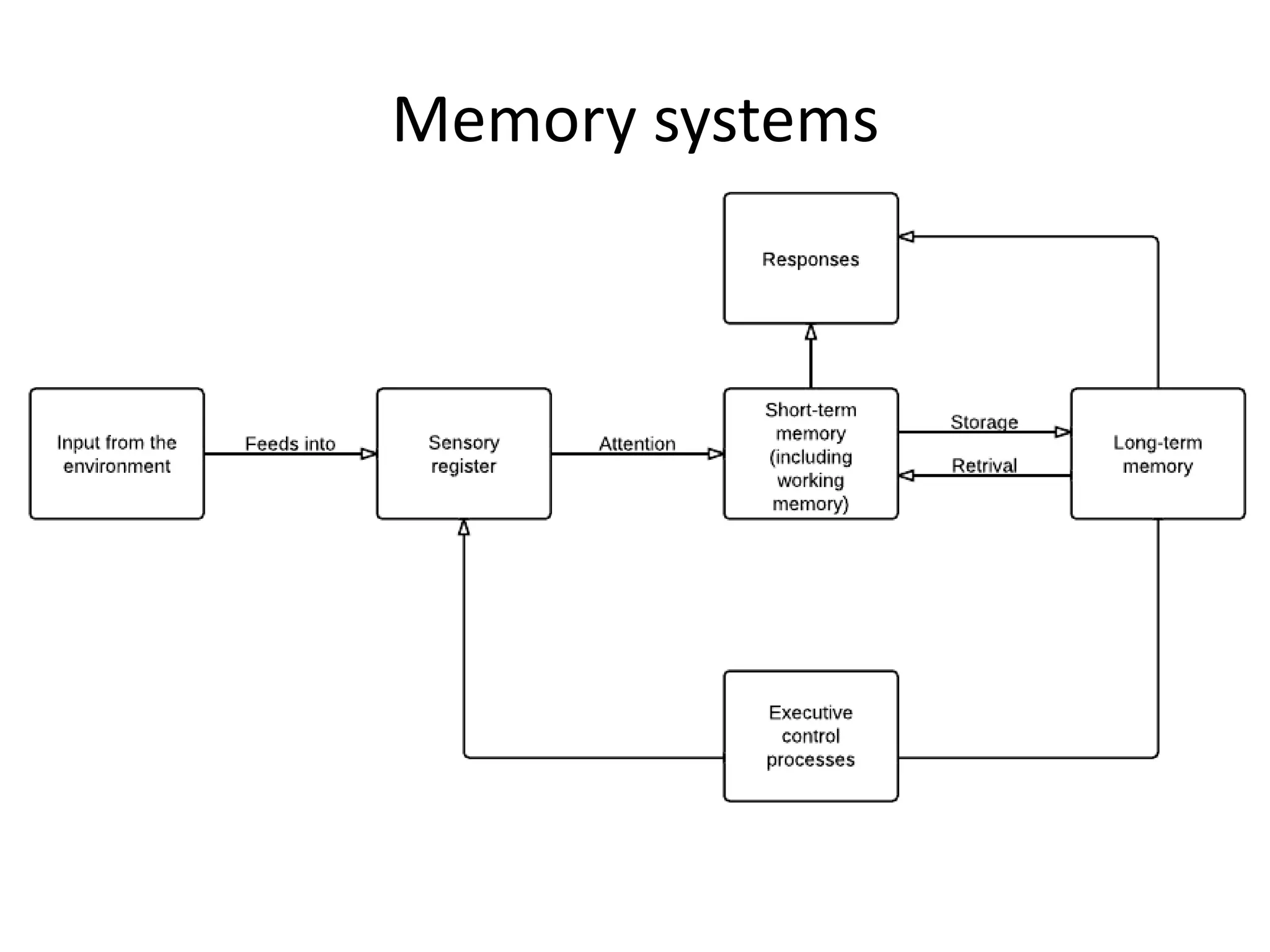
Memory systems
Memory systems
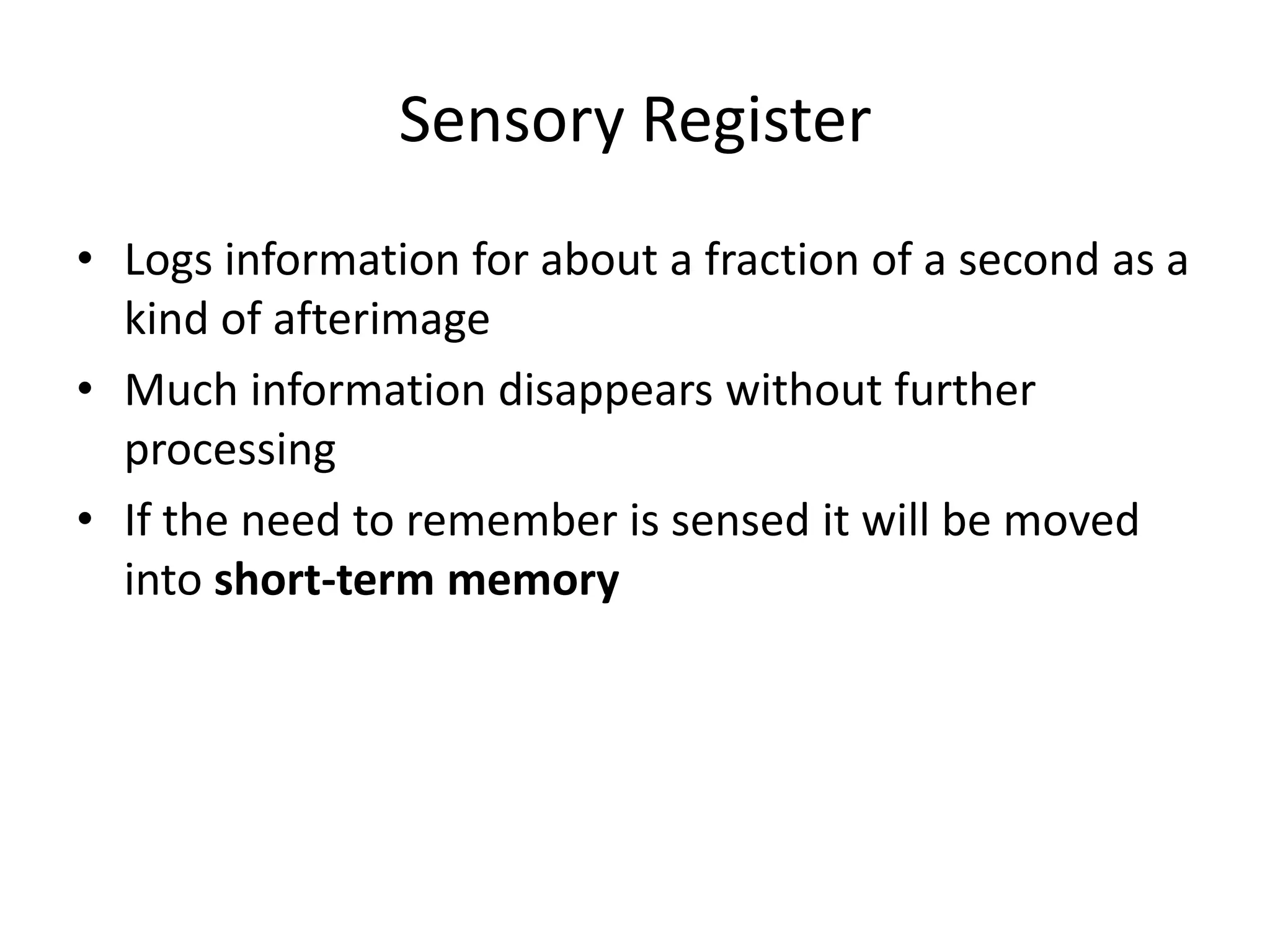
Sensory RegisterLogs information for about a fraction of a second as a kind of afterimageMuch information disappears without further processingIf the need to remember is sensed it will be moved into short-term memory
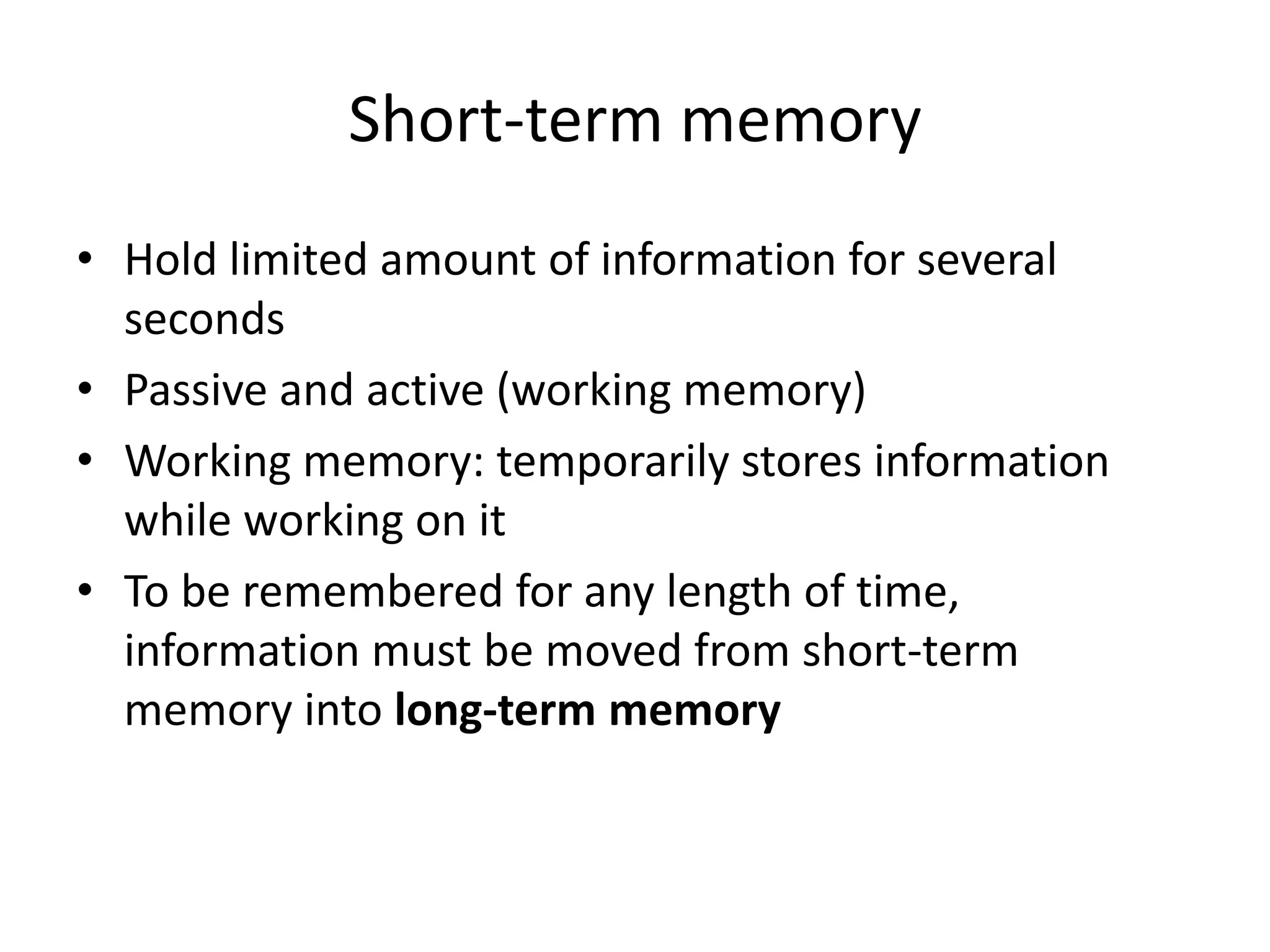
Short-term memoryHold limited amount of information for several secondsPassive and active (working memory)Working memory: temporarily stores information while working on itTo be remembered for any length of time, information must be moved from short-term memory into long-term memory
Long-term memoryRelatively permanent store of information Information retrieved from long-term memory
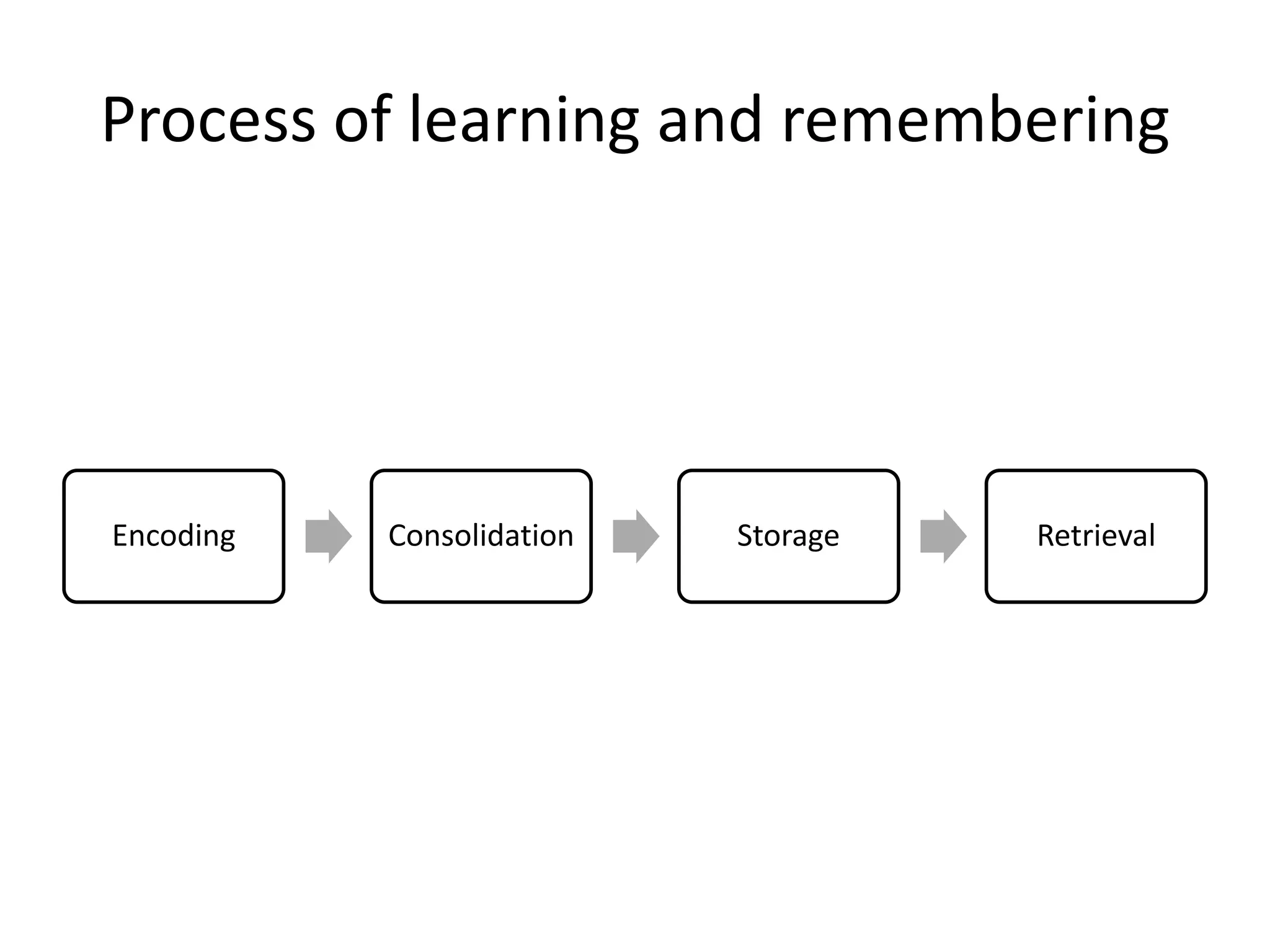
Process of learning and remembering
Process of learning and rememberingEncoding – getting the information into the systemConsolidation – information is processed and organized in form suitable for long term storageStorage – holding of information in long-term memoryRetrieval – process of getting information out when needed
RetrievalCan be accomplished in several waysRecognition memory Eg. Multiple choice questionsRecall memoryEg. Open ended questionsCued recall memoryEg. Open ended questions with hint or cue to facilitate retrieval
Information Processing in the Child
Memory DevelopmentFour major hypotheses to explain improvements in learning and memory1. Changes in basic capacities2. Changes in memory strategies	3. Increased knowledge about memory4. Increased knowledge about the world
Memory DevelopmentChanges in basic capacitiesNeural advancement in their brains  more working memory space  ability to process information fasterChanges in memory strategiesLearned and consistently use effective methods for putting information into long-term memory and retrieving it when they need it
Memory DevelopmentIncreased knowledge about memoryKnow more about memory, eg. Which strategy fits what taskIncreased knowledge about the worldKnowledge makes material to be learned more familiar and easier to learn and remember
Memory StrategiesRehearsalRepeating of items to be learned and rememberedOrganisationClassifying items into meaningful groupsElaborationActively create meaningful links between items to be remembered
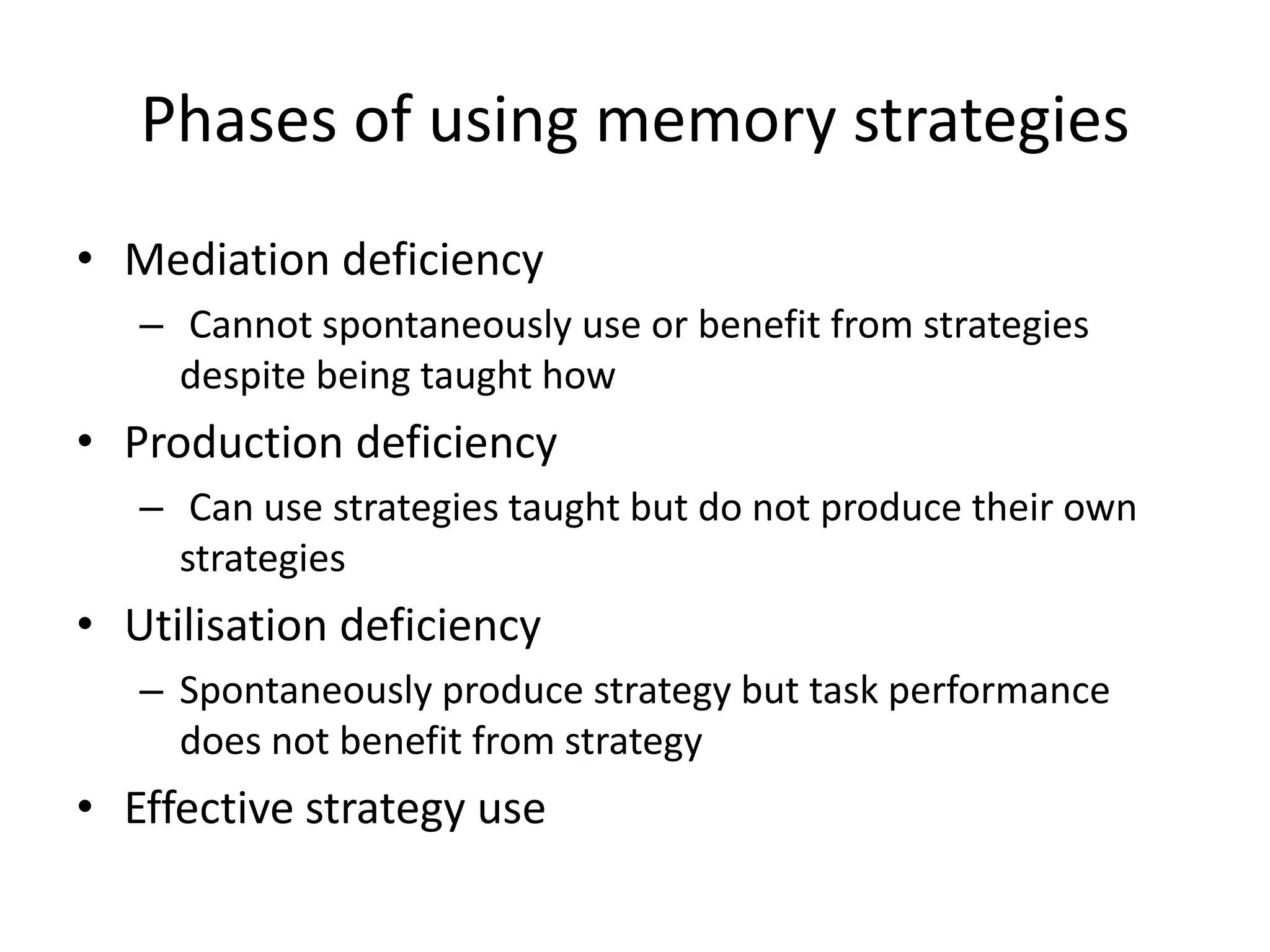
Phases of using memory strategiesMediation deficiencyCannot spontaneously use or benefit from strategies despite being taught howProduction deficiencyCan use strategies taught but do not produce their own strategiesUtilisation deficiencySpontaneously produce strategy but task performance does not benefit from strategyEffective strategy use
The End!

Aed1061

  • 1.
  • 2.
    ContentsOverview of theinformation processing approachMemory systemsInformation processing in the child
  • 3.
    OverviewHuman mind islike a computerLimited capacity associated with ‘hardware’ and ‘software’ - Eg. Hardware of the mind  nervous system, software  strategies, mental ‘programmes’ that affect information processingEmphasizes basic mental processes involved in attention, perception, memory, and decision making
  • 4.
  • 5.
  • 6.
    Sensory RegisterLogs informationfor about a fraction of a second as a kind of afterimageMuch information disappears without further processingIf the need to remember is sensed it will be moved into short-term memory
  • 7.
    Short-term memoryHold limitedamount of information for several secondsPassive and active (working memory)Working memory: temporarily stores information while working on itTo be remembered for any length of time, information must be moved from short-term memory into long-term memory
  • 8.
    Long-term memoryRelatively permanentstore of information Information retrieved from long-term memory
  • 9.
    Process of learningand remembering
  • 10.
    Process of learningand rememberingEncoding – getting the information into the systemConsolidation – information is processed and organized in form suitable for long term storageStorage – holding of information in long-term memoryRetrieval – process of getting information out when needed
  • 11.
    RetrievalCan be accomplishedin several waysRecognition memory Eg. Multiple choice questionsRecall memoryEg. Open ended questionsCued recall memoryEg. Open ended questions with hint or cue to facilitate retrieval
  • 12.
  • 13.
    Memory DevelopmentFour majorhypotheses to explain improvements in learning and memory1. Changes in basic capacities2. Changes in memory strategies 3. Increased knowledge about memory4. Increased knowledge about the world
  • 14.
    Memory DevelopmentChanges inbasic capacitiesNeural advancement in their brains  more working memory space  ability to process information fasterChanges in memory strategiesLearned and consistently use effective methods for putting information into long-term memory and retrieving it when they need it
  • 15.
    Memory DevelopmentIncreased knowledgeabout memoryKnow more about memory, eg. Which strategy fits what taskIncreased knowledge about the worldKnowledge makes material to be learned more familiar and easier to learn and remember
  • 16.
    Memory StrategiesRehearsalRepeating ofitems to be learned and rememberedOrganisationClassifying items into meaningful groupsElaborationActively create meaningful links between items to be remembered
  • 17.
    Phases of usingmemory strategiesMediation deficiencyCannot spontaneously use or benefit from strategies despite being taught howProduction deficiencyCan use strategies taught but do not produce their own strategiesUtilisation deficiencySpontaneously produce strategy but task performance does not benefit from strategyEffective strategy use
  • 18.