1. ADVERBS OF TIME:
STATEMENTS
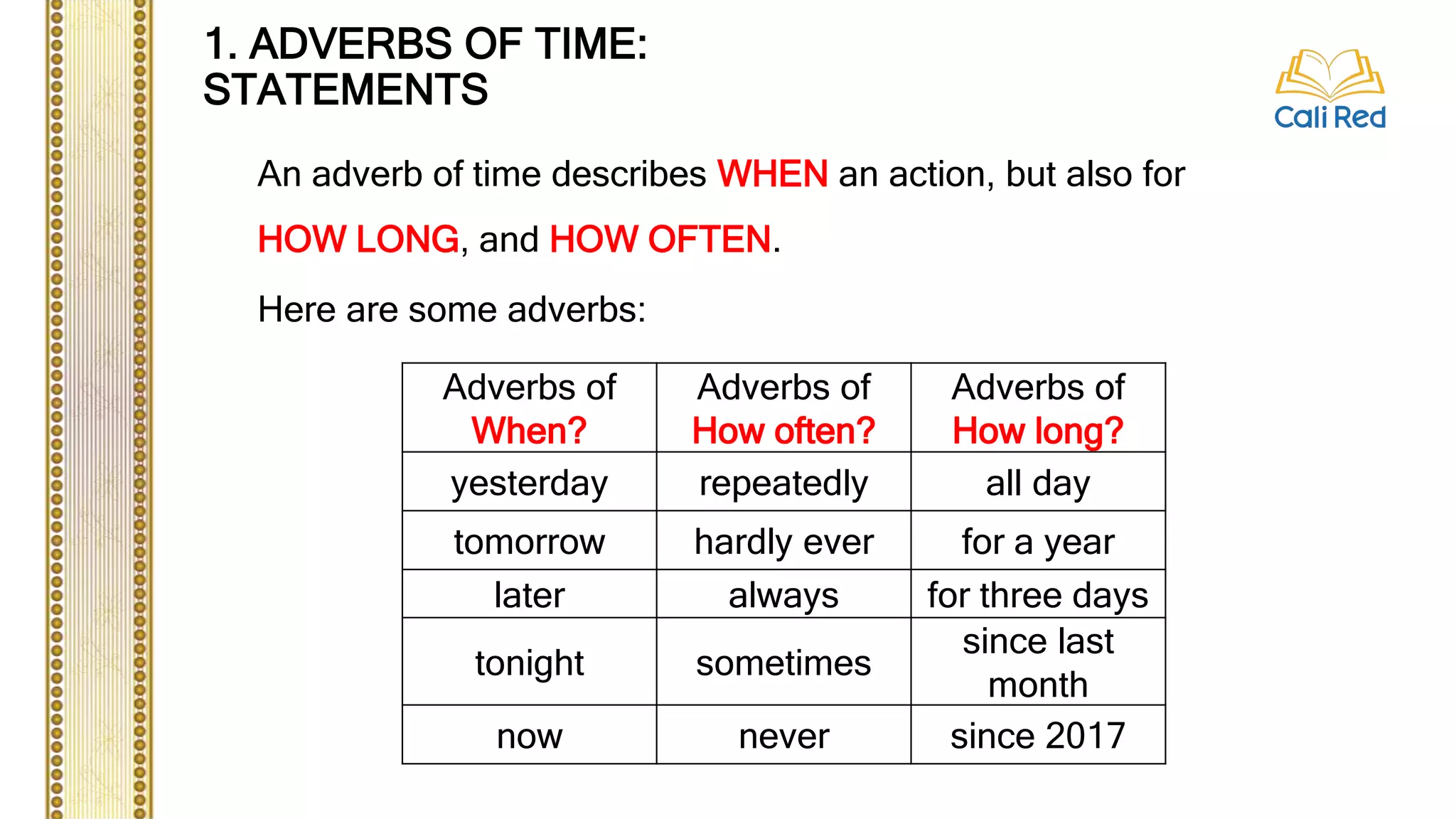
An adverb of time describes WHEN an action, but also for
HOW LONG, and HOW OFTEN.
Adverbs of
When?
Adverbs of
How often?
Adverbs of
How long?
yesterday repeatedly all day
tomorrow hardly ever for a year
later always for three days
tonight sometimes
since last
month
now never since 2017
Here are some adverbs:
2. ADVERBS OF TIME: WHEN?
Adverbs that tell us when are usually placed at the end of the sentence:
Examples:
a. Robert went to the movies
yesterday.
b. I’m going to tidy my room tomorrow.
c. She saw Sally today.
d. I will call you later.
e. I have to leave now.
f. She travelled to London last year.
3. ADVERBS OF TIME: HOW OFTEN?
Adverbs that tell us how often express the frequency of an action. They
are usually placed before the main verb but after auxiliary verbs (such
as be, have, may, must). The only exception is when the main verb is
“to be”, in which case the adverb goes after the main verb.
Examples:
a. I often eat vegetarian food.
b. He never drinks milk.
c. You must always fasten your seat belt.
d. I am seldom late.
e. He rarely lies.
4. ADVERBS OF TIME: HOW LONG?
Adverbs that tell us for how long are usually placed at the end of the
sentence:
a. She stayed in our house all day.
b. My mother lived in France for a year.
c. I have studied in this school since 2017.
d. I stayed in Buenos Aires for three days.
e. She is going on vacation for a week.
f. Jim has been working here since 1997.

ADVERBS OF TIME.pptx

  • 2.
    1. ADVERBS OFTIME: STATEMENTS An adverb of time describes WHEN an action, but also for HOW LONG, and HOW OFTEN. Adverbs of When? Adverbs of How often? Adverbs of How long? yesterday repeatedly all day tomorrow hardly ever for a year later always for three days tonight sometimes since last month now never since 2017 Here are some adverbs:
  • 3.
    2. ADVERBS OFTIME: WHEN? Adverbs that tell us when are usually placed at the end of the sentence: Examples: a. Robert went to the movies yesterday. b. I’m going to tidy my room tomorrow. c. She saw Sally today. d. I will call you later. e. I have to leave now. f. She travelled to London last year.
  • 4.
    3. ADVERBS OFTIME: HOW OFTEN? Adverbs that tell us how often express the frequency of an action. They are usually placed before the main verb but after auxiliary verbs (such as be, have, may, must). The only exception is when the main verb is “to be”, in which case the adverb goes after the main verb. Examples: a. I often eat vegetarian food. b. He never drinks milk. c. You must always fasten your seat belt. d. I am seldom late. e. He rarely lies.
  • 5.
    4. ADVERBS OFTIME: HOW LONG? Adverbs that tell us for how long are usually placed at the end of the sentence: a. She stayed in our house all day. b. My mother lived in France for a year. c. I have studied in this school since 2017. d. I stayed in Buenos Aires for three days. e. She is going on vacation for a week. f. Jim has been working here since 1997.