In association with Adobe
May 2013
Quarterly Digital Intelligence
Briefing: From Content
Management to Customer
Experience Management
|
| 2
About the survey…
 Online survey in February and March 2013
 More than 1,000 respondents globally – a
record for this on-going series of reports
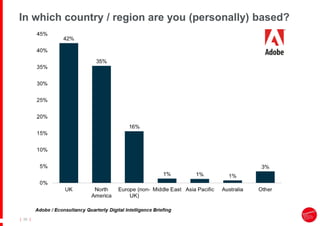
 42% of respondents based in the UK, 35%
in North America
|
| 3
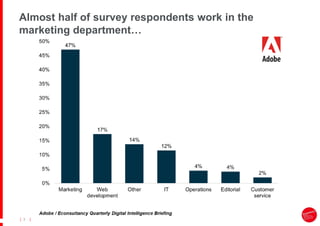
Almost half of survey respondents work in the
marketing department…
Driving engagement and
brand-building in the
digital age
|
| 5
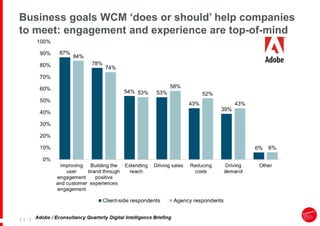
Business goals WCM ‘does or should’ help companies
to meet: engagement and experience are top-of-mind
Technology should be
an enabler, not a barrier
|
| 7
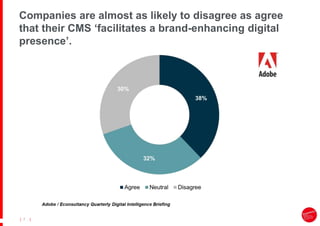
Companies are almost as likely to disagree as agree
that their CMS ‘facilitates a brand-enhancing digital
presence’.
|
| 8
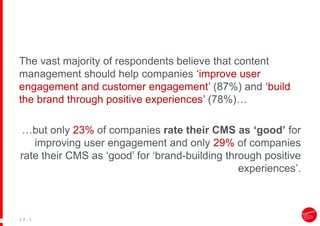
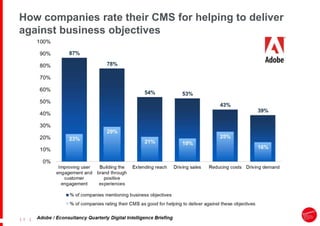
The vast majority of respondents believe that content
management should help companies ‘improve user
engagement and customer engagement’ (87%) and ‘build
the brand through positive experiences’ (78%)…
…but only 23% of companies rate their CMS as ‘good’ for
improving user engagement and only 29% of companies
rate their CMS as ‘good’ for ‘brand-building through positive
experiences’.
|
| 9
How companies rate their CMS for helping to deliver
against business objectives
|
| 10
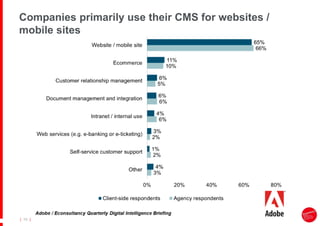
Companies primarily use their CMS for websites /
mobile sites
The mobile train has left
the station – are you on
board?
|
| 12
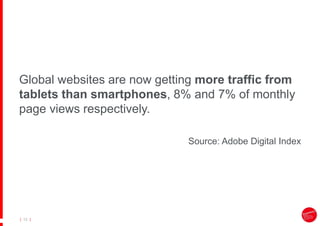
Global websites are now getting more traffic from
tablets than smartphones, 8% and 7% of monthly
page views respectively.
Source: Adobe Digital Index
|
| 13
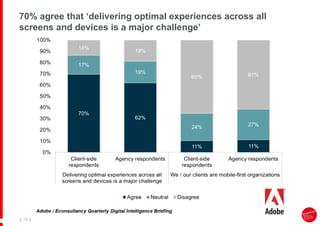
70% agree that ‘delivering optimal experiences across all
screens and devices is a major challenge’
|
| 14
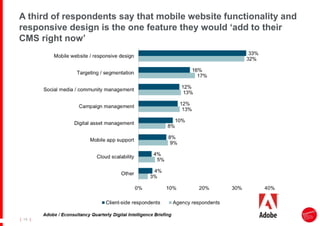
A third of respondents say that mobile website functionality and
responsive design is the one feature they would ‘add to their
CMS right now’
CMS shouldn’t sit within
its own silo
|
| 16
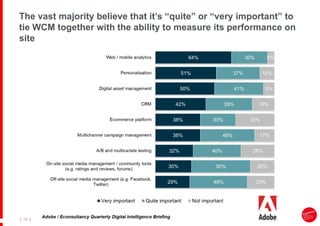
The vast majority believe that it’s “quite” or “very important” to
tie WCM together with the ability to measure its performance on
site
|
| 17
Measurement is an important starting
point, but the next level is to tie
content together with testing and
management technologies…
|
| 18
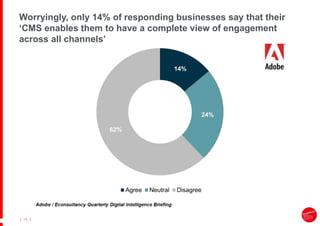
Worryingly, only 14% of responding businesses say that their
‘CMS enables them to have a complete view of engagement
across all channels’
Move towards integrated
platforms
|
| 20
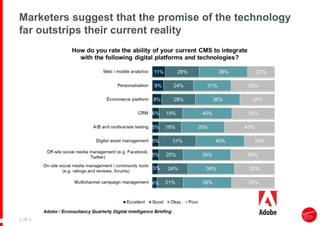
Marketers suggest that the promise of the technology
far outstrips their current reality
|
| 21
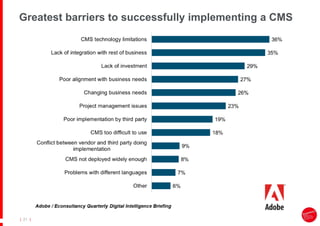
Greatest barriers to successfully implementing a CMS
|
| 22
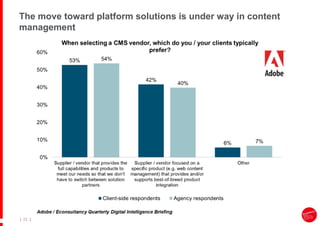
The move toward platform solutions is under way in content
management
Importance of ease of
use and smooth
workflow in the tablet
era
|
| 24
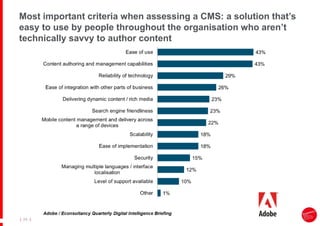
Most important criteria when assessing a CMS: a solution that’s
easy to use by people throughout the organisation who aren’t
technically savvy to author content
|
| 25
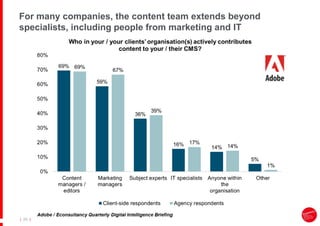
For many companies, the content team extends beyond
specialists, including people from marketing and IT
|
| 26
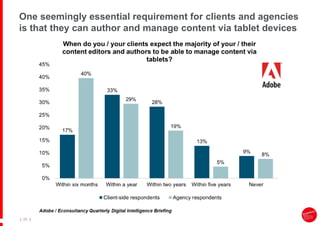
One seemingly essential requirement for clients and agencies
is that they can author and manage content via tablet devices
Making WCM social
|
| 28
Social’s greatest potential is in the areas where the fewest
organisations are currently taking advantage: 28% of
organisations surveyed said that social media activities
have an impact on content management.
Adobe / Econsultancy QDIB: Managing and Measuring Social
ecly.co/AdobeSoc
|
| 29
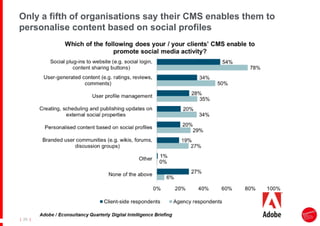
Only a fifth of organisations say their CMS enables them to
personalise content based on social profiles
|
| 30
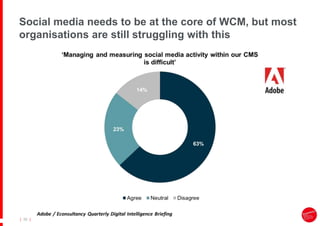
Social media needs to be at the core of WCM, but most
organisations are still struggling with this
Ownership versus
decision-making:
marketers need to take
control
|
| 32
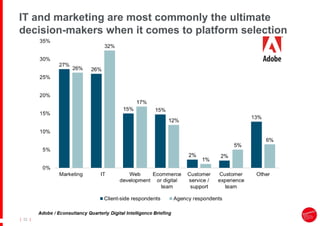
IT and marketing are most commonly the ultimate
decision-makers when it comes to platform selection
|
| 33
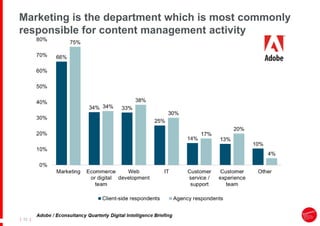
Marketing is the department which is most commonly
responsible for content management activity
|
| 34
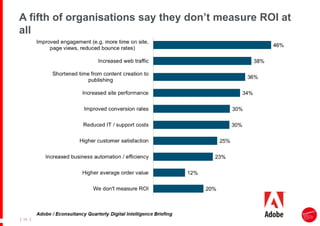
A fifth of organisations say they don’t measure ROI at
all
Appendix: Respondent
Profiles
|
| 36
In which country / region are you (personally) based?
|
| 37
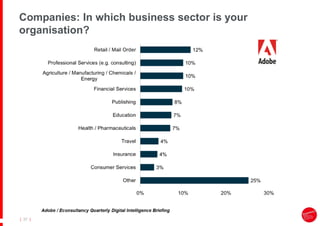
Companies: In which business sector is your
organisation?
|
| 38
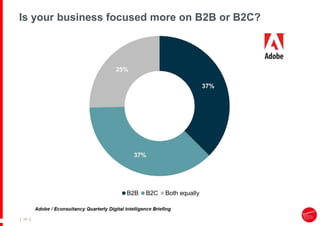
Is your business focused more on B2B or B2C?
|
| 39
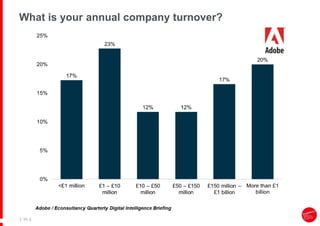
What is your annual company turnover?
|
| 40
All rights reserved. No part of this presentation may be reproduced or transmitted in any form or by any means,
electronic or mechanical, including photocopy, recording or any information storage and retrieval system, without prior
permission in writing from the publisher. Copyright © Econsulancy.com Ltd 2013.
Download the full report: http://ecly.co/QDIB9-WCM

Adobe & Econsultancy: From Content Management to Customer Experience Management

  • 1.
    In association withAdobe May 2013 Quarterly Digital Intelligence Briefing: From Content Management to Customer Experience Management
  • 2.
    | | 2 About thesurvey…  Online survey in February and March 2013  More than 1,000 respondents globally – a record for this on-going series of reports  42% of respondents based in the UK, 35% in North America
  • 3.
    | | 3 Almost halfof survey respondents work in the marketing department…
  • 4.
  • 5.
    | | 5 Business goalsWCM ‘does or should’ help companies to meet: engagement and experience are top-of-mind
  • 6.
    Technology should be anenabler, not a barrier
  • 7.
    | | 7 Companies arealmost as likely to disagree as agree that their CMS ‘facilitates a brand-enhancing digital presence’.
  • 8.
    | | 8 The vastmajority of respondents believe that content management should help companies ‘improve user engagement and customer engagement’ (87%) and ‘build the brand through positive experiences’ (78%)… …but only 23% of companies rate their CMS as ‘good’ for improving user engagement and only 29% of companies rate their CMS as ‘good’ for ‘brand-building through positive experiences’.
  • 9.
    | | 9 How companiesrate their CMS for helping to deliver against business objectives
  • 10.
    | | 10 Companies primarilyuse their CMS for websites / mobile sites
  • 11.
    The mobile trainhas left the station – are you on board?
  • 12.
    | | 12 Global websitesare now getting more traffic from tablets than smartphones, 8% and 7% of monthly page views respectively. Source: Adobe Digital Index
  • 13.
    | | 13 70% agreethat ‘delivering optimal experiences across all screens and devices is a major challenge’
  • 14.
    | | 14 A thirdof respondents say that mobile website functionality and responsive design is the one feature they would ‘add to their CMS right now’
  • 15.
    CMS shouldn’t sitwithin its own silo
  • 16.
    | | 16 The vastmajority believe that it’s “quite” or “very important” to tie WCM together with the ability to measure its performance on site
  • 17.
    | | 17 Measurement isan important starting point, but the next level is to tie content together with testing and management technologies…
  • 18.
    | | 18 Worryingly, only14% of responding businesses say that their ‘CMS enables them to have a complete view of engagement across all channels’
  • 19.
  • 20.
    | | 20 Marketers suggestthat the promise of the technology far outstrips their current reality
  • 21.
    | | 21 Greatest barriersto successfully implementing a CMS
  • 22.
    | | 22 The movetoward platform solutions is under way in content management
  • 23.
    Importance of easeof use and smooth workflow in the tablet era
  • 24.
    | | 24 Most importantcriteria when assessing a CMS: a solution that’s easy to use by people throughout the organisation who aren’t technically savvy to author content
  • 25.
    | | 25 For manycompanies, the content team extends beyond specialists, including people from marketing and IT
  • 26.
    | | 26 One seeminglyessential requirement for clients and agencies is that they can author and manage content via tablet devices
  • 27.
  • 28.
    | | 28 Social’s greatestpotential is in the areas where the fewest organisations are currently taking advantage: 28% of organisations surveyed said that social media activities have an impact on content management. Adobe / Econsultancy QDIB: Managing and Measuring Social ecly.co/AdobeSoc
  • 29.
    | | 29 Only afifth of organisations say their CMS enables them to personalise content based on social profiles
  • 30.
    | | 30 Social medianeeds to be at the core of WCM, but most organisations are still struggling with this
  • 31.
  • 32.
    | | 32 IT andmarketing are most commonly the ultimate decision-makers when it comes to platform selection
  • 33.
    | | 33 Marketing isthe department which is most commonly responsible for content management activity
  • 34.
    | | 34 A fifthof organisations say they don’t measure ROI at all
  • 35.
  • 36.
    | | 36 In whichcountry / region are you (personally) based?
  • 37.
    | | 37 Companies: Inwhich business sector is your organisation?
  • 38.
    | | 38 Is yourbusiness focused more on B2B or B2C?
  • 39.
    | | 39 What isyour annual company turnover?
  • 40.
    | | 40 All rightsreserved. No part of this presentation may be reproduced or transmitted in any form or by any means, electronic or mechanical, including photocopy, recording or any information storage and retrieval system, without prior permission in writing from the publisher. Copyright © Econsulancy.com Ltd 2013. Download the full report: http://ecly.co/QDIB9-WCM