ADDITION
Bukandala Elementary School
VOCABUL
ARY
Addition is joining numbers together to
make a larger number. There are many
words used in addition: plus
total
together add
altogether
NUMBER
SENTENCE
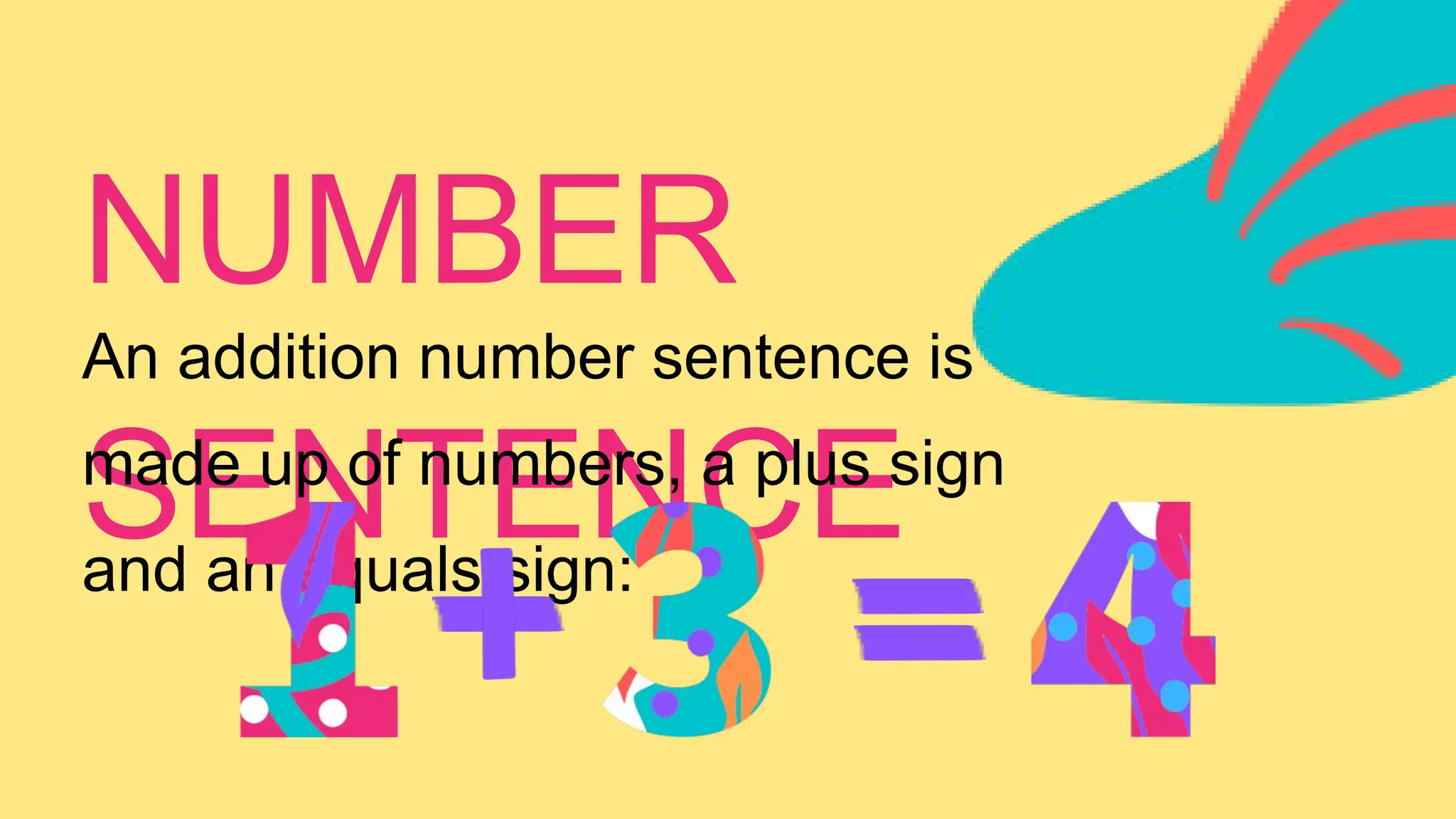
An addition number sentence is
made up of numbers, a plus sign
and an equals sign:
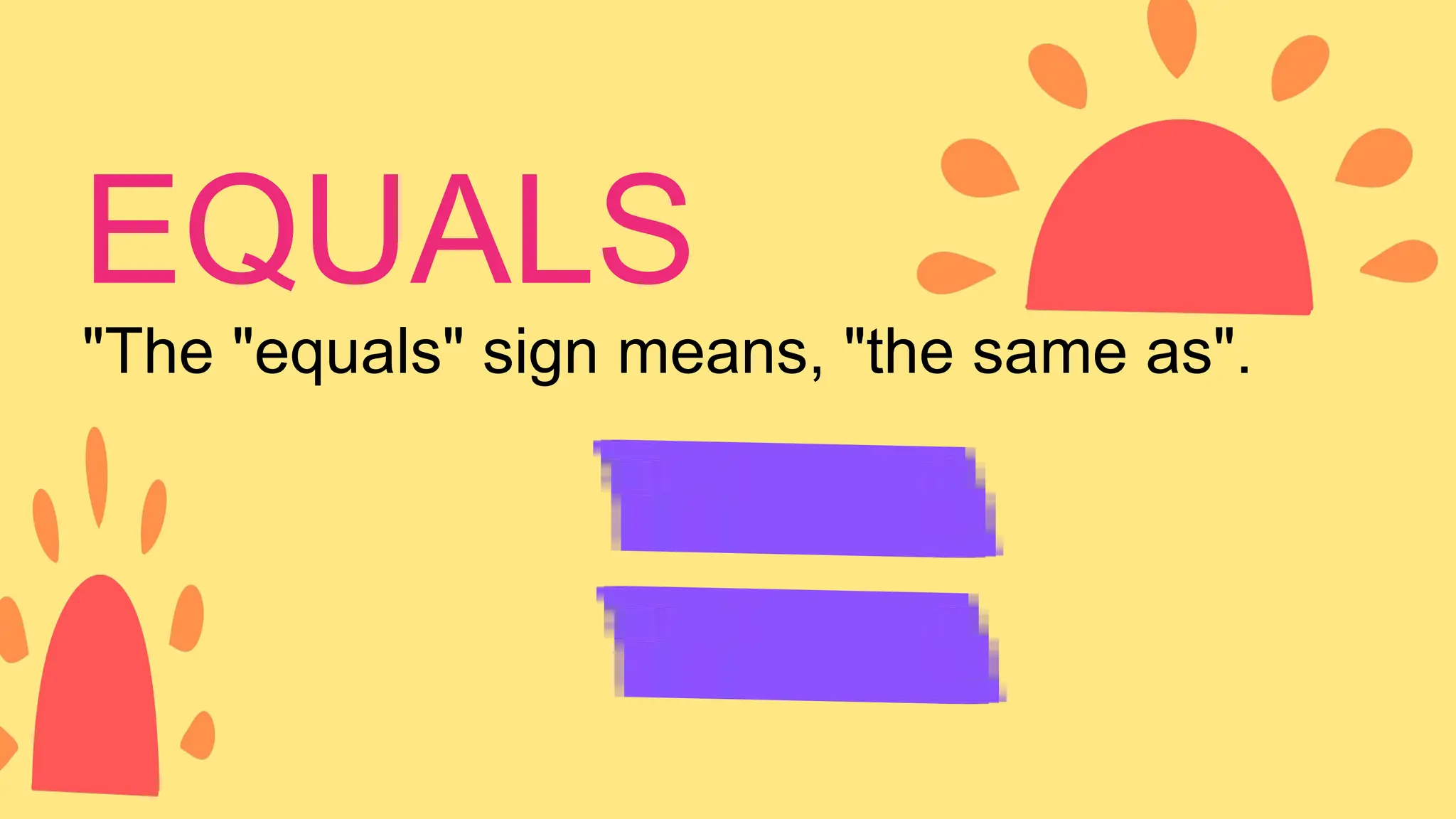
"The "equals" sign means, "the same as".
EQUALS
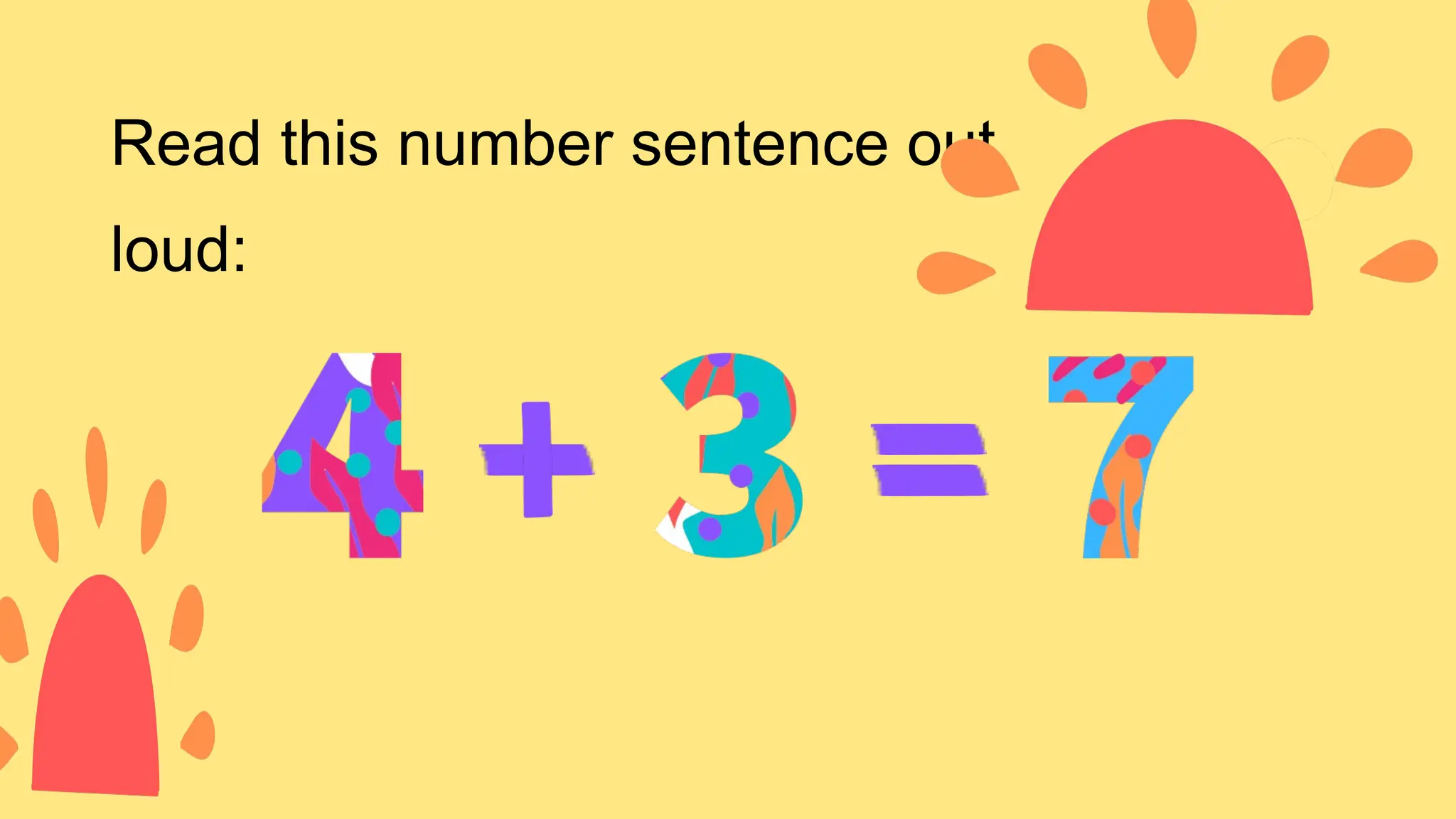
Read this number sentence out
loud:
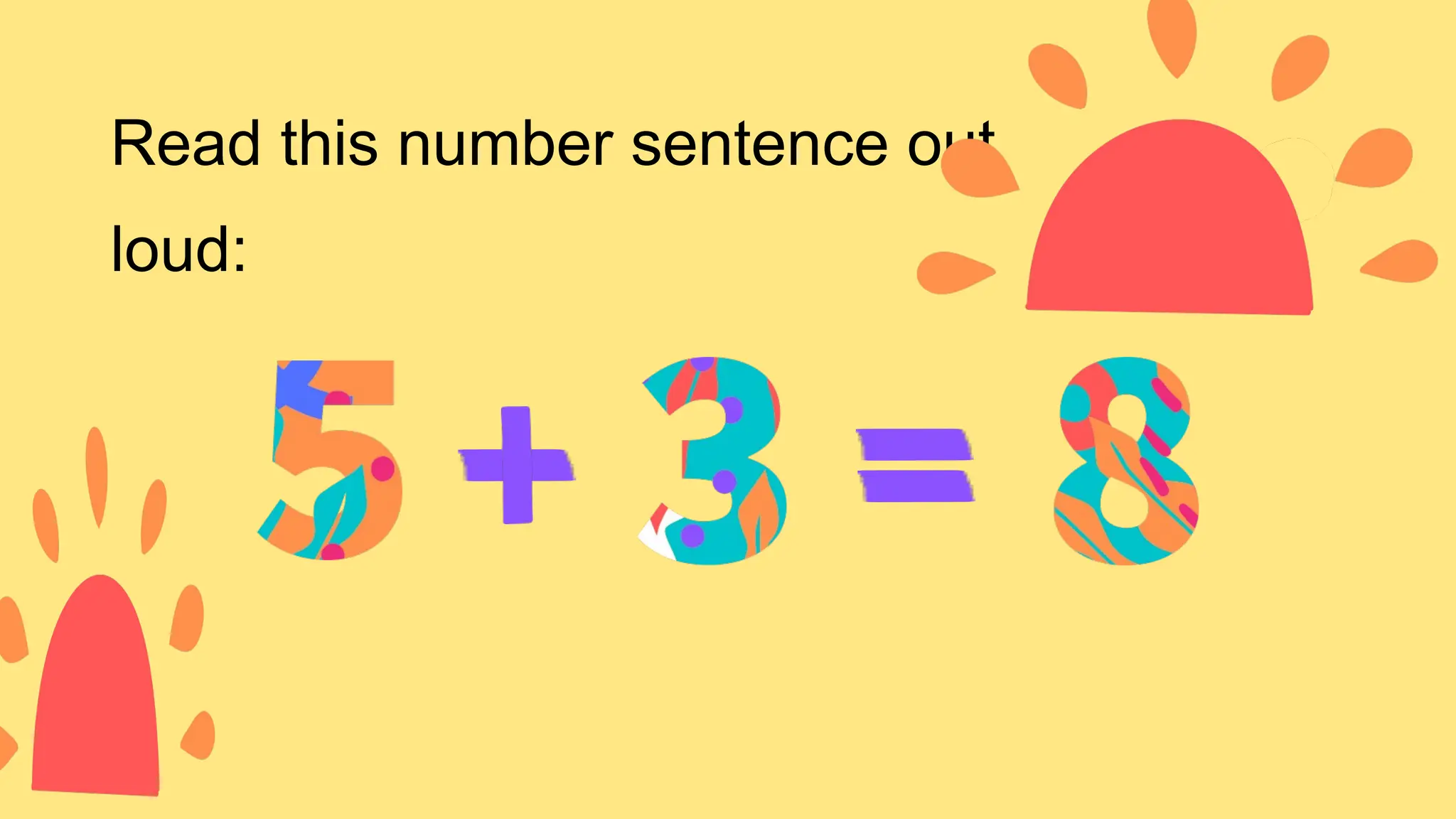
Read this number sentence out
loud:
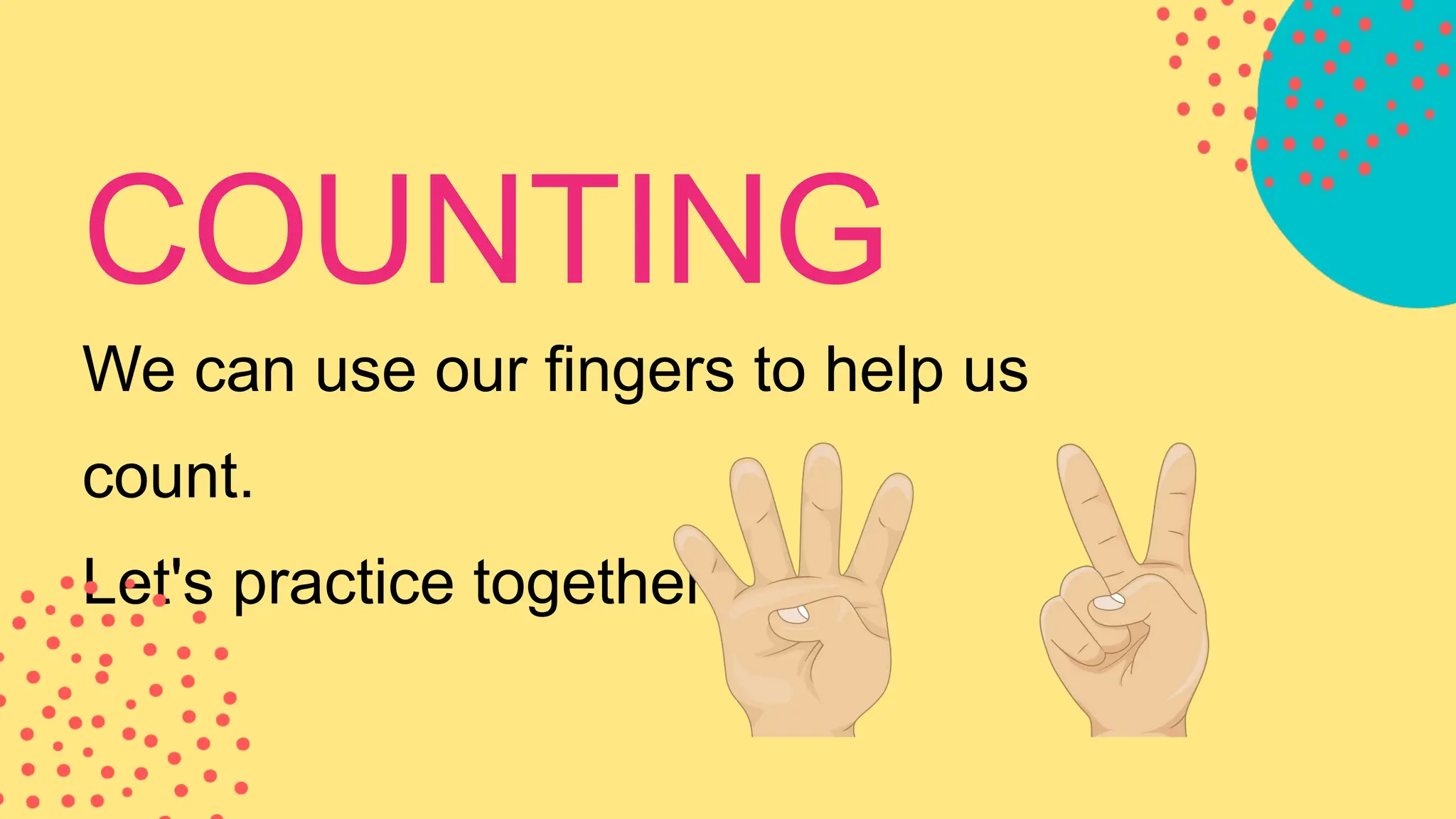
We can use our fingers to help us
count.
Let's practice together:
COUNTING
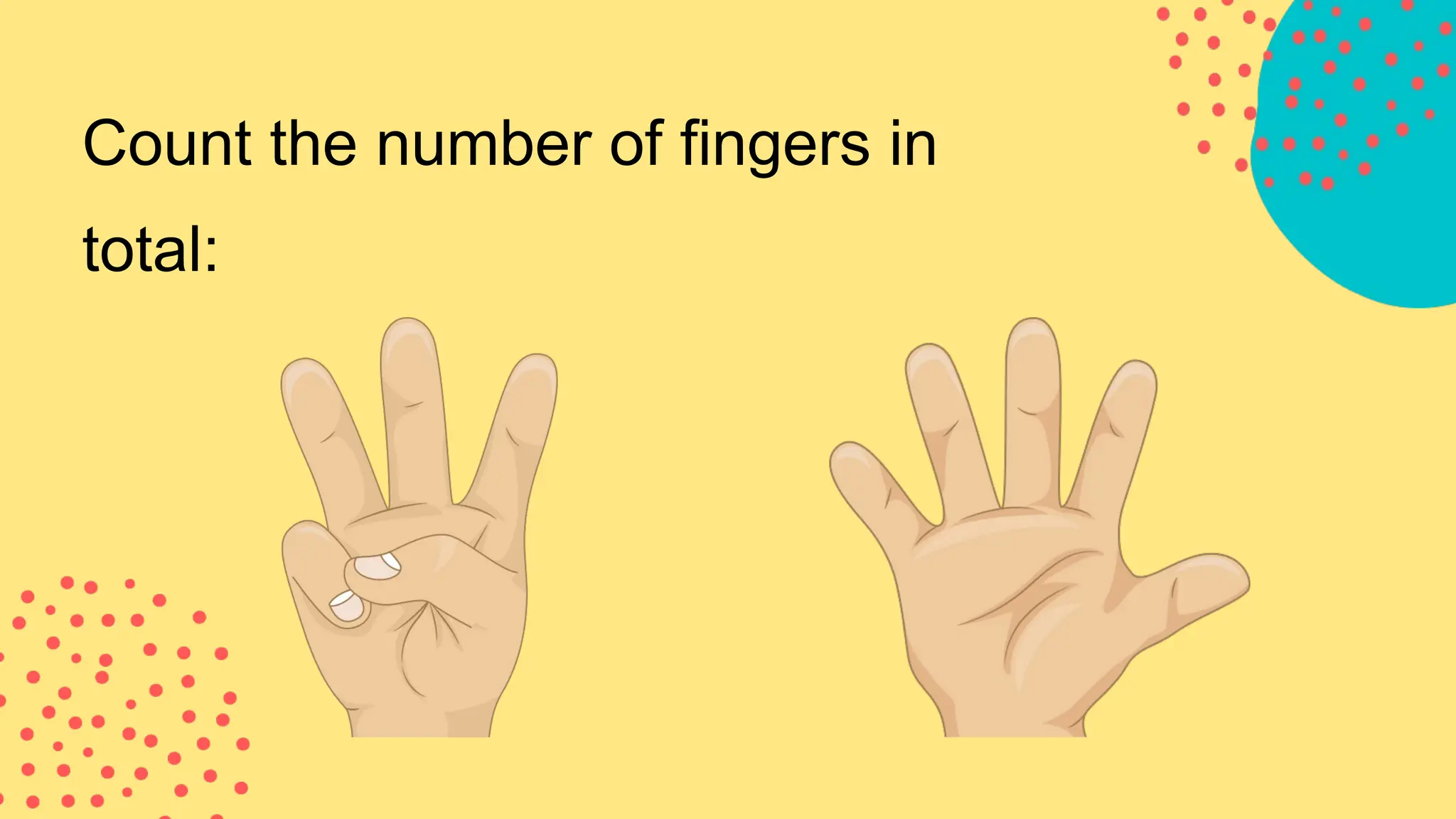
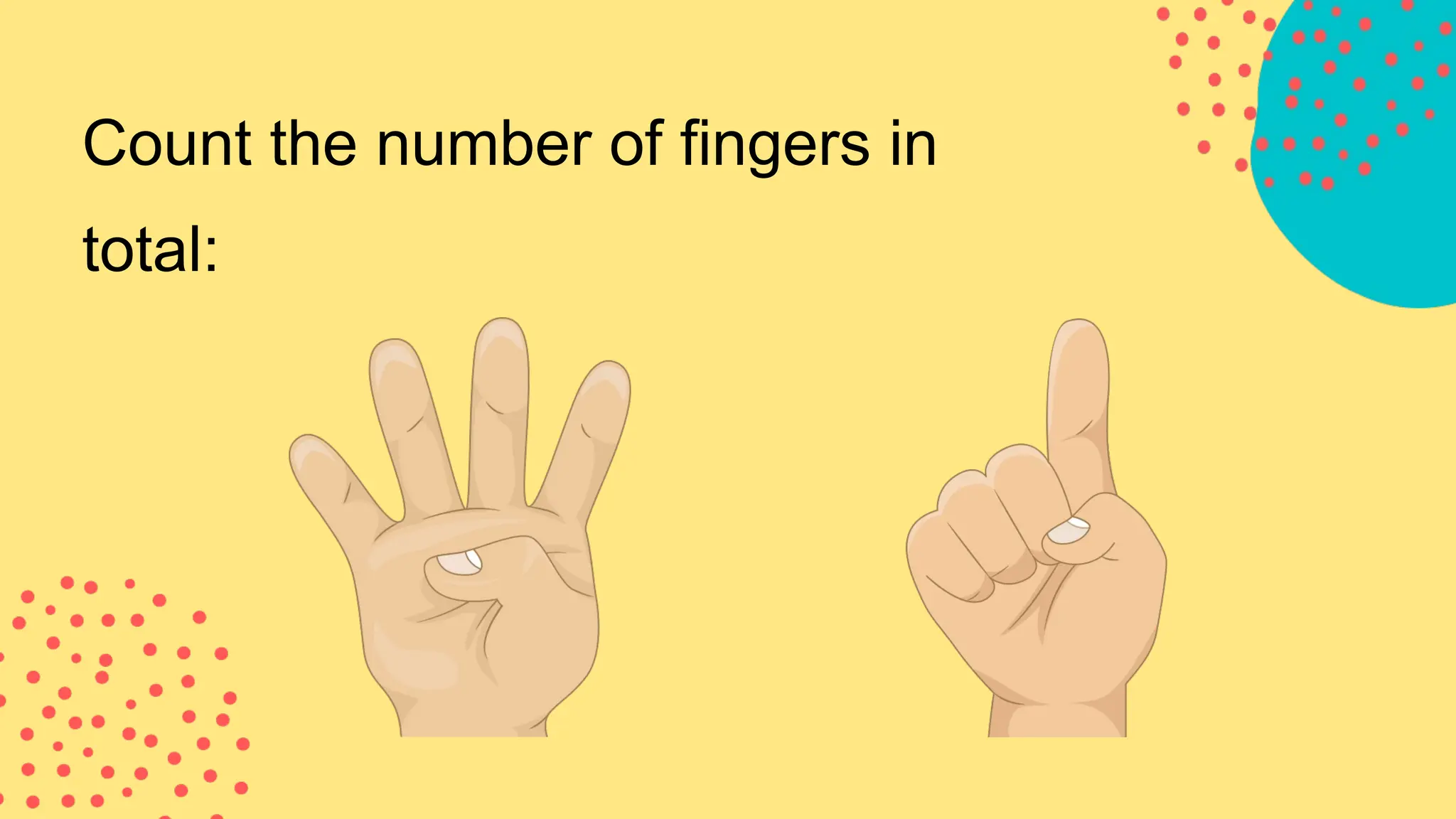
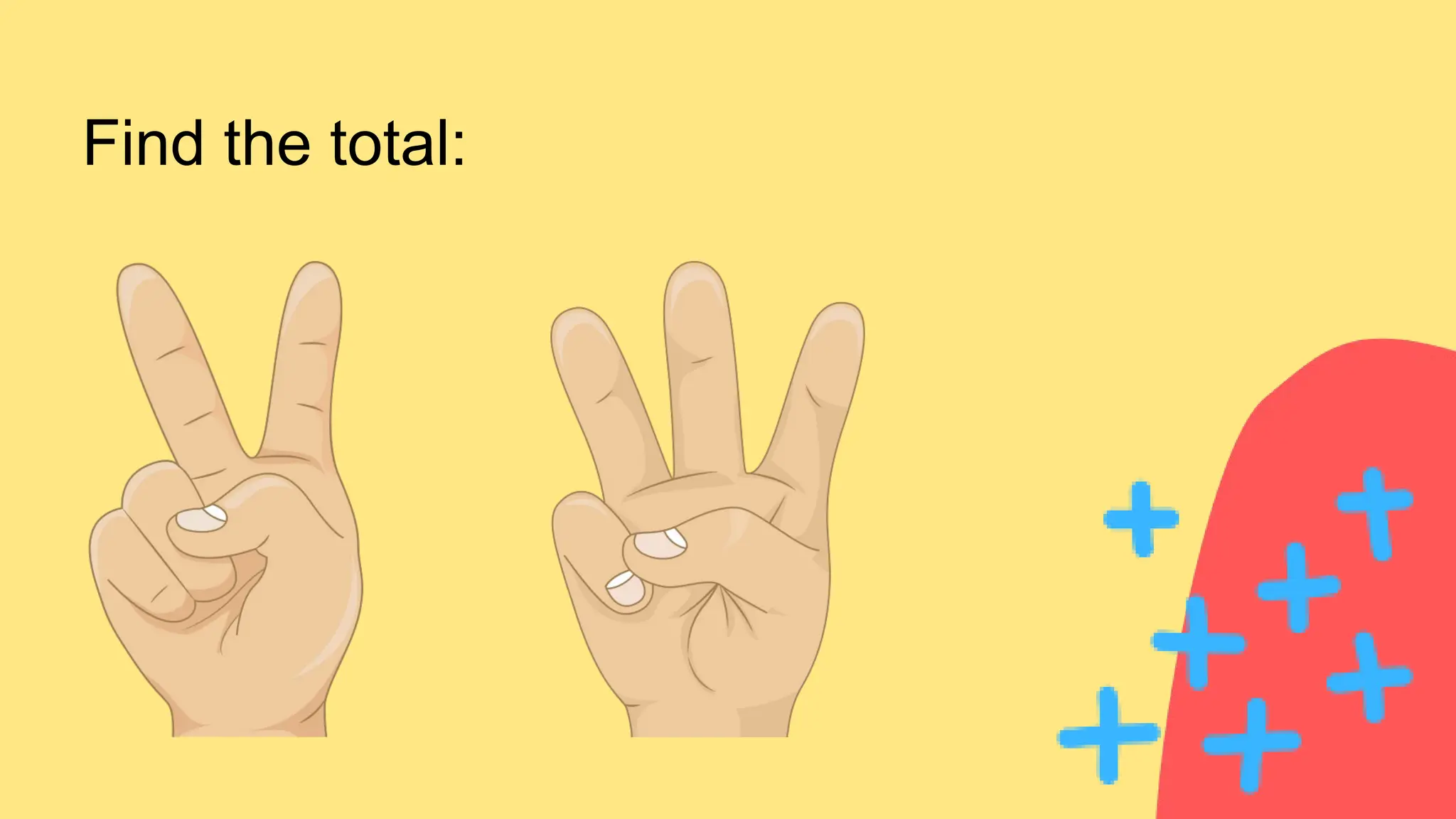
Count the number of fingers in
total:
Count the number of fingers in
total:
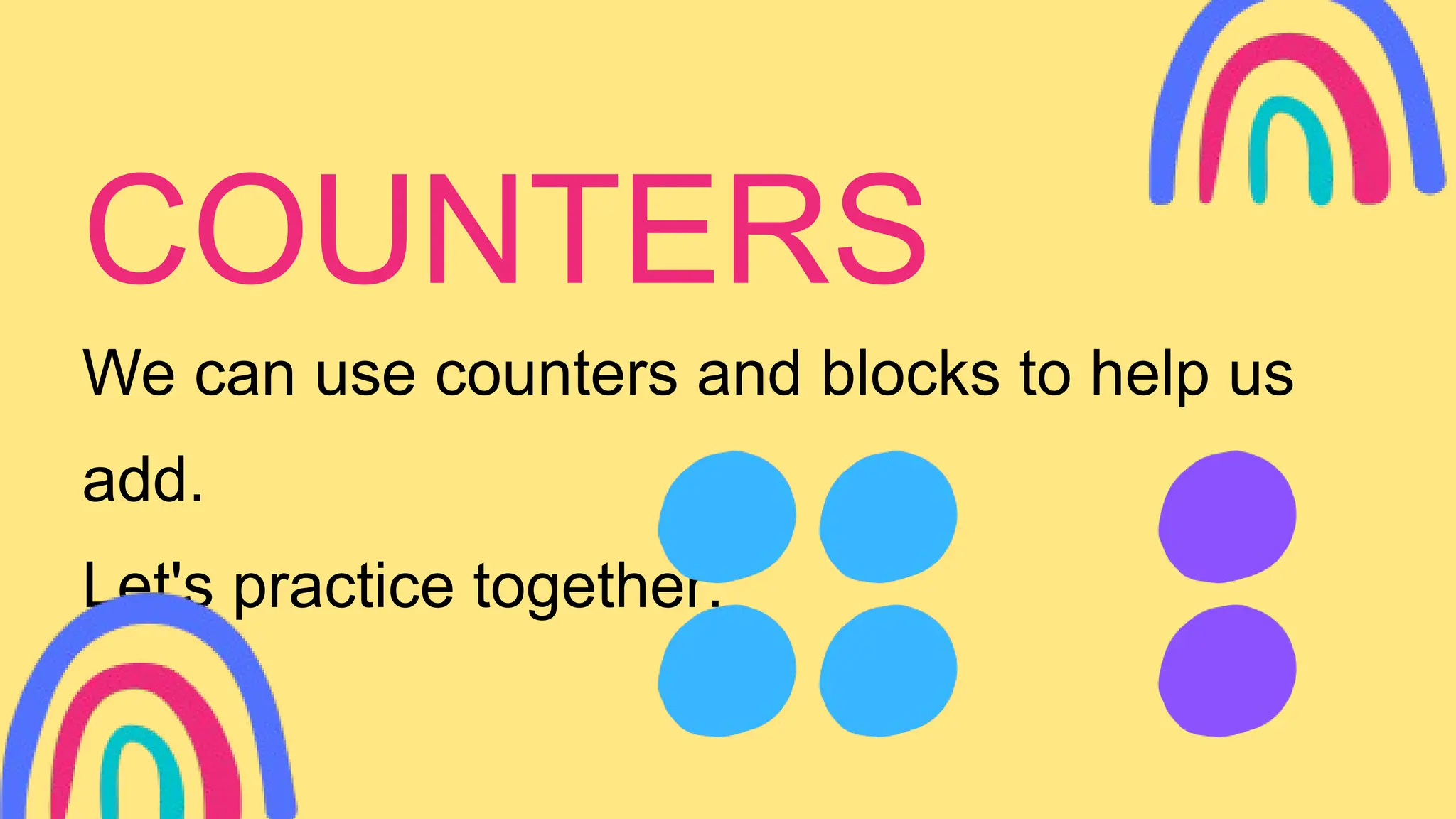
We can use counters and blocks to help us
add.
Let's practice together:
COUNTERS
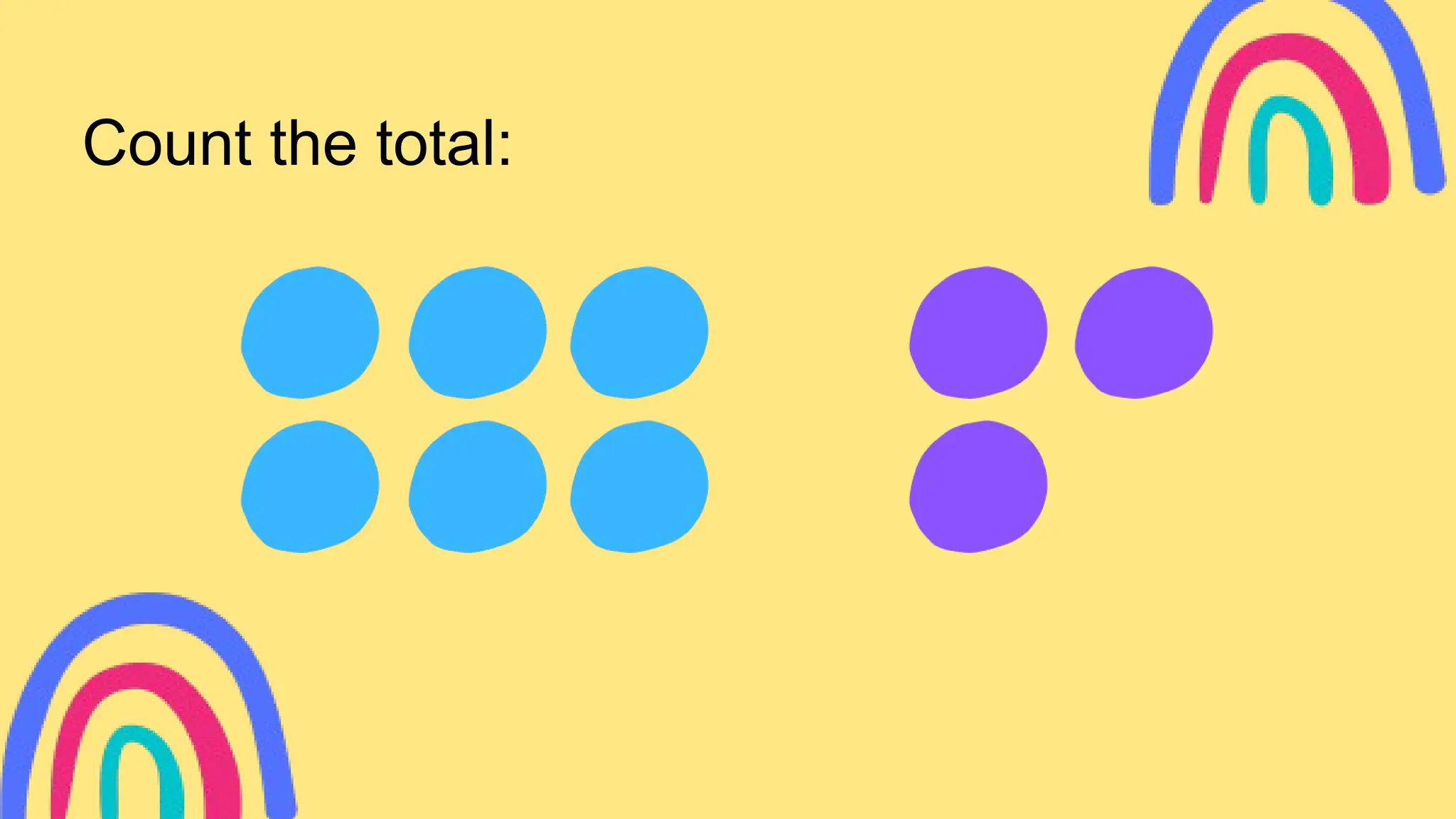
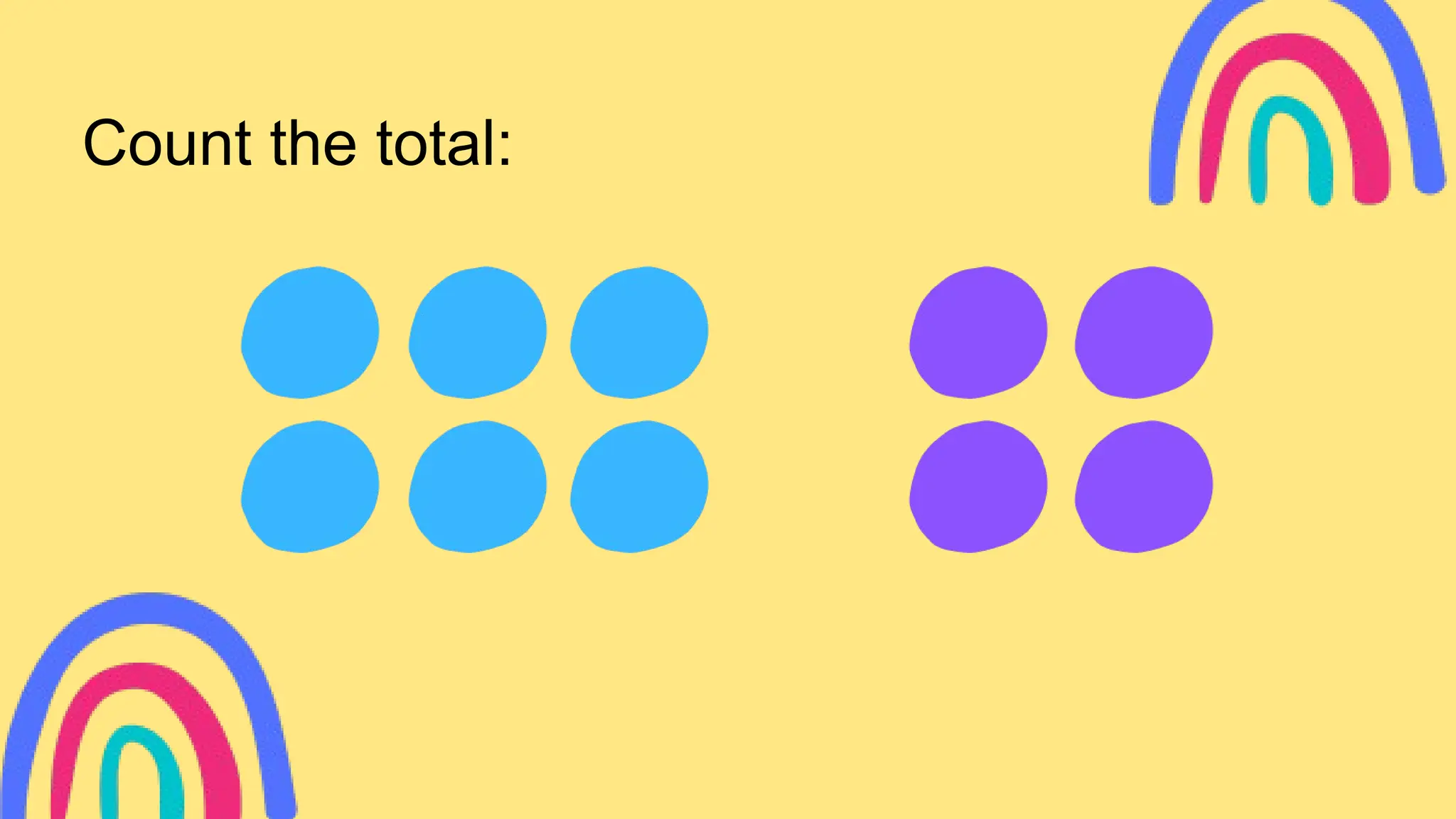
Count the total:
Count the total:
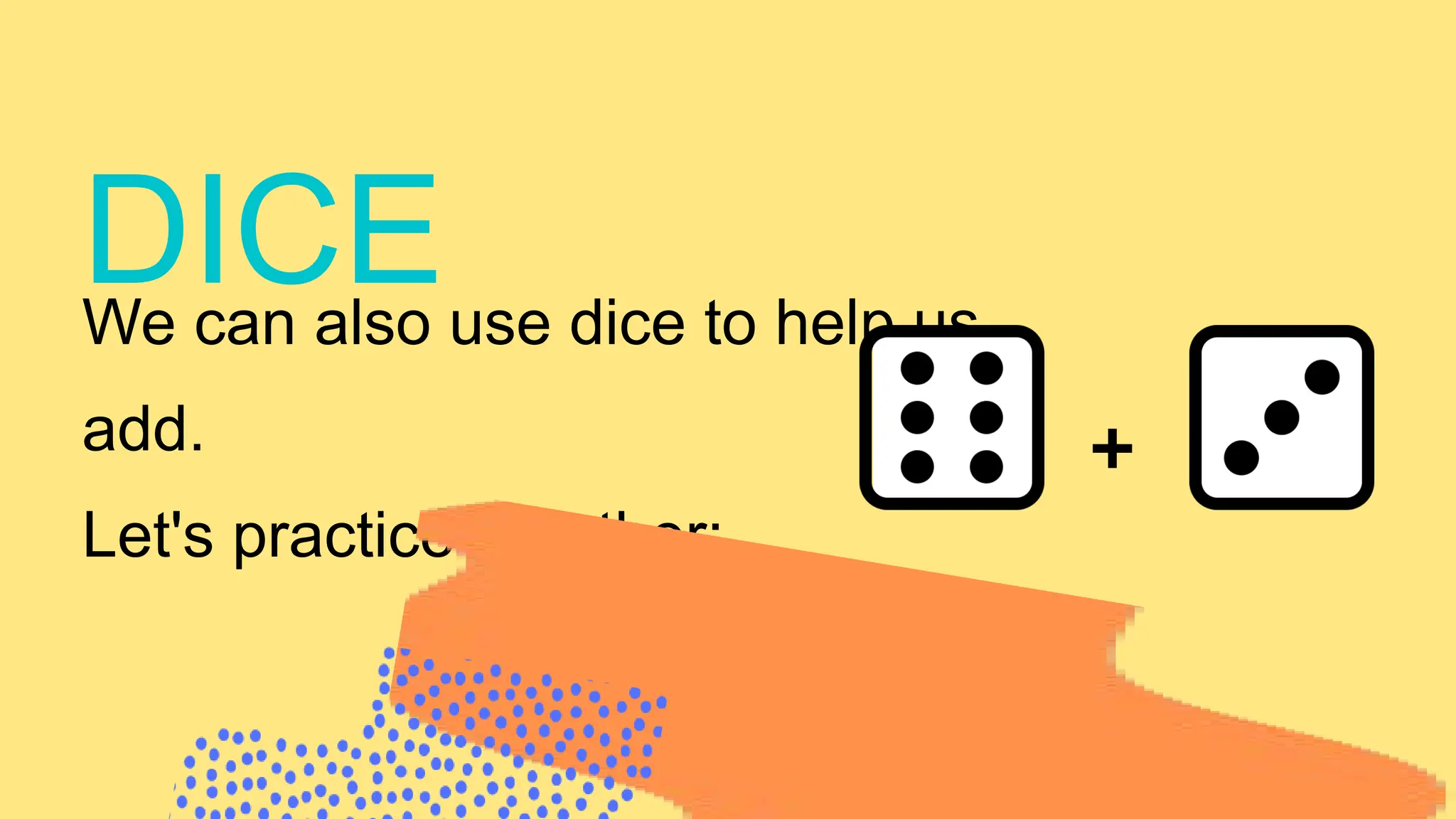
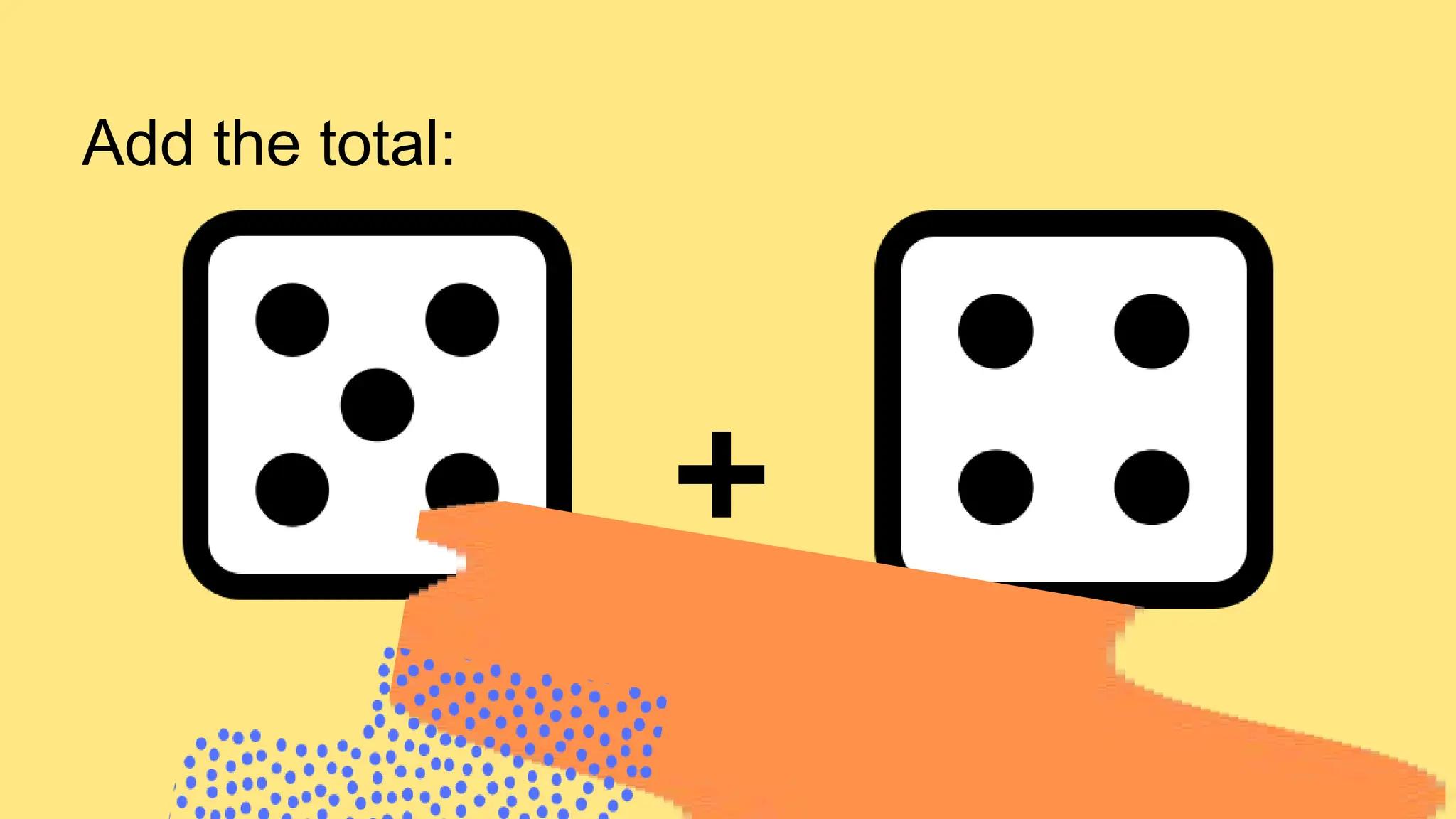
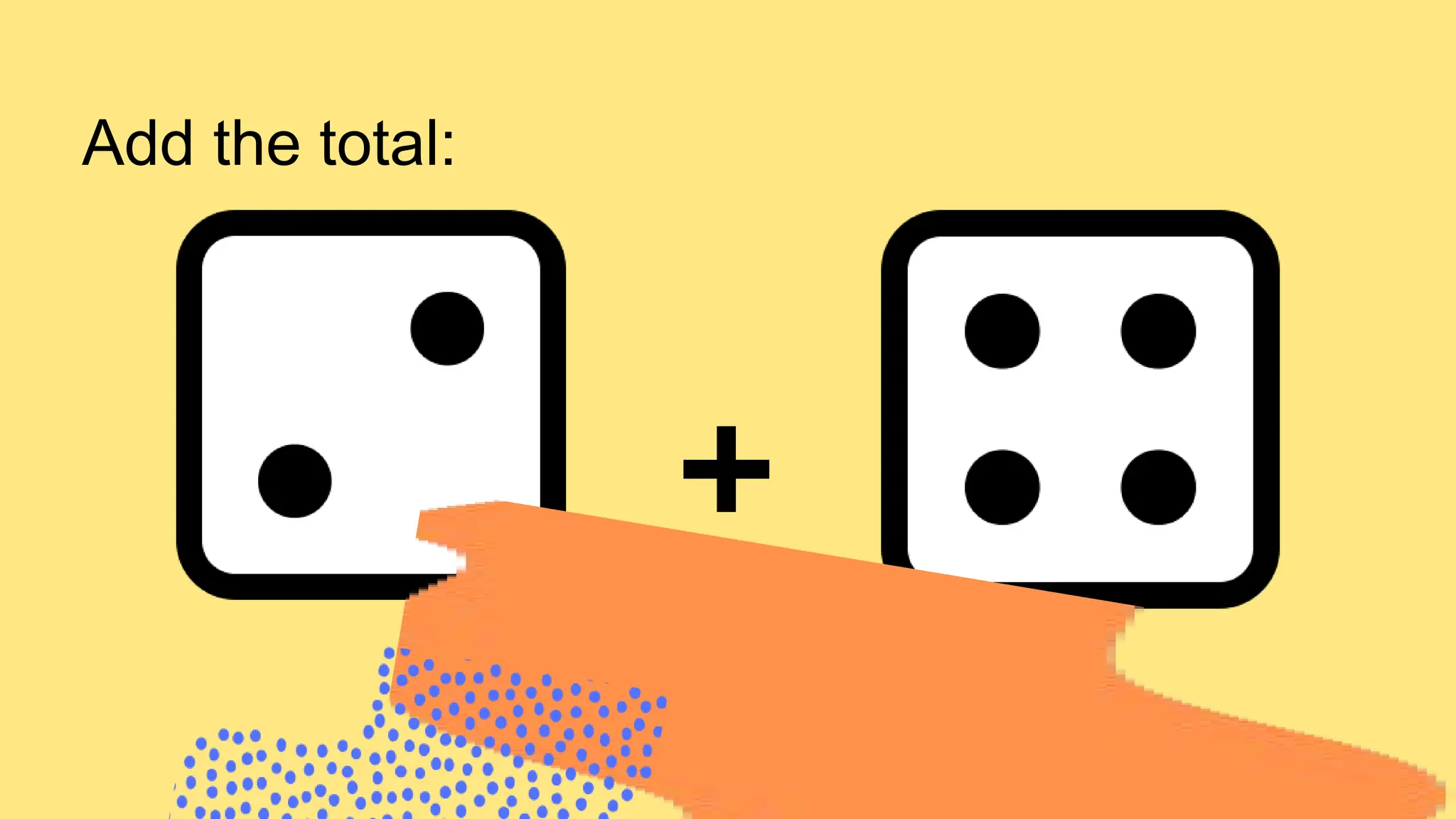
We can also use dice to help us
add.
Let's practice together:
DICE
+
+
Add the total:
+
Add the total:
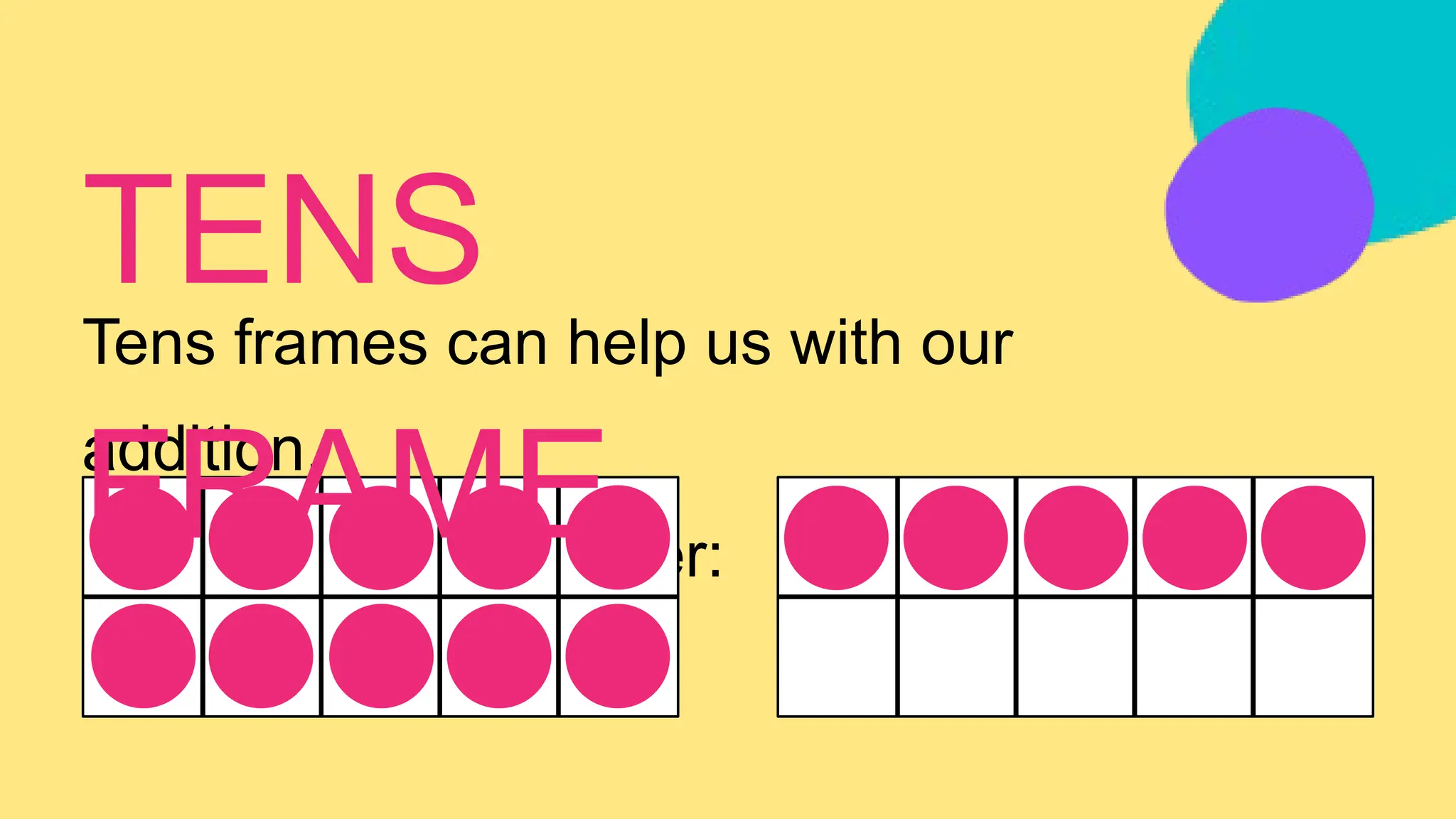
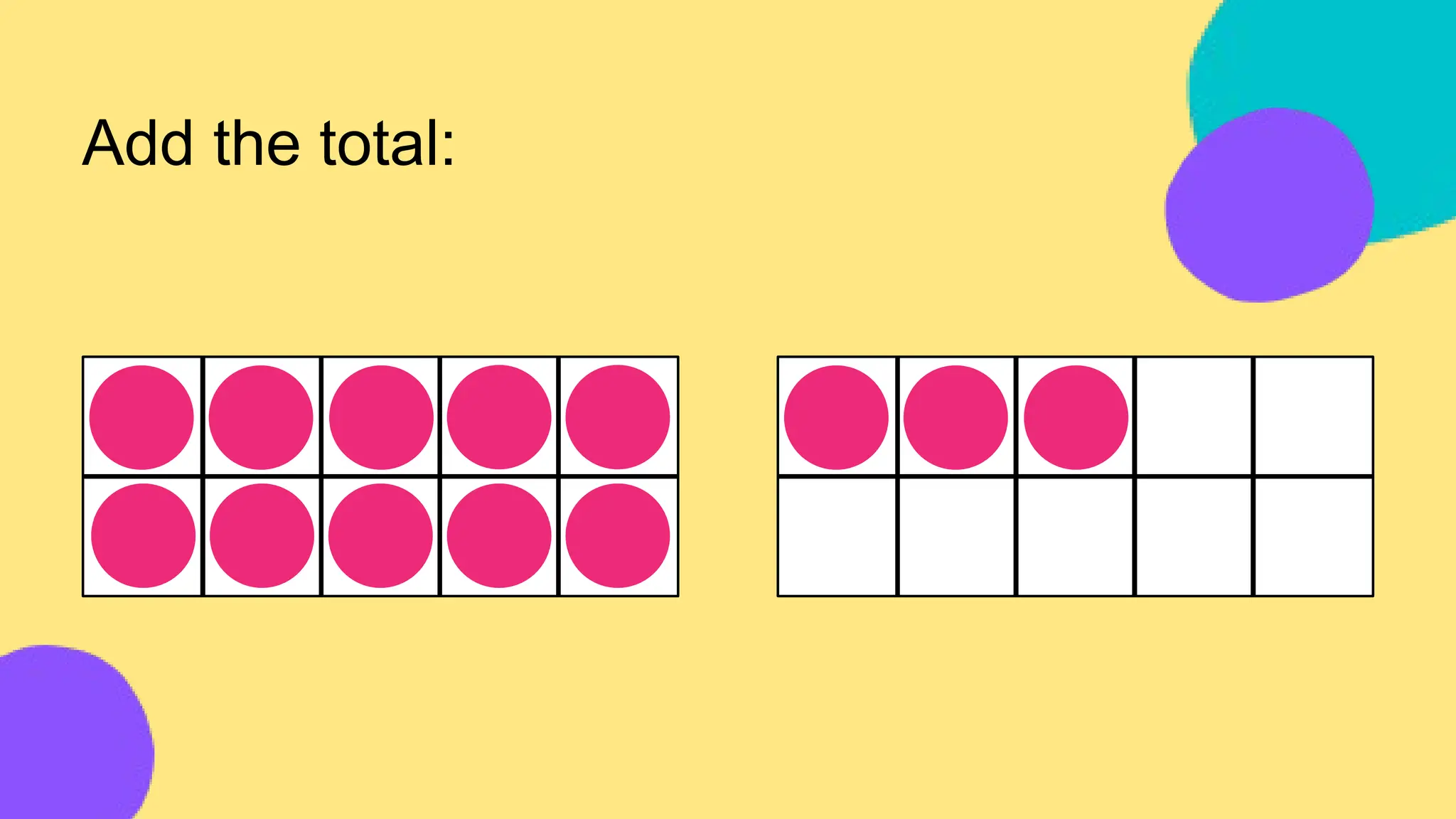
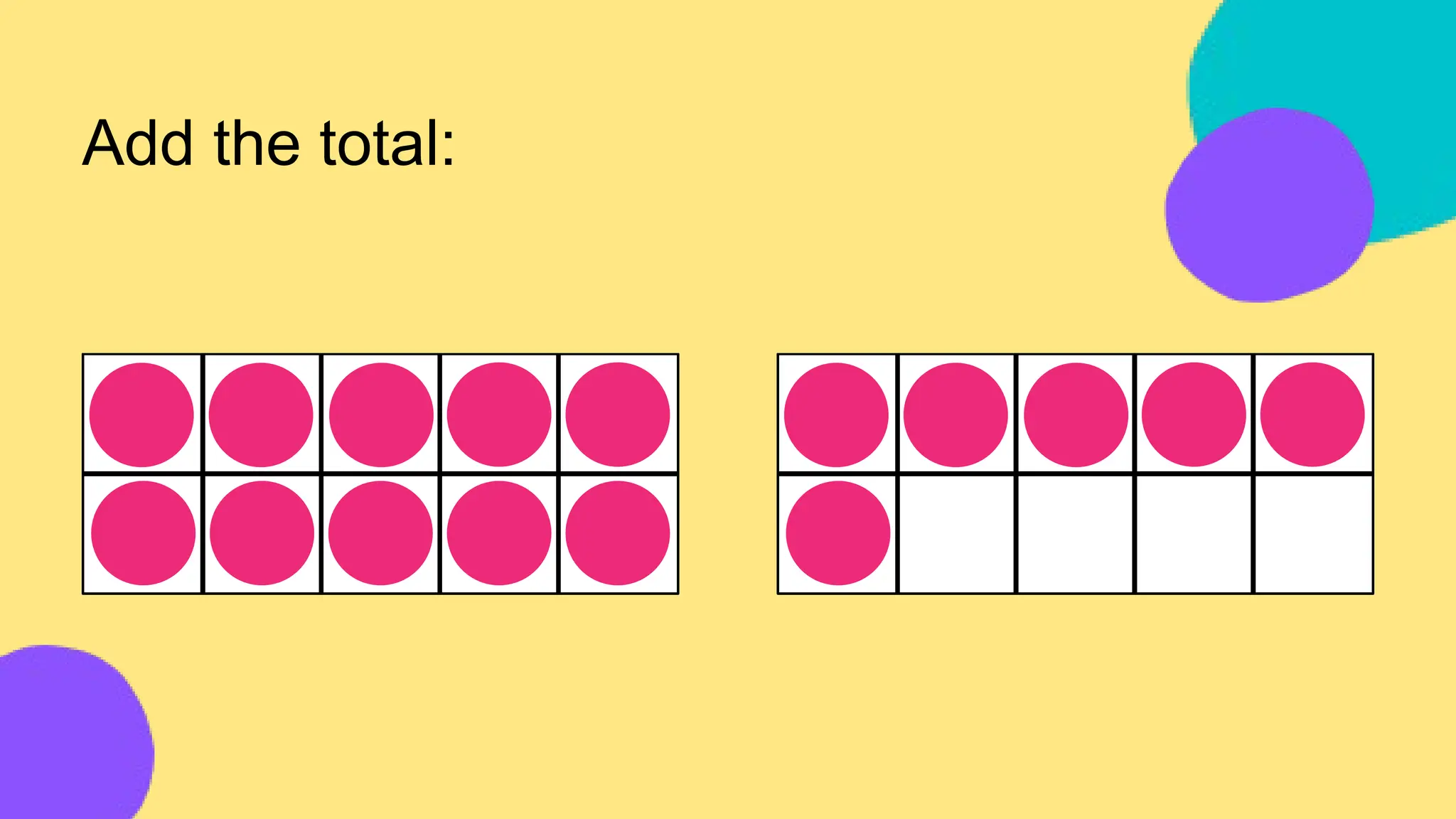
Tens frames can help us with our
addition.
Let's practice together:
TENS
FRAME
Add the total:
Add the total:
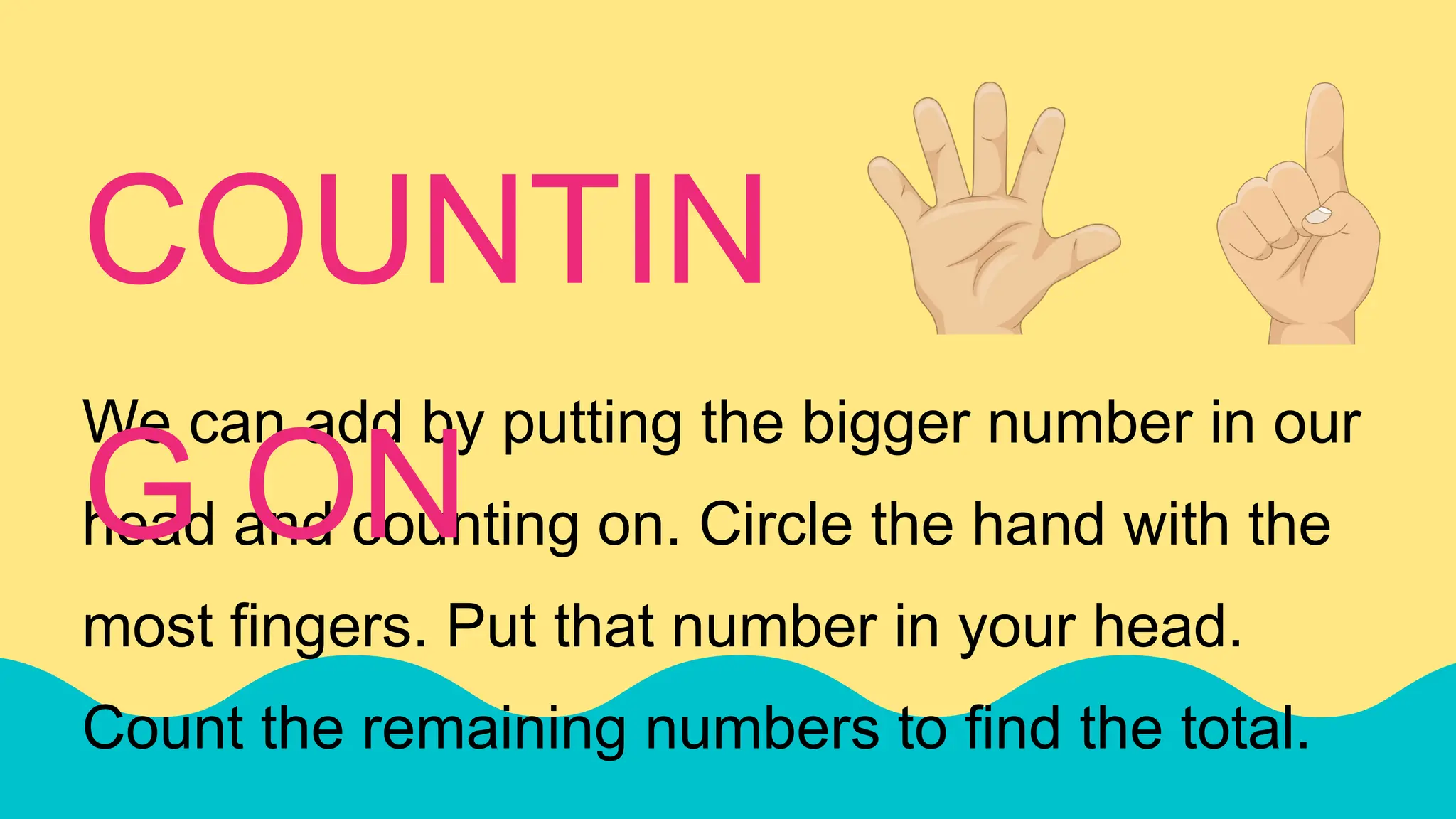
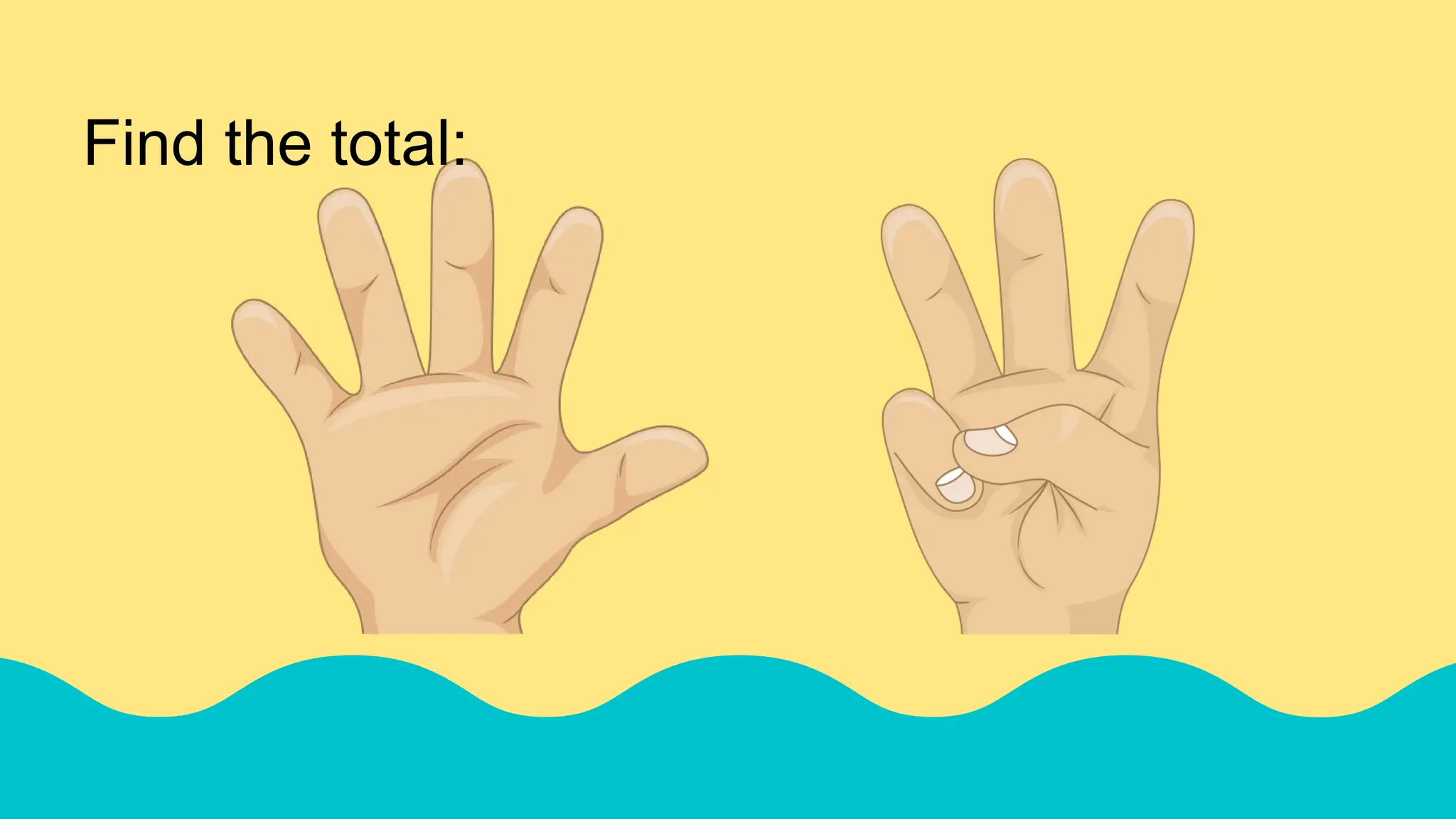
We can add by putting the bigger number in our
head and counting on. Circle the hand with the
most fingers. Put that number in your head.
Count the remaining numbers to find the total.
COUNTIN
G ON
Find the total:
Find the total:
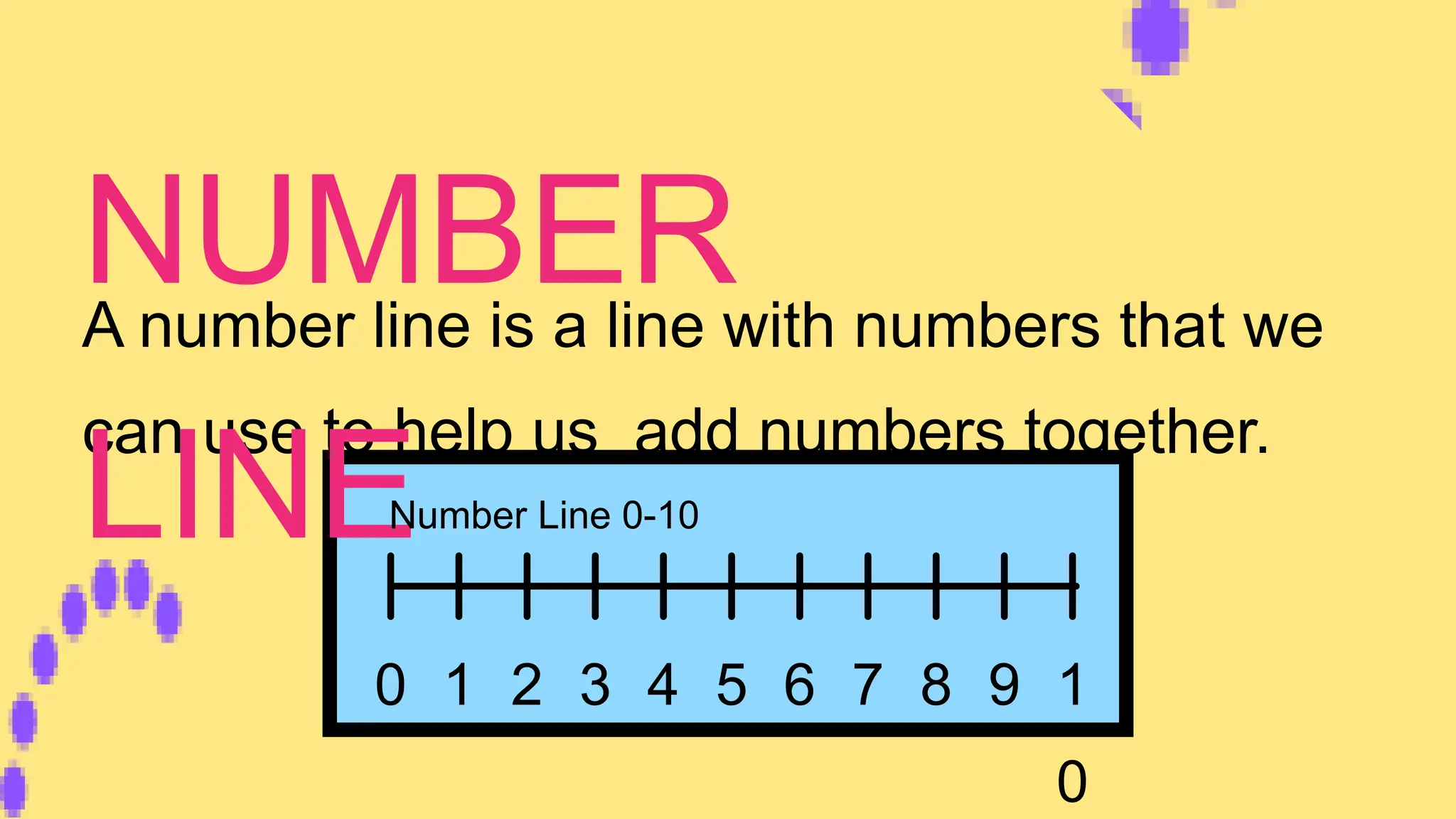
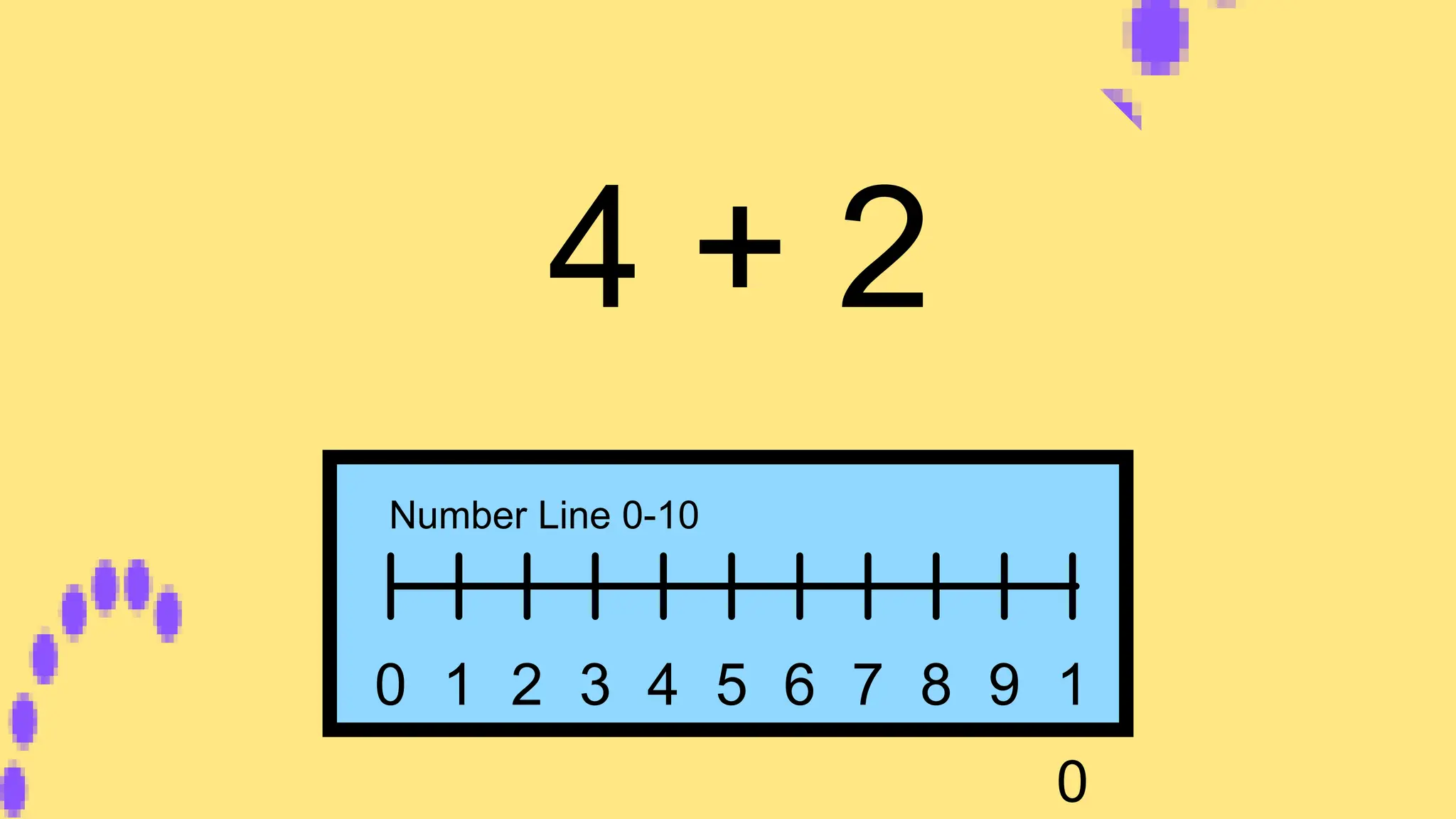
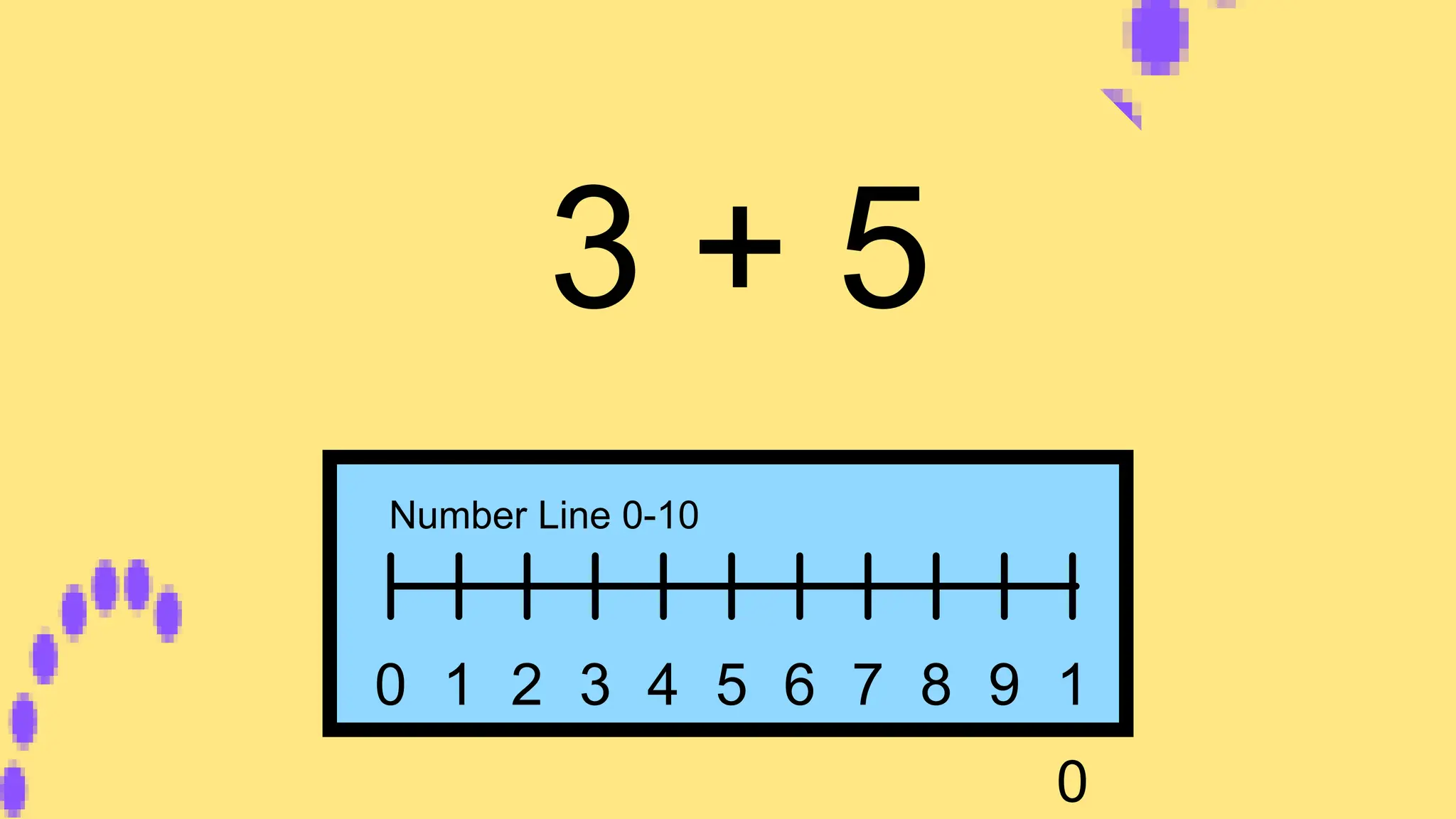
A number line is a line with numbers that we
can use to help us add numbers together.
NUMBER
LINE
0 1 2 3 4 5 6 7 8 9 1
0
Number Line 0-10
4 + 2
=
0 1 2 3 4 5 6 7 8 9 1
0
Number Line 0-10
3 + 5
=
0 1 2 3 4 5 6 7 8 9 1
0
Number Line 0-10
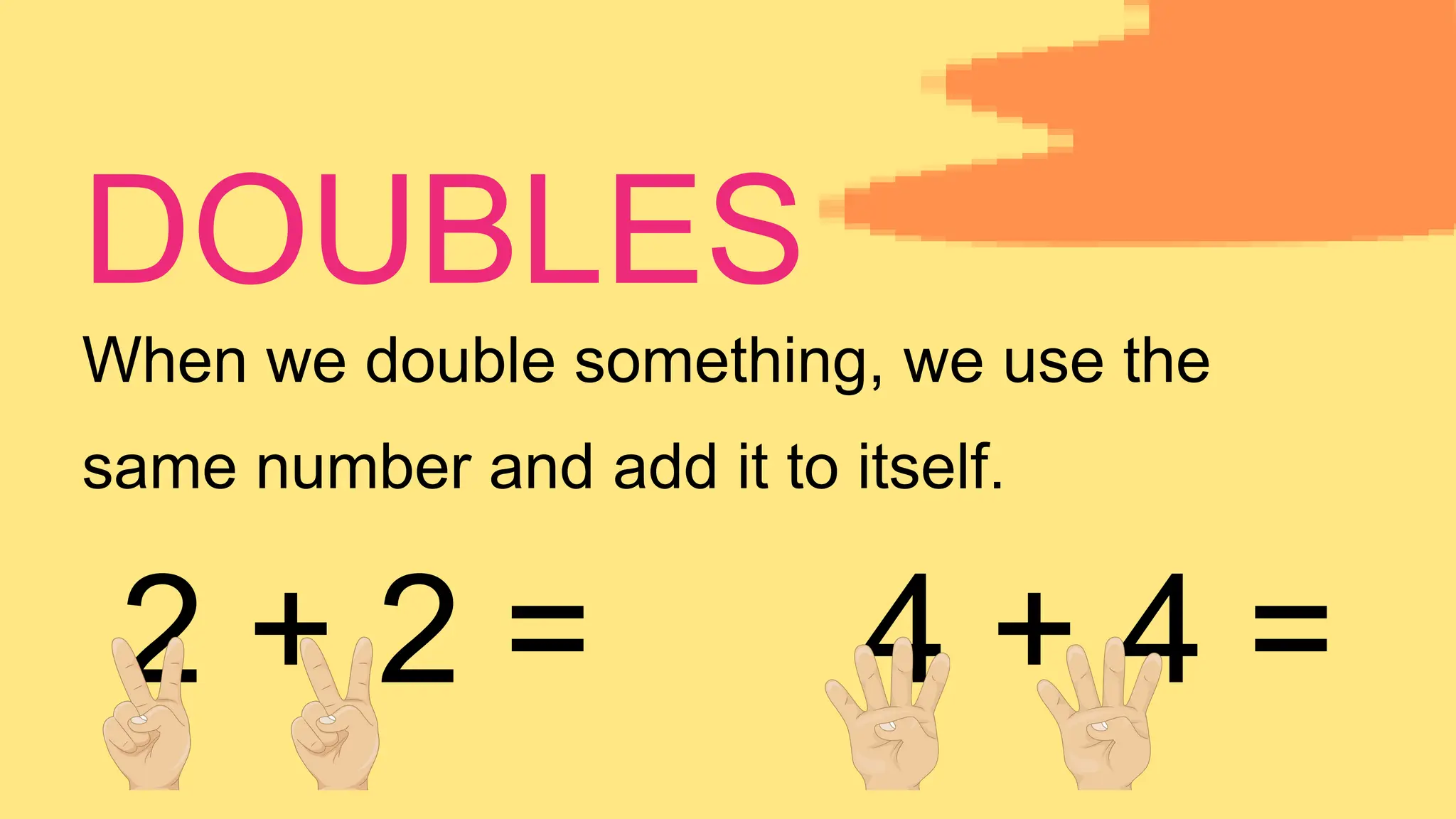
When we double something, we use the
same number and add it to itself.
2 + 2 = 4 + 4 =
DOUBLES
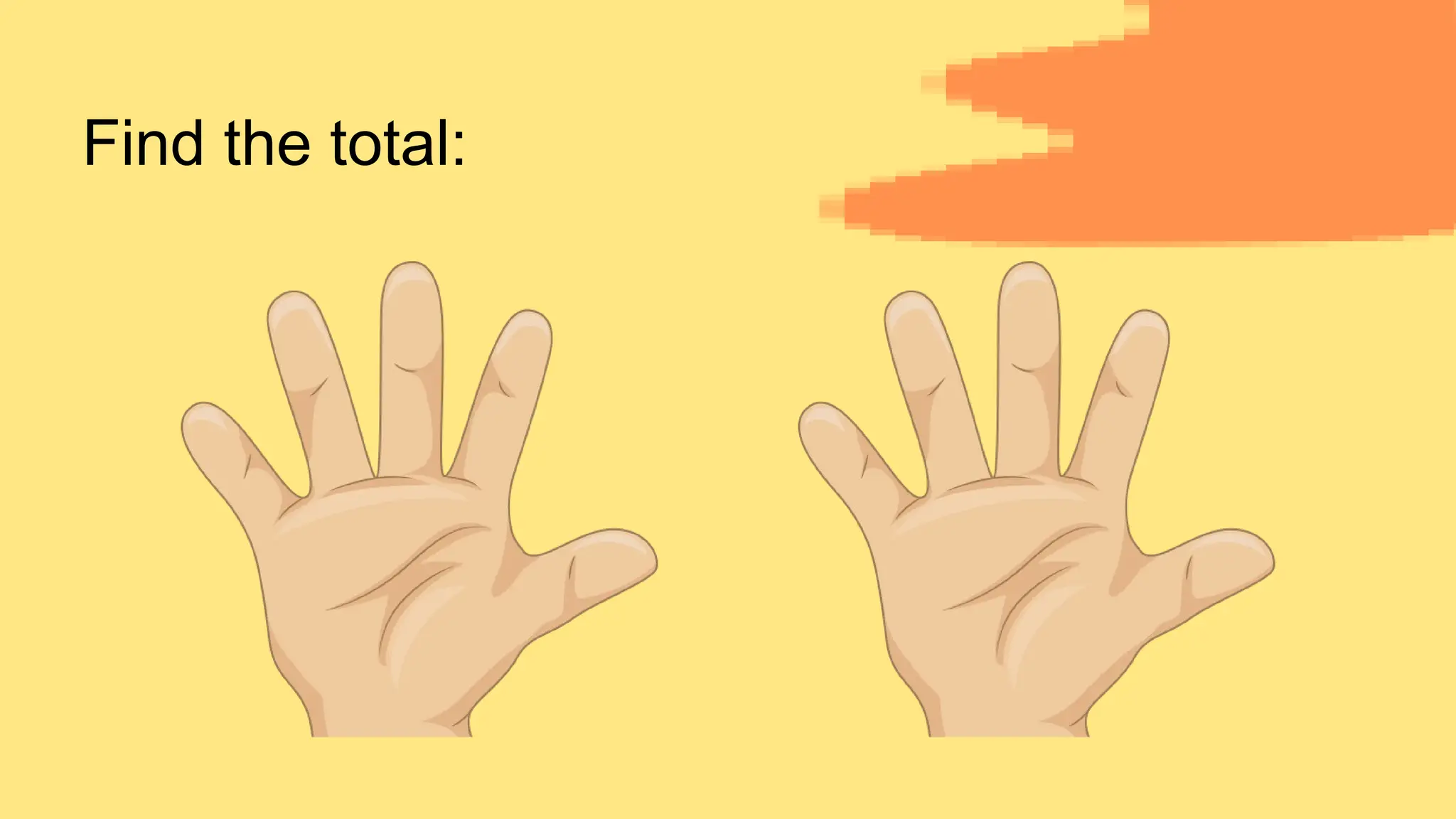
Find the total:
Find the total:
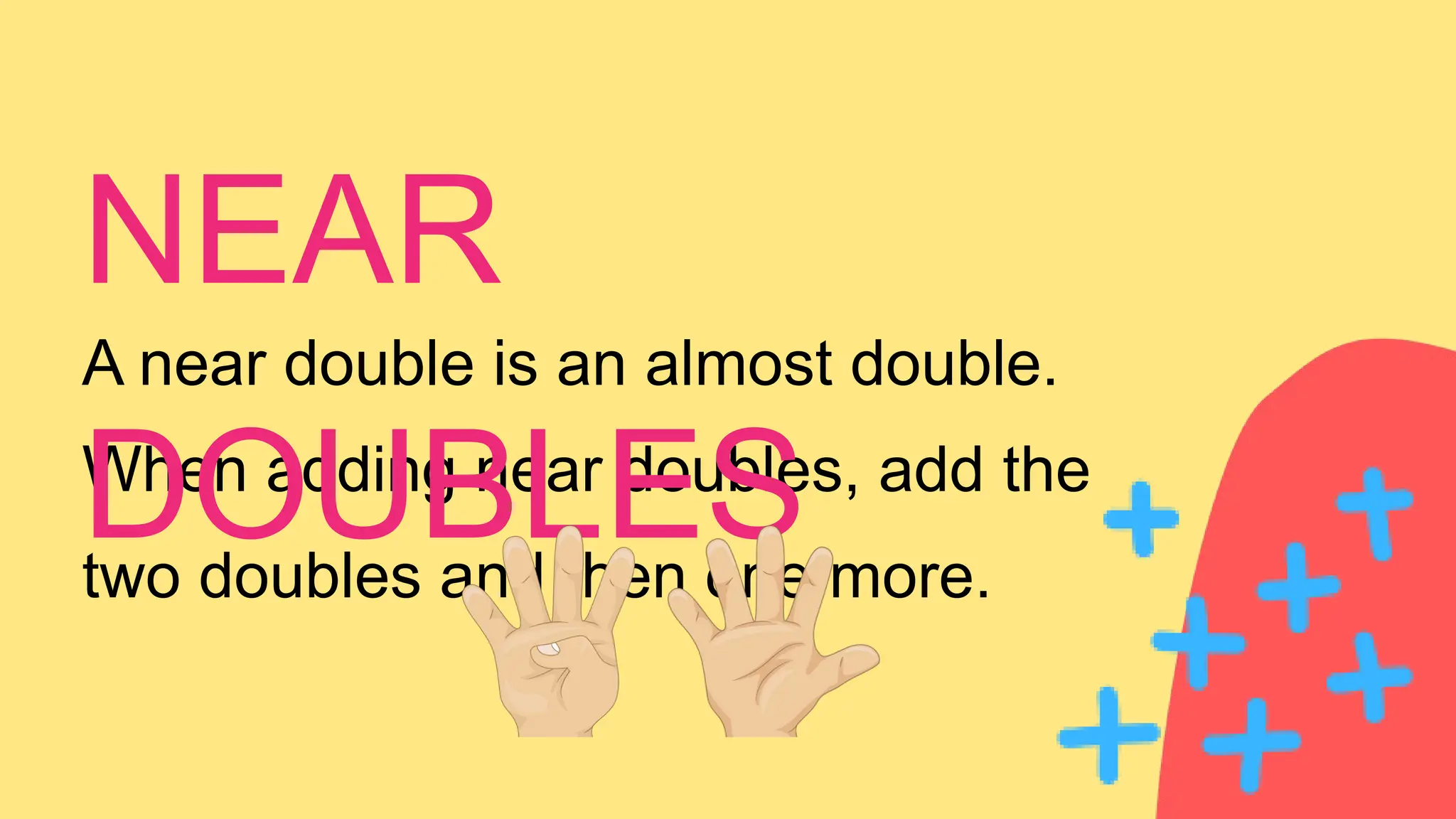
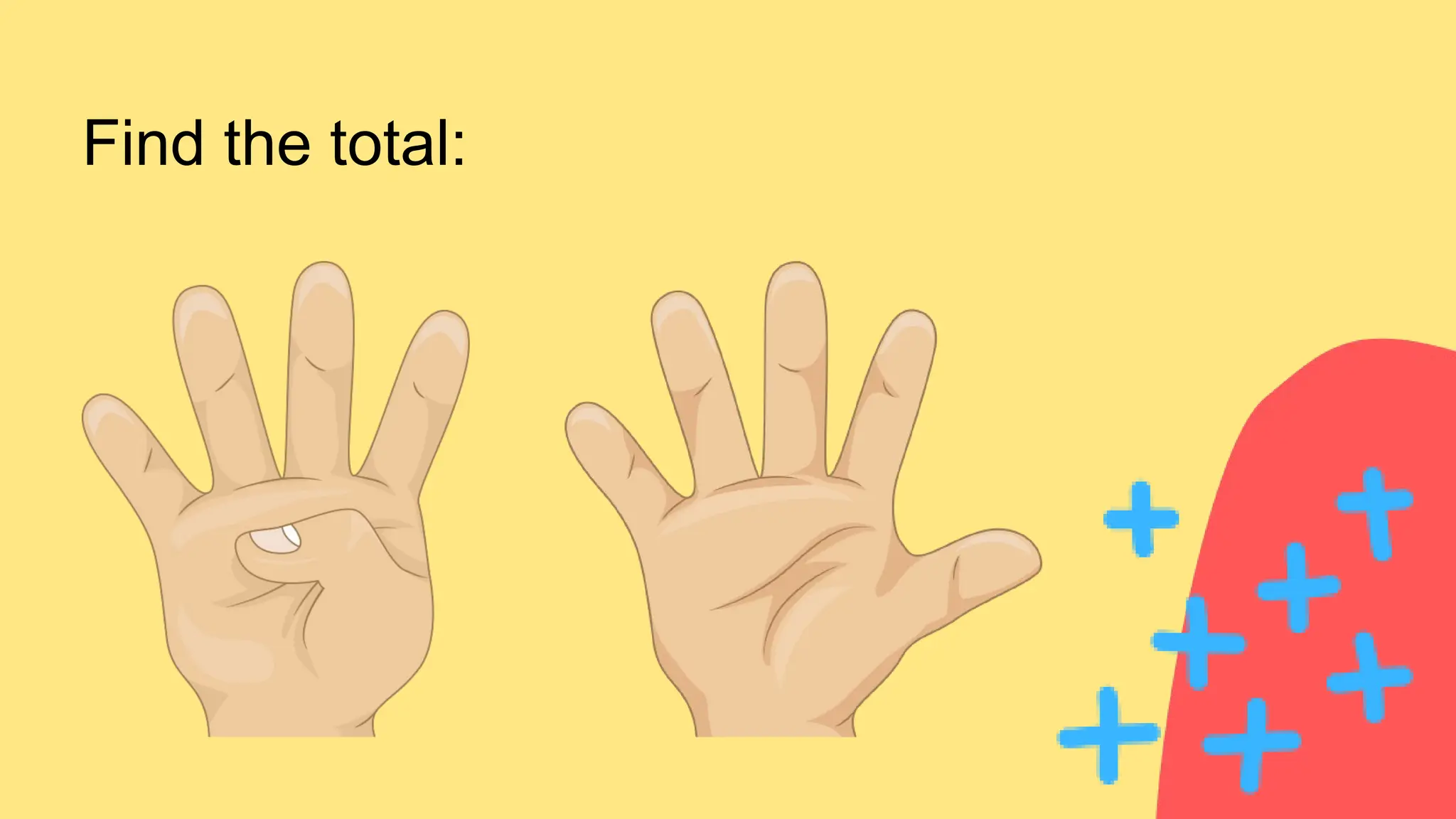
A near double is an almost double.
When adding near doubles, add the
two doubles and then one more.
NEAR
DOUBLES
Find the total:
Find the total:
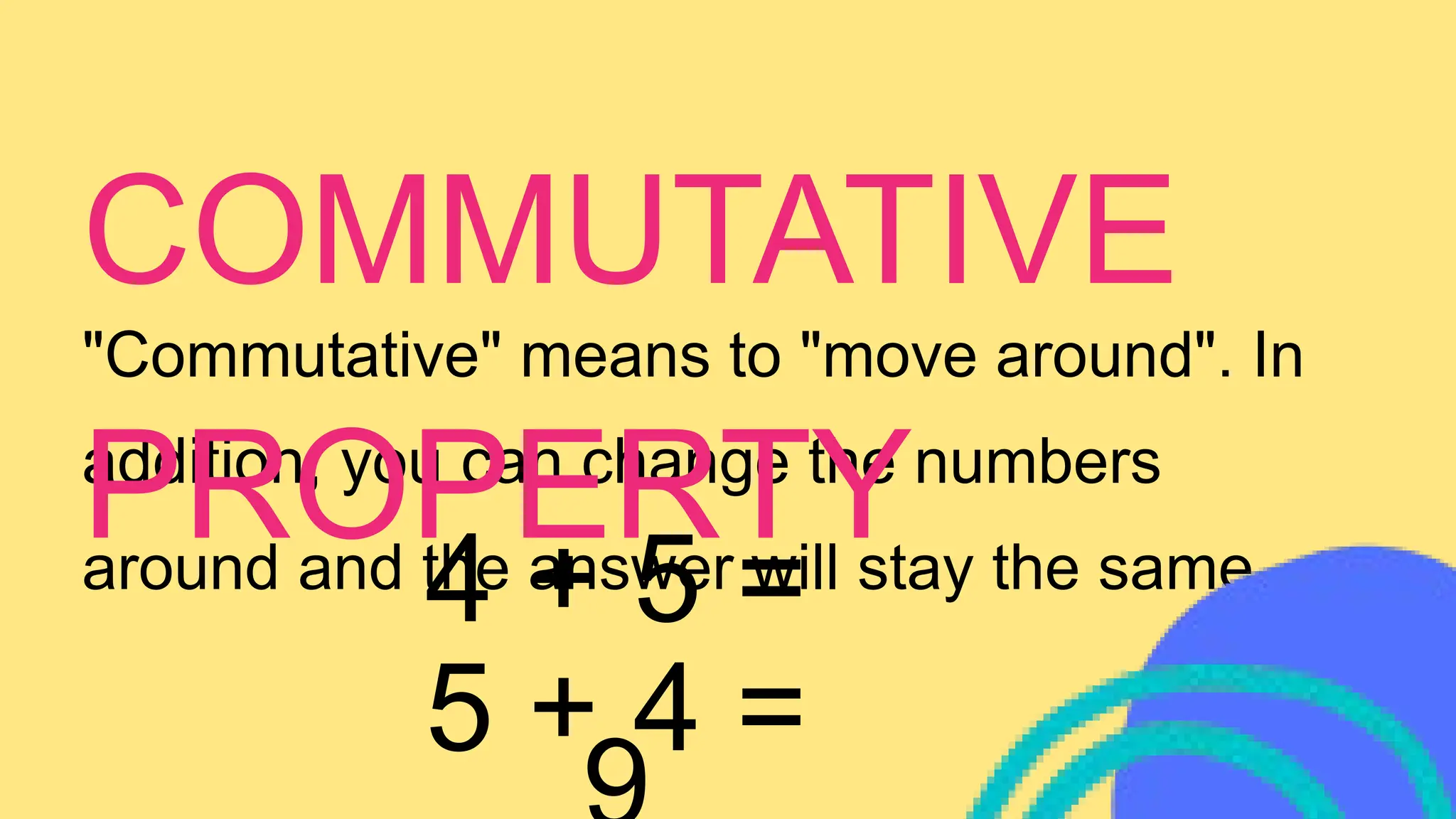
"Commutative" means to "move around". In
addition, you can change the numbers
around and the answer will stay the same.
COMMUTATIVE
PROPERTY
4 + 5 =
5 + 4 =
+
1 9
+
2 8
+
3 7
+
4 6
+
5 5
FRIEND
S
OF 10
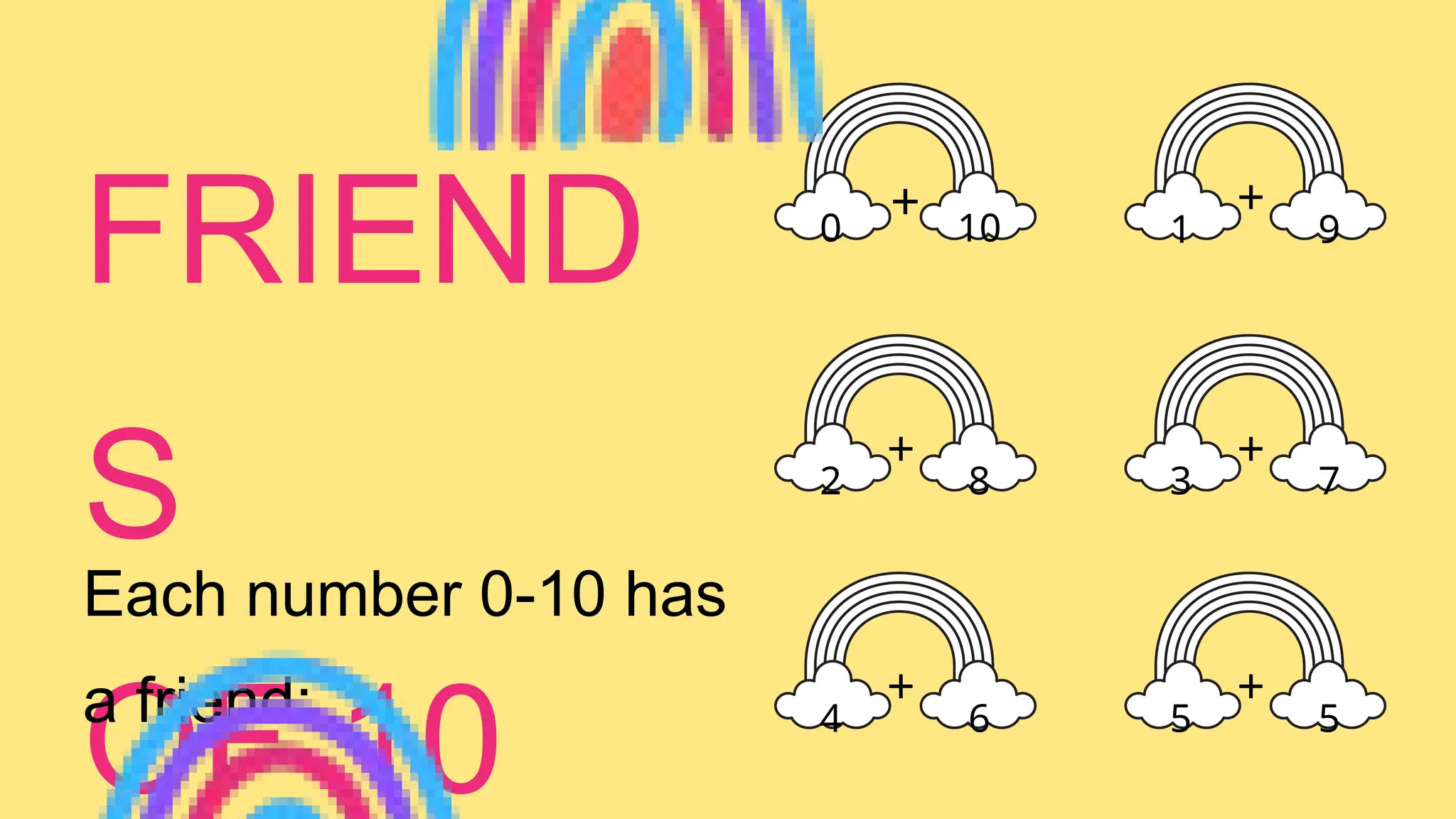
Each number 0-10 has
a friend:
+
0 10
+
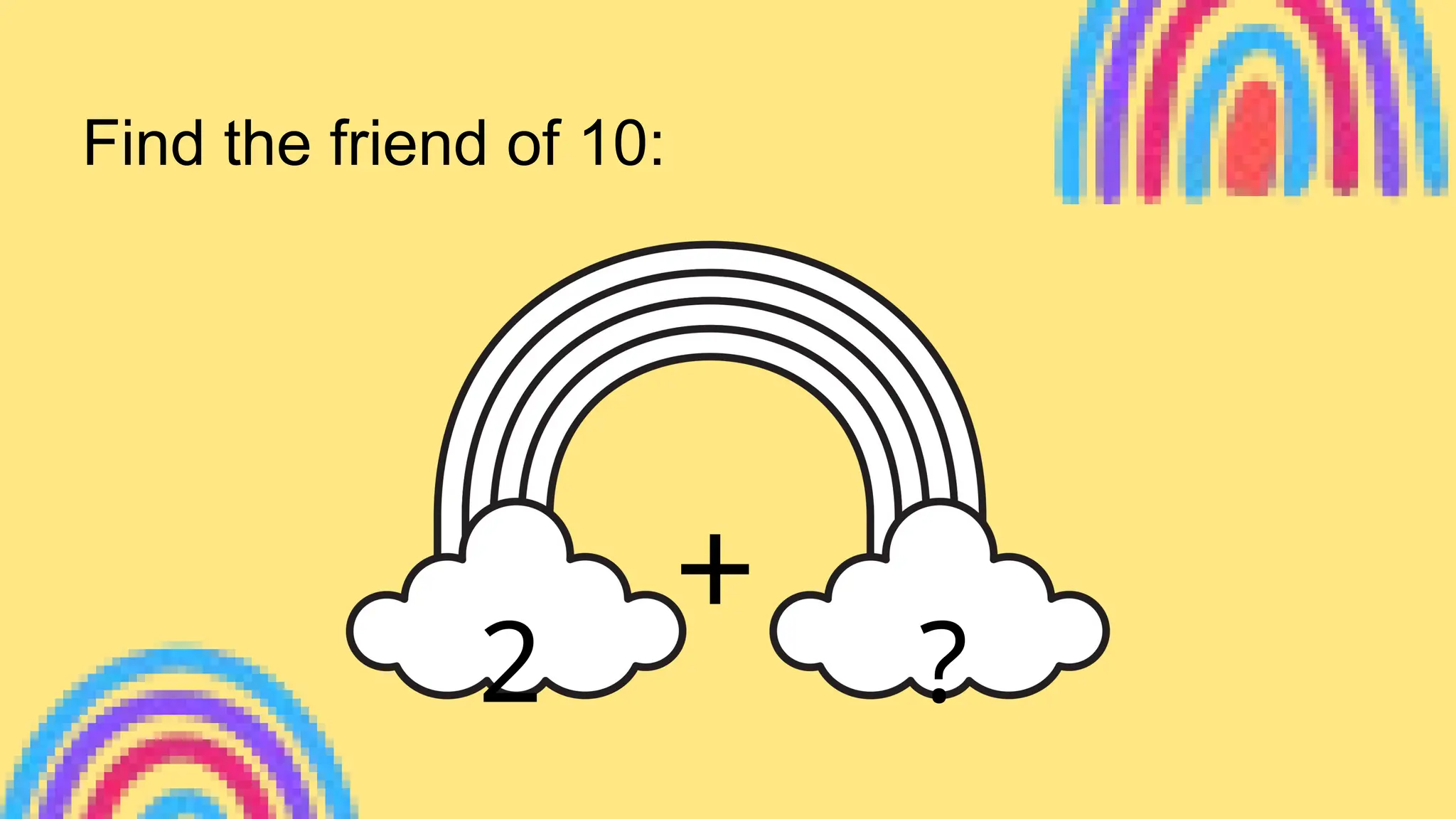
2 ?
Find the friend of 10:
+
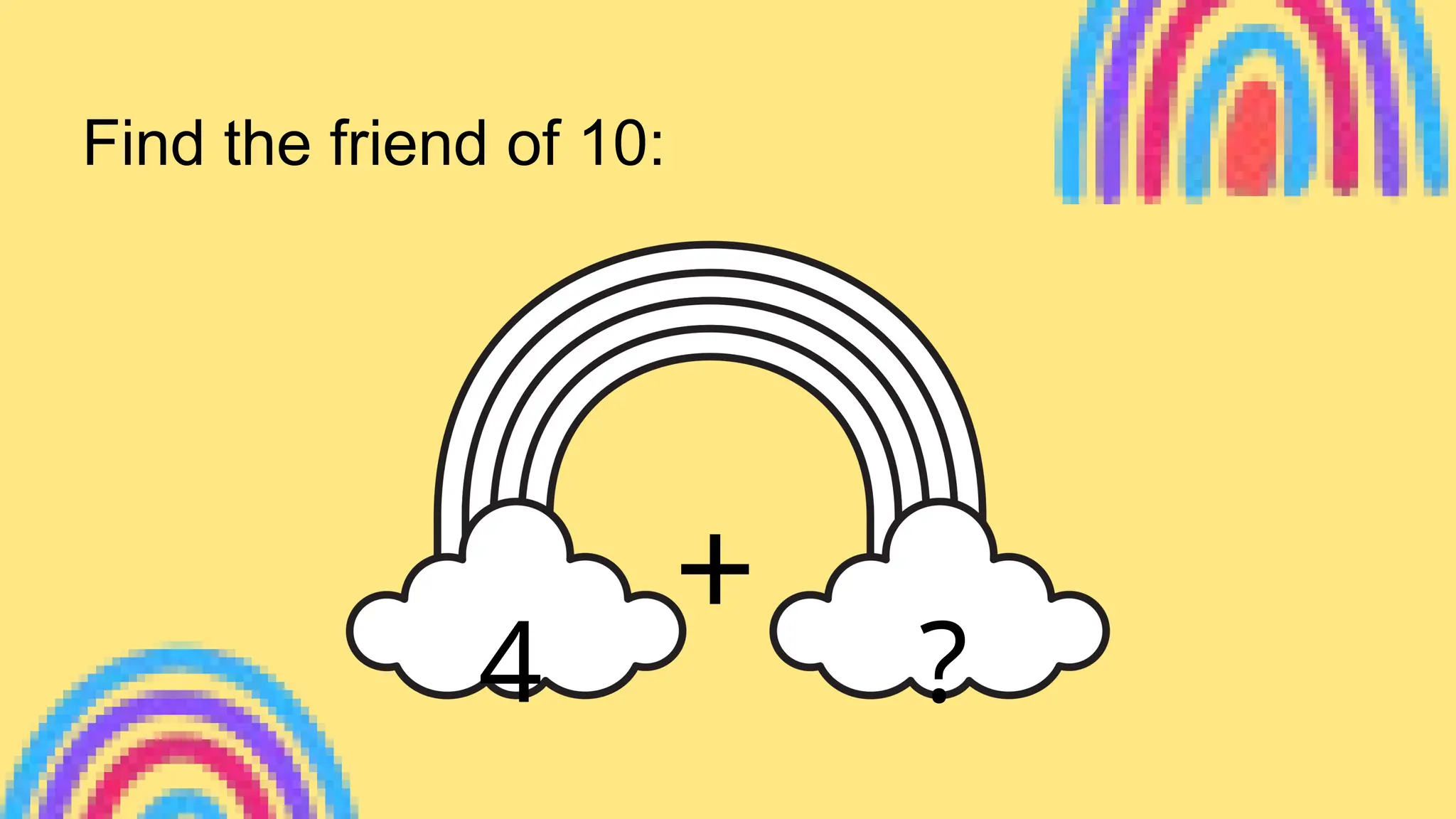
4 ?
Find the friend of 10:
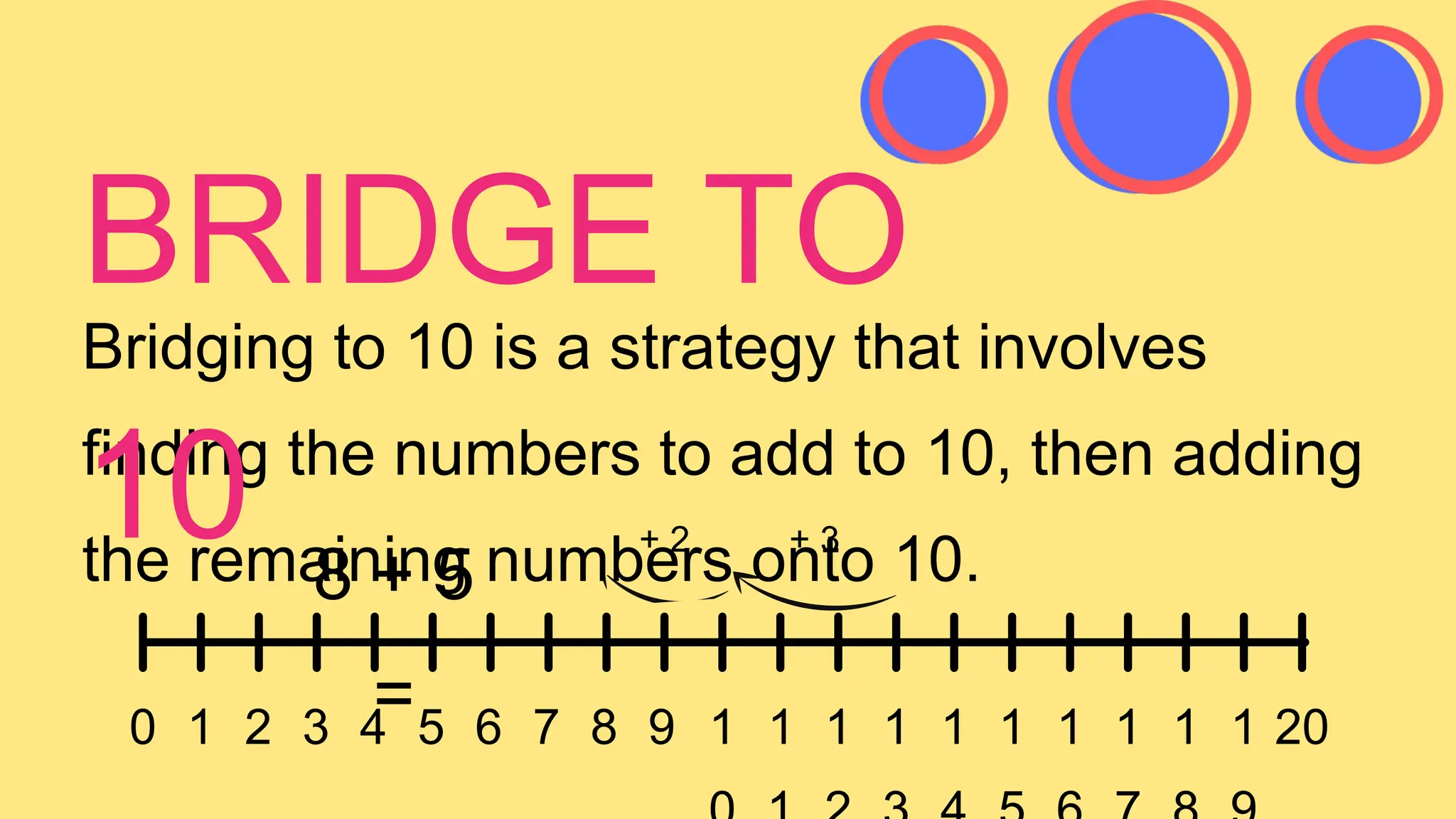
Bridging to 10 is a strategy that involves
finding the numbers to add to 10, then adding
the remaining numbers onto 10.
BRIDGE TO
10
0 1 2 3 4 5 6 7 8 9 1 1 1 1 1 1 1 1 1 1 20
8 + 5
=
+ 2 + 3
0 1 2 3 4 5 6 7 8 9 1
0
1
1
1
2
1
3
1
4
1
5
1
6
1
7
1
8
1
9
20
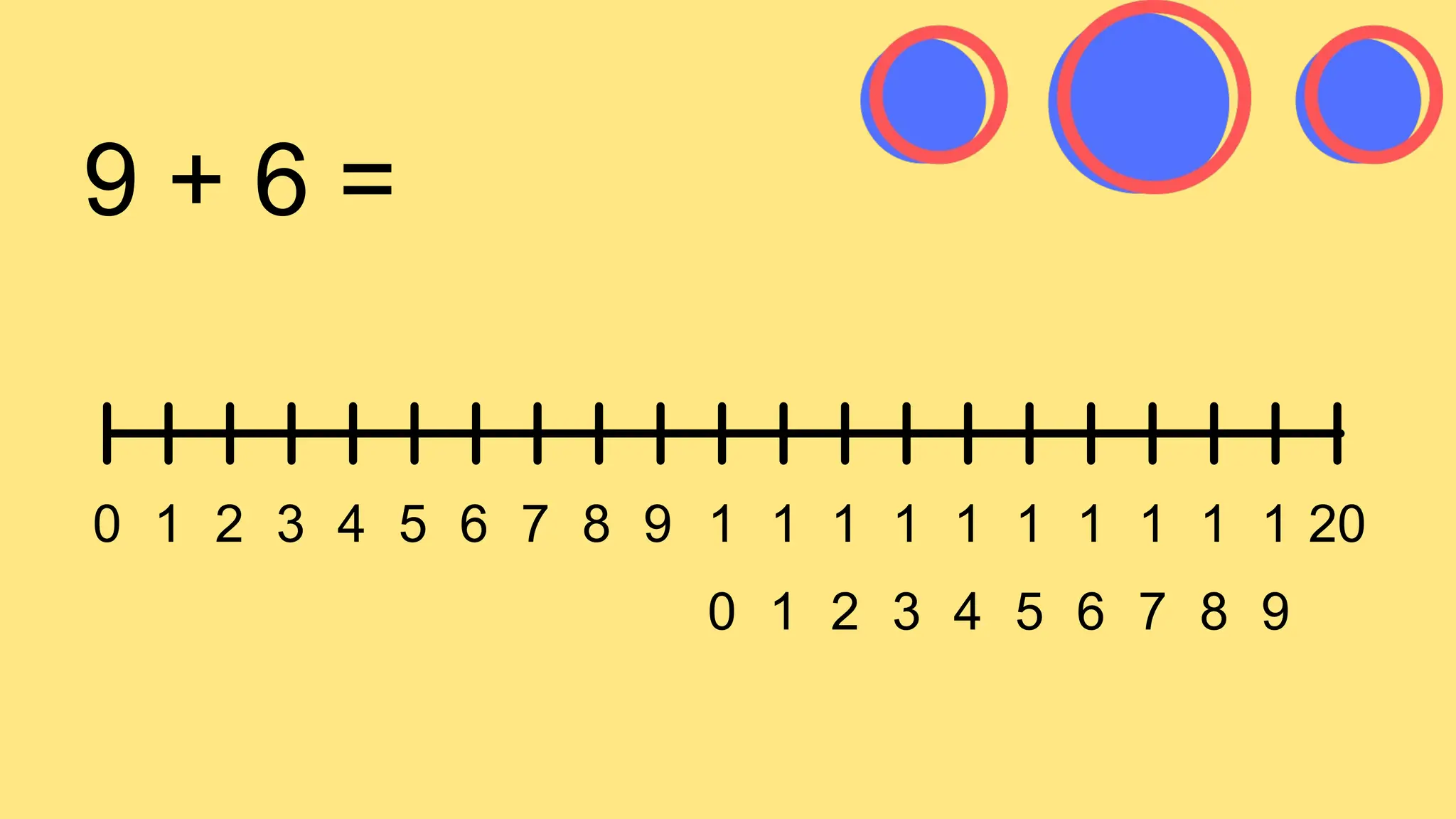
9 + 6 =
0 1 2 3 4 5 6 7 8 9 1
0
1
1
1
2
1
3
1
4
1
5
1
6
1
7
1
8
1
9
20
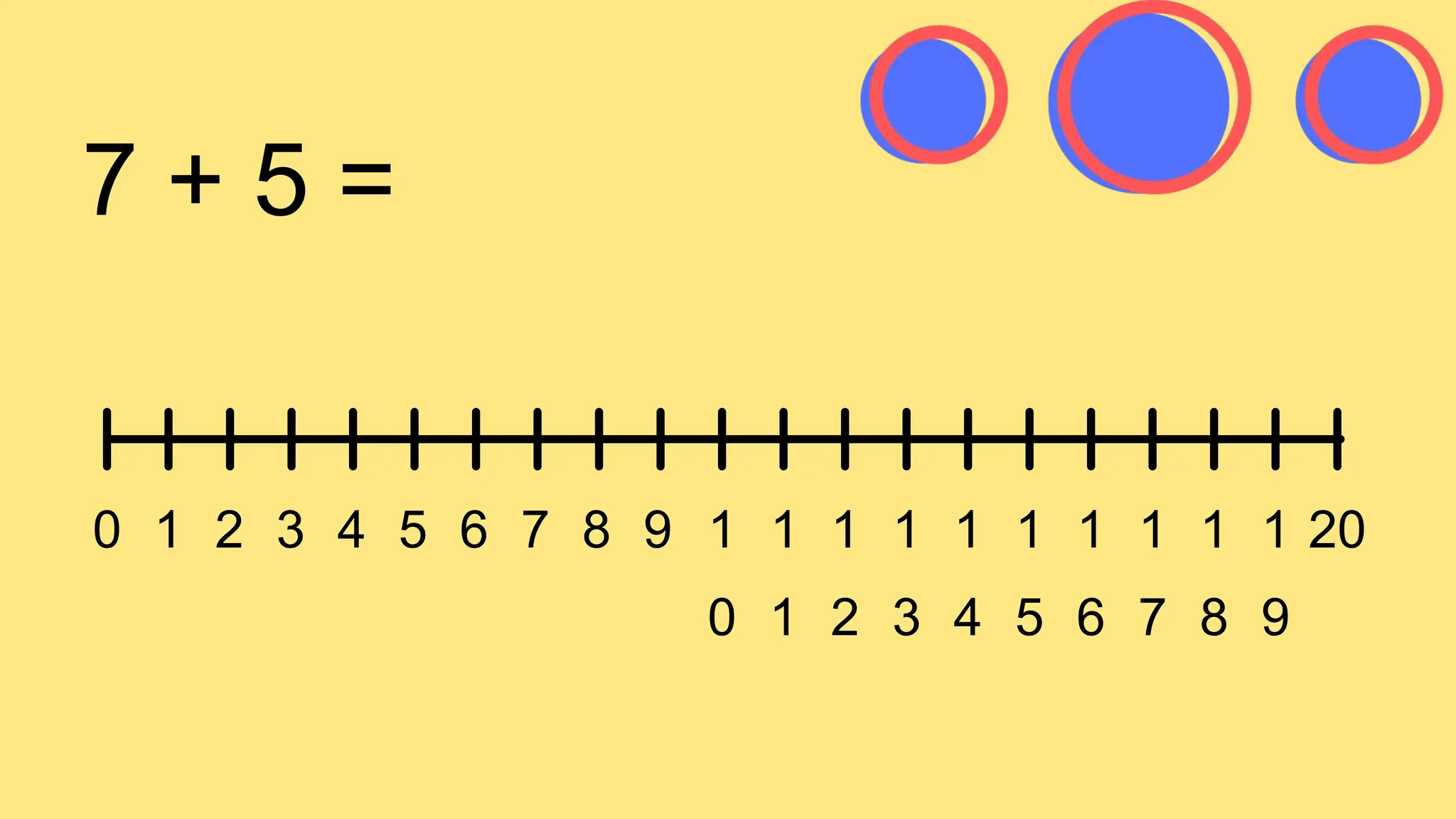
7 + 5 =
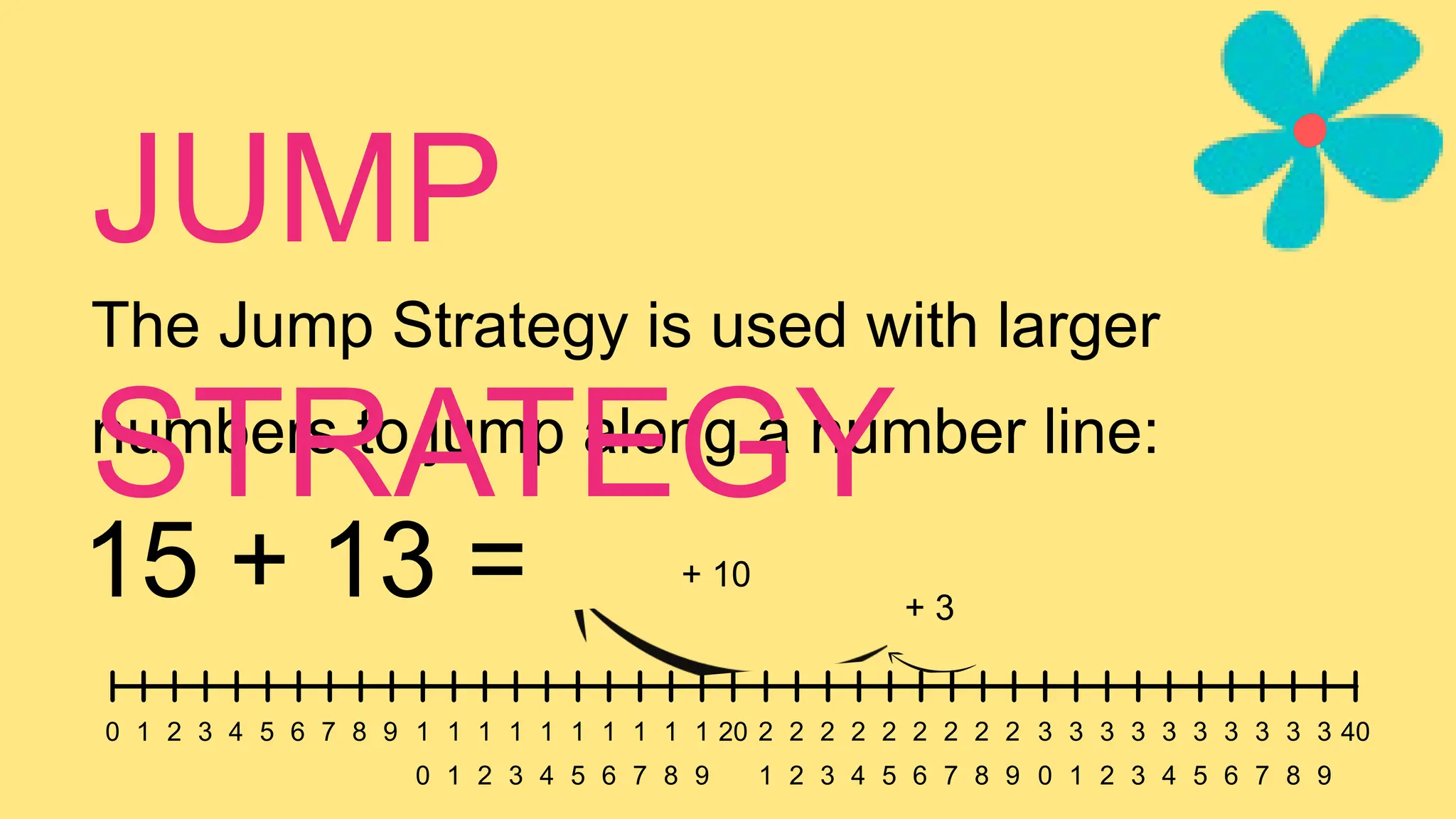
The Jump Strategy is used with larger
numbers to jump along a number line:
0 1 2 3 4 5 6 7 8 9 1
0
1
1
1
2
1
3
1
4
1
5
1
6
1
7
1
8
1
9
20 2
1
2
2
2
3
2
4
2
5
2
6
2
7
2
8
2
9
3
0
3
1
3
2
3
3
3
4
3
5
3
6
3
7
3
8
3
9
40
JUMP
STRATEGY
15 + 13 = + 10
+ 3
0 1 2 3 4 5 6 7 8 9 1
0
1
1
1
2
1
3
1
4
1
5
1
6
1
7
1
8
1
9
20 2
1
2
2
2
3
2
4
2
5
2
6
2
7
2
8
2
9
3
0
3
1
3
2
3
3
3
4
3
5
3
6
3
7
3
8
3
9
40
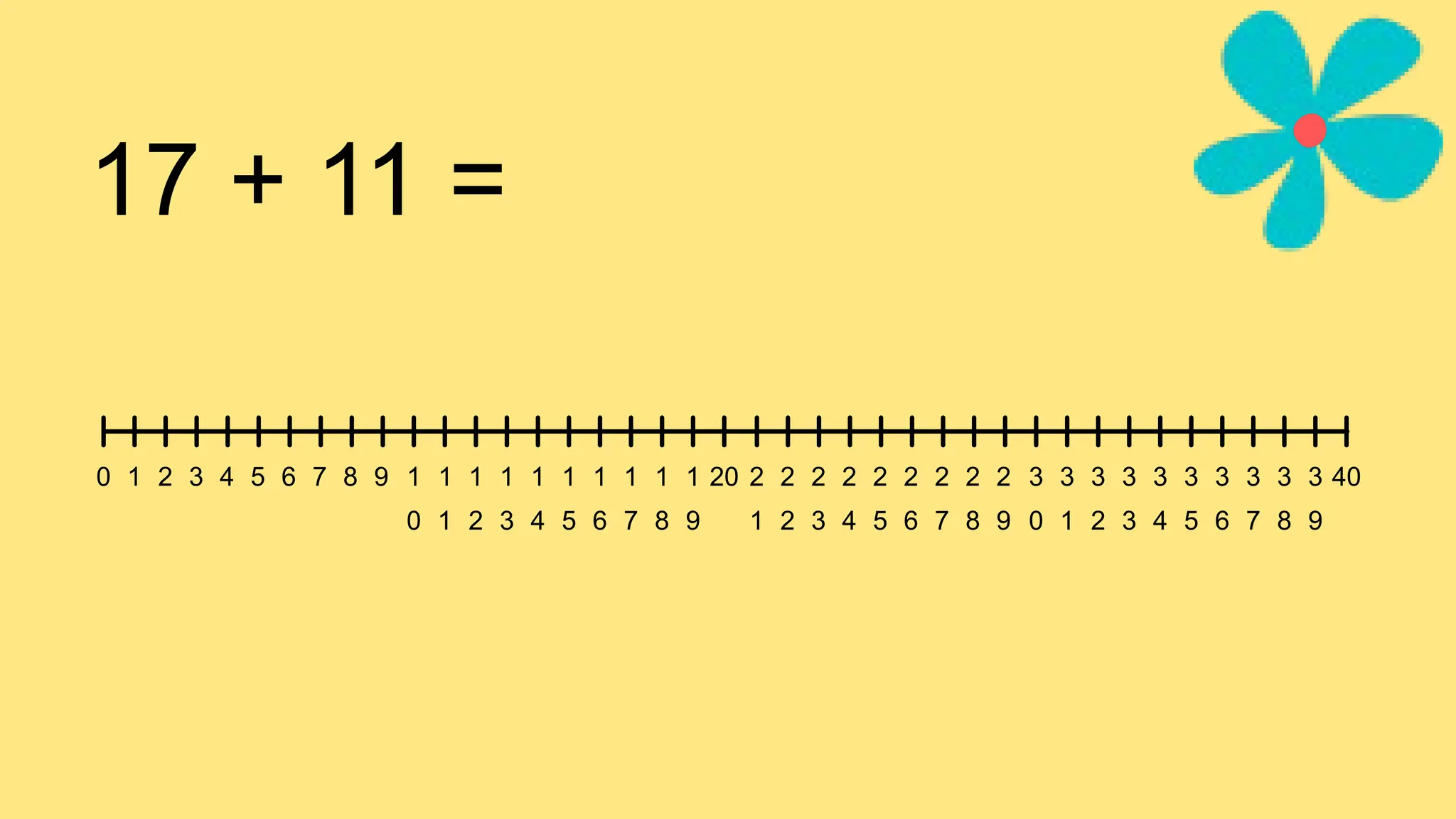
17 + 11 =
0 1 2 3 4 5 6 7 8 9 1
0
1
1
1
2
1
3
1
4
1
5
1
6
1
7
1
8
1
9
20 2
1
2
2
2
3
2
4
2
5
2
6
2
7
2
8
2
9
3
0
3
1
3
2
3
3
3
4
3
5
3
6
3
7
3
8
3
9
40
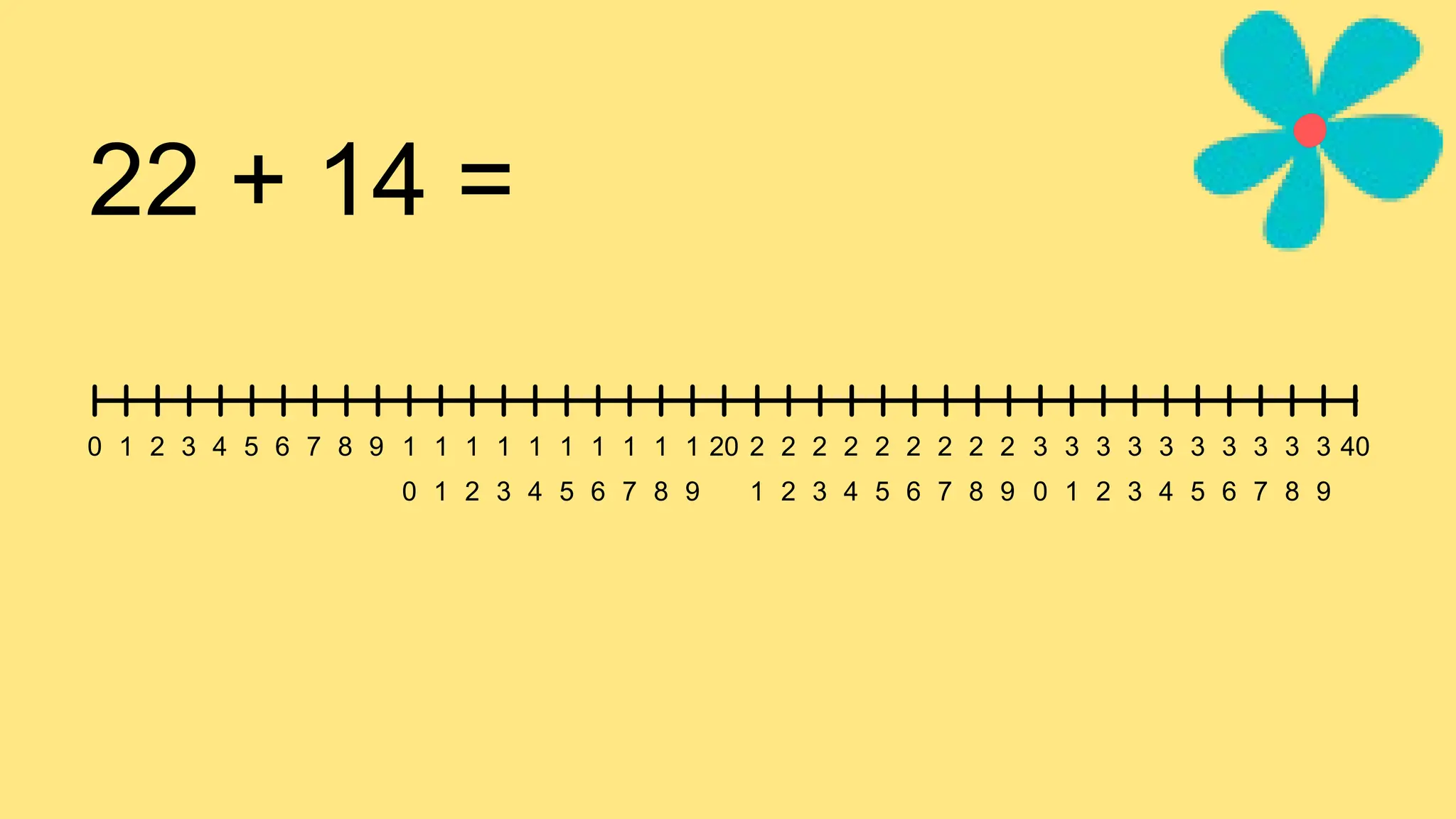
22 + 14 =
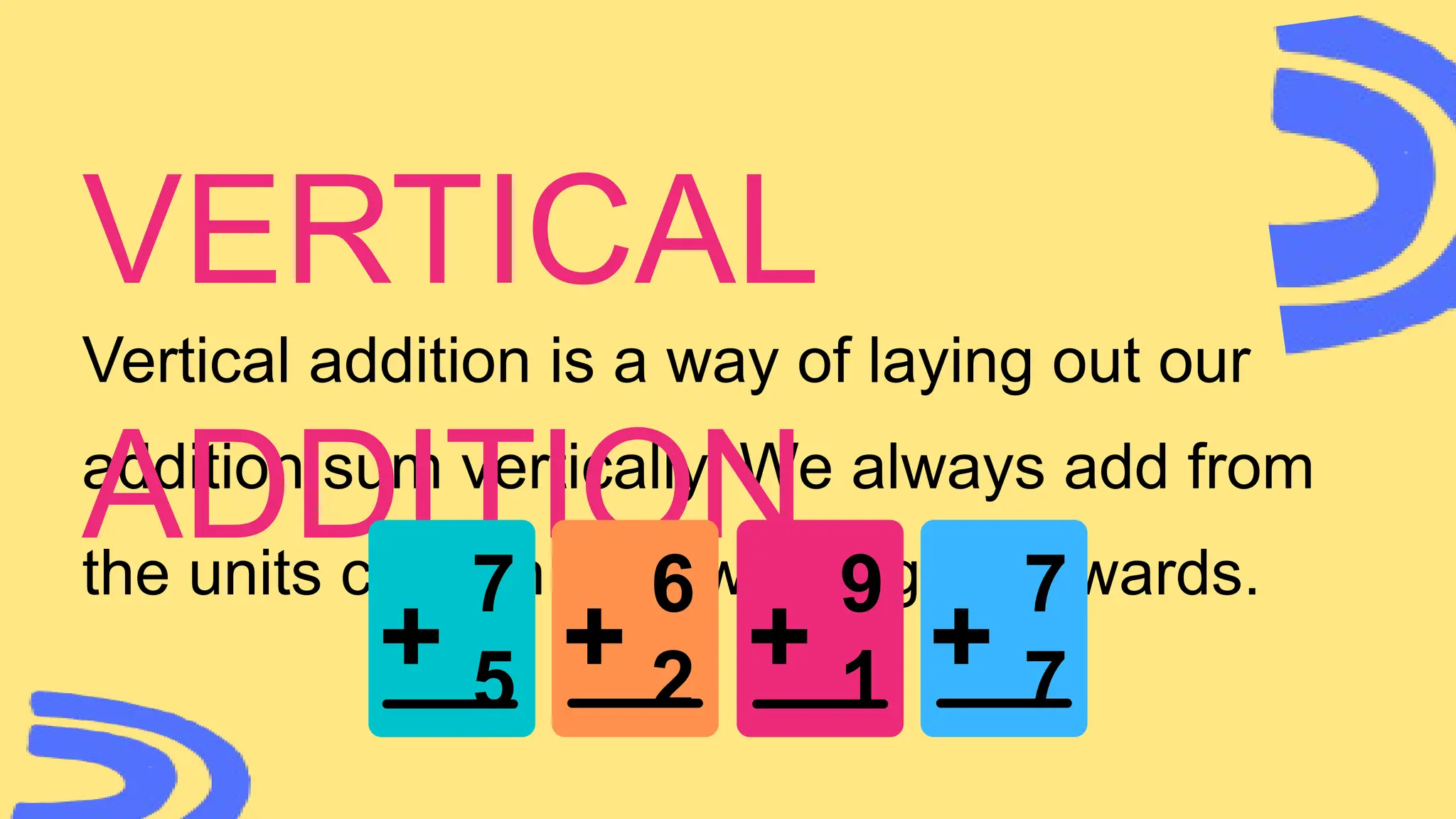
Vertical addition is a way of laying out our
addition sum vertically. We always add from
the units column first, working backwards.
VERTICAL
ADDITION
7
5
+
6
2
9
1
7
7
+ + +
+ 4 2
3
4
ADDITION
GRID
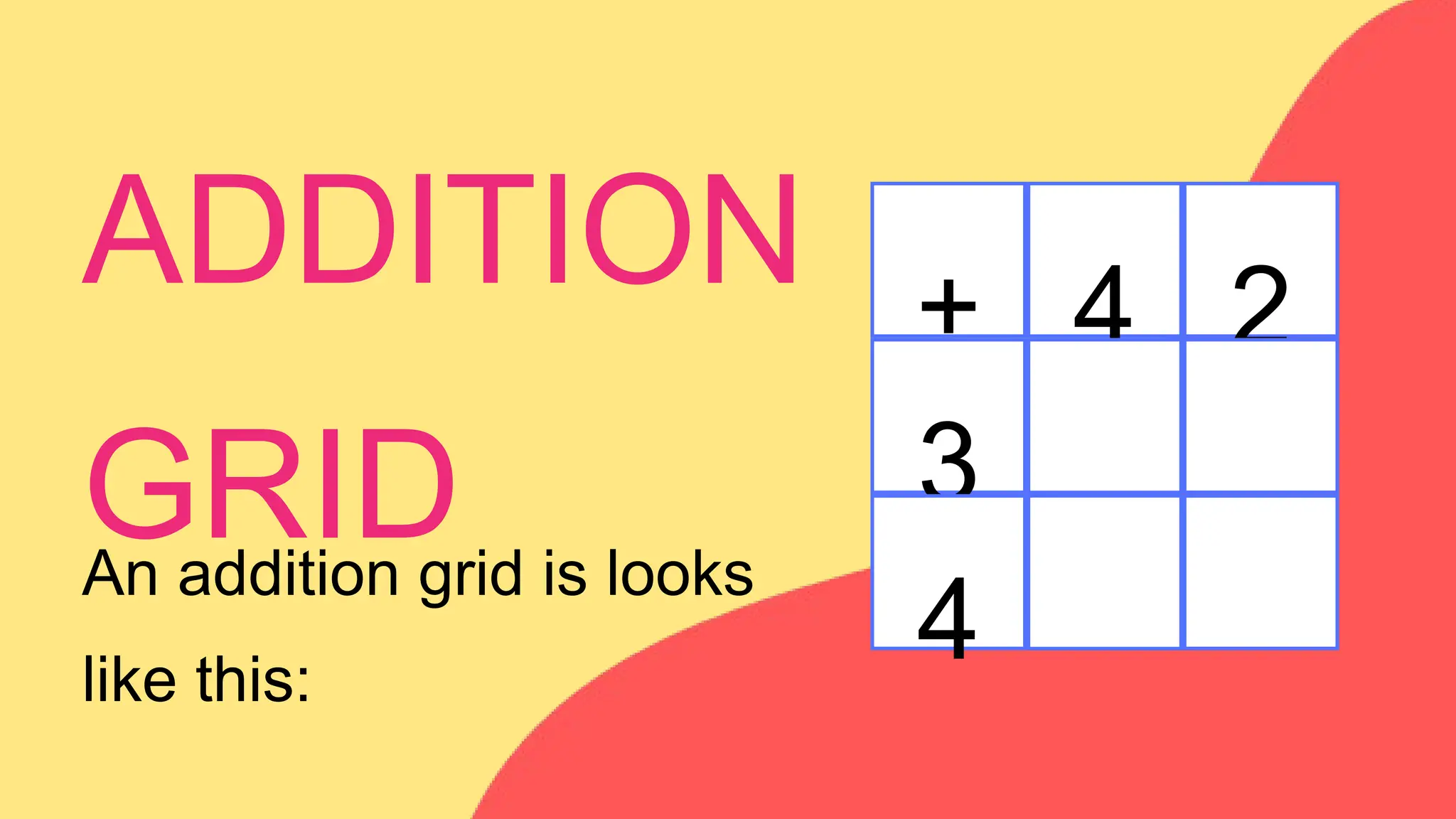
An addition grid is looks
like this:
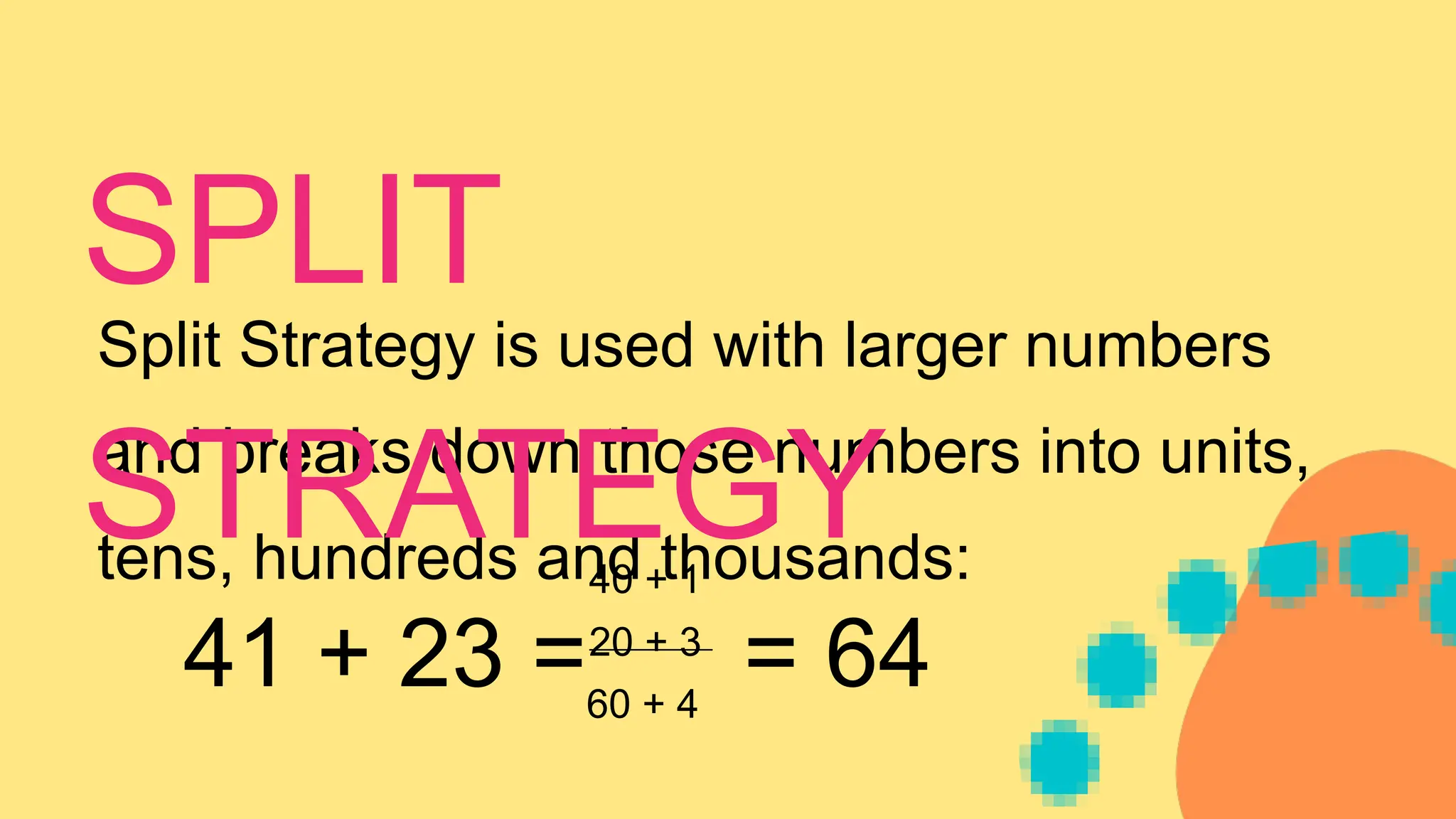
Split Strategy is used with larger numbers
and breaks down those numbers into units,
tens, hundreds and thousands:
20 + 3
SPLIT
STRATEGY
41 + 23 =
40 + 1
60 + 4
= 64
Addition Strategies and practice for grade 4

Addition Strategies and practice for grade 4