Adaptive training of vibration‐
based anomaly detector for wind 
turbine condition monitoring
Takanori
Hasegawa
Jun
Ogata
Masahiro
Murakawa
Tetsunori
Kobayashi
Tetsuji 
Ogawa
1
Anomaly Detection for CMS
2
• Condition monitoring system (CMS) plays a vital role in 
establishing condition‐based maintenance and repair (M&R).
• Anomaly (fault) detection is a key technology to realize effective 
CMSs. [Afrooz, et al, 2014][A Zaher, et al, 2009][Z Hameed, et al 2009]
https://www.nrel.gov/continuum/partnering/wind.html
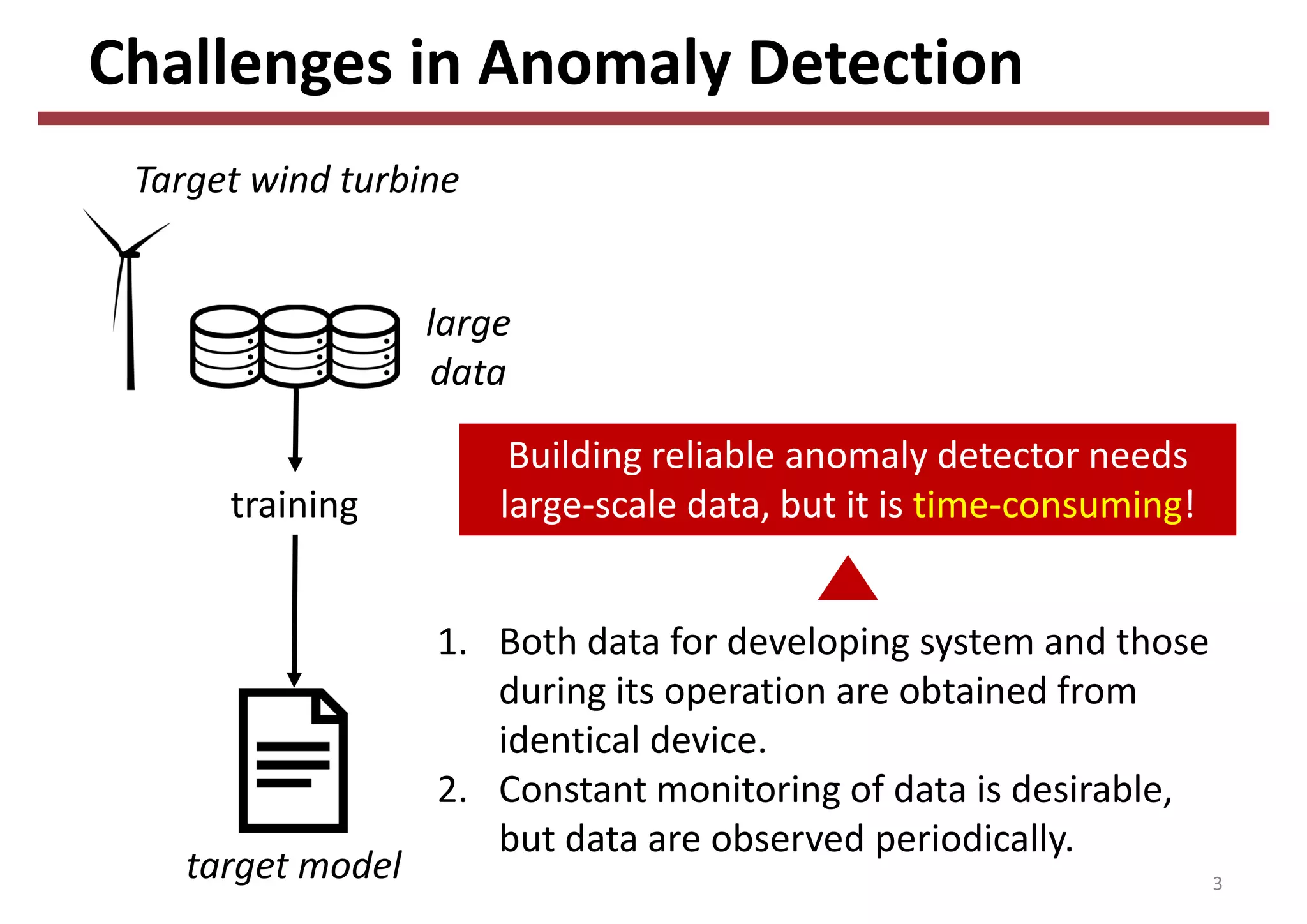
Challenges in Anomaly Detection
1. Both data for developing system and those 
during its operation are obtained from 
identical device.
2. Constant monitoring of data is desirable, 
but data are observed periodically.
3
training
target model
large
data
Target wind turbine
Building reliable anomaly detector needs 
large‐scale data, but it is time‐consuming!
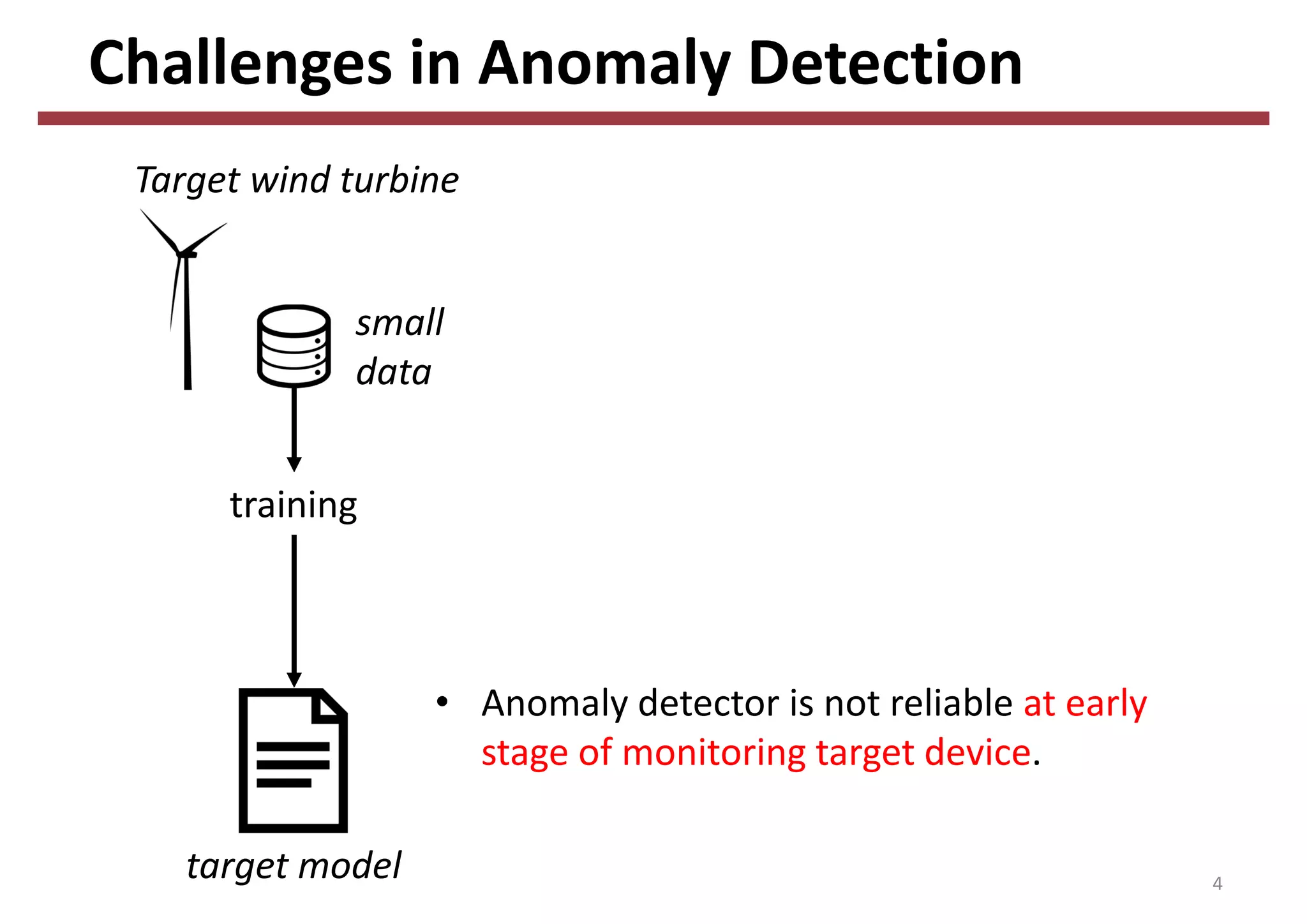
Challenges in Anomaly Detection
Target wind turbine
• Anomaly detector is not reliable at early 
stage of monitoring target device.
4
training
target model
small
data
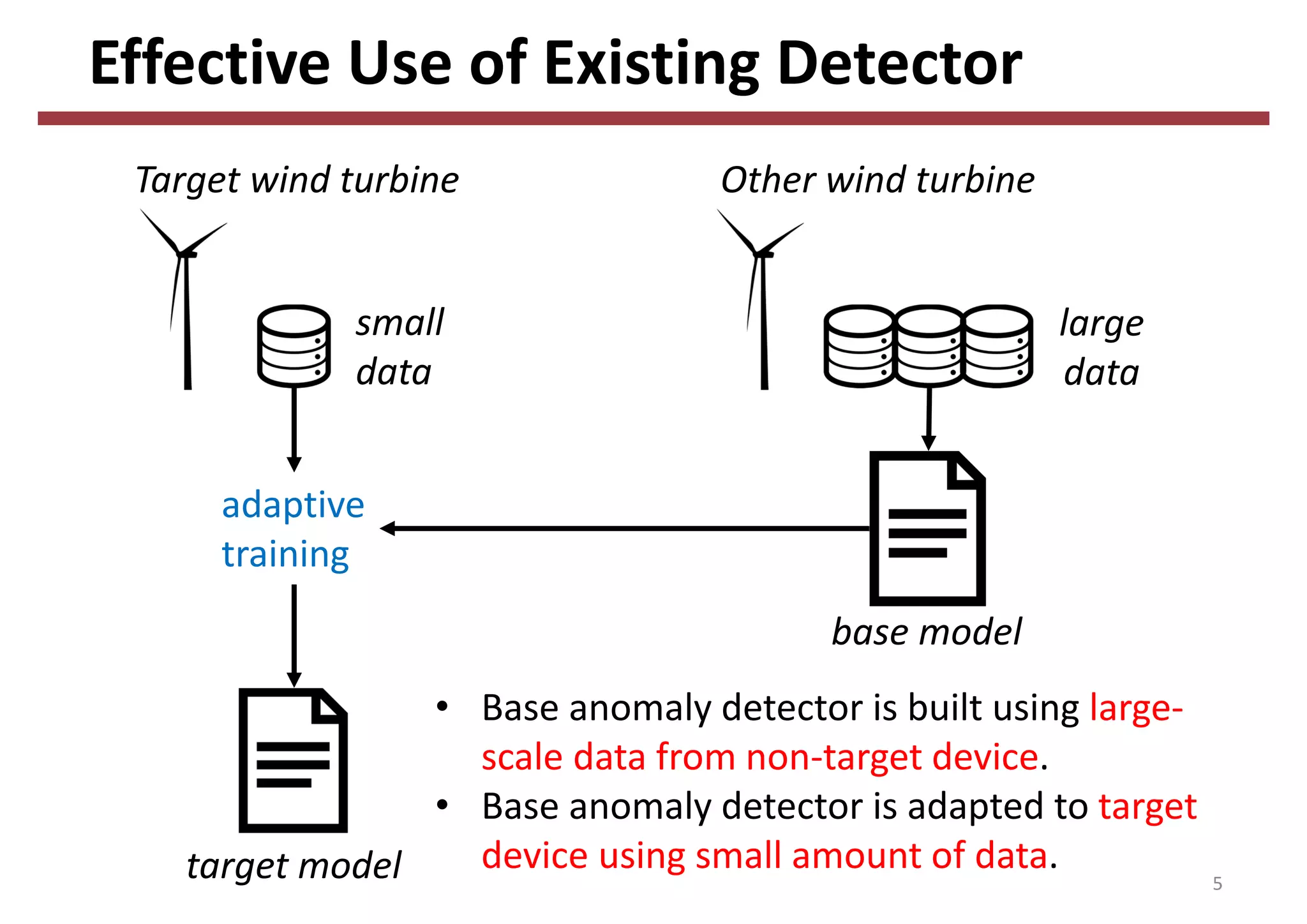
Effective Use of Existing Detector
Target wind turbine Other wind turbine
• Base anomaly detector is built using large‐
scale data from non‐target device.
• Base anomaly detector is adapted to target 
device using small amount of data.
5
base model
adaptive
training
target model
large
data
small
data
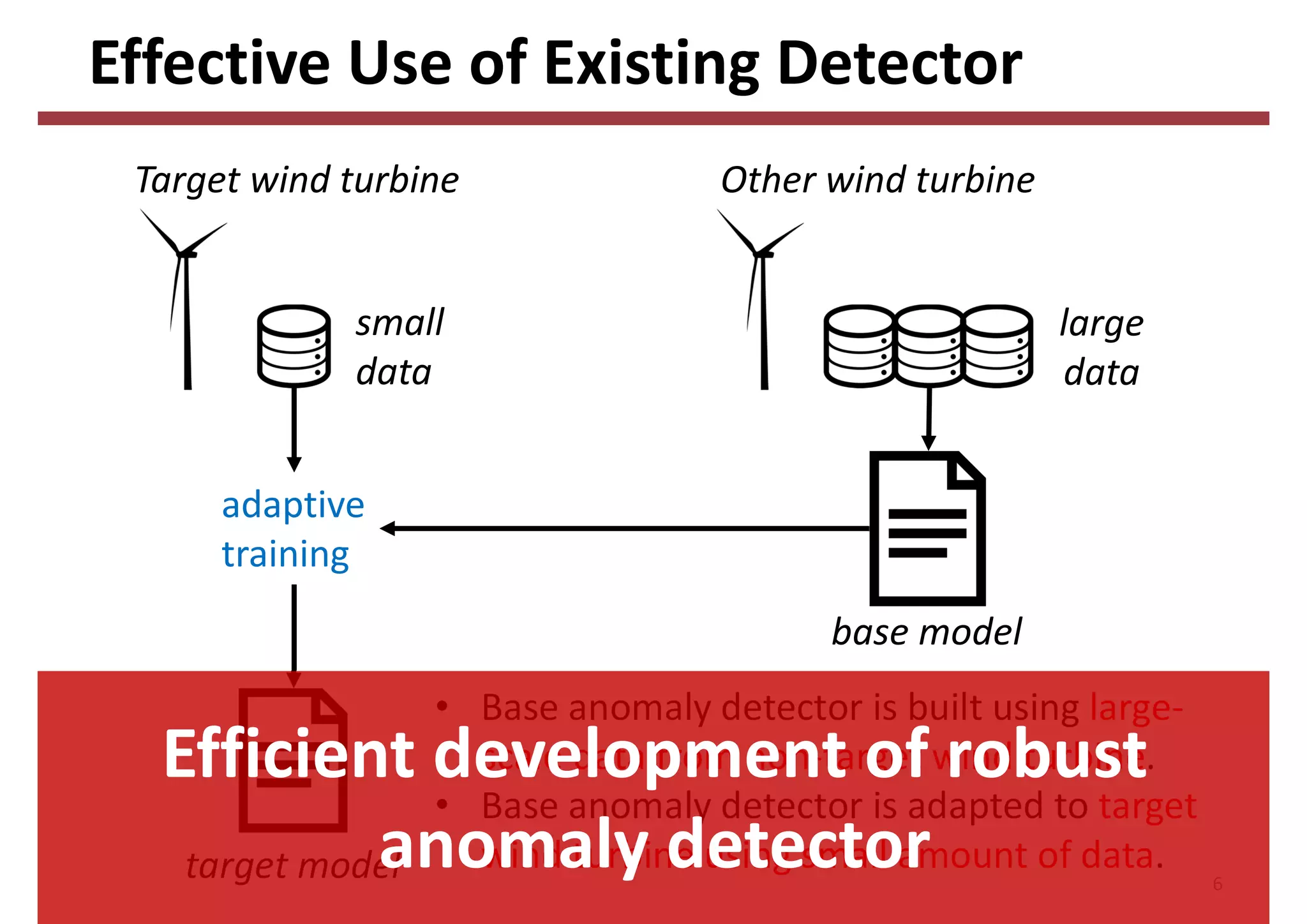
Effective Use of Existing Detector
Target wind turbine Other wind turbine
• Base anomaly detector is built using large‐
scale data from non‐target wind turbine.
• Base anomaly detector is adapted to target 
wind turbine using small amount of data.
6
base model
adaptive
training
target model
large
data
small
data
Efficient development of robust 
anomaly detector
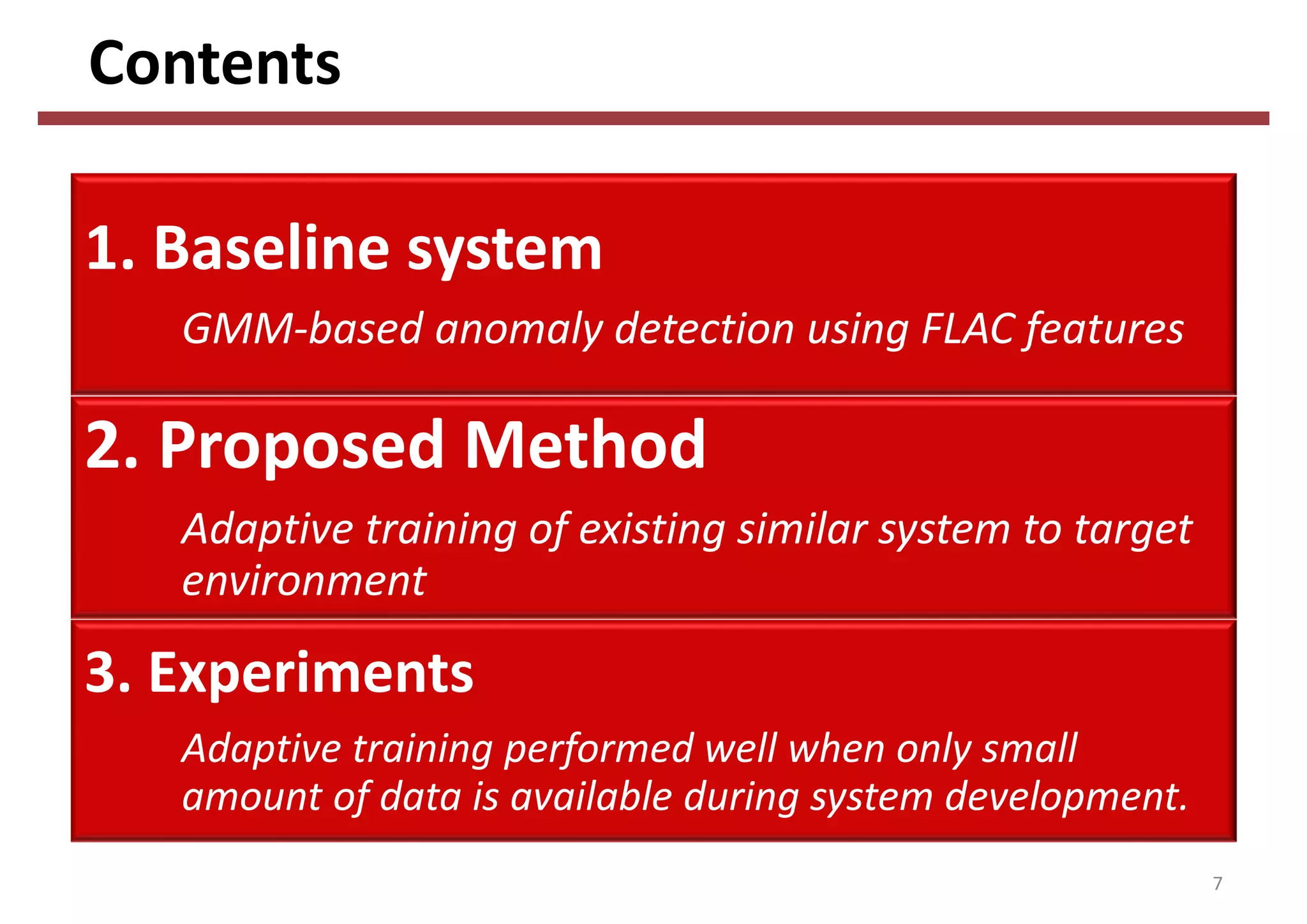
Contents
7
1. Baseline system
GMM‐based anomaly detection using FLAC features 
2. Proposed Method
Adaptive training of existing similar system to target 
environment
3. Experiments
Adaptive training performed well when only small 
amount of data is available during system development.
Baseline system for 
Anomaly Detection
8
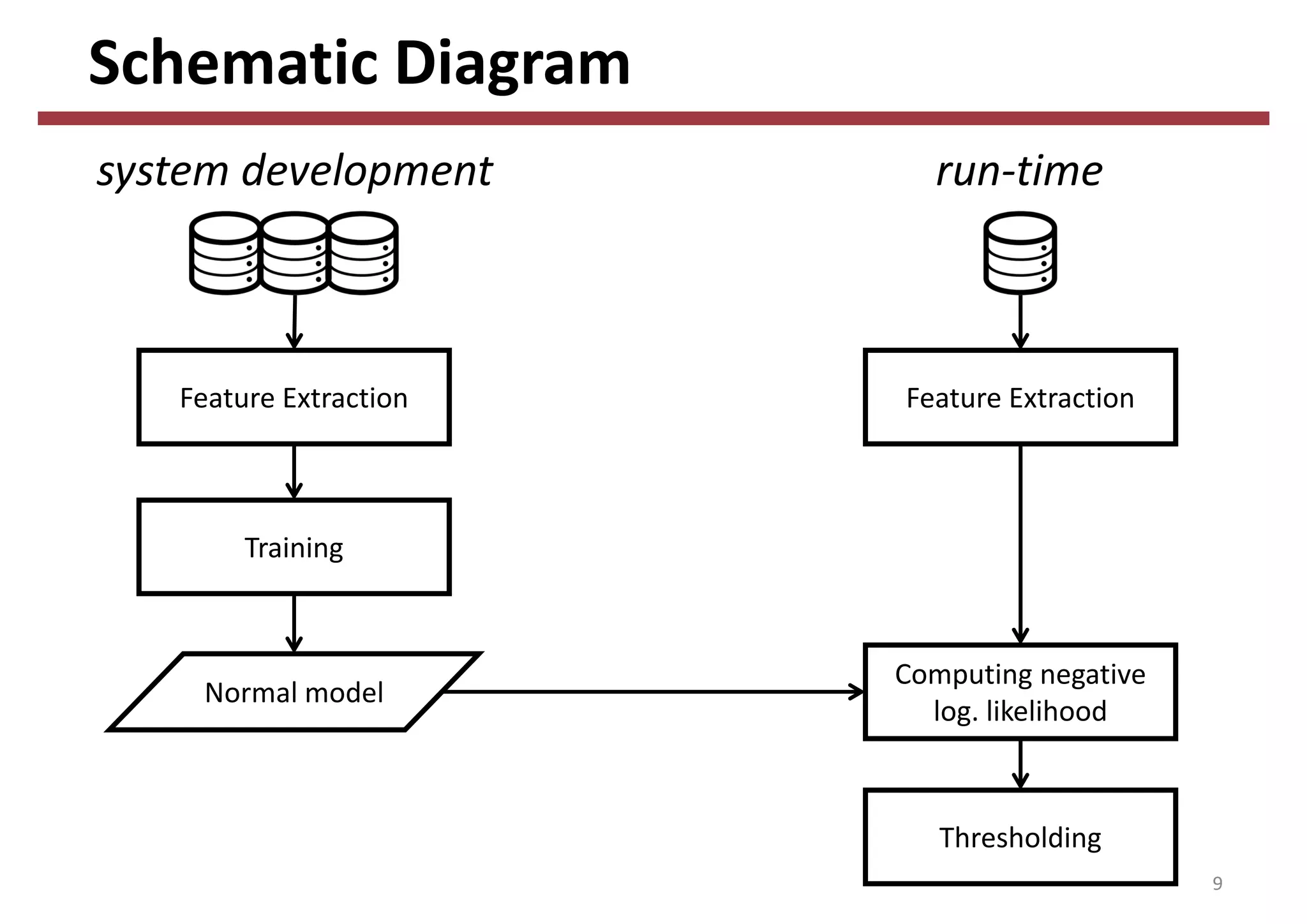
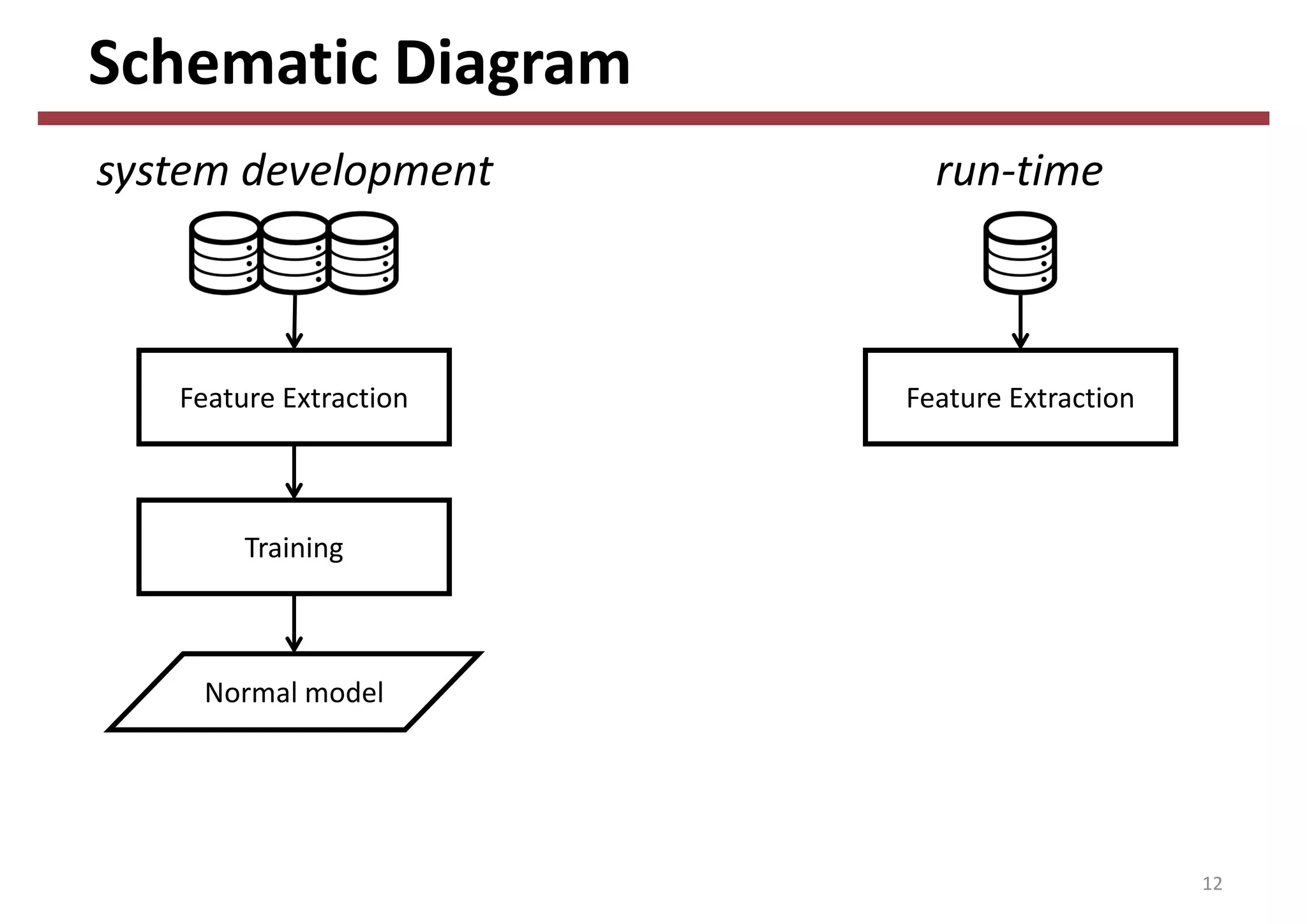
Schematic Diagram
9
Feature Extraction
Training
Feature Extraction
Computing negative 
log. likelihood
Thresholding
Normal model
run‐timesystem development
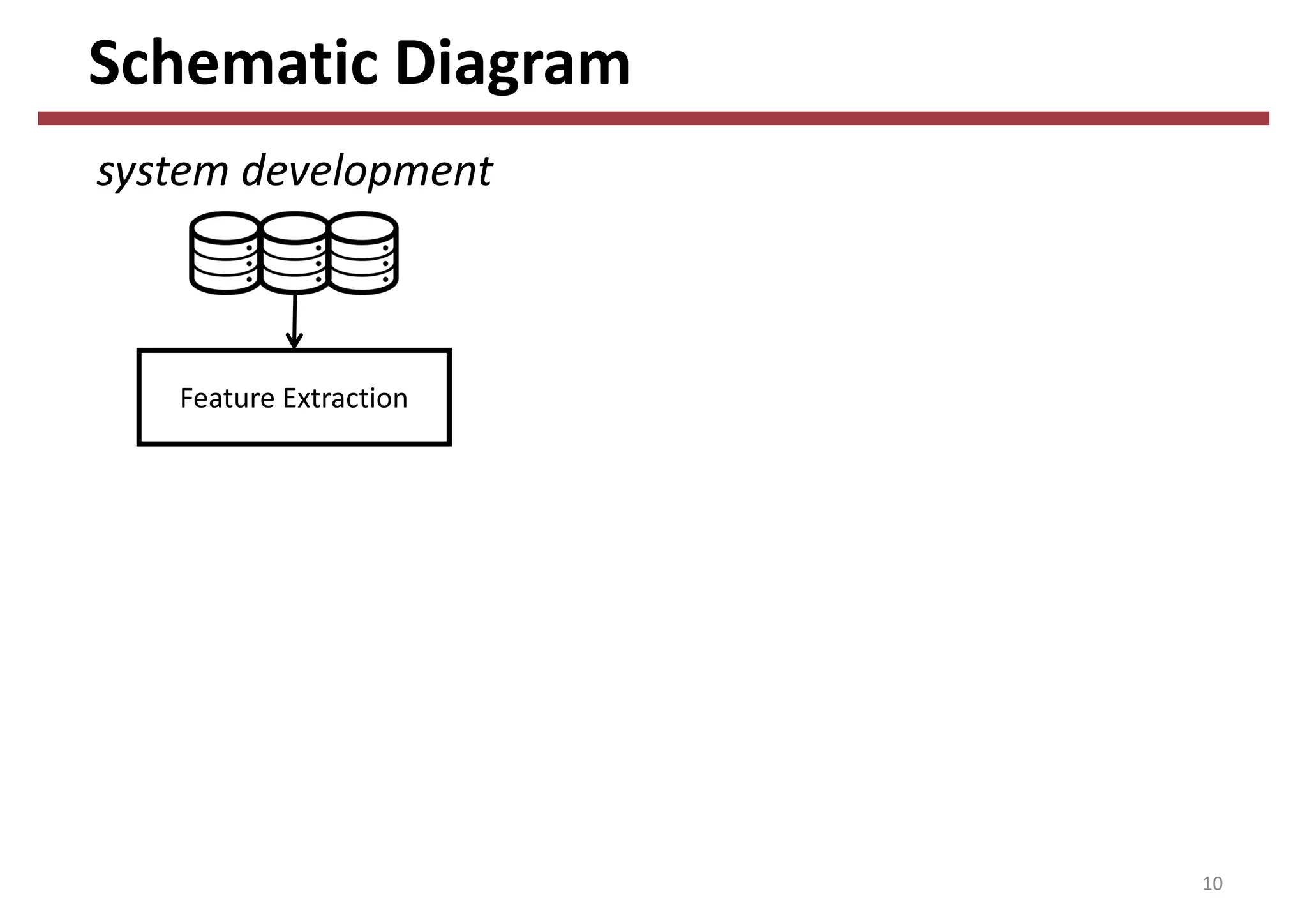
Schematic Diagram
10
Feature Extraction
system development
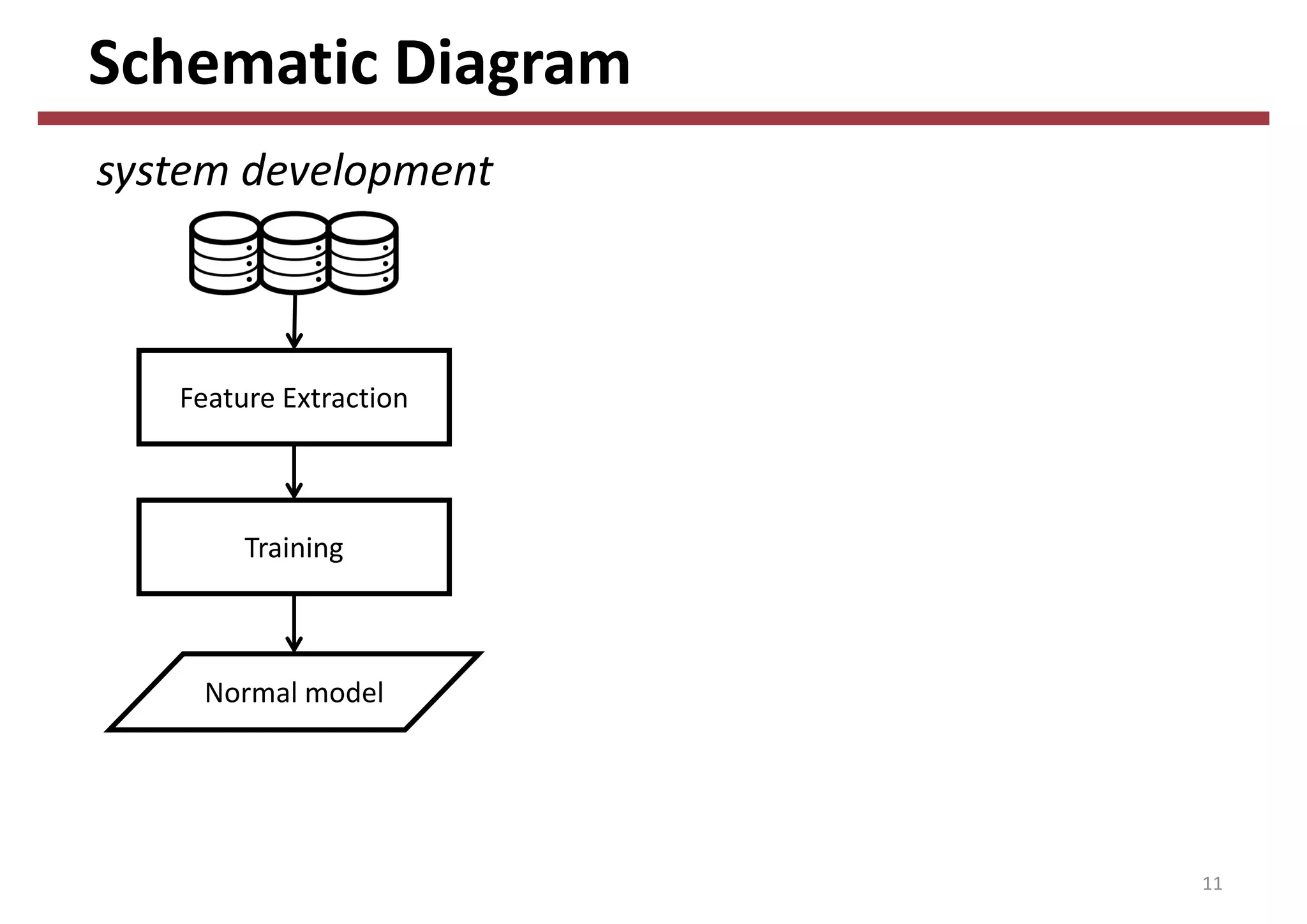
Schematic Diagram
11
Feature Extraction
Training
Normal model
system development
Schematic Diagram
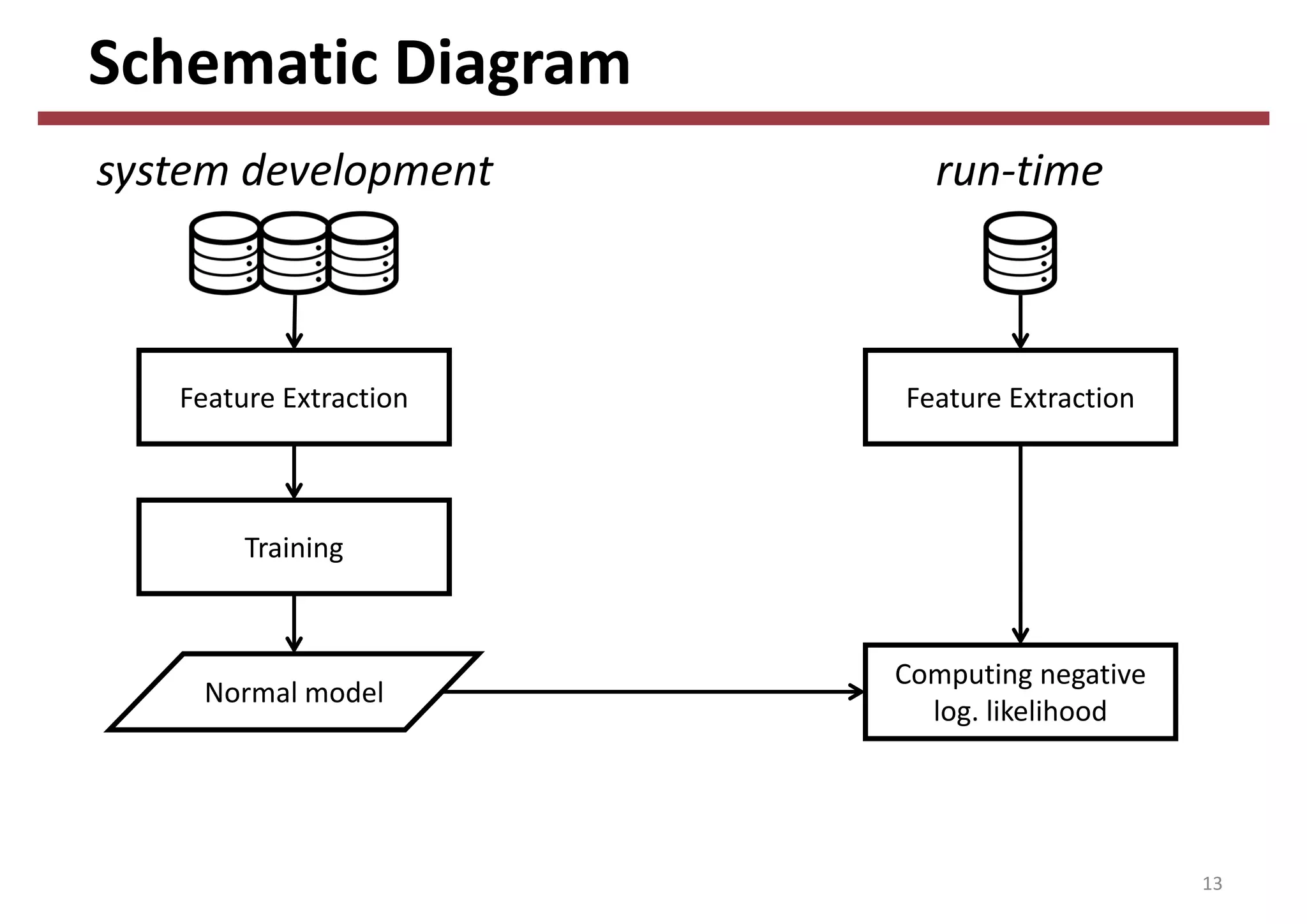
12
Feature Extraction
Training
Feature Extraction
Normal model
run‐timesystem development
Schematic Diagram
13
Feature Extraction
Training
Feature Extraction
Computing negative 
log. likelihood
Normal model
run‐timesystem development
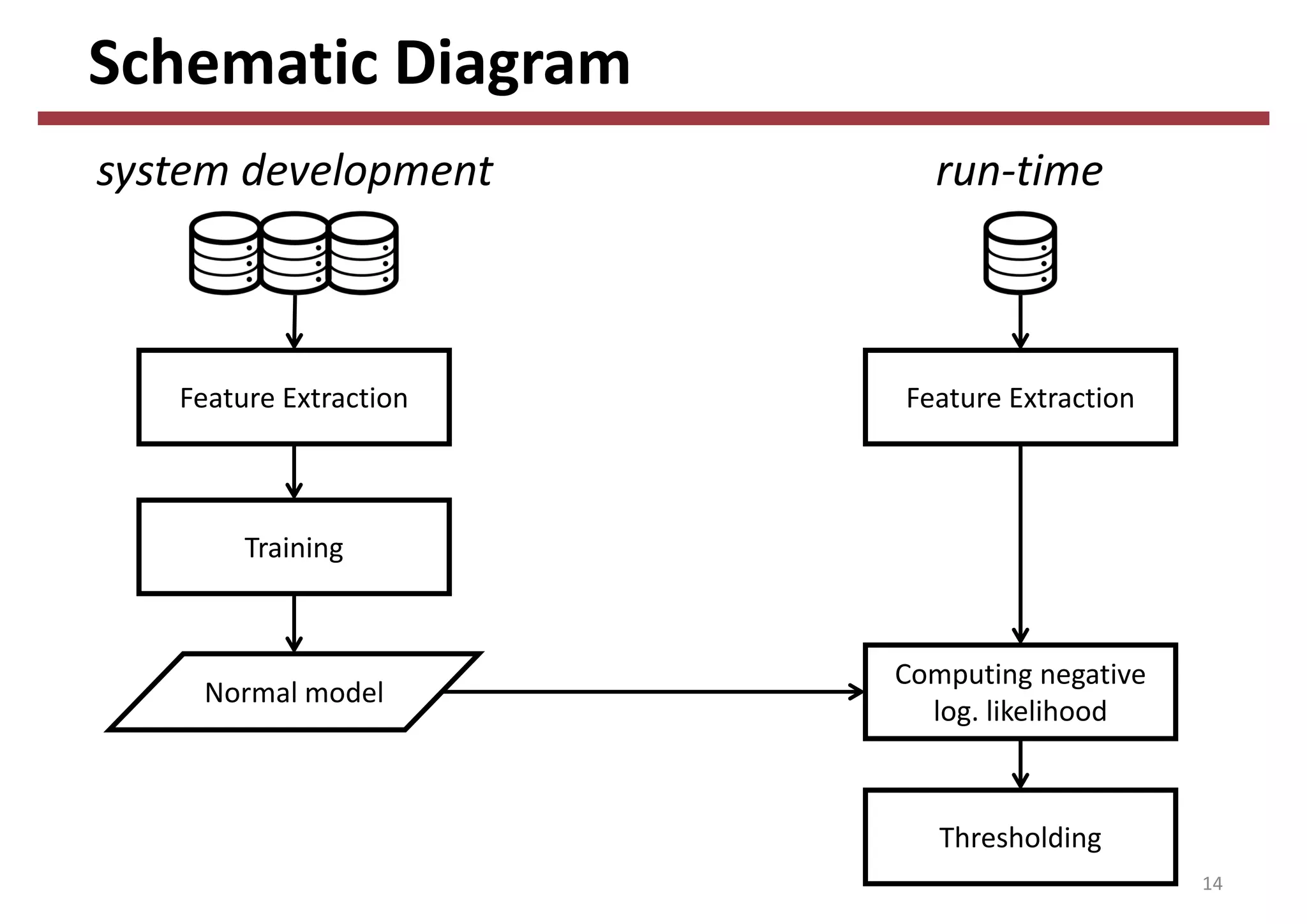
Schematic Diagram
14
Feature Extraction
Training
Feature Extraction
Computing negative 
log. likelihood
Thresholding
Normal model
run‐timesystem development
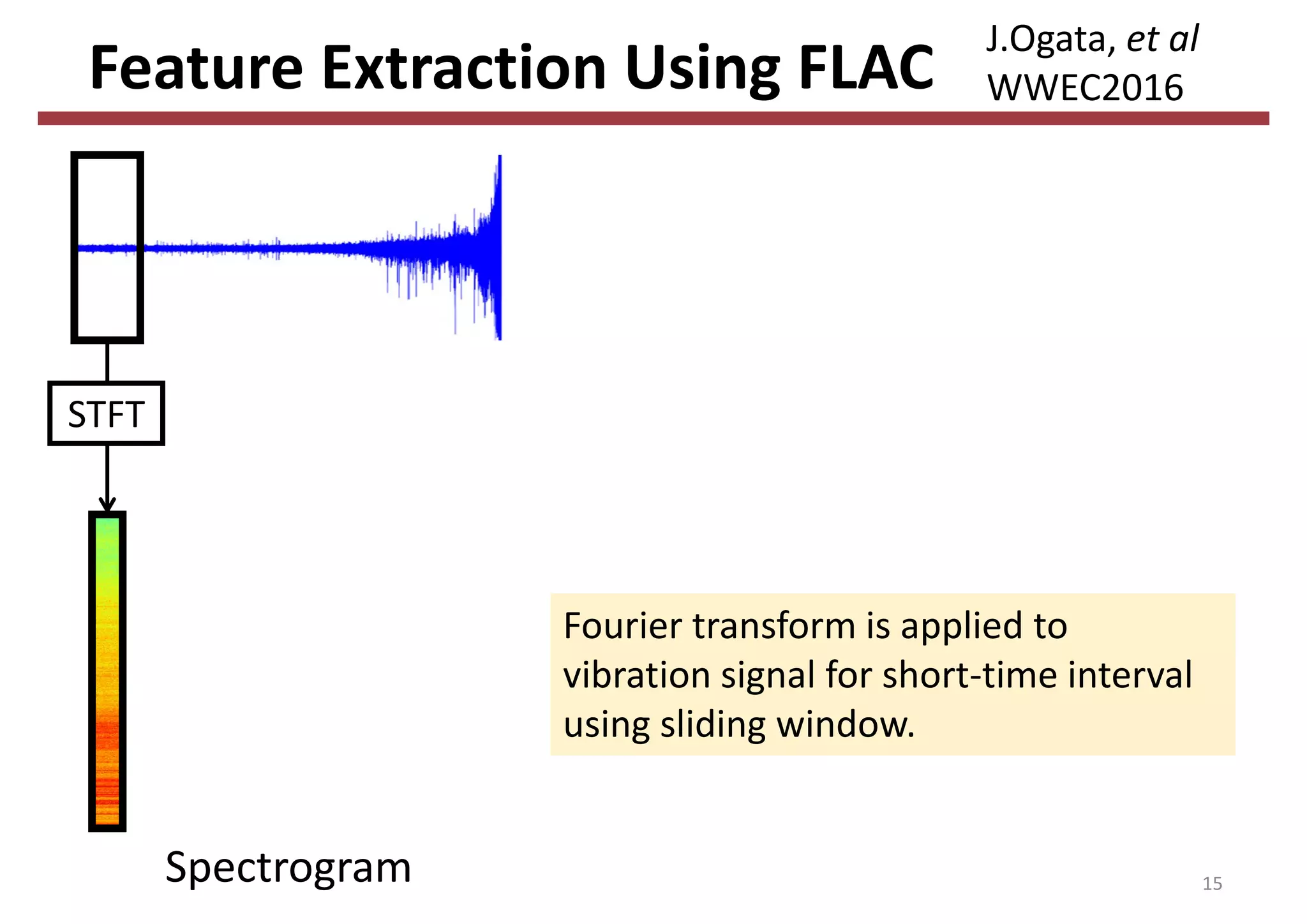
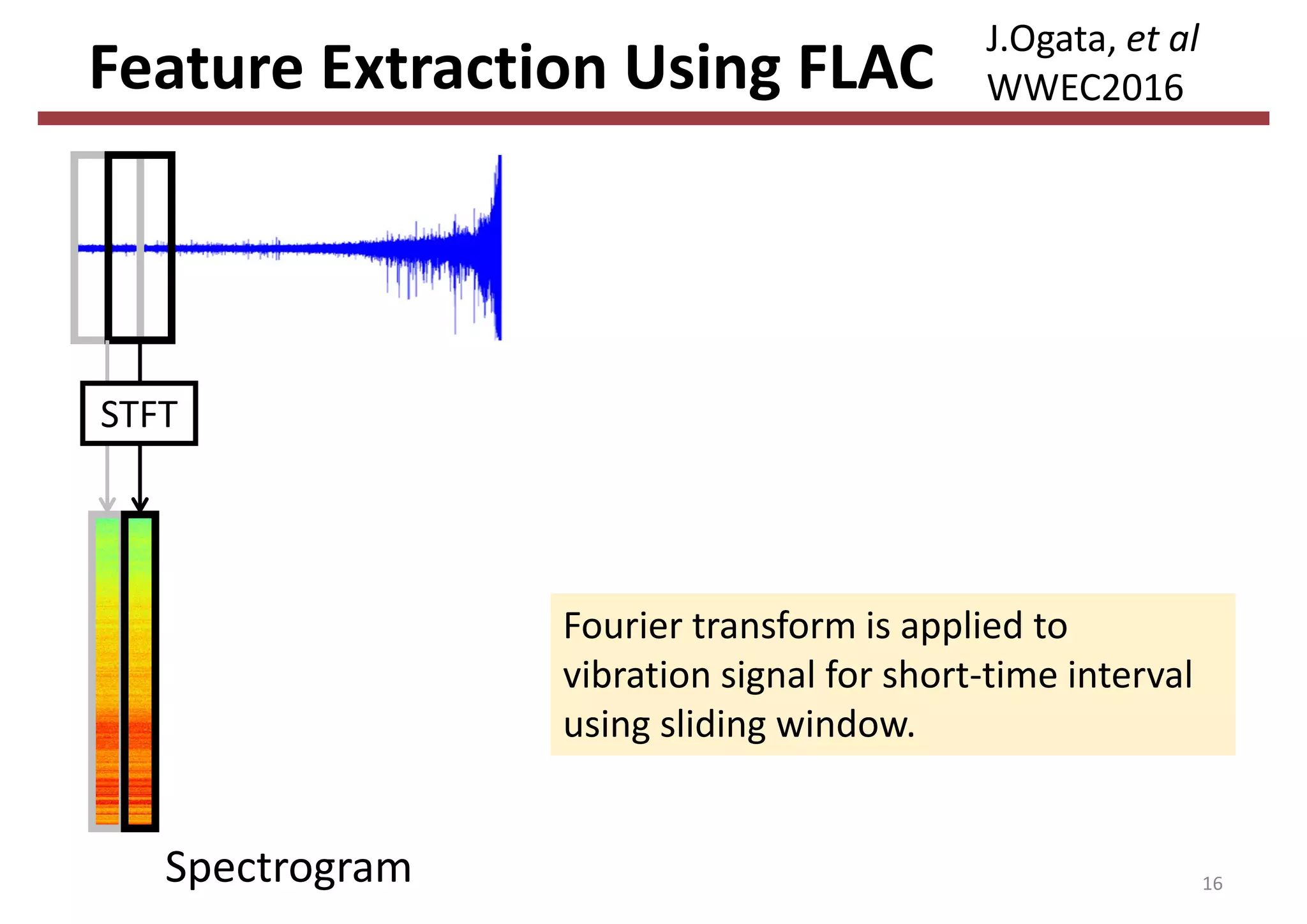
Feature Extraction Using FLAC
Spectrogram 15
STFT
Fourier transform is applied to 
vibration signal for short‐time interval 
using sliding window.
J.Ogata, et al
WWEC2016
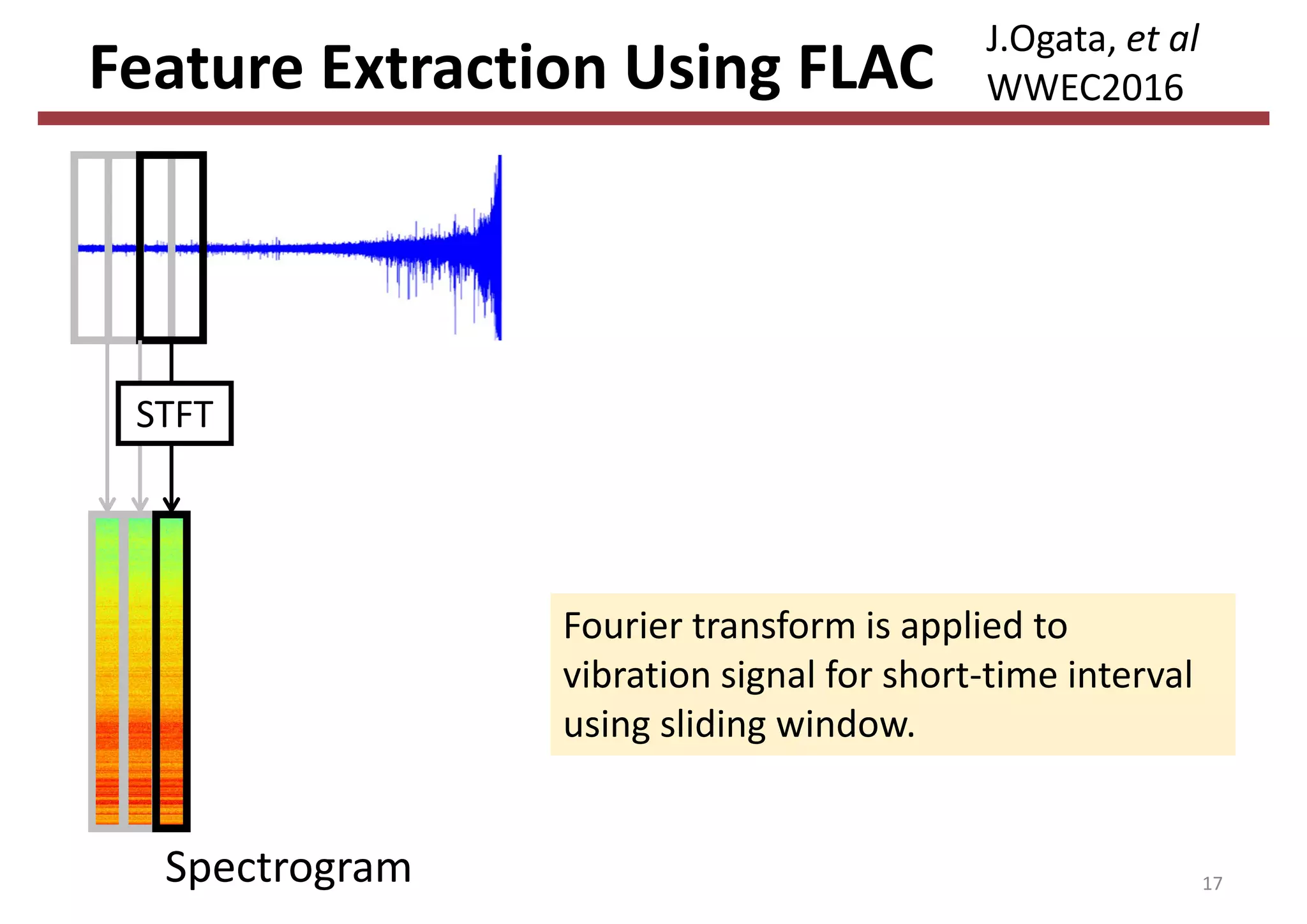
Feature Extraction Using FLAC
Spectrogram 16
STFT
Fourier transform is applied to 
vibration signal for short‐time interval 
using sliding window.
J.Ogata, et al
WWEC2016
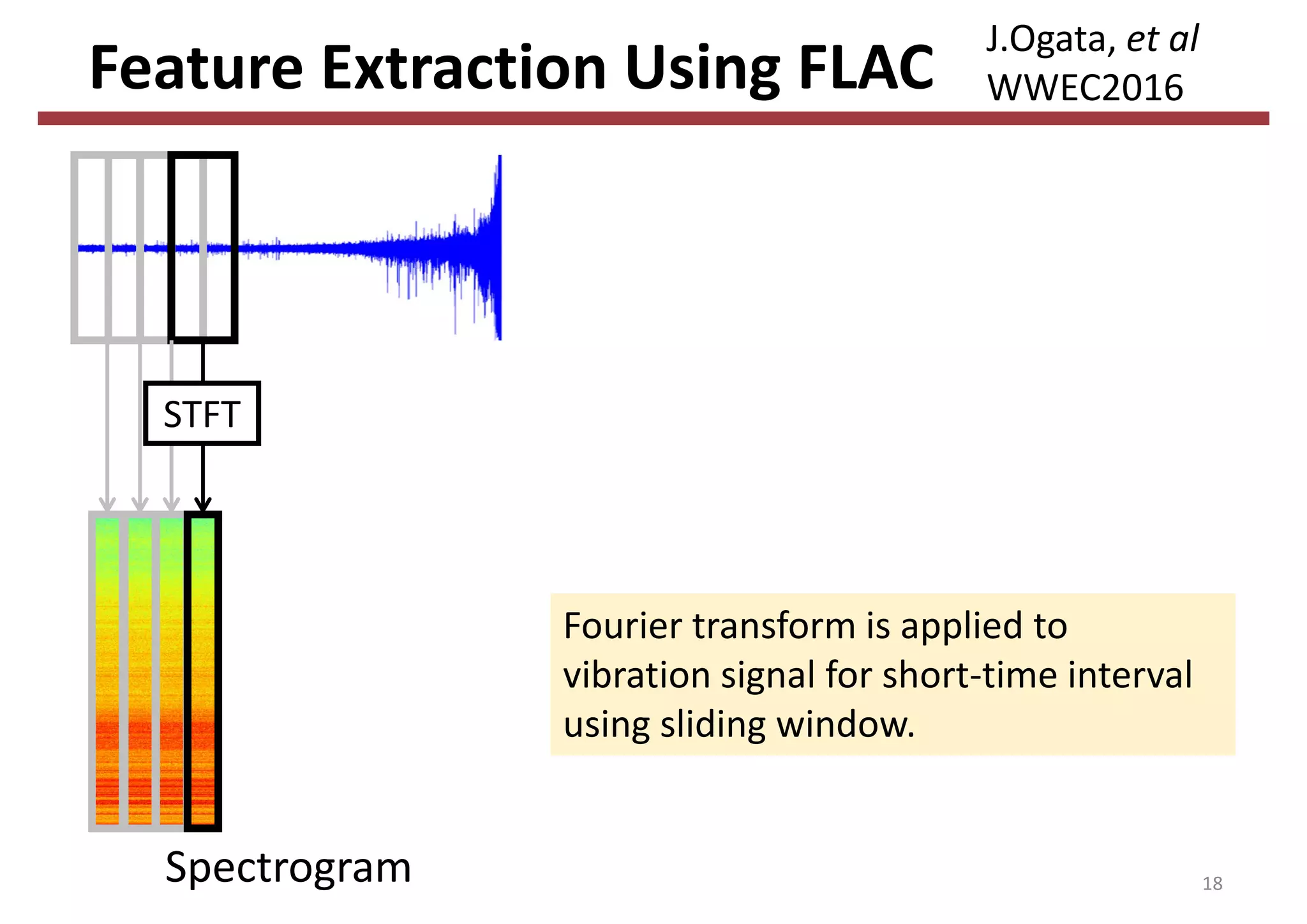
Feature Extraction Using FLAC
Spectrogram 17
STFT
Fourier transform is applied to 
vibration signal for short‐time interval 
using sliding window.
J.Ogata, et al
WWEC2016
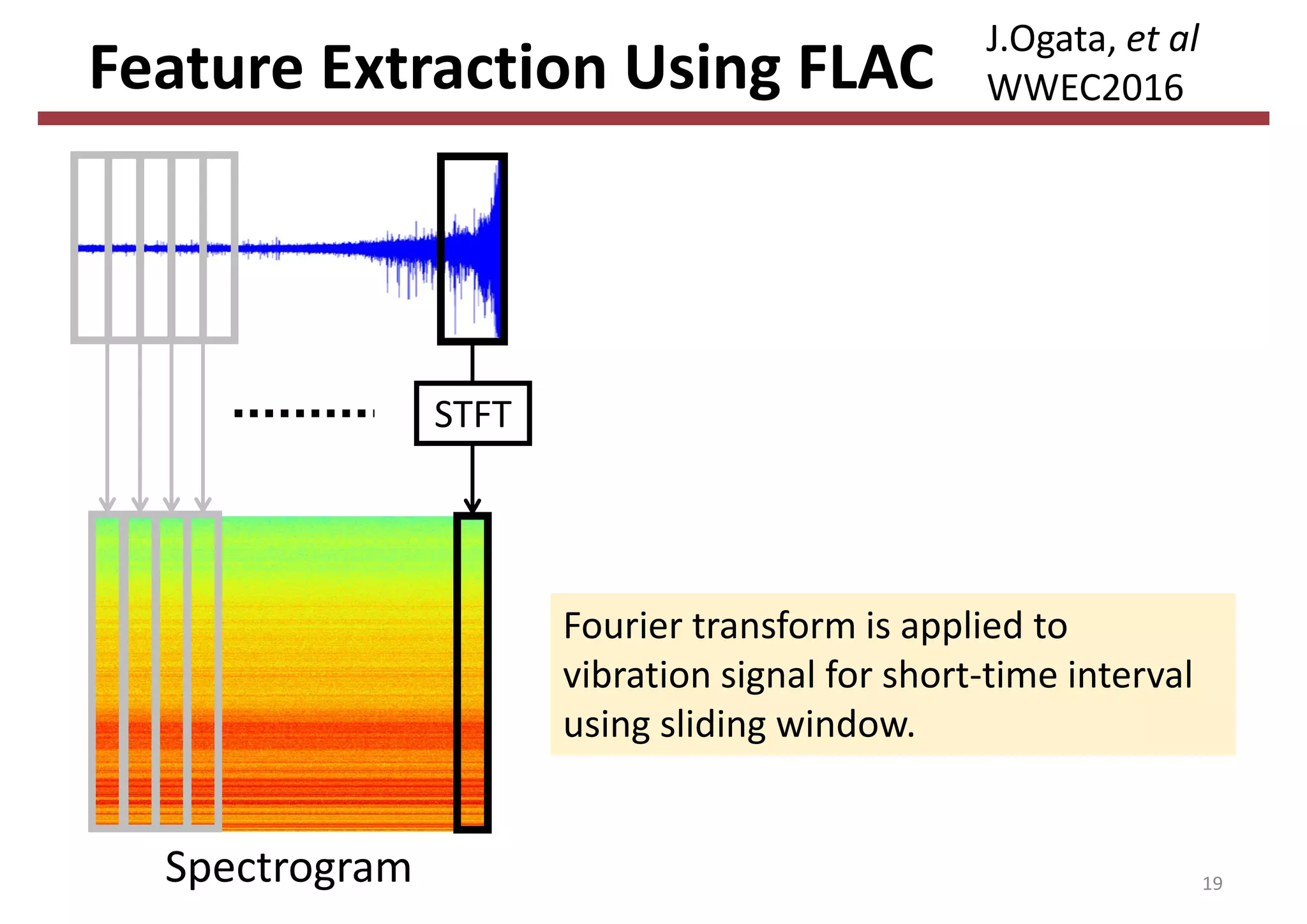
Feature Extraction Using FLAC
Spectrogram 18
STFT
Fourier transform is applied to 
vibration signal for short‐time interval 
using sliding window.
J.Ogata, et al
WWEC2016
Feature Extraction Using FLAC
Spectrogram 19
STFT
Fourier transform is applied to 
vibration signal for short‐time interval 
using sliding window.
J.Ogata, et al
WWEC2016
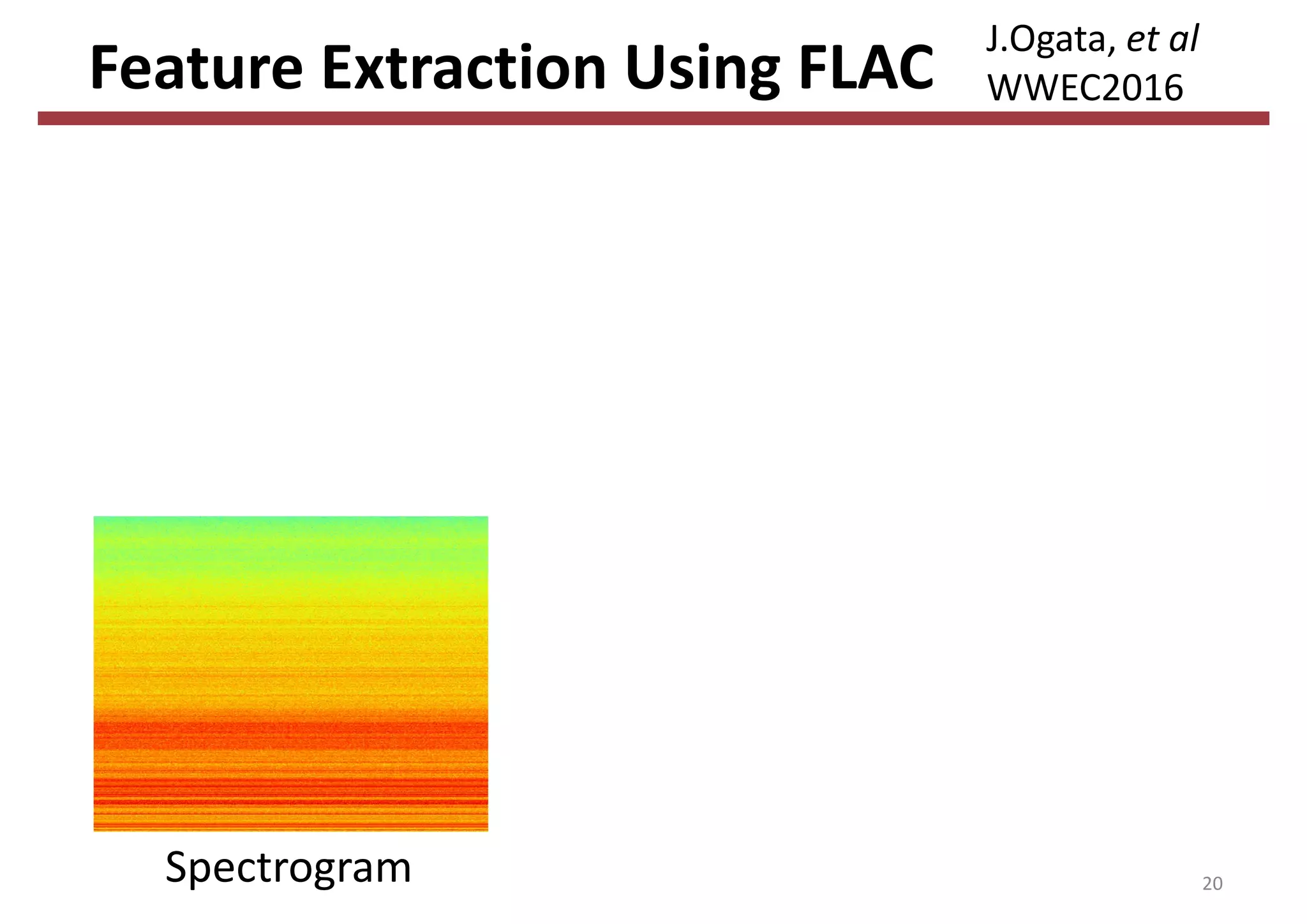
Feature Extraction Using FLAC
Spectrogram 20
J.Ogata, et al
WWEC2016
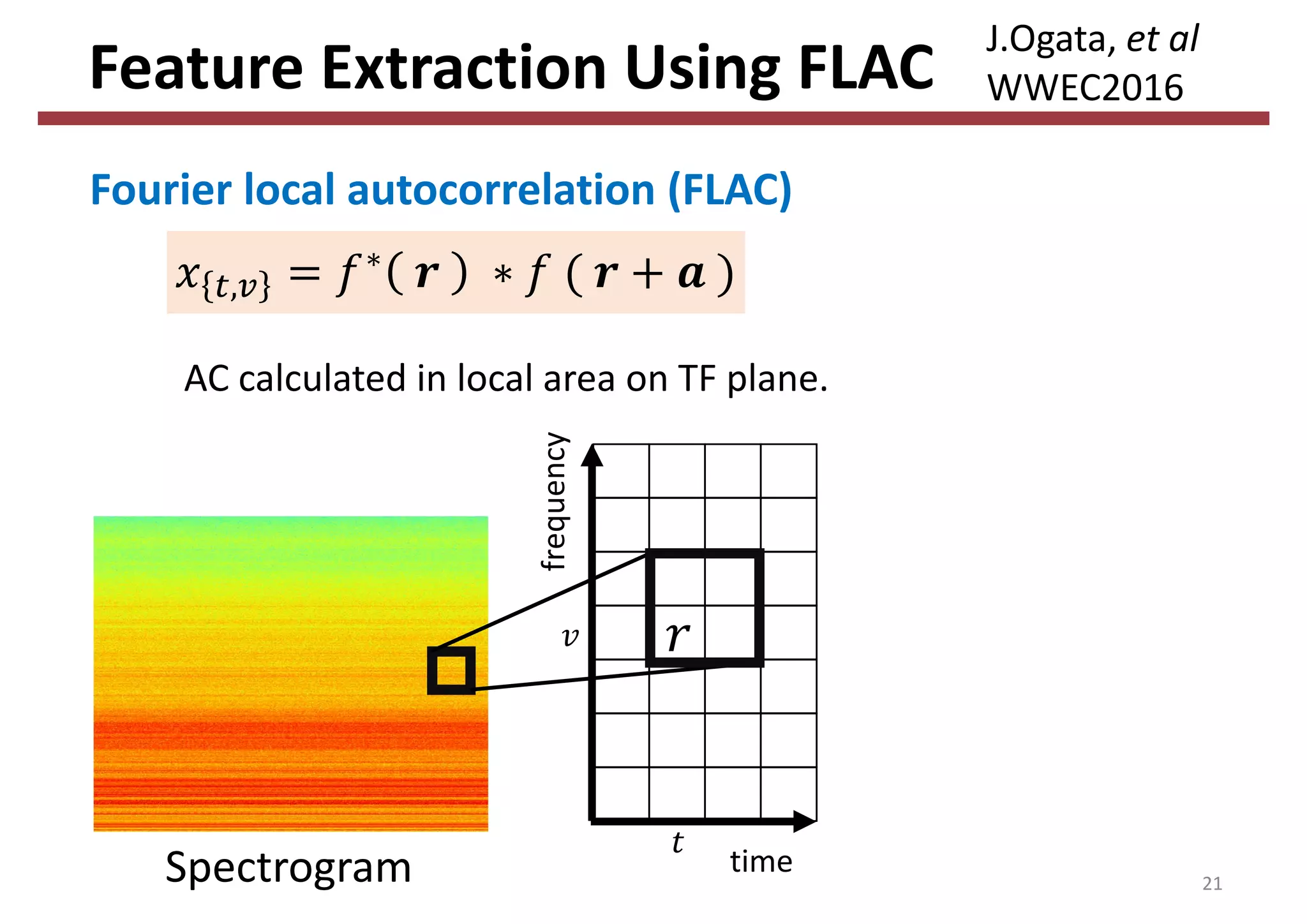
Feature Extraction Using FLAC
Spectrogram 21
,
∗
time
frequency
Fourier local autocorrelation (FLAC)
AC calculated in local area on TF plane.
J.Ogata, et al
WWEC2016
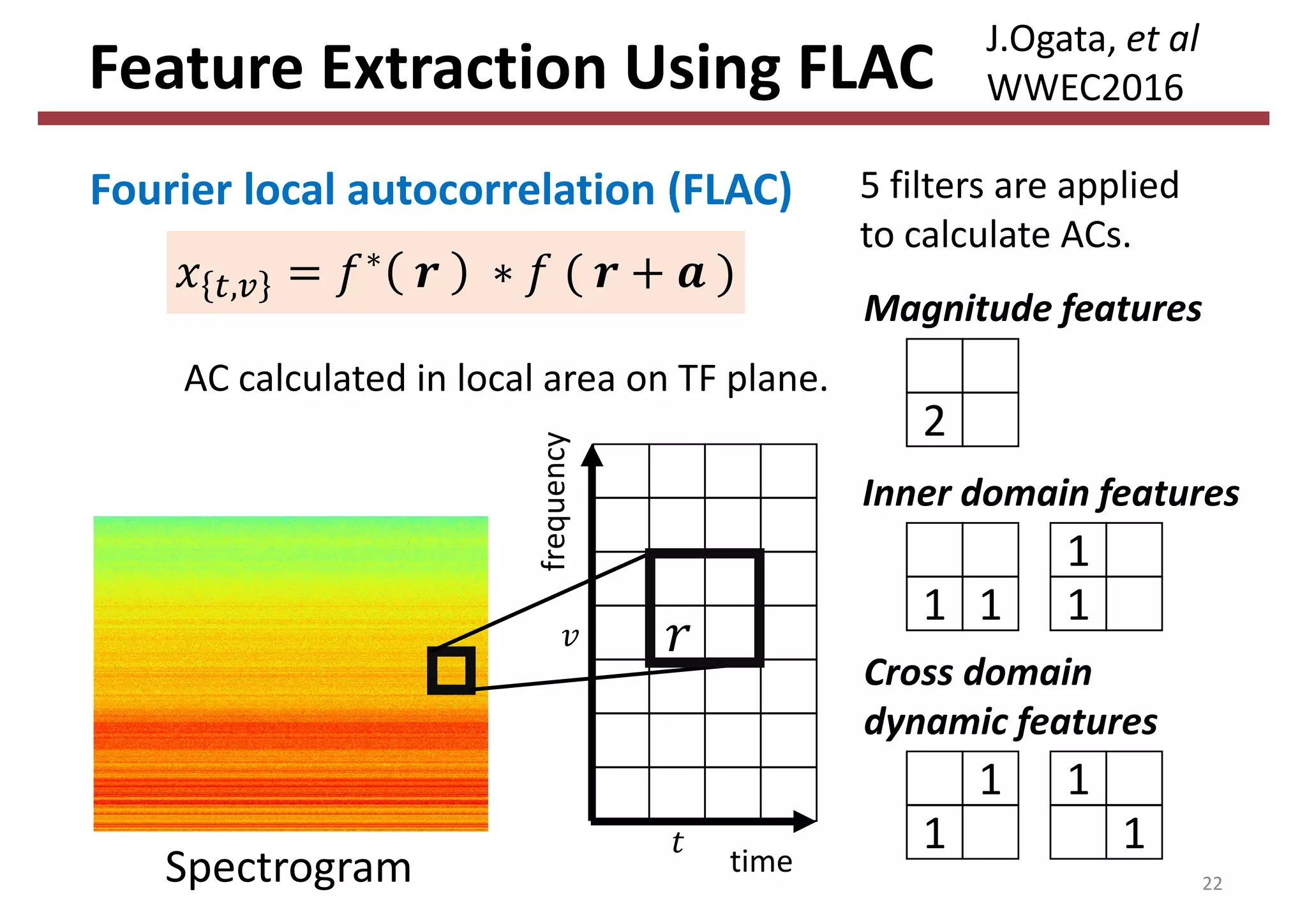
Feature Extraction Using FLAC
Spectrogram 22
5 filters are applied 
to calculate ACs.
,
∗
2
1 1 1
1
1
1
1
1
Magnitude features
Inner domain features
Cross domain 
dynamic features
time
frequency
Fourier local autocorrelation (FLAC)
AC calculated in local area on TF plane.
J.Ogata, et al
WWEC2016
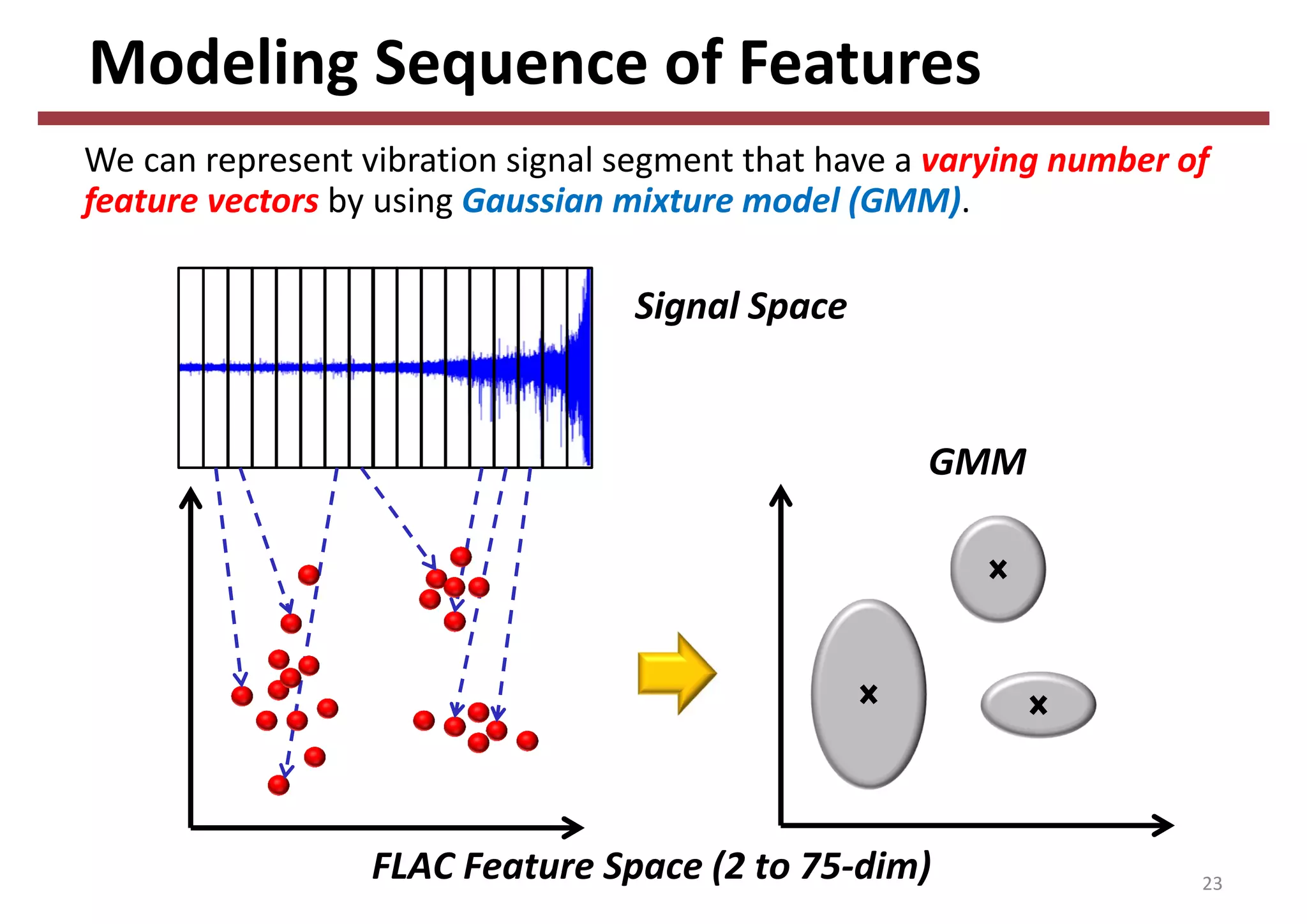
Modeling Sequence of Features
We can represent vibration signal segment that have a varying number of 
feature vectors by using Gaussian mixture model (GMM).
Signal Space
GMM
FLAC Feature Space (2 to 75‐dim) 23
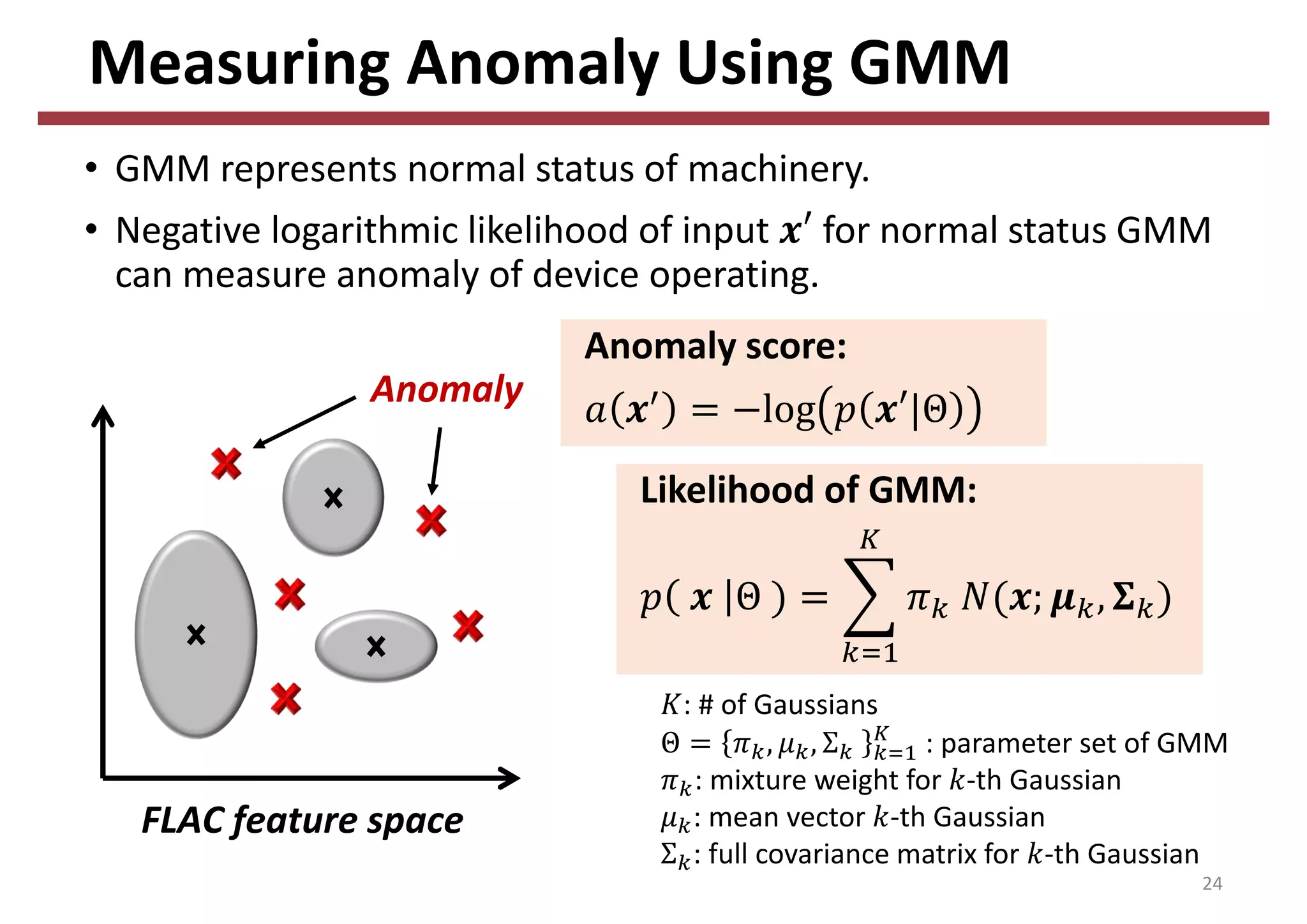
Measuring Anomaly Using GMM
Likelihood of GMM:
: # of Gaussians
Θ , , Σ 	 : parameter set of GMM
: mixture weight for  ‐th Gaussian 
: mean vector  ‐th Gaussian
Σ : full covariance matrix for  ‐th Gaussian
Anomaly score:
24
FLAC feature space
Anomaly
• GMM represents normal status of machinery. 
• Negative logarithmic likelihood of input  for normal status GMM 
can measure anomaly of device operating.
25
Proposed Method
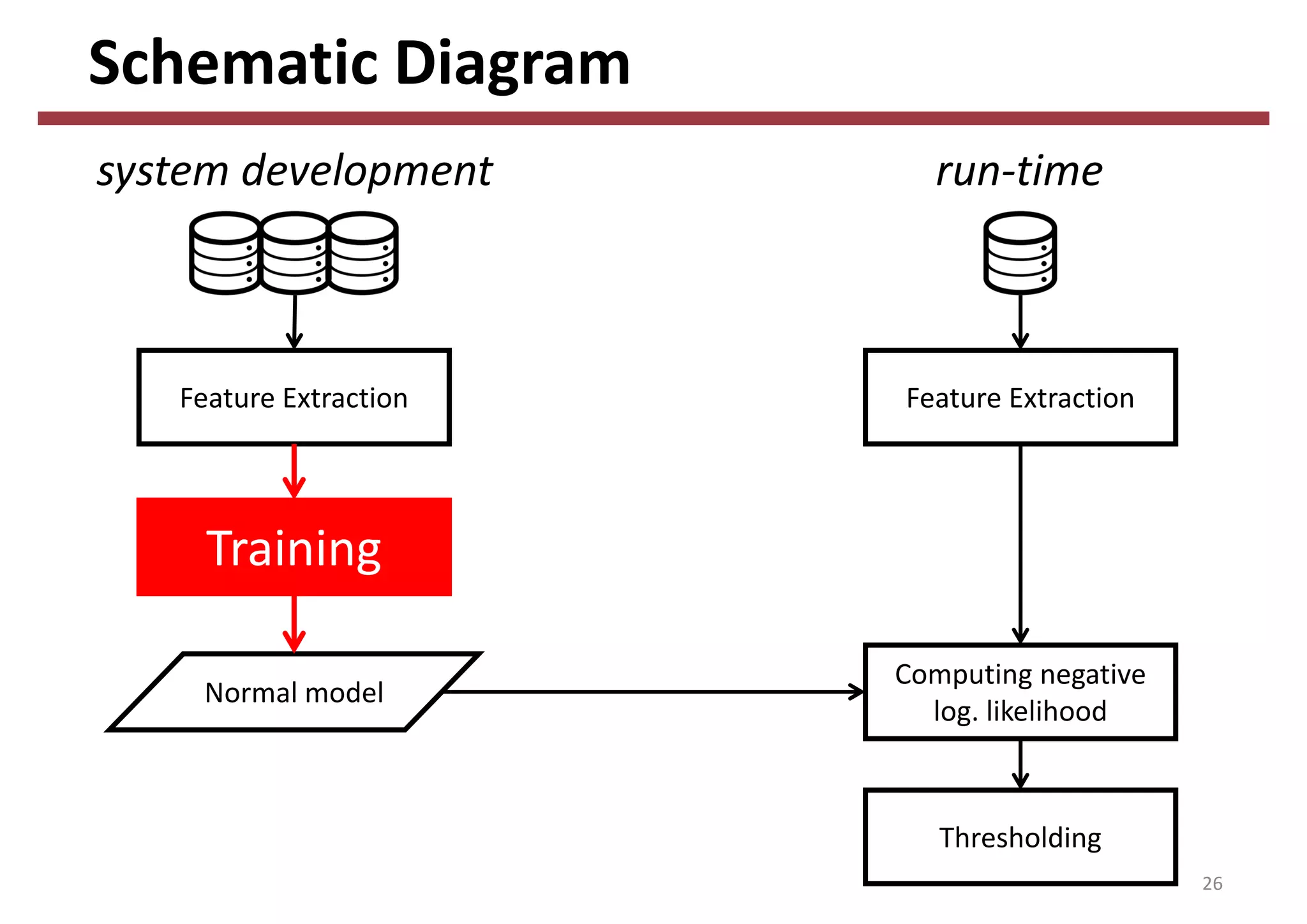
Schematic Diagram
26
Feature Extraction
Training
Feature Extraction
Computing negative 
log. likelihood
Thresholding
Normal model
system development run‐time
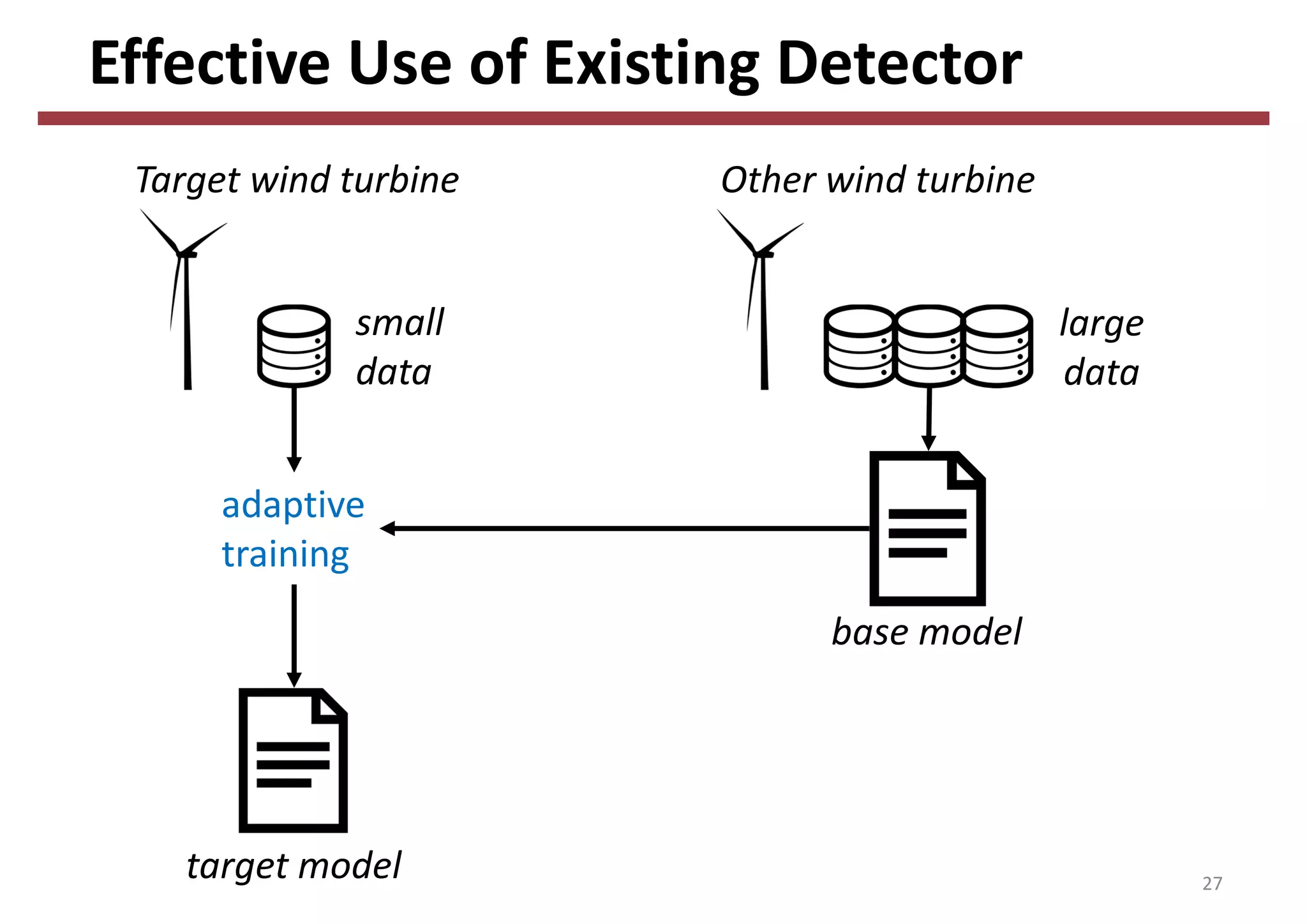
Effective Use of Existing Detector
Target wind turbine Other wind turbine
27
base model
adaptive
training
target model
large
data
small
data
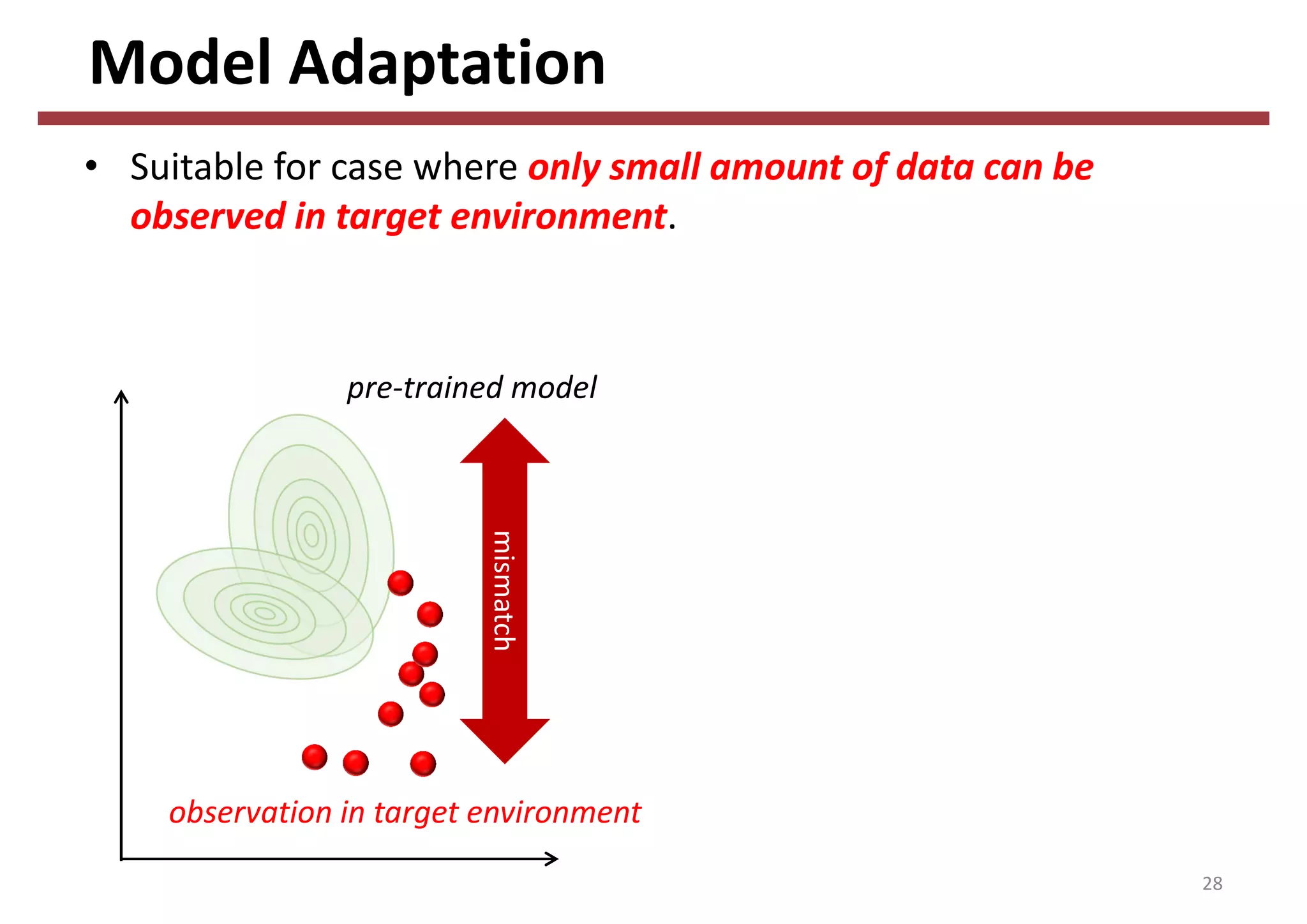
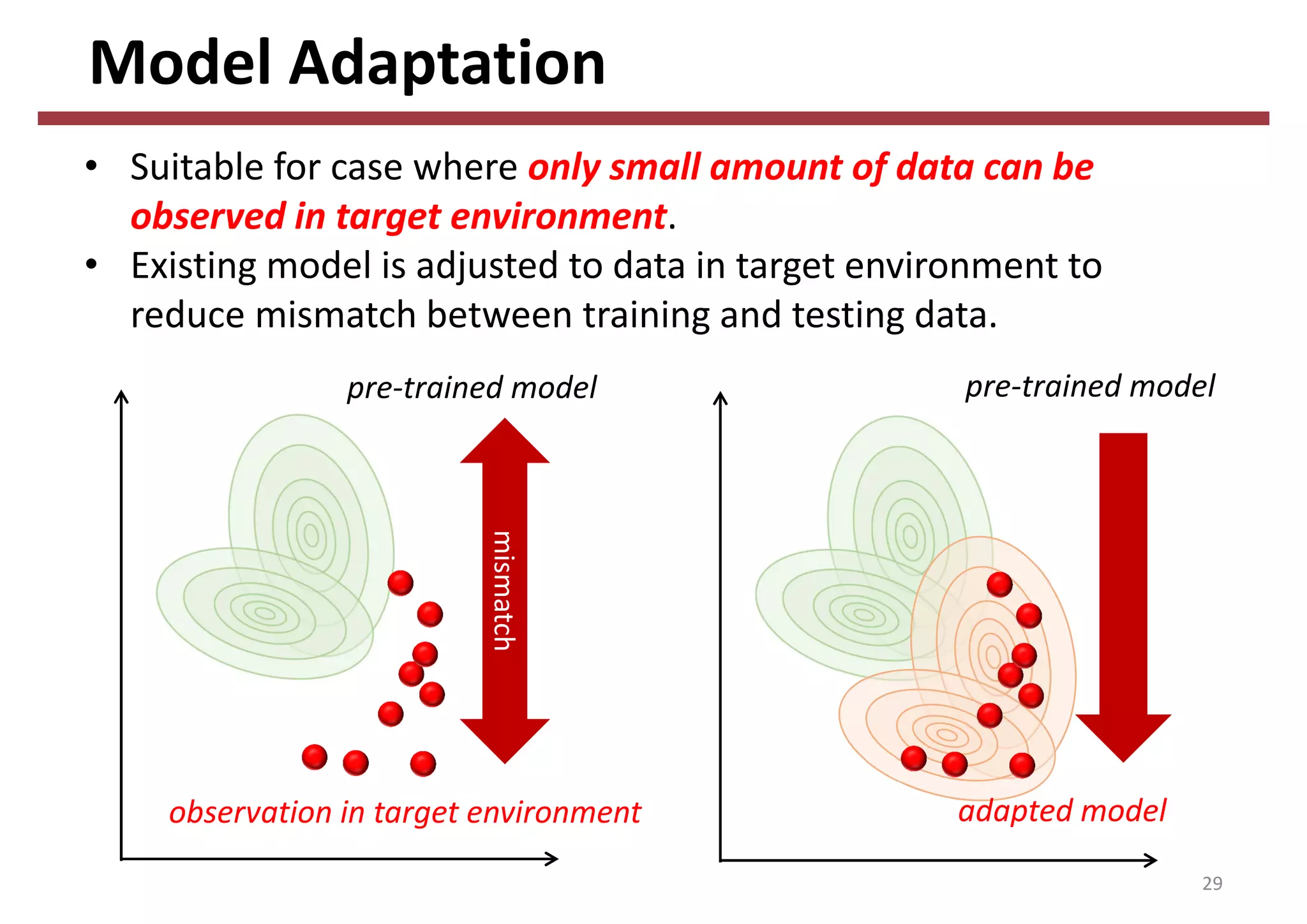
Model Adaptation
• Suitable for case where only small amount of data can be 
observed in target environment.
28
pre‐trained model
mismatch
observation in target environment
Model Adaptation
• Suitable for case where only small amount of data can be 
observed in target environment.
• Existing model is adjusted to data in target environment to 
reduce mismatch between training and testing data.
29
pre‐trained model
observation in target environment
mismatch
pre‐trained model
adapted model
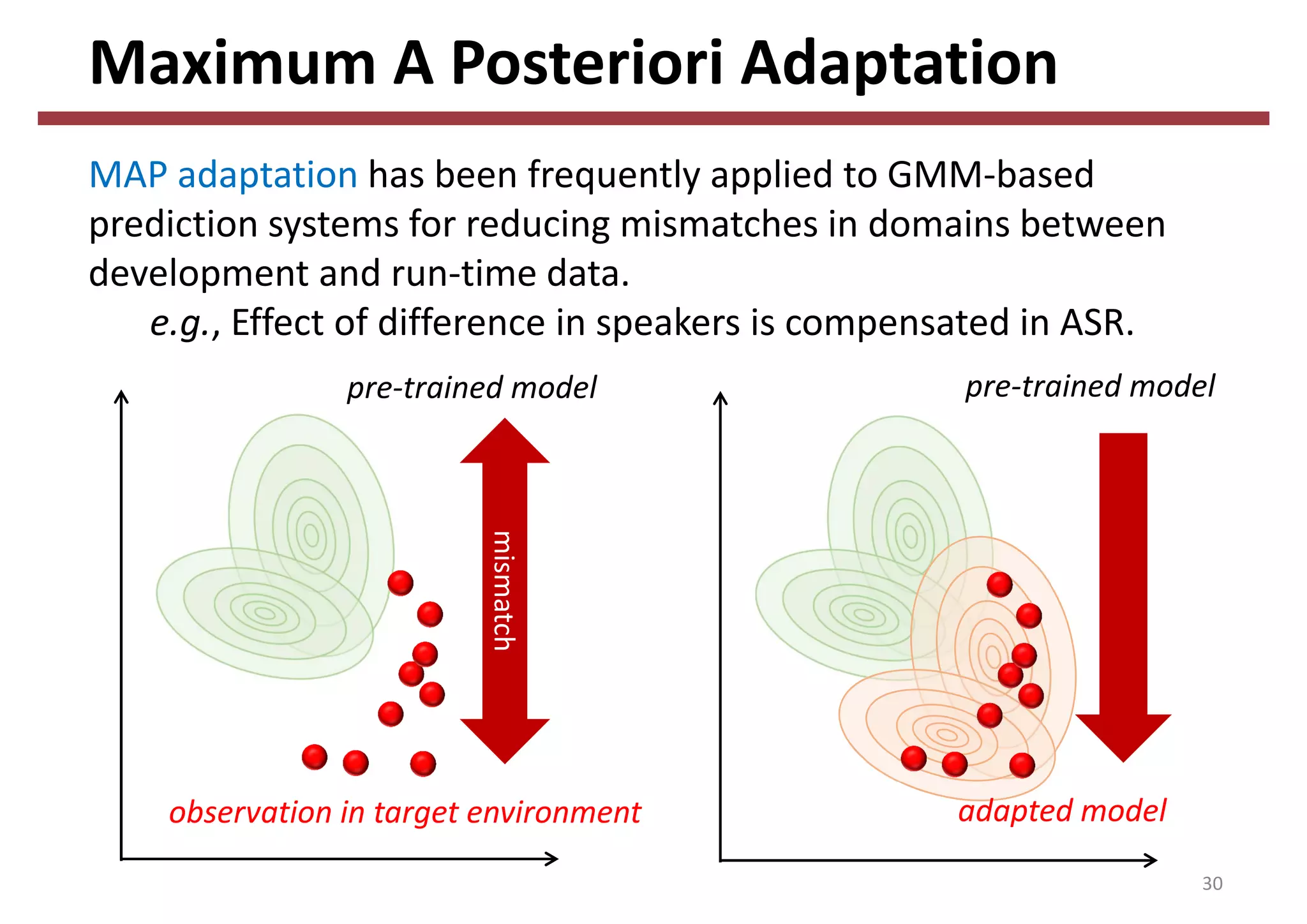
Maximum A Posteriori Adaptation
30
MAP adaptation has been frequently applied to GMM‐based 
prediction systems for reducing mismatches in domains between 
development and run‐time data.
e.g., Effect of difference in speakers is compensated in ASR.
pre‐trained model
observation in target environment
mismatch
pre‐trained model
adapted model
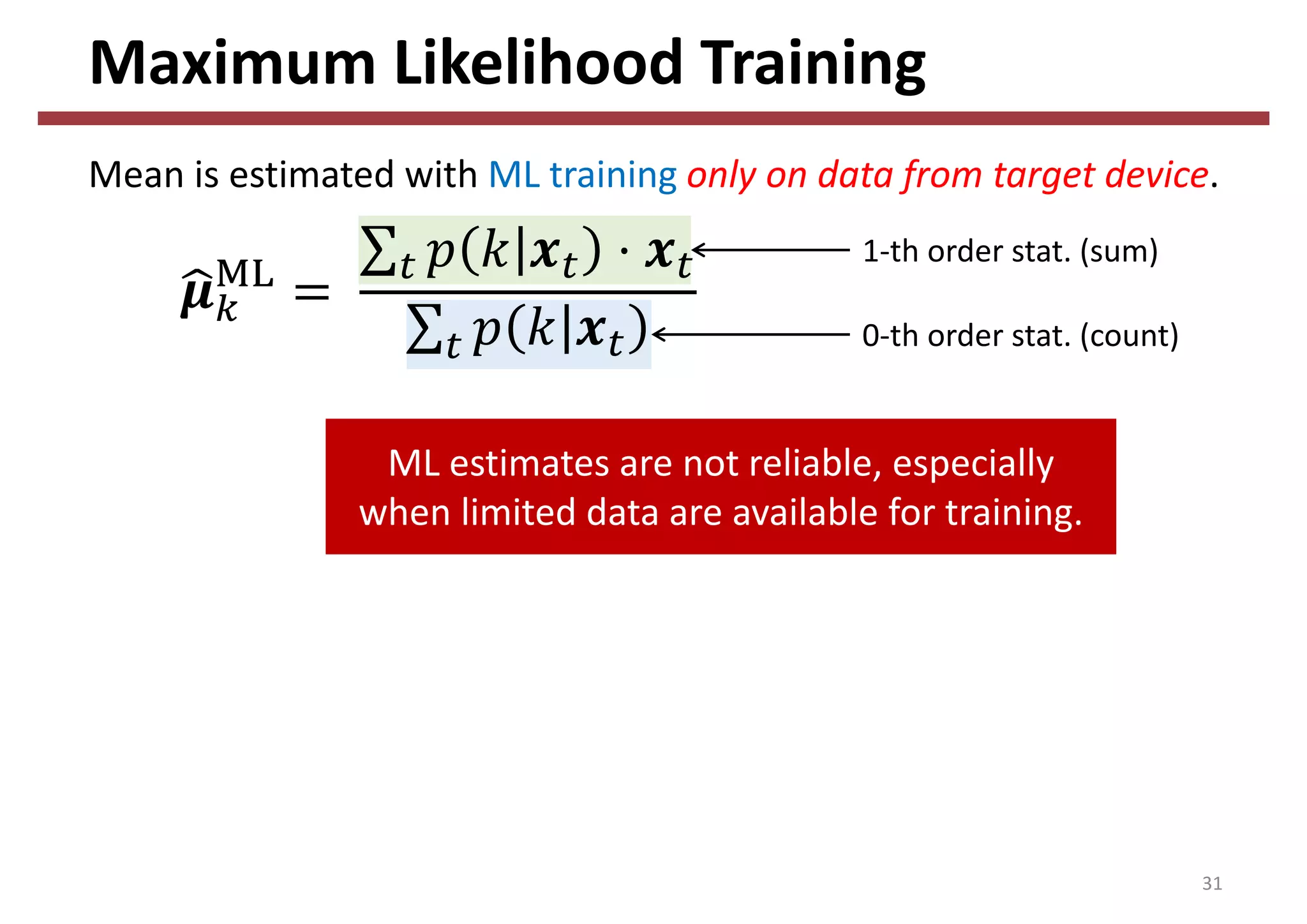
Maximum Likelihood Training
31
Mean is estimated with ML training only on data from target device.
1‐th order stat. (sum)
0‐th order stat. (count)
ML estimates are not reliable, especially 
when limited data are available for training.
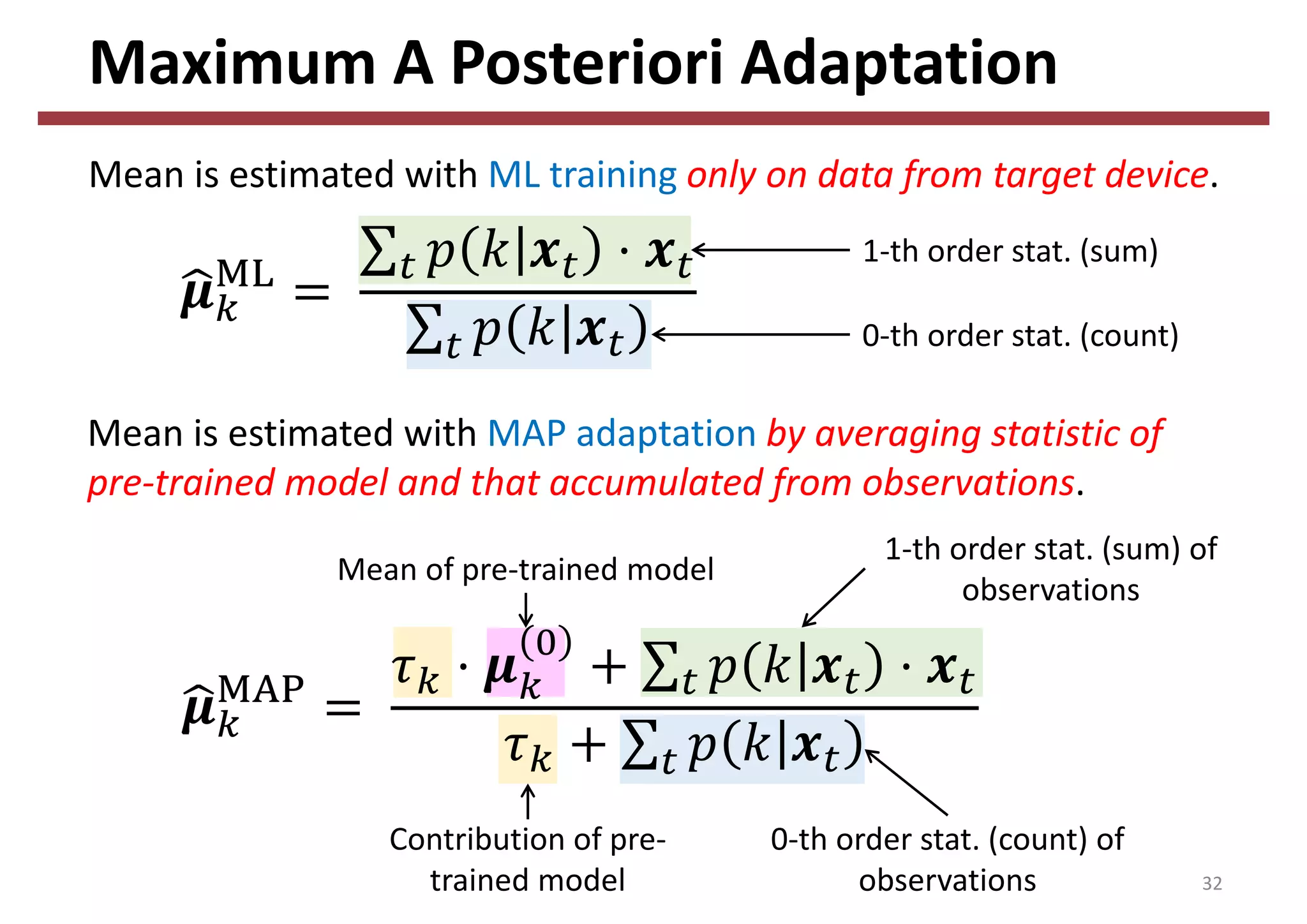
Maximum A Posteriori Adaptation
32
Mean is estimated with ML training only on data from target device.
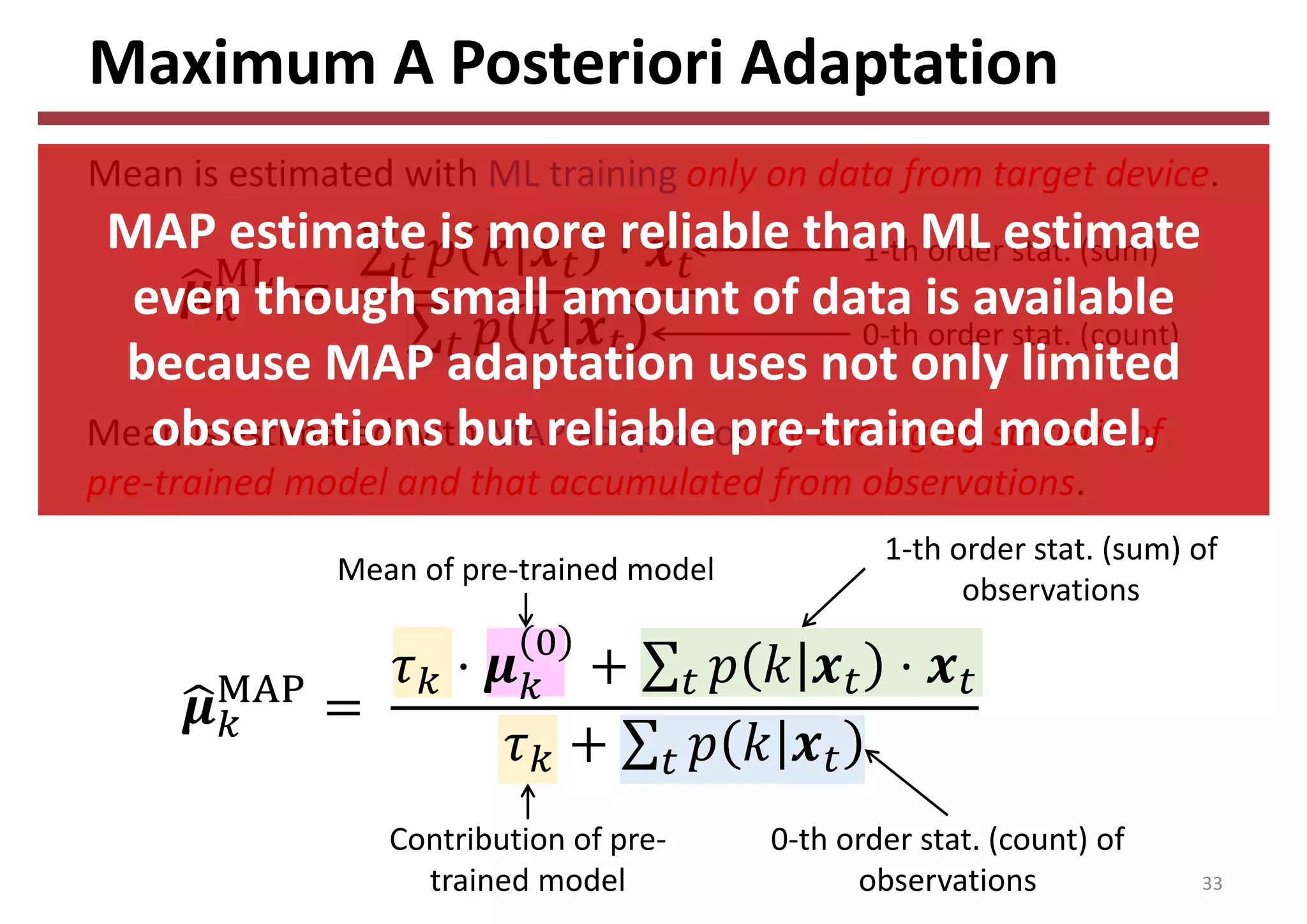
Mean is estimated with MAP adaptation by averaging statistic of 
pre‐trained model and that accumulated from observations.
1‐th order stat. (sum)
0‐th order stat. (count)
Contribution of pre‐
trained model
Mean of pre‐trained model
0‐th order stat. (count) of 
observations
1‐th order stat. (sum) of 
observations
Maximum A Posteriori Adaptation
33
Mean is estimated with ML training only on data from target device.
Mean is estimated with MAP adaptation by averaging statistic of 
pre‐trained model and that accumulated from observations.
1‐th order stat. (sum)
0‐th order stat. (count)
Contribution of pre‐
trained model
Mean of pre‐trained model
0‐th order stat. (count) of 
observations
1‐th order stat. (sum) of 
observations
MAP estimate is more reliable than ML estimate 
even though small amount of data is available 
because MAP adaptation uses not only limited 
observations but reliable pre‐trained model.
Experiment
34
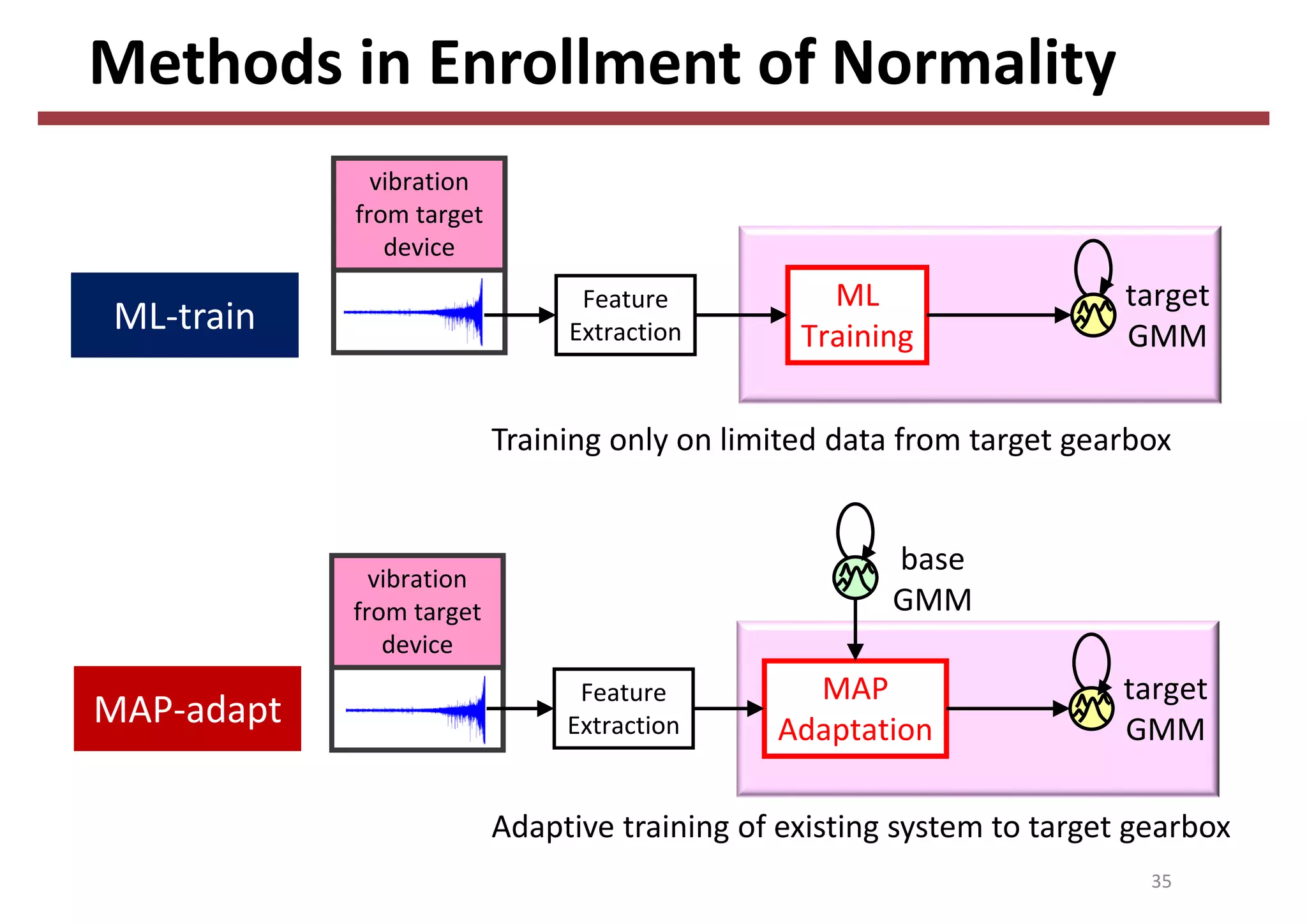
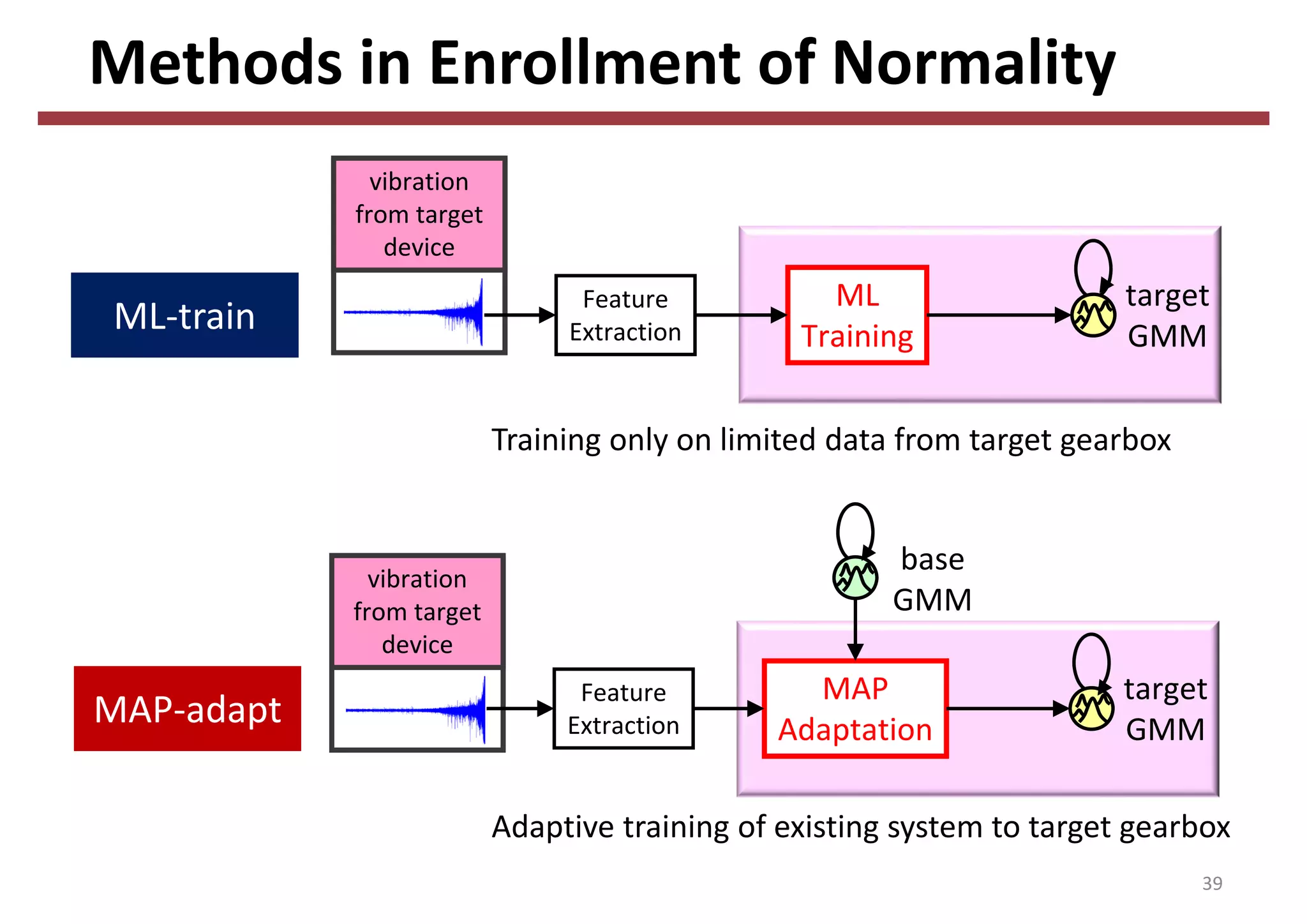
Methods in Enrollment of Normality
35
ML
Training
vibration 
from target 
device
Feature
Extraction
target
GMM
Training only on limited data from target gearbox
ML‐train
MAP
Adaptation
vibration 
from target 
device
base
GMM
Feature
Extraction
target
GMM
Adaptive training of existing system to target gearbox
MAP‐adapt
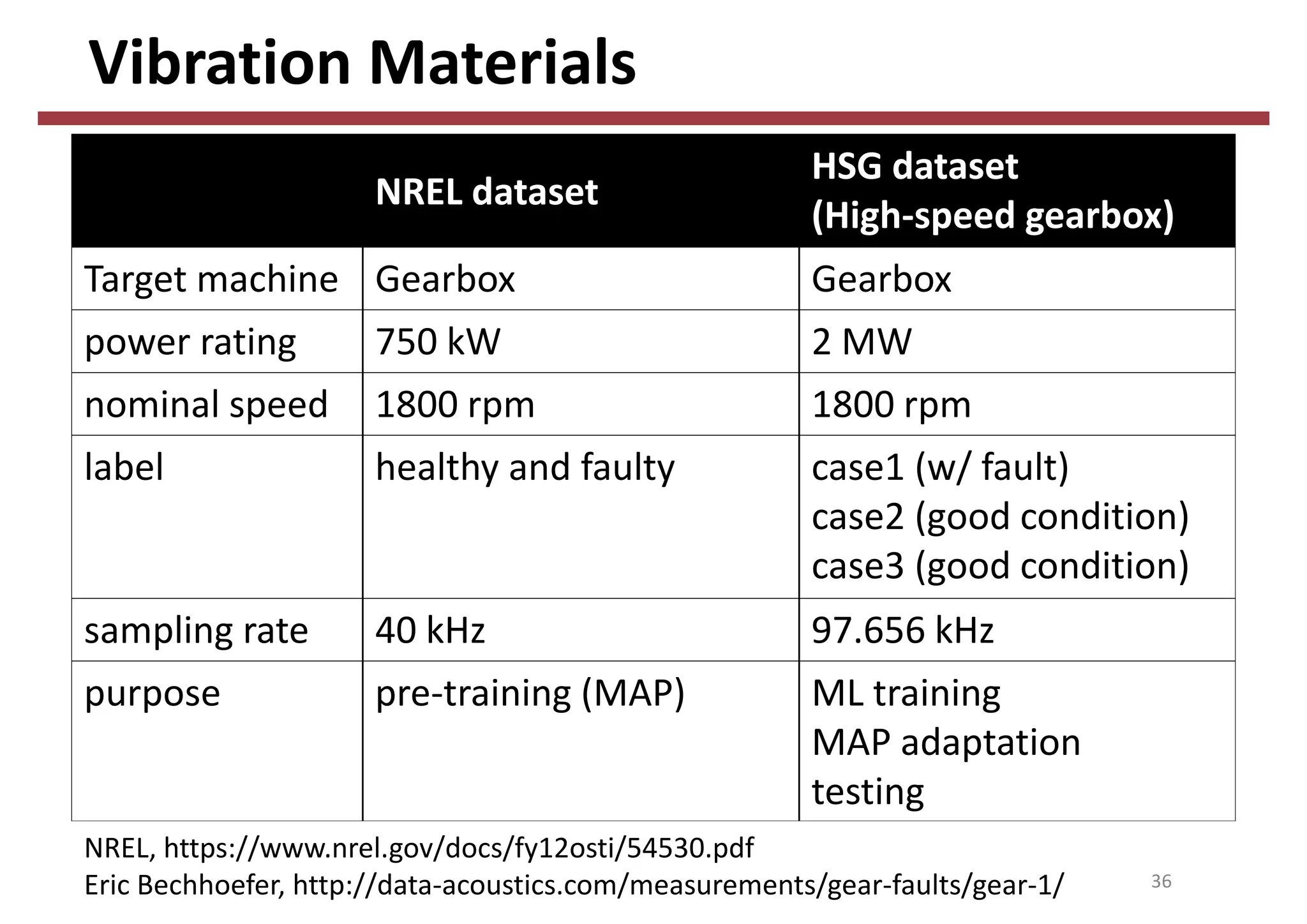
Vibration Materials
36
NREL dataset
HSG dataset
(High‐speed gearbox)
Target machine Gearbox Gearbox
power rating 750 kW 2 MW
nominal speed 1800 rpm 1800 rpm
label healthy and faulty case1 (w/ fault)
case2 (good condition)
case3 (good condition)
sampling rate 40 kHz 97.656 kHz
purpose pre‐training (MAP) ML training
MAP adaptation
testing
NREL, https://www.nrel.gov/docs/fy12osti/54530.pdf
Eric Bechhoefer, http://data‐acoustics.com/measurements/gear‐faults/gear‐1/
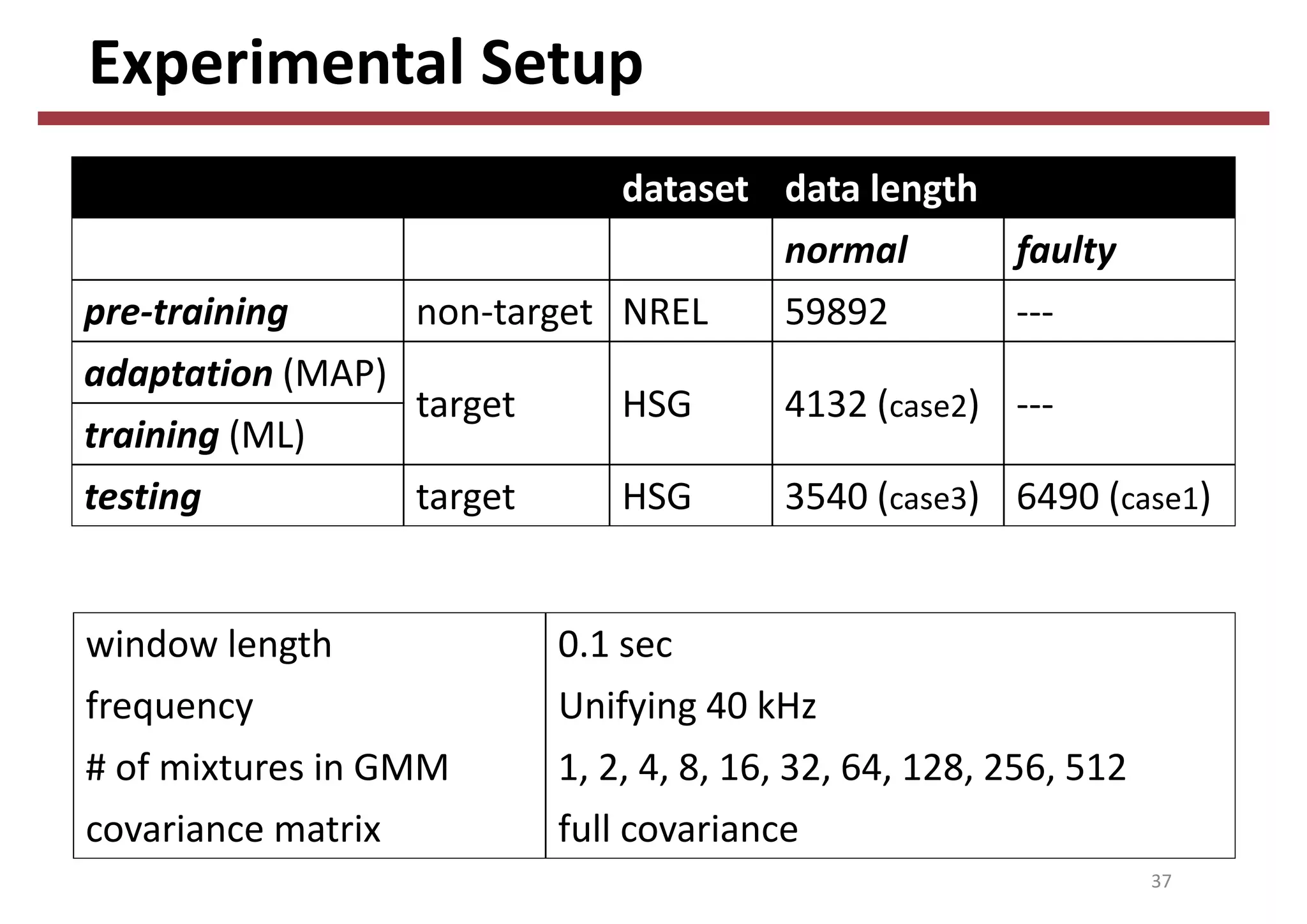
Experimental Setup
37
dataset data length
normal faulty
pre‐training non‐target NREL 59892 ‐‐‐
adaptation (MAP)
target HSG 4132 (case2) ‐‐‐
training (ML)
testing target HSG 3540 (case3) 6490 (case1)
window length 0.1 sec
frequency Unifying 40 kHz
# of mixtures in GMM 1, 2, 4, 8, 16, 32, 64, 128, 256, 512
covariance matrix full covariance
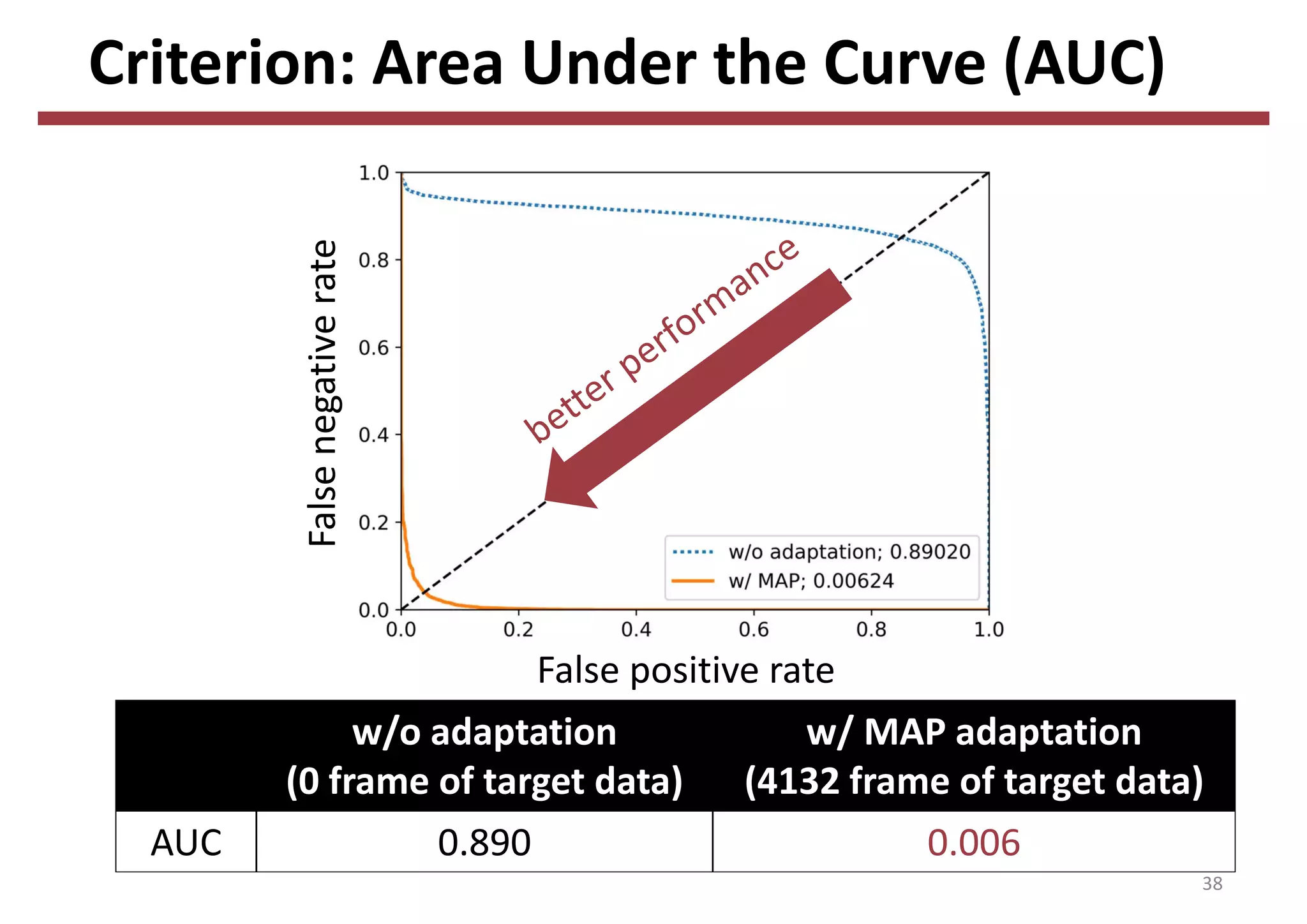
Criterion: Area Under the Curve (AUC)
False positive rate
False negative rate
38
w/o adaptation
(0 frame of target data)
w/ MAP adaptation
(4132 frame of target data)
AUC 0.890 0.006
Methods in Enrollment of Normality
39
ML
Training
vibration 
from target 
device
Feature
Extraction
target
GMM
Training only on limited data from target gearbox
ML‐train
MAP
Adaptation
vibration 
from target 
device
base
GMM
Feature
Extraction
target
GMM
Adaptive training of existing system to target gearbox
MAP‐adapt
MAP adaptation works on less training data
40
MAP adaptation successfully 
reduces AUCs at early stage of 
collecting data.
0.10
0.61
4132
AUC
Data length [frame]
590
Advantages of MAP Adaptation
41
Adapted system can handle 
initial failure owing to its high‐
performance at early stage of 
monitoring.
4132
AUC
Data length [frame]
590
Conclusion
42
Take‐home Messages
43
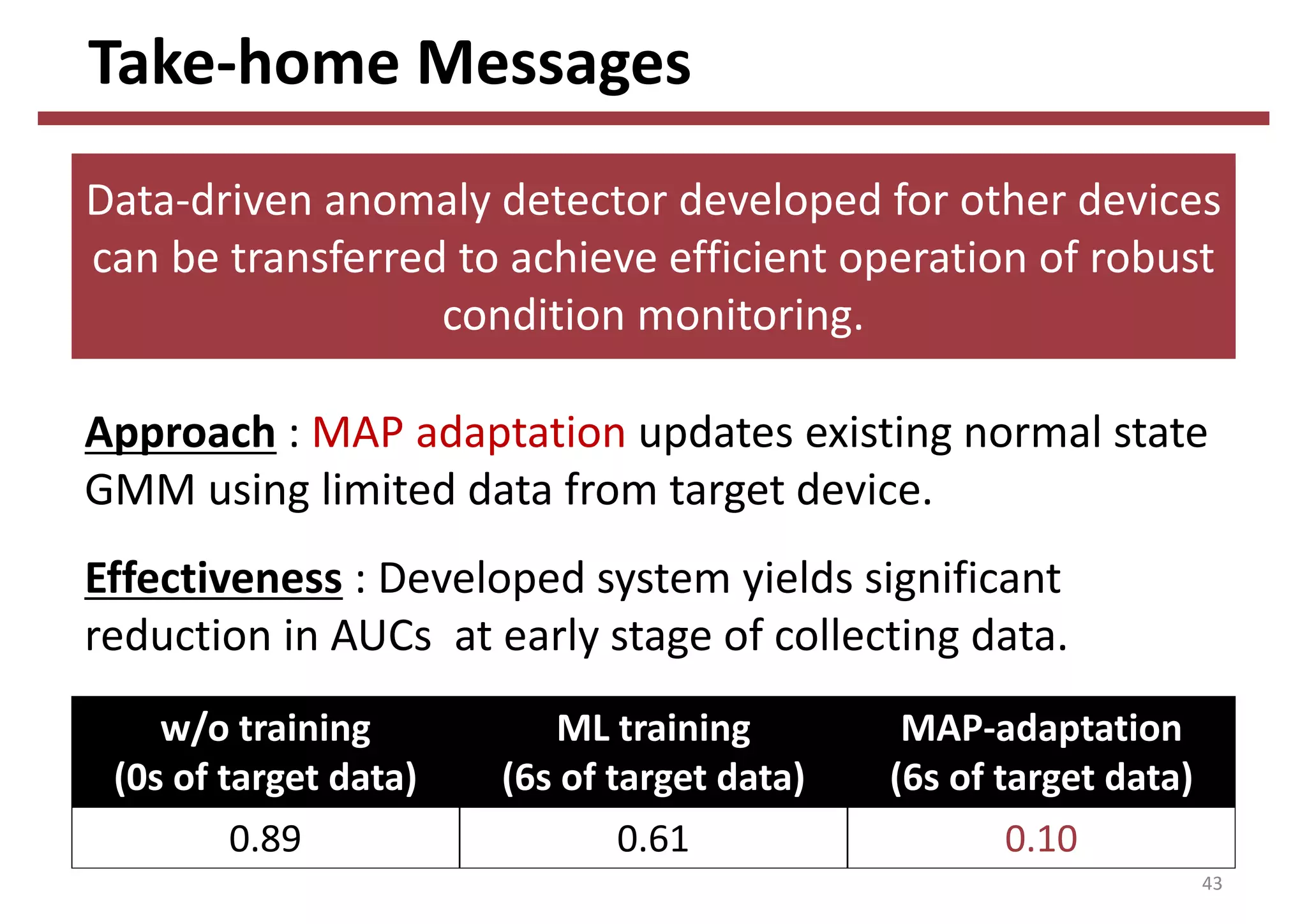
Approach : MAP adaptation updates existing normal state 
GMM using limited data from target device.
Effectiveness : Developed system yields significant 
reduction in AUCs  at early stage of collecting data.
Data‐driven anomaly detector developed for other devices 
can be transferred to achieve efficient operation of robust 
condition monitoring.
w/o training
(0s of target data)
ML training
(6s of target data)
MAP‐adaptation
(6s of target data)
0.89 0.61 0.10

Adaptive training of vibration-based anomaly detector for wind turbine condition monitoring