Sexual Assault at
Occidental College
Rachel Baer
 The presentation discusses sexual assault
and rape. It may contain triggers.
 99% of rapists are men, but not all men
are rapists.
 Research methods
 Sexual assault at college
 Oxy data
 Title IX and OCR’s Dear Colleague letter
 Literature review
 Content analysis of DearOxy Tumblr
› Measured hope, anger, hurt, disappointment
› Content analysis showed which specific
terms concerned users most
 Oxy survey
 Circumstantial information
› School size & student trust
 Emotional/physical effects
› PTSD
 Academic effects
“virtually all victims of rape are affected,
regardless of the circumstances
surrounding the act”(1)
 90% of college victims/survivors knew
their assailant before the assault
 Highest probability for assault: first week
of college
 Reminders of the assault/rape abound
(will discuss later as stimuli)
 For every additional 10,000 undergrads,
the odds of sexual assault decrease by
HALF
 Oxy has ~2,100 students
 Smaller student body = more trust
› Most assaults occur in “normal” situations
› False sense of security
 Underreporting
› Phenomenon in which most victims/survivors
do not report
› Common reasons include:
 Reprisal from assailant or assailant’s friends
 Social isolation
 These reasons are only exacerbated at
small schools (Oxy)
 Fears of specific stimuli (experienced by
victims of any/all assault circumstances)
› Being alone, drunk people
› Dead people, suffocation, weapons
 Shows rape is the implicit threat of death
 Fears of situation-specific stimuli
› Location & other aspects of the assault
 Embarrassment, shame, etc.
 Almost constant fear from stimuli  PTSD
 PTSD symptoms
› Shame & despair
› Impulsive behavior
› Flashbacks
› Hyper-alert
 At least 43% of college SA/rape victims
have PTSD
› Higher than victims of other violent crimes
 Impaired social and work life
 Lower GPA
 Transfer rates same as non-victims
 Common coping technique: avoid perp
› Classes
› Social scene (parties)
› Extra-curricular activities
› Marketplace, Cooler, etc.
 Remember the emotional and
academic effects of sexual assault
 Survey aimed to show how these effects
appear at Oxy
 55 survivors completed surveys in 12 days
Victim year at time of assault:
Perpetrator year at time of assault:
Relationship between Survivor/Victim & Perp.
at the time of the assault
64.7% of friend-rape victims said the assault deeply affected
them and caused them emotional pain
41 out of 49 survey respondents knew the perp. prior to assault
“Other” locations include cars, dances, etc.
 31% of participants raped at off-campus
houses
 5 occurred at Greek houses
› 3 at SAE
 4 occurred at athletic team houses
› 3 at ATO
 Responses covered past 4 years
› SAE became a dry house during this time
 First year
› Highest incident count in Stewie (strong
community)
 Older student
› Highest incident count in Haines, RV (isolated
feel), and Stearns (isolated feel)
 6 perpetrators took the victims home to
take care of them
› Violation of trust
 Three year live-on rule increases
concentration of students in dorms
 Lack of bystanders
› RA training does not include SA/rape
prevention or bystander intervention
 12.5% feared social consequences
 17% respondents unacknowledged
 DearOxy: “Having watched friends go
through your system, and their rapists walk
away with little or no consequence, I didn’t
feel safe reporting mine.”
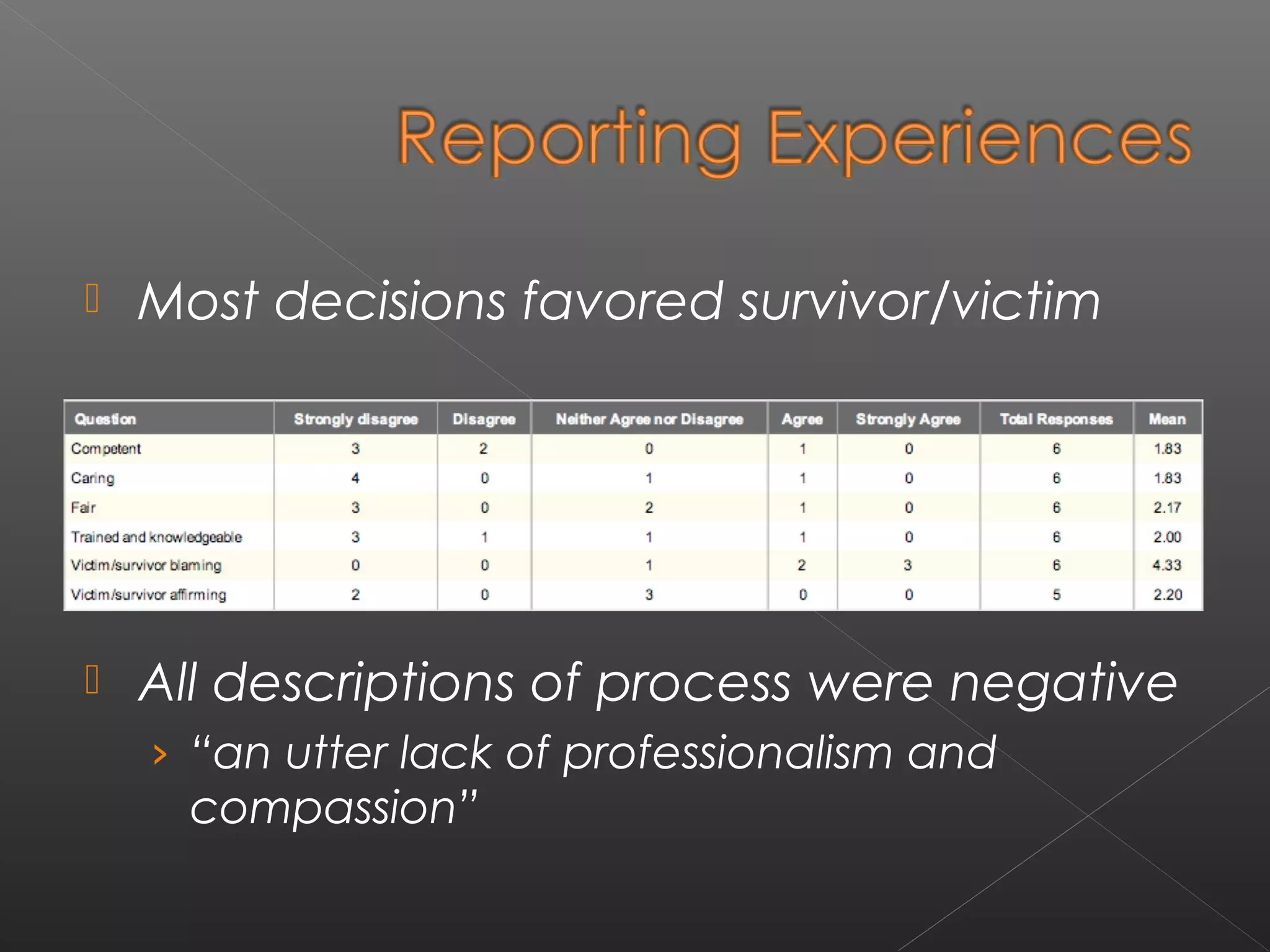
 Most decisions favored survivor/victim
 All descriptions of process were negative
› “an utter lack of professionalism and
compassion”
 High-profile administrators
 Lack of training
› No adjudicator finished all 8 NCHERM trainings
 Zero participants ranked adjudicators as
“competent,” “caring,” “fair,” or “trained and
knowledgeable”
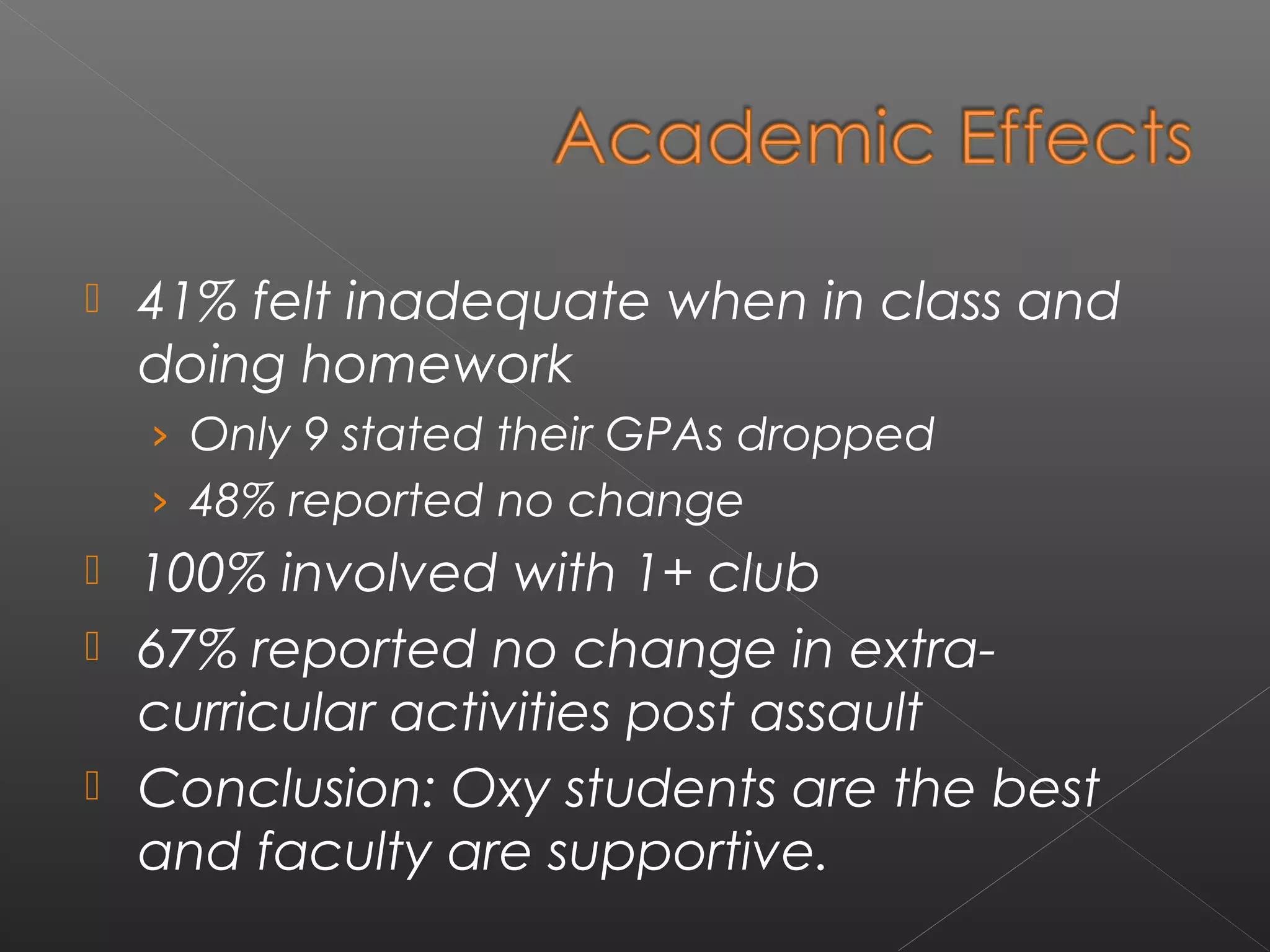
 41% felt inadequate when in class and
doing homework
› Only 9 stated their GPAs dropped
› 48% reported no change
 100% involved with 1+ club
 67% reported no change in extra-
curricular activities post assault
 Conclusion: Oxy students are the best
and faculty are supportive.
 Of participants assaulted their first year:
› 42.9% reported current anxiety
› 25.7% reported current low self-esteem
› 37.1% reported current distrust
 33 of 55 survivors assaulted their first year
› Only 2 survey participants current first years
› Shows pervasive effects of assault
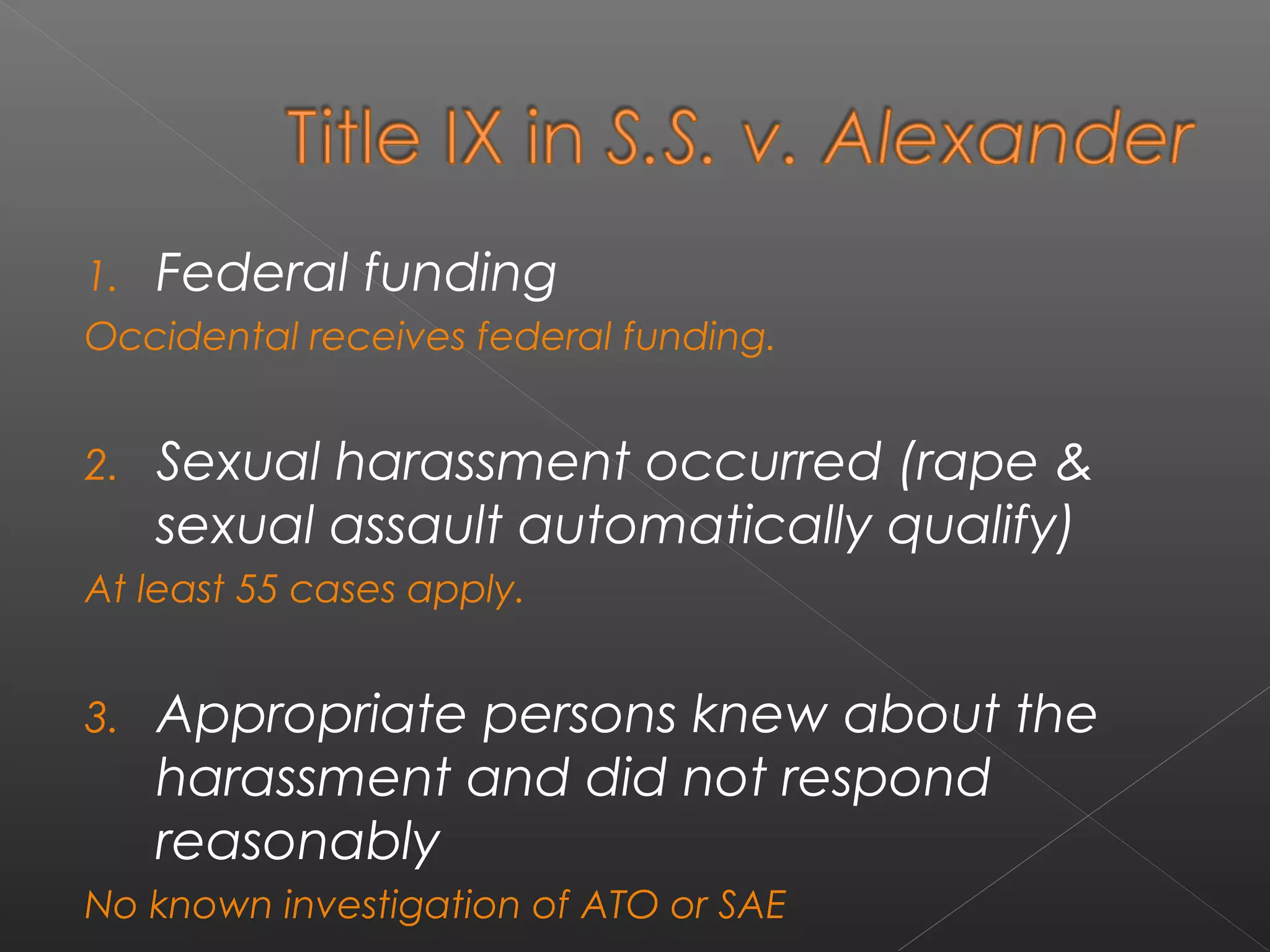
1. Federal funding
Occidental receives federal funding.
2. Sexual harassment occurred (rape &
sexual assault automatically qualify)
At least 55 cases apply.
3. Appropriate persons knew about the
harassment and did not respond
reasonably
No known investigation of ATO or SAE
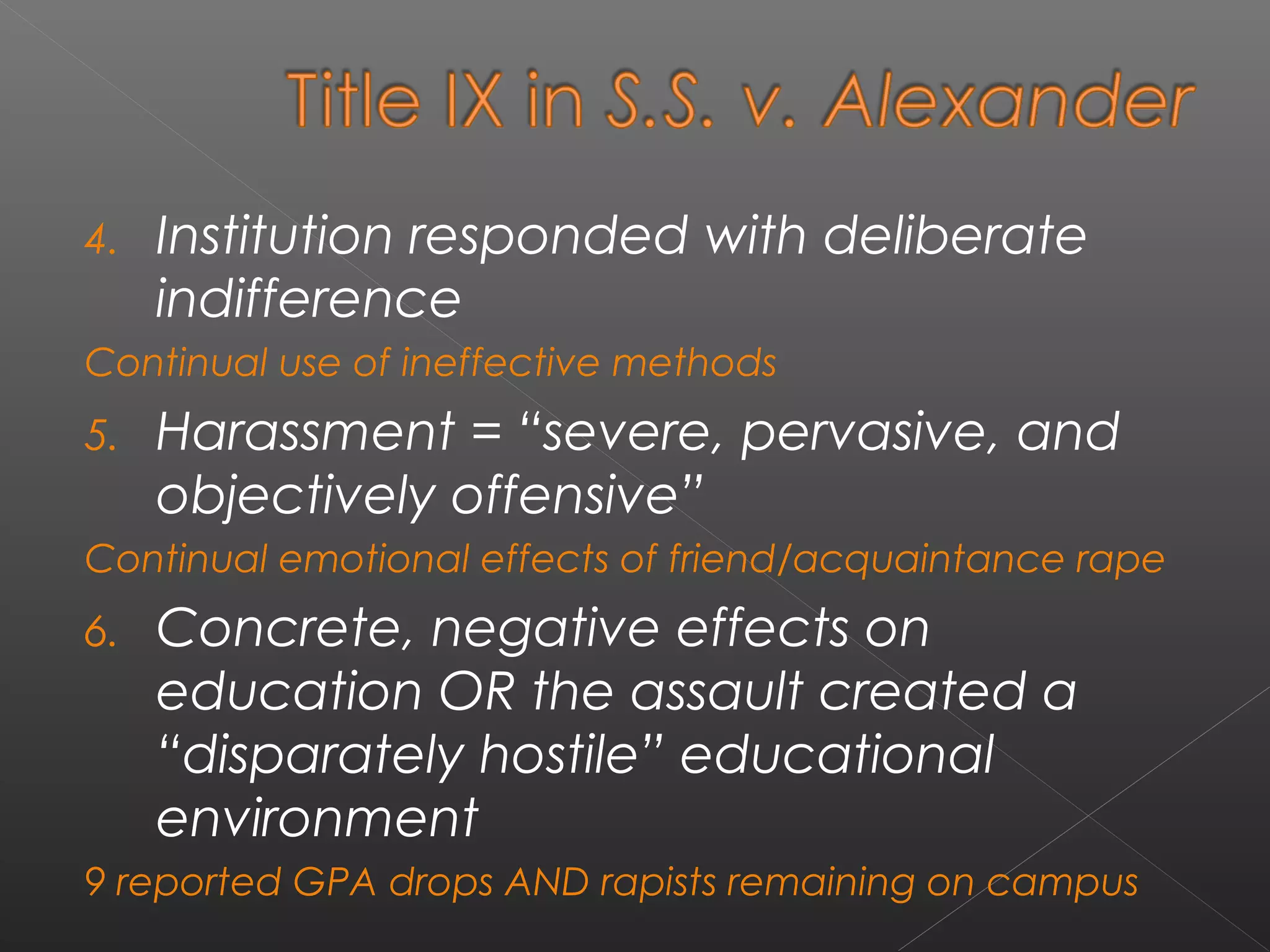
4. Institution responded with deliberate
indifference
Continual use of ineffective methods
5. Harassment = “severe, pervasive, and
objectively offensive”
Continual emotional effects of friend/acquaintance rape
6. Concrete, negative effects on
education OR the assault created a
“disparately hostile” educational
environment
9 reported GPA drops AND rapists remaining on campus
 Oxy complied with all requirements
except:
› Grievance procedures are not available
throughout campus
› Incomplete NCHERM training
› Specific timeline available only for appeals
process
› “Guaranteed” protection against retaliation
without actual protection
 No system for reporting further problems with
perp.
 Legally (S.S. standard): YES
 OCR (Dear Colleague): YES
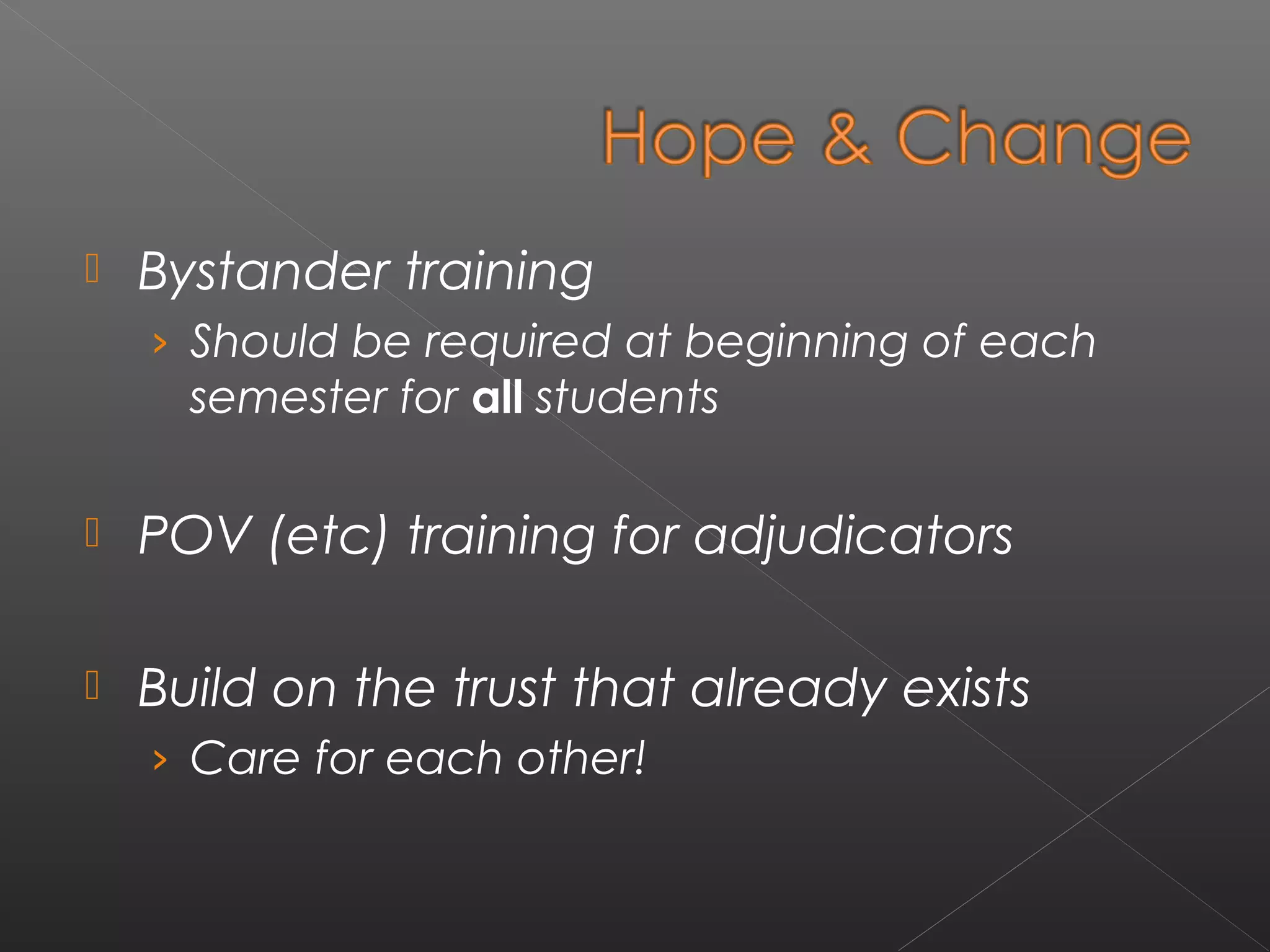
 Bystander training
› Should be required at beginning of each
semester for all students
 POV (etc) training for adjudicators
 Build on the trust that already exists
› Care for each other!

Action as Deliberate Indifference: Sexual Assault at Occidental College by Rachel Baer

  • 1.
    Sexual Assault at OccidentalCollege Rachel Baer
  • 2.
     The presentationdiscusses sexual assault and rape. It may contain triggers.  99% of rapists are men, but not all men are rapists.
  • 3.
     Research methods Sexual assault at college  Oxy data  Title IX and OCR’s Dear Colleague letter
  • 4.
     Literature review Content analysis of DearOxy Tumblr › Measured hope, anger, hurt, disappointment › Content analysis showed which specific terms concerned users most  Oxy survey
  • 5.
     Circumstantial information ›School size & student trust  Emotional/physical effects › PTSD  Academic effects “virtually all victims of rape are affected, regardless of the circumstances surrounding the act”(1)
  • 6.
     90% ofcollege victims/survivors knew their assailant before the assault  Highest probability for assault: first week of college  Reminders of the assault/rape abound (will discuss later as stimuli)
  • 7.
     For everyadditional 10,000 undergrads, the odds of sexual assault decrease by HALF  Oxy has ~2,100 students  Smaller student body = more trust › Most assaults occur in “normal” situations › False sense of security
  • 8.
     Underreporting › Phenomenonin which most victims/survivors do not report › Common reasons include:  Reprisal from assailant or assailant’s friends  Social isolation  These reasons are only exacerbated at small schools (Oxy)
  • 9.
     Fears ofspecific stimuli (experienced by victims of any/all assault circumstances) › Being alone, drunk people › Dead people, suffocation, weapons  Shows rape is the implicit threat of death  Fears of situation-specific stimuli › Location & other aspects of the assault  Embarrassment, shame, etc.
  • 10.
     Almost constantfear from stimuli  PTSD  PTSD symptoms › Shame & despair › Impulsive behavior › Flashbacks › Hyper-alert  At least 43% of college SA/rape victims have PTSD › Higher than victims of other violent crimes
  • 11.
     Impaired socialand work life  Lower GPA  Transfer rates same as non-victims  Common coping technique: avoid perp › Classes › Social scene (parties) › Extra-curricular activities › Marketplace, Cooler, etc.
  • 12.
     Remember theemotional and academic effects of sexual assault  Survey aimed to show how these effects appear at Oxy  55 survivors completed surveys in 12 days
  • 13.
    Victim year attime of assault: Perpetrator year at time of assault:
  • 14.
    Relationship between Survivor/Victim& Perp. at the time of the assault 64.7% of friend-rape victims said the assault deeply affected them and caused them emotional pain 41 out of 49 survey respondents knew the perp. prior to assault
  • 15.
  • 16.
     31% ofparticipants raped at off-campus houses  5 occurred at Greek houses › 3 at SAE  4 occurred at athletic team houses › 3 at ATO  Responses covered past 4 years › SAE became a dry house during this time
  • 18.
     First year ›Highest incident count in Stewie (strong community)  Older student › Highest incident count in Haines, RV (isolated feel), and Stearns (isolated feel)
  • 19.
     6 perpetratorstook the victims home to take care of them › Violation of trust  Three year live-on rule increases concentration of students in dorms  Lack of bystanders › RA training does not include SA/rape prevention or bystander intervention
  • 20.
     12.5% fearedsocial consequences  17% respondents unacknowledged  DearOxy: “Having watched friends go through your system, and their rapists walk away with little or no consequence, I didn’t feel safe reporting mine.”
  • 21.
     Most decisionsfavored survivor/victim  All descriptions of process were negative › “an utter lack of professionalism and compassion”
  • 22.
     High-profile administrators Lack of training › No adjudicator finished all 8 NCHERM trainings  Zero participants ranked adjudicators as “competent,” “caring,” “fair,” or “trained and knowledgeable”
  • 23.
     41% feltinadequate when in class and doing homework › Only 9 stated their GPAs dropped › 48% reported no change  100% involved with 1+ club  67% reported no change in extra- curricular activities post assault  Conclusion: Oxy students are the best and faculty are supportive.
  • 24.
     Of participantsassaulted their first year: › 42.9% reported current anxiety › 25.7% reported current low self-esteem › 37.1% reported current distrust  33 of 55 survivors assaulted their first year › Only 2 survey participants current first years › Shows pervasive effects of assault
  • 25.
    1. Federal funding Occidentalreceives federal funding. 2. Sexual harassment occurred (rape & sexual assault automatically qualify) At least 55 cases apply. 3. Appropriate persons knew about the harassment and did not respond reasonably No known investigation of ATO or SAE
  • 26.
    4. Institution respondedwith deliberate indifference Continual use of ineffective methods 5. Harassment = “severe, pervasive, and objectively offensive” Continual emotional effects of friend/acquaintance rape 6. Concrete, negative effects on education OR the assault created a “disparately hostile” educational environment 9 reported GPA drops AND rapists remaining on campus
  • 27.
     Oxy compliedwith all requirements except: › Grievance procedures are not available throughout campus › Incomplete NCHERM training › Specific timeline available only for appeals process › “Guaranteed” protection against retaliation without actual protection  No system for reporting further problems with perp.
  • 28.
     Legally (S.S.standard): YES  OCR (Dear Colleague): YES
  • 29.
     Bystander training ›Should be required at beginning of each semester for all students  POV (etc) training for adjudicators  Build on the trust that already exists › Care for each other!

Editor's Notes

  • #6 PTSD rates in stranger vs. acquaintance rape
  • #14 What have we concluded from these slides? That first year women are the clear targets, and that men of all years perpetrate these crimes. This shows that we need education during orientation AND throughout a students’ career.
  • #15 Cass: at small schools, “individuals are unquestioning of these fellow group members whom they know and trust. Women feel safe in the presence of their companions, yet we know it is those companions who pose the greatest risk to them” (p. 361) 41 out of the 49 respondents knew their perpetrators prior to the assault.
  • #17 SAE went dry during this time – what does this indicate?
  • #18 Graph indicates assaults can occur in either victim or assailant’s room