Dissecting exposomic (and genomic)
contributions in health and disease
Chirag J Patel

AACR Digital Exposomics in Cancer Epidemiology

4/18/16
chirag@hms.harvard.edu
@chiragjp
www.chiragjpgroup.org
Disclosure Information

Chirag J Patel
I have the following financial relationships:

Funding: NIH, Agilent, Inc., and PhRMA

Consultant to: Astra-Zeneca, Sanofi

I will not discuss off-label/investigational use.
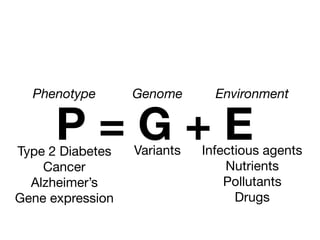
P = G + EType 2 Diabetes

Cancer

Alzheimer’s

Gene expression
Phenotype Genome
Variants
Environment
Infectious agents

Nutrients

Pollutants

Drugs
We are great at G investigation!
over 2400 

Genome-wide Association Studies (GWAS)

https://www.ebi.ac.uk/gwas/
G
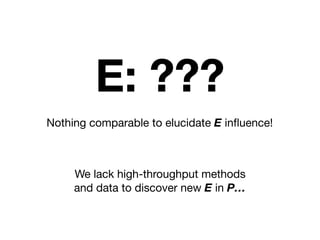
Nothing comparable to elucidate E influence!
E: ???
We lack high-throughput methods
and data to discover new E in P…
A similar paradigm for discovery should exist

for E!
Why?
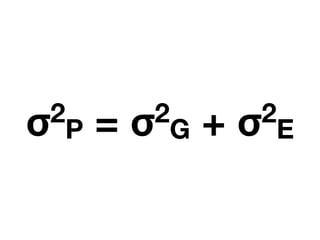
σ2
P = σ2
G + σ2
E
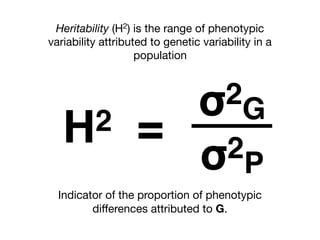
σ2
G
σ2P
H2 =
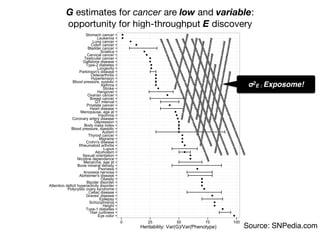
Heritability (H2) is the range of phenotypic
variability attributed to genetic variability in a
population
Indicator of the proportion of phenotypic
differences attributed to G.
Eye color
Hair curliness
Type-1 diabetes
Height
Schizophrenia
Epilepsy
Graves' disease
Celiac disease
Polycystic ovary syndrome
Attention deficit hyperactivity disorder
Bipolar disorder
Obesity
Alzheimer's disease
Anorexia nervosa
Psoriasis
Bone mineral density
Menarche, age at
Nicotine dependence
Sexual orientation
Alcoholism
Lupus
Rheumatoid arthritis
Crohn's disease
Migraine
Thyroid cancer
Autism
Blood pressure, diastolic
Body mass index
Depression
Coronary artery disease
Insomnia
Menopause, age at
Heart disease
Prostate cancer
QT interval
Breast cancer
Ovarian cancer
Hangover
Stroke
Asthma
Blood pressure, systolic
Hypertension
Osteoarthritis
Parkinson's disease
Longevity
Type-2 diabetes
Gallstone disease
Testicular cancer
Cervical cancer
Sciatica
Bladder cancer
Colon cancer
Lung cancer
Leukemia
Stomach cancer
0 25 50 75 100
Heritability: Var(G)/Var(Phenotype)
Source: SNPedia.com
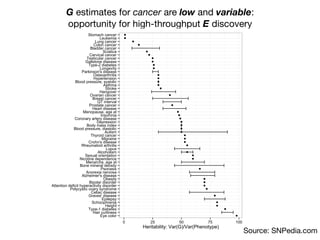
G estimates for cancer are low and variable:
opportunity for high-throughput E discovery
Eye color
Hair curliness
Type-1 diabetes
Height
Schizophrenia
Epilepsy
Graves' disease
Celiac disease
Polycystic ovary syndrome
Attention deficit hyperactivity disorder
Bipolar disorder
Obesity
Alzheimer's disease
Anorexia nervosa
Psoriasis
Bone mineral density
Menarche, age at
Nicotine dependence
Sexual orientation
Alcoholism
Lupus
Rheumatoid arthritis
Crohn's disease
Migraine
Thyroid cancer
Autism
Blood pressure, diastolic
Body mass index
Depression
Coronary artery disease
Insomnia
Menopause, age at
Heart disease
Prostate cancer
QT interval
Breast cancer
Ovarian cancer
Hangover
Stroke
Asthma
Blood pressure, systolic
Hypertension
Osteoarthritis
Parkinson's disease
Longevity
Type-2 diabetes
Gallstone disease
Testicular cancer
Cervical cancer
Sciatica
Bladder cancer
Colon cancer
Lung cancer
Leukemia
Stomach cancer
0 25 50 75 100
Heritability: Var(G)/Var(Phenotype)
Source: SNPedia.com
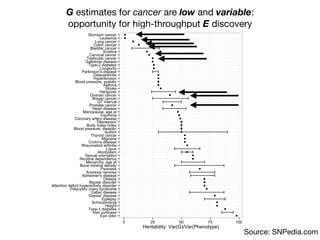
G estimates for cancer are low and variable:
opportunity for high-throughput E discovery
Eye color
Hair curliness
Type-1 diabetes
Height
Schizophrenia
Epilepsy
Graves' disease
Celiac disease
Polycystic ovary syndrome
Attention deficit hyperactivity disorder
Bipolar disorder
Obesity
Alzheimer's disease
Anorexia nervosa
Psoriasis
Bone mineral density
Menarche, age at
Nicotine dependence
Sexual orientation
Alcoholism
Lupus
Rheumatoid arthritis
Crohn's disease
Migraine
Thyroid cancer
Autism
Blood pressure, diastolic
Body mass index
Depression
Coronary artery disease
Insomnia
Menopause, age at
Heart disease
Prostate cancer
QT interval
Breast cancer
Ovarian cancer
Hangover
Stroke
Asthma
Blood pressure, systolic
Hypertension
Osteoarthritis
Parkinson's disease
Longevity
Type-2 diabetes
Gallstone disease
Testicular cancer
Cervical cancer
Sciatica
Bladder cancer
Colon cancer
Lung cancer
Leukemia
Stomach cancer
0 25 50 75 100
Heritability: Var(G)/Var(Phenotype) Source: SNPedia.com
σ2
E : Exposome!
G estimates for cancer are low and variable:
opportunity for high-throughput E discovery
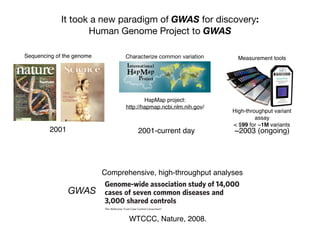
It took a new paradigm of GWAS for discovery:
Human Genome Project to GWAS
Sequencing of the genome
2001
HapMap project:
http://hapmap.ncbi.nlm.nih.gov/
Characterize common variation
2001-current day
High-throughput variant
assay
< $99 for ~1M variants
Measurement tools
~2003 (ongoing)
ARTICLES
Genome-wide association study of 14,000
cases of seven common diseases and
3,000 shared controls
The Wellcome Trust Case Control Consortium*
There is increasing evidence that genome-wide association (GWA) studies represent a powerful approach to the
identification of genes involved in common human diseases. We describe a joint GWA study (using the Affymetrix GeneChip
500K Mapping Array Set) undertaken in the British population, which has examined ,2,000 individuals for each of 7 major
diseases and a shared set of ,3,000 controls. Case-control comparisons identified 24 independent association signals at
P , 5 3 1027
: 1 in bipolar disorder, 1 in coronary artery disease, 9 in Crohn’s disease, 3 in rheumatoid arthritis, 7 in type 1
diabetes and 3 in type 2 diabetes. On the basis of prior findings and replication studies thus-far completed, almost all of these
signals reflect genuine susceptibility effects. We observed association at many previously identified loci, and found
compelling evidence that some loci confer risk for more than one of the diseases studied. Across all diseases, we identified a
25 27
Vol 447|7 June 2007|doi:10.1038/nature05911
WTCCC, Nature, 2008.
Comprehensive, high-throughput analyses
GWAS
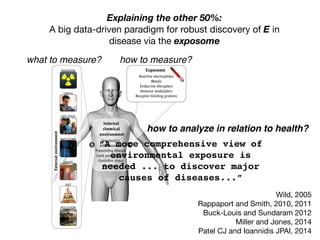
Explaining the other 50%:
A big data-driven paradigm for robust discovery of E in
disease via the exposome
what to measure? how to measure?
PERSPECTIVES
Xenobiotics
Inflammation
Preexisting disease
Lipid peroxidation
Oxidative stress
Gut flora
Internal
chemical
environment
Externalenvironment
ExposomeRADIATION
DIET
POLLUTION
INFECTIONS
DRUGS
LIFE-STYLE
STRESS
Reactive electrophiles
Metals
Endocrine disrupters
Immune modulators
Receptor-binding proteins
itical entity for disease eti-
ogy (7). Recent discussion
as focused on whether and
ow to implement this vision
8). Although fully charac-
rizing human exposomes
daunting, strategies can be
eveloped for getting “snap-
hots” of critical portions of
person’s exposome during
ifferent stages of life. At
ne extreme is a “bottom-up”
rategy in which all chemi-
als in each external source
f a subject’s exposome are
easured at each time point.
lthoughthisapproachwould
ave the advantage of relat-
g important exposures to
e air, water, or diet, it would
quire enormous effort and
ould miss essential compo-
ents of the internal chemi-
al environment due to such
actors as gender, obesity,
flammation, and stress. By
ontrast, a “top-down” strat-
gy would measure all chem-
als (or products of their
ownstream processing or
ffects, so-called read-outs
r signatures) in a subject’s
ood. This would require
nly a single blood specimen
each time point and would relate directly ruptors and can be measured through serum
some (telomere) length in
peripheral blood mono-
nuclear cells responded
to chronic psychological
stress, possibly mediated
by the production of reac-
tive oxygen species (15).
Characterizing the
exposome represents a tech-
nological challenge like that of
thehumangenomeproject,which
began when DNA sequencing
was in its infancy (16). Analyti-
cal systems are needed to pro-
cess small amounts of blood from
thousands of subjects. Assays
should be multiplexed for mea-
suring many chemicals in each
class of interest. Tandem mass
spectrometry, gene and protein
chips, and microfluidic systems
offer the means to do this. Plat-
forms for high-throughput assays
shouldleadtoeconomiesofscale,
again like those experienced by
the human genome project. And
because exposome technologies
would provide feedback for thera-
peuticinterventionsandpersonal-
ized medicine, they should moti-
vate the development of commer-
cial devices for screening impor-
tant environmental exposures in
blood samples.
With successful characterization of both
Characterizing the exposome. The exposome represents
the combined exposures from all sources that reach the
internal chemical environment. Toxicologically important
classes of exposome chemicals are shown. Signatures and
biomarkers can detect these agents in blood or serum.
onOctober21,2010www.sciencemag.orgrom
“A more comprehensive view of
environmental exposure is
needed ... to discover major
causes of diseases...”
how to analyze in relation to health?
Wild, 2005

Rappaport and Smith, 2010, 2011

Buck-Louis and Sundaram 2012

Miller and Jones, 2014

Patel CJ and Ioannidis JPAI, 2014
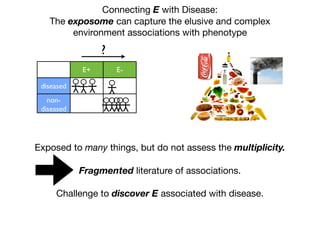
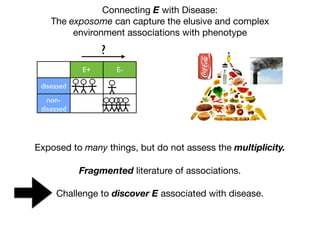
Connecting E with Disease:
The exposome can capture the elusive and complex
environment associations with phenotype
E+ E-
diseased
non-
diseased
?
Exposed to many things, but do not assess the multiplicity.
Fragmented literature of associations.
Challenge to discover E associated with disease.
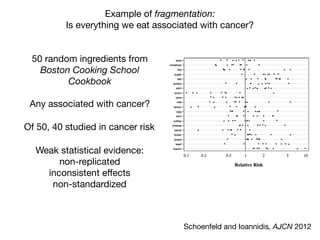
Example of fragmentation:
Is everything we eat associated with cancer?
Schoenfeld and Ioannidis, AJCN 2012
50 random ingredients from
Boston Cooking School
Cookbook
Any associated with cancer?
FIGURE 1. Effect estimates reported in the literature by malignancy type (top) or ingredient (bottom). Only ingredients with $10 studie
outliers are not shown (effect estimates .10).
Of 50, 40 studied in cancer risk
Weak statistical evidence:

non-replicated

inconsistent effects

non-standardized
Connecting E with Disease:
The exposome can capture the elusive and complex
environment associations with phenotype
E+ E-
diseased
non-
diseased
?
Exposed to many things, but do not assess the multiplicity.
Fragmented literature of associations.
Challenge to discover E associated with disease.
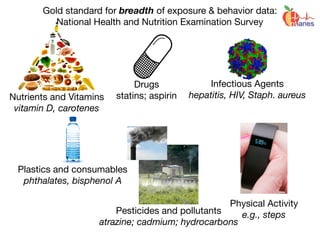
Gold standard for breadth of exposure & behavior data:
National Health and Nutrition Examination Survey
Nutrients and Vitamins

vitamin D, carotenes
Infectious Agents

hepatitis, HIV, Staph. aureus
Plastics and consumables

phthalates, bisphenol A
Physical Activity

e.g., stepsPesticides and pollutants

atrazine; cadmium; hydrocarbons
Drugs

statins; aspirin
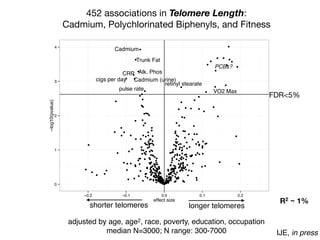
What E and P are associated with telomere length?
452 associations in Telomere Length:
Cadmium, Polychlorinated Biphenyls, and Fitness
IJE, in press
0
1
2
3
4
−0.2 −0.1 0.0 0.1 0.2
effect size
−log10(pvalue)
PCBs?
FDR<5%
Trunk Fat
Alk. PhosCRP
Cadmium
Cadmium (urine)cigs per day
retinyl stearate
R2 ~ 1%
VO2 Maxpulse rate
shorter telomeres longer telomeres
adjusted by age, age2, race, poverty, education, occupation
median N=3000; N range: 300-7000
Studying the Elusive Environment in Large Scale
Itispossiblethatmorethan50%ofcomplexdiseaserisk
isattributedtodifferencesinanindividual’senvironment.1
Airpollution,smoking,anddietaredocumentedenviron-
mental factors affecting health, yet these factors are but
a fraction of the “exposome,” the totality of the exposure
loadoccurringthroughoutaperson’slifetime.1
Investigat-
ing one or a handful of exposures at a time has led to a
highly fragmented literature of epidemiologic associa-
tions. Much of that literature is not reproducible, and se-
lectivereportingmaybeamajorreasonforthelackofre-
producibility. A new model is required to discover
environmental exposures associated with disease while
mitigating possibilities of selective reporting.
Toremedythelackofreproducibilityandconcernsof
validity, multiple personal exposures can be assessed si-
multaneously in terms of their association with a condi-
tion or disease of interest; the strongest associations can
then be tentatively validated in independent data sets
(eg, as done in references 2 and 3).2,3
The main advan-
tages of this process include the ability to search the list
ofexposuresandadjustformultiplicitysystematicallyand
reportalltheprobedassociationsinsteadofonlythemost
significant results. The term “environment-wide associa-
tion studies” (EWAS) has been used to describe this ap-
proach (an analogy to genome-wide association stud-
ies).Forexample,Wangetal4
screenedmorethan2000
chemicalsinserumtodiscoverendogenousexposuresas-
sociated with risk for cardiovascular disease.
Therearenotablehurdlesinanalyzing“big”environ-
mental data. These same problems affect epidemiology
of1-risk-factor-at-a-time,butinEWAStheirprevalencebe-
comes more clearly manifest at large scale. When study-
the EWAS vantage point, intervening on β-carotene
(Figure, D) seems a futile exercise given its complex rela-
tionship with other nutrients and pollutants.
Giventhiscomplexity,howcanstudiesofenvironmen-
talriskmoveforward?First,EWASanalysesshouldbeap-
pliedtomultipledatasets,andconsistencycanbeformally
examinedforallassessedcorrelations.Second,thetempo-
ral relationship between exposure and changes in health
parametersmayofferhelpfulhintsaboutwhichofthesig-
nalsaremorethansimplecorrelations.Third,standardized
adjustedanalyses,inwhichadjustmentsareperformedsys-
tematicallyandinthesamewayacrossmultipledatasets,
may also help. This is in stark contrast with the current
model,wherebymostepidemiologicstudiesusesingledata
setswithoutreplicationaswellasnon–time-dependentas-
sessments,andreportedadjustmentsaremarkedlydiffer-
entacrossreportsanddatasets,eventhoseperformedby
thesameteam(differentapproachesincreasevaliditybut
mustbereconciledandassimilated).
However, eventually for most environmental cor-
relates,theremaybeunsurpassabledifficultyestablish-
ing potential causal inferences based on observational
data alone. Factors that seem protective may some-
times be tested in randomized trials. The complexity of
the multiple correlations also highlights the challenge
thatinterveningtomodify1putativeriskfactoralsomay
inadvertently affect multiple other correlated factors.
Even when a seemingly simple intervention is tested in
randomizedtrials(affectingasingleriskfactoramongthe
manycorrelations),theinterventionisnotreallysimple.
In essence what is tested are multiple perturbations of
factors correlated with the one targeted for interven-
VIEWPOINT
Chirag J. Patel, PhD
Center for Biomedical
Informatics, Harvard
Medical School,
Boston, Massachusetts.
John P. A. Ioannidis,
MD, DSc
Stanford Prevention
Research Center,
Department of Health
Research and Policy,
Department of
Medicine, Stanford
University School of
Medicine, Stanford,
California, Department
of Statistics, Stanford
University School of
Humanities and
Sciences, Stanford,
California, and
Meta-Research
Innovation Center at
Stanford (METRICS),
Stanford, California.
Opinion
JAMA, 2014
JECH, 2014
Proc Symp Biocomp, 2015
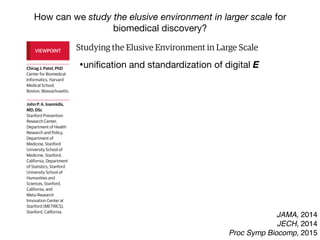
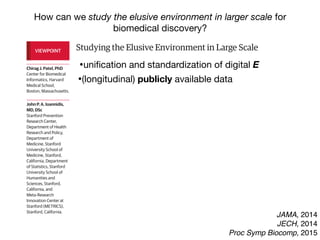
How can we study the elusive environment in larger scale for
biomedical discovery?
Studying the Elusive Environment in Large Scale
Itispossiblethatmorethan50%ofcomplexdiseaserisk
isattributedtodifferencesinanindividual’senvironment.1
Airpollution,smoking,anddietaredocumentedenviron-
mental factors affecting health, yet these factors are but
a fraction of the “exposome,” the totality of the exposure
loadoccurringthroughoutaperson’slifetime.1
Investigat-
ing one or a handful of exposures at a time has led to a
highly fragmented literature of epidemiologic associa-
tions. Much of that literature is not reproducible, and se-
lectivereportingmaybeamajorreasonforthelackofre-
producibility. A new model is required to discover
environmental exposures associated with disease while
mitigating possibilities of selective reporting.
Toremedythelackofreproducibilityandconcernsof
validity, multiple personal exposures can be assessed si-
multaneously in terms of their association with a condi-
tion or disease of interest; the strongest associations can
then be tentatively validated in independent data sets
(eg, as done in references 2 and 3).2,3
The main advan-
tages of this process include the ability to search the list
ofexposuresandadjustformultiplicitysystematicallyand
reportalltheprobedassociationsinsteadofonlythemost
significant results. The term “environment-wide associa-
tion studies” (EWAS) has been used to describe this ap-
the EWAS vantage point, intervening on β-carotene
(Figure, D) seems a futile exercise given its complex rela-
tionship with other nutrients and pollutants.
Giventhiscomplexity,howcanstudiesofenvironmen-
talriskmoveforward?First,EWASanalysesshouldbeap-
pliedtomultipledatasets,andconsistencycanbeformally
examinedforallassessedcorrelations.Second,thetempo-
ral relationship between exposure and changes in health
parametersmayofferhelpfulhintsaboutwhichofthesig-
nalsaremorethansimplecorrelations.Third,standardized
adjustedanalyses,inwhichadjustmentsareperformedsys-
tematicallyandinthesamewayacrossmultipledatasets
may also help. This is in stark contrast with the current
model,wherebymostepidemiologicstudiesusesingledata
setswithoutreplicationaswellasnon–time-dependentas-
sessments,andreportedadjustmentsaremarkedlydiffer-
entacrossreportsanddatasets,eventhoseperformedby
thesameteam(differentapproachesincreasevaliditybut
mustbereconciledandassimilated).
However, eventually for most environmental cor-
relates,theremaybeunsurpassabledifficultyestablish-
ing potential causal inferences based on observationa
data alone. Factors that seem protective may some-
times be tested in randomized trials. The complexity of
VIEWPOINT
Chirag J. Patel, PhD
Center for Biomedical
Informatics, Harvard
Medical School,
Boston, Massachusetts.
John P. A. Ioannidis,
MD, DSc
Stanford Prevention
Research Center,
Department of Health
Research and Policy,
Department of
Medicine, Stanford
University School of
Medicine, Stanford,
California, Department
of Statistics, Stanford
University School of
Humanities and
Sciences, Stanford,
California, and
Meta-Research
Innovation Center at
Stanford (METRICS),
Stanford, California.
Opinion
•unification and standardization of digital E
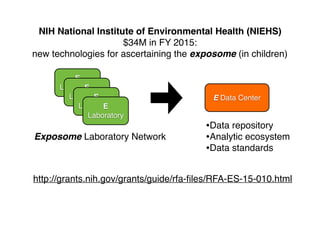
http://grants.nih.gov/grants/guide/rfa-files/RFA-ES-15-010.html
NIH National Institute of Environmental Health (NIEHS)
$34M in FY 2015:
new technologies for ascertaining the exposome (in children)
E
LaboratoryE
LaboratoryE
LaboratoryE
Laboratory
E Data Center
•Data repository
•Analytic ecosystem
•Data standards
Exposome Laboratory Network
Studying the Elusive Environment in Large Scale
Itispossiblethatmorethan50%ofcomplexdiseaserisk
isattributedtodifferencesinanindividual’senvironment.1
Airpollution,smoking,anddietaredocumentedenviron-
mental factors affecting health, yet these factors are but
a fraction of the “exposome,” the totality of the exposure
loadoccurringthroughoutaperson’slifetime.1
Investigat-
ing one or a handful of exposures at a time has led to a
highly fragmented literature of epidemiologic associa-
tions. Much of that literature is not reproducible, and se-
lectivereportingmaybeamajorreasonforthelackofre-
producibility. A new model is required to discover
environmental exposures associated with disease while
mitigating possibilities of selective reporting.
Toremedythelackofreproducibilityandconcernsof
validity, multiple personal exposures can be assessed si-
multaneously in terms of their association with a condi-
tion or disease of interest; the strongest associations can
then be tentatively validated in independent data sets
(eg, as done in references 2 and 3).2,3
The main advan-
tages of this process include the ability to search the list
ofexposuresandadjustformultiplicitysystematicallyand
reportalltheprobedassociationsinsteadofonlythemost
significant results. The term “environment-wide associa-
tion studies” (EWAS) has been used to describe this ap-
proach (an analogy to genome-wide association stud-
ies).Forexample,Wangetal4
screenedmorethan2000
chemicalsinserumtodiscoverendogenousexposuresas-
sociated with risk for cardiovascular disease.
Therearenotablehurdlesinanalyzing“big”environ-
mental data. These same problems affect epidemiology
of1-risk-factor-at-a-time,butinEWAStheirprevalencebe-
comes more clearly manifest at large scale. When study-
the EWAS vantage point, intervening on β-carotene
(Figure, D) seems a futile exercise given its complex rela-
tionship with other nutrients and pollutants.
Giventhiscomplexity,howcanstudiesofenvironmen-
talriskmoveforward?First,EWASanalysesshouldbeap-
pliedtomultipledatasets,andconsistencycanbeformally
examinedforallassessedcorrelations.Second,thetempo-
ral relationship between exposure and changes in health
parametersmayofferhelpfulhintsaboutwhichofthesig-
nalsaremorethansimplecorrelations.Third,standardized
adjustedanalyses,inwhichadjustmentsareperformedsys-
tematicallyandinthesamewayacrossmultipledatasets,
may also help. This is in stark contrast with the current
model,wherebymostepidemiologicstudiesusesingledata
setswithoutreplicationaswellasnon–time-dependentas-
sessments,andreportedadjustmentsaremarkedlydiffer-
entacrossreportsanddatasets,eventhoseperformedby
thesameteam(differentapproachesincreasevaliditybut
mustbereconciledandassimilated).
However, eventually for most environmental cor-
relates,theremaybeunsurpassabledifficultyestablish-
ing potential causal inferences based on observational
data alone. Factors that seem protective may some-
times be tested in randomized trials. The complexity of
the multiple correlations also highlights the challenge
thatinterveningtomodify1putativeriskfactoralsomay
inadvertently affect multiple other correlated factors.
Even when a seemingly simple intervention is tested in
randomizedtrials(affectingasingleriskfactoramongthe
manycorrelations),theinterventionisnotreallysimple.
In essence what is tested are multiple perturbations of
factors correlated with the one targeted for interven-
VIEWPOINT
Chirag J. Patel, PhD
Center for Biomedical
Informatics, Harvard
Medical School,
Boston, Massachusetts.
John P. A. Ioannidis,
MD, DSc
Stanford Prevention
Research Center,
Department of Health
Research and Policy,
Department of
Medicine, Stanford
University School of
Medicine, Stanford,
California, Department
of Statistics, Stanford
University School of
Humanities and
Sciences, Stanford,
California, and
Meta-Research
Innovation Center at
Stanford (METRICS),
Stanford, California.
Opinion
JAMA, 2014
JECH, 2014
Proc Symp Biocomp, 2015
How can we study the elusive environment in larger scale for
biomedical discovery?
Studying the Elusive Environment in Large Scale
Itispossiblethatmorethan50%ofcomplexdiseaserisk
isattributedtodifferencesinanindividual’senvironment.1
Airpollution,smoking,anddietaredocumentedenviron-
mental factors affecting health, yet these factors are but
a fraction of the “exposome,” the totality of the exposure
loadoccurringthroughoutaperson’slifetime.1
Investigat-
ing one or a handful of exposures at a time has led to a
highly fragmented literature of epidemiologic associa-
tions. Much of that literature is not reproducible, and se-
lectivereportingmaybeamajorreasonforthelackofre-
producibility. A new model is required to discover
environmental exposures associated with disease while
mitigating possibilities of selective reporting.
Toremedythelackofreproducibilityandconcernsof
validity, multiple personal exposures can be assessed si-
multaneously in terms of their association with a condi-
tion or disease of interest; the strongest associations can
then be tentatively validated in independent data sets
(eg, as done in references 2 and 3).2,3
The main advan-
tages of this process include the ability to search the list
ofexposuresandadjustformultiplicitysystematicallyand
reportalltheprobedassociationsinsteadofonlythemost
significant results. The term “environment-wide associa-
tion studies” (EWAS) has been used to describe this ap-
the EWAS vantage point, intervening on β-carotene
(Figure, D) seems a futile exercise given its complex rela-
tionship with other nutrients and pollutants.
Giventhiscomplexity,howcanstudiesofenvironmen-
talriskmoveforward?First,EWASanalysesshouldbeap-
pliedtomultipledatasets,andconsistencycanbeformally
examinedforallassessedcorrelations.Second,thetempo-
ral relationship between exposure and changes in health
parametersmayofferhelpfulhintsaboutwhichofthesig-
nalsaremorethansimplecorrelations.Third,standardized
adjustedanalyses,inwhichadjustmentsareperformedsys-
tematicallyandinthesamewayacrossmultipledatasets
may also help. This is in stark contrast with the current
model,wherebymostepidemiologicstudiesusesingledata
setswithoutreplicationaswellasnon–time-dependentas-
sessments,andreportedadjustmentsaremarkedlydiffer-
entacrossreportsanddatasets,eventhoseperformedby
thesameteam(differentapproachesincreasevaliditybut
mustbereconciledandassimilated).
However, eventually for most environmental cor-
relates,theremaybeunsurpassabledifficultyestablish-
ing potential causal inferences based on observationa
data alone. Factors that seem protective may some-
times be tested in randomized trials. The complexity of
VIEWPOINT
Chirag J. Patel, PhD
Center for Biomedical
Informatics, Harvard
Medical School,
Boston, Massachusetts.
John P. A. Ioannidis,
MD, DSc
Stanford Prevention
Research Center,
Department of Health
Research and Policy,
Department of
Medicine, Stanford
University School of
Medicine, Stanford,
California, Department
of Statistics, Stanford
University School of
Humanities and
Sciences, Stanford,
California, and
Meta-Research
Innovation Center at
Stanford (METRICS),
Stanford, California.
Opinion
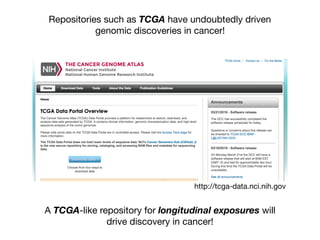
•unification and standardization of digital E
•(longitudinal) publicly available data
Repositories such as TCGA have undoubtedly driven
genomic discoveries in cancer!
A TCGA-like repository for longitudinal exposures will
drive discovery in cancer!
http://tcga-data.nci.nih.gov
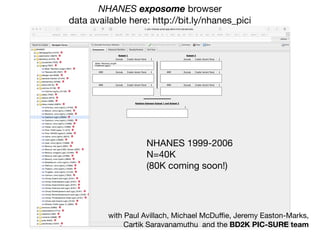
with Paul Avillach, Michael McDuffie, Jeremy Easton-Marks, 

Cartik Saravanamuthu and the BD2K PIC-SURE team
NHANES 1999-2006

N=40K

(80K coming soon!)
NHANES exposome browser

data available here: http://bit.ly/nhanes_pici
Studying the Elusive Environment in Large Scale
Itispossiblethatmorethan50%ofcomplexdiseaserisk
isattributedtodifferencesinanindividual’senvironment.1
Airpollution,smoking,anddietaredocumentedenviron-
mental factors affecting health, yet these factors are but
a fraction of the “exposome,” the totality of the exposure
loadoccurringthroughoutaperson’slifetime.1
Investigat-
ing one or a handful of exposures at a time has led to a
highly fragmented literature of epidemiologic associa-
tions. Much of that literature is not reproducible, and se-
lectivereportingmaybeamajorreasonforthelackofre-
producibility. A new model is required to discover
environmental exposures associated with disease while
mitigating possibilities of selective reporting.
Toremedythelackofreproducibilityandconcernsof
validity, multiple personal exposures can be assessed si-
multaneously in terms of their association with a condi-
tion or disease of interest; the strongest associations can
then be tentatively validated in independent data sets
(eg, as done in references 2 and 3).2,3
The main advan-
tages of this process include the ability to search the list
ofexposuresandadjustformultiplicitysystematicallyand
reportalltheprobedassociationsinsteadofonlythemost
significant results. The term “environment-wide associa-
tion studies” (EWAS) has been used to describe this ap-
proach (an analogy to genome-wide association stud-
ies).Forexample,Wangetal4
screenedmorethan2000
chemicalsinserumtodiscoverendogenousexposuresas-
sociated with risk for cardiovascular disease.
Therearenotablehurdlesinanalyzing“big”environ-
mental data. These same problems affect epidemiology
of1-risk-factor-at-a-time,butinEWAStheirprevalencebe-
comes more clearly manifest at large scale. When study-
the EWAS vantage point, intervening on β-carotene
(Figure, D) seems a futile exercise given its complex rela-
tionship with other nutrients and pollutants.
Giventhiscomplexity,howcanstudiesofenvironmen-
talriskmoveforward?First,EWASanalysesshouldbeap-
pliedtomultipledatasets,andconsistencycanbeformally
examinedforallassessedcorrelations.Second,thetempo-
ral relationship between exposure and changes in health
parametersmayofferhelpfulhintsaboutwhichofthesig-
nalsaremorethansimplecorrelations.Third,standardized
adjustedanalyses,inwhichadjustmentsareperformedsys-
tematicallyandinthesamewayacrossmultipledatasets,
may also help. This is in stark contrast with the current
model,wherebymostepidemiologicstudiesusesingledata
setswithoutreplicationaswellasnon–time-dependentas-
sessments,andreportedadjustmentsaremarkedlydiffer-
entacrossreportsanddatasets,eventhoseperformedby
thesameteam(differentapproachesincreasevaliditybut
mustbereconciledandassimilated).
However, eventually for most environmental cor-
relates,theremaybeunsurpassabledifficultyestablish-
ing potential causal inferences based on observational
data alone. Factors that seem protective may some-
times be tested in randomized trials. The complexity of
the multiple correlations also highlights the challenge
thatinterveningtomodify1putativeriskfactoralsomay
inadvertently affect multiple other correlated factors.
Even when a seemingly simple intervention is tested in
randomizedtrials(affectingasingleriskfactoramongthe
manycorrelations),theinterventionisnotreallysimple.
In essence what is tested are multiple perturbations of
factors correlated with the one targeted for interven-
VIEWPOINT
Chirag J. Patel, PhD
Center for Biomedical
Informatics, Harvard
Medical School,
Boston, Massachusetts.
John P. A. Ioannidis,
MD, DSc
Stanford Prevention
Research Center,
Department of Health
Research and Policy,
Department of
Medicine, Stanford
University School of
Medicine, Stanford,
California, Department
of Statistics, Stanford
University School of
Humanities and
Sciences, Stanford,
California, and
Meta-Research
Innovation Center at
Stanford (METRICS),
Stanford, California.
Opinion
JAMA, 2014
JECH, 2014
Proc Symp Biocomp, 2015
How can we study the elusive environment in larger scale for
biomedical discovery?
Studying the Elusive Environment in Large Scale
Itispossiblethatmorethan50%ofcomplexdiseaserisk
isattributedtodifferencesinanindividual’senvironment.1
Airpollution,smoking,anddietaredocumentedenviron-
mental factors affecting health, yet these factors are but
a fraction of the “exposome,” the totality of the exposure
loadoccurringthroughoutaperson’slifetime.1
Investigat-
ing one or a handful of exposures at a time has led to a
highly fragmented literature of epidemiologic associa-
tions. Much of that literature is not reproducible, and se-
lectivereportingmaybeamajorreasonforthelackofre-
producibility. A new model is required to discover
environmental exposures associated with disease while
mitigating possibilities of selective reporting.
Toremedythelackofreproducibilityandconcernsof
validity, multiple personal exposures can be assessed si-
multaneously in terms of their association with a condi-
tion or disease of interest; the strongest associations can
then be tentatively validated in independent data sets
(eg, as done in references 2 and 3).2,3
The main advan-
tages of this process include the ability to search the list
ofexposuresandadjustformultiplicitysystematicallyand
reportalltheprobedassociationsinsteadofonlythemost
significant results. The term “environment-wide associa-
tion studies” (EWAS) has been used to describe this ap-
the EWAS vantage point, intervening on β-carotene
(Figure, D) seems a futile exercise given its complex rela-
tionship with other nutrients and pollutants.
Giventhiscomplexity,howcanstudiesofenvironmen-
talriskmoveforward?First,EWASanalysesshouldbeap-
pliedtomultipledatasets,andconsistencycanbeformally
examinedforallassessedcorrelations.Second,thetempo-
ral relationship between exposure and changes in health
parametersmayofferhelpfulhintsaboutwhichofthesig-
nalsaremorethansimplecorrelations.Third,standardized
adjustedanalyses,inwhichadjustmentsareperformedsys-
tematicallyandinthesamewayacrossmultipledatasets
may also help. This is in stark contrast with the current
model,wherebymostepidemiologicstudiesusesingledata
setswithoutreplicationaswellasnon–time-dependentas-
sessments,andreportedadjustmentsaremarkedlydiffer-
entacrossreportsanddatasets,eventhoseperformedby
thesameteam(differentapproachesincreasevaliditybut
mustbereconciledandassimilated).
However, eventually for most environmental cor-
relates,theremaybeunsurpassabledifficultyestablish-
ing potential causal inferences based on observationa
data alone. Factors that seem protective may some-
times be tested in randomized trials. The complexity of
VIEWPOINT
Chirag J. Patel, PhD
Center for Biomedical
Informatics, Harvard
Medical School,
Boston, Massachusetts.
John P. A. Ioannidis,
MD, DSc
Stanford Prevention
Research Center,
Department of Health
Research and Policy,
Department of
Medicine, Stanford
University School of
Medicine, Stanford,
California, Department
of Statistics, Stanford
University School of
Humanities and
Sciences, Stanford,
California, and
Meta-Research
Innovation Center at
Stanford (METRICS),
Stanford, California.
Opinion
•unification and standardization of digital E
High-throughputascertainmentofendogenousindicatorsofen-
vironmentalexposurethatmayreflecttheexposomeincreasinglyat-
tractattention,andtheirperformanceneedstobecarefullyevaluated.
These include chemical detection of indicators of exposure through
metabolomics, proteomics, and biosensors.7
Eventually, patterns of
US federally funded gene expression experiment data be d
itedinpublicrepositoriessuchastheGeneExpressionOmnibu
repositoryhasbeeninstrumentalindevelopmentoftechnolo
measurement of gene expression, data standardization, and
ofdatafordiscovery.JustaswiththeGeneExpressionOmnib
Figure. Correlation Interdependency Globes for 4 Environmental Exposures (Cotinine, Mercury, Cadmium, Trans-β-Carotene) in National Healt
Nutrition Examination Survey (NHANES) Participants, 2003-2004
A Serum cotinine B Serum total mercury C Serum cadmium D Serum trans-β-carotene
37 Total correlations 42 Total correlations 68 Total correlations 68 Total correlations
Negative correlation Positive correl
Infectious
agents
Pollutants
Nutrients
and vitamins
Demographic
attributes
Eachcorrelationinterdependencyglobeincludes317environmentalexposures
representedbythenodesaroundtheperipheryoftheglobe.Pairwisecorrelations
aredepictedbyedges(lines)betweenthenodeofinterest(arrowhead)andother
nodes.Correlationswithabsolutevaluesexceeding0.2areshown(stronge
Thesizeofeachnodeisproportionaltothenumberofedgesforanode,and
thicknessofeachedgeindicatesthemagnitudeofthecorrelation.
Opinion Viewpoint
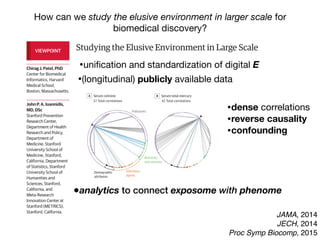
•analytics to connect exposome with phenome
•dense correlations

•reverse causality
•confounding
•(longitudinal) publicly available data
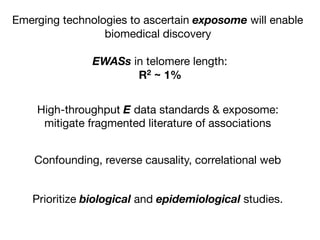
Emerging technologies to ascertain exposome will enable
biomedical discovery
High-throughput E data standards & exposome:

mitigate fragmented literature of associations
Confounding, reverse causality, correlational web
EWASs in telomere length:

R2 ~ 1%
Prioritize biological and epidemiological studies.
New ways of measuring P are here now!

Can we use them to assess P variability?
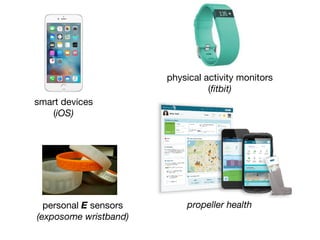
physical activity monitors

(fitbit)
smart devices

(iOS)
personal E sensors

(exposome wristband)
propeller health
Possible to consent and enroll thousands of people (at the
push of a button)…!
http://researchkit.org
Possible to survey P (glucose) of diabetics enrolled through
ResearchKit?
Adam Brown
Stanley Shaw (MGH)

Dennis Ausiello (MGH)
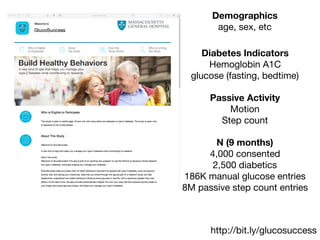
http://bit.ly/glucosuccess
Demographics
age, sex, etc
Diabetes Indicators
Hemoglobin A1C

glucose (fasting, bedtime)
Passive Activity
Motion

Step count
N (9 months)
4,000 consented

2,500 diabetics

186K manual glucose entries

8M passive step count entries
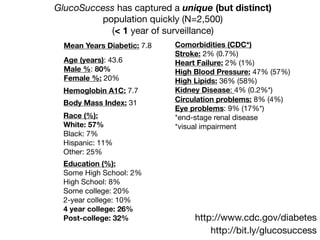
Age (years): 43.6

Male %: 80%

Female %: 20%
Race (%):
White: 57%
Black: 7%

Hispanic: 11%

Other: 25%
Education (%):
Some High School: 2%

High School: 8%

Some college: 20%

2-year college: 10%

4 year college: 26%
Post-college: 32%
http://bit.ly/glucosuccess
Mean Years Diabetic: 7.8
GlucoSuccess has captured a unique (but distinct)
population quickly (N=2,500)

(< 1 year of surveillance)
Comorbidities (CDC*)

Stroke: 2% (0.7%)

Heart Failure: 2% (1%)

High Blood Pressure: 47% (57%)

High Lipids: 36% (58%)

Kidney Disease: 4% (0.2%*)

Circulation problems: 8% (4%)

Eye problems: 9% (17%*)

*end-stage renal disease

*visual impairment
http://www.cdc.gov/diabetes
Body Mass Index: 31
Hemoglobin A1C: 7.7
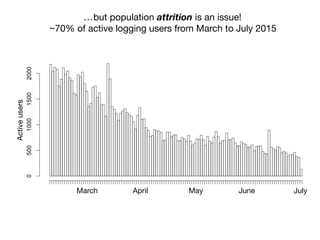
…but population attrition is an issue!

~70% of active logging users from March to July 2015
Activeusers
March April May June July
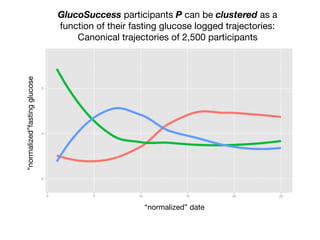
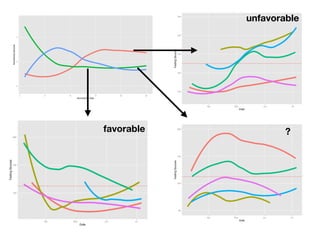
GlucoSuccess participants P can be clustered as a
function of their fasting glucose logged trajectories:

Canonical trajectories of 2,500 participants
“normalized” date
“normalized”fastingglucose
favorable
unfavorable
?
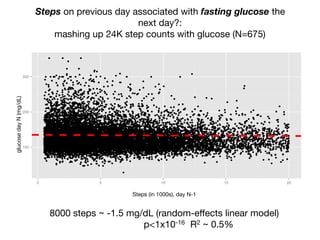
Steps on previous day associated with fasting glucose the
next day?: 

mashing up 24K step counts with glucose (N=675)
8000 steps ~ -1.5 mg/dL (random-effects linear model)

p<1x10-16
glucosedayN(mg/dL)
Steps (in 1000s), day N-1
R2 ~ 0.5%
http://bit.ly/glucosuccess
GlucoSuccess-like apps can enable longitudinal and
dynamic surveillance of P
Easy and quick recruitment

Population-level generalizability & attrition
Passive data reproducibility and error
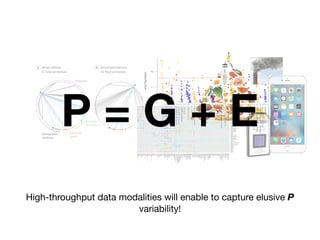
High-throughput data modalities will enable to capture elusive P
variability!
−log10(pvalue)
●
●
●●
●
●
●
●
●
●●
●
●
●
●
●
●
●
●
●●
●
●
●
●
●
●
●
●
●
●
●
●
●
●
●
●
●
●
●
●
●●
●
●
●
●
●
●
●
●
●
●
●
●
●
●
●
●●
●
●
●
●
●
●
●
●
●
●
●
● ●●
●
●
●
●●
●
●
●
●
●
●
●
●
●
●
●
●
●
●
●
●
●
●
●
●
●●
●
●
●
●
●
●
●
●
●
●
●
●
●
●
●
●
●
●
●
●
●
●
●●
●
●
●
●
●
●
●
●
●
●
●
●● ●
●●
●
●
●
● ●
●
●
●
●
●
●
●
●
●
●
●
●
●
●
●
●
●
●
●
●
●
●
●
●
●
●
●
●
●
●●●
●
●●
●
●●
●
●
●
●●
●
●
●
●
●
●
●
●
●
●●
●●
●
●
●
●
●
● ●
acrylamide
allergentest
bacterialinfection
cotinine
diakyl
dioxins
furansdibenzofuran
heavymetals
hydrocarbons
latex
nutrientscarotenoid
nutrientsminerals
nutrientsvitaminA
nutrientsvitaminB
nutrientsvitaminC
nutrientsvitaminD
nutrientsvitaminE
pcbs
perchlorate
pesticidesatrazine
pesticideschlorophenol
pesticidesorganochlorine
pesticidesorganophosphate
pesticidespyrethyroid
phenols
phthalates
phytoestrogens
polybrominatedethers
polyflourochemicals
viralinfection
volatilecompounds
012
A Serum cotinine B Serum total mercury
37 Total correlations 42 Total correlations 68 Total correlations 68 Total correlations
Infectious
agents
Pollutants
Nutrients
and vitamins
Demographic
attributes
P = G + E
Harvard DBMI
Isaac Kohane

Stan Shaw
Jenn Grandfield

Sunny Alvear

Michal Preminger

Dennis Ausiello

Harvard Chan
Hugues Aschard

Francesca Dominici

Chirag J Patel

chirag@hms.harvard.edu

@chiragjp

www.chiragjpgroup.org
NIH Common Fund

Big Data to Knowledge
Acknowledgements
Elizabeth Platz
Jennifer Shrack
RagGroup
Adam Brown
Chirag Lakhani

Danielle Rasooly

Arjun Manrai

Erik Corona

Nam Pho

AACR 041616 digital exposomes

  • 1.
    Dissecting exposomic (andgenomic) contributions in health and disease Chirag J Patel AACR Digital Exposomics in Cancer Epidemiology 4/18/16 chirag@hms.harvard.edu @chiragjp www.chiragjpgroup.org
  • 2.
    Disclosure Information Chirag JPatel I have the following financial relationships: Funding: NIH, Agilent, Inc., and PhRMA Consultant to: Astra-Zeneca, Sanofi I will not discuss off-label/investigational use.
  • 3.
    P = G+ EType 2 Diabetes Cancer Alzheimer’s Gene expression Phenotype Genome Variants Environment Infectious agents Nutrients Pollutants Drugs
  • 4.
    We are greatat G investigation! over 2400 Genome-wide Association Studies (GWAS) https://www.ebi.ac.uk/gwas/ G
  • 5.
    Nothing comparable toelucidate E influence! E: ??? We lack high-throughput methods and data to discover new E in P…
  • 6.
    A similar paradigmfor discovery should exist for E! Why?
  • 7.
  • 8.
    σ2 G σ2P H2 = Heritability (H2)is the range of phenotypic variability attributed to genetic variability in a population Indicator of the proportion of phenotypic differences attributed to G.
  • 9.
    Eye color Hair curliness Type-1diabetes Height Schizophrenia Epilepsy Graves' disease Celiac disease Polycystic ovary syndrome Attention deficit hyperactivity disorder Bipolar disorder Obesity Alzheimer's disease Anorexia nervosa Psoriasis Bone mineral density Menarche, age at Nicotine dependence Sexual orientation Alcoholism Lupus Rheumatoid arthritis Crohn's disease Migraine Thyroid cancer Autism Blood pressure, diastolic Body mass index Depression Coronary artery disease Insomnia Menopause, age at Heart disease Prostate cancer QT interval Breast cancer Ovarian cancer Hangover Stroke Asthma Blood pressure, systolic Hypertension Osteoarthritis Parkinson's disease Longevity Type-2 diabetes Gallstone disease Testicular cancer Cervical cancer Sciatica Bladder cancer Colon cancer Lung cancer Leukemia Stomach cancer 0 25 50 75 100 Heritability: Var(G)/Var(Phenotype) Source: SNPedia.com G estimates for cancer are low and variable: opportunity for high-throughput E discovery
  • 10.
    Eye color Hair curliness Type-1diabetes Height Schizophrenia Epilepsy Graves' disease Celiac disease Polycystic ovary syndrome Attention deficit hyperactivity disorder Bipolar disorder Obesity Alzheimer's disease Anorexia nervosa Psoriasis Bone mineral density Menarche, age at Nicotine dependence Sexual orientation Alcoholism Lupus Rheumatoid arthritis Crohn's disease Migraine Thyroid cancer Autism Blood pressure, diastolic Body mass index Depression Coronary artery disease Insomnia Menopause, age at Heart disease Prostate cancer QT interval Breast cancer Ovarian cancer Hangover Stroke Asthma Blood pressure, systolic Hypertension Osteoarthritis Parkinson's disease Longevity Type-2 diabetes Gallstone disease Testicular cancer Cervical cancer Sciatica Bladder cancer Colon cancer Lung cancer Leukemia Stomach cancer 0 25 50 75 100 Heritability: Var(G)/Var(Phenotype) Source: SNPedia.com G estimates for cancer are low and variable: opportunity for high-throughput E discovery
  • 11.
    Eye color Hair curliness Type-1diabetes Height Schizophrenia Epilepsy Graves' disease Celiac disease Polycystic ovary syndrome Attention deficit hyperactivity disorder Bipolar disorder Obesity Alzheimer's disease Anorexia nervosa Psoriasis Bone mineral density Menarche, age at Nicotine dependence Sexual orientation Alcoholism Lupus Rheumatoid arthritis Crohn's disease Migraine Thyroid cancer Autism Blood pressure, diastolic Body mass index Depression Coronary artery disease Insomnia Menopause, age at Heart disease Prostate cancer QT interval Breast cancer Ovarian cancer Hangover Stroke Asthma Blood pressure, systolic Hypertension Osteoarthritis Parkinson's disease Longevity Type-2 diabetes Gallstone disease Testicular cancer Cervical cancer Sciatica Bladder cancer Colon cancer Lung cancer Leukemia Stomach cancer 0 25 50 75 100 Heritability: Var(G)/Var(Phenotype) Source: SNPedia.com σ2 E : Exposome! G estimates for cancer are low and variable: opportunity for high-throughput E discovery
  • 12.
    It took anew paradigm of GWAS for discovery: Human Genome Project to GWAS Sequencing of the genome 2001 HapMap project: http://hapmap.ncbi.nlm.nih.gov/ Characterize common variation 2001-current day High-throughput variant assay < $99 for ~1M variants Measurement tools ~2003 (ongoing) ARTICLES Genome-wide association study of 14,000 cases of seven common diseases and 3,000 shared controls The Wellcome Trust Case Control Consortium* There is increasing evidence that genome-wide association (GWA) studies represent a powerful approach to the identification of genes involved in common human diseases. We describe a joint GWA study (using the Affymetrix GeneChip 500K Mapping Array Set) undertaken in the British population, which has examined ,2,000 individuals for each of 7 major diseases and a shared set of ,3,000 controls. Case-control comparisons identified 24 independent association signals at P , 5 3 1027 : 1 in bipolar disorder, 1 in coronary artery disease, 9 in Crohn’s disease, 3 in rheumatoid arthritis, 7 in type 1 diabetes and 3 in type 2 diabetes. On the basis of prior findings and replication studies thus-far completed, almost all of these signals reflect genuine susceptibility effects. We observed association at many previously identified loci, and found compelling evidence that some loci confer risk for more than one of the diseases studied. Across all diseases, we identified a 25 27 Vol 447|7 June 2007|doi:10.1038/nature05911 WTCCC, Nature, 2008. Comprehensive, high-throughput analyses GWAS
  • 13.
    Explaining the other50%: A big data-driven paradigm for robust discovery of E in disease via the exposome what to measure? how to measure? PERSPECTIVES Xenobiotics Inflammation Preexisting disease Lipid peroxidation Oxidative stress Gut flora Internal chemical environment Externalenvironment ExposomeRADIATION DIET POLLUTION INFECTIONS DRUGS LIFE-STYLE STRESS Reactive electrophiles Metals Endocrine disrupters Immune modulators Receptor-binding proteins itical entity for disease eti- ogy (7). Recent discussion as focused on whether and ow to implement this vision 8). Although fully charac- rizing human exposomes daunting, strategies can be eveloped for getting “snap- hots” of critical portions of person’s exposome during ifferent stages of life. At ne extreme is a “bottom-up” rategy in which all chemi- als in each external source f a subject’s exposome are easured at each time point. lthoughthisapproachwould ave the advantage of relat- g important exposures to e air, water, or diet, it would quire enormous effort and ould miss essential compo- ents of the internal chemi- al environment due to such actors as gender, obesity, flammation, and stress. By ontrast, a “top-down” strat- gy would measure all chem- als (or products of their ownstream processing or ffects, so-called read-outs r signatures) in a subject’s ood. This would require nly a single blood specimen each time point and would relate directly ruptors and can be measured through serum some (telomere) length in peripheral blood mono- nuclear cells responded to chronic psychological stress, possibly mediated by the production of reac- tive oxygen species (15). Characterizing the exposome represents a tech- nological challenge like that of thehumangenomeproject,which began when DNA sequencing was in its infancy (16). Analyti- cal systems are needed to pro- cess small amounts of blood from thousands of subjects. Assays should be multiplexed for mea- suring many chemicals in each class of interest. Tandem mass spectrometry, gene and protein chips, and microfluidic systems offer the means to do this. Plat- forms for high-throughput assays shouldleadtoeconomiesofscale, again like those experienced by the human genome project. And because exposome technologies would provide feedback for thera- peuticinterventionsandpersonal- ized medicine, they should moti- vate the development of commer- cial devices for screening impor- tant environmental exposures in blood samples. With successful characterization of both Characterizing the exposome. The exposome represents the combined exposures from all sources that reach the internal chemical environment. Toxicologically important classes of exposome chemicals are shown. Signatures and biomarkers can detect these agents in blood or serum. onOctober21,2010www.sciencemag.orgrom “A more comprehensive view of environmental exposure is needed ... to discover major causes of diseases...” how to analyze in relation to health? Wild, 2005 Rappaport and Smith, 2010, 2011 Buck-Louis and Sundaram 2012 Miller and Jones, 2014 Patel CJ and Ioannidis JPAI, 2014
  • 14.
    Connecting E withDisease: The exposome can capture the elusive and complex environment associations with phenotype E+ E- diseased non- diseased ? Exposed to many things, but do not assess the multiplicity. Fragmented literature of associations. Challenge to discover E associated with disease.
  • 15.
    Example of fragmentation: Iseverything we eat associated with cancer? Schoenfeld and Ioannidis, AJCN 2012 50 random ingredients from Boston Cooking School Cookbook Any associated with cancer? FIGURE 1. Effect estimates reported in the literature by malignancy type (top) or ingredient (bottom). Only ingredients with $10 studie outliers are not shown (effect estimates .10). Of 50, 40 studied in cancer risk Weak statistical evidence: non-replicated inconsistent effects non-standardized
  • 16.
    Connecting E withDisease: The exposome can capture the elusive and complex environment associations with phenotype E+ E- diseased non- diseased ? Exposed to many things, but do not assess the multiplicity. Fragmented literature of associations. Challenge to discover E associated with disease.
  • 17.
    Gold standard forbreadth of exposure & behavior data: National Health and Nutrition Examination Survey Nutrients and Vitamins vitamin D, carotenes Infectious Agents hepatitis, HIV, Staph. aureus Plastics and consumables phthalates, bisphenol A Physical Activity e.g., stepsPesticides and pollutants atrazine; cadmium; hydrocarbons Drugs statins; aspirin
  • 18.
    What E andP are associated with telomere length?
  • 19.
    452 associations inTelomere Length: Cadmium, Polychlorinated Biphenyls, and Fitness IJE, in press 0 1 2 3 4 −0.2 −0.1 0.0 0.1 0.2 effect size −log10(pvalue) PCBs? FDR<5% Trunk Fat Alk. PhosCRP Cadmium Cadmium (urine)cigs per day retinyl stearate R2 ~ 1% VO2 Maxpulse rate shorter telomeres longer telomeres adjusted by age, age2, race, poverty, education, occupation median N=3000; N range: 300-7000
  • 20.
    Studying the ElusiveEnvironment in Large Scale Itispossiblethatmorethan50%ofcomplexdiseaserisk isattributedtodifferencesinanindividual’senvironment.1 Airpollution,smoking,anddietaredocumentedenviron- mental factors affecting health, yet these factors are but a fraction of the “exposome,” the totality of the exposure loadoccurringthroughoutaperson’slifetime.1 Investigat- ing one or a handful of exposures at a time has led to a highly fragmented literature of epidemiologic associa- tions. Much of that literature is not reproducible, and se- lectivereportingmaybeamajorreasonforthelackofre- producibility. A new model is required to discover environmental exposures associated with disease while mitigating possibilities of selective reporting. Toremedythelackofreproducibilityandconcernsof validity, multiple personal exposures can be assessed si- multaneously in terms of their association with a condi- tion or disease of interest; the strongest associations can then be tentatively validated in independent data sets (eg, as done in references 2 and 3).2,3 The main advan- tages of this process include the ability to search the list ofexposuresandadjustformultiplicitysystematicallyand reportalltheprobedassociationsinsteadofonlythemost significant results. The term “environment-wide associa- tion studies” (EWAS) has been used to describe this ap- proach (an analogy to genome-wide association stud- ies).Forexample,Wangetal4 screenedmorethan2000 chemicalsinserumtodiscoverendogenousexposuresas- sociated with risk for cardiovascular disease. Therearenotablehurdlesinanalyzing“big”environ- mental data. These same problems affect epidemiology of1-risk-factor-at-a-time,butinEWAStheirprevalencebe- comes more clearly manifest at large scale. When study- the EWAS vantage point, intervening on β-carotene (Figure, D) seems a futile exercise given its complex rela- tionship with other nutrients and pollutants. Giventhiscomplexity,howcanstudiesofenvironmen- talriskmoveforward?First,EWASanalysesshouldbeap- pliedtomultipledatasets,andconsistencycanbeformally examinedforallassessedcorrelations.Second,thetempo- ral relationship between exposure and changes in health parametersmayofferhelpfulhintsaboutwhichofthesig- nalsaremorethansimplecorrelations.Third,standardized adjustedanalyses,inwhichadjustmentsareperformedsys- tematicallyandinthesamewayacrossmultipledatasets, may also help. This is in stark contrast with the current model,wherebymostepidemiologicstudiesusesingledata setswithoutreplicationaswellasnon–time-dependentas- sessments,andreportedadjustmentsaremarkedlydiffer- entacrossreportsanddatasets,eventhoseperformedby thesameteam(differentapproachesincreasevaliditybut mustbereconciledandassimilated). However, eventually for most environmental cor- relates,theremaybeunsurpassabledifficultyestablish- ing potential causal inferences based on observational data alone. Factors that seem protective may some- times be tested in randomized trials. The complexity of the multiple correlations also highlights the challenge thatinterveningtomodify1putativeriskfactoralsomay inadvertently affect multiple other correlated factors. Even when a seemingly simple intervention is tested in randomizedtrials(affectingasingleriskfactoramongthe manycorrelations),theinterventionisnotreallysimple. In essence what is tested are multiple perturbations of factors correlated with the one targeted for interven- VIEWPOINT Chirag J. Patel, PhD Center for Biomedical Informatics, Harvard Medical School, Boston, Massachusetts. John P. A. Ioannidis, MD, DSc Stanford Prevention Research Center, Department of Health Research and Policy, Department of Medicine, Stanford University School of Medicine, Stanford, California, Department of Statistics, Stanford University School of Humanities and Sciences, Stanford, California, and Meta-Research Innovation Center at Stanford (METRICS), Stanford, California. Opinion JAMA, 2014 JECH, 2014 Proc Symp Biocomp, 2015 How can we study the elusive environment in larger scale for biomedical discovery? Studying the Elusive Environment in Large Scale Itispossiblethatmorethan50%ofcomplexdiseaserisk isattributedtodifferencesinanindividual’senvironment.1 Airpollution,smoking,anddietaredocumentedenviron- mental factors affecting health, yet these factors are but a fraction of the “exposome,” the totality of the exposure loadoccurringthroughoutaperson’slifetime.1 Investigat- ing one or a handful of exposures at a time has led to a highly fragmented literature of epidemiologic associa- tions. Much of that literature is not reproducible, and se- lectivereportingmaybeamajorreasonforthelackofre- producibility. A new model is required to discover environmental exposures associated with disease while mitigating possibilities of selective reporting. Toremedythelackofreproducibilityandconcernsof validity, multiple personal exposures can be assessed si- multaneously in terms of their association with a condi- tion or disease of interest; the strongest associations can then be tentatively validated in independent data sets (eg, as done in references 2 and 3).2,3 The main advan- tages of this process include the ability to search the list ofexposuresandadjustformultiplicitysystematicallyand reportalltheprobedassociationsinsteadofonlythemost significant results. The term “environment-wide associa- tion studies” (EWAS) has been used to describe this ap- the EWAS vantage point, intervening on β-carotene (Figure, D) seems a futile exercise given its complex rela- tionship with other nutrients and pollutants. Giventhiscomplexity,howcanstudiesofenvironmen- talriskmoveforward?First,EWASanalysesshouldbeap- pliedtomultipledatasets,andconsistencycanbeformally examinedforallassessedcorrelations.Second,thetempo- ral relationship between exposure and changes in health parametersmayofferhelpfulhintsaboutwhichofthesig- nalsaremorethansimplecorrelations.Third,standardized adjustedanalyses,inwhichadjustmentsareperformedsys- tematicallyandinthesamewayacrossmultipledatasets may also help. This is in stark contrast with the current model,wherebymostepidemiologicstudiesusesingledata setswithoutreplicationaswellasnon–time-dependentas- sessments,andreportedadjustmentsaremarkedlydiffer- entacrossreportsanddatasets,eventhoseperformedby thesameteam(differentapproachesincreasevaliditybut mustbereconciledandassimilated). However, eventually for most environmental cor- relates,theremaybeunsurpassabledifficultyestablish- ing potential causal inferences based on observationa data alone. Factors that seem protective may some- times be tested in randomized trials. The complexity of VIEWPOINT Chirag J. Patel, PhD Center for Biomedical Informatics, Harvard Medical School, Boston, Massachusetts. John P. A. Ioannidis, MD, DSc Stanford Prevention Research Center, Department of Health Research and Policy, Department of Medicine, Stanford University School of Medicine, Stanford, California, Department of Statistics, Stanford University School of Humanities and Sciences, Stanford, California, and Meta-Research Innovation Center at Stanford (METRICS), Stanford, California. Opinion •unification and standardization of digital E
  • 22.
    http://grants.nih.gov/grants/guide/rfa-files/RFA-ES-15-010.html NIH National Instituteof Environmental Health (NIEHS) $34M in FY 2015: new technologies for ascertaining the exposome (in children) E LaboratoryE LaboratoryE LaboratoryE Laboratory E Data Center •Data repository •Analytic ecosystem •Data standards Exposome Laboratory Network
  • 23.
    Studying the ElusiveEnvironment in Large Scale Itispossiblethatmorethan50%ofcomplexdiseaserisk isattributedtodifferencesinanindividual’senvironment.1 Airpollution,smoking,anddietaredocumentedenviron- mental factors affecting health, yet these factors are but a fraction of the “exposome,” the totality of the exposure loadoccurringthroughoutaperson’slifetime.1 Investigat- ing one or a handful of exposures at a time has led to a highly fragmented literature of epidemiologic associa- tions. Much of that literature is not reproducible, and se- lectivereportingmaybeamajorreasonforthelackofre- producibility. A new model is required to discover environmental exposures associated with disease while mitigating possibilities of selective reporting. Toremedythelackofreproducibilityandconcernsof validity, multiple personal exposures can be assessed si- multaneously in terms of their association with a condi- tion or disease of interest; the strongest associations can then be tentatively validated in independent data sets (eg, as done in references 2 and 3).2,3 The main advan- tages of this process include the ability to search the list ofexposuresandadjustformultiplicitysystematicallyand reportalltheprobedassociationsinsteadofonlythemost significant results. The term “environment-wide associa- tion studies” (EWAS) has been used to describe this ap- proach (an analogy to genome-wide association stud- ies).Forexample,Wangetal4 screenedmorethan2000 chemicalsinserumtodiscoverendogenousexposuresas- sociated with risk for cardiovascular disease. Therearenotablehurdlesinanalyzing“big”environ- mental data. These same problems affect epidemiology of1-risk-factor-at-a-time,butinEWAStheirprevalencebe- comes more clearly manifest at large scale. When study- the EWAS vantage point, intervening on β-carotene (Figure, D) seems a futile exercise given its complex rela- tionship with other nutrients and pollutants. Giventhiscomplexity,howcanstudiesofenvironmen- talriskmoveforward?First,EWASanalysesshouldbeap- pliedtomultipledatasets,andconsistencycanbeformally examinedforallassessedcorrelations.Second,thetempo- ral relationship between exposure and changes in health parametersmayofferhelpfulhintsaboutwhichofthesig- nalsaremorethansimplecorrelations.Third,standardized adjustedanalyses,inwhichadjustmentsareperformedsys- tematicallyandinthesamewayacrossmultipledatasets, may also help. This is in stark contrast with the current model,wherebymostepidemiologicstudiesusesingledata setswithoutreplicationaswellasnon–time-dependentas- sessments,andreportedadjustmentsaremarkedlydiffer- entacrossreportsanddatasets,eventhoseperformedby thesameteam(differentapproachesincreasevaliditybut mustbereconciledandassimilated). However, eventually for most environmental cor- relates,theremaybeunsurpassabledifficultyestablish- ing potential causal inferences based on observational data alone. Factors that seem protective may some- times be tested in randomized trials. The complexity of the multiple correlations also highlights the challenge thatinterveningtomodify1putativeriskfactoralsomay inadvertently affect multiple other correlated factors. Even when a seemingly simple intervention is tested in randomizedtrials(affectingasingleriskfactoramongthe manycorrelations),theinterventionisnotreallysimple. In essence what is tested are multiple perturbations of factors correlated with the one targeted for interven- VIEWPOINT Chirag J. Patel, PhD Center for Biomedical Informatics, Harvard Medical School, Boston, Massachusetts. John P. A. Ioannidis, MD, DSc Stanford Prevention Research Center, Department of Health Research and Policy, Department of Medicine, Stanford University School of Medicine, Stanford, California, Department of Statistics, Stanford University School of Humanities and Sciences, Stanford, California, and Meta-Research Innovation Center at Stanford (METRICS), Stanford, California. Opinion JAMA, 2014 JECH, 2014 Proc Symp Biocomp, 2015 How can we study the elusive environment in larger scale for biomedical discovery? Studying the Elusive Environment in Large Scale Itispossiblethatmorethan50%ofcomplexdiseaserisk isattributedtodifferencesinanindividual’senvironment.1 Airpollution,smoking,anddietaredocumentedenviron- mental factors affecting health, yet these factors are but a fraction of the “exposome,” the totality of the exposure loadoccurringthroughoutaperson’slifetime.1 Investigat- ing one or a handful of exposures at a time has led to a highly fragmented literature of epidemiologic associa- tions. Much of that literature is not reproducible, and se- lectivereportingmaybeamajorreasonforthelackofre- producibility. A new model is required to discover environmental exposures associated with disease while mitigating possibilities of selective reporting. Toremedythelackofreproducibilityandconcernsof validity, multiple personal exposures can be assessed si- multaneously in terms of their association with a condi- tion or disease of interest; the strongest associations can then be tentatively validated in independent data sets (eg, as done in references 2 and 3).2,3 The main advan- tages of this process include the ability to search the list ofexposuresandadjustformultiplicitysystematicallyand reportalltheprobedassociationsinsteadofonlythemost significant results. The term “environment-wide associa- tion studies” (EWAS) has been used to describe this ap- the EWAS vantage point, intervening on β-carotene (Figure, D) seems a futile exercise given its complex rela- tionship with other nutrients and pollutants. Giventhiscomplexity,howcanstudiesofenvironmen- talriskmoveforward?First,EWASanalysesshouldbeap- pliedtomultipledatasets,andconsistencycanbeformally examinedforallassessedcorrelations.Second,thetempo- ral relationship between exposure and changes in health parametersmayofferhelpfulhintsaboutwhichofthesig- nalsaremorethansimplecorrelations.Third,standardized adjustedanalyses,inwhichadjustmentsareperformedsys- tematicallyandinthesamewayacrossmultipledatasets may also help. This is in stark contrast with the current model,wherebymostepidemiologicstudiesusesingledata setswithoutreplicationaswellasnon–time-dependentas- sessments,andreportedadjustmentsaremarkedlydiffer- entacrossreportsanddatasets,eventhoseperformedby thesameteam(differentapproachesincreasevaliditybut mustbereconciledandassimilated). However, eventually for most environmental cor- relates,theremaybeunsurpassabledifficultyestablish- ing potential causal inferences based on observationa data alone. Factors that seem protective may some- times be tested in randomized trials. The complexity of VIEWPOINT Chirag J. Patel, PhD Center for Biomedical Informatics, Harvard Medical School, Boston, Massachusetts. John P. A. Ioannidis, MD, DSc Stanford Prevention Research Center, Department of Health Research and Policy, Department of Medicine, Stanford University School of Medicine, Stanford, California, Department of Statistics, Stanford University School of Humanities and Sciences, Stanford, California, and Meta-Research Innovation Center at Stanford (METRICS), Stanford, California. Opinion •unification and standardization of digital E •(longitudinal) publicly available data
  • 24.
    Repositories such asTCGA have undoubtedly driven genomic discoveries in cancer! A TCGA-like repository for longitudinal exposures will drive discovery in cancer! http://tcga-data.nci.nih.gov
  • 25.
    with Paul Avillach,Michael McDuffie, Jeremy Easton-Marks, Cartik Saravanamuthu and the BD2K PIC-SURE team NHANES 1999-2006 N=40K (80K coming soon!) NHANES exposome browser data available here: http://bit.ly/nhanes_pici
  • 26.
    Studying the ElusiveEnvironment in Large Scale Itispossiblethatmorethan50%ofcomplexdiseaserisk isattributedtodifferencesinanindividual’senvironment.1 Airpollution,smoking,anddietaredocumentedenviron- mental factors affecting health, yet these factors are but a fraction of the “exposome,” the totality of the exposure loadoccurringthroughoutaperson’slifetime.1 Investigat- ing one or a handful of exposures at a time has led to a highly fragmented literature of epidemiologic associa- tions. Much of that literature is not reproducible, and se- lectivereportingmaybeamajorreasonforthelackofre- producibility. A new model is required to discover environmental exposures associated with disease while mitigating possibilities of selective reporting. Toremedythelackofreproducibilityandconcernsof validity, multiple personal exposures can be assessed si- multaneously in terms of their association with a condi- tion or disease of interest; the strongest associations can then be tentatively validated in independent data sets (eg, as done in references 2 and 3).2,3 The main advan- tages of this process include the ability to search the list ofexposuresandadjustformultiplicitysystematicallyand reportalltheprobedassociationsinsteadofonlythemost significant results. The term “environment-wide associa- tion studies” (EWAS) has been used to describe this ap- proach (an analogy to genome-wide association stud- ies).Forexample,Wangetal4 screenedmorethan2000 chemicalsinserumtodiscoverendogenousexposuresas- sociated with risk for cardiovascular disease. Therearenotablehurdlesinanalyzing“big”environ- mental data. These same problems affect epidemiology of1-risk-factor-at-a-time,butinEWAStheirprevalencebe- comes more clearly manifest at large scale. When study- the EWAS vantage point, intervening on β-carotene (Figure, D) seems a futile exercise given its complex rela- tionship with other nutrients and pollutants. Giventhiscomplexity,howcanstudiesofenvironmen- talriskmoveforward?First,EWASanalysesshouldbeap- pliedtomultipledatasets,andconsistencycanbeformally examinedforallassessedcorrelations.Second,thetempo- ral relationship between exposure and changes in health parametersmayofferhelpfulhintsaboutwhichofthesig- nalsaremorethansimplecorrelations.Third,standardized adjustedanalyses,inwhichadjustmentsareperformedsys- tematicallyandinthesamewayacrossmultipledatasets, may also help. This is in stark contrast with the current model,wherebymostepidemiologicstudiesusesingledata setswithoutreplicationaswellasnon–time-dependentas- sessments,andreportedadjustmentsaremarkedlydiffer- entacrossreportsanddatasets,eventhoseperformedby thesameteam(differentapproachesincreasevaliditybut mustbereconciledandassimilated). However, eventually for most environmental cor- relates,theremaybeunsurpassabledifficultyestablish- ing potential causal inferences based on observational data alone. Factors that seem protective may some- times be tested in randomized trials. The complexity of the multiple correlations also highlights the challenge thatinterveningtomodify1putativeriskfactoralsomay inadvertently affect multiple other correlated factors. Even when a seemingly simple intervention is tested in randomizedtrials(affectingasingleriskfactoramongthe manycorrelations),theinterventionisnotreallysimple. In essence what is tested are multiple perturbations of factors correlated with the one targeted for interven- VIEWPOINT Chirag J. Patel, PhD Center for Biomedical Informatics, Harvard Medical School, Boston, Massachusetts. John P. A. Ioannidis, MD, DSc Stanford Prevention Research Center, Department of Health Research and Policy, Department of Medicine, Stanford University School of Medicine, Stanford, California, Department of Statistics, Stanford University School of Humanities and Sciences, Stanford, California, and Meta-Research Innovation Center at Stanford (METRICS), Stanford, California. Opinion JAMA, 2014 JECH, 2014 Proc Symp Biocomp, 2015 How can we study the elusive environment in larger scale for biomedical discovery? Studying the Elusive Environment in Large Scale Itispossiblethatmorethan50%ofcomplexdiseaserisk isattributedtodifferencesinanindividual’senvironment.1 Airpollution,smoking,anddietaredocumentedenviron- mental factors affecting health, yet these factors are but a fraction of the “exposome,” the totality of the exposure loadoccurringthroughoutaperson’slifetime.1 Investigat- ing one or a handful of exposures at a time has led to a highly fragmented literature of epidemiologic associa- tions. Much of that literature is not reproducible, and se- lectivereportingmaybeamajorreasonforthelackofre- producibility. A new model is required to discover environmental exposures associated with disease while mitigating possibilities of selective reporting. Toremedythelackofreproducibilityandconcernsof validity, multiple personal exposures can be assessed si- multaneously in terms of their association with a condi- tion or disease of interest; the strongest associations can then be tentatively validated in independent data sets (eg, as done in references 2 and 3).2,3 The main advan- tages of this process include the ability to search the list ofexposuresandadjustformultiplicitysystematicallyand reportalltheprobedassociationsinsteadofonlythemost significant results. The term “environment-wide associa- tion studies” (EWAS) has been used to describe this ap- the EWAS vantage point, intervening on β-carotene (Figure, D) seems a futile exercise given its complex rela- tionship with other nutrients and pollutants. Giventhiscomplexity,howcanstudiesofenvironmen- talriskmoveforward?First,EWASanalysesshouldbeap- pliedtomultipledatasets,andconsistencycanbeformally examinedforallassessedcorrelations.Second,thetempo- ral relationship between exposure and changes in health parametersmayofferhelpfulhintsaboutwhichofthesig- nalsaremorethansimplecorrelations.Third,standardized adjustedanalyses,inwhichadjustmentsareperformedsys- tematicallyandinthesamewayacrossmultipledatasets may also help. This is in stark contrast with the current model,wherebymostepidemiologicstudiesusesingledata setswithoutreplicationaswellasnon–time-dependentas- sessments,andreportedadjustmentsaremarkedlydiffer- entacrossreportsanddatasets,eventhoseperformedby thesameteam(differentapproachesincreasevaliditybut mustbereconciledandassimilated). However, eventually for most environmental cor- relates,theremaybeunsurpassabledifficultyestablish- ing potential causal inferences based on observationa data alone. Factors that seem protective may some- times be tested in randomized trials. The complexity of VIEWPOINT Chirag J. Patel, PhD Center for Biomedical Informatics, Harvard Medical School, Boston, Massachusetts. John P. A. Ioannidis, MD, DSc Stanford Prevention Research Center, Department of Health Research and Policy, Department of Medicine, Stanford University School of Medicine, Stanford, California, Department of Statistics, Stanford University School of Humanities and Sciences, Stanford, California, and Meta-Research Innovation Center at Stanford (METRICS), Stanford, California. Opinion •unification and standardization of digital E High-throughputascertainmentofendogenousindicatorsofen- vironmentalexposurethatmayreflecttheexposomeincreasinglyat- tractattention,andtheirperformanceneedstobecarefullyevaluated. These include chemical detection of indicators of exposure through metabolomics, proteomics, and biosensors.7 Eventually, patterns of US federally funded gene expression experiment data be d itedinpublicrepositoriessuchastheGeneExpressionOmnibu repositoryhasbeeninstrumentalindevelopmentoftechnolo measurement of gene expression, data standardization, and ofdatafordiscovery.JustaswiththeGeneExpressionOmnib Figure. Correlation Interdependency Globes for 4 Environmental Exposures (Cotinine, Mercury, Cadmium, Trans-β-Carotene) in National Healt Nutrition Examination Survey (NHANES) Participants, 2003-2004 A Serum cotinine B Serum total mercury C Serum cadmium D Serum trans-β-carotene 37 Total correlations 42 Total correlations 68 Total correlations 68 Total correlations Negative correlation Positive correl Infectious agents Pollutants Nutrients and vitamins Demographic attributes Eachcorrelationinterdependencyglobeincludes317environmentalexposures representedbythenodesaroundtheperipheryoftheglobe.Pairwisecorrelations aredepictedbyedges(lines)betweenthenodeofinterest(arrowhead)andother nodes.Correlationswithabsolutevaluesexceeding0.2areshown(stronge Thesizeofeachnodeisproportionaltothenumberofedgesforanode,and thicknessofeachedgeindicatesthemagnitudeofthecorrelation. Opinion Viewpoint •analytics to connect exposome with phenome •dense correlations •reverse causality •confounding •(longitudinal) publicly available data
  • 27.
    Emerging technologies toascertain exposome will enable biomedical discovery High-throughput E data standards & exposome: mitigate fragmented literature of associations Confounding, reverse causality, correlational web EWASs in telomere length: R2 ~ 1% Prioritize biological and epidemiological studies.
  • 28.
    New ways ofmeasuring P are here now! Can we use them to assess P variability?
  • 29.
    physical activity monitors (fitbit) smartdevices (iOS) personal E sensors (exposome wristband) propeller health
  • 30.
    Possible to consentand enroll thousands of people (at the push of a button)…! http://researchkit.org
  • 31.
    Possible to surveyP (glucose) of diabetics enrolled through ResearchKit? Adam Brown Stanley Shaw (MGH) Dennis Ausiello (MGH) http://bit.ly/glucosuccess
  • 32.
    http://bit.ly/glucosuccess Demographics age, sex, etc DiabetesIndicators Hemoglobin A1C glucose (fasting, bedtime) Passive Activity Motion Step count N (9 months) 4,000 consented 2,500 diabetics 186K manual glucose entries 8M passive step count entries
  • 33.
    Age (years): 43.6 Male%: 80% Female %: 20% Race (%): White: 57% Black: 7% Hispanic: 11% Other: 25% Education (%): Some High School: 2% High School: 8% Some college: 20% 2-year college: 10% 4 year college: 26% Post-college: 32% http://bit.ly/glucosuccess Mean Years Diabetic: 7.8 GlucoSuccess has captured a unique (but distinct) population quickly (N=2,500) (< 1 year of surveillance) Comorbidities (CDC*) Stroke: 2% (0.7%) Heart Failure: 2% (1%) High Blood Pressure: 47% (57%) High Lipids: 36% (58%) Kidney Disease: 4% (0.2%*) Circulation problems: 8% (4%) Eye problems: 9% (17%*) *end-stage renal disease *visual impairment http://www.cdc.gov/diabetes Body Mass Index: 31 Hemoglobin A1C: 7.7
  • 34.
    …but population attritionis an issue! ~70% of active logging users from March to July 2015 Activeusers March April May June July
  • 35.
    GlucoSuccess participants Pcan be clustered as a function of their fasting glucose logged trajectories: Canonical trajectories of 2,500 participants “normalized” date “normalized”fastingglucose
  • 36.
  • 37.
    Steps on previousday associated with fasting glucose the next day?: mashing up 24K step counts with glucose (N=675) 8000 steps ~ -1.5 mg/dL (random-effects linear model) p<1x10-16 glucosedayN(mg/dL) Steps (in 1000s), day N-1 R2 ~ 0.5%
  • 38.
    http://bit.ly/glucosuccess GlucoSuccess-like apps canenable longitudinal and dynamic surveillance of P Easy and quick recruitment Population-level generalizability & attrition Passive data reproducibility and error
  • 39.
    High-throughput data modalitieswill enable to capture elusive P variability! −log10(pvalue) ● ● ●● ● ● ● ● ● ●● ● ● ● ● ● ● ● ● ●● ● ● ● ● ● ● ● ● ● ● ● ● ● ● ● ● ● ● ● ● ●● ● ● ● ● ● ● ● ● ● ● ● ● ● ● ● ●● ● ● ● ● ● ● ● ● ● ● ● ● ●● ● ● ● ●● ● ● ● ● ● ● ● ● ● ● ● ● ● ● ● ● ● ● ● ● ●● ● ● ● ● ● ● ● ● ● ● ● ● ● ● ● ● ● ● ● ● ● ● ●● ● ● ● ● ● ● ● ● ● ● ● ●● ● ●● ● ● ● ● ● ● ● ● ● ● ● ● ● ● ● ● ● ● ● ● ● ● ● ● ● ● ● ● ● ● ● ● ● ● ●●● ● ●● ● ●● ● ● ● ●● ● ● ● ● ● ● ● ● ● ●● ●● ● ● ● ● ● ● ● acrylamide allergentest bacterialinfection cotinine diakyl dioxins furansdibenzofuran heavymetals hydrocarbons latex nutrientscarotenoid nutrientsminerals nutrientsvitaminA nutrientsvitaminB nutrientsvitaminC nutrientsvitaminD nutrientsvitaminE pcbs perchlorate pesticidesatrazine pesticideschlorophenol pesticidesorganochlorine pesticidesorganophosphate pesticidespyrethyroid phenols phthalates phytoestrogens polybrominatedethers polyflourochemicals viralinfection volatilecompounds 012 A Serum cotinine B Serum total mercury 37 Total correlations 42 Total correlations 68 Total correlations 68 Total correlations Infectious agents Pollutants Nutrients and vitamins Demographic attributes P = G + E
  • 40.
    Harvard DBMI Isaac Kohane StanShaw Jenn Grandfield Sunny Alvear Michal Preminger Dennis Ausiello Harvard Chan Hugues Aschard Francesca Dominici Chirag J Patel chirag@hms.harvard.edu @chiragjp www.chiragjpgroup.org NIH Common Fund Big Data to Knowledge Acknowledgements Elizabeth Platz Jennifer Shrack RagGroup Adam Brown Chirag Lakhani Danielle Rasooly Arjun Manrai Erik Corona Nam Pho