PHYSICAL
DISABILITY
GROUP 8
1. FELIX GLAGO – UHAS20208702
2. DEBORAH ADIKI ANITEYE -
UHAS20201907
3. MICHAEL BANSAH - UHAS20203703
4. SAMUEL DELASI - UHAS20207086
PRESENTATION OBJECTIVES
1. Provide a brief introduction to physical disability, its
definition, and impact on individuals.
2. Discuss different types of physical disabilities, including
mobility impairments, amputations, and neurological
conditions.
3. Explain classifications of physical disabilities such as
congenital disabilities, acquired disabilities, and progressive
disabilities.
4. Explore common causes of physical disabilities, including
genetic factors, accidents, and medical conditions.
5. Share relevant information on disability rights,
accessibility, and support systems for individuals with
physical disabilities.
Introduction
Physical Disability Definition Causes of Physical Disability
Understanding the definition and causes of physical disability is the first step in supporting
individuals with these challenges and creating a more inclusive society.
Types of Physical Disabilities
• Mobility Impairments
• Orthopedic Impairments
• Sensory Impairments
• Chronic Health Conditions
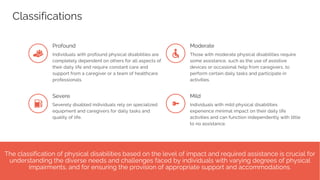
Classifications
Profound
Severe
Moderate
Mild
The classification of physical disabilities based on the level of impact and required assistance is crucial for
understanding the diverse needs and challenges faced by individuals with varying degrees of physical
impairments, and for ensuring the provision of appropriate support and accommodations.
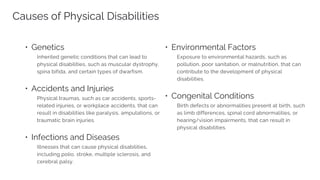
Causes of Physical Disabilities
• Genetics
• Accidents and Injuries
• Infections and Diseases
• Environmental Factors
• Congenital Conditions
Relevant Information
15% of global population
has physical disabilities
Affects all ages, genders,
and backgrounds
Assistive technologies
improve quality of life
Social stigma and
discrimination are barriers
Physical disabilities are a significant global issue, affecting a substantial portion of the population and
requiring inclusive solutions to improve quality of life and overcome societal barriers.
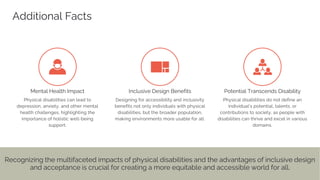
Additional Facts
Mental Health Impact Inclusive Design Benefits Potential Transcends Disability
Recognizing the multifaceted impacts of physical disabilities and the advantages of inclusive design
and acceptance is crucial for creating a more equitable and accessible world for all.
REFERENCES
1. World Health Organization (WHO). (2020). Disability and health.
2. Centers for Disease Control and Prevention (CDC). (2021).
Types of Disabilities.
3. National Institute on Disability, Independent Living, and
Rehabilitation Research (NIDILRR). (2019). Classifications of
Disabilities.
4. American Association of People with Disabilities (AAPD). (2022).
Causes of Physical Disabilities.
5. United Nations Enable. (2023). Convention on the Rights of
Persons with Disabilities.

A PRESENTATION ON PHYSICAL DISABILITY.pptx

  • 1.
    PHYSICAL DISABILITY GROUP 8 1. FELIXGLAGO – UHAS20208702 2. DEBORAH ADIKI ANITEYE - UHAS20201907 3. MICHAEL BANSAH - UHAS20203703 4. SAMUEL DELASI - UHAS20207086
  • 2.
    PRESENTATION OBJECTIVES 1. Providea brief introduction to physical disability, its definition, and impact on individuals. 2. Discuss different types of physical disabilities, including mobility impairments, amputations, and neurological conditions. 3. Explain classifications of physical disabilities such as congenital disabilities, acquired disabilities, and progressive disabilities. 4. Explore common causes of physical disabilities, including genetic factors, accidents, and medical conditions. 5. Share relevant information on disability rights, accessibility, and support systems for individuals with physical disabilities.
  • 3.
    Introduction Physical Disability DefinitionCauses of Physical Disability Understanding the definition and causes of physical disability is the first step in supporting individuals with these challenges and creating a more inclusive society.
  • 4.
    Types of PhysicalDisabilities • Mobility Impairments • Orthopedic Impairments • Sensory Impairments • Chronic Health Conditions
  • 5.
    Classifications Profound Severe Moderate Mild The classification ofphysical disabilities based on the level of impact and required assistance is crucial for understanding the diverse needs and challenges faced by individuals with varying degrees of physical impairments, and for ensuring the provision of appropriate support and accommodations.
  • 6.
    Causes of PhysicalDisabilities • Genetics • Accidents and Injuries • Infections and Diseases • Environmental Factors • Congenital Conditions
  • 7.
    Relevant Information 15% ofglobal population has physical disabilities Affects all ages, genders, and backgrounds Assistive technologies improve quality of life Social stigma and discrimination are barriers Physical disabilities are a significant global issue, affecting a substantial portion of the population and requiring inclusive solutions to improve quality of life and overcome societal barriers.
  • 8.
    Additional Facts Mental HealthImpact Inclusive Design Benefits Potential Transcends Disability Recognizing the multifaceted impacts of physical disabilities and the advantages of inclusive design and acceptance is crucial for creating a more equitable and accessible world for all.
  • 9.
    REFERENCES 1. World HealthOrganization (WHO). (2020). Disability and health. 2. Centers for Disease Control and Prevention (CDC). (2021). Types of Disabilities. 3. National Institute on Disability, Independent Living, and Rehabilitation Research (NIDILRR). (2019). Classifications of Disabilities. 4. American Association of People with Disabilities (AAPD). (2022). Causes of Physical Disabilities. 5. United Nations Enable. (2023). Convention on the Rights of Persons with Disabilities.