….A Level
Photography
at Beaumont
Introduction to …
Welcome to A LEVEL PHOTOGRAPHY, this is the
beginning of a hard, but enjoyable two years. Photography
is not easy; it’s about hard work, creativity and the will to do
well. If you listen to the help, advice and guidance that we
will give you and give 100%, and try your best, you will
succeed.
 
You’re A level is very important and to get the maximum
from your coursework you must complete all set
assignments.
 
You have chosen this option, so we expect nothing but your
best.
Welcome ...
We currently run the AQA ART AND DESIGN
PHOTOGRAPY course. The course develops
and extends creative, critical and practical
skills in art photography. Through continuous
investigation and study, You will extend your
knowledge and understanding of the different
genres of photography. You will produce a
body (portfolio) of your own visual work
which will be supported by written work.
Emphasis is placed on developing an
independent and original approach to study
and practice. You will work towards an ability
to manage your time efficiently, plan and
independently direct your research and
investigation.
The Course ...
COURSE CONTENT AND ASSESSMENT…
Unit 1 - 60% of AS
This is a portfolio of creative and contextual work. The unit
will comprise of preparation studies and final photographic
pieces. The coursework is divided into three ‘blocks’
including thematic, generic and experimental task work.
Students will form a clearly defined selection of coursework
which makes up a whole, demonstrating evidence of their
working and thinking process.
Unit 2 – 40% of AS
Students are given a choice of 5 exam questions or ‘themes’,
selecting one to explore and investigate over a twelve week
period. Students will need to identify artists/photographers
whose work they wish to make connections with. At the end
of the investigation students have five hours invigilated time
in the darkroom (in 2 sessions) to produce photographic work
in response to investigations made. Digital work can be
developed alongside chemical photography.
What to Expect… ...
Throughout year 12 you will be introduced to three main areas of learning in
Photography …
Creative/Expressive
Developing your own portfolio of
photographic work that is personal, unique
and individual to you.
Exploring a range of photographic styles,
techniques, processes and ideas.
Developing your imaginative and creative
skills to express a range of ideas
Technical/Practical
Cameras and light (film and digital)
Photographic techniques
Printing skills
Experimental work – the rules and how to break
them!
Analytical/Critical
Looking at art, film making & photography
Relating own work to artists’ work and vice versa.
Understanding how ideas and meanings are
communicated visually.
Developing in depth critical & analytical methods.
In Year 12 you will take part in a range
of technical workshops. You will be
set photographic assignments based
around a theme or technique.
For each task you will be expected to
use your own initiative, interpreting it
individually and connecting it to artists
or photographers. You will plan each
task, print up and evaluate the result
building up your portfolio.
You must have your sketchbook with
you and be fully equipped for every
lesson.
What to Expect…
Getting a good grade is only possible by covering all of the marking
criteria. You can be the most talented photographer there is but if you do
not have the sketchbook and work to back up your final pieces you will
get very little marks.
Marking…
AO1
Develop ideas
through sustained
and
focused
investigations
informed by
contextual
and other sources,
demonstrating
analytical
and critical
understanding.
AO2
Experiment with
and select
appropriate
resources, media,
materials,
techniques and
processes,
reviewing and
refining ideas
as work develops.
AO3
Record in visual
and/or other forms
ideas,
observations and
insights relevant to
intentions,
demonstrating an
ability to reflect
on work and
progress.
AO4
Present a personal,
informed and
meaningful
response
demonstrating critical
understanding,
realising intentions
and, where
appropriate,
making connections
between visual,
written,
oral or other elements.
There is no agreement on
how a city is distinguished
from a town within general
English language meanings.
A city is sometimes
understood to be an urban
settlement with a cathedral.
The City…
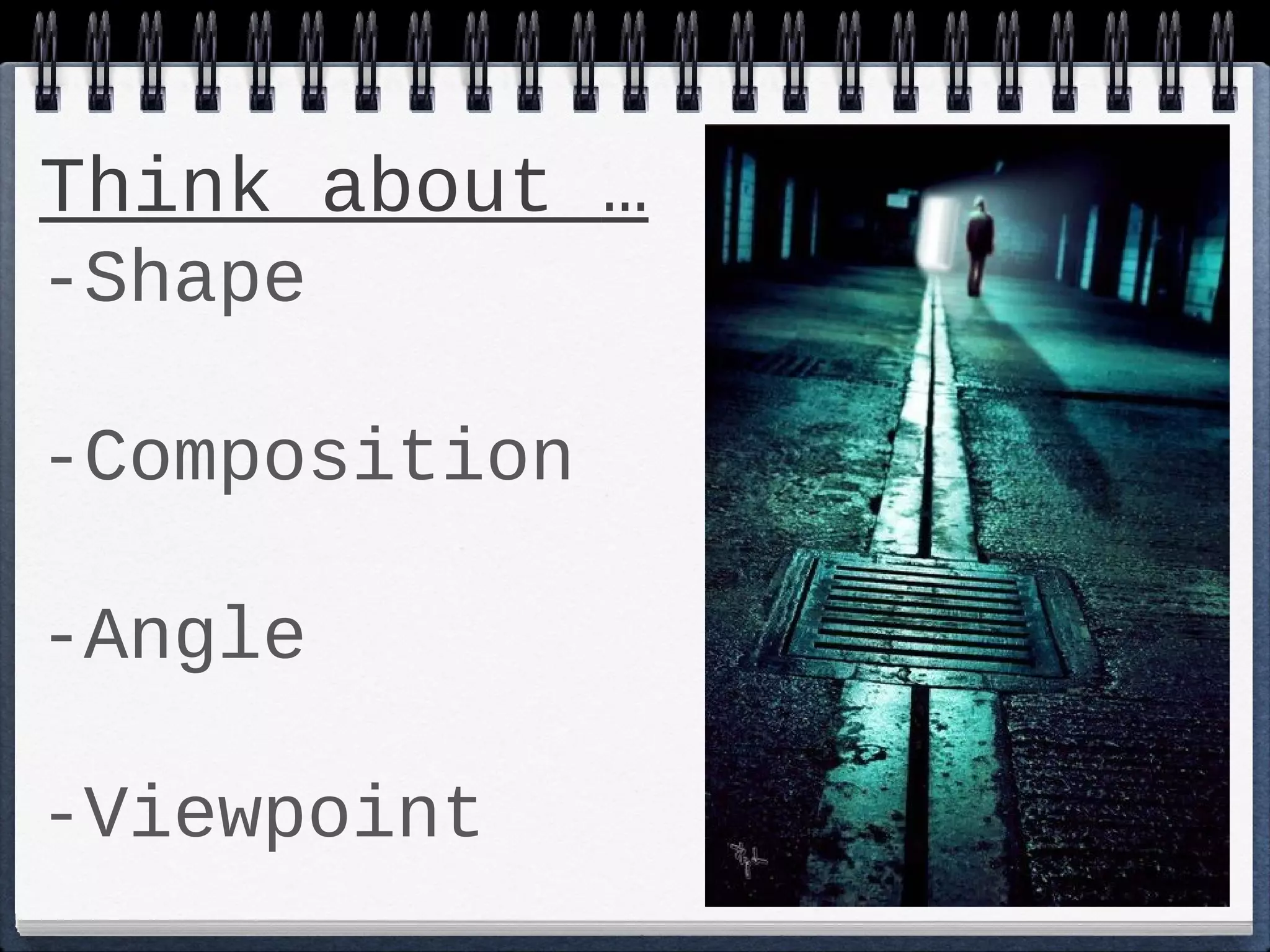
Start thinking about your
own approach to the
theme ‘City’
What will your
photographs look like?
Think about …
-Shape
-Composition
-Angle
-Viewpoint
http://artatbeaumontschool.blogspot.co.uk
http://www.pinterest.com/beaumontart/
The Beaumont Art Blog can be found on
the school website and using the link
above. Your Home Learning will be posted
on here, Power Points as well as current
exhibitions and other useful Art links
The Beaumont Art Pinterest can be found on
the school website and using the link above.
This is used for Artist research, Art techniques
as well as good A Level Art examples created
by students to inspire you. Over the summer
create your own Pinterest account and
follow Beaumont Art
Summer List…
1.Using the title ‘The City’, take 100+ images of aspects of the city.
Make sure you are following a plan or strategy that further explores
your ideas.
 
2. Go to two Art exhibitions over the summer. Take photographs (if
you can), collect leaflets and create drawings. These can go in your
sketchbook in September.
3. Join Pinterest, follow Beaumont and begin to create an album of
Photography you like. This will be really helpful when we begin your
coursework in September.
EXTRA: Create a ‘Photographic Visual Journal’
 
Look on the Beaumont Art Blog for exhibitions. Also a useful website
you can use to find out what exhibitions are on over the summer:
http://www.timeout.com/london/art
Beaumont Pinterest: http://pinterest.com/beaumontart/
Beaumont Blog: http://artatbeaumontschool.blogspot.co.uk
Equipment…
 
Multigrade black and white photographic paper(100 sheets)
black and white films (36 exp)
Digital photographic paper
Negative sheets  
Plastic A1 portfolio
A3 Sketchbook 
2 x Glue Sticks
Photo Pack 2017
-SLR Film Camera and Manuel 
-Access to a DSLR Camera (we recommend Canon)
-Good quality pens, fine liners
-Large Memory pen or external hard drive
-Lens cloth
Other Items needed
-Bring all work to the first lesson in
September.
-Have 5 selected images of your own
that you have taken on the city theme on
a memory stick to share/present.
-Ensure you all equipment needed with
you
In September…

A level photography induction 2017

  • 1.
  • 2.
    Welcome to ALEVEL PHOTOGRAPHY, this is the beginning of a hard, but enjoyable two years. Photography is not easy; it’s about hard work, creativity and the will to do well. If you listen to the help, advice and guidance that we will give you and give 100%, and try your best, you will succeed.   You’re A level is very important and to get the maximum from your coursework you must complete all set assignments.   You have chosen this option, so we expect nothing but your best. Welcome ...
  • 3.
    We currently runthe AQA ART AND DESIGN PHOTOGRAPY course. The course develops and extends creative, critical and practical skills in art photography. Through continuous investigation and study, You will extend your knowledge and understanding of the different genres of photography. You will produce a body (portfolio) of your own visual work which will be supported by written work. Emphasis is placed on developing an independent and original approach to study and practice. You will work towards an ability to manage your time efficiently, plan and independently direct your research and investigation. The Course ...
  • 4.
    COURSE CONTENT ANDASSESSMENT… Unit 1 - 60% of AS This is a portfolio of creative and contextual work. The unit will comprise of preparation studies and final photographic pieces. The coursework is divided into three ‘blocks’ including thematic, generic and experimental task work. Students will form a clearly defined selection of coursework which makes up a whole, demonstrating evidence of their working and thinking process. Unit 2 – 40% of AS Students are given a choice of 5 exam questions or ‘themes’, selecting one to explore and investigate over a twelve week period. Students will need to identify artists/photographers whose work they wish to make connections with. At the end of the investigation students have five hours invigilated time in the darkroom (in 2 sessions) to produce photographic work in response to investigations made. Digital work can be developed alongside chemical photography.
  • 5.
    What to Expect…... Throughout year 12 you will be introduced to three main areas of learning in Photography … Creative/Expressive Developing your own portfolio of photographic work that is personal, unique and individual to you. Exploring a range of photographic styles, techniques, processes and ideas. Developing your imaginative and creative skills to express a range of ideas Technical/Practical Cameras and light (film and digital) Photographic techniques Printing skills Experimental work – the rules and how to break them! Analytical/Critical Looking at art, film making & photography Relating own work to artists’ work and vice versa. Understanding how ideas and meanings are communicated visually. Developing in depth critical & analytical methods.
  • 6.
    In Year 12you will take part in a range of technical workshops. You will be set photographic assignments based around a theme or technique. For each task you will be expected to use your own initiative, interpreting it individually and connecting it to artists or photographers. You will plan each task, print up and evaluate the result building up your portfolio. You must have your sketchbook with you and be fully equipped for every lesson. What to Expect…
  • 7.
    Getting a goodgrade is only possible by covering all of the marking criteria. You can be the most talented photographer there is but if you do not have the sketchbook and work to back up your final pieces you will get very little marks. Marking… AO1 Develop ideas through sustained and focused investigations informed by contextual and other sources, demonstrating analytical and critical understanding. AO2 Experiment with and select appropriate resources, media, materials, techniques and processes, reviewing and refining ideas as work develops. AO3 Record in visual and/or other forms ideas, observations and insights relevant to intentions, demonstrating an ability to reflect on work and progress. AO4 Present a personal, informed and meaningful response demonstrating critical understanding, realising intentions and, where appropriate, making connections between visual, written, oral or other elements.
  • 9.
    There is noagreement on how a city is distinguished from a town within general English language meanings. A city is sometimes understood to be an urban settlement with a cathedral. The City…
  • 10.
    Start thinking aboutyour own approach to the theme ‘City’ What will your photographs look like?
  • 11.
  • 12.
    http://artatbeaumontschool.blogspot.co.uk http://www.pinterest.com/beaumontart/ The Beaumont ArtBlog can be found on the school website and using the link above. Your Home Learning will be posted on here, Power Points as well as current exhibitions and other useful Art links The Beaumont Art Pinterest can be found on the school website and using the link above. This is used for Artist research, Art techniques as well as good A Level Art examples created by students to inspire you. Over the summer create your own Pinterest account and follow Beaumont Art
  • 13.
    Summer List… 1.Using thetitle ‘The City’, take 100+ images of aspects of the city. Make sure you are following a plan or strategy that further explores your ideas.   2. Go to two Art exhibitions over the summer. Take photographs (if you can), collect leaflets and create drawings. These can go in your sketchbook in September. 3. Join Pinterest, follow Beaumont and begin to create an album of Photography you like. This will be really helpful when we begin your coursework in September. EXTRA: Create a ‘Photographic Visual Journal’   Look on the Beaumont Art Blog for exhibitions. Also a useful website you can use to find out what exhibitions are on over the summer: http://www.timeout.com/london/art Beaumont Pinterest: http://pinterest.com/beaumontart/ Beaumont Blog: http://artatbeaumontschool.blogspot.co.uk
  • 14.
  • 15.
    -Bring all workto the first lesson in September. -Have 5 selected images of your own that you have taken on the city theme on a memory stick to share/present. -Ensure you all equipment needed with you In September…