A Comparative Study of Facilitator Competencies in a Sample of U.S. and S. Korean FacilitatorsJudith A. Kolb, Penn StateHong Min Kim, Penn StateJiHoon Song, Oklahoma StateAHRD Conference 2/27/10 Knoxville
+Rationale for StudyExtend Kolb, Jin, & Song (2008) study of facilitator competencies to non-U.S. sample
Address limitation and suggestion for future research from that study—”examine application of this model to other cultures”  (p. 131)
Kolb, J. A., Jin, S., & Song, J. H. (2008). A model of small group facilitator competencies. Performance Improvement Quarterly, 21(2), 119-133. +Facilitator DefinitionA person who remains neutral in the actual decision (s) of the group but who assumes the responsibility for managing the group’s process while it is attempting to solve a problem or reach a decision
+Research QuestionWhat similarities and differences exist between scores and rankings collected from a sample of facilitators working in South Korea and scores and rankings reported by Kolb et al. (2008)?
+Sample & AnalysisSample     -40 U.S. Facilitators (2008)     -57 Korean Facilitators (2009)Analysis     -Comparison of competency mean scores and        rankings     -Interdependent t-tests     -Spearman’s rank correlation
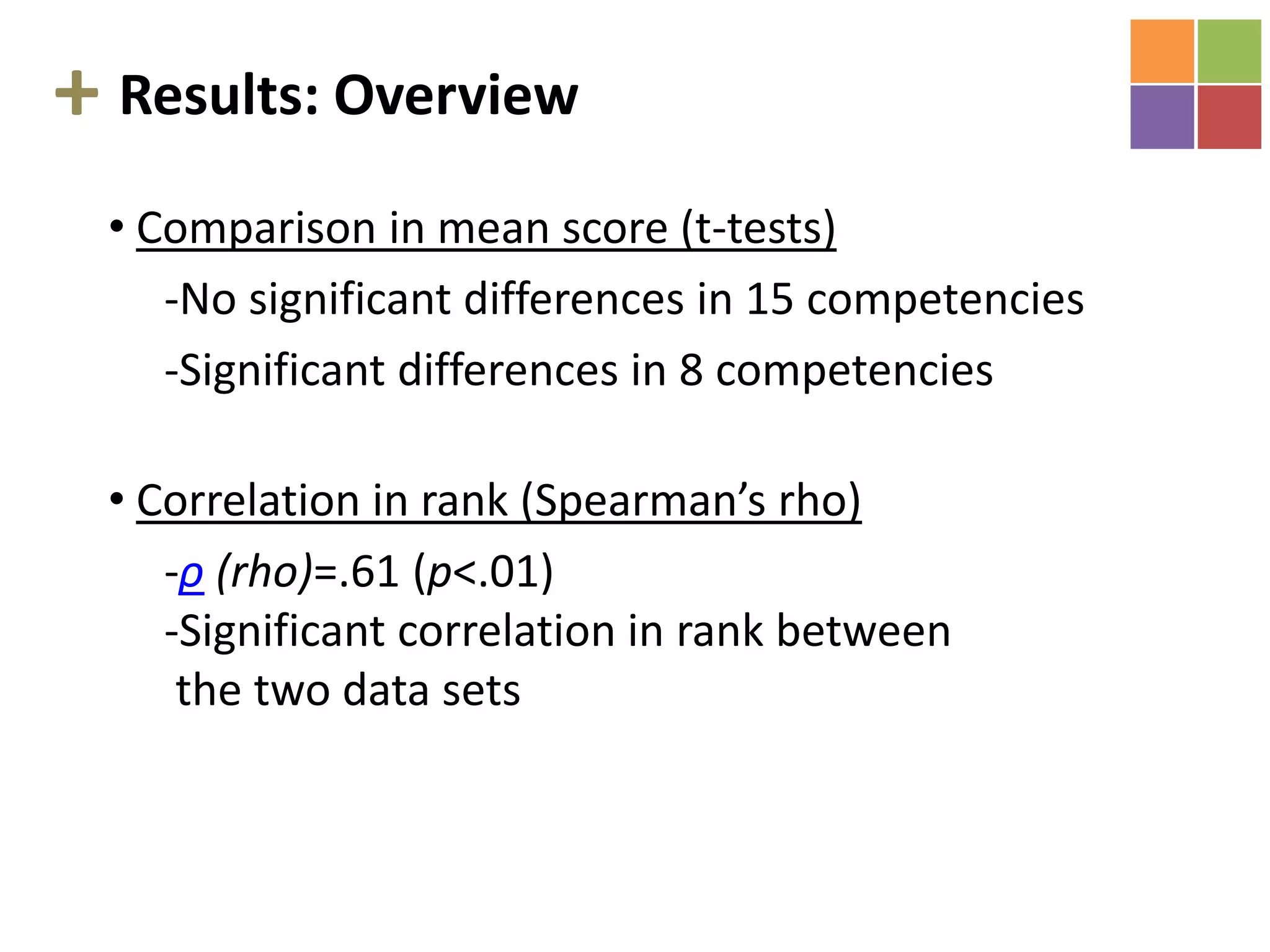
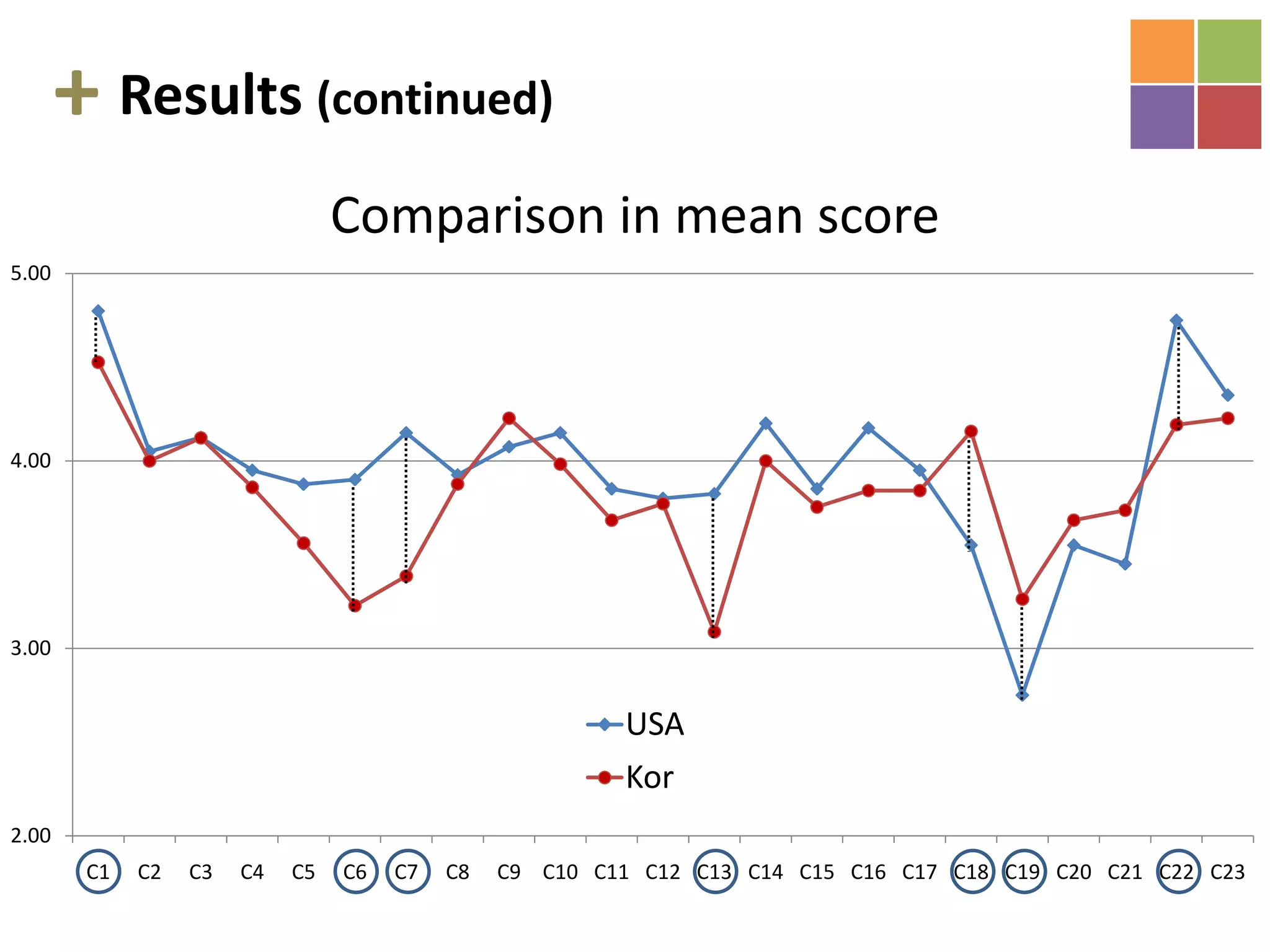
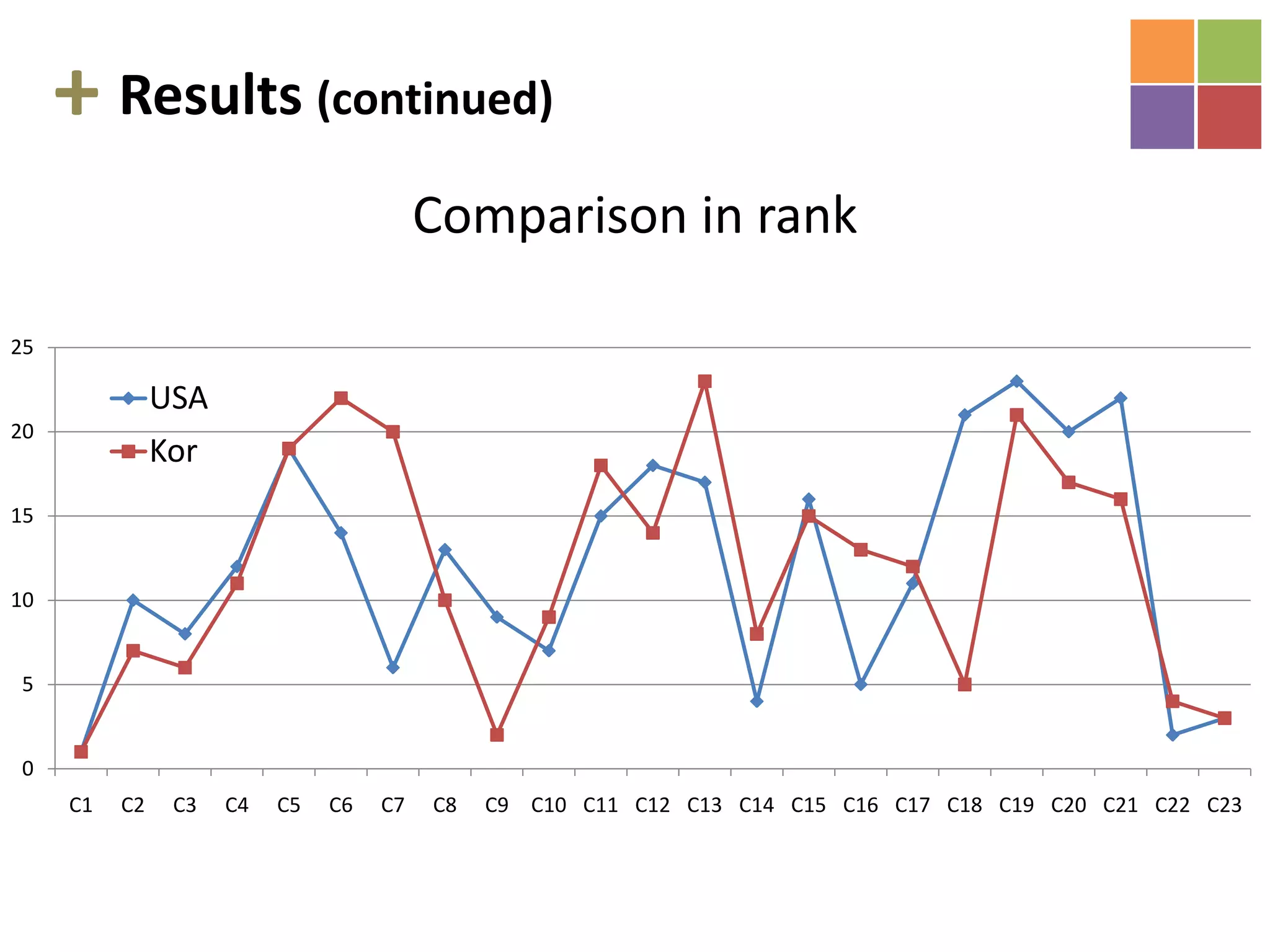
+Results: OverviewComparison in mean score (t-tests)     -No significant differences in 15 competencies     -Significant differences in 8 competenciesCorrelation in rank (Spearman’s rho)     -ρ (rho)=.61 (p<.01)     -Significant correlation in rank between       the two data sets
+Results (continued)Comparison in mean score
+Results (continued)Comparison in rank
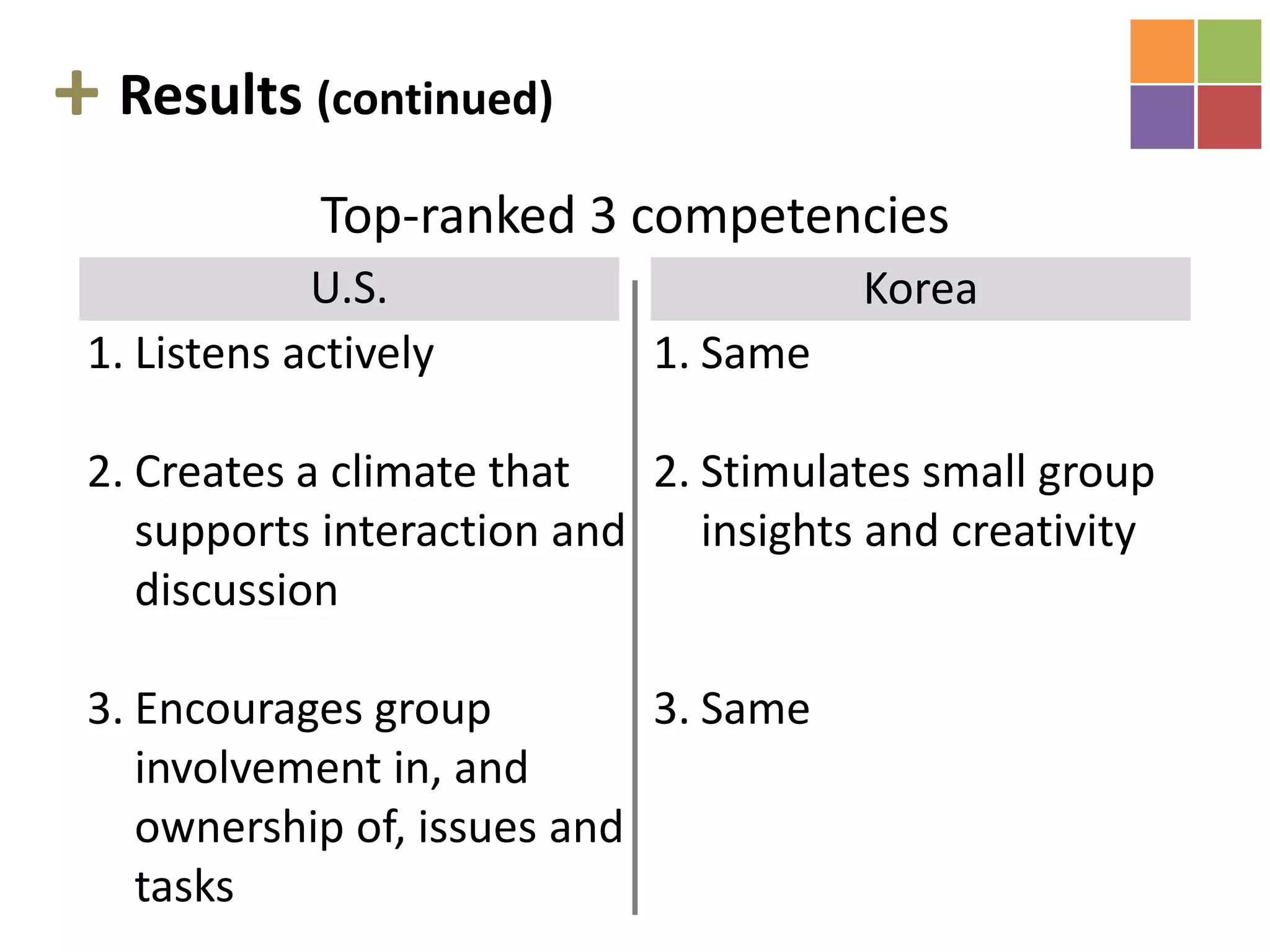
+Results (continued)Top-ranked 3 competencies U.S.KoreaListens activelyCreates a climate that supports interaction and discussionEncourages group involvement in, and ownership of, issues and tasksSameStimulates small group insights and creativitySame
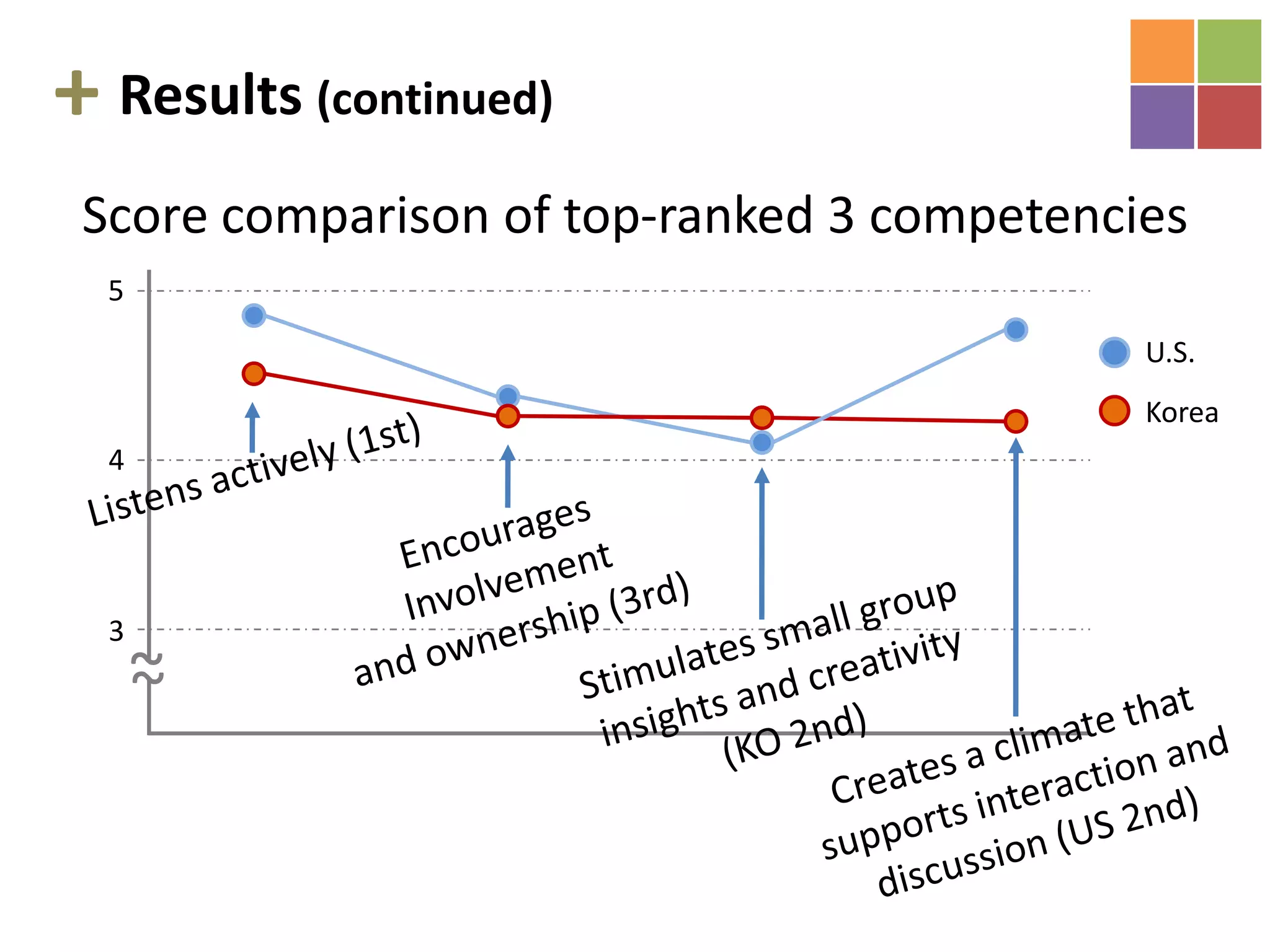
+Results (continued)Score comparison of top-ranked 3 competencies 5U.S.KoreaListens actively (1st)4Encourages Involvementand ownership (3rd)~~Stimulates small group insights and creativity (KO 2nd)3Creates a climate that supports interaction and discussion (US 2nd)
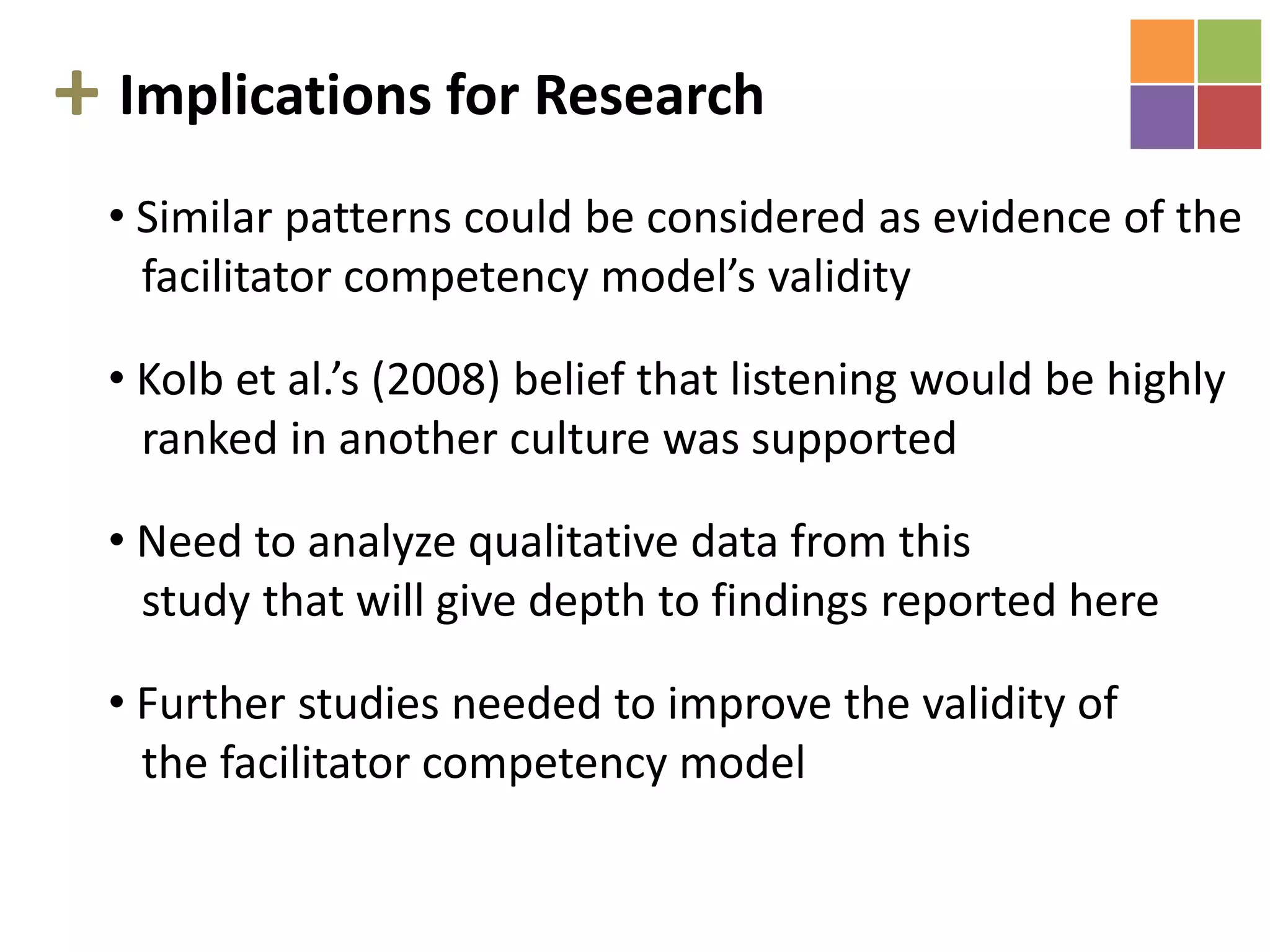
+Implications for Research  Similar patterns could be considered as evidence of the    facilitator competency model’s validity

A H R D 2010 Kolb Kim Song 2

  • 1.
    A Comparative Studyof Facilitator Competencies in a Sample of U.S. and S. Korean FacilitatorsJudith A. Kolb, Penn StateHong Min Kim, Penn StateJiHoon Song, Oklahoma StateAHRD Conference 2/27/10 Knoxville
  • 2.
    +Rationale for StudyExtendKolb, Jin, & Song (2008) study of facilitator competencies to non-U.S. sample
  • 3.
    Address limitation andsuggestion for future research from that study—”examine application of this model to other cultures” (p. 131)
  • 4.
    Kolb, J. A.,Jin, S., & Song, J. H. (2008). A model of small group facilitator competencies. Performance Improvement Quarterly, 21(2), 119-133. +Facilitator DefinitionA person who remains neutral in the actual decision (s) of the group but who assumes the responsibility for managing the group’s process while it is attempting to solve a problem or reach a decision
  • 5.
    +Research QuestionWhat similaritiesand differences exist between scores and rankings collected from a sample of facilitators working in South Korea and scores and rankings reported by Kolb et al. (2008)?
  • 6.
    +Sample & AnalysisSample -40 U.S. Facilitators (2008) -57 Korean Facilitators (2009)Analysis -Comparison of competency mean scores and rankings -Interdependent t-tests -Spearman’s rank correlation
  • 7.
    +Results: OverviewComparison inmean score (t-tests) -No significant differences in 15 competencies -Significant differences in 8 competenciesCorrelation in rank (Spearman’s rho) -ρ (rho)=.61 (p<.01) -Significant correlation in rank between the two data sets
  • 8.
  • 9.
  • 10.
    +Results (continued)Top-ranked 3competencies U.S.KoreaListens activelyCreates a climate that supports interaction and discussionEncourages group involvement in, and ownership of, issues and tasksSameStimulates small group insights and creativitySame
  • 11.
    +Results (continued)Score comparisonof top-ranked 3 competencies 5U.S.KoreaListens actively (1st)4Encourages Involvementand ownership (3rd)~~Stimulates small group insights and creativity (KO 2nd)3Creates a climate that supports interaction and discussion (US 2nd)
  • 12.
    +Implications for Research Similar patterns could be considered as evidence of the facilitator competency model’s validity
  • 13.
    Kolb et al.’s(2008) belief that listening would be highly ranked in another culture was supported
  • 14.
    Need toanalyze qualitative data from this study that will give depth to findings reported here
  • 15.
    Further studiesneeded to improve the validity of the facilitator competency model+Q & A session