A Guide to Human
Resource
Development
Programs
In the competitive business landscape, Human Resource Development
(HRD) programs have emerged as a strategic tool to enhance employee
skills, knowledge, and capabilities, driving organizational success.
by Amit Thokal
Understanding HRD
HRD is a systematic effort to improve individual and organizational
performance by developing employee skills, knowledge, and attitudes. It
aligns employee development with organizational objectives to enhance
productivity and effectiveness.
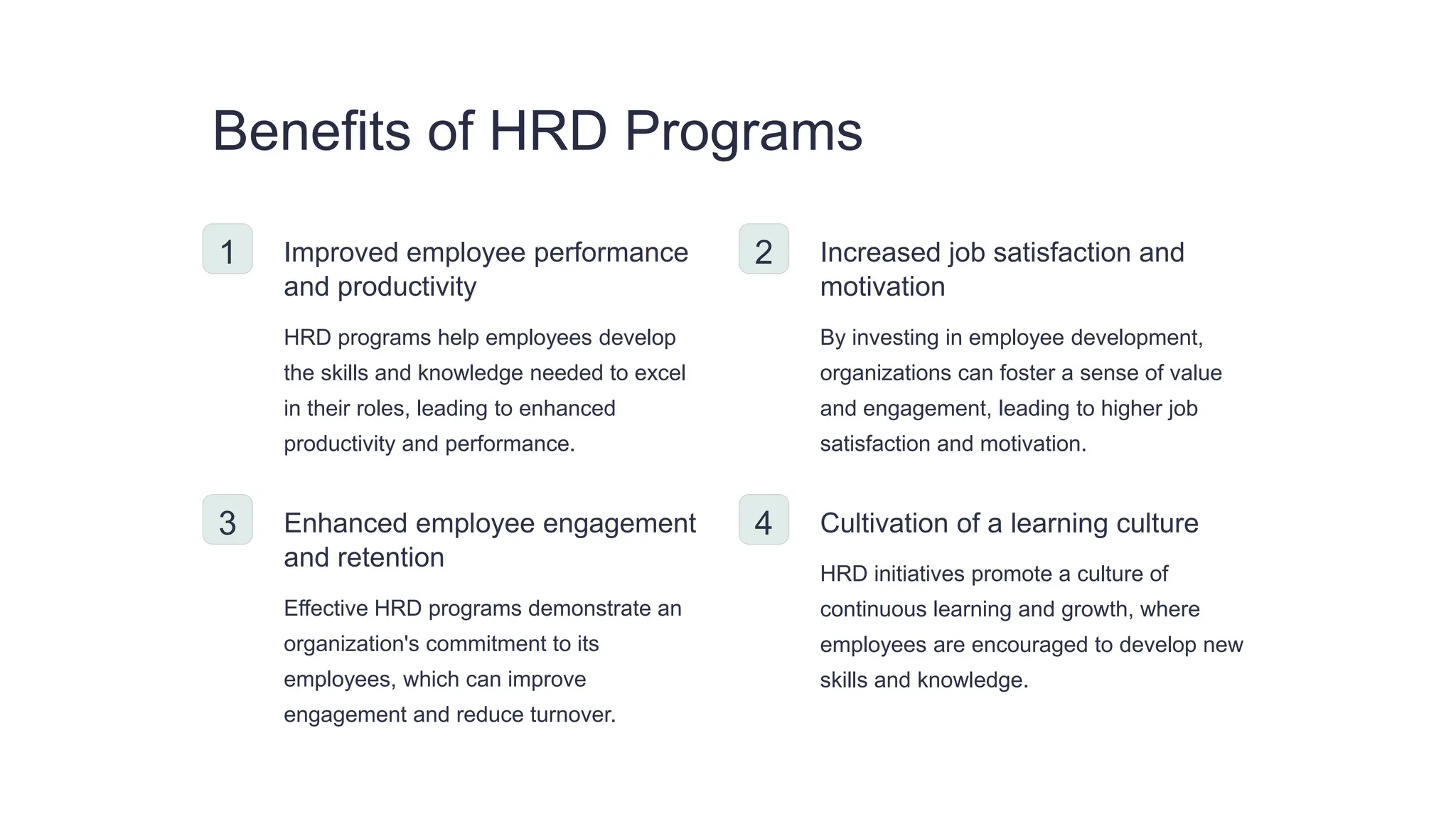
Benefits of HRD Programs
1 Improved employee performance
and productivity
HRD programs help employees develop
the skills and knowledge needed to excel
in their roles, leading to enhanced
productivity and performance.
2 Increased job satisfaction and
motivation
By investing in employee development,
organizations can foster a sense of value
and engagement, leading to higher job
satisfaction and motivation.
3 Enhanced employee engagement
and retention
Effective HRD programs demonstrate an
organization's commitment to its
employees, which can improve
engagement and reduce turnover.
4 Cultivation of a learning culture
HRD initiatives promote a culture of
continuous learning and growth, where
employees are encouraged to develop new
skills and knowledge.
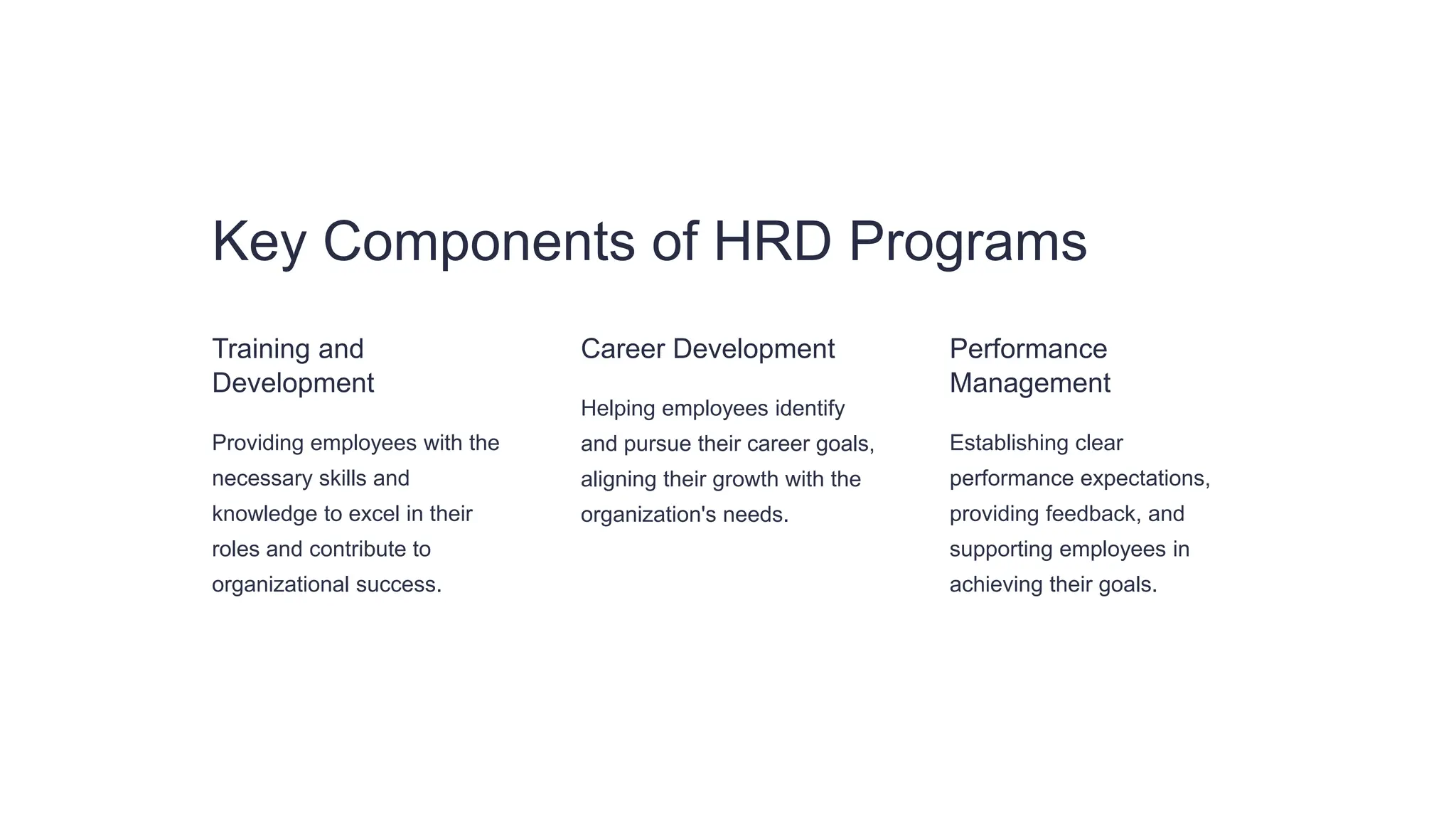
Key Components of HRD Programs
Training and
Development
Providing employees with the
necessary skills and
knowledge to excel in their
roles and contribute to
organizational success.
Career Development
Helping employees identify
and pursue their career goals,
aligning their growth with the
organization's needs.
Performance
Management
Establishing clear
performance expectations,
providing feedback, and
supporting employees in
achieving their goals.
Key Components of HRD Programs (cont.)
Talent Management
Identifying, developing, and
retaining top talent to ensure
the organization has the skills
and expertise needed to
succeed.
Learning and
Knowledge
Management
Capturing and sharing
organizational knowledge to
foster continuous learning
and innovation.
Employee Engagement
Fostering a positive work
environment that motivates
and inspires employees to
contribute to the
organization's success.
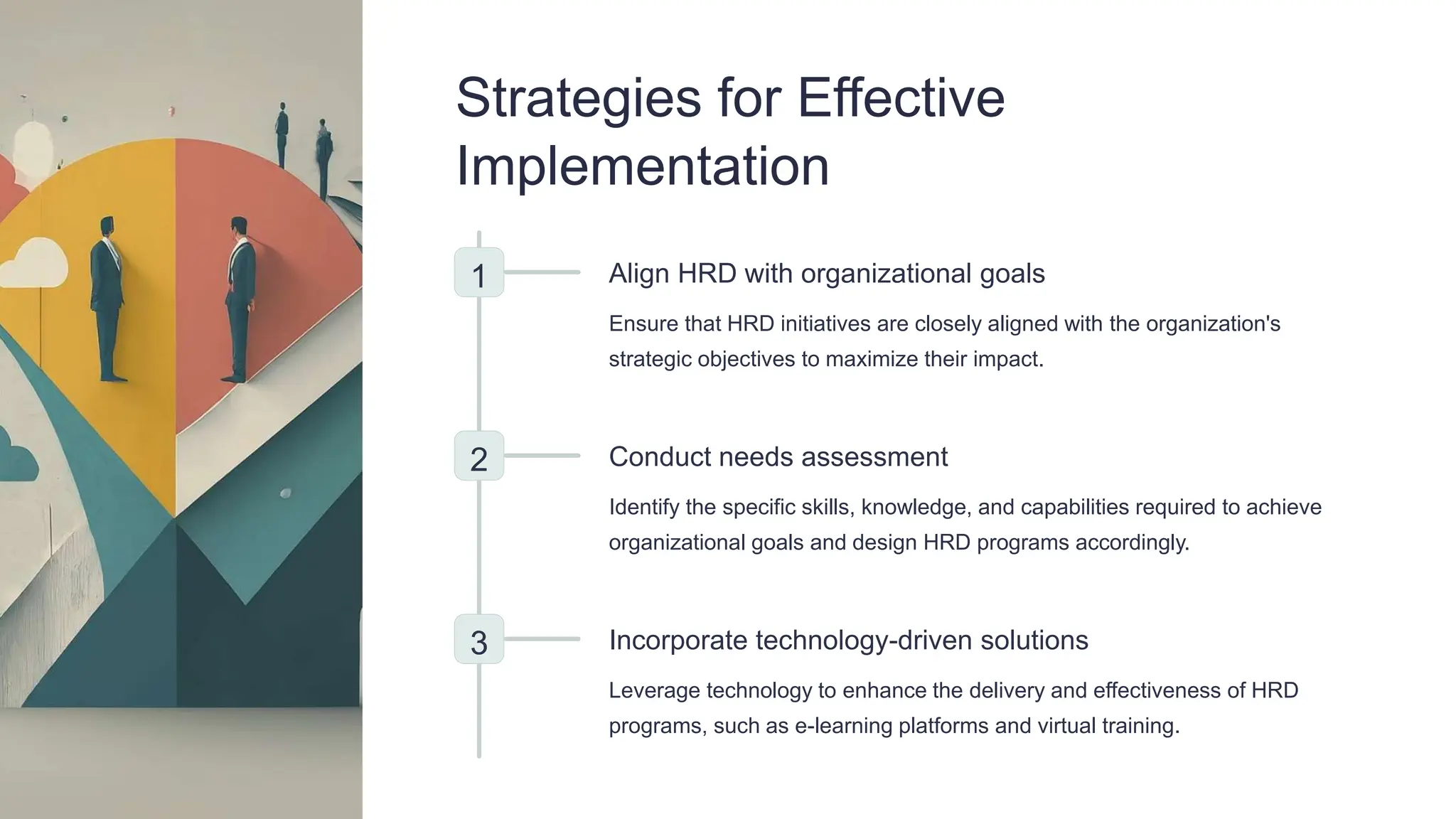
Strategies for Effective
Implementation
1 Align HRD with organizational goals
Ensure that HRD initiatives are closely aligned with the organization's
strategic objectives to maximize their impact.
2 Conduct needs assessment
Identify the specific skills, knowledge, and capabilities required to achieve
organizational goals and design HRD programs accordingly.
3 Incorporate technology-driven solutions
Leverage technology to enhance the delivery and effectiveness of HRD
programs, such as e-learning platforms and virtual training.
Overcoming Implementation Challenges
Communicate benefits
Clearly communicate the benefits of HRD
programs to employees and secure their buy-
in and engagement.
Secure executive sponsorship
Obtain the support and commitment of senior
leadership to ensure the success and
sustainability of HRD initiatives.
Encourage positive learning culture
Foster a culture that values continuous
learning and development, where employees
are empowered to take ownership of their
growth.
Continuously assess and address
barriers
Regularly evaluate the effectiveness of HRD
programs and address any challenges or
barriers to ensure continuous improvement.
Why HireQuotient
EasySource
Talent sourcing tool
EasyAssess
Skills-based assessment
EasyInterview
Efficient interviews
HireQuotient offers innovative HR-tech tools to simplify recruitment processes, including EasySource for
talent sourcing, EasyAssess for skills-based assessment, and EasyInterview for efficient interviews.
Conclusion
HRD programs are essential for equipping employees with skills to drive
organizational success. By aligning initiatives with goals and employing
effective strategies, organizations can unlock human capital potential and
gain a competitive edge.

A Guide to Human Resource Development Programs

  • 1.
    A Guide toHuman Resource Development Programs In the competitive business landscape, Human Resource Development (HRD) programs have emerged as a strategic tool to enhance employee skills, knowledge, and capabilities, driving organizational success. by Amit Thokal
  • 2.
    Understanding HRD HRD isa systematic effort to improve individual and organizational performance by developing employee skills, knowledge, and attitudes. It aligns employee development with organizational objectives to enhance productivity and effectiveness.
  • 3.
    Benefits of HRDPrograms 1 Improved employee performance and productivity HRD programs help employees develop the skills and knowledge needed to excel in their roles, leading to enhanced productivity and performance. 2 Increased job satisfaction and motivation By investing in employee development, organizations can foster a sense of value and engagement, leading to higher job satisfaction and motivation. 3 Enhanced employee engagement and retention Effective HRD programs demonstrate an organization's commitment to its employees, which can improve engagement and reduce turnover. 4 Cultivation of a learning culture HRD initiatives promote a culture of continuous learning and growth, where employees are encouraged to develop new skills and knowledge.
  • 4.
    Key Components ofHRD Programs Training and Development Providing employees with the necessary skills and knowledge to excel in their roles and contribute to organizational success. Career Development Helping employees identify and pursue their career goals, aligning their growth with the organization's needs. Performance Management Establishing clear performance expectations, providing feedback, and supporting employees in achieving their goals.
  • 5.
    Key Components ofHRD Programs (cont.) Talent Management Identifying, developing, and retaining top talent to ensure the organization has the skills and expertise needed to succeed. Learning and Knowledge Management Capturing and sharing organizational knowledge to foster continuous learning and innovation. Employee Engagement Fostering a positive work environment that motivates and inspires employees to contribute to the organization's success.
  • 6.
    Strategies for Effective Implementation 1Align HRD with organizational goals Ensure that HRD initiatives are closely aligned with the organization's strategic objectives to maximize their impact. 2 Conduct needs assessment Identify the specific skills, knowledge, and capabilities required to achieve organizational goals and design HRD programs accordingly. 3 Incorporate technology-driven solutions Leverage technology to enhance the delivery and effectiveness of HRD programs, such as e-learning platforms and virtual training.
  • 7.
    Overcoming Implementation Challenges Communicatebenefits Clearly communicate the benefits of HRD programs to employees and secure their buy- in and engagement. Secure executive sponsorship Obtain the support and commitment of senior leadership to ensure the success and sustainability of HRD initiatives. Encourage positive learning culture Foster a culture that values continuous learning and development, where employees are empowered to take ownership of their growth. Continuously assess and address barriers Regularly evaluate the effectiveness of HRD programs and address any challenges or barriers to ensure continuous improvement.
  • 8.
    Why HireQuotient EasySource Talent sourcingtool EasyAssess Skills-based assessment EasyInterview Efficient interviews HireQuotient offers innovative HR-tech tools to simplify recruitment processes, including EasySource for talent sourcing, EasyAssess for skills-based assessment, and EasyInterview for efficient interviews.
  • 9.
    Conclusion HRD programs areessential for equipping employees with skills to drive organizational success. By aligning initiatives with goals and employing effective strategies, organizations can unlock human capital potential and gain a competitive edge.