June 2007
United Neighborhood Houses
of New York
70 West 36th
Street, 5th
Floor
New York, NY 10018
Phone: (212) 967-0322
Fax: (212) 967-0792
www.unhny.org
This issue brief, which is part of
UNH's ongoing work to support
programs and policies that
make it possible for older
adults to live securely in their
communities, was generously
supported by The Starr
Foundation and Jarvie
Commonweal Service.
Issue
Brief
A CHANGING LANDSCAPE:
New Possibilities for Meeting the
Mental Health Needs of Older Adults
Monica Serrano, MPH, Policy Analyst
Jessica Walker, Senior Policy Analyst
Older adults exhibiting symptoms of depression and
other psychiatric disorders use mental health services
less than any other age group. This underutilization
can impair overall health and functioning, diminish
quality of life, and threaten the possibility of “aging in
place” for many seniors. The older adult population is
expected to increase dramatically over the next
twenty-five years, making the enhancement of
geriatric mental health service delivery both important
and timely. This issue brief offers a new way forward
in addressing the mental health needs of older adults
in New York.
INTRODUCTION
Mental health is essential to overall health, functioning and well-
being, and is an integral component of healthy aging. While the
vast majority of older Americans enjoy good mental health,
approximately one in five experience mental health problems.1
The most common concerns among people age 55 and older are:
• anxiety disorders, such as phobias and
obsessive-compulsive disorder;
• mood disorders, such as depression; and
• severe cognitive impairment, such as
Alzheimer’s disease and other dementias.2
These conditions diminish quality of life and, for many, are
debilitating. Meeting the mental health needs of seniors is
becoming increasingly urgent, primarily as a result of the four
critical factors outlined below.
United Neighborhood Houses of New York - 2 - June 2007
1.) People often undergo difficult
transitions in late-life. While some
seniors have experienced mental illness
throughout much of their lives, others
see the emergence of mental health
problems only in their later years. The
risk of developing mental and emotional
problems associated with stressful life
events (e.g., changing roles and
lifestyles, declining physical health and
mobility, and the deaths of family
members and friends) increases with
age. This increased risk, however,
should not be misconstrued as an
indication that mental illness is a normal
part of growing older. In fact, mental
health problems are not a normal part of
aging, and multiple interventions have
proven effective at relieving suffering.3
2.) Older adults are at significant risk of
negative outcomes associated with
mental illness. Mental health problems
among seniors can lead to serious
consequences, including suicide and
institutionalization.
Seniors with serious mental illnesses are
three times more likely to enter a nursing
home than seniors without serious mental
illnesses.4
Older adults have the highest suicide rate
in the nation. The highest rate is among
people aged 85 and over (twice the
overall national rate); the second highest
rate is among adults aged 75 to 84.5
3.) High levels of unmet need exist among
older adults. Although effective
treatment options are available, the
mental health needs of many older adults
go unmet. Seniors utilize mental health
services less than any other age group.6
Researchers estimate that as many as 63
percent of adults aged 65 years and older
are not receiving appropriate services.7
4.) The number of older adults with
mental illness is increasing. People 65
years of age and older are the fastest
growing segment of the U.S. population.
Between 2000 and 2030, America’s older
adult population is expected to double,
growing to 70 million. As the number of
older adults grows, so too will the
number of seniors with mental health
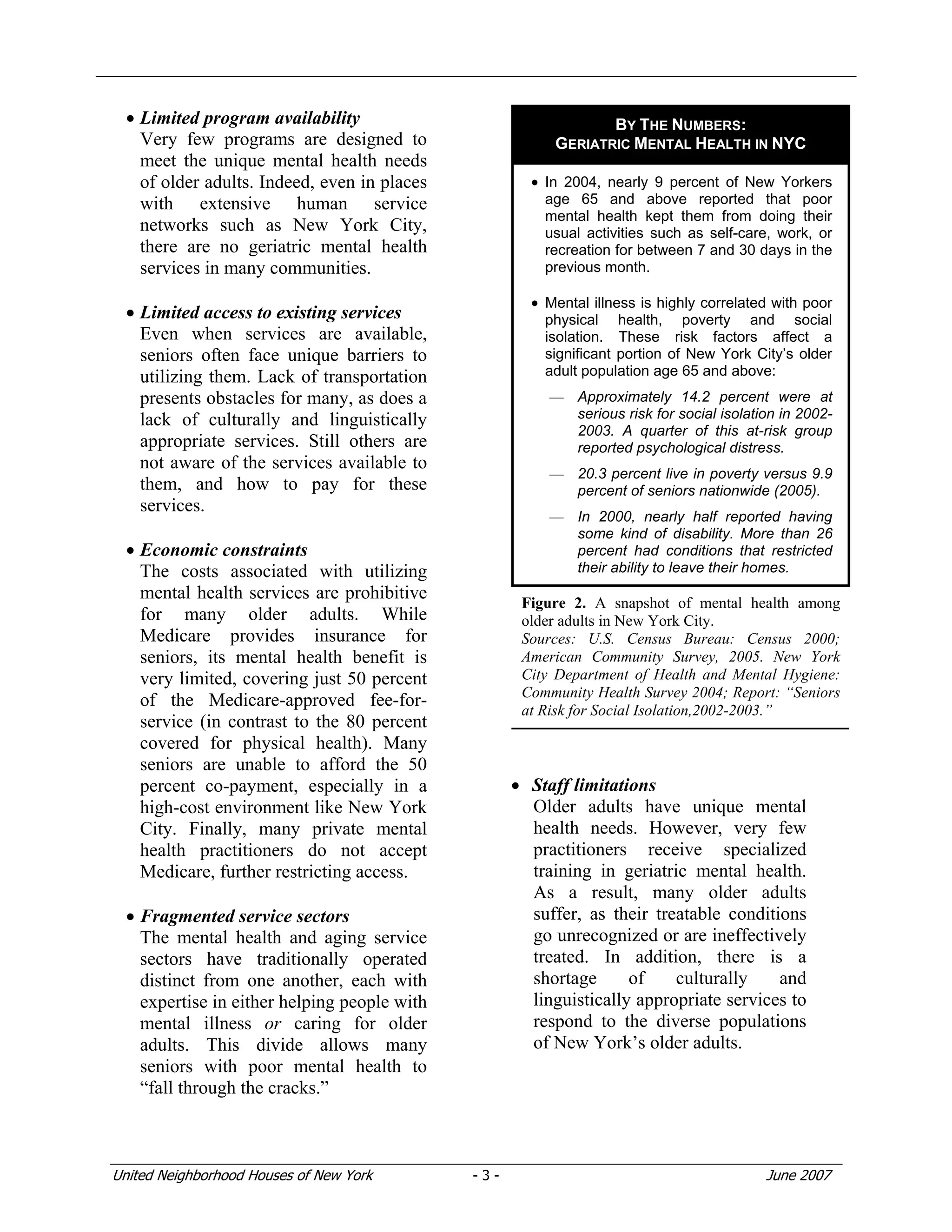
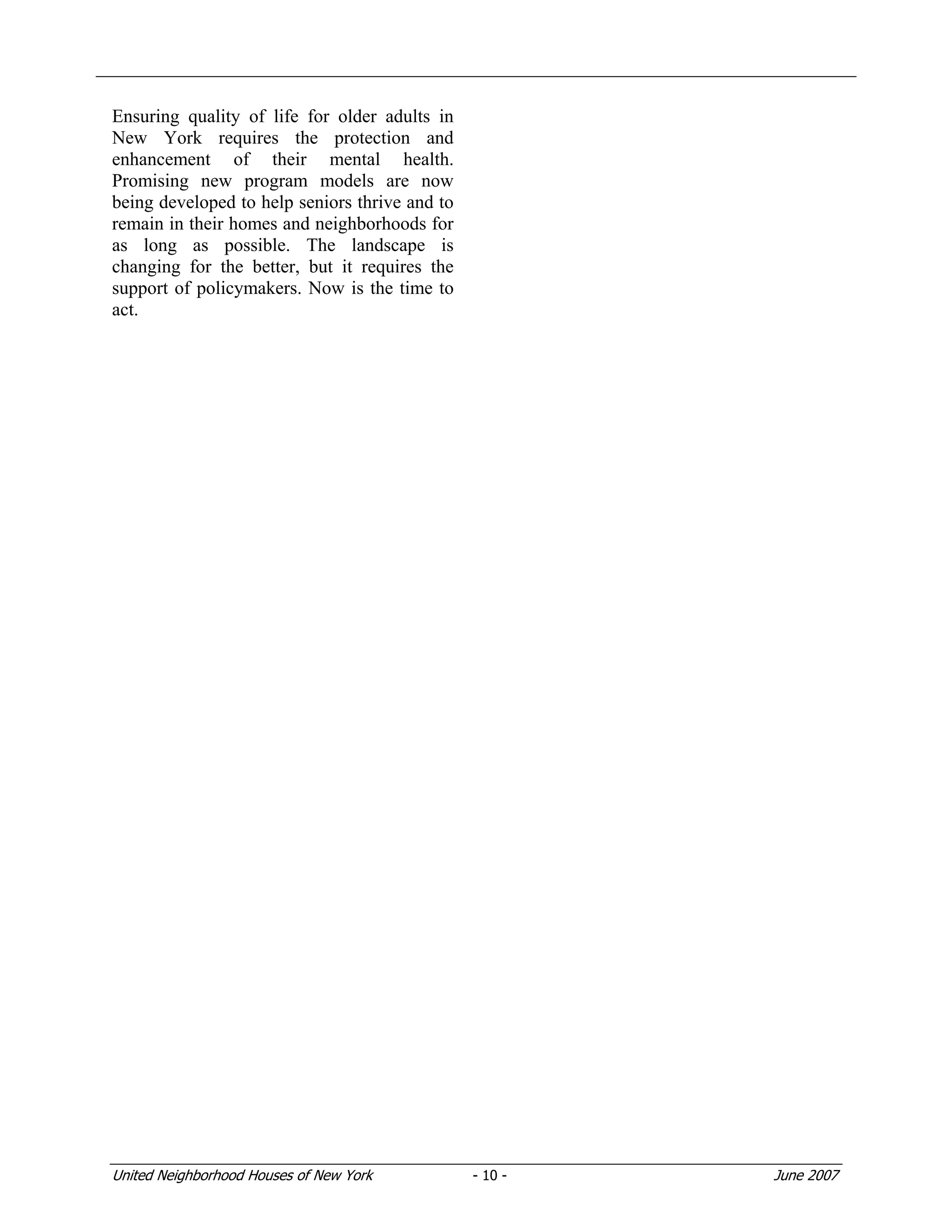
disorders (see Figure 1). Between 2000
and 2030, the number of older adults age
65 and older with mental disorders is
expected to double, reaching 15 million.8
As a result of these critical factors,
practitioners and policymakers alike are
searching for new ways to safeguard the
mental health of older adults. Devising
effective strategies first requires an
understanding of the current barriers to
receiving adequate help.
BARRIERS TO CARE
Access to mental health care is complex,
shaped by a host of systemic, economic,
societal and psychological factors. A number
of obstacles may prevent seniors from
receiving adequate treatment for their mental
health problems, including:
Figure 1. Increasing number of seniors with mental illness.
Sources: U.S Census Bureau, 2000. Archives of General
Psychiatry, 1999.
0 20 40 60 80
Millions of People
2030
2000
1970
Increasing Numbers of Seniors
with Mental Illness
Over age 65
with mental
illness
Total U.S.
pop. over
age 65
United Neighborhood Houses of New York - 3 - June 2007
• Limited program availability
Very few programs are designed to
meet the unique mental health needs
of older adults. Indeed, even in places
with extensive human service
networks such as New York City,
there are no geriatric mental health
services in many communities.
• Limited access to existing services
Even when services are available,
seniors often face unique barriers to
utilizing them. Lack of transportation
presents obstacles for many, as does a
lack of culturally and linguistically
appropriate services. Still others are
not aware of the services available to
them, and how to pay for these
services.
• Economic constraints
The costs associated with utilizing
mental health services are prohibitive
for many older adults. While
Medicare provides insurance for
seniors, its mental health benefit is
very limited, covering just 50 percent
of the Medicare-approved fee-for-
service (in contrast to the 80 percent
covered for physical health). Many
seniors are unable to afford the 50
percent co-payment, especially in a
high-cost environment like New York
City. Finally, many private mental
health practitioners do not accept
Medicare, further restricting access.
• Fragmented service sectors
The mental health and aging service
sectors have traditionally operated
distinct from one another, each with
expertise in either helping people with
mental illness or caring for older
adults. This divide allows many
seniors with poor mental health to
“fall through the cracks.”
• Staff limitations
Older adults have unique mental
health needs. However, very few
practitioners receive specialized
training in geriatric mental health.
As a result, many older adults
suffer, as their treatable conditions
go unrecognized or are ineffectively
treated. In addition, there is a
shortage of culturally and
linguistically appropriate services to
respond to the diverse populations
of New York’s older adults.
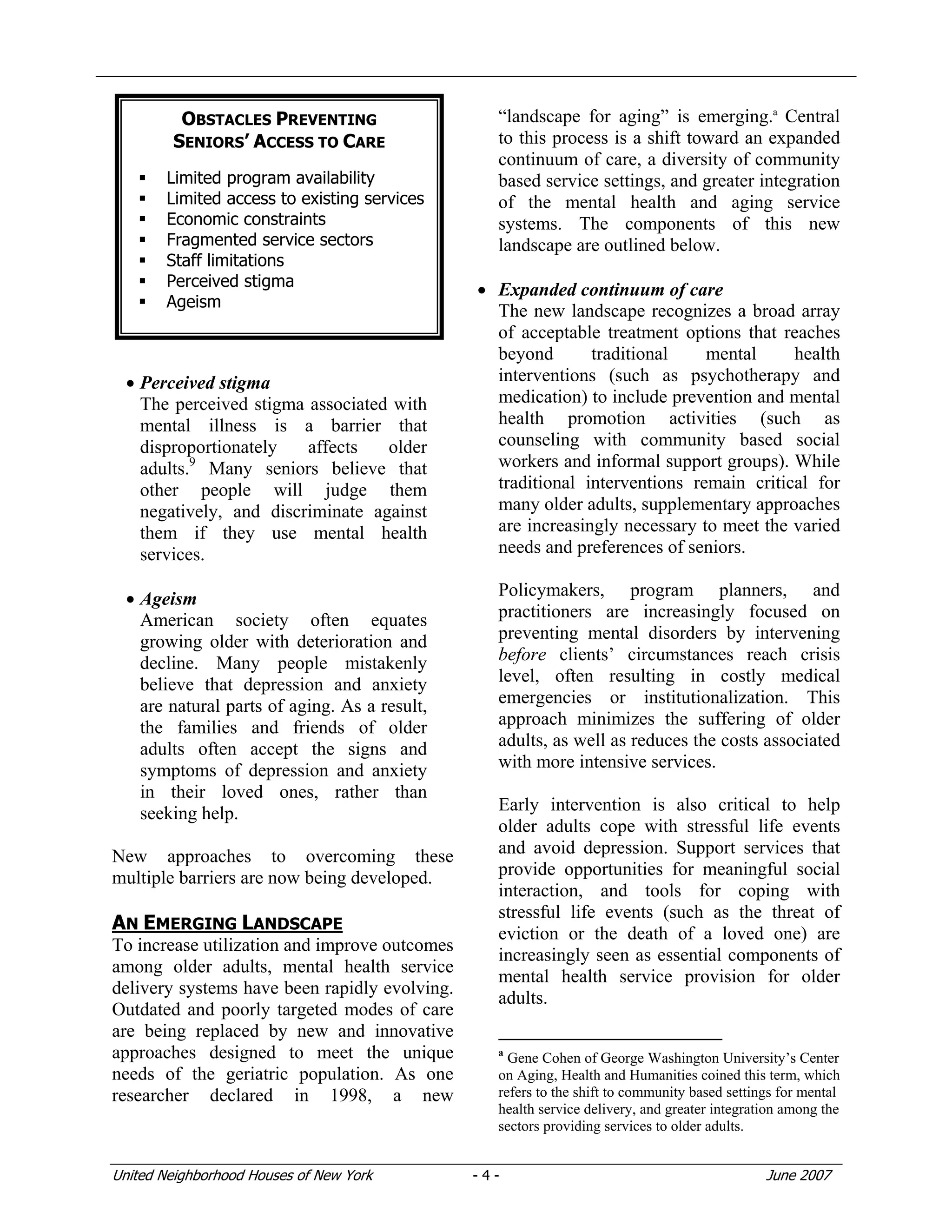
BY THE NUMBERS:
GERIATRIC MENTAL HEALTH IN NYC
• In 2004, nearly 9 percent of New Yorkers
age 65 and above reported that poor
mental health kept them from doing their
usual activities such as self-care, work, or
recreation for between 7 and 30 days in the
previous month.
• Mental illness is highly correlated with poor
physical health, poverty and social
isolation. These risk factors affect a
significant portion of New York City’s older
adult population age 65 and above:
— Approximately 14.2 percent were at
serious risk for social isolation in 2002-
2003. A quarter of this at-risk group
reported psychological distress.
— 20.3 percent live in poverty versus 9.9
percent of seniors nationwide (2005).
— In 2000, nearly half reported having
some kind of disability. More than 26
percent had conditions that restricted
their ability to leave their homes.
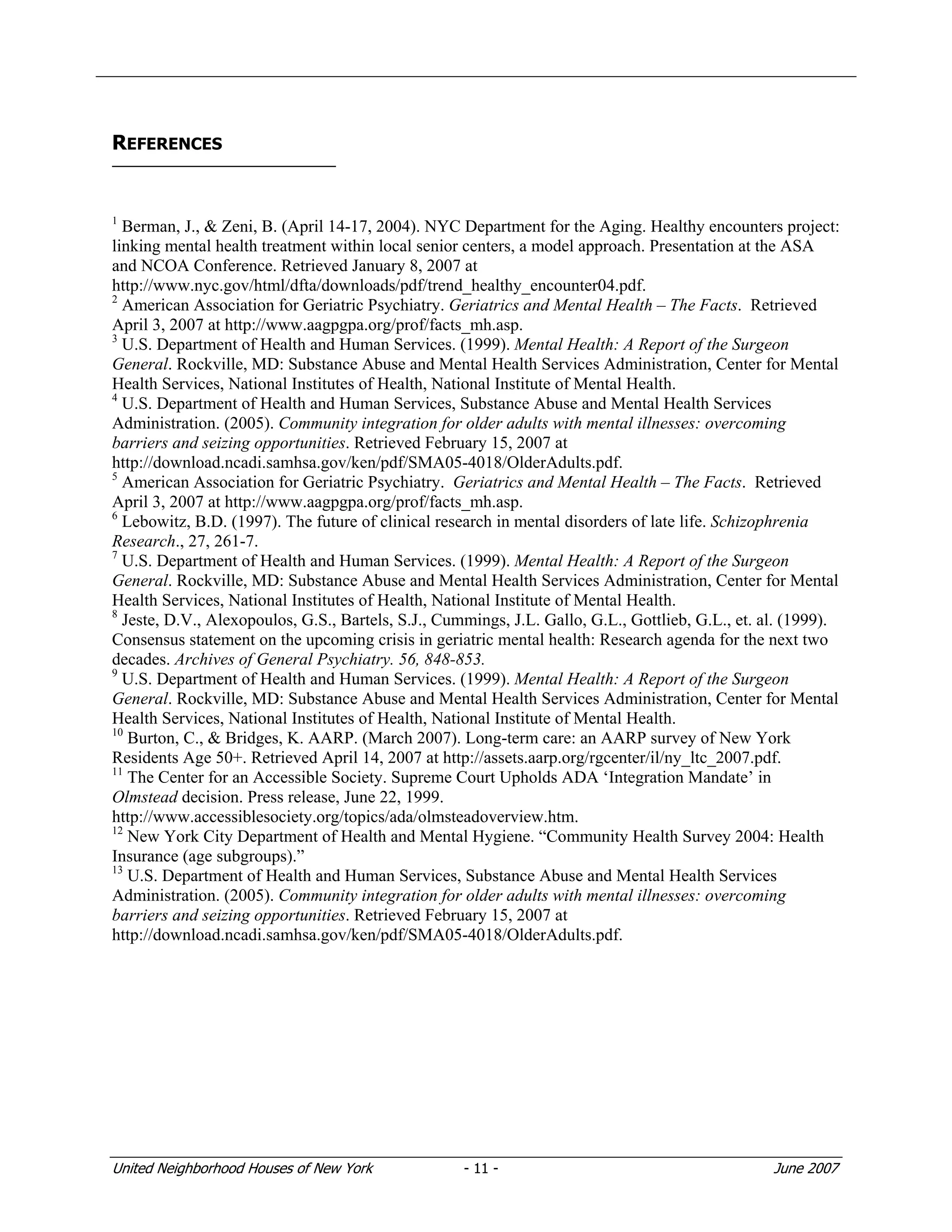
Figure 2. A snapshot of mental health among
older adults in New York City.
Sources: U.S. Census Bureau: Census 2000;
American Community Survey, 2005. New York
City Department of Health and Mental Hygiene:
Community Health Survey 2004; Report: “Seniors
at Risk for Social Isolation,2002-2003.”
United Neighborhood Houses of New York - 4 - June 2007
• Perceived stigma
The perceived stigma associated with
mental illness is a barrier that
disproportionately affects older
adults.9
Many seniors believe that
other people will judge them
negatively, and discriminate against
them if they use mental health
services.
• Ageism
American society often equates
growing older with deterioration and
decline. Many people mistakenly
believe that depression and anxiety
are natural parts of aging. As a result,
the families and friends of older
adults often accept the signs and
symptoms of depression and anxiety
in their loved ones, rather than
seeking help.
New approaches to overcoming these
multiple barriers are now being developed.
AN EMERGING LANDSCAPE
To increase utilization and improve outcomes
among older adults, mental health service
delivery systems have been rapidly evolving.
Outdated and poorly targeted modes of care
are being replaced by new and innovative
approaches designed to meet the unique
needs of the geriatric population. As one
researcher declared in 1998, a new
“landscape for aging” is emerging.a
Central
to this process is a shift toward an expanded
continuum of care, a diversity of community
based service settings, and greater integration
of the mental health and aging service
systems. The components of this new
landscape are outlined below.
• Expanded continuum of care
The new landscape recognizes a broad array
of acceptable treatment options that reaches
beyond traditional mental health
interventions (such as psychotherapy and
medication) to include prevention and mental
health promotion activities (such as
counseling with community based social
workers and informal support groups). While
traditional interventions remain critical for
many older adults, supplementary approaches
are increasingly necessary to meet the varied
needs and preferences of seniors.
Policymakers, program planners, and
practitioners are increasingly focused on
preventing mental disorders by intervening
before clients’ circumstances reach crisis
level, often resulting in costly medical
emergencies or institutionalization. This
approach minimizes the suffering of older
adults, as well as reduces the costs associated
with more intensive services.
Early intervention is also critical to help
older adults cope with stressful life events
and avoid depression. Support services that
provide opportunities for meaningful social
interaction, and tools for coping with
stressful life events (such as the threat of
eviction or the death of a loved one) are
increasingly seen as essential components of
mental health service provision for older
adults.
a
Gene Cohen of George Washington University’s Center
on Aging, Health and Humanities coined this term, which
refers to the shift to community based settings for mental
health service delivery, and greater integration among the
sectors providing services to older adults.
OBSTACLES PREVENTING
SENIORS’ ACCESS TO CARE
Limited program availability
Limited access to existing services
Economic constraints
Fragmented service sectors
Staff limitations
Perceived stigma
Ageism
United Neighborhood Houses of New York - 5 - June 2007
The growing attention to prevention and
early intervention reflects an emerging public
health approach to mental health service
provision for all people, including older
adults. Such an approach demands help for
those at risk of developing preventable
conditions, not just those who have already
developed them.
• Shift toward community settings
The option of receiving care at home or in
informal community settings is increasingly
important. The overwhelming majority of
older adults wish to remain living in their
homes and neighborhoods as they age; they
want to avoid nursing home placement and
hospitalization for as long as possible.10
A
wide array of supportive services (such as
assistance with transportation, meals, and
disease prevention and management) is
essential to allow “aging in place.”
Fortunately, recent years have seen an
increased recognition of the need for home-
and community based care. Growing fiscal
constraints and new legal regulations are
hastening this change.
In 1999, a Supreme Court ruling affirmed the
rights of individuals with disabilities (many
of whom are seniors) to live and receive
services in “the most integrated setting
appropriate.”11
Instead of being confined to
nursing homes to receive intensive care,
additional services and supports must be
made available in residential and community
settings.b
Most policymakers have welcomed this shift
to the community as a way to reduce costs, as
b
In July 1999, the Supreme Court issued the Olmstead v.
L.C. and E.W. decision, which challenges federal, state,
and local governments to develop more opportunities for
individuals with disabilities to access community based
services. The Olmstead decision interpreted Title II of
the Americans with Disabilities Act (ADA), requiring
States to administer their services, programs, and
activities "in the most integrated setting appropriate to
the needs of qualified individuals with disabilities."
well as provide better care. Federal and local
governments pay for much of the health care
utilized by seniors through Medicaid and
Medicare. In New York City, for example,
only 19 percent of seniors over age 65 had
private insurance in 2004; the vast majority
(73.5 percent) relied on Medicare and
Medicaid for their primary health coverage.12
Expensive nursing home care accounts for a
significant portion of Medicare and Medicaid
expenditures. Because most older Americans
institutionalized as a result of serious mental
illness reside in nursing homes,13
mental
health promotion and early intervention
among older adults in the community may
reduce nursing home placement and its
associated costs.
• Greater integration of service systems
The shift to home and community based care
requires greater collaboration between the
mental health and aging service sectors that
have traditionally operated independently of
one another. Many older adults utilize
programs within the aging services sector,
such as senior centers and Meals on Wheels,
which are effective in forging long-standing
relationships with clients and meeting the
basic needs of seniors for nutrition and social
COMPONENTS OF “THE NEW
LANDSCAPE” FOR GERIATRIC
MENTAL HEALTH
Expanded continuum of care –
treatment options reach beyond
traditional mental health
interventions.
Shift toward community settings –
services are often provided in
informal, non-clinical places of
comfort.
Greater integration of service
systems – seamless transitions for
clients between the mental health
and aging service sectors.
United Neighborhood Houses of New York - 6 - June 2007
contact. Most providers in this sector,
however, have had little training in geriatric
mental health.
Similarly, as noted earlier, very few mental
health practitioners have received specialized
training in geriatrics. In addition, many may
not be open to the non-traditional modes of
care preferred by many seniors (such as
socialization or counseling, instead of
medication). As a result, many older adults
who are connected with these service systems
are not receiving appropriate care for their
treatable mental health conditions.
Neighborhood based social service providers
are ideally situated to bridge this divide
between sectors. They not only serve as the
“eyes and ears” that can locate, pre-screen
and refer clients with mental health concerns
to appropriate resources, they also deliver
critical services, such as case management,
that form the basis for good mental health.
Known and trusted community agency
personnel provide the support necessary for
seniors to accept referrals for more intensive
mental health services and to adhere to
resulting treatment plans.
PROMISING PRACTICES
In New York City, a number of innovative
approaches consistent with this “new
landscape” have been piloted or implemented
in recent years, including:
• Social Adult Day Care
Social adult day care programs provide
social and recreational activities for
high-need seniors in group settings.
Program participants usually do not
need medical attention during the day,
but may need daytime supervision for
safety, while their caregivers are at
work or otherwise engaged. Many of
these programs serve seniors suffering
from Alzheimer’s disease and other
forms of dementia. These programs
offer vital respite to caregivers and
provide the appropriate level of
support to seniors, helping to prevent
or postpone costly institutionalization.
• Healthy Encounters Pilot Program
In 2004, the New York City
Department for the Aging (DFTA)
initiated a pilot to co-locate mental
health services at senior center sites.
Through a partnership with DFTA,
two nonprofit organizations – New
York Service Program for Older
People (SPOP) and The Spanish
Speaking Elderly Council-RAICES –
began offering social work hours in
senior centers to increase access to
mental health care.
• Depression Screening Pilot Project
An effort to specifically address
depression among older adults was
launched by the City in January 2006,
as a partnership between DFTA, the
Department of Health and Mental
Hygiene, and the Mental Health
Association of New York City.
Initially, the pilot program offered free
depression screenings to older adults in
PROMISING PRACTICES IN
NEW YORK CITY
Social Adult Day Care
Healthy Encounters Pilot Program
(NYC Department for the Aging with New
York Service Program for Older People
and The Spanish Speaking Elderly
Council-RAICES)
Depression Screening Pilot Project
(NYC Department of Health and Mental
Hygiene in partnership with the NYC
Department for the Aging and the Mental
Health Association of New York City)
Strengthening Neighborhood Based
Programs for the Elderly (United
Neighborhood Houses of New York with
support from The Starr Foundation)
United Neighborhood Houses of New York - 7 - June 2007
selected DFTA-funded senior centers
in the Bronx, and to homebound
seniors in the South Bronx. The
program is now operating citywide.
Seniors are referred to their primary
care physician or a mental health
professional for help on the basis of
this screening.c
•Strengthening Neighborhood Based
Programs for the Elderly Initiative
In 2004, with the support of The Starr
Foundation, United Neighborhood
Houses (UNH) launched a multi-site
Initiative, which builds upon the
experience of previous pilot programs.
The programs, operated by eight UNH
member organizations,d
utilize a
combination of prevention, mental
health promotion, early intervention,
and treatment strategies. While each
program is designed to meet the unique
needs of its local community, they all:
♦ utilize methods that lessen
perceived stigma among clients;
♦ rely on a trust-building approach
that maximizes the relationship
between client and staff to meet
the overall needs of each senior;
♦ operate in “non-traditional”
settings such as senior centers;
c
The program includes two additional components:
care managers, who follow up with clients who have
received referrals to treatment, and training for
primary care physicians. While client identification is
an important step in linking older adults with
appropriate mental health care, the program has faced
challenges in helping clients make and maintain these
connections. Program planners are working to
overcome these challenges.
d
Citizens Advice Bureau, Chinese-American
Planning Council, Henry Street Settlement, Hudson
Guild, Lenox Hill Neighborhood House, Stanley M.
Isaacs Neighborhood Center, Sunnyside Community
Services, University Settlement Society.
♦ work to create seamless client
transitions between the aging and
mental health service sectors; and
♦ emphasize prevention as well as
treatment of mental illness.
By overcoming many of the barriers to
connecting older adults with mental
health services, this initiative has
opened the door to improved mental
health for large numbers of older adults
who might not otherwise be helped.
Preliminary client outcomes suggest
that the programs have decreased the
sense of social isolation and increased
the utilization of mental health
treatment among older adults. A
promising replicable program model is
emerging through this work; UNH will
disseminate these findings and expand
the program in the coming months.
MOVING FORWARD
While innovative program models are now
being developed to increase access and offer
more preventive and community based care
for seniors, the fragmented service systems
and their funding streams have not kept pace.
Many regulatory barriers threaten the
sustainability of these programs.
For example, neither Medicare nor Medicaid
covers the costs of:
• community based support groups – a
preferred treatment option for many
older adults;
• transportation to services – essential
for many frail seniors who are
seeking care at clinics;
• socialization activities – an important
component of preventive care; or
• supportive services that often meet
the concrete needs of seniors (such
as economic security) before mental
health issues can be broached.
United Neighborhood Houses of New York - 8 - June 2007
These are integral program components that
prevent the emergence of mental health
concerns in some seniors, lessen the stigma
often associated with seeking help, and when
needed, foster access to the more intensive
mental health services that are reimbursable
by Medicaid and Medicare.
Recent developments suggest that
policymakers recognize these shortcomings.
In 2006, Congress reauthorized the federal
Older Americans’ Act, which included a new
provision to support states and localities as
they develop and test model mental health
delivery systems that utilize evidence-based
protocols to prevent, identify and treat mental
disorders in older adults.
In 2005, New York State passed the Geriatric
Mental Health Act. Its passage reflects
recognition of the need for innovation in
meeting the unique mental health needs of
older adults. The Act included $2 million in
funding for program demonstration grants
designed to identify and pilot new
approaches to geriatric mental health care.
One focus of the initial round of grants for
this program was the identification of at-risk
older adults in the community who are not
connected to the service delivery system.
In New York City, $1.17 million was
allocated in the Fiscal Year 2006 New York
City budget for a Geriatric Mental Health
Initiative, the first of its kind for the City.
This Initiative, which was increased to $1.67
million in the Fiscal Year 2007 City budget,
and $2.6 million in the Fiscal Year 2008 City
budget, enhances the capacity of programs to
provide a range of mental health promotion,
prevention, early intervention and treatment
options in a variety of “normative” settings –
such as senior centers, religious institutions,
and homeless prevention programs. These
settings are key to overcoming the perceived
stigma that many older adults associate with
services at mental health clinics or hospitals.
While this progress is encouraging, much
work remains. The following policy
recommendations will strengthen and expand
community based geriatric mental health
services in New York.
POLICY RECOMMENDATIONS
1.) Expand City and State Funding for
Geriatric Mental Health Services
New York City’s Geriatric Mental Health
Initiative has provided invaluable support
to programs offering critical social and
preventive services that are not currently
reimbursable by Medicaid or Medicare.
In the City’s Fiscal Year 2007, 16
organizations throughout the City
received funding. In Fiscal Year 2008,
the Initiative will be expanded to include
approximately ten additional sites. In the
next City budget, this Initiative should be
“baselined” (i.e. officially designated to
automatically reappear in subsequent
budget planning).
New York State recently established a
funding stream that allows new and
innovative program models to be
designed and tested. Allocating
additional funding in the State budget
would allow for the expansion of
geriatric mental health services
throughout the State. In addition to
funding more clinical treatment options
for seniors, some of this additional
funding should be used to support the
essential work of community based
organizations, some of which do not
currently hold contracts with the State
Office for Mental Health. Their work
makes it possible for seniors in their
programs to access clinical services and
avoid more intensive interventions.
United Neighborhood Houses of New York - 9 - June 2007
2.) Create a Mayoral Interagency Council
on Aging
To promote interagency collaboration on
issues of importance to the City’s older
population, a formal Mayoral Interagency
Coordinating Council on Aging should
be initiated. Similar in function to the
existing Interagency Coordinating
Councils on Youth and on Homelessness,
this Council would work to improve
service delivery to seniors by various
City agencies, not all of which typically
view their work as relevant to aging. This
would include the Department for the
Aging, Department of Health and Mental
Hygiene, Department of Consumer
Affairs, Department of Finance, Human
Resources Administration, Office of
Emergency Management, the Department
of Cultural Affairs and the Police and
Fire Departments.
The Mayoral Interagency Coordinating
Council on Aging, chaired by a
representative from the Mayor’s Office,
could lead the formation of an integrated,
comprehensive plan to respond to the
current and future mental health needs of
New York City’s senior population.
3.) Seek Sustainable Solutions
Program models that emphasize early
intervention and prevention and provide
services at points along the continuum of
care must be developed and supported in
meaningful and sustainable ways.
The process for obtaining a satellite
license from the State’s Office of Mental
Health must be streamlined to allow
additional providers to offer services in
community based settings. This licensure
is critical, as it allows mental health
professionals to practice in non-clinical
sites frequented by seniors, offer
intensive services in places of comfort,
and be reimbursed through Medicare or
Medicaid. It would also be beneficial to
grant licensure to organizations generally
rather than for a particular site, as is
currently the case. Such a change would
allow organizations to provide services in
a variety of settings.
Financial support for staff training and
professional development in geriatric
mental health must also be established
and sustained. Many staff in the aging
service sector are unfamiliar with mental
health issues, and many mental health
professionals have limited knowledge of
geriatric mental health issues. Ongoing
training will ensure that the workforce is
equipped to identify and respond to the
mental health needs of older adults.
Other opportunities should also be sought
to help innovative community program
models thrive. For example, the State’s
Department of Health is now working to
propose a new home and community
based Medicaid waiver to the federal
Department of Health and Human
Services. If approved, this waiver would
allow new types of programs and services
to be eligible for Medicaid
reimbursement in New York State.
Community based services that facilitate
seniors’ access to clinical mental health
services, such as comprehensive case
management for older adults, should be
included.
POLICY RECOMMENDATIONS
1.) Expand City and State Funding for
Geriatric Mental Health Services
2.) Create a Mayoral Interagency
Council on Aging
3.) Seek Sustainable Solutions
United Neighborhood Houses of New York - 10 - June 2007
Ensuring quality of life for older adults in
New York requires the protection and
enhancement of their mental health.
Promising new program models are now
being developed to help seniors thrive and to
remain in their homes and neighborhoods for
as long as possible. The landscape is
changing for the better, but it requires the
support of policymakers. Now is the time to
act.
United Neighborhood Houses of New York - 11 - June 2007
REFERENCES
1
Berman, J., & Zeni, B. (April 14-17, 2004). NYC Department for the Aging. Healthy encounters project:
linking mental health treatment within local senior centers, a model approach. Presentation at the ASA
and NCOA Conference. Retrieved January 8, 2007 at
http://www.nyc.gov/html/dfta/downloads/pdf/trend_healthy_encounter04.pdf.
2
American Association for Geriatric Psychiatry. Geriatrics and Mental Health – The Facts. Retrieved
April 3, 2007 at http://www.aagpgpa.org/prof/facts_mh.asp.
3
U.S. Department of Health and Human Services. (1999). Mental Health: A Report of the Surgeon
General. Rockville, MD: Substance Abuse and Mental Health Services Administration, Center for Mental
Health Services, National Institutes of Health, National Institute of Mental Health.
4
U.S. Department of Health and Human Services, Substance Abuse and Mental Health Services
Administration. (2005). Community integration for older adults with mental illnesses: overcoming
barriers and seizing opportunities. Retrieved February 15, 2007 at
http://download.ncadi.samhsa.gov/ken/pdf/SMA05-4018/OlderAdults.pdf.
5
American Association for Geriatric Psychiatry. Geriatrics and Mental Health – The Facts. Retrieved
April 3, 2007 at http://www.aagpgpa.org/prof/facts_mh.asp.
6
Lebowitz, B.D. (1997). The future of clinical research in mental disorders of late life. Schizophrenia
Research., 27, 261-7.
7
U.S. Department of Health and Human Services. (1999). Mental Health: A Report of the Surgeon
General. Rockville, MD: Substance Abuse and Mental Health Services Administration, Center for Mental
Health Services, National Institutes of Health, National Institute of Mental Health.
8
Jeste, D.V., Alexopoulos, G.S., Bartels, S.J., Cummings, J.L. Gallo, G.L., Gottlieb, G.L., et. al. (1999).
Consensus statement on the upcoming crisis in geriatric mental health: Research agenda for the next two
decades. Archives of General Psychiatry. 56, 848-853.
9
U.S. Department of Health and Human Services. (1999). Mental Health: A Report of the Surgeon
General. Rockville, MD: Substance Abuse and Mental Health Services Administration, Center for Mental
Health Services, National Institutes of Health, National Institute of Mental Health.
10
Burton, C., & Bridges, K. AARP. (March 2007). Long-term care: an AARP survey of New York
Residents Age 50+. Retrieved April 14, 2007 at http://assets.aarp.org/rgcenter/il/ny_ltc_2007.pdf.
11
The Center for an Accessible Society. Supreme Court Upholds ADA ‘Integration Mandate’ in
Olmstead decision. Press release, June 22, 1999.
http://www.accessiblesociety.org/topics/ada/olmsteadoverview.htm.
12
New York City Department of Health and Mental Hygiene. “Community Health Survey 2004: Health
Insurance (age subgroups).”
13
U.S. Department of Health and Human Services, Substance Abuse and Mental Health Services
Administration. (2005). Community integration for older adults with mental illnesses: overcoming
barriers and seizing opportunities. Retrieved February 15, 2007 at
http://download.ncadi.samhsa.gov/ken/pdf/SMA05-4018/OlderAdults.pdf.
United Neighborhood Houses of New York (UNH) promotes and
strengthens the neighborhood-based, multi-service approach to improving
the lives of New Yorkers in need and the communities in which they live. A
membership organization rooted in the history and values of the settlement
house movement, UNH supports its members through policy development,
advocacy and capacity-building activities.
UNH Members
• Boys and Girls Harbor
• CAMBA
• Center for Family Life in Sunset
Park
• Chinese-American Planning
Council
• Citizens Advice Bureau
• Claremont Neighborhood Centers
• Cypress Hills Local Development
Corporation
• East Side House Settlement
• Educational Alliance
• Goddard Riverside Community
Center
• Grand Street Settlement
• Greenwich House
• Hamilton-Madison House
• Hartley House
• Henry Street Settlement
• Hudson Guild
• Jacob A. Riis Neighborhood
Settlement House
• Kingsbridge Heights Community
Center
• Lenox Hill Neighborhood House
• Lincoln Square Neighborhood
Center
• Mosholu Montefiore Community
Center
• Queens Community House
• Riverdale Neighborhood House
• SCAN New York - LaGuardia
Memorial House
• School Settlement Association
• Shorefront YM - YWHA of
Brighton-Manhattan Beach
• Southeast Bronx Neighborhood
Centers
• St. Matthew's and St. Timothy's
Neighborhood Center
• St. Nicholas Neighborhood
Preservation Corporation
• Stanley M. Isaacs Neighborhood
Center
• Sunnyside Community Services
• Third Street Music School
Settlement
• Union Settlement Association
• United Community Centers
• University Settlement Society

A Changing Landscape

  • 1.
    June 2007 United NeighborhoodHouses of New York 70 West 36th Street, 5th Floor New York, NY 10018 Phone: (212) 967-0322 Fax: (212) 967-0792 www.unhny.org This issue brief, which is part of UNH's ongoing work to support programs and policies that make it possible for older adults to live securely in their communities, was generously supported by The Starr Foundation and Jarvie Commonweal Service. Issue Brief A CHANGING LANDSCAPE: New Possibilities for Meeting the Mental Health Needs of Older Adults Monica Serrano, MPH, Policy Analyst Jessica Walker, Senior Policy Analyst Older adults exhibiting symptoms of depression and other psychiatric disorders use mental health services less than any other age group. This underutilization can impair overall health and functioning, diminish quality of life, and threaten the possibility of “aging in place” for many seniors. The older adult population is expected to increase dramatically over the next twenty-five years, making the enhancement of geriatric mental health service delivery both important and timely. This issue brief offers a new way forward in addressing the mental health needs of older adults in New York. INTRODUCTION Mental health is essential to overall health, functioning and well- being, and is an integral component of healthy aging. While the vast majority of older Americans enjoy good mental health, approximately one in five experience mental health problems.1 The most common concerns among people age 55 and older are: • anxiety disorders, such as phobias and obsessive-compulsive disorder; • mood disorders, such as depression; and • severe cognitive impairment, such as Alzheimer’s disease and other dementias.2 These conditions diminish quality of life and, for many, are debilitating. Meeting the mental health needs of seniors is becoming increasingly urgent, primarily as a result of the four critical factors outlined below.
  • 2.
    United Neighborhood Housesof New York - 2 - June 2007 1.) People often undergo difficult transitions in late-life. While some seniors have experienced mental illness throughout much of their lives, others see the emergence of mental health problems only in their later years. The risk of developing mental and emotional problems associated with stressful life events (e.g., changing roles and lifestyles, declining physical health and mobility, and the deaths of family members and friends) increases with age. This increased risk, however, should not be misconstrued as an indication that mental illness is a normal part of growing older. In fact, mental health problems are not a normal part of aging, and multiple interventions have proven effective at relieving suffering.3 2.) Older adults are at significant risk of negative outcomes associated with mental illness. Mental health problems among seniors can lead to serious consequences, including suicide and institutionalization. Seniors with serious mental illnesses are three times more likely to enter a nursing home than seniors without serious mental illnesses.4 Older adults have the highest suicide rate in the nation. The highest rate is among people aged 85 and over (twice the overall national rate); the second highest rate is among adults aged 75 to 84.5 3.) High levels of unmet need exist among older adults. Although effective treatment options are available, the mental health needs of many older adults go unmet. Seniors utilize mental health services less than any other age group.6 Researchers estimate that as many as 63 percent of adults aged 65 years and older are not receiving appropriate services.7 4.) The number of older adults with mental illness is increasing. People 65 years of age and older are the fastest growing segment of the U.S. population. Between 2000 and 2030, America’s older adult population is expected to double, growing to 70 million. As the number of older adults grows, so too will the number of seniors with mental health disorders (see Figure 1). Between 2000 and 2030, the number of older adults age 65 and older with mental disorders is expected to double, reaching 15 million.8 As a result of these critical factors, practitioners and policymakers alike are searching for new ways to safeguard the mental health of older adults. Devising effective strategies first requires an understanding of the current barriers to receiving adequate help. BARRIERS TO CARE Access to mental health care is complex, shaped by a host of systemic, economic, societal and psychological factors. A number of obstacles may prevent seniors from receiving adequate treatment for their mental health problems, including: Figure 1. Increasing number of seniors with mental illness. Sources: U.S Census Bureau, 2000. Archives of General Psychiatry, 1999. 0 20 40 60 80 Millions of People 2030 2000 1970 Increasing Numbers of Seniors with Mental Illness Over age 65 with mental illness Total U.S. pop. over age 65
  • 3.
    United Neighborhood Housesof New York - 3 - June 2007 • Limited program availability Very few programs are designed to meet the unique mental health needs of older adults. Indeed, even in places with extensive human service networks such as New York City, there are no geriatric mental health services in many communities. • Limited access to existing services Even when services are available, seniors often face unique barriers to utilizing them. Lack of transportation presents obstacles for many, as does a lack of culturally and linguistically appropriate services. Still others are not aware of the services available to them, and how to pay for these services. • Economic constraints The costs associated with utilizing mental health services are prohibitive for many older adults. While Medicare provides insurance for seniors, its mental health benefit is very limited, covering just 50 percent of the Medicare-approved fee-for- service (in contrast to the 80 percent covered for physical health). Many seniors are unable to afford the 50 percent co-payment, especially in a high-cost environment like New York City. Finally, many private mental health practitioners do not accept Medicare, further restricting access. • Fragmented service sectors The mental health and aging service sectors have traditionally operated distinct from one another, each with expertise in either helping people with mental illness or caring for older adults. This divide allows many seniors with poor mental health to “fall through the cracks.” • Staff limitations Older adults have unique mental health needs. However, very few practitioners receive specialized training in geriatric mental health. As a result, many older adults suffer, as their treatable conditions go unrecognized or are ineffectively treated. In addition, there is a shortage of culturally and linguistically appropriate services to respond to the diverse populations of New York’s older adults. BY THE NUMBERS: GERIATRIC MENTAL HEALTH IN NYC • In 2004, nearly 9 percent of New Yorkers age 65 and above reported that poor mental health kept them from doing their usual activities such as self-care, work, or recreation for between 7 and 30 days in the previous month. • Mental illness is highly correlated with poor physical health, poverty and social isolation. These risk factors affect a significant portion of New York City’s older adult population age 65 and above: — Approximately 14.2 percent were at serious risk for social isolation in 2002- 2003. A quarter of this at-risk group reported psychological distress. — 20.3 percent live in poverty versus 9.9 percent of seniors nationwide (2005). — In 2000, nearly half reported having some kind of disability. More than 26 percent had conditions that restricted their ability to leave their homes. Figure 2. A snapshot of mental health among older adults in New York City. Sources: U.S. Census Bureau: Census 2000; American Community Survey, 2005. New York City Department of Health and Mental Hygiene: Community Health Survey 2004; Report: “Seniors at Risk for Social Isolation,2002-2003.”
  • 4.
    United Neighborhood Housesof New York - 4 - June 2007 • Perceived stigma The perceived stigma associated with mental illness is a barrier that disproportionately affects older adults.9 Many seniors believe that other people will judge them negatively, and discriminate against them if they use mental health services. • Ageism American society often equates growing older with deterioration and decline. Many people mistakenly believe that depression and anxiety are natural parts of aging. As a result, the families and friends of older adults often accept the signs and symptoms of depression and anxiety in their loved ones, rather than seeking help. New approaches to overcoming these multiple barriers are now being developed. AN EMERGING LANDSCAPE To increase utilization and improve outcomes among older adults, mental health service delivery systems have been rapidly evolving. Outdated and poorly targeted modes of care are being replaced by new and innovative approaches designed to meet the unique needs of the geriatric population. As one researcher declared in 1998, a new “landscape for aging” is emerging.a Central to this process is a shift toward an expanded continuum of care, a diversity of community based service settings, and greater integration of the mental health and aging service systems. The components of this new landscape are outlined below. • Expanded continuum of care The new landscape recognizes a broad array of acceptable treatment options that reaches beyond traditional mental health interventions (such as psychotherapy and medication) to include prevention and mental health promotion activities (such as counseling with community based social workers and informal support groups). While traditional interventions remain critical for many older adults, supplementary approaches are increasingly necessary to meet the varied needs and preferences of seniors. Policymakers, program planners, and practitioners are increasingly focused on preventing mental disorders by intervening before clients’ circumstances reach crisis level, often resulting in costly medical emergencies or institutionalization. This approach minimizes the suffering of older adults, as well as reduces the costs associated with more intensive services. Early intervention is also critical to help older adults cope with stressful life events and avoid depression. Support services that provide opportunities for meaningful social interaction, and tools for coping with stressful life events (such as the threat of eviction or the death of a loved one) are increasingly seen as essential components of mental health service provision for older adults. a Gene Cohen of George Washington University’s Center on Aging, Health and Humanities coined this term, which refers to the shift to community based settings for mental health service delivery, and greater integration among the sectors providing services to older adults. OBSTACLES PREVENTING SENIORS’ ACCESS TO CARE Limited program availability Limited access to existing services Economic constraints Fragmented service sectors Staff limitations Perceived stigma Ageism
  • 5.
    United Neighborhood Housesof New York - 5 - June 2007 The growing attention to prevention and early intervention reflects an emerging public health approach to mental health service provision for all people, including older adults. Such an approach demands help for those at risk of developing preventable conditions, not just those who have already developed them. • Shift toward community settings The option of receiving care at home or in informal community settings is increasingly important. The overwhelming majority of older adults wish to remain living in their homes and neighborhoods as they age; they want to avoid nursing home placement and hospitalization for as long as possible.10 A wide array of supportive services (such as assistance with transportation, meals, and disease prevention and management) is essential to allow “aging in place.” Fortunately, recent years have seen an increased recognition of the need for home- and community based care. Growing fiscal constraints and new legal regulations are hastening this change. In 1999, a Supreme Court ruling affirmed the rights of individuals with disabilities (many of whom are seniors) to live and receive services in “the most integrated setting appropriate.”11 Instead of being confined to nursing homes to receive intensive care, additional services and supports must be made available in residential and community settings.b Most policymakers have welcomed this shift to the community as a way to reduce costs, as b In July 1999, the Supreme Court issued the Olmstead v. L.C. and E.W. decision, which challenges federal, state, and local governments to develop more opportunities for individuals with disabilities to access community based services. The Olmstead decision interpreted Title II of the Americans with Disabilities Act (ADA), requiring States to administer their services, programs, and activities "in the most integrated setting appropriate to the needs of qualified individuals with disabilities." well as provide better care. Federal and local governments pay for much of the health care utilized by seniors through Medicaid and Medicare. In New York City, for example, only 19 percent of seniors over age 65 had private insurance in 2004; the vast majority (73.5 percent) relied on Medicare and Medicaid for their primary health coverage.12 Expensive nursing home care accounts for a significant portion of Medicare and Medicaid expenditures. Because most older Americans institutionalized as a result of serious mental illness reside in nursing homes,13 mental health promotion and early intervention among older adults in the community may reduce nursing home placement and its associated costs. • Greater integration of service systems The shift to home and community based care requires greater collaboration between the mental health and aging service sectors that have traditionally operated independently of one another. Many older adults utilize programs within the aging services sector, such as senior centers and Meals on Wheels, which are effective in forging long-standing relationships with clients and meeting the basic needs of seniors for nutrition and social COMPONENTS OF “THE NEW LANDSCAPE” FOR GERIATRIC MENTAL HEALTH Expanded continuum of care – treatment options reach beyond traditional mental health interventions. Shift toward community settings – services are often provided in informal, non-clinical places of comfort. Greater integration of service systems – seamless transitions for clients between the mental health and aging service sectors.
  • 6.
    United Neighborhood Housesof New York - 6 - June 2007 contact. Most providers in this sector, however, have had little training in geriatric mental health. Similarly, as noted earlier, very few mental health practitioners have received specialized training in geriatrics. In addition, many may not be open to the non-traditional modes of care preferred by many seniors (such as socialization or counseling, instead of medication). As a result, many older adults who are connected with these service systems are not receiving appropriate care for their treatable mental health conditions. Neighborhood based social service providers are ideally situated to bridge this divide between sectors. They not only serve as the “eyes and ears” that can locate, pre-screen and refer clients with mental health concerns to appropriate resources, they also deliver critical services, such as case management, that form the basis for good mental health. Known and trusted community agency personnel provide the support necessary for seniors to accept referrals for more intensive mental health services and to adhere to resulting treatment plans. PROMISING PRACTICES In New York City, a number of innovative approaches consistent with this “new landscape” have been piloted or implemented in recent years, including: • Social Adult Day Care Social adult day care programs provide social and recreational activities for high-need seniors in group settings. Program participants usually do not need medical attention during the day, but may need daytime supervision for safety, while their caregivers are at work or otherwise engaged. Many of these programs serve seniors suffering from Alzheimer’s disease and other forms of dementia. These programs offer vital respite to caregivers and provide the appropriate level of support to seniors, helping to prevent or postpone costly institutionalization. • Healthy Encounters Pilot Program In 2004, the New York City Department for the Aging (DFTA) initiated a pilot to co-locate mental health services at senior center sites. Through a partnership with DFTA, two nonprofit organizations – New York Service Program for Older People (SPOP) and The Spanish Speaking Elderly Council-RAICES – began offering social work hours in senior centers to increase access to mental health care. • Depression Screening Pilot Project An effort to specifically address depression among older adults was launched by the City in January 2006, as a partnership between DFTA, the Department of Health and Mental Hygiene, and the Mental Health Association of New York City. Initially, the pilot program offered free depression screenings to older adults in PROMISING PRACTICES IN NEW YORK CITY Social Adult Day Care Healthy Encounters Pilot Program (NYC Department for the Aging with New York Service Program for Older People and The Spanish Speaking Elderly Council-RAICES) Depression Screening Pilot Project (NYC Department of Health and Mental Hygiene in partnership with the NYC Department for the Aging and the Mental Health Association of New York City) Strengthening Neighborhood Based Programs for the Elderly (United Neighborhood Houses of New York with support from The Starr Foundation)
  • 7.
    United Neighborhood Housesof New York - 7 - June 2007 selected DFTA-funded senior centers in the Bronx, and to homebound seniors in the South Bronx. The program is now operating citywide. Seniors are referred to their primary care physician or a mental health professional for help on the basis of this screening.c •Strengthening Neighborhood Based Programs for the Elderly Initiative In 2004, with the support of The Starr Foundation, United Neighborhood Houses (UNH) launched a multi-site Initiative, which builds upon the experience of previous pilot programs. The programs, operated by eight UNH member organizations,d utilize a combination of prevention, mental health promotion, early intervention, and treatment strategies. While each program is designed to meet the unique needs of its local community, they all: ♦ utilize methods that lessen perceived stigma among clients; ♦ rely on a trust-building approach that maximizes the relationship between client and staff to meet the overall needs of each senior; ♦ operate in “non-traditional” settings such as senior centers; c The program includes two additional components: care managers, who follow up with clients who have received referrals to treatment, and training for primary care physicians. While client identification is an important step in linking older adults with appropriate mental health care, the program has faced challenges in helping clients make and maintain these connections. Program planners are working to overcome these challenges. d Citizens Advice Bureau, Chinese-American Planning Council, Henry Street Settlement, Hudson Guild, Lenox Hill Neighborhood House, Stanley M. Isaacs Neighborhood Center, Sunnyside Community Services, University Settlement Society. ♦ work to create seamless client transitions between the aging and mental health service sectors; and ♦ emphasize prevention as well as treatment of mental illness. By overcoming many of the barriers to connecting older adults with mental health services, this initiative has opened the door to improved mental health for large numbers of older adults who might not otherwise be helped. Preliminary client outcomes suggest that the programs have decreased the sense of social isolation and increased the utilization of mental health treatment among older adults. A promising replicable program model is emerging through this work; UNH will disseminate these findings and expand the program in the coming months. MOVING FORWARD While innovative program models are now being developed to increase access and offer more preventive and community based care for seniors, the fragmented service systems and their funding streams have not kept pace. Many regulatory barriers threaten the sustainability of these programs. For example, neither Medicare nor Medicaid covers the costs of: • community based support groups – a preferred treatment option for many older adults; • transportation to services – essential for many frail seniors who are seeking care at clinics; • socialization activities – an important component of preventive care; or • supportive services that often meet the concrete needs of seniors (such as economic security) before mental health issues can be broached.
  • 8.
    United Neighborhood Housesof New York - 8 - June 2007 These are integral program components that prevent the emergence of mental health concerns in some seniors, lessen the stigma often associated with seeking help, and when needed, foster access to the more intensive mental health services that are reimbursable by Medicaid and Medicare. Recent developments suggest that policymakers recognize these shortcomings. In 2006, Congress reauthorized the federal Older Americans’ Act, which included a new provision to support states and localities as they develop and test model mental health delivery systems that utilize evidence-based protocols to prevent, identify and treat mental disorders in older adults. In 2005, New York State passed the Geriatric Mental Health Act. Its passage reflects recognition of the need for innovation in meeting the unique mental health needs of older adults. The Act included $2 million in funding for program demonstration grants designed to identify and pilot new approaches to geriatric mental health care. One focus of the initial round of grants for this program was the identification of at-risk older adults in the community who are not connected to the service delivery system. In New York City, $1.17 million was allocated in the Fiscal Year 2006 New York City budget for a Geriatric Mental Health Initiative, the first of its kind for the City. This Initiative, which was increased to $1.67 million in the Fiscal Year 2007 City budget, and $2.6 million in the Fiscal Year 2008 City budget, enhances the capacity of programs to provide a range of mental health promotion, prevention, early intervention and treatment options in a variety of “normative” settings – such as senior centers, religious institutions, and homeless prevention programs. These settings are key to overcoming the perceived stigma that many older adults associate with services at mental health clinics or hospitals. While this progress is encouraging, much work remains. The following policy recommendations will strengthen and expand community based geriatric mental health services in New York. POLICY RECOMMENDATIONS 1.) Expand City and State Funding for Geriatric Mental Health Services New York City’s Geriatric Mental Health Initiative has provided invaluable support to programs offering critical social and preventive services that are not currently reimbursable by Medicaid or Medicare. In the City’s Fiscal Year 2007, 16 organizations throughout the City received funding. In Fiscal Year 2008, the Initiative will be expanded to include approximately ten additional sites. In the next City budget, this Initiative should be “baselined” (i.e. officially designated to automatically reappear in subsequent budget planning). New York State recently established a funding stream that allows new and innovative program models to be designed and tested. Allocating additional funding in the State budget would allow for the expansion of geriatric mental health services throughout the State. In addition to funding more clinical treatment options for seniors, some of this additional funding should be used to support the essential work of community based organizations, some of which do not currently hold contracts with the State Office for Mental Health. Their work makes it possible for seniors in their programs to access clinical services and avoid more intensive interventions.
  • 9.
    United Neighborhood Housesof New York - 9 - June 2007 2.) Create a Mayoral Interagency Council on Aging To promote interagency collaboration on issues of importance to the City’s older population, a formal Mayoral Interagency Coordinating Council on Aging should be initiated. Similar in function to the existing Interagency Coordinating Councils on Youth and on Homelessness, this Council would work to improve service delivery to seniors by various City agencies, not all of which typically view their work as relevant to aging. This would include the Department for the Aging, Department of Health and Mental Hygiene, Department of Consumer Affairs, Department of Finance, Human Resources Administration, Office of Emergency Management, the Department of Cultural Affairs and the Police and Fire Departments. The Mayoral Interagency Coordinating Council on Aging, chaired by a representative from the Mayor’s Office, could lead the formation of an integrated, comprehensive plan to respond to the current and future mental health needs of New York City’s senior population. 3.) Seek Sustainable Solutions Program models that emphasize early intervention and prevention and provide services at points along the continuum of care must be developed and supported in meaningful and sustainable ways. The process for obtaining a satellite license from the State’s Office of Mental Health must be streamlined to allow additional providers to offer services in community based settings. This licensure is critical, as it allows mental health professionals to practice in non-clinical sites frequented by seniors, offer intensive services in places of comfort, and be reimbursed through Medicare or Medicaid. It would also be beneficial to grant licensure to organizations generally rather than for a particular site, as is currently the case. Such a change would allow organizations to provide services in a variety of settings. Financial support for staff training and professional development in geriatric mental health must also be established and sustained. Many staff in the aging service sector are unfamiliar with mental health issues, and many mental health professionals have limited knowledge of geriatric mental health issues. Ongoing training will ensure that the workforce is equipped to identify and respond to the mental health needs of older adults. Other opportunities should also be sought to help innovative community program models thrive. For example, the State’s Department of Health is now working to propose a new home and community based Medicaid waiver to the federal Department of Health and Human Services. If approved, this waiver would allow new types of programs and services to be eligible for Medicaid reimbursement in New York State. Community based services that facilitate seniors’ access to clinical mental health services, such as comprehensive case management for older adults, should be included. POLICY RECOMMENDATIONS 1.) Expand City and State Funding for Geriatric Mental Health Services 2.) Create a Mayoral Interagency Council on Aging 3.) Seek Sustainable Solutions
  • 10.
    United Neighborhood Housesof New York - 10 - June 2007 Ensuring quality of life for older adults in New York requires the protection and enhancement of their mental health. Promising new program models are now being developed to help seniors thrive and to remain in their homes and neighborhoods for as long as possible. The landscape is changing for the better, but it requires the support of policymakers. Now is the time to act.
  • 11.
    United Neighborhood Housesof New York - 11 - June 2007 REFERENCES 1 Berman, J., & Zeni, B. (April 14-17, 2004). NYC Department for the Aging. Healthy encounters project: linking mental health treatment within local senior centers, a model approach. Presentation at the ASA and NCOA Conference. Retrieved January 8, 2007 at http://www.nyc.gov/html/dfta/downloads/pdf/trend_healthy_encounter04.pdf. 2 American Association for Geriatric Psychiatry. Geriatrics and Mental Health – The Facts. Retrieved April 3, 2007 at http://www.aagpgpa.org/prof/facts_mh.asp. 3 U.S. Department of Health and Human Services. (1999). Mental Health: A Report of the Surgeon General. Rockville, MD: Substance Abuse and Mental Health Services Administration, Center for Mental Health Services, National Institutes of Health, National Institute of Mental Health. 4 U.S. Department of Health and Human Services, Substance Abuse and Mental Health Services Administration. (2005). Community integration for older adults with mental illnesses: overcoming barriers and seizing opportunities. Retrieved February 15, 2007 at http://download.ncadi.samhsa.gov/ken/pdf/SMA05-4018/OlderAdults.pdf. 5 American Association for Geriatric Psychiatry. Geriatrics and Mental Health – The Facts. Retrieved April 3, 2007 at http://www.aagpgpa.org/prof/facts_mh.asp. 6 Lebowitz, B.D. (1997). The future of clinical research in mental disorders of late life. Schizophrenia Research., 27, 261-7. 7 U.S. Department of Health and Human Services. (1999). Mental Health: A Report of the Surgeon General. Rockville, MD: Substance Abuse and Mental Health Services Administration, Center for Mental Health Services, National Institutes of Health, National Institute of Mental Health. 8 Jeste, D.V., Alexopoulos, G.S., Bartels, S.J., Cummings, J.L. Gallo, G.L., Gottlieb, G.L., et. al. (1999). Consensus statement on the upcoming crisis in geriatric mental health: Research agenda for the next two decades. Archives of General Psychiatry. 56, 848-853. 9 U.S. Department of Health and Human Services. (1999). Mental Health: A Report of the Surgeon General. Rockville, MD: Substance Abuse and Mental Health Services Administration, Center for Mental Health Services, National Institutes of Health, National Institute of Mental Health. 10 Burton, C., & Bridges, K. AARP. (March 2007). Long-term care: an AARP survey of New York Residents Age 50+. Retrieved April 14, 2007 at http://assets.aarp.org/rgcenter/il/ny_ltc_2007.pdf. 11 The Center for an Accessible Society. Supreme Court Upholds ADA ‘Integration Mandate’ in Olmstead decision. Press release, June 22, 1999. http://www.accessiblesociety.org/topics/ada/olmsteadoverview.htm. 12 New York City Department of Health and Mental Hygiene. “Community Health Survey 2004: Health Insurance (age subgroups).” 13 U.S. Department of Health and Human Services, Substance Abuse and Mental Health Services Administration. (2005). Community integration for older adults with mental illnesses: overcoming barriers and seizing opportunities. Retrieved February 15, 2007 at http://download.ncadi.samhsa.gov/ken/pdf/SMA05-4018/OlderAdults.pdf.
  • 12.
    United Neighborhood Housesof New York (UNH) promotes and strengthens the neighborhood-based, multi-service approach to improving the lives of New Yorkers in need and the communities in which they live. A membership organization rooted in the history and values of the settlement house movement, UNH supports its members through policy development, advocacy and capacity-building activities. UNH Members • Boys and Girls Harbor • CAMBA • Center for Family Life in Sunset Park • Chinese-American Planning Council • Citizens Advice Bureau • Claremont Neighborhood Centers • Cypress Hills Local Development Corporation • East Side House Settlement • Educational Alliance • Goddard Riverside Community Center • Grand Street Settlement • Greenwich House • Hamilton-Madison House • Hartley House • Henry Street Settlement • Hudson Guild • Jacob A. Riis Neighborhood Settlement House • Kingsbridge Heights Community Center • Lenox Hill Neighborhood House • Lincoln Square Neighborhood Center • Mosholu Montefiore Community Center • Queens Community House • Riverdale Neighborhood House • SCAN New York - LaGuardia Memorial House • School Settlement Association • Shorefront YM - YWHA of Brighton-Manhattan Beach • Southeast Bronx Neighborhood Centers • St. Matthew's and St. Timothy's Neighborhood Center • St. Nicholas Neighborhood Preservation Corporation • Stanley M. Isaacs Neighborhood Center • Sunnyside Community Services • Third Street Music School Settlement • Union Settlement Association • United Community Centers • University Settlement Society