RAJSHAHI UNIVERSITY OF ENGINEERING
& TECHNOLOGY
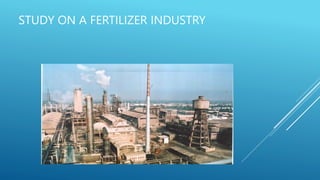
STUDY ON A FERTILIZER INDUSTRY
PRESENTED BY
1.Hosainur Rahman Aungon[Roll-1511007]
2.Razib Hossen[Roll-1511008]
3.Abid Hasan Badhon[Roll-1511009]
INTRODUCTION
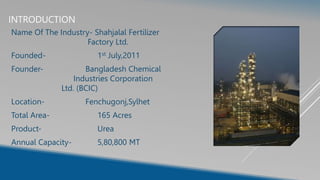
Name Of The Industry- Shahjalal Fertilizer
Factory Ltd.
Founded- 1st July,2011
Founder- Bangladesh Chemical
Industries Corporation
Ltd. (BCIC)
Location- Fenchugonj,Sylhet
Total Area- 165 Acres
Product- Urea
Annual Capacity- 5,80,800 MT
MAIN COMPONENTS & RAW MATERIALS
Main raw material of the industry is natural gas.
Ammonia & Carbon dioxide are the main two components for the
production of Urea.
Ammonia : Ammonia is a compound of Nitrogen and Hydrogen. It is a
colorless gas with a characteristic pungent smell. Ammonia contributes
significantly to the nutritional needs of terrestrial organisms by serving as
a precursor to food & fertilizers.
Carbon dioxide : Carbon dioxide is a colorless & odorless gas vital to life
on Earth. This naturally occurring chemical compound is composed of a
Carbon atom covalently double bonded to two Oxygen atoms. For that
kind of industry large quantities of Carbon dioxide are produced during
the Ammonia manufacturing process as a by product from hydrocarbon
such as natural gas.
METHODOLOGY/WORKING PROCEDURE
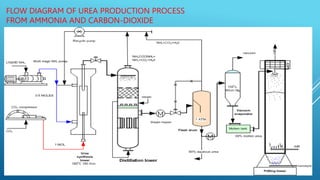
Urea is manufactured by reacting ammonia and carbon dioxide
in autoclave to form ammonia carbamate .The operating
temperature is 135 C and 35 atm pressure, the chemical
reaction is endothermic reaction so ammonia is maintained in
excess to shift the equilibrium towards urea formation. Urea
production is based on two main reactions.
1. Formation of ammonium carbamate.
2. Dehydration of ammonium carbamate to produce molten
urea.
FLOW DIAGRAM OF UREA PRODUCTION PROCESS
FROM AMMONIA AND CARBON-DIOXIDE
PROCEDURE
Ammonia pumping : Liquid ammonia is pumped
from the multistage pump which maintain the
reaction pressure in the vertical stainless steel
vessel.
Carbon dioxide compression: Ammonia plant
directly boost the carbon dioxide from the
compression section as it readily form at the
carbon dioxide section of ammonia production
plant.
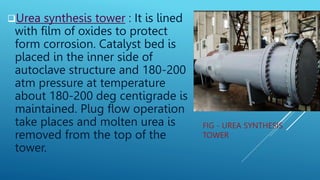
FIG - UREA SYNTHESIS
TOWER
Urea synthesis tower : It is lined
with film of oxides to protect
form corrosion. Catalyst bed is
placed in the inner side of
autoclave structure and 180-200
atm pressure at temperature
about 180-200 deg centigrade is
maintained. Plug flow operation
take places and molten urea is
removed from the top of the
tower.
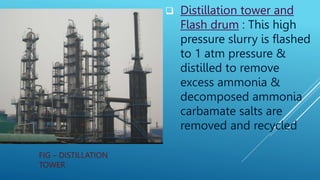
FIG – DISTILLATION
TOWER
 Distillation tower and
Flash drum : This high
pressure slurry is flashed
to 1 atm pressure &
distilled to remove
excess ammonia &
decomposed ammonia
carbamate salts are
removed and recycled
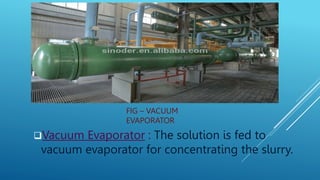
FIG – VACUUM
EVAPORATOR
Vacuum Evaporator : The solution is fed to
vacuum evaporator for concentrating the slurry.
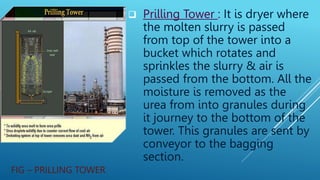
FIG – PRILLING TOWER
 Prilling Tower : It is dryer where
the molten slurry is passed
from top of the tower into a
bucket which rotates and
sprinkles the slurry & air is
passed from the bottom. All the
moisture is removed as the
urea from into granules during
it journey to the bottom of the
tower. This granules are sent by
conveyor to the bagging
section.
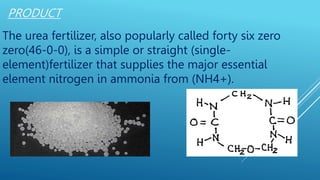
PRODUCT
The urea fertilizer, also popularly called forty six zero
zero(46-0-0), is a simple or straight (single-
element)fertilizer that supplies the major essential
element nitrogen in ammonia from (NH4+).
USES OF UREA FERTILIZER
1.Urea can be applied in the soil in the form of
solid prills or pellets.
2.It decomposes into gaseous ammonia
,carbon dioxide and water.
3.It fertiles the soil as a result more crops
can be grown in small place.
THE END
THANK YOU

A Case Study on Fertilizer Industry by RUET

  • 1.
    RAJSHAHI UNIVERSITY OFENGINEERING & TECHNOLOGY
  • 2.
    STUDY ON AFERTILIZER INDUSTRY
  • 3.
    PRESENTED BY 1.Hosainur RahmanAungon[Roll-1511007] 2.Razib Hossen[Roll-1511008] 3.Abid Hasan Badhon[Roll-1511009]
  • 4.
    INTRODUCTION Name Of TheIndustry- Shahjalal Fertilizer Factory Ltd. Founded- 1st July,2011 Founder- Bangladesh Chemical Industries Corporation Ltd. (BCIC) Location- Fenchugonj,Sylhet Total Area- 165 Acres Product- Urea Annual Capacity- 5,80,800 MT
  • 5.
    MAIN COMPONENTS &RAW MATERIALS Main raw material of the industry is natural gas. Ammonia & Carbon dioxide are the main two components for the production of Urea. Ammonia : Ammonia is a compound of Nitrogen and Hydrogen. It is a colorless gas with a characteristic pungent smell. Ammonia contributes significantly to the nutritional needs of terrestrial organisms by serving as a precursor to food & fertilizers. Carbon dioxide : Carbon dioxide is a colorless & odorless gas vital to life on Earth. This naturally occurring chemical compound is composed of a Carbon atom covalently double bonded to two Oxygen atoms. For that kind of industry large quantities of Carbon dioxide are produced during the Ammonia manufacturing process as a by product from hydrocarbon such as natural gas.
  • 6.
    METHODOLOGY/WORKING PROCEDURE Urea ismanufactured by reacting ammonia and carbon dioxide in autoclave to form ammonia carbamate .The operating temperature is 135 C and 35 atm pressure, the chemical reaction is endothermic reaction so ammonia is maintained in excess to shift the equilibrium towards urea formation. Urea production is based on two main reactions. 1. Formation of ammonium carbamate. 2. Dehydration of ammonium carbamate to produce molten urea.
  • 7.
    FLOW DIAGRAM OFUREA PRODUCTION PROCESS FROM AMMONIA AND CARBON-DIOXIDE
  • 8.
    PROCEDURE Ammonia pumping :Liquid ammonia is pumped from the multistage pump which maintain the reaction pressure in the vertical stainless steel vessel. Carbon dioxide compression: Ammonia plant directly boost the carbon dioxide from the compression section as it readily form at the carbon dioxide section of ammonia production plant.
  • 9.
    FIG - UREASYNTHESIS TOWER Urea synthesis tower : It is lined with film of oxides to protect form corrosion. Catalyst bed is placed in the inner side of autoclave structure and 180-200 atm pressure at temperature about 180-200 deg centigrade is maintained. Plug flow operation take places and molten urea is removed from the top of the tower.
  • 10.
    FIG – DISTILLATION TOWER Distillation tower and Flash drum : This high pressure slurry is flashed to 1 atm pressure & distilled to remove excess ammonia & decomposed ammonia carbamate salts are removed and recycled
  • 11.
    FIG – VACUUM EVAPORATOR VacuumEvaporator : The solution is fed to vacuum evaporator for concentrating the slurry.
  • 12.
    FIG – PRILLINGTOWER  Prilling Tower : It is dryer where the molten slurry is passed from top of the tower into a bucket which rotates and sprinkles the slurry & air is passed from the bottom. All the moisture is removed as the urea from into granules during it journey to the bottom of the tower. This granules are sent by conveyor to the bagging section.
  • 13.
    PRODUCT The urea fertilizer,also popularly called forty six zero zero(46-0-0), is a simple or straight (single- element)fertilizer that supplies the major essential element nitrogen in ammonia from (NH4+).
  • 14.
    USES OF UREAFERTILIZER 1.Urea can be applied in the soil in the form of solid prills or pellets. 2.It decomposes into gaseous ammonia ,carbon dioxide and water. 3.It fertiles the soil as a result more crops can be grown in small place.
  • 15.