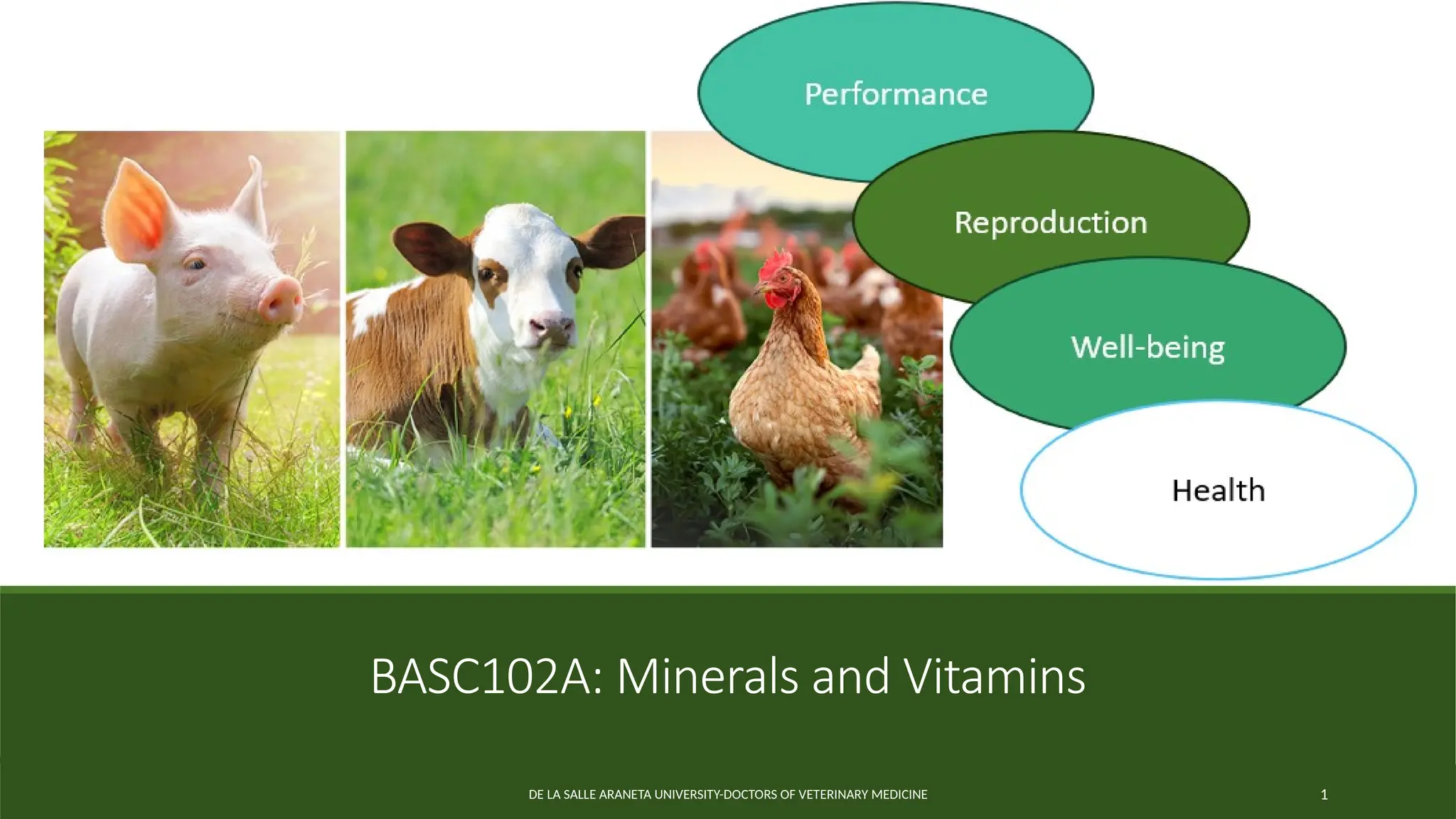
BASC102A: Minerals andVitamins
DE LA SALLE ARANETA UNIVERSITY-DOCTORS OF VETERINARY MEDICINE 1
2.
DE LA SALLEARANETA UNIVERSITY-DOCTORS OF VETERINARY MEDICINE 2
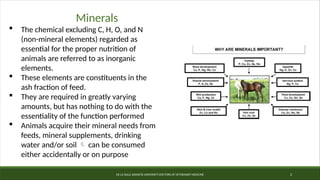
Minerals
The chemical excluding C, H, O, and N
(non-mineral elements) regarded as
essential for the proper nutrition of
animals are referred to as inorganic
elements.
These elements are constituents in the
ash fraction of feed.
They are required in greatly varying
amounts, but has nothing to do with the
essentiality of the function performed
Animals acquire their mineral needs from
feeds, mineral supplements, drinking
water and/or soil can be consumed
either accidentally or on purpose
3.
DE LA SALLEARANETA UNIVERSITY- AGRIVET SCIENCES INSTITUTE 3
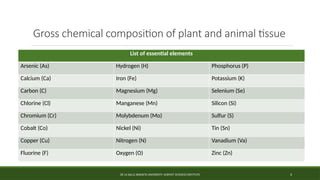
Gross chemical composition of plant and animal tissue
List of essential elements
Arsenic (As) Hydrogen (H) Phosphorus (P)
Calcium (Ca) Iron (Fe) Potassium (K)
Carbon (C) Magnesium (Mg) Selenium (Se)
Chlorine (Cl) Manganese (Mn) Silicon (Si)
Chromium (Cr) Molybdenum (Mo) Sulfur (S)
Cobalt (Co) Nickel (Ni) Tin (Sn)
Copper (Cu) Nitrogen (N) Vanadium (Va)
Fluorine (F) Oxygen (O) Zinc (Zn)
4.
DE LA SALLEARANETA UNIVERSITY- AGRIVET SCIENCES INSTITUTE 4
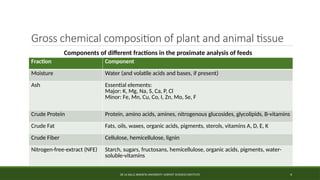
Gross chemical composition of plant and animal tissue
Fraction Component
Moisture Water (and volatile acids and bases, if present)
Ash Essential elements:
Major: K, Mg, Na, S, Ca, P, Cl
Minor: Fe, Mn, Cu, Co, I, Zn, Mo, Se, F
Crude Protein Protein, amino acids, amines, nitrogenous glucosides, glycolipids, B-vitamins
Crude Fat Fats, oils, waxes, organic acids, pigments, sterols, vitamins A, D, E, K
Crude Fiber Cellulose, hemicellulose, lignin
Nitrogen-free-extract (NFE) Starch, sugars, fructosans, hemicellulose, organic acids, pigments, water-
soluble-vitamins
Components of different fractions in the proximate analysis of feeds
5.
DE LA SALLEARANETA UNIVERSITY-DOCTORS OF VETERINARY MEDICINE 5
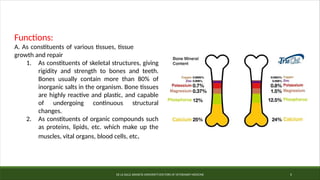
Functions:
A. As constituents of various tissues, tissue
growth and repair
1. As constituents of skeletal structures, giving
rigidity and strength to bones and teeth.
Bones usually contain more than 80% of
inorganic salts in the organism. Bone tissues
are highly reactive and plastic, and capable
of undergoing continuous structural
changes.
2. As constituents of organic compounds such
as proteins, lipids, etc. which make up the
muscles, vital organs, blood cells, etc.
6.
DE LA SALLEARANETA UNIVERSITY-DOCTORS OF VETERINARY MEDICINE 6
Functions:
B. Serve as body regulators or for producing body regulators.
1. Maintenance of ionic equilibrium. Ex. Mg2, Cl, SO4
2. As components and in activation of enzymes Metalloenzymes Ex.
cytochrome oxidase (Cu) Activator of one or more enzyme systems. Ex. Na,P
3.As components and in activation of hormones and direct incorporation
into hormone structure ex. Iodine for thyroid hormones
4.As components and in activation of vitamins. Ex. Use of Co for
microorganisms to produce VitaminB12
5. Acid-base equilibrium Ex. Excretion of H ions
6. Nerve excitability
7.
DE LA SALLEARANETA UNIVERSITY-DOCTORS OF VETERINARY MEDICINE 7
Functions:
C. Accessory functions
Ex. milk and egg production
D. Component of cell membrane
Ex. Sodium pump moves Na ions out of the
cell and moves K ions into the cell.
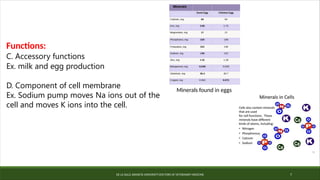
Minerals found in eggs
8.
DE LA SALLEARANETA UNIVERSITY-DOCTORS OF VETERINARY MEDICINE 8
Classification of Minerals
1.Macro minerals- required in relatively large amount usually in
percentage basis.
( Ca, P
, K, Na, Cl,Mg,and S)
2.Micro minerals- required in trace or minute amounts expressed in
ppm,mg/lb or mg/kg. (Fe, Cu, Co, I, Mo, F, Mn, Zn and Se)
9.
DE LA SALLEARANETA UNIVERSITY-DOCTORS OF VETERINARY MEDICINE 9
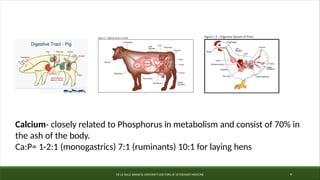
Calcium- closely related to Phosphorus in metabolism and consist of 70% in
the ash of the body.
Ca:P= 1-2:1 (monogastrics) 7:1 (ruminants) 10:1 for laying hens
10.
DE LA SALLEARANETA UNIVERSITY-DOCTORS OF VETERINARY MEDICINE 10
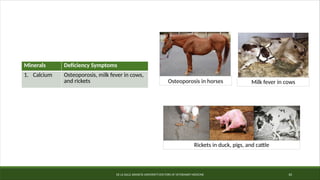
Osteoporosis in horses Milk fever in cows
Rickets in duck, pigs, and cattle
Minerals Deficiency Symptoms
1. Calcium Osteoporosis, milk fever in cows,
and rickets
11.
DE LA SALLEARANETA UNIVERSITY-DOCTORS OF VETERINARY MEDICINE 11
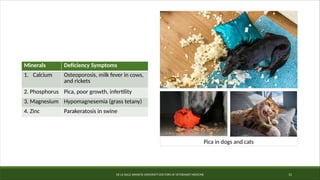
Pica in dogs and cats
Minerals Deficiency Symptoms
1. Calcium Osteoporosis, milk fever in cows,
and rickets
2. Phosphorus Pica, poor growth, infertility
3. Magnesium Hypomagnesemia (grass tetany)
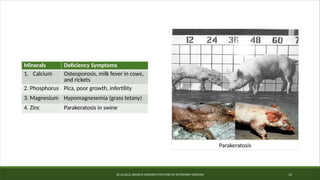
4. Zinc Parakeratosis in swine
12.
DE LA SALLEARANETA UNIVERSITY-DOCTORS OF VETERINARY MEDICINE 12
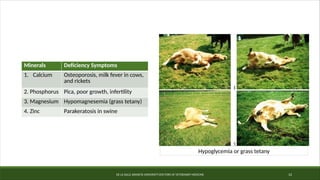
Hypoglycemia or grass tetany
Minerals Deficiency Symptoms
1. Calcium Osteoporosis, milk fever in cows,
and rickets
2. Phosphorus Pica, poor growth, infertility
3. Magnesium Hypomagnesemia (grass tetany)
4. Zinc Parakeratosis in swine
13.
DE LA SALLEARANETA UNIVERSITY-DOCTORS OF VETERINARY MEDICINE 13
Minerals Deficiency Symptoms
1. Calcium Osteoporosis, milk fever in cows,
and rickets
2. Phosphorus Pica, poor growth, infertility
3. Magnesium Hypomagnesemia (grass tetany)
4. Zinc Parakeratosis in swine
Parakeratosis
14.
DE LA SALLEARANETA UNIVERSITY-DOCTORS OF VETERINARY MEDICINE 14
Minerals Deficiency Symptoms
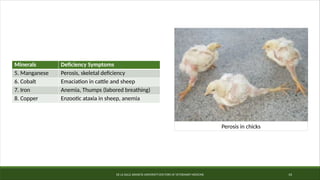
5. Manganese Perosis, skeletal deficiency
6. Cobalt Emaciation in cattle and sheep
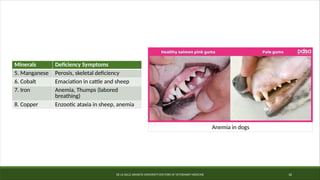
7. Iron Anemia, Thumps (labored breathing)
8. Copper Enzootic ataxia in sheep, anemia
Perosis in chicks
15.
DE LA SALLEARANETA UNIVERSITY-DOCTORS OF VETERINARY MEDICINE 15
Minerals Deficiency Symptoms
5. Manganese Perosis, skeletal deficiency
6. Cobalt Emaciation in cattle and sheep
7. Iron Anemia, Thumps (labored breathing)
8. Copper Enzootic ataxia in sheep, anemia
Emaciation in sheep
16.
DE LA SALLEARANETA UNIVERSITY-DOCTORS OF VETERINARY MEDICINE 16
Minerals Deficiency Symptoms
5. Manganese Perosis, skeletal deficiency
6. Cobalt Emaciation in cattle and sheep
7. Iron Anemia, Thumps (labored
breathing)
8. Copper Enzootic ataxia in sheep, anemia
Anemia in dogs
17.
DE LA SALLEARANETA UNIVERSITY-DOCTORS OF VETERINARY MEDICINE 17
Minerals Deficiency Symptoms
5. Manganese Perosis, skeletal deficiency
6. Cobalt Emaciation in cattle and sheep
7. Iron Anemia, Thumps (labored
breathing)
8. Copper Enzootic ataxia in sheep, anemia
Enzootic ataxia in sheep
18.
DE LA SALLEARANETA UNIVERSITY-DOCTORS OF VETERINARY MEDICINE 18
Minerals Deficiency Symptoms
9. Iodine Goiter and alopecia
10. Selenium Same in Vit. E, Nutritional and
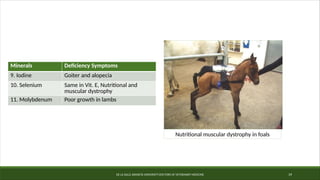
muscular dystrophy
11. Molybdenum Poor growth in lambs
Alopecia in dogs
Goiter in cattle and sheep
19.
DE LA SALLEARANETA UNIVERSITY-DOCTORS OF VETERINARY MEDICINE 19
Minerals Deficiency Symptoms
9. Iodine Goiter and alopecia
10. Selenium Same in Vit. E, Nutritional and
muscular dystrophy
11. Molybdenum Poor growth in lambs
Nutritional muscular dystrophy in foals
20.
Thank You!
DELA SALLE ARANETA UNIVERSITY-DOCTORS OF VETERINARY MEDICINE 20
Editor's Notes
#2 Image source: Retrieved from http://www.horsefeedblog.com/2011/05/minerals-in-horse-feeds/ on October 11, 2023
#10 Milk fever is observed when the cows turn their head towards their flanks. This is observed after parturition.
Rickets can be characterized by posterior paralysis.
#11 Pica can be characterized by having abnormal eating behavior observed in the animals
#12 Due to grazing lush greens that are low in Mg, high in K and N, it interferes with digestion that causes stiff muscles and animals will not be able to stand and eventually this leads to death
#13 Parakeratosis is a nutritional deficiency disease of 6- to 16-week-old pigs characterized by lesions of the superficial layers of the epidermis. It results from a zinc deficiency or inadequate absorption of zinc due to an excess of calcium, phytates, or other chelating agents in the diet.
#14 Perosis in chicks is characterized by slipped tendons
#15 All ruminants (including sheep, cattle and goats) require cobalt in their diet for the synthesis of vitamin B12. Vitamin B12 is essential for energy metabolism and the production of red blood cells. Cobalt deficiency in soils can cause vitamin B12 deficiency in livestock
#16 Anemia can occur in dogs and cats, although it is more common in dogs. Several factors can cause anemia, including genetic disorders like canine polycystic kidney disease (PKD), or autoimmune diseases like systemic lupus erythematosus (SLE).
#17 Retrieved from: Veterinary handbook disease founder at https://www.veterinaryhandbook.com.au/Diseases.aspx?diseasenameid=56Copper deficiency is common in Australian livestock. There are two main causes: low copper levels in soil and plants, and secondary copper deficiency caused by ingestion of excessive levels of molybdenum and sulphur in pasture or feed supplements.
#18 Read for further information about goiter and why the iodized salt supplement became prevalent.
https://www.msdvetmanual.com/endocrine-system/the-thyroid-gland/goiter-in-animals
#19 Horses In equids, it is most common in the first twelve months of life. Neonatal foals born to dams that are selenium-deficient often develop the condition. There are two forms: peracute, and subacute.
Read further about how nutritional muscular dystrophy is treated https://irishvetjournal.biomedcentral.com/articles/10.1186/2046-0481-62-2-119