Energy Resource Plan Ray Sparks Axia College of University of Phoenix SCI 275: Environmental Science November 29, 2008
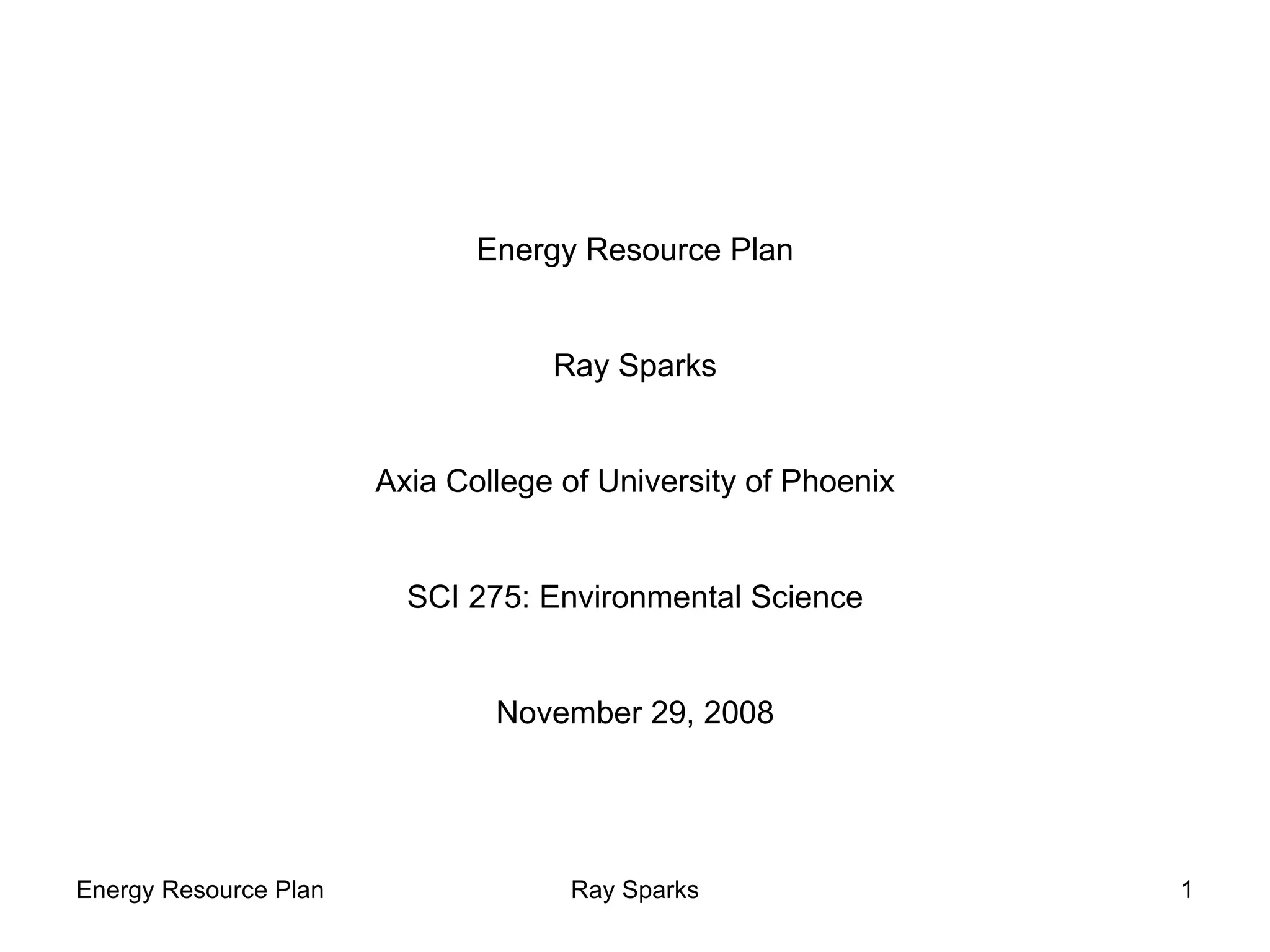
Extending Energy Resources Energy Conservation  Reduce Reuse Renew
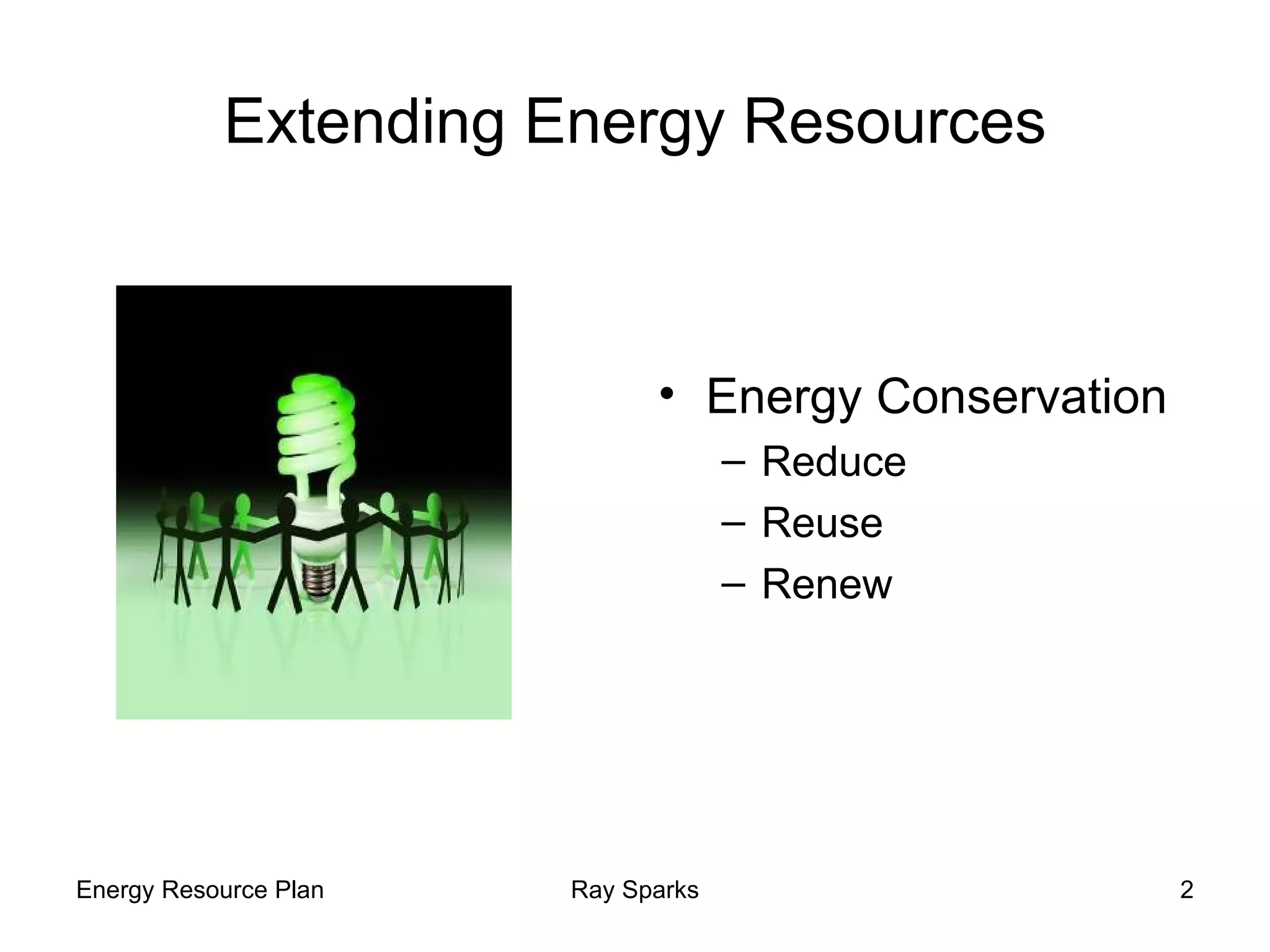
Renewable Energy Solar Thermal Photo Voltaic Wind Bio-Mass Bio fuel Bio diesel Geothermal Hydro Electric*
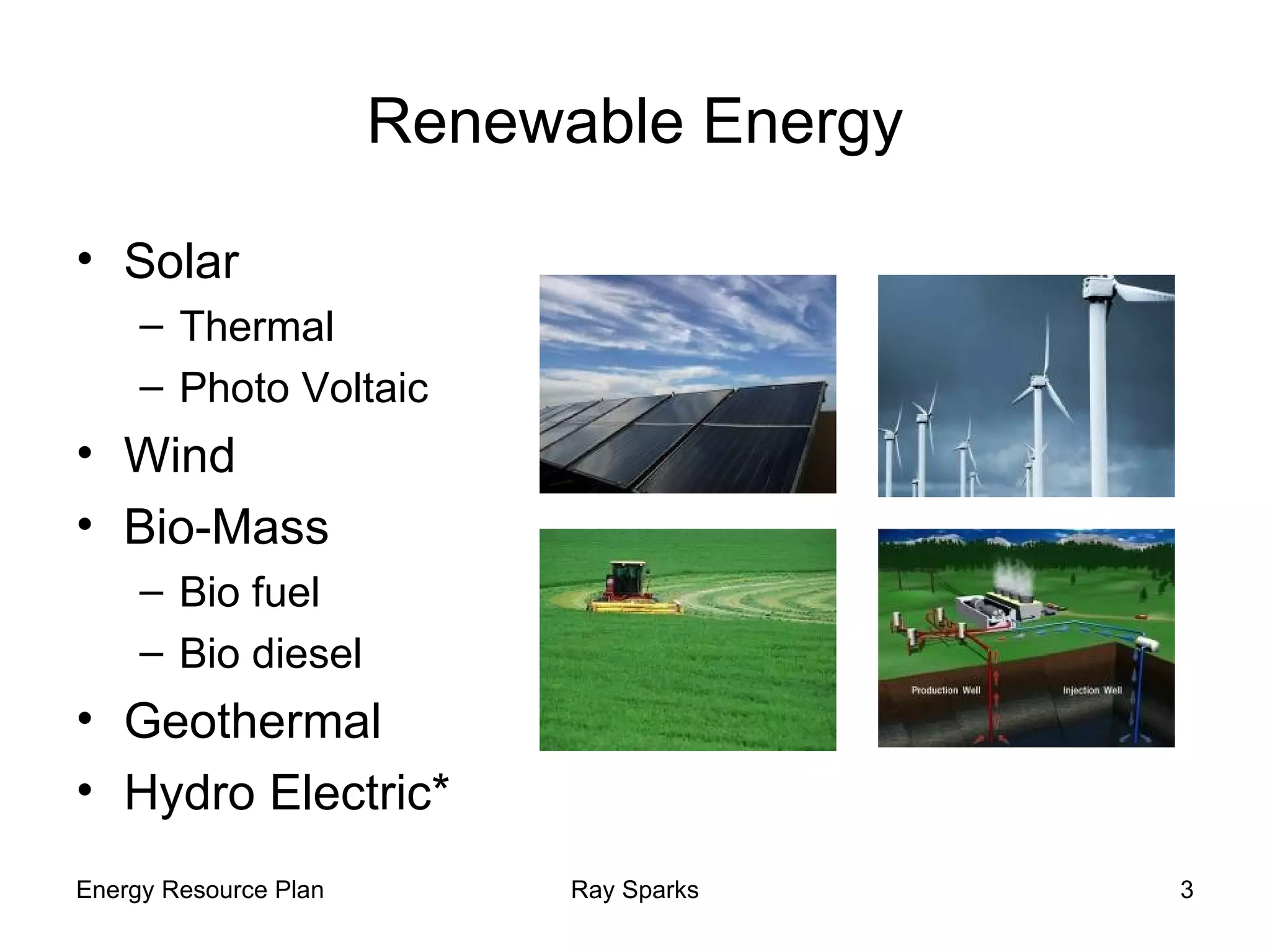
Non-Renewable 3 Major Sources of Non-Renewable Energy Coal Heating Electrical Generation Natural Gas Heating Crude Oil Plastics Transportation Heating
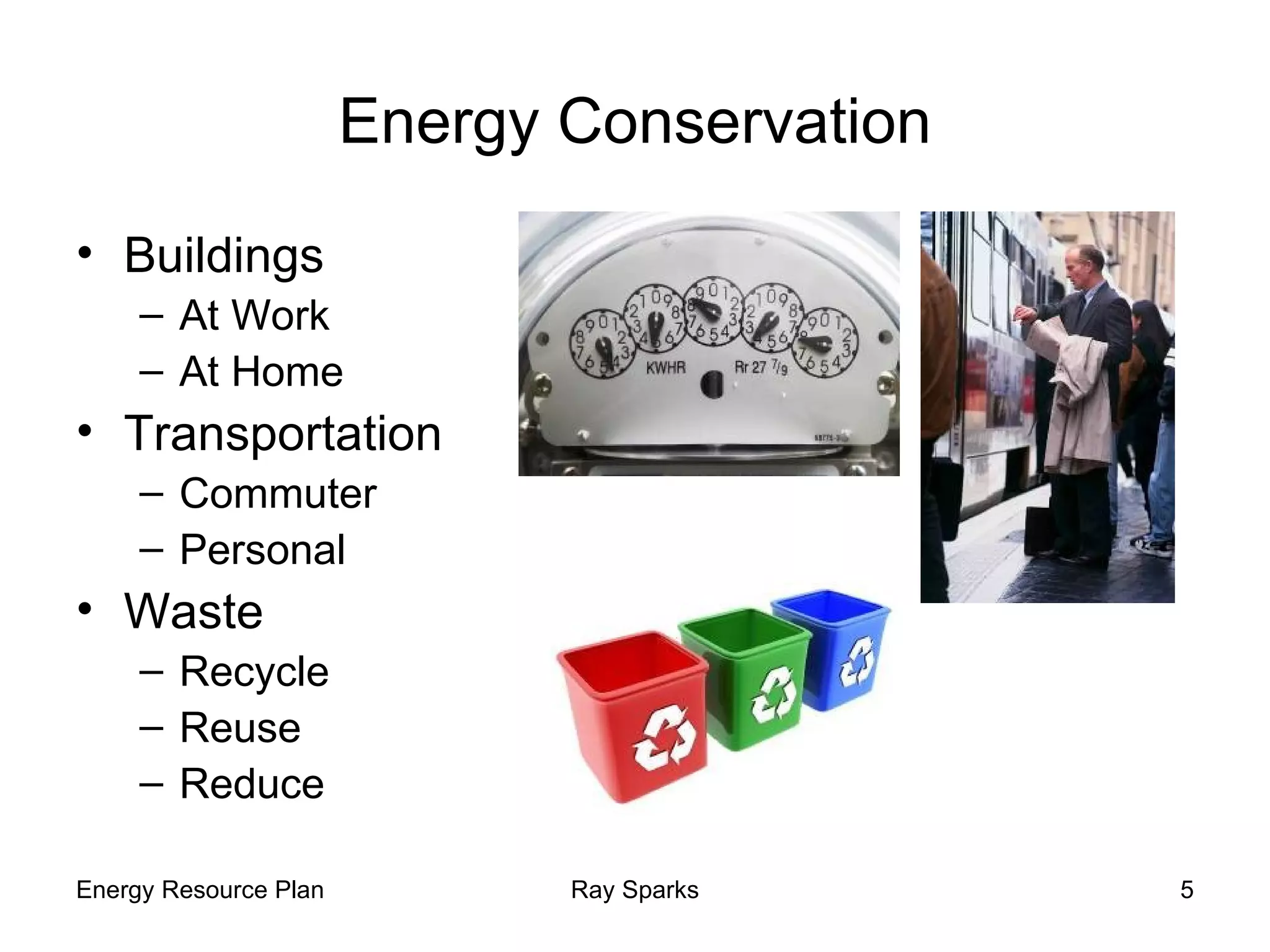
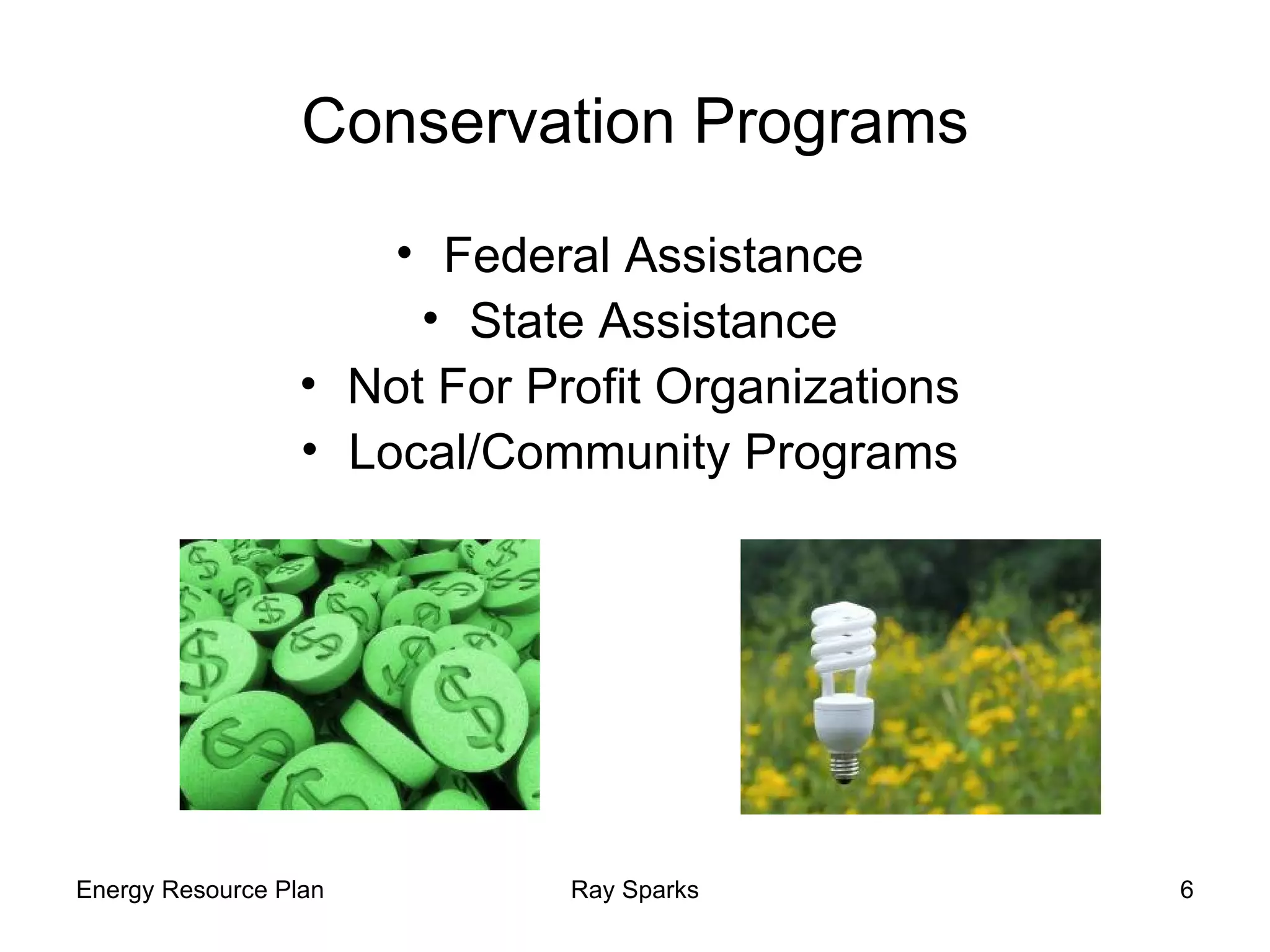
Energy Conservation Buildings At Work At Home Transportation Commuter Personal Waste Recycle Reuse Reduce
Conservation Programs Federal Assistance State Assistance Not For Profit Organizations Local/Community Programs
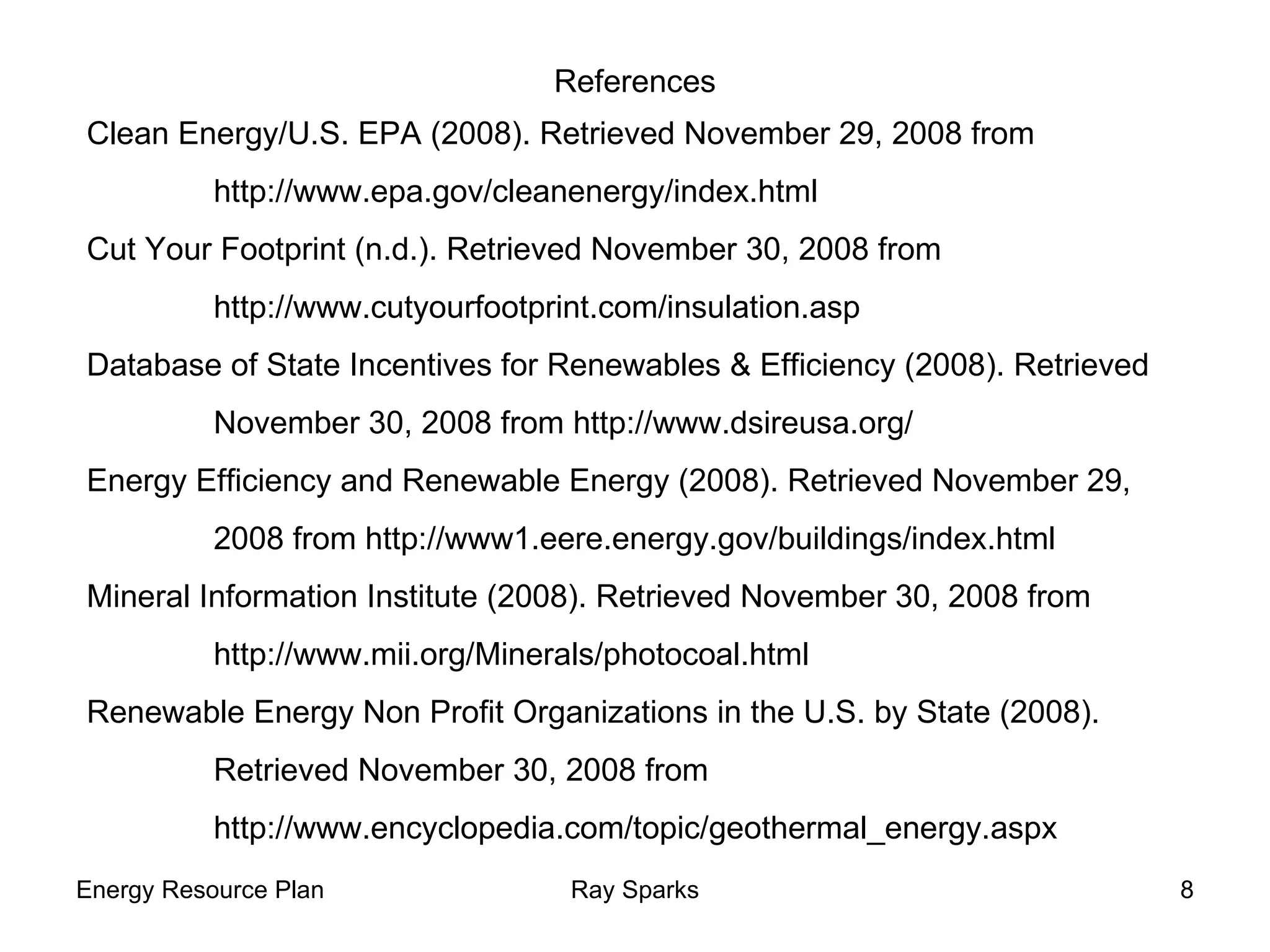
Working Together Just like the integral parts and functions of our home work together, our community can work together and achieve energy conservation.
References Clean Energy/U.S. EPA (2008). Retrieved November 29, 2008 from  http://www.epa.gov/cleanenergy/index.html  Cut Your Footprint (n.d.). Retrieved November 30, 2008 from http://www.cutyourfootprint.com/insulation.asp Database of State Incentives for Renewables & Efficiency (2008). Retrieved  November 30, 2008 from http://www.dsireusa.org/ Energy Efficiency and Renewable Energy (2008). Retrieved November 29,  2008 from http://www1.eere.energy.gov/buildings/index.html Mineral Information Institute (2008). Retrieved November 30, 2008 from  http://www.mii.org/Minerals/photocoal.html Renewable Energy Non Profit Organizations in the U.S. by State (2008).  Retrieved November 30, 2008 from  http://www.encyclopedia.com/topic/geothermal_energy.aspx

Energy+Conservation2

  • 1.
    Energy Resource PlanRay Sparks Axia College of University of Phoenix SCI 275: Environmental Science November 29, 2008
  • 2.
    Extending Energy ResourcesEnergy Conservation Reduce Reuse Renew
  • 3.
    Renewable Energy SolarThermal Photo Voltaic Wind Bio-Mass Bio fuel Bio diesel Geothermal Hydro Electric*
  • 4.
    Non-Renewable 3 MajorSources of Non-Renewable Energy Coal Heating Electrical Generation Natural Gas Heating Crude Oil Plastics Transportation Heating
  • 5.
    Energy Conservation BuildingsAt Work At Home Transportation Commuter Personal Waste Recycle Reuse Reduce
  • 6.
    Conservation Programs FederalAssistance State Assistance Not For Profit Organizations Local/Community Programs
  • 7.
    Working Together Justlike the integral parts and functions of our home work together, our community can work together and achieve energy conservation.
  • 8.
    References Clean Energy/U.S.EPA (2008). Retrieved November 29, 2008 from http://www.epa.gov/cleanenergy/index.html Cut Your Footprint (n.d.). Retrieved November 30, 2008 from http://www.cutyourfootprint.com/insulation.asp Database of State Incentives for Renewables & Efficiency (2008). Retrieved November 30, 2008 from http://www.dsireusa.org/ Energy Efficiency and Renewable Energy (2008). Retrieved November 29, 2008 from http://www1.eere.energy.gov/buildings/index.html Mineral Information Institute (2008). Retrieved November 30, 2008 from http://www.mii.org/Minerals/photocoal.html Renewable Energy Non Profit Organizations in the U.S. by State (2008). Retrieved November 30, 2008 from http://www.encyclopedia.com/topic/geothermal_energy.aspx

Editor's Notes

  • #2 Energy Resource Plan Ray Sparks Axia College of University of Phoenix SCI 275: Environmental Science November 29, 2008