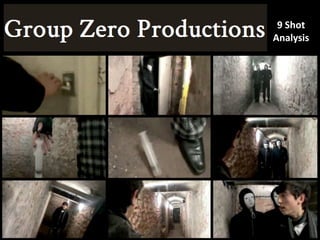
9 Shot
Analysis
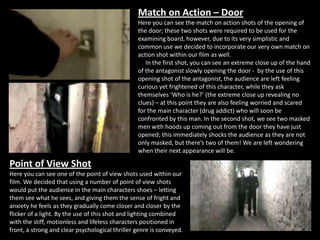
Match on Action – Door
                                                 Here you can see the match on action shots of the opening of
                                                 the door; these two shots were required to be used for the
                                                 examining board, however, due to its very simplistic and
                                                 common use we decided to incorporate our very own match on
                                                 action shot within our film as well.
                                                    In the first shot, you can see an extreme close up of the hand
                                                 of the antagonist slowly opening the door - by the use of this
                                                 opening shot of the antagonist, the audience are left feeling
                                                 curious yet frightened of this character, while they ask
                                                 themselves ‘Who is he?’ (the extreme close up revealing no
                                                 clues) – at this point they are also feeling worried and scared
                                                 for the main character (drug addict) who will soon be
                                                 confronted by this man. In the second shot, we see two masked
                                                 men with hoods up coming out from the door they have just
                                                 opened; this immediately shocks the audience as they are not
                                                 only masked, but there’s two of them! We are left wondering
                                                 when their next appearance will be.

Point of View Shot
Here you can see one of the point of view shots used within our
film. We decided that using a number of point of view shots
would put the audience in the main characters shoes – letting
them see what he sees, and giving them the sense of fright and
anxiety he feels as they gradually come closer and closer by the
flicker of a light. By the use of this shot and lighting combined
with the stiff, motionless and lifeless characters positioned in
front, a strong and clear psychological thriller genre is conveyed.
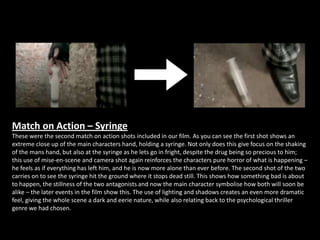
Match on Action – Syringe
These were the second match on action shots included in our film. As you can see the first shot shows an
extreme close up of the main characters hand, holding a syringe. Not only does this give focus on the shaking
of the mans hand, but also at the syringe as he lets go in fright, despite the drug being so precious to him;
this use of mise-en-scene and camera shot again reinforces the characters pure horror of what is happening –
he feels as if everything has left him, and he is now more alone than ever before. The second shot of the two
carries on to see the syringe hit the ground where it stops dead still. This shows how something bad is about
to happen, the stillness of the two antagonists and now the main character symbolise how both will soon be
alike – the later events in the film show this. The use of lighting and shadows creates an even more dramatic
feel, giving the whole scene a dark and eerie nature, while also relating back to the psychological thriller
genre we had chosen.
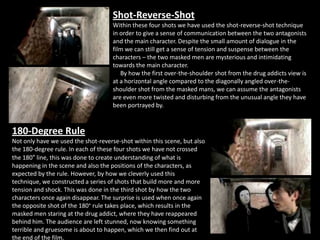
Shot-Reverse-Shot
                                     Within these four shots we have used the shot-reverse-shot technique
                                     in order to give a sense of communication between the two antagonists
                                     and the main character. Despite the small amount of dialogue in the
                                     film we can still get a sense of tension and suspense between the
                                     characters – the two masked men are mysterious and intimidating
                                     towards the main character.
                                        By how the first over-the-shoulder shot from the drug addicts view is
                                     at a horizontal angle compared to the diagonally angled over-the-
                                     shoulder shot from the masked mans, we can assume the antagonists
                                     are even more twisted and disturbing from the unusual angle they have
                                     been portrayed by.


180-Degree Rule
Not only have we used the shot-reverse-shot within this scene, but also
the 180-degree rule. In each of these four shots we have not crossed
the 180° line, this was done to create understanding of what is
happening in the scene and also the positions of the characters, as
expected by the rule. However, by how we cleverly used this
technique, we constructed a series of shots that build more and more
tension and shock. This was done in the third shot by how the two
characters once again disappear. The surprise is used when once again
the opposite shot of the 180° rule takes place, which results in the
masked men staring at the drug addict, where they have reappeared
behind him. The audience are left stunned, now knowing something
terrible and gruesome is about to happen, which we then find out at
the end of the film.

9 shot analysis

  • 1.
  • 2.
    Match on Action– Door Here you can see the match on action shots of the opening of the door; these two shots were required to be used for the examining board, however, due to its very simplistic and common use we decided to incorporate our very own match on action shot within our film as well. In the first shot, you can see an extreme close up of the hand of the antagonist slowly opening the door - by the use of this opening shot of the antagonist, the audience are left feeling curious yet frightened of this character, while they ask themselves ‘Who is he?’ (the extreme close up revealing no clues) – at this point they are also feeling worried and scared for the main character (drug addict) who will soon be confronted by this man. In the second shot, we see two masked men with hoods up coming out from the door they have just opened; this immediately shocks the audience as they are not only masked, but there’s two of them! We are left wondering when their next appearance will be. Point of View Shot Here you can see one of the point of view shots used within our film. We decided that using a number of point of view shots would put the audience in the main characters shoes – letting them see what he sees, and giving them the sense of fright and anxiety he feels as they gradually come closer and closer by the flicker of a light. By the use of this shot and lighting combined with the stiff, motionless and lifeless characters positioned in front, a strong and clear psychological thriller genre is conveyed.
  • 3.
    Match on Action– Syringe These were the second match on action shots included in our film. As you can see the first shot shows an extreme close up of the main characters hand, holding a syringe. Not only does this give focus on the shaking of the mans hand, but also at the syringe as he lets go in fright, despite the drug being so precious to him; this use of mise-en-scene and camera shot again reinforces the characters pure horror of what is happening – he feels as if everything has left him, and he is now more alone than ever before. The second shot of the two carries on to see the syringe hit the ground where it stops dead still. This shows how something bad is about to happen, the stillness of the two antagonists and now the main character symbolise how both will soon be alike – the later events in the film show this. The use of lighting and shadows creates an even more dramatic feel, giving the whole scene a dark and eerie nature, while also relating back to the psychological thriller genre we had chosen.
  • 4.
    Shot-Reverse-Shot Within these four shots we have used the shot-reverse-shot technique in order to give a sense of communication between the two antagonists and the main character. Despite the small amount of dialogue in the film we can still get a sense of tension and suspense between the characters – the two masked men are mysterious and intimidating towards the main character. By how the first over-the-shoulder shot from the drug addicts view is at a horizontal angle compared to the diagonally angled over-the- shoulder shot from the masked mans, we can assume the antagonists are even more twisted and disturbing from the unusual angle they have been portrayed by. 180-Degree Rule Not only have we used the shot-reverse-shot within this scene, but also the 180-degree rule. In each of these four shots we have not crossed the 180° line, this was done to create understanding of what is happening in the scene and also the positions of the characters, as expected by the rule. However, by how we cleverly used this technique, we constructed a series of shots that build more and more tension and shock. This was done in the third shot by how the two characters once again disappear. The surprise is used when once again the opposite shot of the 180° rule takes place, which results in the masked men staring at the drug addict, where they have reappeared behind him. The audience are left stunned, now knowing something terrible and gruesome is about to happen, which we then find out at the end of the film.