AMA School Design ChallengeAugust 5, 2011Silver Spring, MD
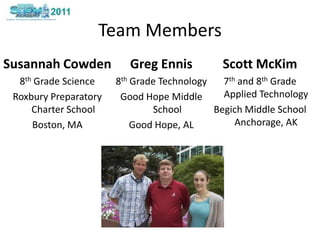
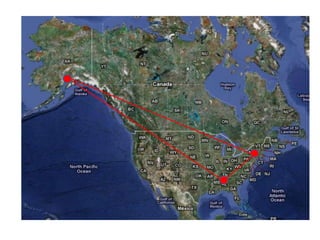
Team MembersSusannahCowden8th GradeScienceRoxbury Preparatory Charter SchoolBoston, MAScott McKim7th and 8th GradeApplied TechnologyBegich Middle School Anchorage, AKGreg Ennis 8th GradeTechnologyGood Hope Middle SchoolGood Hope, AL
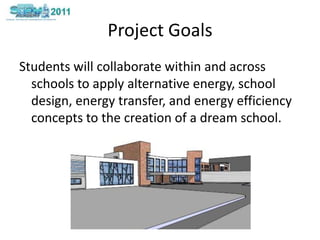
Project GoalsStudents will collaborate within and across schools to apply alternative energy, school design, energy transfer, and energy efficiency concepts to the creation of a dream school.
Curricular ConnectionsScience:  	Sustainability, Energy efficiency, Alternative energy sources, Energy conversion and conservation.Technology: 	Drafting and design software applicationEngineering:   Engineering Design Process, Structural componentsMathematics: Scale, area, energy efficiency calculations
Project PlanStudents become content experts in focus areas	- Anchorage: Alternative Energy Sources- Boston: Energy Transfer and Structural 	Components- Good Hope: Energy Efficiency Students create short media files summarizing their research.  Students share these resources with students at other sites. Phase 1 – Research and Share
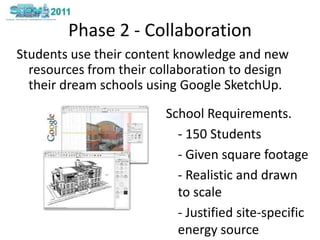
Phase 2 - CollaborationStudents use their content knowledge and new resources from their collaboration to design their dream schools using Google SketchUp. School Requirements. - 150 Students- Given square footage- Realistic and drawn to scale- Justified site-specific energy source
Phase 3 – Comment PeriodStudents prepare draft presentation videos justifying their design decisions Students share videos and SketchUp drafts with students at other schools.  In return, students provide meaningful feedback to peer groups with guided questions.
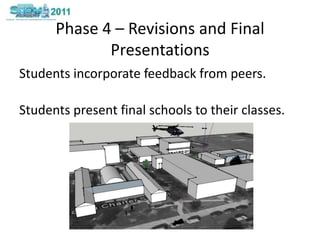
Phase 4 – Revisions and Final PresentationsStudents incorporate feedback from peers. Students present final schools to their classes.
Project TimelineEarly February – Project Launch via SkypeLate February – Publish research media filesMid March – Initial draft conferencesLate March – Final Presentations
Tools and TechnologyIntroduction – SkypePhase 1: Research and Share – iMovie, Animoto, Google DocsPhase 2: Design - Google SketchUpPhase 3: Collaboration - EdmodoPhase 4: Revisions and Presentations – Google Presentations, Glogster, Prezi
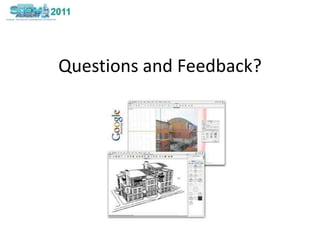
Questions and Feedback?

8.4.11 green school presentation

  • 1.
    AMA School DesignChallengeAugust 5, 2011Silver Spring, MD
  • 2.
    Team MembersSusannahCowden8th GradeScienceRoxburyPreparatory Charter SchoolBoston, MAScott McKim7th and 8th GradeApplied TechnologyBegich Middle School Anchorage, AKGreg Ennis 8th GradeTechnologyGood Hope Middle SchoolGood Hope, AL
  • 4.
    Project GoalsStudents willcollaborate within and across schools to apply alternative energy, school design, energy transfer, and energy efficiency concepts to the creation of a dream school.
  • 5.
    Curricular ConnectionsScience:   Sustainability,Energy efficiency, Alternative energy sources, Energy conversion and conservation.Technology: Drafting and design software applicationEngineering:   Engineering Design Process, Structural componentsMathematics: Scale, area, energy efficiency calculations
  • 6.
    Project PlanStudents becomecontent experts in focus areas - Anchorage: Alternative Energy Sources- Boston: Energy Transfer and Structural Components- Good Hope: Energy Efficiency Students create short media files summarizing their research. Students share these resources with students at other sites. Phase 1 – Research and Share
  • 7.
    Phase 2 -CollaborationStudents use their content knowledge and new resources from their collaboration to design their dream schools using Google SketchUp. School Requirements. - 150 Students- Given square footage- Realistic and drawn to scale- Justified site-specific energy source
  • 8.
    Phase 3 –Comment PeriodStudents prepare draft presentation videos justifying their design decisions Students share videos and SketchUp drafts with students at other schools. In return, students provide meaningful feedback to peer groups with guided questions.
  • 9.
    Phase 4 –Revisions and Final PresentationsStudents incorporate feedback from peers. Students present final schools to their classes.
  • 10.
    Project TimelineEarly February– Project Launch via SkypeLate February – Publish research media filesMid March – Initial draft conferencesLate March – Final Presentations
  • 11.
    Tools and TechnologyIntroduction– SkypePhase 1: Research and Share – iMovie, Animoto, Google DocsPhase 2: Design - Google SketchUpPhase 3: Collaboration - EdmodoPhase 4: Revisions and Presentations – Google Presentations, Glogster, Prezi
  • 12.