
四無量心
悲悶心
善心今攝
Aug. 30, 2023
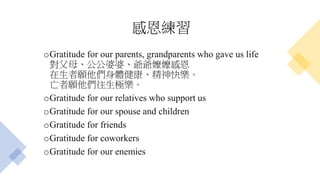
感恩練習
oGratitude for our parents, grandparents who gave us life
對父母、公公婆婆、爺爺嬤嬤感恩
在生者願他們身體健康、精神快樂。
亡者願他們往生極樂。
oGratitude for our relatives who support us
oGratitude for our spouse and children
oGratitude for friends
oGratitude for coworkers
oGratitude for our enemies
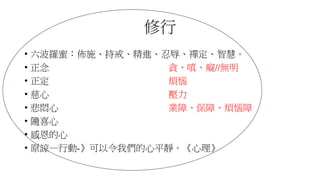
修行
• 六波羅蜜:佈施、持戒、精進、忍辱、禪定、智慧。
• 正念 貪、嗔、癡//無明
• 正定 煩惱
• 慈心 壓力
• 悲悶心 業障、保障、煩惱障
• 隨喜心
• 感恩的心
• 原諒—行動-》可以令我們的心平靜。《心理》
Chapter 8: Liberating the Mind thru
Sympathetic Joy
第八章: 通過隨喜解放心
上星期: 第五章
• 正念在當下
Mudita
隨喜
• Means: to be pleased, to have a sense of gladness.
意思:感到高興,有一種樂意的感覺。
• The Buddha called mudita “the mind-deliverance of gladness,” because this force
of happiness actually liberates us.
佛陀稱喜為“歡喜解脫”,因為這種快樂的力量實際上使我們解
脫。
• Unlike a state of mere excitement or giddiness, the quality of sympathetic joy
challenges our deep assumptions about aloneness, loss, and happiness, and shows
us another possibility.
與單純的興奮或頭暈的狀態不同,隨喜的品質挑戰了我們對孤獨、
失落和幸福的深刻假設,並向我們展示了另一種可能性。
• It defeats many of the qualities of consciousness that bind us.
它擊敗了許多束縛我們的意識品質。
• We judge each other, compare ourselves to each other, demean and envy each
other, and we ourselves suffer the strangling effects of these limitations.
我們互相評判,互相比較,互相貶低和嫉妒,而我們自己也遭受
著這些限制的窒息影響。
• Because there are so many constricting mind states that are impediments to
mudita, sympathetic joy is considered the most difficult of all the brahma-viharas
to develop.
由於有如此多的束縛性心境會成為修行的障礙,因此隨喜被認為
是所有四無量心中最難培養的。
Monkey Trap
猴子陷阱
• To make the trap, some tar is spread on the ground.
為了製作陷阱,需要在地上撒一些焦油。
• A monkey then comes along and steps in the sticky tar.
然後一隻猴子走過來,踩進了粘稠的焦油裡。
• First one little monkey foot gets stuck.
首先,一隻小猴子的腳被卡住了。
• In trying to free itself, the monkey puts down another foot.
為了掙脫束縛,猴子放下了另一隻腳。
Monkey Trap
猴子陷阱
• Then it puts down one hand, then the other hand.
然後它放下一隻手,然後是另一隻手。
• Finally, in a desperate effort to gain some leverage and free itself, the
monkey puts down its head.
最後,為了獲得一些槓桿作用並釋放自己,猴子拼命地低下了頭。
• That is a very stuck monkey!
那是一隻被困住的猴子!
• That is just how those tormenting states of mind, such as judging,
comparing, discriminating, demeaning, and envying, collude to get us
stuck, to keep us stuck, and to make us miserable.
這就是那些折磨人的心態,比如評判、比較、歧視、貶低和嫉妒,
串通起來讓我們陷入困境,讓我們陷入困境,讓我們痛苦。
• Mudita can provide just that kind of opportunity to extricate ourselves
from our stuckness, to be free enough from the tar traps in our lives to
be happy.
隨喜心可以提供這樣的機會,讓我們擺脫困境,擺脫生活中的焦
油陷阱,獲得快樂。
• If we look carefully at each of those mind states where we get stuck,
we can begin to understand how cultivating sympathetic joy can help
to free us.
如果我們仔細觀察我們陷入困境的每一種心理狀態,我們就可以
開始理解培養隨喜心如何幫助我們獲得自由。
• Other people should behave just as we want them to, that they should
pursue lifestyles and sources of happiness in precisely the ways we
deem appropriate.
其他人應該按照我們希望的方式行事,他們應該以我們認為適當
的方式追求生活方式和幸福的來源。
• With this orientation, no wonder we find it difficult to be happy for the
countless people we can never control.
有了這種取向,難怪我們很難為無數我們無法控制的人感到快樂。
• We may feel disgruntled and frustrated with others as they simply go
about living their lives.
當別人只是過著自己的生活時,我們可能會感到不滿和沮喪。
• To be nonjudgmental means having flexibility of mind and the ability
to let go of our attachment to what seems right to us.
不評判意味著頭腦靈活,並且有能力放棄對我們認為正確的事物
的執著。
• Sympathetic joy is nonjudgmental; it slices through our predilection to
force the world to accord with our views.
隨喜心是不帶評判性的; 它打破了我們強迫世界遵守我們觀點的
偏好。
• People may choose to live in ways quite different from our lives.
人們可能會選擇與我們的生活方式完全不同的生活方式。
• They may do things differently from how we do them.
他們做事的方式可能與我們不同。
• They may find happiness in things that would not bring much
happiness to us personally.
他們可能會在一些不會給我們帶來太多幸福的事情中找到幸福。
• Some may choose to live more comfortably, while we may choose to
live more simply.
有些人可能會選擇生活得更舒適,而我們可能會選擇生活得更簡
單。
• Some may have children, while we may choose not to.
有些人可能有孩子,而我們可能選擇不生孩子。
• Can we allow the lives of others to be different from ours and feel
happy for them?
我們能否允許別人的生活與我們不同,並為他們感到高興?
• Can we rejoice for them as their happiness grows, in whatever way
that is happening?
當他們的幸福感增加時,無論以何種方式發生,我們能否為他們
感到高興?
• Sympathetic joy does not mean that whenever someone proclaims
their happiness, we are delighted.
隨喜心並不意味著每當有人宣稱他們幸福時,我們就會感到高興。
• But if people are genuinely happy in their choice of action or lifestyle,
we do not need to impose our standards.
但如果人們真正對自己選擇的行動或生活方式感到滿意,我們就
不需要強加我們的標準。
• If they are not harming themselves, if they are not harming others, can
we be generous enough to feel joy for them?
如果他們不傷害自己,如果他們不傷害他人,我們能慷慨地為他
們感到高興嗎?
• That is the practice of mudita.
這就是隨喜心的練習。
Comparison
• Comparing ourselves to others is a very powerful mental affliction. In
Buddhist psychology it is called “conceit.
將自己與他人進行比較是一種非常強大的精神痛苦。 佛教心理學
中稱之為“慢”。
• As we constantly try to decide, through comparison with others, who
we are, what is important about us, whether or not we are happy, that
churning of the mind in itself undermines our happiness.
當我們不斷地試圖通過與他人比較來決定我們是誰、對我們來說
什麼是重要的、我們是否幸福時,思想的攪動本身就會破壞我們
的幸福。
Competition
• Comparison or conceit is a gnawing, painful restlessness.
比較或自負是一種令人痛苦的不安。
• It can never bring us to peace, because there is no end to the
possibilities for comparison.
它永遠無法使我們平靜,因為比較的可能性是無窮無盡的。
• At the center of the comparing mind is competition. Who is going to
win by being better?
比較思維的核心是競爭。 誰會通過變得更好而獲勝?
• The Buddha once said, “In a battle, the winners and the losers both
lose. 佛陀曾說過:“戰爭中,勝者敗者皆敗。
• The defeated lose power, freedom, property, family, and sometimes
their lives.
失敗者失去權力、自由、財產、家庭,有時甚至失去生命。
• But the winners of the battle find themselves left with the hatred, fear,
and envy of those who have been overcome.
但這場戰鬥的勝利者發現自己留下了那些被戰勝者的仇恨、恐懼
和嫉妒。
• In the cycle of revenge, it is just a matter of time until the wheel turns,
and those who have been winners become losers.
在復仇的循環中,輪子轉動,那些曾經的勝利者變成失敗者只是
時間問題。
• When the battle is an inner one, over who is inherently better or worse,
who is happier and more deserving, we are setting ourselves up to
lose.
當一場內在的鬥爭,爭論誰本質上更好或更壞,誰更快樂、更值
得時,我們就注定會失敗。
• In practicing sympathetic joy rather than looking at others in order to
define ourselves, we begin by recognizing that we do indeed deserve
to be happy.
在練習隨喜心而不是通過觀察他人來定義自己時,我們首先要認
識到我們確實值得快樂。
• Out of that confidence we are able to delight in the happiness of others
instead of feeling threatened by it.
出於這種信心,我們能夠為他人的幸福感到高興,而不是感到受
到威脅。
• Rather than losing ourselves in the centrifugal force of longing that
pulls our focus outward toward what we think we don’t have,
sympathetic joy reorients our relationship to the world into one of
opening and effortless giving.
隨喜心不會讓我們迷失在渴望的離心力中,這種離心力將我們的
注意力拉向我們認為自己沒有的東西,而是將我們與世界的關係
重新調整為一種開放和毫不費力的給予。
願以此功德
普及於一切
我等與眾生
皆共成佛道

8/30/2023「同心共善」善心法師網上禪修班 (粵語)

  • 1.
  • 2.
    感恩練習 oGratitude for ourparents, grandparents who gave us life 對父母、公公婆婆、爺爺嬤嬤感恩 在生者願他們身體健康、精神快樂。 亡者願他們往生極樂。 oGratitude for our relatives who support us oGratitude for our spouse and children oGratitude for friends oGratitude for coworkers oGratitude for our enemies
  • 3.
    修行 • 六波羅蜜:佈施、持戒、精進、忍辱、禪定、智慧。 • 正念貪、嗔、癡//無明 • 正定 煩惱 • 慈心 壓力 • 悲悶心 業障、保障、煩惱障 • 隨喜心 • 感恩的心 • 原諒—行動-》可以令我們的心平靜。《心理》
  • 5.
    Chapter 8: Liberatingthe Mind thru Sympathetic Joy 第八章: 通過隨喜解放心 上星期: 第五章 • 正念在當下
  • 6.
    Mudita 隨喜 • Means: tobe pleased, to have a sense of gladness. 意思:感到高興,有一種樂意的感覺。 • The Buddha called mudita “the mind-deliverance of gladness,” because this force of happiness actually liberates us. 佛陀稱喜為“歡喜解脫”,因為這種快樂的力量實際上使我們解 脫。 • Unlike a state of mere excitement or giddiness, the quality of sympathetic joy challenges our deep assumptions about aloneness, loss, and happiness, and shows us another possibility. 與單純的興奮或頭暈的狀態不同,隨喜的品質挑戰了我們對孤獨、 失落和幸福的深刻假設,並向我們展示了另一種可能性。
  • 7.
    • It defeatsmany of the qualities of consciousness that bind us. 它擊敗了許多束縛我們的意識品質。 • We judge each other, compare ourselves to each other, demean and envy each other, and we ourselves suffer the strangling effects of these limitations. 我們互相評判,互相比較,互相貶低和嫉妒,而我們自己也遭受 著這些限制的窒息影響。 • Because there are so many constricting mind states that are impediments to mudita, sympathetic joy is considered the most difficult of all the brahma-viharas to develop. 由於有如此多的束縛性心境會成為修行的障礙,因此隨喜被認為 是所有四無量心中最難培養的。
  • 8.
    Monkey Trap 猴子陷阱 • Tomake the trap, some tar is spread on the ground. 為了製作陷阱,需要在地上撒一些焦油。 • A monkey then comes along and steps in the sticky tar. 然後一隻猴子走過來,踩進了粘稠的焦油裡。 • First one little monkey foot gets stuck. 首先,一隻小猴子的腳被卡住了。 • In trying to free itself, the monkey puts down another foot. 為了掙脫束縛,猴子放下了另一隻腳。
  • 9.
    Monkey Trap 猴子陷阱 • Thenit puts down one hand, then the other hand. 然後它放下一隻手,然後是另一隻手。 • Finally, in a desperate effort to gain some leverage and free itself, the monkey puts down its head. 最後,為了獲得一些槓桿作用並釋放自己,猴子拼命地低下了頭。 • That is a very stuck monkey! 那是一隻被困住的猴子!
  • 10.
    • That isjust how those tormenting states of mind, such as judging, comparing, discriminating, demeaning, and envying, collude to get us stuck, to keep us stuck, and to make us miserable. 這就是那些折磨人的心態,比如評判、比較、歧視、貶低和嫉妒, 串通起來讓我們陷入困境,讓我們陷入困境,讓我們痛苦。
  • 11.
    • Mudita canprovide just that kind of opportunity to extricate ourselves from our stuckness, to be free enough from the tar traps in our lives to be happy. 隨喜心可以提供這樣的機會,讓我們擺脫困境,擺脫生活中的焦 油陷阱,獲得快樂。 • If we look carefully at each of those mind states where we get stuck, we can begin to understand how cultivating sympathetic joy can help to free us. 如果我們仔細觀察我們陷入困境的每一種心理狀態,我們就可以 開始理解培養隨喜心如何幫助我們獲得自由。
  • 12.
    • Other peopleshould behave just as we want them to, that they should pursue lifestyles and sources of happiness in precisely the ways we deem appropriate. 其他人應該按照我們希望的方式行事,他們應該以我們認為適當 的方式追求生活方式和幸福的來源。 • With this orientation, no wonder we find it difficult to be happy for the countless people we can never control. 有了這種取向,難怪我們很難為無數我們無法控制的人感到快樂。 • We may feel disgruntled and frustrated with others as they simply go about living their lives. 當別人只是過著自己的生活時,我們可能會感到不滿和沮喪。
  • 13.
    • To benonjudgmental means having flexibility of mind and the ability to let go of our attachment to what seems right to us. 不評判意味著頭腦靈活,並且有能力放棄對我們認為正確的事物 的執著。 • Sympathetic joy is nonjudgmental; it slices through our predilection to force the world to accord with our views. 隨喜心是不帶評判性的; 它打破了我們強迫世界遵守我們觀點的 偏好。 • People may choose to live in ways quite different from our lives. 人們可能會選擇與我們的生活方式完全不同的生活方式。
  • 14.
    • They maydo things differently from how we do them. 他們做事的方式可能與我們不同。 • They may find happiness in things that would not bring much happiness to us personally. 他們可能會在一些不會給我們帶來太多幸福的事情中找到幸福。 • Some may choose to live more comfortably, while we may choose to live more simply. 有些人可能會選擇生活得更舒適,而我們可能會選擇生活得更簡 單。
  • 15.
    • Some mayhave children, while we may choose not to. 有些人可能有孩子,而我們可能選擇不生孩子。 • Can we allow the lives of others to be different from ours and feel happy for them? 我們能否允許別人的生活與我們不同,並為他們感到高興? • Can we rejoice for them as their happiness grows, in whatever way that is happening? 當他們的幸福感增加時,無論以何種方式發生,我們能否為他們 感到高興?
  • 16.
    • Sympathetic joydoes not mean that whenever someone proclaims their happiness, we are delighted. 隨喜心並不意味著每當有人宣稱他們幸福時,我們就會感到高興。 • But if people are genuinely happy in their choice of action or lifestyle, we do not need to impose our standards. 但如果人們真正對自己選擇的行動或生活方式感到滿意,我們就 不需要強加我們的標準。
  • 17.
    • If theyare not harming themselves, if they are not harming others, can we be generous enough to feel joy for them? 如果他們不傷害自己,如果他們不傷害他人,我們能慷慨地為他 們感到高興嗎? • That is the practice of mudita. 這就是隨喜心的練習。
  • 18.
    Comparison • Comparing ourselvesto others is a very powerful mental affliction. In Buddhist psychology it is called “conceit. 將自己與他人進行比較是一種非常強大的精神痛苦。 佛教心理學 中稱之為“慢”。 • As we constantly try to decide, through comparison with others, who we are, what is important about us, whether or not we are happy, that churning of the mind in itself undermines our happiness. 當我們不斷地試圖通過與他人比較來決定我們是誰、對我們來說 什麼是重要的、我們是否幸福時,思想的攪動本身就會破壞我們 的幸福。
  • 19.
    Competition • Comparison orconceit is a gnawing, painful restlessness. 比較或自負是一種令人痛苦的不安。 • It can never bring us to peace, because there is no end to the possibilities for comparison. 它永遠無法使我們平靜,因為比較的可能性是無窮無盡的。 • At the center of the comparing mind is competition. Who is going to win by being better? 比較思維的核心是競爭。 誰會通過變得更好而獲勝? • The Buddha once said, “In a battle, the winners and the losers both lose. 佛陀曾說過:“戰爭中,勝者敗者皆敗。
  • 20.
    • The defeatedlose power, freedom, property, family, and sometimes their lives. 失敗者失去權力、自由、財產、家庭,有時甚至失去生命。 • But the winners of the battle find themselves left with the hatred, fear, and envy of those who have been overcome. 但這場戰鬥的勝利者發現自己留下了那些被戰勝者的仇恨、恐懼 和嫉妒。
  • 21.
    • In thecycle of revenge, it is just a matter of time until the wheel turns, and those who have been winners become losers. 在復仇的循環中,輪子轉動,那些曾經的勝利者變成失敗者只是 時間問題。 • When the battle is an inner one, over who is inherently better or worse, who is happier and more deserving, we are setting ourselves up to lose. 當一場內在的鬥爭,爭論誰本質上更好或更壞,誰更快樂、更值 得時,我們就注定會失敗。
  • 22.
    • In practicingsympathetic joy rather than looking at others in order to define ourselves, we begin by recognizing that we do indeed deserve to be happy. 在練習隨喜心而不是通過觀察他人來定義自己時,我們首先要認 識到我們確實值得快樂。 • Out of that confidence we are able to delight in the happiness of others instead of feeling threatened by it. 出於這種信心,我們能夠為他人的幸福感到高興,而不是感到受 到威脅。
  • 23.
    • Rather thanlosing ourselves in the centrifugal force of longing that pulls our focus outward toward what we think we don’t have, sympathetic joy reorients our relationship to the world into one of opening and effortless giving. 隨喜心不會讓我們迷失在渴望的離心力中,這種離心力將我們的 注意力拉向我們認為自己沒有的東西,而是將我們與世界的關係 重新調整為一種開放和毫不費力的給予。
  • 24.