Learning Intention
Types of Organisation
Revision
By the end of this lesson you will be able to:
identify the differing types of ownership, control and finance
within organisation
understand the differing objectives of organisation
construct a suitable answer to a compare question on the
above topics
Challenge Question
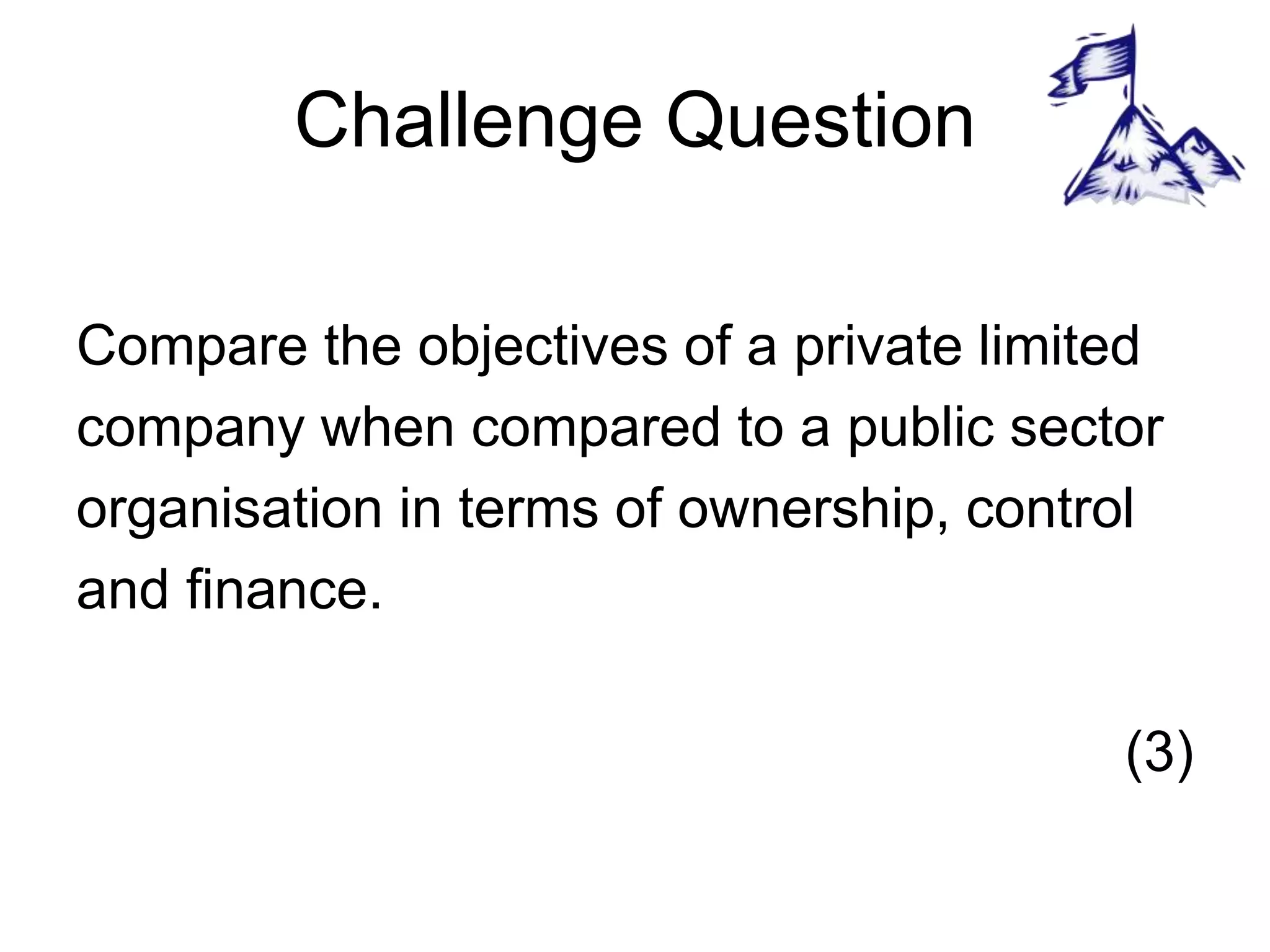
Compare the objectives of a private limited
company when compared to a public sector
organisation in terms of ownership, control
and finance.
(3)
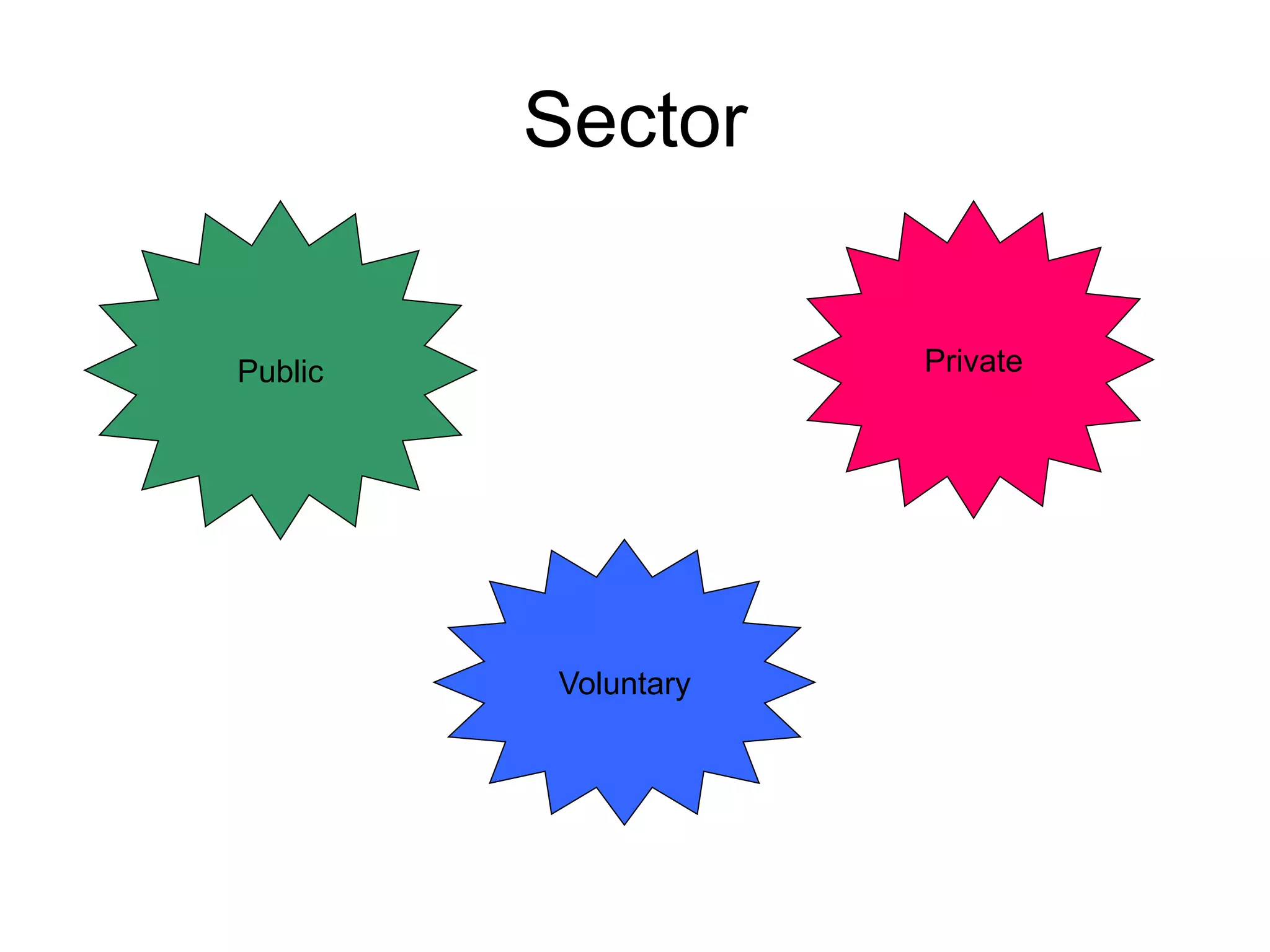
Sector
PrivatePublic
Voluntary
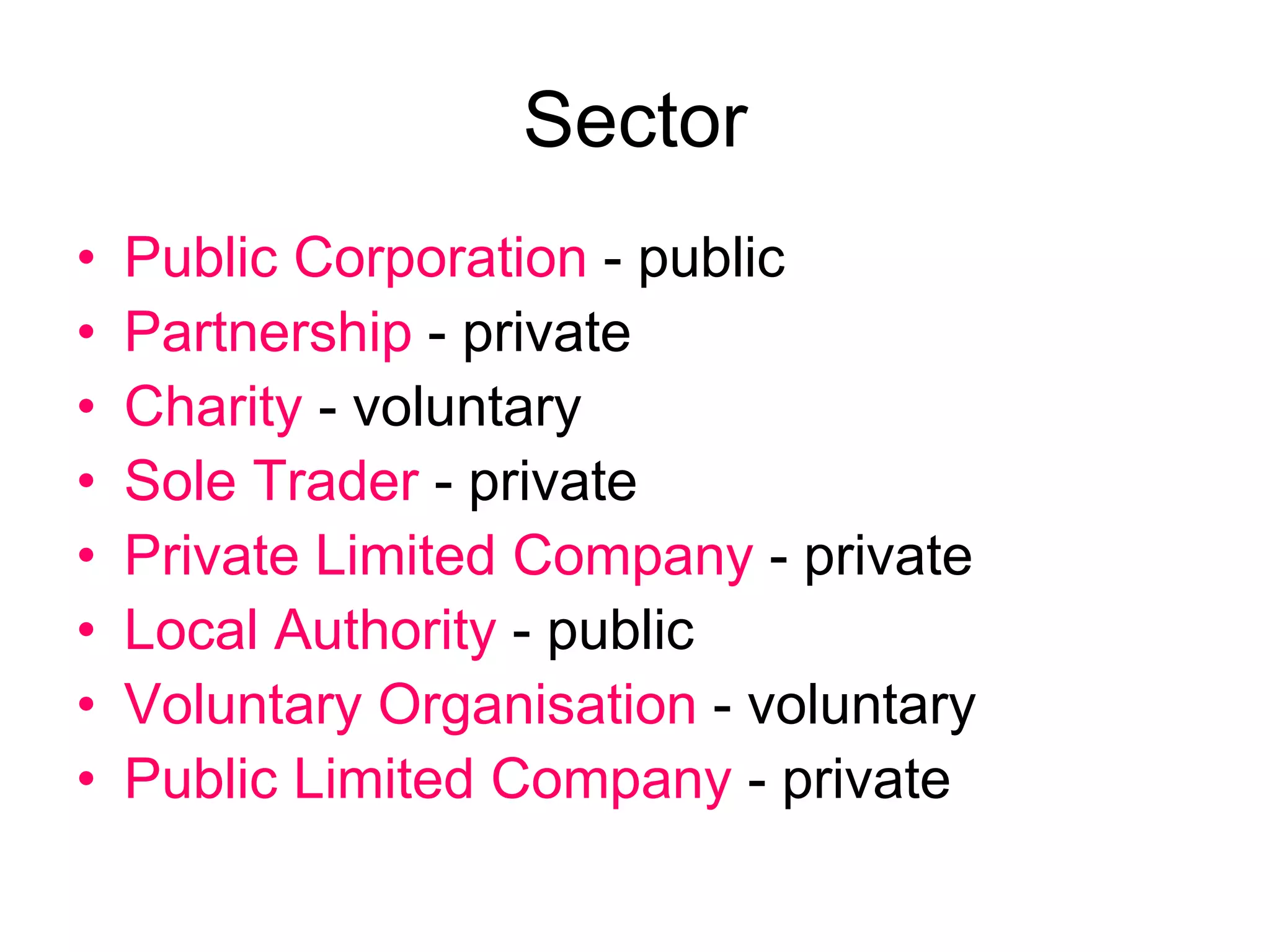
Sector
• Public Corporation - public
• Partnership - private
• Charity - voluntary
• Sole Trader - private
• Private Limited Company - private
• Local Authority - public
• Voluntary Organisation - voluntary
• Public Limited Company - private
Example
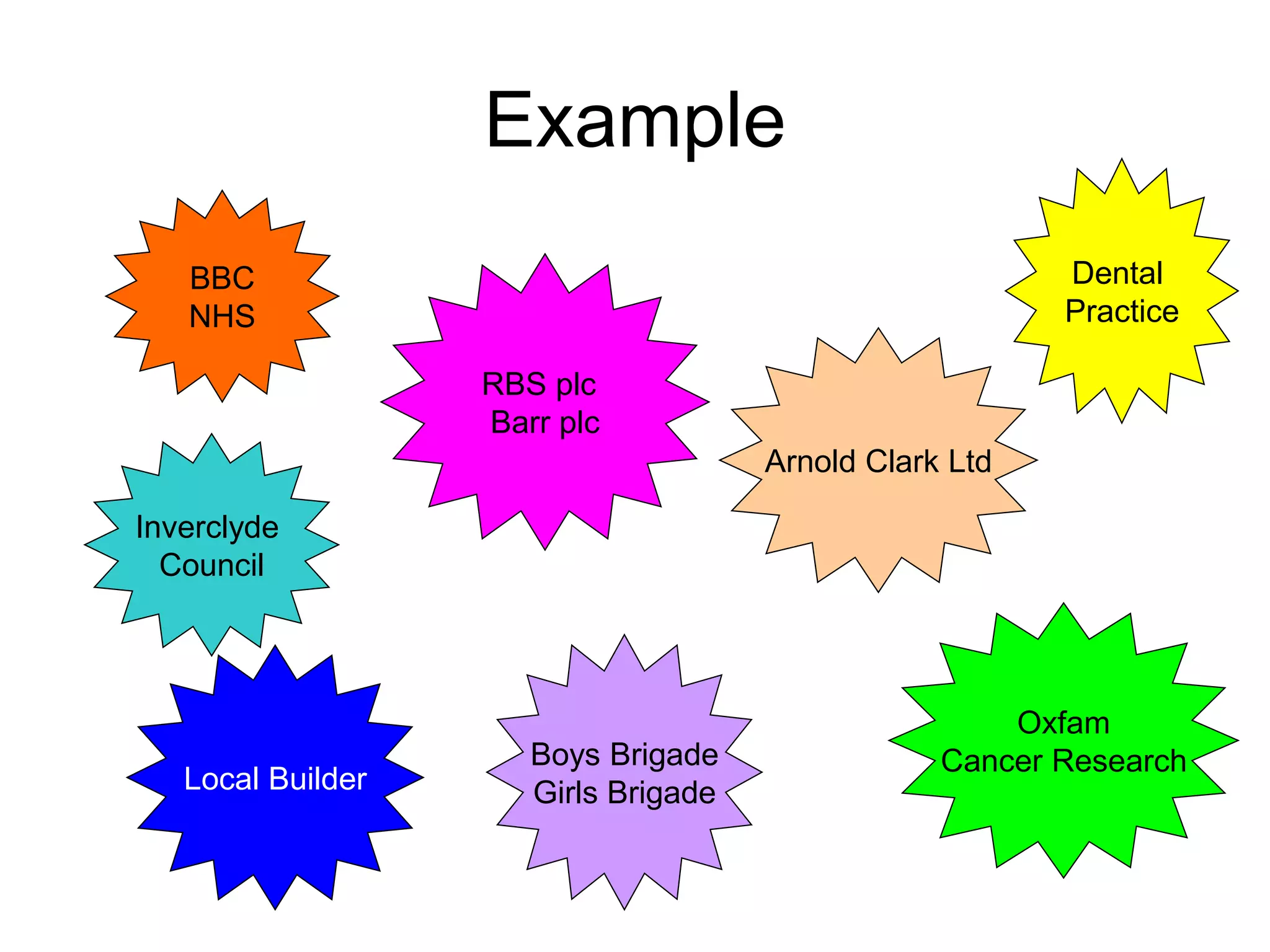
BBC
NHS
Dental
Practice
Oxfam
Cancer Research
Local Builder
Arnold Clark Ltd
Inverclyde
Council
Boys Brigade
Girls Brigade
RBS plc
Barr plc
Example
• Public Corporation – BBC, NHS
• Partnership – Dental Practice
• Charity – Oxfam, Cancer Research
• Sole Trader – Local builder
• Private Limited Company – Arnold Clark Ltd
• Local Authority – Inverclyde Council
• Voluntary Organisation – Boys Brigade, Girls
Brigade
• Public Limited Company – RBS plc, Barr plc
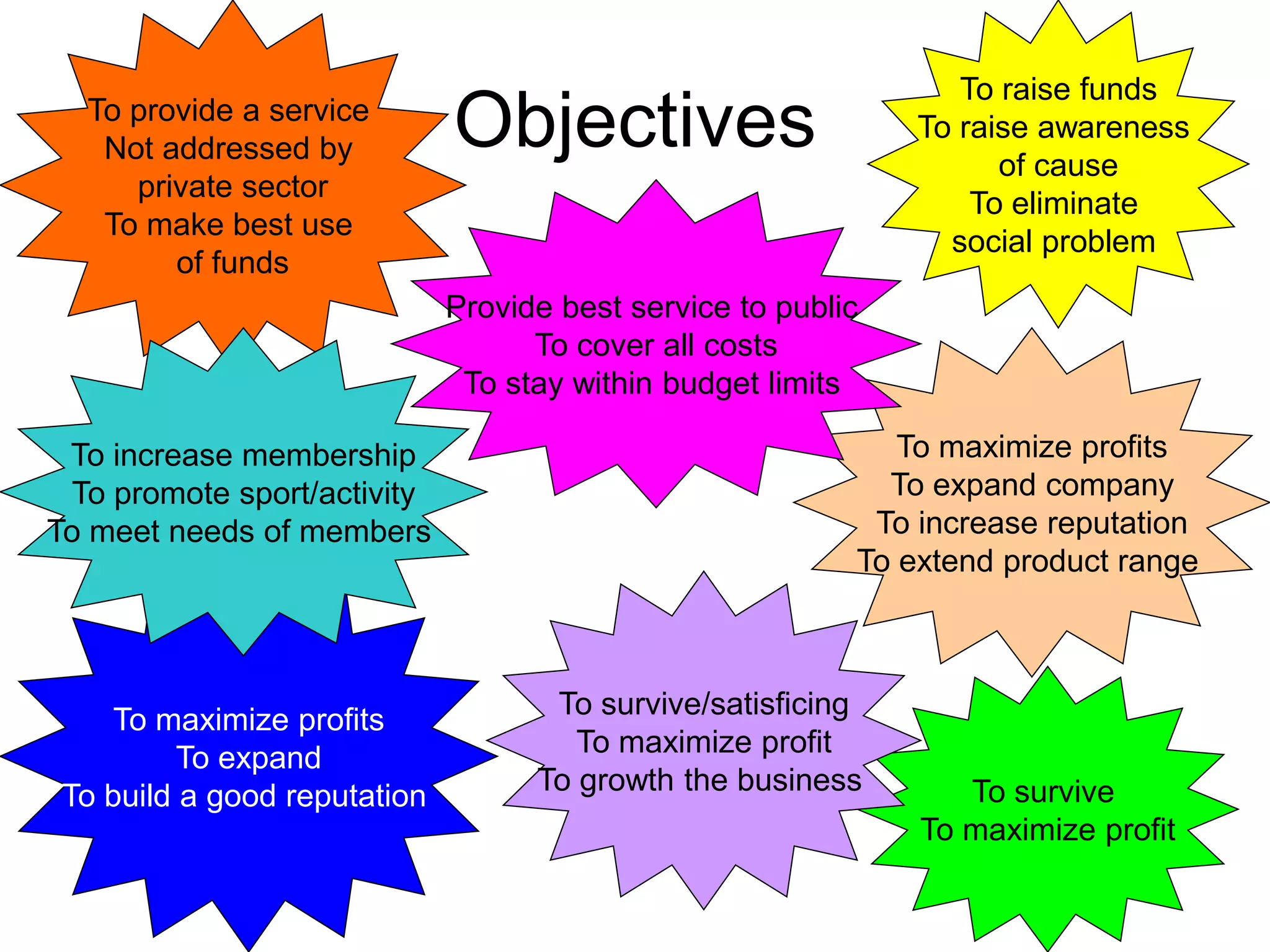
ObjectivesTo provide a service
Not addressed by
private sector
To make best use
of funds
To raise funds
To raise awareness
of cause
To eliminate
social problem
To survive
To maximize profit
To maximize profits
To expand
To build a good reputation
To maximize profits
To expand company
To increase reputation
To extend product range
To increase membership
To promote sport/activity
To meet needs of members
To survive/satisficing
To maximize profit
To growth the business
Provide best service to public
To cover all costs
To stay within budget limits
Objectives
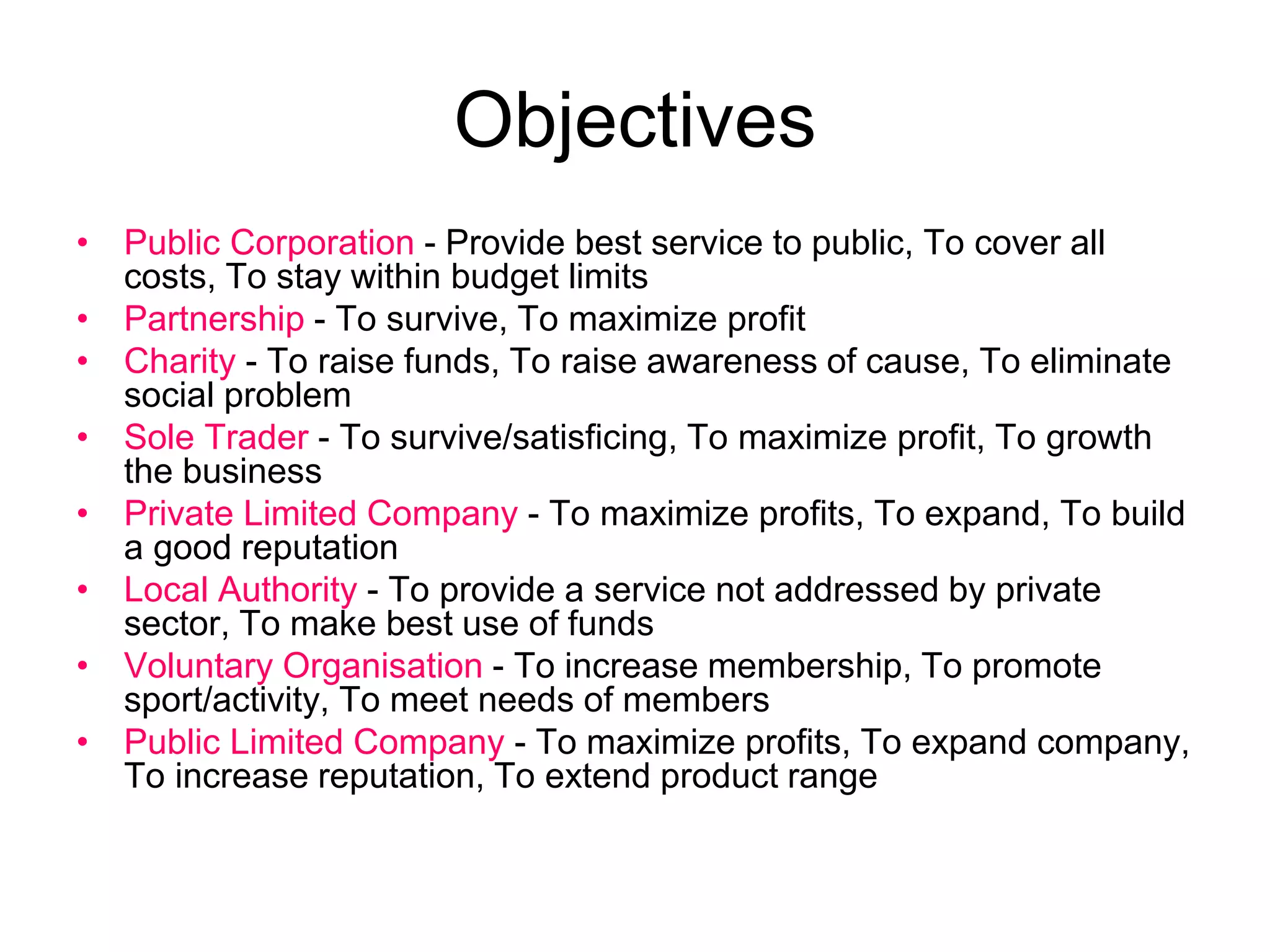
• Public Corporation - Provide best service to public, To cover all
costs, To stay within budget limits
• Partnership - To survive, To maximize profit
• Charity - To raise funds, To raise awareness of cause, To eliminate
social problem
• Sole Trader - To survive/satisficing, To maximize profit, To growth
the business
• Private Limited Company - To maximize profits, To expand, To build
a good reputation
• Local Authority - To provide a service not addressed by private
sector, To make best use of funds
• Voluntary Organisation - To increase membership, To promote
sport/activity, To meet needs of members
• Public Limited Company - To maximize profits, To expand company,
To increase reputation, To extend product range
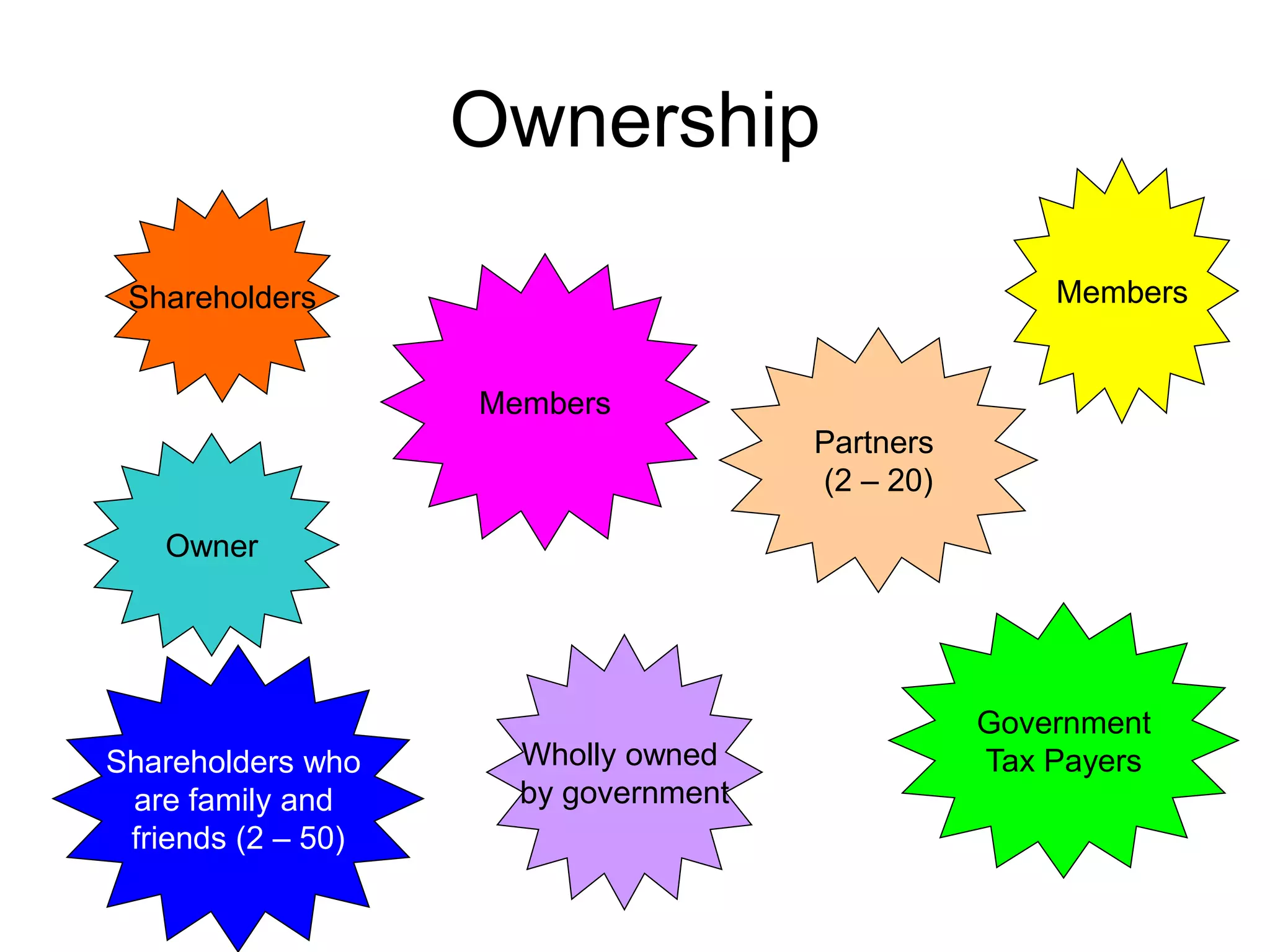
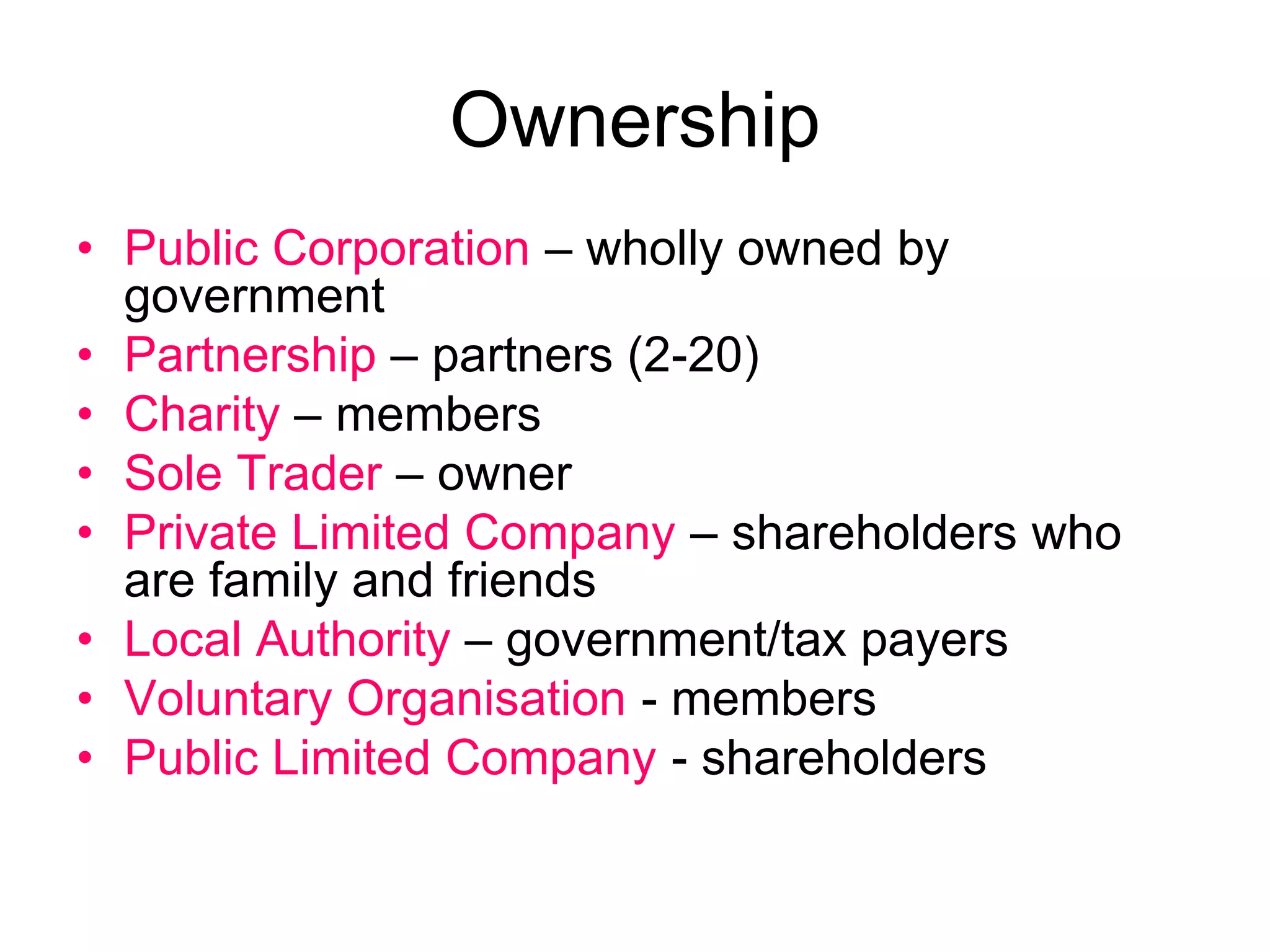
Ownership
Shareholders Members
Government
Tax PayersShareholders who
are family and
friends (2 – 50)
Partners
(2 – 20)
Owner
Wholly owned
by government
Members
Ownership
• Public Corporation – wholly owned by
government
• Partnership – partners (2-20)
• Charity – members
• Sole Trader – owner
• Private Limited Company – shareholders who
are family and friends
• Local Authority – government/tax payers
• Voluntary Organisation - members
• Public Limited Company - shareholders
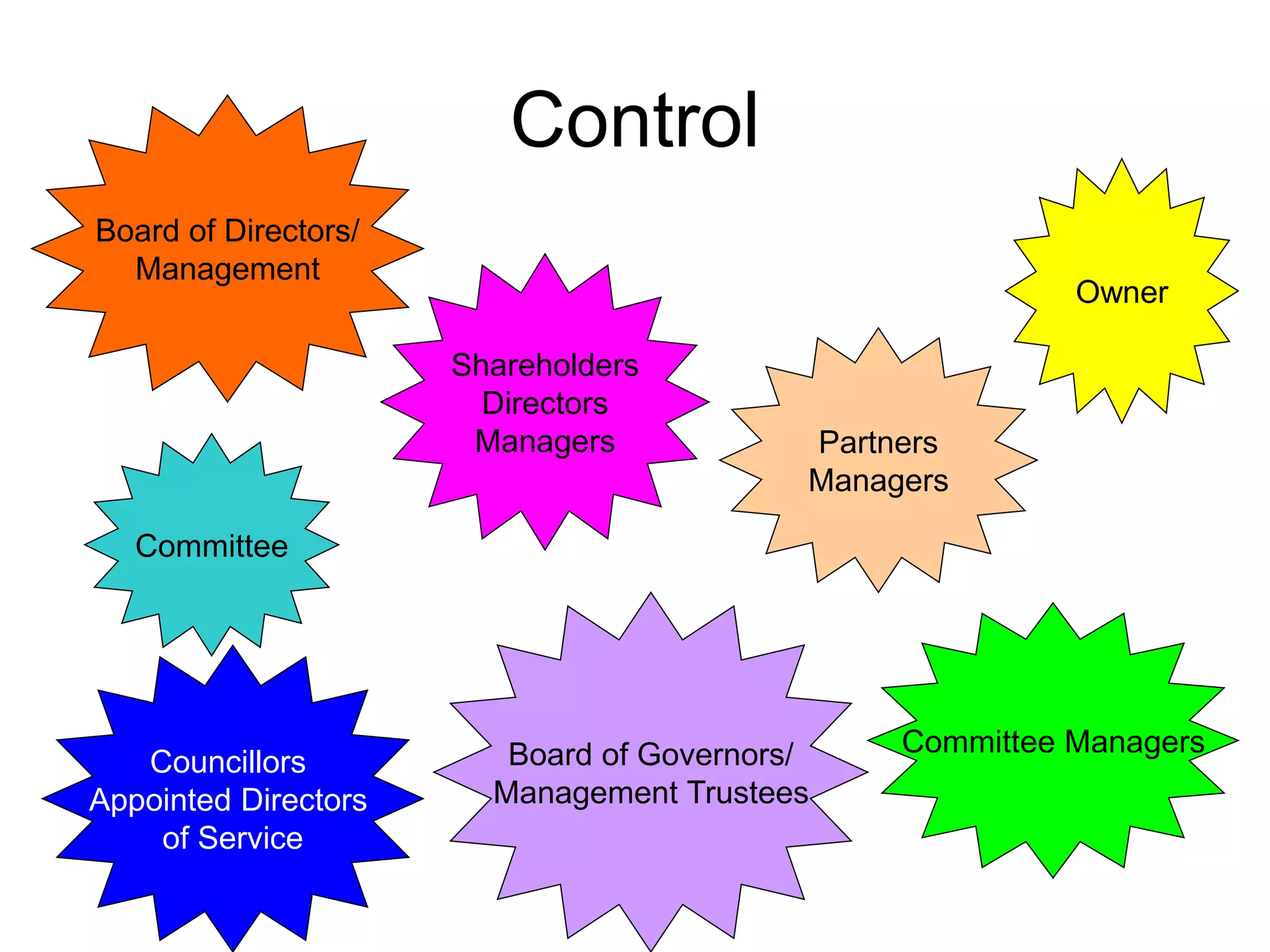
Control
Board of Directors/
Management
Owner
Committee Managers
Councillors
Appointed Directors
of Service
Partners
Managers
Committee
Board of Governors/
Management Trustees
Shareholders
Directors
Managers
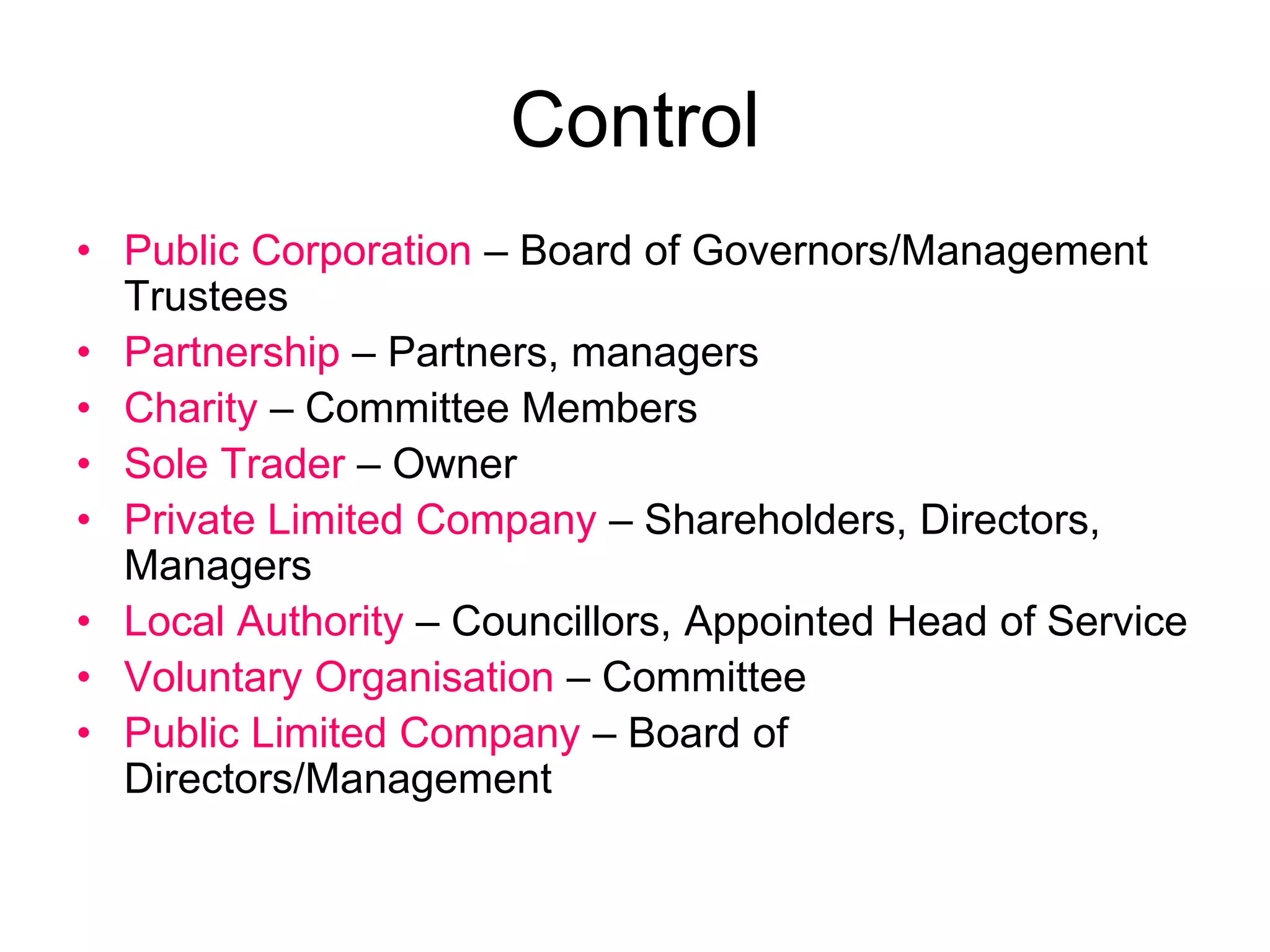
Control
• Public Corporation – Board of Governors/Management
Trustees
• Partnership – Partners, managers
• Charity – Committee Members
• Sole Trader – Owner
• Private Limited Company – Shareholders, Directors,
Managers
• Local Authority – Councillors, Appointed Head of Service
• Voluntary Organisation – Committee
• Public Limited Company – Board of
Directors/Management
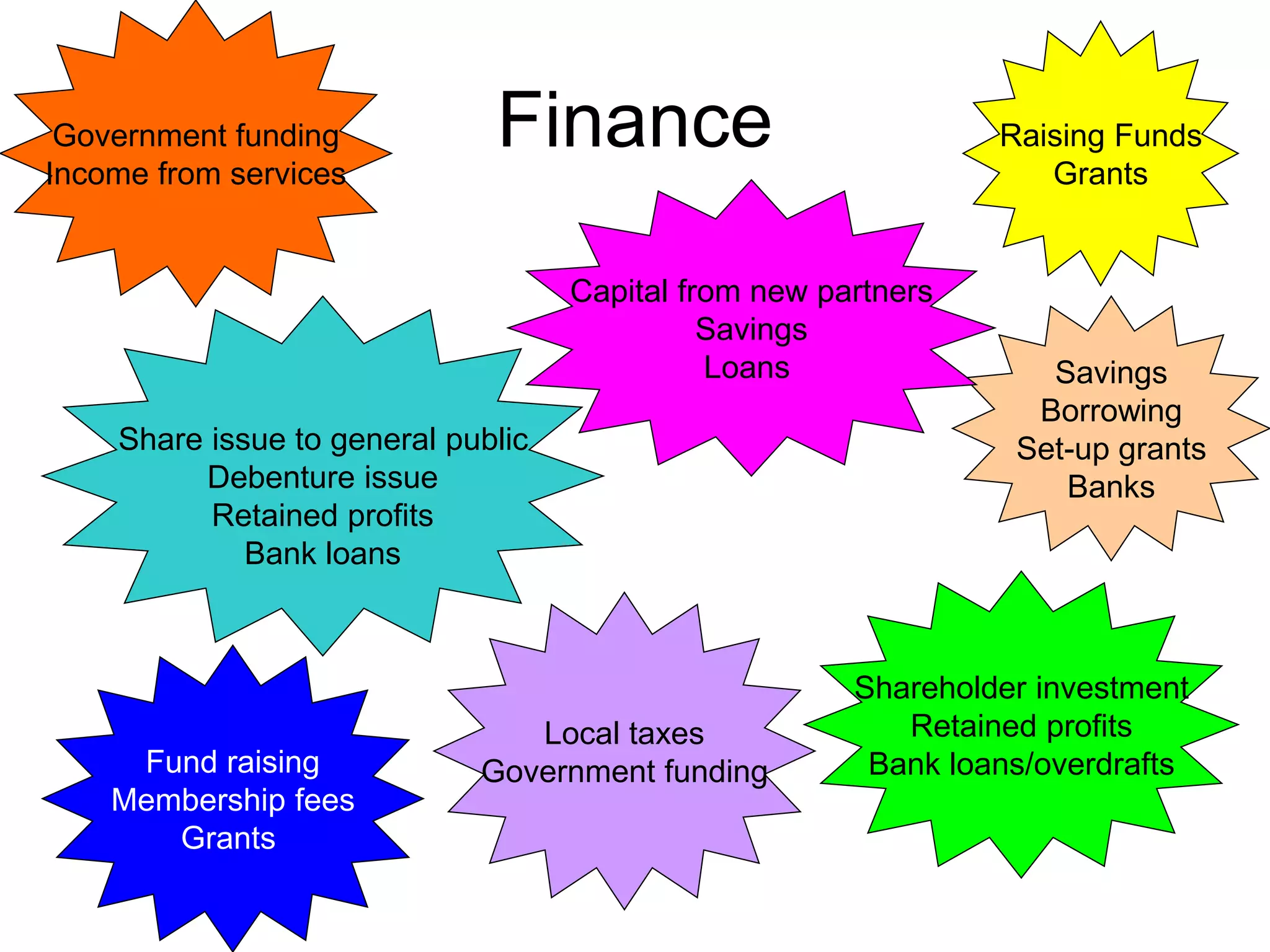
FinanceGovernment funding
Income from services
Raising Funds
Grants
Shareholder investment
Retained profits
Bank loans/overdraftsFund raising
Membership fees
Grants
Savings
Borrowing
Set-up grants
Banks
Share issue to general public
Debenture issue
Retained profits
Bank loans
Local taxes
Government funding
Capital from new partners
Savings
Loans
Finance
• Public Corporation – Government Funding, Income from
Services
• Partnership – Capital from new partners, savings, loans
• Charity – raising funds, grants
• Sole Trader – own savings, borrowings, set-up grants,
bank
• Private Limited Company – shareholders investment,
retained profits, bank loans/overdraft
• Local Authority – local taxes, central government funding
• Voluntary Organisation – fundraising, grants,
memberships fees
• Public Limited Company - Share issue to general public,
Debenture issue, Retained profits, Bank loans
Challenge Question
Compare the objectives of a private limited
company when compared to a public sector
organisation in terms of ownership, control
and finance.
(3)

7. summary of organisation characteristics

  • 1.
    Learning Intention Types ofOrganisation Revision By the end of this lesson you will be able to: identify the differing types of ownership, control and finance within organisation understand the differing objectives of organisation construct a suitable answer to a compare question on the above topics
  • 2.
    Challenge Question Compare theobjectives of a private limited company when compared to a public sector organisation in terms of ownership, control and finance. (3)
  • 3.
  • 4.
    Sector • Public Corporation- public • Partnership - private • Charity - voluntary • Sole Trader - private • Private Limited Company - private • Local Authority - public • Voluntary Organisation - voluntary • Public Limited Company - private
  • 5.
    Example BBC NHS Dental Practice Oxfam Cancer Research Local Builder ArnoldClark Ltd Inverclyde Council Boys Brigade Girls Brigade RBS plc Barr plc
  • 6.
    Example • Public Corporation– BBC, NHS • Partnership – Dental Practice • Charity – Oxfam, Cancer Research • Sole Trader – Local builder • Private Limited Company – Arnold Clark Ltd • Local Authority – Inverclyde Council • Voluntary Organisation – Boys Brigade, Girls Brigade • Public Limited Company – RBS plc, Barr plc
  • 7.
    ObjectivesTo provide aservice Not addressed by private sector To make best use of funds To raise funds To raise awareness of cause To eliminate social problem To survive To maximize profit To maximize profits To expand To build a good reputation To maximize profits To expand company To increase reputation To extend product range To increase membership To promote sport/activity To meet needs of members To survive/satisficing To maximize profit To growth the business Provide best service to public To cover all costs To stay within budget limits
  • 8.
    Objectives • Public Corporation- Provide best service to public, To cover all costs, To stay within budget limits • Partnership - To survive, To maximize profit • Charity - To raise funds, To raise awareness of cause, To eliminate social problem • Sole Trader - To survive/satisficing, To maximize profit, To growth the business • Private Limited Company - To maximize profits, To expand, To build a good reputation • Local Authority - To provide a service not addressed by private sector, To make best use of funds • Voluntary Organisation - To increase membership, To promote sport/activity, To meet needs of members • Public Limited Company - To maximize profits, To expand company, To increase reputation, To extend product range
  • 9.
    Ownership Shareholders Members Government Tax PayersShareholderswho are family and friends (2 – 50) Partners (2 – 20) Owner Wholly owned by government Members
  • 10.
    Ownership • Public Corporation– wholly owned by government • Partnership – partners (2-20) • Charity – members • Sole Trader – owner • Private Limited Company – shareholders who are family and friends • Local Authority – government/tax payers • Voluntary Organisation - members • Public Limited Company - shareholders
  • 11.
    Control Board of Directors/ Management Owner CommitteeManagers Councillors Appointed Directors of Service Partners Managers Committee Board of Governors/ Management Trustees Shareholders Directors Managers
  • 12.
    Control • Public Corporation– Board of Governors/Management Trustees • Partnership – Partners, managers • Charity – Committee Members • Sole Trader – Owner • Private Limited Company – Shareholders, Directors, Managers • Local Authority – Councillors, Appointed Head of Service • Voluntary Organisation – Committee • Public Limited Company – Board of Directors/Management
  • 13.
    FinanceGovernment funding Income fromservices Raising Funds Grants Shareholder investment Retained profits Bank loans/overdraftsFund raising Membership fees Grants Savings Borrowing Set-up grants Banks Share issue to general public Debenture issue Retained profits Bank loans Local taxes Government funding Capital from new partners Savings Loans
  • 14.
    Finance • Public Corporation– Government Funding, Income from Services • Partnership – Capital from new partners, savings, loans • Charity – raising funds, grants • Sole Trader – own savings, borrowings, set-up grants, bank • Private Limited Company – shareholders investment, retained profits, bank loans/overdraft • Local Authority – local taxes, central government funding • Voluntary Organisation – fundraising, grants, memberships fees • Public Limited Company - Share issue to general public, Debenture issue, Retained profits, Bank loans
  • 15.
    Challenge Question Compare theobjectives of a private limited company when compared to a public sector organisation in terms of ownership, control and finance. (3)