THE OSI MODEL
This PPT is containing the discussion of OSI Model.
Kindly refer page number 29 to 42 of the Book_1_Data-Communications-
and-Networking - By Forouzan for detailed discussion.
3.
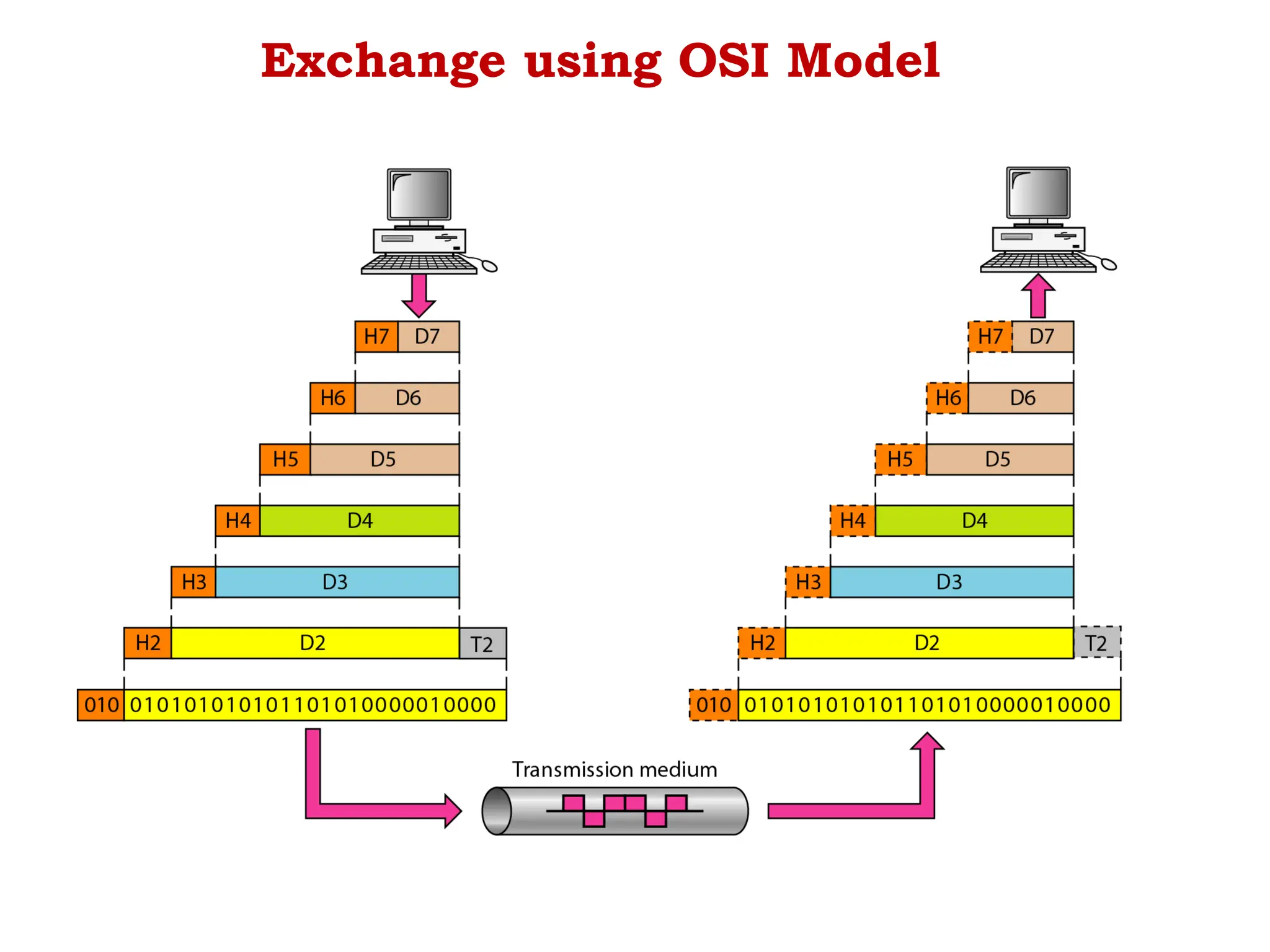
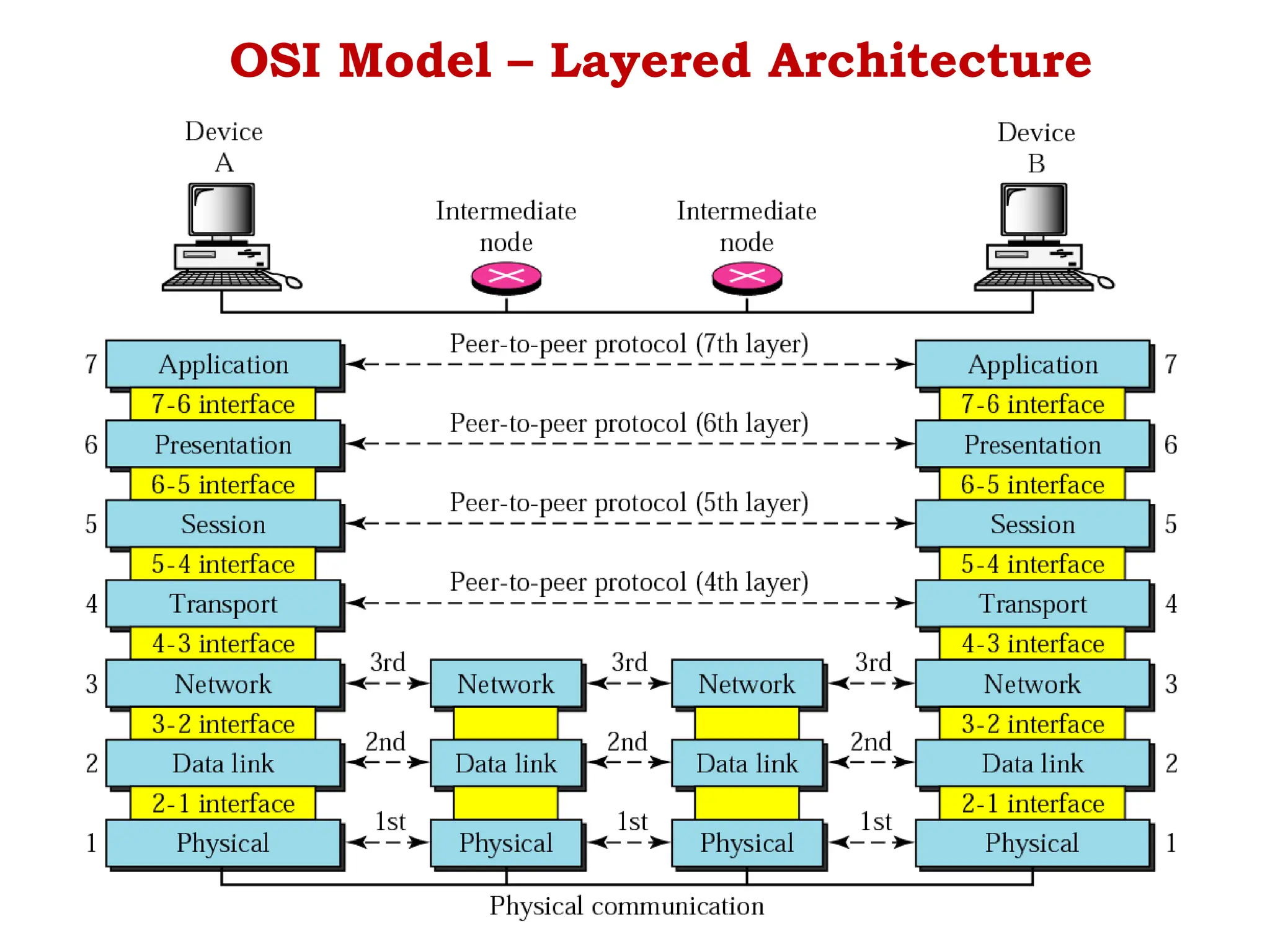
THE OSI MODEL
•Rapid growth of computer networks caused compatibility
problems
• ISO recognized the problem and released the OSI model in 1970s
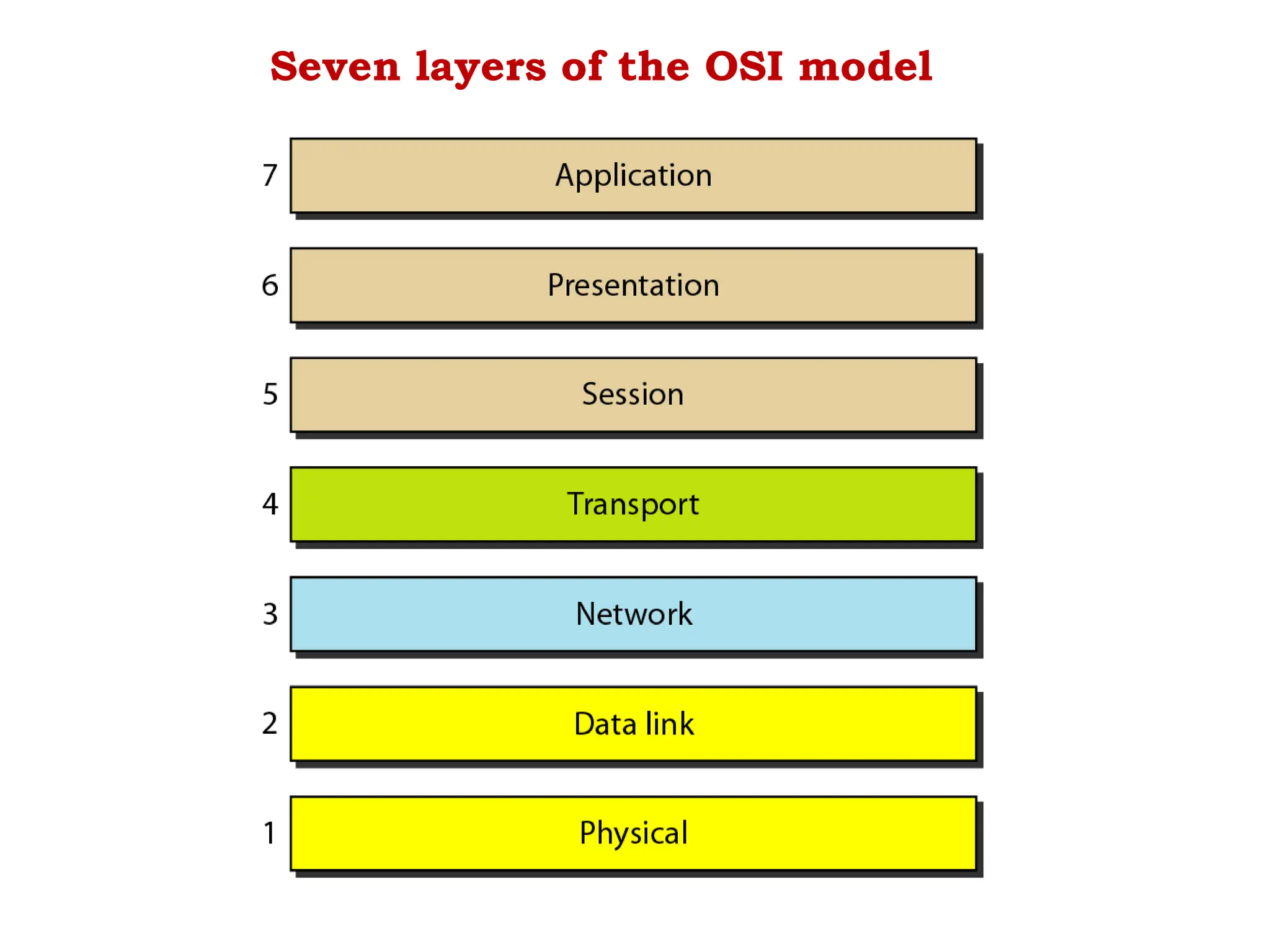
• OSI stands for Open Systems Interconnection and consists of 7
Layers
• An open system is a set of protocols that allows any two different
systems to communicate regardless of their underlying
architecture.
• The use of layers is designed to reduce complexity and make
standardization easier
• Note:
ISO is the organization.
OSI is the model.
• The OSI model is not a protocol; it is a model for understanding
and designing a network architecture that is flexible, robust, and
interoperable.
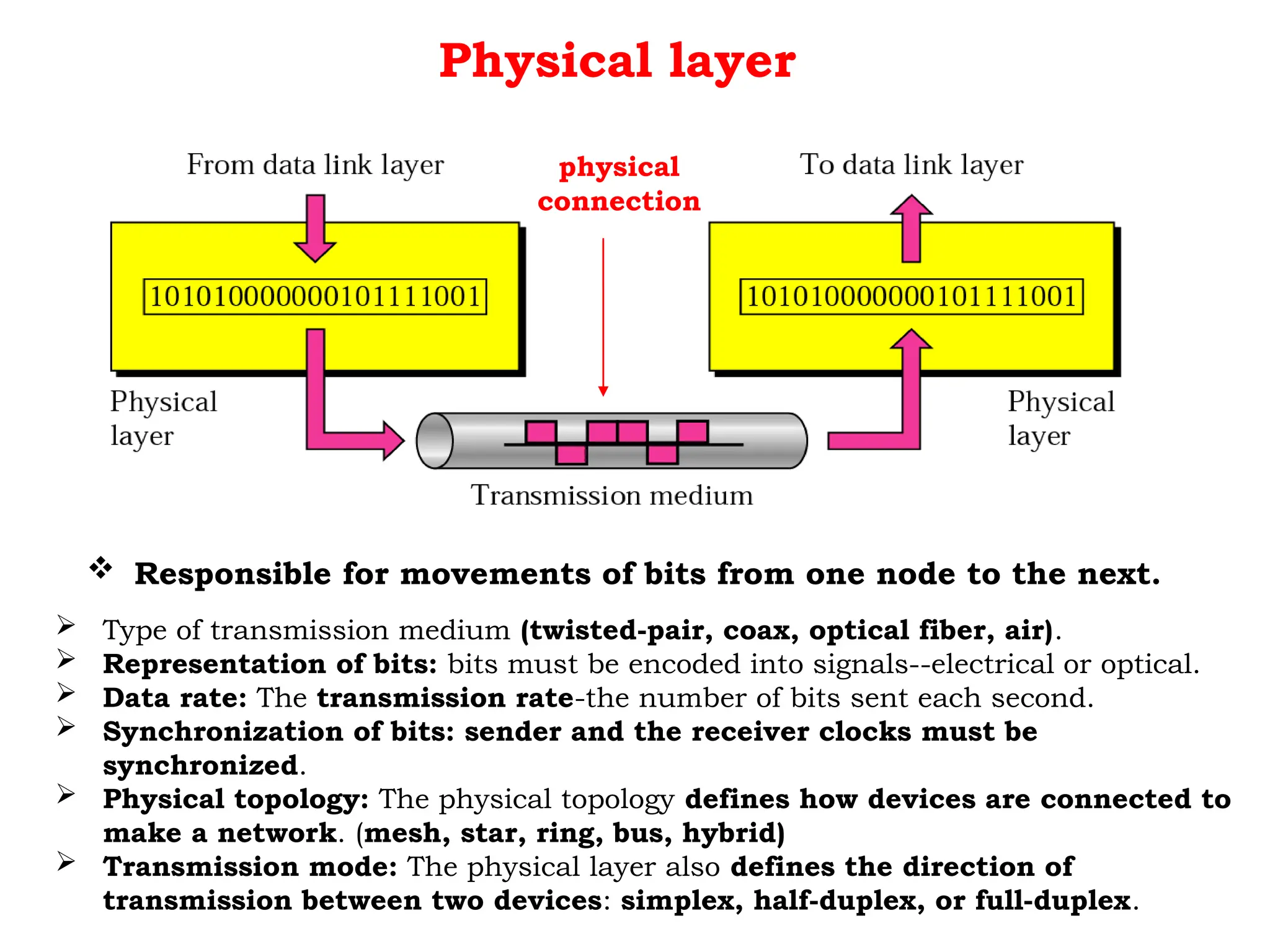
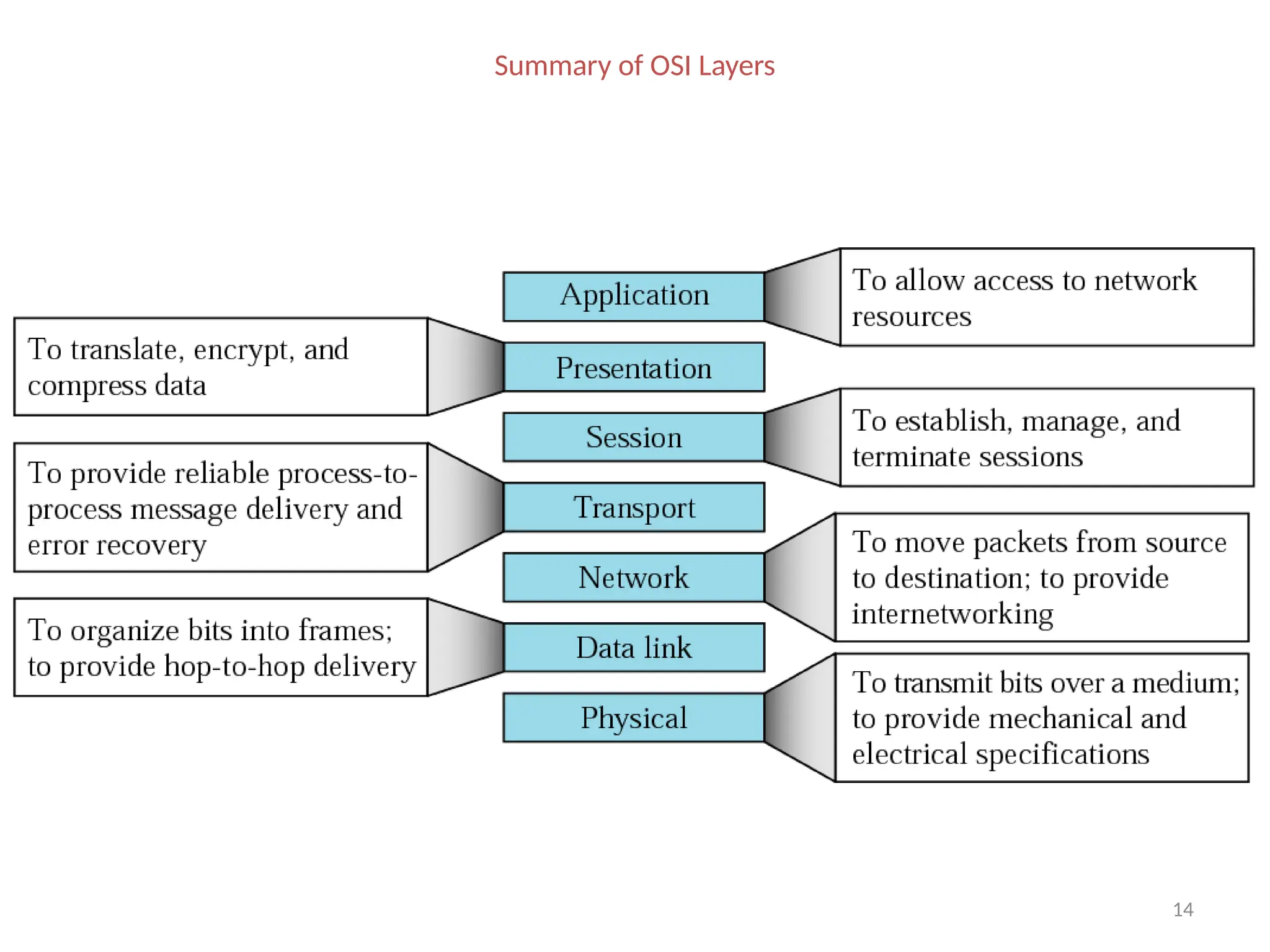
Physical layer
physical
connection
Responsiblefor movements of bits from one node to the next.
Type of transmission medium (twisted-pair, coax, optical fiber, air).
Representation of bits: bits must be encoded into signals--electrical or optical.
Data rate: The transmission rate-the number of bits sent each second.
Synchronization of bits: sender and the receiver clocks must be
synchronized.
Physical topology: The physical topology defines how devices are connected to
make a network. (mesh, star, ring, bus, hybrid)
Transmission mode: The physical layer also defines the direction of
transmission between two devices: simplex, half-duplex, or full-duplex.
8.
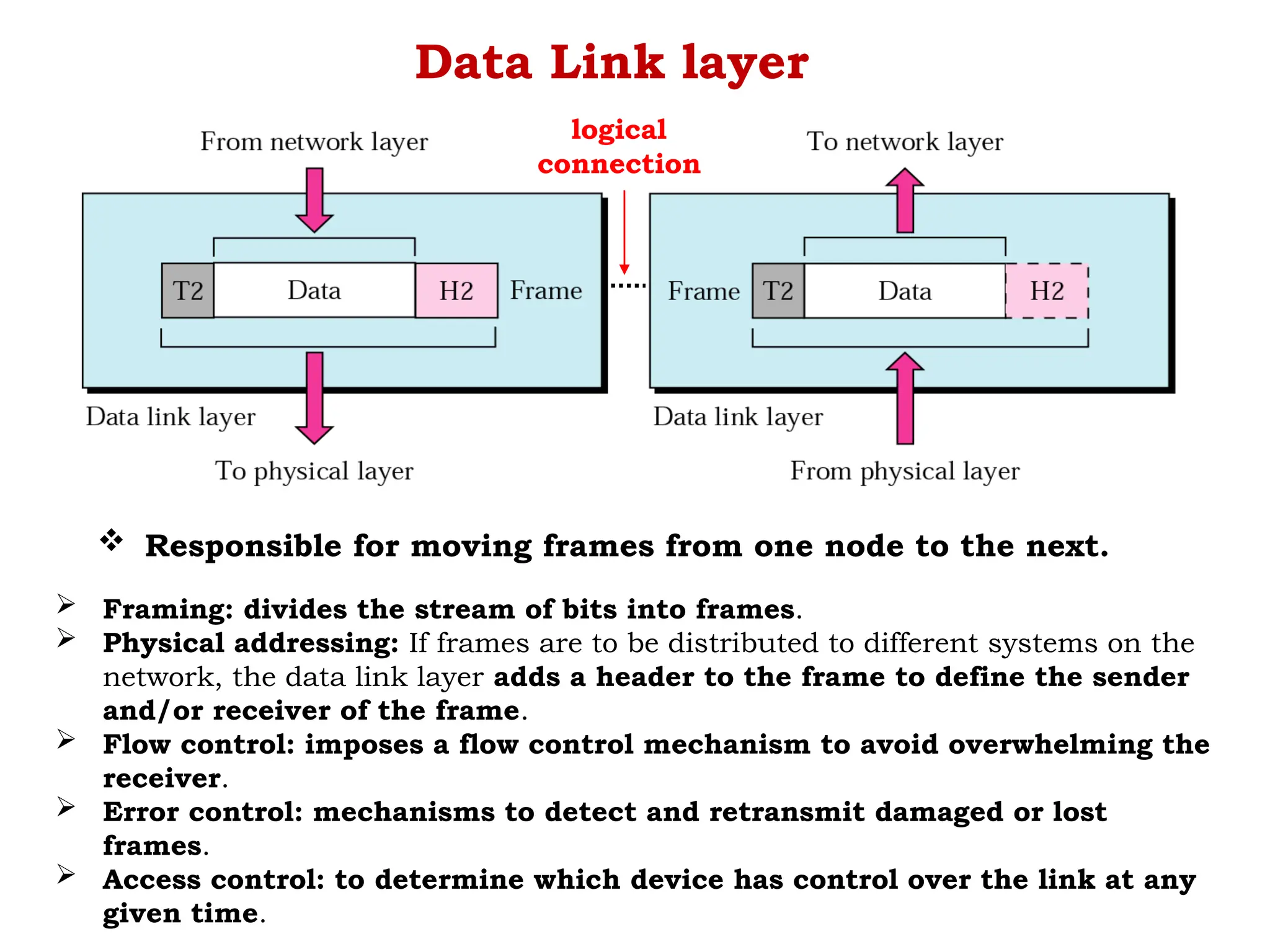
Data Link layer
logical
connection
Responsible for moving frames from one node to the next.
Framing: divides the stream of bits into frames.
Physical addressing: If frames are to be distributed to different systems on the
network, the data link layer adds a header to the frame to define the sender
and/or receiver of the frame.
Flow control: imposes a flow control mechanism to avoid overwhelming the
receiver.
Error control: mechanisms to detect and retransmit damaged or lost
frames.
Access control: to determine which device has control over the link at any
given time.
9.
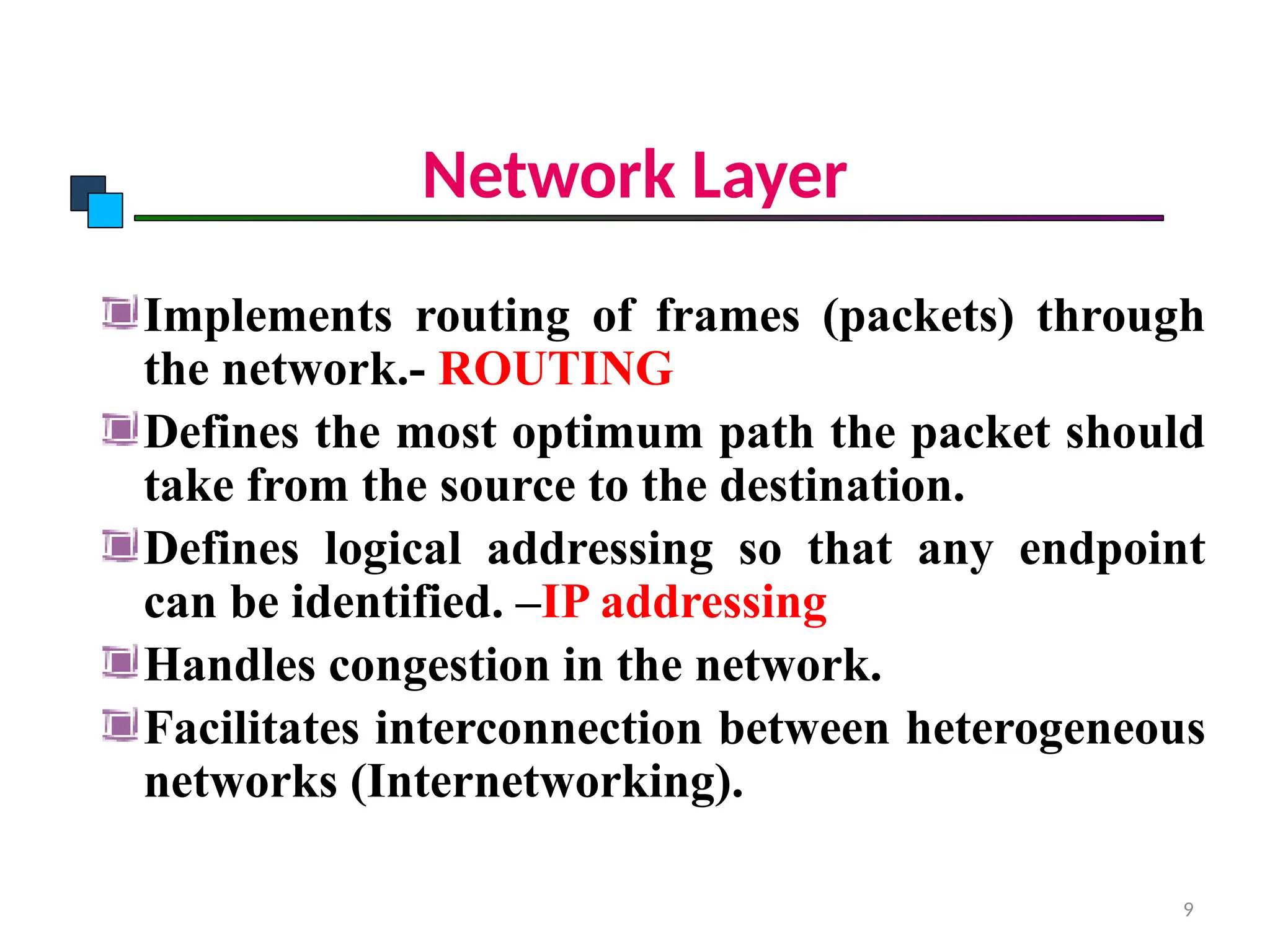
Network Layer
Implements routingof frames (packets) through
the network.- ROUTING
Defines the most optimum path the packet should
take from the source to the destination.
Defines logical addressing so that any endpoint
can be identified. –IP addressing
Handles congestion in the network.
Facilitates interconnection between heterogeneous
networks (Internetworking).
OSI Model
9
10.
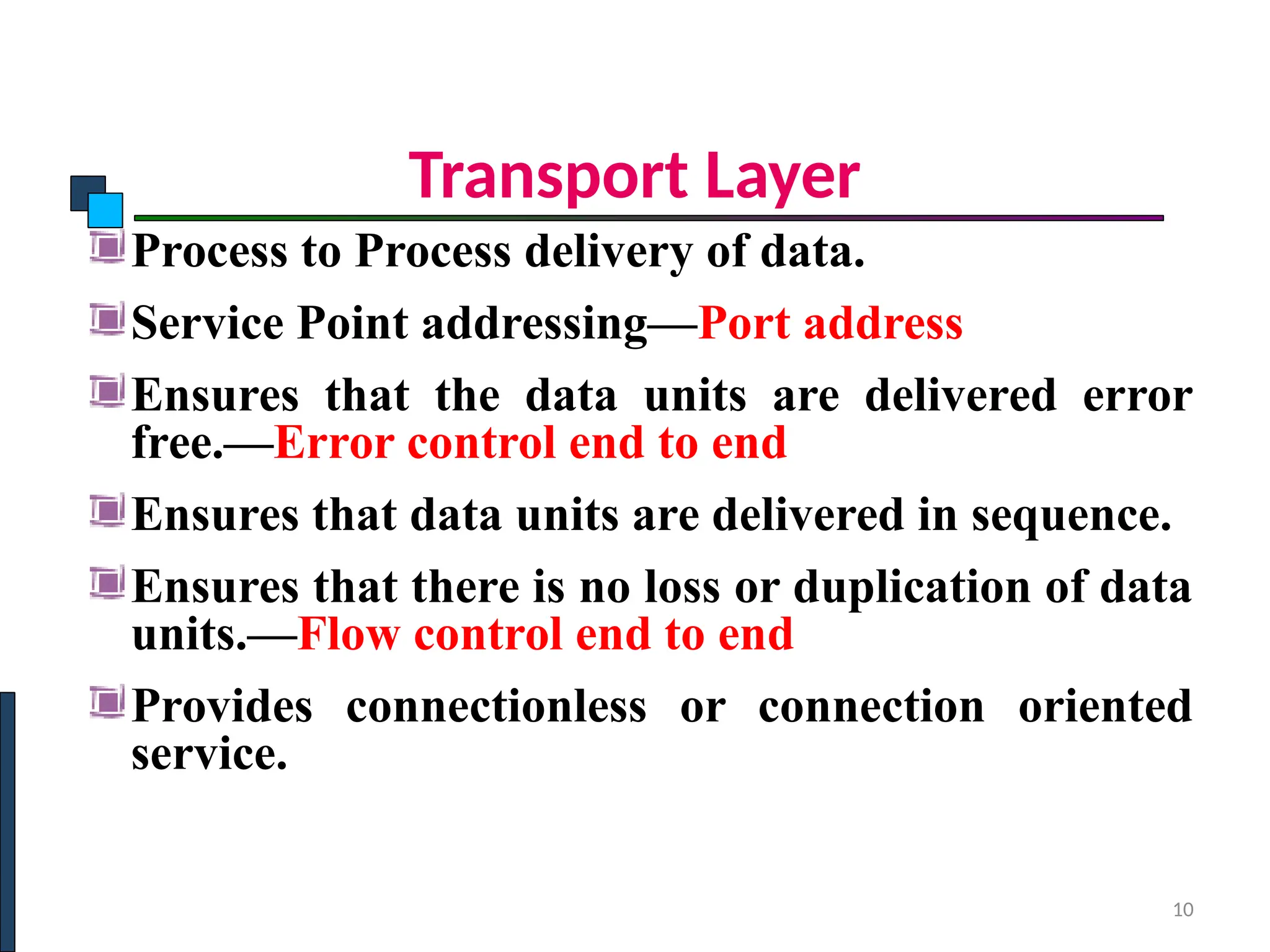
Transport Layer
Process toProcess delivery of data.
Service Point addressing—Port address
Ensures that the data units are delivered error
free.—Error control end to end
Ensures that data units are delivered in sequence.
Ensures that there is no loss or duplication of data
units.—Flow control end to end
Provides connectionless or connection oriented
service.
10
11.
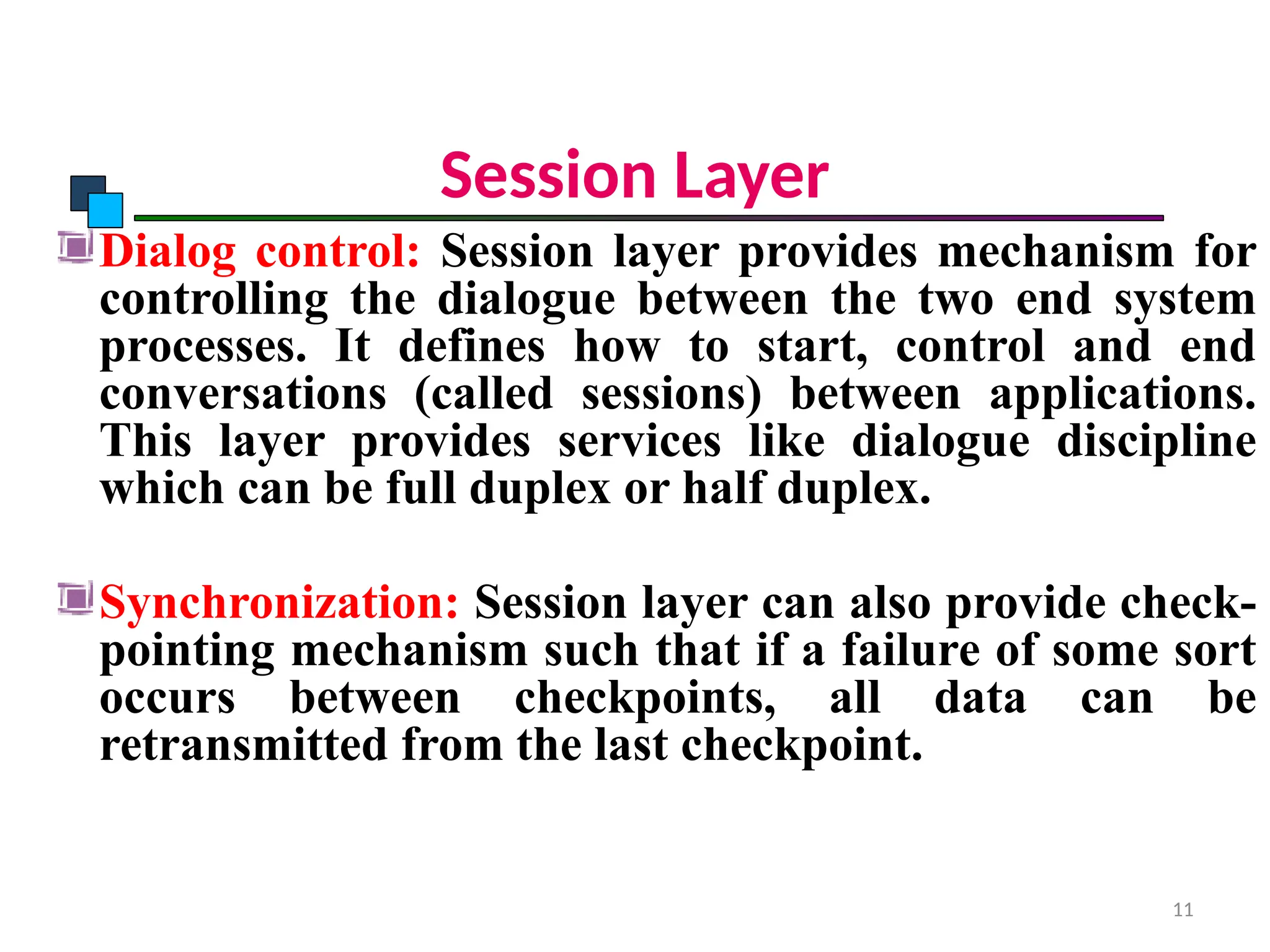
Session Layer
Dialog control:Session layer provides mechanism for
controlling the dialogue between the two end system
processes. It defines how to start, control and end
conversations (called sessions) between applications.
This layer provides services like dialogue discipline
which can be full duplex or half duplex.
Synchronization: Session layer can also provide check-
pointing mechanism such that if a failure of some sort
occurs between checkpoints, all data can be
retransmitted from the last checkpoint.
OSI Model
11
12.
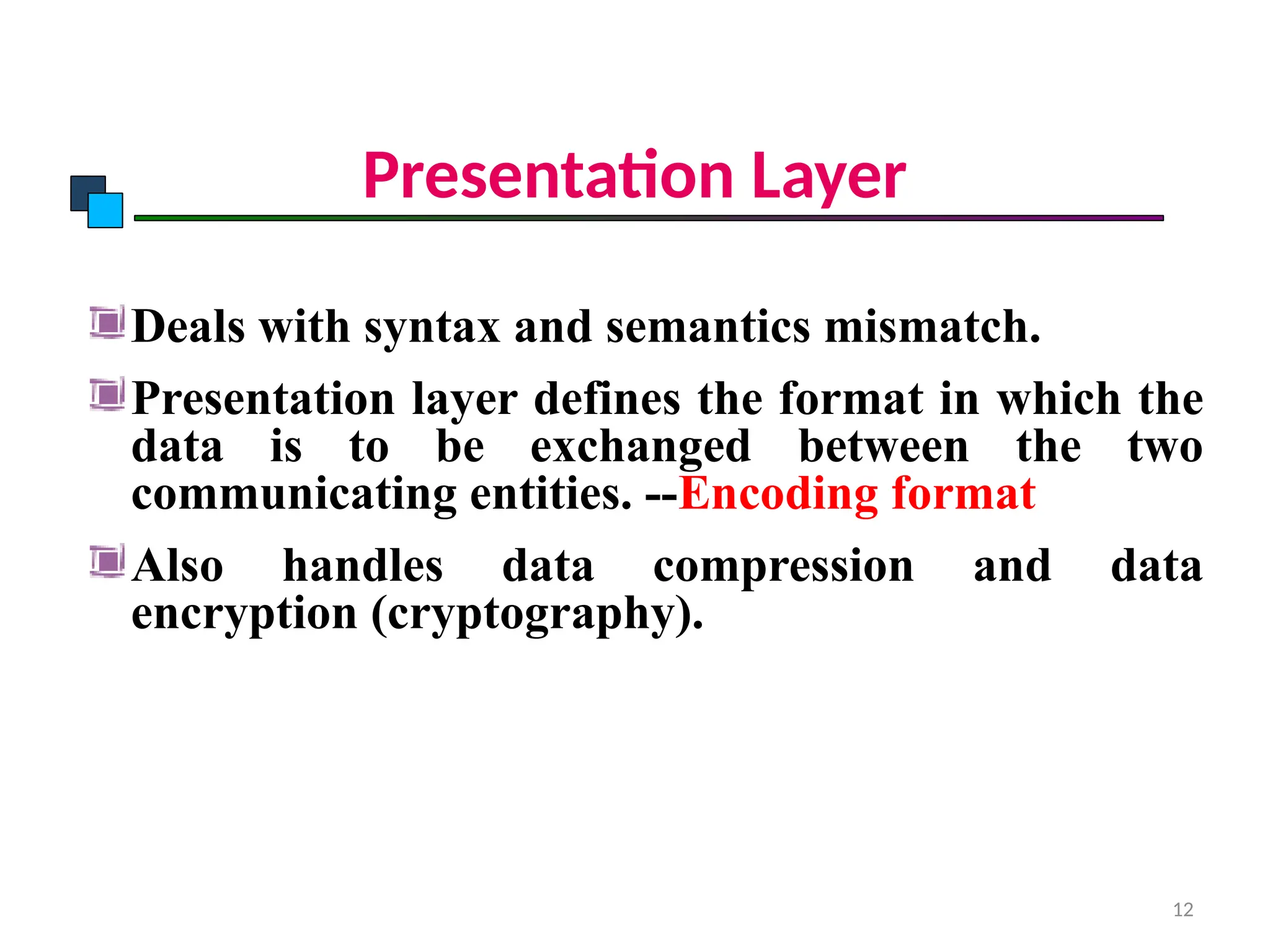
Presentation Layer
Deals withsyntax and semantics mismatch.
Presentation layer defines the format in which the
data is to be exchanged between the two
communicating entities. --Encoding format
Also handles data compression and data
encryption (cryptography).
OSI Model
12
13.
Application Layer
Application layerinteracts with application
programs and is the highest level of OSI model.
Virtual network terminal: Allows user to remote
login.
Application layer contains management functions
to support distributed applications.
Examples of application layer are applications
such as file transfer, electronic mail, remote login
etc.
OSI Model
13