7 Assignment
Writing Tips
A Guide to Effective Assignment
Writing
By UKAssignmenthelp.uk
Introduction
Assignments play a pivotal role in academic success, serving as valuable
tools to gauge a student's comprehension and application of course
material. These tasks not only assess knowledge but also foster critical
thinking, research skills, and time management. Through assignments,
students demonstrate their understanding, contributing to a
comprehensive evaluation of their academic progress. Moreover,
completing assignments enhances communication skills, as students often
articulate ideas in written form. Instructors use assignments to provide
constructive feedback, guiding students towards improvement. Overall,
recognizing the significance of assignments cultivates a proactive approach
to learning, fostering a foundation for academic excellence and future
success in the academic realm and beyond.
Planning
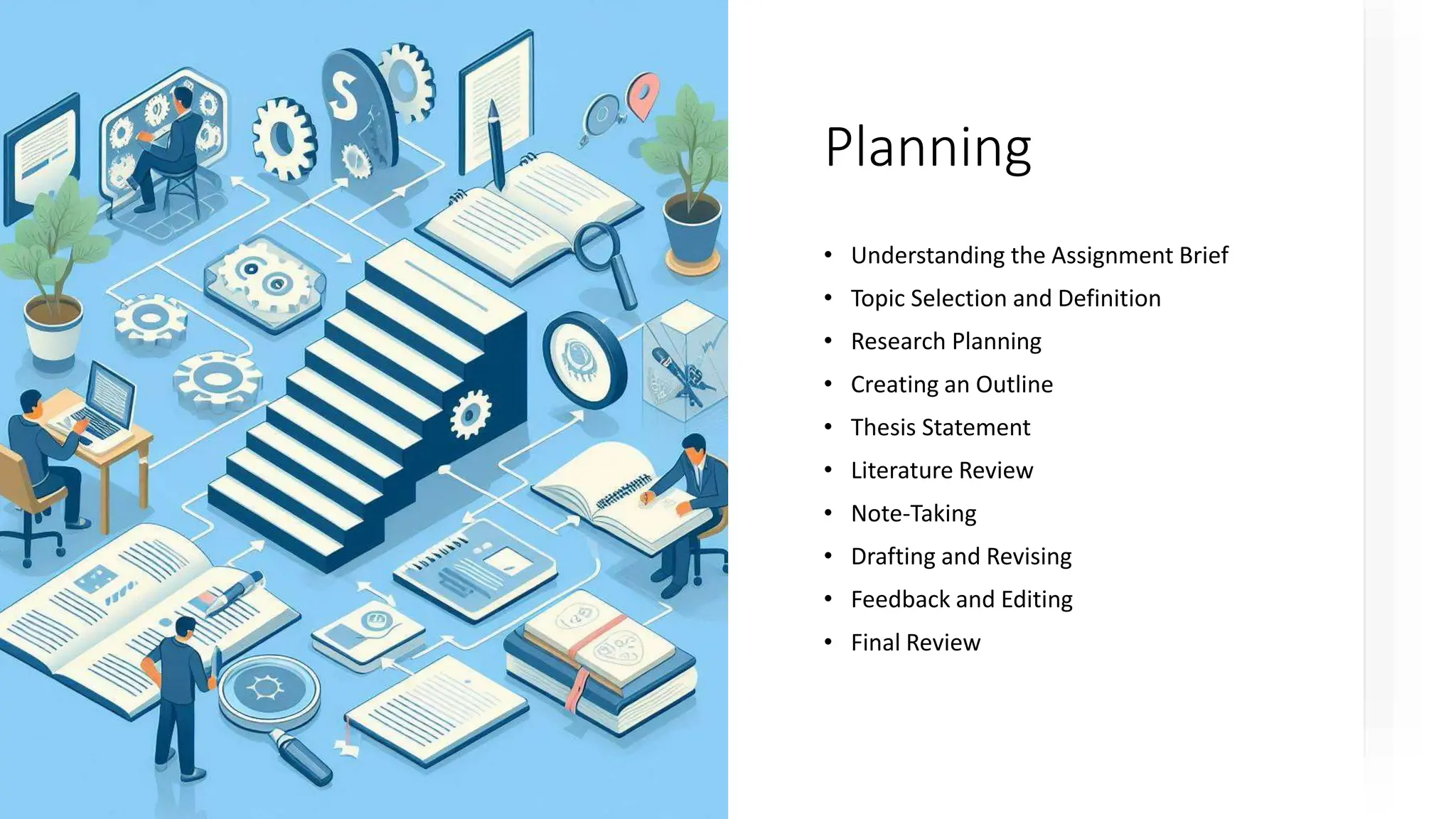
• Understanding the Assignment Brief
• Topic Selection and Definition
• Research Planning
• Creating an Outline
• Thesis Statement
• Literature Review
• Note-Taking
• Drafting and Revising
• Feedback and Editing
• Final Review
Research
• Define Clear Objectives: Clearly outline the goals and scope of your
assignment before starting research. This ensures a focused approach,
saving time and effort while gathering information that directly
contributes to the assignment's requirements.
• Source Evaluation Criteria: Establish criteria for evaluating sources.
Prioritize peer-reviewed journals, reputable publications, and
authoritative websites. Assess the credibility, relevance, and timeliness of
sources to maintain the quality of information in your assignment.
• Diversified Research Methods: Employ a mix of research methods,
including online databases, libraries, and credible websites. Use a
combination of keywords, Boolean operators, and advanced search
techniques to comprehensively explore relevant literature and data.
• Create a Systematic Research Plan: Develop a step-by-step plan for
gathering information. Break down the research process into manageable
tasks, allocating sufficient time for each. This helps maintain a structured
approach and ensures thorough coverage of the assignment's topic.
• Note-Taking and Organisation: Implement effective note-taking
techniques to organise gathered information. Use tools like annotated
bibliographies, summarised key points, and citation details. This
structured approach aids in synthesising information seamlessly during
the assignment writing phase.
Structure
Effectively organising your assignment involves a well-crafted introduction,
body, and conclusion. In the introduction, concisely present the
assignment's purpose and thesis, providing a roadmap for the reader. The
body should follow a logical sequence, with each paragraph dedicated to a
specific point supported by evidence. Ensure seamless transitions
between paragraphs for coherence. Conclude by summarising key points
and reiterating the thesis without introducing new information. This clear
structure enhances the assignment's readability, guiding the reader
through a cohesive narrative. Such organisation not only meets academic
standards but also facilitates a comprehensive understanding of your
arguments, contributing to a polished and impactful assignment.
Writing Style
• Clear and Precise Language: Use clear and precise language to convey your ideas. Avoid unnecessary jargon or overly
complex vocabulary. Clearly express your thoughts to ensure the reader easily understands your message.
• Avoiding Informal Tone: Maintain a formal tone throughout your writing. Refrain from using colloquial language,
contractions, or slang. Ensure that your language aligns with the academic context, presenting a professional and
authoritative voice.
• Cohesive and Organised Structure: Organise your writing with a logical structure. Ensure that each paragraph has a clear
topic sentence, followed by supporting sentences and a smooth transition to the next point. A well-structured piece
enhances readability and maintains a formal tone.
• Appropriate Use of Citations: Accurately cite all sources using the prescribed referencing style. This not only avoids
plagiarism but also adds credibility to your work. Familiarise yourself with the specific citation guidelines relevant to your
academic discipline.
• Proofreading for Grammar and Style: Thoroughly proofread your work to eliminate grammatical errors and ensure
consistency in style. Pay attention to punctuation, spelling, and sentence structure. A polished and error-free document
reflects a commitment to maintaining a formal and professional writing style.
7 Best Assignment Writing Tips from UK Assignment Help

7 Best Assignment Writing Tips from UK Assignment Help

  • 1.
    7 Assignment Writing Tips AGuide to Effective Assignment Writing By UKAssignmenthelp.uk
  • 2.
    Introduction Assignments play apivotal role in academic success, serving as valuable tools to gauge a student's comprehension and application of course material. These tasks not only assess knowledge but also foster critical thinking, research skills, and time management. Through assignments, students demonstrate their understanding, contributing to a comprehensive evaluation of their academic progress. Moreover, completing assignments enhances communication skills, as students often articulate ideas in written form. Instructors use assignments to provide constructive feedback, guiding students towards improvement. Overall, recognizing the significance of assignments cultivates a proactive approach to learning, fostering a foundation for academic excellence and future success in the academic realm and beyond.
  • 3.
    Planning • Understanding theAssignment Brief • Topic Selection and Definition • Research Planning • Creating an Outline • Thesis Statement • Literature Review • Note-Taking • Drafting and Revising • Feedback and Editing • Final Review
  • 4.
    Research • Define ClearObjectives: Clearly outline the goals and scope of your assignment before starting research. This ensures a focused approach, saving time and effort while gathering information that directly contributes to the assignment's requirements. • Source Evaluation Criteria: Establish criteria for evaluating sources. Prioritize peer-reviewed journals, reputable publications, and authoritative websites. Assess the credibility, relevance, and timeliness of sources to maintain the quality of information in your assignment. • Diversified Research Methods: Employ a mix of research methods, including online databases, libraries, and credible websites. Use a combination of keywords, Boolean operators, and advanced search techniques to comprehensively explore relevant literature and data. • Create a Systematic Research Plan: Develop a step-by-step plan for gathering information. Break down the research process into manageable tasks, allocating sufficient time for each. This helps maintain a structured approach and ensures thorough coverage of the assignment's topic. • Note-Taking and Organisation: Implement effective note-taking techniques to organise gathered information. Use tools like annotated bibliographies, summarised key points, and citation details. This structured approach aids in synthesising information seamlessly during the assignment writing phase.
  • 5.
    Structure Effectively organising yourassignment involves a well-crafted introduction, body, and conclusion. In the introduction, concisely present the assignment's purpose and thesis, providing a roadmap for the reader. The body should follow a logical sequence, with each paragraph dedicated to a specific point supported by evidence. Ensure seamless transitions between paragraphs for coherence. Conclude by summarising key points and reiterating the thesis without introducing new information. This clear structure enhances the assignment's readability, guiding the reader through a cohesive narrative. Such organisation not only meets academic standards but also facilitates a comprehensive understanding of your arguments, contributing to a polished and impactful assignment.
  • 6.
    Writing Style • Clearand Precise Language: Use clear and precise language to convey your ideas. Avoid unnecessary jargon or overly complex vocabulary. Clearly express your thoughts to ensure the reader easily understands your message. • Avoiding Informal Tone: Maintain a formal tone throughout your writing. Refrain from using colloquial language, contractions, or slang. Ensure that your language aligns with the academic context, presenting a professional and authoritative voice. • Cohesive and Organised Structure: Organise your writing with a logical structure. Ensure that each paragraph has a clear topic sentence, followed by supporting sentences and a smooth transition to the next point. A well-structured piece enhances readability and maintains a formal tone. • Appropriate Use of Citations: Accurately cite all sources using the prescribed referencing style. This not only avoids plagiarism but also adds credibility to your work. Familiarise yourself with the specific citation guidelines relevant to your academic discipline. • Proofreading for Grammar and Style: Thoroughly proofread your work to eliminate grammatical errors and ensure consistency in style. Pay attention to punctuation, spelling, and sentence structure. A polished and error-free document reflects a commitment to maintaining a formal and professional writing style.