7 Approaches to Learning
Learning is a wonderful journey that we all embark upon. Every person, whether he
or she is a student, teacher or a parent, whether you’re a student, teacher, or parent,
understanding different approaches to learning can make this journey even more
exciting and successful.
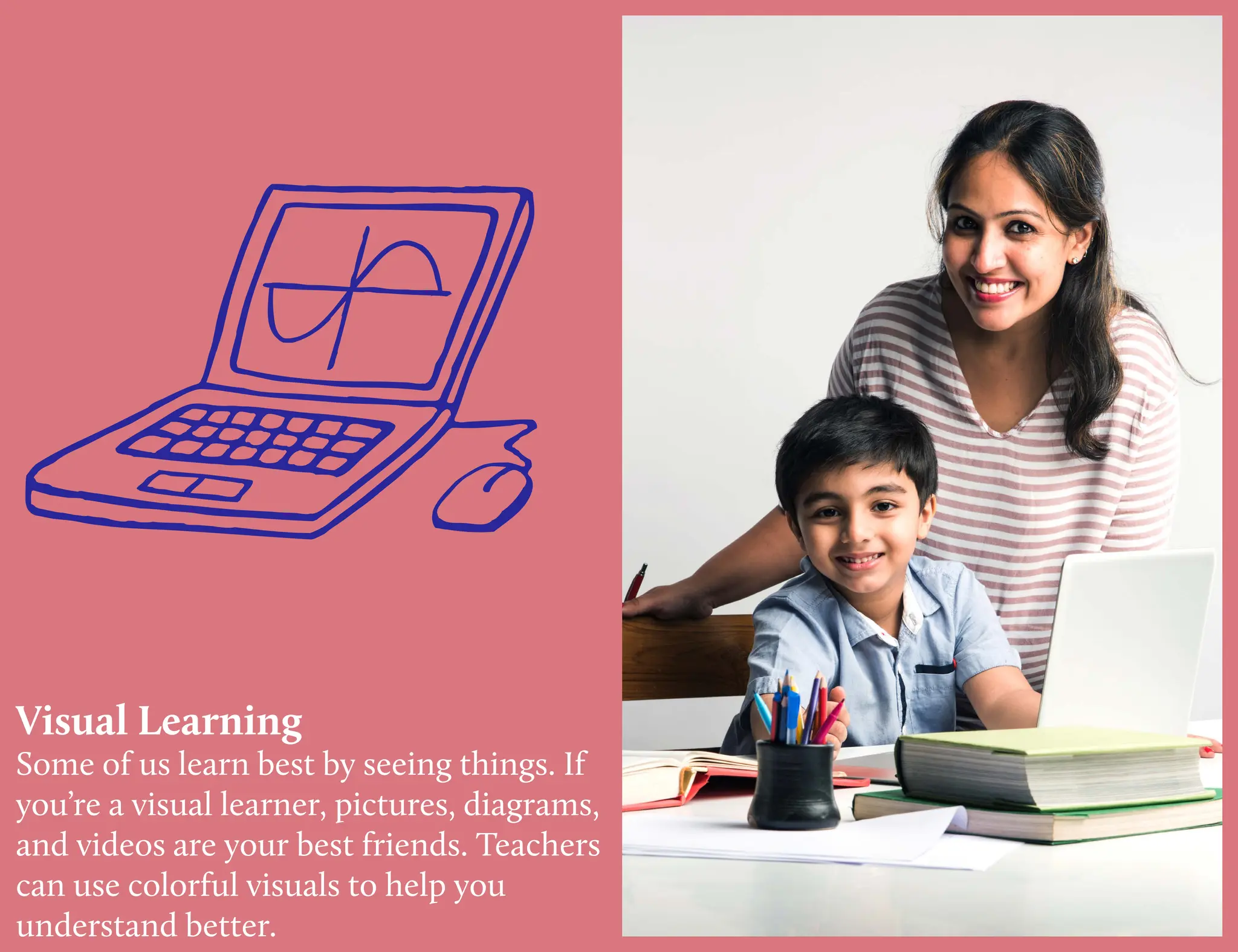
Visual Learning
Some of us learn best by seeing things. If
you’re a visual learner, pictures, diagrams,
and videos are your best friends. Teachers
can use colorful visuals to help you
understand better.
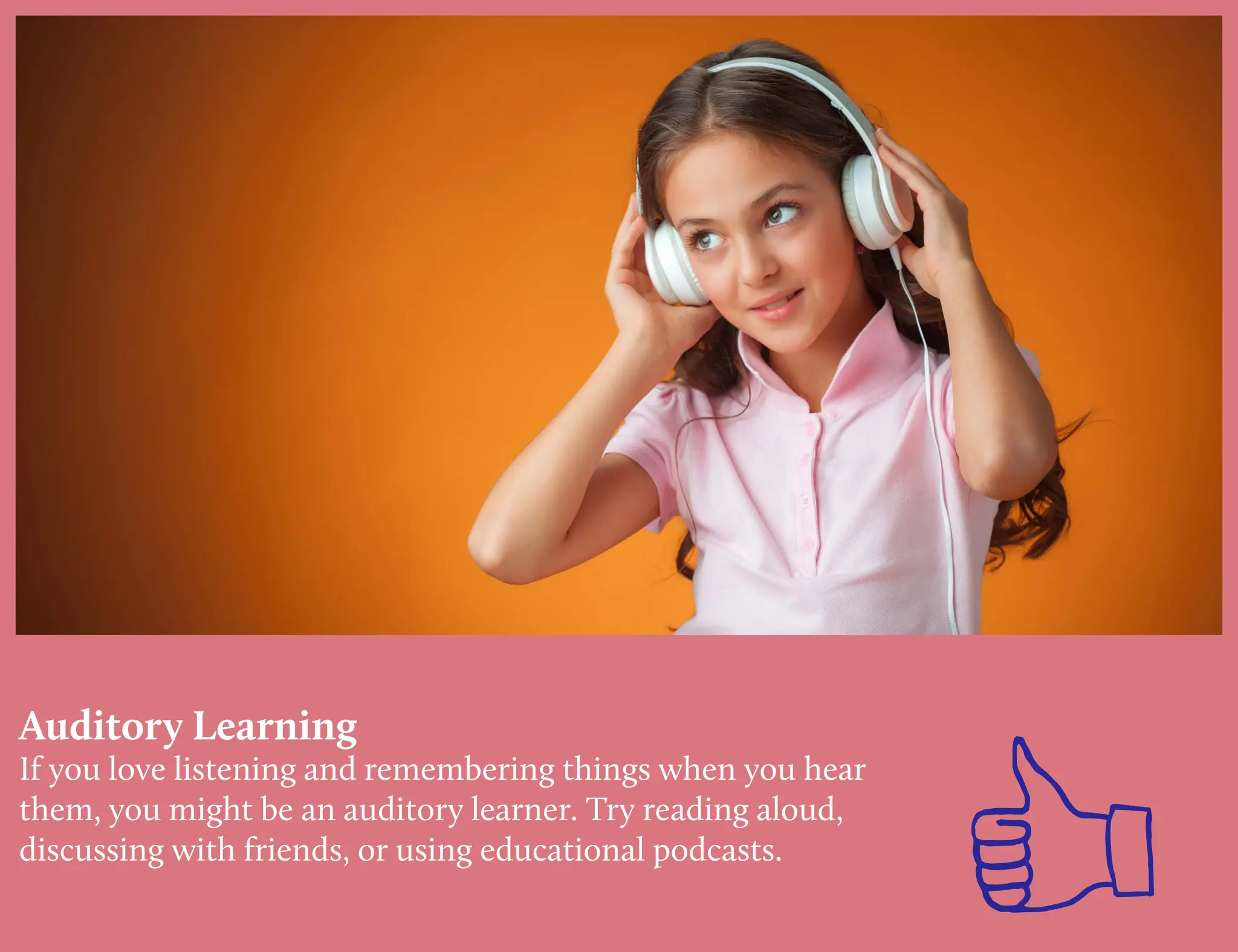
Auditory Learning
If you love listening and remembering things when you hear
them, you might be an auditory learner. Try reading aloud,
discussing with friends, or using educational podcasts.
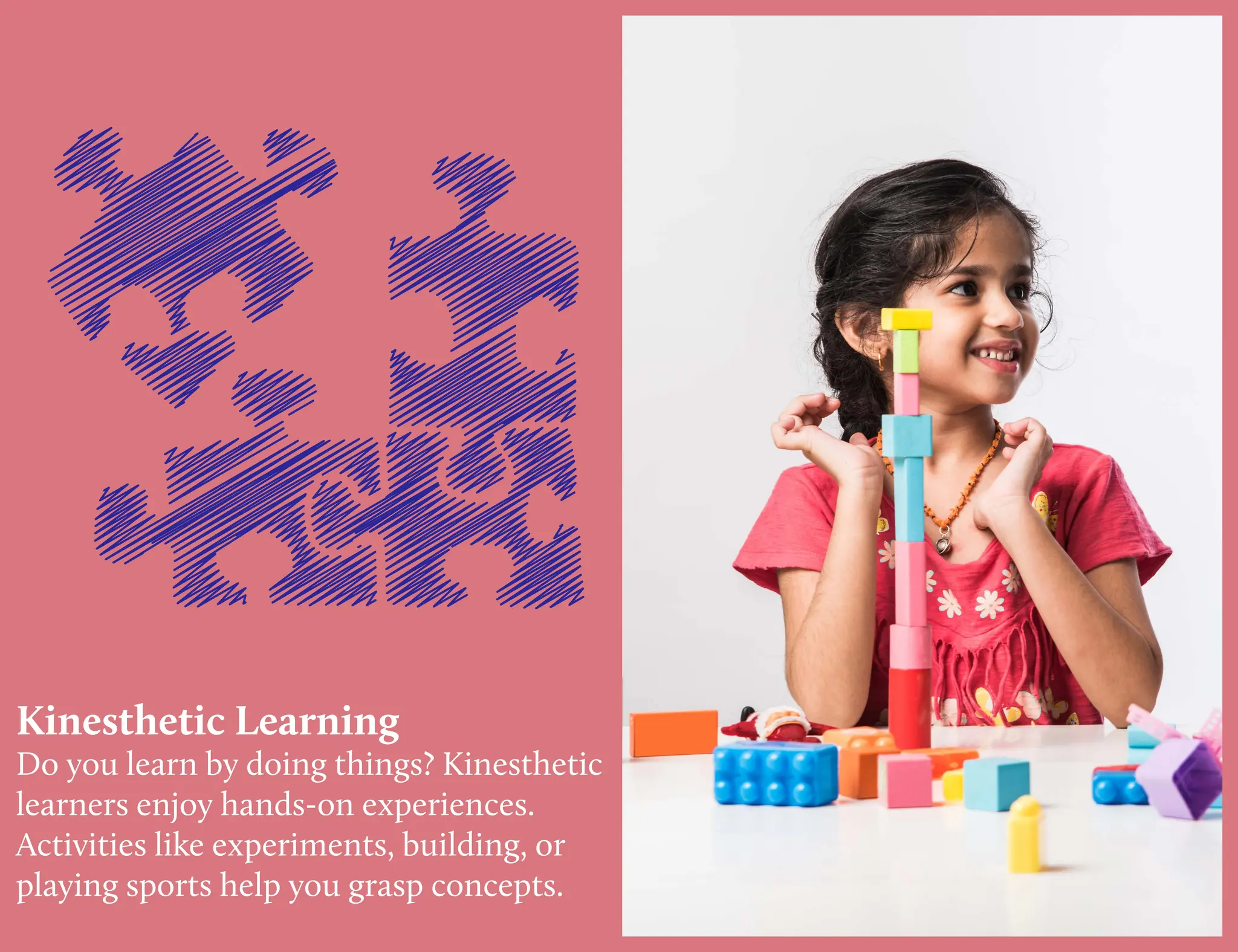
Kinesthetic Learning
Do you learn by doing things? Kinesthetic
learners enjoy hands-on experiences.
Activities like experiments, building, or
playing sports help you grasp concepts.
Reading/Writing Learning
This is for those who love words!
Reading and writing learners thrive
through reading books, taking notes, and
writing essays or stories.
Logical Learning
Logical learners are like little detectives. You love puzzles,
solving problems, and understanding how things work. Math,
science, and strategy games are your playground.
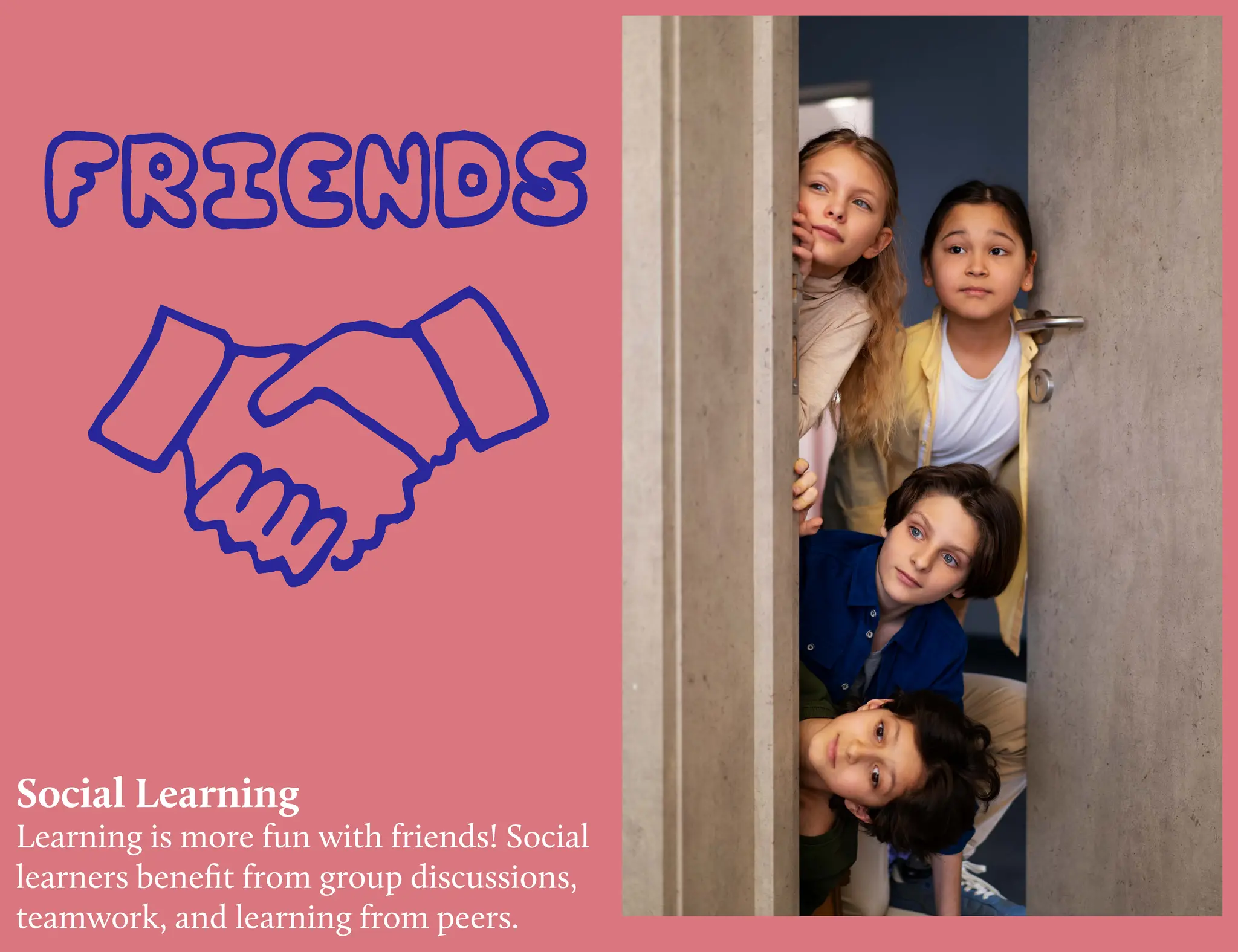
Social Learning
Learning is more fun with friends! Social
learners benefit from group discussions,
teamwork, and learning from peers.
Solitary Learning
Some prefer learning alone, and that’s perfectly fine too. Solitary
learners excel when they study in a quiet, focused environment.
Conclusion
In the world of education, we’re all different learners, and that’s what makes it
exciting! Let’s make children understand to embrace their unique styles and make
learning an adventure we all enjoy.

7 Approaches to Learning

  • 1.
    7 Approaches toLearning Learning is a wonderful journey that we all embark upon. Every person, whether he or she is a student, teacher or a parent, whether you’re a student, teacher, or parent, understanding different approaches to learning can make this journey even more exciting and successful.
  • 2.
    Visual Learning Some ofus learn best by seeing things. If you’re a visual learner, pictures, diagrams, and videos are your best friends. Teachers can use colorful visuals to help you understand better.
  • 3.
    Auditory Learning If youlove listening and remembering things when you hear them, you might be an auditory learner. Try reading aloud, discussing with friends, or using educational podcasts.
  • 4.
    Kinesthetic Learning Do youlearn by doing things? Kinesthetic learners enjoy hands-on experiences. Activities like experiments, building, or playing sports help you grasp concepts.
  • 5.
    Reading/Writing Learning This isfor those who love words! Reading and writing learners thrive through reading books, taking notes, and writing essays or stories.
  • 6.
    Logical Learning Logical learnersare like little detectives. You love puzzles, solving problems, and understanding how things work. Math, science, and strategy games are your playground.
  • 7.
    Social Learning Learning ismore fun with friends! Social learners benefit from group discussions, teamwork, and learning from peers.
  • 8.
    Solitary Learning Some preferlearning alone, and that’s perfectly fine too. Solitary learners excel when they study in a quiet, focused environment.
  • 9.
    Conclusion In the worldof education, we’re all different learners, and that’s what makes it exciting! Let’s make children understand to embrace their unique styles and make learning an adventure we all enjoy.