6 PRINCIPLES FOR EFFECTIVE
PROCESS
MANAGEMENT
Presented by Er Ralston
2017
2
How to think
about process
Apple is a very disciplined company, and we have great processes.
But that's not what it's about. Process makes you more efficient.
Steve Jobs
Principles of Process ManagementAll Rights Reserved J. Er Ralston, LLC
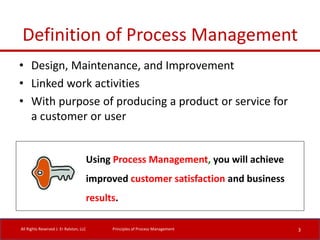
Definition of Process Management
• Design, Maintenance, and Improvement
• Linked work activities
• With purpose of producing a product or service for
a customer or user
Using Process Management, you will achieve
improved customer satisfaction and business
results.
All Rights Reserved J. Er Ralston, LLC Principles of Process Management 3
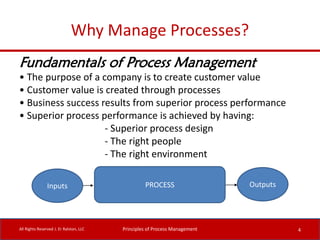
Why Manage Processes?
Fundamentals of Process Management
• The purpose of a company is to create customer value
• Customer value is created through processes
• Business success results from superior process performance
• Superior process performance is achieved by having:
- Superior process design
- The right people
- The right environment
All Rights Reserved J. Er Ralston, LLC Principles of Process Management 4
PROCESSInputs Outputs
Processes and Tasks
START TASK 1 TASK 4TASK 2 TASK 3 FINISH
Principles of Process ManagementAll Rights Reserved J. Er Ralston, LLC
5
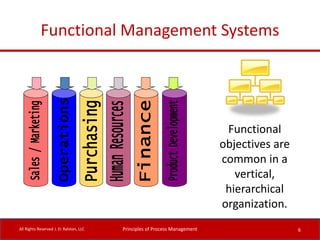
Functional Management Systems
Functional
objectives are
common in a
vertical,
hierarchical
organization.
Principles of Process ManagementAll Rights Reserved J. Er Ralston, LLC 6
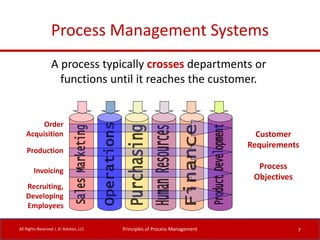
Process Management Systems
A process typically crosses departments or
functions until it reaches the customer.
Order
Acquisition
Production
Invoicing
Recruiting,
Developing
Employees
Customer
Requirements
Process
Objectives
Principles of Process ManagementAll Rights Reserved J. Er Ralston, LLC 7
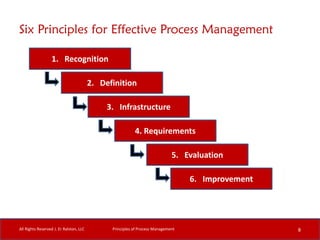
Six Principles for Effective Process Management
All Rights Reserved J. Er Ralston, LLC 8
1. Recognition
2. Definition
3. Infrastructure
4. Requirements
5. Evaluation
6. Improvement
Principles of Process Management
9
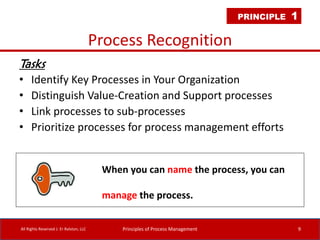
Process Recognition
Tasks
• Identify Key Processes in Your Organization
• Distinguish Value-Creation and Support processes
• Link processes to sub-processes
• Prioritize processes for process management efforts
PRINCIPLE 1
When you can name the process, you can
manage the process.
Principles of Process ManagementAll Rights Reserved J. Er Ralston, LLC
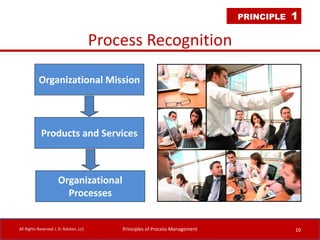
Organizational
Processes
.
Products and Services
Organizational Mission
Principles of Process ManagementAll Rights Reserved J. Er Ralston, LLC 10
PRINCIPLE 1
Process Recognition
11
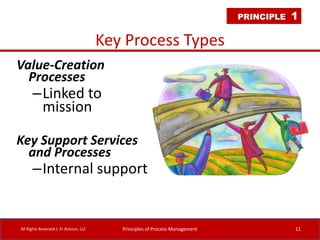
Key Process Types
Value-Creation
Processes
–Linked to
mission
Key Support Services
and Processes
–Internal support
Principles of Process ManagementAll Rights Reserved J. Er Ralston, LLC
PRINCIPLE 1
Process Hierarchy
Macro Process
Sub-Processes
Principles of Process ManagementAll Rights Reserved J. Er Ralston, LLC 12
PRINCIPLE 1
13
Process Definition/Documentation
Tasks
• Map key processes
• Develop appropriate documentation for key
processes
Well defined processes are easier to
manage to get the desired results.
Principles of Process ManagementAll Rights Reserved J. Er Ralston, LLC
PRINCIPLE 2
14
Process Infrastructure
Tasks
• Define the roles and competencies of process
roles (e.g. process owners)
• Identify and name process owners in your
organization
Process owners achieve performance
excellence by managing end-to-end
processes.
Principles of Process ManagementAll Rights Reserved J. Er Ralston, LLC
PRINCIPLE 3
15
Process Owner’s Major Roles
• Design
• Coaching
• Advocacy
from Beyond Reengineering, 1996, Michael Hammer
“The process owner is a linker, a facilitator, an enabler of those
who actually do the work. It would be more accurate to say that
he reports to the performers – since he is on call, at their disposal
– than to say that they work for him.”
Principles of Process ManagementAll Rights Reserved J. Er Ralston, LLC
PRINCIPLE 3
16
Identify & Set Process Requirements
Tasks
• Identify key customers and customer needs
• Determine key process requirements aligned
to customer needs
• Document the requirements for key processes
When you know the target, then
you can hit the target.
Principles of Process ManagementAll Rights Reserved J. Er Ralston, LLC
PRINCIPLE 4
17
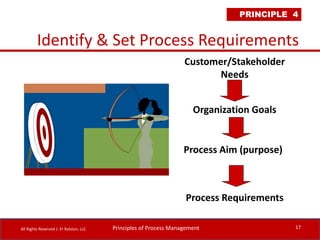
Identify & Set Process Requirements
Customer/Stakeholder
Needs
Organization Goals
Process Aim (purpose)
Process Requirements
All Rights Reserved J. Er Ralston, LLC Principles of Process Management
PRINCIPLE 4
18
Process Evaluation
Tasks
• Define measurement systems to assess day-to-
day operations
• Define measurements systems to assess long-
term process capability
When you measure the key inputs,
you get better outputs.
Principles of Process ManagementAll Rights Reserved J. Er Ralston, LLC
PRINCIPLE 5
19
The basis for
determining how
well you are
meeting
requirements
Principles of Process ManagementAll Rights Reserved J. Er Ralston, LLC
PRINCIPLE 5
Select Key Process Measurements
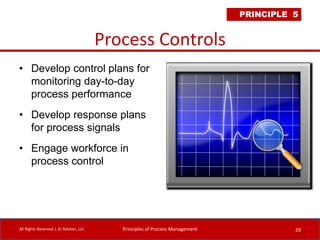
Process Controls
• Develop control plans for
monitoring day-to-day
process performance
• Develop response plans
for process signals
• Engage workforce in
process control
Principles of Process ManagementAll Rights Reserved J. Er Ralston, LLC 20
PRINCIPLE 5
Process Capability
• Relative to customer &
stakeholder
requirements
• Stable and capable
over the long run
Principles of Process ManagementAll Rights Reserved J. Er Ralston, LLC 21
PRINCIPLE 5
Process Improvement
Tasks
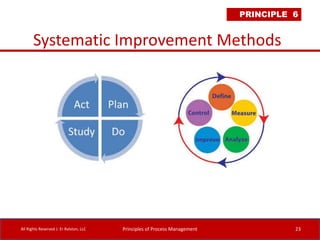
• Define systematic improvement methods for your
organization
• Train leaders and the workforce to improve processes
• Use formal evaluation and improvement methods to
achieve better process and organizational results
Systematic improvements are sustainable
improvements.
Principles of Process ManagementAll Rights Reserved J. Er Ralston, LLC 22
PRINCIPLE 6
23
Systematic Improvement Methods
Principles of Process ManagementAll Rights Reserved J. Er Ralston, LLC
PRINCIPLE 6
Summary
Principles of Process Management 24
• Customer value and company
performance is generated through
process.
• Using Process Management, you will
achieve improved customer satisfaction
and business results.
RALSTON
EXCELLENCE
Contact Information:
Er@RalstonExcel.com
www.RalstonExcel.com
Trusted Advisors for Operational Excellence

6 Principles for Effective Process Management

  • 1.
    6 PRINCIPLES FOREFFECTIVE PROCESS MANAGEMENT Presented by Er Ralston 2017
  • 2.
    2 How to think aboutprocess Apple is a very disciplined company, and we have great processes. But that's not what it's about. Process makes you more efficient. Steve Jobs Principles of Process ManagementAll Rights Reserved J. Er Ralston, LLC
  • 3.
    Definition of ProcessManagement • Design, Maintenance, and Improvement • Linked work activities • With purpose of producing a product or service for a customer or user Using Process Management, you will achieve improved customer satisfaction and business results. All Rights Reserved J. Er Ralston, LLC Principles of Process Management 3
  • 4.
    Why Manage Processes? Fundamentalsof Process Management • The purpose of a company is to create customer value • Customer value is created through processes • Business success results from superior process performance • Superior process performance is achieved by having: - Superior process design - The right people - The right environment All Rights Reserved J. Er Ralston, LLC Principles of Process Management 4 PROCESSInputs Outputs
  • 5.
    Processes and Tasks STARTTASK 1 TASK 4TASK 2 TASK 3 FINISH Principles of Process ManagementAll Rights Reserved J. Er Ralston, LLC 5
  • 6.
    Functional Management Systems Functional objectivesare common in a vertical, hierarchical organization. Principles of Process ManagementAll Rights Reserved J. Er Ralston, LLC 6
  • 7.
    Process Management Systems Aprocess typically crosses departments or functions until it reaches the customer. Order Acquisition Production Invoicing Recruiting, Developing Employees Customer Requirements Process Objectives Principles of Process ManagementAll Rights Reserved J. Er Ralston, LLC 7
  • 8.
    Six Principles forEffective Process Management All Rights Reserved J. Er Ralston, LLC 8 1. Recognition 2. Definition 3. Infrastructure 4. Requirements 5. Evaluation 6. Improvement Principles of Process Management
  • 9.
    9 Process Recognition Tasks • IdentifyKey Processes in Your Organization • Distinguish Value-Creation and Support processes • Link processes to sub-processes • Prioritize processes for process management efforts PRINCIPLE 1 When you can name the process, you can manage the process. Principles of Process ManagementAll Rights Reserved J. Er Ralston, LLC
  • 10.
    Organizational Processes . Products and Services OrganizationalMission Principles of Process ManagementAll Rights Reserved J. Er Ralston, LLC 10 PRINCIPLE 1 Process Recognition
  • 11.
    11 Key Process Types Value-Creation Processes –Linkedto mission Key Support Services and Processes –Internal support Principles of Process ManagementAll Rights Reserved J. Er Ralston, LLC PRINCIPLE 1
  • 12.
    Process Hierarchy Macro Process Sub-Processes Principlesof Process ManagementAll Rights Reserved J. Er Ralston, LLC 12 PRINCIPLE 1
  • 13.
    13 Process Definition/Documentation Tasks • Mapkey processes • Develop appropriate documentation for key processes Well defined processes are easier to manage to get the desired results. Principles of Process ManagementAll Rights Reserved J. Er Ralston, LLC PRINCIPLE 2
  • 14.
    14 Process Infrastructure Tasks • Definethe roles and competencies of process roles (e.g. process owners) • Identify and name process owners in your organization Process owners achieve performance excellence by managing end-to-end processes. Principles of Process ManagementAll Rights Reserved J. Er Ralston, LLC PRINCIPLE 3
  • 15.
    15 Process Owner’s MajorRoles • Design • Coaching • Advocacy from Beyond Reengineering, 1996, Michael Hammer “The process owner is a linker, a facilitator, an enabler of those who actually do the work. It would be more accurate to say that he reports to the performers – since he is on call, at their disposal – than to say that they work for him.” Principles of Process ManagementAll Rights Reserved J. Er Ralston, LLC PRINCIPLE 3
  • 16.
    16 Identify & SetProcess Requirements Tasks • Identify key customers and customer needs • Determine key process requirements aligned to customer needs • Document the requirements for key processes When you know the target, then you can hit the target. Principles of Process ManagementAll Rights Reserved J. Er Ralston, LLC PRINCIPLE 4
  • 17.
    17 Identify & SetProcess Requirements Customer/Stakeholder Needs Organization Goals Process Aim (purpose) Process Requirements All Rights Reserved J. Er Ralston, LLC Principles of Process Management PRINCIPLE 4
  • 18.
    18 Process Evaluation Tasks • Definemeasurement systems to assess day-to- day operations • Define measurements systems to assess long- term process capability When you measure the key inputs, you get better outputs. Principles of Process ManagementAll Rights Reserved J. Er Ralston, LLC PRINCIPLE 5
  • 19.
    19 The basis for determininghow well you are meeting requirements Principles of Process ManagementAll Rights Reserved J. Er Ralston, LLC PRINCIPLE 5 Select Key Process Measurements
  • 20.
    Process Controls • Developcontrol plans for monitoring day-to-day process performance • Develop response plans for process signals • Engage workforce in process control Principles of Process ManagementAll Rights Reserved J. Er Ralston, LLC 20 PRINCIPLE 5
  • 21.
    Process Capability • Relativeto customer & stakeholder requirements • Stable and capable over the long run Principles of Process ManagementAll Rights Reserved J. Er Ralston, LLC 21 PRINCIPLE 5
  • 22.
    Process Improvement Tasks • Definesystematic improvement methods for your organization • Train leaders and the workforce to improve processes • Use formal evaluation and improvement methods to achieve better process and organizational results Systematic improvements are sustainable improvements. Principles of Process ManagementAll Rights Reserved J. Er Ralston, LLC 22 PRINCIPLE 6
  • 23.
    23 Systematic Improvement Methods Principlesof Process ManagementAll Rights Reserved J. Er Ralston, LLC PRINCIPLE 6
  • 24.
    Summary Principles of ProcessManagement 24 • Customer value and company performance is generated through process. • Using Process Management, you will achieve improved customer satisfaction and business results.
  • 25.