6
Writers: Khamphanh PHIMSIPASOM
ViengkhamPHONPRASEUTH
Bouakeo VILAYLATH
Manivone PHAXAYAVONG
Manoly DONGVANH
Amaly ALATHEP
Viengkham SINGVONGSA
Managing Editors: Khamphanh PHIMSIPASOM
Viengkham PHONPRASEUTH
Editor in chief: Assoc. Prof. Dr. Bouasavanh KEOVILAY
Design and Layout: Khonesavanh CHANTHAVIXAY
Ministry of Education and Sports
Research Institute for Educational Sciences
2015
3_Eng_M6 TG ready for print.pdf 13_Eng_M6 TG ready for print.pdf 1 7/31/2015 9:28:17 AM7/31/2015 9:28:17 AM
ສ.ວ.ສ
ສະຫງວນລິຂະສິດ
3.
3_Eng_M6 TG readyfor print.pdf 23_Eng_M6 TG ready for print.pdf 2 7/31/2015 9:28:23 AM7/31/2015 9:28:23 AM
ສ.ວ.ສ
ສະຫງວນລິຂະສິດ
4.
I
Introduction
This teacher guideis the sixth in a series of seven teacher guides which are
developed to provide some necessary teaching techniques along with the textbooks. The
teacher guide will help teachers conduct their teaching effectively. It includes the
necessary steps of teaching with clear instruction that teachers can follow easily.
Moreover, this teacher guide has given some useful ideas to teachers and students for
preparing the teaching aids to use in their classes by themselves.
It also includes the keys of the lessons, some reading texts for listening, some
songs and games. The teaching will be effective if the teachers read the teacher guide and
textbook before teaching the lessons to students. Therefore, it is necessary for teachers to
have the teacher guide along with the textbook.
However, the teacher guide is produced under the time pressure that it cannot be
probed into every needed area. Some minor errors may also contain in some instructions.
The Foreign Language Resource Centre highly appreciates all comments and suggestions
from users and these are considered as a great contribution to the development of teaching
techniques of Lao teachers. The Research Institute for Educational Sciences avails itself
of this opportunity to express its sincere thanks to all contributors.
Research Institute for Educational Sciences
7eoe
xB,7j6,n76gsA^,oUc,jogsA^,musqd.o9eo;og9afgsA,mujwfh0Po0Bogrnjvltg|ug8adoyddkolvomuj9egxao9e
o;o|bj’wx7P’76jda[xB,c[[IPoD xB,7j6,n76gsA^,oU9t-;jp.sh76xt8y[afdkolvo0v’g0qkg9Qk1jk’,u
xtlyfmyrk[D .oxB,oUwfhI;,gvqk[k’0Ao8vomuj9egxao0v’dkolyflvorhv,fh;p7ecotoemuj9tc9h’
g-yj’76lk,kfxt8y[af8k,1jk’’jkpfkpD ovd9kdoAoF xB,7j6,n76gsA^,oUpa’wfh.shco;7yfmujgxaoxt3spf
cdj76 c]t oadIPo grnjvdt8P,v5xtdvodkolvole]a[.-h.oshv’IPo0v’r;dg0qkD
xB,gsA^,oUpa’,u0toko8v[F [qfvjkole]a[dko2a’F [k’[qfgra’ c]t gd,s^Yovudfh;pD dkolyflvo
9t,uxtlyfmyrk[fu4hk;jk76vjkoxB,7j6,n76 c]t xB,c[[IPodjvolvo[qfIPo.shcdjoadIPoD
fh;pgsfoAoF ,ao,u7;k,9egxaole]a[76muj9t8hv’,uxB,7j6,n76wx7P’7j6da[xB,c[[IPoD
g4y’1jk’.fd=fuF xN,7j6,n76gsA^,oUwfhlhk’0Bo.oltrk[vaoIu[fj;o9bj’[+vkfxklt9kdwfh0h=0kf8qd[qd
zjv’[k’xtdkomuj[+lk,kf9td;fgsaowfhqfD ltoAo9bj’0=ltg|u,kpa’76 c]t zh6mujoe.-hxN,gsA^,oUh4hk
gsao;jklyj’.flq,7;oxa[x5’ c]t fafcdhdt]5oklqj’7e7yfgsao0v’mjjko,kpa’lt4k[ao7Qo7;hk;ymtpk
lkfdkolbdlkgrnjv9twfhxa[x5’.shfu0Bo.o0Ao8+wxD m5d7e7yfgsao0v’[aofkmjko]h;oc8jgxaodkoxt
dv[lj;og0Qk.odkorafmtokdkolbdlk0v’]k;.shoa[,N,u75ootrk[fupyj’0BoD lt4k[ao7Qo7;hk
;ymtpklkfdkolbdlk0=ltcf’7;k,0v[.9]j;’|hk,kpa’m5dMmjko,kot3vdkfoUfh;pD
lt4k[ao7Qo7;hk;ymtpklkfdkolbdlk
3_Eng_M6 TG ready for print.pdf 33_Eng_M6 TG ready for print.pdf 3 7/31/2015 9:28:23 AM7/31/2015 9:28:23 AM
ສ.ວ.ສ
ສະຫງວນລິຂະສິດ
5.
II
ACKNOWLEGEMENTS
The Research Institutefor Educational Sciences (RIES) would like to
acknowledge the assistance and contribution of the organizations and people who
directly participated in the development and publication of the English textbook
M6 for Lao Upper Secondary Schools. Firstly, the RIES would like to express its
sincere thanks to the Secondary Education Sector Development Project that
contributed equipment and financial support to the development and publication of
the textbooks and teacher’s guides. Secondly, the RIES would like to extend its
thanks to Ms. Sharon ROSE LIN MASA, Ms. Khounmy KEOVONGSA, and Mr.
Khonesavanh CHANTHAVIXAY for their collaboration in editing the textbook.
Lastly, the RIES would like to express its special thanks to the following people
for their participation in writer’s workshops:
Khamphanh PHIMSIPASOM Research Institute for Educational Sciences
Viengkham PHONPRASEUTH Research Institute for Educational Sciences
Manoly DONGVAN Research Institute for Educational Sciences
Ammaly ALATHEP Research Institute for Educational Sciences
Viengkham SINGVONGSA Research Institute for Educational Sciences
Bouakeo VILAYLATH Phiawat Secondary School
Manivone PHAXAYAVONG Vientiane Secondary School
A special thanks to the following teachers for their contribution to the improvement of
this teacher guide.
Bounthapany BOUNXOUAY Department of Secondary Education
Vangnou VANGHUANOUA Vientiane Province Education and Sports Service
Bounpanh CHANSOUPHO Muongxay Secondary School (Oudomxay)
Keovilay VIENGSOUVANH Thakhek Secondary School (Khammouane)
Sompasong LUANGLATH Sithanaxay Secondary School (Bolikhamxai)
3_Eng_M6 TG ready for print.pdf 43_Eng_M6 TG ready for print.pdf 4 7/31/2015 9:28:23 AM7/31/2015 9:28:23 AM
ສ.ວ.ສ
ສະຫງວນລິຂະສິດ
6.
III
Table of Contents
Introduction...........................................................................................................I
Acknowledgement ...............................................................................................II
Table of contents ................................................................................................ III
Unit 1 Hobbies ..........................................................................1
Lesson 1 Favourite hobbies .................................................................... 2
Lesson 2 At one’s leisure ....................................................................... 6
Lesson 3 At a library ............................................................................ 11
Unit 2 Transports ...................................................................16
Lesson 1 Types of Transports .............................................................. 17
Lesson 2 How can I get to the Friendship Bridge? ............................... 21
Lesson 3 Bus service ............................................................................ 25
Unit 3 Travelling and tourism ..............................................29
Lesson 1 On holidays ........................................................................... 30
Lesson 2 At the airport ......................................................................... 34
Lesson 3 Travelling to Luang prabang ................................................. 39
Unit 4 Visiting places .............................................................44
Lesson 1 Famous tourist sites ............................................................... 45
Lesson 2 Getting around Vientiane ...................................................... 49
Lesson 3 Ho Prakeo .............................................................................. 53
Unit 5 Health and fitness ......................................................57
Lesson 1 Stay healthy in hot weather ................................................... 58
Lesson 2 Staying fit .............................................................................. 63
Lesson 3 At a doctor ............................................................................. 67
Unit 6 Revision .......................................................................72
Review (unit 1-5) ................................................................................... 72
3_Eng_M6 TG ready for print.pdf 53_Eng_M6 TG ready for print.pdf 5 7/31/2015 9:28:23 AM7/31/2015 9:28:23 AM
ສ.ວ.ສ
ສະຫງວນລິຂະສິດ
7.
IV
Unit 7 Diseases.......................................................................79
Lesson 1 What is AIDS? .......................................................................80
Lesson 2 What is malaria? ....................................................................83
Lesson 3 What is Bird flu? ....................................................................87
Unit 8 Geography ..................................................................91
Lesson 1 Where is Laos? ......................................................................92
Lesson 2 Rivers in Laos. .......................................................................97
Lesson 3 ASEAN countries ................................................................101
Unit 9 Weather and climate ................................................107
Lesson 1 Seasons in Laos ...................................................................108
Lesson 2 The weather forecast ............................................................113
Lesson 3 The weather in Europe .........................................................118
Unit 10 Population .................................................................123
Lesson 1 People in Laos ..............................................................................125
Lesson 2 Mother and Child .........................................................................130
Lesson 3 ASEAN Population ..............................................................135
Unit 11 Revision ....................................................................140
Review (unit 7-10) .......................................................................................140
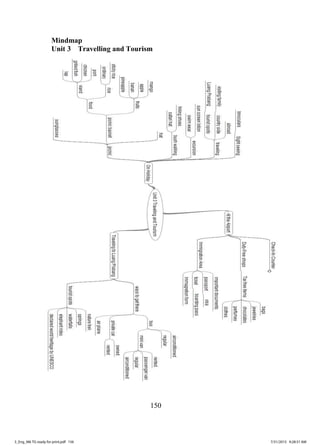
Mindmap ………………………………………………….……. 149
Bibliography...................................................................................154
3_Eng_M6 TG ready for print.pdf 63_Eng_M6 TG ready for print.pdf 6 7/31/2015 9:28:23 AM7/31/2015 9:28:23 AM
ສ.ວ.ສ
ສະຫງວນລິຂະສິດ
3
• ຄູໃຫ້ນັກຮຽນປະຕິບັດກິດຈະກ ໍາຈັບຄູ່ (matching) -ຊອກຫາຄ ໍາສັບ/ສັບສ ໍານວນທີ່
ຖືກຕ້ອງລະຫວ່າງພາສາລາວ ແລະ ພາສາອັງກິດ (ຄູຈະຕ້ອງກຽມກິດຈະກ ໍາ
matching).
• ຄູພານັກຮຽນແປຄວາມໝາຍຂອງຄ ໍາສັບ.
3. Listen and practise ຟັງ ແລະ ເຝິກເວົ້າ
• ຄູອ່ານບົດສົນທະນາ 1 ຄັ້ງ, ນັກຮຽນຟັງ,
• ຄູຖາມເອົາຄວາມໝາຍລວມຂອງບົດສົນທະນາໂດຍຫຍໍ້ເປັນພາສາລາວຈາກ
ນັກຮຽນ.
• ຄູອ່ານບົດສົນທະນາຄືນອີກ ນັກຮຽນຟັງ ແລະ ອ່ານຕາມປະມານ 2 – 3 ຄັ້ງ,
• ຄູ ແລະ ນັກຮຽນຜັດປ່ຽນບົດບາດກັນ.
• ຄູຈ ັດນັກຮຽນເປັນຄູ່ ເພື່ ອປະຕິບັດກິດຈະກ ໍາສົນທະນາໂດຍຜັດປ່ຽນບົດບາດກັນ,
• ຄູຍ່າງອ້ອມຫ້ອງເພື່ ອສັງເກດ ແລະ ຊ່ວຍນັກຮຽນໃນການປະຕິບັດກິດຈະກ ໍາຂອງ
ເຂົາເຈົ້າ.
• ຄູເອີ້ນເອົານັກຮຽນ 2 ຫຼື 3 ຄູ່ ຢືນຂຶ້ນ ຫຼື ອອກມາໜ້າກະດານ ເພື່ ອສະແດງ
ບົດບາດໃຫ້ໝູ່ໃນຫ້ອງຟັງເທື່ ອລະຄູ່.
4. Ask and answer ອ່ານ ແລະ ຕອບຄ ໍາຖາມ
Read the dialogue and answer the questions below
ອ່ານບົດສົນທະນາ ແລະ ຕອບຄ ໍາຖາມລຸ່ມນີ້
• ຄູໃຫ້ນັກຮຽນອ່ານ ແລະ ຕອບຄ ໍາຖາມເປັນຄູ່.
• ຄູໃຫ້ນັກຮຽນແຕ່ລະຄົນຂຽນຄ ໍາຕອບໃສ່ປຶ້ມຮຽນ.
• ຈາກນັ້ນຄູເອີ້ນເອົາຄ ໍາຕອບຈາກນັກຮຽນ ແລະ ຂຽນໃສ່ກະດານ.
ຄ ໍາຕອບ
1. What are Boun and Vilay talking about?
They are talking about their hobbies.
Vilay ອ່ານວ່າ ວວິໄລ
Boun ອ່ານວ່າ ບບຸນ
3_Eng_M6 TG ready for print.pdf 93_Eng_M6 TG ready for print.pdf 9 7/31/2015 9:28:23 AM7/31/2015 9:28:23 AM
ສ.ວ.ສ
ສະຫງວນລິຂະສິດ
11.
4
2. What arethe Boun’s hobbies?
Listening to the music and playing basketball.
3. What are the Villay’s hobbies?
Swimming and plaing badminton.
4. What can Boun do to help Vilay?
He can help Vilay to learn how to swim.
5. Where are they going to meet at 4:00 pm on Saturday ?
At Vientiane Swimming pool.
6. What are they going to do there?
They are going to swim.
5. Read and answer ອ່ານ ແລະ ຕອບ
• ກ່ອນເຂົ້າກິດຈະກ ໍາ ຄູອາດໃຊ້ e-mail ຕົວຢ່າງ ແລະ ສ້າງຄ ໍາຖາມ ຖາມ
ນັກຮຽນ ເພື່ ອກຽມພາສາ ແລະ ຄວາມເຂົ້າໃຈກ່ອນເຂົ້າສູ່ບົດອ່ານ.
• ຄູຖາມນັກຮຽນວ່າ: ນັກຮຽນຮູ້ບໍ e-mail ແມ່ນຫຍັງ? ມີໃຜເຄີຍໃຊ້ບໍ?
• ຄູບອກນັກຮຽນເບິ່ງບົດອ່ານ (e-mail) ແລະ ອ່ານໃນໃຈ.
• ຄູອ່ານ e-mail 1 ຄັ້ງ, ນັກຮຽນຟັງ ແລະ ເບິ່ງໄປພ້ອມ.
• ຄູອ່ານຄືນອີກ ນັກຮຽນຟັງ ແລະ ອ່ານຕາມ.
• ຄູເອີ້ນນັກຮຽນເທື່ ອລະຄົນອ່ານໃຫ້ໝູ່ຟັງ (ຄົນລະ 1 – 2 ປະໂຫຍກ).
• ຄູຊ່ວຍນັກຮຽນອອກສຽງໃຫ້ຖືກຕ້ອງເມື່ອນັກຮຽນອ່ານຜິດ.
Answers ຄ ໍາຕອບ
Read the e-mail and answer the questionas.
ອ່ານ e-mail ແລະ ຕອບຄ ໍາຖາມ
• ຄູໃຫ້ນັກຮຽນອ່ານເປັນບຸກຄົນເພື່ ອຕອບຄ ໍາຖາມ.
• ຄູໃຫ້ນັກຮຽນກວດຄ ໍາຕອບເປັນຄູ່ກັບໝູ່ທີ່ ນັ່ງໃກ້ກັບເຂົາເຈົ້າ.
• ຄູເອີ້ນເອົາຄ ໍາຕອບຈາກນັກຮຽນ.
• ຄູຂຽນຄ ໍາຕອບໃສ່ກະດານ ແລະ ອະທິບາຍທີ່ ມາຂອງຄ ໍາຕອບ.
1. Who wrote the E-mail to Chansamone?
Tara.
3_Eng_M6 TG ready for print.pdf 103_Eng_M6 TG ready for print.pdf 10 7/31/2015 9:28:23 AM7/31/2015 9:28:23 AM
ສ.ວ.ສ
ສະຫງວນລິຂະສິດ
12.
5
2. Where doesChansamone live?
In Luangprabang.
3. Where does Tara live?
In Sydney.
4. What did Chansamone ask Tara about?
About hobbies and interests.
5. What are Tara’s hobbies?
Writing a poetry, a short story, listening to the music and playing
basketball.
6. What is Tara’s ambition?
Becoming a famous writer one day.
7. What kind of sports does Tara love?
Basketball.
8. How often does Tara practise basketball?
Once a week.
9. How many email adesses does Tara have?
Two.
6. True or False ຖຖືກ ຫຼື ຜິດ
Put true (T) or false (F) into theses sentences
ຂຽນ (T) ສ ໍາລັບປະໂຫຍກທີ່ ຖືກ ແລະ (F) ສ ໍາລັບປະໂຫຍກທີ່ ຜິດ.
• ຄູໃຫ້ນັກຮຽນອ່ານເປັນບຸກຄົນ/ຄູ່ເພື່ ອຕອບຄ ໍາຖາມ.
• ຄູໃຫ້ນັກຮຽນກວດຄ ໍາຕອບເປັນຄູ່ກັບໝູ່ທີ່ ນັ່ງໃກ້ກັບເຂົາເຈົ້າ.
• ຄູເອີ້ນເອົາຄ ໍາຕອບຈາກນັກຮຽນ.
• ຄູຂຽນຄ ໍາຕອບໃສ່ກະດານ ແລະ ອະທິບາຍທີ່ ມາຂອງຄ ໍາຕອບ.
ຄ ໍາຕອບ
1- T; 2-T; 3-T; 4-F (She can’t afford it right now); 5-T; 6-T; 7-T;
8- F (She has to practise it once a week); 9- T.
3_Eng_M6 TG ready for print.pdf 113_Eng_M6 TG ready for print.pdf 11 7/31/2015 9:28:23 AM7/31/2015 9:28:23 AM
ສ.ວ.ສ
ສະຫງວນລິຂະສິດ
8
• ຄູຍ່າງອ້ອມຫ້ອງເພື່ ອສັງເກດແລະ ຊ່ວຍນັກຮຽນໃນການປະຕິບັດກິດຈະກ ໍາຂອງ
ເຂົາເຈົ້າ.
• ຄູເອີ້ນເອົານັກຮຽນ 2 ຫຼື 3 ຄູ່ ຢືນຂຶ້ນ ຫຼື ອອກມາໜ້າກະດານ ເພື່ ອສະແດງ
ບົດບາດໃຫ້ໝູ່ໃນຫ້ອງຟັງເທື່ ອລະຄູ່.
4. True or False ຖຖືກ ຫຼື ຜິດ
Put true (T) or false (F) into the sentences below
ຂຽນ (T) ສ ໍາລັບປະໂຫຍກທີ່ ຖືກ ແລະ (F) ສ ໍາລັບປະໂຫຍກທີ່ ຜິດ
• ຄູໃຫ້ນັກຮຽນອ່ານບົດສົນທະນາຄືນ.
• ໃຫ້ນັກຮຽນອ່ານຄ ໍາຖາມ ແລ້ວສົນທະນາເປັນຄູ່.
• ຄູໃຫ້ນັກຮຽນແຕ່ລະຄົນອ່ານ ແລະ ຂຽນ (T)/(F) ໃສ່ແຕ່ລະປະໂຫຍກ.
• ຄູຍ່າງເລາະເພື່ ອກວດກາ ແລະ ຊ່ວຍນັກຮຽນ.
• ຄູໃຫ້ນັກຮຽນ 3-4 ຄົນ ອ່ານຜ່ານຄ ໍາຕອບໃນຫ້ອງ.
• ຄູຊ່ວຍອະທິບາຍ ແລະ ໃຫ້ຄ ໍາຕອບທີ່ ຖືກຕ້ອງສ ໍາລັບຄ ໍາຕອບທີ່ ຜິດ.
ຄ ໍາຕອບ
1-T; 2-T; 3-T; 4-T; 5-T; 6-F (They will play football in Laos)
5. Read and answer ອ່ານ ແລະ ຕອບ
Read the text below
ອ່ານບົດອ່ານລຸ່ມນີ້
• ຈ ັດນັກຮຽນເປັນກຸ່ມ 3 ຄົນ.
• ໃນແຕ່ລະກຸ່ມ ໃຫ້ນັກຮຽນໝາຍເລກ 1 ອ່ານບົດ A, ໝາຍເລກ 2 ອ່ານບົດ B,
ໝາຍເລກ 3 ອ່ານບົດ C.
• ຄູຍ່າງກວດກາໄປຕາມຫ້ອງເພື່ ອຊ່ວຍນັກຮຽນໃນການອ່ານແລະແປບາງຄ ໍາສັບ.
• ຈາກນັ້ນໃຫ້ນັກຮຽນແຕ່ລະຄົນເລົ່ າບົດເລື່ ອງທີ່ ຕົນອ່ານໃຫ້ໝູ່ໃນກຸ່ມຟັງ (ນັກຮຽນບໍ່
ຈ ໍາເປັນຕ້ອງເລົ່ າຄືນລະອຽດທຸກຢ່າງຕາມບົດ).
Jim: ອ່ານວ່າ ຈຈິມ
Khen: ອ່ານວ່າ ເເຄນ
3_Eng_M6 TG ready for print.pdf 143_Eng_M6 TG ready for print.pdf 14 7/31/2015 9:28:24 AM7/31/2015 9:28:24 AM
ສ.ວ.ສ
ສະຫງວນລິຂະສິດ
16.
9
• ໃນເວລາທີ່ ນັກຮຽນເລົ່າຄືນ ຄູຍ່າງເລາະເພື່ ອກວດກາ ແລະ ຊ່ວຍເຂົາເຈົ້າບາງຈຸດ
ໃນການເລົ່ າຄືນ.
• ຖ້າມີເວລາພຽງພໍ ຄູອາດຈະອ່ານຜ່ານບາງບົດ ອ່ານເພື່ ອເປັນການທວນຄືນໃຫ້
ນັກຮຽນ.
Questions ຄຄ ໍາຖາມ
ຄ ໍາຕອບ
1. What does Mala like doing in her free time?
Practising Lao traditional dance.
2. Why does Mala love Lao dance?
Because it is unique.
3. Where does Sihn study?
Vientiane Secondary School.
4. What is Sinh favouraite sport?
Volleyball.
5. How often does Sihn play volleyball?
Whenever he has time.
6. What did Sihn say about volleyball?
After playing it he feels good.
7. What kind of sport club is Sinh a member?
A member of a volleyball club.
8. What does Dara like doing?
Garderning.
9. What kind of flowers does Dara like?
Roses.
10. Why does Dara like growing them?
They are beautiful and making her feeling relax.
3_Eng_M6 TG ready for print.pdf 153_Eng_M6 TG ready for print.pdf 15 7/31/2015 9:28:24 AM7/31/2015 9:28:24 AM
ສ.ວ.ສ
ສະຫງວນລິຂະສິດ
17.
10
6. Grammar noteຫຫຼັກໄວຍາກອນ
• ຄູອະທິບາຍການໃຊ້ Like + V- ing ໃຊ້ເວົ້າເຖິງກິດຈະກ ໍາທີ່ ມ ັກເຮັດ.
• ຄູຍົກຕົວຢ່າງ: I like playing football on the weekend.
I like cooking when I have free time.
I do not (don’t) like racing motorcycle.
They don’t like watching TV.
• ຄູໃຫ້ນັກຮຽນແຕ່ລະຄົນຂຽນ 2-3 ປະໂຫຍກກ່ຽວກັບຕົນເອງ.
• ຄູໃຫ້ຕາງໜ້ານັກຮຽນອ່ານປະໂຫຍກທີ່ ຂຽນໃຫ້ໝູ່ຟັງ.
• ຄູຂຽນ “He/She likes…” ໃສ່ກະດານ ແລະ ອະທິບາຍວ່າ ບູລຸດທີ 3 “He/She”
ຕ້ອງຕື່ມ “s”.
• ຄູຍົກຕົວຢ່າງ: She likes growing roses.
He likes swimming.
She does not (doesn’t) like cooking.
He doesn’t like playing game.
• ຄູຂຽນໃສ່ກະດານ Do you like…?
Does he/she like…?
Yes, I do/No, I don’t
Yes, he/she does/No, he/she doen’t
• ຄູຈ ັດນັກຮຽນທີ່ ນັ່ງໃກ້ກັນນັ່ງເປັນກຸ່ມເພື່ ອຖາມກັນ ແລະ ແຕ່ລະຄົນຂຽນສິ່ງທີ່ ຕົນ
ຖາມມານັ້ນປະມານ 2-3 ປະໂຫຍກ.
• ຄູໃຫ້ຕາງໜ້ານັກຮຽນອ່ານ 2-3 ປະໂຫຍກ.
• ຄູໃຫ້ນັກຮຽນອ່ານຫຼັກໄວຍາກອນໃນວົງຂອບ.
• ຄູອະທິບາຍຕື່ມຖ້າວ່ານັກຮຽນຍັງມີຄ ໍາຖາມ.
7. Ask and answer ຖາມ ແລະ ຕອບຄ ໍາຖາມ
ຖາມໝູ່ ແລະ ຕື່ມໃສ່ຕາຕະລາງລຸ່ມນີ້
• ຄູໃຫ້ນັກຮຽນແຕ້ມຕາຕະລາງໃສ່ປຶ້ມ,
• ຄູຂຽນໃສ່ກະດານ: “Do you like…?”
“Yes, I do/ No, I don’t”
3_Eng_M6 TG ready for print.pdf 163_Eng_M6 TG ready for print.pdf 16 7/31/2015 9:28:24 AM7/31/2015 9:28:24 AM
ສ.ວ.ສ
ສະຫງວນລິຂະສິດ
18.
11
“Why do youlike it?”
“Because…”
• ຄູແຕ້ມຕາຕະລາງໃສ່ກະດານ.
• ຄູຖາມນັກຮຽນໂດຍໃຊ້ຄ ໍາຖາມ/ຕອບດັ່ງກ່າວແລ້ວຈ ົດໃສ່ຕາຕະລາງ,
• ຄູຖາມນັກຮຽນ 2-3 ຄົນເປັນຕົວຢ່າງ: “Do you like...?”
ນັກຮຽນຕອບ: “Yes, I do/ No, I don’t”
ຄູ: “Why do you like it?”/ “Why don’t
you like it”
ນັກຮຽນ: “Because…”
• ໃນຫ້ອງຮຽນ, ຄູໃຫ້ນັກຮຽນລຸກຂຶ້ນຖາມກັນ.
• ນັກຮຽນຖາມກັນໂດຍໃຊ້ຄ ໍາຖາມ/ຕອບດັ່ງກ່າວນັ້ນ.
• ຄູຍ່າງເລາະເພື່ ອກວດສອບ ແລະ ຊ່ວຍນັກຮຽນໃນເວລາທີ່ ເຂົາເຈົ້າມີຄ ໍາຖາມ.
• ຄູແນະນ ໍາຄ ໍາກິລິຍາທີ່ ໃຊ້ກັບ “ing” ແລະ ໃຫ້ຕົວຢ່າງ.
8. Write ຂຂຽນ
• ໃຫ້ນັກຮຽນແຕ່ລະຄົນຂຽນກ່ຽວກັບສິ່ງທີ່ ເຂົາເຈົ້າມ ັກ/ບໍ່ມ ັກ ແລະ ໃຫ້ເຫດຜົນ,
• ຄູຍ່າງເລາະກວດກາເພື່ ອຊ່ວຍນັກຮຽນ,
• ນັກຮຽນປ່ຽນກັນອ່ານບົດຂຽນ.
Lesson 3 At a library
ບົດຮຽນທີ 3 ທີ່ ຫ້ອງສະໝຸດ
ໃນບົດຮຽນນີ້ ນັກຮຽນຈະໄດ້ສົມທຽບການນ ໍາໃຊ້ຄ ໍາກິລິຍາ “will ແລະ going to”
1. Vocabulary ຄ ໍາສັບໃໝ່
• ຄູຖາມນັກຮຽນວ່າ: ເຂົາເຈົ້າເຄີຍໄປຫ້ອງສະໝຸດບໍ? ເຂົາເຈົ້າໄປຫ້ອງສະໝຸດໃດ?
ໃນໜຶ່ ງອາທິດໄປຈ ັກເທື່ ອ? ເມື່ອເວລາໄປຫ້ອງສະໝຸດເຂົາເຈົ້າມ ັກໄປຊອກປຶ້ມອ່ານ
ຊະນິດໃດ? ເປັນຫຍັງ?
3_Eng_M6 TG ready for print.pdf 173_Eng_M6 TG ready for print.pdf 17 7/31/2015 9:28:24 AM7/31/2015 9:28:24 AM
ສ.ວ.ສ
ສະຫງວນລິຂະສິດ
13
4. True orFalse ຖຖືກ ຫຼື ຜິດ
Put (T) or false (F) into thses sentences
ຂຽນ (T) ສ ໍາລັບປະໂຫຍກທີ່ ຖືກ ແລະ (F) ສ ໍາລັບປະໂຫຍກທີ່ ຜິດ
• ຄູໃຫ້ນັກຮຽນອ່ານບົດສົນທະນາຄືນ.
• ໃຫ້ນັກຮຽນອ່ານຄ ໍາຖາມແລ້ວສົນທະນາເປັນຄູ່.
• ຄູໃຫ້ນັກຮຽນແຕ່ລະຄົນອ່ານ ແລະ ຂຽນ (T)/(F) ໃສ່ແຕ່ລະປະໂຫຍກ.
• ຄູຍ່າງເລາະເພື່ ອກວດກາ ແລະ ຊ່ວຍນັກຮຽນ,
• ຄູໃຫ້ນັກຮຽນ 3-4 ຄົນ ອ່ານຜ່ານຄ ໍາຕອບໃນຫ້ອງ,
• ຄູຊ່ວຍອະທິບາຍ ແລະ ຕອບຄ ໍາຕອບທີ່ ຜິດ.
ຄ ໍາຕອບ:
1-T; 2-F (Tha suggests Chan a library near Tha’s house); 3-T; 4-T. 5-T;
6-F (In the library, there are some simple books); 7-T
5. Grammar note ຫຼັກໄວຍາກອນ
• ຄູອະທິບາຍການໃຊ້ “will” ແມ່ນໃຊ້ໃນເວລາທີ່ ຜູ້ເວົ້າຕັດສິນໃຈກະທ ໍາສິ່ງໃດໜຶ່ ງ
ໃນເວລາທີ່ ເວົ້ານັ້ນເລີຍ (ບໍ່ໄດ້ມີການວາງແຜນມາກ່ອນ),
• ຄູຍົກຕົວຢ່າງ (ອາດຈະຍົກເອົາຕົວຢ່າງທີ່ ມີໃນວົງຂອບ):
Tha: Let’s go to the library after class
Chan: Ok. I will
• ຄູຍົກຕົວຢ່າງຕື່ມ 2-3 ຄັ້ງ.
• ຄູໃຫ້ນັກຮຽນສົນທະນາເປັນຄູ ແລະ ສ້າງປະໂຫຍກຕົວຢ່າງ.
• ຄູໃຫ້ນັກຮຽນບາງຄູ່ອ່ານຕົວຢ່າງ.
• ຄູອະທິບາຍການໃຊ້ “be going to” ແມ່ນໃຊ້ໃນເວລາທີ່ ຜູ້ເວົ້າໄດ້ວາງແຜນກະທ ໍາ
ສິ່ງໃດໜຶ່ ງມາກ່ອນແລ້ວ.
• ຄູຍົກຕົວຢ່າງ 2-3 ຄັ້ງ.
• ຄູໃຫ້ນັກຮຽນອ່ານຫຼັກໄວຍາກອນໃນວົງຂອບ.
• ຄູໃຫ້ນັກຮຽນນັ່ງສົນທະນາເປັນກຸ່ມ ແລະ ສ້າງປະໂຫຍກຕົວຢ່າງ.
• ຄູຍ່າງເລາະກວດກາເພື່ ອຊ່ວຍນັກຮຽນ.
• ນັກຮຽນແຕ່ລະກຸ່ມອ່ານປະໂຫຍກຕົວຢ່າງ.
3_Eng_M6 TG ready for print.pdf 193_Eng_M6 TG ready for print.pdf 19 7/31/2015 9:28:24 AM7/31/2015 9:28:24 AM
ສ.ວ.ສ
ສະຫງວນລິຂະສິດ
21.
14
6. Choose ເເລືອກ
Choose“will” or “be going to”
ເລືອກ “will” ຫຼື “be going to”
• ຄູໃຫ້ນັກຮຽນແຕ່ລະຄົນເຮັດບົດເຝິກຫັດ.
• ຄູຍ່າງເລາະກວດກາເພື່ ອຊ່ວຍນັກຮຽນ.
• ຄູໃຫ້ນັກຮຽນສົມທຽບຄ ໍາຕອບກັບໝູ່ທີ່ ນັ່ງໃກ້ກັນ.
• ຄູໃຫ້ນັກຮຽນສະເຫຼີຍຄ ໍາຕອບ.
• ຄູອະທິບາຍຂໍ້/ຈຸດທີ່ ຍັງຄົງຄ້າງ.
ຄ ໍາຕອບ:
1. We are going to see the movie at ITECC tonight. We bought tickets
yesterday.
2. A: What are you going to do tomorrow evening”
B: “Nothing. I’m free”.
3. I’m going to leave tomorrow morning. My plane is at 8.40
4. I’m sure he’ll lend you some money. He’s very rich.
5. Do you think Pat will phone us tonight?
6. She can’t meet us on Saturday. She is going to go to work.
7. A: “Why are you turning on the TV?”
B: I’m going to watch the news
8. A: I don’t know how to use this camera.
B: It’s quite easy. I’ll show you.
9. A: Did you buy oranges for me?
B: Oh, I’m sorry. I completely forgot. I’m going to buy them now.
7. Read and answer ອ່ານ ແລະ ຕອບ
Read the text below
ອ່ານບົດອ່ານລຸ່ມນີ້
• ຄູຈ ັດນັກຮຽນເປັນກຸ່ມ ແລ້ວໃຫ້ເຂົາເຈົ້າອ່ານບົດເພື່ ອຈະໄດ້ປຶກສາ-ສົນທະນາກັນ.
• ຄູຍ່າງເລາະເພື່ ອກວດກາ ແລະ ຊ່ວຍນັກຮຽນ.
3_Eng_M6 TG ready for print.pdf 203_Eng_M6 TG ready for print.pdf 20 7/31/2015 9:28:24 AM7/31/2015 9:28:24 AM
ສ.ວ.ສ
ສະຫງວນລິຂະສິດ
22.
15
Questions: ຄ ໍາຖາມ
ຄໍາຕອບ:
Example:
1. What’s the library called?
Vientiane Library.
2. Can the library only be used by the youngsters?
No. It is for everyone.
3. What’s the aim of the library?
To promote the reading and improve reading skill of all levels.
4. What kind of books can you find in the libbrary?
Children’s picture dictionary, Children’s Story, Animal’s life, Medical
Science, Geography etc...
5. How many languages are written in some of those books?
Lao and Eglish language.
6. What else do the staff do besides giving there regular services?
Some special activities such as drawing, planning, storytelling, games
and sports for the members.
7. Where the secondhand books are sent to?
To other libraries in the remote areas where books are needed.
8. Write ຂຽນ
• ຄູໃຫ້ນັກຮຽນສົນທະນາເປັນຄູ່ເພື່ ອກຽມບົດຂຽນ.
• ຈາກນັ້ນໃຫ້ນັກຮຽນແຕ່ລະຄົນຂຽນບົດຂອງຕົນເອງ.
• ເພື່ ອຊ່ວຍໃນການຂຽນ, ຄູຂຽນປະໂຫຍກເລີ່ມຕົ້ນ ດັ່ງຕົວຢ່າງລຸ່ມນີ້. ສ່ວນທີ່ ເຫຼືອ
ໃຫ້ນັກນຽນເປັນຜູ້ຈິນຕະນາການເອງ.
Example 1: This weekend I have a special plan to…………..…………
…………………………………………………………….
…………………………………………………………….
…………………………………………………………….
Example 2: This coming weekend my friends and I are …………...….
………………………………………………………….…
…………………………………………………………….
…………………………………………………………….
• ສ ໍາລັບກິດຈະກ ໍານີ້ອາດຈະໃຫ້ນັກເອົາເຮັດເປັນວຽກບ້ານກໍໄດ້ຖ້າເວລາໃນຫ້ອງບໍ່ພໍ.
3_Eng_M6 TG ready for print.pdf 213_Eng_M6 TG ready for print.pdf 21 7/31/2015 9:28:24 AM7/31/2015 9:28:24 AM
ສ.ວ.ສ
ສະຫງວນລິຂະສິດ
23.
16
Unit 2 Transports
ການຂົນສົ່ງ
Lesson1 Types of transports
ບົດຮຽນທີ 1 ການຂົນສົ່ງປະເພດຕ່າງໆ
ຮຽນຮູ້ກ່ຽວກັບການນ ໍາໃຊ້ຄ ໍາຄຸນນາມ ເພື່ ອພັນລະນາກ່ຽວກັບການຂົນສົ່ງປະເພດຕ່າງໆ.
Lesson 2 How can I get to the Friendship Bridge?
ບົດຮຽນທີ 2 ຂ້ອຍສາມາດໄປຂົວມິດຕະພາບແນວໃດ?
ຮຽນຮູ້ກ່ຽວກັບການນ ໍາໃຊ້ຄ ໍາຄຸນນາມລະດັບຕ່າງໆ.
Lesson 3 bus service
ບົດຮຽນທີ 3 ການບໍລິການລົດເມ
ຮຽນຮູ້ວິທີໃຫ້ຄ ໍາແນະນ ໍາກ່ຽວກັບທິດທາງ ແລະ ການຂົນສົ່ງໂດຍລົດເມ.
ເວລາຮຽນ: 10 ຊົ່ວໂມງ
ການກະກຽມ:
ກ່ອນຂຶ້ນຫ້ອງຄູຕ້ອງກະກຽມ:
• ຮູບພາບພາຫານະຕ່າງໆກ່ຽວກັບການຂົນສົ່ງ.
• ຮູບຕົວຢ່າງທີ່ ຂົວມິດຕະພາບ.
• ຮູບພາບກ່ຽວກັບປ້າຍລົດເມ, ສະຖານີລົດເມ, ສະຖານີລົດແທັກຊີ ແລະ ອື່ນໆ.
ຈຸດປະສົງ:
• ໃຫ້ນັກຮຽນຮູ້ກວ້າງກ່ຽວກັບພາຫານະປະເພດຕ່າງໆ ທີ່ ໃຊ້ໃນການຂົນສົ່ງ ແລະ
ສາມາດອະທິບາຍໄດ້ກ່ຽວກັບການບໍລິການຕ່າງໆເຫຼົ່ ານັ້ນ.
• ຮຽນຮູ້ກ່ຽວກັບຂໍ້ມູນທີ່ ສ ໍາຄັນ ແລະ ຈ ໍາເປັນທີ່ ຄວນຮູ້ກ່ຽວກັບການບໍລິການລົດເມ,
ຕຸກ-ຕຸກ ແລະອື່ນໆ.
• ປູກຝັງຈິດສ ໍານຶກທີ່ ດີໃນການສະແດງອອກດ້ວຍມາລະຍາດທີ່ ເປັນມິດ ແລະ ໄມຕີຈິດ
ໃນການຊ່ວຍເຫຼືອ ເພື່ ອແນະນ ໍາທິດທາງໃຫ້ຜູ້ອື່ນໄດ້ຢ່າງຖືກຕ້ອງ ເມື່ອມີຄວາມ
ຕ້ອງການ.
3_Eng_M6 TG ready for print.pdf 223_Eng_M6 TG ready for print.pdf 22 7/31/2015 9:28:24 AM7/31/2015 9:28:24 AM
ສ.ວ.ສ
ສະຫງວນລິຂະສິດ
18
• ຄູເອີ້ນນັກຮຽນຈ ໍານວນໜຶ່ງອ່ານຄ ໍາສັບເທື່ ອລະຄົນ, ຄົນລະ 4 – 5 ຄ ໍາສັບ.
• ຄູຊ່ວຍວິທີອອກສຽງທີ່ ຖືກຕ້ອງໃຫ້ນັກຮຽນ.
3. Listen and practise ຟຟັງ ແລະ ເຝິກເວົ້າ
• ຄູອ່ານບົດສົນທະນາ 1 ຄັ້ງ, ນັກຮຽນຟັງ.
• ຄູຖາມເອົາຄວາມໝາຍລວມຂອງ ບົດສົນທະນາໂດຍຫຍໍ້ ເປັນພາສາລາວຈາກ
ນັກຮຽນ.
• ຄູອ່ານບົດສົນທະນາຄືນອີກ ນັກຮຽນຟັງ ແລະ ອ່ານຕາມປະມານ 2 – 3 ຄັ້ງ.
• ຄູ ແລະ ນັກຮຽນຜັດປ່ຽນບົດບາດກັນ.
• ຄູຈ ັດນັກຮຽນເປັນຄູ່ ເພື່ ອປະຕິບັດກິດຈະກ ໍາສົນທະນາໂດຍຜັດປ່ຽນບົດບາດກັນ.
• ຄູຍ່າງອ້ອມຫ້ອງເພື່ ອສັງເກດ ແລະ ຊ່ວຍນັກຮຽນໃນການປະຕິບັດກິດຈະກ ໍາ.
• ຄູເອີ້ນເອົານັກຮຽນ 2 ຫຼື 3 ຄູ່ ຢືນຂຶ້ນ ຫຼື ອອກມາໜ້າກະດານ ເພື່ ອສະແດງ
ບົດບາດໃຫ້ໝູ່ໃນຫ້ອງຟັງເທື່ ອລະຄູ່.
4. Read and complete ອ່ານ ແລະ ຕື່ມໃຫ້ຄົບ
• ຄູອ່ານ ແລະ ອະທິບາຍຄ ໍາສັບຢູ່ໃນວົງຂອບ 1 ຄັ້ງ, ນັກຮຽນຟັງ ແລະ ເບິ່ງໄປ
ພ້ອມ.
• ຄູອ່ານຄືນອີກເທື່ ອໜຶ່ ງ, ນັກຮຽນຟັງ ແລະ ອ່ານຕາມ.
• ໃຫ້ນັກຮຽນເອົາຄ ໍາສັບຢູ່ໃນວົງຂອບຕື່ມໃສ່ບ່ອນຫວ່າງໃນບົດສົນທະນາໃຫ້ຖືກຕ້ອງ.
ຄ ໍາຕອບ:
On the aircraft
Air hostess: Would you like to buy any of duty-free goods?
Passenger: Yes, a bar of chocolate, please.
Air hostess : What kind of chocolate would you like?
Passenger: A milk chocolate, please.
Air hostess: It’s 40,000 kip each.
Passenger: Do you accept US dollar?
Air hostess: Yes, but haven’t you any Lao kip?
dala ອ່ານວ່າ ດດາລາ
Somboun ອ່ານວ່າ ສສົມບູນ
3_Eng_M6 TG ready for print.pdf 243_Eng_M6 TG ready for print.pdf 24 7/31/2015 9:28:24 AM7/31/2015 9:28:24 AM
ສ.ວ.ສ
ສະຫງວນລິຂະສິດ
26.
19
Passenger: No, Ihaven’t. I’m sorry.
Air hostess: That would be all right. The exchange rate is 8000 kip per
dollar.
Passenger: It’s 40,000 kip and that is $5 for the chocolate right!
Air hostess: Yes, that’s right.
Passenger: Here you are.
Air hostess: Thank you
5. Complete ຕຕື່ມໃຫ້ຄົບ
• ຄູໃຫ້ນັກຮຽນເບິ່ງຮູບໃນບົດໃນກິດຈະກ ໍາ 5 ໃນໃຈ ແລ້ວ ອ່ານຄ ໍາສັບໃນວົງຂອບ.
• ຈ ັບຄູ່ຄ ໍາສັບທີ່ ຢູ່ໃນວົງຂອບ ກັບ ຮູບພາບທີ່ ຢູ່ດ້ານລຸ່ມໃຫ້ຖືກຕ້ອງ.
• ຄູໃຫ້ນັກຮຽນປຽບທຽບຄ ໍາຕອບຕົນເອງກັບໝູ່ທີ່ ນັ່ງທາງຂ້າງ.
• ຄູເອີ້ນເອົາຄ ໍາຕອບຈາກນັກຮຽນແລ້ວຂຽນໃສ່ກະດານ.
ຄ ໍາຕອບ: 1. bicycle 2. oxcart
3. plane 4. train
5. car
6. Grammar note ຫຼັກໄວຍາກອນ
ການນ ໍາໃຊ້ຄ ໍາຄຸນນາມຂັ້ນສູງສຸດເພື່ ອສົມທຽບສິ່ງຂອງຫຼາຍກວ່າສອງຢ່າງຂຶ້ນໄປ.
ມ ັນສະແດງໃຫ້ເຫັນຂັ້ນສູງສຸດໃນການສົມທຽບກ່ຽວກັບດ້ານຕ່າງໆ. ຕາມຫຼັກໄວຍະ
ກອນແລ້ວ superlative ມີສອງແບບ ຄື: ແບບຄ ໍາຄຸນນາມພະຍາງດຽວ ຊຶ່ງຈະຕື່ມ
ແຕ່ - est ໃສ່ທ້າຍຄ ໍາຄຸນນາມນັ້ນ ແລະ ແບບສອງແມ່ນ ຄ ໍາຄຸນນາມທີ່ ມີຫຼາຍ
ກວ່າ ສອງພະຍາງຂຶ້ນໄປຊຶ່ງຈະຕ້ອງໄດ້ໃຊ້ the most ໃສ່ດ້ານໜ້າຂອງຄ ໍາຄຸນນາມ
ນັ້ນສະເໝີ.
• ຄູອະທິບາຍໃນການສົມທຽບຄຸນຄ່າ, ປະລິມານ ແລະ ຄຸນະພາບຂອງວັດຖຸໂດຍ
ສະເພາະແມ່ນເນັ້ນໃສ່ການສົມທຽບວັດຖຸທີ່ ມີຈ ໍານວນຫຼາຍກວ່າສອງສິ່ງຂຶ້ນໄປ.
• ຄູຍົກຕົວຢ່າງໃສ່ກະດານ ແລ້ວອະທິບາຍການໃຊ້ “-est ແລະ the most” ໃຫ້
ນັກຮຽນຟັງ ແລະ ໃຫ້ນັກຮຽນຂຽນຕົວຢ່າງຂອງເຂົາເຈົ້າເອງແລ້ວອ່ານໃຫ້ໝູ່ໃນ
ຫ້ອງຟັງ.
3_Eng_M6 TG ready for print.pdf 253_Eng_M6 TG ready for print.pdf 25 7/31/2015 9:28:24 AM7/31/2015 9:28:24 AM
ສ.ວ.ສ
ສະຫງວນລິຂະສິດ
27.
20
• ຄູຄວນບອກນັກຮຽນວ່າ ເວລາໃຊ້superlative ຕ້ອງມີ the ຢູ່ ຂ້າງໜ້າສະເໝີ.
• ຄູອະທິບາຍກ່ຽວກັບການປ່ຽນຮູບແບບຂັ້ນປຽບທຽບ ແລະ ຂັ້ນສູງສຸດຂອງຄ ໍາຄຸນ
ນາມຢູ່ໃນວົງກອບ, ນັກຮຽນຟັງ ແລະ ເບິ່ງໄປພ້ອມ.
• ຄູອ່ານຄືນອີກເທື່ ອໜຶ່ ງ, ນັກຮຽນຟັງ ແລະ ອ່ານຕາມ.
• ຄູໃຫ້ນັກຮຽນເຮັດບົດເຝິກຫັດດ້ວຍຕົນເອງ, ຈາກນັ້ນ ປຽບທຽບຄ ໍາຕອບກັບໝູ່ທີ່ ນັ່ງ
ທາງຂ້າງ.
• ຄູຍ່າງອ້ອມຫ້ອງເພື່ ອຊ່ວຍນັກຮຽນເມື່ອມີຄວາມຕ້ອງການ.
• ຄູເອີ້ນນັກຮຽນອອກໄປຂຽນຄ ໍາຕອບໃສ່ກະດານ.
Exercise: 1 ຄ ໍາຕອບ:
old - older - The oldest
happy - happier - The happiest
polite - more polite - The most polite
comfortable - more comfortable. - The most comfortable
shy - shyer - The shyest
modern - more modern - the most modern
Exercise 2 ຄ ໍາຕອບ
• Look at the pictures in exercise 5. Choose the right words in the box and
put into the blanks.
• ຈ ັດນັກຮຽນເປັນຄູ່ເພື່ ອສົນທະນາກ່ຽວກັບ ຮູບພາບໃນບົດເຝິກຫັດຂໍ້ ທີ 5.
• ຄູໃຫ້ນັກຮຽນອ່ານຄ ໍາສັບຢູ່ໃນວົງຂອບ, ຈາກນັ້ນໃຫ້ເອົາຄ ໍາສັບທີ່ ເໝາະສົມຕື່ມໃສ່
ບ່ອນຫວ່າງຂອງແຕ່ລະປະໂຫຍກໃຫ້ຖືກຕ້ອງ.
• ໃຫ້ນັກຮຽນອ່ານ ແລະ ຕອບຄ ໍາຖາມ ແລ້ວຂຽນໃສ່ໃນປຶ້ມຂຽນຂອງເຂົາເຈົ້າ.
• ຄູເອີ້ນເອົາຄ ໍາຕອບຈາກນັກຮຽນແລ້ວຂຽນໃສ່ກະດານ.
ຄ ໍາຕອບ:
1. Which is the smallest vehicle? …bicycle
2. Which is the fastest vehicle? …plane
3. Which is the biggest vehicle? …train
4. Which is the slowest vehicle? …oxcart
5. Which is the most modern vehicle? …car
3_Eng_M6 TG ready for print.pdf 263_Eng_M6 TG ready for print.pdf 26 7/31/2015 9:28:24 AM7/31/2015 9:28:24 AM
ສ.ວ.ສ
ສະຫງວນລິຂະສິດ
28.
21
7. Write ຂຽນ
•ຄູໃຫ້ນັກຮຽນຂຽນ 5 ປະໂຫຍກໂດຍໃຊ້ຄ ໍາສັບຂອງຕົນເອງ.
• ຄູບອກນັກຮຽນເບ່ິງຕົວຢ່າງ ແລະ ອະທິບາຍຄືນກ່ຽວກັບການປ່ຽນຮູບແບບຂັ້ນສົມ
ທຽບຂອງຄ ໍາຄຸນນາມ.
• ຄູຍ່າງອ້ອມຫ້ອງເພື່ ອຊ່ວຍເຫຼືອນັກຮຽນເມື່ອມີຄວາມຕ້ອງການ.
• ຄູໃຫ້ນັກຮຽນອ່ານຄ ໍາຕອບ, ຈາກນັ້ນຄູຂຽນຄ ໍາຕອບໃສ່ກະດານແປງຄ ໍາຜິດເປັນ
ຕົວຢ່າງ. (ຕອບຕາມໃຈ)
ຄ ໍາຕອບ: For example: a bicycle is cheaper than a car.
1. A cart is slower than a motorcycle.
2. A plane is faster than a car.
3. A train is bigger than a bus.
4. A canoe is smaller than ship.
5. A tricycle has more wheels than a bicycle.
Lesson 2 How can I get to the Friendship Bridge?
ບົດຮຽນທີ 2 ຂ້ອຍສາມາດໄປຂົວມິດຕະພາບແນວໃດ?
ຮຽນຮູ້ກ່ຽວກັບການນ ໍາໃຊ້ຄ ໍາຄຸນນາມລະດັບຕ່າງໆ
1. Vocabulary ຄ ໍາສັບໃໝ່
• ຄູຖາມນັກຮຽນວ່າ: ນັກຮຽນເຄີຍໄປຂົວມິດຕະພາບທີ່ ວຽງຈ ັນບໍ? ນັກຮຽນເຄີຍໄປ
ດ້ວຍຫຍັງ?
• ຈ ັດນັກຮຽນເປັນກຸ່ມ ເພື່ ອໃຫ້ເຂົາເຈົ້າສົນທະນາກັນກ່ຽວກັບຍານພາຫານະຕ່າງໆທີ່
ເຄີຍໃຊ້ໃນການເດີນທາງ. ຈາກນັ້ນ ໃຫ້ແຕ່ລະກຸ່ມບັນທຶກຊື່ພາຫານະຕ່າງໆ ທີ່ ໄດ້
ສົນທະນາກັນມາໃສ່ໃນປຶ້ມຂຽນຂອງເຂົາເຈົ້າ.
• ຄູໃຫ້ນັກຮຽນຈ ໍານວນໜຶ່ ງເປັນຕົວແທນກຸ່ມລາຍງານ ແລະ ຄູເປັນຜູ້ຂຽນໃສ່
ກະດານຕາມການລາຍງານ.
• ຄູບອກນັກຮຽນເປີດປຶ້ມແບບຮຽນ, ອ່ານຄ ໍາສັບ ແລະ ຄວາມໝາຍຂອງຄ ໍາສັບໃນ
ວົງຂອບໃນໃຈ.
3_Eng_M6 TG ready for print.pdf 273_Eng_M6 TG ready for print.pdf 27 7/31/2015 9:28:24 AM7/31/2015 9:28:24 AM
ສ.ວ.ສ
ສະຫງວນລິຂະສິດ
26
• ĥňŌļńœĮĮ ŀģĽŋĮħŗŁĮĹĮŢŅŒ ĦļŒŁĮĥ ŗŁĺŀįŌĭņŒ ļĸĿĥʼnĮ, ĥʼnĮĸĿ 4 – 5 ĥ ŗŁĺŀį.
• ĥňijŁĮ ŀģĽŋĮōİĥĹŁĵţŁĩĤļĦĥ ŗŁĺŀį.
• ĥňĨŒĹĩĮ ŀģĽŋĮŌijņŒ ļļļģĺŋĦŏĻœĬņģīœļĦ.
3. Listen and practise ĴŀĦ ōĸĿ ŌIJŃģŌĹʼnœŁ
• ĥňļŒŁĮįʼnĪĺʼnĮĭĿĮŁ 1 ĥŀœĦ, Į ŀģĽŋĮĴŀĦ.
• ĥňĬŁĵŌļʼnŁĥĹŁĵţŁĩĸĹĵĤļĦ įʼnĪĺʼnĮĭĿĮŁŎĪĩĻĩŗœ ŌİŀĮijŁĺŁĸŁĹħŁģ
Į ŀģĽŋĮ.
• ĥňļŒŁĮįʼnĪĺʼnĮĭĿĮŁĥņĮļńģ Į ŀģĽŋĮĴŀĦ ōĸĿ ļŒŁĮīŁĵİĿĵŁĮ 2 – 3 ĥŀœĦ.
• ĥň ōĸĿ Į ŀģĽŋĮıŀĪİŒŋĮįʼnĪįŁĪģ ŀĮ.
• ĥňħ ŀĪĮ ŀģĽŋĮŌİŀĮĥňŒ ŌijņŒ ļİĿīŃįŀĪģŃĪħĿģ ŗŁĺʼnĮĭĿĮŁŎĪĩıŀĪİŒŋĮįʼnĪįŁĪģ ŀĮ.
• ĥňĩŒŁĦļœļĵĻœļĦŌijņŒ ļĺŀĦŌģĪ ōĸĿ ĨŒĹĩĮ ŀģĽŋĮŏĮģŁĮİĿīŃįŀĪģŃĪħĿģ ŗŁ.
• ĥňŌļńœĮŌļʼnŁĮ ŀģĽŋĮ 2 ĻŊņ 3 ĥňŒ ĶņĮĤŅœĮ ĻŊņ ļļģĵŁŢœŁģĿĪŁĮ ŌijņŒ ļĺĿōĪĦ
įʼnĪįŁĪŏĻœţňŒŏĮĻœļĦĴŀĦŌĭņŒ ļĸĿĥňŒ.
4. Read and answer ļŒŁĮ ōĸĿ īļį
• ģŒļĮŌĤʼnœŁģŃĪħĿģ ŗŁ ĥňļŁĪŏĨœĽňįijŁįĭńŒ ģŋĵĵŁ ōĸĿ ĺœŁĦĥ ŗŁĬŁĵ ĬŁĵĮ ŀģĽŋĮ
ŌijņŒ ļģŋĵijŁĺŁ ōĸĿ ĥĹŁĵŌĤʼnœŁŏħģŒļĮŌĤʼnœŁĺňŒįʼnĪļŒŁĮ.
• ĥňħ ŀĪĮ ŀģĽŋĮŌİŀĮģŇŒĵ, ŏĻœĮ ŀģĽŋĮļŒŁĮįʼnĪŌĸņŒļĦŏĮģŇŒĵ ōĸœĹĺʼnĮĭĿĮŁģ ŀĮ.
• ĥňŏĻœĮ ŀģĽŋĮļŒŁĮīŁĵĸ ŗŁijŀĦŏıĵ ŀĮŌijņŒ ļĺœŁĦĥĹŁĵŌĤʼnœŁŏħīŗŒŌĮņœļŏĮįʼnĪļŒŁĮ.
• ĥňŏĻœĮ ŀģĽŋĮīļįĥ ŗŁĬŁĵĪœĹĩīʼnĹŌļĦ.
• ĥňŌļńœĮŌļʼnŁĥ ŗŁīļįħŁģĮ ŀģĽŋĮōĸœĹĤŋĮŏĺŒģĿĪŁĮ.
Answers:
1. Cheap, convenient and getting to the destination on time.
2. Look at the bus number and destination.
3. A sign showing where you are and also information about timetable and
route number.
4. A conductor.
5. Ticket counters at the bus station.
Xay ļŒŁĮĹŒŁ ŐŐĨ
Phone ļŒŁĮĹŒŁ ijijļĮ
3_Eng_M6 TG ready for print.pdf 323_Eng_M6 TG ready for print.pdf 32 7/31/2015 9:28:24 AM7/31/2015 9:28:24 AM
ສ.ວ.ສ
ສະຫງວນລິຂະສິດ
34.
27
6. They shouldcarry some small bills for their own convenience.
7. Make a request to get off before the bus reaches its next bus-stop.
5. Listen and complete ĴŀĦ ōĸĿ īņŒĵŏĻœĥʼnį
• ĥňļŒŁĮįʼnĪŌĸņŒļĦŏĻœĮ ŀģĽŋĮĴŀĦģŒļĮ1-2 ĥŀœĦ.
• ĥňįļģĹŃĭńģŁĮĴŀĦŏĻœĮ ŀģĽŋĮĽňœŎĪĩįļģŌĤʼnŁŌħʼnœŁŌļʼnŁĵņĨńœŐİīŁĵįʼnĪŌĵņŒļŌĻŀĮĥ ŗŁ
ĺŀįŏĪĤŁĪŐİŏĻœħ ʼnĪŐĹœ īņŒĵŏĺŒ.
• ĥňİĿŏĻœĮ ŀģĽŋĮļŒŁĮŏĮŏħģŒļĮŎĪĩŏĨœŌĹĸŁijŗĥĹĮ.
• ĥňļŒŁĮįʼnĪļŒŁĮĶŒŁĦĨœŁő ōĸĿ ōħœĦĪńŏĻœĮ ŀģĽŋĮĴŀĦ ōĸĿ ĤŋĮĥ ŗŁĭńŒ ĤŁĪŐİŏĺŒ
įŒļĮĻĹŒŁĦ 3 ĥŀœĦ.
• ĥňİĿŏĻœĮ ŀģĽŋĮİĿīŃįŀĪģŃĪħĿģ ŗŁ ŎĪĩŌĸņļģĥ ŗŁĺŀįŏĮĹʼnĦĤļį ōĸœĹ ŌļńœĮŌļʼnŁ
ĥ ŗŁīļįħŁģĮ ŀģĽŋĮĤŋĮŏĺŒģĿĪŁĮ.
ĥ ŗŁīļį:
Luang Prabang is the most beautiful old city situated in the Northern
part of Laos. Travellers can go there by bus, plane or even by boat. It is a
world heritage site. The city is surrounded by mountains and rivers such as
Namkhan and Mekong. In Luang Prabang, Lao customs, tradition and
culture are well preserved. It has got more temples (wats) than other cities in
Laos. For example, Wat Xieng Thong, Wat Visounarath, Thad Phousy, Wat
Chomphet, Wat Mai and many others. Ban Phanom is a famous weaving
village in Luang Prabang where the local people make a variety of traditional
patterns and colorful fabrics. Every year there are interesting traditional
celebrations such as Pi Mai Lao and boat racing festival. The people of
Luang Prabang have delicious traditional food such as Orlarm, Jeobong and
Khai Pan as well. Many people who visited Luang Prabang all say that it is
the most beautiful city in Laos, full of customs, tradition and culture and the
people are very kind, friendly and hospitable.
3_Eng_M6 TG ready for print.pdf 333_Eng_M6 TG ready for print.pdf 33 7/31/2015 9:28:25 AM7/31/2015 9:28:25 AM
ສ.ວ.ສ
ສະຫງວນລິຂະສິດ
35.
28
6. Write ຂຽນ
•ຄູໃຫ້ນັກຮຽນຂຽນ ຫຼື ແຕ່ງກ່ຽວກັບສະຖານທີ່ ທີ່ ໜ້າສົນໃຈໃນບ້ານຂອງເຈົ້າ.
• ເພື່ ອຊ່ວຍໃນການຂຽນ, ຄູຂຽນປະໂຫຍກເລີ່ມຕົ້ນ ດັ່ງຕົວຢ່າງລຸ່ມນີ້. ສ່ວນທີ່ ເຫຼືອ
ແມ່ນໃຫ້ນັກຂຽນເປັນຜູ້ຈິນຕະນາການເອງ.
• ກິດຈະກ ໍານີ້ຄູສາມາດເຮັດປັນວຽກບ້ານກໍ່ໄດ້ ຖ້າວ່າບໍ່ມີເວລາພໍ.
Example: I live in Ban Phanom. There are many beautiful places in
my village that people visit. For example, you can see women working on
their looms…………………………………………………………………..
………………………………………………………………..………………
……………………………………………………………………..…………
……………………………………………………………………..…………
……………………………………………………………………..…………
……………………………………………………………………..…………
………………………………………………………………………..………
7. Puzzle ເກມປິດສະໜາ
ຊອກ ແລະ ໝາຍອ້ອມເອົາຄ ໍາສັບທີ່ ກ່ຽວຂ້ອງການຂົນສົ່ງ ແລະ ຂຽນໃສ່ລຽນລົງ
ຕາມບ່ອນຫວ່າງທີ່ ກຽມໄວ້ໃຫ້.
Find the words
relate to transportation
in this crossword
puzzle. (There are 10
words).
ຕົວຢ່າງ: bus
1. taxi
2. motorbike
3. plane
4. bicycle
5. van
6. transport
7. train
8. car
9. Tuk Tuk
10. drive
3_Eng_M6 TG ready for print.pdf 343_Eng_M6 TG ready for print.pdf 34 7/31/2015 9:28:25 AM7/31/2015 9:28:25 AM
ສ.ວ.ສ
ສະຫງວນລິຂະສິດ
32
5. Read andanswer ອອ່ານ ແລະ ຕອບ
• ກ່ອນເຂົ້າກິດຈະກ ໍາ ຄູອາດໃຊ້ຮູບພາບທີ່ ກຽມມາ ແລະ ສ້າງຄ ໍາຖາມ ຖາມນັກຮຽນ
ເພື່ ອກຽມພາສາ ແລະ ຄວາມເຂົ້າໃຈກ່ອນເຂົ້າສູ່ບົດອ່ານ.
• ຄູຖາມນັກຮຽນວ່າ: ນັກຮຽນຮູ້ບໍ່ ວ່າຕາດມູນຢູ່ໃສ່? ມີໃຜເຄີຍໄປບໍ່?
• ຄູອ່ານບົດເລື່ ອງ 1 ຄັ້ງ, ນັກຮຽນຟັງ ແລະ ເບິ່ງໄປພ້ອມ.
• ຄູອ່ານບົດເລື່ອງຄືນອີກ ນັກຮຽນຟັງ ແລະ ອ່ານຕາມ.
• ຄູເອີ້ນນັກຮຽນເທື່ ອລະຄົນອ່ານໃຫ້ໝູ່ຟັງ (ຄົນລະ 1 – 2 ປະໂຫຍກ).
• ຄູຊ່ວຍນັກຮຽນອອກສຽງໃຫ້ຖືກຕ້ອງເມື່ອນັກຮຽນອ່ານຜິດ.
ຄ ໍາຕອບ:
1. Tad Moon.
2. Somsy.
3. No. He decided to go with his family.
4. Bamboo shoot soup.
5. Chili, seasoning, fermented fish and soaked sticky rice.
6. Grammar note ຫຼັກໄວຍາກອນ
• ຄູອະທິບາຍການນ ໍາໃຊ້ should - ought to ເຊິ່ງຈະຂຶ້ນກັບໂຄງສ້າງ ແລະ ຄວາມ
ໝາຍຂອງແຕ່ລະປະໂຫຍກດັ່ງຕົວຢ່າງໃນແບບຮຽນ.
• ຄູໃຫ້ນັກຮຽນເຮັດບົດເຝິກຫັດດ້ວຍຕົນເອງ, ຈາກນັ້ນໃຫ້ປຽບທຽບຄ ໍາຕອບ ກັບໝູ່ທີ່
ນັ່ງຂ້າງກັນ.
• ຄູເອີ້ນເອົາຄ ໍາຕອບຈາກນັກຮຽນ ແລ້ວຂຽນໃສ່ກະດານ.
We often use should or ought to when you ask for or give someone advice
should - ought to = ຄວນ, ສົມຄວນຈະ
ໃນບົດຮຽນນີ້ ຄ ໍາວ່າ should ແລະ ought to ແມ່ນໃຊ້ໃນເວລາຂໍ ຫຼື ໃຫ້ຄ ໍາແນະນ ໍາ
We use should or ought to when we are talking about our own feelings but we
prefer ‘ought to’ when we are talking about “outside” rules, laws, moral duties,
etc…
Example : You ought to / should see “Sabaidee Luangprabang” it’s a great
film.
Everybody ought to donate five percent of their income to charity.
3_Eng_M6 TG ready for print.pdf 383_Eng_M6 TG ready for print.pdf 38 7/31/2015 9:28:25 AM7/31/2015 9:28:25 AM
ສ.ວ.ສ
ສະຫງວນລິຂະສິດ
40.
33
ຄຄ ໍາຕອບ: 1.should 2. should
3. ought to 4. should
5. should 6. should
ໝາຍເຫດ: ເຮົາສາມາດຕອບໄດ້ທັງ should ແລະ ought to.
7. Listen and write ຟັງ ແລະ ຂຽນ
• ຄູອ່ານບົດສົນທະນາລະຫວ່າງ ນາງສົມສີ ກັບ ທ້າວແດງ ໃນບົດເຝິກຫັດທີ 3
ຄືນ 1 ຄັ້ງ, ນັກຮຽນຟັງ.
• ຈາກນັ້ນ, ຄູອ່ານບົດສົນທະນາຄືນອີກ ແລ້ວໃຫ້ນັກຮຽນຂຽນຄ ໍາສັບກ່ຽວກັບ
ສະຖານທີ່ ຕ່າງໆທີ່ ໄດ້ຍິນໃນບົດ ແລະ ກ່ຽວຂ້ອງກັບການທ່ອງທ່ຽວໃສ່ໃນປຶ້ມຂຽນ
ຂອງຕົນເອງ.
• ຄູອ່ານບົດສົນທະນາຄືນອີກເທື່ ອໜຶ່ ງເພື່ ອໃຫ້ນັກຮຽນກວດຄືນ.
• ໃຫ້ນັກຮຽນປຽບທຽບຄ ໍາຕອບຕົນເອງກັບໝູ່ທີ່ ນັ່ງຂ້າງກັນ.
• ຄູເອີ້ນເອົາຄ ໍາຕອບຈາກນັກຮຽນແລ້ວຂຽນໃສ່ກະດານ.
ຄ ໍາຕອບ: Luang Prabang, waterfalls, Tad Kouangsy, Tad Sae,
Thamting, Champassack, Khonephapheng, Tad lor,
Pha souam, Tad Fane, Vientieane, Tad Moon.
8. Write ຂຽນ
• ຄູໃຫ້ນັກຮຽນຂຽນ ຫຼື ແຕ່ງກ່ຽວກັບການວາງແຜນເພື່ ອຈະໄປທ່ອງທ່ຽວໃນຍາມ
ພັກແລ້ງ ປະມານ 2 ວັກ.
ວັກທີໜຶ່ ງ: ວາງແຜນໂດຍລວມວ່າ ຈະໄປໃສ, ໄປກັບ, ເຮັດຫຍັງ? ແລະ ອື່ນໆ.
ວັກທີສອງ: ຂຽນກ່ຽວກັບລາຍການອາຫານທີ່ ຈະແຕ່ງກິນຢູ່ບ່ອນໄປທ່ຽວ.
• ເພື່ ອຊ່ວຍໃນການຂຽນ, ຄູຂຽນປະໂຫຍກເລີ່ມຕົ້ນ ດັ່ງຕົວຢ່າງລຸ່ມນີ້. ສ່ວນທີ່ ເຫຼືອຂໍ
ໃຫ້ນັກນຽນເປັນຜູ້ຈິນຕະນາການເອງ.
Example: This weekend, I will go on a picnic with my school friends; so
we need to make a plan. …………………….………………………………………
…………………………………………………………………………………………
…………………………………………………………………………………………
3_Eng_M6 TG ready for print.pdf 393_Eng_M6 TG ready for print.pdf 39 7/31/2015 9:28:25 AM7/31/2015 9:28:25 AM
ສ.ວ.ສ
ສະຫງວນລິຂະສິດ
35
• ຄູອ່ານຄ ໍາສັບຄືນ,ນັກຮຽນຟັງ ແລະ ອ່ານຕາມ 2 – 3 ຄັ້ງ.
• ຄູເອີ້ນນັກຮຽນຈ ໍານວນໜຶ່ ງອ່ານຄ ໍາສັບເທື່ ອລະຄົນ, ຄົນລະ 4 – 5 ຄ ໍາສັບ.
• ຄູພານັກຮຽນແປຄວາມໝາຍຂອງຄ ໍາສັບ.
• ຄູອ່ານຄ ໍາສັບຄືນອີກ, ນັກຮຽນຟັງ ແລະ ອ່ານຕາມ 2 – 3 ຄັ້ງ.
• ຄູຊ່ວຍນັກຮຽນອອກສຽງໃຫ້ຖືກຕ້ອງ.
3. Listen and practise ຟຟັງ ແລະ ເຝິກເວົ້າ
• ຄູອ່ານບົດສົນທະນາ 1 ຄັ້ງ, ນັກຮຽນຟັງ.
• ຄູຖາມເອົາຄວາມໝາຍລວມ ຂອງບົດສົນທະນາໂດຍຫຍໍ້ ເປັນພາສາລາວຈາກ
ນັກຮຽນ.
• ຄູອ່ານບົດສົນທະນາຄືນອີກ ນັກຮຽນຟັງ ແລະ ອ່ານຕາມປະມານ 2 – 3 ຄັ້ງ.
• ຄູ ແລະ ນັກຮຽນຜັດປ່ຽນບົດບາດກັນ.
• ຄູຈ ັດນັກຮຽນເປັນຄູ່ ເພື່ ອປະຕິບັດກິດຈະກ ໍາສົນທະນາໂດຍຜັດປ່ຽນບົດບາດກັນ.
• ຄູຍ່າງອ້ອມຫ້ອງເພື່ ອສັງເກດ ແລະ ຊ່ວຍນັກຮຽນໃນການປະຕິບັດກິດຈະກ ໍາຂອງ
ເຂົາເຈົ້າ.
• ຄູເອີ້ນເອົານັກຮຽນ 2 ຫຼື 3 ຄູ່ ຢືນຂຶ້ນ ຫຼື ອອກມາໜ້າກະດານ ເພື່ ອສະແດງ
ບົດບາດໃຫ້ໝູ່ໃນຫ້ອງຟັງເທື່ ອລະຄູ່.
4. Grammar note ຫຼັກໄວຍາກອນ
• ຄູອະທິບາຍການນ ໍາໃຊ້ຄ ໍາກ ໍາມະທີ່ ຢູ່ໃນວົງຂອບເຫຼົ່ ານີ້ ໃຫ້ນັກຮຽນຟັງ:
• ໃນຮູບແບບຂອງກາລະປັດຈຸບັນ (present tense) ໃນບູລຸດທີສາມ
ຄ ໍາກ ໍາມະເຫຼົ່ ານີ້ ຈະຕື່ມ “s” ຫຼື “es” ໃສ່ທາງທ້າຍ.
Exercise
Read the following sentences and choose the correct form of verb in the box
Bounpanh: ອ່ານວ່າ ບຸນພັນ
have– has go –goes show – shows
was – were reach – reaches
ask – asks get – gets stay – stays
3_Eng_M6 TG ready for print.pdf 413_Eng_M6 TG ready for print.pdf 41 7/31/2015 9:28:25 AM7/31/2015 9:28:25 AM
ສ.ວ.ສ
ສະຫງວນລິຂະສິດ
43.
36
ຄຄ ໍາຕອບ:
1. Bounlahnn’sred bag has two bottles of perfume.
2. When Bounlahnn and her sister reach Singapore, they will go to the
Exchange Bank to buy Singapore Dollars for their use while in the
country.
3. They will stay in Mandarin Orchard Hotel.
4. Bounlahnn and her sister will go to Singapore today.
5. They have to show their important documents to the immigration Officer.
6. The Check-In Personnel asks if there are items that may break in the
bag.
5. Read and answer ອ່ານ ແລະ ຕອບ
• ຄູໃຫ້ນັກຮຽນອ່ານບົດເລື່ອງໃນບົດເຝິກຫັດທີ 4, ຈາກນັ້ນໃຫ້ຂຽນຄ ໍາຕອບໃສ່ໃນ
ປຶ້ມຂຽນຂອງເຂົາເຈົ້າ.
• ໃຫ້ນັກຮຽນປຽບທຽບຄ ໍາຕອບຕົນເອງກັບໝູ່ທີ່ ນັ່ງທາງຂ້າງ.
• ຄູເອີ້ນເອົາຄ ໍາຕອບຈາກນັກຮຽນ ແລ້ວຂຽນໃສ່ກະດານ.
ຄ ໍາຕອບ:
1. Singapore
2. perfumes, breakable items, sharp things, hand and body lotion, or any
liquid substance
3. tax free and you can hand-carry them in the airplane
4. At the Departure Area
5. Because his baggage has fragile items (perfumes)
6. Read and match ອ່ານ ແລະ ຈ ັບຄູ່ໃຫ້ຖືກຕ້ອງ
• ຄູໃຫ້ນັກຮຽນເບິ່ງຮູບ ແລະ ອ່ານບົດເລື່ ອງໃນກິດຈະກ ໍາທີ 4 ໃນໃຈ.
• ຈາກນັ້ນ ຂຽນຊື່ຮູບພາບທີ່ ຖືກຕ້ອງໃສ່ທາງຂ້າງ ດັ່ງໃນທີຂໍ້ 1 ທີ່ ເຮັດເປັນຕົວຢ່າງ.
• ຄູໃຫ້ນັກຮຽນປຽບທຽບຄ ໍາຕອບຕົນເອງກັບໝູ່ທີ່ ນັ່ງທາງຂ້າງ.
• ຄູໃຫ້ນັກຮຽນຈ ໍານວນໜຶ່ ງມາຂຽນຄ ໍາຕອບໃສ່ກະດານ. ນັກຮຽນຜູ້ອອກມາຂຽນຄ ໍາ
ຕອບຜູ້ທ ໍາອິດ ແມ່ນອາຈານເປັນຜູ້ເອີ້ນຊື່ເອົາ, ສ່ວນຜູ້ຕໍ່ໄປແມ່ນໃຫ້ນັກຮຽນຮ້ອງ
ເອົາກັນເອງ.
3_Eng_M6 TG ready for print.pdf 423_Eng_M6 TG ready for print.pdf 42 7/31/2015 9:28:25 AM7/31/2015 9:28:25 AM
ສ.ວ.ສ
ສະຫງວນລິຂະສິດ
38
• ຄູປ່ອຍໃຫ້ນັກຮຽນປະຕິບັດກິດຈະກ ໍາປະມານ10 ນາທີ.
• ຄູເອີ້ນເອົາຄ ໍາຕອບຈາກນັກຮຽນ ແລະ ຂຽນໃສ່ກະດານ. ຈາກນັ້ນ ໃຫ້ນັກຮຽນຈ ົດ
ເອົາຄ ໍາຕອບ ເພື່ ອໄວ້ເປັນບ່ອນອີງ.
ຄຄ ໍາຕອບ:
• Immigration Area : Immigration document; Boarding pass; Immigration
form; Passport
• Duty free shops: clothes; jewelries; perfumes; restaurants; flowers
• Check in counters: passport; plane ticket
• ຄູສາມາດອະທິບາຍເພີ້ມເຕີມ ຫຼື ຂະຫຍາຍ Mindmap ຕື່ມໄດ້ອີກ.
8. Read and write ອ່ານ ແລະ ຂຽນ
• ຄູຈ ັດນັກຮຽນເປັນກຸ່ມ ແລ້ວໃຫ້ເຂົາເຈົ້າອ່ານບົດເລື່ ອງໃນກິດຈະກ ໍາ ທີ 4 ຄືນ.
• ໃຫ້ນັກຮຽນປຶກສາ-ສົນທະນາກັນ ກ່ຽວກັບການກະກຽມຄວາມພ້ອມ ທາງດ້ານຂໍ້ມູນ
ແລະ ເອກະສານຫຍັງແດ່ ເພື່ ອແຈ້ງເຈົ້າໜ້າທີ່ ໃນການເຂົ້າອອກທີ່ ສະໜາມບິນ.
• ດັ່ງຕົວຢ່າງ:
Passport passport number, name, birth date, birth place,
date of issue, place of issue
• ຄູຖາມເອົາຄ ໍາຕອບຈາກນັກຮຽນ ແລ້ວຂຽນໃສ່ກະດານ.
ຄ ໍາຕອບ:
• Immigration Area passports, plane
tickets, boarding pass, and immigration forms
• Check-In Counter a push cart to take
baggage to the Check-In Counter. We have to tell the Check-In Personnel
that my baggage has fragile items. After weighing our baggage, the
check-in personnel put our bags in the conveyor to take to the plane.
• Departure Area where the Duty-Free shops are
3_Eng_M6 TG ready for print.pdf 443_Eng_M6 TG ready for print.pdf 44 7/31/2015 9:28:25 AM7/31/2015 9:28:25 AM
ສ.ວ.ສ
ສະຫງວນລິຂະສິດ
46.
39
• Duty-Free Areayou can buy souvenir items,
clothes, shoes, bags, watches, chocolates and other things. These are tax free
and you can hand-carry them in the airplane.
9. Write ຂຽນ
• ຄູໃຫ້ນັກຮຽນຂຽນກ່ຽວກັບການເດີນທາງ ປະມານ 2 ວັກ. ໃນວັກທີໜຶ່ ງ ໃຫ້ຂຽນ
ກ່ຽວກັບປະເທດທີ່ ເຈົ້າເຄີຍວ່າຢາກຈະໄປທ່ອງທ່ຽວ. ສ່ວນວັກທີສອງ ໃຫ້ຂຽນກ່ຽວ
ກັບສະຖານທີ່ ທ່ອງທ່ຽວທີ່ ໜ້າສົນໃຈແຫ່ງໜຶ່ ງ ພາຍໃນປະເທດລາວ ທີ່ ເຈົ້າຄິດຢາກ
ເຊີນຊວນໃຫ້ນັກທ່ອງທ່ຽວ ລວມທັງພາຍໃນ ແລະ ນາໆຊາດເຂົ້າມາທ່ຽວຊົມດ້ວຍ.
• ເພື່ ອຊ່ວຍໃນການຂຽນ, ຄູຂຽນປະໂຫຍກເລີ່ມຕົ້ນ ດັ່ງຕົວຢ່າງລຸ່ມນີ້. ສ່ວນທີ່ ເຫຼືອຂໍ
ໃຫ້ນັກນຽນເປັນຜູ້ຈິນຕະນາການເອງ.
Example 1: I have been waiting to visit Malaysia and see the white sand
beach ……………………………………………………………..
……………………………………………………………..
……………………………………………………………..
Example 2: Pakading has a white sand bar in Nam kading……………..
……………………………………………………………..
……………………………………………………………..
Lesson 3 Travelling to Luang Prabang
ບົດຮຽນທີ 3 ເດີນທາງໄປຫຼວງພະບາງ
ຮຽນຮູ້ກ່ຽວກັບວັດທະນະທ ໍາ, ຮີດຄອງປະເພນີດັ້ງເດີມຂອງລາວ ທີ່ ຫຼວງພະບາງ.
1. Vocabulary ຄ ໍາສັບໃໝ່
• ຄູຖາມນັກຮຽນວ່າ: ໂດຍທົ່ວໄປໃນ ຍາມພັກແລ້ງ ນັກຮຽນເຄີຍໄດ້ເດີນທາງໄປ
ຫຼວງພະບາງບໍ? ຈາກນັ້ນ, ຈ ັດນັກຮຽນເປັນກຸ່ມ ເພື້ອໃຫ້ເຂົາເຈົ້າສົນທະນາກັນ
ກ່ຽວກັບການພັກແລ້ງທີ່ ຜ່ານມາ ແລະ ບັນທຶກລາຍຊື່ສະຖານທີ່ ແລະ ພາຫະນະທີ່
3_Eng_M6 TG ready for print.pdf 453_Eng_M6 TG ready for print.pdf 45 7/31/2015 9:28:25 AM7/31/2015 9:28:25 AM
ສ.ວ.ສ
ສະຫງວນລິຂະສິດ
41
4. Read andanswer ļŒŁĮ ōĸĿ īļį
• ģŒļĮŌĤʼnœŁģŃĪħĿģ ŗŁ ĥňļŁĪŏĨœĽňįijŁįĭńŒ ģŋĵĵŁ ōĸĿ ĺœŁĦĥ ŗŁĬŁĵ ĬŁĵĮ ŀģĽŋĮ
ŌijņŒ ļģŋĵijŁĺŁ ōĸĿ ĥĹŁĵŌĤʼnœŁŏħģŒļĮŌĤʼnœŁĺňŒįʼnĪļŒŁĮ.
• ĥňĬŁĵĮ ŀģĽŋĮĹŒŁ: Į ŀģĽŋĮĽňœįŗ ĻŊĹĦijĿįŁĦĶňŒŏĺŒ? ĵńŏıŌĥńĩŐİįŗ? ħĿŐİĪœĹĩ
ĹŃĭńŏĪ?
• ĥňŏĻœĮ ŀģĽŋĮŌįŃŒĦĽňįĭńŒ ģŋĵĵŁīņŒĵ ĻŊŀĦħŁģĮ ŀœĮŏĻœŌĤʼnŁŌħʼnœŁļŒŁĮįʼnĪŌĸņŒļĦŏĮŏħ.
• ĥňļŒŁĮįʼnĪŌĸņŒļĦ 1 ĥŀœĦ ŏĻœĮ ŀģĽŋĮĴŀĦ ōĸĿ īŃĪīŁĵŐİijœļĵ.
• ĥňļŒŁĮįʼnĪŌĸņŒļĦĥņĮļńģ Į ŀģĽŋĮĴŀĦ ōĸĿ ļŒŁĮīŁĵ.
• ĥňŌļńœĮĮ ŀģĽŋĮŌĭņŒ ļĸĿĥʼnĮļŒŁĮĺňŒţňŒĴŀĦ (ĥʼnĮĸĿ 1 – 2 İĿŎĻĩģ).
• ĥňĨŒĹĩĮ ŀģĽŋĮļļģĺŋĦŏĻœĬņģīœļĦŌĵņŒļĮ ŀģĽŋĮļŒŁĮıŃĪ.
ĥ ŗŁīļį:
1. It’s tiring , but interesting to see views along the road.
2. About 350 km.
3. Local tourists.
4. They stop at the alter site and make their wishes for safe trip.
5. Because the road is narrow, hilly and curved.
6. The view with white clouds floating under the level of the
restaurant.
7. They can see the stupa on top of Phousy.
5. Match ħ ŀĪĥ ŗŁĺŀįŏĻœģ ʼnĦģ ŀįĽňį
• ĥňģĿģŋĵĽňįijŁįĭńŒ ģ ʼnĦģ ŀįĽňįijŁįŏĮģŃĪħĿģ ŗŁĮńœ.
• ħ ŀĪĮ ŀģĽŋĮŌİŀĮĥňŒ ŌijņŒ ļĺʼnĮĭĿĮŁģ ŀĮģŒŋĹģ ŀįģŁĮħ ŀĪĥ ŗŁĺŀįŏĻœģ ʼnĦģ ŀįĽňįijŁį.
• ĥňŏĻœĮ ŀģĽŋĮļŒŁĮĥ ŗŁĺŀį ĶňŒŏĮĹʼnĦĤļį ōĸœĹħ ŀĪĥ ŗŁĺŀįŏĻœģ ʼnĦģ ŀįĽňįijŁį ĪŀŒĦ
īʼnĹĶŒŁĦĭńŒ ŏĻœŐĹœ.
3_Eng_M6 TG ready for print.pdf 473_Eng_M6 TG ready for print.pdf 47 7/31/2015 9:28:25 AM7/31/2015 9:28:25 AM
ສ.ວ.ສ
ສະຫງວນລິຂະສິດ
43
ຄຄ ໍາຕອບ:
Sayaboury Province
SayabouryProvince is in the west Of Laos. It shares an international
border with Thailand to the west. The Mekong River forms the border
between Sayaboury Province and Oudomsay Province to the east and
between Luang Prabang Province and Vientiane Province to the east
Sayaboury Province has a total area of 16,389km2
but 65% of the land is
mountainnous And 42% is forest the province has a total of eight districts
and a population of 291,705 people, living in 559 villages. 90% of the
people live in rural regions- 38% live in the districts in the south, 35% live
in the districst in the center and 27% live in the districts in the north. The
districts in the north are poor and Sayaboury needs more roads, schools and
health Services there.
7. Write ຂຽນ
• ຄູໃຫ້ນັກຮຽນແຕ່ງກ່ຽວກັບສະຖານທີ່ ທີ່ ໜ້າສົນໃຈໃນແຂວງຂອງເຈົ້າ.
• ເພື່ ອຊ່ວຍໃນການຂຽນ, ຄູຂຽນປະໂຫຍກເລີ່ມຕົ້ນ ດັ່ງຕົວຢ່າງລຸ່ມນີ້ ສ່ວນທີ່ ເຫຼືອ
ແມ່ນໃຫ້ນັກຂຽນເປັນຜູ້ຈິນຕະນາການເອງ.
• ກິດຈະກ ໍານີ້ຄູສາມາດເຮັດເປັນວຽກບ້ານກໍ່ໄດ້ ຖ້າວ່າບໍ່ມີເວລາພໍ.
Example: I live in Savannakhet Province. There are many beautiful
places in my province. For example, you can see That In Hang, and you can
visit the market, ……………………………………..……………………….
………………………………………………………………………….…….
…………………………………………………………………………..……
…………………………………………………………………………..……
…………………………………………………………………………..……
3_Eng_M6 TG ready for print.pdf 493_Eng_M6 TG ready for print.pdf 49 7/31/2015 9:28:26 AM7/31/2015 9:28:26 AM
ສ.ວ.ສ
ສະຫງວນລິຂະສິດ
47
6. Match ຈຈັບຄູ່ໃຫ້ຖືກຕ້ອງ
• ຄູໃຫ້ນັກຮຽນອ່ານຄ ໍາສັບຢູ່ແຖວເບື້ອງຊ້າຍ ແລະຄ ໍາອະທິບາຍຢູ່ແຖວເບື້ອງຂວາ.
• ຄູໃຫ້ນັກຮຽນຈ ັບຄູ່ຄ ໍາສັບ ແລະ ຄວາມໝາຍທີ່ ຖືກຕ້ອງ.
• ຄູໃຫ້ນັກຮຽນປຽບທຽບຄ ໍາຕອບຕົນເອງກັບໝູ່ທີ່ ນັ່ງທາງຂ້າງ.
• ຄູເອີ້ນເອົາຄ ໍາຕອບຈາກນັກຮຽນແລ້ວຂຽນໃສ່ກະດານ.
ຄ ໍາຕອບ: 1-h 2-b
3-a 4-e
5-c 6-d
7-f 8-g
7. Read and answer ອ່ານ ແລະ ຕອບ
• ຄູໃຫ້ນັກຮຽນອ່ານບົດອ່ານໃນກິດຈະກ ໍາທີ 5 ຄືນ, ຈາກນັ້ນໃຫ້ຂຽນຄ ໍາຕອບໃສ່ໃນ
ປຶ້ມຂຽນຂອງເຂົາເຈົ້າ.
• ໃຫ້ນັກຮຽນປຽບທຽບຄ ໍາຕອບຕົນເອງກັບໝູ່ທີ່ ນັ່ງທາງຂ້າງ.
• ຄູເອີ້ນເອົາຄ ໍາຕອບຈາກນັກຮຽນ ແລ້ວຂຽນໃສ່ກະດານ.
ຄ ໍາຕອບ:
1. 4
2. Because after teaching Buddhist Law to the followers, Buddha
took a rest under the ‘Hang’ tree.
3. In Xieng Khouang province.
4. In 1566. By King Setthathirath.
5. Phousy.
6. Mekong and Nam Khan rivers.
8. Listen and complete ຟັງ ແລະ ຕື່ມໃຫ້ຄົບ
• ຄູໃຫ້ນັກຮຽນອ່ານບົດເຝິກຫັດແຕ່ລະຂໍ້.
• ຄູອ່ານບົດເລື່ ອງກ່ຽວກັບວັດພູໃຫ້ນັກຮຽນຟັງ ແລະ ໃຫ້ນັກຮຽນຂີດອ້ອມຄ ໍາຕອບທີ່
ຖືກຕ້ອງ.
• ຄູອ່ານບົດສົນທະນາຄືນອີກເທື່ ອໜຶ່ ງເພື່ ອໃຫ້ນັກຮຽນກວດຄືນ.
3_Eng_M6 TG ready for print.pdf 533_Eng_M6 TG ready for print.pdf 53 7/31/2015 9:28:26 AM7/31/2015 9:28:26 AM
ສ.ວ.ສ
ສະຫງວນລິຂະສິດ
55.
48
• ໃຫ້ນັກຮຽນປຽບທຽບຄ ໍາຕອບຕົນເອງກັບໝູ່ທີ່ນັ່ງຂ້າງກັນ.
• ຄູເອີ້ນເອົາຄ ໍາຕອບຈາກນັກຮຽນແລ້ວຂຽນໃສ່ກະດານ.
ບບົດອ່ານ:
Wat Phou was built during the late 10th
to early 11th
century. It’s
located on the West bank of the Mekong river. It is an old Khmer temple
and a World Heritage Site. Wat phou is older than Angkor Wat.The Wat
Phou was a temple devoted to Shiva( a Hindu God). In the 13th
century it
was changed into a Buddhist shrine. Even today the temple is still a place of
worship for local Buddhists.
Every year people cerebrate the Wat Phou festival, locally called Boun
Wat Phou Champasack. The festival is held at Makha Bucha day, during the
full moon of the 3rd
lunar month. During the 3 day festival thousands of Laos
people flock to the grounds of the Wat Phou temple to pay respect to the
Buddha and bring offerings. The grounds are filled with food and drink
stalls, there are traditional Laos dance and musical performances, games and
other entertainment.
ຄ ໍາຕອບ: 1-a 2-b 3-b 4-a; 5-b 6-a
9. Write ຂຽນ
• ຄູໃຫ້ນັກຮຽນຂຽນກ່ຽວກັບວັດສີສະເກດຕາມຂໍ້ມູນທີ່ ມີ.
• ຄູກວດເບິ່ງຂໍ້ມູນ ແລະ ການຂຽນທີ່ ຖືກຕ້ອງຕາມຫຼັກການ ຄູອາດເອົາປະໂຫຍກທີ່
ນັກຮຽນມ ັກຂຽນຜິດຂຽນໃສ່ກະດານ ແລ້ວກວດພ້ອມກັນໝົດຫ້ອງ.
• ສ ໍາລັບກິດຈະກ ໍານີ້ອາດຈະໃຫ້ນັກເອົາເຮັດເປັນວຽກບ້ານກໍໄດ້ຖ້າເວລາໃນຫ້ອງບໍ່ພໍ.
……………………………………………………………………………
……………………………………………………………………………
……………………………………………………………………………
……………………………………………………………………………
……………………………………………………………………………
3_Eng_M6 TG ready for print.pdf 543_Eng_M6 TG ready for print.pdf 54 7/31/2015 9:28:26 AM7/31/2015 9:28:26 AM
ສ.ວ.ສ
ສະຫງວນລິຂະສິດ
51
6. Look andcomplete ເບິ່ງ ແລະ ຕື່ມໃຫ້ຄົບ
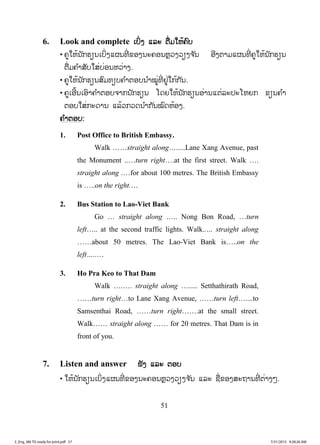
• ຄູໃຫ້ນັກຮຽນເບິ່ງແຜນທີ່ ຂອງນະຄອນຫຼວງວຽງຈ ັນ ອີງຕາມແຜນທີ່ ຄູໃຫ້ນັກຮຽນ
ຕື່ມຄ ໍາສັບໃສ່ບ່ອນຫວ່າງ.
• ຄູໃຫ້ນັກຮຽນສົມທຽບຄ ໍາຕອບນ ໍາໝູ່ທີ່ ຢູ່ໃກ້ກັນ.
• ຄູເອີ້ນເອົາຄ ໍາຕອບຈາກນັກຮຽນ ໂດຍໃຫ້ນັກຮຽນອ່ານແຕ່ລະປະໂຫຍກ ຂຽນຄ ໍາ
ຕອບໃສ່ກະດານ ແລ້ວກວດນ ໍາກັນໝົດຫ້ອງ.
ຄ ໍາຕອບ:
1. Post Office to British Embassy.
Walk ……straight along….....Lane Xang Avenue, past
the Monument ..…turn right….at the first street. Walk ….
straight along .…for about 100 metres. The British Embassy
is …..on the right.…
2. Bus Station to Lao-Viet Bank
Go … straight along ….. Nong Bon Road, …turn
left….. at the second traffic lights. Walk..… straight along
……about 50 metres. The Lao-Viet Bank is…..on the
left…..…
3. Ho Pra Keo to That Dam
Walk ….…. straight along …..... Setthathirath Road,
……turn right…to Lane Xang Avenue, ……turn left…....to
Samsenthai Road, ……turn right…….at the small street.
Walk…… straight along …… for 20 metres. That Dam is in
front of you.
7. Listen and answer ຟັງ ແລະ ຕອບ
• ໃຫ້ນັກຮຽນເບິ່ງແຜນທີ່ ຂອງນະຄອນຫຼວງວຽງຈ ັນ ແລະ ຊື່ຂອງສະຖານທີ່ ຕ່າງໆ.
3_Eng_M6 TG ready for print.pdf 573_Eng_M6 TG ready for print.pdf 57 7/31/2015 9:28:26 AM7/31/2015 9:28:26 AM
ສ.ວ.ສ
ສະຫງວນລິຂະສິດ
59.
52
• ຄູໃຫ້ນັກຮຽນອ່ານບົດເຝິກຫັດແຕ່ລະຂໍ້ ຄູອ່ານບົດແລະ ໃຫ້ນັກຮຽນຂຽນຄ ໍາຕອບ.
• ຄູອ່ານບົດອ່ານອີກເທື່ ອໜຶ່ ງ ເພື່ ອໃຫ້ນັກຮຽນກວດຄືນ.
• ໃຫ້ນັກຮຽນປຽບທຽບຄ ໍາຕອບຕົນເອງກັບໝູ່ທີ່ ນັ່ງທາງຂ້າງ.
• ຄູເອີ້ນເອົາຄ ໍາຕອບຈາກນັກຮຽນ ແລ້ວຂຽນໃສ່ກະດານ.
ບບົດອ່ານ:
1. Walk along Lane Xang Av., turn left to Samsenthai Rd., walk along
Samsenthai Rd. about 30 metres, turn right to small street, walk straight
for 10 metres. It’s in front of you.
2. Walk along Mahosot Rd., past Samsenthai Rd., walk straight for 15
metres, cross the traffic lights. It’s on your left.
3. Walk along That Luang Rd., turn left to the second small street, walk
straight ahead for 20 metres. It s on your right.
ຄ ໍາຕອບ:
1. That Dam
2. Morning market
3. British Embassy
8. Grammar note
Direct speech ແມ່ນມີປະໂຫຍກດຽວທີ່ ເປັນຄ ໍາຖາມລ້ວນໆ.
ຕົວຢ່າງ: Where is the Government’s office?
How is Kham?
Where is he from?
Why does she come late?
Indirect speech ຈະມີສ ໍານວນໜຶ່ ງ (phrase) ຂຶ້ນກ່ອນປະໂຫຍກຄ ໍາຖາມສະເໝີ
ຕົວຢ່າງ: Could you tell me where the Government’s office is?
Do you know how Kham is?
3_Eng_M6 TG ready for print.pdf 583_Eng_M6 TG ready for print.pdf 58 7/31/2015 9:28:26 AM7/31/2015 9:28:26 AM
ສ.ວ.ສ
ສະຫງວນລິຂະສິດ
60.
53
Could you tellme where he is from?
Do you know why she comes late?
ຄຄ ໍາຕອບ:
1. Do you know where Lao-Viet Bank is? (ຫຼື Could you tell me)
2. Could you tell me where the French Embassy is? (ຫຼື Do you know)
3. Do you know where UNDP is? (ຫຼື Could you tell me)
4. Could you tell me where Prime Minister’s Office is? (ຫຼື Do you know)
ໝາຍເຫດ: ຈະຂຶ້ນຕົ້ນດ້ວຍ Could you tell me ຫຼື Do you know ກໍແມ່ນຖືກຕ້ອງ
ຄືກັນ.
9. Write ຂຽນ
• ຄູໃຫ້ນັກຮຽນຂຽນກ່ຽວກັບການບອກທາງກ່ຽວກັບສະຖານທີ່ ທີ່ ພວກເຂົາເຈົ້າລຶ້ງ
ເຄີຍ.
• ຄູກວດເບິ່ງຂໍ້ມູນ ແລະ ການຂຽນທີ່ ຖືກຕ້ອງຕາມຫຼັກການ ຄູອາດເອົາປະໂຫຍກທີ່
ນັກຮຽນມ ັກຂຽນຜິດຂຽນໃສ່ກະດານ ແລ້ວກວດພ້ອມກັນໝົດຫ້ອງ.
(ສ ໍາລັບກິດຈະກ ໍານີ້ອາດຈະໃຫ້ນັກເອົາເຮັດເປັນວຽກບ້ານກໍໄດ້ຖ້າເວລາໃນຫ້ອງບໍ່ພໍ)
Lesson 3 Ho Prakeo
ບົດຮຽນທີ 3 ຫໍພະແກ້ວ
ໃນບົດຮຽນນີ້ ນັກຮຽນຮຽນໃຫ້ຂໍ້ມູນກ່ຽວກັບສະຖານທີ່ ເກົ່າແກ່ບູຮານ
1. Vocabulary ຄ ໍາສັບໃໝ່
• ຄູບອກນັກຮຽນເປີດປຶ້ມແບບຮຽນ, ອ່ານຄ ໍາສັບ ແລະ ຄວາມໝາຍຂອງຄ ໍາສັບໃນ
ວົງຂອບໃນໃຈ.
3_Eng_M6 TG ready for print.pdf 593_Eng_M6 TG ready for print.pdf 59 7/31/2015 9:28:26 AM7/31/2015 9:28:26 AM
ສ.ວ.ສ
ສະຫງວນລິຂະສິດ
55
• ຄູເອີ້ນນັກຮຽນເທື່ ອລະຄົນອ່ານໃຫ້ໝູ່ຟັງ(ຄົນລະ 1 – 2 ປະໂຫຍກ).
• ຄູຊ່ວຍນັກຮຽນອອກສຽງໃຫ້ຖືກຕ້ອງເມື່ອນັກຮຽນອ່ານຜິດ.
• ຄູພານັກຮຽນແປບົດ.
ຕຕອບ:
1. In 1560-1565.
2. King Saysetthathirath.
3. Emerald Buddha image.
4. In 1779.
5. King Anouvong.
6. Buddhist sculpture and artifacts.
7. Because only the altar is there, the image still remaining in
Thailand.
5. Look and say ເບິ່ງ ແລະ ເວົ້າ
• ຄູໃຫ້ນັກຮຽນທວນຄືນບົດຮຽນກ່ຽວກັບການບອກທາງ.
• ຄູໃຫ້ນັກຮຽນເບິ່ງແຜນທີ່ ຂອງຫໍພະແກ້ວ.
• ຄູຈ ັດນັກຮຽນເປັນຄູ່ ແລ້ວຜັດປ່ຽນກັນຖາມ-ຕອບ.
• ຄູຍ່າງອ້ອມຫ້ອງເພື່ ອຟັງສຽງ ແລະ ກວດກາຄວາມເຂົ້າໃຈຂອງນັກຮຽນ.
6. Listen and answer ຟັງ ແລະ ຕອບ
• ຄູໃຫ້ນັກຮຽນອ່ານບົດເຝິກຫັດແຕ່ລະຂໍ້.
• ຄູອ່ານບົດອ່ານໃຫ້ນັກຮຽນຟັງ ແລະ ໃຫ້ນັກຮຽນໝາຍຖືກ ຫຼື ຜິດ. ຖ້າຜິດ ໃຫ້
ຂຽນຄ ໍາຕອບທີ່ ຖືກຕ້ອງໃສ່.
• ຄູອ່ານໃຫ້ນັກຮຽນຟັງອີກເທື່ ອໜຶ່ ງ ເພື່ ອກວດຄືນ.
• ຄູຖາມເອົາຄ ໍາຕອບຈາກນັກຮຽນ ແລະ ກວດນ ໍາກັນໝົດຫ້ອງ.
ຄ ໍາຕອບ:
1. F (It’s one of the oldest temple in Laos)
2. T
3. F (It’s was built by the King Setthathirath)
3_Eng_M6 TG ready for print.pdf 613_Eng_M6 TG ready for print.pdf 61 7/31/2015 9:28:26 AM7/31/2015 9:28:26 AM
ສ.ວ.ສ
ສະຫງວນລິຂະສິດ
63.
56
4. T
5. F(It became a National Museum in 1975)
7. Write ຂຽນ
• ຄູໃຫ້ນັກຮຽນຂຽນກ່ຽວກັບວັດທີ່ ເກົ່າແກ່ທີ່ ເຂົາເຈົ້າຮູ້ຈ ັກ ຫຼື ຕາມຂໍ້ມູນທີ່ ມີ
• ຄູກວດເບິ່ງຂໍ້ມູນ ແລະ ການຂຽນທີ່ ຖືກຕ້ອງຕາມຫຼັກການ. ຄູອາດເອົາປະໂຫຍກທີ່
ນັກຮຽນມ ັກຂຽນຜິດຂຽນໃສ່ກະດານ ແລ້ວກວດພ້ອມກັນໝົດຫ້ອງ.
(ສ ໍາລັບກິດຈະກ ໍານີ້ອາດຈະໃຫ້ນັກເອົາເຮັດເປັນວຽກບ້ານກໍໄດ້ຖ້າເວລາໃນຫ້ອງບໍ່ພໍ).
………………………………………………………………………………...
………………………………………………………………………………...
………………………………………………………………………………...
………………………………………………………………………………...
………………………………………………………………………………...
………………………………………………………………………………...
………………………………………………………………………………...
………………………………………………………………………………...
………………………………………………………………………………...
………………………………………………………………………………...
3_Eng_M6 TG ready for print.pdf 623_Eng_M6 TG ready for print.pdf 62 7/31/2015 9:28:26 AM7/31/2015 9:28:26 AM
ສ.ວ.ສ
ສະຫງວນລິຂະສິດ
60
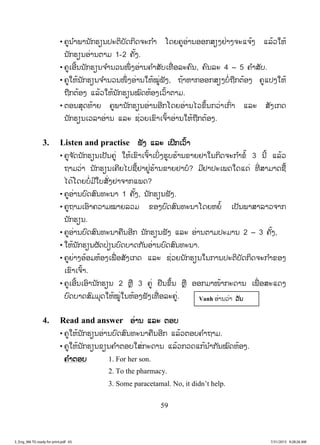
4. About 4days.
5. Vanh should take her son to see the doctor immediately.
5. Read and answer ອ່ານ ແລະ ຕອບ
• ຄູຖາມນັກຮຽນວ່າ: ມີໃຜເຄີຍເຈັບປ່ວຍບໍ? ເຄີຍເປັນຫຍັງ? ແລະ ໄດ້ເຮັດແນວໃດ
ເພື່ ອຊ່ວຍບັນເທົາອາການເຈັບປ່ວຍດັ່ງກ່າວ? ແລະ ເພື່ ອຢາກຫຼີກເວັ້ນພະຍາດ
ເຫຼົ່ ານັ້ນຄວນເຮັດແນວໃດ?
• ຄູອ່ານບົດເລື່ອງ 1 ຄັ້ງ, ນັກຮຽນຟັງ ແລະ ເບິ່ງໄປພ້ອມ.
• ຄູບອກນັກຮຽນເບິ່ງຮູບໃນບົດອ່ານ ແລະ ອ່ານເລື່ ອງໃນໃຈ.
• ຄູໃຫ້ນັກຮຽນຂຽນຄ ໍາຕອບໃສ່ໃນປຶ້ມຂຽນຂອງເຂົາເຈົ້າ.
• ຄູໃຫ້ນັກຮຽນອອກມາຂຽນຄ ໍາຕອບຂອງຕົນໃສ່ກະດານ ແລ້ວກວດນ ໍາກັນໝົດຫ້ອງ.
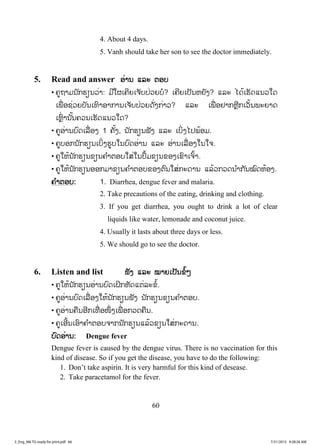
ຄ ໍາຕອບ: 1. Diarrhea, dengue fever and malaria.
2. Take precautions of the eating, drinking and clothing.
3. If you get diarrhea, you ought to drink a lot of clear
liquids like water, lemonade and coconut juice.
4. Usually it lasts about three days or less.
5. We should go to see the doctor.
6. Listen and list ຟັງ ແລະ ໝາຍເປັນຂໍ້ໆ
• ຄູໃຫ້ນັກຮຽນອ່ານບົດເຝິກຫັດແຕ່ລະຂໍ້.
• ຄູອ່ານບົດເລື່ອງໃຫ້ນັກຮຽນຟັງ ນັກຮຽນຂຽນຄ ໍາຕອບ.
• ຄູອ່ານຄືນອີກເທື່ ອໜຶ່ ງເພື່ ອກວດຄືນ.
• ຄູເອີ້ນເອົາຄ ໍາຕອບຈາກນັກຮຽນແລ້ວຂຽນໃສ່ກະດານ.
ບົດອ່ານ: Dengue fever
Dengue fever is caused by the dengue virus. There is no vaccination for this
kind of disease. So if you get the disease, you have to do the following:
1. Don’t take aspirin. It is very harmful for this kind of desease.
2. Take paracetamol for the fever.
3_Eng_M6 TG ready for print.pdf 663_Eng_M6 TG ready for print.pdf 66 7/31/2015 9:28:26 AM7/31/2015 9:28:26 AM
ສ.ວ.ສ
ສະຫງວນລິຂະສິດ
68.
61
3. It isimportant to eat fruit.
4. You also have to drink lots of water or coconut juice.
5. If you still have high temperature, go to see the doctor immediately.
ຄຄ ໍາຕອບ:
____2____ Take paracetamol for the fever.
____4____ Drink lots of water or coconut juice.
____1____ Don’t take aspirin.
____5____ Go to see the doctor immediately.
____3____ Eat fruit.
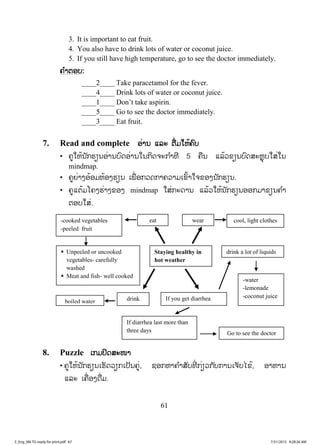
7. Read and complete ອ່ານ ແລະ ຕື່ມໃຫ້ຄົບ
• ຄູໃຫ້ນັກຮຽນອ່ານບົດອ່ານໃນກິດຈະກ ໍາທີ 5 ຄືນ ແລ້ວຂຽນບົດສະຫຼຸບໃສ່ໃນ
mindmap.
• ຄູຍ່າງອ້ອມຫ້ອງຮຽນ ເພື່ ອກວດກາຄວາມເຂົ້າໃຈຂອງນັກຮຽນ.
• ຄູແຕ້ມໂຄງຮ່າງຂອງ mindmap ໃສ່ກະດານ ແລ້ວໃຫ້ນັກຮຽນອອກມາຂຽນຄ ໍາ
ຕອບໃສ່.
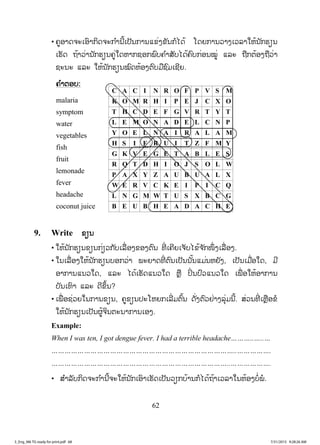
8. Puzzle ເກມປິດສະໜາ
• ຄູໃຫ້ນັກຮຽນເຮັດວຽກເປັນຄູ່, ຊອກຫາຄ ໍາສັບທີ່ ກ່ຽວກັບການເຈັບໄຂ້, ອາຫານ
ແລະ ເຄື່ອງດື່ມ.
drink
Staying healthy in
hot weather
wear
If you get diarrhea
eat cool, light clothes
drink a lot of liquids
-cooked vegetables
-peeled fruit
boiled water
ƒ Unpeeled or uncooked
vegetables- carefully
washed
ƒ Meat and fish- well cooked
-water
-lemonade
-coconut juice
If diarrhea last more than
three days Go to see the doctor
3_Eng_M6 TG ready for print.pdf 673_Eng_M6 TG ready for print.pdf 67 7/31/2015 9:28:26 AM7/31/2015 9:28:26 AM
ສ.ວ.ສ
ສະຫງວນລິຂະສິດ
69.
62
• ຄູອາດຈະເອົາກິດຈະກ ໍານີ້ເປັນການແຂ່ງຂັນກໍໄດ້ໂດຍການວາງເວລາໃຫ້ນັກຮຽນ
ເຮັດ ຖ້າວ່ານັກຮຽນຄູ່ໃດຫາກຊອກພົບຄ ໍາສັບໄດ້ຄົບກ່ອນໝູ່ ແລະ ຖືກຕ້ອງຖືວ່າ
ຊະນະ ແລະ ໃຫ້ນັກຮຽນໝົດຫ້ອງຕົບມືຊົມເຊີຍ.
ຄຄ ໍາຕອບ:
malaria
symptom
water
vegetables
fish
fruit
lemonade
fever
headache
coconut juice
9. Write ຂຽນ
• ໃຫ້ນັກຮຽນຂຽນກ່ຽວກັບເລື່ ອງຂອງຕົນ ທີ່ ເຄີຍເຈັບໄຂ້ຈ ັກໜຶ່ ງເລື່ອງ.
• ໃນເລື່ອງໃຫ້ນັກຮຽນບອກວ່າ ພະຍາດທີ່ ຕົນເປັນນັ້ນແມ່ນຫຍັງ, ເປັນເມື່ອໃດ, ມີ
ອາການແນວໃດ, ແລະ ໄດ້ເຮັດແນວໃດ ຫຼື ປິ່ ນປົວແນວໃດ ເພື່ ອໃຫ້ອາການ
ບັນເທົາ ແລະ ດີຂຶ້ນ?
• ເພື່ ອຊ່ວຍໃນການຂຽນ, ຄູຂຽນປະໂຫຍກເລີ່ມຕົ້ນ ດັ່ງຕົວຢ່າງລຸ່ມນີ້. ສ່ວນທີ່ ເຫຼືອຂໍ
ໃຫ້ນັກຮຽນເປັນຜູ້ຈິນຕະນາການເອງ.
Example:
When I was ten, I got dengue fever. I had a terrible headache………..…..…
…………………………………………………………………………..…………….
………………………………………………………………………..……………….
• ສ ໍາລັບກິດຈະກ ໍານີ້ຈະໃຫ້ນັກເອົາເຮັດເປັນວຽກບ້ານກໍໄດ້ຖ້າເວລາໃນຫ້ອງບໍ່ພໍ.
C A C I N R O F P V S M
K O M R H I P E J C X O
T H C D E F G V R T Y T
L E M O N A D E L C N P
Y O E L N A I R A L A M
H S I F R U I T Z F M Y
G K V E G E T A B L E S
R Q T D H I O J S O L W
P A X Y Z A U B U A L X
W E R V C K E I P I C Q
L N G M W T U S X B C G
B E U B H E A D A C H E
3_Eng_M6 TG ready for print.pdf 683_Eng_M6 TG ready for print.pdf 68 7/31/2015 9:28:26 AM7/31/2015 9:28:26 AM
ສ.ວ.ສ
ສະຫງວນລິຂະສິດ
65
ຄຄ ໍາຕອບ:
1. Fitnessmeans to be in good physical shape and able to get around without
becoming breathless.
2. If you are overweight you need to be careful of your diet and avoid excess
sugar and food that contains too much fat.
3. Exercise regularly.
4. Football, volleyball, basketball, tennis and swimming are all good forms
of exercise.
5. Outdoor activities are jogging, aerobics, hiking, mountain climbing and
cycling.
6. They go to a gym.
6. Listen and complete ຟັງ ແລະ ຕື່ມໃຫ້ຄົບ
• ຄູອ່ານບົດສົນທະນາລະຫວ່າງ Doctor ກັບ Lavanh ໃນບົດເຝິກຫັດຂໍ້ ທີ 3 ໃຫ້
ນັກຮຽນຟັງຄືນໃໝ່.
• ຄູແຕ້ມໂຄງຮ່າງ Mindmap ແລ້ວຂຽນຄ ໍາສັບຈ ໍານວນໜຶ່ ງໃສ່ (ດັ່ງຕົວຢ່າງໃນປຶ້ມ
ແບບຮຽນ).
• ຈາກນັ້ນ, ຄູອ່ານບົດສົນທະນາຄືນອີກ ແລະ ໃຫ້ນັກຮຽນຂຽນຕື່ມໃສ່ໂຄງຮ່າງທີ່
ເຫຼືອຕາມທີ່ ໄດ້ຍິນໃນບົດອ່ານ.
• ຄູອ່ານບົດສົນທະນາຄືນອີກເທື່ ອໜຶ່ ງເພື່ ອໃຫ້ນັກຮຽນກວດຄືນ.
• ໃຫ້ນັກຮຽນປຽບທຽບຄ ໍາຕອບຕົນເອງກັບໝູ່ທີ່ ນັ່ງຂ້າງກັນ.
• ຄູໃຫ້ນັກຮຽນຂຽນຄ ໍາຕອບໃສ່ກະດານ ແລ້ວກວດນ ໍາກັນໝົດຫ້ອງ.
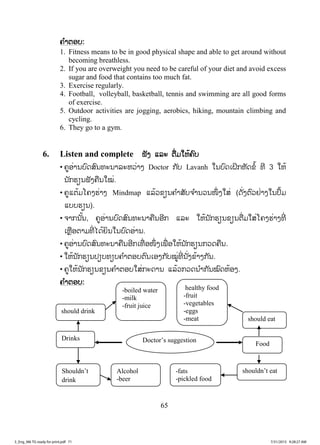
ຄ ໍາຕອບ:
Doctor’s suggestion
Food
Drinks
should eat
shouldn’t eat
should drink
Shouldn’t
drink
-boiled water
-milk
-fruit juice
healthy food
-fruit
-vegetables
-eggs
-meat
Alcohol
-beer
-fats
-pickled food
3_Eng_M6 TG ready for print.pdf 713_Eng_M6 TG ready for print.pdf 71 7/31/2015 9:28:27 AM7/31/2015 9:28:27 AM
ສ.ວ.ສ
ສະຫງວນລິຂະສິດ
73.
66
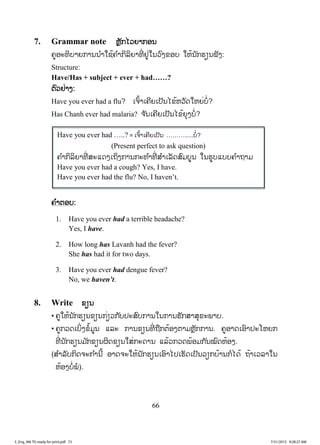
7. Grammar noteຫຼັກໄວຍາກອນ
ຄູອະທິບາຍການນ ໍາໃຊ້ຄ ໍາກິລິຍາທີ່ ຢູ່ໃນວົງຂອບ ໃຫ້ນັກຮຽນຟັງ:
Structure:
Have/Has + subject + ever + had……?
ຕົວຢ່າງ:
Have you ever had a flu? ເຈົ້າເຄີຍເປັນໄຂ້ຫວັດໃຫຍ່ບໍ່?
Has Chanh ever had malaria? ຈ ັນເຄີຍເປັນໄຂ້ຍຸງບໍ່?
ຄ ໍາຕອບ:
1. Have you ever had a terrible headache?
Yes, I have.
2. How long has Lavanh had the fever?
She has had it for two days.
3. Have you ever had dengue fever?
No, we haven’t.
8. Write ຂຽນ
• ຄູໃຫ້ນັກຮຽນຂຽນກ່ຽວກັບປະສົບການໃນການຮັກສາສຸຂະພາບ.
• ຄູກວດເບິ່ງຂໍ້ມູນ ແລະ ການຂຽນທີ່ ຖືກຕ້ອງຕາມຫຼັກການ. ຄູອາດເອົາປະໂຫຍກ
ທີ່ ນັກຮຽນມ ັກຂຽນຜິດຂຽນໃສ່ກະດານ ແລ້ວກວດພ້ອມກັນໝົດຫ້ອງ.
(ສ ໍາລັບກິດຈະກ ໍານີ້ ອາດຈະໃຫ້ນັກຮຽນເອົາໄປເຮັດເປັນວຽກບ້ານກໍໄດ້ ຖ້າເວລາໃນ
ຫ້ອງບໍ່ພໍ).
Have you ever had …..? = ເຈົ້າເຄີຍເປັນ ……….....ບໍ່?
(Present perfect to ask question)
ຄ ໍາກິລິຍາທີ່ ສະແດງເຖິງການກະທ ໍາທີ່ ສ ໍາເລັດສົມບູນ ໃນຮູບແບບຄ ໍາຖາມ
Have you ever had a cough? Yes, I have.
Have you ever had the flu? No, I haven’t.
3_Eng_M6 TG ready for print.pdf 723_Eng_M6 TG ready for print.pdf 72 7/31/2015 9:28:27 AM7/31/2015 9:28:27 AM
ສ.ວ.ສ
ສະຫງວນລິຂະສິດ
74.
67
9. Puzzle ເເກມປິດສະນາ
•ຄູຈ ັດນັກຮຽນເປັນຄູ່ເພື່ ອຊອກຫາຄ ໍາສັບທີ່ ກ່ຽວກັບການອອກກ ໍາລັງກາຍ, ອາຫານ
ແລະ ເຄື່ອງດື່ມ.
• ຄູອາດຈະເອົາກິດຈະກ ໍານີ້ເປັນການແຂ່ງຂັນກໍໄດ້.
ຄ ໍາຕອບ:
milk
fruit
fish
cereals
vegetables
juice
water
walking
running
yoga
Lesson 3 At a doctor
Lesson 3 At a doctor
ບົດຮຽນທີ 3 ພົບທ່ານໝໍ
ຮຽນຮູ້ກ່ຽວກັບອາການເຈັບປ່ວຍທົ່ວໄປ.
1. Vocabulary ຄ ໍາສັບໃໝ່
• ຄູຖາມນັກຮຽນວ່າ: ທີ່ ຜ່ານມານັກຮຽນເຄີຍເຈັບໄຂ້ບໍ? ນັກຮຽນເຄີຍໄປຫາໝໍ ບໍ່?
• ຈ ັດນັກຮຽນເປັນກຸ່ມ ເພື່ ອໃຫ້ເຂົາເຈົ້າສົນທະນາກັນກ່ຽວກັບການເຈັບເປັນຕ່າງໆ ທີ່
ຕົນເອງເຄີຍເປັນຜ່ານມາ ແລະ ເລົ່ າປະສົບການກ່ຽວກັບການໄປຫາໝໍ ສູ່ໝູ່ໃນກຸ່ມ
ຟັງ.
• ຈາກນັ້ນ ໃຫ້ແຕ່ລະກຸ່ມບັນທຶກອາການເຈັບເປັນຕ່າງໆ ທີ່ ໄດ້ສົນທະນາກັນມາໃສ່
ໃນປຶ້ມຂຽນ. ຄູໃຫ້ນັກຮຽນຈ ໍານວນໜຶ່ ງເປັນຕົວແທນກຸ່ມລາຍງານ ແລະ ຄູເປັນຜູ້
ຂຽນໃສ່ກະດານຕາມການລາຍງານໃສ່ກະດານ.
O T V H P N M E S P V A
W A T E R Z Q A D F G D
A L Y O G A H K R E N Z
L J R P L E L D J K Q V
K M F R U I T J U I C E
I N E U M W Q A O P T A
N B J N Y K L A B S Y I
G E V N C E R E A L S P
M O F I S H D P Z X E H
B U E N W O L J D K T S
N I Q G T R Z V E Q S B
3_Eng_M6 TG ready for print.pdf 733_Eng_M6 TG ready for print.pdf 73 7/31/2015 9:28:27 AM7/31/2015 9:28:27 AM
ສ.ວ.ສ
ສະຫງວນລິຂະສິດ
69
ຄຄ ໍາຕອບ:
1. Malais sick. She’s got a terrible headache.
2. She thinks she’s having flu.
3. Since yesterday morning.
4. Yes, she has.
5. The doctor checks her throat and chest.
6. A prescription to buy some medicine.
7. The doctor suggests her to drink plenty of liquids and keep warm. If she is
not better in two or three days, she should come and see the doctor again.
5. Read and complete ອ່ານ ແລະ ຕື່ມໃຫ້ຄົບ
• ຄູບອກນັກຮຽນວ່າບົດເຝິກຫັດນີ້ແມ່ນແບບຢ່າງຂອງການຂຽນຈ ົດໝາຍລາຄອບໃນ
ເວລາເຈັບປ່ວຍ.
• ຄູໃຫ້ນັກຮຽນອ່ານຄ ໍາສັບຢູ່ໃນວົງຂອບ, ຈາກນັ້ນໃຫ້ຕື່ມຄ ໍາສັບທີ່ ຖືກຕ້ອງໃສ່ບ່ອນ
ຫວ່າງໃນບົດອ່ານ.
• ໃຫ້ນັກຮຽນປຽບທຽບຄ ໍາຕອບຕົນເອງກັບໝູ່ທີ່ ນັ່ງທາງຂ້າງ.
• ຄູເອີ້ນເອົາຄ ໍາຕອບຈາກນັກຮຽນ ແລ້ວຂຽນໃສ່ກະດານ ແລ້ວກວດແກ້ນ ໍາກັນໝົດ
ຫ້ອງ.
• ຄູອ່ານໃຫ້ນັກຮຽນຟັງໜຶ່ ງຄັ້ງ ແລະ ໃຫ້ນັກຮຽນອ່ານຄົນລະ 1-2 ປະໂຫຍກ.
ຄ ໍາຕອບ:
5 October 2013
Dear Sir,
I am sorry that I cannot come to school this week. I am
not feeling well. I have got a cold and cough, and I
have had a fever for two days. My mother is going to
take me to the doctor this afternoon. I will probably
come back to school next week.
Yours sincerely,
Sengchanh
3_Eng_M6 TG ready for print.pdf 753_Eng_M6 TG ready for print.pdf 75 7/31/2015 9:28:27 AM7/31/2015 9:28:27 AM
ສ.ວ.ສ
ສະຫງວນລິຂະສິດ
77.
70
6. Listen andcomplete ຟຟັງ ແລະ ຕື່ມໃຫ້ຄົບ
• ຄູຖາມນັກຮຽນກຽ່ວກັບບົດສົນທະນາໃນກິດຈະກ ໍາ ທີ 3 ທີ່ ເວົ້າເຖິງການໄປຫາ
ໝໍ ຂອງ ນາງ ມາລາ. ແຕ່ພາຍຫຼັງກິນຢາຄົບຕາມເວລາທີ່ ແພດສັ່ງແລ້ວ ອາການ
ຂອງລາວກໍຍັງບໍ່ດີຂຶ້ນ ດັ່ງນັ້ນ ລາວຈຶ່ງກັບໄປພົບແພດອີກ.
• ຄູໃຫ້ນັກຮຽນອ່ານບົດສົນທະນາໃນປຶ້ມແບບຮຽນ ແລະເດົາຄ ໍາສັບທີ່ ຂາດໄປ
• ຄູອ່ານບົດສົນທະນາໃຫ້ນັກຮຽນຟັງ 1 ຄັ້ງ.
• ຄູອ່ານບົດສົນທະນາຄືນອີກ ເພື່ ອໃຫ້ນັກຮຽນກວດຄືນຄ ໍາຕອບຂອງຕົນເອງ.
• ຄູເອີ້ນນັກຮຽນຈ ໍານວນໜຶ່ ງອອກມາຂຽນຄ ໍາຕອບໃສ່ກະດານ ແລ້ວກວດພ້ອມກັນ
ໝົດຫ້ອງ.
ຄ ໍາຕອບ:
Doctor: Sit down Mala. How do you feel? Better?
Mala: No, not really.
Doctor: Tell me what’s wrong?
Mala: I’m very tired all the time.
Doctor: That’s not so good. Do you have a high temperature?
Mala: Yes, I do.
Doctor: Do you drink enough water?
Mala: Yes. I drink lots of water. What’s wrong with me, doctor?
Doctor: I’m not sure. I’m going to do some blood test.
7. Match ຈ ັບຄູ່ໃຫ້ຖືກຕ້ອງ
• ຈ ັດນັກຮຽນເປັນຄູ່ ເພື່ ອສົນທະນາກັນກ່ຽວກັບການຈ ັດຄ ໍາສັບໃຫ້ກົງກັບຮູບພາບ.
• ຄູໃຫ້ນັກຮຽນອ່ານປະໂຫຍກ ແລ້ວຈ ັດຄ ໍາສັບໃຫ້ກົງກັບຮູບພາບ ດັ່ງຕົວຢ່າງ.
• ຄູໃຫ້ນັກຮຽນອອກມາຂຽນຕອບໃສ່ກະດານ ແລ້ວກວດພ້ອມກັນໝົດຫ້ອງ.
ຄ ໍາຕອບ:
A-5. She’s got a headache. B- 3. He’s got a toothache
C-2. He’s got a stomachache D-4. He’s got a cold
E-6. He’s got a cough. F-1. He’s got a fever.
3_Eng_M6 TG ready for print.pdf 763_Eng_M6 TG ready for print.pdf 76 7/31/2015 9:28:27 AM7/31/2015 9:28:27 AM
ສ.ວ.ສ
ສະຫງວນລິຂະສິດ
78.
71
8. Puzzle ເເກມປິດສະນາ
•ຄູຈ ັດນັກຮຽນເປັນຄູ່ ເພື່ ອຊອກຫາຄ ໍາສັບທີ່ ກ່ຽວກັບການດູແລສຸຂະພາບ.
• ຄູອາດຈະເອົາກິດຈະກ ໍານີ້ເປັນການແຂ່ງຂັນກໍໄດ້ ໂດຍການວາງເວລາໃຫ້ນັກຮຽນ
ເຮັດ ຖ້າວ່ານັກຮຽນຄູ່ໃດຫາກຊອກພົບຄ ໍາສັບໄດ້ຄົບກ່ອນໝູ່ ແລະ ຖືກຕ້ອງຖືວ່າ
ຊະນະ ແລະ ໃຫ້ນັກຮຽນໝົດຫ້ອງຕົບມືຊົມເຊີຍ.
ຄ ໍາຕອບ:
clinic
hospital
doctors
nurse
medicine
physicians
cure
drug
9. Write ຂຽນ
• ຄູໃຫ້ນັກຮຽນຂຽນຈ ົດໝາຍລາປ່ວຍ ເຖິງຄູປະຈ ໍາຫ້ອງໃນຊົ່ວໂມງສອນພາສາ
ອັງກິດ.
• ຄູໃຫ້ນັກຮຽນອ່ານຈ ົດໝາຍທີ່ ຕື່ມຄົບແລ້ວໃນກິດຈະກ ໍາ ທີ 4 ຄືນອີກ ເພື່ ອເປັນ
ແນວທາງໃນການວາງໂຄງຮ່າງ ຫຼື ຮູບແບບຂອງການຂຽນຈ ົດໝາຍ.
• ຄູແນະນ ໍາວ່າ: ນັກຮຽນຈະຂຽນລາປ່ວຍດ້ວຍເຫດຜົນຈາກອາການເຈັບປ່ວຍອັນໃດ
ກໍໄດ້ ແລ້ວແຕ່ຈະຈິນຕະນາການ.
ສ ໍາລັບກິດຈະກ ໍານີ້ອາດຈະໃຫ້ນັກເອົາເຮັດເປັນວຽກບ້ານກໍໄດ້ຖ້າເວລາໃນຫ້ອງບໍ່ພໍ.
P I A E T C P K R N
T H O S P I T A L T
D E Y I E N H W E Q
M N O S Q I D R U G
S I E R I L U P E D
Z C R O E C M O S Z
L I A T M A I U R E
W D X C N L K A U O
U E V O I E R T N Q
I M B D O U W Y O S
3_Eng_M6 TG ready for print.pdf 773_Eng_M6 TG ready for print.pdf 77 7/31/2015 9:28:27 AM7/31/2015 9:28:27 AM
ສ.ວ.ສ
ສະຫງວນລິຂະສິດ
79.
72
Unit 6 Revision(1-5)
ບບົດທວນຄືນ (1-5)
ໃນບົດຮຽນນີ້ນັກຮຽນຈະໄດ້ທວນຄືນພາສາທີ່ ໄດ້ຮຽນຢູ່ໃນບົດທີ 1-5
Revisionunit
(1-5)
Unit
Unit
Unit
Unit 4
Hobbies
Favorite
h bbi
Transports
Types of transport
How can I get to the
Frienship Bridge?
Bus service
Travelling and tourism
On holidays
At the airport
f
Travelling to Luang
P b
Visiting places Famous tourist sites
Getting around Vientiane
Ho Prakeo
At a library
Unit 5
Health and fitness
Staying healthy
in hot weather
Staying fit
At a doctor
At one’s leisure
3_Eng_M6 TG ready for print.pdf 783_Eng_M6 TG ready for print.pdf 78 7/31/2015 9:28:27 AM7/31/2015 9:28:27 AM
ສ.ວ.ສ
ສະຫງວນລິຂະສິດ
80.
73
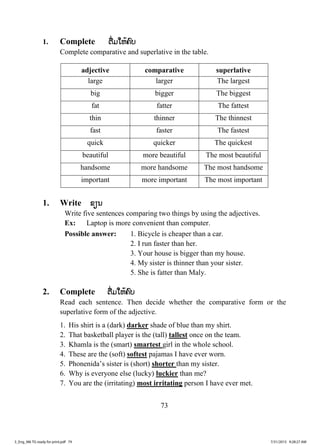
1. Complete ຕຕື່ມໃຫ້ຄົບ
Completecomparative and superlative in the table.
adjective comparative superlative
large larger The largest
big bigger The biggest
fat fatter The fattest
thin thinner The thinnest
fast faster The fastest
quick quicker The quickest
beautiful more beautiful The most beautiful
handsome more handsome The most handsome
important more important The most important
1. Write ຂຽນ
Write five sentences comparing two things by using the adjectives.
Ex: Laptop is more convenient than computer.
Possible answer: 1. Bicycle is cheaper than a car.
2. I run faster than her.
3. Your house is bigger than my house.
4. My sister is thinner than your sister.
5. She is fatter than Maly.
2. Complete ຕື່ມໃຫ້ຄົບ
Read each sentence. Then decide whether the comparative form or the
superlative form of the adjective.
1. His shirt is a (dark) darker shade of blue than my shirt.
2. That basketball player is the (tall) tallest once on the team.
3. Khamla is the (smart) smartest girl in the whole school.
4. These are the (soft) softest pajamas I have ever worn.
5. Phonenida’s sister is (short) shorter than my sister.
6. Why is everyone else (lucky) luckier than me?
7. You are the (irritating) most irritating person I have ever met.
3_Eng_M6 TG ready for print.pdf 793_Eng_M6 TG ready for print.pdf 79 7/31/2015 9:28:27 AM7/31/2015 9:28:27 AM
ສ.ວ.ສ
ສະຫງວນລິຂະສິດ
81.
74
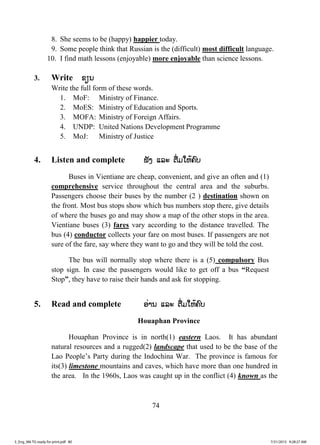
8. She seemsto be (happy) happier today.
9. Some people think that Russian is the (difficult) most difficult language.
10. I find math lessons (enjoyable) more enjoyable than science lessons.
3. Write ຂຂຽນ
Write the full form of these words.
1. MoF: Ministry of Finance.
2. MoES: Ministry of Education and Sports.
3. MOFA: Ministry of Foreign Affairs.
4. UNDP: United Nations Development Programme
5. MoJ: Ministry of Justice
4. Listen and complete ຟັງ ແລະ ຕື່ມໃຫ້ຄົບ
Buses in Vientiane are cheap, convenient, and give an often and (1)
comprehensive service throughout the central area and the suburbs.
Passengers choose their buses by the number (2 ) destination shown on
the front. Most bus stops show which bus numbers stop there, give details
of where the buses go and may show a map of the other stops in the area.
Vientiane buses (3) fares vary according to the distance travelled. The
bus (4) conductor collects your fare on most buses. If passengers are not
sure of the fare, say where they want to go and they will be told the cost.
The bus will normally stop where there is a (5) compulsory Bus
stop sign. In case the passengers would like to get off a bus “Request
Stop”, they have to raise their hands and ask for stopping.
5. Read and complete ອ່ານ ແລະ ຕື່ມໃຫ້ຄົບ
Houaphan Province
Houaphan Province is in north(1) eastern Laos. It has abundant
natural resources and a rugged(2) landscape that used to be the base of the
Lao People’s Party during the Indochina War. The province is famous for
its(3) limestone mountains and caves, which have more than one hundred in
the area. In the 1960s, Laos was caught up in the conflict (4) known as the
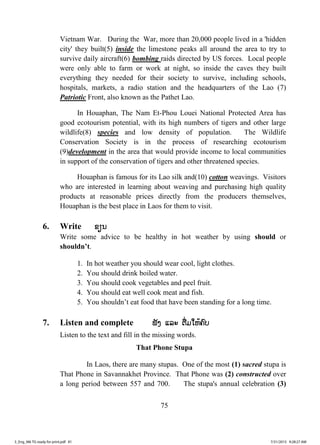
3_Eng_M6 TG ready for print.pdf 803_Eng_M6 TG ready for print.pdf 80 7/31/2015 9:28:27 AM7/31/2015 9:28:27 AM
ສ.ວ.ສ
ສະຫງວນລິຂະສິດ
82.
75
Vietnam War. Duringthe War, more than 20,000 people lived in a 'hidden
city' they built(5) inside the limestone peaks all around the area to try to
survive daily aircraft(6) bombing raids directed by US forces. Local people
were only able to farm or work at night, so inside the caves they built
everything they needed for their society to survive, including schools,
hospitals, markets, a radio station and the headquarters of the Lao (7)
Patriotic Front, also known as the Pathet Lao.
In Houaphan, The Nam Et-Phou Louei National Protected Area has
good ecotourism potential, with its high numbers of tigers and other large
wildlife(8) species and low density of population. The Wildlife
Conservation Society is in the process of researching ecotourism
(9)development in the area that would provide income to local communities
in support of the conservation of tigers and other threatened species.
Houaphan is famous for its Lao silk and(10) cotton weavings. Visitors
who are interested in learning about weaving and purchasing high quality
products at reasonable prices directly from the producers themselves,
Houaphan is the best place in Laos for them to visit.
6. Write ຂຂຽນ
Write some advice to be healthy in hot weather by using should or
shouldn’t.
1. In hot weather you should wear cool, light clothes.
2. You should drink boiled water.
3. You should cook vegetables and peel fruit.
4. You should eat well cook meat and fish.
5. You shouldn’t eat food that have been standing for a long time.
7. Listen and complete ຟັງ ແລະ ຕື່ມໃຫ້ຄົບ
Listen to the text and fill in the missing words.
That Phone Stupa
In Laos, there are many stupas. One of the most (1) sacred stupa is
That Phone in Savannakhet Province. That Phone was (2) constructed over
a long period between 557 and 700. The stupa's annual celebration (3)
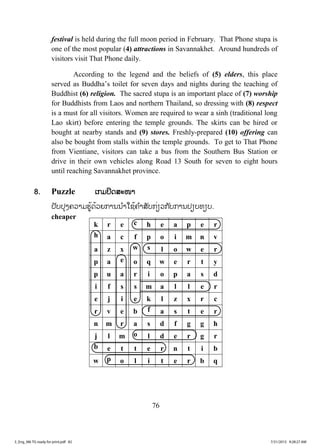
3_Eng_M6 TG ready for print.pdf 813_Eng_M6 TG ready for print.pdf 81 7/31/2015 9:28:27 AM7/31/2015 9:28:27 AM
ສ.ວ.ສ
ສະຫງວນລິຂະສິດ
83.
76
festival is heldduring the full moon period in February. That Phone stupa is
one of the most popular (4) attractions in Savannakhet. Around hundreds of
visitors visit That Phone daily.
According to the legend and the beliefs of (5) elders, this place
served as Buddha’s toilet for seven days and nights during the teaching of
Buddhist (6) religion. The sacred stupa is an important place of (7) worship
for Buddhists from Laos and northern Thailand, so dressing with (8) respect
is a must for all visitors. Women are required to wear a sinh (traditional long
Lao skirt) before entering the temple grounds. The skirts can be hired or
bought at nearby stands and (9) stores. Freshly-prepared (10) offering can
also be bought from stalls within the temple grounds. To get to That Phone
from Vientiane, visitors can take a bus from the Southern Bus Station or
drive in their own vehicles along Road 13 South for seven to eight hours
until reaching Savannakhet province.
8. Puzzle ເກມປິດສະໜາ
ປັບປຸງຄວາມຮູ້ດ້ວຍການນ ໍາໃຊ້ຄ ໍາສັບກ່ຽວກັບການປຽບທຽບ.
cheaper
k r e c h e a p e r
h a c f p o i m n v
a z x w s l o w e r
p a e o q w e r t y
p u a r i o p a s d
i f s s m a l l e r
e j i e k l z x r c
r v e b f a s t e r
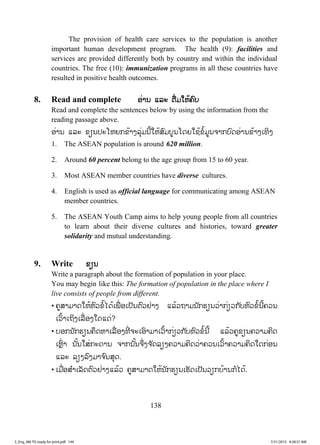
n m r a s d f g g h
j l m o l d e r g r
b e t t e r n t i b
w p o l i t e r b q
3_Eng_M6 TG ready for print.pdf 823_Eng_M6 TG ready for print.pdf 82 7/31/2015 9:28:27 AM7/31/2015 9:28:27 AM
ສ.ວ.ສ
ສະຫງວນລິຂະສິດ
84.
77
9. Read andtick ອອ່ານ ແລະ ໜາຍຂໍ້ທີຖືກຕ້ອງ
Read and tick the right answer.
1. What is the Vientiane bus service like?
a. Expensive but convenient
Cheap and convenient
c. Inconvenient
2. What are the delicious traditional food of Luang Prabang?
a. Lap and papaya salad
b. Noodle soup and Lap
Jeo bong and orlam
3. Wat Phou is…..than Angkor Wat.
a. younger
older
4. Ho Phra Keo was built in
1560-1565
b. 1561-1566
c. 1562-1566
5. Ho Phra keo was built by……………
a. king sisavanvong
King Saysethathirath
c. king Anuvong
6. Ho Phrakeo was renovated and extended in
1811 -1813
b. 1911- 1813
c. 1011- 1913
7. If you get diarrhea what should you do?
a. Drink Pepsi and orange juice.
b. Drink coffee and milk.
Drink water, lemonade and coconut juice.
8. How long does normal diarrhea usually last?
b
c
b
a
b
a
c
3_Eng_M6 TG ready for print.pdf 833_Eng_M6 TG ready for print.pdf 83 7/31/2015 9:28:27 AM7/31/2015 9:28:27 AM
ສ.ວ.ສ
ສະຫງວນລິຂະສິດ
85.
78
. 3 days
b.7 days
c. 10 days
9. What are outdoor activities?
a. gymnastics , ballet
jogging, aerobics, hiking, mountain climbing
c. weigh lifting, yoga
10. Where should I visit in Loung Prabang?
a. Plain of jar
b. Wat Phu
Phusi temple
10. Write ຂຽນ
Look at the pictures and write the sentences.
What’s the matter with him/her?
1. He’s got a cough. 2. He’s got a stomach ache.
3. He’s got a toothache. 4. He’s got a cough.
5. He’s got a fever. 6. She’s got a headache.
a
c
b
3_Eng_M6 TG ready for print.pdf 843_Eng_M6 TG ready for print.pdf 84 7/31/2015 9:28:27 AM7/31/2015 9:28:27 AM
ສ.ວ.ສ
ສະຫງວນລິຂະສິດ
86.
79
Unit 7 Diseases
ພະຍາດ
Lesson1 What is Aids?
ບົດຮຽນທີ 1 ເອດແມ່ນຫຍັງ?
ຮຽນກ່ຽວກັບສາເຫດ, ອາການຂອງໂລກເອດ ແລະ ວິທີປ້ອງກັນພະຍາດ.
Lesson 2 What is malaria?
ບົດຮຽນທີ 2 ໄຂ້ມາເລເລຍແມ່ນຫຍັງ?
ຮຽນກ່ຽວກັບສາຍເຫດ, ອາການ ແລະ ວິທີປ້ອງກັນພະຍາດໄຂ້ມາເລເລຍ.
Lesson 3 What is bird flu?
ບົດຮຽນທີ 3 ໄຂ້ຫວັດສັດປີກແມ່ນຫຍັງ?
ຮຽນກ່ຽວກັບສາຍເຫດ, ອາການ ແລະ ວິທີປ້ອງກັນພະຍາດໄຂ້ຫວັດສັດປີກ.
ເວລາຮຽນ: 10 ຊົ່ວໂມງ
ການກະກຽມ:
ກ່ອນຂຶ້ນຫ້ອງຄູຕ້ອງກະກຽມ:
• ຮູບພາບກ່ຽວກັບພະຍາດ.
• ຂໍ້ມູນກ່ຽວກັບພະຍາດຕື່ມອີກ.
ຈຸດປະສົງ:
• ໃຫ້ນັກຮຽນໄດ້ຮູ້ກ່ຽວກັບສາຍເຫດຂອງໂລກເອດ, ອາການ ແລະ ວິທີປ້ອງກັນ ຫຼື
ຫລີກລ້ຽງການຕິດພະຍາດ.
• ໃຫ້ນັກຮຽນໄດ້ຮູ້ກ່ຽວກັບສາຍເຫດຂອງໄຂ້ມາເລເລຍ, ອາການ ແລະ ວິທີປ້ອງກັນ ຫຼື
ຫລີກລ້ຽງການຕິດພະຍາດ.
• ໃຫ້ນັກຮຽນໄດ້ຮູ້ກ່ຽວກັບສາຍເຫດຂອງໄຂ້ຫວັດສັດປີກ, ອາການ ແລະ ວິທີປ້ອງກັນ
ຫຼື ຫລີກລ້ຽງການຕິດພະຍາດ.
ລະດັບຄາດໝາຍ:
ຫຼັງຈາກຈ ົບພາກ ນີ້ ນັກຮຽນສາມາດ:
3_Eng_M6 TG ready for print.pdf 853_Eng_M6 TG ready for print.pdf 85 7/31/2015 9:28:27 AM7/31/2015 9:28:27 AM
ສ.ວ.ສ
ສະຫງວນລິຂະສິດ
87.
80
• ອະທິບາຍເຖິງສາຍເຫດຂອງໂລກເອດ, ອາການແລະ ວິທີປ້ອງກັນໄດ້.
• ອະທິບາຍເຖິງສາຍເຫດຂອງໄຂ້ມາເລເລຍ, ອາການ ແລະ ວິທີປ້ອງກັນໄດ້.
• ອະທິບາຍເຖິງສາຍເຫດຂອງໄຂ້ຫວັດສັດປີກ, ອາການ ແລະ ວິທີປ້ອງກັນໄດ້.
Lesson 1 What is Aids?
ບບົດຮຽນທີ 1 ເອດແມ່ນຫຍັງ?
ໃນບົດຮຽນນີ້ ນັກຮຽນຈະຮຽນອະທິບາຍ ແລະ ສົນທະນາກັນກ່ຽວກັບສາຍເຫດ,
ອາການ ແລະ ວິທີປ້ອງກັນການຕິດເຊື້ອເອດ.
1. Vocabulary ຄ ໍາສັບໃໝ່
Read and remember the meanings of the words/phrases
ຈ ົ່ງອ່ານ ແລະ ຈື່ຈ ໍາຄວາມໝາຍຂອງຄ ໍາສັບ/ວະລີດັ່ງຕໍ່ໄປນີ້.
• ຄູບອກນັກຮຽນເປີດປຶ້ມ, ອ່ານຄ ໍາສັບ ແລະ ຄວາມໝາຍຂອງຄ ໍາສັບໃນວົງຂອບ
ໃນໃຈ.
2. Listen and repeat ຟັງ ແລະ ເວົ້າຕາມ
Listen and repeat the words/phrases above after the teacher.
ຈ ົ່ງຟັງ ແລະ ເວົ້າ ຄ ໍາສັບ ແລະ ວະລີ ຢູ່ໃນວົງຂອບຂ້າງເທິງຕາມຫຼັງຄູ.
• ຄູອ່ານຄ ໍາສັບໃນວົງຂອບ 1 – 2 ຄັ້ງ, ນັກຮຽນເບິ່ງຄ ໍາສັບ ແລະ ຟັງຄູອ່ານ.
• ຄູອ່ານຄ ໍາສັບຄືນ, ນັກຮຽນຟັງ ແລະອ່ານຕາມ 2 – 3 ຄັ້ງ.
• ຄູເອີ້ນນັກຮຽນຈ ໍານວນໜຶ່ ງອ່ານຄ ໍາສັບເທື່ ອລະຄົນ, ຄົນລະ 4 – 5 ຄ ໍາສັບ.
• ຄູບອກວິທີອອກສຽງໃຫ້ຖືກຕ້ອງ.
• ຄູພານັກຮຽນແປຄວາມໝາຍຂອງຄ ໍາສັບ.
3. Listen and practise ຟັງ ແລະ ເຝິກຫັດ
Listen to the dialogue and practise it in pairs.
ຈ ົ່ງຟັງ ແລະ ເຝິກປະຕິບັດບົດສົນທະນາເປັນຄູ່.
• ຄູອ່ານບົດສົນທະນາ 1 ຄັ້ງ, ນັກຮຽນຟັງ.
3_Eng_M6 TG ready for print.pdf 863_Eng_M6 TG ready for print.pdf 86 7/31/2015 9:28:27 AM7/31/2015 9:28:27 AM
ສ.ວ.ສ
ສະຫງວນລິຂະສິດ
88.
81
• ຄູຖາມເອົາຄວາມໝາຍລວມໂດຍຫຍໍ້ເປັນພາສາລາວຈາກນັກຮຽນ.
• ຄູອ່ານບົດສົນທະນາຄືນອີກນັກຮຽນຟັງ ແລະ ອ່ານຕາມປະມານ 2 – 3 ຄັ້ງ.
• ຄູ ແລະ ນັກຮຽນຜັດປ່ຽນບົດບາດກັນ.
• ຄູຈ ັດນັກຮຽນເປັນຄູ່ ເພື່ ອປະຕິບັດກິດຈະກ ໍາສົນທະນາໂດຍຜັດປ່ຽນບົດບາດກັນ.
• ຄູຍ່າງອ້ອມຫ້ອງເພື່ ອສັງເກດ ແລະ ຊ່ວຍນັກຮຽນໃນການປະຕິບັດກິດຈະກ ໍາຂອງ
ເຂົາເຈົ້າ.
• ຄູເອີ້ນເອົານັກຮຽນ 2 ຫຼື 3 ຄູ່ ຢືນຂຶ້ນ ຫຼື ອອກມາໜ້າກະດານ ເພື່ ອສະແດງ
ບົດບາດໃຫ້ໝູ່ໃນຫ້ອງຟັງເທື່ ອລະຄູ່.
4. Read and answer ອ່ານ ແລະ ຕອບ
• ກ່ອນເຂົ້າກິດຈະກ ໍາ ຄູຖາມຄ ໍາຖາມນັກຮຽນເພື່ ອຢັ່ງເບິ່ງຄວາມເຂົ້າໃຈຂອງນັກຮຽນ
ກ່ອນທີ່ ຈະອ່ານບົດເລື່ອງ ໂດຍບໍ່ຈ ໍາເປັນຕ້ອງໄດ້ຄ ໍາຕອບທີ່ ຖືກຕ້ອງເພາະເປັນການ
ກະກຽມເພື່ ອເຂົ້າສູ່ບົດອ່ານເທົ່ ານັ້ນ.
• ຄູບອກນັກຮຽນເບິ່ງຮູບໃນບົດອ່ານ ແລະ ອ່ານເລື່ ອງໃນໃຈ.
• ຄູອ່ານບົດເລື່ອງ 1 ຄັ້ງ, ນັກຮຽນຟັງ ແລະ ເບິ່ງປຶ້ມໄປພ້ອມ.
• ຄູອ່ານບົດເລື່ອງຄືນອີກ ນັກຮຽນຟັງ ແລະ ອ່ານຕາມ.
• ຄູຊ່ວຍນັກຮຽນອອກສຽງໃຫ້ຖືກຕ້ອງເມື່ອນັກຮຽນອ່ານຜິດ.
• ຄູບອກນັກຮຽນອ່ານບົດອ່ານໃນໃຈ.
ຄ ໍາຕອບ:
1. Acquired Immune Deficiency Syndrome.
2. Human Immunodeficiency Virus.
3. No, not always.
4. The most common symptoms are: fever, sore throat, a red rash.
5. Prevention is very important because there is no cure for AIDS.
5. Read and list ອ່ານ ແລະ ຈ ັດລຽງ
ອ່ານບົດສົນທະນາ ແລະ ບົດເລື່ອງ
• ຄູໃຫ້ນັກຮຽນອ່ານບົດສົນທະນາ ແລະບົດເລື່ອງຢູ່ໃນຂໍ້ 3 ແລະ 4 ອີກເທື່ ອໜຶ່ ງ.
3_Eng_M6 TG ready for print.pdf 873_Eng_M6 TG ready for print.pdf 87 7/31/2015 9:28:27 AM7/31/2015 9:28:27 AM
ສ.ວ.ສ
ສະຫງວນລິຂະສິດ
89.
82
• ນັກຮຽນແບ່ງລາຍການເປັນສອງກຸ່ມ ກຸ່ມ1 ແມ່ນຄົນເຮົາຕິດເຊື້ອໄວຣັດດ້ວຍວິທີ
ໃດ ແລະ ອີກລາຍການໜຶ່ ງແມ່ນຄົນເຮົາບໍ່ສາມາດຕິດເຊື້ອໄວຣັດໄດ້ແນວໃດ.
• ຄູບອກນັກຮຽນຕື່ມຂໍ້ມູນໃສ່ແຜນວາດດ້ວຍຕົວເອງ.
• ຄູເອີ້ນເອົາຄ ໍາຕອບຈາກນັກຮຽນແລ້ວຂຽນໃສ່ກະດານ.
ຄຄ ໍາຕອບ
xເຊື້ອໄວຣັດສາມາດຕິດຕໍ່ໄດ້ຫຼາຍທາງຄື: ສັກເຂັມຢາຮ່ວມກັນ, ເຂັມຢາ ຫຼື
ອຸປະກອນການສັກຢາອື່ນໆ. ຈາກແມ່ສູ່ລູກກ່ອນ ແລະ ຫຼັງການເກີດລູກ ຫຼື ການ
ລ້ຽງລູກດ້ວຍນົມ. ການໃຫ້ເລືອດ ແລະ ການຕິດຕໍ່ທາງເພດສ ໍາພັນ.
xເຊື້ອໄວຣັດບໍ່ສາມາດຕິດຕໍ່ ໄດ້ຄື: ຈ ັບມື, ກອດ, ຈູບ, ຈາມ, ບາຍ, ໃຊ້ຫ້ອງນ ໍ້າ
ແລະ ສະລອຍນ ໍ້າຮ່ວມກັນ, ໃຊ້ຜ້າເຊັດໜ້າ ຫຼື ອາບນ ໍ້າ, ຖືກສັດ ຫຼື ແມງໄມ້ກັດ.
6. Read and tick ອ່ານ ແລະ ໜາຍຂໍ້ທີຖືກຕ້ອງ
Read all the questions and tick the correct answer.
ອ່ານຄ ໍາຖາມ ແລະ ໜາຍເອົາຄ ໍາຕອບທີ່ ຖືກຕ້ອງ.
• ຄູອະທິບາຍວິທີປະຕິບັດກິດຈະກ ໍາ ໂດຍບອກໃຫ້ນັກຮຽນອ່ານຄ ໍາຖາມແຕ່ລະຂໍ້
ແລະ ໜາຍເອົາຄ ໍາຕອບທີ່ ຖືກຕ້ອງ.
• ຄູປ່ອຍໃຫ້ນັກຮຽນປະຕິບັດກິດຈະກ ໍາດ້ວຍຕົວເອງ.
• ຄູຍ່າງອ້ອມຫ້ອງເພື່ ອຊ່ວຍແນະນ ໍານັກຮຽນ.
• ຄູກວດແກ້ໂດຍເອີ້ນນັກຮຽນອ່ານເປັນຄູ່, ຜູ້ໜຶ່ ງຖາມ ແລະ ອີກຄົນໜຶ່ ງຕອບ.
• ຄູຂຽນຄ ໍາຕອບໃສ່ກະດານ ຫາກຄ ໍາຕອບບໍ່ຖືກຕ້ອງໃຫ້ແປງນ ໍາກັນໃຫ້ຖືກຕ້ອງ.
ຄ ໍາຕອບ:
1. a. a virus
2. a. HIV is a virus and AIDS is a bacterial disease
3. b. No
4. b. No
5. b. No
6. c. there is no easy way to tell
7. c. sexual contact
3_Eng_M6 TG ready for print.pdf 883_Eng_M6 TG ready for print.pdf 88 7/31/2015 9:28:27 AM7/31/2015 9:28:27 AM
ສ.ວ.ສ
ສະຫງວນລິຂະສິດ
90.
83
7. Write ຂຽນ
ຂຽນວັກໜຶ່ງຂອງໂລກເອດ.
• ໃຫ້ນັກຮຽນແຕ່ລະຄົນຂຽນວັກໜຶ່ ງຂອງໂລກເອດ.
• ໃຫ້ນັກຮຽນເຮັດເປັນວຽກບ້ານກໍໄດ້.
Lesson 2 What is malaria?
ບົດຮຽນທີ 2 ມາເລເລຍແມ່ນຫຍັງ?
ໃນບົດຮຽນນີ້ ນັກຮຽນຈະຮຽນກ່ຽວກັບສາຍເຫດ, ອາການ ແລະ ວິທີປ້ອງກັນ
ພະຍາດມາເລເລຍ.
1. Vocabulary ຄ ໍາສັບໃໝ່
Read and remember the meanings of the words/phrases.
ຈ ົ່ງອ່ານ ແລະ ຈື່ຈ ໍາຄວາມໝາຍຂອງຄ ໍາສັບ/ວະລີດັ່ງຕໍ່ໄປນີ້.
• ຄູບອກນັກຮຽນເປີດປຶ້ມ, ອ່ານຄ ໍາສັບ ແລະ ຄວາມໝາຍຂອງຄ ໍາສັບໃນວົງຂອບໃນ
ໃຈ.
2. Listen and repeat ຟັງ ແລະ ເວົ້າຕາມ
Listen and repeat the words/phrases above after the teacher.
ຈ ົ່ງຟັງ ແລະ ເວົ້າ ຄ ໍາສັບ ແລະ ວະລີ ຢູ່ໃນວົງຂອບຂ້າງເທິງຕາມຫຼັງຄູ.
• ຄູອ່ານຄ ໍາສັບໃນວົງຂອບ 1 – 2 ຄັ້ງ, ນັກຮຽນເບິ່ງຄ ໍາສັບ ແລະຟັງຄູອ່ານ.
• ຄູອ່ານຄ ໍາສັບຄືນ, ນັກຮຽນຟັງ ແລະອ່ານຕາມ 2 – 3 ຄັ້ງ.
• ຄູເອີ້ນນັກຮຽນຈ ໍານວນໜຶ່ ງອ່ານຄ ໍາສັບເທື່ ອລະຄົນ, ຄົນລະ 4 – 5 ຄ ໍາສັບ.
• ຄູບອກວິທີອອກສຽງໃຫ້ຖືກຕ້ອງ.
• ຄູພານັກຮຽນແປຄວາມໝາຍຂອງຄ ໍາສັບ.
3. Listen and practise ຟັງ ແລະ ເຝິກຫັດ
Listen to the dialogue and practise it in pairs.
3_Eng_M6 TG ready for print.pdf 893_Eng_M6 TG ready for print.pdf 89 7/31/2015 9:28:28 AM7/31/2015 9:28:28 AM
ສ.ວ.ສ
ສະຫງວນລິຂະສິດ
91.
84
ຈ ົ່ງຟັງ ແລະເຝິກປະຕິບັດບົດສົນທະນາເປັນຄູ່.
• ຄູອ່ານບົດສົນທະນາ 1 ຄັ້ງ, ນັກຮຽນຟັງ.
• ຄູຖາມເອົາຄວາມໝາຍລວມໂດຍຫຍໍ້ເປັນພາສາລາວຈາກນັກຮຽນ.
• ຄູອ່ານບົດສົນທະນາຄືນອີກ ນັກຮຽນຟັງ ແລະ ອ່ານຕາມປະມານ 2 – 3 ຄັ້ງ.
• ຄູ ແລະ ນັກຮຽນຜັດປ່ຽນບົດບາດກັນ.
• ຄູຈ ັດນັກຮຽນເປັນຄູ່ ເພື່ ອປະຕິບັດກິດຈະກ ໍາສົນທະນາໂດຍຜັດປ່ຽນບົດບາດກັນ.
• ຄູຍ່າງອ້ອມຫ້ອງເພື່ ອສັງເກດ ແລະ ຊ່ວຍນັກຮຽນໃນການປະຕິບັດກິດຈະກ ໍາຂອງ
ເຂົາເຈົ້າ.
• ຄູເອີ້ນເອົານັກຮຽນ 2 ຫຼື 3 ຄູ່ຢືນຂຶ້ນ ຫຼື ອອກມາໜ້າກະດານ ເພື່ ອສະແດງ
ບົດບາດໃຫ້ ໝູ່ໃນຫ້ອງຟັງເທື່ ອລະຄູ່.
4. Read and answer ອ່ານ ແລະ ຕອບ
• ກ່ອນເຂົ້າກິດຈະກ ໍາ ຄູຖາມຄ ໍາຖາມນັກຮຽນເພື່ ອຢັ້ງເບິ່ງຄວາມເຂົ້າໃຈຂອງນັກຮຽນ
ກ່ອນທີ່ ຈະອ່ານບົດເລື່ອງ ໂດຍບໍ່ຈ ໍາເປັນຕ້ອງໄດ້ຄ ໍາຕອບທີ່ ຖືກຕ້ອງເພາະເປັນການ
ກະກຽມເພື່ ອເຂົ້າສູ່ບົດອ່ານເທົ່ ານັ້ນ.
• ຄູບອກນັກຮຽນເບິ່ງຮູບໃນບົດອ່ານ ແລະ ອ່ານເລື່ ອງໃນໃຈ.
• ຄູອ່ານບົດເລື່ອງ 1 ຄັ້ງ, ນັກຮຽນຟັງ ແລະ ເບິ່ງປຶ້ມໄປພ້ອມ.
• ຄູອ່ານບົດເລື່ອງຄືນອີກ ນັກຮຽນຟັງ ແລະ ອ່ານຕາມ.
• ຄູຊ່ວຍນັກຮຽນອອກສຽງໃຫ້ຖືກຕ້ອງເມື່ອນັກຮຽນອ່ານຜິດ.
• ຄູບອກນັກຮຽນອ່ານບົດອ່ານໃນໃຈ.
ຄ ໍາຕອບ:
1. by a parasite that is passed from one person to another by the bite of
infected Anopheles mosquitoes.
2. Falciparum Malaria (Or jungle fever).
3. Quinine and Chloroquine.
4. Wear long sleeves and cover your legs, especially at night.
Make sure windows and doors are screened to prevent entry of
mosquitoes into the house. Use a bed net while sleeping. Spray home and
3_Eng_M6 TG ready for print.pdf 903_Eng_M6 TG ready for print.pdf 90 7/31/2015 9:28:28 AM7/31/2015 9:28:28 AM
ສ.ວ.ສ
ສະຫງວນລິຂະສິດ
92.
85
surrounding areas withinsecticide to kill mosquitoes. Clear out shrubs and
weeds around the house where mosquitoes can be hiding.
5. Malaria is one of the major causes of death to millions of people around
the world.
5. Read and match ļŒŁĮ ōĸĿ ħ ŀįĥňŒŏĻœĬņģīœļĦ
Read the text again and match the Lao meanings in the box with the correct
English words and phrases.
ŏĻœĮ ŀģĽŋĮļŒŁĮįʼnĪŌĸņŒļĦĥņĮļńģĥŀœĦŢŅŒ Ħ ōĸĿ ŢŁĩĥĹŁĵŢŁĩĤļĦijŁĺŁĸŁĹ
ĭńŒ ĶňŒŏĮ īŁīĿĸŁĦŏĻœĬņģģ ŀįĥĹŁĵŢŁĩijŁĺŁļŀĦģŃĪ.
• ŏĻœĮ ŀģĽŋĮİŋįĭŋįĥ ŗŁīļįīʼnĮŌļĦģ ŀįţňŒĭńŒ Į ŀŒĦĤœŁĦģ ŀĮ.
• ĥňŌļńœĮŌļʼnŁĥ ŗŁīļįħŁģĮ ŀģĽŋĮ ōĸœĹĤŋĮŏĺŒģĿĪŁĮ.
ĥ ŗŁīļį:
1. parasite ŌĨņœļģŁIJŁģ 7. bark ŌİņļģŐĵœ
2. Anopheles ĩŇĦļŁŎĮōĴĮ 8. shivering ŢŁĹĺŀŒĮ
3. Prevent İœļĦģ ŀĮ 9. major causes ĺŁŌĻĪĻŊŀģ
4. Falciparum ŌĨņœļĴŁĮĨńİŁķļĵ 10. vaccine ĶŁİœļĦģ ŀĮ
5. symptoms ļŁģŁĮ 11. cerebral malaria ŐĤœĤŅœĮĺĿŢļĦ
6. drug ĶŁ 12. sweating ŌĻņŒ ļļļģ
6. List ĤŋĮĸŋĦĸ ŗŁĪŀį
• įʼnĪĽŋĮĮńœōĵŒĮĭĹĮĥņĮ Passive.
• ļŒŁĮįʼnĪŌĸņŒļĦĥņĮļńģŌĭņŒ ļŢŅŒ ĦŏĻœħ ʼnĪ Passive verbs ĭńŒ ĵńĶňŒŏĮįʼnĪļļģĵŁ.
• ĬŁĵŌļʼnŁīʼnĹĶŒŁĦħŁģĮ ŀģĽŋĮ ōĸœĹĤŋĮŏĺŒģĿĪŁĮ.ħŁģĮ ŀœĮŏĻœĮ ŀģĽŋĮĤŋĮĥ ŗŁ
ĺŀįŏĺŒŏĮİŅœĵĤŋĮĤļĦŌĤʼnŁŌħʼnœŁ ōĸœĹģĹĪōģœģ ŀįŢňŒĤļĦŌĤʼnŁŌħʼnœŁ.
• ĥňģĹĪōģœŏĺŒģĿĪŁĮ.
3_Eng_M6 TG ready for print.pdf 913_Eng_M6 TG ready for print.pdf 91 7/31/2015 9:28:28 AM7/31/2015 9:28:28 AM
ສ.ວ.ສ
ສະຫງວນລິຂະສິດ
93.
86
ĥ ŗŁīļį:
is caused(present)
is transmitted (present)
are found (present)
is called (present)
are caused (present)
has been used (present perfect)
is made (present)
was developed (past)
7. Complete īņŒĵŏĻœĥʼnį
Complete the sentences by writing suitable words in the blanks.
ħ ʼnŒĦŌīńĵŌīŀĵİĿŎĻĩģŎĪĩģŁĮĤŋĮĥ ŗŁĺŀįĭńŒ ŌţŁĿĺʼnĵŏĺŒŏĮįŒļĮĻĹŒŁĦ.
• ĥňįļģĮ ŀģĽŋĮļŒŁĮįʼnĪļŒŁĮĥņĮļńģ ōĸœĹĤŋĮĥ ŗŁīļįŏĺŒŏĮİŅœĵĤļĦijĹģŌĤʼnŁ.
• ĥňŌļńœĮŌļʼnŁĥ ŗŁīļįħŁģĮ ŀģĽŋĮōĸœĹĤŋĮŏĺŒģĿĪŁĮ.
ĥ ŗŁīļį:
1. Malaria is caused by parasite. (cause)
2. The parasite is passed from the mosquitoes. (pass)
3. Quinine is made from the bark. (make)
4. A new drug for treating malaria was developed in 1945.(develop).
5. The more serious type of malaria is called Falciparum.(call)
6. There are four different types of malaria; two of them are found in
Laos.(find)
7. Mosquitoes net are used to avoid catching malaria. (use)
8. Speak ŌĹʼnœŁ
• ĥňĬŁĵĮ ŀģĽŋĮģŒŋĹģ ŀįļŁģŁĮŌħŀįŌİŀĮīŒŁĦő ōĸœĹĤŋĮĥ ŗŁĺŀįŌĻŊʼnŒ ŁĮ ŀœĮŌİŀĮ
ijŁĺŁļŀĦģŃĪŏĺŒģĿĪŁĮīʼnĹĶŒŁĦ: ŌħŀįĻʼnĹ, ŌħŀįĭœļĦ, Ōħŀįĥŗ, ŌİŀĮŐĤœ,
ĬļģĭœļĦ ōĸĿ ļņŒĮő.
3_Eng_M6 TG ready for print.pdf 923_Eng_M6 TG ready for print.pdf 92 7/31/2015 9:28:28 AM7/31/2015 9:28:28 AM
ສ.ວ.ສ
ສະຫງວນລິຂະສິດ
94.
87
• ŏĻœĥňŒŌĺĸńŏĮĻœļĦŌIJŃģŌĹʼnœŁįʼnĪĺʼnĮĭĿĮŁĺŀœĮőŌĻŊʼnŒ ŁĮńœ.
•ĥňģĹĪōģœŎĪĩŏĻœōīŒĸĿĥňŒ ļļģĵŁĺĿōĪĦįʼnĪĺʼnĮĭĿĮŁĤļĦŌĤʼnŁŌħʼnœŁ ĶňŒŢœŁ
ģĿĪŁĮ.
9. Write ĤŋĮ
• ĥňŏĻœĮ ŀģĽŋĮĤŋĮīļĮŢŅŒ ĦģŒŋĹģ ŀįijĿĩŁĪĭńŒ ŌĤʼnŁŌħʼnœŁĽňœ:ĺŁŌĻĪ, ļŁģŁĮ ōĸĿ
ģŁĮİœļĦģ ŀĮ.
• Į ŀģĽŋĮļŁĪħĿŌĽŀĪŌİŀĮĹŋģįœŁĮģŗŒŐĪœ.
Lesson 3 What is Bird flu?
įʼnĪĽŋĮĭń 3 ŐĤœĻĹŀĪĺŀĪİńģōĵŒĮĻĩŀĦ?
ŏĮįʼnĪĽŋĮĮńœ Į ŀģĽŋĮħĿĽŋĮģŒŋĹģ ŀįĺŁŌĻĪ, ļŁģŁĮ ōĸĿ ĹŃĭńİœļĦģ ŀĮŐĤœĻĹŀĪ
ĺŀĪİńģ.
1. Vocabulary ĥ ŗŁĺŀįŏţŒ
Read and remember the meanings of the words/phrases
ħ ʼnŒĦļŒŁĮ ōĸĿ ħņŒħ ŗŁĥĹŁĵţŁĩĤļĦĥ ŗŁĺŀį/ĹĿĸńĪŀŒĦīŗŒŐİĮńœ.
• ĥňįļģĮ ŀģĽŋĮŌİńĪİŅœĵ, ļŒŁĮĥ ŗŁĺŀį ōĸĿ ĥĹŁĵţŁĩĤļĦĥ ŗŁĺŀįŏţŒŏĮŏħ.
2. Listen and repeat ĴŀĦ ōĸĿ ŌĹʼnœŁīŁĵ
Listen and repeat the words/phrases above after the teacher.
ħ ʼnŒĦĴŀĦ ōĸĿ ŌĹʼnœŁ ĥ ŗŁĺŀį ōĸĿ ĹĿĸń ĶňŒŏĮĹʼnĦĤļįĤœŁĦŌĭŃĦīŁĵĻŊŀĦĥň.
• ĥňļŒŁĮĥ ŗŁĺŀįŏĮĹʼnĦĤļį 1 – 2 ĥŀœĦ, Į ŀģĽŋĮŌįŃŒĦĥ ŗŁĺŀį ōĸĿĴŀĦĥňļŒŁĮ.
• ĥňļŒŁĮĥ ŗŁĺŀįĥņĮ, Į ŀģĽŋĮĴŀĦ ōĸĿļŒŁĮīŁĵ 2 – 3 ĥŀœĦ.
• ĥňŌļńœĮĮ ŀģĽŋĮħ ŗŁĮĹĮŢŅŒ ĦļŒŁĮĥ ŗŁĺŀįŌĭņŒ ļĸĿĥʼnĮ, ĥʼnĮĸĿ 4 – 5 ĥ ŗŁĺŀį.
• ĥňįļģĹŃĭńļļģĺŋĦŏĻœĬņģīœļĦ.
• ĥňijŁĮ ŀģĽŋĮōİĥĹŁĵţŁĩĤļĦĥ ŗŁĺŀį.
3_Eng_M6 TG ready for print.pdf 933_Eng_M6 TG ready for print.pdf 93 7/31/2015 9:28:28 AM7/31/2015 9:28:28 AM
ສ.ວ.ສ
ສະຫງວນລິຂະສິດ
95.
88
3. Listen andpractise ĴŀĦ ōĸĿ ŌIJŃģĻŀĪ
Listen to the dialogue and practise it in pairs.
ħ ʼnŒĦĴŀĦ ōĸĿ ŌIJŃģİĿīŃįŀĪįʼnĪĺʼnĮĭĿĮŁŌİŀĮĥňŒ.
• ĥňļŒŁĮįʼnĪĺʼnĮĭĿĮŁ 1 ĥŀœĦ, Į ŀģĽŋĮĴŀĦ.
• ĥňĬŁĵŌļʼnŁĥĹŁĵţŁĩĸĹĵŎĪĩĻĩŗœŌİŀĮijŁĺŁĸŁĹħŁģĮ ŀģĽŋĮ.
• ĥňļŒŁĮįʼnĪĺʼnĮĭĿĮŁĥņĮļńģ Į ŀģĽŋĮĴŀĦ ōĸĿ ļŒŁĮīŁĵİĿĵŁĮ 2 – 3 ĥŀœĦ.
• ĥň ōĸĿ Į ŀģĽŋĮıŀĪİŒŋĮįʼnĪįŁĪģ ŀĮ.
• ĥňħ ŀĪĮ ŀģĽŋĮŌİŀĮĥňŒ ŌijņŒ ļİĿīŃįŀĪģŃĪħĿģ ŗŁĺʼnĮĭĿĮŁŎĪĩıŀĪİŒŋĮįʼnĪįŁĪģ ŀĮ.
• ĥňĩŒŁĦļœļĵĻœļĦŌijņŒ ļĺŀĦŌģĪ ōĸĿ ĨŒĹĩĮ ŀģĽŋĮŏĮģŁĮİĿīŃįŀĪģŃĪħĿģ ŗŁ ĤļĦ
ŌĤʼnŁŌħʼnœŁ.
• ĥňŌļńœĮŌļʼnŁĮ ŀģĽŋĮ 2 ĻŊņ 3 ĥňŒ ĶņĮĤŅœĮ ĻŊņ ļļģĵŁŢœŁģĿĪŁĮ ŌijņŒ ļĺĿōĪĦ
įʼnĪįŁĪŏĻœţňŒŏĮĻœļĦĴŀĦŌĭņŒ ļĸĿĥňŒ.
4. Read and answer ļŒŁĮ ōĸĿ īļį
• ģŒļĮŌĤʼnœŁģŃĪħĿģ ŗŁ ĥňijŁĮ ŀģĽŋĮļŒŁĮĥ ŗŁĬŁĵijœļĵĭŀĦŌļńœĮŌļʼnŁĥ ŗŁīļįħŁģ
Į ŀģĽŋĮŏĮĻœļĦŎĪĩįŗŒħ ŗŒŁŌİŀĮīœļĦŐĪœĥ ŗŁīļįĭńŒ ĬņģīœļĦŌijŁĿŌİŀĮģŁĮģĿģŋĵ
ŌijņŒ ļŌĤʼnœŁĺňŒįʼnĪĽŋĮŏţŒŌĭʼnŒ ŁĮ ŀœĮ.
• ĥňįļģĮ ŀģĽŋĮļŒŁĮįʼnĪļŒŁĮŏĮŏħ.
• ĥňļŒŁĮįʼnĪļŒŁĮ 1 ĥŀœĦ, Į ŀģĽŋĮĴŀĦ ōĸĿ ŌįŃŒĦİŅœĵŐİijœļĵ.
• ĥňļŒŁĮĥņĮļńģ Į ŀģĽŋĮĴŀĦ ōĸĿ ļŒŁĮīŁĵ.
• ĥňĨŒĹĩĮ ŀģĽŋĮļļģĺŋĦŏĻœĬņģīœļĦŌĵņŒļĮ ŀģĽŋĮļŒŁĮıŃĪ.
• ĥňŌļńœĮŌļʼnŁļŁĺŁĺĿĻĵ ŀģļŒŁĮŏĻœŢňŒĴŀĦ.
ĥ ŗŁīļį:
1. Bird flu, avian flu is caused by a type of influenza virus that is hosted by
birds.
2. Areas that have mainly been affected are Indonesia, Vietnam, China,
Thailand and Europe.
3_Eng_M6 TG ready for print.pdf 943_Eng_M6 TG ready for print.pdf 94 7/31/2015 9:28:28 AM7/31/2015 9:28:28 AM
ສ.ວ.ສ
ສະຫງວນລິຂະສິດ
96.
89
3. We cancatch bird flu by eating uncooked meat from infected birds,
contact with their faeces and other bidily fluids.
4. The symptoms are similar to those of other kinds of flu, such as sore
throat, aching muscles, headache, cough and feverishness.
5. We can advoid by washing your hands properly before and after handing
meat, cook meat and eggs so that the virus can’t survive.
5. Ask and answer ĬŁĵ ōĸĿ īļį
Work in pairs. Take turn to ask and answer the questions about the text.
ŌĽŀĪģŃĪħĿģ ŗŁŌİŀĮĥňŒ. ıŀĪİŒŋĮģ ŀĮĬŁĵ-īļįĥ ŗŁĬŁĵģŒŋĹģ ŀįįʼnĪŌĸņŒļĦ.
Example
A: What is bird flu?
B: Bird flu is a virus.
B: Where can we find the disease?
A: We can find the disease in birds and poultry.
• ĥňļĿĭŃįŁĩĹŃĭńİĿīŃįŀĪģŃĪħĿģ ŗŁīŁĵīʼnĹĶŒŁĦĭńŒ ŏĻœ.
• ĥňħ ŀĪĮ ŀģĽŋĮŌİŀĮĥňŒ ŌijņŒ ļİĿīŃįŀĪģŃĪħĿģ ŗŁĺʼnĮĭĿĮŁ.
• ĥňĩŒŁĦļœļĵĻœļĦŌijņŒ ļĺŀĦŌģĪ ōĸĿ ĨŒĹĩĮ ŀģĽŋĮŏĮģŁĮİĿīŃįŀĪģŃĪħĿģ ŗŁĤļĦ
ŌĤʼnŁŌħʼnœŁ.
• ĥňŌļńœĮŌļʼnŁĮ ŀģĽŋĮ 2 ĻŊņ 3 ĥňŒĶņĮĤŅœĮ ĻŊņ ļļģĵŁŢœŁģĿĪŁĮ ŌijņŒ ļĺĿĻŊŇįģŃĪħĿ
ģ ŗŁ.
6. Listen and complete ĴŀĦ ōĸĿ īņŒĵŏĻœĥʼnį
Listen to the text and fill in the missing words.
ĴŀĦĥňļŒŁĮįʼnĪŌĸņŒļĦōĸœĹīņŒĵĥ ŗŁĺŀįĭńŒ ĤŁĪĻŁĩŐİŏĻœĥʼnį.
• ĥňļŒŁĮįʼnĪļŒŁĮŌĸņŒļĦŐĤœĻĹŀĪĺŀĪİńģŏĻœĮ ŀģĽŋĮĴŀĦ 2 ĥŀœĦ.
• Į ŀģĽŋĮĴŀĦ ōĸĿ īņŒĵĥ ŗŁĺŀįŏĺŒŏĻœĬņģīœļĦ.
• ĥňŏĻœĮ ŀģĽŋĮİĿīŃįŀĪģŃĪħĿģ ŗŁĪœĹĩīʼnĹŌļĦ.
• ĥňĩŒŁĦļœļĵĻœļĦŌijņŒ ļĨŒĹĩļĿĭŃįŁĩĬœŁĮ ŀģĽŋĮĬŁĵ.
3_Eng_M6 TG ready for print.pdf 953_Eng_M6 TG ready for print.pdf 95 7/31/2015 9:28:28 AM7/31/2015 9:28:28 AM
ສ.ວ.ສ
ສະຫງວນລິຂະສິດ
97.
90
• ນັກຮຽນສົມທຽບຄ ໍາຕອບກັບໜູ່ທີ່ນັ່ງທາງຂ້າງ.
• ຄູເອີ້ນນັກຮຽນອ່ານບົດເລື່ອງ.
• ຄູຂຽນຄ ໍາຕອບໃສ່ກະດານ.
ຄຄ ໍາຕອບ:
Bird flu is (1) caused by a virus, the (2) virus is found in birds and
poultry. There are many (3)different countries have mainly been (4) affected
such as: Indonesia, Vietnam, Cambodia, China and Thailand.
We catch bird flu by eating (5) uncooked meat from infected birds
and contact with their faeces and other bodily fluids.
The (6) symptoms are similar to other kind of flu such as: sore throat,
muscles ache, headache, cough and (7) feverishness they will have nausea,
vomiting, diarrhea and eye infection.
You have to wash your hands (8) properly before and after handing
meat to (9) avoid getting bird flu, beside that you have to cook meat and
eggs properly so that the virus can’t (10) survive.
7. Speak ເວົ້າ
• ຄູກ່າຍຕາຕະລາງໃສ່ກະດານ ຫຼັງຈາກນັ້ນ ຄູອະທິບາຍວິທີ ເຮັດກິດຈະກ ໍາໃຫ້
ນັກຮຽນຟັງ.
• ຄູໃຫ້ນັກຮຽນເຮັດວຽກເປັນກຸ່ມ, ໃຫ້ແຕ່ລະຄົນຖາມຄ ໍາຖາມກ່ຽວກັບໂລກເອດ, ໄຂ້
ມາເລເລຍ ແລະ ໄຂ້ຫວັດສັດປີກ ແລ້ວຂຽນຄ ໍາຕອບໃສ່ຕາຕະລາງ.
• ຄູຍ່າງເລາະເບິ່ງນັກຮຽນເຮັດກິດຈະກ ໍາ.
• ຄູກວດແກ້ໂດຍໃຫ້ນັກຮຽນເອີ້ນອົານັກຮຽນແຕ່ລະຄູ່ມາຖາມ-ຕອບຢູ່ໜ້າກະດານ.
8. Write
• ຄູໃຫ້ນັກຮຽນໃຊ້ຂໍ້ມູນທີ່ ຢູ່ໃນຕາຕະລາງມາຂຽນເປັນເລື່ ອງກ່ຽວກັບພະຍາດ.
• ຄູຍ່າງເລາະເບິ່ງນັກຮຽນເຮັດບົດເຝິກຫັດ.
• ຄູກວດແກ້ໂດຍເອີ້ນອາສາສະຫມ ັກອອກມາອ່ານໃຫ້ໜູ່ຟັງ.
• ຄູອາດຈະໃຫ້ນັກຮຽນຂຽນເປັນວຽກບ້ານກໍ່ໄດ້ ແລ້ວເອົາມາອ່ານໃຫ້ໜູ່ຟັງໃນມື້ຕໍ່ໄປ.
3_Eng_M6 TG ready for print.pdf 963_Eng_M6 TG ready for print.pdf 96 7/31/2015 9:28:28 AM7/31/2015 9:28:28 AM
ສ.ວ.ສ
ສະຫງວນລິຂະສິດ
92
ລລະດັບຄາດໝາຍ:
ຫຼັງຈາກຈ ົບ unitນີ້ ນັກຮຽນສາມາດ
• ອະທິບາຍ ຫຼື ພັນລະນາທີ່ ຕັ້ງ,ພູມສັນຖານຂອງປະເທດລາວໄດ້.
• ອະທິບາຍ ຫຼື ພັນລະນາທີ່ ຕັ້ງ,ພູມສັນຖານຂອງແມ່ນ ໍ້າລ ໍາເຊ ແລະ ເຂດພູສູງຂອງ
ປະເທດລາວໄດ້.
• ສົນທະນາກ່ຽວກັບທີ່ ຕັ້ງ,ພູມສັນຖານຂອງປະເທດລາວພ້ອມດ້ວຍແມ່ນ ໍ້າລ ໍາເຊໄດ້.
• ນ ໍາໃຊ້ຄ ໍາຄຸນນາມພິເສດຈ ໍານວນໜຶ່ ງເຂົ້າໃນປະໂຫຍກໄດ້.
• ພັນລະນາ ແລະຂຽນຂໍ້ມູນຈ ໍານວນໜຶ່ ງຂອງບັນດາປະເທດໃນກຸ່ມອາຊຽນໄດ້.
Lesson 1 Where is Laos?
ບົດຮຽນທີ 1 ປະເທດລາວຢູ່ໃສ?
ໃນບົດຮຽນນີ້ ນັກຮຽນຈະຮຽນອະທິບາຍ ແລະ ສົນທະນາກັນກ່ຽວກັບທີ່ ຕັ້ງ, ພູມ
ສັນຖານຂອງປະເທດລາວ.
1. Vocabulary ຄ ໍາສັບໃໝ່
Read and remember the meanings of the following words/phrases
ຈ ົ່ງອ່ານ ແລະ ຈື່ຈ ໍາຄວາມໝາຍຂອງຄ ໍາສັບ/ວະລີດັ່ງຕໍ່ໄປນີ້.
• ຄູບອກນັກຮຽນເປີດປຶ້ມ, ອ່ານຄ ໍາສັບ ແລະ ຄວາມໝາຍຂອງຄ ໍາສັບໃນວົງຂອບໃນ
ໃຈ.
2. Listen and repeat ຟັງ ແລະ ເວົ້າຕາມ
Listen and repeat the words/phrases in the box after the teacher.
ຈ ົ່ງຟັງ ແລະ ເວົ້າ ຄ ໍາສັບ ແລະ ວະລີ ຢູ່ໃນວົງຂອບຂ້າງເທິງຕາມຫຼັງຄູ.
• ຄູອ່ານຄ ໍາສັບໃນວົງຂອບ 1 – 2 ຄັ້ງ, ນັກຮຽນເບິ່ງຄ ໍາສັບ ແລະ ຟັງຄູອ່ານ.
• ຄູອ່ານຄ ໍາສັບຄືນ, ນັກຮຽນຟັງ ແລະອ່ານຕາມ 2 – 3 ຄັ້ງ.
• ຄູເອີ້ນນັກຮຽນຈ ໍານວນໜຶ່ ງອ່ານຄ ໍາສັບເທື່ ອລະຄົນ, ຄົນລະ 4 – 5 ຄ ໍາສັບ.
• ຄູບອກວິທີອອກສຽງໃຫ້ຖືກຕ້ອງ.
• ຄູພານັກຮຽນແປຄວາມໝາຍຂອງຄ ໍາສັບ.
3_Eng_M6 TG ready for print.pdf 983_Eng_M6 TG ready for print.pdf 98 7/31/2015 9:28:28 AM7/31/2015 9:28:28 AM
ສ.ວ.ສ
ສະຫງວນລິຂະສິດ
100.
93
3. Listen andpractise ຟັງ ແລະ ເຝິກຫັດ
Listen to the dialogue and practise it in pairs.
ຈ ົ່ງຟັງ ແລະ ເຝິກປະຕິບັດບົດສົນທະນາເປັນຄູ່.
• ຄູອ່ານບົດສົນທະນາ 1 ຄັ້ງ, ນັກຮຽນຟັງ.
• ຄູຖາມເອົາຄວາມໝາຍລວມໂດຍຫຍໍ້ເປັນພາສາລາວຈາກນັກຮຽນ.
• ຄູອ່ານບົດສົນທະນາຄືນອີກ ນັກຮຽນຟັງ ແລະ ອ່ານຕາມປະມານ 2 – 3 ຄັ້ງ.
• ຄູ ແລະ ນັກຮຽນຜັດປ່ຽນບົດບາດກັນ.
• ຄູຈ ັດນັກຮຽນເປັນຄູ່ ເພື່ ອປະຕິບັດກິດຈະກ ໍາສົນທະນາໂດຍຜັດປ່ຽນບົດບາດກັນ.
• ຄູຍ່າງອ້ອມຫ້ອງເພື່ ອສັງເກດ ແລະ ຊ່ວຍນັກຮຽນໃນການປະຕິບັດກິດຈະກ ໍາຂອງ
ເຂົາເຈົ້າ.
• ຄູເອີ້ນເອົານັກຮຽນ 2 ຫຼື 3 ຄູ່ ຢືນຂຶ້ນ ຫຼື ອອກມາໜ້າກະດານ ເພື່ ອສະແດງ
ບົດບາດໃຫ້ໝູ່ໃນຫ້ອງຟັງເທື່ ອລະຄູ່.
4. Read and complete ອ່ານ ແລະ ຕື່ມຄ ໍາ
• ກ່ອນເຂົ້າກິດຈະກ ໍາ ຄູອາດໃຊ້ແຜນທີ່ ປະເທດລາວທີ່ ກຽມມາສ້າງຄ ໍາຖາມ ຕໍ່
ນັກຮຽນເພື່ ອທົດສອບຄວາມຮູ້ທີ່ ນັກຮຽນມີມາກ່ອນແລ້ວ ແລະ ຍັງເປັນການກຽມ
ພາສາກ່ອນເຂົ້າສູ່ບົດຮຽນໃໝ່ ເຊັ່ ນ:
- What do you know about Laos? ນັກຮຽນຮູ້ຫຍັງແດ່ກ່ຽວກັບປະເທດລາວ?
- What is the official name of Laos? ຊື່ເປັນທາງການຂອງປະເທດລາວແມ່ນ
ຫຍັງ?
- Where is Laos located? ປະເທດລາວຕັ້ງຢູ່ໃສ?ແລະ ອື່ນໆ.
• ຄູບອກນັກຮຽນເບິ່ງຮູບໃນບົດອ່ານ ແລະ ອ່ານເລື່ ອງໃນໃຈ.
• ຄູອ່ານບົດເລື່ອງ 1 ຄັ້ງ, ນັກຮຽນຟັງ ແລະ ເບິ່ງປຶ້ມໄປພ້ອມ.
• ຄູອ່ານບົດເລື່ອງຄືນອີກ ນັກຮຽນຟັງແລະອ່ານຕາມ.
• ຄູຊ່ວຍນັກຮຽນອອກສຽງໃຫ້ຖືກຕ້ອງເມື່ອນັກຮຽນອ່ານຜິດ.
• ຄູບອກນັກຮຽນອ່ານບົດອ່ານໃນໃຈ ແລ້ວຕື່ມຄ ໍາສັບທີ່ ຖືກຕ້ອງໃສ່ໃນ mind map.
• ຄູໃຫ້ນັກຮຽນປຽບທຽບຄ ໍາຕອບຕົນເອງກັບໝູ່ທີ່ ນັ່ງຂ້າງກັນ.
3_Eng_M6 TG ready for print.pdf 993_Eng_M6 TG ready for print.pdf 99 7/31/2015 9:28:28 AM7/31/2015 9:28:28 AM
ສ.ວ.ສ
ສະຫງວນລິຂະສິດ
101.
94
• ຄູເອີ້ນເອົາຄ ໍາຕອບຈາກນັກຮຽນແລ້ວຂຽນໃສ່ກະດານ.
ຄຄໍາຕອບ: Complete the mind map ຈ ົ່ງຕື່ມຄ ໍາໃສ່ໃນ mind map
5. Ask and answer ຖາມ ແລະ ຕອບ
Work in pair, write the correct responses and take turns to ask and answer
these questions.
ເຮັດກິດຈະກ ໍາເປັນຄູ່, ໃຫ້ຂຽນຄ ໍາຕອບທີ່ ຖືກຕ້ອງໃສ່ກັບຄ ໍາຖາມ ແລ້ວຜັດປ່ຽນກັນ
ຖາມ-ຕອບຄ ໍາຖາມເຫຼົ່ ານັ້ນ.
Laos
Surrounded by five
countries
Has an area of
236,800 km2
The highest point is
Phou Bia
Located in Xiengkhouang
province
230,800 km2
is
land
6,000 km2
is
water
Estimated population of
6,700,000 people
60% live in the
lowlands
40% live in the
foothills and mountains
CambodiaMyanmarThailandChina Vietnam
3_Eng_M6 TG ready for print.pdf 1003_Eng_M6 TG ready for print.pdf 100 7/31/2015 9:28:28 AM7/31/2015 9:28:28 AM
ສ.ວ.ສ
ສະຫງວນລິຂະສິດ
102.
95
• ຄູອະທິບາຍ ໂດຍການໃຊ້ຄູ່ຄໍາຖາມ-ຄ ໍາຕອບຕົວຢ່າງໃນປຶ້ມແບບຮຽນ ໃຫ້ນັກຮຽນ
ເຂົ້າໃຈ.
• ຄູປ່ອຍໃຫ້ຄູ່ກິດຈະກ ໍາຊອກຫາຄ ໍາຕອບໃສ່ກັບຄ ໍາຖາມດ້ວຍຕົນເອງກ່ອນ.
• ຄູຍ່າງອ້ອມຫ້ອງເພື່ ອສັງເກດ ແລະ ຊ່ວຍນັກຮຽນໃນການປະຕິບັດກິດຈະກ ໍາຂອງ
ເຂົາເຈົ້າ.
• ຄູເອີ້ນເອົາຄ ໍາຕອບຈາກນັກຮຽນແລ້ວຂຽນໃສ່ກະດານ.
• ຄູໃຫ້ຄູ່ນັກຮຽນຜັດປ່ຽນກັນຖາມ-ຕອບຄ ໍາຖາມ.
• ຄູຍ່າງອ້ອມຫ້ອງເພື່ ອສັງເກດ ແລະ ຊ່ວຍນັກຮຽນອອກສຽງໃຫ້ຖືກຕ້ອງເມື່ອ
ນັກຮຽນອ່ານຜິດ.
ຄຄ ໍາຕອບ:
1. The official name of Laos is the Lao People’s Democratic Republic.
2. Laos is situated in Southeast Asia.
3. Laos shares borders with China, Vietnam, Cambodia, Thailand and
Myanmar.
4. The total area of Laos is 236,800 Km2
.
5. The highest point in Laos is Phou Bia in Xiengkhouang.
6. The estimated of population in Laos is 6,700,000.
7. There are 18 provinces in Laos.
6. Listen and complete ຟັງ ແລະ ຕື່ມໃສ່ໃຫ້ຄົບ
Listen and put the missing words into the blanks.
ຈ ົ່ງຟັງ ແລະ ຂຽນຄ ໍາສັບທີ່ ຂາດຫາຍໄປໃສ່ໃນບ່ອນຫວ່າງໃຫ້ຄົບ.
• ຄູອ່ານໃຫ້ນັກຮຽນຟັງ 2 ຄັ້ງຢ່າງຊ້າໆ ແລະ ຈະແຈ້ງ.
• ນັກຮຽນຟັງ ແລະ ເບິ່ງໄປຕາມປື້ມ.
• ຄູບອກນັກຮຽນຕື່ມໃສ່ບ່ອນຫວ່າງດ້ວຍຕົວເອງ.
• ຄູອ່ານອີກເທື່ ອສຸດທ້າຍເພື່ ອໃຫ້ນັກຮຽນກວດຄືນຄ ໍາຕອບຂອງຕົນ.
• ຄູເອີ້ນເອົາຄ ໍາຕອບຈາກນັກຮຽນແລ້ວຂຽນໃສ່ກະດານ.
3_Eng_M6 TG ready for print.pdf 1013_Eng_M6 TG ready for print.pdf 101 7/31/2015 9:28:28 AM7/31/2015 9:28:28 AM
ສ.ວ.ສ
ສະຫງວນລິຂະສິດ
103.
96
ບບົດອ່ານ ພ້ອມດ້ວຍຄ ໍາຕອບຕາມຕົວເລກ
Laosis characterized by three distinct regions – (1) mountains,
plateaus, and plains. The mountains and plateaus (2) make up three-quarters
of the total area. The three (3) highest mountains in the country are all
located in the Phou Ane (4) Plateau in Xiengkhouang province. They are (5)
Phou Bia at 2,820 meters, Phou Xao at 2,690 meters and Phou Xamxum at
2,620 meters. The Phou Luang (Annamite Range) stretches from (6)
Southeast on the Phouane Plateau down to the Cambodian (7) border. The
others are the Nakai Plateau in Khammouane (8) province and the Bolaven
Plateau in Southern (9) Laos, which is over 1,000 meters above (10) sea
level.
7. Rearrange ຈ ັດລຽງຄືນໃໝ່ໃຫ້ຖືກຕ້ອງ
Put the following words into the correct sentences.
ຈ ົ່ງຈ ັດຄ ໍາສັບ ຂ້າງລຸ່ມນີ້ໃຫ້ເປັນປະໂຫຍກທີ່ ຖືກຕ້ອງ.
ຄູອະທິບາຍວິທີປະຕິບັດກິດຈະກ ໍາໂດຍບອກໃຫ້ນັກຮຽນຊອກຫາຄ ໍາກ ໍາມະ ແລະຄ ໍາ
ນາມທີ່ ເປັນປະທານກ່ອນແລ້ວຊອກຫາຄ ໍາບຸບພະບົດຖ້າມີ ແລະ ຄ ໍາທີ່ ເປັນຕົວ
ປະກອບ.
• ຄູແປບາງຄ ໍາສັບທີ່ ນັກຮຽນບໍ່ຮູ້ໃຫ້ນັກຮຽນຟັງ ຫຼື ຍົກຕົວຢ່າງ.
• ຄູອາດເຮັດຕົວຢ່າງປະໂຫຍກງ່າຍໆໃຫ້ນັກຮຽນເບິ່ງກ່ອນ 1 ປະໂຫຍກ.
• ຄູປ່ອຍໃຫ້ນັກຮຽນປະຕິບັດກິດຈະກ ໍາດ້ວຍຕົວເອງ.
• ຄູຍ່າງອ້ອມຫ້ອງເພື່ ອຊ່ວຍແນະນ ໍານັກຮຽນ.
• ຄູເອີ້ນນັກຮຽນຈ ໍານວນໜຶ່ ງ ອອກມາຂຽນຄ ໍາຕອບໃສ່ກະດານ ຫາກຄ ໍາຕອບບໍ່
ຖືກຕ້ອງໃຫ້ແປງນ ໍາກັນໃຫ້ຖືກຕ້ອງ.
ຄ ໍາຕອບ:
1. Laos is the only landlocked country in Southeast Asia.
2. The Lao PDR shares borders with five countries.
3_Eng_M6 TG ready for print.pdf 1023_Eng_M6 TG ready for print.pdf 102 7/31/2015 9:28:28 AM7/31/2015 9:28:28 AM
ສ.ວ.ສ
ສະຫງວນລິຂະສິດ
104.
97
3. The highestpoint in Laos is Phou Bia in Xieng Khouang.
4. The population of Laos was estimated about 6.500.000.
5. Provinces are divided into districts and then villages.
Lesson 2 Rivers in Laos
ບບົດຮຽນທີ 2 ແມ່ນ ໍ້າລ ໍາເຊໃນປະເທດລາວ
ໃນບົດຮຽນນີ້ ນັກຮຽນຈະຮຽນອະທິບາຍ ແລະ ສົນທະນາກັນກ່ຽວກັບທີ່ ຕັ້ງ, ພູມ
ສັນຖານຂອງແມ່ນ ໍ້າລ ໍາເຊໃນປະເທດລາວ.
1. Vocabulary ຄ ໍາສັບໃໝ່
Read and remember the meanings of the following words/phrases
ຈ ົ່ງອ່ານ ແລະ ຈື່ຈ ໍາຄວາມໝາຍຂອງຄ ໍາສັບ/ວະລີດັ່ງຕໍ່ໄປນີ້.
• ຄູບອກນັກຮຽນເປີດປຶ້ມ, ອ່ານຄ ໍາສັບແລະຄວາມໝາຍຂອງຄ ໍາສັບໃນວົງຂອບໃນ
ໃຈ.
2. Listen and repeat ຟັງ ແລະ ເວົ້າຕາມ
Listen and repeat the words/phrases in the box after the teacher.
ຈ ົ່ງຟັງ ແລະ ເວົ້າ ຄ ໍາສັບ ແລະ ວະລີ ຢູ່ໃນວົງຂອບຂ້າງເທິງຕາມຫຼັງຄູ.
• ຄູອ່ານຄ ໍາສັບໃນວົງຂອບ 1 – 2 ຄັ້ງ, ນັກຮຽນເບິ່ງຄ ໍາສັບ ແລະຟັງຄູອ່ານ.
• ຄູອ່ານຄ ໍາສັບຄືນ, ນັກຮຽນຟັງ ແລະອ່ານຕາມ 2 – 3 ຄັ້ງ.
• ຄູເອີ້ນນັກຮຽນຈ ໍານວນໜຶ່ ງອ່ານຄ ໍາສັບເທື່ ອລະຄົນ, ຄົນລະ 4 – 5 ຄ ໍາສັບ.
• ຄູບອກວິທີອອກສຽງໃຫ້ຖືກຕ້ອງ.
• ຄູພານັກຮຽນແປຄວາມໝາຍຂອງຄ ໍາສັບ.
3. Listen and practise ຟັງ ແລະ ເຝິກຫັດ
Listen to the dialogue and practise it in pairs.
ຈ ົ່ງຟັງ ແລະ ເຝິກປະຕິບັດບົດສົນທະນາເປັນຄູ່.
• ຄູອ່ານບົດສົນທະນາ 1 ຄັ້ງ, ນັກຮຽນຟັງ,
3_Eng_M6 TG ready for print.pdf 1033_Eng_M6 TG ready for print.pdf 103 7/31/2015 9:28:28 AM7/31/2015 9:28:28 AM
ສ.ວ.ສ
ສະຫງວນລິຂະສິດ
105.
98
• ຄູຖາມເອົາຄວາມໝາຍລວມໂດຍຫຍໍ້ເປັນພາສາລາວຈາກນັກຮຽນ.
• ຄູອ່ານບົດສົນທະນາຄືນອີກນັກຮຽນຟັງ ແລະ ອ່ານຕາມປະມານ 2 – 3 ຄັ້ງ.
• ຄູ ແລະ ນັກຮຽນຜັດປ່ຽນບົດບາດກັນ.
• ຄູຈ ັດນັກຮຽນເປັນຄູ່ ເພື່ ອປະຕິບັດກິດຈະກ ໍາສົນທະນາໂດຍຜັດປ່ຽນບົດບາດກັນ.
• ຄູຍ່າງອ້ອມຫ້ອງເພື່ ອສັງເກດ ແລະ ຊ່ວຍນັກຮຽນໃນການປະຕິບັດກິດຈະກ ໍາຂອງ
ເຂົາເຈົ້າ.
• ຄູເອີ້ນເອົານັກຮຽນ 2 ຫຼື 3 ຄູ່ ຢືນຂຶ້ນ ຫຼື ອອກມາໜ້າກະດານ ເພື່ ອສະແດງ
ບົດບາດໃຫ້ໝູ່ໃນຫ້ອງຟັງເທື່ ອລະຄູ່.
4. Read and answer ອ່ານ ແລະ ຕອບ
• ກ່ອນເຂົ້າກິດຈະກ ໍາ ຄູພານັກຮຽນອ່ານຄ ໍາຖາມ ພ້ອມທັງເອີ້ນເອົາຄ ໍາຕອບຈາກ
ນັກຮຽນໃນຫ້ອງ ໂດຍບໍ່ຈ ໍາເປັນຕ້ອງໄດ້ຄ ໍາຕອບທີ່ ຖືກຕ້ອງ ເພາະເປັນການ
ກະກຽມເພື່ ອເຂົ້າສູ່ບົດຮຽນໃໝ່ເທົ່ ານັ້ນ:
- Could you name some of the rivers in Laos? ນັກຮຽນສາມາດບອກຊື່ຂອງ
ແມ່ນ ໍ້າລ ໍາເຊຕ່າງໆທີ່ ມີໃນປະເທດລາວເຮົາໄດ້ບໍ່?
- What is the longest river in Laos? ແມ່ນ ໍ້າທີ່ ຍາວທີ່ ສຸດໃນປະເທດລາວແມ່ນ
ແມ່ນ ໍ້າໃດ?
- Are rivers important to Lao people? Why? ແມ່ນ ໍ້າທຸກສາຍມີຄວາມສ ໍາຄັນຕໍ່
ປະຊາຊົນລາວບໍ່? ດ້ວຍເຫດຜົນໃດ?
• ຄູບອກນັກຮຽນອ່ານບົດອ່ານໃນໃຈ.
• ຄູອ່ານບົດອ່ານ 1 ຄັ້ງ, ນັກຮຽນຟັງ ແລະ ເບິ່ງປຶ້ມໄປພ້ອມ.
• ຄູອ່ານຄືນອີກ ນັກຮຽນຟັງແລະອ່ານຕາມ.
• ຄູຊ່ວຍນັກຮຽນອອກສຽງໃຫ້ຖືກຕ້ອງເມື່ອນັກຮຽນອ່ານຜິດ.
• ຄູບອກນັກຮຽນທັງໝົດອ່ານຄ ໍາຖາມທັງ 4 ຂໍ້ ໃນບົດເຝິກຫັດນີ້ພ້ອມໆກັນ.
• ຄູອະທິບາຍຖ້າວ່ານັກຮຽນຍັງມີບັນຫາກ່ຽວກັບຄ ໍາຖາມ.
• ຄູບອກນັກຮຽນອ່ານບົດອ່ານໃນໃຈ, ຈາກນັ້ນໃຫ້ຂຽນຄ ໍາຕອບ ໃສ່ໃນປຶ້ມຂອງ
ເຂົາເຈົ້າ.
3_Eng_M6 TG ready for print.pdf 1043_Eng_M6 TG ready for print.pdf 104 7/31/2015 9:28:28 AM7/31/2015 9:28:28 AM
ສ.ວ.ສ
ສະຫງວນລິຂະສິດ
106.
99
• ໃຫ້ນັກຮຽນປຽບທຽບຄ ໍາຕອບຕົນເອງກັບໝູ່ທີ່ນັ່ງຂ້າງກັນ.
• ຄູເອີ້ນເອົາຄ ໍາຕອບຈາກນັກຮຽນແລ້ວຂຽນໃສ່ກະດານ.
ຄຄ ໍາຕອບ: 1. 385 Km 2. Oudomsay 3. 90 Km 4. Nam Sekong
5. Read and Match ອ່ານ ແລະ ຈ ັບຄູ່ໃຫ້ຖືກຕ້ອງ
Read the text and match each paragraph with its main ideas.
ຈ ົ່ງອ່ານບົດອ່ານ ແລະ ຈ ັບຄູ່ແຕ່ລະວັກຕອນໃສ່ກັບຄວາມໝາຍຫຼັກຫຼືໃຈຄວາມຂອງ
ມ ັນ.
• ຄູອ່ານບົດອ່ານ 1 ຄັ້ງ, ນັກຮຽນຟັງ ແລະ ເບິ່ງປຶ້ມໄປພ້ອມ.
• ຄູອ່ານຄືນອີກ ນັກຮຽນຟັງແລະອ່ານຕາມ.
• ຄູຊ່ວຍນັກຮຽນອອກສຽງໃຫ້ຖືກຕ້ອງເມື່ອນັກຮຽນອ່ານຜິດ.
• ຄູບອກນັກຮຽນອ່ານບົດອ່ານໃນໃຈ, ຈາກນັ້ນໃຫ້ຈ ັບຄູ່ແຕ່ລະວັກຕອນໃສ່ກັບໃຈ
ຄວາມ ຂອງມ ັນແລ້ວຂຽນຄ ໍາຕອບໃສ່ໃນປຶ້ມຂອງເຂົາເຈົ້າ.
• ໃຫ້ນັກຮຽນປຽບທຽບຄ ໍາຕອບຕົນເອງກັບໝູ່ທີ່ ນັ່ງຂ້າງກັນ.
• ຄູເອີ້ນເອົາຄ ໍາຕອບຈາກນັກຮຽນແລ້ວຂຽນໃສ່ກະດານ.
ຄ ໍາຕອບ: 1 – B 2 – D
3 – A 4 – C
6. Complete ຕື່ມໃສ່ໃຫ້ຄົບ
Complete the sentences by writing suitable words in the blanks.
ຈ ົ່ງເຕີມເຕັມປະໂຫຍກໂດຍການຂຽນຄ ໍາສັບທີ່ ເໝາະສົມໃສ່ໃນບ່ອນຫວ່າງ.
• ຄູບອກນັກຮຽນອ່ານບົດອ່ານຄືນອີກ ແລ້ວຂຽນຄ ໍາຕອບໃສ່ໃນປຶ້ມຂອງພວກເຂົາ.
• ຄູເອີ້ນເອົາຄ ໍາຕອບຈາກນັກຮຽນແລ້ວຂຽນໃສ່ກະດານ.
ຄ ໍາຕອບ:
1. The Mekong runs pass through six countries.
2. In some areas the tide can be as high as twenty metres in wet season.
3. Forty percent of Vietnamese food supply comes from the Mekong Delta.
3_Eng_M6 TG ready for print.pdf 1053_Eng_M6 TG ready for print.pdf 105 7/31/2015 9:28:28 AM7/31/2015 9:28:28 AM
ສ.ວ.ສ
ສະຫງວນລິຂະສິດ
107.
100
4. The Mekongis all weather route for transport goods from the north to the
south.
5. Each year when the river levels rise many species of fish swim upstream
into nearby lakes.
7. Read and complete ຟັງ ແລະ ຕື່ມໃສ່ໃຫ້ຄົບ
This text contains some difficult adjectives, try to guess what they mean,
then complete the sentences with the strong adjectives.
ບົດອ່ານບົດນີ້ໄດ້ບັນຈຸຄ ໍາຄຸນນາມທີ່ ມີຄວາມຍາກໄວ້ຈ ໍານວນໜຶ່ ງ, ຈ ົ່ງຄິດຫາຄວາມ
ໝາຍຂອງພວກມ ັນ, ຈາກນັ້ນໃຫ້ຕື່ມປະໂຫຍກເບື້ອງລຸ່ມໃຫ້ເຕັມດ້ວຍຄ ໍາຄຸນນາມ
ພິເສດ.
• ຄູບອກໃຫ້ນັກຮຽນຮູ້ວ່າໃນບົດອ່ານບົດນີ້ມີຄ ໍາຄຸນນາມຫຼາຍໆແບບ.
• ຄູບອກນັກຮຽນອ່ານບົດອ່ານໃນໃຈ 1 ຫຼື 2 ຄັ້ງ.
• ຄູບອກນັກຮຽນເບິ່ງຂໍ້ສັງເກດພາສາ (language note).
• ຄູອະທິບາຍເຖິງຄວາມແຕກຕ່າງລະຫວ່າງຄ ໍາຄຸນນາມແບບທ ໍາມະດາ (ordinary
adjectives) ແລະ ຄ ໍາຄຸນນາມພິເສດ (strong adjectives)ໃຫ້ນັກຮຽນເຂົ້າໃຈ.
• ຄູປ່ອຍໃຫ້ນັກຮຽນປະຕິບັດກິດຈະກ ໍາດ້ວຍຕົວເອງ.
• ໃຫ້ນັກຮຽນປຽບທຽບຄ ໍາຕອບຕົນເອງກັບໝູ່ທີ່ ນັ່ງຂ້າງກັນ.
• ຄູເອີ້ນເອົາຄ ໍາຕອບຈາກນັກຮຽນແລ້ວຂຽນໃສ່ກະດານ.
ຄ ໍາຕອບ:
1. Maly is terrified of snakes.
2. A mosquito is a tiny animal.
3. Thong did very well in his maths test. He got an excellent mark.
4. There was a terrible flood in Vientiane in 1996.
5. When the first dinosaur bones were found, people were amazed by
their size.
6. I haven’t read a fascinating book like this before.
7. Luang Prabang has delicious traditional food such as jeobong and
orlarm.
8. Khonephapheng waterfall is huge and georgeous.
3_Eng_M6 TG ready for print.pdf 1063_Eng_M6 TG ready for print.pdf 106 7/31/2015 9:28:28 AM7/31/2015 9:28:28 AM
ສ.ວ.ສ
ສະຫງວນລິຂະສິດ
108.
101
Lesson 3 ASEANCountries
ບບົດຮຽນທີ 3 ກຸ່ມປະເທດອາຊຽນ
ໃນບົດຮຽນນີ້ ນັກຮຽນຈະຮຽນບາງຂໍ້ມູນກ່ຽວກັບບັນດາປະເທດໃນກຸ່ມອາຊຽນ
1. Vocabulary ຄ ໍາສັບໃໝ່
Read and remember the meanings of the following words/phrases
ຈ ົ່ງອ່ານ ແລະ ຈື່ຈ ໍາຄວາມໝາຍຂອງຄ ໍາສັບ/ວະລີດັ່ງຕໍ່ໄປນີ້.
• ຄູບອກນັກຮຽນເປີດປຶ້ມ, ອ່ານຄ ໍາສັບ ແລະ ຄວາມໝາຍຂອງຄ ໍາສັບໃນວົງຂອບໃນ
ໃຈ.
2. Listen and repeat ຟັງ ແລະ ເວົ້າຕາມ
Listen and repeat the words/phrases in the box after the teacher.
ຈ ົ່ງຟັງ ແລະ ເວົ້າ ຄ ໍາສັບ ແລະ ວະລີ ຢູ່ໃນວົງຂອບຂ້າງເທິງຕາມຫຼັງຄູ.
• ຄູອ່ານຄ ໍາສັບໃນວົງຂອບ 1 – 2 ຄັ້ງ, ນັກຮຽນເບິ່ງຄ ໍາສັບ ແລະຟັງຄູອ່ານ.
• ຄູອ່ານຄ ໍາສັບຄືນ, ນັກຮຽນຟັງ ແລະອ່ານຕາມ 2 – 3 ຄັ້ງ.
• ຄູເອີ້ນນັກຮຽນຈ ໍານວນໜຶ່ ງອ່ານຄ ໍາສັບເທື່ ອລະຄົນ, ຄົນລະ 4 – 5 ຄ ໍາສັບ.
• ຄູບອກວິທີອອກສຽງໃຫ້ຖືກຕ້ອງ.
• ຄູພານັກຮຽນແປຄວາມໝາຍຂອງຄ ໍາສັບ.
3. Listen and practise ຟັງ ແລະ ເຝິກຫັດ
Listen to the dialogue and practise it in pairs.
ຈ ົ່ງຟັງ ແລະ ເຝິກປະຕິບັດບົດສົນທະນາເປັນຄູ່.
• ຄູອ່ານບົດສົນທະນາ 1 ຄັ້ງ, ນັກຮຽນຟັງ.
• ຄູຖາມເອົາຄວາມໝາຍລວມໂດຍຫຍໍ້ເປັນພາສາລາວຈາກນັກຮຽນ.
• ຄູອ່ານບົດສົນທະນາຄືນອີກ ນັກຮຽນຟັງ ແລະ ອ່ານຕາມປະມານ 2 – 3 ຄັ້ງ.
• ຄູ ແລະ ນັກຮຽນຜັດປ່ຽນບົດບາດກັນ.
• ຄູຈ ັດນັກຮຽນເປັນຄູ່ ເພື່ ອປະຕິບັດກິດຈະກ ໍາສົນທະນາໂດຍຜັດປ່ຽນບົດບາດກັນ.
• ຄູຍ່າງອ້ອມຫ້ອງເພື່ ອສັງເກດ ແລະ ຊ່ວຍນັກຮຽນໃນການປະຕິບັດກິດຈະກ ໍາຂອງ
ເຂົາເຈົ້າ.
3_Eng_M6 TG ready for print.pdf 1073_Eng_M6 TG ready for print.pdf 107 7/31/2015 9:28:28 AM7/31/2015 9:28:28 AM
ສ.ວ.ສ
ສະຫງວນລິຂະສິດ
109.
102
• ຄູເອີ້ນເອົານັກຮຽນ 2ຫຼື 3 ຄູ່ ຢືນຂຶ້ນ ຫຼື ອອກມາໜ້າກະດານ ເພື່ ອສະແດງ
ບົດບາດໃຫ້ໝູ່ໃນຫ້ອງຟັງເທື່ ອລະຄູ່.
4. Read and answer ອ່ານ ແລະ ຕອບ
• ກ່ອນເຂົ້າກິດຈະກ ໍາ ຄູພານັກຮຽນອ່ານຄ ໍາຖາມພ້ອມທັງເອີ້ນເອົາຄ ໍາຕອບ ຈາກ
ນັກຮຽນໃນຫ້ອງ ໂດຍບໍ່ຈ ໍາເປັນຕ້ອງໄດ້ຄ ໍາຕອບທີ່ ຖືກຕ້ອງ ເພາະເປັນການ
ກະກຽມເພື່ ອເຂົ້າສູ່ບົດຮຽນໃໝ່ເທົ່ ານັ້ນ ແລະ ຄູອາດໃຊ້ຮູບທຸງຊາດຂອງແຕ່ລະ
ປະເທດອາຊຽນເພື່ ອຖາມຊື່ຂອງບັນດາປະເທດໃນກຸ່ມອາຊຽນ:
- What do you know about ASEAN? ນັກຮຽນຮູ້ຫຍັງແດ່ກ່ຽວກັບ ASEAN?
- How many countries are the members of ASEAN? ມີຈ ັກປະເທດທີ່ ເປັນ
ສະມາຊິກ ຂອງກຸ່ມ ASEAN?
• ຄູອ່ານບົດອ່ານ 1 ຄັ້ງ, ນັກຮຽນຟັງ ແລະ ເບິ່ງປຶ້ມໄປພ້ອມ.
• ຄູອ່ານຄືນອີກ ນັກຮຽນຟັງ ແລະ ອ່ານຕາມ.
• ຄູຊ່ວຍນັກຮຽນອອກສຽງໃຫ້ຖືກຕ້ອງເມື່ອນັກຮຽນອ່ານຜິດ.
• ຄູບອກນັກຮຽນທັງໝົດອ່ານຄ ໍາຖາມທັງ 5 ຂໍ້ ໃນບົດເຝິກຫັດນີ້ພ້ອມໆກັນ.
• ຄູອະທິບາຍຖ້າວ່ານັກຮຽນຍັງມີບັນຫາກ່ຽວກັບຄ ໍາຖາມ.
• ຄູບອກນັກຮຽນອ່ານບົດອ່ານໃນໃຈ, ຈາກນັ້ນໃຫ້ຂຽນຄ ໍາຕອບໃສ່ໃນປຶ້ມ.
• ໃຫ້ນັກຮຽນປຽບທຽບຄ ໍາຕອບຕົນເອງກັບໝູ່ທີ່ ນັ່ງຂ້າງກັນ.
• ຄູເອີ້ນເອົາຄ ໍາຕອບຈາກນັກຮຽນແລ້ວຂຽນໃສ່ກະດານ.
ຄ ໍາຕອບ: 1. 8th
of August, 1967 4. In 1997
2. 10 countries 5. 10
3. Thailand, Indonesia and Malaysia
5. Listen and complete ຟັງ ແລະ ຕື່ມໃສ່ໃຫ້ຄົບ
Listen to the information about the ten ASEAN countries and complete the
table.
ຈ ົ່ງຟັງຂໍ້ມູນກ່ຽວກັບສິບປະເທດອາຊຽນແລະຕື່ມຕາຕະລາງໃຫ້ຖືກຕ້ອງຄົບຖ້ວນ.
• ຄູໃຫ້ນັກຮຽນເບິ່ງຕາຕະລາງແລ້ວຄິດຫາຄ ໍາຕອບທີ່ ຖືກຕ້ອງປະມານ 1 ນາທີ.
3_Eng_M6 TG ready for print.pdf 1083_Eng_M6 TG ready for print.pdf 108 7/31/2015 9:28:28 AM7/31/2015 9:28:28 AM
ສ.ວ.ສ
ສະຫງວນລິຂະສິດ
110.
103
• ຄູອ່ານໃຫ້ນັກຮຽນຟັງ 2ຄັ້ງຢ່າງຊ້າໆ ແລະ ຈະແຈ້ງ.
• ນັກຮຽນຟັງ ແລະ ຕື່ມຄ ໍາສັບໃສ່ບ່ອນຫວ່າງດ້ວຍຕົວເອງ.
• ຄູອ່ານອີກເທື່ ອສຸດທ້າຍເພື່ ອໃຫ້ນັກຮຽນກວດຄືນຄ ໍາຕອບຂອງຕົນ.
• ຄູເອີ້ນເອົາຄ ໍາຕອບຈາກນັກຮຽນແລ້ວຂຽນໃສ່ກະດານ.
ບບົດອ່ານພ້ອມດ້ວຍຄ ໍາຕອບ:
1. The official name of Brunei is “The Karachi Brunei Darussalam”.
Bandar Seri Begawan is the capital city of Brunei. The country is not
large. It has an area of about 5,765 square kilometers with a population of
381,371 people by the year 2007. Nearly 70 percent of the population are
Muslims. The Malay language is the official language.
2. The capital city of Cambodia is Phnom Penh. The country has an area of
181,035 square kilometers with a population of about 14 million people
by the year 2007. About 95 percent of the population are Theravada
Buddhists. Khmer is the official language.
3. Indonesia or The Republic of Indonesia is the world’s largest island with
an area of 1,919,440 square kilometers. It has a population of about 240
million people by the year 2010. Jakarta is the capital city. Most people
are Muslims and the official language is Bahasa Indonesia.
4. Laos or the Lao People’s Democratic Republic has an area of 236,800
square kilometers with a population of about 6.7 million by the year 2012.
Vientiane is the capital city. The official language is Lao. Most of the
population are Buddhists.
5. Malaysia has an area of 329,758 square kilometers and a population of
26.24 million people. The capital city is Kuala Lumpur. Islam is the state
religion. The official language is Bahasa Melayu.
6. The Union of Burma or Myanmar has an area of about 678,500 square
kilometers and a population of 48 million people. More than 90 percent of
the population are Theravada or Hinayana Buddhists. Nay Pyi Taw is the
capital city. Burmese language is the official language.
7. Republic of the Philippines is composed of 7,107 islands of various sizes
including a land area of 298,170 square kilometers with a population of
92 million people by the year 2010. Manila is the capital city.
Christianity is the main religion and English is the official language.
8. City of Singapore is the capital city of Singapore or The Republic of
Singapore. This country is located on a strategic position at the centre of
the ASEAN transport ship with an area around 699 square kilometers and
the population of 4.48 million people. English is the official language,
but the Malay language is the national language.
3_Eng_M6 TG ready for print.pdf 1093_Eng_M6 TG ready for print.pdf 109 7/31/2015 9:28:29 AM7/31/2015 9:28:29 AM
ສ.ວ.ສ
ສະຫງວນລິຂະສິດ
111.
104
9. Thailand orthe Kingdom of Thailand has an area of 513,115 square
kilometers with a population of 65.4 million people, the data of the year
2010. Bangkok is the capital city. People are mostly Buddhists. Thai is the
official language.
10. Hanoi is the capital city of Vietnam or The Socialist Republic of Vietnam,
the country with the area of 331,689 square kilometers. A survey of the
year 2010, Vietnam has a population of about 88 million people. About 70
percent of the population are Mahayana Buddhists, the rest Christian. The
official language is Vietnamese.
6. Speak ເເວົ້າ
Work in pairs. Take turn to ask and answer the questions about the ASEAN
countries, using the information from the table in Exercise 5.
ເຮັດກິດຈະກ ໍາເປັນຄູ່. ຜັດປ່ຽນກັນຖາມ-ຕອບຄ ໍາຖາມກ່ຽວກັບບັນດາປະເທດໃນກຸ່ມ
ອາຊຽນ, ໂດຍໃຊ້ຂໍ້ມູນຈາກຕາຕະລາງໃນບົດເຝິກຫັດທີ 4.
Example: What is the total area of Brunei?
ພື້ນທີ່ ທັງໝົດຂອງປະເທດບຣູໄນມີເທົ່ າໃດ?
What is the estimated population of Vietnam?
ການຄາດຄະເນຈ ໍານວນປະຊາກອນຂອງປະເທດຫວຽດນາມແມ່ນ
ເທົ່ າໃດ?
What is the capital city of Malaysia?
ເມືອງຫຼວງຂອງປະເທດມາເລເຊຍແມ່ນເມືອງຫຍັງ?
What is the official language of The Philippines?
ພາສາທາງການຂອງປະເທດຟີລິບປິນແມ່ນພາສາຫຍັງ?
• ຄູອະທິບາຍວິທີປະຕິບັດກິດຈະກ ໍາຕາມຕົວຢ່າງທີ່ ໃຫ້.
• ຄູເຮັດແບບຢ່າງໃຫ້ນັກຮຽນເບິ່ງໂດຍເລືອກເອົາ 1 ໃນ 10 ປະເທດ ແລ້ວພາ
ນັກຮຽນສ້າງຄ ໍາຖາມໃສ່ກັບທຸກໆຂໍ້ມູນໃນຕາຕະລາງ.
• ຄູຈ ັດນັກຮຽນເປັນຄູ່ ເພື່ ອປະຕິບັດກິດຈະກ ໍາສົນທະນາ.
• ຄູຍ່າງອ້ອມຫ້ອງເພື່ ອສັງເກດ ແລະ ຊ່ວຍນັກຮຽນໃນການເຮັດກິດຈະກ ໍາ.
• ຄູເອີ້ນເອົານັກຮຽນ 2-3 ຄູ່ ອອກມາໜ້າກະດານເພື່ ອສະຫຼຸບກິດຈະກ ໍາ.
7. Look and write ເບິ່ງ ແລະ ຂຽນ
Look at the table in Exercise 5 and write the missing word in the blanks.
3_Eng_M6 TG ready for print.pdf 1103_Eng_M6 TG ready for print.pdf 110 7/31/2015 9:28:29 AM7/31/2015 9:28:29 AM
ສ.ວ.ສ
ສະຫງວນລິຂະສິດ
112.
105
ເບິ່ງຕາຕະລາງໃນບົດເຝິກຫັດທີ 5 ແລະຂຽນຄໍາສັບທີ່ ຂາດຫາຍໄປໃສ່ບ່ອນຫວ່າງ.
• ຄູໃຫ້ນັກຮຽນຊອກເອົາຄ ໍາສັບໃນຕາຕະລາງຂອງບົດເຝິກຫັດທີ 5 ມາຕື່ມໃສ່
ປະໂຫຍກໃຫ້ຄົບຖ້ວນແລະຖືກຕ້ອງ,
• ໃຫ້ນັກຮຽນປຽບທຽບຄ ໍາຕອບຕົນເອງກັບໝູ່ທີ່ ນັ່ງຂ້າງກັນ,
• ຄູເອີ້ນເອົາຄ ໍາຕອບຈາກນັກຮຽນແລ້ວຂຽນໃສ່ກະດານ.
ຄຄ ໍາຕອບ:
1. The capital city of Malaysia is Kuala Lumpur.
2. English is the official language of Singapore and the Philippines.
3. Indonesia is the world’s largest island with an area of 1,919,440 km2
.
4. The Union of Myanmar has a population of 48 million people.
5. Laos has an area of 236,800km2
with a population of about 6.5 million.
8. Read and complete ອ່ານ ແລະ ຕື່ມໃຫ້ຄົບ
Use the correct words in the box to complete the following passage.
ໃຊ້ຄ ໍາສັບທີ່ ຖືກຕ້ອງຢູ່ໃນວົງຂອບຕື່ມບົດອ່ານຂ້າງລຸ່ມນີ້ໃຫ້ຄົບ.
• ຄູອ່ານຄ ໍາສັບໃນວົງຂອບໃຫ້ນັກຮຽນຟັງແລະຖາມເອົາຄວາມໝາຍເປັນພາສາລາວ
• ຄູອ່ານບົດອ່ານໂດຍເວັ້ນຄ ໍາສັບທີ່ ບໍ່ມີໃຫ້ນັກຮຽນຟັງ 1 ຄັ້ງ.
• ຄູໃຫ້ນັກຮຽນປະຕິບັດກິດຈະກ ໍາດ້ວຍຕົວເອງ.
• ຄູຍ່າງອ້ອມຫ້ອງເພື່ ອຊ່ວຍອະທິບາຍຖ້ານັກຮຽນຖາມ.
• ຄູເອີ້ນເອົາຄ ໍາຕອບຈາກນັກຮຽນແລ້ວຂຽນໃສ່ກະດານ.
ຄ ໍາຕອບ
The Association of South East Asian (1) Nations (ASEAN) aims to
accelerate economic (2) growth, social progress and cultural (3)
development in the region and to promote (4) regional peace and stability
through the rule of law (5) and adherence to the principles (6) of the
United Nations (7) Charter. The ASEAN Charter, which entered into force
on 15 December 2008, provides (8) a legal and institutional framework
(9) to support the realisation (10) of ASEAN's objectives (11), including
regional integration.
3_Eng_M6 TG ready for print.pdf 1113_Eng_M6 TG ready for print.pdf 111 7/31/2015 9:28:29 AM7/31/2015 9:28:29 AM
ສ.ວ.ສ
ສະຫງວນລິຂະສິດ
113.
106
9. Write ຂຽນ
Writeabout one of the ten countries in Exercise 5, then read it to the class
and ask for the name of the country.
ຈ ົ່ງຂຽນກ່ຽວກັບໜຶ່ ງໃນສິບປະເທດຕາມຕາຕະລາງໃນບົດເຝິກຫັດທີ 5 ແລະ ອ່ານ
ໃຫ້ໝູ່ໃນຫ້ອງຟັງເພື່ ອໃຫ້ພວກເຂົາໄດ້ບອກຊື່ຂອງປະເທດທີ່ ຂຽນ.
• ຄູອະທິບາຍວິທີປະຕິບັດກິດຈະກ ໍາຕາມຕົວຢ່າງທີ່ ໃຫ້.
• ຄູແບ່ງນັກຮຽນໃນຫ້ອງອອກເປັນ 9 ກຸ່ມ.
• ຄູແບ່ງ 9 ປະເທດທີ່ ເຫຼືອຈາກປະເທດຕົວຢ່າງ(ມາເລເຊຍ)ໃຫ້ແຕ່ລະກຸ່ມຂຽນ ໂດຍ
ຫ້າມນັກຮຽນແຕ່ລະກຸ່ມບໍ່ໃຫ້ບອກຊື່ປະເທດທີ່ ກຸ່ມຕົນເອງຂຽນໃຫ້ກຸ່ມອື່ນຮູ້.
• ຄູເອີ້ນເອົາຕາງໜ້າແຕ່ລະກຸ່ມຢືນຂຶ້ນອ່ານບົດຂຽນຂອງກຸ່ມຕົນເອງ.
• ຄູໃຫ້ນັກຮຽນໃນຫ້ອງບອກຊື່ຂອງປະເທດດັ່ງກ່າວ.
10. Crossword Puzzle ເເກມປິດສະນາ
• ຄູຈ ັດນັກຮຽນເປັນຄູ່ເພື່ ອຊອກຫາຄ ໍາສັບທີ່ ເປັນຊື່ຂອງປະເທດອາຊຽນທັງ10ປະເທດ
• ຄູອາດຈະເອົາກິດຈະກ ໍານີ້ເປັນການແຂ່ງຂັນກໍໄດ້ ໂດຍການວາງເວລາໃຫ້ນັກຮຽນ
ເຮັດຖ້າວ່ານັກຮຽນຄູ່ໃດຫາກຊອກພົບຄ ໍາສັບໄດ້ຄົບກ່ອນໝູ່ ແລະ ຖືກຕ້ອງ ຖືວ່າ
ຊະນະ.
M A L O S I A T E I V
Y I C A M M Y A N M E
A M A L A Y S I A A R
N D M N L A I N M L O
M N B R A N N D C M P
L A O S S M G O A B A
A L D P I A A N M R G
O I I L S R T E B U N
L A A O S E H S O N I
P H I L I P P I N E S
T T H V I L L A N I D
3_Eng_M6 TG ready for print.pdf 1123_Eng_M6 TG ready for print.pdf 112 7/31/2015 9:28:29 AM7/31/2015 9:28:29 AM
ສ.ວ.ສ
ສະຫງວນລິຂະສິດ
108
• ອະທິບາຍ ຫຼືພັນລະນາກ່ຽວກັບສະພາບດິນຟ້າອາກາດຂອງປະເທດລາວໄດ້.
• ອະທິບາຍ ຫຼື ພັນລະນາກ່ຽວກັບສະພາບດິນຟ້າອາກາດຂອງປະເທດໃນທະວີບຢູ່
ໂຣບໄດ້.
• ຟັງ ແລະ ສົນທະນາກ່ຽວກັບການພະຍາກອນອາກາດໄດ້.
• ອ່ານ ແລະ ຂຽນກຣາບກ່ຽວກັບສະພາບອາກາດໄດ້.
Lesson 1 Seasons in Laos
ບົດຮຽນທີ 1 ລະດູການໃນປະເທດລາວ
ໃນບົດຮຽນນີ້ ນັກຮຽນຈະຮຽນກ່ຽວກັບລະດູການ, ພູມອາກາດໃນປະເທດລາວ ພ້ອມ
ທັງອ່ານ ແລະ ຂຽນຂໍ້ຄວາມຈາກຮູບກຣາບ.
1. Vocabulary ຄ ໍາສັບໃໝ່
Read and remember the meanings of the following words/phrases
ຈ ົ່ງອ່ານ ແລະ ຈື່ຈ ໍາຄວາມໝາຍຂອງຄ ໍາສັບ/ວະລີດັ່ງຕໍ່ໄປນີ້.
• ໃຫ້ນັກຮຽນເປີດປຶ້ມ, ອ່ານຄ ໍາສັບແລະຄວາມໝາຍຂອງຄ ໍາສັບໃນວົງຂອບໃນໃຈ.
2. Listen and repeat ຟັງ ແລະ ເວົ້າຕາມ
Listen and repeat the words/phrases in the box after the teacher.
ຈ ົ່ງຟັງ ແລະ ເວົ້າ ຄ ໍາສັບ ແລະ ວະລີ ຢູ່ໃນວົງຂອບຂ້າງເທິງຕາມຫຼັງຄູ.
• ຄູອ່ານຄ ໍາສັບໃນວົງຂອບ 1 – 2 ຄັ້ງ, ນັກຮຽນເບິ່ງຄ ໍາສັບ ແລະຟັງຄູອ່ານ.
• ຄູອ່ານຄ ໍາສັບຄືນ, ນັກຮຽນຟັງ ແລະອ່ານຕາມ 2 – 3 ຄັ້ງ.
• ຄູເອີ້ນນັກຮຽນຈ ໍານວນໜຶ່ ງອ່ານຄ ໍາສັບເທື່ ອລະຄົນ, ຄົນລະ 4 – 5 ຄ ໍາສັບ.
• ຄູບອກວິທີອອກສຽງໃຫ້ຖືກຕ້ອງ.
• ຄູພານັກຮຽນແປຄວາມໝາຍຂອງຄ ໍາສັບ.
3. Listen and practise ຟັງ ແລະ ເຝິກຫັດ
Listen to the dialogue and practise it in pair.
3_Eng_M6 TG ready for print.pdf 1143_Eng_M6 TG ready for print.pdf 114 7/31/2015 9:28:29 AM7/31/2015 9:28:29 AM
ສ.ວ.ສ
ສະຫງວນລິຂະສິດ
116.
109
ຈ ົ່ງຟັງ ແລະເຝິກປະຕິບັດບົດສົນທະນາເປັນຄູ່.
• ຄູອ່ານບົດສົນທະນາ 1 ຄັ້ງ, ນັກຮຽນຟັງ.
• ຄູຖາມເອົາຄວາມໝາຍລວມໂດຍຫຍໍ້ເປັນພາສາລາວຈາກນັກຮຽນ.
• ຄູອ່ານບົດສົນທະນາຄືນອີກ ນັກຮຽນຟັງ ແລະ ອ່ານຕາມປະມານ 2 – 3 ຄັ້ງ.
• ຄູ ແລະ ນັກຮຽນຜັດປ່ຽນບົດບາດກັນ.
• ຄູຈ ັດນັກຮຽນເປັນຄູ່ ເພື່ ອປະຕິບັດກິດຈະກ ໍາສົນທະນາໂດຍຜັດປ່ຽນບົດບາດກັນ.
• ຄູຍ່າງອ້ອມຫ້ອງເພື່ ອສັງເກດ ແລະ ຊ່ວຍນັກຮຽນໃນການປະຕິບັດກິດຈະກ ໍາຂອງ
ເຂົາເຈົ້າ.
• ຄູເອີ້ນເອົານັກຮຽນ 2 ຫຼື 3 ຄູ່ ຢືນຂຶ້ນ ຫຼື ອອກມາໜ້າກະດານ ເພື່ ອສະແດງ
ບົດບາດໃຫ້ໝູ່ໃນຫ້ອງຟັງເທື່ ອລະຄູ່.
4. Read and complete ອ່ານ ແລະ ຕື່ມໃຫ້ຄົບ
• ກ່ອນເຂົ້າກິດຈະກ ໍາ ຄູພານັກຮຽນອ່ານຄ ໍາຖາມພ້ອມທັງເອີ້ນເອົາຄ ໍາຕອບຈາກ
ນັກຮຽນໃນຫ້ອງໂດຍບໍ່ຈ ໍາເປັນຕ້ອງໄດ້ຄ ໍາຕອບທີ່ ຖືກຕ້ອງ ເພາະເປັນການກະກຽມ
ເພື່ ອເຂົ້າສູ່ບົດຮຽນໃໝ່ເທົ່ ານັ້ນ:
Answer the questions. ຈ ົ່ງຕອບຄ ໍາຖາມ
- What is the climate like in Laos? ພູມອາກາດໃນປະເທດລາວເປັນຄື
ແນວໃດ?
- Do different parts of Laos have different weather? ໃນພາກທີ່ ຕ່າງກັນຂອງ
ປະເທດລາວຈະມີສະພາບອາກາດທີ່ ແຕກຕ່າງກັນຫຼືບໍ່?
Read the following text. ຈ ົ່ງອ່ານບົດຕໍໄປນີ້
• ຄູບອກນັກຮຽນອ່ານບົດອ່ານໃນໃຈ.
• ຄູອ່ານບົດອ່ານ 1 ຄັ້ງ, ນັກຮຽນຟັງ ແລະ ເບິ່ງປຶ້ມໄປພ້ອມ.
• ຄູອ່ານຄືນອີກ ນັກຮຽນຟັງ ແລະ ອ່ານຕາມ.
• ຄູຊ່ວຍນັກຮຽນອອກສຽງໃຫ້ຖືກຕ້ອງເມື່ອນັກຮຽນອ່ານຜິດ.
• ຄູບອກນັກຮຽນອ່ານບົດອ່ານໃນໃຈຄືນອີກ ແລ້ວຕື່ມຄ ໍາສັບທີ່ ຖືກຕ້ອງໃສ່ໃນ
ປະໂຫຍກ.
3_Eng_M6 TG ready for print.pdf 1153_Eng_M6 TG ready for print.pdf 115 7/31/2015 9:28:29 AM7/31/2015 9:28:29 AM
ສ.ວ.ສ
ສະຫງວນລິຂະສິດ
117.
110
• ຄູໃຫ້ນັກຮຽນປຽບທຽບຄ ໍາຕອບຕົນເອງກັບໝູ່ທີ່ນັ່ງຂ້າງກັນ.
• ຄູເອີ້ນເອົາຄ ໍາຕອບຈາກນັກຮຽນແລ້ວຂຽນໃສ່ກະດານ.
ຄຄ ໍາຕອບ:
a) Complete these sentences. ຈ ົ່ງຕື່ມຄ ໍາໃສ່ປະໂຫຍກເຫຼົ່ ານີ້.
1. There are two seasons in Laos; the dry season and the wet season. (or
rainy season)
2. In Xiengkhouang, the temperature could be as low as 0o
C.
3. August is the wettest month.
4. During the rainy season, the average daytime temperature in the
highlands is 25o
C.
b) Use the correct word or phrase from the brackets to complete the
sentences. ຈ ົ່ງໃຊ້ຄ ໍາສັບຫຼືວະລີທີ່ ຖືກຕ້ອງໃນວົງເລັບມາຕື່ ມປະໂຫຍກ.
1. The weather in January is cooler than in March.
2. In April there is less rain than in June.
3. There is much more rain in the highland than in the lowland.
4. August has the most rain.
5. Vientiane is not as cool as Xiengkhouang.
5. Match ຈ ັບຄູ່ໃຫ້ຖືກຕ້ອງ
Look at the graphs. They show the rainfall each month during a period from
March to October in four cities. Look at the information below . Match each
piece of information with the correct city.
ຈ ົ່ງເບິ່ງຮູບກຣາບ. ພວກມ ັນໄດ້ສະແດງເຖິງປະລິມານນ ໍ້າຝົນໃນໄລຍະເວລາແຕ່
ເດືອນມີນາເຖິງເດືອນຕຸລາໃນສີ່ຕົວເມືອງໃຫຍ່. ຈ ົ່ງເບິ່ງຂໍ້ມູນເບື້ອງລຸ່ມ ແລະ ຈ ັບຄູ່ຂໍ້
ມູນແຕ່ລະຂໍ້ໃສ່ກັບຕົວເມືອງທີ່ ຖືກຕ້ອງ.
• ຄູອະທິບາຍໃຫ້ນັກຮຽນຮູ້ວ່າຮູບກຣາບນີ້ສະແດງໃຫ້ເຫັນປະລິມານນ ໍ້າຝົນໃນສີ່ຕົວ
ເມືອງໃນລາວ.
• ບອກໃຫ້ນັກຮຽນຮູ້ວ່າຕົວເລກທີ່ ໝາຍຢູ່ເສັ້ນນອນຂ້າງລຸ່ມນັ້ນໝາຍເຖິງເດືອນໃນ
ໜຶ່ ງປີ.
• ທວນຄືນຊື່ຂອງເດືອນໂດຍຂຽນເລກ 1 ຮອດ 12 ໃສ່ກະດານໃຫ້ນັກຮຽນເວົ້າຊື່
3_Eng_M6 TG ready for print.pdf 1163_Eng_M6 TG ready for print.pdf 116 7/31/2015 9:28:29 AM7/31/2015 9:28:29 AM
ສ.ວ.ສ
ສະຫງວນລິຂະສິດ
118.
111
ŌĪņļĮ ōĸœĹĤŋĮŏĺŒĭŁĦĤœŁĦŐĹœ.
• īʼnĹŌĸģĭńŒţŁĩĶňŒŌĺŀœĮīŀœĦĮ ŀœĮţŁĩ ŌĬŃĦİĿĸŃĵŁĮĮ ŗœŁIJʼnĮĭńŒ ĥŃĪŐĸŒŌİŀĮĵŃĮĸńōĵŀĪ.
• ĥňīŀœĦĥ ŗŁĬŁĵĦŒŁĩőŏĻœĮ ŀģĽŋĮīļįŌĨŀŒĮ:
In Vientiane, in September, what was the rainfall? - About 230 mm.
ĶňŒĹŋĦħ ŀĮ ŏĮŌĪņļĮģ ŀĮĩŁ ĻŊņ ŌĪņļĮ 10 ĵńİĿĸŃĵŁĮĮ ŗœŁIJʼnĮīʼnģŌĭʼnŒ ŁŏĪ?
• ĥňĨŇģĩňœŏĻœĮ ŀģĽŋĮīŀœĦĥ ŗŁĬŁĵĦŒŁĩőĥœŁĩĥņģ ŀĮĮńœ ŌijņŒ ļĨŒĹĩĮ ŀģĽŋĮŏĮģŁĮ
İĿīŃįŀĪģŃĪħĿģ ŗŁ.
• ĥňŏĻœĮ ŀģĽŋĮŌĽŀĪģŃĪħĿģ ŗŁŌİŀĮĥňŒ.
• ĥňŌļńœĮŌļʼnŁĥ ŗŁīļįħŁģĮ ŀģĽŋĮōĸœĹĤŋĮŏĺŒģĿĪŁĮ.
ĥ ŗŁīļį: A – Vientiane
B – Luang Prabang
C – Pakse
D – Savannakhet
6. Ask and answer ĬŁĵ ōĸĿ īļį
Here are four graphs showing the average maximum and minimum
temperatures for the same four cities during the same period. Work in pairs,
take turn to ask and answer the questions using information from the graphs.
ĽňįģķŁįĺńŒļŀĮĮńœĺĿōĪĦŌĬŃĦļŇĮĻĿijňĵĺĿŌĸŒĩĺňĦĺŇĪ ōĸĿ ī ŗŒŁĺŇĪŏĮĺńŒŌĵņļĦ
ōĸĿ ŏĮŐĸĩĿŌĹĸŁŌĪńĵ. ħ ʼnŒĦİĿīŃįŀĪģŃĪħĿģ ŗŁŌİŀĮĥňŒŎĪĩıŀĪİŒŋĮģ ŀĮĬŁĵ -
īļįĥ ŗŁĬŁĵŎĪĩģŁĮŏĨœĤŗœĵňĮħŁģĽňįģķŁįĪŀŒĦģŒŁĹ.
Example / īʼnĹĶŒŁĦ:
A: What was the highest temperature in Luang Prabang in September?
B: 31o
C.
A: ļŇĮĻĿijňĵĺĿŌĸŒĩĺňĦĺŇĪĶňŒĻŊĹĦijĿįŁĦŏĮŌĪņļĮģ ŀĮĩŁ (ŌĪņļĮ 9) ōĵŒĮ
ĻĩŀĦ?
B: 31o
C.
A: Which month has the lowest temperature in Vientiane?
B: March.
A: ŌĪņļĮŏĪĭńŒ ĵńļŇĮĻĿijňĵĺĿŌĸŒĩī ŗŒŁĺŇĪĶňŒĹŋĦħ ŀĮ?
B: ĵńĮŁ
3_Eng_M6 TG ready for print.pdf 1173_Eng_M6 TG ready for print.pdf 117 7/31/2015 9:28:29 AM7/31/2015 9:28:29 AM
ສ.ວ.ສ
ສະຫງວນລິຂະສິດ
119.
112
A: What wasthe hottest month in Savannakhet?
B: May
A: ŌĪņļĮĭńŒ ĽœļĮĭńŒ ĺŇĪĶňŒĺĿĻĹŀĮĮĿŌĤĪōĵŒĮŌĪņļĮŏĪ?
B: ijŅĪĺĿijŁ
A: Which city has of the lowest temperature in March?
B: Luang Prabang
A: ŌĵņļĦŏĪĭńŒ ĵńļŇĮĻĿijňĵĺĿŌĸŒĩī ŗŒŁĺŇĪŏĮŌĪņļĮĵńĮŁ?
B: ĻŊĹĦijĿįŁĦ
• ĥňŏĻœĮ ŀģĽŋĮŌįŃŒĦĽňįģķŁįĭńŒ ĵńŌĺŀœĮĺňĦĺŇĪ ōĸĿ ŌĺŀœĮī ŗŒŁĺŇĪĤļĦōīŒĸĿĽňį,
• īŀœĦĥ ŗŁĬŁĵŌijņŒ ļĶŀŒĦŌįŃŒĦĥĹŁĵŌĤʼnœŁŏħĤļĦĮ ŀģĽŋĮ ōĸĿ ļĿĭŃįŁĩĬœŁĮ ŀģĽŋĮĵń
įŀĮĻŁ,
• ĥňļĿĭŃįŁĩĹŃĭńİĿīŃįŀĪģŃĪħĿģ ŗŁīŁĵīʼnĹĶŒŁĦĭńŒ ŏĻœ,
• ĥňħ ŀĪĮ ŀģĽŋĮŌİŀĮĥňŒ ŌijņŒ ļİĿīŃįŀĪģŃĪħĿģ ŗŁĺʼnĮĭĿĮŁ,
• ĥňĩŒŁĦļœļĵĻœļĦŌijņŒ ļĺŀĦŌģĪ ōĸĿ ĨŒĹĩĮ ŀģĽŋĮŏĮģŁĮİĿīŃįŀĪģŃĪħĿģ ŗŁĤļĦ
ŌĤʼnŁŌħʼnœŁ,
• ĥňŌļńœĮŌļʼnŁĮ ŀģĽŋĮ 2 ĻŊņ 3 ĥňŒ ĶņĮĤŅœĮŌijņŒ ļĺĿĻŊŇįģŃĪħĿģ ŗŁ.
7. Complete īņŒĵŏĻœĥʼnį
Complete the text, using information from the two graphs for Pakse.
ħ ʼnŒĦīņŒĵįʼnĪļŒŁĮŎĪĩģŁĮĮ ŗŁŏĨœĤŗœĵňĮħŁģĺļĦĽňįģķŁįŏĮŌĵņļĦİŁģŌĨ.
• ĥňįļģŏĻœĮ ŀģĽŋĮŌįŃŒĦĭŀĦĺļĦĽňįģķŁį ĭńŒ ĺĿōĪĦģŁĮįļģİĿĸŃĵŁĮĮ ŗœŁIJʼnĮ
ōĸĿ ļŇĮĻĿijňĵĺ ŗŁĸŀįŌĵņļĦİŁģŌĨ (ŏĮįʼnĪŌIJŃģĻŀĪĭń 5 ōĸĿ 6).
• ŏĻœĮ ŀģĽŋĮĨļģĻŁ ōĸĿŏĨœĤŗœĵňĮħŁģĭŀĦĺļĦĽňįģķŁįĮ ŀœĮŌijņŒ ļīņŒĵĥ ŗŁŏĺŒŏĮįʼnĪ
ļŒŁĮŏĻœĬņģīœļĦ.
• ĥňŏĻœĮ ŀģĽŋĮŌĽŀĪģŃĪħĿģ ŗŁŌİŀĮĥňŒ.
• ĥňŌļńœĮŌļʼnŁĥ ŗŁīļįħŁģĮ ŀģĽŋĮōĸœĹĤŋĮŏĺŒģĿĪŁĮ.
ĥ ŗŁīļį:
In Pakse during the period March – October 1993, the wettest month was (1)
September, with 380 mm of (2) rain. The (3) hottest month was May, with
3_Eng_M6 TG ready for print.pdf 1183_Eng_M6 TG ready for print.pdf 118 7/31/2015 9:28:29 AM7/31/2015 9:28:29 AM
ສ.ວ.ສ
ສະຫງວນລິຂະສິດ
120.
113
an average (4)the highest temperature of 36o
C. The driest month in this
period was (5) March, when only 35 mm of rain fell. The (6) average the
lowest temperature in March was 19o
C.
8. Write ĤŋĮ
Write about temperature and rainfall in Luang Prabang, Vientiane or
Savannakhet, by using information from the two graphs and Exercise 7 as a
model.
ħ ʼnŒĦĤŋĮģŒŋĹģ ŀįļŇĮĻĿijňĵ ōĸĿ İĿĸŃĵŁĮĮ ŗœŁIJʼnĮĶňŒĻŊĹĦijĿįŁĦ, ĹŋĦħ ŀĮ ĻŊņ
ĺĿĻĹŀĮĮĿŌĤĪ, ŎĪĩģŁĮĮ ŗŁŏĨœĤŗœĵňĮħŁģĺļĦĽňįģķŁį ōĸĿ įʼnĪŌIJŃģĻŀĪĭń 7
ŌİŀĮōįįĶŒŁĦ.
• ĥňįļģĮ ŀģĽŋĮļŒŁĮŌįŃŒĦįʼnĪļŒŁĮĶňŒįʼnĪŌIJŃģĻŀĪĭń 7 ōĸĿ ħņŒħ ŗŁŌļʼnŁŎĥĦĺœŁĦ
İĿŎĻĩģŌijņŒ ļĵŁĮ ŗŁŏĨœŏĮģŁĮĤŋĮĤļĦŌĤʼnŁŌħʼnœŁ.
• ĥňŏĻœŌĹĸŁĮ ŀģĽŋĮİĿīŃįŀĪģŃĪħĿģ ŗŁİĿĵŁĮ 15 ĮŁĭń ĻŊņ ŏĻœŌİŀĮĹŋģįœŁĮ
ōĸœĹĥňŌļʼnŁĵŁģĹĪĶňŒŏĮĻœļĦĽŋĮŏĮĵņœīŗŒŐİ ĻŊņ ŏĻœĥĿōĮĮijœļĵ.
• ĥňŌĸņļģįʼnĪĤŋĮĭńŒ ŌĻŀĮĹŒŁĪń ŏĻœĮ ŀģĽŋĮļŒŁĮŏĻœţňŒĴŀĦŌİŀĮīʼnĹĶŒŁĦ ōĸĿ
ļĿĭŃįŁĩĹŒŁĵ ŀĮĪńōįįŏĪŌĨŀŒĮ: ŎĥĦĺœŁĦİĿŎĻĩģĬņģīœļĦ, ŏĨœĥ ŗŁģ ŗŁĵĿ
ĬņģīœļĦģ ŀįīʼnĹīŀœĦ, ŌİŀĮŌĸņŒļĦĭńŒ ŏĨœİĿŎĻĩģŌģŁĿģŒŁĩģ ŀĮŌİŀĮŌĸņŒļĦŌĤʼnœŁŏħĦŒŁĩ
ŌİŀĮīʼnœĮ.
Lesson 2 The weather forecast
įʼnĪĽŋĮĭń 2 ijĿĩŁģļĮļŁģŁĪ
ŏĮįʼnĪĽŋĮĮńœ Į ŀģĽŋĮħĿĽŋĮĴŀĦ, ĺʼnĮĭĿĮŁ ōĸĿ ĤŋĮģŒŋĹģ ŀįijĿĩŁģļĮ
ļŁģŁĪ
1. Vocabulary ĥ ŗŁĺŀįŏţŒ
Read and remember the meanings of the following words/phrases
ħ ʼnŒĦļŒŁĮ ōĸĿ ħņŒħ ŗŁĥĹŁĵţŁĩĤļĦĥ ŗŁĺŀį/ĹĿĸńĪŀŒĦīŗŒŐİĮńœ.
• ŏĻœĮ ŀģĽŋĮŌİńĪİŅœĵ, ļŒŁĮĥ ŗŁĺŀįōĸĿĥĹŁĵţŁĩĤļĦĥ ŗŁĺŀįŏĮĹʼnĦĤļįŏĮŏħ.
3_Eng_M6 TG ready for print.pdf 1193_Eng_M6 TG ready for print.pdf 119 7/31/2015 9:28:29 AM7/31/2015 9:28:29 AM
ສ.ວ.ສ
ສະຫງວນລິຂະສິດ
121.
114
2. Listen andrepeat ຟັງ ແລະ ເວົ້າຕາມ
Listen and repeat the words/phrases in the box after the teacher.
ຈ ົ່ງຟັງ ແລະ ເວົ້າ ຄ ໍາສັບ ແລະ ວະລີ ຢູ່ໃນວົງຂອບຂ້າງເທິງຕາມຫຼັງຄູ.
• ຄູອ່ານຄ ໍາສັບໃນວົງຂອບ 1 – 2 ຄັ້ງ, ນັກຮຽນເບິ່ງຄ ໍາສັບ ແລະຟັງຄູອ່ານ.
• ຄູອ່ານຄ ໍາສັບຄືນ, ນັກຮຽນຟັງ ແລະອ່ານຕາມ 2 – 3 ຄັ້ງ.
• ຄູເອີ້ນນັກຮຽນຈ ໍານວນໜຶ່ ງອ່ານຄ ໍາສັບເທື່ ອລະຄົນ, ຄົນລະ 4 – 5 ຄ ໍາສັບ.
• ຄູບອກວິທີອອກສຽງໃຫ້ຖືກຕ້ອງ.
• ຄູພານັກຮຽນແປຄວາມໝາຍຂອງຄ ໍາສັບ.
3. Listen and practise ຟັງ ແລະ ເຝິກຫັດ
Listen to the dialogue and practise it in pair.
ຈ ົ່ງຟັງ ແລະ ເຝິກປະຕິບັດບົດສົນທະນາເປັນຄູ່.
• ຄູອ່ານບົດສົນທະນາ 1 ຄັ້ງ, ນັກຮຽນຟັງ.
• ຄູຖາມເອົາຄວາມໝາຍລວມໂດຍຫຍໍ້ເປັນພາສາລາວຈາກນັກຮຽນ.
• ຄູອ່ານບົດສົນທະນາຄືນອີກ ນັກຮຽນຟັງ ແລະ ອ່ານຕາມປະມານ 2 – 3 ຄັ້ງ.
• ຄູ ແລະ ນັກຮຽນຜັດປ່ຽນບົດບາດກັນ.
• ຄູຈ ັດນັກຮຽນເປັນຄູ່ ເພື່ ອປະຕິບັດກິດຈະກ ໍາສົນທະນາໂດຍຜັດປ່ຽນບົດບາດກັນ.
• ຄູຍ່າງອ້ອມຫ້ອງເພື່ ອສັງເກດ ແລະ ຊ່ວຍນັກຮຽນໃນການປະຕິບັດກິດຈະກ ໍາຂອງ
ເຂົາເຈົ້າ.
• ຄູເອີ້ນເອົານັກຮຽນ 2 ຫຼື 3 ຄູ່ ຢືນຂຶ້ນ ຫຼື ອອກມາໜ້າກະດານ ເພື່ ອສະແດງ
ບົດບາດໃຫ້ໝູ່ໃນຫ້ອງຟັງເທື່ ອລະຄູ່.
4. Listen and complete ຟັງ ແລະ ຕື່ມໃຫ້ຄົບ
Listen to the weather forecast and complete the table below by putting ticks
(9) in the correct boxes.
ຈ ົ່ງຟັງການລາຍງານພະຍາກອນອາກາດ ແລະ ຕື່ມເຄື່ອງໝາຍ (9) ໃສ່ໃນຫ້ອງທີ່
ຖືກຕ້ອງໃນຕາຕະລາງ.
3_Eng_M6 TG ready for print.pdf 1203_Eng_M6 TG ready for print.pdf 120 7/31/2015 9:28:29 AM7/31/2015 9:28:29 AM
ສ.ວ.ສ
ສະຫງວນລິຂະສິດ
122.
115
• ຄູອ່ານໃຫ້ນັກຮຽນຟັງ 2ຄັ້ງຢ່າງຊ້າໆ ແລະ ຈະແຈ້ງ.
• ນັກຮຽນຟັງ ແລະ ເບິ່ງໄປຕາມຕາຕະລາງ.
• ຄູບອກນັກຮຽນຕື່ມເຄື່ອງໝາຍຖືກໃສ່ໃນຫ້ອງທີ່ ຖືກຕ້ອງໃນຕາຕະລາງດ້ວຍຕົວເອງ
• ຄູອ່ານອີກເທື່ ອສຸດທ້າຍເພື່ ອໃຫ້ນັກຮຽນກວດຄືນຄ ໍາຕອບຂອງຕົນ.
• ຄູເອີ້ນເອົາຄ ໍາຕອບຈາກນັກຮຽນແລ້ວຂຽນໃສ່ກະດານ.
ບບົດອ່ານພ້ອມດ້ວຍຄ ໍາຕອບ:
Good evening. This is the weather forecast for Laos for the next 24
hours.
In the north, it will be cool, windy and wet tomorrow. There will be
heavy rain all day, with a maximum temperature of 22 degree Celsius. The
rain is expected to comtinue until Thursday.
In Vientiane and the rest of the central region, the rain will move away
during the night. Tomorrow will be fine, sunny and warm, with a maximum
temperature of 32 degree Celsius. The weather in central Laos is expected to
get warmer over the next few days.
In Champasak and the south, the thunderstorms will die out this
evening. The weather tomorrow will be fine, but it will remain cool, with a
maximum temperature of 25 degree Celsius.
The level of the Mekong is rising, and will continue to rise for the rest
of the week, but floods are not expected.
Northern Laos Central Laos Southern Laos
windy D
sunny D
wet D
fine D D
warm D
cool D D
3_Eng_M6 TG ready for print.pdf 1213_Eng_M6 TG ready for print.pdf 121 7/31/2015 9:28:29 AM7/31/2015 9:28:29 AM
ສ.ວ.ສ
ສະຫງວນລິຂະສິດ
123.
116
5. Complete ຕື່ມໃຫ້ຄົບ
Completethe text , using information from the weather forecast and the table
in Exercise 5.
ຈ ົ່ງຕື່ມບົດອ່ານ ໂດຍການໃຊ້ຂໍ້ມູນຈາກລາຍການພະຍາກອນອາກາດ ແລະ
ຕາຕະລາງໃນບົດເຝິກຫັດທີ 4.
• ໃຫ້ນັກຮຽນເບິ່ງຕາຕະລາງຂ້າງເທິງ ແລະໃຊ້ຂໍ້ມູນໃນຕາຕະລາງເພື່ ອຕື່ມບົດອ່ານ
• ຄູປ່ອຍໃຫ້ນັກຮຽນປະຕິບັດກິດຈະກ ໍາດ້ວຍຕົວເອງ.
• ໃຫ້ນັກຮຽນປຽບທຽບຄ ໍາຕອບຕົນເອງກັບໝູ່ທີ່ ນັ່ງຂ້າງກັນ.
• ຄູເອີ້ນເອົາຄ ໍາຕອບຈາກນັກຮຽນແລ້ວຂຽນໃສ່ກະດານ.
ຄ ໍາຕອບ:
The north of Laos will be windy, wet and cool tomorrow. There will be
heavy rain all day.
It will be fine and sunny in central Laos, with the highest temperature of
32o
C.
In the south, the thunderstorms will stop this evening. Temperatures will
remain cool.
6. Read and complete ອ່ານ ແລະ ຕື່ມໃຫ້ຄົບ
Here are three dialogues about the weather. The first dialogue is in
Champasack, the second is in Xienkhouang and the third is in Vientiane. Use
the words in the boxes to complete the dialogues.
ນີ້ແມ່ນສາມບົດສົນທະນາກ່ຽວກັບສະພາບດິນຟ້າອາກາດ. ບົດທີໜຶ່ ງຢູ່ຈ ໍາປາສັກ,
ບົດທີສອງຢູ່ຊຽງຂວາງ ແລະບົດທີສາມຢູ່ວຽງຈ ັນ. ຈ ົ່ງໃຊ້ຄ ໍາສັບໃນວົງຂອບຕື່ມໃສ່
ບົດສົນທະນາໃຫ້ຄົບ.
• ຄູໃຫ້ນັກຮຽນເບິ່ງຮູບພາບ ເພື່ ອຄາດຄະເນວ່າດິນຟ້າອາກາດ ໃນແຕ່ລະເມືອງເປັນ
ແນວໃດ.
• ຄູອ່ານຄ ໍາສັບໃນວົງຂອບໃຫ້ນັກຮຽນຟັງ ພ້ອມທັງຖາມເອົາຄວາມໝາຍເປັນພາສາ
ລາວ.
• ຄູອ່ານບົດອ່ານໂດຍເວັ້ນຄ ໍາສັບທີ່ ບໍ່ມີໃຫ້ນັກຮຽນຟັງ 1 ຄັ້ງ.
3_Eng_M6 TG ready for print.pdf 1223_Eng_M6 TG ready for print.pdf 122 7/31/2015 9:28:29 AM7/31/2015 9:28:29 AM
ສ.ວ.ສ
ສະຫງວນລິຂະສິດ
124.
117
• ຄູໃຫ້ນັກຮຽນປະຕິບັດກິດຈະກ ໍາດ້ວຍຕົວເອງ.
•ຄູຍ່າງອ້ອມຫ້ອງເພື່ ອຊ່ວຍອະທິບາຍຖ້ານັກຮຽນຖາມ.
• ຄູເອີ້ນເອົາຄ ໍາຕອບຈາກນັກຮຽນແລ້ວຂຽນໃສ່ກະດານ.
ຄຄ ໍາຕອບ:
1) Phet: Hi Som. Have you heard about the weather forecast for tomorrow?
Som: Yes. The weatherman said, “It will be hot and sunny” .
Phet: Will it rain ?
Som: No, not tomorrow. But it might rain tonight .
Phet: That’s good. We can go fishing.
2) Sone: Hi May. What do you think the weather will be like tomorrow?
May: Well the weatherman said, it will be very cloudy.
Sone: Mm… Is there a chance of rain ?
May: According to the forecast, it might rain in the afternoon.
Sone: Oh! That’s bad news. We’ll have to cancel our picnic.
3) Maly: This weather is perfect. Let’s go swimming.
Seng: Do you think it will be nice all day?
Maly: I think so. The sky is clear.
Seng: But the weatherman said, “ It could rain later.
Maly: Well, I hope the weatherman is wrong.
7. Speak ເວົ້າ
Make a list of all the questions about the weather in the dialogues above,
then ask your partner about the weather forecast.
ຈ ົ່ງຂຽນລາຍການຄ ໍາຖາມກ່ຽວກັບດິນຟ້າອາກາດທັງໝົດທີ່ ມີຢູ່ໃນບົດສົນທະນາເບື້ອງ
ເທິງອອກມາ, ຈາກນັ້ນໃຫ້ໃຊ້ຄ ໍາຖາມດັ່ງກ່າວຖາມເພື່ ອນທີ່ ນັ່ງຂ້າງກັນກ່ຽວກັບ
ພະຍາກອນອາກາດ.
• ຄູແນະນ ໍາໃຫ້ນັກຮຽນຂຽນຄ ໍາຖາມທັງໝົດໃສ່ໃນປຶ້ມຂອງພວກເຂົາ.
• ຄູເອີ້ນເອົາຄ ໍາຕອບຈາກນັກຮຽນແລ້ວຂຽນໃສ່ກະດານ.
• ຄູພານັກຮຽນເຝິກເວົ້າປະໂຫຍກຄ ໍາຖາມເຫຼົ່ ານັ້ນ.
• ຄູຈ ັດນັກຮຽນເປັນຄູ່ເພື່ ອໃຫ້ເຂົາເຈົ້າສົນທະນາກັນກ່ຽວກັບສະພາບດິນຟ້າອາກາດ.
• ຄູແນະນ ໍານັກຮຽນບໍ່ໃຫ້ຂຽນຄ ໍາຕອບເພື່ ອນ ໍາມາອ່ານ ແຕ່ຊຸກຍູ້ໃຫ້ເຂົາເຈົ້າພະຍາ
ຍາມເວົ້າຕາມບົດສົນທະນາທີ່ ຈື່ໄດ້.
3_Eng_M6 TG ready for print.pdf 1233_Eng_M6 TG ready for print.pdf 123 7/31/2015 9:28:29 AM7/31/2015 9:28:29 AM
ສ.ວ.ສ
ສະຫງວນລິຂະສິດ
125.
118
8. Write ຂຽນ
Writeabout the weather forecast in three provinces; use the information
from Exercise 4 and 5 to help you.
ຈ ົ່ງຂຽນກ່ຽວກັບພະຍາກອນອາກາດໃນສາມແຂວງ, ໃຊ້ຂໍ້ມູນຈາກບົດເຝິກຫັດທີ 4
ແລະ 5 ເພື່ ອຊ່ວຍໃນການຂຽນ.
• ຄູແນະນ ໍາໃຫ້ນັກຮຽນເບິ່ງຂໍ້ມູນຢູ່ຕາຕະລາງໃນບົດເຝິກຫັດທີ 4 ແລະຂໍ້ຂຽນໃນບົດ
ເຝິກຫັດທີ 5 ມາເປັນແບບຢ່າງໃນການຂຽນລາຍງານກ່ຽວກັບພະຍາກອນອາກາດ
ຂອງເຂົາເຈົ້າເອງ.
• ຄູໃຫ້ເວລານັກຮຽນປະຕິບັດກິດຈະກ ໍາປະມານ 15 ນາທີ ຫຼື ໃຫ້ເປັນວຽກບ້ານ
ແລ້ວຄູເອົາມາກວດຢູ່ໃນຫ້ອງຮຽນໃນມື້ຕໍ່ໄປ ຫຼື ໃຫ້ຄະແນນພ້ອມ.
• ຄູເລືອກບົດຂຽນທີ່ ເຫັນວ່າດີ ໃຫ້ນັກຮຽນອ່ານ ເປັນຕົວຢ່າງ ແລະ ອະທິບາຍວ່າ
ມ ັນດີແບບໃດເຊັ່ ນ: ໂຄງສ້າງປະໂຫຍກຖືກຕ້ອງ, ໃຊ້ຄ ໍາກ ໍາມະຖືກຕ້ອງກັບຕົວຕັ້ງ,
ເປັນເລື່ອງທີ່ ໃຊ້ປະໂຫຍກເກາະກ່າຍກັນເປັນເລື່ອງເຂົ້າໃຈງ່າຍເປັນຕົ້ນ.
Lesson 3 The weather in Europe
ບົດຮຽນທີ 3 ອາກາດໃນທະວີບເອີ່ຣົບ (ທະວີບຢູ່ໂຣບ)
ໃນບົດຮຽນນີ້ ນັກຮຽນຈະຮຽນກ່ຽວກັບລະດູການ ແລະ ສົນທະນາກ່ຽວກັບດິນຟ້າ
ອາກາດໃນທະວີບຢູ່ໂຣບ
1. Vocabulary ຄ ໍາສັບໃໝ່
Read and remember the meanings of the following words/phrases
ຈ ົ່ງອ່ານ ແລະ ຈື່ຈ ໍາຄວາມໝາຍຂອງຄ ໍາສັບ/ວະລີດັ່ງຕໍ່ໄປນີ້.
• ຄູບອກນັກຮຽນເປີດປຶ້ມ, ອ່ານຄ ໍາສັບ ແລະ ຄວາມໝາຍຂອງຄ ໍາສັບໃນວົງຂອບ
ໃນໃຈ.
2. Listen and repeat ຟັງ ແລະ ເວົ້າຕາມ
Listen and repeat the words/phrases in the box after the teacher.
ຈ ົ່ງຟັງ ແລະ ເວົ້າ ຄ ໍາສັບ ແລະ ວະລີ ຢູ່ໃນວົງຂອບຂ້າງເທິງຕາມຫຼັງຄູ.
3_Eng_M6 TG ready for print.pdf 1243_Eng_M6 TG ready for print.pdf 124 7/31/2015 9:28:29 AM7/31/2015 9:28:29 AM
ສ.ວ.ສ
ສະຫງວນລິຂະສິດ
126.
119
• ຄູອ່ານຄ ໍາສັບໃນວົງຂອບ1 – 2 ຄັ້ງ, ນັກຮຽນເບິ່ງຄ ໍາສັບ ແລະ ຟັງຄູອ່ານ.
• ຄູອ່ານຄ ໍາສັບຄືນ, ນັກຮຽນຟັງ ແລະອ່ານຕາມ 2 – 3 ຄັ້ງ.
• ຄູເອີ້ນນັກຮຽນຈ ໍານວນໜຶ່ ງອ່ານຄ ໍາສັບເທື່ ອລະຄົນ, ຄົນລະ 4 – 5 ຄ ໍາສັບ.
• ຄູບອກວິທີອອກສຽງໃຫ້ຖືກຕ້ອງ.
• ຄູພານັກຮຽນແປຄວາມໝາຍຂອງຄ ໍາສັບ.
3. Listen and practise ຟຟັງ ແລະ ເຝິກຫັດ
Listen to the dialogue and practise it in pair.
ຈ ົ່ງຟັງ ແລະ ເຝິກປະຕິບັດບົດສົນທະນາເປັນຄູ່.
• ຄູອ່ານບົດສົນທະນາ 1 ຄັ້ງ, ນັກຮຽນຟັງ.
• ຄູຖາມເອົາຄວາມໝາຍລວມໂດຍຫຍໍ້ເປັນພາສາລາວຈາກນັກຮຽນ.
• ຄູອ່ານບົດສົນທະນາຄືນອີກ ນັກຮຽນຟັງ ແລະ ອ່ານຕາມປະມານ 2 – 3 ຄັ້ງ.
• ຄູ ແລະ ນັກຮຽນຜັດປ່ຽນບົດບາດກັນ.
• ຄູຈ ັດນັກຮຽນເປັນຄູ່ ເພື່ ອປະຕິບັດກິດຈະກ ໍາສົນທະນາໂດຍຜັດປ່ຽນບົດບາດກັນ.
• ຄູຍ່າງອ້ອມຫ້ອງເພື່ ອສັງເກດ ແລະ ຊ່ວຍນັກຮຽນໃນການປະຕິບັດກິດຈະກ ໍາຂອງ
ເຂົາເຈົ້າ.
• ຄູເອີ້ນເອົານັກຮຽນ 2 ຫຼື 3 ຄູ່ ຢືນຂຶ້ນ ຫຼື ອອກມາໜ້າກະດານ ເພື່ ອສະແດງ
ບົດບາດໃຫ້ໝູ່ໃນຫ້ອງຟັງເທື່ ອລະຄູ່.
4. Read and complete ອ່ານ ແລະ ຕື່ມໃຫ້ຄົບ
• ກ່ອນເຂົ້າກິດຈະກ ໍາ ຄູອາດໃຊ້ຮູບພາບໃນປຶ້ມແບບຮຽນ ຫຼື ຮູບພາບທີ່ ກຽມມາເອງ
ສ້າງຄ ໍາຖາມ ຕໍ່ນັກຮຽນເພື່ ອທົດສອບຄວາມຮູ້ທີ່ ນັກຮຽນມີມາກ່ອນແລ້ວ ແລະ ຍັງ
ເປັນການກຽມພາສາກ່ອນເຂົ້າສູ່ບົດຮຽນໃໝ່ເຊັ່ ນ:
- What is the climate like in Europe? ພູມອາກາດໃນທະວີບຢູ່ໂຣບເປັນຄື
ແນວໃດ?
- How is it different from Laos? ມ ັນແຕກຕ່າງຈາກປະເທດລາວແນວໃດ?
- How many seasons are there in Europe? What are they called? ໃນທະວີບ
ຢູ່ໂຣບມີຈ ັກລະດູການ? ແຕ່ລະລະດູການເອີ້ນວ່າແນວໃດ? ແລະອື່ ນໆ.
3_Eng_M6 TG ready for print.pdf 1253_Eng_M6 TG ready for print.pdf 125 7/31/2015 9:28:29 AM7/31/2015 9:28:29 AM
ສ.ວ.ສ
ສະຫງວນລິຂະສິດ
127.
120
• ຄູບອກນັກຮຽນເບິ່ງຮູບໃນບົດອ່ານ ແລະອ່ານເລື່ ອງໃນໃຈ.
• ຄູອ່ານບົດເລື່ອງ 1 ຄັ້ງ, ນັກຮຽນຟັງ ແລະ ເບິ່ງປຶ້ມໄປພ້ອມ.
• ຄູອ່ານບົດເລື່ອງຄືນອີກ ນັກຮຽນຟັງແລະອ່ານຕາມ.
• ຄູຊ່ວຍນັກຮຽນອອກສຽງໃຫ້ຖືກຕ້ອງເມື່ອນັກຮຽນອ່ານຜິດ.
• ຄູບອກນັກຮຽນອ່ານບົດອ່ານໃນໃຈ ແລ້ວຕື່ມຄ ໍາສັບທີ່ ຖືກຕ້ອງໃສ່ໃນ mind map
• ຄູໃຫ້ນັກຮຽນປຽບທຽບຄ ໍາຕອບຕົນເອງກັບໝູ່ທີ່ ນັ່ງຂ້າງກັນ.
• ຄູເອີ້ນເອົາຄ ໍາຕອບຈາກນັກຮຽນແລ້ວຂຽນໃສ່ກະດານ.
ຄຄ ໍາຕອບ: Complete the mind map
ຈ ົ່ງຕື່ມຄ ໍາໃສ່ໃນ mind map.
Seasons in
Europe
spring
autumnsummer
winter
from
March to
May
from
December to
February
from
June to
August
from
September to
November
The weather
windy, cloudy,
cool and wet
hot and sunny.
(sometimes it
rains)
can be foggy,
very cold and
sometimes it
snows
warm and sunny.
There are often
showers
3_Eng_M6 TG ready for print.pdf 1263_Eng_M6 TG ready for print.pdf 126 7/31/2015 9:28:29 AM7/31/2015 9:28:29 AM
ສ.ວ.ສ
ສະຫງວນລິຂະສິດ
128.
121
5. Read andanswer ອ່ານ ແລະ ຕອບ
Read the text in Exercise 4 and answer the questions.
ຈ ົ່ງອ່ານບົດເລື່ ອງໃນບົດເຝິກຫັດທີ 4 ແລະຕອບຄ ໍາຖາມ.
• ຄູບອກນັກຮຽນທັງໝົດອ່ານຄ ໍາຖາມທັງ 6 ຂໍ້ ໃນບົດເຝິກຫັດນີ້ພ້ອມໆກັນ.
• ຄູອະທິບາຍຖ້າວ່ານັກຮຽນຍັງມີບັນຫາກ່ຽວກັບຄ ໍາຖາມ.
• ຄູບອກນັກຮຽນອ່ານບົດເລື່ ອງໃນບົດເຝິກຫັດທີ 4 ຄືນ, ຈາກນັ້ນໃຫ້ຂຽນຄ ໍາຕອບ
ໃສ່ໃນປຶ້ມຂອງເຂົາເຈົ້າ.
• ໃຫ້ນັກຮຽນປຽບທຽບຄ ໍາຕອບຕົນເອງກັບໝູ່ທີ່ ນັ່ງຂ້າງກັນ.
• ຄູເອີ້ນເອົາຄ ໍາຕອບຈາກນັກຮຽນແລ້ວຂຽນໃສ່ກະດານ.
ຄ ໍາຕອບ: 1. It’s winter. 2. It’s in autumn. 3. It’s summer.
4. It’s in winter. 5. It’s spring. 6. It’s in summer.
6. Read and match ອ່ານ ແລະ ຈ ັບຄູ່ໃຫ້ຖືກຕ້ອງ
a) Make sentences from the words / phrases in the table.
ຈ ົ່ງສ້າງປະໂຫຍກຈາກຄ ໍາສັບ/ວະລີຈາກຕາຕະລາງ.
• ຄູພານັກຮຽນອ່ານວະລີໃນຫ້ອງທີ 2 ແລະ ທີ 4 ໃນຕາຕະລາງ.
• ຄູອະທິບາຍຖ້ານັກຮຽນບໍ່ເຂົ້າໃຈກ່ຽວກັບພາສາ.
• ຄູໃຫ້ນັກຮຽນປະຕິບັດກິດຈະກ ໍາເປັນຄູ່ ໂດຍການເຊື່ອມຕໍ່ຄ ໍາສັບ/ວະລີຢູ່ແຕ່ລະ
ຫ້ອງຂອງຕາຕະລາງໃສ່ກັນ ເພື່ ອໃຫ້ໄດ້ປະໂຫຍກທີ່ ຖືກຕ້ອງ ທັງແປດປະໂຫຍກ
ດ້ວຍການໝາຍຕົວເລກດຽວກັນ ໃສ່ວະລີທີ່ ຕ້ອງຢູ່ໃນປະໂຫຍກດຽວກັນໂດຍບໍ່ຈ ໍາ
ເປັນຕ້ອງຂຽນປະໂຫຍກຄືນໃໝ່ (ຫ້ອງທີ 2 ແລະ ທີ 4 ໃນຕາຕະລາງ).
• ຄູຍ່າງອ້ອມຫ້ອງເພື່ ອຊ່ວຍອະທິບາຍຖ້ານັກຮຽນຖາມ.
• ຄູເອີ້ນເອົາຄ ໍາຕອບຈາກນັກຮຽນແລ້ວຂຽນໃສ່ກະດານ.
ຄ ໍາຕອບ: It’s getting hot, so I decide to sit in the shade.
It’s very bright, so I put on my sunglasses.
It’s getting dark, so I turn the lights on.
It’s beginning to rain, so I put my umbrella up.
It’s incredibly humid, so I decide to have a bath.
It’s pouring rain, so I decide to stay home.
3_Eng_M6 TG ready for print.pdf 1273_Eng_M6 TG ready for print.pdf 127 7/31/2015 9:28:29 AM7/31/2015 9:28:29 AM
ສ.ວ.ສ
ສະຫງວນລິຂະສິດ
129.
122
It’s quite warm,so I didn’t bring my overcoat.
It’s extremely icy, so I decide not to drive.
b) Think of more things you would do because of the weather condition
and get your partner to finish your sentences.
ຈ ົ່ງຄິດຫາສິ່ງຕ່າງໆເພີ່ ມເຕີມທີ່ ພວກເຈົ້າເຮັດຍ້ອນສະພາບອາກາດ ແລະໃຫ້ຄູ່ກິດຈະ
ກ ໍາຂອງພວກເຈົ້າເປັນຜູ້ຕໍ່ປະໂຫຍກໃຫ້ຄົບຖ້ວນສົມບູນ.
Example / ຕົວຢ່າງ:
ຖ້ານັກຮຽນ A ເວົ້າວ່າ: I put my raincoat on because … ນັກຮຽນ B ອາດຈະຕໍ່
ປະໂຫຍກວ່າ: because I don’t want to get wet. ຖ້ານັກຮຽນ B ເວົ້າວ່າ : I want
to take a shower because … ນັກຮຽນ A ອາດຈະຕໍ່ປະໂຫຍກວ່າ: because it’s
incredibly hot and humid.
• ຄູອະທິບາຍວິທີປະຕິບັດກິດຈະກ ໍາຕາມຕົວຢ່າງທີ່ ໃຫ້.
• ຄູຊຸກຍູ້ໃຫ້ນັກຮຽນໃຊ້ຄ ໍາສັບໃນບົດເຝິກຫັດ a) ໃຫ້ຫຼາຍໆ,.
• ຄູຈ ັດນັກຮຽນເປັນຄູ່ເພື່ ອປະຕິບັດກິດຈະກ ໍາ.
• ຄູຍ່າງອ້ອມຫ້ອງເພື່ ອສັງເກດ ແລະ ຊ່ວຍນັກຮຽນໃນການປະຕິບັດກິດຈະກ ໍາຂອງ
ເຂົາເຈົ້າ.
• ຄູເອີ້ນເອົານັກຮຽນ 2 ຫຼື 3 ຄູ່ ຢືນຂຶ້ນເພື່ ອສະຫຼຸບກິດຈະກ ໍາ.
7. Write ຂຽນ
ຈ ົ່ງຂຽນ 5 ປະໂຫຍກໃນສິ່ງທີ່ ພວກເຈົ້າເຄີຍເຮັດຍ້ອນສະພາບອາກາດ, ໂດຍ
ການນ ໍາໃຊ້ຂໍ້ມູນຈາກບົດເຝິກຫັດ b) ແລະ ຄ ໍາກ ໍາມະອາດີດ.
• ກ່ອນເຂົ້າກິດຈະກ ໍານີ້ ຄູຄວນຖາມນັກຮຽນເຖິງຄ ໍາກ ໍາມະອາດີດຂອງ ທີ່ ມີໃນບົດ
ເຝິກຫັດ a) ຫຼື ຄ ໍາກ ໍາມະຕ່າງໆທີ່ ຈ ໍາເປັນ ເຊັ່ ນ sit ເປັນ sat, decide ເປັນ
decided, can ເປັນ could, put ເປັນ put ແລະອື່ນໆເປັນຕົ້ນ.
• ຄູແນະນ ໍາໃຫ້ນັກຮຽນໃຊ້ຂໍ້ມູນຈາກບົດເຝິກຫັດ b) ມາຂຽນເປັນປະໂຫຍກ, ແຕ່ໃຫ້
ເປັນປະໂຫຍກກາລະອາດີດຕາມຕົວຢ່າງທີ່ ໃຫ້.
• ຄູຍ່າງອ້ອມຫ້ອງເພື່ ອຊ່ວຍອະທິບາຍຖ້ານັກຮຽນຖາມ.
• ຄູເອີ້ນເອົາຄ ໍາຕອບຈາກນັກຮຽນເທື່ ອລະຄົນ ຄົນລະໜຶ່ ງປະໂຫຍກ ໂດຍບໍ່ຈ ໍາເປັນ
ຕ້ອງຂຽນໃສ່ເທິງກະດານ.
3_Eng_M6 TG ready for print.pdf 1283_Eng_M6 TG ready for print.pdf 128 7/31/2015 9:28:29 AM7/31/2015 9:28:29 AM
ສ.ວ.ສ
ສະຫງວນລິຂະສິດ
124
• ໃຫ້ນັກຮຽນຮູ້ຄ ໍາສັບພາສາອັງກິດທີ່ ໃຊ້ກ່ຽວກັບການອະທິບາຍເຖິງເລື່ອງລາວຕ່າງໆ
ຂອງປະເທດຕົນເອງ ແລະ ປະເທດໃນອາຊຽນໂດຍສະເພາະທີ່ ກ່ຽວກັບປະຊາຊົນ
ແລະ ຮີດຄອງປະເພນີ.
ຄຄາດໝາຍ:
ຫຼັງຈາກຮຽນຈ ົບ unit ທີ 10 ນີ້ແລ້ວນັກຮຽນສາມາດ:
• ຮູ້ໂຄງປະກອບສ້າງຂອງພົນລະເມືອງລາວທີ່ ມີຫຼາຍຊົນເຜົ່ າຢູ່ຮ່ວມກັນ.
• ຮູ້ກ່ຽວກັບການເອົາໃຈໃສ່ຕໍ່ສຸຂະພາບຂອງແມ່ ແລະ ເດັກໃນລາວ.
• ຮູ້ຄ ໍາສັບພາສາອັງກິດທີ່ ໃຊ້ໃນການອະທິບາຍກ່ຽວກັບຊົນເຜົ່ າ, ຄວາມເຊື່ອຖື, ການ
ດ ໍາລົງຊີວິດຂອງບັນດາເຜົ່ າ.
• ຖາມ ແລະ ຕອບກ່ຽວກັບຂໍ້ມູນຂອງບາງປະເທດ.
Unit10Population
Mostly living in rural areas
Mother and child
People in ASEAN
47 ethnic groups
4 major linguistics
official language is Lao (Lao-Tai),
People in Laos
Use slash and burn mmethod
Mostly practise Buddhism
High maternal mortality rate
470 deaths per 100.000 live births
High infant mortality
98 per 1000 live births
Government
Build health care centers
immunization
Over 620 millions
relatively young population
High literacy rate
Diverse culture
A number of dialects
A number of ethnic groups
English is official language
3_Eng_M6 TG ready for print.pdf 1303_Eng_M6 TG ready for print.pdf 130 7/31/2015 9:28:30 AM7/31/2015 9:28:30 AM
ສ.ວ.ສ
ສະຫງວນລິຂະສິດ
126
• ຄູຈ ັດນັກຮຽນເປັນຄູ່ປ່ຽນກັນອ່ານບົດບາດຂອງຄູ່ສົນທະນາ ໂດຍອອກສຽງດັງໆ
ເພື່ ອໃຫ້ລຶ້ງເຄີຍກັບການອອກສຽງ.
• ຄູເອີ້ນນັກຮຽນ 2-3 ຄູ່ອອກມາສະແດງຢູ່ຕໍ່ໜ້າຫ້ອງ.
4. Read and answer ອ່ານ ແລະ ຕອບ
ອ່ານບົດຂ້າງລຸ່ມນີ້
ກ່ອນເລີ່ ມຕົ້ນຄູຕ້ອງຊອກຫາຮູບຊົນເຜົ່ າຕ່າງໆໃນລາວເພື່ ອຍົກຂຶ້ນຖາມນັກຮຽນ.
• ຄູຍົກພາບຂຶ້ນຖາມວ່າ:
ນັກຮຽນຮູ້ບໍ່ແມ່ນຊົນເຜົ່ າໃດ?
ເຂົາເຈົ້າອາໃສຢູ່ພາກໃດຂອງລາວ?
Do you know? What ethnic group is he/she? Where does he/she live?
• ຄູອ່ານໃຫ້ນັກຮຽນຟັງ ນັກຮຽນເບິ່ງຕາມປຶ້ມ 1 ຄັ້ງ.
• ຄູເລືອກນັກຮຽນອ່ານໄປເທື່ ອລະຄົນ ຄົນລະ 2-3 ປະໂຫຍກ ແລ້ວ ປ່ຽນນັກຮຽນ
ຜູ້ໃໝ່ໄປເລື້ອຍໆຈ ົນຈ ົບ 2-3 ຄັ້ງ. ແລ້ວປະໃຫ້ນັກຮຽນອ່ານໃນໃຈໃຜລາວ.
answer ຄ ໍາຕອບ
1. Where do most Lao people live?
Most of them live in rural areas.
2. What method of production do most people in rural areas use?
They use the slash and burn method of production.
3. Where are a large number of the populations situated?
Along the Mekong River.
4. What religion do most Lao people practise?
Most Lao people practise Buddhism.
5. What other religion do Lao people practise?
Catholic.
5. Read and complete ອ່ານ ແລະ ຕື່ມໃຫ້ຄົບ
A: ຕື່ມຂໍ້ມູນໃສ່ແຜນວາດຊ່ວຍຈື່ໃຫ້ສ ໍາເລັດ
3_Eng_M6 TG ready for print.pdf 1323_Eng_M6 TG ready for print.pdf 132 7/31/2015 9:28:30 AM7/31/2015 9:28:30 AM
ສ.ວ.ສ
ສະຫງວນລິຂະສິດ
134.
127
ອ່ານບົດໃນບົດເຝິກຫັດ 4 ແລະຕື່ມຂໍ້ມູນທີ່ ຖືກຕ້ອງໃສ່ບ່ອນຫວ່າງ.
B: Read the text in exercise 4 again and decide what do these figures or
words refer to.
ອ່ານບົດອ່ານໃນບົດເຝິກຫັດ 4 ຕື່ມ ແລະ ຕັດສິນໃຈວ່າຕົວເລກ ຫຼື ຄ ໍາເວົ້ານີ້
ກ່ຽວຂ້ອງກັບສິ່ງໃດ.
• ຄູກ ໍານົດເວລາປະມານ 5 ນາທີ ໃຫ້ນັກຮຽນຄິດຕອບເອົາເອງ. ເພື່ ອໃຫ້ນັກຮຽນຮູ້
ສັງເກດດ້ວຍຕົນເອງວ່າ (ຫຼັກການທີ່ ນ ໍາມາຕອບນັ້ນເປັນແນວໃດ),
• ຄູເອີ້ນເອົາຄ ໍາຕອບຈາກນັກຮຽນ ແລ້ວຂຽນໃສ່ກະດານນັກຮຽນ.
ຄ ໍາຕອບ:
1.
2.
3.
4.
5.
Laos
area:236.800km2
Population: 6.7
million
Ethnic groups: 47
languages
Chinese-Tibet
Mon-Khmer
Hmong-Mien
Lao-Tai
236.800km
area
6.7 million
Population
18
provinces
47 Ethnic groups
official Lao-Tai
3_Eng_M6 TG ready for print.pdf 1333_Eng_M6 TG ready for print.pdf 133 7/31/2015 9:28:30 AM7/31/2015 9:28:30 AM
ສ.ວ.ສ
ສະຫງວນລິຂະສິດ
135.
128
6. Listen andanswer ຟັງ ແລະ ຕອບຄ ໍາຖາມ
Listen to the teacher and answer the questions below.
ຟັງຄູອ່ານ ແລະ ຕອບຄ ໍາຖາມຂ້າງລຸ່ມ
Laos a small landlocked country has a diverse population. In Luang
Namtha, the northern province, the population composed of Tai-Lue, Thai-
Dam, Tai-Yuan, Tai-Neua, Tai-Kao, Akha, Lanten, Yao and Lahu. Most
people who live in Luang Namtha earn their livings on agricultural
production. As the population increases the need to expand the areas for
agricultural production is tremendous. Every year, people encroach on
pristine forest areas.
After the government consolidated the tie with China, many Chinese
investors came to Luang Namtha to invest in rubber plantation. Today, the
old shifting cultivation areas have been replaced by the rubber plantation,
which creates higher income to the people of Luang Namtha.
Answers:
1. Luang Namtha is in the North of Laos.
2. Tai-Lue, Thai-Dam, Tai-Yuan, Tai-Neua, Tai-Kao, Akha, Lanten, Yao and
Lahu.
3. People earn their livings on agricultural production.
4. Chinese investors come to invest in rubber plantation.
5. People grow rubber trees on the old shifting cultivation areas.
7. Read and complete ອ່ານ ແລະ ຕື່ມໃຫ້ຄົບ
ອ່ານ ແລະ ຕື່ມໃຫ້ຄົບໂດຍເລືອກເອົາຄ ໍາສັບທີ່ ຖືກຕ້ອງຈາກວົງຂອບ.
• ຄູໃຫ້ນັກຮຽນອ່ານຄ ໍາສັບໃນວົງຂອບດ້ວຍຕົນເອງ ແລະ ສາມາດຖາມໄດ້ວ່າຄ ໍາ
ສັບນັ້ນອ່ານແນວໃດ ບໍ່ຈ ໍາເປັນຕ້ອງບອກຄວາມໝາຍຂອງຄ ໍາສັບ.
• ບອກນັກຮຽນສາມາດເດົາຄວາມໝາຍໄດ້ໂດຍບໍ່ຈ ໍາເປັນຕ້ອງເບິ່ງວັດຈະນານຸກົມ.
• ຄູເອີ້ນເອົາຄ ໍາຕອບຈາກນັກຮຽນໄປແຕ່ລະຂໍ້ ຊຶ່ງອາດຈະປ່ຽນຜູ້ໃຫ້ຄ ໍາຕອບໄດ້.
• ຖ້ານັກຮຽນໃຫ້ຄ ໍາຕອບບໍ່ຖືກຕ້ອງ ຄູສາມາດຖາມນັກຮຽນຜູ້ຕໍ່ໆໄປເລີຍ. ຫາກບໍ່ມີ
ໃຜໄດ້ຄູສາມາດສະເຫຼີຍຄ ໍາຕອບ.
3_Eng_M6 TG ready for print.pdf 1343_Eng_M6 TG ready for print.pdf 134 7/31/2015 9:28:30 AM7/31/2015 9:28:30 AM
ສ.ວ.ສ
ສະຫງວນລິຂະສິດ
136.
129
The struggle ofLao People
The struggle of Lao people has a long history in fighting against
foreign (1):invaders for the national independence. Patriotic heroes and Lao
people from one (2): generation to another have continuously fought for the
construction and protection of their (3): motherland. Chao Fa Ngum was
the first king who successfully united numerous city states and (4): founded
the Lanexang Kingdom, which was a unified kingdom (a Unified State).
The Lanexang Kingdom had a large territory that encompassed the Mekong
River in the middle of the country from the North to the South. In the middle
of the16th
century, King Saya Setthathirat (5): established the capital in
Vientiane. During the King Saya Sethathirat time the economy grew
steadily and the country was able to protect itself from foreign invasion.
In the middle of the 17th
century under the reign of King
Suliyavongsa, the Lanexang Kingdom reached its golden age. A Dutch
delegation led by Van Wuysthoff officially (6): negotiated the
establishment of a trade relation.
In the 18th
century the Kingdom was split into three (7): dynasties
and was invaded and controlled by Siamese (8): feudalism. However, the
Lao people maintained their unity and frequently fought against Siamese
dominance. The most (9): outstanding movement was the nation-wide
campaign led by King Anouvong, a national hero.
In 1893, the French colonialism conquered Laos. This altered the
borders of the country. However, many patriotic national heroes such as
Pho Kadouat, Ongkeo, Ongkomadam and Chaofapatchai organized anti-
imperialism movements in many parts of the countries. Since the 1930s, the
battle of the Lao people has been closely connected to the battles of the three
countries in Indochina, which eventually led to the independence of the
nation in1954.
In fact, the Lao people inherited the (10): patriotism from their
ancestors and continued fighting for the National Independence. As a result,
the Lao People’s Democratic Republic (Lao PDR) was established on 2th
December 1975.
8. Write ຂຽນ
Write two paragraphs about the festival in your village (Boun phavet, Pimai
Lao, Boun bang fai, Boun Xouangheu…)
Example: In January, my village usually organizes Boun phavet. Before
Boun phavet, the Chief of the village held the heads of families meeting to
prepare for the upcoming festival.
3_Eng_M6 TG ready for print.pdf 1353_Eng_M6 TG ready for print.pdf 135 7/31/2015 9:28:30 AM7/31/2015 9:28:30 AM
ສ.ວ.ສ
ສະຫງວນລິຂະສິດ
132
6. Read andcomplete ອ່ານ ແລະ ຕື່ມໃຫ້ຄົບ
Read and complete the sentences below by using the information from the
text above.
ອ່ານ ແລະຕື່ມປະໂຫຍກຂ້າງລຸ່ມນີ້ໃຫ້ສົມບູນ ໂດຍເອົາຂໍ້ມູນຈາກບົດອ່ານຂ້າງເທິງ.
• ຄູກ ໍານົດເວລາປະມານ 5 ນາທີ ໃຫ້ນັກຮຽນຄິດຕອບເອົາເອງ. ເພື່ ອໃຫ້ນັກຮຽນຮູ້
ສັງເກດດ້ວຍຕົນເອງວ່າ (ຫຼັກການທີ່ ນ ໍາມາຕອບນັ້ນເປັນແນວໃດ).
• ຄູສັງເກດເບິ່ງນັກຮຽນວ່າເຂົາເຈົ້າສາມາດຕອບໄດ້ບໍ່ ຖ້າຫຼາຍຄົນຍັງບໍ່ສາມາດເຮັດ
ໄດ້ ຄູໃຫ້ຕົວຢ່າງເຊັ່ ນ: The maternal mortality rate in Laos is among the
highest in the region.
• ຄູໃຫ້ນັກຮຽນປະຕິບັດກິດຈະກ ໍາດ້ວຍຕົວເອງ ຄູຍ່າງອ້ອມຫ້ອງເພື່ ອຊ່ວຍອະທິບາຍ
ຖ້ານັກຮຽນຖາມ.
• ຄູເອີ້ນເອົາຄ ໍາຕອບຈາກນັກຮຽນ ແລ້ວຂຽນໃສ່ກະດານນັກຮຽນ.
1. The maternal mortality rate in Laos is among the highest in the region.
2. The maternal mortality rate is about 470 death per 100,000 live births.
3. The Lao government takes mother and child care as the first priority.
4. Almost all villages in Laos now have access to health care centre.
5. In remote areas still have no access to health care centre.
6. The government of Laos pays more attention to the child care.
7. The infant mortality rate is also high among the age group of under 5.
8. The infant mortality rate is about 98 per 1,000 live birth.
9. The Ministry of Health stresses on immunization and vaccination
against diseases.
10. In the near future, the maternal and infant mortalities rates will be
reduced to a certain level.
7. Read and answer ອ່ານ ແລະ ຕອບຄ ໍາຖາມ
Read the text again and answer the following questions.
ອ່ານບົດອ່ານຄືນອີກ ແລະ ຕອບຄ ໍາຖາມຢູ່ຂ້າງລຸ່ມນີ້:
1. What is the maternal mortality rate in Laos?
is among the highest in the region.
2. What does the Lao government take as the first priority task in the area
of public health?
3_Eng_M6 TG ready for print.pdf 1383_Eng_M6 TG ready for print.pdf 138 7/31/2015 9:28:30 AM7/31/2015 9:28:30 AM
ສ.ວ.ສ
ສະຫງວນລິຂະສິດ
140.
133
mother and childcare
3. How many villages in Laos now have access to health care centre?
almost all villages
4. What is the Ministry of Public Health planning to do?
establish health care centre for all villages
5. Why does the government of Laos pay more attention to the child health
care?
because the child mortality rate is also high among the age group of
under 5.
8. Listen and complete ຟັງ ແລະ ຕື່ມໃຫ້ຄົບ
Listen to the text and fill in the missing words by choosing correct words in
the box.
ຟັງ ແລະ ຕື່ມໃຫ້ຄົບໂດຍເລືອກເອົາຄ ໍາສັບທີ່ ຖືກຕ້ອງຈາກວົງຂອບລຸ່ມນີ້.
Mother and child care
In Lao PDR, only (1) 35 percent of pregnant women have received
(2) at least one antenatal check-up. Only 20 percent of (3). deliveries have
been conducted by trained personnel. The percentage of institutional
deliveries is as low as 2.5 percent. There is poor (4) distribution and low
utilization of maternal and (5) newborn services. There are trained
midwives in the health system with poor quality of care due to lack of (6)
competent health service providers and managers. There is limited (7)
access to health cares information and services insufficient, especially for
the young people including adolescents and the unmarried young people.
Indeed, the major (8) obstacles to Lao PDR reaching its Millennium
Development (9) Goals (MDGs) include high rates of malnutrition seen in
a number of provinces, and the high maternal mortality ratio (MMR)
nationwide. The United Nations (UN) health agencies help Lao PDR to
(10) redress these barriers to national health and development.
redress 35 percent newborn goals at least
deliveries distribution obstacles competent access,
3_Eng_M6 TG ready for print.pdf 1393_Eng_M6 TG ready for print.pdf 139 7/31/2015 9:28:30 AM7/31/2015 9:28:30 AM
ສ.ວ.ສ
ສະຫງວນລິຂະສິດ
141.
134
9. Read andcomplete ອ່ານ ແລະ ຕື່ມໃຫ້ຄົບ
Read the text in exercise 8 and fill in the empty boxes with correct
information.
ອ່ານບົດໃນຂໍ້ 8 ແລະ ຕື່ມໃສ່ບ່ອນຫວ່າງດ້ວຍຂໍ້ມູນທີ່ ຖືກຕ້ອງ.
10. Read and Match ອ່ານ ແລະ ຈ ັບຄູ່ໃຫ້ຖືກຕ້ອງ
Read and match English words with Lao words.
ອ່ານ ແລະ ຈ ັບຄູ່ ພາສາອັງກິດ ແລະ ພາສາລາວໃຫ້ຖືກຕ້ອງ.
English words Lao words
1. d antenatal a. ໄວໜຸ່ມ/ໄວລຸ້ນ
2. c newborn b. ແພດພະດຸງຄັນ
3. e pregnant c ເກີດໃໝ່
4. b midwife d. ກວດທ້ອງກ່ອນໃຫ້ກ ໍາເນີດ
5. a adolescents e. ຖືພາ
11. Write ຂຽນ
Write a paragraph about a service of health care center you know.
You may begin like this: A health care centre in my village provides a
service to......
• ຄູສາມາດໃຫ້ຫົວຂໍ້ໄດ້ເພື່ ອເປັນຕົວຢ່າງ ແລ້ວຖາມນັກຮຽນວ່າກ່ຽວກັບຫົວຂໍ້ນີ້ຄວນ
ເວົ້າເຖິງເລື່ອງໃດແດ່?
• ບອກນັກຮຽນຄຶດຫາເລື່ ອງທີ່ ຈະເອົາມາເວົ້າກ່ຽວກັບຫົວຂໍ້ນີ້ ແລ້ວຄູຂຽນຄວາມຄິດ
ເຫຼົ່ າ ນັ້ນໃສ່ກະດານ ຈາກນັ້ນຈຶ່ງຈ ັດລຽງຄວາມຄິດວ່າຄວນເວົ້າຄວາມຄິດໃດກ່ອນ
ແລະ ລຽງລົງມາຈ ົນສຸດ.
• ເມື່ອສ ໍາເລັດຕົວຢ່າງແລ້ວ ຄູສາມາດໃຫ້ນັກຮຽນເຮັດເປັນວຽກບ້ານກໍໄດ້.
antenatal check-up
Mother and
child care
pregnant women
competent
deliveries
low utilizationpoor
3_Eng_M6 TG ready for print.pdf 1403_Eng_M6 TG ready for print.pdf 140 7/31/2015 9:28:30 AM7/31/2015 9:28:30 AM
ສ.ວ.ສ
ສະຫງວນລິຂະສິດ
136
• ຄູຈ ັດນັກຮຽນເປັນຄູ່ປ່ຽນກັນອ່ານບົດບາດຂອງຄູ່ສົນທະນາໂດຍອອກສຽງດັງໆ
ເພື່ ອໃຫ້ລຶ້ງເຄີຍກັບການອອກສຽງ.
• ຄູເອີ້ນນັກຮຽນ 2-3 ຄູ່ອອກມາສະແດງຢູ່ຕໍ່ໜ້າຫ້ອງ.
4. Read and answer ອ່ານ ແລະ ຕອບ
ອ່ານບົດຂ້າງລຸ່ມນີ້
ກ່ອນເລີ່ ມຕົ້ນຄູຕ້ອງຖາມນັກຮຽນວ່າ: ປະເທດໃດແດ່ເປັນສະມາຊິກ ອາຊຽນ? ໃຫ້
ນັກຮຽນບອກຄ ໍາຕອບ(ບໍ່ຕ້ອງຈ ໍາກັດເອົາແຕ່ຄ ໍາຕອບທີ່ ຖືກ). ຄູຂຽນໃສ່ກະດານ ຫຼື
ເອີ້ນນັກຮຽນອອກມາຂຽນໃສ່ກະດານ.
• ຄູຖາມນັກຮຽນຊື່ຂອງເມືອງເອກຂອງແຕ່ລະປະເທດສະມາຊິກ?
• ຄູອ່ານໃຫ້ນັກຮຽນຟັງ ນັກຮຽນເບິ່ງຕາມປຶ້ມ 1 ຄັ້ງ.
• ຄູເລືອກນັກຮຽນອ່ານໄປເທື່ ອລະຄົນ ຄົນລະ 2-3 ປະໂຫຍກ ແລ້ວ ປ່ຽນນັກຮຽນ
ຜູ້ໃໝ່ໄປເລື້ອຍໆຈ ົນຈ ົບ 2-3 ຄັ້ງ. ແລ້ວປະໃຫ້ນັກຮຽນອ່ານໃນໃຈໃຜລາວ.
5. Read and complete ອ່ານ ແລະ ຕື່ມໃຫ້ຄົບ
Read the text in exercise 4 and fill in the correct information.
ອ່ານບົດໃນບົດເຝິກຫັດ 4 ແລະ ຕື່ມຂໍ້ມູນທີ່ ຖືກຕ້ອງໃສ່ບ່ອນຫວ່າງ.
ASEAN population
Relatively young
15 to 60 years
one vision, one identity, one community
a unity in diversity
60 percent
age group
literacy rate
collective slogans
official language
English80.2 to 99 percent
3_Eng_M6 TG ready for print.pdf 1423_Eng_M6 TG ready for print.pdf 142 7/31/2015 9:28:31 AM7/31/2015 9:28:31 AM
ສ.ວ.ສ
ສະຫງວນລິຂະສິດ
144.
137
6. Read andanswer ອອ່ານ ແລະ ຕອບຄ ໍາຖາມ
Read the text in exercise 4 and answer the following questions.
ອ່ານ ບົດອ່ານໃນຂໍ້ 4 ແລະ ຕອບຄ ໍາຖາມຂ້າງລຸ່ມນີ້:
• ຄູກ ໍານົດເວລາປະມານ 5 ນາທີ ໃຫ້ນັກຮຽນຄິດຕອບເອົາເອງ.
• ຄູໃຫ້ນັກຮຽນປະຕິບັດກິດຈະກ ໍາດ້ວຍຕົວເອງ
• ຄູຍ່າງອ້ອມຫ້ອງເພື່ ອຊ່ວຍອະທິບາຍຖ້ານັກຮຽນຖາມ.
• ຄູເອີ້ນເອົາຄ ໍາຕອບຈາກນັກຮຽນ ແລ້ວຂຽນໃສ່ກະດານໃຫ້ນັກຮຽນ.
1. What is the population of ASEAN?
Over 620 million
2. What is the percentage of the age group from 15 to 60?
60 percent
3. What is the range of literacy rate of ASEAN population?
From 80.2 to 99 percent
4. What are the slogans of ASEAN?
One vision, one identity, one community and a unity in diversity
5. What official language is used among ASEAN member countries?
English
6. What is the aim of ASEAN Youth Camp?
Help young people from all countries to meet, work together and learn
about their diverse cultlures and histories
7. Listen and complete ຟັງ ແລະ ຕື່ມໃຫ້ຄົບ
ຟັງບົດອ່ານແລະຕື່ມຄ ໍາທີ່ ຂາດໄປໃສ່ບ່ອນຫວ່າງໂດຍເລືອກເອົາຄ ໍາສັບຈາກວົງຂອບ.
ASEAN human resource development
ASEAN countries have (1): stressed on education to develop their
labour skill to cope with a (2): dynamic change of global economy. The
literacy rate of the (3): young population in Singapore, Malaysia, Brunei and
Vietnam is high (4):averaging more than 90%. In other countries also have
(5): relatively high literacy rates. Education policies within these countries
will bring them to the (6): advanced economies in the near future.
Governments in the region have (7): provided free education at primary and
secondary levels, which are (8): available to all children.
3_Eng_M6 TG ready for print.pdf 1433_Eng_M6 TG ready for print.pdf 143 7/31/2015 9:28:31 AM7/31/2015 9:28:31 AM
ສ.ວ.ສ
ສະຫງວນລິຂະສິດ
145.
138
The provision ofhealth care services to the population is another
important human development program. The health (9): facilities and
services are provided differently both by country and within the individual
countries. The free (10): immunization programs in all these countries have
resulted in positive health outcomes.
8. Read and complete ອອ່ານ ແລະ ຕື່ມໃຫ້ຄົບ
Read and complete the sentences below by using the information from the
reading passage above.
ອ່ານ ແລະ ຂຽນປະໂຫຍກຂ້າງລຸ່ມນີ້ໃຫ້ສົມບູນໂດຍໃຊ້ຂໍ້ມູນຈາກບົດອ່ານຂ້າງເທິງ
1. The ASEAN population is around 620 million.
2. Around 60 percent belong to the age group from 15 to 60 year.
3. Most ASEAN member countries have diverse cultures.
4. English is used as official language for communicating among ASEAN
member countries.
5. The ASEAN Youth Camp aims to help young people from all countries
to learn about their diverse cultures and histories, toward greater
solidarity and mutual understanding.
9. Write ຂຽນ
Write a paragraph about the formation of population in your place.
You may begin like this: The formation of population in the place where I
live consists of people from different.
• ຄູສາມາດໃຫ້ຫົວຂໍ້ໄດ້ເພື່ ອເປັນຕົວຢ່າງ ແລ້ວຖາມນັກຮຽນວ່າກ່ຽວກັບຫົວຂໍ້ນີ້ຄວນ
ເວົ້າເຖິງເລື່ອງໃດແດ່?
• ບອກນັກຮຽນຄຶດຫາເລື່ອງທີ່ ຈະເອົາມາເວົ້າກ່ຽວກັບຫົວຂໍ້ນີ້ ແລ້ວຄູຂຽນຄວາມຄິດ
ເຫຼົ່ າ ນັ້ນໃສ່ກະດານ ຈາກນັ້ນຈຶ່ງຈ ັດລຽງຄວາມຄິດວ່າຄວນເວົ້າຄວາມຄິດໃດກ່ອນ
ແລະ ລຽງລົງມາຈ ົນສຸດ.
• ເມື່ອສ ໍາເລັດຕົວຢ່າງແລ້ວ ຄູສາມາດໃຫ້ນັກຮຽນເຮັດເປັນວຽກບ້ານກໍໄດ້.
3_Eng_M6 TG ready for print.pdf 1443_Eng_M6 TG ready for print.pdf 144 7/31/2015 9:28:31 AM7/31/2015 9:28:31 AM
ສ.ວ.ສ
ສະຫງວນລິຂະສິດ
146.
139
3
2
4
3
4
5
6
10. Puzzle ເເກມປິດສະນາ
Readthe simple clues in the table and write the correct words in the spaces
provided.
ອ່ານຄ ໍາສັບທີ່ ຊ່ວຍຕອບແລ້ວຂຽນຄ ໍາສັບທີ່ ຖືກຕ້ອງໃສ່ບ່ອນຫວ່າງ
p o p u l a t i o n
d a
h i s t o r y t
d o l v i s i o n
i l e o d
v i s n e c
e d c n u
r a r e g i o n t l
s r n i t
i i t t u
t t y r
y y e
1 1 2
3 5
6
4
42
3
3_Eng_M6 TG ready for print.pdf 1453_Eng_M6 TG ready for print.pdf 145 7/31/2015 9:28:31 AM7/31/2015 9:28:31 AM
ສ.ວ.ສ
ສະຫງວນລິຂະສິດ
147.
140
Unit 11 Revision(7-10)
ບບົດທວນຄືນ (7-10)
1. Read and complete ອ່ານ ແລະ ຕື່ມໃຫ້ຄົບ
Read and complete the conversation below on your own and read to the
class.
Conversation 1:
A: Hello, my name is Kham I’m from Laos.
B: Hi, I’m Jim. I’m from Singapore. Nice to meet you.
A: Nice to meet you, too.
Conversation 2:
A: Amala, what are you going to do after class?
B: Well, I’m not sure. I may go swimming in the river.
A: Really? That sounds fun.
B: Would you like to come with me?
A: I’d love too. But I have to ask my parents for permission first.
birdflu
Revision
unit(7-10)
Unit
Unit
Unit
Unit 10
diseases
malari
geograph
where is
rivers is
ASEAN
Weather and climate
seasons in
the weather
the weather in Europe
population Lao
mother and
ASEAN
AIDS
3_Eng_M6 TG ready for print.pdf 1463_Eng_M6 TG ready for print.pdf 146 7/31/2015 9:28:31 AM7/31/2015 9:28:31 AM
ສ.ວ.ສ
ສະຫງວນລິຂະສິດ
148.
141
Conversation 3:
A: Haveyou decided what to do on New Year Holidays?
B: I think I will go to my hometown in Xiengkhouang.
A: Why don’t you stay here and enjoy celebrating the New Year with us?
B: I love to. But I have to take some winter clothes to my family.
Conversation 4:
A: Could you tell me how big is Laos?
B: Yes sure, Laos has the area about 236,800 km2
.
A: What’s the size of the Lao population?
B: It’s about 6.5 million people living in 18 provinces.
A: How many ethnic groups are there?
B: There are 47 ethnic groups.
Conversation 5:
A: Where do you work?
B: I am now working at health care center.
A: What’s the major health problem in Laos?
B: The major problem is high mortality rate of mother and child.
A: How high is it?
B: It’s about 470 death per 100,000 live births for maternal mortality rate
and 98 per 1,000 live birth for infant mortality rate.
2. Read and translate ອອ່ານ ແລະ ແປ
Read the text below and translate into Lao language.
Text 1:
Laos is criss-crossed by a number of rivers across the country. The
Mekong River flows through Laos 1.835 km from the North to the South.
These rivers provide great potential for hydropower development. The
Nam Tha runs from Luang Namtha to Bokeo for 325 km. The Nam Ou
flows from Phonsaly to Luang Prabang for 448 km. Oudomsay province's
Nam Beng covers 215 km. The Nam Khan runs for 90 km between
Houaphan and Luang Prabang.
The Nam Ngum runs 354 km from Xieng Khouang to Vientiane
province. The Nam Kading of Borikhamsay province is 103 km long. The
Se Bang Fai runs between Khammouane and Savannakhet for 239 km. The
Nam Selanong in Savannakhet runs for 115 km. The Se Bang Hieng of
3_Eng_M6 TG ready for print.pdf 1473_Eng_M6 TG ready for print.pdf 147 7/31/2015 9:28:31 AM7/31/2015 9:28:31 AM
ສ.ວ.ສ
ສະຫງວນລິຂະສິດ
149.
142
Savannakhet province is338 km long. The Nam Sedone flows for 192 km
between Saravane and Champasack. The Nam Sekong runs 320 km from
Saravane and Sekong to Attapeu province. The last river runs through
Laos is the Se Kamane in Attapeu province. These rivers provide a high
potential of hydropower development that help Laos become the center of
white energy in the region.
ບບົດແປທີ່ ເປັນໄປໄດ້ ມ ັນອາດມີການແປແຕກຕ່າງກັນແຕ່ຄວາມໝາຍລວມແມ່ນຄືກັນ.
ປະເທດລາວຖືກແມ່ນ ໍ້າຕັດຜ່ານໄປມາຢ່າງຫຼວງຫຼາຍໃນທົ່ວປະເທດ. ແມ່ນ ໍ້າ
ຂອງໄຫຼຜ່ານປະເທດລາວ 1,835 ກິໂລແມດ ແຕ່ເໜືອເຖິງໃຕ້. ແມ່ນ ໍ້າເຫຼົ່ ານີ້
ເຮັດໃຫ້ມີຄວາມອາດສາມາດຢ່າງໃຫຍ່ຫຼວງສ ໍາລັບການພັດທະນາພະລັງງານນ ໍ້າ.
ແມ່ນ ໍ້າທາໄຫຼແຕ່ຫຼວງ ນ ໍ້າທາ ຫາ ບໍ່ແກ້ວ 325 ກິໂລແມດ. ແມ່ນ ໍ້າອູໄຫຼແຕ່ຜົ້ງ
ສາລີຫາຫຼວງພະບາງ 448 ກິໂລແມດ. ນ ໍ້າແບ່ງຂອງແຂວງອຸດົມໄຊຍາວ 215
ກິໂລແມດ. ນ ໍ້າຄານໄຫຼຜ່ານ 90 ກິໂລແມດ ລະຫວ່າງ ແຂວງຫົວພັນ ແລະ
ແຂວງຫຼວງພະບາງ.
ນ ໍ້າງື່ມໄຫຼຜ່ານ 354 ກິໂລແມດ ແຕ່ແຂວງຊຽງຂວາງຫາແຂວງວຽງຈ ັນ.
ນ ໍ້າກະ ດິງຂອງແຂວງບໍລິຄ ໍາໄຊມີຄວາມຍາວ 103 ກິໂລແມດ. ນ ໍ້າເຊບັ້ງໄຟໄຫຼ
ຜ່ານລະຫວ່າງແຂວງຄ ໍາມ່ວນ ແລະ ແຂວງສະຫວັນນະເຂດ 239 ກິໂລແມດ.
ນ ໍ້າເຊລະນອງໄຫຼຜ່ານແຂວງສະຫວັນນະເຂດ 115 ກິໂລແມດ. ນ ໍ້າເຊບັ້ງຫຽງ
ຂອງແຂວງສະຫວັນນະເຂດມີຄວາມຍາວ 338 ກິໂລແມດ. ນ ໍ້າເຊໂດນໄຫຼຜ່ານ
192 ກິໂລແມດ ລະຫວ່າງແຂວງສາລະວັນ ແລະ ແຂວງ ຈ ໍາປາສັກ. ນ ໍ້າເຊກອງ
ໄຫຼຜ່ານ 320 ກິໂລແມດ ຈາກແຂວງສາລະວັນ ແລະ ແຂວງເຊກອງ ຫາ
ແຂວງອັດຕະປື. ແມ່ນ ໍ້າສາຍສຸດທ້າຍທີ່ ໄຫຼຜ່ານລາວແມ່ນແມ່ນ ໍ້າເຊກະໝານໃນ
ແຂວງອັດຕະປື. ແມ່ນ ໍ້າເຫຼົ່ ານີ້ເຮັດໃຫ້ມີຄວາມອາດສາມາດສູງ ສ ໍາລັບການ
ພັດທະນາພະລັງງານນ ໍ້າທີ່ ຊ່ວຍໃຫ້ປະເທດລາວກາຍເປັນສູນກາງຂອງພະລັງງານ
ຂາວໃນຂົງເຂດ.
Text 2:
The seasons in Europe
In Europe, the weather is very different from Southeast Asia. There
are four seasons. Spring starts from March to May. June, July and August
3_Eng_M6 TG ready for print.pdf 1483_Eng_M6 TG ready for print.pdf 148 7/31/2015 9:28:31 AM7/31/2015 9:28:31 AM
ສ.ວ.ສ
ສະຫງວນລິຂະສິດ
150.
143
are the summermonths. From September to November is autumn. The
winter months are December, January and February. The weather can get
very cold, especially in northern Europe. It can be foggy, and sometimes it
snows. The sun does not shine very much. The days are short and the
nights are long. Winter is the season for warm clothes, skiing and ice-
skating.
ບບົດແປທີ່ ເປັນໄປໄດ້ ມ ັນອາດມີການແປແຕກຕ່າງກັນແຕ່ຄວາມໝາຍລວມແມ່ນຄືກັນ.
ລະດູການໃນເອີລົບ
ໃນເອີລົບ, ອາກາດແຕກຕ່າງຈາກອາຊີຕາເວັນອອກສ່ຽງໃຕ້ຫຼາຍ. ມ ັນມີ 4
ລະດູການ. ລະດູໃບໄມ້ປົ່ງເລີ່ມແຕ່ເດືອນມິນາ ຫາ ເດືອນພຶສະພາ. ມິຖຸນາ,
ກໍລະກົດ, ແລະ ເດືອນສິງຫາແມ່ນເດືອນລະດູຮ້ອນ. ແຕ່ເດືອນກັນຍາຫາເດືອນ
ພະຈິກແມ່ນລະດູໃບໄມ້ຫຼົ່ນ. ເດືອນລະດູໜາວແມ່ນເດືອນ ທັນວາ, ມ ັງກອນ
ແລະ ເດືອນກຸມພາ. ອາກາດສາມາດໜາວຫຼາຍໂດຍສະເພາະແມ່ນທາງພາກ
ເໜືອຂອງເອີລົບ. ມ ັນມີໝອກໜາ ແລະ ບາງເທື່ ອຫິມະຕົກ. ຕາເວັນບໍ່ສ່ອງ
ແສງຫຼາຍ. ກາງເວັນສັ້ນກວ່າກາງຄືນ. ລະດູໜາວແມ່ນລະດູສ ໍາລັບໃສ່ເຄື່ອງນຸ່ງ
ທີ່ ໃຫ້ຄວາມອົບອຸ່ນ, ຫຼິ້ນສະກີ ແລະ ຫຼິ້ນສະເກັດນ ໍ້າກ້ອນ.
Text 3:
Mother and Child Health in Laos
The maternal mortality rate in Laos is among the highest in the
region. In Laos, the maternal mortality rate is about 470 death per 100,000
live births. Today, the Lao government takes mother and child care as the
first priority task in the area of public health. Almost all villages in Laos
now have access to health care centers in their own villages. However,
some villages in very remote areas still have no access to health care
centers. The Ministry of Public Health is now planning to establish health
care centers for all villages.
In conjunction with the mother health care, the government of Laos
pays more attention to the child health care because the infant mortality
rate or child mortality rate is also high among the age group of under 5. It
is about 98 per 1,000 live birth. To improve infant mortality rate, the
Ministry of Health stresses on immunization and vaccination against
diseases for every child. In the near future, the maternal and infant
mortalities rates will be reduced to a certain level.
3_Eng_M6 TG ready for print.pdf 1493_Eng_M6 TG ready for print.pdf 149 7/31/2015 9:28:31 AM7/31/2015 9:28:31 AM
ສ.ວ.ສ
ສະຫງວນລິຂະສິດ
151.
144
ບບົດແປທີ່ ເປັນໄປໄດ້ ມັນອາດມີການແປແຕກຕ່າງກັນແຕ່ຄວາມໝາຍລວມແມ່ນຄືກັນ.
ສຸຂະພາບແມ່ ແລະ ເດັກໃນປະເທດລາວ
ອັດຕາການຕາຍຂອງແມ່ໃນລາວແມ່ນຢູ່ໃນກຸ່ມອັດຕາການຕາຍສູງສຸດໃນ
ຂົງເຂດ. ຢູ່ໃນປະເທດລາວອັດຕາການຕາຍຂອງແມ່ຢູ່ປະມານ 470 ຄົນ ເສຍ
ຊີວິດ ຕໍ່ ການໃຫ້ກ ໍາເນີດ ຈ ໍານວນ 100,000 ຄົນ. ປັດຈຸບັນ, ລັດຖະບານລາວ
ຖືການຮັກສາສຸຂະພາບແມ່ ແລະ ເດັກເປັນບຸລິມະສິດຂອງວຽກງານໃນຂົງເຂດ
ສາທາລະນະສຸກ. ເກືອບທຸກໝູ່ບ້ານໃນລາວສາມາດເຂົ້າເຖິງສຸກສາລາປະຈ ໍາບ້ານ
ຂອງເຂົາເຈົ້າເອງ. ເຖິງຢ່າງໃດກໍຕາມມີບາງບ້ານທີ່ ຢູ່ເຂດຫ່າງໄກສອກຫຼີກບໍ່
ສາມາດເຂົ້າເຖິງສຸກສາລາ. ປະຈຸບັນກະຊວງສາທາລະນະສຸກກ ໍາລັງວາງແຜນ
ການສ້າງຕັ້ງສຸກສາລາສ ໍາລັບທຸກໆບ້ານ.
ຄຽງຄູ່ກັບການຮັກສາສຸຂະພາບຂອງແມ່, ລັດຖະບານລາວໄດ້ເອົາໃຈໃສ່ຕໍ່
ການຮັກສາສຸຂະພາບຂອງເດັກເພາະວ່າອັດຕາການຕາຍຂອງເດັກນ້ອຍ ຫຼື ຂອງ
ເດັກແມ່ນສູງເຊັ່ ນກັນໃນກຸ່ມອາຍຸຕ ໍ່າກວ່າ 5 ປີ. ອັດຕາການຕາຍຂອງເດັກແມ່ນ
ປະມານ 98 ຄົນຕາຍ ໃນການເກີດ 1,000 ຄົນ. ເພື່ ອເຮັດໃຫ້ການຕາຍຂອງ
ເດັກດີຂຶ້ນ, ກະຊວງສາທາລະນະສຸກໄດ້ເນັ້ນໃສ່ການສັກຢາສ້າງພູມຄຸ້ມກັນ ແລະ
ການສັກຢາປ້ອງກັນຕ້ານພະຍາດໃຫ້ເດັກນ້ອຍທຸກໆຄົນ. ໃນອະນາຄົດອັນໃກ້ນີ້,
ອັດຕາການຕາຍຂອງແມ່ ແລະ ເດັກຈະຖືກລົດລົງໃນລະດັບອັນແນ່ນອນ.
3. Read and match ອ່ານ ແລະ ຈ ັບຄູ່ໃຫ້ຖືກຕ້ອງ
Read the words/phrases below and match them with their Lao translations.
A:
1. b latitude of 14 to 23 degrees north a. ຕີນພູ
2. a foothills b. ເສັ້ນຂະໜານ 14-23 ອົງສາເໜືອ
3. d longitude of 100 to 108 degrees east c. ປະເທດບໍ່ມີທາງອອກສູ່ທະເລ
4. e multi-ethnic country d. ເສັ້ນແວງ100-108ອົງສາຕາເວັນ
ອອກ
5. c landlocked country e. ປະເທດທີ່ ມີຫຼາຍຊົນເຜົ່ າ
3_Eng_M6 TG ready for print.pdf 1503_Eng_M6 TG ready for print.pdf 150 7/31/2015 9:28:31 AM7/31/2015 9:28:31 AM
ສ.ວ.ສ
ສະຫງວນລິຂະສິດ
152.
145
B:
1. bb thickforest a. ຕົ້ນໄມ້ຫຼາກຫຼາຍຊະນິດ
2. a a wide variety of plants b. ປ່າຕືບດົງໜາ
3. d gorgeous tropical birds c. ໝາກໃມ້ລົດຊາດແຊບ
4. c delicious fruit d. ນ ົກເຂດຮ້ອນທີ່ ງາມຫຼາຍ
C:
1. c showers during spring a ຂີ້ເຝື້ອ ແລະ ຝົນ
2. d It sometimes rains in summer b ໃບໃມ້ປ່ຽນສີ
3. b leaves change colour c ຝົນຕົກໃນລະດູໃບໃມ້ປົ່ງ
4. a cloudy and wet d ບາງເທື່ ອຝົນຕົກໃນລະດູຮ້ອນ
5. h four major linguistic groups e ເປັນອັນຕະລາຍຕໍ່ ສິ່ງແວດລ້ອມ
6. g the slash and burn method f ອາໃສຢູ່ຊົນນະບົດ
7. e harmful to the environment g ແບບຕັດ ແລະ ຈູດ
8. f live in rural areas h ສີ່ກຸ່ມພາສາໃຫຍ່
4. Read and list ອ່ານ ແລະ ຈ ັດລຽງ
Read the text below and list subjects, verbs and adjectives in mind map
branches given.
Mekong River in Laos
The Mekong River flows through Laos 1,835 km from the North
to the South. The River is the main navigation and provides food supply for
Lao people. The Mekong River begins in China and runs through Laos,
Myanmar, Thailand, Cambodia and Vietnam. It flows through Laos from
Bokeo province to Khonephapheng in Champasack province. From the
past to present time, people who live along the Mekong River have used it
as the main navigation route. People transport food and products by boats
on the Mekong. Lao people who live on the Mekong can go fishing all
year round. The best season to go fishing is in the wet season when the
3_Eng_M6 TG ready for print.pdf 1513_Eng_M6 TG ready for print.pdf 151 7/31/2015 9:28:31 AM7/31/2015 9:28:31 AM
ສ.ວ.ສ
ສະຫງວນລິຂະສິດ
153.
146
water level ishigh. People can go fishing for their own consumption or
selling fish in market places. In conclusion, The Mekong River is the
main geographical component for Laos as it is the main source of food
supply and navigation route.
5. Read and complete ອອ່ານ ແລະ ຕື່ມໃຫ້ຄົບ
Read and complete the text below using the words from the box.
Travelling to tourist destinations
1. the Mekong River
2. The River
3. The Mekong River
4. It
5. People
6. People
7. Lao people
8. The best season
9. People
10. The Mekong River
11. It
1. flows 9. transport
2. is 10. live
3. provides 11. can go
4. begins 12. to go
5. runs 13. is
6. flows 14. is
7. live 15. can go
8. have used 16. is
17. is
1. main
2. main
3. best
4. wet
5. high
6. own
7. main
8. geographical
9. main
access international rental taking travelers
only metre travel ways destinations
List of subjects, verbs
and adjectives
List of verbsList of subjects List of adjectives
3_Eng_M6 TG ready for print.pdf 1523_Eng_M6 TG ready for print.pdf 152 7/31/2015 9:28:31 AM7/31/2015 9:28:31 AM
ສ.ວ.ສ
ສະຫງວນລິຂະສິດ
154.
147
In Laos, thereare many (1) ways of travelling for tourists to reach
their (2) destinations. In Vientiane province tourists can (3). travel by bus,
taxi (4) metre, tuk tuk, rental motorbike, car or van. In some provinces
tourists can (5) only travel by tuk tuk, rental motorbike, car or van because
there is no bus and taxi services. From Vientiane to other provinces (6).
travelers can travel by air or buses. If tourists want to go to
Khonephapheng, first they can choose to go by air or bus to Pakse then
continue on by (7) taking a van, Tuk Tuk, or rental motorbike to
Khonephapheng. If tourists want to go to Phongsaly province, they can go
by a bus or (8) rental van. There are two (9) international airports in Laos,
Wattay and Luangprabang Airport. In short, while tourists visiting Laos
they are able to (10) access to different ways of travel that can be satisfied
during their stays.
6. Read and notice ອອ່ານ ແລະ ສັງເກດ
Read and notice the paragraph below to find out the topic sentence, detail
sentences, and concluding sentence.
Malnutrition in rural Laos
Most
children in rural areas of Laos are facing serious malnutrition. They are thin, short,
underweight and overweight because of lacking vitamins from 5 groups of food.
To provide education for all, the Ministry of Education and Sports together with
the Ministry of Public Health has launched a campaign on the reduction of
malnutrition among children in rural areas. The Ministry of Education and Sports
has implemented school feeding and meal programs. The teams from the
Provincial Education and Sports Service select target schools in their respective
Malnutrition in rural Laos has become a major problem.
Topic sentence = Topic + main idea
3_Eng_M6 TG ready for print.pdf 1533_Eng_M6 TG ready for print.pdf 153 7/31/2015 9:28:31 AM7/31/2015 9:28:31 AM
ສ.ວ.ສ
ສະຫງວນລິຂະສິດ
155.
148
province. They cooperatewith Student Parents Association. The teams request the
parents to cook lunch for the children as they will supply flour, rice, kitchen
utensils and food to store at schools. The teams from the Ministry of Public
Health pay attention to the health of children. They give vaccination,
immunization and deworming treatment to the children.
7. Read and rearrange ອອ່ານ ແລະ ຈ ັດລຽງຄືນໃໝ່ໃຫ້ຖືກຕ້ອງ
Read and rearrange the sentences blow in correct order.
The average temperature and rainfall in different parts of Laos
1. The average temperature and rainfall in different parts of Laos varies
according to latitude and altitude.
4. In the lowland and the Mekong valley, the average daytime temperatures
over the whole year are high – around 25o
C*
. The coolest months are
December and January, with temperature dropping to 15o
C in most parts
of the country.
5. During the hottest period in March and April, temperature can reach
38o
C, especially in the south.
2. The rainfall is very variable in different parts of the country. There is
much more rain in the mountainous areas than in the lowland areas. The
annual rainfall may be as high as 3,900 mm.
3. In conclusion, the average rainfall and temperature in Laos varies from
place to place depending on latitude and altitude of the place.
In conclusion, the cooperation between the Ministry of
Education and Sports and the Ministry of Public Health has help
reduce the malnutrition among children in rural areas of Laos.
Signal word Summary of main ideas in the contents
3_Eng_M6 TG ready for print.pdf 1543_Eng_M6 TG ready for print.pdf 154 7/31/2015 9:28:31 AM7/31/2015 9:28:31 AM
ສ.ວ.ສ
ສະຫງວນລິຂະສິດ
156.
149
Mindmap
Unit 2 Transports
3_Eng_M6TG ready for print.pdf 1553_Eng_M6 TG ready for print.pdf 155 7/31/2015 9:28:31 AM7/31/2015 9:28:31 AM
ສ.ວ.ສ
ສະຫງວນລິຂະສິດ
157.
150
Mindmap
Unit 3 Travellingand Tourism
3_Eng_M6 TG ready for print.pdf 1563_Eng_M6 TG ready for print.pdf 156 7/31/2015 9:28:31 AM7/31/2015 9:28:31 AM
ສ.ວ.ສ
ສະຫງວນລິຂະສິດ
158.
151
Mindmap
Unit 4 Visitingplaces
3_Eng_M6 TG ready for print.pdf 1573_Eng_M6 TG ready for print.pdf 157 7/31/2015 9:28:31 AM7/31/2015 9:28:31 AM
ສ.ວ.ສ
ສະຫງວນລິຂະສິດ
159.
152
Mindmap
Unit 4 Healthand fitness
3_Eng_M6 TG ready for print.pdf 1583_Eng_M6 TG ready for print.pdf 158 7/31/2015 9:28:31 AM7/31/2015 9:28:31 AM
ສ.ວ.ສ
ສະຫງວນລິຂະສິດ
160.
153
Mindmap
Unit 7 Diseases
3_Eng_M6TG ready for print.pdf 1593_Eng_M6 TG ready for print.pdf 159 7/31/2015 9:28:32 AM7/31/2015 9:28:32 AM
ສ.ວ.ສ
ສະຫງວນລິຂະສິດ
161.
154
Bibliographies
- Gammidge, M.Grammar Work- Teacher’s Book 2. Cambridge
University Press, 1998.
- Gammidge, M. Grammar Work- Teacher’s Book 1. Cambridge
University Press, 1998.
- Gammidge, M. Grammar Work- Student’s Book 1. Cambridge
University Press, 1998.
- Vale, D. Heinemann, M. Picture Grammar for children 1, Topic based,
Grammar Practice, English Language Teaching, Oxford, 1998.
- Vale, D. Heinemann, M. Picture Grammar for children 2, Topic based,
Grammar Practice, English Language Teaching, Oxford, 1998.
- Seidl, J. Grammar ONE, Oxford University Press, 1998.
- Liz & Soars, J. New Headway Beginner Student’s Book, Oxford
University Press, 2006
- Oxenden, C. Latham-Koenig, C. and Seligson,P. New English File-
Elementary Student’s Book 2006.
- Steven J. Bill Biss, M with Graham,C. Side by Side, Activity workbook
1, third edition, 2001.
3_Eng_M6 TG ready for print.pdf 1603_Eng_M6 TG ready for print.pdf 160 7/31/2015 9:28:32 AM7/31/2015 9:28:32 AM
ສ.ວ.ສ
ສະຫງວນລິຂະສິດ


![I
Introduction
This teacher guide is the sixth in a series of seven teacher guides which are
developed to provide some necessary teaching techniques along with the textbooks. The
teacher guide will help teachers conduct their teaching effectively. It includes the
necessary steps of teaching with clear instruction that teachers can follow easily.
Moreover, this teacher guide has given some useful ideas to teachers and students for
preparing the teaching aids to use in their classes by themselves.
It also includes the keys of the lessons, some reading texts for listening, some
songs and games. The teaching will be effective if the teachers read the teacher guide and
textbook before teaching the lessons to students. Therefore, it is necessary for teachers to
have the teacher guide along with the textbook.
However, the teacher guide is produced under the time pressure that it cannot be
probed into every needed area. Some minor errors may also contain in some instructions.
The Foreign Language Resource Centre highly appreciates all comments and suggestions
from users and these are considered as a great contribution to the development of teaching
techniques of Lao teachers. The Research Institute for Educational Sciences avails itself
of this opportunity to express its sincere thanks to all contributors.
Research Institute for Educational Sciences
7eoe
xB,7j6,n76gsA^,oUc,jogsA^,musqd.o9eo;og9afgsA,mujwfh0Po0Bogrnjvltg|ug8adoyddkolvomuj9egxao9e
o;o|bj’wx7P’76jda[xB,c[[IPoD xB,7j6,n76gsA^,oU9t-;jp.sh76xt8y[afdkolvo0v’g0qkg9Qk1jk’,u
xtlyfmyrk[D .oxB,oUwfhI;,gvqk[k’0Ao8vomuj9egxao0v’dkolyflvorhv,fh;p7ecotoemuj9tc9h’
g-yj’76lk,kfxt8y[af8k,1jk’’jkpfkpD ovd9kdoAoF xB,7j6,n76gsA^,oUpa’wfh.shco;7yfmujgxaoxt3spf
cdj76 c]t oadIPo grnjvdt8P,v5xtdvodkolvole]a[.-h.oshv’IPo0v’r;dg0qkD
xB,gsA^,oUpa’,u0toko8v[F [qfvjkole]a[dko2a’F [k’[qfgra’ c]t gd,s^Yovudfh;pD dkolyflvo
9t,uxtlyfmyrk[fu4hk;jk76vjkoxB,7j6,n76 c]t xB,c[[IPodjvolvo[qfIPo.shcdjoadIPoD
fh;pgsfoAoF ,ao,u7;k,9egxaole]a[76muj9t8hv’,uxB,7j6,n76wx7P’7j6da[xB,c[[IPoD
g4y’1jk’.fd=fuF xN,7j6,n76gsA^,oUwfhlhk’0Bo.oltrk[vaoIu[fj;o9bj’[+vkfxklt9kdwfh0h=0kf8qd[qd
zjv’[k’xtdkomuj[+lk,kf9td;fgsaowfhqfD ltoAo9bj’0=ltg|u,kpa’76 c]t zh6mujoe.-hxN,gsA^,oUh4hk
gsao;jklyj’.flq,7;oxa[x5’ c]t fafcdhdt]5oklqj’7e7yfgsao0v’mjjko,kpa’lt4k[ao7Qo7;hk;ymtpk
lkfdkolbdlkgrnjv9twfhxa[x5’.shfu0Bo.o0Ao8+wxD m5d7e7yfgsao0v’[aofkmjko]h;oc8jgxaodkoxt
dv[lj;og0Qk.odkorafmtokdkolbdlk0v’]k;.shoa[,N,u75ootrk[fupyj’0BoD lt4k[ao7Qo7;hk
;ymtpklkfdkolbdlk0=ltcf’7;k,0v[.9]j;’|hk,kpa’m5dMmjko,kot3vdkfoUfh;pD
lt4k[ao7Qo7;hk;ymtpklkfdkolbdlk
3_Eng_M6 TG ready for print.pdf 33_Eng_M6 TG ready for print.pdf 3 7/31/2015 9:28:23 AM7/31/2015 9:28:23 AM
ສ.ວ.ສ
ສະຫງວນລິຂະສິດ](https://image.slidesharecdn.com/xvy0pqczsmu0a61er6yl-signature-d7b66ae4f271bd4f877898497fb6c6b7295ea4b8e8e404f1ba6a0fbbac19784f-poli-161104063732/85/6-4-320.jpg)