International Journal of Innovative Interdisciplinary Research Issue 4 2013
 
48
ISSN 1839‐9053 
Higher Order Thinking Skills and
Academic Performance in Physics of
College Students: A Regression Analysis
 
Jennifer Lyn S. Ramos1
,Bretel B. Dolipas2
, Brenda B. Villamor3 
1, 2 
Benguet State University, Philippines 
3
Philippine Normal University Agusan Campus, Philippines 
ABSTRACT
The study determined the relationship between higher order thinking skills (HOTS) of students and 
the academic performance in physics. The research was conducted at Benguet State University 
during the school year 2010‐2011 and respondents were students enrolled in Physics. Results show 
that 49.5% of female students have average HOTS level on analysis while 54.4% of male students 
have below average level. On comparison, almost 50% of both male and female students have 
below average level while more than half of male and female students have average level on 
inference. Almost half of male students and female students have average level of HOTS on 
evaluation. Male and female students have similar level of HOTS on all four areas. Moreover the 
HOTS level on analysis, comparison and evaluation significantly influence the physics performance 
of male students while the HOTS level on analysis, inference and evaluation significantly influence 
the physics performance of female students.  
Keywords: Higher order thinking skills, academic performance, physics, college students, regression 
analysis 
INTRODUCTION
The type of thinking process that students must develop to prepare them to confront the real world 
must go beyond simple learning of facts and content. “Knowledge obtained through higher‐order 
thinking processes is more easily transferable, so that students with a deep conceptual understanding of 
an idea will be much more likely to be able to apply that knowledge to solve new problems” (Teaching 
Higher Order Thinking, n.d.).  As highlighted in the website of Central Board of Secondary Education 
(CBSE) Physics: 
the concept of higher‐order thinking skill or HOTS is a fundamental shift in evaluation reform that 
aims at promoting thinking skills in learners and taking them away from rote learning.  Higher level 
mental abilities of the learners such as to analyze, interpret, reason out, synthesize or evaluate the 
given information are likely to enable them transfer learning to totally different situations. 
(http://cbse.nic.in/phycareer/hots.html). 
International Journal of Innovative Interdisciplinary Research Issue 4 2013
 
49
ISSN 1839‐9053 
Across subject areas, when teachers ask higher‐order questions and provide opportunities for students 
to develop deep explanations, learning is enhanced. Higher‐order questions often start with question 
stems like: why, what caused, how did it occur, what if, how do they compare, or what is the evidence? 
When teachers ask higher‐order questions and encourage explanations, they are helping their students 
to develop important critical thinking skills. 
Physics is a unique and fascinating discipline. It’s hard to teach and harder to comprehend. Physics can 
be considered as HOT ‐‐ higher order thinking. It makes immense academic demands on students in its 
learning (Adeyemo, 2010). The learning of physics is difficult at best and almost impossible at worst. But 
because of its enormous importance to science and technology, there is understandably huge interest in 
students’ achievement in Physics, hence the conceptualization of this study.   
BACKGROUND
Higher Order Thinking Skills 
Higher‐order thinking basically means thinking that is taking place in the higher‐levels of the hierarchy of 
cognitive processing. The most widely accepted hierarchical arrangement of this sort in education is 
Bloom’s Taxonomy, viewing a continuum of thinking skills starting with knowledge‐level thinking to 
evaluation‐level of thinking. As Hammond (n.d.) stipulates: 
Critical/creative/constructive thinking simply means thinking processes that progress upward in the 
given direction. First one critically analyzes the knowledge, information, or situation. Then creatively 
consider possible next‐step options, and finally, construct a new product, decision, direction, or value. 
(http://xnet.rrc.mb.ca/glenh/hots.htm) 
The significance of higher order thinking in the classroom is best clarified in the Department of 
Education, Training and Employment (DETE) Education website: 
Higher‐order thinking by students involves the transformation of information and ideas. This 
transformation occurs when students combine facts and ideas and synthesise, generalise, explain, 
hypothesise or arrive at some conclusion or interpretation. Manipulating information and ideas 
through these processes allows students to solve problems, gain understanding and discover new 
meaning. When students engage in the construction of knowledge, an element of uncertainty is 
introduced into the instructional process and the outcomes are not always predictable; in other 
words, the teacher is not certain what the students will produce. In helping students become 
producers of knowledge, the teacher’s main instructional task is to create activities or environments 
that allow them opportunities to engage in higher‐order thinking.  
(http://education.qld.gov.au/corporate/newbasics/html/pedagogies/intellect/int1a.html) 
Correspondingly, higher order thinking skills or HOTS include skills such as creative and critical thinking, 
analysis, problem solving and visualization (“Higher Order Thinking Skills”, n.d.).  These skills involve 
categorizing items, comparing and contrasting ideas and theories, and being able to write about and 
solve problems. In the classroom, abilities and skills that include the use of HOTS are complex thinking 
that goes beyond basic recall of facts, such as evaluation and invention, enabling students to retain 
information and to apply problem‐solving solutions to real‐world problems.  
Thus, higher order thinking skills are valued because they are believed to better prepare students for the 
challenges of adult work and daily life and advanced academic work (“Higher order thinking”, n.d.). 
International Journal of Innovative Interdisciplinary Research Issue 4 2013
 
50
ISSN 1839‐9053 
Quellmalz Framework of Thinking Skills 
Although different theoreticians and researchers use different frameworks to describe higher order skills 
and how they are acquired, all frameworks are in general agreement concerning the conditions under 
which they prosper. In this study, the Quellmalz Framework of Thinking Skills was utilized since it 
collects all of the elements common to many other taxonomic structures of thinking skills (Stiggins & 
Conklin, 1992). The levels are considered to be conceptually clear and straightforward making coding of 
questions easy. The four cognitive processes of analysis, comparison, inference and evaluation are 
collectively called higher order thinking skills (HOTS) or critical thinking skills. These are the four areas 
considered in the study. 
Analysis include understanding relationships between the whole and its component parts and between 
cause and effect; sorting and categorizing, understanding how things work and how the parts of 
something fit together; understanding causal relationships; getting information from charts, graphs, 
diagrams and maps. Analysis is more than rote repetition; instead it involves reflectively structuring 
knowledge in new ways (Stiggins, Rubel, &Quellmalz, 1988). Comparison involves explaining how things 
are similar and how are they different. Comparisons may either be simple or complex. Simple 
comparisons are based on a small number of very obvious attributes. Complex comparisons require 
examination of a more extensive set of attributes of two or more things; start with the whole/part 
relationships in the analysis category and carry them a step further.   
Inferential thinking involves reasoning inductively or deductively. In deductive tasks, students reason 
from generalizations to specific instances and are asked to recognize or explain the evidence. In 
deductive tasks, students are given the evidence or details and are required to relate and integrate the 
information to come up with the generalization. According to Corpuz and Salandanan (2003, pp. 68‐76) 
as cited in Saingan (2008), “inferential thinking is an ability to form an idea, opinion or a conclusion after 
a series of reasoning and speculating outcomes of a situation. Students who are able to formulate 
conjectures, possibilities and surmise consequences based on sufficient proofs are considered capable 
of this higher‐order thinking skill”.  
Evaluation, on the other hand, means expressing and defending an opinion. Evaluation tasks require 
students to judge quality, credibility, worth or practicality using an established criteria and explain how 
the criteria are met or not met. From “Quellmalz Taxonomy” (n.d.) key words such as assess, appraise, 
defend, argue, recommend, debate, critique are used if evaluation is to be measured.  
Higher Order Thinking Skills, Gender and Academic Achievement 
Across different levels, same results were shown on the relation of gender and higher order thinking 
skills. Both male and female students have the same level of higher order thinking skills in the grade 
school level (Eisenman, 1995), middle school (Song, Koszalka & Grabowski, 2005), high school level 
(Saingan, 2008) and in higher education (Heong, Yunos & Hassan, 2011). However, at higher academic 
levels, gender seems to be a factor. When critical thinking tests were given to graduate and 
undergraduate senior students, the gender effect was significant, with males consistently having higher 
critical thinking skills than females (King, Wood & Mines, 1990). 
On the other hand, several studies showed mixed results on the influence of gender on academic 
achievement. Female students out performed male students across subject areas (Dayıoglu&Türüt‐Asık, 
2004; Hedges &Nowell, 1995; Linver, Davis‐Kean &Eccles, 2002; Nori, 2002 as cited in Habibollah, 
Rohani, Aizan, Jamaluddin& Kumar, 2009); male students performed better than female students (King, 
Wood & Mines, 1990; Voyer, Voyer, &Bryden, 1995;  Wai, Cacchio, Putallaz&Makel, 2010); girls are 
International Journal of Innovative Interdisciplinary Research Issue 4 2013
 
51
ISSN 1839‐9053 
better in some areas while boys better in others (Gallagher &DeLisi, 1994 and Linn &Kessel, 1996 cited 
in Odell & Schumacher,  1998); no gender  difference in many nations and variability of gender 
difference across nations (Else‐Quest, Hyde & Linn, 2010); and no differences in their performance 
(Abubakar&Oguguo, 2011; Habibollah et al., 2009; Llanes, 2002; Moses & Daniel, 2008; Pey‐ag, 2001). 
THE STUDY
The studies mentioned above show conflicting results of the gender gap on achievement that a study 
exploring the role of gender to HOTS is also worth investigating. Unlike mixed results on gender and 
academic achievement, most studies cited showed that gender is not a predictor of HOTS. In the current 
study, the level of HOTS of college students was investigated as well as compared their HOTS level 
according to gender. It also investigated the relationship of the level of HOTS of students to their 
academic performance in physics.   
Specifically the study intended to: (1) determine the level of higher order thinking skills in physics of 
college students grouped according to gender along analysis, comparison, inference and evaluation; (2) 
compare the level of higher order thinking skills of male and female students along the four areas; and 
(3) determine the relationship of the level of higher order thinking skills of male and female students 
along the four areas to academic performance in physics.  
Based on the problems stated and with all the considerations mentioned above, the following 
hypotheses were investigated: (1) There is an average level of higher order thinking skills along analysis, 
comparison, inference and evaluation in physics of male and female students; (2) There are no 
significant differences between the levels of higher order thinking skills of male and female students 
along the four areas; and (3) There are no significant relationships between the levels of higher order 
thinking skills along the four areas and academic performance in physics of male and female students. 
METHODS 
Respondents 
The respondents were students enrolled in Physics 11 (General Physics 1) at Benguet State University 
during the first and second semester of school year 2010‐2011. A total of 393 students took part in the 
study, 112 are male and 281 are female. 
Instrument 
The instrument was a teacher‐made test consisting of 60 multiple‐choice type of questions covering 
topics in Physics 11 that include Kinematics, Dynamics and Statics. The area grouping of HOTS was based 
on the criteria of Quellmalz taxonomy (Stiggins& Conklin, 1992, pp. 159‐160). The academic 
performance of students in physics was measured based on their final grades in Physics 11.  
Data Analysis 
To determine the level of higher order thinking skills of the male and female students, the frequency 
count was utilized. A five‐point Likert Scale was used to determine the  level of HOTS of the students 
based on their scores.   
The following Likert Scale was used to measure the level of Higher Order Thinking Skills of the 
respondents: 
 
International Journal of Innovative Interdisciplinary Research Issue 4 2013
 
52
ISSN 1839‐9053 
Scale                 Mean       Description                                           Symbol Used 
                        Test Score                          
1             1 – 3    Low Level Higher‐Order Thinking Skills          LHOTS 
2             4 ‐ 6    Below Average Level Higher‐Order Thinking Skills     BHOTS 
3             7 ‐ 9    Average Level Higher‐Order Thinking Skills        AHOTS 
4             10 ‐12    Above Average Level Higher‐Order Thinking Skills     AAHOTS 
5             12 – 15        High Level Higher‐Order Thinking Skills          HHOTS 
The t‐test was used to test difference in the levels of HOTS of male and female students from the HOTS 
average level and to determine the differences in the HOTS level of students along the four areas when 
grouped according to gender. Finally, the linear regression was employed to analyze the relationship 
between the level of HOTS along the four areas and academic performance in Physics of male and 
female students. 
RESULTS
Higher Order Thinking Skills of Male and Female Students 
Figure 1.A shows the level of higher order thinking skills along analysis of male and female students. 
49.5% female students have an average level of HOTS on analysis followed by 36% with below average 
level. The rest have above average and low level of HOTS. On the other hand, 54.4% of male students 
have below average level while almost one third have average level of HOTS along analysis. The rest 
have above average (6.1%) and low (3.5%) levels of HOTS along analysis. 
 
Figure 1.A. Level of higher order thinking skills along analysis of male and female students. 
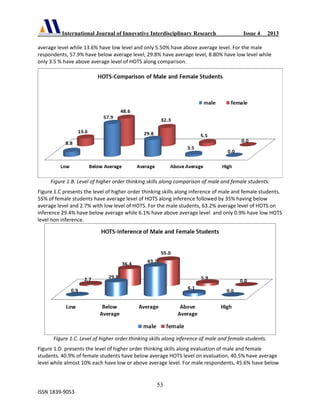
Figure 1.B presents the level of Higher Order Thinking Skills along comparison of male and female 
students. 48.6% of female students have below average level of HOTS along comparison, 32.3% have 
International Journal of Innovative Interdisciplinary Research Issue 4 2013
 
53
ISSN 1839‐9053 
average level while 13.6% have low level and only 5.50% have above average level. For the male 
respondents, 57.9% have below average level, 29.8% have average level, 8.80% have low level while 
only 3.5 % have above average level of HOTS along comparison.  
 
Figure 1.B. Level of higher order thinking skills along comparison of male and female students. 
Figure 1.C presents the level of higher order thinking skills along inference of male and female students. 
55% of female students have average level of HOTS along inference followed by 35% having below 
average level and 2.7% with low level of HOTS. For the male students, 63.2% average level of HOTS on 
inference 29.4% have below average while 6.1% have above average level  and only 0.9% have low HOTS 
level non inference. 
Figure 1.C. Level of higher order thinking skills along inference of male and female students. 
Figure 1.D. presents the level of higher order thinking skills along evaluation of male and female 
students. 40.9% of female students have below average HOTS level on evaluation, 40.5% have average 
level while almost 10% each have low or above average level. For male respondents, 45.6% have below 
International Journal of Innovative Interdisciplinary Research Issue 4 2013
 
54
ISSN 1839‐9053 
average level, 30.7% average level, 13.2% above average level and about 10% have low level of HOTS 
along evaluation. 
 
Figure 1.D. Level of higher order thinking skills along evaluation of male and female students. 
Table 1 presents the comparison of the level of higher order thinking skills of male and female students 
along analysis, comparison, inference and evaluation from the HOTS average level. For male students, 
the t values of all areas were found to be significant at 0.01 level of significance. This implies that the 
level of HOTS of male students along the four areas differ significantly from the HOTS average level.  
Hypothesis 1 for male students is therefore rejected. The levels of higher order thinking skills along the 
four areas of male students are below average.  
Similarly, the t values of each area for female students are found to be significant at 0.01 level of 
significance. The HOTS level of female students along all four areas differ significantly from the HOTS 
average level. Therefore, hypotheses 1 for female students is rejected. The levels of higher order 
thinking skills along the four areas of female students are below average. 
Table 1.Comparison of the level of higher order thinking skills of male and female students from the 
HOTS average level. 
Higher order 
thinking skill (HOTS) 
t ‐ values 
MALE  FEMALE 
Analysis  34.74**  54.44** 
Comparison  33.32**  39.63** 
Inference  49.05**  61.08** 
Evaluation  28.29**  43.17** 
**Highly significant 
International Journal of Innovative Interdisciplinary Research Issue 4 2013
 
55
ISSN 1839‐9053 
Comparison of Higher Order Thinking Skills of Male and Female Students 
Table 2 presents the comparison among the level of higher order thinking skills along analysis, 
comparison, inference and evaluation of male and female students. The t values of all areas are not 
significant. This implies that the level of HOTS of male and female students do not differ significantly. 
Hypothesis 2 is therefore accepted. Male and female students have the same HOTS level along the four 
areas. 
Table 2. Comparison among the level of higher order thinking skills of male and females students  
Higher order 
thinking skill (HOTS) 
t – values  Sig 
MALE‐FEMALE 
Analysis  1.809  0.161ns 
Comparison  0.962  0.225ns 
Inference  1.429  0.121ns 
Evaluation  0.568  0.387ns 
ns – not significant 
Relationship of Level of Higher Order Thinking Skills and Academic Performance in 
Physics of Male and Female Students 
The regression equation shows the relationship between the four areas of higher order thinking skills 
with physics performance of male and female students.  The first equation shows that the levels of HOTS 
on analysis, evaluation and comparison have significant influence to academic performance of male 
students in physics as indicated by  < 0.05 level of significance. On the other hand, the level of HOTS on 
inference does not have a significant influence to physics performance of male students as indicated by 
> 0.05. Hypotheses 3 are therefore rejected for analysis, comparison and evaluation, while hypothesis 
3 is accepted for inference. The higher the level of HOTS of male students on analysis, comparison and 
evaluation, the better is their performance in physics. 
YM  =  3.419 ‐ 0.035Analysis ‐ 0.026Comparison ‐ 0.020inference ‐ 0.072evaluation    
          (<0.01)       (<0.01)                  (<0.05)                  (>0.05)                (<0.01) 
The second equation shows that among the four areas, the levels of HOTS on analysis, inference and 
evaluation have significant influence to the physics performance of female students as indicated by  < 
0.05 level of significance. However, the level of HOTS on comparison has no significant influence to the 
physics performance of female students. Hypotheses 3 are therefore rejected for analysis, inference and 
evaluation to female students while that for analysis is accepted. The higher the level of HOTS on 
analysis, inference and evaluation of female students, the better is their physics performance. 
YF  =  3.413 ‐ 0.014Analysis ‐ 0.025Comparison ‐ 0.037inference ‐ 0.082evaluation 
          (<0.01)       (<0.05)                (>0.05)                  (<0.05)                (<0.01) 
International Journal of Innovative Interdisciplinary Research Issue 4 2013
 
56
ISSN 1839‐9053 
DISCUSSION AND RECOMMENDATIONS
The study shows that college students do not have the necessary skills needed in Physics. This is 
consistent with the observation of Cotton (1991) “students, in general, do not have well‐developed 
thinking skills” (p. 10). Students should be exposed to instructional approaches that promote higher 
order thinking skills. Research has shown that these skills can be significantly enhanced through 
interventions (Hopson, Simms & Knezek, 2001; Ives & Obenchain, 1996; Jackson, 2000 as cited in Koczij, 
2005, pp. 5‐6; Saingan, 2008; Zohar & Dori, 2003). Teachers should encourage students to engage in 
tasks that involve higher order thinking skills (Zohar & Dori, 2003). Nevertheless “the development of 
these skills requires practice, and that the more work students have in a particular discipline, the more 
able they will be to demonstrate these sorts of educational outcomes” (Haller, Monk & Tien, 1993, p. 
67). 
Teacher training is a key factor in the success of fostering HOTS inside the classroom. It is associated 
with student achievement gains (Cotton, 1991). There is a need for physics teachers’ trainings as only a 
minority of teachers view fostering of higher‐order thinking as an important objective of teaching 
physics (Barak & Shakhman, 2008). Additionally, these trainings should be extensive since “teachers are 
not likely to implement new approaches that they have learned about in teacher education programs 
unless their training in new approaches is continuous, large scale, offers incentives, and can be done 
without a significantly greater time commitment”( Levine, 1994 as cited in Ives and Obenchain, 2006, p. 
73).  
There seems to be no gender gap in the physics classroom as far as level of higher order thinking skills of 
students is concerned. This non‐significant role of gender also concurs with the findings of Abubakar and 
Oguguo (2011), Habibollah et al. (2009), Llanes (2002), Moses and Daniel (2008) Pey‐ag (2001) and 
Saingan (2008). Male and female students should be given equal opportunities to develop their higher 
order thinking skills in the physics classroom. Strategies to be adopted by physics teachers should be 
designed to appeal to both groups. Consequently, it can be surmised that the teacher plays a critical role 
for these strategies to be effective. “Different instructors may enact these teaching strategies differently; 
and instructors set the tone, norms of behavior, and attitude in the class both explicitly and implicitly” 
(Pollock, Finkelstein & Kost, 2007, p. 2). As emphasized by Baird (1997),”through their attitudes and 
actions, teachers have the potential to make a significant positive or negative impact on gender balance 
in physical science” (Chap.6, para. 5).  
 
On the relationship of level of higher order thinking skills along the four areas and academic 
achievement in physics, level of HOTS of students influence the physics performance of male and female 
students. Analysis and evaluation are skills closely associated to problem‐solving skills, so a 
mathematical approach in teaching physics could be beneficial to male students in getting better grades 
in physics. For female students, activities that require them to maximize their evaluation will be helpful 
in their physics performance. These results are in agreement with the findings of Rodrigues and Oliveira 
(2008) when they pointed out that “critical thinking level is a predictor of the pupils’ performance in 
physics” (p. 6). This finding is not surprising since Physics is considered as a higher order thinking or HOT 
subject, hence, the importance of fostering such skills in the physics classroom. As Rodrigues and 
Oliveira (2008) stated in their conclusion: 
It’s time to change physics teaching. Teaching physics is still too frequently centered on a transmissive 
approach demanding the memorization of physics equations, principles and laws or the performance 
of mere exercises based on a drill approach. This way of learning physics is boring and uninteresting 
International Journal of Innovative Interdisciplinary Research Issue 4 2013
 
57
ISSN 1839‐9053 
for young people and does not meet the actual requirements of society and of the new trends of 
physics curricula (p. 6). 
CONCLUSION
Results of the study call for push toward higher‐order thinking skills in the classroom. These skills are 
necessary for people to have in this rapidly changing, technologically oriented world. Instruction in 
thinking skills promotes intellectual growth and fosters academic achievement gains (Cotton, 1991). The 
importance for students to develop these skills is asserted in “Teaching Higher‐Order Thinking” (n.d.): 
Information learned and processed through higher‐order thinking processes is remembered longer 
and more clearly than information that is processed through lower‐order, rote memorization. 
Knowledge obtained through higher‐order thinking processes is more easily transferable, so that 
students with a deep conceptual understanding of an idea will be much more likely to be able to 
apply that knowledge to solve new problems (p. 55).  
It can be noted from the results that the higher the level of HOTS of students, the better their 
performance in physics. There is a need to enhance such skills in the physics classroom as substantiated 
by McLoughlin and Hollingworth (2001) when they suggested: 
The learning environment for science should encourage students to engage in higher‐order thinking 
activities.  Teachers of science subjects need to move away from an over‐emphasis on content 
mastery and adopt pedagogies that enable the development of thinking processes. Graduates cannot 
rely on recall of content knowledge alone to operate effectively in the workplace, but must also be 
equipped with the procedural, strategic and metacognitive knowledge to solve complex problems.  
Students need adequate practice and opportunities to develop these skills, and must be able to 
manage their own learning (p.8). 
Accordingly, with appropriate pedagogical strategies along with teacher possessing proper training and 
right motivation, HOTS of students can be enhanced (Cotton, 1991; Haller et al., 1993; Ives &Obenchain, 
1996).  
REFERENCES
Abubakar, R.B., & Oguguo, O.D. (2011). Age and gender as predictors of academic achievement of  
  college mathematics and science students. Presented at the Proceedings of the 2011 
International Conference on International Association for Teaching and Learning: Teaching, 
Learning and Change. Retrieved March 2011 from http://www.hrmars.com/admin/pics/186.pdf 
 
Adeyemo, S.A. (2010).  Background and classroom correlates of students’ achievement in Physics. 
  International Journal of Educational Research and Technology, Vol 1 [1] June 2010: 25 – 34. 
  Retrieved from   
http://www.journals.elsevier.com/international‐journal‐of‐educational‐research/ 
 
Baird, D. (1997). Is the physics classroom any place for girls? The gender imbalance in physics education: 
  How it came about and what teachers can do about it. Master’s Thesis. Retrieved April 2011 
from http://homepage.mac.com/phyzman/phyz/thesis.htmlgender 
 
International Journal of Innovative Interdisciplinary Research Issue 4 2013
 
58
ISSN 1839‐9053 
Barak, M., & Shakman, L. (2008, June). Fostering higher‐order thinking in science class: Teachers’ 
reflections. Abstract retrieved from ERIC Database. (EJ 811893) 
 
Central Board for Secondary Education Physics. (n.d.). HOTS in Physics. Retrieved from  
  http://cbse.nic.in/phycareer/hots.html 
 
Cotton, K. (1991). Close‐up #11: Teaching thinking skills. Retrieved 
from http://educationnorthwest.org/webfm_send/502 
 
Department of Education, Training and Employment  Education. (n.d.). Retrieved August 2010 from 
  http://education.qld.gov.au/corporate/newbasics/html/pedagogies/intellect/int1a.html 
 
Dayıoglu, M., & Türüt‐Asık, S. (2004). Gender differences in academic performance in a large public  
  university in Turkey.  ERC Working Papers in Economics. Retrieved 
from http://www.erc.metu.edu.tr/index.html 
Eisneman, J.G. (1995). An evaluation of the  higher order thinking skills program with fourth and fifth 
  grade students. Abstract retrieved from ERIC Database. (ED 393873). 
Else‐Quest, N.M., Hyde, J.S. & Linn, M.C. (2010). Cross‐national patterns of gender differences in  
  Mathematics: A meta‐analysis. Psychological Bulletin. American Psychological Association, 136,  
  (1), 103–127. doi: 10.1037/a0018053103 
 
Habibollah, N., Rohani, A., Aizan, H.T., Janaluddin, S. & Kumar, S. (2009). Creativity, age and gender  
  as predictors of academic achievement among undergraduate students. Journal of American  
  Science 2009;5(5):101‐112. Retrieved from  http://www.jofamericanscience.org/ 
 
Haller, E.J., Monk, D.H., & Tien, L.T. (1993). Small schools and higher‐order thinking skills. Journal of  
  Research in Rural Education, Fall, 1993,Vol. 9, No.2, 66‐73. Retrieved from http://jrre.psu.edu/ 
 
Hammond, G. (n.d.). Higher order thinking. Retrieved June 2010 
from http://xnet.rrc.mb.ca/glenh/hots.htm 
 
Hedges, L. V. , & Nowell, A. (1995). Sex differences in mental test scores, variability, and numbers of 
high‐ 
  scoring individuals. Science, 269, 41‐45. DOI: 10.1126/science.7604277 
 
Heong, Y.M., Yunos, J. B., & Hassan,R. B. (2011). The perception of the level of higher order thinking skills 
among technical education students. Paper presented at the 2011 International Conference on 
Social Science and Humanity, IPEDR vol.5, 2011. DOI: 10.7763/IPEDR  
 
Higher Order Thinking. (2010). Retrieved 
from http://www.cantthink.com/HigherOrderThinkingSkills.html 
 
International Journal of Innovative Interdisciplinary Research Issue 4 2013
 
59
ISSN 1839‐9053 
Higher Order Thinking.(n.d.). Retrieved 
from http://www.learnnc.org/reference/higher%20order%20thinking 
  
Hopson, M.H., Simms, R. L., & Knezek, G.A. (2001). Using a technology‐enriched environment to  
  improve higher‐order thinking skills. Journal of Research on Technology in Education, Winter 
  2001‐2002: Vol. 34, 2, 109‐119. Retrieved 
from http://www.iste.org/learn/publications/journals/jrte 
  
Ives, B., & Obenchain, K. (2006). Experiential education in the classroom and academic outcomes: For  
  those who want it all.  Journal of Experiential Education, Volume 29 (1), 61‐77. Retrieved 
from http://www.aee.org/publications/jee 
 
King, P.M., Wood, P.K., & Mines, R.A.(1990). Critical thinking among college and graduate students. The 
Review of Higher Education. Winter 1990, Volume13 (2), 167‐186. Retrieved from 
  http://www.press.jhu.edu/journals/review_of_higher_education/ 
 
Koczij, M. (2005).Annotated bibliography of research on higher order thinking. Retrieved August 2010 
from http://mr.koczij.com/resources/dyc/MrKoczij_learning_higherorder_annotated.pdf 
 
Linver, M.R., Davis‐Kean, P., & Eccles, J.E. (2002, April).Influences of Gender on Academic 
Achievement.Presented at the biennial meetings of the Society for Research on Adolescence, 
New Orleans, LA. Retrieved March 2011 from 
  http://rcgd.isr.umich.edu/garp/articles/linver02.pdf 
 
Llanes, E. (2000). Performance of fourth year high school students in science and technology IV of the 
Ilocos Sur Polytechnic College, Tagudin Campus, 1999 – 2000.Unpublished Master’s thesis, 
Baguio Central University, Baguio City. 
 
Mcloughlin, C., & Hollingworth, R.W. (2001). Even foundation level students can get the HOTS for  
  science! Retrieved March 2010 from 
http://www.fyhe.com.au/past_papers/papers03/Refereed%20Papers/Full%20papers/McLoughli
n&Hollingworth_final.doc 
 
Moses, A., & Daniel, O. (2008). Gender difference in integrated science achievement among pre service  
  teachers in Nigeria. Educational Research and Review Vol. 3 (7), pp. 242‐245. Retrieved from  
http://www.academicjournals.org/err/index.htm 
 
Odell, P.M., & Schumacker, P. (1998).Attitudes toward mathematics and predictors of college 
mathematics grades‐gender differences in a 4‐year business college. Journal of Education for 
Business, 74 (1):  34‐38. Retrieved from http://www.tandfonline.com/ 
 
Pey‐ag, J. (2001).Difficulties encountered by the seniors in word problems in math in public secondary 
schools, Sabangan, Mountain Province, 1999 – 2000. Unpublished Master’s Thesis.Baguio 
Central University, Baguio City. 
 
Pollock, S. J., Finkelstein, N. D., & Kost, L. E. (2007). Reducing the gender gap in the physics classroom:  
  How sufficient is interactive engagement? Physical Review Special Topics ‐ Physics Education  
International Journal of Innovative Interdisciplinary Research Issue 4 2013
60
ISSN 1839‐9053 
 
  Research 3. DOI: 10.1103/PhysRevSTPER.3.010107 
 
Quellmalz Taxonomy. (n.d.). Retrieved June 2010 from http://www.coorisd.k12.mi.us/jhaf/class‐assess‐
101‐d‐bloom‐quellmalz‐1.htm 
 
 
Rodrigues,A.and Oliveira,M. (2008).The role of critical thinking in physics learning. Retrieved from 
  http://lsg.ucy.ac.cy/girep2008/papers/THE%20ROLE%20OF%20CRITICAL%20THINKING.pdf 
 
Saingan,R. (2008).Demonstration strategy and achievement of physics students based on higher order 
thinking skills. Graduate School Journal, Vol.14, 129 – 135. Graduate School, Benguet State 
University. 
 
Song, H.,  Koszalka, T. A., & Grabowski, B. (2005). Exploring Instructional Design Factors Prompting 
  Reflective Thinking in Young Adolescents.Canadian Journal of Learning and Technology, Vol 31, 
No. 2, 49‐68. Retrieved from http://cjlt.csj.ualberta.ca/index.php/cjlt 
 
Stiggins, R., & Conklin, N. (1992).In Teachers' Hands: Investigating the Practices of Classroom  
  Assessment, p. 158.  Retrieved from http://www:books.google.com. 
 
Stiggins, R.J., Rubel, E., and Quellmalz, E. (1988).Measuring Thinking Skills in the Classroom. (Revised  
  Ed.). Washington, DC: National Education Association. 
 
Teaching Higher‐Order Thinking.( n.d.). Retrieved March 2011 from  
  http://teachingasleadership.org/sites/default/files/Related‐Readings/LT_Ch5_2011.pdf 
 
Voyer,  D., Voyer, S., & Bryden, M.P.(1995). Magnitude of sex differences in spatial abilities: A meta‐ 
  analysis  and consideration of critical variables . Psychological Bulletin, American Psychological 
Association 1995, 117, 250‐270. doi: 10.1037/a0018053103 
 
Wai, J.,  Cacchio, M.,   Putallaz, M., &  Makel , M.C. (2010). Sex differences in the right tail of cognitive  
abilities: A 30 year examination. Intelligence, Vol. 38, 412–423. doi:10.1016/j.intell.2010.04.006 
 
Zohar, A., & Y. Dori. (2003). Higher order thinking skills and low‐achieving students: are they mutually 
exclusive? Journal of the Learning Sciences, Volume 12 (2) 145 – 181. Retrieved 
from http://www.jstor.org/pss/1466891 

5ramos

  • 1.
    International Journal ofInnovative Interdisciplinary Research Issue 4 2013   48 ISSN 1839‐9053  Higher Order Thinking Skills and Academic Performance in Physics of College Students: A Regression Analysis   Jennifer Lyn S. Ramos1 ,Bretel B. Dolipas2 , Brenda B. Villamor3  1, 2  Benguet State University, Philippines  3 Philippine Normal University Agusan Campus, Philippines  ABSTRACT The study determined the relationship between higher order thinking skills (HOTS) of students and  the academic performance in physics. The research was conducted at Benguet State University  during the school year 2010‐2011 and respondents were students enrolled in Physics. Results show  that 49.5% of female students have average HOTS level on analysis while 54.4% of male students  have below average level. On comparison, almost 50% of both male and female students have  below average level while more than half of male and female students have average level on  inference. Almost half of male students and female students have average level of HOTS on  evaluation. Male and female students have similar level of HOTS on all four areas. Moreover the  HOTS level on analysis, comparison and evaluation significantly influence the physics performance  of male students while the HOTS level on analysis, inference and evaluation significantly influence  the physics performance of female students.   Keywords: Higher order thinking skills, academic performance, physics, college students, regression  analysis  INTRODUCTION The type of thinking process that students must develop to prepare them to confront the real world  must go beyond simple learning of facts and content. “Knowledge obtained through higher‐order  thinking processes is more easily transferable, so that students with a deep conceptual understanding of  an idea will be much more likely to be able to apply that knowledge to solve new problems” (Teaching  Higher Order Thinking, n.d.).  As highlighted in the website of Central Board of Secondary Education  (CBSE) Physics:  the concept of higher‐order thinking skill or HOTS is a fundamental shift in evaluation reform that  aims at promoting thinking skills in learners and taking them away from rote learning.  Higher level  mental abilities of the learners such as to analyze, interpret, reason out, synthesize or evaluate the  given information are likely to enable them transfer learning to totally different situations.  (http://cbse.nic.in/phycareer/hots.html). 
  • 2.
    International Journal ofInnovative Interdisciplinary Research Issue 4 2013   49 ISSN 1839‐9053  Across subject areas, when teachers ask higher‐order questions and provide opportunities for students  to develop deep explanations, learning is enhanced. Higher‐order questions often start with question  stems like: why, what caused, how did it occur, what if, how do they compare, or what is the evidence?  When teachers ask higher‐order questions and encourage explanations, they are helping their students  to develop important critical thinking skills.  Physics is a unique and fascinating discipline. It’s hard to teach and harder to comprehend. Physics can  be considered as HOT ‐‐ higher order thinking. It makes immense academic demands on students in its  learning (Adeyemo, 2010). The learning of physics is difficult at best and almost impossible at worst. But  because of its enormous importance to science and technology, there is understandably huge interest in  students’ achievement in Physics, hence the conceptualization of this study.    BACKGROUND Higher Order Thinking Skills  Higher‐order thinking basically means thinking that is taking place in the higher‐levels of the hierarchy of  cognitive processing. The most widely accepted hierarchical arrangement of this sort in education is  Bloom’s Taxonomy, viewing a continuum of thinking skills starting with knowledge‐level thinking to  evaluation‐level of thinking. As Hammond (n.d.) stipulates:  Critical/creative/constructive thinking simply means thinking processes that progress upward in the  given direction. First one critically analyzes the knowledge, information, or situation. Then creatively  consider possible next‐step options, and finally, construct a new product, decision, direction, or value.  (http://xnet.rrc.mb.ca/glenh/hots.htm)  The significance of higher order thinking in the classroom is best clarified in the Department of  Education, Training and Employment (DETE) Education website:  Higher‐order thinking by students involves the transformation of information and ideas. This  transformation occurs when students combine facts and ideas and synthesise, generalise, explain,  hypothesise or arrive at some conclusion or interpretation. Manipulating information and ideas  through these processes allows students to solve problems, gain understanding and discover new  meaning. When students engage in the construction of knowledge, an element of uncertainty is  introduced into the instructional process and the outcomes are not always predictable; in other  words, the teacher is not certain what the students will produce. In helping students become  producers of knowledge, the teacher’s main instructional task is to create activities or environments  that allow them opportunities to engage in higher‐order thinking.   (http://education.qld.gov.au/corporate/newbasics/html/pedagogies/intellect/int1a.html)  Correspondingly, higher order thinking skills or HOTS include skills such as creative and critical thinking,  analysis, problem solving and visualization (“Higher Order Thinking Skills”, n.d.).  These skills involve  categorizing items, comparing and contrasting ideas and theories, and being able to write about and  solve problems. In the classroom, abilities and skills that include the use of HOTS are complex thinking  that goes beyond basic recall of facts, such as evaluation and invention, enabling students to retain  information and to apply problem‐solving solutions to real‐world problems.   Thus, higher order thinking skills are valued because they are believed to better prepare students for the  challenges of adult work and daily life and advanced academic work (“Higher order thinking”, n.d.). 
  • 3.
    International Journal ofInnovative Interdisciplinary Research Issue 4 2013   50 ISSN 1839‐9053  Quellmalz Framework of Thinking Skills  Although different theoreticians and researchers use different frameworks to describe higher order skills  and how they are acquired, all frameworks are in general agreement concerning the conditions under  which they prosper. In this study, the Quellmalz Framework of Thinking Skills was utilized since it  collects all of the elements common to many other taxonomic structures of thinking skills (Stiggins &  Conklin, 1992). The levels are considered to be conceptually clear and straightforward making coding of  questions easy. The four cognitive processes of analysis, comparison, inference and evaluation are  collectively called higher order thinking skills (HOTS) or critical thinking skills. These are the four areas  considered in the study.  Analysis include understanding relationships between the whole and its component parts and between  cause and effect; sorting and categorizing, understanding how things work and how the parts of  something fit together; understanding causal relationships; getting information from charts, graphs,  diagrams and maps. Analysis is more than rote repetition; instead it involves reflectively structuring  knowledge in new ways (Stiggins, Rubel, &Quellmalz, 1988). Comparison involves explaining how things  are similar and how are they different. Comparisons may either be simple or complex. Simple  comparisons are based on a small number of very obvious attributes. Complex comparisons require  examination of a more extensive set of attributes of two or more things; start with the whole/part  relationships in the analysis category and carry them a step further.    Inferential thinking involves reasoning inductively or deductively. In deductive tasks, students reason  from generalizations to specific instances and are asked to recognize or explain the evidence. In  deductive tasks, students are given the evidence or details and are required to relate and integrate the  information to come up with the generalization. According to Corpuz and Salandanan (2003, pp. 68‐76)  as cited in Saingan (2008), “inferential thinking is an ability to form an idea, opinion or a conclusion after  a series of reasoning and speculating outcomes of a situation. Students who are able to formulate  conjectures, possibilities and surmise consequences based on sufficient proofs are considered capable  of this higher‐order thinking skill”.   Evaluation, on the other hand, means expressing and defending an opinion. Evaluation tasks require  students to judge quality, credibility, worth or practicality using an established criteria and explain how  the criteria are met or not met. From “Quellmalz Taxonomy” (n.d.) key words such as assess, appraise,  defend, argue, recommend, debate, critique are used if evaluation is to be measured.   Higher Order Thinking Skills, Gender and Academic Achievement  Across different levels, same results were shown on the relation of gender and higher order thinking  skills. Both male and female students have the same level of higher order thinking skills in the grade  school level (Eisenman, 1995), middle school (Song, Koszalka & Grabowski, 2005), high school level  (Saingan, 2008) and in higher education (Heong, Yunos & Hassan, 2011). However, at higher academic  levels, gender seems to be a factor. When critical thinking tests were given to graduate and  undergraduate senior students, the gender effect was significant, with males consistently having higher  critical thinking skills than females (King, Wood & Mines, 1990).  On the other hand, several studies showed mixed results on the influence of gender on academic  achievement. Female students out performed male students across subject areas (Dayıoglu&Türüt‐Asık,  2004; Hedges &Nowell, 1995; Linver, Davis‐Kean &Eccles, 2002; Nori, 2002 as cited in Habibollah,  Rohani, Aizan, Jamaluddin& Kumar, 2009); male students performed better than female students (King,  Wood & Mines, 1990; Voyer, Voyer, &Bryden, 1995;  Wai, Cacchio, Putallaz&Makel, 2010); girls are 
  • 4.
    International Journal ofInnovative Interdisciplinary Research Issue 4 2013   51 ISSN 1839‐9053  better in some areas while boys better in others (Gallagher &DeLisi, 1994 and Linn &Kessel, 1996 cited  in Odell & Schumacher,  1998); no gender  difference in many nations and variability of gender  difference across nations (Else‐Quest, Hyde & Linn, 2010); and no differences in their performance  (Abubakar&Oguguo, 2011; Habibollah et al., 2009; Llanes, 2002; Moses & Daniel, 2008; Pey‐ag, 2001).  THE STUDY The studies mentioned above show conflicting results of the gender gap on achievement that a study  exploring the role of gender to HOTS is also worth investigating. Unlike mixed results on gender and  academic achievement, most studies cited showed that gender is not a predictor of HOTS. In the current  study, the level of HOTS of college students was investigated as well as compared their HOTS level  according to gender. It also investigated the relationship of the level of HOTS of students to their  academic performance in physics.    Specifically the study intended to: (1) determine the level of higher order thinking skills in physics of  college students grouped according to gender along analysis, comparison, inference and evaluation; (2)  compare the level of higher order thinking skills of male and female students along the four areas; and  (3) determine the relationship of the level of higher order thinking skills of male and female students  along the four areas to academic performance in physics.   Based on the problems stated and with all the considerations mentioned above, the following  hypotheses were investigated: (1) There is an average level of higher order thinking skills along analysis,  comparison, inference and evaluation in physics of male and female students; (2) There are no  significant differences between the levels of higher order thinking skills of male and female students  along the four areas; and (3) There are no significant relationships between the levels of higher order  thinking skills along the four areas and academic performance in physics of male and female students.  METHODS  Respondents  The respondents were students enrolled in Physics 11 (General Physics 1) at Benguet State University  during the first and second semester of school year 2010‐2011. A total of 393 students took part in the  study, 112 are male and 281 are female.  Instrument  The instrument was a teacher‐made test consisting of 60 multiple‐choice type of questions covering  topics in Physics 11 that include Kinematics, Dynamics and Statics. The area grouping of HOTS was based  on the criteria of Quellmalz taxonomy (Stiggins& Conklin, 1992, pp. 159‐160). The academic  performance of students in physics was measured based on their final grades in Physics 11.   Data Analysis  To determine the level of higher order thinking skills of the male and female students, the frequency  count was utilized. A five‐point Likert Scale was used to determine the  level of HOTS of the students  based on their scores.    The following Likert Scale was used to measure the level of Higher Order Thinking Skills of the  respondents:   
  • 5.
    International Journal ofInnovative Interdisciplinary Research Issue 4 2013   52 ISSN 1839‐9053  Scale                 Mean       Description                                           Symbol Used                          Test Score                           1             1 – 3    Low Level Higher‐Order Thinking Skills          LHOTS  2             4 ‐ 6    Below Average Level Higher‐Order Thinking Skills     BHOTS  3             7 ‐ 9    Average Level Higher‐Order Thinking Skills        AHOTS  4             10 ‐12    Above Average Level Higher‐Order Thinking Skills     AAHOTS  5             12 – 15        High Level Higher‐Order Thinking Skills          HHOTS  The t‐test was used to test difference in the levels of HOTS of male and female students from the HOTS  average level and to determine the differences in the HOTS level of students along the four areas when  grouped according to gender. Finally, the linear regression was employed to analyze the relationship  between the level of HOTS along the four areas and academic performance in Physics of male and  female students.  RESULTS Higher Order Thinking Skills of Male and Female Students  Figure 1.A shows the level of higher order thinking skills along analysis of male and female students.  49.5% female students have an average level of HOTS on analysis followed by 36% with below average  level. The rest have above average and low level of HOTS. On the other hand, 54.4% of male students  have below average level while almost one third have average level of HOTS along analysis. The rest  have above average (6.1%) and low (3.5%) levels of HOTS along analysis.    Figure 1.A. Level of higher order thinking skills along analysis of male and female students.  Figure 1.B presents the level of Higher Order Thinking Skills along comparison of male and female  students. 48.6% of female students have below average level of HOTS along comparison, 32.3% have 
  • 6.
    International Journal ofInnovative Interdisciplinary Research Issue 4 2013   53 ISSN 1839‐9053  average level while 13.6% have low level and only 5.50% have above average level. For the male  respondents, 57.9% have below average level, 29.8% have average level, 8.80% have low level while  only 3.5 % have above average level of HOTS along comparison.     Figure 1.B. Level of higher order thinking skills along comparison of male and female students.  Figure 1.C presents the level of higher order thinking skills along inference of male and female students.  55% of female students have average level of HOTS along inference followed by 35% having below  average level and 2.7% with low level of HOTS. For the male students, 63.2% average level of HOTS on  inference 29.4% have below average while 6.1% have above average level  and only 0.9% have low HOTS  level non inference.  Figure 1.C. Level of higher order thinking skills along inference of male and female students.  Figure 1.D. presents the level of higher order thinking skills along evaluation of male and female  students. 40.9% of female students have below average HOTS level on evaluation, 40.5% have average  level while almost 10% each have low or above average level. For male respondents, 45.6% have below 
  • 7.
    International Journal ofInnovative Interdisciplinary Research Issue 4 2013   54 ISSN 1839‐9053  average level, 30.7% average level, 13.2% above average level and about 10% have low level of HOTS  along evaluation.    Figure 1.D. Level of higher order thinking skills along evaluation of male and female students.  Table 1 presents the comparison of the level of higher order thinking skills of male and female students  along analysis, comparison, inference and evaluation from the HOTS average level. For male students,  the t values of all areas were found to be significant at 0.01 level of significance. This implies that the  level of HOTS of male students along the four areas differ significantly from the HOTS average level.   Hypothesis 1 for male students is therefore rejected. The levels of higher order thinking skills along the  four areas of male students are below average.   Similarly, the t values of each area for female students are found to be significant at 0.01 level of  significance. The HOTS level of female students along all four areas differ significantly from the HOTS  average level. Therefore, hypotheses 1 for female students is rejected. The levels of higher order  thinking skills along the four areas of female students are below average.  Table 1.Comparison of the level of higher order thinking skills of male and female students from the  HOTS average level.  Higher order  thinking skill (HOTS)  t ‐ values  MALE  FEMALE  Analysis  34.74**  54.44**  Comparison  33.32**  39.63**  Inference  49.05**  61.08**  Evaluation  28.29**  43.17**  **Highly significant 
  • 8.
    International Journal ofInnovative Interdisciplinary Research Issue 4 2013   55 ISSN 1839‐9053  Comparison of Higher Order Thinking Skills of Male and Female Students  Table 2 presents the comparison among the level of higher order thinking skills along analysis,  comparison, inference and evaluation of male and female students. The t values of all areas are not  significant. This implies that the level of HOTS of male and female students do not differ significantly.  Hypothesis 2 is therefore accepted. Male and female students have the same HOTS level along the four  areas.  Table 2. Comparison among the level of higher order thinking skills of male and females students   Higher order  thinking skill (HOTS)  t – values  Sig  MALE‐FEMALE  Analysis  1.809  0.161ns  Comparison  0.962  0.225ns  Inference  1.429  0.121ns  Evaluation  0.568  0.387ns  ns – not significant  Relationship of Level of Higher Order Thinking Skills and Academic Performance in  Physics of Male and Female Students  The regression equation shows the relationship between the four areas of higher order thinking skills  with physics performance of male and female students.  The first equation shows that the levels of HOTS  on analysis, evaluation and comparison have significant influence to academic performance of male  students in physics as indicated by  < 0.05 level of significance. On the other hand, the level of HOTS on  inference does not have a significant influence to physics performance of male students as indicated by  > 0.05. Hypotheses 3 are therefore rejected for analysis, comparison and evaluation, while hypothesis  3 is accepted for inference. The higher the level of HOTS of male students on analysis, comparison and  evaluation, the better is their performance in physics.  YM  =  3.419 ‐ 0.035Analysis ‐ 0.026Comparison ‐ 0.020inference ‐ 0.072evaluation               (<0.01)       (<0.01)                  (<0.05)                  (>0.05)                (<0.01)  The second equation shows that among the four areas, the levels of HOTS on analysis, inference and  evaluation have significant influence to the physics performance of female students as indicated by  <  0.05 level of significance. However, the level of HOTS on comparison has no significant influence to the  physics performance of female students. Hypotheses 3 are therefore rejected for analysis, inference and  evaluation to female students while that for analysis is accepted. The higher the level of HOTS on  analysis, inference and evaluation of female students, the better is their physics performance.  YF  =  3.413 ‐ 0.014Analysis ‐ 0.025Comparison ‐ 0.037inference ‐ 0.082evaluation            (<0.01)       (<0.05)                (>0.05)                  (<0.05)                (<0.01) 
  • 9.
    International Journal ofInnovative Interdisciplinary Research Issue 4 2013   56 ISSN 1839‐9053  DISCUSSION AND RECOMMENDATIONS The study shows that college students do not have the necessary skills needed in Physics. This is  consistent with the observation of Cotton (1991) “students, in general, do not have well‐developed  thinking skills” (p. 10). Students should be exposed to instructional approaches that promote higher  order thinking skills. Research has shown that these skills can be significantly enhanced through  interventions (Hopson, Simms & Knezek, 2001; Ives & Obenchain, 1996; Jackson, 2000 as cited in Koczij,  2005, pp. 5‐6; Saingan, 2008; Zohar & Dori, 2003). Teachers should encourage students to engage in  tasks that involve higher order thinking skills (Zohar & Dori, 2003). Nevertheless “the development of  these skills requires practice, and that the more work students have in a particular discipline, the more  able they will be to demonstrate these sorts of educational outcomes” (Haller, Monk & Tien, 1993, p.  67).  Teacher training is a key factor in the success of fostering HOTS inside the classroom. It is associated  with student achievement gains (Cotton, 1991). There is a need for physics teachers’ trainings as only a  minority of teachers view fostering of higher‐order thinking as an important objective of teaching  physics (Barak & Shakhman, 2008). Additionally, these trainings should be extensive since “teachers are  not likely to implement new approaches that they have learned about in teacher education programs  unless their training in new approaches is continuous, large scale, offers incentives, and can be done  without a significantly greater time commitment”( Levine, 1994 as cited in Ives and Obenchain, 2006, p.  73).   There seems to be no gender gap in the physics classroom as far as level of higher order thinking skills of  students is concerned. This non‐significant role of gender also concurs with the findings of Abubakar and  Oguguo (2011), Habibollah et al. (2009), Llanes (2002), Moses and Daniel (2008) Pey‐ag (2001) and  Saingan (2008). Male and female students should be given equal opportunities to develop their higher  order thinking skills in the physics classroom. Strategies to be adopted by physics teachers should be  designed to appeal to both groups. Consequently, it can be surmised that the teacher plays a critical role  for these strategies to be effective. “Different instructors may enact these teaching strategies differently;  and instructors set the tone, norms of behavior, and attitude in the class both explicitly and implicitly”  (Pollock, Finkelstein & Kost, 2007, p. 2). As emphasized by Baird (1997),”through their attitudes and  actions, teachers have the potential to make a significant positive or negative impact on gender balance  in physical science” (Chap.6, para. 5).     On the relationship of level of higher order thinking skills along the four areas and academic  achievement in physics, level of HOTS of students influence the physics performance of male and female  students. Analysis and evaluation are skills closely associated to problem‐solving skills, so a  mathematical approach in teaching physics could be beneficial to male students in getting better grades  in physics. For female students, activities that require them to maximize their evaluation will be helpful  in their physics performance. These results are in agreement with the findings of Rodrigues and Oliveira  (2008) when they pointed out that “critical thinking level is a predictor of the pupils’ performance in  physics” (p. 6). This finding is not surprising since Physics is considered as a higher order thinking or HOT  subject, hence, the importance of fostering such skills in the physics classroom. As Rodrigues and  Oliveira (2008) stated in their conclusion:  It’s time to change physics teaching. Teaching physics is still too frequently centered on a transmissive  approach demanding the memorization of physics equations, principles and laws or the performance  of mere exercises based on a drill approach. This way of learning physics is boring and uninteresting 
  • 10.
    International Journal ofInnovative Interdisciplinary Research Issue 4 2013   57 ISSN 1839‐9053  for young people and does not meet the actual requirements of society and of the new trends of  physics curricula (p. 6).  CONCLUSION Results of the study call for push toward higher‐order thinking skills in the classroom. These skills are  necessary for people to have in this rapidly changing, technologically oriented world. Instruction in  thinking skills promotes intellectual growth and fosters academic achievement gains (Cotton, 1991). The  importance for students to develop these skills is asserted in “Teaching Higher‐Order Thinking” (n.d.):  Information learned and processed through higher‐order thinking processes is remembered longer  and more clearly than information that is processed through lower‐order, rote memorization.  Knowledge obtained through higher‐order thinking processes is more easily transferable, so that  students with a deep conceptual understanding of an idea will be much more likely to be able to  apply that knowledge to solve new problems (p. 55).   It can be noted from the results that the higher the level of HOTS of students, the better their  performance in physics. There is a need to enhance such skills in the physics classroom as substantiated  by McLoughlin and Hollingworth (2001) when they suggested:  The learning environment for science should encourage students to engage in higher‐order thinking  activities.  Teachers of science subjects need to move away from an over‐emphasis on content  mastery and adopt pedagogies that enable the development of thinking processes. Graduates cannot  rely on recall of content knowledge alone to operate effectively in the workplace, but must also be  equipped with the procedural, strategic and metacognitive knowledge to solve complex problems.   Students need adequate practice and opportunities to develop these skills, and must be able to  manage their own learning (p.8).  Accordingly, with appropriate pedagogical strategies along with teacher possessing proper training and  right motivation, HOTS of students can be enhanced (Cotton, 1991; Haller et al., 1993; Ives &Obenchain,  1996).   REFERENCES Abubakar, R.B., & Oguguo, O.D. (2011). Age and gender as predictors of academic achievement of     college mathematics and science students. Presented at the Proceedings of the 2011  International Conference on International Association for Teaching and Learning: Teaching,  Learning and Change. Retrieved March 2011 from http://www.hrmars.com/admin/pics/186.pdf    Adeyemo, S.A. (2010).  Background and classroom correlates of students’ achievement in Physics.    International Journal of Educational Research and Technology, Vol 1 [1] June 2010: 25 – 34.    Retrieved from    http://www.journals.elsevier.com/international‐journal‐of‐educational‐research/    Baird, D. (1997). Is the physics classroom any place for girls? The gender imbalance in physics education:    How it came about and what teachers can do about it. Master’s Thesis. Retrieved April 2011  from http://homepage.mac.com/phyzman/phyz/thesis.htmlgender   
  • 11.
    International Journal ofInnovative Interdisciplinary Research Issue 4 2013   58 ISSN 1839‐9053  Barak, M., & Shakman, L. (2008, June). Fostering higher‐order thinking in science class: Teachers’  reflections. Abstract retrieved from ERIC Database. (EJ 811893)    Central Board for Secondary Education Physics. (n.d.). HOTS in Physics. Retrieved from     http://cbse.nic.in/phycareer/hots.html    Cotton, K. (1991). Close‐up #11: Teaching thinking skills. Retrieved  from http://educationnorthwest.org/webfm_send/502    Department of Education, Training and Employment  Education. (n.d.). Retrieved August 2010 from    http://education.qld.gov.au/corporate/newbasics/html/pedagogies/intellect/int1a.html    Dayıoglu, M., & Türüt‐Asık, S. (2004). Gender differences in academic performance in a large public     university in Turkey.  ERC Working Papers in Economics. Retrieved  from http://www.erc.metu.edu.tr/index.html  Eisneman, J.G. (1995). An evaluation of the  higher order thinking skills program with fourth and fifth    grade students. Abstract retrieved from ERIC Database. (ED 393873).  Else‐Quest, N.M., Hyde, J.S. & Linn, M.C. (2010). Cross‐national patterns of gender differences in     Mathematics: A meta‐analysis. Psychological Bulletin. American Psychological Association, 136,     (1), 103–127. doi: 10.1037/a0018053103    Habibollah, N., Rohani, A., Aizan, H.T., Janaluddin, S. & Kumar, S. (2009). Creativity, age and gender     as predictors of academic achievement among undergraduate students. Journal of American     Science 2009;5(5):101‐112. Retrieved from  http://www.jofamericanscience.org/    Haller, E.J., Monk, D.H., & Tien, L.T. (1993). Small schools and higher‐order thinking skills. Journal of     Research in Rural Education, Fall, 1993,Vol. 9, No.2, 66‐73. Retrieved from http://jrre.psu.edu/    Hammond, G. (n.d.). Higher order thinking. Retrieved June 2010  from http://xnet.rrc.mb.ca/glenh/hots.htm    Hedges, L. V. , & Nowell, A. (1995). Sex differences in mental test scores, variability, and numbers of  high‐    scoring individuals. Science, 269, 41‐45. DOI: 10.1126/science.7604277    Heong, Y.M., Yunos, J. B., & Hassan,R. B. (2011). The perception of the level of higher order thinking skills  among technical education students. Paper presented at the 2011 International Conference on  Social Science and Humanity, IPEDR vol.5, 2011. DOI: 10.7763/IPEDR     Higher Order Thinking. (2010). Retrieved  from http://www.cantthink.com/HigherOrderThinkingSkills.html   
  • 12.
    International Journal ofInnovative Interdisciplinary Research Issue 4 2013   59 ISSN 1839‐9053  Higher Order Thinking.(n.d.). Retrieved  from http://www.learnnc.org/reference/higher%20order%20thinking     Hopson, M.H., Simms, R. L., & Knezek, G.A. (2001). Using a technology‐enriched environment to     improve higher‐order thinking skills. Journal of Research on Technology in Education, Winter    2001‐2002: Vol. 34, 2, 109‐119. Retrieved  from http://www.iste.org/learn/publications/journals/jrte     Ives, B., & Obenchain, K. (2006). Experiential education in the classroom and academic outcomes: For     those who want it all.  Journal of Experiential Education, Volume 29 (1), 61‐77. Retrieved  from http://www.aee.org/publications/jee    King, P.M., Wood, P.K., & Mines, R.A.(1990). Critical thinking among college and graduate students. The  Review of Higher Education. Winter 1990, Volume13 (2), 167‐186. Retrieved from    http://www.press.jhu.edu/journals/review_of_higher_education/    Koczij, M. (2005).Annotated bibliography of research on higher order thinking. Retrieved August 2010  from http://mr.koczij.com/resources/dyc/MrKoczij_learning_higherorder_annotated.pdf    Linver, M.R., Davis‐Kean, P., & Eccles, J.E. (2002, April).Influences of Gender on Academic  Achievement.Presented at the biennial meetings of the Society for Research on Adolescence,  New Orleans, LA. Retrieved March 2011 from    http://rcgd.isr.umich.edu/garp/articles/linver02.pdf    Llanes, E. (2000). Performance of fourth year high school students in science and technology IV of the  Ilocos Sur Polytechnic College, Tagudin Campus, 1999 – 2000.Unpublished Master’s thesis,  Baguio Central University, Baguio City.    Mcloughlin, C., & Hollingworth, R.W. (2001). Even foundation level students can get the HOTS for     science! Retrieved March 2010 from  http://www.fyhe.com.au/past_papers/papers03/Refereed%20Papers/Full%20papers/McLoughli n&Hollingworth_final.doc    Moses, A., & Daniel, O. (2008). Gender difference in integrated science achievement among pre service     teachers in Nigeria. Educational Research and Review Vol. 3 (7), pp. 242‐245. Retrieved from   http://www.academicjournals.org/err/index.htm    Odell, P.M., & Schumacker, P. (1998).Attitudes toward mathematics and predictors of college  mathematics grades‐gender differences in a 4‐year business college. Journal of Education for  Business, 74 (1):  34‐38. Retrieved from http://www.tandfonline.com/    Pey‐ag, J. (2001).Difficulties encountered by the seniors in word problems in math in public secondary  schools, Sabangan, Mountain Province, 1999 – 2000. Unpublished Master’s Thesis.Baguio  Central University, Baguio City.    Pollock, S. J., Finkelstein, N. D., & Kost, L. E. (2007). Reducing the gender gap in the physics classroom:     How sufficient is interactive engagement? Physical Review Special Topics ‐ Physics Education  
  • 13.
    International Journal ofInnovative Interdisciplinary Research Issue 4 2013 60 ISSN 1839‐9053      Research 3. DOI: 10.1103/PhysRevSTPER.3.010107    Quellmalz Taxonomy. (n.d.). Retrieved June 2010 from http://www.coorisd.k12.mi.us/jhaf/class‐assess‐ 101‐d‐bloom‐quellmalz‐1.htm      Rodrigues,A.and Oliveira,M. (2008).The role of critical thinking in physics learning. Retrieved from    http://lsg.ucy.ac.cy/girep2008/papers/THE%20ROLE%20OF%20CRITICAL%20THINKING.pdf    Saingan,R. (2008).Demonstration strategy and achievement of physics students based on higher order  thinking skills. Graduate School Journal, Vol.14, 129 – 135. Graduate School, Benguet State  University.    Song, H.,  Koszalka, T. A., & Grabowski, B. (2005). Exploring Instructional Design Factors Prompting    Reflective Thinking in Young Adolescents.Canadian Journal of Learning and Technology, Vol 31,  No. 2, 49‐68. Retrieved from http://cjlt.csj.ualberta.ca/index.php/cjlt    Stiggins, R., & Conklin, N. (1992).In Teachers' Hands: Investigating the Practices of Classroom     Assessment, p. 158.  Retrieved from http://www:books.google.com.    Stiggins, R.J., Rubel, E., and Quellmalz, E. (1988).Measuring Thinking Skills in the Classroom. (Revised     Ed.). Washington, DC: National Education Association.    Teaching Higher‐Order Thinking.( n.d.). Retrieved March 2011 from     http://teachingasleadership.org/sites/default/files/Related‐Readings/LT_Ch5_2011.pdf    Voyer,  D., Voyer, S., & Bryden, M.P.(1995). Magnitude of sex differences in spatial abilities: A meta‐    analysis  and consideration of critical variables . Psychological Bulletin, American Psychological  Association 1995, 117, 250‐270. doi: 10.1037/a0018053103    Wai, J.,  Cacchio, M.,   Putallaz, M., &  Makel , M.C. (2010). Sex differences in the right tail of cognitive   abilities: A 30 year examination. Intelligence, Vol. 38, 412–423. doi:10.1016/j.intell.2010.04.006    Zohar, A., & Y. Dori. (2003). Higher order thinking skills and low‐achieving students: are they mutually  exclusive? Journal of the Learning Sciences, Volume 12 (2) 145 – 181. Retrieved  from http://www.jstor.org/pss/1466891