LESSON OBJECTIVES
In this lesson you will learn:
• to identify real-life situations where we need
to be aware of safety.
• to identify ways in which we can stay safe in
these situations.
What does it mean to
own safety?
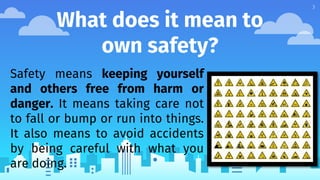
Safety means keeping yourself
and others free from harm or
danger. It means taking care not
to fall or bump or run into things.
It also means to avoid accidents
by being careful with what you
are doing.
3
4
Personal Responsibility
Personal responsibility is the level of
commitment one is willing to make in setting
and achieving clear goals. In other words, being
personally responsible means taking
responsibility for one's actions, words, and
performance in daily life.
“
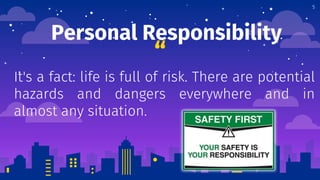
It's a fact: life is full of risk. There are potential
hazards and dangers everywhere and in
almost any situation.
5
Personal Responsibility
6
Personal Responsibility
Be responsible for your personal safety:
 Be alert to potential danger.
 Trust your instincts.
 Be aware of all your surroundings.
 Avoid anything that does not feel safe.
 Anticipate possible problems.
 Be vigilant and prepared for anything.
 Report suspicious activity.
7
Dangers in the Environment
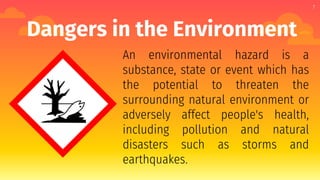
An environmental hazard is a
substance, state or event which has
the potential to threaten the
surrounding natural environment or
adversely affect people's health,
including pollution and natural
disasters such as storms and
earthquakes.
Types of Environmental Hazards
We face countless environmental hazards every
day. To better understand them, we can think of
them as falling into four categories: physical,
chemical, biological, and cultural.
8
Physical Hazards
Physical hazards are physical
processes that occur naturally in
the environment. These include
natural disaster events such as
earthquakes, tornadoes,
volcanoes, blizzards, landslides,
and droughts.
9
10
Chemical hazards
Chemical hazards can be both
natural and human-made
chemicals in the environment.
Human-made chemical
hazards include many of the
synthetic chemicals we
produce, like disinfectants,
pesticides and plastics.
11
Biological hazards
Biological hazards come from ecological
interactions between organisms. Viruses,
bacterial infections, malaria, and
tuberculosis are all examples of
biological hazards. When these
pathogens and diseases are transferred
between organisms, it's called an
infectious disease.
12
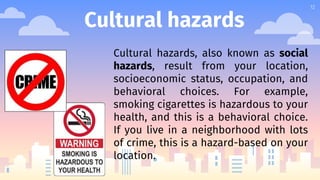
Cultural hazards
Cultural hazards, also known as social
hazards, result from your location,
socioeconomic status, occupation, and
behavioral choices. For example,
smoking cigarettes is hazardous to your
health, and this is a behavioral choice.
If you live in a neighborhood with lots
of crime, this is a hazard-based on your
location.
Personal Safety Tips
The three basic rules for personal safety are:
▫ Stay alert and be aware of your surroundings.
▫ Give the impression that you are calm,
confident and know where you are going.
▫ Trust your instincts. If it doesn't look or feel
right, it might not be.
13
Seatwork:
Why is personal safety important?
14
15
“The Key To Safety is in Your Hands!”

5.4 Your Own Safety.pptx

  • 2.
    LESSON OBJECTIVES In thislesson you will learn: • to identify real-life situations where we need to be aware of safety. • to identify ways in which we can stay safe in these situations.
  • 3.
    What does itmean to own safety? Safety means keeping yourself and others free from harm or danger. It means taking care not to fall or bump or run into things. It also means to avoid accidents by being careful with what you are doing. 3
  • 4.
    4 Personal Responsibility Personal responsibilityis the level of commitment one is willing to make in setting and achieving clear goals. In other words, being personally responsible means taking responsibility for one's actions, words, and performance in daily life.
  • 5.
    “ It's a fact:life is full of risk. There are potential hazards and dangers everywhere and in almost any situation. 5 Personal Responsibility
  • 6.
    6 Personal Responsibility Be responsiblefor your personal safety:  Be alert to potential danger.  Trust your instincts.  Be aware of all your surroundings.  Avoid anything that does not feel safe.  Anticipate possible problems.  Be vigilant and prepared for anything.  Report suspicious activity.
  • 7.
    7 Dangers in theEnvironment An environmental hazard is a substance, state or event which has the potential to threaten the surrounding natural environment or adversely affect people's health, including pollution and natural disasters such as storms and earthquakes.
  • 8.
    Types of EnvironmentalHazards We face countless environmental hazards every day. To better understand them, we can think of them as falling into four categories: physical, chemical, biological, and cultural. 8
  • 9.
    Physical Hazards Physical hazardsare physical processes that occur naturally in the environment. These include natural disaster events such as earthquakes, tornadoes, volcanoes, blizzards, landslides, and droughts. 9
  • 10.
    10 Chemical hazards Chemical hazardscan be both natural and human-made chemicals in the environment. Human-made chemical hazards include many of the synthetic chemicals we produce, like disinfectants, pesticides and plastics.
  • 11.
    11 Biological hazards Biological hazardscome from ecological interactions between organisms. Viruses, bacterial infections, malaria, and tuberculosis are all examples of biological hazards. When these pathogens and diseases are transferred between organisms, it's called an infectious disease.
  • 12.
    12 Cultural hazards Cultural hazards,also known as social hazards, result from your location, socioeconomic status, occupation, and behavioral choices. For example, smoking cigarettes is hazardous to your health, and this is a behavioral choice. If you live in a neighborhood with lots of crime, this is a hazard-based on your location.
  • 13.
    Personal Safety Tips Thethree basic rules for personal safety are: ▫ Stay alert and be aware of your surroundings. ▫ Give the impression that you are calm, confident and know where you are going. ▫ Trust your instincts. If it doesn't look or feel right, it might not be. 13
  • 14.
    Seatwork: Why is personalsafety important? 14
  • 15.
    15 “The Key ToSafety is in Your Hands!”

Editor's Notes

  • #15 Sample Answer: Good Personal Safety Habits Mean Less Stress When you practice positive personal safety habits, you'll benefit from reduced stress. Situations that pose personal safety risks are often stressful, such as encountering a shady character in a dark alleyway a night with no one to help in sight.