DETECTION METHODS IN IHC
22/Feb/2023
Presenter: Ms. Saphurah Nabaasa
Modulator: Mr. Ssedyabane Frank
2
OBJECTIVES OF THIS LECTURE
By the end of this lecture we should all be able
to discuss;
1. The direct IHC method (principle, method
and application).
2. The indirect IHC method (principle, method
and application).
3. The avidin-biotin technique (principle,
method and application)
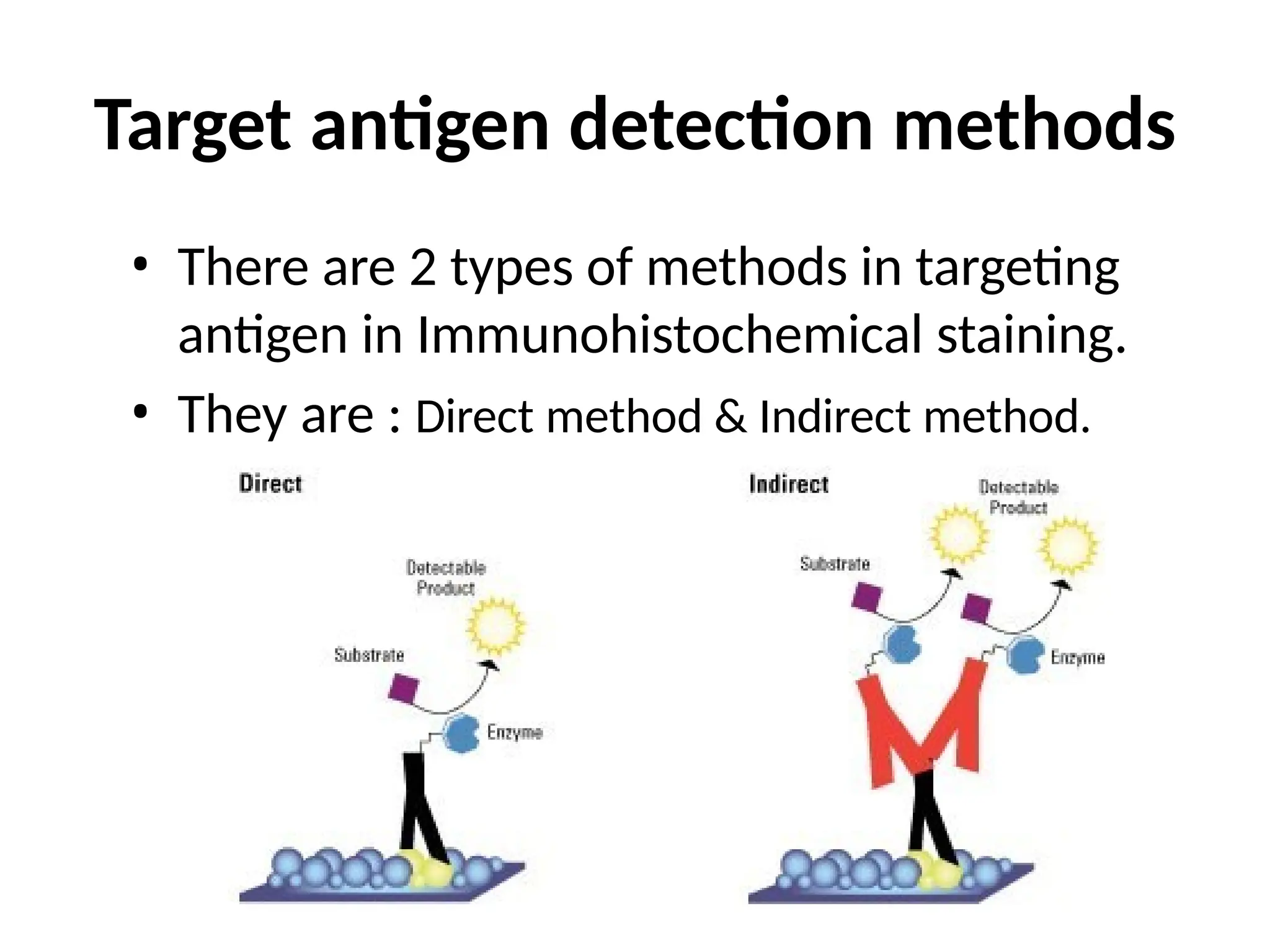
Target antigen detection methods
• There are 2 types of methods in targeting
antigen in Immunohistochemical staining.
• They are : Direct method & Indirect method.
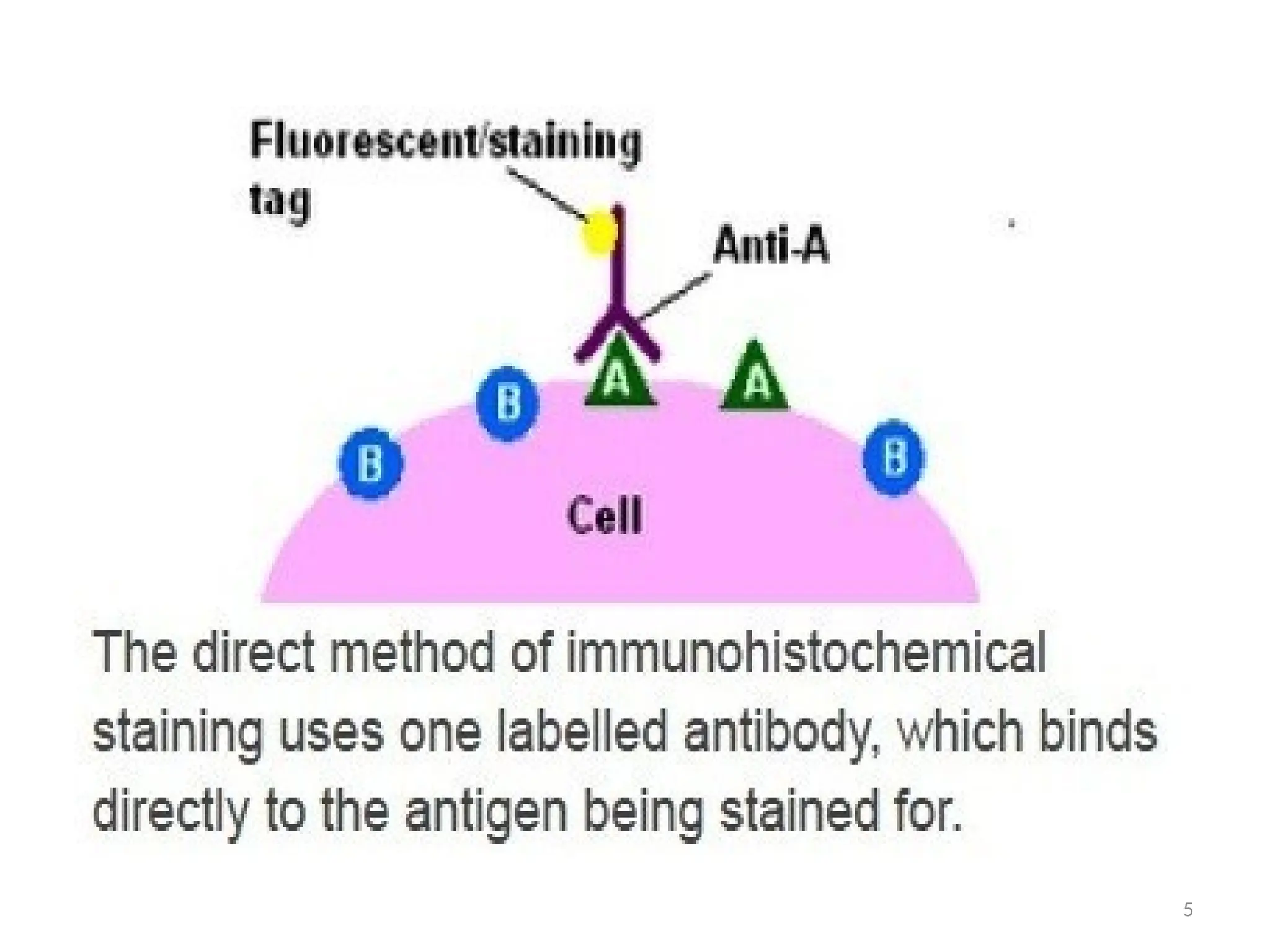
1. The Direct method
The direct method is a one-step
staining method and involves a labeled
antibody reacting directly with the
antigen in tissue sections. While this
technique utilizes only one antibody and
therefore is simple and rapid, the
sensitivity is lower due to little signal
amplification, in contrast to indirect
approaches.
5
6
Application of direct method of IHC
• Direct detection is suitable for detecting highly
expressed antigens.
• The benefit of direct detection is that an
additional incubation step with a secondary
reagent is not necessary.
• Another significant benefit of direct detection is
increased flexibility in the design of multicolor
experiments, given the wide range of
fluorochromes that are available.
7
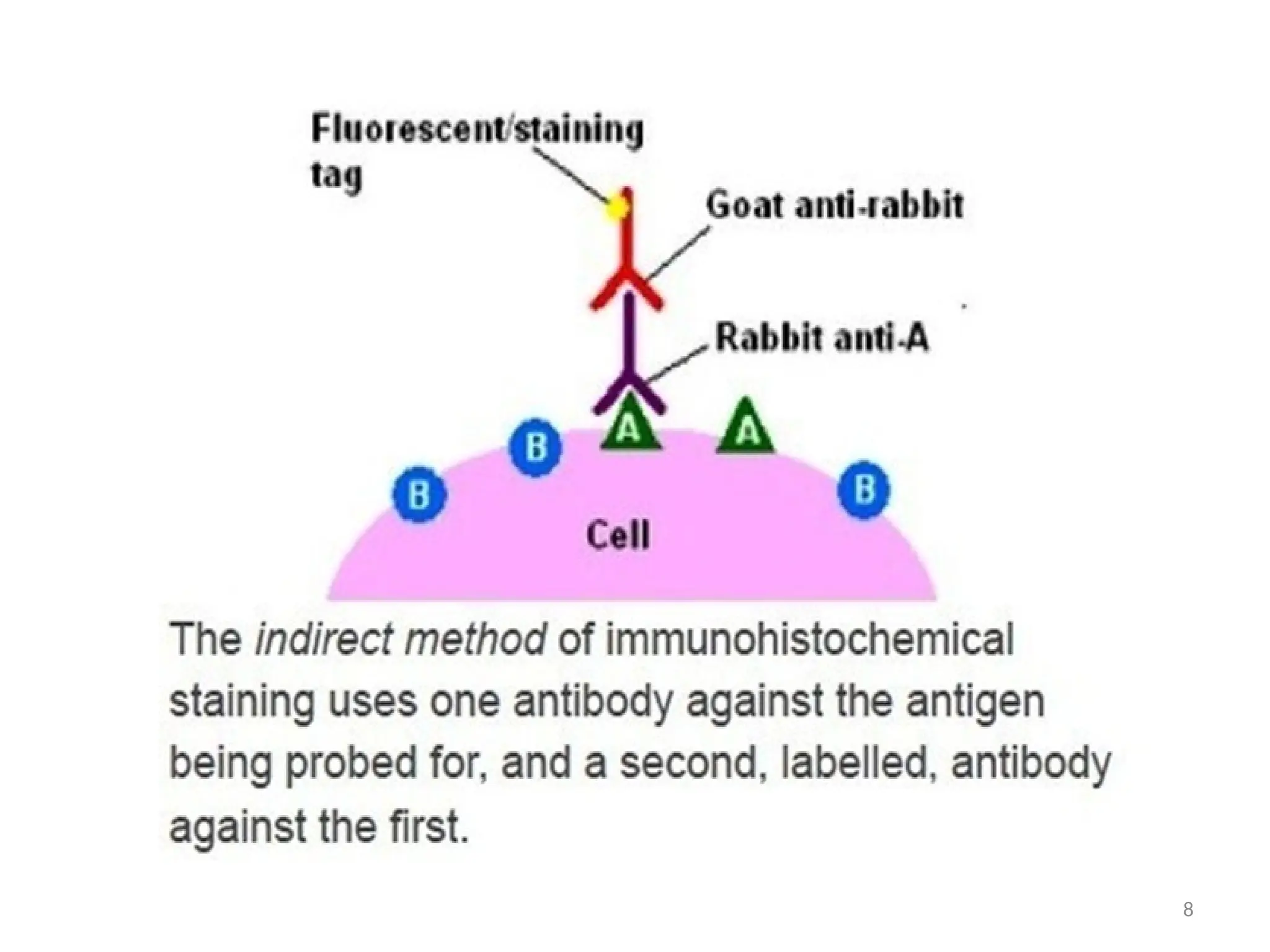
2. Indirect method
• The indirect method involves an unlabeled
primary antibody (first layer) that binds to the
target antigen in the tissue and a labeled
secondary antibody (second layer) that reacts
with the primary antibody.
• This method is more sensitive than direct
detection strategies because of signal
amplification due to the binding of several
secondary antibodies to each primary antibody.
8
9
Application of indirect method of IHC
• Indirect detection is more suitable for studies of
poorly expressed antigens, which benefit from
the signal amplification provided by the
secondary reagent.
• The signal may be amplified further by using
avidin or streptavidin with biotinylated secondary
antibodies. Amplification arises through the
ability of each avidin or streptavidin molecule to
bind to 4 biotinylated secondary antibodies.
However, the use of indirect methods requires additional blocking steps
to prevent non-specific binding to endogenous biotin.
5. Detection methods in IHC. Direct and indirect

5. Detection methods in IHC. Direct and indirect

  • 1.
    DETECTION METHODS INIHC 22/Feb/2023 Presenter: Ms. Saphurah Nabaasa Modulator: Mr. Ssedyabane Frank
  • 2.
    2 OBJECTIVES OF THISLECTURE By the end of this lecture we should all be able to discuss; 1. The direct IHC method (principle, method and application). 2. The indirect IHC method (principle, method and application). 3. The avidin-biotin technique (principle, method and application)
  • 3.
    Target antigen detectionmethods • There are 2 types of methods in targeting antigen in Immunohistochemical staining. • They are : Direct method & Indirect method.
  • 4.
    1. The Directmethod The direct method is a one-step staining method and involves a labeled antibody reacting directly with the antigen in tissue sections. While this technique utilizes only one antibody and therefore is simple and rapid, the sensitivity is lower due to little signal amplification, in contrast to indirect approaches.
  • 5.
  • 6.
    6 Application of directmethod of IHC • Direct detection is suitable for detecting highly expressed antigens. • The benefit of direct detection is that an additional incubation step with a secondary reagent is not necessary. • Another significant benefit of direct detection is increased flexibility in the design of multicolor experiments, given the wide range of fluorochromes that are available.
  • 7.
    7 2. Indirect method •The indirect method involves an unlabeled primary antibody (first layer) that binds to the target antigen in the tissue and a labeled secondary antibody (second layer) that reacts with the primary antibody. • This method is more sensitive than direct detection strategies because of signal amplification due to the binding of several secondary antibodies to each primary antibody.
  • 8.
  • 9.
    9 Application of indirectmethod of IHC • Indirect detection is more suitable for studies of poorly expressed antigens, which benefit from the signal amplification provided by the secondary reagent. • The signal may be amplified further by using avidin or streptavidin with biotinylated secondary antibodies. Amplification arises through the ability of each avidin or streptavidin molecule to bind to 4 biotinylated secondary antibodies. However, the use of indirect methods requires additional blocking steps to prevent non-specific binding to endogenous biotin.