NGWEP
The Nebraska Geriatrics
Workforce Enhancement Program
A partnership between Nebraska Medicine,
UNMC , community-based organizations
and primary care sites
This program is supported by the Health Resources and
Services Administration (HRSA) of the U.S. Department of
Health and Human Services (HHS) as part of an award
totaling 751,695.00 with 0% financed with non-
governmental sources.
The contents are those of the author(s) and do not
necessarily represent the official views of, nor an
endorsement, by HRSA, HHS, or the U.S. Government.
For more information, please visit www.HRSA.gov.
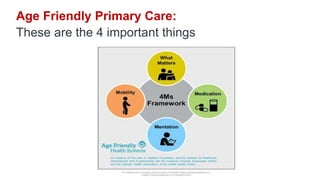
Age Friendly Primary Care:
These are the 4 important things
4Ms: Medications
Linda Sobeski, PharmD, BCPS
Clinical Associate Professor
UNMC College of Pharmacy
Updated: 4/2018
Updated: 7/2022
Objectives:
5
Describe the physiologic, pharmacokinetic, and pharmacodynamic
factors which affect drug use in the elderly
Describe
Describe risk factors and identify drugs commonly associated with
adverse drug events in the elderly
Describe
Recognize potentially inappropriate drug use and recommend
alternative therapy where appropriate
Recognize
Discuss principles of optimal prescribing for older patients
Discuss
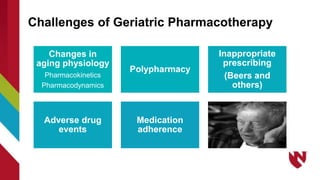
Challenges of Geriatric Pharmacotherapy
Changes in
aging physiology
Pharmacokinetics
Pharmacodynamics
Polypharmacy
Inappropriate
prescribing
(Beers and
others)
Adverse drug
events
Medication
adherence
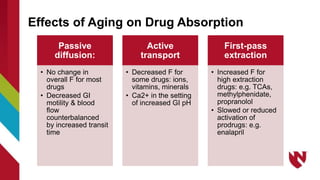
Passive
diffusion:
• No change in
overall F for most
drugs
• Decreased GI
motility & blood
flow
counterbalanced
by increased transit
time
Active
transport
• Decreased F for
some drugs: ions,
vitamins, minerals
• Ca2+ in the setting
of increased GI pH
First-pass
extraction
• Increased F for
high extraction
drugs: e.g. TCAs,
methylphenidate,
propranolol
• Slowed or reduced
activation of
prodrugs: e.g.
enalapril
Effects of Aging on Drug Absorption
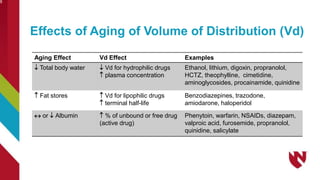
Effects of Aging of Volume of Distribution (Vd)
Aging Effect Vd Effect Examples
 Total body water  Vd for hydrophilic drugs
ď‚­ plasma concentration
Ethanol, lithium, digoxin, propranolol,
HCTZ, theophylline, cimetidine,
aminoglycosides, procainamide, quinidine
ď‚­ Fat stores ď‚­ Vd for lipophilic drugs
ď‚­ terminal half-life
Benzodiazepines, trazodone,
amiodarone, haloperidol
 or  Albumin  % of unbound or free drug
(active drug)
Phenytoin, warfarin, NSAIDs, diazepam,
valproic acid, furosemide, propranolol,
quinidine, salicylate
8
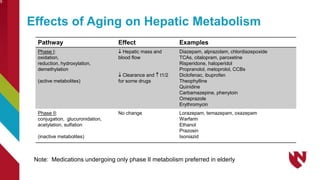
Effects of Aging on Hepatic Metabolism
Pathway Effect Examples
Phase I:
oxidation,
reduction, hydroxylation,
demethylation
(active metabolites)
 Hepatic mass and
blood flow
 Clearance and  t1/2
for some drugs
Diazepam, alprazolam, chlordiazepoxide
TCAs, citalopram, paroxetine
Risperidone, haloperidol
Propranolol, metoprolol, CCBs
Diclofenac, ibuprofen
Theophylline
Quinidine
Carbamazepine, phenytoin
Omeprazole
Erythromycin
Phase II:
conjugation, glucuronidation,
acetylation, sulfation
(inactive metabolites)
No change Lorazepam, temazepam, oxazepam
Warfarin
Ethanol
Prazosin
Isoniazid
9
Note: Medications undergoing only phase II metabolism preferred in elderly
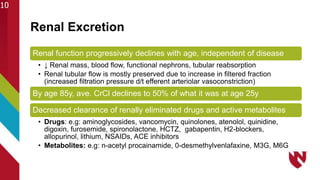
Renal Excretion
Renal function progressively declines with age, independent of disease
• ↓ Renal mass, blood flow, functional nephrons, tubular reabsorption
• Renal tubular flow is mostly preserved due to increase in filtered fraction
(increased filtration pressure d/t efferent arteriolar vasoconstriction)
By age 85y, ave. CrCl declines to 50% of what it was at age 25y
Decreased clearance of renally eliminated drugs and active metabolites
• Drugs: e.g: aminoglycosides, vancomycin, quinolones, atenolol, quinidine,
digoxin, furosemide, spironolactone, HCTZ, gabapentin, H2-blockers,
allopurinol, lithium, NSAIDs, ACE inhibitors
• Metabolites: e.g: n-acetyl procainamide, 0-desmethylvenlafaxine, M3G, M6G
10
• SCr alone not a reliable indicator of renal function
•  Lean body mass = lower creatinine production
• SCr stays in normal range masking changes in CrCl
• CrCl (Cockroft-Gault) has best predictability in elderly
• CrCl =
Estimating GFR in the Elderly
(ABW in kg) x (140-age)
------------------------------ x (0.85 for females)
72 x (Scr in mg/dL)
Use adjusted body weight (AjBW) if BMI >40 kg/m2
BMI = ABW in kg/[ht in meters]2 OR 703 x (WT (lbs)/[HT (in)]2)
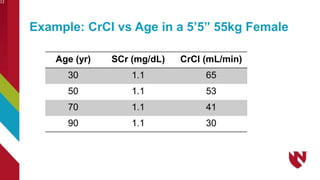
Example: CrCl vs Age in a 5’5” 55kg Female
Age (yr) SCr (mg/dL) CrCl (mL/min)
30 1.1 65
50 1.1 53
70 1.1 41
90 1.1 30
12
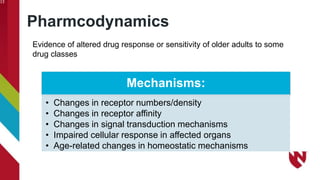
Pharmcodynamics
13
Mechanisms:
• Changes in receptor numbers/density
• Changes in receptor affinity
• Changes in signal transduction mechanisms
• Impaired cellular response in affected organs
• Age-related changes in homeostatic mechanisms
Evidence of altered drug response or sensitivity of older adults to some
drug classes
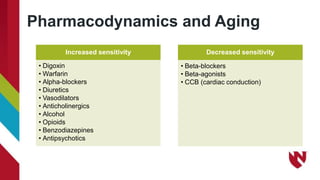
Pharmacodynamics and Aging
Increased sensitivity
• Digoxin
• Warfarin
• Alpha-blockers
• Diuretics
• Vasodilators
• Anticholinergics
• Alcohol
• Opioids
• Benzodiazepines
• Antipsychotics
Decreased sensitivity
• Beta-blockers
• Beta-agonists
• CCB (cardiac conduction)
Adverse Drug Events (ADEs)
• Rate of ADEs in older adults: 2.5-50.6%
• Responsible for 5-28% of acute geriatric hospital admissions
• 106,000 deaths + $85 billion spent in 2000
• >95% of ADEs are predictable
• ~50% of ADEs are preventable
• Most errors occur at the ordering and monitoring stages
15
Most Common Medications Associated with ADEs
• Opioid analgesics
• NSAIDs
• GI bleed
• Fluid retention (HTN, CHF, peripheral edema)
• Renal impairment
• Anticholinergics
• Benzodiazepines
• Also: cardiovascular agents, CNS agents, and musculoskeletal agents
Adverse Drug Reaction Risk Factors in Older Outpatients. Am J Ger Pharmacotherapy 2003;1(2):82-89.
16
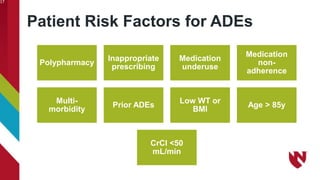
Patient Risk Factors for ADEs
17
Polypharmacy
Inappropriate
prescribing
Medication
underuse
Medication
non-
adherence
Multi-
morbidity
Prior ADEs
Low WT or
BMI
Age > 85y
CrCl <50
mL/min
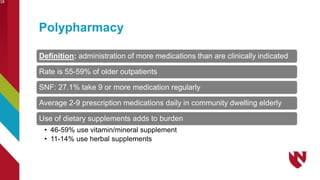
Polypharmacy
18
Definition: administration of more medications than are clinically indicated
Rate is 55-59% of older outpatients
SNF: 27.1% take 9 or more medication regularly
Average 2-9 prescription medications daily in community dwelling elderly
Use of dietary supplements adds to burden
• 46-59% use vitamin/mineral supplement
• 11-14% use herbal supplements
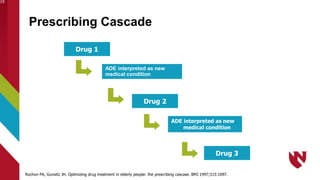
Prescribing Cascade
ADE interpreted as new
medical condition
19
Drug 1
Drug 2
ADE interpreted as new
medical condition
Drug 3
Rochon PA, Gurwitz JH. Optimizing drug treatment in elderly people: the prescribing cascase. BMJ 1997;315:1097.
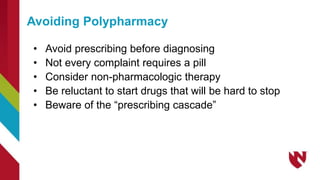
Avoiding Polypharmacy
• Avoid prescribing before diagnosing
• Not every complaint requires a pill
• Consider non-pharmacologic therapy
• Be reluctant to start drugs that will be hard to stop
• Beware of the “prescribing cascade”
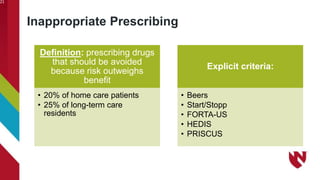
Inappropriate Prescribing
21
Definition: prescribing drugs
that should be avoided
because risk outweighs
benefit
• 20% of home care patients
• 25% of long-term care
residents
Explicit criteria:
• Beers
• Start/Stopp
• FORTA-US
• HEDIS
• PRISCUS
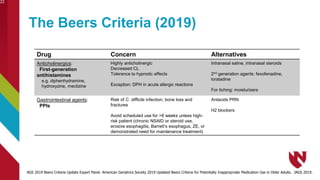
The Beers Criteria (2019)
Drug Concern Alternatives
Anticholinergics:
First-generation
antihistamines
e.g. diphenhydramine,
hydroxyzine, meclizine
Highly anticholinergic
Decreased CL
Tolerance to hypnotic effects
Exception: DPH in acute allergic reactions
Intranasal saline, intranasal steroids
2nd generation agents: fexofenadine,
loratadine
For itching: moisturizers
Gastrointestinal agents:
PPIs
Risk of C. difficile infection, bone loss and
fractures
Avoid scheduled use for >8 weeks unless high-
risk patient (chronic NSAID or steroid use,
erosive esophagitis, Barrett’s esophagus, ZE, or
demonstrated need for maintenance treatment)
Antacids PRN
H2 blockers
22
AGS 2019 Beers Criteria Update Expert Panel. American Geriatrics Society 2019 Updated Beers Criteria for Potentially Inappropriate Medication Use in Older Adults. JAGS 2019.
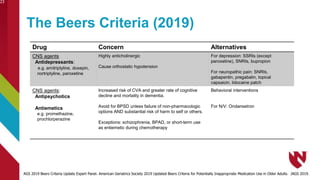
The Beers Criteria (2019)
Drug Concern Alternatives
CNS agents
Antidepressants:
e.g. amitriptyline, doxepin,
nortriptyline, paroxetine
Highly anticholinergic
Cause orthostatic hypotension
For depression: SSRIs (except
paroxetine), SNRIs, bupropion
For neuropathic pain: SNRIs,
gabapentin, pregabalin, topical
capsaicin, lidocaine patch
CNS agents:
Antipsychotics
Antiemetics
e.g. promethazine,
prochlorperazine
Increased risk of CVA and greater rate of cognitive
decline and mortality in dementia.
Avoid for BPSD unless failure of non-pharmacologic
options AND substantial risk of harm to self or others.
Exceptions: schizophrenia, BPAD, or short-term use
as entiemetic during chemotherapy
Behavioral interventions
For N/V: Ondansetron
23
AGS 2019 Beers Criteria Update Expert Panel. American Geriatrics Society 2019 Updated Beers Criteria for Potentially Inappropriate Medication Use in Older Adults. JAGS 2019.
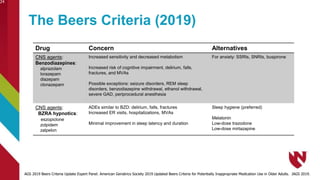
The Beers Criteria (2019)
Drug Concern Alternatives
CNS agents:
Benzodiazepines:
alprazolam
lorazepam
diazepam
clonazepam
Increased sensitivity and decreased metabolism
Increased risk of cognitive impairment, delirium, falls,
fractures, and MVAs
Possible exceptions: seizure disorders, REM sleep
disorders, benzodiazepine withdrawal, ethanol withdrawal,
severe GAD, periprocedural anesthesia
For anxiety: SSRIs, SNRIs, buspirone
CNS agents:
BZRA hypnotics:
eszopiclone
zolpidem
zalpelon
ADEs similar to BZD: delirium, falls, fractures
Increased ER visits, hospitalizations, MVAs
Minimal improvement in sleep latency and duration
Sleep hygiene (preferred)
Melatonin
Low-dose trazodone
Low-dose mirtazapine
24
AGS 2019 Beers Criteria Update Expert Panel. American Geriatrics Society 2019 Updated Beers Criteria for Potentially Inappropriate Medication Use in Older Adults. JAGS 2019.
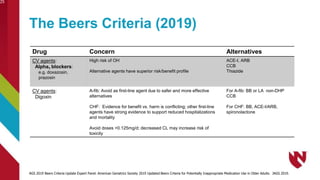
The Beers Criteria (2019)
Drug Concern Alternatives
CV agents:
Alpha1 blockers:
e.g. doxazosin,
prazosin
High risk of OH
Alternative agents have superior risk/benefit profile
ACE-I, ARB
CCB
Thiazide
CV agents:
Digoxin
A-fib: Avoid as first-line agent due to safer and more effective
alternatives
CHF: Evidence for benefit vs. harm is conflicting; other first-line
agents have strong evidence to support reduced hospitalizations
and mortality
Avoid doses >0.125mg/d; decreased CL may increase risk of
toxicity
For A-fib: BB or LA non-DHP
CCB
For CHF: BB, ACE-I/ARB,
spironolactone
25
AGS 2019 Beers Criteria Update Expert Panel. American Geriatrics Society 2019 Updated Beers Criteria for Potentially Inappropriate Medication Use in Older Adults. JAGS 2019.
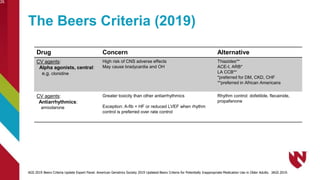
The Beers Criteria (2019)
Drug Concern Alternative
CV agents:
Alpha agonists, central:
e.g. clonidine
High risk of CNS adverse effects
May cause bradycardia and OH
Thiazides**
ACE-I, ARB*
LA CCB**
*preferred for DM, CKD, CHF
**preferred in African Americans
CV agents:
Antiarrhythmics:
amiodarone
Greater toxicity than other antiarrhythmics
Exception: A-fib + HF or reduced LVEF when rhythm
control is preferred over rate control
Rhythm control: dofetilide, flecainide,
propafenone
26
AGS 2019 Beers Criteria Update Expert Panel. American Geriatrics Society 2019 Updated Beers Criteria for Potentially Inappropriate Medication Use in Older Adults. JAGS 2019.
The Beers Criteria (2019)
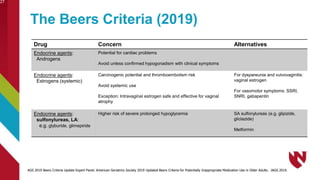
Drug Concern Alternatives
Endocrine agents:
Androgens
Potential for cardiac problems
Avoid unless confirmed hypogonadism with clinical symptoms
Endocrine agents:
Estrogens (systemic)
Carcinogenic potential and thromboembolism risk
Avoid systemic use
Exception: Intravaginal estrogen safe and effective for vaginal
atrophy
For dyspareunia and vulvovaginitis:
vaginal estrogen
For vasomotor symptoms: SSRI,
SNRI, gabapentin
Endocrine agents:
sulfonylureas, LA:
e.g. glyburide, glimepiride
Higher risk of severe prolonged hypoglycemia SA sulfonylureas (e.g. glipizide,
gliclazide)
Metformin
27
AGS 2019 Beers Criteria Update Expert Panel. American Geriatrics Society 2019 Updated Beers Criteria for Potentially Inappropriate Medication Use in Older Adults. JAGS 2019.
The Beers Criteria (2019)
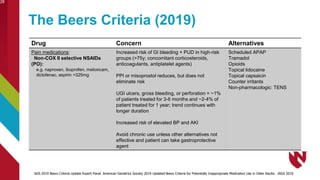
Drug Concern Alternatives
Pain medications:
Non-COX II selective NSAIDs
(PO):
e.g. naproxen, ibuprofen, meloxicam,
diclofenac, aspirin >325mg
Increased risk of GI bleeding + PUD in high-risk
groups (>75y; concomitant corticosteroids,
anticoagulants, antiplatelet agents)
PPI or misoprostol reduces, but does not
eliminate risk
UGI ulcers, gross bleeding, or perforation = ~1%
of patients treated for 3-6 months and ~2-4% of
patient treated for 1 year; trend continues with
longer duration
Increased risk of elevated BP and AKI
Avoid chronic use unless other alternatives not
effective and patient can take gastroprotective
agent
Scheduled APAP
Tramadol
Opioids
Topical lidocaine
Topical capsaicin
Counter irritants
Non-pharmacologic: TENS
28
AGS 2019 Beers Criteria Update Expert Panel. American Geriatrics Society 2019 Updated Beers Criteria for Potentially Inappropriate Medication Use in Older Adults. JAGS 2019.
The Beers Criteria (2019)
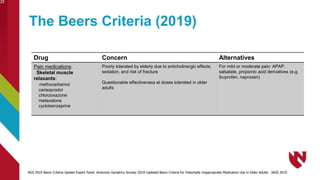
Drug Concern Alternatives
Pain medications:
Skeletal muscle
relaxants:
methocarbamol
carisoprodol
chlorzoxazone
metaxalone
cyclobenzaprine
Poorly tolerated by elderly due to anticholinergic effects,
sedation, and risk of fracture
Questionable effectiveness at doses tolerated in older
adults
For mild or moderate pain: APAP,
salsalate, propionic acid derivatives (e.g.
ibuprofen, naproxen)
29
AGS 2019 Beers Criteria Update Expert Panel. American Geriatrics Society 2019 Updated Beers Criteria for Potentially Inappropriate Medication Use in Older Adults. JAGS 2019.
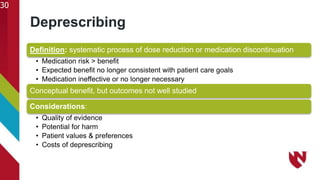
Deprescribing
30
Definition: systematic process of dose reduction or medication discontinuation
• Medication risk > benefit
• Expected benefit no longer consistent with patient care goals
• Medication ineffective or no longer necessary
Conceptual benefit, but outcomes not well studied
Considerations:
• Quality of evidence
• Potential for harm
• Patient values & preferences
• Costs of deprescribing
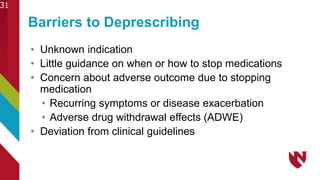
• Unknown indication
• Little guidance on when or how to stop medications
• Concern about adverse outcome due to stopping
medication
• Recurring symptoms or disease exacerbation
• Adverse drug withdrawal effects (ADWE)
• Deviation from clinical guidelines
Barriers to Deprescribing
31
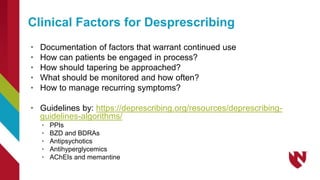
• Documentation of factors that warrant continued use
• How can patients be engaged in process?
• How should tapering be approached?
• What should be monitored and how often?
• How to manage recurring symptoms?
• Guidelines by: https://deprescribing.org/resources/deprescribing-
guidelines-algorithms/
• PPIs
• BZD and BDRAs
• Antipsychotics
• Antihyperglycemics
• AChEIs and memantine
Clinical Factors for Desprescribing
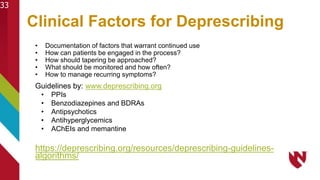
Clinical Factors for Deprescribing
• Documentation of factors that warrant continued use
• How can patients be engaged in the process?
• How should tapering be approached?
• What should be monitored and how often?
• How to manage recurring symptoms?
Guidelines by: www.deprescribing.org
• PPIs
• Benzodiazepines and BDRAs
• Antipsychotics
• Antihyperglycemics
• AChEIs and memantine
https://deprescribing.org/resources/deprescribing-guidelines-
algorithms/
33
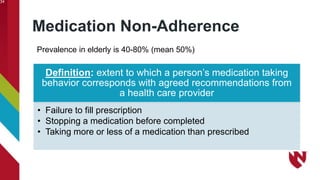
Medication Non-Adherence
34
Definition: extent to which a person’s medication taking
behavior corresponds with agreed recommendations from
a health care provider
• Failure to fill prescription
• Stopping a medication before completed
• Taking more or less of a medication than prescribed
Prevalence in elderly is 40-80% (mean 50%)
Medication Non-Adherence
35
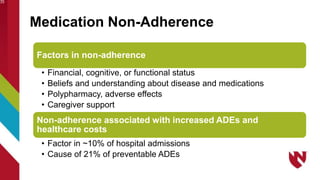
Factors in non-adherence
• Financial, cognitive, or functional status
• Beliefs and understanding about disease and medications
• Polypharmacy, adverse effects
• Caregiver support
Non-adherence associated with increased ADEs and
healthcare costs
• Factor in ~10% of hospital admissions
• Cause of 21% of preventable ADEs
Rational Medication Use in the Elderly
36
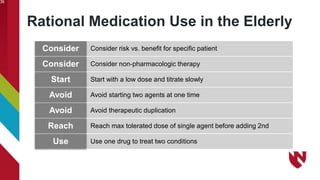
Consider risk vs. benefit for specific patient
Consider
Consider non-pharmacologic therapy
Consider
Start with a low dose and titrate slowly
Start
Avoid starting two agents at one time
Avoid
Avoid therapeutic duplication
Avoid
Reach max tolerated dose of single agent before adding 2nd
Reach
Use one drug to treat two conditions
Use
Prescribing to Enhance Adherence
37
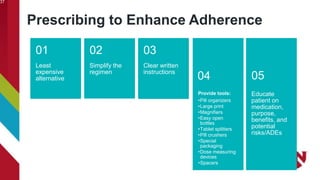
Least
expensive
alternative
01
Simplify the
regimen
02
Clear written
instructions
03
Provide tools:
•Pill organizers
•Large print
•Magnifiers
•Easy open
bottles
•Tablet splitters
•Pill crushers
•Special
packaging
•Dose measuring
devices
•Spacers
04
Educate
patient on
medication,
purpose,
benefits, and
potential
risks/ADEs
05
Assessing Non-Adherence
38
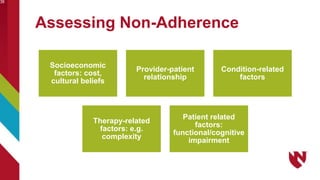
Socioeconomic
factors: cost,
cultural beliefs
Provider-patient
relationship
Condition-related
factors
Therapy-related
factors: e.g.
complexity
Patient related
factors:
functional/cognitive
impairment
Rational Medication Use in the Elderly
• Consider drug-drug and drug-disease interactions
• Adjust doses for renal and hepatic impairment
• Avoid the “prescribing cascade”
• Plan for assessment
• Learn the common drug classes that are likely to cause
problems in the elderly (Beers List)
• anticholinergic agents
• benzodiazepines
• NSAIDs
39
Rational Medication Use in the Elderly
• Take ownership of patient’s medication list
• Be able to justify each medication on the list
• Be reluctant to start medications that will be hard to stop
• Review medications regularly and keep accurate records
• Manage the patient, not the numbers
• Consider drug-holidays or d/c trial
• Stop drugs patient isn’t taking or refuses to take
• Enthusiastically stop drugs of dubious benefit
40
KEY POINTS
41
PK and PD changes generally result decreased clearance and increased
sensitivity to medications in older adults
Knowledge of aging physiology and PK/PD changes is critical in optimizing
drug therapy in population
ADEs and drug-related problems are a common cause of increased
morbidity and functional impairment in older adults
Tools (e.g. Beer’s Criteria) exist to help identify inappropriate prescribing in
older adults
Optimizing drug therapy can play a major role in reducing drug-related
problems and increasing quality of life
4Ms_Medication_Sobeski_071922.pptx

4Ms_Medication_Sobeski_071922.pptx

  • 1.
    NGWEP The Nebraska Geriatrics WorkforceEnhancement Program A partnership between Nebraska Medicine, UNMC , community-based organizations and primary care sites
  • 2.
    This program issupported by the Health Resources and Services Administration (HRSA) of the U.S. Department of Health and Human Services (HHS) as part of an award totaling 751,695.00 with 0% financed with non- governmental sources. The contents are those of the author(s) and do not necessarily represent the official views of, nor an endorsement, by HRSA, HHS, or the U.S. Government. For more information, please visit www.HRSA.gov.
  • 3.
    Age Friendly PrimaryCare: These are the 4 important things
  • 4.
    4Ms: Medications Linda Sobeski,PharmD, BCPS Clinical Associate Professor UNMC College of Pharmacy Updated: 4/2018 Updated: 7/2022
  • 5.
    Objectives: 5 Describe the physiologic,pharmacokinetic, and pharmacodynamic factors which affect drug use in the elderly Describe Describe risk factors and identify drugs commonly associated with adverse drug events in the elderly Describe Recognize potentially inappropriate drug use and recommend alternative therapy where appropriate Recognize Discuss principles of optimal prescribing for older patients Discuss
  • 6.
    Challenges of GeriatricPharmacotherapy Changes in aging physiology Pharmacokinetics Pharmacodynamics Polypharmacy Inappropriate prescribing (Beers and others) Adverse drug events Medication adherence
  • 7.
    Passive diffusion: • No changein overall F for most drugs • Decreased GI motility & blood flow counterbalanced by increased transit time Active transport • Decreased F for some drugs: ions, vitamins, minerals • Ca2+ in the setting of increased GI pH First-pass extraction • Increased F for high extraction drugs: e.g. TCAs, methylphenidate, propranolol • Slowed or reduced activation of prodrugs: e.g. enalapril Effects of Aging on Drug Absorption
  • 8.
    Effects of Agingof Volume of Distribution (Vd) Aging Effect Vd Effect Examples  Total body water  Vd for hydrophilic drugs  plasma concentration Ethanol, lithium, digoxin, propranolol, HCTZ, theophylline, cimetidine, aminoglycosides, procainamide, quinidine  Fat stores  Vd for lipophilic drugs  terminal half-life Benzodiazepines, trazodone, amiodarone, haloperidol  or  Albumin  % of unbound or free drug (active drug) Phenytoin, warfarin, NSAIDs, diazepam, valproic acid, furosemide, propranolol, quinidine, salicylate 8
  • 9.
    Effects of Agingon Hepatic Metabolism Pathway Effect Examples Phase I: oxidation, reduction, hydroxylation, demethylation (active metabolites)  Hepatic mass and blood flow  Clearance and  t1/2 for some drugs Diazepam, alprazolam, chlordiazepoxide TCAs, citalopram, paroxetine Risperidone, haloperidol Propranolol, metoprolol, CCBs Diclofenac, ibuprofen Theophylline Quinidine Carbamazepine, phenytoin Omeprazole Erythromycin Phase II: conjugation, glucuronidation, acetylation, sulfation (inactive metabolites) No change Lorazepam, temazepam, oxazepam Warfarin Ethanol Prazosin Isoniazid 9 Note: Medications undergoing only phase II metabolism preferred in elderly
  • 10.
    Renal Excretion Renal functionprogressively declines with age, independent of disease • ↓ Renal mass, blood flow, functional nephrons, tubular reabsorption • Renal tubular flow is mostly preserved due to increase in filtered fraction (increased filtration pressure d/t efferent arteriolar vasoconstriction) By age 85y, ave. CrCl declines to 50% of what it was at age 25y Decreased clearance of renally eliminated drugs and active metabolites • Drugs: e.g: aminoglycosides, vancomycin, quinolones, atenolol, quinidine, digoxin, furosemide, spironolactone, HCTZ, gabapentin, H2-blockers, allopurinol, lithium, NSAIDs, ACE inhibitors • Metabolites: e.g: n-acetyl procainamide, 0-desmethylvenlafaxine, M3G, M6G 10
  • 11.
    • SCr alonenot a reliable indicator of renal function •  Lean body mass = lower creatinine production • SCr stays in normal range masking changes in CrCl • CrCl (Cockroft-Gault) has best predictability in elderly • CrCl = Estimating GFR in the Elderly (ABW in kg) x (140-age) ------------------------------ x (0.85 for females) 72 x (Scr in mg/dL) Use adjusted body weight (AjBW) if BMI >40 kg/m2 BMI = ABW in kg/[ht in meters]2 OR 703 x (WT (lbs)/[HT (in)]2)
  • 12.
    Example: CrCl vsAge in a 5’5” 55kg Female Age (yr) SCr (mg/dL) CrCl (mL/min) 30 1.1 65 50 1.1 53 70 1.1 41 90 1.1 30 12
  • 13.
    Pharmcodynamics 13 Mechanisms: • Changes inreceptor numbers/density • Changes in receptor affinity • Changes in signal transduction mechanisms • Impaired cellular response in affected organs • Age-related changes in homeostatic mechanisms Evidence of altered drug response or sensitivity of older adults to some drug classes
  • 14.
    Pharmacodynamics and Aging Increasedsensitivity • Digoxin • Warfarin • Alpha-blockers • Diuretics • Vasodilators • Anticholinergics • Alcohol • Opioids • Benzodiazepines • Antipsychotics Decreased sensitivity • Beta-blockers • Beta-agonists • CCB (cardiac conduction)
  • 15.
    Adverse Drug Events(ADEs) • Rate of ADEs in older adults: 2.5-50.6% • Responsible for 5-28% of acute geriatric hospital admissions • 106,000 deaths + $85 billion spent in 2000 • >95% of ADEs are predictable • ~50% of ADEs are preventable • Most errors occur at the ordering and monitoring stages 15
  • 16.
    Most Common MedicationsAssociated with ADEs • Opioid analgesics • NSAIDs • GI bleed • Fluid retention (HTN, CHF, peripheral edema) • Renal impairment • Anticholinergics • Benzodiazepines • Also: cardiovascular agents, CNS agents, and musculoskeletal agents Adverse Drug Reaction Risk Factors in Older Outpatients. Am J Ger Pharmacotherapy 2003;1(2):82-89. 16
  • 17.
    Patient Risk Factorsfor ADEs 17 Polypharmacy Inappropriate prescribing Medication underuse Medication non- adherence Multi- morbidity Prior ADEs Low WT or BMI Age > 85y CrCl <50 mL/min
  • 18.
    Polypharmacy 18 Definition: administration ofmore medications than are clinically indicated Rate is 55-59% of older outpatients SNF: 27.1% take 9 or more medication regularly Average 2-9 prescription medications daily in community dwelling elderly Use of dietary supplements adds to burden • 46-59% use vitamin/mineral supplement • 11-14% use herbal supplements
  • 19.
    Prescribing Cascade ADE interpretedas new medical condition 19 Drug 1 Drug 2 ADE interpreted as new medical condition Drug 3 Rochon PA, Gurwitz JH. Optimizing drug treatment in elderly people: the prescribing cascase. BMJ 1997;315:1097.
  • 20.
    Avoiding Polypharmacy • Avoidprescribing before diagnosing • Not every complaint requires a pill • Consider non-pharmacologic therapy • Be reluctant to start drugs that will be hard to stop • Beware of the “prescribing cascade”
  • 21.
    Inappropriate Prescribing 21 Definition: prescribingdrugs that should be avoided because risk outweighs benefit • 20% of home care patients • 25% of long-term care residents Explicit criteria: • Beers • Start/Stopp • FORTA-US • HEDIS • PRISCUS
  • 22.
    The Beers Criteria(2019) Drug Concern Alternatives Anticholinergics: First-generation antihistamines e.g. diphenhydramine, hydroxyzine, meclizine Highly anticholinergic Decreased CL Tolerance to hypnotic effects Exception: DPH in acute allergic reactions Intranasal saline, intranasal steroids 2nd generation agents: fexofenadine, loratadine For itching: moisturizers Gastrointestinal agents: PPIs Risk of C. difficile infection, bone loss and fractures Avoid scheduled use for >8 weeks unless high- risk patient (chronic NSAID or steroid use, erosive esophagitis, Barrett’s esophagus, ZE, or demonstrated need for maintenance treatment) Antacids PRN H2 blockers 22 AGS 2019 Beers Criteria Update Expert Panel. American Geriatrics Society 2019 Updated Beers Criteria for Potentially Inappropriate Medication Use in Older Adults. JAGS 2019.
  • 23.
    The Beers Criteria(2019) Drug Concern Alternatives CNS agents Antidepressants: e.g. amitriptyline, doxepin, nortriptyline, paroxetine Highly anticholinergic Cause orthostatic hypotension For depression: SSRIs (except paroxetine), SNRIs, bupropion For neuropathic pain: SNRIs, gabapentin, pregabalin, topical capsaicin, lidocaine patch CNS agents: Antipsychotics Antiemetics e.g. promethazine, prochlorperazine Increased risk of CVA and greater rate of cognitive decline and mortality in dementia. Avoid for BPSD unless failure of non-pharmacologic options AND substantial risk of harm to self or others. Exceptions: schizophrenia, BPAD, or short-term use as entiemetic during chemotherapy Behavioral interventions For N/V: Ondansetron 23 AGS 2019 Beers Criteria Update Expert Panel. American Geriatrics Society 2019 Updated Beers Criteria for Potentially Inappropriate Medication Use in Older Adults. JAGS 2019.
  • 24.
    The Beers Criteria(2019) Drug Concern Alternatives CNS agents: Benzodiazepines: alprazolam lorazepam diazepam clonazepam Increased sensitivity and decreased metabolism Increased risk of cognitive impairment, delirium, falls, fractures, and MVAs Possible exceptions: seizure disorders, REM sleep disorders, benzodiazepine withdrawal, ethanol withdrawal, severe GAD, periprocedural anesthesia For anxiety: SSRIs, SNRIs, buspirone CNS agents: BZRA hypnotics: eszopiclone zolpidem zalpelon ADEs similar to BZD: delirium, falls, fractures Increased ER visits, hospitalizations, MVAs Minimal improvement in sleep latency and duration Sleep hygiene (preferred) Melatonin Low-dose trazodone Low-dose mirtazapine 24 AGS 2019 Beers Criteria Update Expert Panel. American Geriatrics Society 2019 Updated Beers Criteria for Potentially Inappropriate Medication Use in Older Adults. JAGS 2019.
  • 25.
    The Beers Criteria(2019) Drug Concern Alternatives CV agents: Alpha1 blockers: e.g. doxazosin, prazosin High risk of OH Alternative agents have superior risk/benefit profile ACE-I, ARB CCB Thiazide CV agents: Digoxin A-fib: Avoid as first-line agent due to safer and more effective alternatives CHF: Evidence for benefit vs. harm is conflicting; other first-line agents have strong evidence to support reduced hospitalizations and mortality Avoid doses >0.125mg/d; decreased CL may increase risk of toxicity For A-fib: BB or LA non-DHP CCB For CHF: BB, ACE-I/ARB, spironolactone 25 AGS 2019 Beers Criteria Update Expert Panel. American Geriatrics Society 2019 Updated Beers Criteria for Potentially Inappropriate Medication Use in Older Adults. JAGS 2019.
  • 26.
    The Beers Criteria(2019) Drug Concern Alternative CV agents: Alpha agonists, central: e.g. clonidine High risk of CNS adverse effects May cause bradycardia and OH Thiazides** ACE-I, ARB* LA CCB** *preferred for DM, CKD, CHF **preferred in African Americans CV agents: Antiarrhythmics: amiodarone Greater toxicity than other antiarrhythmics Exception: A-fib + HF or reduced LVEF when rhythm control is preferred over rate control Rhythm control: dofetilide, flecainide, propafenone 26 AGS 2019 Beers Criteria Update Expert Panel. American Geriatrics Society 2019 Updated Beers Criteria for Potentially Inappropriate Medication Use in Older Adults. JAGS 2019.
  • 27.
    The Beers Criteria(2019) Drug Concern Alternatives Endocrine agents: Androgens Potential for cardiac problems Avoid unless confirmed hypogonadism with clinical symptoms Endocrine agents: Estrogens (systemic) Carcinogenic potential and thromboembolism risk Avoid systemic use Exception: Intravaginal estrogen safe and effective for vaginal atrophy For dyspareunia and vulvovaginitis: vaginal estrogen For vasomotor symptoms: SSRI, SNRI, gabapentin Endocrine agents: sulfonylureas, LA: e.g. glyburide, glimepiride Higher risk of severe prolonged hypoglycemia SA sulfonylureas (e.g. glipizide, gliclazide) Metformin 27 AGS 2019 Beers Criteria Update Expert Panel. American Geriatrics Society 2019 Updated Beers Criteria for Potentially Inappropriate Medication Use in Older Adults. JAGS 2019.
  • 28.
    The Beers Criteria(2019) Drug Concern Alternatives Pain medications: Non-COX II selective NSAIDs (PO): e.g. naproxen, ibuprofen, meloxicam, diclofenac, aspirin >325mg Increased risk of GI bleeding + PUD in high-risk groups (>75y; concomitant corticosteroids, anticoagulants, antiplatelet agents) PPI or misoprostol reduces, but does not eliminate risk UGI ulcers, gross bleeding, or perforation = ~1% of patients treated for 3-6 months and ~2-4% of patient treated for 1 year; trend continues with longer duration Increased risk of elevated BP and AKI Avoid chronic use unless other alternatives not effective and patient can take gastroprotective agent Scheduled APAP Tramadol Opioids Topical lidocaine Topical capsaicin Counter irritants Non-pharmacologic: TENS 28 AGS 2019 Beers Criteria Update Expert Panel. American Geriatrics Society 2019 Updated Beers Criteria for Potentially Inappropriate Medication Use in Older Adults. JAGS 2019.
  • 29.
    The Beers Criteria(2019) Drug Concern Alternatives Pain medications: Skeletal muscle relaxants: methocarbamol carisoprodol chlorzoxazone metaxalone cyclobenzaprine Poorly tolerated by elderly due to anticholinergic effects, sedation, and risk of fracture Questionable effectiveness at doses tolerated in older adults For mild or moderate pain: APAP, salsalate, propionic acid derivatives (e.g. ibuprofen, naproxen) 29 AGS 2019 Beers Criteria Update Expert Panel. American Geriatrics Society 2019 Updated Beers Criteria for Potentially Inappropriate Medication Use in Older Adults. JAGS 2019.
  • 30.
    Deprescribing 30 Definition: systematic processof dose reduction or medication discontinuation • Medication risk > benefit • Expected benefit no longer consistent with patient care goals • Medication ineffective or no longer necessary Conceptual benefit, but outcomes not well studied Considerations: • Quality of evidence • Potential for harm • Patient values & preferences • Costs of deprescribing
  • 31.
    • Unknown indication •Little guidance on when or how to stop medications • Concern about adverse outcome due to stopping medication • Recurring symptoms or disease exacerbation • Adverse drug withdrawal effects (ADWE) • Deviation from clinical guidelines Barriers to Deprescribing 31
  • 32.
    • Documentation offactors that warrant continued use • How can patients be engaged in process? • How should tapering be approached? • What should be monitored and how often? • How to manage recurring symptoms? • Guidelines by: https://deprescribing.org/resources/deprescribing- guidelines-algorithms/ • PPIs • BZD and BDRAs • Antipsychotics • Antihyperglycemics • AChEIs and memantine Clinical Factors for Desprescribing
  • 33.
    Clinical Factors forDeprescribing • Documentation of factors that warrant continued use • How can patients be engaged in the process? • How should tapering be approached? • What should be monitored and how often? • How to manage recurring symptoms? Guidelines by: www.deprescribing.org • PPIs • Benzodiazepines and BDRAs • Antipsychotics • Antihyperglycemics • AChEIs and memantine https://deprescribing.org/resources/deprescribing-guidelines- algorithms/ 33
  • 34.
    Medication Non-Adherence 34 Definition: extentto which a person’s medication taking behavior corresponds with agreed recommendations from a health care provider • Failure to fill prescription • Stopping a medication before completed • Taking more or less of a medication than prescribed Prevalence in elderly is 40-80% (mean 50%)
  • 35.
    Medication Non-Adherence 35 Factors innon-adherence • Financial, cognitive, or functional status • Beliefs and understanding about disease and medications • Polypharmacy, adverse effects • Caregiver support Non-adherence associated with increased ADEs and healthcare costs • Factor in ~10% of hospital admissions • Cause of 21% of preventable ADEs
  • 36.
    Rational Medication Usein the Elderly 36 Consider risk vs. benefit for specific patient Consider Consider non-pharmacologic therapy Consider Start with a low dose and titrate slowly Start Avoid starting two agents at one time Avoid Avoid therapeutic duplication Avoid Reach max tolerated dose of single agent before adding 2nd Reach Use one drug to treat two conditions Use
  • 37.
    Prescribing to EnhanceAdherence 37 Least expensive alternative 01 Simplify the regimen 02 Clear written instructions 03 Provide tools: •Pill organizers •Large print •Magnifiers •Easy open bottles •Tablet splitters •Pill crushers •Special packaging •Dose measuring devices •Spacers 04 Educate patient on medication, purpose, benefits, and potential risks/ADEs 05
  • 38.
    Assessing Non-Adherence 38 Socioeconomic factors: cost, culturalbeliefs Provider-patient relationship Condition-related factors Therapy-related factors: e.g. complexity Patient related factors: functional/cognitive impairment
  • 39.
    Rational Medication Usein the Elderly • Consider drug-drug and drug-disease interactions • Adjust doses for renal and hepatic impairment • Avoid the “prescribing cascade” • Plan for assessment • Learn the common drug classes that are likely to cause problems in the elderly (Beers List) • anticholinergic agents • benzodiazepines • NSAIDs 39
  • 40.
    Rational Medication Usein the Elderly • Take ownership of patient’s medication list • Be able to justify each medication on the list • Be reluctant to start medications that will be hard to stop • Review medications regularly and keep accurate records • Manage the patient, not the numbers • Consider drug-holidays or d/c trial • Stop drugs patient isn’t taking or refuses to take • Enthusiastically stop drugs of dubious benefit 40
  • 41.
    KEY POINTS 41 PK andPD changes generally result decreased clearance and increased sensitivity to medications in older adults Knowledge of aging physiology and PK/PD changes is critical in optimizing drug therapy in population ADEs and drug-related problems are a common cause of increased morbidity and functional impairment in older adults Tools (e.g. Beer’s Criteria) exist to help identify inappropriate prescribing in older adults Optimizing drug therapy can play a major role in reducing drug-related problems and increasing quality of life