Adaptive Traffic Signals
Overview
Kevin Fehon, P.E., PTOE
Principal
DKS Associates
2
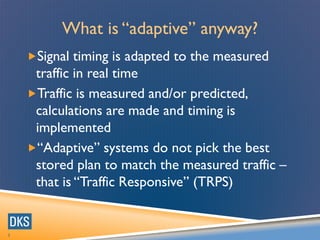
What is “adaptive” anyway?
Signal timing is adapted to the measured
traffic in real time
Traffic is measured and/or predicted,
calculations are made and timing is
implemented
“Adaptive” systems do not pick the best
stored plan to match the measured traffic –
that is “Traffic Responsive” (TRPS)
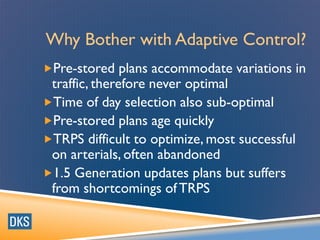
Why Bother with Adaptive Control?
Pre-stored plans accommodate variations in
traffic, therefore never optimal
Time of day selection also sub-optimal
Pre-stored plans age quickly
TRPS difficult to optimize, most successful
on arterials, often abandoned
1.5 Generation updates plans but suffers
from shortcomings of TRPS
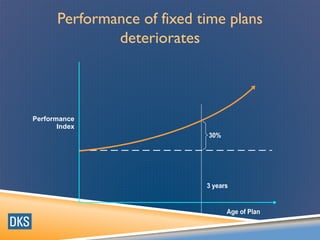
Performance
Index
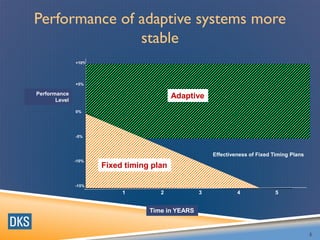
Performance of fixed time plans
deteriorates
Performance of adaptive systems more
stable
5
Time in YEARS
-15%
-10%
-5%
0%
+5%
+10%
1 2 4 5
3
Adaptive
Effectiveness of Fixed Timing Plans
Fixed timing plan
Performance
Level
CAN ADAPTIVE SYSTEMS REALLY
IMPROVE TRAFFIC OPERATIONS?
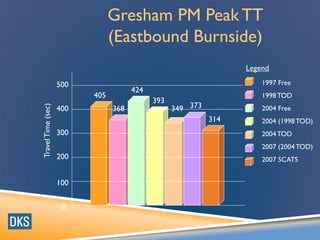
Gresham PM Peak TT
(Eastbound Burnside)
405
368
424
393
349 373
314
0
100
200
300
400
500
Travel
Time
(sec)
1997 Free
1998TOD
2004 Free
2004 (1998TOD)
2004TOD
2007 (2004TOD)
2007 SCATS
Legend
8
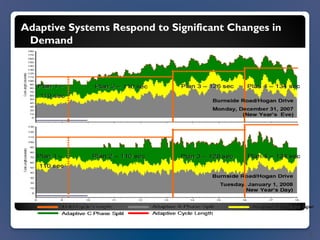
Adaptive Systems Respond to Significant Changes in
Demand
HOW DO THEYWORK?
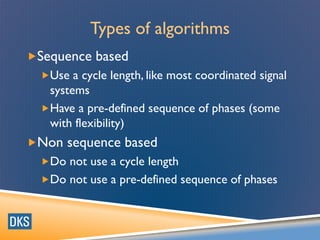
Types of algorithms
Sequence based
Use a cycle length, like most coordinated signal
systems
Have a pre-defined sequence of phases (some
with flexibility)
Non sequence based
Do not use a cycle length
Do not use a pre-defined sequence of phases
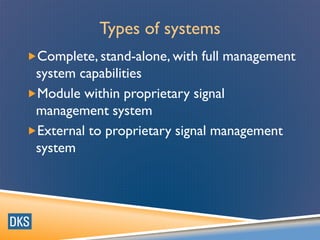
Types of systems
Complete, stand-alone, with full management
system capabilities
Module within proprietary signal
management system
External to proprietary signal management
system
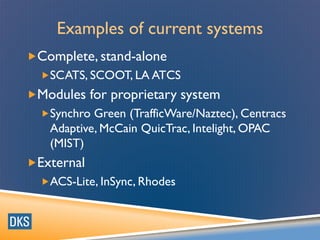
Examples of current systems
Complete, stand-alone
SCATS, SCOOT, LA ATCS
Modules for proprietary system
Synchro Green (TrafficWare/Naztec), Centracs
Adaptive, McCain QuicTrac, Intelight, OPAC
(MIST)
External
ACS-Lite, InSync, Rhodes
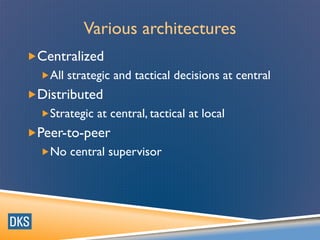
Various architectures
Centralized
All strategic and tactical decisions at central
Distributed
Strategic at central, tactical at local
Peer-to-peer
No central supervisor
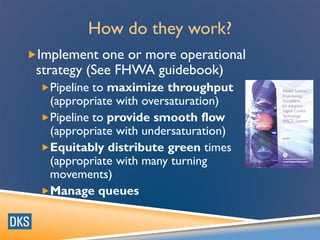
How do they work?
Implement one or more operational
strategy (See FHWA guidebook)
Pipeline to maximize throughput
(appropriate with oversaturation)
Pipeline to provide smooth flow
(appropriate with undersaturation)
Equitably distribute green times
(appropriate with many turning
movements)
Manage queues
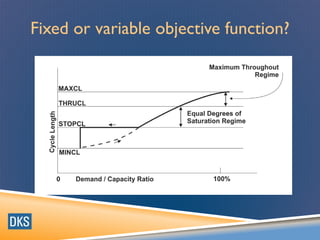
Fixed or variable objective function?
A FEW EXAMPLES…
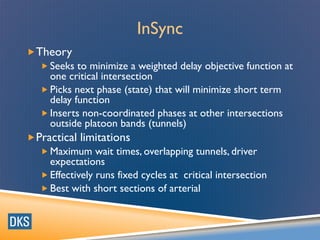
InSync
Theory
 Seeks to minimize a weighted delay objective function at
one critical intersection
 Picks next phase (state) that will minimize short term
delay function
 Inserts non-coordinated phases at other intersections
outside platoon bands (tunnels)
Practical limitations
 Maximum wait times, overlapping tunnels, driver
expectations
 Effectively runs fixed cycles at critical intersection
 Best with short sections of arterial
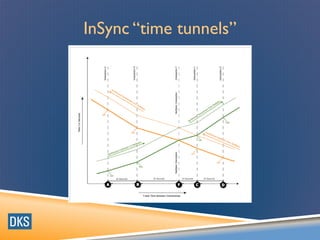
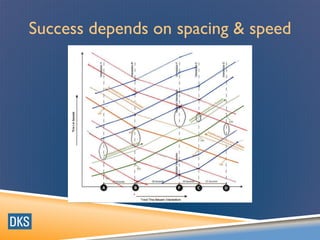
InSync “time tunnels”
Success depends on spacing & speed
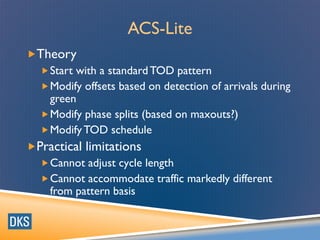
ACS-Lite
Theory
Start with a standardTOD pattern
Modify offsets based on detection of arrivals during
green
Modify phase splits (based on maxouts?)
ModifyTOD schedule
Practical limitations
Cannot adjust cycle length
Cannot accommodate traffic markedly different
from pattern basis
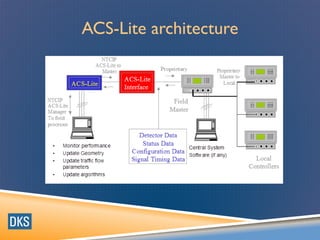
ACS-Lite architecture
Synchro Green
Calculation engine like Synchro
Like Gen 1.5, traffic responsive with regular
recalculation of background pattern
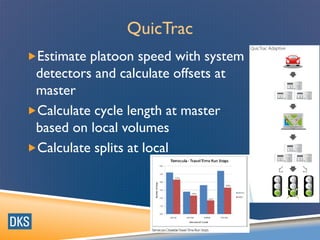
QuicTrac
Estimate platoon speed with system
detectors and calculate offsets at
master
Calculate cycle length at master
based on local volumes
Calculate splits at local
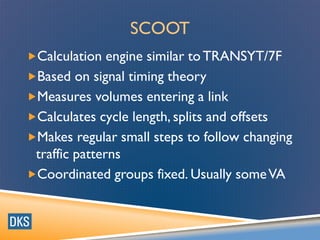
SCOOT
Calculation engine similar toTRANSYT/7F
Based on signal timing theory
Measures volumes entering a link
Calculates cycle length, splits and offsets
Makes regular small steps to follow changing
traffic patterns
Coordinated groups fixed. Usually someVA

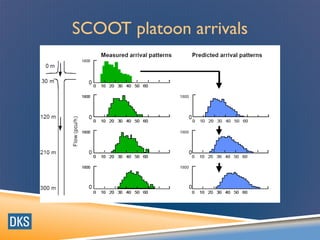
SCOOT platoon arrivals
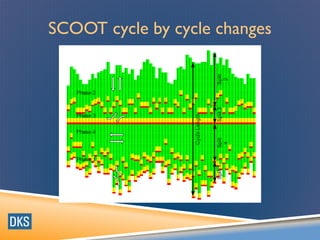
SCOOT cycle by cycle changes
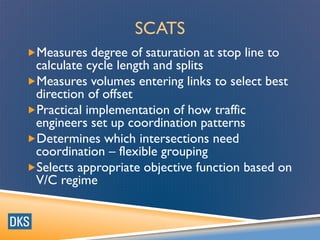
SCATS
Measures degree of saturation at stop line to
calculate cycle length and splits
Measures volumes entering links to select best
direction of offset
Practical implementation of how traffic
engineers set up coordination patterns
Determines which intersections need
coordination – flexible grouping
Selects appropriate objective function based on
V/C regime
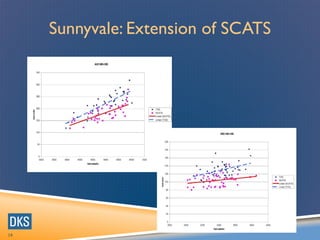
Sunnyvale: Extension of SCATS
28
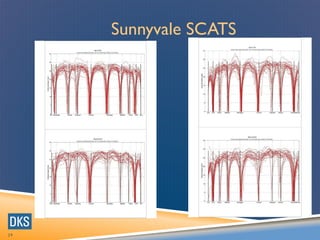
Sunnyvale SCATS
29
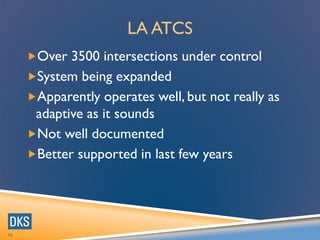
LA ATCS
Over 3500 intersections under control
System being expanded
Apparently operates well, but not really as
adaptive as it sounds
Not well documented
Better supported in last few years
30
Other systems
Intelight adaptive (new)
Surtrac (experimental – Carnegie Mellon)
OPAC
Rhodes
SPOT
32
What is good? What is not?
 SCOOT – well proven in many countries, variable in USA
 SCATS – well proven in many countries, generally good in
USA
 InSync – rapidly growing, variable results
 Synchro Green – steadily growing, satisfactory
 ACS-Lite – slow progress, several vendors
 Centracs Adaptive – integrated and improved ACS-Lite
 QuicTrac – several successful deployments
 RHODES – development continues, practical results patchy
 OPAC – variable results, not growing
 LA ATCS – apparently good, little published data, expanding
beyond City of LA.
Is an adaptive system right for you
Do you have a corridor or closed network
Does demand exceed the theoretical and
practical capacity of your corridor
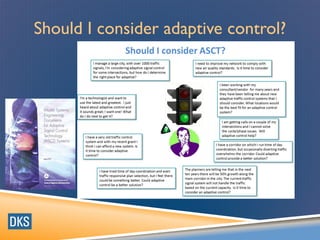
Should I consider adaptive control?
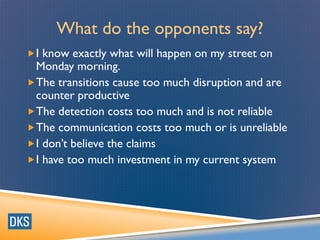
What do the opponents say?
I know exactly what will happen on my street on
Monday morning.
The transitions cause too much disruption and are
counter productive
The detection costs too much and is not reliable
The communication costs too much or is unreliable
I don’t believe the claims
I have too much investment in my current system
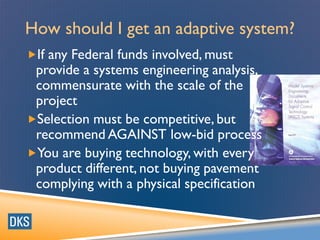
How should I get an adaptive system?
If any Federal funds involved, must
provide a systems engineering analysis,
commensurate with the scale of the
project
Selection must be competitive, but
recommend AGAINST low-bid process
You are buying technology, with every
product different, not buying pavement
complying with a physical specification
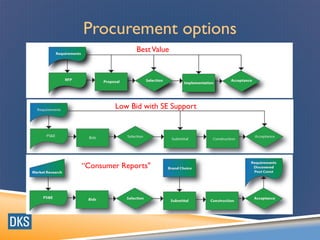
Procurement options
BestValue
Low Bid with SE Support
“Consumer Reports"
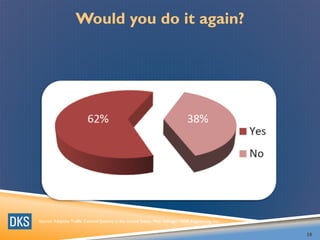
Would you do it again?
38
Source: Adaptive Traffic Control Systems in the United States, Matt Sellinger, HDR Engineering, Inc.
4-Adaptive_Signal_Control_-_How_Does_It_Work.pdf

4-Adaptive_Signal_Control_-_How_Does_It_Work.pdf

  • 1.
    Adaptive Traffic Signals Overview KevinFehon, P.E., PTOE Principal DKS Associates
  • 2.
    2 What is “adaptive”anyway? Signal timing is adapted to the measured traffic in real time Traffic is measured and/or predicted, calculations are made and timing is implemented “Adaptive” systems do not pick the best stored plan to match the measured traffic – that is “Traffic Responsive” (TRPS)
  • 3.
    Why Bother withAdaptive Control? Pre-stored plans accommodate variations in traffic, therefore never optimal Time of day selection also sub-optimal Pre-stored plans age quickly TRPS difficult to optimize, most successful on arterials, often abandoned 1.5 Generation updates plans but suffers from shortcomings of TRPS
  • 4.
  • 5.
    Performance of adaptivesystems more stable 5 Time in YEARS -15% -10% -5% 0% +5% +10% 1 2 4 5 3 Adaptive Effectiveness of Fixed Timing Plans Fixed timing plan Performance Level
  • 6.
    CAN ADAPTIVE SYSTEMSREALLY IMPROVE TRAFFIC OPERATIONS?
  • 7.
    Gresham PM PeakTT (Eastbound Burnside) 405 368 424 393 349 373 314 0 100 200 300 400 500 Travel Time (sec) 1997 Free 1998TOD 2004 Free 2004 (1998TOD) 2004TOD 2007 (2004TOD) 2007 SCATS Legend
  • 8.
    8 Adaptive Systems Respondto Significant Changes in Demand
  • 9.
  • 10.
    Types of algorithms Sequencebased Use a cycle length, like most coordinated signal systems Have a pre-defined sequence of phases (some with flexibility) Non sequence based Do not use a cycle length Do not use a pre-defined sequence of phases
  • 11.
    Types of systems Complete,stand-alone, with full management system capabilities Module within proprietary signal management system External to proprietary signal management system
  • 12.
    Examples of currentsystems Complete, stand-alone SCATS, SCOOT, LA ATCS Modules for proprietary system Synchro Green (TrafficWare/Naztec), Centracs Adaptive, McCain QuicTrac, Intelight, OPAC (MIST) External ACS-Lite, InSync, Rhodes
  • 13.
    Various architectures Centralized All strategicand tactical decisions at central Distributed Strategic at central, tactical at local Peer-to-peer No central supervisor
  • 14.
    How do theywork? Implement one or more operational strategy (See FHWA guidebook) Pipeline to maximize throughput (appropriate with oversaturation) Pipeline to provide smooth flow (appropriate with undersaturation) Equitably distribute green times (appropriate with many turning movements) Manage queues
  • 15.
    Fixed or variableobjective function?
  • 16.
  • 17.
    InSync Theory  Seeks tominimize a weighted delay objective function at one critical intersection  Picks next phase (state) that will minimize short term delay function  Inserts non-coordinated phases at other intersections outside platoon bands (tunnels) Practical limitations  Maximum wait times, overlapping tunnels, driver expectations  Effectively runs fixed cycles at critical intersection  Best with short sections of arterial
  • 18.
  • 19.
    Success depends onspacing & speed
  • 20.
    ACS-Lite Theory Start with astandardTOD pattern Modify offsets based on detection of arrivals during green Modify phase splits (based on maxouts?) ModifyTOD schedule Practical limitations Cannot adjust cycle length Cannot accommodate traffic markedly different from pattern basis
  • 21.
  • 22.
    Synchro Green Calculation enginelike Synchro Like Gen 1.5, traffic responsive with regular recalculation of background pattern
  • 23.
    QuicTrac Estimate platoon speedwith system detectors and calculate offsets at master Calculate cycle length at master based on local volumes Calculate splits at local
  • 24.
    SCOOT Calculation engine similartoTRANSYT/7F Based on signal timing theory Measures volumes entering a link Calculates cycle length, splits and offsets Makes regular small steps to follow changing traffic patterns Coordinated groups fixed. Usually someVA
  • 25.
  • 26.
    SCOOT cycle bycycle changes
  • 27.
    SCATS Measures degree ofsaturation at stop line to calculate cycle length and splits Measures volumes entering links to select best direction of offset Practical implementation of how traffic engineers set up coordination patterns Determines which intersections need coordination – flexible grouping Selects appropriate objective function based on V/C regime
  • 28.
  • 29.
  • 30.
    LA ATCS Over 3500intersections under control System being expanded Apparently operates well, but not really as adaptive as it sounds Not well documented Better supported in last few years 30
  • 31.
    Other systems Intelight adaptive(new) Surtrac (experimental – Carnegie Mellon) OPAC Rhodes SPOT
  • 32.
    32 What is good?What is not?  SCOOT – well proven in many countries, variable in USA  SCATS – well proven in many countries, generally good in USA  InSync – rapidly growing, variable results  Synchro Green – steadily growing, satisfactory  ACS-Lite – slow progress, several vendors  Centracs Adaptive – integrated and improved ACS-Lite  QuicTrac – several successful deployments  RHODES – development continues, practical results patchy  OPAC – variable results, not growing  LA ATCS – apparently good, little published data, expanding beyond City of LA.
  • 33.
    Is an adaptivesystem right for you Do you have a corridor or closed network Does demand exceed the theoretical and practical capacity of your corridor
  • 34.
    Should I consideradaptive control?
  • 35.
    What do theopponents say? I know exactly what will happen on my street on Monday morning. The transitions cause too much disruption and are counter productive The detection costs too much and is not reliable The communication costs too much or is unreliable I don’t believe the claims I have too much investment in my current system
  • 36.
    How should Iget an adaptive system? If any Federal funds involved, must provide a systems engineering analysis, commensurate with the scale of the project Selection must be competitive, but recommend AGAINST low-bid process You are buying technology, with every product different, not buying pavement complying with a physical specification
  • 37.
    Procurement options BestValue Low Bidwith SE Support “Consumer Reports"
  • 38.
    Would you doit again? 38 Source: Adaptive Traffic Control Systems in the United States, Matt Sellinger, HDR Engineering, Inc.