goo
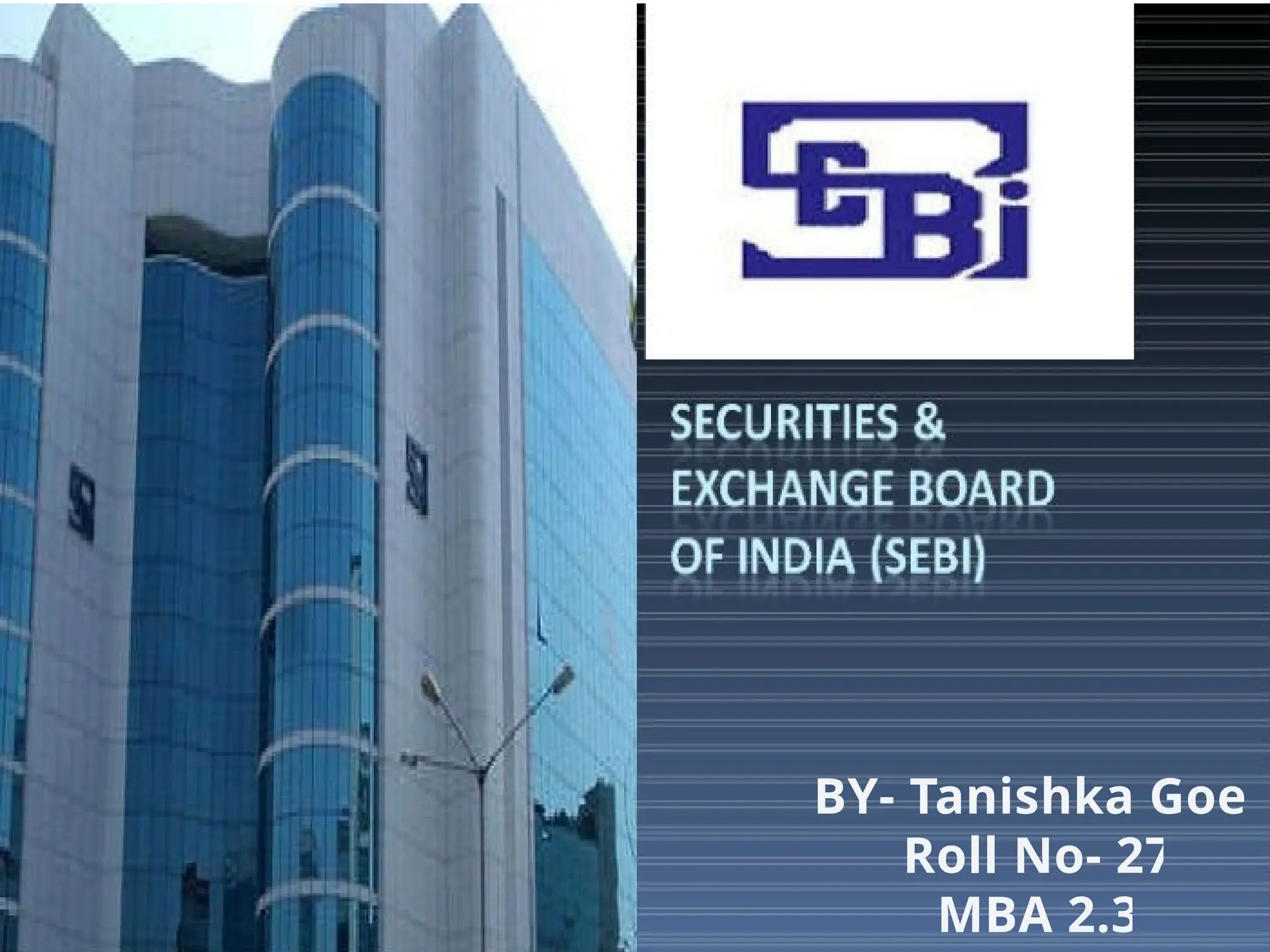
BY- Tanishka Goel
Roll No- 27
MBA 2.3
SEBI (Securities and Exchange board of India) was
constituted on April 12,1988 as a non- statutory body.
 It is an apex body to develop and regulate the stock
market in India.
 SEBI is the regulator for the securities market in
India, originally set up by the Government of India in
1988, it acquired statutory from in 1992 with SEBI Act
1992 being passed by the Indian Parliament.
INTRODUCTION
 The overall objectives of SEBI are to protect the
interest of investors and to promote the
development of stock exchange and to regulate
the activities of stock market.
The objectives of SEBI are:
 To regulate the activities of stock exchange.
 To protect the rights of investors and ensuring
safety to their investment.
OBJECTIVES
 To regulate and develop a code of conduct for
intermediaries such as brokers, underwriters,
etc.
 To prevent fraudulent and malpractices by
having balance between self regulation of
business and its statutory regulations
Continue….
 The SEBI Act, 1992 has entrusted with two
functions, they are
1. Regulatory functions
2. Developmental functions
FUNCTIONS OF SEBI
 Regulation of stock exchange and self
regulatory organizations.
 Registration and regulation of stock brokers,
sub-brokers, Registrars to all issues, merchant
bankers, underwriters, portfolio managers etc.
 Registration and regulation of the working of
collective investment schemes including mutual
funds.
1.Regulatory functions
 Regulating substantial acquisition of shares
and takeover of companies.
 Prohibition of insider trading
 Prohibition of fraudulent and unfair trade
practices relating to securities market.
Continue….
 Promoting investor’s education.
 Training of intermediaries.
 Conducting research and publishing
information useful to all market participants.
2. Developmental functions
 Promotion of fair practices.
 Promotion of self regulatory organizations
Continue….
 Power to call periodical returns from
recognized stock exchanges.
 Power to compel listing of securities by public
companies.
 Power to levy fees or other charges for carrying
out the purposes of regulation.
POWERS
 Power to call information or explanation from
recognized stock exchanges or their members.
 Power to grant approval to bye-laws of
recognized stock exchanges.
Continue….
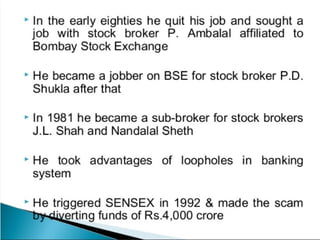
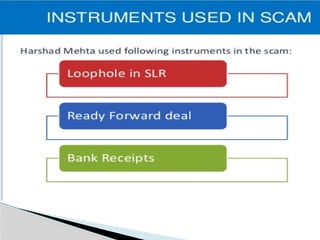
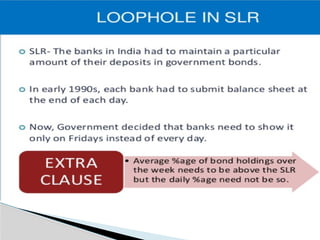
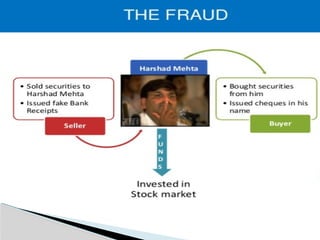
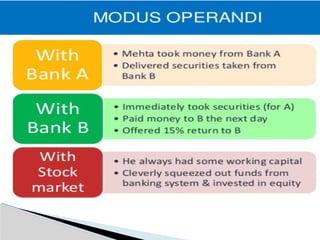
Harshad Mehta Scam
Case Study
Thank You

495206956-SEBI-Act & Security RegulatorsPPT.pptx

  • 1.
  • 2.
    SEBI (Securities andExchange board of India) was constituted on April 12,1988 as a non- statutory body.  It is an apex body to develop and regulate the stock market in India.  SEBI is the regulator for the securities market in India, originally set up by the Government of India in 1988, it acquired statutory from in 1992 with SEBI Act 1992 being passed by the Indian Parliament. INTRODUCTION
  • 3.
     The overallobjectives of SEBI are to protect the interest of investors and to promote the development of stock exchange and to regulate the activities of stock market. The objectives of SEBI are:  To regulate the activities of stock exchange.  To protect the rights of investors and ensuring safety to their investment. OBJECTIVES
  • 4.
     To regulateand develop a code of conduct for intermediaries such as brokers, underwriters, etc.  To prevent fraudulent and malpractices by having balance between self regulation of business and its statutory regulations Continue….
  • 5.
     The SEBIAct, 1992 has entrusted with two functions, they are 1. Regulatory functions 2. Developmental functions FUNCTIONS OF SEBI
  • 6.
     Regulation ofstock exchange and self regulatory organizations.  Registration and regulation of stock brokers, sub-brokers, Registrars to all issues, merchant bankers, underwriters, portfolio managers etc.  Registration and regulation of the working of collective investment schemes including mutual funds. 1.Regulatory functions
  • 7.
     Regulating substantialacquisition of shares and takeover of companies.  Prohibition of insider trading  Prohibition of fraudulent and unfair trade practices relating to securities market. Continue….
  • 8.
     Promoting investor’seducation.  Training of intermediaries.  Conducting research and publishing information useful to all market participants. 2. Developmental functions

  • 9.
     Promotion offair practices.  Promotion of self regulatory organizations Continue….
  • 10.
     Power tocall periodical returns from recognized stock exchanges.  Power to compel listing of securities by public companies.  Power to levy fees or other charges for carrying out the purposes of regulation. POWERS
  • 11.
     Power tocall information or explanation from recognized stock exchanges or their members.  Power to grant approval to bye-laws of recognized stock exchanges. Continue….
  • 12.
  • 29.