letters to nature
removed, and the solution added to an equal volume of 12 M HCl (Ultrex II ultrapure                               Acknowledgements
reagent, Baker) and heated for 16 h at 100 8C in an organic-free sealed glass ampoule. This                       This work was supported by NASA grants from the Origins of Solar Systems, Exobiology,
material was dried in vacuo to remove water, HCl and any volatile organic acids, then                             and Astrobiology programmes, as well as the NASA Ames Director’s Discretionary Fund.
analysed by GC-MS as above. GC-MS was performed on a Thermoquest-Finnigan GCQ                                     We thank A. Weber, D. Glavin, O. Botta, J. Chambers and K. Nelson for discussions. We
with an injector temperature of 240 8C and a DB-17ms-60m (J&W Scientific) column at                                also acknowledge technical support from R. Walker.
an initial temperature of 70 8C increasing at 58 per min to 240 8C.
    Samples for HPLC were hydrolysed as above, and after drying, 100 ml of 10 mM pH 9.5
sodium borate was added to the tube which, after mixing, was re-dried in vacuo to remove
volatile amines. The sample was analysed via the OPA/NAC fluorescent labelling and                                 Competing interests statement
chromatography protocols of ref. 30 on a Hewlett Packard 1100 series HPLC with a
Supelco Discovery C-18, 5 mm resin, 4.6 £ 250 mm analytical column with a 5 ml sample                             The authors declare that they have no competing financial interests.
loop. This chiral label reacts with chiral amines (such as alanine and serine), forming
diastereomers which can be separated by HPLC. However, differing absorptivities of these
                                                                                                                  Correspondence and requests for materials should be addressed to M.P.B.
labelled diastereomers results in pairs of peaks where the areas of diastereomers are
                                                                                                                  (e-mail: mbernstein@mail.arc.nasa.gov).
different even though there are equal amounts of the D and L forms.
    After a mild acid hydrolysis with the acid concentration diminished by a factor of 100
(0.06 M HCl), glycine and serine were measured at levels 3– 4 times lower than for the
standard hydrolysis procedure. Even hot water was adequate to release glycine, albeit an
order of magnitude less than the standard hydrolysis.
Received 29 October 2001; accepted 1 February 2002.
                                                                                                                  ..............................................................
        ´,
1. Oro J. Comets and the formation of biochemical compounds on the primitive Earth. Nature 190,
    389– 390 (1961).
                                                                                                                  Amino acids from ultraviolet
2. Cronin, J. R. & Pizzarello, S. Amino acids in meteorites. Adv. Space Res. 3, 5–18 (1983).
3. Cronin, J. R. & Chang, S. in Chemistry of Life’s Origins (NATO ASI) (eds Greenberg, J. M., Pirronello,
                                                                                                                  irradiation of interstellar
    V. & Mendoza-Gomez, C.) 209– 258 (Kluwer, Dordrecht, 1993).
4. Peltzer, E. T., Bada, J. L., Schlesinger, G. & Miller, S. L. The chemical conditions on the parent body of     ice analogues
    the Murchison meteorite: Some conclusions based on amino, hydroxy nd dicarboxylic acids. Adv.
    Space. Res. 4, 69 –74 (1984).                                                                                          ˜
                                                                                                                  G. M. Munoz Caro*, U. J. Meierhenrich†‡, W. A. Schutte*, B. Barbier†,
5. Robert, F. & Epstein, S. The concentration and isotopic composition of hydrogen, carbon and
    nitrogen in carbonaceous meteorites. Geochim. Cosmochim. Acta 46, 81 –95 (1982).
                                                                                                                  A. Arcones Segovia*, H. Rosenbauer§, W. H.-P. Thiemann‡, A. Brack†
6. Lerner, N. R. Influence of Murchison or Allende minerals on hydrogen-dueterium exchange of amino                & J. M. Greenberg*
    acids. Geochim. Cosmochim. Acta 59, 1623–1631 (1995).
7. Lerner, N. R. Influence of Allende minerals on deuterium retention of products of the Strecker                  * Raymond and Beverly Sackler Laboratory for Astrophysics at Leiden
    synthesis. Geochim. Cosmochim. Acta 61, 4885– 4893 (1997).                                                    Observatory, PO Box 9513, NL-2300 RA Leiden, The Netherlands
8. Cronin, J. R. & Pizzarello, S. Enantiomeric excesses in meteoritic amino acids. Science 275, 951–955                                       ´                                        ´
                                                                                                                  † Centre de Biophysique Moleculaire, Rue Charles Sadron, F-45160 Orleans,
    (1997).                                                                                                       France
9. Sandford, S. A. The inventory of interstellar materials available for the formation of the Solar System.       ‡ Bremen University, Department of Physical Chemistry, FB 02, Leobener Straße,
    Meteorit. Planet. Sci. 31, 449– 476 (1996).
                                                                                                                  D-28359 Bremen, Germany
10. Gibb, E. L. et al. An inventory of interstellar ices toward the embedded protostar W33A. Astrophys. J.
    536, 347–356 (2000).
                                                                                                                                         ¨
                                                                                                                  § Max-Planck-Institut fur Aeronomie, Max-Planck-Straße 2,
11. Gerakines, P. A., Schutte, W. A. & Ehrenfreund, P. Ultraviolet processing of interstellar ice analogs.        D-37189 Katlenburg-Lindau, Germany
                                                                                                                  .............................................................................................................................................................................
    I. Pure ices. Astron. Astrophys. 312, 289–305 (1996).
12. Tegler, S. C. et al. Detection of the 2165 inverse centimeter (4.619 micron) XCN band in the spectrum         Amino acids are the essential molecular components of living
    of L1551 IRS 5. Astrophys. J. 411, 260–265 (1993).                                                            organisms on Earth, but the proposed mechanisms for their
13. Bernstein, M. P., Sandford, S. A., Allamandola, L. J., Chang, S. & Scharberg, M. A. Organic compounds         spontaneous generation have been unable to account for their
    produced by photolysis of realistic interstellar and cometary ice analogs containing methanol.
    Astrophys. J. 454, 327–344 (1995).
                                                                                                                  presence in Earth’s early history1. The delivery of extraterrestrial
14. Kerridge, J. F. Formation and processing of organics in the early Solar System. Space Sci. Rev. 90,           organic compounds has been proposed as an alternative to
    275– 288 (1999).                                                                                              generation on Earth2 – 5, and some amino acids have been found
15. Teixeira, T. C., Devlin, J. P., Buch, V. & Emerson, J. P. Discovery of solid HDO in grain mantles. Astron.    in several meteorites6 – 9. Here we report the detection of amino
    Astrophys. 347, L19–L22 (1999).
16. Turner, B. E. Deuterated molecules in translucent and dark clouds. Astrophys. J. Suppl. Ser. 136,
                                                                                                                  acids in the room-temperature residue of an interstellar ice
    579– 629 (2001).                                                                                              analogue that was ultraviolet-irradiated in a high vacuum at
17. Lacy, J. H., Faraji, H., Sandford, S. A. & Allamandola, L. J. Unravelling the 10 mm ‘Silicate’ feature of     12 K. We identified 16 amino acids; the chiral ones showed
    protostars: the detection of frozen interstellar ammonia. Astrophys. J. 501, L105–L109 (1998).                enantiomeric separation. Some of the identified amino acids
18. Chiar, J. E. et al. The composition and distribution of dust along the line of sight towards the Galactic
                                                                                                                  are also found in meteorites. Our results demonstrate that the
    center. Astrophys. J. 537, 749–762 (2000).
19. Allamandola, L. J., Sandford, S. A., Tielens, A. G. G. M. & Herbst, T. M. Spectroscopy of dense clouds
                                                                                                                  spontaneous generation of amino acids in the interstellar me-
    in the C-H stretching region: methanol and “diamonds”. Astrophys. J. 399, 134–146 (1992).                     dium is possible, supporting the suggestion that prebiotic mol-
20. Irvine, W. M. Spectroscopic evidence for interstellar ices in Comet Hyakutake. Nature 383, 418–420            ecules could have been delivered to the early Earth by cometary
    (1996).                                                                                                       dust, meteorites or interplanetary dust particles.
21. Allamandola, L. J., Sandford, S. A. & Valero, G. Photochemical and thermal evolution of interstellar/
    pre-cometary ice analogs. Icarus 76, 225–252 (1988).
                                                                                                                     Dense interstellar clouds are the birthplaces of stars and planetary
22. Matthews, C. N. & Moser, R. E. Peptide synthesis from hydrogen cyanide and water. Nature 215,                 systems. Here, dust particles accrete ice layers with H2O, CO, CO2,
    1230–1234 (1967).                                                                                             CH3OH and NH3 as the main molecular components10. This ice can
23. Ehrenfreund, P., Bernstein, M. P., Dworkin, J. P., Sandford, S. A. & Allamandola, L. J. The                   undergo considerable processing by stellar ultraviolet (UV) photons
    photostability of amino acids in space. Astrophys. J. 550, L95 –L99 (2001).
24. Sorrell, W. H. Origin of amino acids and organic sugars in interstellar clouds. Astrophys. J. 555,
                                                                                                                  and cosmic rays11,12. In star-forming regions it enters circumstellar
    L129–L132 (2001).                                                                                             disks where formation of planetary bodies as well as comets takes
25. Rubenstein, E., Bonner, W. A., Brown, G. S. & Bailey, J. Polarized stellar light. Science 283, 1415 (1999).   place. We simulated in the laboratory the processing going on in
26. Rubenstein, E., Bonner, W. A., Noyes, H. P. & Brown, G. S. Supernovae and life. Nature 306, 118               such regions.
    (1983).
                                                                                                                     Our experimental set-up consists of a high-vacuum chamber
27. Bonner, W. A. & Bean, B. D. Asymmetric photolysis with elliptically polarized light. Orig. Life Evol.
    Biosphere 30, 513–517 (2000).                                                                                 where a gas mixture is deposited on a cold ‘finger’ (an aluminium
28. Warneck, P. A microwave-powered hydrogen lamp for vacuum ultraviolet photochemical research.                  block at 12 K) and irradiated by UV (ref. 13). An ice mixture
    Appl. Opt. 1, 721–726 (1962).                                                                                 containing H2O:CH3OH:NH3:CO:CO2 ¼ 2:1:1:1:1 (molar compo-
29. Prasad, S. S. & Tarafdar, S. P. UV radiation field inside dense clouds—Its possible existence and              sition) was selected as representative of the interstellar medium.
    chemical implications. Astrophys. J. 267, 603– 609 (1983).
30. Zhao, M. & Bada, J. L. Determination of alpha-dialkylamino acids and their enantiomers in geological
                                                                                                                  This composition resembles the ice found close to protostellar
    samples by high-performance liquid chromatography after derivatization with a chiral adduct of                sources10,14,15. After warming the system to room temperature a
    o-phthaldialdehyde. J. Chromatogr. A 690, 55– 63 (1995).                                                      small amount of material remained. The dominant components of

NATURE | VOL 416 | 28 MARCH 2002 | www.nature.com                                         © 2002 Macmillan Magazines Ltd                                                                                                                                                            403
letters to nature
                                                                                                  COOH           COOH
                                                Gly                                  H 2N                H2N
                                                                                             NH2               NH2
                                                                                                                                       D -Ala
                                                                                                                                                L-Ala
                                                  D -2-ABA                                                             COOH
                                                                            H2N          COOH                  H2N
                                                        L-2-ABA              H2N                                 H2N


                                       L -Ala                                                                                      9      10    11      12
                                                       D -Val   + ß-Ala
                                                           L -Val                    H
                                 D -Ala                                      H2 N    N      NH2
                                                             D,L-Pro                                       H2N         NH2
                                                                                                                 NH2
                                                                L -Asp
                                                                                                                             DAH
                                                          D -Asp
                                                                            D -Ser
                                 N-EtGly                                                                             DAP
                                                                                                                                                                 COOH
                                                          H2N     O   NH2         L -Ser                                                                 H2N
                                                                                                                                                               NH 2
                                 Sar


                                  2.5     5.0    7.5   10.0 12.5 15.0 17.5 20.0 22.5 25.0 27.5 30.0 32.5 35.0 37.5 40.0 42.5
                                                                            Time (min)

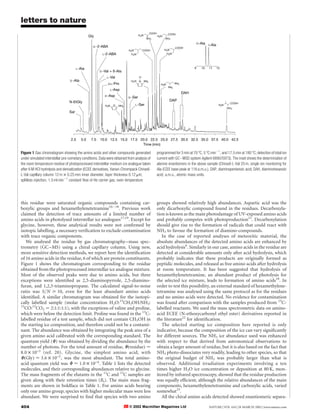
Figure 1 Gas chromatogram showing the amino acids and other compounds generated                          programmed for 3 min at 70 8C, 5 8C min21, and 17.5 min at 180 8C; detection of total ion
under simulated interstellar pre-cometary conditions. Data were obtained from analysis of                current with GC– MSD system Agilent 6890/5973). The inset shows the determination of
the room temperature residue of photoprocessed interstellar medium ice analogue taken                    alanine enantiomers in the above sample (Chirasil-L-Val 25 m, single ion monitoring for
after 6 M HCl hydrolysis and derivatization (ECEE derivatives, Varian-Chrompack Chirasil-                Ala-ECEE base peak at 116 a.m.u.). DAP, diaminopentanoic acid; DAH, diaminohexanoic
L-Val capillary column 12 m £ 0.25 mm inner diameter, layer thickness 0.12 mm;                           acid; a.m.u., atomic mass units.
splitless injection, 1.5 ml min21 constant flow of He carrier gas; oven temperature


this residue were saturated organic compounds containing car-                                            groups showed relatively high abundances. Aspartic acid was the
boxylic groups and hexamethylenetetramine16 – 18. Previous work                                          only dicarboxylic compound found in the residues. Decarboxyla-
claimed the detection of trace amounts of a limited number of                                            tion is known as the main photodamage of UV-exposed amino acids
amino acids in photolysed interstellar ice analogues17,19. Except for                                    and probably competes with photoproduction21. Decarboxylation
glycine, however, these analytical results were not confirmed by                                          should give rise to the formation of radicals that could react with
isotopic labelling, a necessary verification to exclude contamination                                     NH3 to favour the formation of diamino-compounds.
with trace organic components.                                                                              In the case of reported analyses of meteoritic material, the
   We analysed the residue by gas chromatography–mass spec-                                              absolute abundances of the detected amino acids are enhanced by
trometry (GC –MS) using a chiral capillary column. Using new,                                            acid hydrolysis6. Similarly in our case, amino acids in the residue are
more sensitive detection methods, we report here the identification                                       detected at considerable amounts only after acid hydrolysis, which
of 16 amino acids in the residue, 6 of which are protein constituents.                                   probably indicates that these products are originally formed as
Figure 1 shows the chromatogram corresponding to the residue                                             peptidic molecules, and released as free amino acids after hydrolysis
obtained from the photoprocessed interstellar ice analogue mixture.                                      at room temperature. It has been suggested that hydrolysis of
Most of the observed peaks were due to amino acids, but three                                            hexamethylenetetramine, an abundant product of photolysis for
exceptions were identified as 2,5-diaminopyrrole, 2,5-diamino-                                            the selected ice mixture, leads to formation of amino acids18. In
furan, and 1,2,3-triaminopropane. The calculated signal-to-noise                                         order to test this possibility, an external standard of hexamethylene-
ratio was S=N > 10, even for the least abundant amino acids                                              tetramine was analysed using the same protocol as for the residues
identified. A similar chromatogram was obtained for the isotopi-                                          and no amino acids were detected. No evidence for contamination
cally labelled sample (molar concentration H2O:13CH3OH:NH3:                                              was found after comparison with the samples produced from 13C-
13
   CO:13CO2 ¼ 2:1:1:1:1), with the exceptions of valine and proline,                                     labelled reactants. We used the mass spectrometric data on amino-
which were below the detection limit. Proline was found in the 13C-                                      acid ECEE (N-ethoxycarbonyl ethyl ester) derivatives reported in
labelled residue of a test sample, which did not contain CH3OH in                                        the literature22 for identification.
the starting ice composition, and therefore could not be a contami-                                         The selected starting ice composition here reported is only
nant. The abundance was obtained by integrating the peak area of a                                       indicative, because the composition of the ice can vary significantly
given amino acid calibrated with the corresponding standard. The                                         for different sources. The NH3 ice abundance used was enhanced
quantum yield (F) was obtained by dividing the abundance by the                                          with respect to that derived from astronomical observations to
number of photons. For the total amount of residue, FðresidueÞ <                                         obtain a larger amount of residue, but it is also based on the fact that
8:0 £ 10ÿ3 (ref. 20). Glycine, the simplest amino acid, with                                             NH3 photo-dissociates very readily, leading to other species, so that
FðGlyÞ < 3:6 £ 10ÿ5 , was the most abundant. The total amino-                                            the original budget of NH3 was probably larger than what is
acid quantum yield was F < 1:0 £ 10ÿ4 . Table 1 lists the detected                                       observed. Additional irradiation experiments involving a ten
molecules, and their corresponding abundances relative to glycine.                                       times higher H2O ice concentration or deposition at 80 K, mon-
The mass fragments of the elutants in the 12C and 13C samples are                                        itored by infrared spectroscopy, showed that the residue production
given along with their retention times (Rt). The main mass frag-                                         was equally efficient, although the relative abundances of the main
ments are shown in boldface in Table 1. For amino acids bearing                                          components, hexamethylenetetramine and carboxylic acids, varied
only one amino group, species with higher molecular mass were less                                       somewhat23.
abundant. We were surprised to find that species with two amino                                              All the chiral amino acids detected showed enantiomeric separa-

404                                                                         © 2002 Macmillan Magazines Ltd                                      NATURE | VOL 416 | 28 MARCH 2002 | www.nature.com
letters to nature
Table 1 Peak identification for Fig. 1
                                                                  Quantum yield of ISM sample,                                                                                                      MS-fragmentation                                                                                         Rt of analyte                    Biological
Amino acid                                                              F £ 100/F (Gly)                                                                                                                                                                                                                          (min)                       occurrence
                                                                                                                                                        12                                                                                   13
                                                                                                                                                           C-sample (a.m.u.)                                                                      C-sample (a.m.u.)
...................................................................................................................................................................................................................................................................................................................................................................
Glycine                                                                                    100                                                 175, 130, 102                                                                             177, 132, 103                                                               6.99                        Yes
a-D -alanine                                                                               19.3                                               189, 144, 116, 88                                                                           147, 118, 90                                                               6.33                         No
a-L -alanine                                                                               20.0                                               189, 144, 116, 88                                                                           147, 118, 90                                                               6.68                        Yes
b-alanine                                                                                  4.29                                       189, 160, 144, 116, 115, 102, 98                                                           192, 147, 119, 117, 103, 101                                                        8.66                         No
Sarcosine (N-methylglycine)                                                                5.71                                               189, 144, 116, 88                                                                       192, 147, 118, 90                                                              4.29                         No
D -2-aminobutyric acid                                                                     0.46                                                      130                                                                                      133                                                                    8.05                         No
L -2-aminobutyric acid                                                                     0.48                                                      130                                                                                      133                                                                    8.37                         No
N-ethylglycine                                                                             1.91                                                  130, 84, 58                                                                               133, 207                                                                  4.90                         No
D -valine                                                                                  0.61                                                      144                                                                                     #d.l.                                                                   8.66                         No
L -valine                                                                                  0.61                                                      144                                                                                     #d.l.                                                                   8.80                        Yes
D ,L -proline                                                                              0.06                                                      142                                                                                     #d.l.                                                                   9.59                       No, Yes
D -serine                                                                                  3.29                                        175 (McLafferty), 160, 132, 114                                                                     116, 134                                                                  16.45                        No
L -serine                                                                                  3.86                                   204, 187, 175 (McLafferty), 160, 132, 114                                                                116, 134                                                                  16.67                       Yes
D -aspartic acid                                                                           1.14                                                    188, 142                                                                                191, 145                                                                  14.90                        No
L -aspartic acid                                                                           1.07                                                    188, 142                                                                                   191                                                                    15.05                       Yes
D -2,3-diaminopropanoic acid                                                               20.0                                      231, 203, 188, 175, 157, 129, 102                                                         234, 205, 190, 177, 159, 131, 103                                                     22.64                        No
L -2,3-diaminopropanoic acid                                                               20.0                                      231, 203, 188, 175, 157, 129, 102                                                         234, 205 190, 177, 159, 131, 103                                                      23.03                        No
2,3-diaminobutyric acid                                                                    14.1                                               203, 157, 115, 85                                                                               205                                                                    40.38                        No
3,3 0 -diaminoisobutyric acid                                                              32.9                                    290, 245, 238, 216, 188, 167, 156, 142,                                                       249, 219, 191, 145, 132, 103                                                        23.79                        No
                                                                                                                                               128, 115, 102
4,4 0 -diaminoneopentanoic acid                                                            22.4                                    304, 259, 230, 202, 188, 182, 166, 156,                                                264, 206, 191, 187, 171, 160, 145, 118                                                     22.05                           No
                                                                                                                                                   142, 116
A-diaminopentanoic acid*                                                                   1.72                                              142(c.i.i.), 129, 70                                                                         #d.l.                                                                      27.05                           No
B-diaminopentanoic acid*                                                                   1.92                                                   142(c.i.i.)                                                                             #d.l.                                                                      27.54                           No
A-diaminohexanoic acid†                                                                    33.1                                         272, 156(c.i.i.), 128, 102, 84                                                             272(cyclic ion), 160                                                              28.86                           No
B-diaminohexanoic acid†                                                                    35.4                                         272, 156(c.i.i.), 128, 102, 84                                                             272(cyclic ion), 160                                                              29.48                           No
2,5-diaminofurane                                                                          23.1                                      242, 169, 153, 125, 97, 81, 69, 53                                                    246, 173, 157, 129, 101, 85, 72, 56                                                       14.36
2,5-diaminopyrrole                                                                         20.0                                    241, 213, 212, 196, 168, 140, 124, 109,                                               245, 217, 216, 200, 172, 144, 128, 113,                                                     20.98
                                                                                                                                              96, 81, 69, 54, 53                                                                     100, 85, 72, 57
1,2,3-triaminopropane                                                                      16.3                                      232, 187, 159, 144, 130, 115, 102                                                        189, 162, 147, 132, 117, 103                                                           24.22
Unidentified                                                                                36.5                                         233, 188, 160, 129, 114, 102                                                          237, 192, 163, 131, 117, 103                                                           15.64
...................................................................................................................................................................................................................................................................................................................................................................
For glycine, FðGlyÞ < 3:6 £ 10ÿ5 . Numbers designated in boldface are the main mass fragments. A designates the first eluting enantiomer, and B the second eluting enantiomer. c.i.i., cyclic immonium ion.
Rt, retention time. ISM, interstellar medium. MS, mass spectrometry. d.l., detection limit; McLafferty indicates that a McLafferty rearrangement has occurred.
* Exact molecular structure not yet known. Ornithine or its constitutional isomer.
† Exact molecular structure not yet known. Lysine or its constitutional isomer.


tion, with the exception of proline, which could not be separated by                                                                                                                 alternative gas mixtures under experimental conditions leads to the
the selected protocol24. As expected for photosynthesis using non-                                                                                                                   formation of, at most, traces of amino acids1.
polarized light, the amino acids produced appeared to be racemic,                                                                                                                       The results reported in this paper support the concept of extra-
with enantiomeric excesses fluctuating within experimental errors.                                                                                                                    terrestrial delivery of prebiotic molecules triggering the appearance
   Using the above efficient derivatization and sensitive GC-MS                                                                                                                       of life on Earth2 – 5. We show that, at least to some extent, amino
technique we were able to identify a total of 16 different amino acids                                                                                                               acids and other prebiotic molecules such as pyrroles and furanes
in the residue. Hence, we show that photochemical processing of                                                                                                                      could be of extraterrestrial origin. Earlier analysis of the residues of
interstellar ice analogues leads to a large variety of products, which                                                                                                               photochemically processed interstellar ice analogues revealed other
can only be identified by very specific detection techniques. We                                                                                                                       components of prebiotic interest such as quinones and aromatic
recently found evidence for the presence of a number of new organic                                                                                                                  alcohols27. It is probable that comets, to a large extent, consist of
components in the residues23.                                                                                                                                                        pristine interstellar materials28,29. Such species could, therefore,
   In addition to amino acids, 1,2,3-triaminopropane, 2,5-diamino-                                                                                                                   have been delivered to the early Earth by comet dust, as well as
furane and 2,5-diaminopyrrole were identified as shown in Fig. 1.                                                                                                                     asteroids and interplanetary dust particles during the epoch of
This is the first detection of pyrroles and furanes in photolysed                                                                                                                     heavy bombardment30. Similar experiments using circularly polar-
interstellar ice analogues. Such cyclic molecules were tentatively                                                                                                                   ized ultraviolet light could result in the formation of non-racemic
identified in the mass spectra of comet Halley25. All the products                                                                                                                    amino acids, such as those found in the proteins of living organisms,
reported in Table 1 were also found in the residue of a sample                                                                                                                       which are exclusively of L -configuration.
containing only CO as the carbon carrier (starting ice molar                                                                                                                            Several parameters still need to be better constrained (such as UV
composition H2O:NH3:CO ¼ 2:1:1). We also obtained results                                                                                                                            exposure, particle fluxes, and number of collisions) before a reliable
from experiments involving different ice mixtures23.                                                                                                                                 estimation on the extraterrestrial delivery of amino acids to the early
   Glycine has so far not been detected in the interstellar medium.                                                                                                                  Earth can be made. To this end, in situ analysis of cometary material
Some of the amino acids reported here were also found in carbo-                                                                                                                      will be performed in the near future by space probes such as Rosetta
naceous chondrites6 – 9. However, no amino acids with more than                                                                                                                      and Stardust.                                                         A
one amino group were detected in these objects. Our work suggests
that these species might also be present in meteorites.                                                                                                                              Methods
   How life originated is one of the earliest and most intriguing
                                                                                                                                                                                     Simulation of the interstellar medium
questions for humanity. Early experiments on the processing of                                                                                                                       The high-vacuum system for UV-irradiation of the ice was powered by a turbo pump
a gas mixture simulating the primitive Earth conditions assumed                                                                                                                      (Pfeiffer Balzers TSH 280H) backed up by a diaphragm pump (Vacuubrand MD4T). The
a reducing atmosphere with CH4 as the carbon-containing mol-                                                                                                                         system pressure at room temperature was Ps < 10ÿ7 mbar. A temperature of 12 K, typical
ecule26. Several amino acids were formed under these conditions as                                                                                                                   of dust in dense clouds, was achieved by means of a closed-cycle helium cryostat (Air
                                                                                                                                                                                     Products Displex DE-202). CO2 was kept in a separate bulb in order to prevent it from
products of spark discharge, photoprocessing or heat. It is now                                                                                                                      reacting with the ammonia, NH3. Simultaneous deposition of CO2 and the other
believed, however, that the Earth’s early atmosphere was rather non-                                                                                                                 components was achieved via two separate deposition tubes, one for each bulb. The gas
reducing, with CO2 as the main carbon carrier. Processing of these                                                                                                                   molecules were condensed on an aluminium block mounted on the tip of the cryostat.

NATURE | VOL 416 | 28 MARCH 2002 | www.nature.com                                                                                            © 2002 Macmillan Magazines Ltd                                                                                                                                                                             405
letters to nature
During the deposition, the accreting ice layer was irradiated by UV from a microwave-                             29. Irvine, W. M., Schloerb, F. P., Crovisier, J., Fegley, B.Jr & Mumma, M. J. in Protostars and Planets IV
stimulated hydrogen flow discharge lamp (output, F < 1:5 £ 1015 photons s21 (ref. 31);                                 (eds Mannings, V., Boss, A. P. & Russell, S. S.) 1159 –1200 (Univ. Arizona Press, Tucson, 2000).
photon energy, Ephoton ¼ 7:3 – 10:5 eV, with main emission at Lyman-a (10.2 eV)). The                             30. Chyba, C. & Sagan, C. Endogenous production, exogenous delivery and impact-shock synthesis of
lamp spectrum roughly resembles the UVemission from early-type stars, which dominates                                 organic molecules: an inventory for the origins of life. Nature 355, 125– 131 (1992).
the interstellar radiation field between 0.09 and 0.25 mm (ref. 20). The UV-irradiation/                           31. Weber, P. & Greenberg, J. M. Can spores survive in interstellar space?Nature 316, 403–407 (1985).
deposition typically lasted 24 hours. The total gas flow was F < 1 £ 1016 molecules s21 ,
implying an average UV dose of 0.15 photons per molecule. Subsequently, the system was
warmed at 1 K min21 to T ¼ 40 K using a temperature controller (Scientific Instruments                             Acknowledgements
9600-1), and then at about 4 K min21 up to room temperature. The aluminium block with                             We thank A. MacDermott, F. Goesmann and R. Roll for discussions and K. Getliffe for
the residue was removed from the system and stored inside a capsule in a nitrogen                                                                                                                     ¨
                                                                                                                  suggestions. Our collaboration was originally supported by the Max-Planck-Institut fur
atmosphere.                                                                                                       Aeronomie at Katlenburg-Lindau with grants for G.M.M.C. and U.J.M., as preparatory
                                                                                                                  work for the Rosetta mission. The work was performed at the Sackler Laboratory for
Analytical procedure                                                                                                                                                                    ´          ´
                                                                                                                  Astrophysics at Leiden Observatory and the Centre Biophysique Moleculaire at Orleans,
A 100-ml water extract of the above produced residue was hydrolysed in 6 M HCl at 110 8C                          where it was funded by the European Union and by French sponsors: CNES, FNAD,
                                                                                                                    ´                    ´                           ´
                                                                                                                  Region Centre, and Departement du Cher. In Orleans U.J.M. was supported by a Le
for 24 h under argon atmosphere. This is a standard procedure for hydrolysis of peptides
and has been used for the detection of amino acids in meteorites7. After evaporation of                           Studium grant. U.J.M. is grateful for a habilitation grant by the Deutsche
6 M HCl, the residues were dissolved in 0.1 M HCl and derivatized using the procedure of                          Forschungsgemeinschaft, and G.M.M.C. for an AIO allowance by Leiden University. This
ref. 24, leading to amino acid ECEE derivatives. The identities of the amino acid peaks                           paper is dedicated to the memory of J.M.G., who died on 29 November 2001.
were verified by comparing the retention times and the mass spectra with external
standards, purchased from Fluka. By using the single ion monitoring mode, it was possible
to select a given ion mass, characteristic of the target amino acid in order to increase both                     Competing interests statement
chromatographic resolution and sensitivity. The determination of the signal-to-noise
                                                                                                                  The authors declare that they have no competing financial interests.
ratio for each amino acid was performed in the extract ion mode.
Received 16 November 2001; accepted 17 January 2002.
                                                                                                                  Correspondence and requests for materials should be addressed to U.J.M.
1. Bar-Nun, A. & Chang, S. Photochemical reactions of water and carbon monoxide in Earth’s primitive
                                                                                                                  (e-mail: mhenrich@uni-bremen.de).
    atmosphere. J. Geophys. Res. 88, 6662–6672 (1983).
        ´,
2. Oro J. Comets and the formation of biochemical compounds on the primitive Earth. Nature 190,
    389–390 (1961).
3. Greenberg, J. M. in The Galaxy and the Solar System 103– 115 (Univ. Arizona Press, Tucson, 1986).
4. Brack, A. Life in the Solar System. Adv. Space. Res. 24, 417–433 (1999).
5. Meierhenrich, U., Thiemann, W.H.-P. & Rosenbauer, H. Molecular parity violation via                            ..............................................................
    comets?Chirality 11, 575–582 (1999).
6. Engel, M. H. & Macko, S. A. The stereochemistry of amino acids in the Murchison meteorite.
    Precambr. Res. 106, 35– 45 (2001).
                                                                                                                  Exchange-biased quantum
7. Kvenvolden, K. A. et al. Evidence for extraterrestrial amino acids and hydrocarbons in the Murchison
    meteorite. Nature 228, 923–926 (1970).                                                                        tunnelling in a supramolecular
8. Cronin, J. R. & Pizzarello, S. Enantiomeric excesses in meteoritic amino acids. Science 275, 951–955
    (1997).
9. Ehrenfreund, P., Glavin, D. P., Botta, O., Cooper, G. & Bada, J. L. Extraterrestrial amino acids in
                                                                                                                  dimer of single-molecule magnets
    Orgueil and Ivuna: Tracing the parent body of CI type carbonaceous chondrites. Proc. Natl Acad. Sci.
    USA 98, 2138 –2141 (2001).                                                                                                            ´
                                                                                                                  Wolfgang Wernsdorfer*, Nuria Aliaga-Alcalde†, David N. Hendrickson‡
10. Gibb, E. L., Whittet, D. C. & Chiar, J. E. Searching for ammonia in grain mantles toward massive              & George Christou†
    young stellar objects. Astrophys. J. 558, 702–716 (2001).
         ˜
11. Munoz Caro, G. M., Ruiterkamp, R., Schutte, W. A., Greenberg, J. M. & Mennella, V. UV
                                                                                                                                       ´
                                                                                                                  * Laboratoire Louis Neel-CNRS, BP166, 25 Avenue des Martyrs, 38042 Grenoble,
    photodestruction of CH bonds and the evolution of the 3.4 mm feature carrier. I. The case of aliphatic
    and aromatic molecular species. Astron. Astrophys. 367, 347– 354 (2001).
                                                                                                                  Cedex 9, France
12. Mennella, V. et al. UV photodestruction of CH bonds and the evolution of the 3.4 mm feature carrier.          † Department of Chemistry, University of Florida, Gainesville,
    II. The case of hydrogenated carbon grains. Astron. Astrophys. 367, 355– 361 (2001).                          Florida 32611-7200, USA
13. Gerakines, P. A., Schutte, W. A., Greenberg, J. M. & van Dishoeck, E. F. The infrared band strengths of       ‡ Department of Chemistry, University of California at San Diego, La Jolla,
    H2O, CO and CO2 in laboratory simulations of astrophysical ice mixtures. Astron. Astrophys. 296,              California 92093-0358, USA
    810–818 (1995).                                                                                               .............................................................................................................................................................................
14. Gerakines, P. A. et al. Observations of solid carbon dioxide in molecular clouds with the infrared space
    observatory. Astrophys. J. 522, 357–377 (1999).
                                                                                                                  Various present and future specialized applications of magnets
15. Ehrenfreund, P. et al. Laboratory studies of thermally processed H2O:CH3OH:CO2 ice mixtures and               require monodisperse, small magnetic particles, and the discov-
    their astrophysical implications. Astron. Astrophys. 350, 240–253 (1999).                                     ery of molecules that can function as nanoscale magnets was an
                                                                                   ´                 ´´
16. Greenberg, J. M., Yencha, A. J., Corbell, J. W. & Frisch, H. L. in Extrait de Memoires de la Societe Royale   important development in this regard1 – 3. These molecules act as
                       ´            ´ ´                             ´      ´
    des Sciences de Liege 425 (Societe Royale des Sciences de Liege, Liege, 1972).
17. Briggs, R. et al. Comet Halley as an aggregate of interstellar dust and further evidence for the
                                                                                                                  single-domain magnetic particles that, below their blocking
    photochemical formation of organics in the interstellar medium. Orig. Life Evol. Biosphere 22,                temperature, exhibit magnetization hysteresis, a classical prop-
    287–307 (1992).                                                                                               erty of macroscopic magnets. Such ‘single-molecule magnets’
18. Bernstein, M. P., Sandford, S. A., Allamandola, L. J., Chang, S. & Scharberg, M. A. Organic compounds         (SMMs)4 straddle the interface between classical and quantum
    produced by photolysis of realistic interstellar and cometary ice analogs containing methanol.
    Astrophys. J. 454, 327–344 (1995).
                                                                                                                  mechanical behaviour because they also display quantum tunnel-
19. Kobayashi, K. et al. Synthesis of amino acids in Earth orbit: Proposal. Adv. Space Res. 23, 401–404           ling of magnetization5,6 and quantum phase interference7. Quan-
    (1999).                                                                                                       tum tunnelling of magnetization can be advantageous for some
20. Jenniskens, P. et al. Carbon dust formation on interstellar grains. Astron. Astrophys. 273, 583– 600
    (1993).
                                                                                                                  potential applications of SMMs, for example, in providing the
21. Johns, R. B. & Seuret, M. G. Photochemistry of biological molecules. III. Mechanism of photodamage            quantum superposition of states required for quantum comput-
    of alanine peptides in the solid state. Photochem. Photobiol. 12, 405–417 (1970).                             ing8. However, it is a disadvantage in other applications, such as
22. Huang, Z.-H., Wang, J., Gage, D. A., Watson, J. T. & Sweeley, C. C. Characterization of N-                    information storage, where it would lead to information loss.
    ethoxycarbonyl ethyl esters of amino acids by mass spectrometry. J. Chromatogr. 635, 271–281
    (1993).
                                                                                                                  Thus it is important to both understand and control the quantum
         ˜
23. Munoz Caro, G. M., Meierhenrich, U. J., Schutte, W. A. & Greenberg, J. M. UV photoprocessing of               properties of SMMs. Here we report a supramolecular SMM
    interstellar ice analogs. Formation of HMT derivatives. Astron. Astrophys. (submitted).                       dimer in which antiferromagnetic coupling between the two
24. Abe, I., Fujimoto, N., Nishiyama, T., Terada, K. & Nakahara, T. Rapid analysis of amino acid
                                                                                                                  components results in quantum behaviour different from that
    enantiomers by chiral-phase capillary gas chromatography. J. Chromatogr. A 722, 221–227 (1996).
25. Kissel, J. & Krueger, F. R. The organic component in dust from comet Halley as measured by the                of the individual SMMs. Our experimental observations and
    PUMA mass spectrometer on board Vega 1. Nature 326, 755–760 (1987).                                           theoretical analysis suggest a means of tuning the quantum
26. Miller, S. L. A production of amino acids under possible primitive Earth conditions. Science 117,             tunnelling of magnetization in SMMs. This system may also
    528–529 (1953).
27. Bernstein, M. P. et al. UV irradiation of polycyclic aromatic hydrocarbons in ices: production of
                                                                                                                  prove useful for studying quantum tunnelling of relevance to
    alcohols, quinones, and ethers. Science 283, 1135–1138 (1999).                                                mesoscopic antiferromagnets.
28. Greenberg, J. M. in Comets (ed. Wilkening, L. L.) 131–163 (Univ. Arizona Press, Tucson, 1982).                   The compound [Mn4O3Cl4(O2CEt)3(py)3] (hereafter Mn4) con-

406                                                                                         © 2002 Macmillan Magazines Ltd                                                             NATURE | VOL 416 | 28 MARCH 2002 | www.nature.com

416403a

  • 1.
    letters to nature removed,and the solution added to an equal volume of 12 M HCl (Ultrex II ultrapure Acknowledgements reagent, Baker) and heated for 16 h at 100 8C in an organic-free sealed glass ampoule. This This work was supported by NASA grants from the Origins of Solar Systems, Exobiology, material was dried in vacuo to remove water, HCl and any volatile organic acids, then and Astrobiology programmes, as well as the NASA Ames Director’s Discretionary Fund. analysed by GC-MS as above. GC-MS was performed on a Thermoquest-Finnigan GCQ We thank A. Weber, D. Glavin, O. Botta, J. Chambers and K. Nelson for discussions. We with an injector temperature of 240 8C and a DB-17ms-60m (J&W Scientific) column at also acknowledge technical support from R. Walker. an initial temperature of 70 8C increasing at 58 per min to 240 8C. Samples for HPLC were hydrolysed as above, and after drying, 100 ml of 10 mM pH 9.5 sodium borate was added to the tube which, after mixing, was re-dried in vacuo to remove volatile amines. The sample was analysed via the OPA/NAC fluorescent labelling and Competing interests statement chromatography protocols of ref. 30 on a Hewlett Packard 1100 series HPLC with a Supelco Discovery C-18, 5 mm resin, 4.6 £ 250 mm analytical column with a 5 ml sample The authors declare that they have no competing financial interests. loop. This chiral label reacts with chiral amines (such as alanine and serine), forming diastereomers which can be separated by HPLC. However, differing absorptivities of these Correspondence and requests for materials should be addressed to M.P.B. labelled diastereomers results in pairs of peaks where the areas of diastereomers are (e-mail: mbernstein@mail.arc.nasa.gov). different even though there are equal amounts of the D and L forms. After a mild acid hydrolysis with the acid concentration diminished by a factor of 100 (0.06 M HCl), glycine and serine were measured at levels 3– 4 times lower than for the standard hydrolysis procedure. Even hot water was adequate to release glycine, albeit an order of magnitude less than the standard hydrolysis. Received 29 October 2001; accepted 1 February 2002. .............................................................. ´, 1. Oro J. Comets and the formation of biochemical compounds on the primitive Earth. Nature 190, 389– 390 (1961). Amino acids from ultraviolet 2. Cronin, J. R. & Pizzarello, S. Amino acids in meteorites. Adv. Space Res. 3, 5–18 (1983). 3. Cronin, J. R. & Chang, S. in Chemistry of Life’s Origins (NATO ASI) (eds Greenberg, J. M., Pirronello, irradiation of interstellar V. & Mendoza-Gomez, C.) 209– 258 (Kluwer, Dordrecht, 1993). 4. Peltzer, E. T., Bada, J. L., Schlesinger, G. & Miller, S. L. The chemical conditions on the parent body of ice analogues the Murchison meteorite: Some conclusions based on amino, hydroxy nd dicarboxylic acids. Adv. Space. Res. 4, 69 –74 (1984). ˜ G. M. Munoz Caro*, U. J. Meierhenrich†‡, W. A. Schutte*, B. Barbier†, 5. Robert, F. & Epstein, S. The concentration and isotopic composition of hydrogen, carbon and nitrogen in carbonaceous meteorites. Geochim. Cosmochim. Acta 46, 81 –95 (1982). A. Arcones Segovia*, H. Rosenbauer§, W. H.-P. Thiemann‡, A. Brack† 6. Lerner, N. R. Influence of Murchison or Allende minerals on hydrogen-dueterium exchange of amino & J. M. Greenberg* acids. Geochim. Cosmochim. Acta 59, 1623–1631 (1995). 7. Lerner, N. R. Influence of Allende minerals on deuterium retention of products of the Strecker * Raymond and Beverly Sackler Laboratory for Astrophysics at Leiden synthesis. Geochim. Cosmochim. Acta 61, 4885– 4893 (1997). Observatory, PO Box 9513, NL-2300 RA Leiden, The Netherlands 8. Cronin, J. R. & Pizzarello, S. Enantiomeric excesses in meteoritic amino acids. Science 275, 951–955 ´ ´ † Centre de Biophysique Moleculaire, Rue Charles Sadron, F-45160 Orleans, (1997). France 9. Sandford, S. A. The inventory of interstellar materials available for the formation of the Solar System. ‡ Bremen University, Department of Physical Chemistry, FB 02, Leobener Straße, Meteorit. Planet. Sci. 31, 449– 476 (1996). D-28359 Bremen, Germany 10. Gibb, E. L. et al. An inventory of interstellar ices toward the embedded protostar W33A. Astrophys. J. 536, 347–356 (2000). ¨ § Max-Planck-Institut fur Aeronomie, Max-Planck-Straße 2, 11. Gerakines, P. A., Schutte, W. A. & Ehrenfreund, P. Ultraviolet processing of interstellar ice analogs. D-37189 Katlenburg-Lindau, Germany ............................................................................................................................................................................. I. Pure ices. Astron. Astrophys. 312, 289–305 (1996). 12. Tegler, S. C. et al. Detection of the 2165 inverse centimeter (4.619 micron) XCN band in the spectrum Amino acids are the essential molecular components of living of L1551 IRS 5. Astrophys. J. 411, 260–265 (1993). organisms on Earth, but the proposed mechanisms for their 13. Bernstein, M. P., Sandford, S. A., Allamandola, L. J., Chang, S. & Scharberg, M. A. Organic compounds spontaneous generation have been unable to account for their produced by photolysis of realistic interstellar and cometary ice analogs containing methanol. Astrophys. J. 454, 327–344 (1995). presence in Earth’s early history1. The delivery of extraterrestrial 14. Kerridge, J. F. Formation and processing of organics in the early Solar System. Space Sci. Rev. 90, organic compounds has been proposed as an alternative to 275– 288 (1999). generation on Earth2 – 5, and some amino acids have been found 15. Teixeira, T. C., Devlin, J. P., Buch, V. & Emerson, J. P. Discovery of solid HDO in grain mantles. Astron. in several meteorites6 – 9. Here we report the detection of amino Astrophys. 347, L19–L22 (1999). 16. Turner, B. E. Deuterated molecules in translucent and dark clouds. Astrophys. J. Suppl. Ser. 136, acids in the room-temperature residue of an interstellar ice 579– 629 (2001). analogue that was ultraviolet-irradiated in a high vacuum at 17. Lacy, J. H., Faraji, H., Sandford, S. A. & Allamandola, L. J. Unravelling the 10 mm ‘Silicate’ feature of 12 K. We identified 16 amino acids; the chiral ones showed protostars: the detection of frozen interstellar ammonia. Astrophys. J. 501, L105–L109 (1998). enantiomeric separation. Some of the identified amino acids 18. Chiar, J. E. et al. The composition and distribution of dust along the line of sight towards the Galactic are also found in meteorites. Our results demonstrate that the center. Astrophys. J. 537, 749–762 (2000). 19. Allamandola, L. J., Sandford, S. A., Tielens, A. G. G. M. & Herbst, T. M. Spectroscopy of dense clouds spontaneous generation of amino acids in the interstellar me- in the C-H stretching region: methanol and “diamonds”. Astrophys. J. 399, 134–146 (1992). dium is possible, supporting the suggestion that prebiotic mol- 20. Irvine, W. M. Spectroscopic evidence for interstellar ices in Comet Hyakutake. Nature 383, 418–420 ecules could have been delivered to the early Earth by cometary (1996). dust, meteorites or interplanetary dust particles. 21. Allamandola, L. J., Sandford, S. A. & Valero, G. Photochemical and thermal evolution of interstellar/ pre-cometary ice analogs. Icarus 76, 225–252 (1988). Dense interstellar clouds are the birthplaces of stars and planetary 22. Matthews, C. N. & Moser, R. E. Peptide synthesis from hydrogen cyanide and water. Nature 215, systems. Here, dust particles accrete ice layers with H2O, CO, CO2, 1230–1234 (1967). CH3OH and NH3 as the main molecular components10. This ice can 23. Ehrenfreund, P., Bernstein, M. P., Dworkin, J. P., Sandford, S. A. & Allamandola, L. J. The undergo considerable processing by stellar ultraviolet (UV) photons photostability of amino acids in space. Astrophys. J. 550, L95 –L99 (2001). 24. Sorrell, W. H. Origin of amino acids and organic sugars in interstellar clouds. Astrophys. J. 555, and cosmic rays11,12. In star-forming regions it enters circumstellar L129–L132 (2001). disks where formation of planetary bodies as well as comets takes 25. Rubenstein, E., Bonner, W. A., Brown, G. S. & Bailey, J. Polarized stellar light. Science 283, 1415 (1999). place. We simulated in the laboratory the processing going on in 26. Rubenstein, E., Bonner, W. A., Noyes, H. P. & Brown, G. S. Supernovae and life. Nature 306, 118 such regions. (1983). Our experimental set-up consists of a high-vacuum chamber 27. Bonner, W. A. & Bean, B. D. Asymmetric photolysis with elliptically polarized light. Orig. Life Evol. Biosphere 30, 513–517 (2000). where a gas mixture is deposited on a cold ‘finger’ (an aluminium 28. Warneck, P. A microwave-powered hydrogen lamp for vacuum ultraviolet photochemical research. block at 12 K) and irradiated by UV (ref. 13). An ice mixture Appl. Opt. 1, 721–726 (1962). containing H2O:CH3OH:NH3:CO:CO2 ¼ 2:1:1:1:1 (molar compo- 29. Prasad, S. S. & Tarafdar, S. P. UV radiation field inside dense clouds—Its possible existence and sition) was selected as representative of the interstellar medium. chemical implications. Astrophys. J. 267, 603– 609 (1983). 30. Zhao, M. & Bada, J. L. Determination of alpha-dialkylamino acids and their enantiomers in geological This composition resembles the ice found close to protostellar samples by high-performance liquid chromatography after derivatization with a chiral adduct of sources10,14,15. After warming the system to room temperature a o-phthaldialdehyde. J. Chromatogr. A 690, 55– 63 (1995). small amount of material remained. The dominant components of NATURE | VOL 416 | 28 MARCH 2002 | www.nature.com © 2002 Macmillan Magazines Ltd 403
  • 2.
    letters to nature COOH COOH Gly H 2N H2N NH2 NH2 D -Ala L-Ala D -2-ABA COOH H2N COOH H2N L-2-ABA H2N H2N L -Ala 9 10 11 12 D -Val + ß-Ala L -Val H D -Ala H2 N N NH2 D,L-Pro H2N NH2 NH2 L -Asp DAH D -Asp D -Ser N-EtGly DAP COOH H2N O NH2 L -Ser H2N NH 2 Sar 2.5 5.0 7.5 10.0 12.5 15.0 17.5 20.0 22.5 25.0 27.5 30.0 32.5 35.0 37.5 40.0 42.5 Time (min) Figure 1 Gas chromatogram showing the amino acids and other compounds generated programmed for 3 min at 70 8C, 5 8C min21, and 17.5 min at 180 8C; detection of total ion under simulated interstellar pre-cometary conditions. Data were obtained from analysis of current with GC– MSD system Agilent 6890/5973). The inset shows the determination of the room temperature residue of photoprocessed interstellar medium ice analogue taken alanine enantiomers in the above sample (Chirasil-L-Val 25 m, single ion monitoring for after 6 M HCl hydrolysis and derivatization (ECEE derivatives, Varian-Chrompack Chirasil- Ala-ECEE base peak at 116 a.m.u.). DAP, diaminopentanoic acid; DAH, diaminohexanoic L-Val capillary column 12 m £ 0.25 mm inner diameter, layer thickness 0.12 mm; acid; a.m.u., atomic mass units. splitless injection, 1.5 ml min21 constant flow of He carrier gas; oven temperature this residue were saturated organic compounds containing car- groups showed relatively high abundances. Aspartic acid was the boxylic groups and hexamethylenetetramine16 – 18. Previous work only dicarboxylic compound found in the residues. Decarboxyla- claimed the detection of trace amounts of a limited number of tion is known as the main photodamage of UV-exposed amino acids amino acids in photolysed interstellar ice analogues17,19. Except for and probably competes with photoproduction21. Decarboxylation glycine, however, these analytical results were not confirmed by should give rise to the formation of radicals that could react with isotopic labelling, a necessary verification to exclude contamination NH3 to favour the formation of diamino-compounds. with trace organic components. In the case of reported analyses of meteoritic material, the We analysed the residue by gas chromatography–mass spec- absolute abundances of the detected amino acids are enhanced by trometry (GC –MS) using a chiral capillary column. Using new, acid hydrolysis6. Similarly in our case, amino acids in the residue are more sensitive detection methods, we report here the identification detected at considerable amounts only after acid hydrolysis, which of 16 amino acids in the residue, 6 of which are protein constituents. probably indicates that these products are originally formed as Figure 1 shows the chromatogram corresponding to the residue peptidic molecules, and released as free amino acids after hydrolysis obtained from the photoprocessed interstellar ice analogue mixture. at room temperature. It has been suggested that hydrolysis of Most of the observed peaks were due to amino acids, but three hexamethylenetetramine, an abundant product of photolysis for exceptions were identified as 2,5-diaminopyrrole, 2,5-diamino- the selected ice mixture, leads to formation of amino acids18. In furan, and 1,2,3-triaminopropane. The calculated signal-to-noise order to test this possibility, an external standard of hexamethylene- ratio was S=N > 10, even for the least abundant amino acids tetramine was analysed using the same protocol as for the residues identified. A similar chromatogram was obtained for the isotopi- and no amino acids were detected. No evidence for contamination cally labelled sample (molar concentration H2O:13CH3OH:NH3: was found after comparison with the samples produced from 13C- 13 CO:13CO2 ¼ 2:1:1:1:1), with the exceptions of valine and proline, labelled reactants. We used the mass spectrometric data on amino- which were below the detection limit. Proline was found in the 13C- acid ECEE (N-ethoxycarbonyl ethyl ester) derivatives reported in labelled residue of a test sample, which did not contain CH3OH in the literature22 for identification. the starting ice composition, and therefore could not be a contami- The selected starting ice composition here reported is only nant. The abundance was obtained by integrating the peak area of a indicative, because the composition of the ice can vary significantly given amino acid calibrated with the corresponding standard. The for different sources. The NH3 ice abundance used was enhanced quantum yield (F) was obtained by dividing the abundance by the with respect to that derived from astronomical observations to number of photons. For the total amount of residue, FðresidueÞ < obtain a larger amount of residue, but it is also based on the fact that 8:0 £ 10ÿ3 (ref. 20). Glycine, the simplest amino acid, with NH3 photo-dissociates very readily, leading to other species, so that FðGlyÞ < 3:6 £ 10ÿ5 , was the most abundant. The total amino- the original budget of NH3 was probably larger than what is acid quantum yield was F < 1:0 £ 10ÿ4 . Table 1 lists the detected observed. Additional irradiation experiments involving a ten molecules, and their corresponding abundances relative to glycine. times higher H2O ice concentration or deposition at 80 K, mon- The mass fragments of the elutants in the 12C and 13C samples are itored by infrared spectroscopy, showed that the residue production given along with their retention times (Rt). The main mass frag- was equally efficient, although the relative abundances of the main ments are shown in boldface in Table 1. For amino acids bearing components, hexamethylenetetramine and carboxylic acids, varied only one amino group, species with higher molecular mass were less somewhat23. abundant. We were surprised to find that species with two amino All the chiral amino acids detected showed enantiomeric separa- 404 © 2002 Macmillan Magazines Ltd NATURE | VOL 416 | 28 MARCH 2002 | www.nature.com
  • 3.
    letters to nature Table1 Peak identification for Fig. 1 Quantum yield of ISM sample, MS-fragmentation Rt of analyte Biological Amino acid F £ 100/F (Gly) (min) occurrence 12 13 C-sample (a.m.u.) C-sample (a.m.u.) ................................................................................................................................................................................................................................................................................................................................................................... Glycine 100 175, 130, 102 177, 132, 103 6.99 Yes a-D -alanine 19.3 189, 144, 116, 88 147, 118, 90 6.33 No a-L -alanine 20.0 189, 144, 116, 88 147, 118, 90 6.68 Yes b-alanine 4.29 189, 160, 144, 116, 115, 102, 98 192, 147, 119, 117, 103, 101 8.66 No Sarcosine (N-methylglycine) 5.71 189, 144, 116, 88 192, 147, 118, 90 4.29 No D -2-aminobutyric acid 0.46 130 133 8.05 No L -2-aminobutyric acid 0.48 130 133 8.37 No N-ethylglycine 1.91 130, 84, 58 133, 207 4.90 No D -valine 0.61 144 #d.l. 8.66 No L -valine 0.61 144 #d.l. 8.80 Yes D ,L -proline 0.06 142 #d.l. 9.59 No, Yes D -serine 3.29 175 (McLafferty), 160, 132, 114 116, 134 16.45 No L -serine 3.86 204, 187, 175 (McLafferty), 160, 132, 114 116, 134 16.67 Yes D -aspartic acid 1.14 188, 142 191, 145 14.90 No L -aspartic acid 1.07 188, 142 191 15.05 Yes D -2,3-diaminopropanoic acid 20.0 231, 203, 188, 175, 157, 129, 102 234, 205, 190, 177, 159, 131, 103 22.64 No L -2,3-diaminopropanoic acid 20.0 231, 203, 188, 175, 157, 129, 102 234, 205 190, 177, 159, 131, 103 23.03 No 2,3-diaminobutyric acid 14.1 203, 157, 115, 85 205 40.38 No 3,3 0 -diaminoisobutyric acid 32.9 290, 245, 238, 216, 188, 167, 156, 142, 249, 219, 191, 145, 132, 103 23.79 No 128, 115, 102 4,4 0 -diaminoneopentanoic acid 22.4 304, 259, 230, 202, 188, 182, 166, 156, 264, 206, 191, 187, 171, 160, 145, 118 22.05 No 142, 116 A-diaminopentanoic acid* 1.72 142(c.i.i.), 129, 70 #d.l. 27.05 No B-diaminopentanoic acid* 1.92 142(c.i.i.) #d.l. 27.54 No A-diaminohexanoic acid† 33.1 272, 156(c.i.i.), 128, 102, 84 272(cyclic ion), 160 28.86 No B-diaminohexanoic acid† 35.4 272, 156(c.i.i.), 128, 102, 84 272(cyclic ion), 160 29.48 No 2,5-diaminofurane 23.1 242, 169, 153, 125, 97, 81, 69, 53 246, 173, 157, 129, 101, 85, 72, 56 14.36 2,5-diaminopyrrole 20.0 241, 213, 212, 196, 168, 140, 124, 109, 245, 217, 216, 200, 172, 144, 128, 113, 20.98 96, 81, 69, 54, 53 100, 85, 72, 57 1,2,3-triaminopropane 16.3 232, 187, 159, 144, 130, 115, 102 189, 162, 147, 132, 117, 103 24.22 Unidentified 36.5 233, 188, 160, 129, 114, 102 237, 192, 163, 131, 117, 103 15.64 ................................................................................................................................................................................................................................................................................................................................................................... For glycine, FðGlyÞ < 3:6 £ 10ÿ5 . Numbers designated in boldface are the main mass fragments. A designates the first eluting enantiomer, and B the second eluting enantiomer. c.i.i., cyclic immonium ion. Rt, retention time. ISM, interstellar medium. MS, mass spectrometry. d.l., detection limit; McLafferty indicates that a McLafferty rearrangement has occurred. * Exact molecular structure not yet known. Ornithine or its constitutional isomer. † Exact molecular structure not yet known. Lysine or its constitutional isomer. tion, with the exception of proline, which could not be separated by alternative gas mixtures under experimental conditions leads to the the selected protocol24. As expected for photosynthesis using non- formation of, at most, traces of amino acids1. polarized light, the amino acids produced appeared to be racemic, The results reported in this paper support the concept of extra- with enantiomeric excesses fluctuating within experimental errors. terrestrial delivery of prebiotic molecules triggering the appearance Using the above efficient derivatization and sensitive GC-MS of life on Earth2 – 5. We show that, at least to some extent, amino technique we were able to identify a total of 16 different amino acids acids and other prebiotic molecules such as pyrroles and furanes in the residue. Hence, we show that photochemical processing of could be of extraterrestrial origin. Earlier analysis of the residues of interstellar ice analogues leads to a large variety of products, which photochemically processed interstellar ice analogues revealed other can only be identified by very specific detection techniques. We components of prebiotic interest such as quinones and aromatic recently found evidence for the presence of a number of new organic alcohols27. It is probable that comets, to a large extent, consist of components in the residues23. pristine interstellar materials28,29. Such species could, therefore, In addition to amino acids, 1,2,3-triaminopropane, 2,5-diamino- have been delivered to the early Earth by comet dust, as well as furane and 2,5-diaminopyrrole were identified as shown in Fig. 1. asteroids and interplanetary dust particles during the epoch of This is the first detection of pyrroles and furanes in photolysed heavy bombardment30. Similar experiments using circularly polar- interstellar ice analogues. Such cyclic molecules were tentatively ized ultraviolet light could result in the formation of non-racemic identified in the mass spectra of comet Halley25. All the products amino acids, such as those found in the proteins of living organisms, reported in Table 1 were also found in the residue of a sample which are exclusively of L -configuration. containing only CO as the carbon carrier (starting ice molar Several parameters still need to be better constrained (such as UV composition H2O:NH3:CO ¼ 2:1:1). We also obtained results exposure, particle fluxes, and number of collisions) before a reliable from experiments involving different ice mixtures23. estimation on the extraterrestrial delivery of amino acids to the early Glycine has so far not been detected in the interstellar medium. Earth can be made. To this end, in situ analysis of cometary material Some of the amino acids reported here were also found in carbo- will be performed in the near future by space probes such as Rosetta naceous chondrites6 – 9. However, no amino acids with more than and Stardust. A one amino group were detected in these objects. Our work suggests that these species might also be present in meteorites. Methods How life originated is one of the earliest and most intriguing Simulation of the interstellar medium questions for humanity. Early experiments on the processing of The high-vacuum system for UV-irradiation of the ice was powered by a turbo pump a gas mixture simulating the primitive Earth conditions assumed (Pfeiffer Balzers TSH 280H) backed up by a diaphragm pump (Vacuubrand MD4T). The a reducing atmosphere with CH4 as the carbon-containing mol- system pressure at room temperature was Ps < 10ÿ7 mbar. A temperature of 12 K, typical ecule26. Several amino acids were formed under these conditions as of dust in dense clouds, was achieved by means of a closed-cycle helium cryostat (Air Products Displex DE-202). CO2 was kept in a separate bulb in order to prevent it from products of spark discharge, photoprocessing or heat. It is now reacting with the ammonia, NH3. Simultaneous deposition of CO2 and the other believed, however, that the Earth’s early atmosphere was rather non- components was achieved via two separate deposition tubes, one for each bulb. The gas reducing, with CO2 as the main carbon carrier. Processing of these molecules were condensed on an aluminium block mounted on the tip of the cryostat. NATURE | VOL 416 | 28 MARCH 2002 | www.nature.com © 2002 Macmillan Magazines Ltd 405
  • 4.
    letters to nature Duringthe deposition, the accreting ice layer was irradiated by UV from a microwave- 29. Irvine, W. M., Schloerb, F. P., Crovisier, J., Fegley, B.Jr & Mumma, M. J. in Protostars and Planets IV stimulated hydrogen flow discharge lamp (output, F < 1:5 £ 1015 photons s21 (ref. 31); (eds Mannings, V., Boss, A. P. & Russell, S. S.) 1159 –1200 (Univ. Arizona Press, Tucson, 2000). photon energy, Ephoton ¼ 7:3 – 10:5 eV, with main emission at Lyman-a (10.2 eV)). The 30. Chyba, C. & Sagan, C. Endogenous production, exogenous delivery and impact-shock synthesis of lamp spectrum roughly resembles the UVemission from early-type stars, which dominates organic molecules: an inventory for the origins of life. Nature 355, 125– 131 (1992). the interstellar radiation field between 0.09 and 0.25 mm (ref. 20). The UV-irradiation/ 31. Weber, P. & Greenberg, J. M. Can spores survive in interstellar space?Nature 316, 403–407 (1985). deposition typically lasted 24 hours. The total gas flow was F < 1 £ 1016 molecules s21 , implying an average UV dose of 0.15 photons per molecule. Subsequently, the system was warmed at 1 K min21 to T ¼ 40 K using a temperature controller (Scientific Instruments Acknowledgements 9600-1), and then at about 4 K min21 up to room temperature. The aluminium block with We thank A. MacDermott, F. Goesmann and R. Roll for discussions and K. Getliffe for the residue was removed from the system and stored inside a capsule in a nitrogen ¨ suggestions. Our collaboration was originally supported by the Max-Planck-Institut fur atmosphere. Aeronomie at Katlenburg-Lindau with grants for G.M.M.C. and U.J.M., as preparatory work for the Rosetta mission. The work was performed at the Sackler Laboratory for Analytical procedure ´ ´ Astrophysics at Leiden Observatory and the Centre Biophysique Moleculaire at Orleans, A 100-ml water extract of the above produced residue was hydrolysed in 6 M HCl at 110 8C where it was funded by the European Union and by French sponsors: CNES, FNAD, ´ ´ ´ Region Centre, and Departement du Cher. In Orleans U.J.M. was supported by a Le for 24 h under argon atmosphere. This is a standard procedure for hydrolysis of peptides and has been used for the detection of amino acids in meteorites7. After evaporation of Studium grant. U.J.M. is grateful for a habilitation grant by the Deutsche 6 M HCl, the residues were dissolved in 0.1 M HCl and derivatized using the procedure of Forschungsgemeinschaft, and G.M.M.C. for an AIO allowance by Leiden University. This ref. 24, leading to amino acid ECEE derivatives. The identities of the amino acid peaks paper is dedicated to the memory of J.M.G., who died on 29 November 2001. were verified by comparing the retention times and the mass spectra with external standards, purchased from Fluka. By using the single ion monitoring mode, it was possible to select a given ion mass, characteristic of the target amino acid in order to increase both Competing interests statement chromatographic resolution and sensitivity. The determination of the signal-to-noise The authors declare that they have no competing financial interests. ratio for each amino acid was performed in the extract ion mode. Received 16 November 2001; accepted 17 January 2002. Correspondence and requests for materials should be addressed to U.J.M. 1. Bar-Nun, A. & Chang, S. Photochemical reactions of water and carbon monoxide in Earth’s primitive (e-mail: mhenrich@uni-bremen.de). atmosphere. J. Geophys. Res. 88, 6662–6672 (1983). ´, 2. Oro J. Comets and the formation of biochemical compounds on the primitive Earth. Nature 190, 389–390 (1961). 3. Greenberg, J. M. in The Galaxy and the Solar System 103– 115 (Univ. Arizona Press, Tucson, 1986). 4. Brack, A. Life in the Solar System. Adv. Space. Res. 24, 417–433 (1999). 5. Meierhenrich, U., Thiemann, W.H.-P. & Rosenbauer, H. Molecular parity violation via .............................................................. comets?Chirality 11, 575–582 (1999). 6. Engel, M. H. & Macko, S. A. The stereochemistry of amino acids in the Murchison meteorite. Precambr. Res. 106, 35– 45 (2001). Exchange-biased quantum 7. Kvenvolden, K. A. et al. Evidence for extraterrestrial amino acids and hydrocarbons in the Murchison meteorite. Nature 228, 923–926 (1970). tunnelling in a supramolecular 8. Cronin, J. R. & Pizzarello, S. Enantiomeric excesses in meteoritic amino acids. Science 275, 951–955 (1997). 9. Ehrenfreund, P., Glavin, D. P., Botta, O., Cooper, G. & Bada, J. L. Extraterrestrial amino acids in dimer of single-molecule magnets Orgueil and Ivuna: Tracing the parent body of CI type carbonaceous chondrites. Proc. Natl Acad. Sci. USA 98, 2138 –2141 (2001). ´ Wolfgang Wernsdorfer*, Nuria Aliaga-Alcalde†, David N. Hendrickson‡ 10. Gibb, E. L., Whittet, D. C. & Chiar, J. E. Searching for ammonia in grain mantles toward massive & George Christou† young stellar objects. Astrophys. J. 558, 702–716 (2001). ˜ 11. Munoz Caro, G. M., Ruiterkamp, R., Schutte, W. A., Greenberg, J. M. & Mennella, V. UV ´ * Laboratoire Louis Neel-CNRS, BP166, 25 Avenue des Martyrs, 38042 Grenoble, photodestruction of CH bonds and the evolution of the 3.4 mm feature carrier. I. The case of aliphatic and aromatic molecular species. Astron. Astrophys. 367, 347– 354 (2001). Cedex 9, France 12. Mennella, V. et al. UV photodestruction of CH bonds and the evolution of the 3.4 mm feature carrier. † Department of Chemistry, University of Florida, Gainesville, II. The case of hydrogenated carbon grains. Astron. Astrophys. 367, 355– 361 (2001). Florida 32611-7200, USA 13. Gerakines, P. A., Schutte, W. A., Greenberg, J. M. & van Dishoeck, E. F. The infrared band strengths of ‡ Department of Chemistry, University of California at San Diego, La Jolla, H2O, CO and CO2 in laboratory simulations of astrophysical ice mixtures. Astron. Astrophys. 296, California 92093-0358, USA 810–818 (1995). ............................................................................................................................................................................. 14. Gerakines, P. A. et al. Observations of solid carbon dioxide in molecular clouds with the infrared space observatory. Astrophys. J. 522, 357–377 (1999). Various present and future specialized applications of magnets 15. Ehrenfreund, P. et al. Laboratory studies of thermally processed H2O:CH3OH:CO2 ice mixtures and require monodisperse, small magnetic particles, and the discov- their astrophysical implications. Astron. Astrophys. 350, 240–253 (1999). ery of molecules that can function as nanoscale magnets was an ´ ´´ 16. Greenberg, J. M., Yencha, A. J., Corbell, J. W. & Frisch, H. L. in Extrait de Memoires de la Societe Royale important development in this regard1 – 3. These molecules act as ´ ´ ´ ´ ´ des Sciences de Liege 425 (Societe Royale des Sciences de Liege, Liege, 1972). 17. Briggs, R. et al. Comet Halley as an aggregate of interstellar dust and further evidence for the single-domain magnetic particles that, below their blocking photochemical formation of organics in the interstellar medium. Orig. Life Evol. Biosphere 22, temperature, exhibit magnetization hysteresis, a classical prop- 287–307 (1992). erty of macroscopic magnets. Such ‘single-molecule magnets’ 18. Bernstein, M. P., Sandford, S. A., Allamandola, L. J., Chang, S. & Scharberg, M. A. Organic compounds (SMMs)4 straddle the interface between classical and quantum produced by photolysis of realistic interstellar and cometary ice analogs containing methanol. Astrophys. J. 454, 327–344 (1995). mechanical behaviour because they also display quantum tunnel- 19. Kobayashi, K. et al. Synthesis of amino acids in Earth orbit: Proposal. Adv. Space Res. 23, 401–404 ling of magnetization5,6 and quantum phase interference7. Quan- (1999). tum tunnelling of magnetization can be advantageous for some 20. Jenniskens, P. et al. Carbon dust formation on interstellar grains. Astron. Astrophys. 273, 583– 600 (1993). potential applications of SMMs, for example, in providing the 21. Johns, R. B. & Seuret, M. G. Photochemistry of biological molecules. III. Mechanism of photodamage quantum superposition of states required for quantum comput- of alanine peptides in the solid state. Photochem. Photobiol. 12, 405–417 (1970). ing8. However, it is a disadvantage in other applications, such as 22. Huang, Z.-H., Wang, J., Gage, D. A., Watson, J. T. & Sweeley, C. C. Characterization of N- information storage, where it would lead to information loss. ethoxycarbonyl ethyl esters of amino acids by mass spectrometry. J. Chromatogr. 635, 271–281 (1993). Thus it is important to both understand and control the quantum ˜ 23. Munoz Caro, G. M., Meierhenrich, U. J., Schutte, W. A. & Greenberg, J. M. UV photoprocessing of properties of SMMs. Here we report a supramolecular SMM interstellar ice analogs. Formation of HMT derivatives. Astron. Astrophys. (submitted). dimer in which antiferromagnetic coupling between the two 24. Abe, I., Fujimoto, N., Nishiyama, T., Terada, K. & Nakahara, T. Rapid analysis of amino acid components results in quantum behaviour different from that enantiomers by chiral-phase capillary gas chromatography. J. Chromatogr. A 722, 221–227 (1996). 25. Kissel, J. & Krueger, F. R. The organic component in dust from comet Halley as measured by the of the individual SMMs. Our experimental observations and PUMA mass spectrometer on board Vega 1. Nature 326, 755–760 (1987). theoretical analysis suggest a means of tuning the quantum 26. Miller, S. L. A production of amino acids under possible primitive Earth conditions. Science 117, tunnelling of magnetization in SMMs. This system may also 528–529 (1953). 27. Bernstein, M. P. et al. UV irradiation of polycyclic aromatic hydrocarbons in ices: production of prove useful for studying quantum tunnelling of relevance to alcohols, quinones, and ethers. Science 283, 1135–1138 (1999). mesoscopic antiferromagnets. 28. Greenberg, J. M. in Comets (ed. Wilkening, L. L.) 131–163 (Univ. Arizona Press, Tucson, 1982). The compound [Mn4O3Cl4(O2CEt)3(py)3] (hereafter Mn4) con- 406 © 2002 Macmillan Magazines Ltd NATURE | VOL 416 | 28 MARCH 2002 | www.nature.com