EMERGENCY SITUATION
and CONTENTS OF
SHIPBOARD CONTINGENCY
PLAN
information on the
nature of the
emergency, the
steps being taken
to deal with the
emergency, and
updates on the
state of emergency
as frequently as
possible. Well
informed persons
are able to take
LIST OF COMMON DISTRESS
SITUATION ONBOARD THE
SHIP AND ACTIONS TO BE
TAKEN DURING EMERGENCY
•FIRE
Fire and Explosion
· Inform the master.
· Inform the engine room and start
the fire pumps
· Locate the seat of the fire.
· Sound the general alarm.
· Announce over the PA system the
nature of the emergency.
· Assemble firefighting parties.
· Isolate fire by emergency shut down
of blowers, vents, fire screen doors,
skylights, etc.
· Evacuate passengers to an area of
· Take a count of passengers and check for
missing or injured people.
· Proceed to extinguish the fire.
· Announce over the VHF radio the vessel’s
status and establish communications with
vessels in the area, and seek help if
required.
· Assess the damage to the vessel.
· Inform vessel owners and agents.
· Inform the Coast Guard.
· Inform port and other local authorities
such as the fire department and hospitals.
· Make the decision to stay or abandon ship.
· If the decision is made to abandon ship,
•GROUNDING
AND
COLLISION
Collision and Grounding
· Inform the Master.
· Inform the engine room.
· Close all watertight doors.
· Make an announcement over the PA system
providing a status report to passengers.
· Assemble passengers at the assembly station,
provide first aid if required, and take a
count of the passengers.
· Locate and assess the damage.
· Isolate damaged area if possible.
· Provide status report to other vessels in the
area and maintain contact through VHF
channels.
· Inform vessel owners, agents, and other involved
· Contact shore resources, if
appropriate, such as river police
and towboat or barge
companies.
· Take tank soundings to determine
any hull breach/oil spill.
· In case of oil spill or discharge,
take actions as described under “Oil
spill”.
· In case of fire, take actions as
described under “Fire and
explosion”.
· If the decision is made to abandon
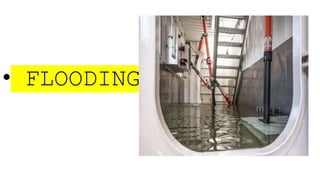
• FLOODING
Flooding
· Inform the
master/engine room.
· Sound the general
alarm.
· Assemble the damage
control parties.
· Close the
watertight doors.
· Close the firescreen doors.
· Locate the extent of the damage.
· Start the bilge and other
available pumping systems.
· Isolate the damaged area,
control the flooding, and reduce
the free surface.
· Send a distress message over the
VHF radio.
· Assemble passengers in the
assembly station.
· Announce over PA system and
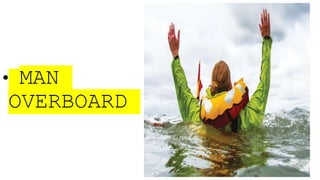
• MAN
OVERBOARD
Man Overboard
· Upon sighting a person
overboard, throw a ring lifebuoy
with lifeline into the water.
· Inform the master.
· Perform the Williamson Turn.
· Launch the rescue boat.
· Recover the person.
· Follow the procedures under
“Medical emergency” as
appropriate.
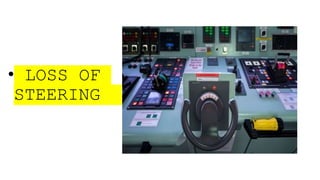
• LOSS OF
STEERING
Loss of Steering or Vessel Not
Under Control
· Inform the master.
· Inform the engine room.
· Engage local steering from the
steering flat.
· Post lookouts and establish lines
of communications between the steering
room and the
bridge.
· Provide status to other vessels in
the area and maintain contact through
· Make an announcement over the PA
system providing a status report to
passengers.
· Assemble passengers at the
assembly station and take a count of
the passengers.
· Inform vessel owners, agents, and
other involved parties.
· Contact shore resources, if
appropriate, such as river police,
towboat or barge companies.
· Have a tugboat push the vessel
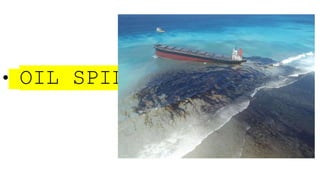
• OIL SPILL
Oil Spill
· Identify and secure the source of
the spill.
· If fueling or transferring oil,
stop immediately.
· Remove or disable potential
ignition sources.
· Inform the master.
· Contain the spill using onboard
equipment.
· Keep passengers away from the
affected area.
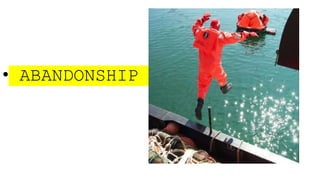
• ABANDONSHIP
Abandon Ship
· A vessel that is tied pier side and that has easy access to
shore should be evacuated as
quickly as possible.
· The decision to abandon an underway vessel must only be
made when all other options
have been exhausted.
· Once the decision to abandon ship is made, inform all crew
members of the decision and
instruct them to go to their stations.
· Inform vessel owners, agents, and other involved parties.
· Contact shore resources, if appropriate, such as river
police and towboat or barge
companies.
· Initiate and maintain contact with other vessels in the
area through VHF channels.
· Announce over the PA system the nature of the emergency and
· Take into account of the passengers that have
been assembled at the assembly or muster
station.
· Inform master of missing or unaccounted
passengers.
· Give instructions to passengers on the next
course of action such as donning a lifejacket,
using a chute or slide, or entering a life raft,
as appropriate.
· Maintain contact with other vessel and shore
resources to plan and execute the most
effective way to evacuate passengers. Such action
could be intentional grounding of the
vessel, running it into shore, or maneuvering
vessel alongside a barge or other rescue

4- Emergency Situation and Shipboard Contingency Plan.pptx

  • 1.
    EMERGENCY SITUATION and CONTENTSOF SHIPBOARD CONTINGENCY PLAN
  • 2.
    information on the natureof the emergency, the steps being taken to deal with the emergency, and updates on the state of emergency as frequently as possible. Well informed persons are able to take
  • 3.
    LIST OF COMMONDISTRESS SITUATION ONBOARD THE SHIP AND ACTIONS TO BE TAKEN DURING EMERGENCY
  • 4.
  • 5.
    Fire and Explosion ·Inform the master. · Inform the engine room and start the fire pumps · Locate the seat of the fire. · Sound the general alarm. · Announce over the PA system the nature of the emergency. · Assemble firefighting parties. · Isolate fire by emergency shut down of blowers, vents, fire screen doors, skylights, etc. · Evacuate passengers to an area of
  • 6.
    · Take acount of passengers and check for missing or injured people. · Proceed to extinguish the fire. · Announce over the VHF radio the vessel’s status and establish communications with vessels in the area, and seek help if required. · Assess the damage to the vessel. · Inform vessel owners and agents. · Inform the Coast Guard. · Inform port and other local authorities such as the fire department and hospitals. · Make the decision to stay or abandon ship. · If the decision is made to abandon ship,
  • 7.
  • 8.
    Collision and Grounding ·Inform the Master. · Inform the engine room. · Close all watertight doors. · Make an announcement over the PA system providing a status report to passengers. · Assemble passengers at the assembly station, provide first aid if required, and take a count of the passengers. · Locate and assess the damage. · Isolate damaged area if possible. · Provide status report to other vessels in the area and maintain contact through VHF channels. · Inform vessel owners, agents, and other involved
  • 9.
    · Contact shoreresources, if appropriate, such as river police and towboat or barge companies. · Take tank soundings to determine any hull breach/oil spill. · In case of oil spill or discharge, take actions as described under “Oil spill”. · In case of fire, take actions as described under “Fire and explosion”. · If the decision is made to abandon
  • 10.
  • 11.
    Flooding · Inform the master/engineroom. · Sound the general alarm. · Assemble the damage control parties. · Close the watertight doors.
  • 12.
    · Close thefirescreen doors. · Locate the extent of the damage. · Start the bilge and other available pumping systems. · Isolate the damaged area, control the flooding, and reduce the free surface. · Send a distress message over the VHF radio. · Assemble passengers in the assembly station. · Announce over PA system and
  • 13.
  • 14.
    Man Overboard · Uponsighting a person overboard, throw a ring lifebuoy with lifeline into the water. · Inform the master. · Perform the Williamson Turn. · Launch the rescue boat. · Recover the person. · Follow the procedures under “Medical emergency” as appropriate.
  • 15.
  • 16.
    Loss of Steeringor Vessel Not Under Control · Inform the master. · Inform the engine room. · Engage local steering from the steering flat. · Post lookouts and establish lines of communications between the steering room and the bridge. · Provide status to other vessels in the area and maintain contact through
  • 17.
    · Make anannouncement over the PA system providing a status report to passengers. · Assemble passengers at the assembly station and take a count of the passengers. · Inform vessel owners, agents, and other involved parties. · Contact shore resources, if appropriate, such as river police, towboat or barge companies. · Have a tugboat push the vessel
  • 18.
  • 19.
    Oil Spill · Identifyand secure the source of the spill. · If fueling or transferring oil, stop immediately. · Remove or disable potential ignition sources. · Inform the master. · Contain the spill using onboard equipment. · Keep passengers away from the affected area.
  • 20.
  • 21.
    Abandon Ship · Avessel that is tied pier side and that has easy access to shore should be evacuated as quickly as possible. · The decision to abandon an underway vessel must only be made when all other options have been exhausted. · Once the decision to abandon ship is made, inform all crew members of the decision and instruct them to go to their stations. · Inform vessel owners, agents, and other involved parties. · Contact shore resources, if appropriate, such as river police and towboat or barge companies. · Initiate and maintain contact with other vessels in the area through VHF channels. · Announce over the PA system the nature of the emergency and
  • 22.
    · Take intoaccount of the passengers that have been assembled at the assembly or muster station. · Inform master of missing or unaccounted passengers. · Give instructions to passengers on the next course of action such as donning a lifejacket, using a chute or slide, or entering a life raft, as appropriate. · Maintain contact with other vessel and shore resources to plan and execute the most effective way to evacuate passengers. Such action could be intentional grounding of the vessel, running it into shore, or maneuvering vessel alongside a barge or other rescue