Biodiversity and CivilEngineering
• Civil engineering and biodiversity are intertwined, as civil engineering
projects can significantly impact ecosystems, and civil engineers have
a role in mitigating negative impacts and promoting biodiversity
through design choices and sustainable practices.
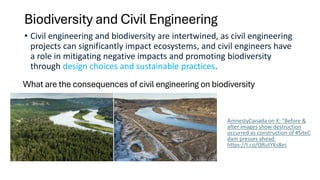
What are the consequences of civil engineering on biodiversity
AmnestyCanada on X: "Before &
after images show destruction
occurred as construction of #SiteC
dam presses ahead:
https://t.co/QRutYKs8ec
3.
Impact of civilengineering on biodiversity
Habitat Loss
and
Fragmentation:
Construction projects,
roads, and
infrastructure
development can lead
to the loss and
fragmentation of
natural habitats,
disrupting ecosystems
and reducing
biodiversity.
Pollution:
Construction activities
can introduce
pollutants into water
and soil, harming
wildlife and
ecosystems.
Climate Change:
Civil engineering
projects contribute to
greenhouse gas
emissions, which
exacerbate climate
change, further
impacting biodiversity.
Material
Sourcing:
The extraction and
processing of materials
for construction can
have negative impacts
on biodiversity, such as
deforestation for
timber or quarrying for
aggregates.
4.
What is biodiversity
•Bio means “Life” and diversity means “variety”
• Hence biodiversity refers wide variety of life on the earth.
• Biodiversity is the biological variety and variability of life on earth.
Biodiversity is typically a measure of variation at the genetic,
species, and ecosystem level
• Biodiversity also differs from one ecosystem to another
• It includes complete spectrum of living organism from
microscopic level (Bacteria, viruses, fungsi etc) to macroscopic
level (insects,fishes, reptiles, bird, mammals)
Biodiversity
6.
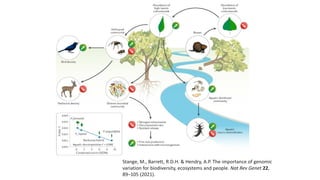
Stange, M., Barrett,R.D.H. & Hendry, A.P. The importance of genomic
variation for biodiversity, ecosystems and people. Nat Rev Genet 22,
89–105 (2021).
7.
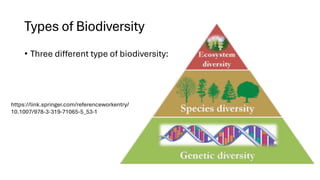
Types of Biodiversity
•Three different type of biodiversity:
https://link.springer.com/referenceworkentry/
10.1007/978-3-319-71065-5_53-1
8.
Types of Biodiversity
•Genetic biodiversity
• Refers to the variations among the genetic resources of the organisms
• Every individual of a particular species differs from each other in their
genetic constitution. That is every human looks different from each other
• There are different varieties in the same species of rice, what, maize,
barley, etc
9.
Species biodiversity
• Speciesdiversity refers to the variety of different types of species
found in particular area
• It is the biodiversity at the most basic level. It includes all the
species ranging from plants to different microorganisms
• No two individuals of the same species are exactly similar. For
example, humans show a lot of diversity among themselves.
10.
Ecological diversity
• Anecosystem is a collection of living and nonliving organisms and
their interaction with each other. Ecological biodiversity refers to
the variations in the plant and animal species living together and
connected by food chains and food webs.
• It is the diversity observed among the different ecosystems in a
different ecosystems like deserts, rainforests, mangroves, etc.,
include ecological diversity
11.
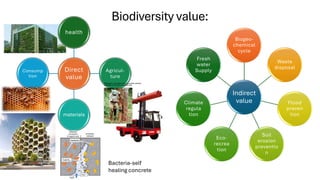
Biodiversity value
Conservation biologyseeks to counter the trend toward
the extinction of thousands of plants and animals.
Biodiversity is a highly valuable resource.
Biodiversity value:
• Direct value
• Individual species provide services to humans and contribute
to the value we should place on biodiversity.
• Indirect value
• biodiversity are widespread and difficult to assign a direct
dollar value.
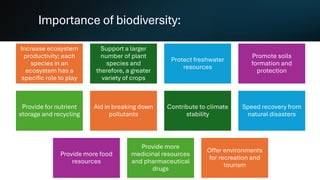
Importance of biodiversity:
Increaseecosystem
productivity; each
species in an
ecosystem has a
specific role to play
Support a larger
number of plant
species and
therefore, a greater
variety of crops
Protect freshwater
resources
Promote soils
formation and
protection
Provide for nutrient
storage and recycling
Aid in breaking down
pollutants
Contribute to climate
stability
Speed recovery from
natural disasters
Provide more food
resources
Provide more
medicinal resources
and pharmaceutical
drugs
Offer environments
for recreation and
tourism
14.
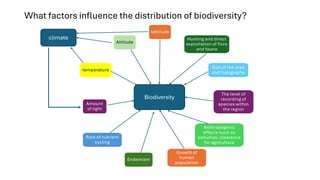
What factors influencethe distribution of biodiversity?
lattitude
Hunting and direct
exploitation of flora
and fauna
Size of the area
and topography
The level of
recording of
species within
the region
Anthropogenic
effects such as
pollution, clearance
for agriculture
Growth of
human
population
Endemism
Rate of nutrient
cycling
Amount
of light
temperature
Altitude
Biodiversity
climate
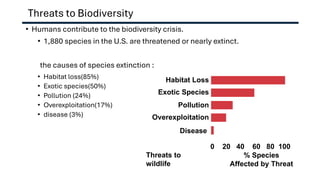
0 20 4060 80 100
Habitat Loss
Exotic Species
Pollution
Overexploitation
Disease
Threats to
wildlife
% Species
Affected by Threat
Threats to Biodiversity
• Humans contribute to the biodiversity crisis.
• 1,880 species in the U.S. are threatened or nearly extinct.
the causes of species extinction :
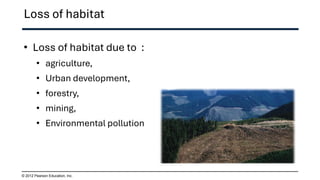
• Habitat loss(85%)
• Exotic species(50%)
• Pollution (24%)
• Overexploitation(17%)
• disease (3%)
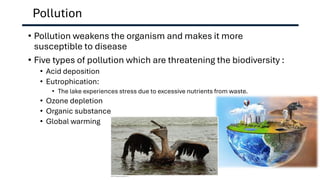
Pollution
• Pollution weakensthe organism and makes it more
susceptible to disease
• Five types of pollution which are threatening the biodiversity :
• Acid deposition
• Eutrophication:
• The lake experiences stress due to excessive nutrients from waste.
• Ozone depletion
• Organic substance
• Global warming
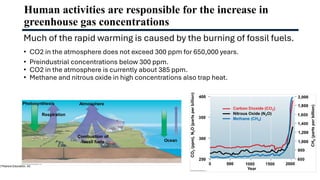
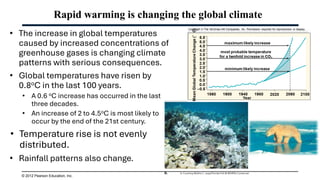
Human activities areresponsible for the increase in
greenhouse gas concentrations
Much of the rapid warming is caused by the burning of fossil fuels.
• CO2 in the atmosphere does not exceed 300 ppm for 650,000 years.
• Preindustrial concentrations below 300 ppm.
• CO2 in the atmosphere is currently about 385 ppm.
• Methane and nitrous oxide in high concentrations also trap heat.
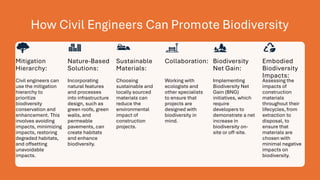
How Civil EngineersCan Promote Biodiversity
Mitigation
Hierarchy:
Civil engineers can
use the mitigation
hierarchy to
prioritize
biodiversity
conservation and
enhancement. This
involves avoiding
impacts, minimizing
impacts, restoring
degraded habitats,
and offsetting
unavoidable
impacts.
Nature-Based
Solutions:
Incorporating
natural features
and processes
into infrastructure
design, such as
green roofs, green
walls, and
permeable
pavements, can
create habitats
and enhance
biodiversity.
Sustainable
Materials:
Choosing
sustainable and
locally sourced
materials can
reduce the
environmental
impact of
construction
projects.
Collaboration:
Working with
ecologists and
other specialists
to ensure that
projects are
designed with
biodiversity in
mind.
Biodiversity
Net Gain:
Implementing
Biodiversity Net
Gain (BNG)
initiatives, which
require
developers to
demonstrate a net
increase in
biodiversity on-
site or off-site.
Embodied
Biodiversity
Impacts:
Assessing the
impacts of
construction
materials
throughout their
lifecycles, from
extraction to
disposal, to
ensure that
materials are
chosen with
minimal negative
impacts on
biodiversity.
24.
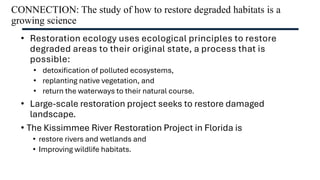
CONNECTION: The studyof how to restore degraded habitats is a
growing science
• Restoration ecology uses ecological principles to restore
degraded areas to their original state, a process that is
possible:
• detoxification of polluted ecosystems,
• replanting native vegetation, and
• return the waterways to their natural course.
• Large-scale restoration project seeks to restore damaged
landscape.
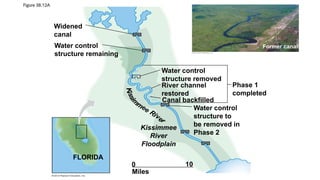
• The Kissimmee River Restoration Project in Florida is
• restore rivers and wetlands and
• Improving wildlife habitats.
25.
Figure 38.12A
Widened
canal
Water control
structureremaining
Water control
structure removed
River channel
restored
Phase 1
completed
Water control
structure to
be removed in
Phase 2
Miles
Kissimmee
River
Floodplain
Canal backfilled
FLORIDA
0 10
Former canal



![Getting Started with Apache Spark: Big Data Made Simple [Free Meetup]](https://cdn.slidesharecdn.com/ss_thumbnails/apachesparkgettingstarted-260203175547-8361bcc3-thumbnail.jpg?width=640&height=640&fit=bounds)


