Lotus Notes to Force.com
Assuming this...

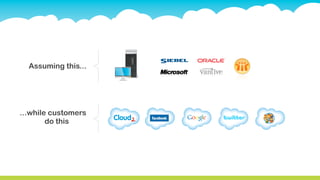
Assuming this...


...while customers
        do this
Why Force.com ?
Easier To Use
‣   User Experience Modeled
    after the “consumer web”
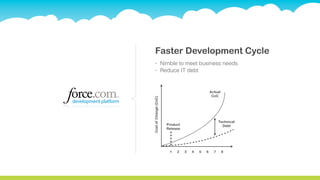
Faster Development Cycle
      ‣                Nimble to meet business needs
      ‣                Reduce IT debt


                                                   Actual
                                                    CoC


Cost of Change (CoC)
                                                         Technical
                         Product                           Debt
                         Release


                          1   2    3   4   5   6     7      8
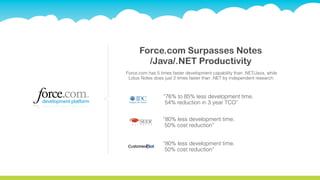
Force.com Surpasses Notes
        /Java/.NET Productivity
Force.com has 5 times faster development capability than .NET/Java, while
 Lotus Notes does just 2 times faster than .NET by independent research.


                  “76% to 85% less development time.
                   54% reduction in 3 year TCO”


                 “80% less development time.
                  50% cost reduction”


                 “80% less development time.
                  50% cost reduction”
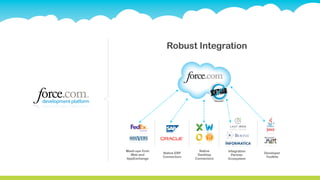
Robust Integration


Mash-ups from                  Native     Integration
                Native ERP                              Developer
  Web and                     Desktop       Partner
                Connectors                               Toolkits
AppExchange                  Connectors   Ecosystem
Less Expensive
Less Capital Expenditure (CAPEX)
‣ No Hardware

‣ No Software

‣ Just Service


Less Operating Expenditure (OPEX)
‣ Lower Administration & Support Cost

‣ No Maintenance Fees
Easier To Govern
‣   Centralized
‣   Multi-Tenant
‣   Granular Security Control
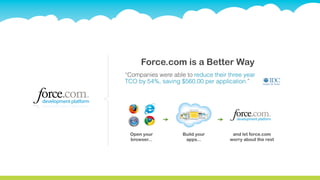
Force.com is a Better Way
“Companies were able to reduce their three year
TCO by 54%, saving $560,00 per application.”


 Open your          Build your        and let force.com
 browser...          apps...         worry about the rest
Migrating Notes
to Force.com
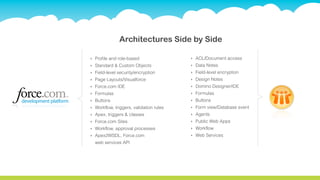
Architectures Side by Side

‣   Profile and role-based                 ‣   ACL/Document access
‣   Standard & Custom Objects              ‣   Data Notes
‣   Field-level security/encryption        ‣   Field-level encryption
‣   Page Layouts/Visualforce               ‣   Design Notes
‣   Force.com IDE                          ‣   Domino Designer/IDE
‣   Formulas                               ‣   Formulas
‣   Buttons                                ‣   Buttons
‣   Workflow, triggers, validation rules   ‣   Form view/Database event
‣   Apex, triggers & classes               ‣   Agents
‣   Force.com Sites                        ‣   Public Web Apps
‣   Workflow, approval processes           ‣   Workflow
‣   Apex2WSDL, Force.com                   ‣   Web Services
    web services API
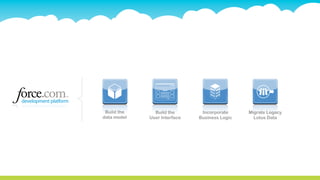
Build the     Build the       Incorporate     Migrate Legacy
data model   User Interface   Business Logic     Lotus Data
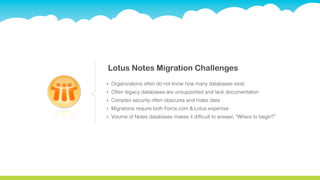
Lotus Notes Migration Challenges
‣   Organizations often do not know how many databases exist
‣   Often legacy databases are unsupported and lack documentation
‣   Complex security often obscures and hides data
‣   Migrations require both Force.com & Lotus expertise
‣   Volume of Notes databases makes it difficult to answer, “Where to begin?”
Value Proposition
‣   EscapeNotes provides automated assessment
    and migration technology
‣   Drastically reduces migration costs and time
    (1 month/app down to to several days)
‣   Easily identify where migration complexity resides
‣   Preserve value of legacy Notes data
‣   Core team includes members of the original
    Lotus Notes engineering team
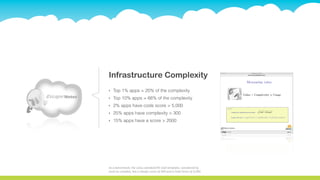
Infrastructure Complexity
‣   Top 1% apps = 20% of the complexity
‣   Top 10% apps = 66% of the complexity
‣   2% apps have code score > 5,000
‣   25% apps have complexity > 300
‣   15% apps have a score > 2000


As
a
benchmark,
the
Lotus
standard
R5
mail
template,
considered
by

most
as
complex,
has
a
Design
score
of
300
and
a
Code
Score
of
2,000.
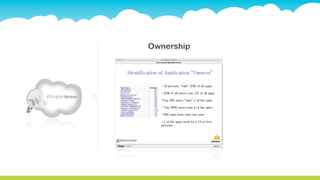
Ownership
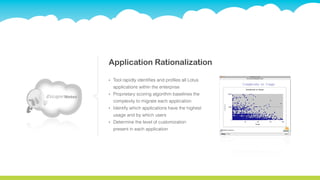
Application Rationalization

‣   Tool rapidly identifies and profiles all Lotus
    applications within the enterprise
‣   Proprietary scoring algorithm baselines the
    complexity to migrate each application
‣   Identify which applications have the highest
    usage and by which users
‣   Determine the level of customization
    present in each application
Application Migration
‣   Automated Lotus applications & data
    migration to Force.com
‣   Ability to identify hidden Lotus data
‣   Visibility into custom Lotus Script and Agents
‣   Direct Lotus to Salesforce conversion
    preserves legacy
Escape From Notes Offering
‣   Escape From Notes Environment Analysis
    ‣ Detailed analysis of Applications, Server, and Security Models

‣   Migration Roadmap
    ‣ Assessment of Analysis including a migration

      approach and roadmap
    ‣ Identification of high value applications for migration
    ‣ Recommendations for consolidation and migration approach

‣   Meta Data Extract
    ‣ Consolidated view of Agents & Lotus Script
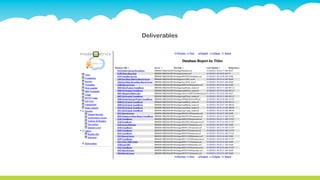
Deliverables
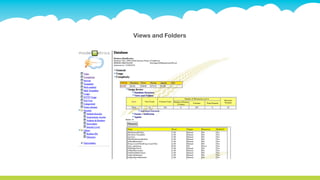
Views and Folders
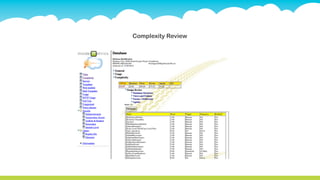
Complexity Review
3-18-11
3-18-11

3-18-11

  • 4.
    Lotus Notes toForce.com
  • 6.
  • 7.
  • 9.
  • 11.
    Easier To Use ‣ User Experience Modeled after the “consumer web”
  • 13.
    Faster Development Cycle ‣ Nimble to meet business needs ‣ Reduce IT debt Actual CoC Cost of Change (CoC) Technical Product Debt Release 1 2 3 4 5 6 7 8
  • 15.
    Force.com Surpasses Notes /Java/.NET Productivity Force.com has 5 times faster development capability than .NET/Java, while Lotus Notes does just 2 times faster than .NET by independent research. “76% to 85% less development time. 54% reduction in 3 year TCO” “80% less development time. 50% cost reduction” “80% less development time. 50% cost reduction”
  • 17.
    Robust Integration Mash-ups from Native Integration Native ERP Developer Web and Desktop Partner Connectors Toolkits AppExchange Connectors Ecosystem
  • 19.
    Less Expensive Less CapitalExpenditure (CAPEX) ‣ No Hardware ‣ No Software ‣ Just Service Less Operating Expenditure (OPEX) ‣ Lower Administration & Support Cost ‣ No Maintenance Fees
  • 21.
    Easier To Govern ‣ Centralized ‣ Multi-Tenant ‣ Granular Security Control
  • 23.
    Force.com is aBetter Way “Companies were able to reduce their three year TCO by 54%, saving $560,00 per application.” Open your Build your and let force.com browser... apps... worry about the rest
  • 25.
  • 27.
    Architectures Side bySide ‣ Profile and role-based ‣ ACL/Document access ‣ Standard & Custom Objects ‣ Data Notes ‣ Field-level security/encryption ‣ Field-level encryption ‣ Page Layouts/Visualforce ‣ Design Notes ‣ Force.com IDE ‣ Domino Designer/IDE ‣ Formulas ‣ Formulas ‣ Buttons ‣ Buttons ‣ Workflow, triggers, validation rules ‣ Form view/Database event ‣ Apex, triggers & classes ‣ Agents ‣ Force.com Sites ‣ Public Web Apps ‣ Workflow, approval processes ‣ Workflow ‣ Apex2WSDL, Force.com ‣ Web Services web services API
  • 29.
    Build the Build the Incorporate Migrate Legacy data model User Interface Business Logic Lotus Data
  • 31.
    Lotus Notes MigrationChallenges ‣ Organizations often do not know how many databases exist ‣ Often legacy databases are unsupported and lack documentation ‣ Complex security often obscures and hides data ‣ Migrations require both Force.com & Lotus expertise ‣ Volume of Notes databases makes it difficult to answer, “Where to begin?”
  • 33.
    Value Proposition ‣ EscapeNotes provides automated assessment and migration technology ‣ Drastically reduces migration costs and time (1 month/app down to to several days) ‣ Easily identify where migration complexity resides ‣ Preserve value of legacy Notes data ‣ Core team includes members of the original Lotus Notes engineering team
  • 35.
    Infrastructure Complexity ‣ Top 1% apps = 20% of the complexity ‣ Top 10% apps = 66% of the complexity ‣ 2% apps have code score > 5,000 ‣ 25% apps have complexity > 300 ‣ 15% apps have a score > 2000 As
a
benchmark,
the
Lotus
standard
R5
mail
template,
considered
by
 most
as
complex,
has
a
Design
score
of
300
and
a
Code
Score
of
2,000.
  • 37.
  • 39.
    Application Rationalization ‣ Tool rapidly identifies and profiles all Lotus applications within the enterprise ‣ Proprietary scoring algorithm baselines the complexity to migrate each application ‣ Identify which applications have the highest usage and by which users ‣ Determine the level of customization present in each application
  • 41.
    Application Migration ‣ Automated Lotus applications & data migration to Force.com ‣ Ability to identify hidden Lotus data ‣ Visibility into custom Lotus Script and Agents ‣ Direct Lotus to Salesforce conversion preserves legacy
  • 43.
    Escape From NotesOffering ‣ Escape From Notes Environment Analysis ‣ Detailed analysis of Applications, Server, and Security Models ‣ Migration Roadmap ‣ Assessment of Analysis including a migration approach and roadmap ‣ Identification of high value applications for migration ‣ Recommendations for consolidation and migration approach ‣ Meta Data Extract ‣ Consolidated view of Agents & Lotus Script
  • 45.
  • 46.
  • 47.