MEDICAL SURGICAL NURSING 1
300LEVEL, FIRST SEMESTER
FLUIDS AND ELECTROLYTES
BY
MR POSSIBLE OMINIGBO
OBJECTIVES/ARES TO COVER
Fluids and Electrolytes
 Homeostasis
 Negative and Positive Feedback
 Body Fluids
 Location of Fluids
 Fluid Regulation Mechanisms
 Normal Intake and Output
 Overhydration and Edema
 Dehydration
 Electrolytes
 Fluid and Electrolyte Transport
 Permeability of Membranes
 Passive Transport
 Active Transport
 Fluid and Electrolyte Balance
 Acid-Base Balance
 Acid, Bases, and Salts
 Potential of Hydrogen
 Buffers
 Classification
 Pathophysiology
 Causes
 Describe variables that influence fluid and electrolyte
balance
 Identify factors related to fluid/electrolyte balance
across the life span
 Assess a patient’s nutritional and fluid/electrolyte
status
 Outline specific nursing interventions to promote fluid
and electrolyte balance
 Base decisions on the signs and symptoms of fluid
volume excess and fluid volume deficit
 Base decisions on the interpretation of diagnostic tests
and lab values indicative of a disturbance in fluid and
electrolyte balance
 Identify evidence-based practices
 Clinical Manifestations
 Complications
 Assessment and Diagnostic Findings
 Medical Management
 Pharmacologic therapy
 Nursing Management
 Nursing Assessment
 Diagnosis
 Nursing Care Planning & Goals
 Nursing Interventions
 Evaluation
 Discharge and Home Care Guidelines
 Documentation Guidelines
 Parenteral fluid therapy
 intravenous infusions
 Indications for i.v. infusions
 The nurse’s responsibilities in managing iv therapy
 The purpose of intravenous (iv) therapy
 Intravenous infusions - nursing procedure
 Equipments used
 Venipuncture sites/Common i v puncture sites
 General instructions for i.v. infusions
 Nurse’s responsibility in the administration of i.v.
infusions
 Preparation of the patient and the environment
 Procedure
 After care of the patient and the articles
SHOCK
 THE MAIN TYPES OF SHOCK INCLUDE:
 Cardiogenic shock
 Hypovolemic shock
 Anaphylactic shock
 Septic shock
 Neurogenic shock
 PATHOPHYSIOLOGY OF SHOCK
 CAUSES OF SHOCK
 STAGES OF SHOCK, Shock evolves through 3 phases:
 Initial non-progressive phase
 Progressive phase
 Irreversible stage
 COMPLICATIONS
 SYMPTOMS OF SHOCK
 THE TREATMENT FOR SHOCK
 MEDICAL TREATMENT
 ASSESSMENT AND DIAGNOSTIC FINDINGS
 MEDICAL MANAGEMENT
 PHARMACOLOGIC THERAPY
 NURSING MANAGEMENT
 Nursing Diagnosis
 Nursing Care Planning & Goals
 Nursing Interventions
 Evaluation
 PREVENTION
 Documentation Guidelines
INFECTIOUS DISEASES
 Overview
 Symptoms Causes
 Diagnosis and TestsManagement and
TreatmentPreventionOutlook / Prognosis
INTRODUCTION
Electrolytes are substances that have a natural positive or
negative electrical charge when dissolved in water. They help
your body regulate chemical reactions, maintain the balance
between fluids inside and outside your cells, and more. They
are also a key way to diagnose a wide range of medical
conditions and diseases. An adult's body is about 60% water,
which means nearly every fluid and cell in the body contains
electrolytes.
Electrolytes play an important role in bodily functions and
fluid regulation. There is a very narrow target range for
normal electrolyte values, and slight abnormalities can have
devastating consequences. For this reason, it is crucial to
understand normal electrolyte ranges, causes of electrolyte
imbalances, signs and symptoms of imbalances, and
appropriate treatments.
Electrolytes are essential for basic life functioning, such as
maintaining electrical neutrality in cells, generating and
conducting action potentials in the nerves and muscles.
Sodium, potassium, and chloride are the significant
electrolytes along with magnesium, calcium, phosphate, and
bicarbonates. Electrolytes come from our food and fluids.
These electrolytes can have an imbalance, leading to either
high or low levels. High or low levels of electrolytes disrupt
normal bodily functions and can lead to even life-threatening
complications.
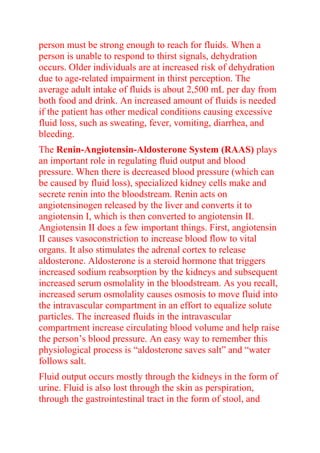
The body gets electrolytes or their components from what you
eat and drink. Your kidneys filter excess electrolytes out of
your body and into your urine. You also lose electrolytes
when you sweat.
Key terms to know:
 Hyper-: A condition that starts with “hyper” means it
involves too much of something.
 Hypo-: A condition that starts with “hypo” means it
involves too little of something.
 Ion: An atom that has an electrical charge.
 Cations: Ions with a positive charge.
 Anions: Ions with a negative charge.
 pH: A scale that measures whether a liquid is an acid or
base. Your body’s natural blood pH is between 7.36 and
7.44.
 Acidic: Has a pH of less than 7.
 Neutral: Has a pH of 7.
 Basic: Has a pH of more than 7 (basic is also known as
“alkaline”).
What electrolytes do
Your cells use electrolytes to conduct electrical charges,
which is how your muscles contract. Those same electrical
charges also help with chemical reactions, especially when it
comes to hydration and the balance of fluids inside and
outside of cells.
The key principle that electrolytes rely on is that certain
chemical elements can naturally hold a positive or a negative
electrical charge. When those elements are dissolved in a
liquid, that liquid can then conduct electricity.
An example of this is salt water, which conducts electricity
easily. Salt consists of sodium (positively charged) and
chlorine (negatively charged), and when combined, their
charges balance each other out. Atoms with an electrical
charge are called ions (positive ions are called cations, while
negative ions are called anions).
Dissolving salt in water splits the sodium and chlorine atoms
apart, which means they go back to being positively and
negatively charged. Electricity jumps between the sodium and
chlorine ions — not the water molecules — because they have
opposite electrical charges.
At the most basic chemical level, electrolytes help your body
maintain balance. Just like electricity uses ions to travel from
place to place in salt water, your body uses ions to transport
chemical compounds in and out of cells.
The key electrolyte components
There are several key elements that your body needs to
maintain normal electrolyte levels. The following section
includes the major elements, marked as positive (+) or
negative (-), and what happens when there’s too much or too
little of that element.
Sodium (+)
Sodium plays a critical role in helping your cells maintain the
right balance of fluid. It’s also used to help cells absorb
nutrients. It’s the most abundant electrolyte ion found in the
body.
 Hypernatremia (too much sodium): Can cause confusion
or behavior changes, unusually strong reflexes and loss
of muscle control, seizures and coma.
 Hyponatremia (not enough sodium): Confusion,
irritability, weakened reflexes, nausea and vomiting,
seizures and coma.
Magnesium (+)
Magnesium helps your cells as they turn nutrients into energy.
Your brain and muscles rely heavily on magnesium to do their
job.
 Hypermagnesemia (too much magnesium): Heart rhythm
changes and arrhythmias, weakened reflexes, decreased
ability to breathe and cardiac arrest (your heart stops).
 Hypomagnesemia (not enough magnesium): Muscle
weakness, twitching and loss of control, heart
arrhythmias. This commonly happens in connection with
calcium and potassium deficiencies.
Potassium (+)
Your cells use potassium alongside sodium. When a sodium
ion enters a cell, a potassium ion leaves, and vice versa.
Potassium is also especially critical to your heart function.
Too much or too little can cause serious heart problems.
 Hyperkalemia (too much potassium): Weakness, inability
to move muscles, confusion, irregular heart rhythms
(arrhythmias).
 Hypokalemia (not enough potassium): Muscle weakness
and cramps, feeling unusually thirsty and needing to pee
frequently, dizziness or passing out when standing up too
quickly. At higher levels, muscle tissue begins to break
down (a condition called rhabdomyolysis, which can
severely damage your kidneys) and heart arrhythmias
become a serious threat.
Calcium (+)
Calcium is a key element in your body, but it does more than
just build strong bones and teeth. It’s also used to control your
muscles, transmit signals in your nerves, manage your heart
rhythm and more. Having too much or too little calcium in
your blood can cause a wide range of symptoms across
different systems in your body.
Hypercalcemia (too much calcium)
 Brain: Headache, fatigue, apathy and confusion.
 Digestive tract: Constipation, abdominal pain and
vomiting.
 Kidneys: Frequent need to pee, kidney stones and kidney
failure.
 Heart: Arrhythmias, some of which can be severe.
 Skeletal: Pain in the bones and joints.
Hypocalcemia (not enough calcium)
 Brain: Confusion and behavior changes.
 Muscles: Unusually strong reflexes and loss of muscle
control, muscle twitching, spasms in the throat muscles
making it hard to speak or breathe.
Chloride (-)
Chloride (the name for a chlorine ion) is the second-most
abundant ion in the body. It’s also a key part of how your cells
maintain their internal and external balance of fluid. It also
plays a role in maintaining the body’s natural pH balance.
Hyperchloremia (too much chloride)
This can cause acidosis, which is when your blood’s acidity is
too high. It results in nausea, vomiting and fatigue, as well as
rapid, deeper breathing and confusion. This usually happens
in connection with too much or too little potassium.
 When related to hyperkalemia: When associated with too
much potassium, it can cause severe kidney problems or
kidney failure.
 When related to hypokalemia: When connected with too
little potassium, it can cause diarrhea, fluid leakage from
the pancreas, and other serious urinary tract problems.
Hypochloremia (not enough chloride)
 This causes your blood to become more alkaline, a
condition called alkalosis. It usually happens with
hyponatremia or vomiting. Symptoms of alkalosis are
apathy, confusion, arrhythmias and muscle twitching or
loss of control.
Phosphate (-)
Phosphate is a phosphorous-based molecule that’s a key part
of transporting chemical compounds and molecules outside
your cells. It helps your cells metabolize nutrients, and it’s
also a key part of molecules called nucleotides, which are the
building blocks that make up your DNA.
 Hyperphosphatemia (too much phosphate): This
typically causes you to experience hypocalcemia because
your body tries to use calcium as a substitute for
phosphorus. It usually doesn’t cause symptoms until it
becomes severe, and symptoms of hypocalcemia also
often happen with this. It can also be associated with
excessive itching.
 Hypophosphatemia (not enough phosphate): The early
symptom of this condition is usually muscle weakness.
As it gets worse, more severe symptoms occur. They
include rhabdomyolysis (breakdown of muscle tissue,
which can cause severe kidney damage), seizures,
reduced heart function and trouble breathing (caused by
muscle weakness).
Bicarbonate (-)
Not all the carbon dioxide that your body makes gets sent to
your lungs for you to breathe it out. Instead, some gets
recycled into bicarbonate, which your body uses to keep your
blood pH levels normal.
 Acidosis. Too little bicarbonate causes acidosis, where
your blood is too acidic. This causes fatigue, nausea and
vomiting, and you will breathe faster and deeper. It can
also cause confusion.
 Alkalosis. Too much bicarbonate causes alkalosis, where
your blood becomes too alkaline. Symptoms include
confusion, apathy, arrhythmias and muscle twitching.
Tests that help identify electrolyte problems
Electrolyte problems are detectable using several different
varieties of lab tests. Testing usually involves a broader type
of test called a metabolic panel. If those results are abnormal,
your healthcare provider may order follow-up tests, which can
narrow down what’s causing the electrolyte imbalances.
These follow-up tests are critical, as the specific cause of an
electrolyte imbalance may need a specific type of treatment
that won’t work for other causes.
Broader tests that can detect electrolyte problems include the
following blood tests:
Basic metabolic panel
This test looks at several different processes in your body and
shows data related to:
 BUN (blood urea nitrogen). This is a test that shows how
well your kidneys are functioning and may suggest
dehydration.
 The balance of fluids and several electrolytes, including
sodium, potassium, carbon dioxide and chloride levels.
 Blood sugar. This test may indicate diabetes or
prediabetes if you are fasting.
Comprehensive metabolic panel
This test is similar to the basic metabolic panel but with
additional data gathered. The additional items gathered
include:
 Calcium levels.
 Albumin (a protein produced by your liver) levels.
 Total blood protein levels.
 Bilirubin (a chemical compound made in your liver).
 Levels of aspartate aminotransferase (AST) and alanine
aminotransferase (ALT), enzymes that are connected to
your liver function.
Electrolyte panel
This is a broader test like the above metabolic panels, but it
only looks for electrolytes. The electrolytes analyzed include
sodium, chloride, potassium and bicarbonate.
Tests that are more specific for electrolyte problems include:
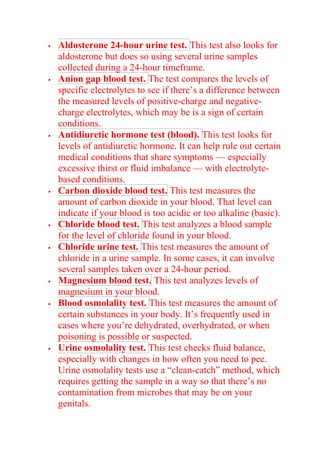
 Aldosterone blood test. This test looks for a specific
hormone produced by your kidneys. The results can
indicate certain types of electrolyte problems.
 Aldosterone 24-hour urine test. This test also looks for
aldosterone but does so using several urine samples
collected during a 24-hour timeframe.
 Anion gap blood test. The test compares the levels of
specific electrolytes to see if there’s a difference between
the measured levels of positive-charge and negative-
charge electrolytes, which may be is a sign of certain
conditions.
 Antidiuretic hormone test (blood). This test looks for
levels of antidiuretic hormone. It can help rule out certain
medical conditions that share symptoms — especially
excessive thirst or fluid imbalance — with electrolyte-
based conditions.
 Carbon dioxide blood test. This test measures the
amount of carbon dioxide in your blood. That level can
indicate if your blood is too acidic or too alkaline (basic).
 Chloride blood test. This test analyzes a blood sample
for the level of chloride found in your blood.
 Chloride urine test. This test measures the amount of
chloride in a urine sample. In some cases, it can involve
several samples taken over a 24-hour period.
 Magnesium blood test. This test analyzes levels of
magnesium in your blood.
 Blood osmolality test. This test measures the amount of
certain substances in your body. It’s frequently used in
cases where you’re dehydrated, overhydrated, or when
poisoning is possible or suspected.
 Urine osmolality test. This test checks fluid balance,
especially with changes in how often you need to pee.
Urine osmolality tests use a “clean-catch” method, which
requires getting the sample in a way so that there’s no
contamination from microbes that may be on your
genitals.
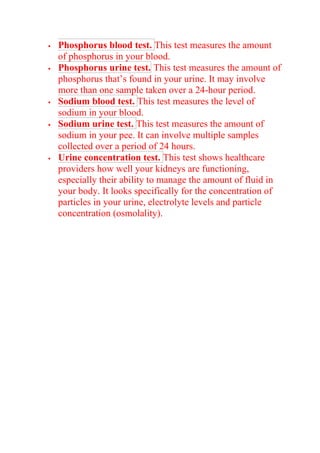
 Phosphorus blood test. This test measures the amount
of phosphorus in your blood.
 Phosphorus urine test. This test measures the amount of
phosphorus that’s found in your urine. It may involve
more than one sample taken over a 24-hour period.
 Sodium blood test. This test measures the level of
sodium in your blood.
 Sodium urine test. This test measures the amount of
sodium in your pee. It can involve multiple samples
collected over a period of 24 hours.
 Urine concentration test. This test shows healthcare
providers how well your kidneys are functioning,
especially their ability to manage the amount of fluid in
your body. It looks specifically for the concentration of
particles in your urine, electrolyte levels and particle
concentration (osmolality).
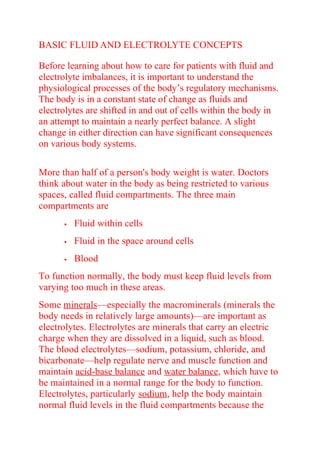
BASIC FLUID AND ELECTROLYTE CONCEPTS
Before learning about how to care for patients with fluid and
electrolyte imbalances, it is important to understand the
physiological processes of the body’s regulatory mechanisms.
The body is in a constant state of change as fluids and
electrolytes are shifted in and out of cells within the body in
an attempt to maintain a nearly perfect balance. A slight
change in either direction can have significant consequences
on various body systems.
More than half of a person's body weight is water. Doctors
think about water in the body as being restricted to various
spaces, called fluid compartments. The three main
compartments are
 Fluid within cells
 Fluid in the space around cells
 Blood
To function normally, the body must keep fluid levels from
varying too much in these areas.
Some minerals—especially the macrominerals (minerals the
body needs in relatively large amounts)—are important as
electrolytes. Electrolytes are minerals that carry an electric
charge when they are dissolved in a liquid, such as blood.
The blood electrolytes—sodium, potassium, chloride, and
bicarbonate—help regulate nerve and muscle function and
maintain acid-base balance and water balance, which have to
be maintained in a normal range for the body to function.
Electrolytes, particularly sodium, help the body maintain
normal fluid levels in the fluid compartments because the
amount of fluid a compartment contains depends on the
amount (concentration) of electrolytes in it. If the electrolyte
concentration is high, fluid moves into that compartment (a
process called osmosis). Likewise, if the electrolyte
concentration is low, fluid moves out of that compartment.
To adjust fluid levels, the body can actively move
electrolytes in or out of cells. Thus, having electrolytes in the
right concentrations (called electrolyte balance) is important
in maintaining fluid balance among the compartments.
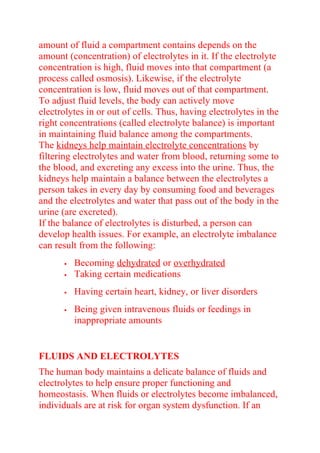
The kidneys help maintain electrolyte concentrations by
filtering electrolytes and water from blood, returning some to
the blood, and excreting any excess into the urine. Thus, the
kidneys help maintain a balance between the electrolytes a
person takes in every day by consuming food and beverages
and the electrolytes and water that pass out of the body in the
urine (are excreted).
If the balance of electrolytes is disturbed, a person can
develop health issues. For example, an electrolyte imbalance
can result from the following:
 Becoming dehydrated or overhydrated
 Taking certain medications
 Having certain heart, kidney, or liver disorders
 Being given intravenous fluids or feedings in
inappropriate amounts
FLUIDS AND ELECTROLYTES
The human body maintains a delicate balance of fluids and
electrolytes to help ensure proper functioning and
homeostasis. When fluids or electrolytes become imbalanced,
individuals are at risk for organ system dysfunction. If an
imbalance goes undetected and is left untreated, organ
systems cannot function properly and ultimately death will
occur. Nurses must be able to recognize subtle changes in
fluid or electrolyte balances in their patients so they can
intervene promptly. Timely assessment and intervention
prevent complications and save lives.
BASIC FLUID AND ELECTROLYTE CONCEPTS
The body is in a constant state of change as fluids and
electrolytes are shifted in and out of cells within the body in
an attempt to maintain a nearly perfect balance. A slight
change in either direction can have significant consequences
on various body systems.
Body Fluids
Body fluids consist of water, electrolytes, blood plasma and
component cells, proteins, and other soluble particles called
solutes. Body fluids are found in two main areas of the body
called intracellular and extracellular compartments.
Intracellular fluids (ICF) are found inside cells and are
made up of protein, water, electrolytes, and solutes. The most
abundant electrolyte in intracellular fluid is potassium.
Intracellular fluids are crucial to the body’s functioning. In
fact, intracellular fluid accounts for 60% of the volume of
body fluids and 40% of a person’s total body weight.
Extracellular fluids (ECF) are fluids found outside of cells.
The most abundant electrolyte in extracellular fluid is sodium.
The body regulates sodium levels to control the movement of
water into and out of the extracellular space due to osmosis.
Extracellular fluids can be further broken down into various
types. The first type is known as intravascular fluid that is
found in the vascular system that consists of arteries, veins,
and capillary networks. Intravascular fluid is whole blood
volume and also includes red blood cells, white blood cells,
plasma, and platelets. Intravascular fluid is the most important
component of the body’s overall fluid balance.
Loss of intravascular fluids causes the nursing
diagnosis Deficient Fluid Volume, also referred to
as hypovolemia. Intravascular fluid loss can be caused by
several factors, such as excessive diuretic use, severe
bleeding, vomiting, diarrhea, and inadequate oral fluid intake.
If intravascular fluid loss is severe, the body cannot maintain
adequate blood pressure and perfusion of vital organs. This
can result in hypovolemic shock and cellular death when
critical organs do not receive an oxygen-rich blood supply
needed to perform cellular function.
A second type of extracellular fluid is interstitial fluid that
refers to fluid outside of blood vessels and between the cells.
For example, if you have ever cared for a patient with heart
failure and noticed increased swelling in the feet and ankles,
you have seen an example of excess interstitial fluid referred
to as edema.
The remaining extracellular fluid, also called transcellular
fluid, refers to fluid in areas such as cerebrospinal, synovial,
intrapleural, and gastrointestinal system
Fluid Movement
Fluid movement occurs inside the body due to osmotic
pressure, hydrostatic pressure, and osmosis. Proper fluid
movement depends on intact and properly functioning
vascular tissue lining, normal levels of protein content within
the blood, and adequate hydrostatic pressures inside the blood
vessels. Intact vascular tissue lining prevents fluid from
leaking out of the blood vessels. Protein content of the blood
(in the form of albumin) causes oncotic pressure that holds
water inside the vascular compartment. For example, patients
with decreased protein levels (i.e., low serum albumin)
experience edema due to the leakage of intravascular fluid
into interstitial areas because of decreased oncotic pressure.
Hydrostatic pressure is defined as pressure that a contained
fluid exerts on what is confining it. In the intravascular fluid
compartment, hydrostatic pressure is the pressure exerted by
blood against the capillaries. Hydrostatic pressure opposes
oncotic pressure at the arterial end of capillaries, where it
pushes fluid and solutes out into the interstitial compartment.
On the venous end of the capillary, hydrostatic pressure is
reduced, which allows oncotic pressure to pull fluids and
solutes back into the capillary.
Filtration occurs when hydrostatic pressure pushes fluids and
solutes through a permeable membrane so they can be
excreted. An example of this process is fluid and waste
filtration through the glomerular capillaries in the kidneys.
This filtration process within the kidneys allows excess fluid
and waste products to be excreted from the body in the form
of urine.
Fluid movement is also controlled through
osmosis. Osmosis is water movement through a
semipermeable membrane, from an area of lesser solute
concentration to an area of greater solute concentration, in an
attempt to equalize the solute concentrations on either side of
the membrane. Only fluids and some particles dissolved in the
fluid are able to pass through a semipermeable membrane;
larger particles are blocked from getting through. Because
osmosis causes fluid to travel due to a concentration gradient
and no energy is expended during the process, it is referred to
as passive transport.
Osmosis
Osmosis causes fluid movement between the intravascular,
interstitial, and intracellular fluid compartments based on
solute concentration. For example, recall a time when you
have eaten a large amount of salty foods. The sodium
concentration of the blood becomes elevated. Due to the
elevated solute concentration within the bloodstream, osmosis
causes fluid to be pulled into the intravascular compartment
from the interstitial and intracellular compartments to try to
equalize the solute concentration. As fluid leaves the cells,
they shrink in size. The shrinkage of cells is what causes
many symptoms of dehydration, such as dry, sticky mucous
membranes. Because the brain cells are especially susceptible
to fluid movement due to osmosis, a headache may occur if
adequate fluid intake does not occur.
Solute Movement
Solute movement is controlled by diffusion, active transport,
and filtration. Diffusion is the movement of molecules from
an area of higher concentration to an area of lower
concentration to equalize the concentration of solutes
throughout an area. (Note that diffusion is different from
osmosis because osmosis is the movement of fluid whereas
diffusion is the movement of solutes.). An example of
diffusion is the movement of inhaled oxygen molecules from
alveoli to the capillaries in the lungs so that they can be
distributed throughout the body.
Diffusion
Active transport, unlike diffusion, involves moving solutes
and ions across a cell membrane from an area of lower
concentration to an area of higher concentration. Because
active transport moves solutes against a concentration
gradient to prevent an overaccumulation of solutes in an area,
energy is required for this process to take place. An example
of active transport is the sodium-potassium pump, which uses
energy to maintain higher levels of sodium in the extracellular
fluid and higher levels of potassium in the intracellular fluid.
Recall that sodium (Na+) is the primary electrolyte in the
extracellular space and potassium (K+) is the primary
electrolyte in the intracellular space.
Fluid and Electrolyte Regulation
The body must carefully regulate intravascular fluid
accumulation and excretion to prevent fluid volume excesses
or deficits and maintain adequate blood pressure. Water
balance is regulated by several mechanisms including ADH,
thirst, and the Renin-Angiotensin-Aldosterone System
(RAAS).
Fluid intake is regulated by thirst. As fluid is lost and the
sodium level increases in the intravascular space, serum
osmolality increases. Serum osmolality is a measure of the
concentration of dissolved solutes in the blood.
Osmoreceptors in the hypothalamus sense increased serum
osmolarity levels and trigger the release of ADH (antidiuretic
hormone) in the kidneys to retain fluid. The osmoreceptors
also produce the feeling of thirst to stimulate increased fluid
intake. However, individuals must be able to mentally and
physically respond to thirst signals to increase their oral
intake. They must be alert, fluids must be accessible, and the
person must be strong enough to reach for fluids. When a
person is unable to respond to thirst signals, dehydration
occurs. Older individuals are at increased risk of dehydration
due to age-related impairment in thirst perception. The
average adult intake of fluids is about 2,500 mL per day from
both food and drink. An increased amount of fluids is needed
if the patient has other medical conditions causing excessive
fluid loss, such as sweating, fever, vomiting, diarrhea, and
bleeding.
The Renin-Angiotensin-Aldosterone System (RAAS) plays
an important role in regulating fluid output and blood
pressure. When there is decreased blood pressure (which can
be caused by fluid loss), specialized kidney cells make and
secrete renin into the bloodstream. Renin acts on
angiotensinogen released by the liver and converts it to
angiotensin I, which is then converted to angiotensin II.
Angiotensin II does a few important things. First, angiotensin
II causes vasoconstriction to increase blood flow to vital
organs. It also stimulates the adrenal cortex to release
aldosterone. Aldosterone is a steroid hormone that triggers
increased sodium reabsorption by the kidneys and subsequent
increased serum osmolality in the bloodstream. As you recall,
increased serum osmolality causes osmosis to move fluid into
the intravascular compartment in an effort to equalize solute
particles. The increased fluids in the intravascular
compartment increase circulating blood volume and help raise
the person’s blood pressure. An easy way to remember this
physiological process is “aldosterone saves salt” and “water
follows salt.
Fluid output occurs mostly through the kidneys in the form of
urine. Fluid is also lost through the skin as perspiration,
through the gastrointestinal tract in the form of stool, and
through the lungs during respiration. Forty percent of daily
fluid output occurs due to these “insensible losses” through
the skin, gastrointestinal tract, and lungs and cannot be
measured. The remaining 60% of daily fluid output is in the
form of urine. Normally, the kidneys produce about 1,500 mL
of urine per day when fluid intake is adequate. Decreased
urine production is an early sign of dehydration or kidney
dysfunction. It is important for nurses to assess urine output in
patients at risk. If a patient demonstrates less than 30 mL/hour
(or 0.5 mL/kg/hour) of urine output over eight hours, the
provider should be notified for prompt intervention. An
average adult’s daily water balance of 2,500 mL fluid intake
balanced with 2,500 mL fluid output.
Fluid Imbalance
Two types of fluid imbalances are excessive fluid volume
(also referred to as hypervolemia) and deficient fluid volume
(also referred to as hypovolemia). These imbalances primarily
refer to imbalances in the extracellular compartment, but can
cause fluid movement in the intracellular compartments based
on the sodium level of the blood.
Excessive Fluid Volume
Excessive fluid volume (also referred to as hypervolemia)
occurs when there is increased fluid retained in the
intravascular compartment. Patients at risk for developing
excessive fluid volume are those with the following
conditions:
 Heart Failure
 Kidney Failure
 Cirrhosis
 Pregnancy
Symptoms of fluid overload include pitting edema, ascites,
and dyspnea and crackles from fluid in the lungs. Edema is
swelling in dependent tissues due to fluid accumulation in the
interstitial spaces. Ascites is fluid retained in the abdomen.
Treatment depends on the cause of the fluid retention. Sodium
and fluids are typically restricted and diuretics are often
prescribed to eliminate the excess fluid. For more information
about the nursing care of patients with excessive fluid volume,
see the “Applying the Nursing Process” section.
Deficient Fluid Volume
Deficient fluid volume (also referred to as hypovolemia or
dehydration) occurs when loss of fluid is greater than fluid
input. Common causes of deficient fluid volume are diarrhea,
vomiting, excessive sweating, fever, and poor oral fluid
intake. Individuals who have a higher risk of dehydration
include the following:
 Older adults
 Infants and children
 Patients with chronic diseases such as diabetes mellitus
and kidney disease
 Patients taking diuretics and other medications that
cause increased urine output
 Individuals who exercise or work outdoors in hot
weather
In adults, symptoms of dehydration are as follows:
 Feeling very thirsty
 Dry mouth
 Headache
 Dry skin
 Urinating and sweating less than usual
 Dark, concentrated urine
 Feeling tired
 Changes in mental status
 Dizziness due to decreased blood pressure
 Elevated heart rate
In infants and young children, additional symptoms of
dehydration include the following:
 Crying without tears
 No wet diapers for three hours or more
 Being unusually sleepy or drowsy
 Irritability
 Eyes that look sunken
 Sunken fontanel
Dehydration can be mild and treated with increased oral
intake such as water or sports drinks. Severe cases can be life-
threatening and require the administration of intravenous
fluids.
HOMEOSTASIS
Homeostasis is the dynamic process in which the body
maintains balance by constantly adjusting to internal and
external stimuli.
Homeostasis is any self-regulating process by which
biological systems tend to maintain stability while adjusting to
conditions that are optimal for survival. If homeostasis is
successful, life continues; if unsuccessful, disaster or death
ensues. The stability attained is actually a dynamic
equilibrium, in which continuous change occurs yet relatively
uniform conditions prevail. The general idea of this self-
regulating process was explored by French physiologist
Claude Bernard in 1849 and the word homeostasis coined by
American neurologist and physiologist Walter Bradford
Cannon in 1926.
Any system in dynamic equilibrium tends to reach a steady
state, a balance that resists outside forces of change. When
such a system is disturbed, built-in regulatory devices respond
to the departures to establish a new balance; such a process is
one of feedback control. All processes of integration and
coordination of function, whether mediated by electrical
circuits or by nervous and hormonal systems, are examples of
homeostatic regulation.
A familiar example of homeostatic regulation in a mechanical
system is the action of a room-temperature regulator, or
thermostat. The heart of the thermostat is a bimetallic strip
that responds to temperature changes by completing or
disrupting an electric circuit. When the room cools, the circuit
is completed, the furnace operates, and the temperature rises.
At a preset level the circuit breaks, the furnace stops, and the
temperature drops. Biological systems are more complex and
have regulators only very roughly comparable to such
mechanical devices.
The control of body temperature in humans is a good example
of homeostasis in a biological system. In humans, normal
body temperature fluctuates around the value of 37 °C (98.6
°F), but various factors can affect this value, including
exposure, hormones, metabolic rate, and disease, leading to
excessively high or low temperatures. The body’s temperature
regulation is controlled by a region in the brain called the
hypothalamus. Feedback about body temperature is carried
through the nervous system to the brain and results in
compensatory adjustments in the breathing rate, the level of
blood sugar, and the metabolic rate. The circulatory system
also plays important roles: its baroreceptors (pressure-
sensitive receptors in the blood vessels that respond to
stretching) relay blood pressure information back to the brain,
and it transports hormones secreted by the hypothalamus and
the thyroid gland to regulate the body’s metabolism. Heat loss
in humans is aided by reduction of activity, by perspiration,
and by heat-exchange mechanisms that permit larger amounts
of blood to circulate near the skin surface. Heat loss is
reduced by insulation, decreased circulation to the skin, and
cultural modification such as the use of clothing, shelter, and
external heat sources. The range between high and low body
temperature levels constitutes the homeostatic plateau—the
“normal” range that sustains life. As either of the two
extremes is approached, corrective action (through negative
feedback) returns the system to the normal range.
Negative and Positive Feedback
 Feedback is the relaying of information about a
given condition to the appropriate organ or system.
 Negative feedback. Negative feedback occurs when
the body reverses an original stimulus for the body
to regain physiologic balance.
 Positive feedback. Positive feedback enhances or
intensifies the original stimulus.
 Examples. Blood pressure control and maintenance
of normal body temperature are examples of
negative feedback while blood clotting after
an injury and a woman in labor are examples of
positive feedback.
Systems Involved in Feedback
The major systems involved in feedback are the nervous and
endocrine systems.
 Nervous system. The nervous system regulates
homeostasis by sensing system deviations and
sending nerve impulses to appropriate organs.
 Endocrine system. The endocrine system uses the
release and action of hormones to maintain
homeostasis.
THERMOREGULATION
It is also called Heat Regulation, the maintenance of an
optimum temperature range by an organism. Cold-blooded
animals (poikilotherms) pick up or lose heat by way of the
environment, moving from one place to another as necessary.
Warm-blooded animals (homoiotherms) have additional
means by which they can heat and cool their bodies. Muscular
activity can be an important source of heat in both kinds of
animals.
FLUID AND ELECTROLYTE BALANCE
The kidneys are essential for regulating the volume and
composition of bodily fluids.
A most critical concept for you to understand is how water
and sodium regulation are integrated to defend the body
against all possible disturbances in the volume and osmolarity
of bodily fluids. Simple examples of such disturbances
include dehydration, blood loss, salt ingestion, and plain water
ingestion.
 Water balance
Water balance is achieved in the body by ensuring that the
amount of water consumed in food and drink (and generated
by metabolism) equals the amount of water excreted. The
consumption side is regulated by behavioral mechanisms,
including thirst and salt cravings. While almost a liter of water
per day is lost through the skin, lungs, and feces, the kidneys
are the major site of regulated excretion of water.
One way the kidneys can directly control the volume of bodily
fluids is by the amount of water excreted in the urine. Either
the kidneys can conserve water by producing urine that is
concentrated relative to plasma, or they can rid the body of
excess water by producing urine that is dilute relative to
plasma.
Direct control of water excretion in the kidneys is exercised
by vasopressin, or anti-diuretic hormone (ADH), a peptide
hormone secreted by the hypothalamus. ADH causes the
insertion of water channels into the membranes of cells lining
the collecting ducts, allowing water reabsorption to occur.
Without ADH, little water is reabsorbed in the collecting
ducts and dilute urine is excreted.
ADH secretion is influenced by several factors (note that
anything that stimulates ADH secretion also stimulates thirst):
1. By special receptors in the hypothalamus that are sensitive
to increasing plasma osmolarity (when the plasma gets too
concentrated). These stimulate ADH secretion.
2. By stretch receptors in the atria of the heart, which are
activated by a larger than normal volume of blood returning to
the heart from the veins. These inhibit ADH secretion,
because the body wants to rid itself of the excess fluid
volume.
3. By stretch receptors in the aorta and carotid arteries, which
are stimulated when blood pressure falls. These stimulate
ADH secretion, because the body wants to maintain enough
volume to generate the blood pressure necessary to deliver
blood to the tissues.
 Sodium balance
In addition to regulating total volume, the osmolarity (the
amount of solute per unit volume) of bodily fluids is also
tightly regulated. Extreme variation in osmolarity causes cells
to shrink or swell, damaging or destroying cellular structure
and disrupting normal cellular function.
Regulation of osmolarity is achieved by balancing the intake
and excretion of sodium with that of water. (Sodium is by far
the major solute in extracellular fluids, so it effectively
determines the osmolarity of extracellular fluids.).
For example, when you become dehydrated you lose
proportionately more water than solute (sodium), so the
osmolarity of your bodily fluids increases. In this situation the
body must conserve water but not sodium, thus stemming the
rise in osmolarity. If you lose a large amount of blood from
trauma or surgery, however, your loses of sodium and water
are proportionate to the composition of bodily fluids. In this
situation the body should conserve both water and sodium.
As noted above, ADH plays a role in lowering osmolarity
(reducing sodium concentration) by increasing water
reabsorption in the kidneys, thus helping to dilute bodily
fluids. To prevent osmolarity from decreasing below normal,
the kidneys also have a regulated mechanism for reabsorbing
sodium in the distal nephron. This mechanism is controlled by
aldosterone, a steroid hormone produced by the adrenal
cortex. Aldosterone secretion is controlled two ways:
1.The adrenal cortex directly senses plasma osmolarity. When
the osmolarity increases above normal, aldosterone secretion
is inhibited. The lack of aldosterone causes less sodium to be
reabsorbed in the distal tubule.
2. The kidneys sense low blood pressure (which results in
lower filtration rates and lower flow through the tubule). This
triggers a complex response to raise blood pressure and
conserve volume. Specialized cells (juxtaglomerular cells) in
the afferent and efferent arterioles produce renin, a peptide
hormone that initiates a hormonal cascade that ultimately
produces angiotensin II. Angiotensin II stimulates the adrenal
cortex to produce aldosterone.
Body Fluids
Fluids make up a large portion of the body, which is
approximately 50%-60% of the total body weight.
Body fluids consist of water, electrolytes, blood plasma and
component cells, proteins, and other soluble particles called
solutes. Body fluids are found in two main areas of the body
called intracellular and extracellular compartments.
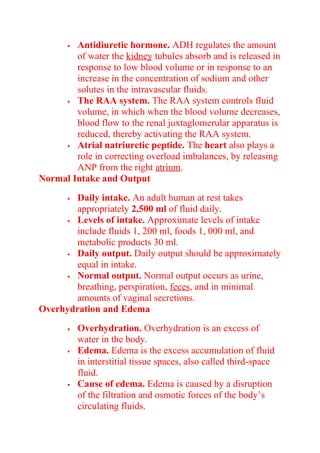
Intracellular and
Extracellular Compartments
Intracellular fluids (ICF) are found inside cells and are
made up of protein, water, electrolytes, and solutes. The most
abundant electrolyte in intracellular fluid is potassium.
Intracellular fluids are crucial to the body’s functioning. In
fact, intracellular fluid accounts for 60% of the volume of
body fluids and 40% of a person’s total body weight.
Extracellular fluids (ECF) are fluids found outside of cells.
The most abundant electrolyte in extracellular fluid is sodium.
The body regulates sodium levels to control the movement of
water into and out of the extracellular space due to osmosis.
Extracellular fluids can be further broken down into various
types. The first type is known as intravascular fluid that is
found in the vascular system that consists of arteries, veins,
and capillary networks. Intravascular fluid is whole blood
volume and also includes red blood cells, white blood cells,
plasma, and platelets. Intravascular fluid is the most important
component of the body’s overall fluid balance.
Loss of intravascular fluids causes the nursing
diagnosis Deficient Fluid Volume, also referred to
as hypovolemia. Intravascular fluid loss can be caused by
several factors, such as excessive diuretic use, severe
bleeding, vomiting, diarrhea, and inadequate oral fluid intake.
If intravascular fluid loss is severe, the body cannot maintain
adequate blood pressure and perfusion of vital organs. This
can result in hypovolemic shock and cellular death when
critical organs do not receive an oxygen-rich blood supply
needed to perform cellular function.
A second type of extracellular fluid is interstitial fluid that
refers to fluid outside of blood vessels and between the cells.
For example, if you have ever cared for a patient with heart
failure and noticed increased swelling in the feet and ankles,
you have seen an example of excess interstitial fluid referred
to as edema.
The remaining extracellular fluid, also called transcellular
fluid, refers to fluid in areas such as cerebrospinal, synovial,
intrapleural, and gastrointestinal system.
Fluid Regulation Mechanisms
 The thirst center. The thirst center in
the hypothalamus stimulates or inhibits the desire
for a person to drink.
 Antidiuretic hormone. ADH regulates the amount
of water the kidney tubules absorb and is released in
response to low blood volume or in response to an
increase in the concentration of sodium and other
solutes in the intravascular fluids.
 The RAA system. The RAA system controls fluid
volume, in which when the blood volume decreases,
blood flow to the renal juxtaglomerular apparatus is
reduced, thereby activating the RAA system.
 Atrial natriuretic peptide. The heart also plays a
role in correcting overload imbalances, by releasing
ANP from the right atrium.
Normal Intake and Output
 Daily intake. An adult human at rest takes
appropriately 2,500 ml of fluid daily.
 Levels of intake. Approximate levels of intake
include fluids 1, 200 ml, foods 1, 000 ml, and
metabolic products 30 ml.
 Daily output. Daily output should be approximately
equal in intake.
 Normal output. Normal output occurs as urine,
breathing, perspiration, feces, and in minimal
amounts of vaginal secretions.
Overhydration and Edema
 Overhydration. Overhydration is an excess of
water in the body.
 Edema. Edema is the excess accumulation of fluid
in interstitial tissue spaces, also called third-space
fluid.
 Cause of edema. Edema is caused by a disruption
of the filtration and osmotic forces of the body’s
circulating fluids.
 Treatment of edema. Diuretics are commonly
given for systemic edema.
Dehydration
 Dehydration. Dehydration is a deficiency of body
water or excessive loss of water.
 External causes. External causes
of dehydration include prolonged sun exposure and
excessive exercise, as well as diarrhea, vomiting,
and burns.
 Treatment of dehydration. Supplemental fluids
and electrolytes are often administered.
Electrolytes
An electrolyte is a substance that will disassociate into ions
when dissolved in water.
 Origins. Electrolytes are found in the form of
inorganic salts, acids, and bases.
 Active chemicals. Electrolyte concentrations are
measured according to their chemical activity and
expressed as milliequivalents.
 Ions. Each chemical element has an electrical
charge, either positive or negative.
 Intracellular electrolytes. Important intracellular
electrolytes are potassium, magnesium, sulfate, and
phosphate, and the most dominant cation is
potassium while the most dominant anion is
phosphate.
 Extracellular electrolytes. Important extracellular
electrolytes include sodium, chlorine, calcium, and
bicarbonate, and the most essential cation is sodium
while chlorine is the most important anion.
Fluid and Electrolyte Transport
Total electrolyte concentration affects the body’s fluid
balance.
 The body cells. Nutrients and oxygen should enter
body cells while waste products should exit the
body.
 The cell membrane. The cell membrane separates
the intracellular environment from the extracellular
environment.
 Permeability. The ability of a membrane to allow
molecules to pass through is known as permeability.
Permeability of Membranes
 Freely permeable membranes. These membranes
allow almost any food or waste substance to pass
through.
 Selectively permeable. The cell membrane is
selectively permeable, meaning that each cell’s
membrane allows only certain specific substances to
pass through.
Passive Transport
 Passive transport. Passive transport mechanisms
include diffusion, osmosis, and filtration.
 Diffusion. Diffusion, or the process of “being
widely spread”, is the random movement of
molecules from an area of higher concentration to
an area of lower concentration.
 Osmosis. Osmosis is the diffusion of a pure solvent,
such as water, across a semipermeable membrane in
response to a concentration gradient in situations
where the molecules of a higher concentration are
non-diffusible.
 Filtration. Filtration is the transport of water and
dissolved materials concentration already exists in
the cell.
Active Transport
 Mechanisms. Active transport mechanisms require
specific enzymes and energy expenditure in the
form of adenosine triphosphate (ATP).
 Processes. Active transport processes can move
solutes “uphill”, against the normal rules of
concentration and pressure.
Fluid and Electrolyte Balance
Fluid and electrolyte balance is vital for the proper
functioning of all body systems.
 Osmolarity. This is the property of particles in a
solution to dissociate into ions.
 Electroneutrality. This is the balance of positive
and negative charges.
Acid-Base Balance
Acid-base balance is another important aspect of homeostasis.
Acid, Bases, and Salts
 Acid. An acid is one type of compound that
contains the hydrogen ion.
 Base. A base or alkali is a compound that contains
the hydroxyl ion.
 Salt. Salt is a combination of a base and an acid and
is created when the positive ions of a base replace
the positive hydrogen ions of an acid.
 Important salts. The body contains several
important salts like sodium chloride, potassium
chloride, calcium chloride, calcium carbonate,
calcium phosphate, and sodium phosphate.
Potential of Hydrogen
 pH. The symbol of pH refers to the potential or
power of hydrogen ion concentration within the
solution.
 Low pH. If the pH number is lower than 7, the
solution is an acid.
 High pH. If the pH is greater than 7, a solution
is basic or alkaline.
 Neutral pH. If the pH is 7, then the solution
is neutral.
 Changes. A change in the pH of a solution by one
pH unit means a tenfold change in hydrogen
concentration.
Buffers
 Buffers. A buffer is a chemical system set up to
resist changes, particularly in hydrogen ion levels.
 Bicarbonate buffer system. Sodium
bicarbonate and carbonic acid are the body’s major
chemical buffers.
 Carbon dioxide. The major compound controlled
by the lungs is CO2, and the respiratory system can
very rapidly compensate for too much acid and too
little acid by increasing or decreasing the respiratory
rate, thereby altering the level of CO2.
 Bicarbonate. Bicarbonate ions are basic
components in the body, and the kidneys are key in
regulating the amount of bicarbonate in the body.
 Measurement of arterial blood gas. The pH level
and amounts of specific gases in the blood indicate
if there is more acid or base and their associated
values.
 Respiratory acidosis. Respiratory acidosis occurs
when breathing is inadequate and PaCO2 builds up.
 Respiratory alkalosis. Respiratory alkalosis occurs
as a result of hyperventilation or
excess aspirin intake.
 Metabolic acidosis. In metabolic acidosis,
metabolism is impaired, causing a decrease in
bicarbonates and a buildup of lactic acid.
 Metabolic alkalosis. Metabolic alkalosis occurs
when bicarbonate ion concentration increases,
causing an elevation in blood pH.
Classification
There are different fluid volume disturbances that may affect
an individual.
 Fluid volume deficit or hypovolemia occurs when
the loss of ECF volume exceeds the intake of fluid.
 Fluid volume excess or hypervolemia refers to
an isotonic volume expansion of the ECF caused by
the abnormal retention of water and sodium in
approximately the same proportions in which they
normally exist in the ECF.
Disturbances in electrolyte balances are common in clinical
practice and must be corrected.
 Hyponatremia refers to a serum sodium level that
is less than 135 mEq/L
 Hypernatremia is a serum sodium level higher
than 145 mEq/L.
 Hypokalemia usually indicates a deficit in total
potassium stores.
 Hyperkalemia refers to a potassium level greater
than 5.0 mEq/L.
 Hypocalcemia are serum levels below 8.6 mg/dl.
 Hypercalcemia is calcium level greater than 10.2
mg/dl.
 Hypomagnesemia refers to a below-normal serum
magnesium concentration.
 Hypermagnesemia are serum levels over 2.3
mg/dl.
 Hypophosphatemia is indicated by a value below
2.5 mg/dl.
 Hyperphosphatemia is a serum phosphorus level
that exceeds 4.5 mg/dl in adults.
Pathophysiology
Nurses need an understanding of the pathophysiology of fluid
and electrolyte balance to anticipate, identify, and respond to
possible imbalances.
 Concentrations. Electrolyte concentrations vary
from those in the ICF to those in the ECF.
 Sodium. Sodium ions outnumber any other cations
in the ECF; therefore it is essential in the fluid
regulation of the body.
 Potassium. The ECF has a low concentration of
potassium and can tolerate only small changes in its
concentrations.
 Maintenance. The body expends a great deal of
energy in maintaining the sodium and potassium
concentrations through cell membrane pumps that
exchange sodium and potassium ions.
 Osmosis. When two different solutions are
separated by a membrane that is impermeable to the
dissolved substances, fluid shifts from the region of
low solute concentration to the high solute
concentration until the solutions are of equal
concentration.
 Diffusion. Diffusion is the natural tendency of a
substance to move from an area of higher
concentration to an area of lower concentration.
PATHOPHYSIOLOGY OF FLUID IMBALANCE IN
THE BODY
Fluid imbalance can arise due to hypovolemia, normovolemia
with maldistribution of fluid, and hypervolemia. Trauma is
among the most frequent causes of hypovolemia, with its
often-profuse attendant blood loss. Another common cause is
dehydration, which primarily entails loss of plasma rather
than whole blood. The consequences of hypovolemia include
reduction in circulating blood volume, lower venous return
and, in profound cases, arterial hypotension. Myocardial
failure may result from increased myocardial oxygen demand
in conjunction with reduced tissue perfusion. Finally,
anaerobic metabolism due to reduced perfusion may produce
acidosis and, together with myocardial dysfunction,
precipitate multi-organ failure.
Causes
Causes of fluid and electrolyte imbalances are discussed
below in general.
 Fluid retention. Retention of sodium is associated
with fluid retention.
 Loss of sodium. Excessive loss of sodium is
associated with decreased volume of body fluid.
 Trauma. Trauma causes release of intracellular
potassium which is extremely dangerous.
 Loss of body fluids. FVD results from loss of body
fluids and occurs more rapidly when coupled with
decreased fluid intake.
 Fluid overload. Fluid volume excess may be
related to a simple fluid overload or diminished
function of the homeostatic mechanisms responsible
for regulating fluid balance.
 Low or high electrolyte intake. Diets low or
excessive in electrolytes could also cause electrolyte
imbalances.
 Medications. There are certain medications that
could lead to electrolyte imbalances when taken
against the physician’s orders.
Clinical Manifestations
Signs and symptoms that occur in fluid and electrolyte
imbalances are discussed below.
 Fluid volume deficit. Clinical signs and symptoms
include acute weight loss, decreased skin turgor,
oliguria, concentrated urine,
orthostatic hypotension, a weak, rapid heart rate,
flattened neck veins, increased temperature, thirst,
decreased or delayed capillary refill, cool, clammy
skin, muscle weakness, and cramps.
 Fluid volume excess. Clinical manifestations of
FVE include edema, distended neck veins, and
crackles.
 Hyponatremia. Signs and symptoms
include anorexia, nausea and vomiting, headache,
lethargy, dizziness, confusion, muscle cramps and
weakness, muscular twitching, seizures, dry skin,
and edema.
 Hypernatremia. The signs and symptoms are
thirsts, elevated body temperature, hallucinations,
lethargy, restlessness, pulmonary edema, twitching,
increased BP, and pulse.
 Hypokalemia. Clinical manifestations are fatigue,
anorexia, muscle weakness, polyuria,
decreased bowel motility, paresthesia, ileus,
abdominal distention, and hypoactive reflexes
 Hyperkalemia. Signs and symptoms include
muscle weakness, tachycardia, paresthesia,
dysrhythmias, intestinal colic, cramps, abdominal
distention, and anxiety.
 Hypocalcemia. The signs and symptoms are
numbness, tingling of fingers, toes, and circumoral
region, positive Trousseau’s sign and Chvostek’s
sign, seizures, hyperactive deep tendon reflexes,
irritability, and bronchospasm.
 Hypercalcemia. The signs and symptoms include
muscle weakness, constipation, anorexia, nausea
and vomiting, dehydration, hypoactive deep tendon
reflexes lethargy, calcium stones, flank pain,
pathologic fractures, and deep bone pain.
 Hypomagnesemia. Clinical manifestations include
neuromuscular irritability, positive Trousseau’s and
Chvostek’s sign, insomnia, mood changes, anorexia,
vomiting, and increased deep tendon reflexes.
 Hypermagnesemia. Signs and symptoms are
flushing, hypotension, muscle weakness,
drowsiness, hypoactive reflexes, depressed
respirations, and diaphoresis.
 Hypophosphatemia. Signs and symptoms include
paresthesias, muscle weakness, bone pain and
tenderness, chest pain, confusion, seizures, tissue
hypoxia, and nystagmus.
 Hyperphosphatemia. Clinical manifestations are
tetany, tachycardia, anorexia, nausea and vomiting,
muscle weakness, and hyperactive reflexes.
Complications
Fluid and electrolyte imbalances could result in complications
if not treated promptly.
 Dehydration. Fluid volume deficit could result in
dehydration of the body tissues.
 Cardiac overload. Fluid volume excess could
result in cardiac overload if left untreated.
 SIADH. Water is retained abnormally in SIADH.
 Cardiac arrest. Too much potassium administered
could lead to cardiac arrest.
Assessment and Diagnostic Findings
The following are laboratory studies useful in diagnosing fluid
and electrolyte imbalances:
 BUN. BUN may be decreased in FVE due to plasma
dilution.
 Hematocrit. Hematocrit levels in FVD are greater
than normal because there is a decreased plasma
volume.
 Physical examination. A physical exam is
necessary to observe the signs and symptoms of the
imbalances.
 Serum electrolyte levels. Measurement of
electrolyte levels should be performed to check for
the presence of an imbalance.
 ECG. ECG changes can also contribute to the
diagnosis of fluid and electrolyte imbalance.
 ABG analysis. ABG analysis may reveal acid-base
imbalances.
Medical Management
Treatment of fluid and volume imbalances needs accuracy to
avoid consequences that can result in complications.
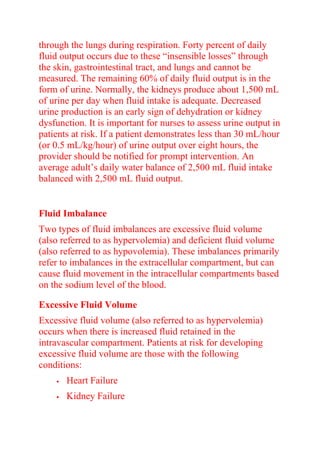
 Isotonic electrolyte solutions. These solutions are
used to treat the hypotensive patient with FVD
because they expand plasma volume.
 Accurate I&O. Accurate and frequent assessments
of I&O should be performed when therapy should
be slowed or increased to prevent volume deficit or
overload.
 Dialysis. Hemodialysis or peritoneal dialysis is
performed to remove nitrogenous wastes and
control potassium and acid-base balance, and
remove sodium and fluid.
 Nutritional therapy. Treatment of fluid and
electrolyte imbalances should involve restrictions or
enforcement of the concerned electrolyte.
Pharmacologic therapy
 AVP receptor agonists. These are new
pharmacologic agents that treat hyponatremia by
stimulating free water excretion.
 Diuretics. To decrease fluid volume in FVE,
diuretics are administered.
 IV calcium gluconate. If serum potassium levels
are dangerously elevated, it may be necessary to
administer IV calcium gluconate.
 Calcitonin. Calcitonin can be used to lower the
serum calcium level and is particularly useful for
patients with heart disease or heart failure who
cannot tolerate large sodium loads.
Nursing Management
Nurses may use effective teaching and communication skills
to help prevent and treat various fluid and electrolyte
disturbances.
Nursing Assessment
Close monitoring should be done for patients with fluid and
electrolyte imbalances.
 Daily weight. Assess the patient’s weight daily to
measure any gains or losses.
 Vital signs. Vital signs should be closely
monitored.
 Physical exam. A physical exam is needed to
reinforce other data about a fluid or electrolyte
imbalance.
Diagnosis
The following diagnoses are found in patients with fluid and
electrolyte imbalances.
 Excess fluid volume related to excess fluid intake
and sodium intake.
 Deficient fluid volume related to active fluid loss
or failure of regulatory mechanisms.
 Imbalanced nutrition: less than body
requirements related to inability to ingest food or
absorb nutrients.
 Imbalanced nutrition: more than body
requirements related to excessive intake.
 Diarrhea related to adverse effects of medications
or malabsorption.
Nursing Care Planning & Goals
Planning and goals for fluid and electrolyte imbalances
include:
 Maintenance of fluid volume at a functional level.
 Display of normal laboratory values.
 Demonstration appropriate changes in lifestyle and
behaviors including eating patterns and food
quantity/quality.
 Reestablishment and maintenance of normal pattern
and GI functioning.
Nursing Interventions
There are specific nursing interventions for fluid and
electrolyte imbalances that can aid in alleviating the patient’s
condition.
 Monitor turgor. Skin and tongue turgor are
indicators of the fluid status of the patient.
 Urine concentration. Obtain urine sample of the
patient to check for urine concentration.
 Oral and parenteral fluids. Administer oral or
parenteral fluids as indicated to correct the deficit.
 Oral rehydration solutions. These solutions
provide fluid, glucose, and electrolytes in
concentrations that are easily absorbed.
 Central nervous system changes. The nurse must
be alert for central nervous system changes such as
lethargy, seizures, confusion, and muscle twitching.
 Diet. The nurse must encourage intake of
electrolytes that are deficient or restrict intake if the
electrolyte levels are excessive.
Evaluation
Evaluation of the care plan can check the effectiveness of the
treatments. The interventions are deemed effective if the
client has:
 Maintained fluid volume at a functional level.
 Displayed normal laboratory results.
 Demonstrated appropriate changes in lifestyle and
behaviors including eating patterns and food
quantity/quality.
 Reestablished and maintained normal pattern and GI
functioning.
Discharge and Home Care Guidelines
After hospitalization, treatment and maintenance of the
condition must continue at home.
 Diet. A diet rich in all the nutrients and electrolytes
that a person needs should be enforced.
 Fluid intake. Fluid intake must take shape
according to the recommendations of the physician.
 Follow-up. A week after discharge, the patient must
return for a follow-up checkup for evaluation of
electrolyte and fluid status.
 Medications. Compliance with prescribed
medications should be strict to avoid recurrence of
the condition.
Documentation Guidelines
Data should be documented for future medical and legal
references. The nurse must document:
 Individual findings, including factors affecting
ability to manage body fluids and degree of deficit.
 I&O, fluid balance, changes in weight, urine
specific gravity, and vital signs.
 Results of diagnostic testing and laboratory studies.
 Plan of care.
 Client’s responses to treatment, teaching, and
actions performed.
 Attainment or progress toward desired outcome.
 Modifications to plan of care.
Fluid and Electrolyte Regulation
The body must carefully regulate intravascular fluid
accumulation and excretion to prevent fluid volume excesses
or deficits and maintain adequate blood pressure. Water
balance is regulated by several mechanisms including ADH,
thirst, and the Renin-Angiotensin-Aldosterone System
(RAAS).
Fluid intake is regulated by thirst. As fluid is lost and the
sodium level increases in the intravascular space, serum
osmolality increases. Serum osmolality is a measure of the
concentration of dissolved solutes in the blood.
Osmoreceptors in the hypothalamus sense increased serum
osmolarity levels and trigger the release of ADH (antidiuretic
hormone) in the kidneys to retain fluid. The osmoreceptors
also produce the feeling of thirst to stimulate increased fluid
intake. However, individuals must be able to mentally and
physically respond to thirst signals to increase their oral
intake. They must be alert, fluids must be accessible, and the
person must be strong enough to reach for fluids. When a
person is unable to respond to thirst signals, dehydration
occurs. Older individuals are at increased risk of dehydration
due to age-related impairment in thirst perception. The
average adult intake of fluids is about 2,500 mL per day from
both food and drink. An increased amount of fluids is needed
if the patient has other medical conditions causing excessive
fluid loss, such as sweating, fever, vomiting, diarrhea, and
bleeding.
The Renin-Angiotensin-Aldosterone System (RAAS) plays
an important role in regulating fluid output and blood
pressure. See diagram below for an illustration of the Renin-
Angiotensin-Aldosterone System (RAAS). When there is
decreased blood pressure (which can be caused by fluid loss),
specialized kidney cells make and secrete renin into the
bloodstream. Renin acts on angiotensinogen released by the
liver and converts it to angiotensin I, which is then converted
to angiotensin II. Angiotensin II does a few important things.
First, angiotensin II causes vasoconstriction to increase blood
flow to vital organs. It also stimulates the adrenal cortex to
release aldosterone. Aldosterone is a steroid hormone that
triggers increased sodium reabsorption by the kidneys and
subsequent increased serum osmolality in the bloodstream. As
you recall, increased serum osmolality causes osmosis to
move fluid into the intravascular compartment in an effort to
equalize solute particles. The increased fluids in the
intravascular compartment increase circulating blood volume
and help raise the person’s blood pressure. An easy way to
remember this physiological process is “aldosterone saves
salt” and “water follows salt.”
Renin Angiotensin Aldosterone System (RAAS)
Fluid output occurs mostly through the kidneys in the form of
urine. Fluid is also lost through the skin as perspiration,
through the gastrointestinal tract in the form of stool, and
through the lungs during respiration. Forty percent of daily
fluid output occurs due to these “insensible losses” through
the skin, gastrointestinal tract, and lungs and cannot be
measured. The remaining 60% of daily fluid output is in the
form of urine. Normally, the kidneys produce about 1,500 mL
of urine per day when fluid intake is adequate. Decreased
urine production is an early sign of dehydration or kidney
dysfunction. It is important for nurses to assess urine output in
patients at risk. If a patient demonstrates less than 30 mL/hour
(or 0.5 mL/kg/hour) of urine output over eight hours, the
provider should be notified for prompt intervention. See
Fluid Imbalance
Two types of fluid imbalances are excessive fluid volume
(also referred to as hypervolemia) and deficient fluid volume
(also referred to as hypovolemia). These imbalances primarily
refer to imbalances in the extracellular compartment, but can
cause fluid movement in the intracellular compartments based
on the sodium level of the blood.
Excessive Fluid Volume
Excessive fluid volume (also referred to as hypervolemia)
occurs when there is increased fluid retained in the
intravascular compartment. Patients at risk for developing
excessive fluid volume are those with the following
conditions:
 Heart Failure
 Kidney Failure
 Cirrhosis
 Pregnancy
Symptoms of fluid overload include pitting edema, ascites,
and dyspnea and crackles from fluid in the lungs. Edema is
swelling in dependent tissues due to fluid accumulation in the
interstitial spaces. Ascites is fluid retained in the abdomen.
Treatment depends on the cause of the fluid retention. Sodium
and fluids are typically restricted and diuretics are often
prescribed to eliminate the excess fluid. For more information
about the nursing care of patients with excessive fluid volume,
see the “Applying the Nursing Process” section.
Deficient Fluid Volume
Deficient fluid volume (also referred to as hypovolemia or
dehydration) occurs when loss of fluid is greater than fluid
input. Common causes of deficient fluid volume are diarrhea,
vomiting, excessive sweating, fever, and poor oral fluid
intake. Individuals who have a higher risk of dehydration
include the following:
 Older adults
 Infants and children
 Patients with chronic diseases such as diabetes mellitus
and kidney disease
 Patients taking diuretics and other medications that cause
increased urine output
 Individuals who exercise or work outdoors in hot
weather
In adults, symptoms of dehydration are as follows:
 Feeling very thirsty
 Dry mouth
 Headache
 Dry skin
 Urinating and sweating less than usual
 Dark, concentrated urine
 Feeling tired
 Changes in mental status
 Dizziness due to decreased blood pressure
 Elevated heart rate
In infants and young children, additional symptoms of
dehydration include the following:
 Crying without tears
 No wet diapers for three hours or more
 Being unusually sleepy or drowsy
 Irritability
 Eyes that look sunken
 Sunken fontanel
Dehydration can be mild and treated with increased oral
intake such as water or sports drinks. Severe cases can be life-
threatening and require the administration of intravenous
fluids.
PARENTERAL FLUID THERAPY
Parenteral fluid therapy is a basic component of the care of
hospitalized infants and children. Clinicians who care for
inpatients must be able to assess the need for parenteral fluid
therapy and to specify the composition of fluid and rate of
administration. Fluid and electrolyte problems can be
challenging but generally can be“tamed” by an organized
approach, application of a few principles of physiology, and
careful monitoring of the patient. It can be useful to consider
separately the amount of fluid needed and the electrolyte
composition for maintenance needs, deficit, and ongoing
losses.
A balance between the volume of fluid taken in by the human
body, and the volume of fluid excreted, is essential for life.
Body fluid balance, which is maintained via various
homeostatic mechanisms, can be disrupted by injury or
disease. Prompt action is usually required to replenish fluid
volumes and restore homeostasis, which is achieved via
intravenous (IV) fluid therapy. Nurses will often encounter
patients with a disrupted fluid balance, particularly in critical
care. They will be involved in assessing patients’ fluid status
and administering and monitoring therapy. Therefore, nurses
have an important role in ensuring the safety and effectiveness
of IV fluid therapy.
THE PURPOSE OF INTRAVENOUS (IV) THERAPY
The purpose of intravenous (IV) therapy is to replace fluid
and electrolytes, provide medications, and replenish blood
volume.
THE NURSE’S RESPONSIBILITIES IN MANAGING IV
THERAPY
The chief goal of fluid management, based upon current
understanding of the pathophysiology of fluid imbalance,
should be to ensure adequate oxygen delivery by optimizing
blood oxygenation, perfusion pressure, and circulating
volume.
The nurse’s responsibilities in managing IV therapy include
the following:
assessing an IV site
priming and hanging a primary IV bag
preparing and hanging a secondary IV bag
calculating IV rates
monitoring the effectiveness of IV therapy
discontinuing a peripheral IV
IV medications and fluids enter the patient’s bloodstream
directly through the vein. They act rapidly within the body to
restore fluid volume and deliver medications. Once a
medication enters the vein, there is no way to terminate this
action. Therefore, it is important to properly prepare the IV
medication or fluid, correctly calculate the dosage, and
administer it safely to the patient. Additionally, IV fluid
administration is considered a medical intervention and
requires a medication order prior to the initiation of fluid
therapy.
INTRAVENOUS INFUSIONS
The introduction of a large amount of fluid into the body via
veins is termed as I.V. infusions. It has the following purpose:
1. To restore the fluid volume that is lost from the body due to
haemorrhage, vomiting, diarrhea, drainage etc.
2. To meet the patient’s basic requirements for calories, water,
minerals and vitamins.
3. To prevent and treat shock and collapse.
4. To supply the body with adequate amounts of fluids,
electrolytes and other nutrients when the patient is unable to
taken inadequate amount by mouth or oral intake in
contraindicated or impracticable.
5. To administer medicines.
INDICATIONS FOR I.V. INFUSIONS
I.V. infusions are indicated in the following situations:
1. To save patient in life threatening situations e.g., patients
having haemorrhage, shock, extensive burns etc.
2.To supply fluids and nutrients to the patients who may have
nothing by mouth or who are unable to ingest oral liquids
owing to prolonged nausea, vomiting, diarrhea, peritonitis,
paralytic ileus, fistulas etc.
3. To supply fluids and nutrients to the patients who are
unable to digest or absorb a diet administered by mouth or
through the nasal tube. E.g., patients who do not have an
anatomically intact intestinal tract or the patients with
septicaemia etc.
4. To dilute toxins in case of toxaemia or septicaemia.
5. To administer medications which are destroyed by the
gastric juices or which will not be absorbed by the gastro-
intestinal tract, if administered orally.
INTRAVENOUS INFUSIONS - NURSING
PROCEDURE
Solutions Used:
1. Nutrient solutions e.g., dextrose 5%, 10%, 20%, 25%, 50%
etc.
2. Electrolyte solutions available in isotonic, hypotonic and
hypertonic concentrations, e.g., normal saline, dextrose saline,
lactated Ringer’s solution, 1/6 molar solution sodium lactate
solutions etc.
3. Alkalinizing and acidifying solutions, e.g., sodium lactate
solution, sodium bicarbonate, potassium chloride, etc.
4. Blood volume expanders. These are plasma substitutes and
contain large molecular substances which will not escape
through the vessel walls and tend to prevent the circulating
fluid from leaking into the tissues. E.g., dextran, lomodex,
haemocoele etc.
An Isotonic solution is one which has an electrolyte content
approximately 310 MEq/L.
A Hypotonic solution is one in which the total electrolyte
content is below 250 MEq/L.
A Hypertonic solution has a total electrolyte content of 375
MEq/L or greater.
In general, isotonic solutions are used for extracellular volume
replacement e.g., in prolonged vomiting. Depending on the
specific electrolyte imbalance, hypertonic or hypotonic
solutions may be used.
Certain additives are frequently instilled into I.V. solutions
such as vitamins, potassium chloride, etc. clients with normal
kidneys who are kept Nil orally should have potassium added
to I.V. solution. The body has no conservation mechanism for
potassium and even when the serum level falls, the kidneys
continue to excrete potassium. Hypokalemia can develop
quickly, if there is no intake of potassium orally or
parenterally.
EQUIPMENTS USED
Correct selection and preparation of equipment assist in safe
and quick placement of an I.V. line. Because fluids are
instilled into the blood stream, sterile techniques are necessary
while doing this procedure. Standard equipment includes (i)
I.V. solution and tubing. (ii) Needle or catheter (iii) antiseptic
(iv) Tourniquet (v) Gloves and Dressing (vi) Arm board.
Other I.V. Equipment include:
1. solution containers
2. various types of tubing
3. volume control devices
Different types of tubings are used to administer a medication.
Macrodip tubing which delivers large drops is needed to
infuse a drug rapidly. I.V. extension tubings may be used to
facilitate changes in position or to increase mobility.
Volume control devices are used for children, for clients with
renal or cardiac failure and for critically ill clients to prevent
sudden, uncontrolled rapid infusion of large volumes.
VENIPUNCTURE SITES
A venipuncture is a technique in which a vein is punctured
transcutaneously by a sharp rigid stylet (e.g. needle or metal
needle) partially covered by a plastic catheter (over – the
needle catheter or ) or by a needle attached to a syringe. The
general purpose of a venipuncture is:
1. To collect a blood specimen
2. Instill a medication
3. Start an I.V. infusion
4. Inject a radio-opaque or radio-active tracer for special
examination
When selecting a site for administration of I.V. fluids, it is
essential to consider the following factors:
1. Conditions of veins (collapsed or too small)
The characteristics of tissues over the vein (oedematous,
injured, diseased, inflamed etc)
2. Purpose and the duration of infusions
3. The type and the amount of I.V. fluid ordered
4. The diagnosis and the general conditions of the patient
5. Age of the client (very young and old clients have fragile
veins)
6. Mobility of the limb: avoid sites that are easily moved or
bumped such as the dorsal surface of the fluid.
COMMON I V PUNCTURE SITES
The most convenient veins for venipuncture in the adult are
the ‘basilic’ and the ‘median cubital vein’ in the antecubital
fossa because these veins are large and superficial. However,
for prolonged infusions, these veins cannot be used without
limiting the movements at the elbow joints by the use of
splints. If the person is right-handed, use of the left arm
allows more independence and vice versa. The most
commonly used veins in the order of their frequency of use
are as follows:
1. veins of the forearm (basilic and cephalic veins)
2. veins in the antecubital fossa (median cubital, cephalic and
basilic vein)
3. veins in the radial area (radial vein)
4. veins in the hand (dorsal metacarpal veins)
5. veins in the foot
6. veins in the thigh (femoral and saphenous veins)
7. veins in the scalp (for infants)
GENERAL INSTRUCTIONS FOR I.V. INFUSIONS
1. Follow strict aseptic technique throughout the procedure.
The I.V. bottles, the I.V. fluids, the drip set etc. should be
sterile. These should be handled under aseptic technique.
2. I.V. fluids are administered only with a clearly written
prescription. The order should specify the type of solution, the
concentration, the amount to be administered and the total
time of infusion.
3. Maintain the specified rate of flow to prevent circulatory
overload.
4. Watch the patient constantly for any unfavorable symptoms
and if found any, report them to the physician or atleast to the
senior nurses. Early detection of complications saves the
patient from unnecessary sufferings. Sometimes the life of the
patient may be endangered during I.V. infusions.
6. The following observations are made throughout the
procedure:
a. Flow rate, dislodgement of needle etc
b. Signs of circulatory overload
c. Urinary output
d. The needle site for infiltration and thrombophlebitis
e. Fluid level in the bottle
f. Patency of the I.V. tubing and presence of kinks in the
tubing. Sometimes the patient may lie on the tube and block
the flow of fluid.
g. The blood circulation at the infused site; use of arm board
and tight bandages used to fix the arm board may occlude the
circulation
h. Intake and output chart for 24 hours. A fluid balance chart
shows on one side the amount and the type of fluid
administered and on the other side the amount lost by kidneys,
stomach etc
i. Fluid and electrolyte balance; regular estimation of the
electrolytes of blood is necessary.
7. When electrolytes are used (e.g. potassium) the rate of flow
should be very low; otherwise a cardiac arrest may occur.
8. Observe the ‘five right’ rule – the right patient, the right
medicine, the right dose, the right time, and the right method
of administration.
9. Always check the expiry date of the fluid before opening
the bottles; never use the fluid which has crossed the expiry
date.
10. Shake the fluid and look for the suspended articles; fluids
that are discolored, cloudy in appearance or contain
suspended articles should not be used for infusion.
11. Make sure that the drip is sterile and is in good working
order.
12. Select a proper site for infusions. Do not use any site that
is tender, red, oedematous and inflamed for infusions.
13. Patients who are on long term I.V. fluids, the amount of
fluid administered should meet the caloric requirement of the
patient. Electrolytes are introduced in the form of sodium
chloride and potassium chloride. Vitamins B and C are
usually added to the drip. The protein requirements are also
met partly.
14. If the flow of fluid is slowed or stopped, find out the
cause. One of the following reasons may be found.
a. Spasm of the vein; stroking the vein gently above the
needle entry may relieve the spasm.
b. Displacement of the needle; this characterized by local
swelling. The flow must be stopped and restarted elsewhere.
c. Kinking or external pressure on the tube. The tubing may
be obstructed by the patient lying on the tube or by a kink.
d Minor displacement of the needle has occurred within the
vein. The bevel of the needle may be pressed against the wall
of the blood vessel. Slight lifting of the needle mount, by
placing a cotton ball under the needle, changing the position
of the arm or elevating the forearm on a pillow also can help
to correct the position of the needle and to restore the flow of
fluid.
e. Low pressure within the I.V. fluid; elevating the height of
the infusion bottle a few inches can increase the rate of flow
by creating more pressure within the bottle.
15. Never allow the bottle to get empty completely to prevent
the entry of air into the tissues. Change the I.V. bottle or
discontinue the I.V. infusion when a small amount of solution
is in the neck of the bottle and before the drip chamber is
empty.
16. If I.V. infusions are to be given immediately before or
after the blood transfusion, always use physiologic saline
(0.9%) to prevent haemolysis of the blood cells in the tubing.
17. Keep the patient warm and comfortable with blankets, if
necessary.
18. Immobilize the joints with splints when the needle is
placed near the joint.
19. If the temperature of the solution is to be maintained near
to the body temperature, apply hot water bottles at a moderate
temperature around the I.V. tubing or bottle.
20. Frequent observation of the vital signs throughout the
procedure will help to detect many complications.
21. Offer bed pan or urinal before the I.V. infusions are
started.
NURSE’S RESPONSIBILITY IN THE
ADMINISTRATION OF I.V. INFUSIONS
Preliminary Assessment
1. Check the patient’s name, bed number and other
identifications.
2. Check the diagnosis and the age of the patient
3. Check the purpose of infusion
4. Check the physician’s orders for the type of infusion fluid,
the strength, the amount and the duration of infusion.
5. Check the consciousness of the patient and his ability to
follow the instructions.
6. Check the general condition of the patient, whether
overhydrated or dehydrated.
7. Check the site of infusion – note the condition of the veins
and tissue at the infusion site.
8. Check the abilities and limitations of the patient.
9. Check the need for additional restraints.
10. Check the patient’s previous experience with infusions.
11. Check the articles available in the patient’s unit.
12. Check the articles for their working order, the sterility of
drip sets and the fluid. Check the expiry date of the fluid.
Check the fluid for discoloration, suspended particles etc.
PREPARATION OF THE PATIENT AND THE
ENVIRONMENT
1. Explain the procedure to the patient to win his confidence
and co-operation. Explain the sequence of the procedure and
tell how he can co-operate in the procedure.
2. Tactfully send the visitors out of the patient’s room.
3. If the general conditions allow, ask the patient to wash
hands with soap and water
4. Provide privacy with curtains and drapes.
5. Restraint the site, in case of children.
6. Offer the bedpan or urinal as needed.
7. See that the patient has taken food or drinks, if allowed.
8. Check the vital signs and record it in the nurse’s record for
the future reference.
9. Divert the attention of the patient away from the infusion
procedures by friendly conversations and by curious articles.
10. If any sedation is ordered, it may be given to quiet the
patient.
11. Adjust the height of the bed for comfortable working of
the nurse.
12. Clear the bedside table or overbed table and arrange the
articles conveniently.
13. Place the patient in a comfortable and relaxed position
suitable for the infusion site.
14. Select a site on the non-dominant arm to give maximum
freedom for the patient.
15. Keep the I.V. stand in position
16. Place the mackintosh and towel under the area where the
infusion is to be given.
17. Provide a good source of light if the lighting in the room is
inadequate.
18. Call for assistance if necessary.
PROCEDURE
Steps of Procedure
1. Wash hands
Reason: to prevent cross infection.
2. Prepare the I.V. solution:
a. Carefully remove the bottle seal from the top of the bottle.
Clean the top with a spirit swab; holding the bottle upright,
insert the drip set and the air vent into the bottle openings.
Reason: every step of the procedure requires aseptic technique
to prevent contamination of the whole apparatus.
b. Close the screw clamp
Reason: to prevent the drip chamber completely filled with
the fluid, and also to prevent the fluid loss from the drip set.
c. Hang the bottle on the I.V. pole about 18 to 24 inches high
Reason: sufficient height needed for gravity to overcome
venous pressure and to facilitate the flow of solution into the
vein.
d. Connect the butterfly or needle to the I.V. tubing and
remove the protective covering.
e. Open the clamp and flush the I.V. fluids through the tubing
and needle into the kidney tray until all air is removed. Clamp
the tubing and reapply the protective cap over the needle.
Reason: air, if left in the tubing, may enter the vein and cause
air embolism.
3. Prepare few strips of adhesive tapes and keep ready for use.
Reason: to stabilize the I.V. needle once it is inserted into the
vein.
4. Prepare the venipuncture site:
a. Place the extremity in a dependent position (lower than the
patient’s heart)
Reason: gravity impedes venous return and distends the vein.
b. Apply a tourniquet firmly 6 to 8 inches proximal to the
venipuncture site.
Reason: the tourniquet obstructs the venous flow and distends
the vein. Care to be taken that the tourniquet is not applied too
tightly to occlude the arterial flow.
c. Massage the or stroke the vein distal to the knot and in the
direction of the venous flow (towards the heart)
Reason: this helps to fill the vein with the blood and the vein
becomes visible.
d. Encourage the patient to clench and unclench the fist
rapidly.
Reason: contracting muscles compresses the distal veins,
forcing blood along the veins and distending them to the point
of tourniquet.
e. Lightly tap the vein with your fingertips.
Reason: helps to distend the vein.
f. If the veins are not visible by the above steps, remove the
tourniquet and apply heat to entire extremity for 10 to 15
minutes. Then apply tourniquet.
Reason: heat dilate the superficial blood vessels (if locating a
vein has taken more than two to three minutes, releasing
tourniquet and reapply. Prolonged obstruction causes
numbness and discomfort in the extremity)
g. Clean the area with a spirit swab
Reason: helps to remove surface bacteria.
h. Dry the area with a sterile dry swab
Reason: if alcohol enters the vein, it can cause reactive
vasospasm. (do not touch the area after cleaning and drying to
ensure asepsis)
5. Insert the needle into the vein
a. Grasp the arm distally to the point of entry of the needle.
Place left thumb one inch below the expected point of entry.
Pull the skin taut.
Reason: taut skin will help to locate and maintain the vein in
position. It also makes initial tissue penetration less painful.
b. Holding the needle at a 30 degree angle with the bevel up.
Pierce the skin lateral to the vein. Once the needle enter the
skin, lower the angle of the needle, so it becomes parallel with
the skin. Follow the course of the vein and pierce the side of
the vein.
Reason: lowering the angle, limits the chances of puncturing
both sides of a vein.
c. When backflow of blood occurs into the needle and tubing,
insert the needle further up, into the vein about ¾ to 1 inch.
Reason: back flow of blood ensures that the needle is in the
vein. Pushing the needle further up in the vein, prevents
dislodging of the needle from the vein.
d. Release the tourniquet and open the clamp to allow the
fluid to run in.
6. Secure the needle and tubing in place:
a. Secure the scalp vein needle either by the ‘H’ method or by
the ‘criss cross’ method. Apply two strips of adhesive tape to
the wings of needle parallel to the needle. Apply another piece
of tape across the previous two tapes in the shape of an ‘H’
Or
Apply one strip of the adhesive over the wings of the
butterfly. Another strip is brought beneath the needle and
cross to the opposite sides over the wings.
Reason: to ensure that the needle may remain in place.
b. Secure the scalp vein tubing to the skin by forming a loop.
Reason: this prevents pulling on the needle when patient
moves in bed.
c. Secure the I.V. tubing to the skin.
Reason: further prevents accidental withdrawal of the needle.
d. Cover entry site with sterile gauze piece
Reason: prevents environmental contamination.
e. Use arm board to immobilize the nearest joint
Reason: armboard reduces the mobility of the arm thereby
preventing dislodging of the needle from its site.
AFTER CARE OF THE PATIENT AND THE
ARTICLES
1. Maintain the specified rate of flow throughout the
procedure.
2. Remove the mackintosh and towel.
3. Make the patient comfortable in bed. Tidy up the bed.
4. If the patient is conscious, instruct the patient not to move
the hand.
5. Collect all articles used for infusion and take them to the
utility room; clean them first with cold water and then with
warm soapy water and rinse them thoroughly with clean
water. Dry them and replace them in their proper places.
6. Send the blood specimens, if any, to the lab.
7.. Record the following information on the nurses record
with date and time
a. Type of fluid administered
b. The concentration of the solution
c. the amount of fluid
d. the rate of flow of fluid
e. any medicines added to the bottle (if medicines are added to
the I.V. bottle, it should be clearly written on the I.V. bottle
also)
f. any reaction noticed in the patient
8. Return to the bedside to assess the comfort of the patient
and to observe any complications developing in the patient.
Stay with the patient and observe the patient constantly in
order to prevent accidents and complications. Watch for any
unfavorable signs such as headache, chills, nausea,
restlessness, dyspnoea etc. watch the infusion site for
swelling, pain etc.
9. If appropriate, teach the family members to observe and
report the following conditions and request nursing assistance.
a. The fluid chamber is not dripping
b. Bottle or bag of fluid nearly empty
c. Backflow of blood into the tubing
d. Needle or connections in the tubing is disconnected
e. Increasing pain and discomfort at the needle site or along
the vein
f. Swelling the tissues around the needle insertion site
g. Any unusual symptoms such as chills, restlessness etc.
10. When leaving the ward, the nurse should report the
following to the relieving nurse.
a. The name and bed number of the patient getting the I.V.
drip
b. The time at which the drip has started
c. The type of fluid that is given
d. The amount of fluid that is administered and how much
more to be administered
e. Any specific precautions to be followed
f. The specified rate of flow
g. The general condition of the patient
11. To change the intravenous bottles:
a. Prepare the new bottle prior to the old one running out
completely. Remove the bottle seal and clean the top with a
spirit swab
b. Clamp the intravenous tubing. Remove the air inlet by the
I.V. tubing. Hang up the new bottle, release the clamp and re-
establish the infusion in the specified rate of flow.
c. Chart the amount and type of fluid infused or added each
time
12. When the prescribed volume of fluid has been infused, it
is discontinued. To discontinue it:
a. Clamp the infusion tubing. Loosen all the adhesive tapes
that have been used to fix the needle and the tubing.
b. Withdraw the needle by pulling on the needle hub in line
with the vein. At the same time hold a dry sterile swab over
the needle site.
c. When the needle is out, apply firm pressure to the site for 2
or 3 minutes, to prevent bleeding.
d. Apply a small sterile dressing over the needle site which
can be removed on the following day.
e. Discard the bottle and tubing as desired.
f. Record the total amount of fluid infused, the amount of
fluid discarded if any, and the time at which the infusion is
stopped.
g. Watch for the general, condition of the patient after the
fluids have been discontinued. If the condition deteriorates,
inform the doctor and restart the infusion.

300LEVEL BMU 2024 NOTE-POSSICANTIBLE.docx

  • 1.
    MEDICAL SURGICAL NURSING1 300LEVEL, FIRST SEMESTER FLUIDS AND ELECTROLYTES BY MR POSSIBLE OMINIGBO
  • 2.
    OBJECTIVES/ARES TO COVER Fluidsand Electrolytes  Homeostasis  Negative and Positive Feedback  Body Fluids  Location of Fluids  Fluid Regulation Mechanisms  Normal Intake and Output  Overhydration and Edema  Dehydration  Electrolytes  Fluid and Electrolyte Transport  Permeability of Membranes  Passive Transport  Active Transport  Fluid and Electrolyte Balance  Acid-Base Balance  Acid, Bases, and Salts  Potential of Hydrogen  Buffers  Classification  Pathophysiology  Causes  Describe variables that influence fluid and electrolyte balance  Identify factors related to fluid/electrolyte balance across the life span  Assess a patient’s nutritional and fluid/electrolyte status
  • 3.
     Outline specificnursing interventions to promote fluid and electrolyte balance  Base decisions on the signs and symptoms of fluid volume excess and fluid volume deficit  Base decisions on the interpretation of diagnostic tests and lab values indicative of a disturbance in fluid and electrolyte balance  Identify evidence-based practices  Clinical Manifestations  Complications  Assessment and Diagnostic Findings  Medical Management  Pharmacologic therapy  Nursing Management  Nursing Assessment  Diagnosis  Nursing Care Planning & Goals  Nursing Interventions  Evaluation  Discharge and Home Care Guidelines  Documentation Guidelines  Parenteral fluid therapy  intravenous infusions  Indications for i.v. infusions  The nurse’s responsibilities in managing iv therapy  The purpose of intravenous (iv) therapy  Intravenous infusions - nursing procedure  Equipments used
  • 4.
     Venipuncture sites/Commoni v puncture sites  General instructions for i.v. infusions  Nurse’s responsibility in the administration of i.v. infusions  Preparation of the patient and the environment  Procedure  After care of the patient and the articles SHOCK  THE MAIN TYPES OF SHOCK INCLUDE:  Cardiogenic shock  Hypovolemic shock  Anaphylactic shock  Septic shock  Neurogenic shock  PATHOPHYSIOLOGY OF SHOCK  CAUSES OF SHOCK  STAGES OF SHOCK, Shock evolves through 3 phases:  Initial non-progressive phase  Progressive phase  Irreversible stage  COMPLICATIONS
  • 5.
     SYMPTOMS OFSHOCK  THE TREATMENT FOR SHOCK  MEDICAL TREATMENT  ASSESSMENT AND DIAGNOSTIC FINDINGS  MEDICAL MANAGEMENT  PHARMACOLOGIC THERAPY  NURSING MANAGEMENT  Nursing Diagnosis  Nursing Care Planning & Goals  Nursing Interventions  Evaluation  PREVENTION  Documentation Guidelines INFECTIOUS DISEASES  Overview  Symptoms Causes  Diagnosis and TestsManagement and TreatmentPreventionOutlook / Prognosis
  • 6.
    INTRODUCTION Electrolytes are substancesthat have a natural positive or negative electrical charge when dissolved in water. They help your body regulate chemical reactions, maintain the balance between fluids inside and outside your cells, and more. They are also a key way to diagnose a wide range of medical conditions and diseases. An adult's body is about 60% water, which means nearly every fluid and cell in the body contains electrolytes. Electrolytes play an important role in bodily functions and fluid regulation. There is a very narrow target range for normal electrolyte values, and slight abnormalities can have devastating consequences. For this reason, it is crucial to understand normal electrolyte ranges, causes of electrolyte imbalances, signs and symptoms of imbalances, and appropriate treatments. Electrolytes are essential for basic life functioning, such as maintaining electrical neutrality in cells, generating and
  • 7.
    conducting action potentialsin the nerves and muscles. Sodium, potassium, and chloride are the significant electrolytes along with magnesium, calcium, phosphate, and bicarbonates. Electrolytes come from our food and fluids. These electrolytes can have an imbalance, leading to either high or low levels. High or low levels of electrolytes disrupt normal bodily functions and can lead to even life-threatening complications. The body gets electrolytes or their components from what you eat and drink. Your kidneys filter excess electrolytes out of your body and into your urine. You also lose electrolytes when you sweat. Key terms to know:  Hyper-: A condition that starts with “hyper” means it involves too much of something.  Hypo-: A condition that starts with “hypo” means it involves too little of something.  Ion: An atom that has an electrical charge.  Cations: Ions with a positive charge.  Anions: Ions with a negative charge.  pH: A scale that measures whether a liquid is an acid or base. Your body’s natural blood pH is between 7.36 and 7.44.  Acidic: Has a pH of less than 7.  Neutral: Has a pH of 7.  Basic: Has a pH of more than 7 (basic is also known as “alkaline”).

  • 8.
    What electrolytes do Yourcells use electrolytes to conduct electrical charges, which is how your muscles contract. Those same electrical charges also help with chemical reactions, especially when it comes to hydration and the balance of fluids inside and outside of cells. The key principle that electrolytes rely on is that certain chemical elements can naturally hold a positive or a negative electrical charge. When those elements are dissolved in a liquid, that liquid can then conduct electricity. An example of this is salt water, which conducts electricity easily. Salt consists of sodium (positively charged) and chlorine (negatively charged), and when combined, their charges balance each other out. Atoms with an electrical charge are called ions (positive ions are called cations, while negative ions are called anions). Dissolving salt in water splits the sodium and chlorine atoms apart, which means they go back to being positively and negatively charged. Electricity jumps between the sodium and chlorine ions — not the water molecules — because they have opposite electrical charges. At the most basic chemical level, electrolytes help your body maintain balance. Just like electricity uses ions to travel from place to place in salt water, your body uses ions to transport chemical compounds in and out of cells.
  • 9.
    The key electrolytecomponents There are several key elements that your body needs to maintain normal electrolyte levels. The following section includes the major elements, marked as positive (+) or negative (-), and what happens when there’s too much or too little of that element. Sodium (+) Sodium plays a critical role in helping your cells maintain the right balance of fluid. It’s also used to help cells absorb nutrients. It’s the most abundant electrolyte ion found in the body.  Hypernatremia (too much sodium): Can cause confusion or behavior changes, unusually strong reflexes and loss of muscle control, seizures and coma.  Hyponatremia (not enough sodium): Confusion, irritability, weakened reflexes, nausea and vomiting, seizures and coma. Magnesium (+) Magnesium helps your cells as they turn nutrients into energy. Your brain and muscles rely heavily on magnesium to do their job.  Hypermagnesemia (too much magnesium): Heart rhythm changes and arrhythmias, weakened reflexes, decreased ability to breathe and cardiac arrest (your heart stops).  Hypomagnesemia (not enough magnesium): Muscle weakness, twitching and loss of control, heart arrhythmias. This commonly happens in connection with calcium and potassium deficiencies.
  • 10.
    Potassium (+) Your cellsuse potassium alongside sodium. When a sodium ion enters a cell, a potassium ion leaves, and vice versa. Potassium is also especially critical to your heart function. Too much or too little can cause serious heart problems.  Hyperkalemia (too much potassium): Weakness, inability to move muscles, confusion, irregular heart rhythms (arrhythmias).  Hypokalemia (not enough potassium): Muscle weakness and cramps, feeling unusually thirsty and needing to pee frequently, dizziness or passing out when standing up too quickly. At higher levels, muscle tissue begins to break down (a condition called rhabdomyolysis, which can severely damage your kidneys) and heart arrhythmias become a serious threat. Calcium (+) Calcium is a key element in your body, but it does more than just build strong bones and teeth. It’s also used to control your muscles, transmit signals in your nerves, manage your heart rhythm and more. Having too much or too little calcium in your blood can cause a wide range of symptoms across different systems in your body. Hypercalcemia (too much calcium)  Brain: Headache, fatigue, apathy and confusion.  Digestive tract: Constipation, abdominal pain and vomiting.  Kidneys: Frequent need to pee, kidney stones and kidney failure.  Heart: Arrhythmias, some of which can be severe.
  • 11.
     Skeletal: Painin the bones and joints. Hypocalcemia (not enough calcium)  Brain: Confusion and behavior changes.  Muscles: Unusually strong reflexes and loss of muscle control, muscle twitching, spasms in the throat muscles making it hard to speak or breathe. Chloride (-) Chloride (the name for a chlorine ion) is the second-most abundant ion in the body. It’s also a key part of how your cells maintain their internal and external balance of fluid. It also plays a role in maintaining the body’s natural pH balance. Hyperchloremia (too much chloride) This can cause acidosis, which is when your blood’s acidity is too high. It results in nausea, vomiting and fatigue, as well as rapid, deeper breathing and confusion. This usually happens in connection with too much or too little potassium.  When related to hyperkalemia: When associated with too much potassium, it can cause severe kidney problems or kidney failure.  When related to hypokalemia: When connected with too little potassium, it can cause diarrhea, fluid leakage from the pancreas, and other serious urinary tract problems. Hypochloremia (not enough chloride)  This causes your blood to become more alkaline, a condition called alkalosis. It usually happens with hyponatremia or vomiting. Symptoms of alkalosis are
  • 12.
    apathy, confusion, arrhythmiasand muscle twitching or loss of control. Phosphate (-) Phosphate is a phosphorous-based molecule that’s a key part of transporting chemical compounds and molecules outside your cells. It helps your cells metabolize nutrients, and it’s also a key part of molecules called nucleotides, which are the building blocks that make up your DNA.  Hyperphosphatemia (too much phosphate): This typically causes you to experience hypocalcemia because your body tries to use calcium as a substitute for phosphorus. It usually doesn’t cause symptoms until it becomes severe, and symptoms of hypocalcemia also often happen with this. It can also be associated with excessive itching.  Hypophosphatemia (not enough phosphate): The early symptom of this condition is usually muscle weakness. As it gets worse, more severe symptoms occur. They include rhabdomyolysis (breakdown of muscle tissue, which can cause severe kidney damage), seizures, reduced heart function and trouble breathing (caused by muscle weakness). Bicarbonate (-) Not all the carbon dioxide that your body makes gets sent to your lungs for you to breathe it out. Instead, some gets
  • 13.
    recycled into bicarbonate,which your body uses to keep your blood pH levels normal.  Acidosis. Too little bicarbonate causes acidosis, where your blood is too acidic. This causes fatigue, nausea and vomiting, and you will breathe faster and deeper. It can also cause confusion.  Alkalosis. Too much bicarbonate causes alkalosis, where your blood becomes too alkaline. Symptoms include confusion, apathy, arrhythmias and muscle twitching. Tests that help identify electrolyte problems Electrolyte problems are detectable using several different varieties of lab tests. Testing usually involves a broader type of test called a metabolic panel. If those results are abnormal, your healthcare provider may order follow-up tests, which can narrow down what’s causing the electrolyte imbalances. These follow-up tests are critical, as the specific cause of an electrolyte imbalance may need a specific type of treatment that won’t work for other causes. Broader tests that can detect electrolyte problems include the following blood tests: Basic metabolic panel This test looks at several different processes in your body and shows data related to:  BUN (blood urea nitrogen). This is a test that shows how well your kidneys are functioning and may suggest dehydration.
  • 14.
     The balanceof fluids and several electrolytes, including sodium, potassium, carbon dioxide and chloride levels.  Blood sugar. This test may indicate diabetes or prediabetes if you are fasting. Comprehensive metabolic panel This test is similar to the basic metabolic panel but with additional data gathered. The additional items gathered include:  Calcium levels.  Albumin (a protein produced by your liver) levels.  Total blood protein levels.  Bilirubin (a chemical compound made in your liver).  Levels of aspartate aminotransferase (AST) and alanine aminotransferase (ALT), enzymes that are connected to your liver function. Electrolyte panel This is a broader test like the above metabolic panels, but it only looks for electrolytes. The electrolytes analyzed include sodium, chloride, potassium and bicarbonate. Tests that are more specific for electrolyte problems include:  Aldosterone blood test. This test looks for a specific hormone produced by your kidneys. The results can indicate certain types of electrolyte problems.
  • 15.
     Aldosterone 24-hoururine test. This test also looks for aldosterone but does so using several urine samples collected during a 24-hour timeframe.  Anion gap blood test. The test compares the levels of specific electrolytes to see if there’s a difference between the measured levels of positive-charge and negative- charge electrolytes, which may be is a sign of certain conditions.  Antidiuretic hormone test (blood). This test looks for levels of antidiuretic hormone. It can help rule out certain medical conditions that share symptoms — especially excessive thirst or fluid imbalance — with electrolyte- based conditions.  Carbon dioxide blood test. This test measures the amount of carbon dioxide in your blood. That level can indicate if your blood is too acidic or too alkaline (basic).  Chloride blood test. This test analyzes a blood sample for the level of chloride found in your blood.  Chloride urine test. This test measures the amount of chloride in a urine sample. In some cases, it can involve several samples taken over a 24-hour period.  Magnesium blood test. This test analyzes levels of magnesium in your blood.  Blood osmolality test. This test measures the amount of certain substances in your body. It’s frequently used in cases where you’re dehydrated, overhydrated, or when poisoning is possible or suspected.  Urine osmolality test. This test checks fluid balance, especially with changes in how often you need to pee. Urine osmolality tests use a “clean-catch” method, which requires getting the sample in a way so that there’s no contamination from microbes that may be on your genitals.
  • 16.
     Phosphorus bloodtest. This test measures the amount of phosphorus in your blood.  Phosphorus urine test. This test measures the amount of phosphorus that’s found in your urine. It may involve more than one sample taken over a 24-hour period.  Sodium blood test. This test measures the level of sodium in your blood.  Sodium urine test. This test measures the amount of sodium in your pee. It can involve multiple samples collected over a period of 24 hours.  Urine concentration test. This test shows healthcare providers how well your kidneys are functioning, especially their ability to manage the amount of fluid in your body. It looks specifically for the concentration of particles in your urine, electrolyte levels and particle concentration (osmolality).
  • 17.
    BASIC FLUID ANDELECTROLYTE CONCEPTS Before learning about how to care for patients with fluid and electrolyte imbalances, it is important to understand the physiological processes of the body’s regulatory mechanisms. The body is in a constant state of change as fluids and electrolytes are shifted in and out of cells within the body in an attempt to maintain a nearly perfect balance. A slight change in either direction can have significant consequences on various body systems. More than half of a person's body weight is water. Doctors think about water in the body as being restricted to various spaces, called fluid compartments. The three main compartments are  Fluid within cells  Fluid in the space around cells  Blood To function normally, the body must keep fluid levels from varying too much in these areas. Some minerals—especially the macrominerals (minerals the body needs in relatively large amounts)—are important as electrolytes. Electrolytes are minerals that carry an electric charge when they are dissolved in a liquid, such as blood. The blood electrolytes—sodium, potassium, chloride, and bicarbonate—help regulate nerve and muscle function and maintain acid-base balance and water balance, which have to be maintained in a normal range for the body to function. Electrolytes, particularly sodium, help the body maintain normal fluid levels in the fluid compartments because the
  • 18.
    amount of fluida compartment contains depends on the amount (concentration) of electrolytes in it. If the electrolyte concentration is high, fluid moves into that compartment (a process called osmosis). Likewise, if the electrolyte concentration is low, fluid moves out of that compartment. To adjust fluid levels, the body can actively move electrolytes in or out of cells. Thus, having electrolytes in the right concentrations (called electrolyte balance) is important in maintaining fluid balance among the compartments. The kidneys help maintain electrolyte concentrations by filtering electrolytes and water from blood, returning some to the blood, and excreting any excess into the urine. Thus, the kidneys help maintain a balance between the electrolytes a person takes in every day by consuming food and beverages and the electrolytes and water that pass out of the body in the urine (are excreted). If the balance of electrolytes is disturbed, a person can develop health issues. For example, an electrolyte imbalance can result from the following:  Becoming dehydrated or overhydrated  Taking certain medications  Having certain heart, kidney, or liver disorders  Being given intravenous fluids or feedings in inappropriate amounts FLUIDS AND ELECTROLYTES The human body maintains a delicate balance of fluids and electrolytes to help ensure proper functioning and homeostasis. When fluids or electrolytes become imbalanced, individuals are at risk for organ system dysfunction. If an
  • 19.
    imbalance goes undetectedand is left untreated, organ systems cannot function properly and ultimately death will occur. Nurses must be able to recognize subtle changes in fluid or electrolyte balances in their patients so they can intervene promptly. Timely assessment and intervention prevent complications and save lives. BASIC FLUID AND ELECTROLYTE CONCEPTS The body is in a constant state of change as fluids and electrolytes are shifted in and out of cells within the body in an attempt to maintain a nearly perfect balance. A slight change in either direction can have significant consequences on various body systems. Body Fluids Body fluids consist of water, electrolytes, blood plasma and component cells, proteins, and other soluble particles called solutes. Body fluids are found in two main areas of the body called intracellular and extracellular compartments. Intracellular fluids (ICF) are found inside cells and are made up of protein, water, electrolytes, and solutes. The most abundant electrolyte in intracellular fluid is potassium. Intracellular fluids are crucial to the body’s functioning. In fact, intracellular fluid accounts for 60% of the volume of body fluids and 40% of a person’s total body weight. Extracellular fluids (ECF) are fluids found outside of cells. The most abundant electrolyte in extracellular fluid is sodium. The body regulates sodium levels to control the movement of water into and out of the extracellular space due to osmosis.
  • 20.
    Extracellular fluids canbe further broken down into various types. The first type is known as intravascular fluid that is found in the vascular system that consists of arteries, veins, and capillary networks. Intravascular fluid is whole blood volume and also includes red blood cells, white blood cells, plasma, and platelets. Intravascular fluid is the most important component of the body’s overall fluid balance. Loss of intravascular fluids causes the nursing diagnosis Deficient Fluid Volume, also referred to as hypovolemia. Intravascular fluid loss can be caused by several factors, such as excessive diuretic use, severe bleeding, vomiting, diarrhea, and inadequate oral fluid intake. If intravascular fluid loss is severe, the body cannot maintain adequate blood pressure and perfusion of vital organs. This can result in hypovolemic shock and cellular death when critical organs do not receive an oxygen-rich blood supply needed to perform cellular function. A second type of extracellular fluid is interstitial fluid that refers to fluid outside of blood vessels and between the cells. For example, if you have ever cared for a patient with heart failure and noticed increased swelling in the feet and ankles, you have seen an example of excess interstitial fluid referred to as edema. The remaining extracellular fluid, also called transcellular fluid, refers to fluid in areas such as cerebrospinal, synovial, intrapleural, and gastrointestinal system Fluid Movement Fluid movement occurs inside the body due to osmotic pressure, hydrostatic pressure, and osmosis. Proper fluid movement depends on intact and properly functioning vascular tissue lining, normal levels of protein content within
  • 21.
    the blood, andadequate hydrostatic pressures inside the blood vessels. Intact vascular tissue lining prevents fluid from leaking out of the blood vessels. Protein content of the blood (in the form of albumin) causes oncotic pressure that holds water inside the vascular compartment. For example, patients with decreased protein levels (i.e., low serum albumin) experience edema due to the leakage of intravascular fluid into interstitial areas because of decreased oncotic pressure. Hydrostatic pressure is defined as pressure that a contained fluid exerts on what is confining it. In the intravascular fluid compartment, hydrostatic pressure is the pressure exerted by blood against the capillaries. Hydrostatic pressure opposes oncotic pressure at the arterial end of capillaries, where it pushes fluid and solutes out into the interstitial compartment. On the venous end of the capillary, hydrostatic pressure is reduced, which allows oncotic pressure to pull fluids and solutes back into the capillary. Filtration occurs when hydrostatic pressure pushes fluids and solutes through a permeable membrane so they can be excreted. An example of this process is fluid and waste filtration through the glomerular capillaries in the kidneys. This filtration process within the kidneys allows excess fluid and waste products to be excreted from the body in the form of urine. Fluid movement is also controlled through osmosis. Osmosis is water movement through a semipermeable membrane, from an area of lesser solute concentration to an area of greater solute concentration, in an attempt to equalize the solute concentrations on either side of the membrane. Only fluids and some particles dissolved in the fluid are able to pass through a semipermeable membrane; larger particles are blocked from getting through. Because
  • 22.
    osmosis causes fluidto travel due to a concentration gradient and no energy is expended during the process, it is referred to as passive transport. Osmosis Osmosis causes fluid movement between the intravascular, interstitial, and intracellular fluid compartments based on solute concentration. For example, recall a time when you have eaten a large amount of salty foods. The sodium concentration of the blood becomes elevated. Due to the elevated solute concentration within the bloodstream, osmosis causes fluid to be pulled into the intravascular compartment from the interstitial and intracellular compartments to try to equalize the solute concentration. As fluid leaves the cells, they shrink in size. The shrinkage of cells is what causes many symptoms of dehydration, such as dry, sticky mucous membranes. Because the brain cells are especially susceptible to fluid movement due to osmosis, a headache may occur if adequate fluid intake does not occur. Solute Movement Solute movement is controlled by diffusion, active transport, and filtration. Diffusion is the movement of molecules from an area of higher concentration to an area of lower concentration to equalize the concentration of solutes throughout an area. (Note that diffusion is different from osmosis because osmosis is the movement of fluid whereas diffusion is the movement of solutes.). An example of diffusion is the movement of inhaled oxygen molecules from alveoli to the capillaries in the lungs so that they can be distributed throughout the body. Diffusion
  • 23.
    Active transport, unlikediffusion, involves moving solutes and ions across a cell membrane from an area of lower concentration to an area of higher concentration. Because active transport moves solutes against a concentration gradient to prevent an overaccumulation of solutes in an area, energy is required for this process to take place. An example of active transport is the sodium-potassium pump, which uses energy to maintain higher levels of sodium in the extracellular fluid and higher levels of potassium in the intracellular fluid. Recall that sodium (Na+) is the primary electrolyte in the extracellular space and potassium (K+) is the primary electrolyte in the intracellular space. Fluid and Electrolyte Regulation The body must carefully regulate intravascular fluid accumulation and excretion to prevent fluid volume excesses or deficits and maintain adequate blood pressure. Water balance is regulated by several mechanisms including ADH, thirst, and the Renin-Angiotensin-Aldosterone System (RAAS). Fluid intake is regulated by thirst. As fluid is lost and the sodium level increases in the intravascular space, serum osmolality increases. Serum osmolality is a measure of the concentration of dissolved solutes in the blood. Osmoreceptors in the hypothalamus sense increased serum osmolarity levels and trigger the release of ADH (antidiuretic hormone) in the kidneys to retain fluid. The osmoreceptors also produce the feeling of thirst to stimulate increased fluid intake. However, individuals must be able to mentally and physically respond to thirst signals to increase their oral intake. They must be alert, fluids must be accessible, and the
  • 24.
    person must bestrong enough to reach for fluids. When a person is unable to respond to thirst signals, dehydration occurs. Older individuals are at increased risk of dehydration due to age-related impairment in thirst perception. The average adult intake of fluids is about 2,500 mL per day from both food and drink. An increased amount of fluids is needed if the patient has other medical conditions causing excessive fluid loss, such as sweating, fever, vomiting, diarrhea, and bleeding. The Renin-Angiotensin-Aldosterone System (RAAS) plays an important role in regulating fluid output and blood pressure. When there is decreased blood pressure (which can be caused by fluid loss), specialized kidney cells make and secrete renin into the bloodstream. Renin acts on angiotensinogen released by the liver and converts it to angiotensin I, which is then converted to angiotensin II. Angiotensin II does a few important things. First, angiotensin II causes vasoconstriction to increase blood flow to vital organs. It also stimulates the adrenal cortex to release aldosterone. Aldosterone is a steroid hormone that triggers increased sodium reabsorption by the kidneys and subsequent increased serum osmolality in the bloodstream. As you recall, increased serum osmolality causes osmosis to move fluid into the intravascular compartment in an effort to equalize solute particles. The increased fluids in the intravascular compartment increase circulating blood volume and help raise the person’s blood pressure. An easy way to remember this physiological process is “aldosterone saves salt” and “water follows salt. Fluid output occurs mostly through the kidneys in the form of urine. Fluid is also lost through the skin as perspiration, through the gastrointestinal tract in the form of stool, and
  • 25.
    through the lungsduring respiration. Forty percent of daily fluid output occurs due to these “insensible losses” through the skin, gastrointestinal tract, and lungs and cannot be measured. The remaining 60% of daily fluid output is in the form of urine. Normally, the kidneys produce about 1,500 mL of urine per day when fluid intake is adequate. Decreased urine production is an early sign of dehydration or kidney dysfunction. It is important for nurses to assess urine output in patients at risk. If a patient demonstrates less than 30 mL/hour (or 0.5 mL/kg/hour) of urine output over eight hours, the provider should be notified for prompt intervention. An average adult’s daily water balance of 2,500 mL fluid intake balanced with 2,500 mL fluid output. Fluid Imbalance Two types of fluid imbalances are excessive fluid volume (also referred to as hypervolemia) and deficient fluid volume (also referred to as hypovolemia). These imbalances primarily refer to imbalances in the extracellular compartment, but can cause fluid movement in the intracellular compartments based on the sodium level of the blood. Excessive Fluid Volume Excessive fluid volume (also referred to as hypervolemia) occurs when there is increased fluid retained in the intravascular compartment. Patients at risk for developing excessive fluid volume are those with the following conditions:  Heart Failure  Kidney Failure
  • 26.
     Cirrhosis  Pregnancy Symptomsof fluid overload include pitting edema, ascites, and dyspnea and crackles from fluid in the lungs. Edema is swelling in dependent tissues due to fluid accumulation in the interstitial spaces. Ascites is fluid retained in the abdomen. Treatment depends on the cause of the fluid retention. Sodium and fluids are typically restricted and diuretics are often prescribed to eliminate the excess fluid. For more information about the nursing care of patients with excessive fluid volume, see the “Applying the Nursing Process” section. Deficient Fluid Volume Deficient fluid volume (also referred to as hypovolemia or dehydration) occurs when loss of fluid is greater than fluid input. Common causes of deficient fluid volume are diarrhea, vomiting, excessive sweating, fever, and poor oral fluid intake. Individuals who have a higher risk of dehydration include the following:  Older adults  Infants and children  Patients with chronic diseases such as diabetes mellitus and kidney disease  Patients taking diuretics and other medications that cause increased urine output  Individuals who exercise or work outdoors in hot weather In adults, symptoms of dehydration are as follows:  Feeling very thirsty
  • 27.
     Dry mouth Headache  Dry skin  Urinating and sweating less than usual  Dark, concentrated urine  Feeling tired  Changes in mental status  Dizziness due to decreased blood pressure  Elevated heart rate In infants and young children, additional symptoms of dehydration include the following:  Crying without tears  No wet diapers for three hours or more  Being unusually sleepy or drowsy  Irritability  Eyes that look sunken  Sunken fontanel Dehydration can be mild and treated with increased oral intake such as water or sports drinks. Severe cases can be life- threatening and require the administration of intravenous fluids. HOMEOSTASIS
  • 28.
    Homeostasis is thedynamic process in which the body maintains balance by constantly adjusting to internal and external stimuli. Homeostasis is any self-regulating process by which biological systems tend to maintain stability while adjusting to conditions that are optimal for survival. If homeostasis is successful, life continues; if unsuccessful, disaster or death ensues. The stability attained is actually a dynamic equilibrium, in which continuous change occurs yet relatively uniform conditions prevail. The general idea of this self- regulating process was explored by French physiologist Claude Bernard in 1849 and the word homeostasis coined by American neurologist and physiologist Walter Bradford Cannon in 1926. Any system in dynamic equilibrium tends to reach a steady state, a balance that resists outside forces of change. When such a system is disturbed, built-in regulatory devices respond to the departures to establish a new balance; such a process is one of feedback control. All processes of integration and coordination of function, whether mediated by electrical circuits or by nervous and hormonal systems, are examples of homeostatic regulation.
  • 29.
    A familiar exampleof homeostatic regulation in a mechanical system is the action of a room-temperature regulator, or thermostat. The heart of the thermostat is a bimetallic strip that responds to temperature changes by completing or disrupting an electric circuit. When the room cools, the circuit is completed, the furnace operates, and the temperature rises. At a preset level the circuit breaks, the furnace stops, and the temperature drops. Biological systems are more complex and have regulators only very roughly comparable to such mechanical devices. The control of body temperature in humans is a good example of homeostasis in a biological system. In humans, normal body temperature fluctuates around the value of 37 °C (98.6 °F), but various factors can affect this value, including exposure, hormones, metabolic rate, and disease, leading to excessively high or low temperatures. The body’s temperature regulation is controlled by a region in the brain called the hypothalamus. Feedback about body temperature is carried through the nervous system to the brain and results in compensatory adjustments in the breathing rate, the level of blood sugar, and the metabolic rate. The circulatory system also plays important roles: its baroreceptors (pressure-
  • 30.
    sensitive receptors inthe blood vessels that respond to stretching) relay blood pressure information back to the brain, and it transports hormones secreted by the hypothalamus and the thyroid gland to regulate the body’s metabolism. Heat loss in humans is aided by reduction of activity, by perspiration, and by heat-exchange mechanisms that permit larger amounts of blood to circulate near the skin surface. Heat loss is reduced by insulation, decreased circulation to the skin, and cultural modification such as the use of clothing, shelter, and external heat sources. The range between high and low body temperature levels constitutes the homeostatic plateau—the “normal” range that sustains life. As either of the two extremes is approached, corrective action (through negative feedback) returns the system to the normal range. Negative and Positive Feedback  Feedback is the relaying of information about a given condition to the appropriate organ or system.  Negative feedback. Negative feedback occurs when the body reverses an original stimulus for the body to regain physiologic balance.  Positive feedback. Positive feedback enhances or intensifies the original stimulus.  Examples. Blood pressure control and maintenance of normal body temperature are examples of negative feedback while blood clotting after
  • 31.
    an injury anda woman in labor are examples of positive feedback. Systems Involved in Feedback The major systems involved in feedback are the nervous and endocrine systems.  Nervous system. The nervous system regulates homeostasis by sensing system deviations and sending nerve impulses to appropriate organs.  Endocrine system. The endocrine system uses the release and action of hormones to maintain homeostasis. THERMOREGULATION It is also called Heat Regulation, the maintenance of an optimum temperature range by an organism. Cold-blooded animals (poikilotherms) pick up or lose heat by way of the environment, moving from one place to another as necessary. Warm-blooded animals (homoiotherms) have additional means by which they can heat and cool their bodies. Muscular activity can be an important source of heat in both kinds of animals. FLUID AND ELECTROLYTE BALANCE
  • 32.
    The kidneys areessential for regulating the volume and composition of bodily fluids. A most critical concept for you to understand is how water and sodium regulation are integrated to defend the body against all possible disturbances in the volume and osmolarity of bodily fluids. Simple examples of such disturbances include dehydration, blood loss, salt ingestion, and plain water ingestion.  Water balance Water balance is achieved in the body by ensuring that the amount of water consumed in food and drink (and generated by metabolism) equals the amount of water excreted. The consumption side is regulated by behavioral mechanisms, including thirst and salt cravings. While almost a liter of water per day is lost through the skin, lungs, and feces, the kidneys are the major site of regulated excretion of water. One way the kidneys can directly control the volume of bodily fluids is by the amount of water excreted in the urine. Either the kidneys can conserve water by producing urine that is concentrated relative to plasma, or they can rid the body of
  • 33.
    excess water byproducing urine that is dilute relative to plasma. Direct control of water excretion in the kidneys is exercised by vasopressin, or anti-diuretic hormone (ADH), a peptide hormone secreted by the hypothalamus. ADH causes the insertion of water channels into the membranes of cells lining the collecting ducts, allowing water reabsorption to occur. Without ADH, little water is reabsorbed in the collecting ducts and dilute urine is excreted. ADH secretion is influenced by several factors (note that anything that stimulates ADH secretion also stimulates thirst): 1. By special receptors in the hypothalamus that are sensitive to increasing plasma osmolarity (when the plasma gets too concentrated). These stimulate ADH secretion. 2. By stretch receptors in the atria of the heart, which are activated by a larger than normal volume of blood returning to the heart from the veins. These inhibit ADH secretion, because the body wants to rid itself of the excess fluid volume.
  • 34.
    3. By stretchreceptors in the aorta and carotid arteries, which are stimulated when blood pressure falls. These stimulate ADH secretion, because the body wants to maintain enough volume to generate the blood pressure necessary to deliver blood to the tissues.  Sodium balance In addition to regulating total volume, the osmolarity (the amount of solute per unit volume) of bodily fluids is also tightly regulated. Extreme variation in osmolarity causes cells to shrink or swell, damaging or destroying cellular structure and disrupting normal cellular function. Regulation of osmolarity is achieved by balancing the intake and excretion of sodium with that of water. (Sodium is by far the major solute in extracellular fluids, so it effectively determines the osmolarity of extracellular fluids.). For example, when you become dehydrated you lose proportionately more water than solute (sodium), so the osmolarity of your bodily fluids increases. In this situation the body must conserve water but not sodium, thus stemming the rise in osmolarity. If you lose a large amount of blood from
  • 35.
    trauma or surgery,however, your loses of sodium and water are proportionate to the composition of bodily fluids. In this situation the body should conserve both water and sodium. As noted above, ADH plays a role in lowering osmolarity (reducing sodium concentration) by increasing water reabsorption in the kidneys, thus helping to dilute bodily fluids. To prevent osmolarity from decreasing below normal, the kidneys also have a regulated mechanism for reabsorbing sodium in the distal nephron. This mechanism is controlled by aldosterone, a steroid hormone produced by the adrenal cortex. Aldosterone secretion is controlled two ways: 1.The adrenal cortex directly senses plasma osmolarity. When the osmolarity increases above normal, aldosterone secretion is inhibited. The lack of aldosterone causes less sodium to be reabsorbed in the distal tubule. 2. The kidneys sense low blood pressure (which results in lower filtration rates and lower flow through the tubule). This triggers a complex response to raise blood pressure and conserve volume. Specialized cells (juxtaglomerular cells) in the afferent and efferent arterioles produce renin, a peptide
  • 36.
    hormone that initiatesa hormonal cascade that ultimately produces angiotensin II. Angiotensin II stimulates the adrenal cortex to produce aldosterone. Body Fluids Fluids make up a large portion of the body, which is approximately 50%-60% of the total body weight. Body fluids consist of water, electrolytes, blood plasma and component cells, proteins, and other soluble particles called solutes. Body fluids are found in two main areas of the body called intracellular and extracellular compartments.
  • 37.
    Intracellular and Extracellular Compartments Intracellularfluids (ICF) are found inside cells and are made up of protein, water, electrolytes, and solutes. The most abundant electrolyte in intracellular fluid is potassium. Intracellular fluids are crucial to the body’s functioning. In fact, intracellular fluid accounts for 60% of the volume of body fluids and 40% of a person’s total body weight. Extracellular fluids (ECF) are fluids found outside of cells. The most abundant electrolyte in extracellular fluid is sodium. The body regulates sodium levels to control the movement of water into and out of the extracellular space due to osmosis. Extracellular fluids can be further broken down into various types. The first type is known as intravascular fluid that is found in the vascular system that consists of arteries, veins, and capillary networks. Intravascular fluid is whole blood
  • 38.
    volume and alsoincludes red blood cells, white blood cells, plasma, and platelets. Intravascular fluid is the most important component of the body’s overall fluid balance. Loss of intravascular fluids causes the nursing diagnosis Deficient Fluid Volume, also referred to as hypovolemia. Intravascular fluid loss can be caused by several factors, such as excessive diuretic use, severe bleeding, vomiting, diarrhea, and inadequate oral fluid intake. If intravascular fluid loss is severe, the body cannot maintain adequate blood pressure and perfusion of vital organs. This can result in hypovolemic shock and cellular death when critical organs do not receive an oxygen-rich blood supply needed to perform cellular function. A second type of extracellular fluid is interstitial fluid that refers to fluid outside of blood vessels and between the cells. For example, if you have ever cared for a patient with heart failure and noticed increased swelling in the feet and ankles, you have seen an example of excess interstitial fluid referred to as edema. The remaining extracellular fluid, also called transcellular fluid, refers to fluid in areas such as cerebrospinal, synovial, intrapleural, and gastrointestinal system. Fluid Regulation Mechanisms  The thirst center. The thirst center in the hypothalamus stimulates or inhibits the desire for a person to drink.
  • 39.
     Antidiuretic hormone.ADH regulates the amount of water the kidney tubules absorb and is released in response to low blood volume or in response to an increase in the concentration of sodium and other solutes in the intravascular fluids.  The RAA system. The RAA system controls fluid volume, in which when the blood volume decreases, blood flow to the renal juxtaglomerular apparatus is reduced, thereby activating the RAA system.  Atrial natriuretic peptide. The heart also plays a role in correcting overload imbalances, by releasing ANP from the right atrium. Normal Intake and Output  Daily intake. An adult human at rest takes appropriately 2,500 ml of fluid daily.  Levels of intake. Approximate levels of intake include fluids 1, 200 ml, foods 1, 000 ml, and metabolic products 30 ml.  Daily output. Daily output should be approximately equal in intake.  Normal output. Normal output occurs as urine, breathing, perspiration, feces, and in minimal amounts of vaginal secretions. Overhydration and Edema  Overhydration. Overhydration is an excess of water in the body.  Edema. Edema is the excess accumulation of fluid in interstitial tissue spaces, also called third-space fluid.  Cause of edema. Edema is caused by a disruption of the filtration and osmotic forces of the body’s circulating fluids.
  • 40.
     Treatment ofedema. Diuretics are commonly given for systemic edema. Dehydration  Dehydration. Dehydration is a deficiency of body water or excessive loss of water.  External causes. External causes of dehydration include prolonged sun exposure and excessive exercise, as well as diarrhea, vomiting, and burns.  Treatment of dehydration. Supplemental fluids and electrolytes are often administered. Electrolytes An electrolyte is a substance that will disassociate into ions when dissolved in water.  Origins. Electrolytes are found in the form of inorganic salts, acids, and bases.  Active chemicals. Electrolyte concentrations are measured according to their chemical activity and expressed as milliequivalents.  Ions. Each chemical element has an electrical charge, either positive or negative.  Intracellular electrolytes. Important intracellular electrolytes are potassium, magnesium, sulfate, and phosphate, and the most dominant cation is potassium while the most dominant anion is phosphate.  Extracellular electrolytes. Important extracellular electrolytes include sodium, chlorine, calcium, and bicarbonate, and the most essential cation is sodium while chlorine is the most important anion. Fluid and Electrolyte Transport
  • 41.
    Total electrolyte concentrationaffects the body’s fluid balance.  The body cells. Nutrients and oxygen should enter body cells while waste products should exit the body.  The cell membrane. The cell membrane separates the intracellular environment from the extracellular environment.  Permeability. The ability of a membrane to allow molecules to pass through is known as permeability. Permeability of Membranes  Freely permeable membranes. These membranes allow almost any food or waste substance to pass through.  Selectively permeable. The cell membrane is selectively permeable, meaning that each cell’s membrane allows only certain specific substances to pass through. Passive Transport  Passive transport. Passive transport mechanisms include diffusion, osmosis, and filtration.  Diffusion. Diffusion, or the process of “being widely spread”, is the random movement of molecules from an area of higher concentration to an area of lower concentration.  Osmosis. Osmosis is the diffusion of a pure solvent, such as water, across a semipermeable membrane in response to a concentration gradient in situations where the molecules of a higher concentration are non-diffusible.
  • 42.
     Filtration. Filtrationis the transport of water and dissolved materials concentration already exists in the cell. Active Transport  Mechanisms. Active transport mechanisms require specific enzymes and energy expenditure in the form of adenosine triphosphate (ATP).  Processes. Active transport processes can move solutes “uphill”, against the normal rules of concentration and pressure. Fluid and Electrolyte Balance Fluid and electrolyte balance is vital for the proper functioning of all body systems.  Osmolarity. This is the property of particles in a solution to dissociate into ions.  Electroneutrality. This is the balance of positive and negative charges. Acid-Base Balance Acid-base balance is another important aspect of homeostasis. Acid, Bases, and Salts  Acid. An acid is one type of compound that contains the hydrogen ion.  Base. A base or alkali is a compound that contains the hydroxyl ion.  Salt. Salt is a combination of a base and an acid and is created when the positive ions of a base replace the positive hydrogen ions of an acid.  Important salts. The body contains several important salts like sodium chloride, potassium
  • 43.
    chloride, calcium chloride,calcium carbonate, calcium phosphate, and sodium phosphate. Potential of Hydrogen  pH. The symbol of pH refers to the potential or power of hydrogen ion concentration within the solution.  Low pH. If the pH number is lower than 7, the solution is an acid.  High pH. If the pH is greater than 7, a solution is basic or alkaline.  Neutral pH. If the pH is 7, then the solution is neutral.  Changes. A change in the pH of a solution by one pH unit means a tenfold change in hydrogen concentration. Buffers  Buffers. A buffer is a chemical system set up to resist changes, particularly in hydrogen ion levels.  Bicarbonate buffer system. Sodium bicarbonate and carbonic acid are the body’s major chemical buffers.  Carbon dioxide. The major compound controlled by the lungs is CO2, and the respiratory system can very rapidly compensate for too much acid and too little acid by increasing or decreasing the respiratory rate, thereby altering the level of CO2.  Bicarbonate. Bicarbonate ions are basic components in the body, and the kidneys are key in regulating the amount of bicarbonate in the body.  Measurement of arterial blood gas. The pH level and amounts of specific gases in the blood indicate
  • 44.
    if there ismore acid or base and their associated values.  Respiratory acidosis. Respiratory acidosis occurs when breathing is inadequate and PaCO2 builds up.  Respiratory alkalosis. Respiratory alkalosis occurs as a result of hyperventilation or excess aspirin intake.  Metabolic acidosis. In metabolic acidosis, metabolism is impaired, causing a decrease in bicarbonates and a buildup of lactic acid.  Metabolic alkalosis. Metabolic alkalosis occurs when bicarbonate ion concentration increases, causing an elevation in blood pH. Classification There are different fluid volume disturbances that may affect an individual.  Fluid volume deficit or hypovolemia occurs when the loss of ECF volume exceeds the intake of fluid.  Fluid volume excess or hypervolemia refers to an isotonic volume expansion of the ECF caused by the abnormal retention of water and sodium in approximately the same proportions in which they normally exist in the ECF. Disturbances in electrolyte balances are common in clinical practice and must be corrected.  Hyponatremia refers to a serum sodium level that is less than 135 mEq/L  Hypernatremia is a serum sodium level higher than 145 mEq/L.  Hypokalemia usually indicates a deficit in total potassium stores.
  • 45.
     Hyperkalemia refersto a potassium level greater than 5.0 mEq/L.  Hypocalcemia are serum levels below 8.6 mg/dl.  Hypercalcemia is calcium level greater than 10.2 mg/dl.  Hypomagnesemia refers to a below-normal serum magnesium concentration.  Hypermagnesemia are serum levels over 2.3 mg/dl.  Hypophosphatemia is indicated by a value below 2.5 mg/dl.  Hyperphosphatemia is a serum phosphorus level that exceeds 4.5 mg/dl in adults. Pathophysiology Nurses need an understanding of the pathophysiology of fluid and electrolyte balance to anticipate, identify, and respond to possible imbalances.  Concentrations. Electrolyte concentrations vary from those in the ICF to those in the ECF.  Sodium. Sodium ions outnumber any other cations in the ECF; therefore it is essential in the fluid regulation of the body.  Potassium. The ECF has a low concentration of potassium and can tolerate only small changes in its concentrations.  Maintenance. The body expends a great deal of energy in maintaining the sodium and potassium concentrations through cell membrane pumps that exchange sodium and potassium ions.  Osmosis. When two different solutions are separated by a membrane that is impermeable to the dissolved substances, fluid shifts from the region of
  • 46.
    low solute concentrationto the high solute concentration until the solutions are of equal concentration.  Diffusion. Diffusion is the natural tendency of a substance to move from an area of higher concentration to an area of lower concentration. PATHOPHYSIOLOGY OF FLUID IMBALANCE IN THE BODY Fluid imbalance can arise due to hypovolemia, normovolemia with maldistribution of fluid, and hypervolemia. Trauma is among the most frequent causes of hypovolemia, with its often-profuse attendant blood loss. Another common cause is dehydration, which primarily entails loss of plasma rather than whole blood. The consequences of hypovolemia include reduction in circulating blood volume, lower venous return and, in profound cases, arterial hypotension. Myocardial failure may result from increased myocardial oxygen demand in conjunction with reduced tissue perfusion. Finally, anaerobic metabolism due to reduced perfusion may produce acidosis and, together with myocardial dysfunction, precipitate multi-organ failure.
  • 47.
    Causes Causes of fluidand electrolyte imbalances are discussed below in general.  Fluid retention. Retention of sodium is associated with fluid retention.  Loss of sodium. Excessive loss of sodium is associated with decreased volume of body fluid.  Trauma. Trauma causes release of intracellular potassium which is extremely dangerous.  Loss of body fluids. FVD results from loss of body fluids and occurs more rapidly when coupled with decreased fluid intake.  Fluid overload. Fluid volume excess may be related to a simple fluid overload or diminished function of the homeostatic mechanisms responsible for regulating fluid balance.  Low or high electrolyte intake. Diets low or excessive in electrolytes could also cause electrolyte imbalances.  Medications. There are certain medications that could lead to electrolyte imbalances when taken against the physician’s orders. Clinical Manifestations Signs and symptoms that occur in fluid and electrolyte imbalances are discussed below.  Fluid volume deficit. Clinical signs and symptoms include acute weight loss, decreased skin turgor, oliguria, concentrated urine, orthostatic hypotension, a weak, rapid heart rate, flattened neck veins, increased temperature, thirst,
  • 48.
    decreased or delayedcapillary refill, cool, clammy skin, muscle weakness, and cramps.  Fluid volume excess. Clinical manifestations of FVE include edema, distended neck veins, and crackles.  Hyponatremia. Signs and symptoms include anorexia, nausea and vomiting, headache, lethargy, dizziness, confusion, muscle cramps and weakness, muscular twitching, seizures, dry skin, and edema.  Hypernatremia. The signs and symptoms are thirsts, elevated body temperature, hallucinations, lethargy, restlessness, pulmonary edema, twitching, increased BP, and pulse.  Hypokalemia. Clinical manifestations are fatigue, anorexia, muscle weakness, polyuria, decreased bowel motility, paresthesia, ileus, abdominal distention, and hypoactive reflexes  Hyperkalemia. Signs and symptoms include muscle weakness, tachycardia, paresthesia, dysrhythmias, intestinal colic, cramps, abdominal distention, and anxiety.  Hypocalcemia. The signs and symptoms are numbness, tingling of fingers, toes, and circumoral region, positive Trousseau’s sign and Chvostek’s sign, seizures, hyperactive deep tendon reflexes, irritability, and bronchospasm.  Hypercalcemia. The signs and symptoms include muscle weakness, constipation, anorexia, nausea and vomiting, dehydration, hypoactive deep tendon reflexes lethargy, calcium stones, flank pain, pathologic fractures, and deep bone pain.
  • 49.
     Hypomagnesemia. Clinicalmanifestations include neuromuscular irritability, positive Trousseau’s and Chvostek’s sign, insomnia, mood changes, anorexia, vomiting, and increased deep tendon reflexes.  Hypermagnesemia. Signs and symptoms are flushing, hypotension, muscle weakness, drowsiness, hypoactive reflexes, depressed respirations, and diaphoresis.  Hypophosphatemia. Signs and symptoms include paresthesias, muscle weakness, bone pain and tenderness, chest pain, confusion, seizures, tissue hypoxia, and nystagmus.  Hyperphosphatemia. Clinical manifestations are tetany, tachycardia, anorexia, nausea and vomiting, muscle weakness, and hyperactive reflexes. Complications Fluid and electrolyte imbalances could result in complications if not treated promptly.  Dehydration. Fluid volume deficit could result in dehydration of the body tissues.  Cardiac overload. Fluid volume excess could result in cardiac overload if left untreated.  SIADH. Water is retained abnormally in SIADH.  Cardiac arrest. Too much potassium administered could lead to cardiac arrest. Assessment and Diagnostic Findings The following are laboratory studies useful in diagnosing fluid and electrolyte imbalances:  BUN. BUN may be decreased in FVE due to plasma dilution.
  • 50.
     Hematocrit. Hematocritlevels in FVD are greater than normal because there is a decreased plasma volume.  Physical examination. A physical exam is necessary to observe the signs and symptoms of the imbalances.  Serum electrolyte levels. Measurement of electrolyte levels should be performed to check for the presence of an imbalance.  ECG. ECG changes can also contribute to the diagnosis of fluid and electrolyte imbalance.  ABG analysis. ABG analysis may reveal acid-base imbalances. Medical Management Treatment of fluid and volume imbalances needs accuracy to avoid consequences that can result in complications.  Isotonic electrolyte solutions. These solutions are used to treat the hypotensive patient with FVD because they expand plasma volume.  Accurate I&O. Accurate and frequent assessments of I&O should be performed when therapy should be slowed or increased to prevent volume deficit or overload.  Dialysis. Hemodialysis or peritoneal dialysis is performed to remove nitrogenous wastes and control potassium and acid-base balance, and remove sodium and fluid.  Nutritional therapy. Treatment of fluid and electrolyte imbalances should involve restrictions or enforcement of the concerned electrolyte. Pharmacologic therapy
  • 51.
     AVP receptoragonists. These are new pharmacologic agents that treat hyponatremia by stimulating free water excretion.  Diuretics. To decrease fluid volume in FVE, diuretics are administered.  IV calcium gluconate. If serum potassium levels are dangerously elevated, it may be necessary to administer IV calcium gluconate.  Calcitonin. Calcitonin can be used to lower the serum calcium level and is particularly useful for patients with heart disease or heart failure who cannot tolerate large sodium loads. Nursing Management Nurses may use effective teaching and communication skills to help prevent and treat various fluid and electrolyte disturbances. Nursing Assessment Close monitoring should be done for patients with fluid and electrolyte imbalances.  Daily weight. Assess the patient’s weight daily to measure any gains or losses.  Vital signs. Vital signs should be closely monitored.  Physical exam. A physical exam is needed to reinforce other data about a fluid or electrolyte imbalance. Diagnosis The following diagnoses are found in patients with fluid and electrolyte imbalances.
  • 52.
     Excess fluidvolume related to excess fluid intake and sodium intake.  Deficient fluid volume related to active fluid loss or failure of regulatory mechanisms.  Imbalanced nutrition: less than body requirements related to inability to ingest food or absorb nutrients.  Imbalanced nutrition: more than body requirements related to excessive intake.  Diarrhea related to adverse effects of medications or malabsorption. Nursing Care Planning & Goals Planning and goals for fluid and electrolyte imbalances include:  Maintenance of fluid volume at a functional level.  Display of normal laboratory values.  Demonstration appropriate changes in lifestyle and behaviors including eating patterns and food quantity/quality.  Reestablishment and maintenance of normal pattern and GI functioning. Nursing Interventions There are specific nursing interventions for fluid and electrolyte imbalances that can aid in alleviating the patient’s condition.  Monitor turgor. Skin and tongue turgor are indicators of the fluid status of the patient.  Urine concentration. Obtain urine sample of the patient to check for urine concentration.
  • 53.
     Oral andparenteral fluids. Administer oral or parenteral fluids as indicated to correct the deficit.  Oral rehydration solutions. These solutions provide fluid, glucose, and electrolytes in concentrations that are easily absorbed.  Central nervous system changes. The nurse must be alert for central nervous system changes such as lethargy, seizures, confusion, and muscle twitching.  Diet. The nurse must encourage intake of electrolytes that are deficient or restrict intake if the electrolyte levels are excessive. Evaluation Evaluation of the care plan can check the effectiveness of the treatments. The interventions are deemed effective if the client has:  Maintained fluid volume at a functional level.  Displayed normal laboratory results.  Demonstrated appropriate changes in lifestyle and behaviors including eating patterns and food quantity/quality.  Reestablished and maintained normal pattern and GI functioning. Discharge and Home Care Guidelines After hospitalization, treatment and maintenance of the condition must continue at home.  Diet. A diet rich in all the nutrients and electrolytes that a person needs should be enforced.  Fluid intake. Fluid intake must take shape according to the recommendations of the physician.
  • 54.
     Follow-up. Aweek after discharge, the patient must return for a follow-up checkup for evaluation of electrolyte and fluid status.  Medications. Compliance with prescribed medications should be strict to avoid recurrence of the condition. Documentation Guidelines Data should be documented for future medical and legal references. The nurse must document:  Individual findings, including factors affecting ability to manage body fluids and degree of deficit.  I&O, fluid balance, changes in weight, urine specific gravity, and vital signs.  Results of diagnostic testing and laboratory studies.  Plan of care.  Client’s responses to treatment, teaching, and actions performed.  Attainment or progress toward desired outcome.  Modifications to plan of care. Fluid and Electrolyte Regulation The body must carefully regulate intravascular fluid accumulation and excretion to prevent fluid volume excesses or deficits and maintain adequate blood pressure. Water balance is regulated by several mechanisms including ADH,
  • 55.
    thirst, and theRenin-Angiotensin-Aldosterone System (RAAS). Fluid intake is regulated by thirst. As fluid is lost and the sodium level increases in the intravascular space, serum osmolality increases. Serum osmolality is a measure of the concentration of dissolved solutes in the blood. Osmoreceptors in the hypothalamus sense increased serum osmolarity levels and trigger the release of ADH (antidiuretic hormone) in the kidneys to retain fluid. The osmoreceptors also produce the feeling of thirst to stimulate increased fluid intake. However, individuals must be able to mentally and physically respond to thirst signals to increase their oral intake. They must be alert, fluids must be accessible, and the person must be strong enough to reach for fluids. When a person is unable to respond to thirst signals, dehydration occurs. Older individuals are at increased risk of dehydration due to age-related impairment in thirst perception. The average adult intake of fluids is about 2,500 mL per day from both food and drink. An increased amount of fluids is needed if the patient has other medical conditions causing excessive fluid loss, such as sweating, fever, vomiting, diarrhea, and bleeding. The Renin-Angiotensin-Aldosterone System (RAAS) plays an important role in regulating fluid output and blood pressure. See diagram below for an illustration of the Renin- Angiotensin-Aldosterone System (RAAS). When there is decreased blood pressure (which can be caused by fluid loss), specialized kidney cells make and secrete renin into the bloodstream. Renin acts on angiotensinogen released by the liver and converts it to angiotensin I, which is then converted to angiotensin II. Angiotensin II does a few important things. First, angiotensin II causes vasoconstriction to increase blood
  • 56.
    flow to vitalorgans. It also stimulates the adrenal cortex to release aldosterone. Aldosterone is a steroid hormone that triggers increased sodium reabsorption by the kidneys and subsequent increased serum osmolality in the bloodstream. As you recall, increased serum osmolality causes osmosis to move fluid into the intravascular compartment in an effort to equalize solute particles. The increased fluids in the intravascular compartment increase circulating blood volume and help raise the person’s blood pressure. An easy way to remember this physiological process is “aldosterone saves salt” and “water follows salt.” Renin Angiotensin Aldosterone System (RAAS) Fluid output occurs mostly through the kidneys in the form of urine. Fluid is also lost through the skin as perspiration, through the gastrointestinal tract in the form of stool, and through the lungs during respiration. Forty percent of daily fluid output occurs due to these “insensible losses” through the skin, gastrointestinal tract, and lungs and cannot be measured. The remaining 60% of daily fluid output is in the form of urine. Normally, the kidneys produce about 1,500 mL of urine per day when fluid intake is adequate. Decreased urine production is an early sign of dehydration or kidney dysfunction. It is important for nurses to assess urine output in patients at risk. If a patient demonstrates less than 30 mL/hour (or 0.5 mL/kg/hour) of urine output over eight hours, the provider should be notified for prompt intervention. See Fluid Imbalance
  • 57.
    Two types offluid imbalances are excessive fluid volume (also referred to as hypervolemia) and deficient fluid volume (also referred to as hypovolemia). These imbalances primarily refer to imbalances in the extracellular compartment, but can cause fluid movement in the intracellular compartments based on the sodium level of the blood. Excessive Fluid Volume Excessive fluid volume (also referred to as hypervolemia) occurs when there is increased fluid retained in the intravascular compartment. Patients at risk for developing excessive fluid volume are those with the following conditions:  Heart Failure  Kidney Failure  Cirrhosis  Pregnancy Symptoms of fluid overload include pitting edema, ascites, and dyspnea and crackles from fluid in the lungs. Edema is swelling in dependent tissues due to fluid accumulation in the interstitial spaces. Ascites is fluid retained in the abdomen. Treatment depends on the cause of the fluid retention. Sodium and fluids are typically restricted and diuretics are often prescribed to eliminate the excess fluid. For more information about the nursing care of patients with excessive fluid volume, see the “Applying the Nursing Process” section. Deficient Fluid Volume Deficient fluid volume (also referred to as hypovolemia or dehydration) occurs when loss of fluid is greater than fluid
  • 58.
    input. Common causesof deficient fluid volume are diarrhea, vomiting, excessive sweating, fever, and poor oral fluid intake. Individuals who have a higher risk of dehydration include the following:  Older adults  Infants and children  Patients with chronic diseases such as diabetes mellitus and kidney disease  Patients taking diuretics and other medications that cause increased urine output  Individuals who exercise or work outdoors in hot weather In adults, symptoms of dehydration are as follows:  Feeling very thirsty  Dry mouth  Headache  Dry skin  Urinating and sweating less than usual  Dark, concentrated urine  Feeling tired  Changes in mental status  Dizziness due to decreased blood pressure  Elevated heart rate In infants and young children, additional symptoms of dehydration include the following:  Crying without tears  No wet diapers for three hours or more  Being unusually sleepy or drowsy  Irritability
  • 59.
     Eyes thatlook sunken  Sunken fontanel Dehydration can be mild and treated with increased oral intake such as water or sports drinks. Severe cases can be life- threatening and require the administration of intravenous fluids. PARENTERAL FLUID THERAPY Parenteral fluid therapy is a basic component of the care of hospitalized infants and children. Clinicians who care for inpatients must be able to assess the need for parenteral fluid therapy and to specify the composition of fluid and rate of administration. Fluid and electrolyte problems can be challenging but generally can be“tamed” by an organized approach, application of a few principles of physiology, and careful monitoring of the patient. It can be useful to consider separately the amount of fluid needed and the electrolyte composition for maintenance needs, deficit, and ongoing losses. A balance between the volume of fluid taken in by the human body, and the volume of fluid excreted, is essential for life. Body fluid balance, which is maintained via various homeostatic mechanisms, can be disrupted by injury or
  • 60.
    disease. Prompt actionis usually required to replenish fluid volumes and restore homeostasis, which is achieved via intravenous (IV) fluid therapy. Nurses will often encounter patients with a disrupted fluid balance, particularly in critical care. They will be involved in assessing patients’ fluid status and administering and monitoring therapy. Therefore, nurses have an important role in ensuring the safety and effectiveness of IV fluid therapy. THE PURPOSE OF INTRAVENOUS (IV) THERAPY The purpose of intravenous (IV) therapy is to replace fluid and electrolytes, provide medications, and replenish blood volume. THE NURSE’S RESPONSIBILITIES IN MANAGING IV THERAPY The chief goal of fluid management, based upon current understanding of the pathophysiology of fluid imbalance, should be to ensure adequate oxygen delivery by optimizing
  • 61.
    blood oxygenation, perfusionpressure, and circulating volume. The nurse’s responsibilities in managing IV therapy include the following: assessing an IV site priming and hanging a primary IV bag preparing and hanging a secondary IV bag calculating IV rates monitoring the effectiveness of IV therapy discontinuing a peripheral IV IV medications and fluids enter the patient’s bloodstream directly through the vein. They act rapidly within the body to restore fluid volume and deliver medications. Once a medication enters the vein, there is no way to terminate this action. Therefore, it is important to properly prepare the IV medication or fluid, correctly calculate the dosage, and administer it safely to the patient. Additionally, IV fluid administration is considered a medical intervention and requires a medication order prior to the initiation of fluid therapy.
  • 62.
    INTRAVENOUS INFUSIONS The introductionof a large amount of fluid into the body via veins is termed as I.V. infusions. It has the following purpose: 1. To restore the fluid volume that is lost from the body due to haemorrhage, vomiting, diarrhea, drainage etc. 2. To meet the patient’s basic requirements for calories, water, minerals and vitamins. 3. To prevent and treat shock and collapse. 4. To supply the body with adequate amounts of fluids, electrolytes and other nutrients when the patient is unable to taken inadequate amount by mouth or oral intake in contraindicated or impracticable. 5. To administer medicines. INDICATIONS FOR I.V. INFUSIONS I.V. infusions are indicated in the following situations: 1. To save patient in life threatening situations e.g., patients having haemorrhage, shock, extensive burns etc.
  • 63.
    2.To supply fluidsand nutrients to the patients who may have nothing by mouth or who are unable to ingest oral liquids owing to prolonged nausea, vomiting, diarrhea, peritonitis, paralytic ileus, fistulas etc. 3. To supply fluids and nutrients to the patients who are unable to digest or absorb a diet administered by mouth or through the nasal tube. E.g., patients who do not have an anatomically intact intestinal tract or the patients with septicaemia etc. 4. To dilute toxins in case of toxaemia or septicaemia. 5. To administer medications which are destroyed by the gastric juices or which will not be absorbed by the gastro- intestinal tract, if administered orally. INTRAVENOUS INFUSIONS - NURSING PROCEDURE Solutions Used:
  • 64.
    1. Nutrient solutionse.g., dextrose 5%, 10%, 20%, 25%, 50% etc. 2. Electrolyte solutions available in isotonic, hypotonic and hypertonic concentrations, e.g., normal saline, dextrose saline, lactated Ringer’s solution, 1/6 molar solution sodium lactate solutions etc. 3. Alkalinizing and acidifying solutions, e.g., sodium lactate solution, sodium bicarbonate, potassium chloride, etc. 4. Blood volume expanders. These are plasma substitutes and contain large molecular substances which will not escape through the vessel walls and tend to prevent the circulating fluid from leaking into the tissues. E.g., dextran, lomodex, haemocoele etc. An Isotonic solution is one which has an electrolyte content approximately 310 MEq/L. A Hypotonic solution is one in which the total electrolyte content is below 250 MEq/L. A Hypertonic solution has a total electrolyte content of 375 MEq/L or greater. In general, isotonic solutions are used for extracellular volume replacement e.g., in prolonged vomiting. Depending on the
  • 65.
    specific electrolyte imbalance,hypertonic or hypotonic solutions may be used. Certain additives are frequently instilled into I.V. solutions such as vitamins, potassium chloride, etc. clients with normal kidneys who are kept Nil orally should have potassium added to I.V. solution. The body has no conservation mechanism for potassium and even when the serum level falls, the kidneys continue to excrete potassium. Hypokalemia can develop quickly, if there is no intake of potassium orally or parenterally. EQUIPMENTS USED Correct selection and preparation of equipment assist in safe and quick placement of an I.V. line. Because fluids are instilled into the blood stream, sterile techniques are necessary while doing this procedure. Standard equipment includes (i) I.V. solution and tubing. (ii) Needle or catheter (iii) antiseptic (iv) Tourniquet (v) Gloves and Dressing (vi) Arm board. Other I.V. Equipment include: 1. solution containers
  • 66.
    2. various typesof tubing 3. volume control devices Different types of tubings are used to administer a medication. Macrodip tubing which delivers large drops is needed to infuse a drug rapidly. I.V. extension tubings may be used to facilitate changes in position or to increase mobility. Volume control devices are used for children, for clients with renal or cardiac failure and for critically ill clients to prevent sudden, uncontrolled rapid infusion of large volumes. VENIPUNCTURE SITES A venipuncture is a technique in which a vein is punctured transcutaneously by a sharp rigid stylet (e.g. needle or metal needle) partially covered by a plastic catheter (over – the needle catheter or ) or by a needle attached to a syringe. The general purpose of a venipuncture is: 1. To collect a blood specimen 2. Instill a medication
  • 67.
    3. Start anI.V. infusion 4. Inject a radio-opaque or radio-active tracer for special examination When selecting a site for administration of I.V. fluids, it is essential to consider the following factors: 1. Conditions of veins (collapsed or too small) The characteristics of tissues over the vein (oedematous, injured, diseased, inflamed etc) 2. Purpose and the duration of infusions 3. The type and the amount of I.V. fluid ordered 4. The diagnosis and the general conditions of the patient 5. Age of the client (very young and old clients have fragile veins) 6. Mobility of the limb: avoid sites that are easily moved or bumped such as the dorsal surface of the fluid. COMMON I V PUNCTURE SITES
  • 68.
    The most convenientveins for venipuncture in the adult are the ‘basilic’ and the ‘median cubital vein’ in the antecubital fossa because these veins are large and superficial. However, for prolonged infusions, these veins cannot be used without limiting the movements at the elbow joints by the use of splints. If the person is right-handed, use of the left arm allows more independence and vice versa. The most commonly used veins in the order of their frequency of use are as follows: 1. veins of the forearm (basilic and cephalic veins) 2. veins in the antecubital fossa (median cubital, cephalic and basilic vein) 3. veins in the radial area (radial vein) 4. veins in the hand (dorsal metacarpal veins) 5. veins in the foot 6. veins in the thigh (femoral and saphenous veins) 7. veins in the scalp (for infants) GENERAL INSTRUCTIONS FOR I.V. INFUSIONS
  • 69.
    1. Follow strictaseptic technique throughout the procedure. The I.V. bottles, the I.V. fluids, the drip set etc. should be sterile. These should be handled under aseptic technique. 2. I.V. fluids are administered only with a clearly written prescription. The order should specify the type of solution, the concentration, the amount to be administered and the total time of infusion. 3. Maintain the specified rate of flow to prevent circulatory overload. 4. Watch the patient constantly for any unfavorable symptoms and if found any, report them to the physician or atleast to the senior nurses. Early detection of complications saves the patient from unnecessary sufferings. Sometimes the life of the patient may be endangered during I.V. infusions. 6. The following observations are made throughout the procedure: a. Flow rate, dislodgement of needle etc b. Signs of circulatory overload c. Urinary output d. The needle site for infiltration and thrombophlebitis
  • 70.
    e. Fluid levelin the bottle f. Patency of the I.V. tubing and presence of kinks in the tubing. Sometimes the patient may lie on the tube and block the flow of fluid. g. The blood circulation at the infused site; use of arm board and tight bandages used to fix the arm board may occlude the circulation h. Intake and output chart for 24 hours. A fluid balance chart shows on one side the amount and the type of fluid administered and on the other side the amount lost by kidneys, stomach etc i. Fluid and electrolyte balance; regular estimation of the electrolytes of blood is necessary. 7. When electrolytes are used (e.g. potassium) the rate of flow should be very low; otherwise a cardiac arrest may occur. 8. Observe the ‘five right’ rule – the right patient, the right medicine, the right dose, the right time, and the right method of administration. 9. Always check the expiry date of the fluid before opening the bottles; never use the fluid which has crossed the expiry date.
  • 71.
    10. Shake thefluid and look for the suspended articles; fluids that are discolored, cloudy in appearance or contain suspended articles should not be used for infusion. 11. Make sure that the drip is sterile and is in good working order. 12. Select a proper site for infusions. Do not use any site that is tender, red, oedematous and inflamed for infusions. 13. Patients who are on long term I.V. fluids, the amount of fluid administered should meet the caloric requirement of the patient. Electrolytes are introduced in the form of sodium chloride and potassium chloride. Vitamins B and C are usually added to the drip. The protein requirements are also met partly. 14. If the flow of fluid is slowed or stopped, find out the cause. One of the following reasons may be found. a. Spasm of the vein; stroking the vein gently above the needle entry may relieve the spasm. b. Displacement of the needle; this characterized by local swelling. The flow must be stopped and restarted elsewhere. c. Kinking or external pressure on the tube. The tubing may be obstructed by the patient lying on the tube or by a kink.
  • 72.
    d Minor displacementof the needle has occurred within the vein. The bevel of the needle may be pressed against the wall of the blood vessel. Slight lifting of the needle mount, by placing a cotton ball under the needle, changing the position of the arm or elevating the forearm on a pillow also can help to correct the position of the needle and to restore the flow of fluid. e. Low pressure within the I.V. fluid; elevating the height of the infusion bottle a few inches can increase the rate of flow by creating more pressure within the bottle. 15. Never allow the bottle to get empty completely to prevent the entry of air into the tissues. Change the I.V. bottle or discontinue the I.V. infusion when a small amount of solution is in the neck of the bottle and before the drip chamber is empty. 16. If I.V. infusions are to be given immediately before or after the blood transfusion, always use physiologic saline (0.9%) to prevent haemolysis of the blood cells in the tubing. 17. Keep the patient warm and comfortable with blankets, if necessary.
  • 73.
    18. Immobilize thejoints with splints when the needle is placed near the joint. 19. If the temperature of the solution is to be maintained near to the body temperature, apply hot water bottles at a moderate temperature around the I.V. tubing or bottle. 20. Frequent observation of the vital signs throughout the procedure will help to detect many complications. 21. Offer bed pan or urinal before the I.V. infusions are started. NURSE’S RESPONSIBILITY IN THE ADMINISTRATION OF I.V. INFUSIONS Preliminary Assessment 1. Check the patient’s name, bed number and other identifications. 2. Check the diagnosis and the age of the patient 3. Check the purpose of infusion 4. Check the physician’s orders for the type of infusion fluid, the strength, the amount and the duration of infusion.
  • 74.
    5. Check theconsciousness of the patient and his ability to follow the instructions. 6. Check the general condition of the patient, whether overhydrated or dehydrated. 7. Check the site of infusion – note the condition of the veins and tissue at the infusion site. 8. Check the abilities and limitations of the patient. 9. Check the need for additional restraints. 10. Check the patient’s previous experience with infusions. 11. Check the articles available in the patient’s unit. 12. Check the articles for their working order, the sterility of drip sets and the fluid. Check the expiry date of the fluid. Check the fluid for discoloration, suspended particles etc. PREPARATION OF THE PATIENT AND THE ENVIRONMENT 1. Explain the procedure to the patient to win his confidence and co-operation. Explain the sequence of the procedure and tell how he can co-operate in the procedure.
  • 75.
    2. Tactfully sendthe visitors out of the patient’s room. 3. If the general conditions allow, ask the patient to wash hands with soap and water 4. Provide privacy with curtains and drapes. 5. Restraint the site, in case of children. 6. Offer the bedpan or urinal as needed. 7. See that the patient has taken food or drinks, if allowed. 8. Check the vital signs and record it in the nurse’s record for the future reference. 9. Divert the attention of the patient away from the infusion procedures by friendly conversations and by curious articles. 10. If any sedation is ordered, it may be given to quiet the patient. 11. Adjust the height of the bed for comfortable working of the nurse. 12. Clear the bedside table or overbed table and arrange the articles conveniently. 13. Place the patient in a comfortable and relaxed position suitable for the infusion site.
  • 76.
    14. Select asite on the non-dominant arm to give maximum freedom for the patient. 15. Keep the I.V. stand in position 16. Place the mackintosh and towel under the area where the infusion is to be given. 17. Provide a good source of light if the lighting in the room is inadequate. 18. Call for assistance if necessary. PROCEDURE Steps of Procedure 1. Wash hands Reason: to prevent cross infection. 2. Prepare the I.V. solution: a. Carefully remove the bottle seal from the top of the bottle. Clean the top with a spirit swab; holding the bottle upright, insert the drip set and the air vent into the bottle openings. Reason: every step of the procedure requires aseptic technique to prevent contamination of the whole apparatus.
  • 77.
    b. Close thescrew clamp Reason: to prevent the drip chamber completely filled with the fluid, and also to prevent the fluid loss from the drip set. c. Hang the bottle on the I.V. pole about 18 to 24 inches high Reason: sufficient height needed for gravity to overcome venous pressure and to facilitate the flow of solution into the vein. d. Connect the butterfly or needle to the I.V. tubing and remove the protective covering. e. Open the clamp and flush the I.V. fluids through the tubing and needle into the kidney tray until all air is removed. Clamp the tubing and reapply the protective cap over the needle. Reason: air, if left in the tubing, may enter the vein and cause air embolism. 3. Prepare few strips of adhesive tapes and keep ready for use. Reason: to stabilize the I.V. needle once it is inserted into the vein. 4. Prepare the venipuncture site: a. Place the extremity in a dependent position (lower than the patient’s heart)
  • 78.
    Reason: gravity impedesvenous return and distends the vein. b. Apply a tourniquet firmly 6 to 8 inches proximal to the venipuncture site. Reason: the tourniquet obstructs the venous flow and distends the vein. Care to be taken that the tourniquet is not applied too tightly to occlude the arterial flow. c. Massage the or stroke the vein distal to the knot and in the direction of the venous flow (towards the heart) Reason: this helps to fill the vein with the blood and the vein becomes visible. d. Encourage the patient to clench and unclench the fist rapidly. Reason: contracting muscles compresses the distal veins, forcing blood along the veins and distending them to the point of tourniquet. e. Lightly tap the vein with your fingertips. Reason: helps to distend the vein. f. If the veins are not visible by the above steps, remove the tourniquet and apply heat to entire extremity for 10 to 15 minutes. Then apply tourniquet.
  • 79.
    Reason: heat dilatethe superficial blood vessels (if locating a vein has taken more than two to three minutes, releasing tourniquet and reapply. Prolonged obstruction causes numbness and discomfort in the extremity) g. Clean the area with a spirit swab Reason: helps to remove surface bacteria. h. Dry the area with a sterile dry swab Reason: if alcohol enters the vein, it can cause reactive vasospasm. (do not touch the area after cleaning and drying to ensure asepsis) 5. Insert the needle into the vein a. Grasp the arm distally to the point of entry of the needle. Place left thumb one inch below the expected point of entry. Pull the skin taut. Reason: taut skin will help to locate and maintain the vein in position. It also makes initial tissue penetration less painful. b. Holding the needle at a 30 degree angle with the bevel up. Pierce the skin lateral to the vein. Once the needle enter the skin, lower the angle of the needle, so it becomes parallel with
  • 80.
    the skin. Followthe course of the vein and pierce the side of the vein. Reason: lowering the angle, limits the chances of puncturing both sides of a vein. c. When backflow of blood occurs into the needle and tubing, insert the needle further up, into the vein about ¾ to 1 inch. Reason: back flow of blood ensures that the needle is in the vein. Pushing the needle further up in the vein, prevents dislodging of the needle from the vein. d. Release the tourniquet and open the clamp to allow the fluid to run in. 6. Secure the needle and tubing in place: a. Secure the scalp vein needle either by the ‘H’ method or by the ‘criss cross’ method. Apply two strips of adhesive tape to the wings of needle parallel to the needle. Apply another piece of tape across the previous two tapes in the shape of an ‘H’ Or Apply one strip of the adhesive over the wings of the butterfly. Another strip is brought beneath the needle and cross to the opposite sides over the wings.
  • 81.
    Reason: to ensurethat the needle may remain in place. b. Secure the scalp vein tubing to the skin by forming a loop. Reason: this prevents pulling on the needle when patient moves in bed. c. Secure the I.V. tubing to the skin. Reason: further prevents accidental withdrawal of the needle. d. Cover entry site with sterile gauze piece Reason: prevents environmental contamination. e. Use arm board to immobilize the nearest joint Reason: armboard reduces the mobility of the arm thereby preventing dislodging of the needle from its site. AFTER CARE OF THE PATIENT AND THE ARTICLES 1. Maintain the specified rate of flow throughout the procedure. 2. Remove the mackintosh and towel. 3. Make the patient comfortable in bed. Tidy up the bed.
  • 82.
    4. If thepatient is conscious, instruct the patient not to move the hand. 5. Collect all articles used for infusion and take them to the utility room; clean them first with cold water and then with warm soapy water and rinse them thoroughly with clean water. Dry them and replace them in their proper places. 6. Send the blood specimens, if any, to the lab. 7.. Record the following information on the nurses record with date and time a. Type of fluid administered b. The concentration of the solution c. the amount of fluid d. the rate of flow of fluid e. any medicines added to the bottle (if medicines are added to the I.V. bottle, it should be clearly written on the I.V. bottle also) f. any reaction noticed in the patient 8. Return to the bedside to assess the comfort of the patient and to observe any complications developing in the patient. Stay with the patient and observe the patient constantly in
  • 83.
    order to preventaccidents and complications. Watch for any unfavorable signs such as headache, chills, nausea, restlessness, dyspnoea etc. watch the infusion site for swelling, pain etc. 9. If appropriate, teach the family members to observe and report the following conditions and request nursing assistance. a. The fluid chamber is not dripping b. Bottle or bag of fluid nearly empty c. Backflow of blood into the tubing d. Needle or connections in the tubing is disconnected e. Increasing pain and discomfort at the needle site or along the vein f. Swelling the tissues around the needle insertion site g. Any unusual symptoms such as chills, restlessness etc. 10. When leaving the ward, the nurse should report the following to the relieving nurse. a. The name and bed number of the patient getting the I.V. drip b. The time at which the drip has started
  • 84.
    c. The typeof fluid that is given d. The amount of fluid that is administered and how much more to be administered e. Any specific precautions to be followed f. The specified rate of flow g. The general condition of the patient 11. To change the intravenous bottles: a. Prepare the new bottle prior to the old one running out completely. Remove the bottle seal and clean the top with a spirit swab b. Clamp the intravenous tubing. Remove the air inlet by the I.V. tubing. Hang up the new bottle, release the clamp and re- establish the infusion in the specified rate of flow. c. Chart the amount and type of fluid infused or added each time 12. When the prescribed volume of fluid has been infused, it is discontinued. To discontinue it: a. Clamp the infusion tubing. Loosen all the adhesive tapes that have been used to fix the needle and the tubing.
  • 85.
    b. Withdraw theneedle by pulling on the needle hub in line with the vein. At the same time hold a dry sterile swab over the needle site. c. When the needle is out, apply firm pressure to the site for 2 or 3 minutes, to prevent bleeding. d. Apply a small sterile dressing over the needle site which can be removed on the following day. e. Discard the bottle and tubing as desired. f. Record the total amount of fluid infused, the amount of fluid discarded if any, and the time at which the infusion is stopped. g. Watch for the general, condition of the patient after the fluids have been discontinued. If the condition deteriorates, inform the doctor and restart the infusion.