The series of TechnicalBulletinPigments
issuedby the InorganicChemical
ProductsDivisiondiscusses fields of
application inthe lacquerand paintindus-
try in the followingeditions:
No. 3
Degussa Pigments for the
Coatings Industry*)
No. 15
Carbon Blacksfor Coatings and Printing
Inks -A Survey
No. 17
Degussa Pigment Blacks and Pigment
Black Preparationsfor Coating Materials
No. 21
Degussa FlattingAgents for the Coatings
Industry
No. 22
Basic CharacteristicsandApplications of
Colour Black Part 14,
FloridaTest Resultsof CoatingsColoured
with Pigment Blacks
No. 34
Aluminium Silicate P 820
for Emulsionand DecorativePaints
No. 36
DifferencesbetweenNatural Fillers
and Synthetic Micro-Extenders
in EmulsionPaints*)
No. 37
Basic CharacteristicsandApplications of
Colour Black Parts 10and 16,
Coloristic Measurements of Jet-Black
and Grey Coatings
No.39
Basic CharacteristicsandApplications of
AEROSIL@
Part 17,
ReflectionMeasurements on Synthetic
Silica Products
No. 68
AEROSIL@
for Lacquersand Paints
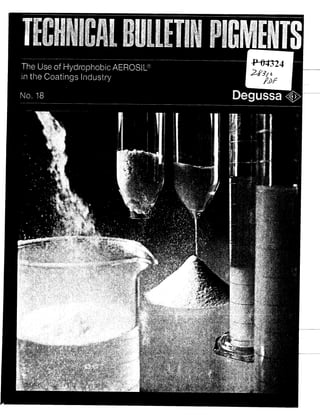
Our cover shows:
demonstrationof typicaleffectsattainable
withAEROSIL R 972: hydrophobic
behaviour,effectiveness as a free-flow
additive, applicationas an anti-settling
agent. *) not yet publishedin English
Basic Characteristics andApplications
of AEROSIL@
Part32:
The Use of HydrophobicAEROSIL@
inthe Coatings Industry
Dr. Horst Ferch
Department ofAppliedResearchand
TechnicalServices, Silicasand Pigments,
DegussaAG
Followinga brief descriptionof howthe
hydrophobic grades ofAEROSIL@
are pro-
duced, the author goes intosome detail to
describeways of measuringthis stateof
hydrophobicity. Possibleapplicationsin
which hydrophobicAEROSlLisusedinthe
coatings industryarethendescribedanda
brief mention is made of further uses in
other branchesof industry.
Basedonlecturesheldbytheauthoratthe
47th Conventionof the specialist group
“API” of the GesellschaftDeutscher
Chemiker heldin Hannoverin 1979and on
the occasion of the 13thEUROCOAT
Congress of AFTPV in Nicein 1987.
Thiseditionof theTechnicalBulletinPig-
ments issuedby theInorganicChemical
Products Divisionis printed usingthe
Degussa carbon black PRINTEX@
55.
1
Table of Contents
3
1 Introduction
2 ProductionandPropertiesof HydrophobicAEROSIL 4
3 Howto MeasureHvdroDhobicitv 10
3.1 GeneralInformation 10
3.2 MeasuringMethods 11
~
3.2.1 WaterVapourAdsorption 11
3.2.2 ContactAngle 12
3.2.3 MethanolWettability 14
3.2.4 Infra-RedSpectroscopy 15
3.2.5 TotaEilanol GroupDensity 15
3.2.6 CarbonContent 15
3.2.7 Water-SolublePart 16
3.2.8 CalorificQuantities 16
~~
3.2.9 “Residual SurfaceArea” 16
3.2.10 SAPPOK’s Degreeof Hydrophilicity 16
3.3 Evaluation 17
4 Applications intheCoatings Industry 18
18
4.1 Rheology
4.1.1 ThickeningBehaviourandThixotropy 19
4.1.2 UseasanAnti-SettlingAgent 21
4.2 DisDersionAdditive 23
25
4.3 CoatingEffect
4.4 CorrosionProtection 28
4.5 Adhesion 29
4.6 Uniformity 29
4.7 Free-FlowProperties 34
5 FurtherApplications 34
6 PracticalAdvice 35
7 Toxicological Information 35
8 Literature 37
Brief List of TechnicalTerms 39
Phvsico-ChemicalDataof HvdroDhobicAEROSIL 43
Additional DegussaProducts 44
2
1
Introduction for example
by usingthe hydrophilic products,
Overthe past 25 years synthetic hydro- - inthe production Of free-flowing Pow-
ders for fireextinguishers(1);
defoamers(2);
fluoroelastomers(3);
tems (4);
printing inks (5).
phobic silicashavecome to be used in
numerous branchesof industry.This new
class of products offeredthe solution
to problems which could not besolved
- inthe development of highly-active
- inthe reinforcement of special
- to achievespecialeffects incoating sys-
- to regulatethe water balanceof offset
Inthis brochure,these newer products are
compared with the oldest of the hydro-
phobic silicas,AEROSILR972, which was
introducedin 1962and isnow producedon
an industrialscale.Themanufacturingpro-
cess was described in 1965(6).Technical
Bulletin Pigments No. 6 inthis series deals
with this product in moredetail.
Additional hydrophobic silicashavebeen
developedin orderto increasethe pos-
sibilitiesof application andtoopen upnew
markets.
3
2
Productionand Propertiesof
HydrophobicAEROSIL
As mentioned before,thefirst industrially-
manufactured hydrophobic silica was
broughtontothe market in 1962 and was
known as “Filler R 972”.After reportsby
KLOSTERKOlTERin 1965 (7),based on a
one-year long-terminhalationtest carried
out with laboratory animals, showed that
this new materialdid not cause silicosis,
the namewas changedto “AEROSIL
R 972”.This hydrophobic special product
isconvertedwith dimethyldichlorosilanein
a fluid-bed reactorwhich is heatedto
approximately 400°C.As a result of this,
around 70% of the previouslyexisting
silanolgroups reactwith the silaneand
form Si-0-Si (CH& groups(6);thematerial
acquiresa hydrophobiccharacter, see
Figure 1.When analysed,AEROSIL R 972
differsfromthebasic productasa resultof
its carboncontentof approximately 1YO.
However,nodifferencecan beobservedas
regardsthe average primary particlesize
whenAEROSIL R 972 is compared with its
hydrophiliccounterpartin electronmicro-
graphs.
Figures2and3show atransmissionelec-
tron micrograph (TEM)and a scanning
electronmicrograph(SEM)of this product.
These picturesillustratethe tendency of
AEROS!L R 972 to aggregateand agglom-
erate,as isthecasewiththe basic product
AEROSIL 130.This statement is also valid
for all of the other hydrophobicgrades of
AEROSIL dealt with inthis editionofTech-
nicalBulletin Pigments.The question re-
garding the existenceof primary particles
inAEROSIL, as defined in DIN53206,
Figure 1: Schematicrepresentation of the reactionof dimethyl dichlorosilanewith the silica surface:
conversionof “hydrophilic”to “hydrophobic”
was treated back in 1984(10).Technical
Bulletin Pigments No. 60 is dedicatedto
this subject.
The properties of and special effects to be
attainedwithAEROSIL R972when applied
in coatingsystemswere described in
1979 (4)and further applicational pos-
sibiiitiesoithis speciaisiiicawere reported
on in 1980 (11).
Over the years it became apparent that
AEROSIL R 972 was unableto fulfil all of
the demands placedon it by various
aspects of the different applications. What
was wanted above all was a low-priced
hydrophobic version.
Dueto the fact that all of the hydrophilic
gradesofAEROSIL must be classifiedas
high-quality productsfrom a pointof view
of price, it was necessaryto fall back on a
lessexpensivestartingproductas a basis.
For obvious reasons,the choice fell on a
precipitatedsilica.An appropriate product
was brought ontothe market in 1964(12)
and is now known as SiPERNAT@
D 17.
Figure2
: TEM of AEROSIL R 972
5
Figure3 SEM of AEROSIL R 972
~~ ~
6
This hydrophobicspecial silica is used in
particularto improvethefree flow be-
haviourof substances inpowderform, e.g.
fire extinguishingpowder basedon sodium
bicarbonate(1).The commercial products
AEROSIL R 972 and SIPERNATD 17were
able to satisfy virtually all the market
demands for a periodof nearlyfifteen
years. SIPERNATD 17was unableto find
access to the coatingssector.
However,there are now severalnew com-
mercial productsavailable on the market
whichcan beusedfor further applications,
and whose data are compiled inTable 1.
All of these hydrophobicgradesofAEROSIL
are characterized by the additionalletter
“R” intheir name, which servesas a refer-
enceto the locationoftheGermanproduc-
tion plantin RheinfeldedBaden.Similar to
the productionofAEROSIL R 972,the new
AEROSILgrades are also manufactured
accordingto atechnical process.The
natureof the chemical aftertreatment is
shown inTable 1 inthe form of the chemi-
cal residuessituatedon the surface of the
silica; these can be easily detected by
means of infra-red spectroscopy, e.g.
(4, 13),as demonstrated in Figure4. The
left-handside of this figure depictsthe
rangeoftheOHstretchingvibrationbands
for the untreatedbasic product
- at 3750 cm-1 (freeSiOH groups)
- between3800 and2800 cm-I
(bridged silanol groups);
Figure4 Infra-red spectra of hydrophilicAEROSIL 300 and hydrophobicAEROSIL R 812 (13)
thesamefrequency rangeofthissampleis
shown on the right-handside followingan
in situ treatment of the silicawith the cor-
respondingsilane.A reduction inthe
number of both isolated and bridged
silanolgroups can be observed here inthe
right-handdiagram, and at the sametime,
the CH stretching vibrationbands of the
newly-anchoredmethyl groups become
apparent at 237Ccn-I.
7
Table 1: Specificationsand further data on the hydrophobicAEROSIL grades.AEROSIL R 812S differsfromAEROSIL R 812 as a resultof havinga higher degree of
hydrophobicitywhich is achieved by means of an additionalprocessingstep
8
All of the hydrophobic gradesof AEROSIL
listed inTable 1arethermallystableas far
asapplicationsinthecoatings industryare
concerned,as Figures 5 and 6confirm.
Figure5 shows the weight loss of the
undriedhydrophobicAEROSIL grades,
which was determinedby meansofthermo-
gravimetric analysis, as a functionof the
temperature. Onthe basisof infra-red
measurements, Figure 6confirmsthe fact
that bothAEROSIL R 972 andAEROSIL
R 812 only undergochanges as a resultof
oxidationat temperaturesexceeding
400°C.
Asuggestion put forward in 1976(15)
servesto classify the hydrophobic grades
of AEROSIL in the wide range of synthetic
silicas currently availableonthe market.
Figure5: Weight lossof hydrophobicAEROSILgradeswhich wereslowly heatedina nitrogen atmosphere
(14). (PERKIN-ELMERthermo-balance, modelTGS-2)
Figure6 Reductioninthe IR absorption of the
methyl groups as a measureof the thermal stability
ofAEROSlLR972andAEROSlLR812(13).Measure-
ments were carried out on self-supporting discs
with adiameter of 13mmand6mgIcm2inweight
9
3
How to MeasureHydrophobicity
3.1
General Information
What exactlydoestheterm “hydrophobic”
mean?Expressedsimply, hydrophobic
meanswater-repellent.The plumageof
aquatic birdsor the cuticles of leaves
on the plantsare well-known natural
examples of this. Furtherexamples of
hydrophobicityin daily use comefromthe
technicalfield:TEFLONa-coatedfrying
pansandtop coatsfor automobiles.The
opposite of hydrophobic is “hydrophilic”.
Intechnology, use is often made of a
combinationof hydrophobicand hydro-
philic properties.Inthe molecular range,
the surfactantsin householddetergents
shouldbe mentioned;the increasingly
importantoffset printingprocess operates
with largerparticles,andcoarsepiecesare
used inthe flotation of ore.
The useof hydrophobic substances in
powderform has provedsuccessful in
numerousapplications, with synthetic
silicas playinga particularly importantrole
here. Productsof this natureattaintheir
hydrophobic characteristics as a resultof
many different methods of surfacetreat-
ment,such as coating with wax or chemi-
cal reactionof the surfacegroupswith
appropriate silanes. It should be repeated
at this point,however,that all of the hydro-
phobicgrades of AEROSIL mentionedin
this brochurearerenderedhydrophobic by
means of a chemical reactionon the sur-
face of the solid.The hydrophilic or hydro-
phobiccharacter of an amorphous silica
canbeeasilyjudged byshaking ittogether
with water in atest tube; hydrophobic
AEROSIL floatsto the surface.All of the
hydrophobicAEROSIL grades react inthe
same way duringthis test, Le. it is not
possibleto differentiate betweenthem.
Although theterm “hydrophobic” appears
to be easy to understandwhen taken to
meanwater-repellent,it is neverthelessdif-
ficult to accurately define or to quantita-
tivelydeterminethis property. Itisoftenthe
casethat the differentmethodsdo not lead
to thesameconclusions(14).Aselectionof
methodsof determinationaregivenbelow.
10
3.2
Measuring Methods
3.2.1
WaterVapourAdsorption
A methodwhich is somewhat time-con-
suming, but definitely relatedto practiceis
the intakeof the water vapour adsorption
isothermsmeasuredat varying levelsof
relativemoisture.Correspondingmeasure-
mentsaregenerallymadeat roomtempera-
ture, e.g. inthe case ofAEROSIL R 972 (4).
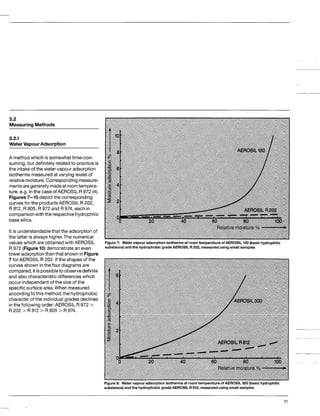
Figures7-10 depict the corresponding
curvesfor the productsAEROSIL R 202,
R 812, R 805, R 972 and R 974, each in
comparisonwiththe respectivehydrophilic
basesilica.
It is understandablethat the adsorptionof
the latter is always higher.The numerical
values which are obtained withAEROSIL
R 972 (FigureIO) demonstrate an even
loweradsorptionthanthat shown inFigure
7 for AEROSIL R 202. If the shapes of the
curves shown inthe four diagramsare
compared, it ispossibleto observedefinite
and also characteristic differenceswhich
occur independentof the size of the
specificsurface area.When measured
accordingtothis method,the hydrophobic
character of the individual grades declines
inthe followingorder:AEROSIL R 972 >
R 202 > R 812 > R 805 > R 974.
Figure 7: Water vapour adsorptionisothermsat roomtemperature of AEROSIL 150 (basic hydrophilic
substance) andthe hydrophobic grade AEROSIL R 202, measured usingsmall samples
Figure8 Water vapour adsorptionisothermsat roomtemperature ofAEROSIL 300 (basic hydrophilic
substance)andthe hydrophobic grade AEROSIL R 812, measuredusingsmallsamples
~
11
. "I
3.2.2
ContactAngle
The so-calledcontact angle methodcan
be usedto determinethe hydrophobicityor
“wettability” of smoothsurfaces (16).This
method involves placinga droplet of water
of a certain volume under specifiedcondi-
tions ontothesurfaceto beexamined.The
contact angle is then measuredwith the
aid of a horizontally-positioned
micro-
scopewithagraduatedscale. Ifthedropis
predominantlysphericalinshape,thecon-
tact angle is 8 > 90” and, accordingto
YOUNG’Sequation, the interfacial energy
is Ewater/soiid > Ewater/air Wetting does not
takeplace,or onlyto a limitedextent. Ifthe
drop resemblesmore of a hemisphereor
even spreads out (8 <go”),the expression
EwateVsolid < Ewater/air applies and wetting
takes place.This behaviour is illustratedin
Figure 11. Difficultiesarisingfrom the
productionof suitable mouldedtablets
with “smooth” surfaces are experienced
when the contactangle methodis usedto
determinethe wettabilityof hydrophobic
powder(17).
Figure9 Water vapour adsorptionisothermsat roomtemperature of AEROSIL 200 (basic hydrophilic
substance)andthe hydrophobicgradesAEROSIL R805andAEROSIL R974,measuredusingsmall samples
Figure 1 0 Water vapour adsorptionisothermsat roomtemperature of AEROSIL 130(basic hydrophilic
substance)and the hydrophobic grade AEROSIL R 972, measuredusing small samples
12
Of allthesilica gradestestedhere,it isonly
possibleto produceasuitable moulded
discwithAEROSlL R972.Theotherhydro-
phobicAEROSIL grades can be compres-
sedto mouldeddiscsunderhighpressure,
but these crumble on releasewithoutthe
applicationof any externalforce. For this
reason, it is only possibleto give contact
angles for the Degussasilicas listed in
Table 2. Hencethe contact angle method
is not suitable for the characterizationof
hydrophobicsilicas.
Contactangle given indegreesof
Water Glycerine Siliconeoil Mineraloil
hydrophilicsilica <20" <20* <20* <20*
SIPERNATD17 144 113 <20" c20*
AEROSIL R972 124 78 <20" <20"
*
Table 2 Contactanglesofdifferentliquidson mouldeddiscs(2mmthick,28mm indiameter)madeof some
Degussasilicas
soaks intothe mouldedtablet after a short time
13
3.2.3
MethanolWettability
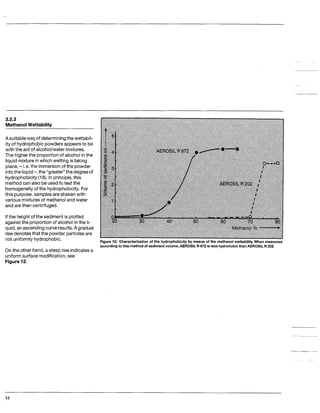
A suitableway of determiningthewettabil-
ity of hydrophobicpowders appears to be
with the aid of alcohol/water mixtures.
The higherthe proportionof alcohol inthe
liquid mixture inwhich wetting istaking
place,-Le. the immersionof the powder
intothe liquid-, the “greater” the degreeof
hydrophobicity(18). In principle,this
methodcan also be used to test the
homogeneity of the hydrophobicity.For
this purpose, samples are shaken with
various mixtures of methanoland water
and are then centrifuged.
Ifthe height of the sediment is plotted
against the proportionof alcohol inthe li-
quid,an ascendingcurveresults.Agradual
risedenotes that the powder particlesare
not uniformly hydrophobic.
On the other hand, a steep rise indicatesa
uniformsurface modification,see
Figure12.
14
Furthermore,it seemsjustifiedto inferthat
an increasedmethanol requirement sig-
nifies a higher degree of hydrophobicity.
A relativelysimple method, which is attri-
butedto K. KLEIN(19),hasproveneffective
in practicewith hydrophobic silicas.
200 mg of the substance are addedto
50 ml water in a separatingfunnel.As the
mixtureis shaken,a burette-which is
immersedto the bottom of the water -is
then usedto slowly add methanol until all
of the silica has beenwetted. The portion
by weight of the methanol inthe mixture
neededfor this purpose is a measurefor
the hydrophobicityof the silica.The values
attainedinthisway arerecordedinTable1.
However,it should be pointedout that,
within the meaning of an exact analysis,
this methodyields very fluctuatingvalues.
Forcomparative purposes, a measure-
mentof this nature must be carried out by
the sametester andif possibleinthesame
laboratory.
3.2.4
Infra-RedSoectroscoov
3.2.6
CarbonContent
Two methodsof characterizingsynthetic
hydrophobic silicas are availablewhen
using infra-red spectroscopy:
- determinationof the remainingsilanol
groups situated on the surface in iso-
lated state,
group density on the surface.
- determinationof the relativemethyl
Numericalvaluesfor the relativemethyl
group density are given inTable 1.Accord-
ingto bothofthese criteria,AEROSIL R 812
is more hydrophobic than, for instance,
AEROSIL R 972.
The infra-redtest methodistime-consum-
ing and a spectrometer with good resolv-
ing power (e.g. 2.5 cm-I) is needed. How-
ever, oncethis methodhas been “mas-
tered”, it providesaccurate comparative
values for characterizationpurposes.
3.2.5
Total Silanol Group Density
The LiAIH4methodcan be employedto
determinethetotal silanolgroupdensityof
syntheticsilicas(9,13).Inaccordancewith
Table 1,the increasinghydrophobicityis
given in the followingorder:
AEROSIL R 805 <R 812S <R 972 <R812
< R 202.
This methodisnotsuitablefor testingonan
occasional basis,as especiallythe drying
of the synthetic silica is of great signifi-
cance here.
An obvious way of characterizinga hydro-
phobicAEROSIL grade isto determinethe
Ccontent.Thisisthefirst steptowardsgiv-
ingan impressionof theamountof organic
groupsthat are present on the silica sur-
face. However,this value does notseemto
tell usvery much because
- the sizeof the specificsurface area of
- in additionto a chemicalfixing of the
the basicsilicaisnottaken intoaccount,
organic groups, afurther adsorptionof
organic substances can alsotake place
on the silica.
Boththe analytically-determinedtotal car-
bon content andthe C content relatedto
the surface are includedinTable 1.When
the specific carbondistributionis taken as
abasis,thefollowingsequenceisobtained
in view of the increasinghydrophobicity:
AEROSIL R974 <R972 <R 812or R812S
<R202 or R805.
AEROSIL R 812 andAEROSIL R 812 S are
silicas which are also capableof firmly
adsorbing organic substancesby physical
means.This is notthe casewithAEROSIL
R 972, R 974 and R 805.
15
3.2.7
Water-Soluble Part
The proportionof hydrophobicsynthetic
silica which is wetted by water is deter-
mined analytically.The lower this value is,
the higherthe degree of hydrophobicity.
However,this methodis relativelyinaccu-
rateand can only providevalues which
enablea differentiationof hydrophobic
silicas in truly routinestudies.
3.2.8
CalorificQuantities
Another processwhich can be usedto
characterize hydrophobic grades of
AEROSIL isthe determination of the heats
of wetting invarious liquids.The extent to
which a methodof this naturecan be used
to explainthe gradualapplicational differ-
ences of finely-dividedhydrophobicmate-
rials is uncertain at present.The method
appears to betoo expensive for purposes
of qualitycontrol (20,21,22).
3.2.9
“ResidualSurfaceArea”
3.2.10
SAPPOK’s Degreeof Hydrophilicity
Aspecial feature of the pyrogenicsilica
AEROSIL isthatthe N2adsorptionaccord-
ingto BET(23)reflectsthesurfacechemis-
try inthe form of the concentration of iso-
lated silanolgroups (24).It seems logical,
therefore,to usethis specificsurface area,
determinedwith N2according to the BET
method, and the “reduced”specific sur-
face followingthe chemicalaftertreatment
as a criterion for the surface coverage (13).
Numericalvalues for the “residualsurface
area” relatedto the basic silica are given in
Table 1.The followingorder is obtained
when this methodisapplied:
AEROSIL R972 <R812 <R 805 <R 812S
< R 202.
Nevertheless,itshould bepointedout here
that this “residual surfacearea” method is
somewhat inaccurate.This is due in par-
ticular to the alteredform of the BETad-
sorptionisothermswhich arises duringthe
chemicalsurfacemodification.This makes
it difficult to evaluatethe curves and re-
ducesthevalue ofthestatement regarding
the degreeof coverage.
The expression“degree of hydrophilicity
according to SAPPOK may also befound
incertain literature(53-55).This isthe quo-
tient ofthespecificsurfaceareaaccording
to BETmeasuredwith H20,and the same
value measuredwith N2.Thisdegreeofhy-
drophilicityaccording to SAPPOK issup-
posedto give indicationsastothewettabil-
ity, dispersion and stability behaviourof
pigments.
Onthe basisofthe BETtheory,itshouldnot
be possibleto usethis quotient to charac-
terize hydrophobic silicas, becausethis
theory works on the principlethat all the
valueswhich areobtainedareindependent
of the properties of the solid surface.
However.this is notthe case.
16
3
.
3
Evaluation
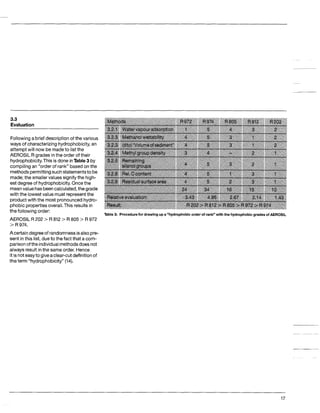
Followinga brief descriptionof thevarious
ways of characterizinghydrophobicity, an
attempt will now be madeto list the
AEROSIL R grades inthe order of their
hydrophobicity.This is done inTable3by
compilingan “order of rank” based on the
methodspermittingsuchstatementsto be
made; the smallervalues signify the high-
est degree of hydrophobicity.Once the
meanvalue hasbeencalculated,the grade
with the lowest value must representthe
product withthe most pronouncedhydro-
phobic propertiesoverall.This results in
the followingorder:
AEROSIL R 202 > R 812 > R 805 > R 972
> R 974.
Acertaindegreeof randomnessisalsopre-
sent in this list, due to thefact that a com-
parisonofthe individualmethodsdoes not
always result inthe same order. Hence
itisnoteasyto giveaclear-cutdefinitionof
the term “hydrophobicity”(14).
Table3 Procedurefor drawing up a “hydrophobicorderof rank”with the hydrophobicgrades of AEROSIL
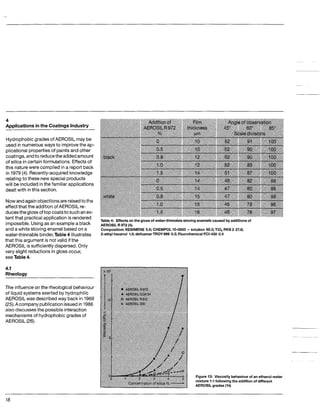
Table 4 Effectson the gloss of water-thinnable stoving enamels caused byadditions of
AEROSIL R 972 (4).
Composition: RESIMENE 5.5; CHEMPOL 10-0500 - solution 65.0; TiOpRKB2 27.8;
2-ethyl hexanol 1.0; defoamerTROY999 0.3; FluorchemicalFCI-430 0.4
4
Applicationsinthe CoatingsIndustry
Hydrophobicgradesof AEROSIL may be
used in numerousways to improvethe ap-
plicationalpropertiesof paintsand other
coatings,andto reducethe addedamount
of silica in certain formulations. Effectsof
this naturewere compiledin a report back
in 1979(4). Recently-acquiredknowledge
relatingto these new specialproducts
will be includedinthe familiar applications
dealtwith inthis section.
Nowandagainobjectionsare raisedto the
effectthat the additionofAEROSILre-
ducesthe glossoftop coatsto suchan ex-
tent that practicalapplicationis rendered
impossible.Usingas an examplea black
and awhite stovingenamelbased on a
water-thinnable binder,Table 4 illustrates
that this argument is not valid if the
AEROSIL issufficiently dispersed. Only
very slight reductions in gloss occur,
seeTable4.
4.1
Rheology
~
18
The influenceon the rheologicalbehaviour
of liquid systems exerted by hydrophilic
AEROSILwas describedway back in 1969
(25).Acompany publicationissuedin 1986
also discussesthe possibleinteraction
mechanismsof hydrophobic grades of
AEROSIL (26).
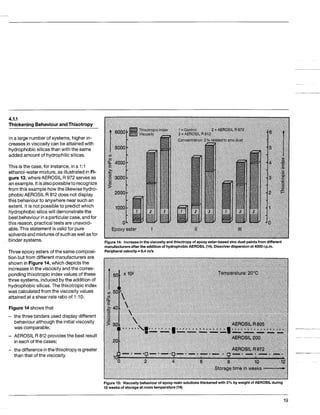
Figure 13: Viscosity behaviourof an ethanol-water
mixture 1:l followingthe addition of different
AEROSIL grades (14)
4.1.1
Thickeninn Behaviour andThixotropy
In a large numberof systems, higher in-
creases in viscositycan be attainedwith
hydrophobicsilicas than with the same
added amount of hydrophilicsilicas.
This is the case, for instance,in a 1:1
ethanol-water mixture,as illustratedin Fi-
gure 13,whereAEROSIL R 972 serves as
an example.It isalsopossibleto recognize
from this example howthe likewisehydro-
phobicAEROSIL R 812 does not display
this behaviourto anywhere near suchan
extent. It is not possibleto predictwhich
hydrophobicsilica will demonstratethe
bestbehaviour inaparticularcase,andfor
this reason, practicaltests are unavoid-
able.This statement isvalid for pure
solventsand mixturesof suchaswell asfor
bindersystems.
Three epoxy esters of the same composi-
tion butfrom different manufacturersare
shown in Figure14,which depictsthe
increasesinthe viscosity andthe corres-
pondingthixotropic index values of these
threesystems, inducedby the additionof
hydrophobicsilicas. The thixotropic index
was calculatedfrom the viscosityvalues
attainedat a shear rate ratio of 1:I 0.
Figure14showsthat
- the three binders used display different
behaviouralthoughthe initialviscosity
was comparable;
- AEROSIL R 812 providesthe best result
ineach of the cases;
- the differenceinthethixotropyisgreater
than that of theviscosity.
Figure 1 4 Increaseinthe viscosity andthixotropy of epoxy ester-basedzinc dust paintsfrom different
manufacturersafter the additionof hydrophobicAEROSIL (14). Dissolver dispersionat 4000 r.p.m.
Peripheralvelocity =8.4 m/s
Figure 1 5 Viscosity behaviour of epoxy resinsolutionsthickenedwith 3% by weight of AEROSIL during
12weeks of storage at roomtemperature (14)
19
Afurther examplewill be usedto de-
monstratehow, in additionto the levelof
viscosityand a possiblethixotropiceffect,
the time-dependentviscosity behaviour
can also be changed to advantage.
Figure15 illustratesthe viscosity be-
haviourof 50% epoxy resinsolutions con-
taining different grades of AEROSIL.
3% by weight of silica was added ineach
case.Thethickeningeffect ofAEROSIL
R 972 is very slight; the hydrophilicgrade
AEROSIL 200 only demonstratesa high
initial viscosity; good long-termviscosity
behaviour is attained solely withAEROSIL
R 805.
Some results in a white highsolidscoating
will nowbediscussed.Figure16illustrates
the increases inviscosity attainable with
additionsof 0.3% of hydrophobic silica
and also the calculatedthixotropic index.
AEROSIL R 805 also providedthe most
favourable result as regardsthe gloss at-
tained (87%) andthe sagging behaviour.
The latter was measuredby coatingplates
of glass with a 150 pm film applicatorover
a lengthof 16 cm and then placingthe
platesin a vertical position.The only
system which demonstrated no sagging
was that containingAEROSlL R 805.
without the additionofAEROSIL at roomtemperature (14). Composition: BAYER-TITAN RKB3 28.00;
AEROSIL ineach case 0.28; ALKYDAL F261 hs43.90; RESIMENE740 13.00; ethyl glycol acetate 5.22;
ethyl glycol 5.00; butylglycol2.30; xylene 2.50.48 hoursinthe ball mill KU 1 using porcelainballs
Special mentionshould be made at this
point about the orange peel effect which
occurredon the surface of the coatings
containingAEROSIL R 202.This effect can
only occurwithAEROSIL R 202 and not
with any other grades ofAEROSIL referred
to inthis publication.AEROSIL R 202
is producedwith the aid of polydimethyl
siloxanes, which are knownto cause such
an effect.
Ina company publicationissuedback in
1986(27),it was pointedout that AEROSIL
R 202 can cause:
- levellingproblems, e.g. the orange peel
- adhesionproblems,e.g.with multi-layer
effect,
systems,etc.
Ifthe best rheological resultsare obtained
withAEROSIL R202,testsmustbecarried
out priorto applicationin practicein order
to determine whether or not side-effects
occur.
- ~~~ ~
20
4.1.2
Use as anAnti-Settling Agent
The useof AEROSIL as a suspending
agent for pigmentsand fillers inthe coat-
ings industryisthe oldest field of applica-
tion for this class of products(29).In
general,the additionof small amounts is
sufficientto obtainthedesiredanti-settling
effect which is accompanied, as a rule,by
acertain increaseintheviscosity.
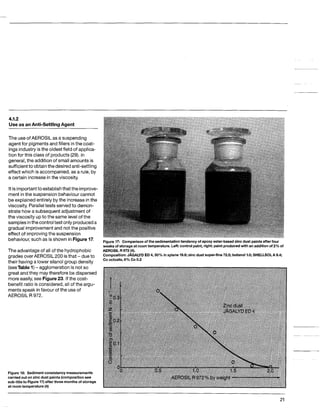
It is importantto establishthat theimprove-
ment inthe suspensionbehaviour cannot
be explainedentirely bythe increaseinthe
viscosity. Paralleltests servedto demon-
strate how a subsequent adjustment of
the viscosity up to the same levelof the
samples inthe controltest only produceda
gradualimprovementand notthe positive
effect of improvingthe suspension
behaviour,such as is shown in Figure 17.
The advantage of all of the hydrophobic
grades overAEROSIL 200 isthat -due to
their havinga lower silanolgroup density
(seeTable1)-agglomeration is not so
great and they may therefore be dispersed
more easily,see Figure23.If the cost-
benefitratio isconsidered, all of the argu-
mentsspeak infavour of the use of
AEROSILR 972.
Figure 1 8 Sediment consistency measurements
carried out on zinc dust paints(composition see
sub-titleto Figure17)after three monthsof storage
at roomtemperature(4)
Figure 17: Comparison of the sedimentation tendency of epoxy ester-based zinc dust paintsafterfour
weeks of storageat roomtemperature.Left:control paint, right: paint producedwith an addition of 2% of
AEROSIL R 972 (4).
Composition:JAGALYD ED4,50% inxylene 19.6; zinc dust super-fine 72.5; butanol1.0;SHELLSOLA9.4;
Co octoate,6% Co 0.2
JAGALYD ED4
21
The optimumadditionof AEROSIL can be
readily determined in practicewith the aid
of a DYNOMETER (30,31).Usingzinc
dust paintsas an example, Figure 18
demonstrates the effect which may be
obtainedwithAEROSIL R 972.
It isofsignificancethatthecontrolsample,
which containedno additionof AEROSIL,
had becomeso hard after only four weeks
of storagethat it was no longer possible
to carry out a measurementwith the
DYNOMETER.-If 2% by weight of
AEROSIL R 972 is addedto these paints,
the power input in the DYNOMETER
requiredto reachthe bottom of the test
apparatus is nil.This value corresponds to
the addedamount of AEROSIL R 972
determinedin practice(4).
LikeAEROSIL 200,AEROSIL R 972 has
also been usedas athixotropein special
effectcoatingsfor manyyears (28).This
statement is still valid today. By preventing
the occurrenceof sagging, it is possibleto
producea well-defined specialeffectin
this application, which is naturally based
on the useof an appropriate silicone oil.
This statement is illustratedclearly in
Figure 19.Finally,special mention should
be madeof the fact that hammerfinish
coatingscontainingAEROSIL show no
sign of greying even after storage.
Figure 19: Saggingbehaviourof hammerfinishcoatings.Above: controlcoating,below:containing0.8% of
AEROSIL R972 (4).Composition:ALKYDAL R 4050.0;PLASTOPALEBS200,6O% inbutanol3.6; MAPRENAL
MF750,55% in isobutanol18.0; EFWEKO NC 18/2,20% inethyl acetate 5.0; butanol 13.5; SHELLSOL A 4.0;
ethyl glycolacetate 2.0; STAPA POLYCHROM3 3.6; silicone hammerfinish solutionTRS 0.3
22
An improvementinthe long-termsuspen-
sion behaviourcannot only be achieved
with specificallyheavypigments. Products
with a low specificdensity,such as SiOn-
basedflatting agents with a density of
1.9 g/cm3, can also be held effectively in
suspension, as demonstrated in
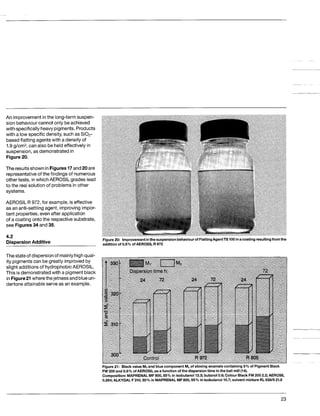
Figure20.
The resultsshown inFigures17and20are
representativeof the findings of numerous
othertests, inwhich AEROSIL grades lead
to the realsolutionof problems in other
systems.
AEROSIL R 972, for example, is effective
as an anti-settlingagent, improving impor-
tant properties, even after application
of a coatingonto the respectivesubstrate,
see Figures34 and 35.
4.2
DispersionAdditive
Figure 2 0 Improvement inthe suspension behaviourof FlattingAgentTS 100inacoating resultingfromthe
addition of 0.5% of AEROSIL R 972
Thestateof dispersionof mainlyhighqual-
ity pigmentscan be greatly improved by
slight additionsof hydrophobicAEROSIL.
This is demonstratedwith a pigmentblack
in Figure21wherethejetnessandblueun-
dertoneattainableserveas an example.
Figure 21: Blackvalue MYand bluecomponent M
, of stoving enamelscontaining 5% of Pigment Black
FW200 and 0.6% of AEROSILas a function of the dispersion time inthe ball mill (14).
Composition: MAPRENALMF800,55% in isobutanol13.3; butanol 0.6; Colour Black FW200 2.2; AEROSIL
0.264; ALKYDAL F310,6O% in MAPRENALMF800,55% in isobutanollO.7; solvent mixture RL938/9 21.9
23
Figure22: Increaseinthe degree of gloss of alkyd/
melamine-basedstoving enamels containingcol-
oured pigmentsresulting from the addition of 0.1 YO
and 0.5% ofAEROSIL R 972 (14).
Composition:ALFTALATAS502,6O% inxylene 46.6;
MAPRENAL MF800,55% in isobutanol21.8; diluent
15.8; Paliotolyellow 1770o
r HeliogenblueNFB or
cobalt blue5002 12.0; Bayertitan R-KB3 10.0 with
Paliotolyellow, otherwise 1.5
This modeof actionis demonstrated in
Figure22byan increaseinglosswithtints
of inorganicand organic coloured
pigments.
time. Peripheralvelocity of the stirrer: 8.4 m/s. Bothgrades of AEROSIL had already been predispersed.
Composition:see sub-titleto Figure 17
The grindometer values of zinc dust paints
which maybeobtainedas afunction of the
dispersion time are recorded in Figure23.
This diagram illustrates how much more
easily hydrophobic silica may bedis-
persed. For practicalpurposes, no more
differencescan be detectedbetweenthe
hydrophobicgradeandthecontrolsample
after 20 minutesof dispersion.
All of thefindingsdiscussed inthis section
are alwaysdependent onthe dispersing
conditions. It is by no meansthe casethat
the presenceof one of theAEROSIL
grades necessarily leadsto an increasein
gloss or improvementinthe optimum
efficiencyineveryapplication,seeTable4.
24
.
4.3
CoatingEffect
Ifzinc dustismixedinahouseholdblender
with 0.5% of AEROSIL R 972 inthe dry
stage, the hydrophobicsilica completely
envelops the Zn particles,as demon-
strated in Figure24.The same effect is
also observed inthe correspondingzinc
dust paints(4), see Figure25.This coating
effectof solidshas been knownfor quite a
longtime (32), and is also usedas a basis
for the preventionof the “gassing” of zinc
dust paintsduringstorage,which isshown
in Figure26.Theenvelopmentof zinc dust
with AEROSIL R 972 can possiblybe
attributedto purely electricalinteractions,
becausesynthetic silicas are always
negativelycharged (33)and metals are
always charged positively.
AEROSIL R 972 (right)(4)
-
-
Figure 2 5 SEMs of etchedzinc dust paints, lek control, right:containing2% ofAEROSIL R 972 relatedto
zinc dust (4).
Composition: JAGALYD ED4,50% inxylene 19.6; zinc dust sups-fine 72.5; butanol 1.0; SHELLSOLA9.4;
Co-octoate, 6% Co 0.2
25
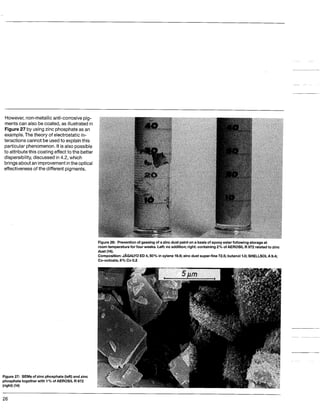
However, non-metallicanti-corrosive pig-
ments can also be coated, as illustrated in
Figure27 by usingzinc phosphate as an
example. The theory of electrostatic in-
teractionscannot be usedto explainthis
particularphenomenon.It isalso possible
to attributethis coatingeffect to the better
dispersibility, discussed in 4.2, which
bringsaboutan improvementintheoptical
effectiveness of the different pigments.
Figure 2 6 Prevention of gassing of a zinc dust paint on a basis of epoxy ester following storage at
roomtemperature for four weeks. Left no addition; right: containing2% of AEROSIL R 972 related to zinc
dust (14).
Composition: JAGALYD ED4,50% inxylene 19.6; zinc dust super-fine 72.5; butanol 1.0; SHELLSOLA9.4;
Co-octoate, 6% Co 0.2
Figure 27:
phosphate
(right) (14)
SEMs of zinc phosphate(left) and zinc
together with 1YOof AEROSIL R 972
26
Hydrophobicsilica may also be usedto
stabilizea particular state reachedduring
dispersion. Table5 gives evidenceof a
morestabledistributionofthered pigment
frequentlyused intop coats for auto-
mobilesafter 48 hours of dispersion in a
laboratory ballmill. Inadditionto thetrans-
parency,which is higherthan that of the
control sample, and which indicates a bet-
ter pigment distribution,Table 5 also in-
cludesthechanged rheologicalmeasuring
data of the mill base broughtabout by the
addition of AEROSIL.
Not only solidscan be coatedwith
AEROSIL.The use of hydrophobic silicas
also enableswater to beenveloped. News
about this world sensationwas published
in 1966underthe motto “Degussa
chemistsinvent dry water” (34).Attempts
were made at this timeto mix 10% of
AEROSIL R 972 into water with the aid of a
high-shear powder mixer.
This resulted in afree-flowingwhite pow-
der. Whilst 10% of AEROSIL R 972 were
requiredinthose days, smaller quantities
are now sufficient to produce“dry water”.
The resultscompiledinTable6 are ob-
tainedwith 5% of hydrophobicAEROSIL.
Ifthistest hadbeenincludedintheevalua-
tion described in 3.3, the order of hydro-
phobicitydeterminedwould nothavebeen
changed, butthere would have been less
difference betweenAEROSIL R 202 and
AEROSIL R 812.
Paliogenred AEROSIL AEROSIL
L3885 R972 R805
viscosityof millbase mPas at Dm 4%s-1 3711 8834 8162
(HaslkeRV 11, SV I) mPas at Dm433s-’ 1352 1785 1406
Thixotropicindex 2.9 5
.
4 6.3
Transparency(redhigh solidsstovingenamel) 105.6 141.5 140
(LangeKMVLt 12/ grey filter 2)
I
Table 5 Increaseinthe viscosity and thixotropic index of a mill base based on Paliogen red” L 3885
and inthe transparency of a highsolids stoving enamelfollowing the addition of AEROSIL (14)
AEFFOSIL
R202 R805 R812 R812S R972
Formulationpossible no nQ Yes Yes no
Shearingstability in min - -
- 0.5 5
Table 6 Practicaltest to determinewhich hydrohobic gradesof AEROSIL are suitable for producing “dry
water” using 5% byweight (35). The shearing stabilitywas tested ina householdblender. The formation
of a clearly compacted,“smearable” masswas considered as signifying a collapseof the formulation
27
4.4
Corrosion Protection
The useofAEROSlLR 972 as an additiveto
increasethe resistanceto corrosion was
describedin 1974(29).The positiveeffects
which may be obtainedwithAEROSIL
R 972 are illustrated in Figures28 and29
using zinc dust paintsand zinc chromate
primingcoatsas examples.
However,AEROSIL R 972 canalso improve
formulationswhich do notcontainanti-cor-
rosivepigments. For example, Figure30
depicts an industrial coatingbased on a
water-thinnable, oil-free alkyd resin
(s. Table 4 for formulation),which de-
monstrateda greatly improved resistance
followingstresses imposedduring the
accelerated durability test (dewcycle)
accordingto DIN 50018. -Results of this
natureare confirmedby independent
laboratories, such as theTransportation
Laboratoryof the Californian Department
ofTransportation(38).-
Figure3 0 Stovingenamel based ona water-thinn-
able binderfollowing7 dew cycles, to conform with
DIN50018(14). Left control sample, right: contain-
ing0.5% of AEROSIL R 972 related to the total for-
mulation
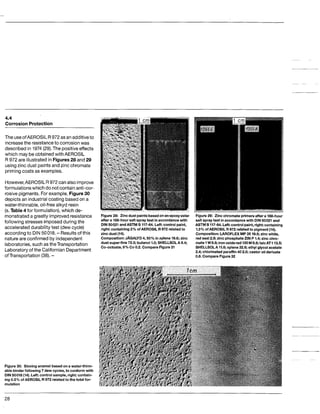
Figure 2 8 Zinc dust paintsbasedonanepoxyester
after a 168-hoursalt spray test inaccordancewith
DIN50021 andASTM B 117-64. Left:control paint,
right: containing 2% of AEROSIL R 972 related to
zinc dust (14).
Composition:JAGALYD 4,50% inxylene 19.6; zinc
dust super-fine 72.5; butanol 1.0; SHELLSOLA 9.4;
Co-octoate,6% Co 0.2. CompareFigure31
Figure 29: Zinc chromate primersafter a 168-hour
salt spray test in accordancewith DIN50021 and
ASTM B117-64. Left control paint, right: containing
1.3% of AEROSIL R 972 related to pigment (14).
Composition: LAROFLEXMP35 19.5; zinc white,
red seal 2.9; zinc phosphateZIN P 1.4; zinc chro-
mate1W6.8; ironoxide red130M6.8; talc AT1 13.5;
SHELLSOLA11.6; xylene 32.6; ethyl glycol acetate
2.4; chlorinatedparaffin40 2.0; castor oil derivate
0.6. CompareFigure32
28
4.5
Adhesion
An additionofAEROSlL is knownto im-
prove the applicational propertiesof stov-
ing enamels, e.g. during the performance
of the mandrelbendtest, as definedin DIN
53152 (36). Figure31 demonstratesthe
improvedadhesion of epoxyester which
was appliedontoasteel plate. It isinterest-
ingto note that the hydrophobicgrades
ofAEROSIL bringabout an improvementin
the adhesion of the epoxy resins by an
averageof 13%.
4.6
Uniformity
The results of numeroustests have de-
monstratedatremendous improvementin
the uniformity or homogeneityof coating
Systemsthat includehydrophilic or hydro-
phobic grades ofAEROSJL.This section
includesseveralrepresentativeexamples
of applications containing hydrophobic
AEROSIL grades.
Figure 31: Increaseinthe adhesivestrength of epoxy esters on steel plates bythe addition of 1.5%of
hydrophobicsilica. Measuredfollowingtwo days Of storageat roomtemperature(14). See Figure28
To beginwith, these claims are supported
by surface representationsof priming
coats depictedin Figures32and 33. For
this purpose,we returnedto examples
which were already usedfor a different
representationin section4.4.
Figure32: Scanning electron micrographsof an etchedzinc chromateprimer (4). Left control paint, right:
containing 1
.
3
% ofAEROSIL R 972 related to pigment content. See Figure29
29
Figure32depictsa zinc chromate primer
and Figure33a zinc dust paint.The left-
handside ofthis pictureis notout offocus;
the blurredeffect is dueto the fact that the
upper layers of the controlpaint not con-
tainingAEROSlLarevirtuallyfreefrom zinc
dust, see Figure34.
The depthof focus of
the scanning electron microscopeis not
sufficientto obtaina moresharply defined
photograph,suchastheoneshownonthe
right-handside of Figure33.Evena top
view of this sample, which contains 2% of
AEROSILR972,showsthecompletelyuni-
form distributioninthe zinc dust coating
film.Thisfact isclearlyconfirmedinFigure
34which depictsphotographsof micro-
tome sections.The upper half of Figure34
also illustrates clearly how sedimentation
hasoccurredintherelativelyshort timebe-
tween applicationof the coatingand dry-
ing.Thiscanbe preventedbyanadditionof
2% of AEROSIL R 972.
The more uniform distributionof the zinc
dust can definitely be usedto explain the
improvementinthe anti-corrosive effect
(4).This statement isvalid regardlessof
which theoriesare drawn upon as a basis
to explain the protectionmechanismof
zinc dust paints.
Thisgoesfor boththe “sealingtheory” and
the “cathodic protectionmechanism
theory”which were compared in 1964(40).
Figure3 3 SEMs of etched zinc dust paints(4). Left: control paint,right: containing2% of AEROSIL R 972
relatedto zinc dust. See Figure26
30
Figure 34: Optical micrographsof cry0 microtome sectionsof zinc dust paintsamples (14). Paintwas appliedto a PVCfilm,the surfacewas vapour-blastedwith
gold.Above: control paint, below:containing2% of AEROSIL R 972 relatedto zinc dust
31
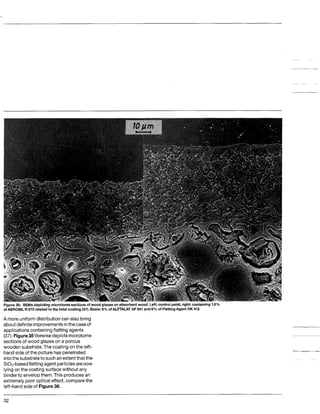
Figure 3 5 SEMs depicting microtomesectionsof wood glazeson absorbent wood. Left:control paint, right:containing 1.5%
ofAEROSIL R 972 relatedto the total coating (37). Basis: 8% ofALFTALAT AF 641 and 9% of FlattingAgent OK 412
A more uniform distributioncan also bring
about definiteimprovementsinthe caseof
applicationscontaining flatting agents
(37). Figure35likewisedepictsmicrotome
sections of wood glazes on a porous
wooden substrate.The coatingon the left-
hand side of the picturehas penetrated
intothesubstrateto suchan extentthat the
SiOn-basedflattingagent particlesarenow
lying on the coatingsurface without any
binderto envelopthem.This producesan
extremely poor opticaleffect, compare the
left-hand side of Figure36.
32
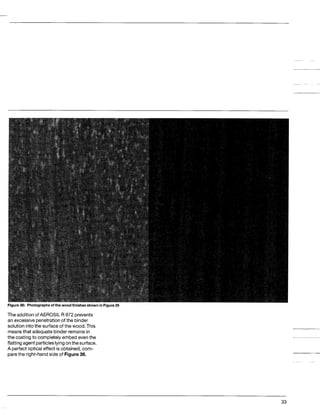
Figure 36: Photographsof the wood finishes shown in Figure 35
The additionofkEROSli R 972 prevents
an excessivepenetrationof the binder
solutionintothe surface of the wood.This
meansthat adequate binder remains in
the coating to completely embed eventhe
flattingagentparticleslyingonthesurface.
Aperfect opticaleffect is obtained,com-
parethe right-handside of Figure36.
4.7
Free-Flow Properties
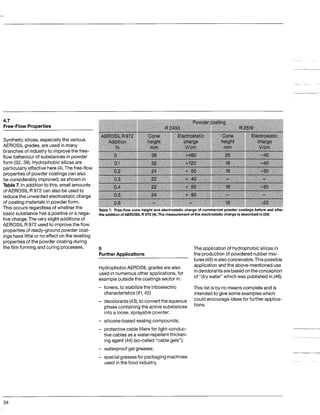
Synthetic silicas, especiallythevarious
AEROSILgrades,are used in many
branches of industry to improvethe free-
flow behaviourof substances in powder
form (32,39). Hydrophobic silicasare
particularly effective here(4).The free-flow
properties of powder coatings can also
be considerably improved,as shown in
Table 7. Inaddition to this, small amounts
of AEROSIL R 972 can also be usedto
reducethe unwantedelectrostatic charge
of coating materialsin powder form.
This occurs regardlessof whether the
basic substance hasa positive or a nega-
tive charge.The very slight additions of
AEROSIL R972 usedto improvethe flow
properties of ready-ground powder coat-
ings have littleor no effect on the levelling
properties of the powder coating during
the film forming and curing processes.
Table 7: Free-flow cone height and electrostatic charge of commercial powder coatings before and after
the additionof AEROSIL R 972(4).The measurementof the electrostatic charge isdescribedin (33)
5
FurtherApplications
HydrophobicAEROSIL gradesare also
used in numerousother applications, for
exampleoutside the coatings sector in:
- toners, to stabilizethe triboelectric
characteristics (41,42)
- deodorants(43),to converttheaqueous
phasecontaining the active substances
into8 !oose,sprz!yablepowder;
- silicone-based sealing compounds;
- protective cable fillersfor light-conduc-
tive cables as a water-repellent thicken-
ingagent (44)(so-called “cable gels”);
- waterproof gel greases;
- specialgreasesfor packagingmachines
used inthe food industry.
The application of hydrophobic silicasin
the production of powdered rubber mix-
tures (45)isalsoconceivable.Thispossible
application andthe above-mentioneduse
indeodorantsarebasedonthe conception
of “dry water” which was published in (46).
This list is by no meanscomplete and is
intendedto givesome exampleswhich
could encourageideasfor further applica-
tions.
34
6
PracticalAdvice
Which gradesofAEROSlLshouldthepaint
chemistuse in practice?It is easy to
answer this question (14):
The most significant product is
AEROSIL 200.
If the results obtained with this standard
grade are not satisfactory,AEROSIL
R 972 shouldbe applied,particularlyfor
anti-corrosionpurposes.
Only in cases where evenAEROSIL
R 972 is unableto producethe desired
effect should one resortto other grades
of AEROSIL, e.g. inthe followingorder:
- AEROSIL R 805
- AEROSIL R 812.
For example, these grades may be
used to advantage in certainvinyl
ester resinsforcastingresinsor adhe-
sives.
AEROSIL R 202 shouldonly be used in
the coatingsindustryif extensivetests
bythe consumer have provedthat no
applicational problemsoccuras regards
levelling,recoating or adhesion.
AEROSIL R202 is recommendedfor use
inepoxysystems(27),andespeciallyfor
casting resins.
7
ToxicologicalInformation
All of the hydrophobic silicas mentioned in
this brochureareX-ray amorphous. Like
the basic hydrophilicproducts,they do not
causesilicosis (47-49). AEROSIL R 972
andAEROSIL R 974 are knownto be
expelledfrom the lungsof rats soon after
intake(7,50).The occurrenceof fibrosis
inanimal experimentswas only observed
followinghighdoses ofthesubstance.This
cannot occur if a low dust concentration
attheplaceofwork isensured.Thegeneral
dust limit value of 4 mg/m3has beenvalid
inthe FederalRepublicof Germanysince
1989.Similar values are also inforce in
other western industrialstates.
Knowndata are compiledinTable8.The
“PatchTest” and the test for irritatingef-
fects on the mucous membranes proved
negativeinall cases,i.e.were without find-
ings. It should be pointedout that the
numericalvalues given for the acute oral
LD50
dependto a large extent on the bulk
densityofthematerialbeingexaminedand
on the testinglaboratory.It was not possi-
bleunderthetest conditionsto apply more
silica in any of the cases.
All of the recommendedhydrophobic
silicas are deliveredin papersacks. Inten-
sive handlingtests have beencarried out
Upuntilnowtherehasbeennoevidenceto
show that hydrophobic silicas damagethe
skin in any way. Dueto a certain water
adsorptioncapacity,hydrophobic silicas
can withdraw water from the humanskin.
The “dry feeling” which is experienced
during direct contactwith the productis
basedon this effect.The normal state can
hands.
-
-
-
be restoredby simply washing one’s -
with synthetic silicas in order to avoidany
in-plant dust problemsthat a customer
might experience. Most of these results
have been published(51,52)and include:
the manualor fully-automaticemptying
of sacks;
the transportationof the hydrophobic
silicaswithintheworks, which iseasiest
inthis case by meansof a suction con-
veyor;
the automatic weighing and dosing;
the dust-freetransferofthesilicato mix-
ing and dispersing appliances.
35
Table 8 Toxicologicaldata of hydrophobic grades of AEROSIL accordingto (49)
8 20) J. J. CHESSICK,A. C. ZETTLE-
Literature 90,88 (1984) MOYER,Adv. Cat. 11,263(1959)
10) H. FERCH,K. SEIBOLD,farbe +lack
1) Technical Bulletin PigmentsNo. 31, 11) Technical Bulletin PigmentsNo. 6
7 21) B. MARCINIEC,A. KRYSTAFKIE-
DegussaAG, Frankfurt/M.,3rd edition
(1981) 261,366 (1983)
WIECZ, L. DOMKA,Coll. Polym. Sci.
DegussaAG, FrankfurVM.,4th edition
(1981)
2) H. FERCH, M. LAMBERMONT, 12) G. KALLRATH:DE-PS 1.229.504 22) 0.J. SCHMITZ, F.J. SELL,
R. OELMULLER,Adhasion 29,21
(1985) DegussaAG, FrankfurUM. (1979)
(1962), DE-PS 1.172.245 (1963),both K. HAMANN,farbe + lack 79,1049
H. FERCH,A. REISERT, R. BODE,
Kautsch.+Gummi. Kunststoffe39,
1084(1986)
H. FERCH, farbe + lack 85,651 (1979)
Technical Bulletin Pigments No.26,
DegussaAG, FrankfurVM.,3rd edition
(1980)
H. BRUNNER,D. SCHUTTE,
Chem.-Z. 89,437 (1965)
W. KLOSTERKOlTER,Arch. Hyg.
Bakt. 149, 577(1965)
E.WAGNER, H. BRUNNER,Angew.
Chem. 72,744 (1960)
R. BODE, H. FERCH,H. FRATZ-
SCHER,Kautsch.+Gummi .Kunst-
stoffe20,578 (1967)
13) J. MATHIAS,G.WANNEMACHER,
J. Coll. Interf. Sci. 125,61(1988)
14) H. FERCH,17.AFTPVCongressBook
p. 128(1987)
15) H. FERCH,Chem. Ing.Techn.48,11
(1976)
16) I.A. LICHTMAN,J.V. SINKA, D.W.
EVANS,Ass.Mex.Tec. Ind.Cell. Paper
(Bol)15,26 (1975)
17) W.T.YENI, R. S.CHAHAL,T.SALMAN,
Canad.Met. Quart. 12,231 (1973)
18) S. GARHSVA, S.CONTRERAS,
J. GOLDFARB,Coll. Polym.Sci. 256,
241 (1978)
19) K. KLEIN, DegussaAG, personal
report (1970)
23) S. BRUNAUER, P
. H. EMMETT,
E.TELLER, J. Am. Chem. SOC.
60,
309 (1938)
24) E. KOBERSTEIN,M.VOLL, Z. Physik.
Chem. NF71,275 (1970)
25) H. FRATZSCHER,farbe + lack 75,6
(1969)
26) M.ETTLINGER,H. FERCH,J. MATHIAS
inTechnicalBulletin PigmentsNo.23,
DegussaAG, Frankfurt/M., 5th edition
(1986)
27) TechnicalBulletin PigmentsNo.27,
DegussaAG, Frankfurt/M.,4th edition
(1989)
28) Technical Bulletin PigmentsNo.42,
DegussaAG, FrankfurVM.(1968)
37
29) H. FERCH in H. KIlTEL: Lehrbuchder
Lackeund Beschichtungen,Bd. 2,
VerlagW
. A. Colomb, Schwandorf
(1974)
30) U.VEIEL,W. PAPENROTH,
IX. FATIPECCongressBook, Sect. 3,
19(1968)
31) W. PAPENROTH,XI. FATIPEC
CongressBook595 (1972)
32) TechnicalBulletin Pigments No. 31,
DegussaAG, Frankfurt/M., 1st edition
(1969),2nd edition (1978)
33) H. FERCH, Seifen, Ole, Fette,Wachse
101,17(1975)and 101,51(1975)
34) Frankfurter Rundschaufrom 8. 10.
1966, p. 8; e.g. Suddeutsche Z. from
12. 10.1966,p. 33;Abendpost-
Nachtausgabefrom 12.10.1966, p. 3;
HanauerAnzeiger from 8.10. 1966,
p. 19
35) J. Mathias, lectureheld at Colloid
ChemistrySymposiumVCV-STI,
Antwerpen, Sept. 1987
36) Technical Bulletin PigmentsNo. 68,
DegussaAG, Frankfurt/M.,2ndedition
(1985)
38) ReportFHWA-CA-TL-78-21,obtainable
from US-NationalTechnical Informa-
tion Service, Springfield,VA22 161
39) K. KLEIN,Seifen, Ole, Fette,Wachse
94, 12(1968)
40) K.M.OESTERLE,DeutscheFarbenZ.
18, 151(1964)
41) Xerox Corp. US-PS3.819.367 (1974)
42) Kodak DE-PS2.821.565 A 1(1978)
43) S. PRUSSIN,EU-PS18.137 (1980)
44) RaychemCorp. EU-PS67.009 (1981)
45) R. CASPARY, I.HESKE,J.Appl.
Polym.Sci. 24, 345 (1979)
46) H. FERCH, Pharm. Ind.32,478 (1970)
47) 0.ISAAC,H.FERCH,Dtsch.Apoth. Z.
116, 1867(1976)
48) H. FERCH, S. HABERSANG, Seifen,
Ole, Fette,Wachse 108,487 (1982)
49) H. FERCH, H. GEROFKE, H. ITZEL,
H. KLEBE,Sozialmed. Praventivmed.
Arbeitsmed. 22,6 and 33 (1987)
50) P
. I. REUZEL,ClVO Inst.TNO,
NL-ZEIST, pers. Mitt. (1985)
51) Technical Bulletin PigmentsNo. 70
DegussaAG, Frankfurt/M. (1978)
52) H. FERCH,W. SCHMITZ,J. Chem.
Techn. Biotechn.30,699 (1980)
53) ,,EinfluO physikalischerEigenschaften
organischer Pigmenteauf ihr an-
wendungstechnischesVerhalten".
BASFAG, Ludwigshafen/Rh.
54) 0.J.SCHMITZ,defazet26,422(1972)
55) G. R. JOPPIEN,farbe + lack 81,1102
(1975)
37) H. FERCH,25th Meeting OCCA.New
Zealand, Rotorua, (1987),Congress
Book.
38
Brief List of Technical Terms
AEROSILB Binder Cry0 Microtome Section
Trade mark usedby DegussaAG,
FrankfurVM. for a-+ submicron synthetic
silica which is producedaccording to the
processof high-temperature hydrolysis.
Aaalomerates
Aredefined inDIN53206as looseclusters
of +aggregates which may be broken
down duringdispersion.
Aggregates
Interwoven union of particlesjoinedat the
interfaceswhose surface area is lessthan
the sum of the surface areas of the-
primaryparticles(DIN53206).As a rule,
aggregatesarenotbrokendownduringthe
-+dispersion of +pigments.
Anti-Settling Agent
Product designedto keep-+ pigments
whichareproneto settlinginsuspensionin
a coatingsystem.
Application
Here-+ coating.
ASTM
Abbreviation for theAmerican Societyfor
Testingand Materials.
isthe non-volatilepartof acoating material
excluding+pigment and4 filler, but in-
cludingplasticizers,+surface driers and
other non-volatileadditives.The binder
connects the individual pigment particles
andthe substrate thus combiningto make
upthe finished coating (DIN55945).
Bridged Silanol Groups
Here:shorterexpressionusedfor+ silanol
groupswhich haveenteredintoa hydrogen
bridgelinkage.
BS
Abbreviationfor BritishStandard.
Coating
Collectiveterm for oneor moreconnecting
layerson a substrate, which are manufac-
tured from coating materials.
Corrosion Protection
is made using a pieceof equipment called
a microtome.The sample is cooledand
then cut with a diamondknife.
Defoamers
Namegivento substances which are
added to frothy liquidsystems in order to
reduceor inhibit the formation of foam.
Dispersion
istheuniformdistributionof- pigmentsin
+binders or powderedformulation
components with the aid of dispersing
equipment.
DryingAgents, better:Surface Driers
are organic, soluble metallic compounds
which are addedto oils inorder to consid-
erably shortenthe dryingtime.
Dynometer
Measurestaken in order to preventcorro-
sive damage.
Combined measuringapparatuswhich
can be usedto determinethe surfaceten-
sion of liquid systems andthe depthand
consistency of sediment. Manufacturer:
Byk Labotron MeOtechnikAG,D-8192
Geretsried.
39
Elastomers Film Formation Gloss
are wide-meshed, cross-linked macro-
molecular substances with reversible
expansibility.
ElectronMicroscope
isthetransition of anappliedcoating mate-
rialfrom liquidto solidstate.Thefilm forma-
tion resultsfrom drying or curing. Both
processescantake place simultaneously
or one after another (DIN55945).
isthe sensory impressionfor the moreor
lessdirected reflectionof beamsof lighton
a surface.
Hammer FinishCoating
Microscopeusing electron beamsto de-
pict very small objects.
Epoxy Resins
are reaction resinswith an adequate
number of epoxy groups for curing
purposes.
Fibrosis
Increasein connectivetissue.
Filler
is a substancewhich is practically insolu-
ble inthe applied medium.The refractive
index of white fillers is generally < 1.7.
In certain media,a filler can also serve as
a-pigment (DIN55943).
Gas Black
Carbonblack whose manufactureis
characterizedbythe evaporationby heat-
ing of the hydrocarbonsserving as raw
materials,followed by combustion of the
gas with the aid of a burnablecarrier gas.
Gassing
Term usedto describe the development of
hydrogenoccurring inzinc dust paints,
which is caused bythe reactionof water
with the zinc dust.
GeneralDust LimitValue
is the maximumpermissibledust concen-
tration for “non-hazardous substances”
at the place of work, valid inthe Federal
Republicof Germany.
is one of the special effect coatings, which
can be usedto achieve intentional,visible
and uniformly-distributed irregularitieson
the surface of a coating film.
Highly Dispersed
Finelydivided.
Hydrophilic
Havingan affinityto water; wettable by
water.
Hydrophobic
Water-repellent;not wettable by water.
lanitionLoss
~
istheterm givenin DIN55921 forthe differ-
enceinweight betweenthe dryweight and
the weight of the ignition residue.Values
given as a percentage.
40
Infra-RedSpectroscopy MillBase
Modernoptical process inwhich the infra-
redrangeof absorptionspectraof mainly
organic compoundsin solid, liquid or
gaseousform are used for qualitativeand
quantitativeanalysis and for determining
the structure.
in situ
meansthe formation of a substance at the
time when it is required.
JIS
Abbreviation for
Japanese IndustrialStandard.
LD50
LethalDose= dose leadingto death.
Inexperiments on animals,this is usually
fixedat LD50,whichisthedosethat leads
to the deathof 50% of the animalswithin
a certainperiodof time.
Concentratedmixtureof --f pigments,
+fillers (anddispersionadditives)in a
-+binder: solvent ratio chosento suit the
respectivemethodof dispersion.
Monomolecular
Monomolecularlayersare made up of a
single moleculethicknessofthe substance
concerned;they playa significant rolein
corrosionand in many interfacial
phenomena.
Offset PrintingInks
or flat-bedprintinginks,arepaste-likesys-
tems whichdry asa resultof oxidativeand/
or physical processes.The water stability
of these systems is particularly good as a
resultof the printingprocess,which is
basedonan interactionbetweenthewater
andthe ink.
Oranae PeelEffects
Levelling
The term denotesthe ability of a coating
that is still inthe liquidstate, to self-
regulatethe irregularitieswhich occurred
during application(DIN55945).
is aterm used in IS04618 to describe
irregularitiesin the surface of a coating
film which givethe latterthe crinkled
appearanceof orange peel.
PatchTest
MAKValue
(German: MaximaleArbeitsplatz-Konzen-
tration) isthe highest permissible concen-
tration inthe air of a materialbeingused at
the place of work which, accordingto the
present levelof knowledge, must not be
exceededeven as a resultof repeatedor
long-termeffects.+General Dust Limit
Value.
Tolerancetest carried out by observingthe
localeffectof substancesontheconjuncti-
val sac of NewZealandWhite rabbits.
Pigment
~~
is defined in DIN 55945, BS 2015 and
ASTM D 16as an organic or inorganiccol-
ourant which can be chromatic or achro-
matic and is insoluble in solvents.
Powder Coatings
arepaintsinpowderform which producea
coating on a substrate followingapplica-
tion and melting.
PreciDitatedSilicas
arevirtually non-porous synthetic silicas
which are formedduring the conversionof
water glass and sulphuric acid.
PrimaryParticles
according to DIN 53206,arethe smallest
particleswhich make up powdered solids.
Recognizableas individual particlesby
means-ofelectron microscopy.
PrimingCoat (Primer)
The primer is made up of coatinglayers
designedto connectthe substrate and the
coating layersapplied to the priming coat.
It may also fulfil other specialfunctions,
e.g. +corrosion protection.
41
ResidualSurfaceArea Silicosis ThermogravimetricAnalysis
Mathematicalquantity which is deter-
minedas the difference betweenthe+
specific surfaceof the basic hydrophilic
silica andthat of the hydrophobic
(= aftertreated)silica.
ScanningElectronMicroscope
Analyticalappliancewhichscansanobject
linefor linewithanelectronbeam, resulting
in impulseswhich are convertedinto
scanner dots to givethe finished picture.
Sediment
Matterthat settlesto the bottom of a liquid
system if not held in suspension.
SEM
Scanning Electron Microscopy.
SilanolGroup Density
Densityofthe- silanolgroupssituatedon
the silica surface.
SilanolGroups
Progressivepneumoconiosisas a result of
inhalingdust containingquartz: occupa-
tional disease.
SIPERNAT@
Term usedto describeathermoanalytical
processwhich makesuse of the changes
inweight that occur as a resultof the
conversionof substancescaused by
heating.
Registeredtrade markused by Degussa
AG, Frankfurt/Mainfor +precipitated
silicas and silicates.
SDecific Surface
isthe surfacearea of a solid, relativeto its
mass,given in mVg.Generally determined
accordingto the BETmethod(DIN66 131).
Substrate
is an insoluble,generally achromatic
substancewhich is involvedinthecompo-
sition of certaincolouredcoatings
(DIN55945).
SuspendingAgent
-t Anti-SettlingAgent.
TEM
=Si-OH groupssituatedon the silica
surface.
Transmission ElectronMicroscopy.
Thixotropic Index
Viscosityquotientestablishedbyusingthe
measuringequipment at two different
shear ratesand rotationalspeeds.
If possible,the rotationalspeedsshould
be in a ratio of 1:lo.
Thixotropy
Time-dependentgel-sol-gelconversion
which is reversible underisothermalcondi-
tions.
Toner
Pigmentedresinpowder.The particlesize
is approximately 10-20 pm.Toner isthe
colouringsubstanceusedin photocopying
processes.
Toxicology
The scienceof harmful,in somecases
fatal, effectsof substancesin excessive
amounts.
Triboelectric Effect
occurswhen different materialsare
brought into contact with one another
(non-conductorse.g. polymerglass).
Frictioncauseselectronsto be removed
from or conveyedto the surface.
42
Physico-ChemicalDataof
HydrophobicAEROSlL
acc. to DIN66131
acc. to DINIS0787/XloderJIS K5101/18 (not sieved)
acc. to DIN IS0 787/11,ASTM D280, JIS K 5101/21
acc. to DIN55921,ASTM D 1208,JIS K 5101/23
acc.to DIN IS0787/1X, ASTM D1208,JIS K5101/24
acc.to DIN IS0787/XVlll,JIS K5101/20
The sieve residueacc. to Mockercannot bedetermined
withwater inthe caseof hydrophobicAEROSILgrades
relatedto materialignitedfor 2 hoursat 1000"C
relatedto materialdriedfor 2 hoursat 105"C
HCIcontentisa partof the ignitionloss
10) containsapprox. 1% of chemicallyboundcarbon
11) containsapprox. 3.5-5.0% of chemicallybound carbon
12) containsapprox. 4.5-6.5% of chemicallybound carbon
13) containsapprox. 2.0-3.0% of chemicallybound carbon
14) containsapprox. 3.0-4.0% of chemicallybound carbon
15) containsapprox. 0.6-1.2% of chemicallybound carbon
16) containsapprox. 0.7-1.3% of chemicallybound carbon
43
Additional Degussa Products
Active oxygen compounds Copper compounds Silanes
~
Adhesives Flattinaaaents
Barium compounds
Bluepigments
Carbon blacksand pigment black
preparations
Catalvsts
Ceramic colours
Colouredpigments
Highlydispersedmetallicoxides
Hvdrocvanicacid and its derivatives
Silicadispersions
Silicates
Strontiumcompounds
~~
Leadcompounds Titaniumcompounds
Methacrylicacid and its derivatives
Powdercellulose
PreciDitatedsilicas
Seleniumcompounds
Semi-finishedplastic products
Toner resins
Zeolites
Zinc compounds
The Industrialand FineChemical DEGALAN@
LP DEGACUFtE@
ProductsDivisionof DegussaAG supplies
the Coatings Industrywith:
Thermoplasticmethacrylic resin in solid
form usedinthe manufactureof protective
coatings for concrete, road markingpaint
and marinepaint; heat-seal coatings for
aluminiumfoils, imitationleathertop coat-
ings, etc.
Cyclo-aliphaticepoxides and Photo-
initiatorKJ85 for usein cationic radiation
curing.
DEGADUW
Cold curing, low-viscositymethacrylic-
resinfor floor and wall coatings.
DEGARQUTE@
Cold curing, low-viscositymethacrylic
resin used inthe manufactureof 2-com-
ponent cold plasticsfor lanemarkingson
city streets and country roads, and for
colouredmarkingson cycle paths.
44
The product rangeof DegussaAG’s
InorganicChemical Products Division
includesthefollowingregistered
trademarks:
The informationand statements contained
hereinare providedfree of charge.
They arebelievedto beaccurateatthetime
of publication,but Degussamakesno
warranty with respectthereto, including
butnotlimitedto any resultsto beobtained
ortheinfringementof any proprietaryrights.
Useor applicationof such information
or statements is at user’s sole discretion,
withoutany liabilityonthepartof Degussa.
Nothinghereinshall be construedas a
licenseof or recommendation for use
whichinfringesuponanyproprietaryrights.
All sales are subject to Degussa’s General
Conditionsof Saleand Delivery.
28310

28310

  • 2.
    The series ofTechnicalBulletinPigments issuedby the InorganicChemical ProductsDivisiondiscusses fields of application inthe lacquerand paintindus- try in the followingeditions: No. 3 Degussa Pigments for the Coatings Industry*) No. 15 Carbon Blacksfor Coatings and Printing Inks -A Survey No. 17 Degussa Pigment Blacks and Pigment Black Preparationsfor Coating Materials No. 21 Degussa FlattingAgents for the Coatings Industry No. 22 Basic CharacteristicsandApplications of Colour Black Part 14, FloridaTest Resultsof CoatingsColoured with Pigment Blacks No. 34 Aluminium Silicate P 820 for Emulsionand DecorativePaints No. 36 DifferencesbetweenNatural Fillers and Synthetic Micro-Extenders in EmulsionPaints*) No. 37 Basic CharacteristicsandApplications of Colour Black Parts 10and 16, Coloristic Measurements of Jet-Black and Grey Coatings No.39 Basic CharacteristicsandApplications of AEROSIL@ Part 17, ReflectionMeasurements on Synthetic Silica Products No. 68 AEROSIL@ for Lacquersand Paints Our cover shows: demonstrationof typicaleffectsattainable withAEROSIL R 972: hydrophobic behaviour,effectiveness as a free-flow additive, applicationas an anti-settling agent. *) not yet publishedin English
  • 3.
    Basic Characteristics andApplications ofAEROSIL@ Part32: The Use of HydrophobicAEROSIL@ inthe Coatings Industry Dr. Horst Ferch Department ofAppliedResearchand TechnicalServices, Silicasand Pigments, DegussaAG Followinga brief descriptionof howthe hydrophobic grades ofAEROSIL@ are pro- duced, the author goes intosome detail to describeways of measuringthis stateof hydrophobicity. Possibleapplicationsin which hydrophobicAEROSlLisusedinthe coatings industryarethendescribedanda brief mention is made of further uses in other branchesof industry. Basedonlecturesheldbytheauthoratthe 47th Conventionof the specialist group “API” of the GesellschaftDeutscher Chemiker heldin Hannoverin 1979and on the occasion of the 13thEUROCOAT Congress of AFTPV in Nicein 1987. Thiseditionof theTechnicalBulletinPig- ments issuedby theInorganicChemical Products Divisionis printed usingthe Degussa carbon black PRINTEX@ 55. 1
  • 4.
    Table of Contents 3 1Introduction 2 ProductionandPropertiesof HydrophobicAEROSIL 4 3 Howto MeasureHvdroDhobicitv 10 3.1 GeneralInformation 10 3.2 MeasuringMethods 11 ~ 3.2.1 WaterVapourAdsorption 11 3.2.2 ContactAngle 12 3.2.3 MethanolWettability 14 3.2.4 Infra-RedSpectroscopy 15 3.2.5 TotaEilanol GroupDensity 15 3.2.6 CarbonContent 15 3.2.7 Water-SolublePart 16 3.2.8 CalorificQuantities 16 ~~ 3.2.9 “Residual SurfaceArea” 16 3.2.10 SAPPOK’s Degreeof Hydrophilicity 16 3.3 Evaluation 17 4 Applications intheCoatings Industry 18 18 4.1 Rheology 4.1.1 ThickeningBehaviourandThixotropy 19 4.1.2 UseasanAnti-SettlingAgent 21 4.2 DisDersionAdditive 23 25 4.3 CoatingEffect 4.4 CorrosionProtection 28 4.5 Adhesion 29 4.6 Uniformity 29 4.7 Free-FlowProperties 34 5 FurtherApplications 34 6 PracticalAdvice 35 7 Toxicological Information 35 8 Literature 37 Brief List of TechnicalTerms 39 Phvsico-ChemicalDataof HvdroDhobicAEROSIL 43 Additional DegussaProducts 44 2
  • 5.
    1 Introduction for example byusingthe hydrophilic products, Overthe past 25 years synthetic hydro- - inthe production Of free-flowing Pow- ders for fireextinguishers(1); defoamers(2); fluoroelastomers(3); tems (4); printing inks (5). phobic silicashavecome to be used in numerous branchesof industry.This new class of products offeredthe solution to problems which could not besolved - inthe development of highly-active - inthe reinforcement of special - to achievespecialeffects incoating sys- - to regulatethe water balanceof offset Inthis brochure,these newer products are compared with the oldest of the hydro- phobic silicas,AEROSILR972, which was introducedin 1962and isnow producedon an industrialscale.Themanufacturingpro- cess was described in 1965(6).Technical Bulletin Pigments No. 6 inthis series deals with this product in moredetail. Additional hydrophobic silicashavebeen developedin orderto increasethe pos- sibilitiesof application andtoopen upnew markets. 3
  • 6.
    2 Productionand Propertiesof HydrophobicAEROSIL As mentionedbefore,thefirst industrially- manufactured hydrophobic silica was broughtontothe market in 1962 and was known as “Filler R 972”.After reportsby KLOSTERKOlTERin 1965 (7),based on a one-year long-terminhalationtest carried out with laboratory animals, showed that this new materialdid not cause silicosis, the namewas changedto “AEROSIL R 972”.This hydrophobic special product isconvertedwith dimethyldichlorosilanein a fluid-bed reactorwhich is heatedto approximately 400°C.As a result of this, around 70% of the previouslyexisting silanolgroups reactwith the silaneand form Si-0-Si (CH& groups(6);thematerial acquiresa hydrophobiccharacter, see Figure 1.When analysed,AEROSIL R 972 differsfromthebasic productasa resultof its carboncontentof approximately 1YO. However,nodifferencecan beobservedas regardsthe average primary particlesize whenAEROSIL R 972 is compared with its hydrophiliccounterpartin electronmicro- graphs. Figures2and3show atransmissionelec- tron micrograph (TEM)and a scanning electronmicrograph(SEM)of this product. These picturesillustratethe tendency of AEROS!L R 972 to aggregateand agglom- erate,as isthecasewiththe basic product AEROSIL 130.This statement is also valid for all of the other hydrophobicgrades of AEROSIL dealt with inthis editionofTech- nicalBulletin Pigments.The question re- garding the existenceof primary particles inAEROSIL, as defined in DIN53206, Figure 1: Schematicrepresentation of the reactionof dimethyl dichlorosilanewith the silica surface: conversionof “hydrophilic”to “hydrophobic” was treated back in 1984(10).Technical Bulletin Pigments No. 60 is dedicatedto this subject. The properties of and special effects to be attainedwithAEROSIL R972when applied in coatingsystemswere described in 1979 (4)and further applicational pos- sibiiitiesoithis speciaisiiicawere reported on in 1980 (11). Over the years it became apparent that AEROSIL R 972 was unableto fulfil all of the demands placedon it by various aspects of the different applications. What was wanted above all was a low-priced hydrophobic version. Dueto the fact that all of the hydrophilic gradesofAEROSIL must be classifiedas high-quality productsfrom a pointof view of price, it was necessaryto fall back on a lessexpensivestartingproductas a basis. For obvious reasons,the choice fell on a precipitatedsilica.An appropriate product was brought ontothe market in 1964(12) and is now known as SiPERNAT@ D 17.
  • 7.
    Figure2 : TEM ofAEROSIL R 972 5
  • 8.
    Figure3 SEM ofAEROSIL R 972 ~~ ~ 6
  • 9.
    This hydrophobicspecial silicais used in particularto improvethefree flow be- haviourof substances inpowderform, e.g. fire extinguishingpowder basedon sodium bicarbonate(1).The commercial products AEROSIL R 972 and SIPERNATD 17were able to satisfy virtually all the market demands for a periodof nearlyfifteen years. SIPERNATD 17was unableto find access to the coatingssector. However,there are now severalnew com- mercial productsavailable on the market whichcan beusedfor further applications, and whose data are compiled inTable 1. All of these hydrophobicgradesofAEROSIL are characterized by the additionalletter “R” intheir name, which servesas a refer- enceto the locationoftheGermanproduc- tion plantin RheinfeldedBaden.Similar to the productionofAEROSIL R 972,the new AEROSILgrades are also manufactured accordingto atechnical process.The natureof the chemical aftertreatment is shown inTable 1 inthe form of the chemi- cal residuessituatedon the surface of the silica; these can be easily detected by means of infra-red spectroscopy, e.g. (4, 13),as demonstrated in Figure4. The left-handside of this figure depictsthe rangeoftheOHstretchingvibrationbands for the untreatedbasic product - at 3750 cm-1 (freeSiOH groups) - between3800 and2800 cm-I (bridged silanol groups); Figure4 Infra-red spectra of hydrophilicAEROSIL 300 and hydrophobicAEROSIL R 812 (13) thesamefrequency rangeofthissampleis shown on the right-handside followingan in situ treatment of the silicawith the cor- respondingsilane.A reduction inthe number of both isolated and bridged silanolgroups can be observed here inthe right-handdiagram, and at the sametime, the CH stretching vibrationbands of the newly-anchoredmethyl groups become apparent at 237Ccn-I. 7
  • 10.
    Table 1: Specificationsandfurther data on the hydrophobicAEROSIL grades.AEROSIL R 812S differsfromAEROSIL R 812 as a resultof havinga higher degree of hydrophobicitywhich is achieved by means of an additionalprocessingstep 8
  • 11.
    All of thehydrophobic gradesof AEROSIL listed inTable 1arethermallystableas far asapplicationsinthecoatings industryare concerned,as Figures 5 and 6confirm. Figure5 shows the weight loss of the undriedhydrophobicAEROSIL grades, which was determinedby meansofthermo- gravimetric analysis, as a functionof the temperature. Onthe basisof infra-red measurements, Figure 6confirmsthe fact that bothAEROSIL R 972 andAEROSIL R 812 only undergochanges as a resultof oxidationat temperaturesexceeding 400°C. Asuggestion put forward in 1976(15) servesto classify the hydrophobic grades of AEROSIL in the wide range of synthetic silicas currently availableonthe market. Figure5: Weight lossof hydrophobicAEROSILgradeswhich wereslowly heatedina nitrogen atmosphere (14). (PERKIN-ELMERthermo-balance, modelTGS-2) Figure6 Reductioninthe IR absorption of the methyl groups as a measureof the thermal stability ofAEROSlLR972andAEROSlLR812(13).Measure- ments were carried out on self-supporting discs with adiameter of 13mmand6mgIcm2inweight 9
  • 12.
    3 How to MeasureHydrophobicity 3.1 GeneralInformation What exactlydoestheterm “hydrophobic” mean?Expressedsimply, hydrophobic meanswater-repellent.The plumageof aquatic birdsor the cuticles of leaves on the plantsare well-known natural examples of this. Furtherexamples of hydrophobicityin daily use comefromthe technicalfield:TEFLONa-coatedfrying pansandtop coatsfor automobiles.The opposite of hydrophobic is “hydrophilic”. Intechnology, use is often made of a combinationof hydrophobicand hydro- philic properties.Inthe molecular range, the surfactantsin householddetergents shouldbe mentioned;the increasingly importantoffset printingprocess operates with largerparticles,andcoarsepiecesare used inthe flotation of ore. The useof hydrophobic substances in powderform has provedsuccessful in numerousapplications, with synthetic silicas playinga particularly importantrole here. Productsof this natureattaintheir hydrophobic characteristics as a resultof many different methods of surfacetreat- ment,such as coating with wax or chemi- cal reactionof the surfacegroupswith appropriate silanes. It should be repeated at this point,however,that all of the hydro- phobicgrades of AEROSIL mentionedin this brochurearerenderedhydrophobic by means of a chemical reactionon the sur- face of the solid.The hydrophilic or hydro- phobiccharacter of an amorphous silica canbeeasilyjudged byshaking ittogether with water in atest tube; hydrophobic AEROSIL floatsto the surface.All of the hydrophobicAEROSIL grades react inthe same way duringthis test, Le. it is not possibleto differentiate betweenthem. Although theterm “hydrophobic” appears to be easy to understandwhen taken to meanwater-repellent,it is neverthelessdif- ficult to accurately define or to quantita- tivelydeterminethis property. Itisoftenthe casethat the differentmethodsdo not lead to thesameconclusions(14).Aselectionof methodsof determinationaregivenbelow. 10
  • 13.
    3.2 Measuring Methods 3.2.1 WaterVapourAdsorption A methodwhichis somewhat time-con- suming, but definitely relatedto practiceis the intakeof the water vapour adsorption isothermsmeasuredat varying levelsof relativemoisture.Correspondingmeasure- mentsaregenerallymadeat roomtempera- ture, e.g. inthe case ofAEROSIL R 972 (4). Figures7-10 depict the corresponding curvesfor the productsAEROSIL R 202, R 812, R 805, R 972 and R 974, each in comparisonwiththe respectivehydrophilic basesilica. It is understandablethat the adsorptionof the latter is always higher.The numerical values which are obtained withAEROSIL R 972 (FigureIO) demonstrate an even loweradsorptionthanthat shown inFigure 7 for AEROSIL R 202. If the shapes of the curves shown inthe four diagramsare compared, it ispossibleto observedefinite and also characteristic differenceswhich occur independentof the size of the specificsurface area.When measured accordingtothis method,the hydrophobic character of the individual grades declines inthe followingorder:AEROSIL R 972 > R 202 > R 812 > R 805 > R 974. Figure 7: Water vapour adsorptionisothermsat roomtemperature of AEROSIL 150 (basic hydrophilic substance) andthe hydrophobic grade AEROSIL R 202, measured usingsmall samples Figure8 Water vapour adsorptionisothermsat roomtemperature ofAEROSIL 300 (basic hydrophilic substance)andthe hydrophobic grade AEROSIL R 812, measuredusingsmallsamples ~ 11 . "I
  • 14.
    3.2.2 ContactAngle The so-calledcontact anglemethodcan be usedto determinethe hydrophobicityor “wettability” of smoothsurfaces (16).This method involves placinga droplet of water of a certain volume under specifiedcondi- tions ontothesurfaceto beexamined.The contact angle is then measuredwith the aid of a horizontally-positioned micro- scopewithagraduatedscale. Ifthedropis predominantlysphericalinshape,thecon- tact angle is 8 > 90” and, accordingto YOUNG’Sequation, the interfacial energy is Ewater/soiid > Ewater/air Wetting does not takeplace,or onlyto a limitedextent. Ifthe drop resemblesmore of a hemisphereor even spreads out (8 <go”),the expression EwateVsolid < Ewater/air applies and wetting takes place.This behaviour is illustratedin Figure 11. Difficultiesarisingfrom the productionof suitable mouldedtablets with “smooth” surfaces are experienced when the contactangle methodis usedto determinethe wettabilityof hydrophobic powder(17). Figure9 Water vapour adsorptionisothermsat roomtemperature of AEROSIL 200 (basic hydrophilic substance)andthe hydrophobicgradesAEROSIL R805andAEROSIL R974,measuredusingsmall samples Figure 1 0 Water vapour adsorptionisothermsat roomtemperature of AEROSIL 130(basic hydrophilic substance)and the hydrophobic grade AEROSIL R 972, measuredusing small samples 12
  • 15.
    Of allthesilica gradestestedhere,itisonly possibleto produceasuitable moulded discwithAEROSlL R972.Theotherhydro- phobicAEROSIL grades can be compres- sedto mouldeddiscsunderhighpressure, but these crumble on releasewithoutthe applicationof any externalforce. For this reason, it is only possibleto give contact angles for the Degussasilicas listed in Table 2. Hencethe contact angle method is not suitable for the characterizationof hydrophobicsilicas. Contactangle given indegreesof Water Glycerine Siliconeoil Mineraloil hydrophilicsilica <20" <20* <20* <20* SIPERNATD17 144 113 <20" c20* AEROSIL R972 124 78 <20" <20" * Table 2 Contactanglesofdifferentliquidson mouldeddiscs(2mmthick,28mm indiameter)madeof some Degussasilicas soaks intothe mouldedtablet after a short time 13
  • 16.
    3.2.3 MethanolWettability A suitableway ofdeterminingthewettabil- ity of hydrophobicpowders appears to be with the aid of alcohol/water mixtures. The higherthe proportionof alcohol inthe liquid mixture inwhich wetting istaking place,-Le. the immersionof the powder intothe liquid-, the “greater” the degreeof hydrophobicity(18). In principle,this methodcan also be used to test the homogeneity of the hydrophobicity.For this purpose, samples are shaken with various mixtures of methanoland water and are then centrifuged. Ifthe height of the sediment is plotted against the proportionof alcohol inthe li- quid,an ascendingcurveresults.Agradual risedenotes that the powder particlesare not uniformly hydrophobic. On the other hand, a steep rise indicatesa uniformsurface modification,see Figure12. 14
  • 17.
    Furthermore,it seemsjustifiedto inferthat anincreasedmethanol requirement sig- nifies a higher degree of hydrophobicity. A relativelysimple method, which is attri- butedto K. KLEIN(19),hasproveneffective in practicewith hydrophobic silicas. 200 mg of the substance are addedto 50 ml water in a separatingfunnel.As the mixtureis shaken,a burette-which is immersedto the bottom of the water -is then usedto slowly add methanol until all of the silica has beenwetted. The portion by weight of the methanol inthe mixture neededfor this purpose is a measurefor the hydrophobicityof the silica.The values attainedinthisway arerecordedinTable1. However,it should be pointedout that, within the meaning of an exact analysis, this methodyields very fluctuatingvalues. Forcomparative purposes, a measure- mentof this nature must be carried out by the sametester andif possibleinthesame laboratory. 3.2.4 Infra-RedSoectroscoov 3.2.6 CarbonContent Two methodsof characterizingsynthetic hydrophobic silicas are availablewhen using infra-red spectroscopy: - determinationof the remainingsilanol groups situated on the surface in iso- lated state, group density on the surface. - determinationof the relativemethyl Numericalvaluesfor the relativemethyl group density are given inTable 1.Accord- ingto bothofthese criteria,AEROSIL R 812 is more hydrophobic than, for instance, AEROSIL R 972. The infra-redtest methodistime-consum- ing and a spectrometer with good resolv- ing power (e.g. 2.5 cm-I) is needed. How- ever, oncethis methodhas been “mas- tered”, it providesaccurate comparative values for characterizationpurposes. 3.2.5 Total Silanol Group Density The LiAIH4methodcan be employedto determinethetotal silanolgroupdensityof syntheticsilicas(9,13).Inaccordancewith Table 1,the increasinghydrophobicityis given in the followingorder: AEROSIL R 805 <R 812S <R 972 <R812 < R 202. This methodisnotsuitablefor testingonan occasional basis,as especiallythe drying of the synthetic silica is of great signifi- cance here. An obvious way of characterizinga hydro- phobicAEROSIL grade isto determinethe Ccontent.Thisisthefirst steptowardsgiv- ingan impressionof theamountof organic groupsthat are present on the silica sur- face. However,this value does notseemto tell usvery much because - the sizeof the specificsurface area of - in additionto a chemicalfixing of the the basicsilicaisnottaken intoaccount, organic groups, afurther adsorptionof organic substances can alsotake place on the silica. Boththe analytically-determinedtotal car- bon content andthe C content relatedto the surface are includedinTable 1.When the specific carbondistributionis taken as abasis,thefollowingsequenceisobtained in view of the increasinghydrophobicity: AEROSIL R974 <R972 <R 812or R812S <R202 or R805. AEROSIL R 812 andAEROSIL R 812 S are silicas which are also capableof firmly adsorbing organic substancesby physical means.This is notthe casewithAEROSIL R 972, R 974 and R 805. 15
  • 18.
    3.2.7 Water-Soluble Part The proportionofhydrophobicsynthetic silica which is wetted by water is deter- mined analytically.The lower this value is, the higherthe degree of hydrophobicity. However,this methodis relativelyinaccu- rateand can only providevalues which enablea differentiationof hydrophobic silicas in truly routinestudies. 3.2.8 CalorificQuantities Another processwhich can be usedto characterize hydrophobic grades of AEROSIL isthe determination of the heats of wetting invarious liquids.The extent to which a methodof this naturecan be used to explainthe gradualapplicational differ- ences of finely-dividedhydrophobicmate- rials is uncertain at present.The method appears to betoo expensive for purposes of qualitycontrol (20,21,22). 3.2.9 “ResidualSurfaceArea” 3.2.10 SAPPOK’s Degreeof Hydrophilicity Aspecial feature of the pyrogenicsilica AEROSIL isthatthe N2adsorptionaccord- ingto BET(23)reflectsthesurfacechemis- try inthe form of the concentration of iso- lated silanolgroups (24).It seems logical, therefore,to usethis specificsurface area, determinedwith N2according to the BET method, and the “reduced”specific sur- face followingthe chemicalaftertreatment as a criterion for the surface coverage (13). Numericalvalues for the “residualsurface area” relatedto the basic silica are given in Table 1.The followingorder is obtained when this methodisapplied: AEROSIL R972 <R812 <R 805 <R 812S < R 202. Nevertheless,itshould bepointedout here that this “residual surfacearea” method is somewhat inaccurate.This is due in par- ticular to the alteredform of the BETad- sorptionisothermswhich arises duringthe chemicalsurfacemodification.This makes it difficult to evaluatethe curves and re- ducesthevalue ofthestatement regarding the degreeof coverage. The expression“degree of hydrophilicity according to SAPPOK may also befound incertain literature(53-55).This isthe quo- tient ofthespecificsurfaceareaaccording to BETmeasuredwith H20,and the same value measuredwith N2.Thisdegreeofhy- drophilicityaccording to SAPPOK issup- posedto give indicationsastothewettabil- ity, dispersion and stability behaviourof pigments. Onthe basisofthe BETtheory,itshouldnot be possibleto usethis quotient to charac- terize hydrophobic silicas, becausethis theory works on the principlethat all the valueswhich areobtainedareindependent of the properties of the solid surface. However.this is notthe case. 16
  • 19.
    3 . 3 Evaluation Followinga brief descriptionofthevarious ways of characterizinghydrophobicity, an attempt will now be madeto list the AEROSIL R grades inthe order of their hydrophobicity.This is done inTable3by compilingan “order of rank” based on the methodspermittingsuchstatementsto be made; the smallervalues signify the high- est degree of hydrophobicity.Once the meanvalue hasbeencalculated,the grade with the lowest value must representthe product withthe most pronouncedhydro- phobic propertiesoverall.This results in the followingorder: AEROSIL R 202 > R 812 > R 805 > R 972 > R 974. Acertaindegreeof randomnessisalsopre- sent in this list, due to thefact that a com- parisonofthe individualmethodsdoes not always result inthe same order. Hence itisnoteasyto giveaclear-cutdefinitionof the term “hydrophobicity”(14). Table3 Procedurefor drawing up a “hydrophobicorderof rank”with the hydrophobicgrades of AEROSIL
  • 20.
    Table 4 Effectsonthe gloss of water-thinnable stoving enamels caused byadditions of AEROSIL R 972 (4). Composition: RESIMENE 5.5; CHEMPOL 10-0500 - solution 65.0; TiOpRKB2 27.8; 2-ethyl hexanol 1.0; defoamerTROY999 0.3; FluorchemicalFCI-430 0.4 4 Applicationsinthe CoatingsIndustry Hydrophobicgradesof AEROSIL may be used in numerousways to improvethe ap- plicationalpropertiesof paintsand other coatings,andto reducethe addedamount of silica in certain formulations. Effectsof this naturewere compiledin a report back in 1979(4). Recently-acquiredknowledge relatingto these new specialproducts will be includedinthe familiar applications dealtwith inthis section. Nowandagainobjectionsare raisedto the effectthat the additionofAEROSILre- ducesthe glossoftop coatsto suchan ex- tent that practicalapplicationis rendered impossible.Usingas an examplea black and awhite stovingenamelbased on a water-thinnable binder,Table 4 illustrates that this argument is not valid if the AEROSIL issufficiently dispersed. Only very slight reductions in gloss occur, seeTable4. 4.1 Rheology ~ 18 The influenceon the rheologicalbehaviour of liquid systems exerted by hydrophilic AEROSILwas describedway back in 1969 (25).Acompany publicationissuedin 1986 also discussesthe possibleinteraction mechanismsof hydrophobic grades of AEROSIL (26). Figure 13: Viscosity behaviourof an ethanol-water mixture 1:l followingthe addition of different AEROSIL grades (14)
  • 21.
    4.1.1 Thickeninn Behaviour andThixotropy Ina large numberof systems, higher in- creases in viscositycan be attainedwith hydrophobicsilicas than with the same added amount of hydrophilicsilicas. This is the case, for instance,in a 1:1 ethanol-water mixture,as illustratedin Fi- gure 13,whereAEROSIL R 972 serves as an example.It isalsopossibleto recognize from this example howthe likewisehydro- phobicAEROSIL R 812 does not display this behaviourto anywhere near suchan extent. It is not possibleto predictwhich hydrophobicsilica will demonstratethe bestbehaviour inaparticularcase,andfor this reason, practicaltests are unavoid- able.This statement isvalid for pure solventsand mixturesof suchaswell asfor bindersystems. Three epoxy esters of the same composi- tion butfrom different manufacturersare shown in Figure14,which depictsthe increasesinthe viscosity andthe corres- pondingthixotropic index values of these threesystems, inducedby the additionof hydrophobicsilicas. The thixotropic index was calculatedfrom the viscosityvalues attainedat a shear rate ratio of 1:I 0. Figure14showsthat - the three binders used display different behaviouralthoughthe initialviscosity was comparable; - AEROSIL R 812 providesthe best result ineach of the cases; - the differenceinthethixotropyisgreater than that of theviscosity. Figure 1 4 Increaseinthe viscosity andthixotropy of epoxy ester-basedzinc dust paintsfrom different manufacturersafter the additionof hydrophobicAEROSIL (14). Dissolver dispersionat 4000 r.p.m. Peripheralvelocity =8.4 m/s Figure 1 5 Viscosity behaviour of epoxy resinsolutionsthickenedwith 3% by weight of AEROSIL during 12weeks of storage at roomtemperature (14) 19
  • 22.
    Afurther examplewill beusedto de- monstratehow, in additionto the levelof viscosityand a possiblethixotropiceffect, the time-dependentviscosity behaviour can also be changed to advantage. Figure15 illustratesthe viscosity be- haviourof 50% epoxy resinsolutions con- taining different grades of AEROSIL. 3% by weight of silica was added ineach case.Thethickeningeffect ofAEROSIL R 972 is very slight; the hydrophilicgrade AEROSIL 200 only demonstratesa high initial viscosity; good long-termviscosity behaviour is attained solely withAEROSIL R 805. Some results in a white highsolidscoating will nowbediscussed.Figure16illustrates the increases inviscosity attainable with additionsof 0.3% of hydrophobic silica and also the calculatedthixotropic index. AEROSIL R 805 also providedthe most favourable result as regardsthe gloss at- tained (87%) andthe sagging behaviour. The latter was measuredby coatingplates of glass with a 150 pm film applicatorover a lengthof 16 cm and then placingthe platesin a vertical position.The only system which demonstrated no sagging was that containingAEROSlL R 805. without the additionofAEROSIL at roomtemperature (14). Composition: BAYER-TITAN RKB3 28.00; AEROSIL ineach case 0.28; ALKYDAL F261 hs43.90; RESIMENE740 13.00; ethyl glycol acetate 5.22; ethyl glycol 5.00; butylglycol2.30; xylene 2.50.48 hoursinthe ball mill KU 1 using porcelainballs Special mentionshould be made at this point about the orange peel effect which occurredon the surface of the coatings containingAEROSIL R 202.This effect can only occurwithAEROSIL R 202 and not with any other grades ofAEROSIL referred to inthis publication.AEROSIL R 202 is producedwith the aid of polydimethyl siloxanes, which are knownto cause such an effect. Ina company publicationissuedback in 1986(27),it was pointedout that AEROSIL R 202 can cause: - levellingproblems, e.g. the orange peel - adhesionproblems,e.g.with multi-layer effect, systems,etc. Ifthe best rheological resultsare obtained withAEROSIL R202,testsmustbecarried out priorto applicationin practicein order to determine whether or not side-effects occur. - ~~~ ~ 20
  • 23.
    4.1.2 Use as anAnti-SettlingAgent The useof AEROSIL as a suspending agent for pigmentsand fillers inthe coat- ings industryisthe oldest field of applica- tion for this class of products(29).In general,the additionof small amounts is sufficientto obtainthedesiredanti-settling effect which is accompanied, as a rule,by acertain increaseintheviscosity. It is importantto establishthat theimprove- ment inthe suspensionbehaviour cannot be explainedentirely bythe increaseinthe viscosity. Paralleltests servedto demon- strate how a subsequent adjustment of the viscosity up to the same levelof the samples inthe controltest only produceda gradualimprovementand notthe positive effect of improvingthe suspension behaviour,such as is shown in Figure 17. The advantage of all of the hydrophobic grades overAEROSIL 200 isthat -due to their havinga lower silanolgroup density (seeTable1)-agglomeration is not so great and they may therefore be dispersed more easily,see Figure23.If the cost- benefitratio isconsidered, all of the argu- mentsspeak infavour of the use of AEROSILR 972. Figure 1 8 Sediment consistency measurements carried out on zinc dust paints(composition see sub-titleto Figure17)after three monthsof storage at roomtemperature(4) Figure 17: Comparison of the sedimentation tendency of epoxy ester-based zinc dust paintsafterfour weeks of storageat roomtemperature.Left:control paint, right: paint producedwith an addition of 2% of AEROSIL R 972 (4). Composition:JAGALYD ED4,50% inxylene 19.6; zinc dust super-fine 72.5; butanol1.0;SHELLSOLA9.4; Co octoate,6% Co 0.2 JAGALYD ED4 21
  • 24.
    The optimumadditionof AEROSILcan be readily determined in practicewith the aid of a DYNOMETER (30,31).Usingzinc dust paintsas an example, Figure 18 demonstrates the effect which may be obtainedwithAEROSIL R 972. It isofsignificancethatthecontrolsample, which containedno additionof AEROSIL, had becomeso hard after only four weeks of storagethat it was no longer possible to carry out a measurementwith the DYNOMETER.-If 2% by weight of AEROSIL R 972 is addedto these paints, the power input in the DYNOMETER requiredto reachthe bottom of the test apparatus is nil.This value corresponds to the addedamount of AEROSIL R 972 determinedin practice(4). LikeAEROSIL 200,AEROSIL R 972 has also been usedas athixotropein special effectcoatingsfor manyyears (28).This statement is still valid today. By preventing the occurrenceof sagging, it is possibleto producea well-defined specialeffectin this application, which is naturally based on the useof an appropriate silicone oil. This statement is illustratedclearly in Figure 19.Finally,special mention should be madeof the fact that hammerfinish coatingscontainingAEROSIL show no sign of greying even after storage. Figure 19: Saggingbehaviourof hammerfinishcoatings.Above: controlcoating,below:containing0.8% of AEROSIL R972 (4).Composition:ALKYDAL R 4050.0;PLASTOPALEBS200,6O% inbutanol3.6; MAPRENAL MF750,55% in isobutanol18.0; EFWEKO NC 18/2,20% inethyl acetate 5.0; butanol 13.5; SHELLSOL A 4.0; ethyl glycolacetate 2.0; STAPA POLYCHROM3 3.6; silicone hammerfinish solutionTRS 0.3 22
  • 25.
    An improvementinthe long-termsuspen- sionbehaviourcannot only be achieved with specificallyheavypigments. Products with a low specificdensity,such as SiOn- basedflatting agents with a density of 1.9 g/cm3, can also be held effectively in suspension, as demonstrated in Figure20. The resultsshown inFigures17and20are representativeof the findings of numerous othertests, inwhich AEROSIL grades lead to the realsolutionof problems in other systems. AEROSIL R 972, for example, is effective as an anti-settlingagent, improving impor- tant properties, even after application of a coatingonto the respectivesubstrate, see Figures34 and 35. 4.2 DispersionAdditive Figure 2 0 Improvement inthe suspension behaviourof FlattingAgentTS 100inacoating resultingfromthe addition of 0.5% of AEROSIL R 972 Thestateof dispersionof mainlyhighqual- ity pigmentscan be greatly improved by slight additionsof hydrophobicAEROSIL. This is demonstratedwith a pigmentblack in Figure21wherethejetnessandblueun- dertoneattainableserveas an example. Figure 21: Blackvalue MYand bluecomponent M , of stoving enamelscontaining 5% of Pigment Black FW200 and 0.6% of AEROSILas a function of the dispersion time inthe ball mill (14). Composition: MAPRENALMF800,55% in isobutanol13.3; butanol 0.6; Colour Black FW200 2.2; AEROSIL 0.264; ALKYDAL F310,6O% in MAPRENALMF800,55% in isobutanollO.7; solvent mixture RL938/9 21.9 23
  • 26.
    Figure22: Increaseinthe degreeof gloss of alkyd/ melamine-basedstoving enamels containingcol- oured pigmentsresulting from the addition of 0.1 YO and 0.5% ofAEROSIL R 972 (14). Composition:ALFTALATAS502,6O% inxylene 46.6; MAPRENAL MF800,55% in isobutanol21.8; diluent 15.8; Paliotolyellow 1770o r HeliogenblueNFB or cobalt blue5002 12.0; Bayertitan R-KB3 10.0 with Paliotolyellow, otherwise 1.5 This modeof actionis demonstrated in Figure22byan increaseinglosswithtints of inorganicand organic coloured pigments. time. Peripheralvelocity of the stirrer: 8.4 m/s. Bothgrades of AEROSIL had already been predispersed. Composition:see sub-titleto Figure 17 The grindometer values of zinc dust paints which maybeobtainedas afunction of the dispersion time are recorded in Figure23. This diagram illustrates how much more easily hydrophobic silica may bedis- persed. For practicalpurposes, no more differencescan be detectedbetweenthe hydrophobicgradeandthecontrolsample after 20 minutesof dispersion. All of thefindingsdiscussed inthis section are alwaysdependent onthe dispersing conditions. It is by no meansthe casethat the presenceof one of theAEROSIL grades necessarily leadsto an increasein gloss or improvementinthe optimum efficiencyineveryapplication,seeTable4. 24
  • 27.
    . 4.3 CoatingEffect Ifzinc dustismixedinahouseholdblender with 0.5%of AEROSIL R 972 inthe dry stage, the hydrophobicsilica completely envelops the Zn particles,as demon- strated in Figure24.The same effect is also observed inthe correspondingzinc dust paints(4), see Figure25.This coating effectof solidshas been knownfor quite a longtime (32), and is also usedas a basis for the preventionof the “gassing” of zinc dust paintsduringstorage,which isshown in Figure26.Theenvelopmentof zinc dust with AEROSIL R 972 can possiblybe attributedto purely electricalinteractions, becausesynthetic silicas are always negativelycharged (33)and metals are always charged positively. AEROSIL R 972 (right)(4) - - Figure 2 5 SEMs of etchedzinc dust paints, lek control, right:containing2% ofAEROSIL R 972 relatedto zinc dust (4). Composition: JAGALYD ED4,50% inxylene 19.6; zinc dust sups-fine 72.5; butanol 1.0; SHELLSOLA9.4; Co-octoate, 6% Co 0.2 25
  • 28.
    However, non-metallicanti-corrosive pig- mentscan also be coated, as illustrated in Figure27 by usingzinc phosphate as an example. The theory of electrostatic in- teractionscannot be usedto explainthis particularphenomenon.It isalso possible to attributethis coatingeffect to the better dispersibility, discussed in 4.2, which bringsaboutan improvementintheoptical effectiveness of the different pigments. Figure 2 6 Prevention of gassing of a zinc dust paint on a basis of epoxy ester following storage at roomtemperature for four weeks. Left no addition; right: containing2% of AEROSIL R 972 related to zinc dust (14). Composition: JAGALYD ED4,50% inxylene 19.6; zinc dust super-fine 72.5; butanol 1.0; SHELLSOLA9.4; Co-octoate, 6% Co 0.2 Figure 27: phosphate (right) (14) SEMs of zinc phosphate(left) and zinc together with 1YOof AEROSIL R 972 26
  • 29.
    Hydrophobicsilica may alsobe usedto stabilizea particular state reachedduring dispersion. Table5 gives evidenceof a morestabledistributionofthered pigment frequentlyused intop coats for auto- mobilesafter 48 hours of dispersion in a laboratory ballmill. Inadditionto thetrans- parency,which is higherthan that of the control sample, and which indicates a bet- ter pigment distribution,Table 5 also in- cludesthechanged rheologicalmeasuring data of the mill base broughtabout by the addition of AEROSIL. Not only solidscan be coatedwith AEROSIL.The use of hydrophobic silicas also enableswater to beenveloped. News about this world sensationwas published in 1966underthe motto “Degussa chemistsinvent dry water” (34).Attempts were made at this timeto mix 10% of AEROSIL R 972 into water with the aid of a high-shear powder mixer. This resulted in afree-flowingwhite pow- der. Whilst 10% of AEROSIL R 972 were requiredinthose days, smaller quantities are now sufficient to produce“dry water”. The resultscompiledinTable6 are ob- tainedwith 5% of hydrophobicAEROSIL. Ifthistest hadbeenincludedintheevalua- tion described in 3.3, the order of hydro- phobicitydeterminedwould nothavebeen changed, butthere would have been less difference betweenAEROSIL R 202 and AEROSIL R 812. Paliogenred AEROSIL AEROSIL L3885 R972 R805 viscosityof millbase mPas at Dm 4%s-1 3711 8834 8162 (HaslkeRV 11, SV I) mPas at Dm433s-’ 1352 1785 1406 Thixotropicindex 2.9 5 . 4 6.3 Transparency(redhigh solidsstovingenamel) 105.6 141.5 140 (LangeKMVLt 12/ grey filter 2) I Table 5 Increaseinthe viscosity and thixotropic index of a mill base based on Paliogen red” L 3885 and inthe transparency of a highsolids stoving enamelfollowing the addition of AEROSIL (14) AEFFOSIL R202 R805 R812 R812S R972 Formulationpossible no nQ Yes Yes no Shearingstability in min - - - 0.5 5 Table 6 Practicaltest to determinewhich hydrohobic gradesof AEROSIL are suitable for producing “dry water” using 5% byweight (35). The shearing stabilitywas tested ina householdblender. The formation of a clearly compacted,“smearable” masswas considered as signifying a collapseof the formulation 27
  • 30.
    4.4 Corrosion Protection The useofAEROSlLR972 as an additiveto increasethe resistanceto corrosion was describedin 1974(29).The positiveeffects which may be obtainedwithAEROSIL R 972 are illustrated in Figures28 and29 using zinc dust paintsand zinc chromate primingcoatsas examples. However,AEROSIL R 972 canalso improve formulationswhich do notcontainanti-cor- rosivepigments. For example, Figure30 depicts an industrial coatingbased on a water-thinnable, oil-free alkyd resin (s. Table 4 for formulation),which de- monstrateda greatly improved resistance followingstresses imposedduring the accelerated durability test (dewcycle) accordingto DIN 50018. -Results of this natureare confirmedby independent laboratories, such as theTransportation Laboratoryof the Californian Department ofTransportation(38).- Figure3 0 Stovingenamel based ona water-thinn- able binderfollowing7 dew cycles, to conform with DIN50018(14). Left control sample, right: contain- ing0.5% of AEROSIL R 972 related to the total for- mulation Figure 2 8 Zinc dust paintsbasedonanepoxyester after a 168-hoursalt spray test inaccordancewith DIN50021 andASTM B 117-64. Left:control paint, right: containing 2% of AEROSIL R 972 related to zinc dust (14). Composition:JAGALYD 4,50% inxylene 19.6; zinc dust super-fine 72.5; butanol 1.0; SHELLSOLA 9.4; Co-octoate,6% Co 0.2. CompareFigure31 Figure 29: Zinc chromate primersafter a 168-hour salt spray test in accordancewith DIN50021 and ASTM B117-64. Left control paint, right: containing 1.3% of AEROSIL R 972 related to pigment (14). Composition: LAROFLEXMP35 19.5; zinc white, red seal 2.9; zinc phosphateZIN P 1.4; zinc chro- mate1W6.8; ironoxide red130M6.8; talc AT1 13.5; SHELLSOLA11.6; xylene 32.6; ethyl glycol acetate 2.4; chlorinatedparaffin40 2.0; castor oil derivate 0.6. CompareFigure32 28
  • 31.
    4.5 Adhesion An additionofAEROSlL isknownto im- prove the applicational propertiesof stov- ing enamels, e.g. during the performance of the mandrelbendtest, as definedin DIN 53152 (36). Figure31 demonstratesthe improvedadhesion of epoxyester which was appliedontoasteel plate. It isinterest- ingto note that the hydrophobicgrades ofAEROSIL bringabout an improvementin the adhesion of the epoxy resins by an averageof 13%. 4.6 Uniformity The results of numeroustests have de- monstratedatremendous improvementin the uniformity or homogeneityof coating Systemsthat includehydrophilic or hydro- phobic grades ofAEROSJL.This section includesseveralrepresentativeexamples of applications containing hydrophobic AEROSIL grades. Figure 31: Increaseinthe adhesivestrength of epoxy esters on steel plates bythe addition of 1.5%of hydrophobicsilica. Measuredfollowingtwo days Of storageat roomtemperature(14). See Figure28 To beginwith, these claims are supported by surface representationsof priming coats depictedin Figures32and 33. For this purpose,we returnedto examples which were already usedfor a different representationin section4.4. Figure32: Scanning electron micrographsof an etchedzinc chromateprimer (4). Left control paint, right: containing 1 . 3 % ofAEROSIL R 972 related to pigment content. See Figure29 29
  • 32.
    Figure32depictsa zinc chromateprimer and Figure33a zinc dust paint.The left- handside ofthis pictureis notout offocus; the blurredeffect is dueto the fact that the upper layers of the controlpaint not con- tainingAEROSlLarevirtuallyfreefrom zinc dust, see Figure34. The depthof focus of the scanning electron microscopeis not sufficientto obtaina moresharply defined photograph,suchastheoneshownonthe right-handside of Figure33.Evena top view of this sample, which contains 2% of AEROSILR972,showsthecompletelyuni- form distributioninthe zinc dust coating film.Thisfact isclearlyconfirmedinFigure 34which depictsphotographsof micro- tome sections.The upper half of Figure34 also illustrates clearly how sedimentation hasoccurredintherelativelyshort timebe- tween applicationof the coatingand dry- ing.Thiscanbe preventedbyanadditionof 2% of AEROSIL R 972. The more uniform distributionof the zinc dust can definitely be usedto explain the improvementinthe anti-corrosive effect (4).This statement isvalid regardlessof which theoriesare drawn upon as a basis to explain the protectionmechanismof zinc dust paints. Thisgoesfor boththe “sealingtheory” and the “cathodic protectionmechanism theory”which were compared in 1964(40). Figure3 3 SEMs of etched zinc dust paints(4). Left: control paint,right: containing2% of AEROSIL R 972 relatedto zinc dust. See Figure26 30
  • 33.
    Figure 34: Opticalmicrographsof cry0 microtome sectionsof zinc dust paintsamples (14). Paintwas appliedto a PVCfilm,the surfacewas vapour-blastedwith gold.Above: control paint, below:containing2% of AEROSIL R 972 relatedto zinc dust 31
  • 34.
    Figure 3 5SEMs depicting microtomesectionsof wood glazeson absorbent wood. Left:control paint, right:containing 1.5% ofAEROSIL R 972 relatedto the total coating (37). Basis: 8% ofALFTALAT AF 641 and 9% of FlattingAgent OK 412 A more uniform distributioncan also bring about definiteimprovementsinthe caseof applicationscontaining flatting agents (37). Figure35likewisedepictsmicrotome sections of wood glazes on a porous wooden substrate.The coatingon the left- hand side of the picturehas penetrated intothesubstrateto suchan extentthat the SiOn-basedflattingagent particlesarenow lying on the coatingsurface without any binderto envelopthem.This producesan extremely poor opticaleffect, compare the left-hand side of Figure36. 32
  • 35.
    Figure 36: Photographsofthe wood finishes shown in Figure 35 The additionofkEROSli R 972 prevents an excessivepenetrationof the binder solutionintothe surface of the wood.This meansthat adequate binder remains in the coating to completely embed eventhe flattingagentparticleslyingonthesurface. Aperfect opticaleffect is obtained,com- parethe right-handside of Figure36.
  • 36.
    4.7 Free-Flow Properties Synthetic silicas,especiallythevarious AEROSILgrades,are used in many branches of industry to improvethe free- flow behaviourof substances in powder form (32,39). Hydrophobic silicasare particularly effective here(4).The free-flow properties of powder coatings can also be considerably improved,as shown in Table 7. Inaddition to this, small amounts of AEROSIL R 972 can also be usedto reducethe unwantedelectrostatic charge of coating materialsin powder form. This occurs regardlessof whether the basic substance hasa positive or a nega- tive charge.The very slight additions of AEROSIL R972 usedto improvethe flow properties of ready-ground powder coat- ings have littleor no effect on the levelling properties of the powder coating during the film forming and curing processes. Table 7: Free-flow cone height and electrostatic charge of commercial powder coatings before and after the additionof AEROSIL R 972(4).The measurementof the electrostatic charge isdescribedin (33) 5 FurtherApplications HydrophobicAEROSIL gradesare also used in numerousother applications, for exampleoutside the coatings sector in: - toners, to stabilizethe triboelectric characteristics (41,42) - deodorants(43),to converttheaqueous phasecontaining the active substances into8 !oose,sprz!yablepowder; - silicone-based sealing compounds; - protective cable fillersfor light-conduc- tive cables as a water-repellent thicken- ingagent (44)(so-called “cable gels”); - waterproof gel greases; - specialgreasesfor packagingmachines used inthe food industry. The application of hydrophobic silicasin the production of powdered rubber mix- tures (45)isalsoconceivable.Thispossible application andthe above-mentioneduse indeodorantsarebasedonthe conception of “dry water” which was published in (46). This list is by no meanscomplete and is intendedto givesome exampleswhich could encourageideasfor further applica- tions. 34
  • 37.
    6 PracticalAdvice Which gradesofAEROSlLshouldthepaint chemistuse inpractice?It is easy to answer this question (14): The most significant product is AEROSIL 200. If the results obtained with this standard grade are not satisfactory,AEROSIL R 972 shouldbe applied,particularlyfor anti-corrosionpurposes. Only in cases where evenAEROSIL R 972 is unableto producethe desired effect should one resortto other grades of AEROSIL, e.g. inthe followingorder: - AEROSIL R 805 - AEROSIL R 812. For example, these grades may be used to advantage in certainvinyl ester resinsforcastingresinsor adhe- sives. AEROSIL R 202 shouldonly be used in the coatingsindustryif extensivetests bythe consumer have provedthat no applicational problemsoccuras regards levelling,recoating or adhesion. AEROSIL R202 is recommendedfor use inepoxysystems(27),andespeciallyfor casting resins. 7 ToxicologicalInformation All of the hydrophobic silicas mentioned in this brochureareX-ray amorphous. Like the basic hydrophilicproducts,they do not causesilicosis (47-49). AEROSIL R 972 andAEROSIL R 974 are knownto be expelledfrom the lungsof rats soon after intake(7,50).The occurrenceof fibrosis inanimal experimentswas only observed followinghighdoses ofthesubstance.This cannot occur if a low dust concentration attheplaceofwork isensured.Thegeneral dust limit value of 4 mg/m3has beenvalid inthe FederalRepublicof Germanysince 1989.Similar values are also inforce in other western industrialstates. Knowndata are compiledinTable8.The “PatchTest” and the test for irritatingef- fects on the mucous membranes proved negativeinall cases,i.e.were without find- ings. It should be pointedout that the numericalvalues given for the acute oral LD50 dependto a large extent on the bulk densityofthematerialbeingexaminedand on the testinglaboratory.It was not possi- bleunderthetest conditionsto apply more silica in any of the cases. All of the recommendedhydrophobic silicas are deliveredin papersacks. Inten- sive handlingtests have beencarried out Upuntilnowtherehasbeennoevidenceto show that hydrophobic silicas damagethe skin in any way. Dueto a certain water adsorptioncapacity,hydrophobic silicas can withdraw water from the humanskin. The “dry feeling” which is experienced during direct contactwith the productis basedon this effect.The normal state can hands. - - - be restoredby simply washing one’s - with synthetic silicas in order to avoidany in-plant dust problemsthat a customer might experience. Most of these results have been published(51,52)and include: the manualor fully-automaticemptying of sacks; the transportationof the hydrophobic silicaswithintheworks, which iseasiest inthis case by meansof a suction con- veyor; the automatic weighing and dosing; the dust-freetransferofthesilicato mix- ing and dispersing appliances. 35
  • 38.
    Table 8 Toxicologicaldataof hydrophobic grades of AEROSIL accordingto (49)
  • 39.
    8 20) J.J. CHESSICK,A. C. ZETTLE- Literature 90,88 (1984) MOYER,Adv. Cat. 11,263(1959) 10) H. FERCH,K. SEIBOLD,farbe +lack 1) Technical Bulletin PigmentsNo. 31, 11) Technical Bulletin PigmentsNo. 6 7 21) B. MARCINIEC,A. KRYSTAFKIE- DegussaAG, Frankfurt/M.,3rd edition (1981) 261,366 (1983) WIECZ, L. DOMKA,Coll. Polym. Sci. DegussaAG, FrankfurVM.,4th edition (1981) 2) H. FERCH, M. LAMBERMONT, 12) G. KALLRATH:DE-PS 1.229.504 22) 0.J. SCHMITZ, F.J. SELL, R. OELMULLER,Adhasion 29,21 (1985) DegussaAG, FrankfurUM. (1979) (1962), DE-PS 1.172.245 (1963),both K. HAMANN,farbe + lack 79,1049 H. FERCH,A. REISERT, R. BODE, Kautsch.+Gummi. Kunststoffe39, 1084(1986) H. FERCH, farbe + lack 85,651 (1979) Technical Bulletin Pigments No.26, DegussaAG, FrankfurVM.,3rd edition (1980) H. BRUNNER,D. SCHUTTE, Chem.-Z. 89,437 (1965) W. KLOSTERKOlTER,Arch. Hyg. Bakt. 149, 577(1965) E.WAGNER, H. BRUNNER,Angew. Chem. 72,744 (1960) R. BODE, H. FERCH,H. FRATZ- SCHER,Kautsch.+Gummi .Kunst- stoffe20,578 (1967) 13) J. MATHIAS,G.WANNEMACHER, J. Coll. Interf. Sci. 125,61(1988) 14) H. FERCH,17.AFTPVCongressBook p. 128(1987) 15) H. FERCH,Chem. Ing.Techn.48,11 (1976) 16) I.A. LICHTMAN,J.V. SINKA, D.W. EVANS,Ass.Mex.Tec. Ind.Cell. Paper (Bol)15,26 (1975) 17) W.T.YENI, R. S.CHAHAL,T.SALMAN, Canad.Met. Quart. 12,231 (1973) 18) S. GARHSVA, S.CONTRERAS, J. GOLDFARB,Coll. Polym.Sci. 256, 241 (1978) 19) K. KLEIN, DegussaAG, personal report (1970) 23) S. BRUNAUER, P . H. EMMETT, E.TELLER, J. Am. Chem. SOC. 60, 309 (1938) 24) E. KOBERSTEIN,M.VOLL, Z. Physik. Chem. NF71,275 (1970) 25) H. FRATZSCHER,farbe + lack 75,6 (1969) 26) M.ETTLINGER,H. FERCH,J. MATHIAS inTechnicalBulletin PigmentsNo.23, DegussaAG, Frankfurt/M., 5th edition (1986) 27) TechnicalBulletin PigmentsNo.27, DegussaAG, Frankfurt/M.,4th edition (1989) 28) Technical Bulletin PigmentsNo.42, DegussaAG, FrankfurVM.(1968) 37
  • 40.
    29) H. FERCHin H. KIlTEL: Lehrbuchder Lackeund Beschichtungen,Bd. 2, VerlagW . A. Colomb, Schwandorf (1974) 30) U.VEIEL,W. PAPENROTH, IX. FATIPECCongressBook, Sect. 3, 19(1968) 31) W. PAPENROTH,XI. FATIPEC CongressBook595 (1972) 32) TechnicalBulletin Pigments No. 31, DegussaAG, Frankfurt/M., 1st edition (1969),2nd edition (1978) 33) H. FERCH, Seifen, Ole, Fette,Wachse 101,17(1975)and 101,51(1975) 34) Frankfurter Rundschaufrom 8. 10. 1966, p. 8; e.g. Suddeutsche Z. from 12. 10.1966,p. 33;Abendpost- Nachtausgabefrom 12.10.1966, p. 3; HanauerAnzeiger from 8.10. 1966, p. 19 35) J. Mathias, lectureheld at Colloid ChemistrySymposiumVCV-STI, Antwerpen, Sept. 1987 36) Technical Bulletin PigmentsNo. 68, DegussaAG, Frankfurt/M.,2ndedition (1985) 38) ReportFHWA-CA-TL-78-21,obtainable from US-NationalTechnical Informa- tion Service, Springfield,VA22 161 39) K. KLEIN,Seifen, Ole, Fette,Wachse 94, 12(1968) 40) K.M.OESTERLE,DeutscheFarbenZ. 18, 151(1964) 41) Xerox Corp. US-PS3.819.367 (1974) 42) Kodak DE-PS2.821.565 A 1(1978) 43) S. PRUSSIN,EU-PS18.137 (1980) 44) RaychemCorp. EU-PS67.009 (1981) 45) R. CASPARY, I.HESKE,J.Appl. Polym.Sci. 24, 345 (1979) 46) H. FERCH, Pharm. Ind.32,478 (1970) 47) 0.ISAAC,H.FERCH,Dtsch.Apoth. Z. 116, 1867(1976) 48) H. FERCH, S. HABERSANG, Seifen, Ole, Fette,Wachse 108,487 (1982) 49) H. FERCH, H. GEROFKE, H. ITZEL, H. KLEBE,Sozialmed. Praventivmed. Arbeitsmed. 22,6 and 33 (1987) 50) P . I. REUZEL,ClVO Inst.TNO, NL-ZEIST, pers. Mitt. (1985) 51) Technical Bulletin PigmentsNo. 70 DegussaAG, Frankfurt/M. (1978) 52) H. FERCH,W. SCHMITZ,J. Chem. Techn. Biotechn.30,699 (1980) 53) ,,EinfluO physikalischerEigenschaften organischer Pigmenteauf ihr an- wendungstechnischesVerhalten". BASFAG, Ludwigshafen/Rh. 54) 0.J.SCHMITZ,defazet26,422(1972) 55) G. R. JOPPIEN,farbe + lack 81,1102 (1975) 37) H. FERCH,25th Meeting OCCA.New Zealand, Rotorua, (1987),Congress Book. 38
  • 41.
    Brief List ofTechnical Terms AEROSILB Binder Cry0 Microtome Section Trade mark usedby DegussaAG, FrankfurVM. for a-+ submicron synthetic silica which is producedaccording to the processof high-temperature hydrolysis. Aaalomerates Aredefined inDIN53206as looseclusters of +aggregates which may be broken down duringdispersion. Aggregates Interwoven union of particlesjoinedat the interfaceswhose surface area is lessthan the sum of the surface areas of the- primaryparticles(DIN53206).As a rule, aggregatesarenotbrokendownduringthe -+dispersion of +pigments. Anti-Settling Agent Product designedto keep-+ pigments whichareproneto settlinginsuspensionin a coatingsystem. Application Here-+ coating. ASTM Abbreviation for theAmerican Societyfor Testingand Materials. isthe non-volatilepartof acoating material excluding+pigment and4 filler, but in- cludingplasticizers,+surface driers and other non-volatileadditives.The binder connects the individual pigment particles andthe substrate thus combiningto make upthe finished coating (DIN55945). Bridged Silanol Groups Here:shorterexpressionusedfor+ silanol groupswhich haveenteredintoa hydrogen bridgelinkage. BS Abbreviationfor BritishStandard. Coating Collectiveterm for oneor moreconnecting layerson a substrate, which are manufac- tured from coating materials. Corrosion Protection is made using a pieceof equipment called a microtome.The sample is cooledand then cut with a diamondknife. Defoamers Namegivento substances which are added to frothy liquidsystems in order to reduceor inhibit the formation of foam. Dispersion istheuniformdistributionof- pigmentsin +binders or powderedformulation components with the aid of dispersing equipment. DryingAgents, better:Surface Driers are organic, soluble metallic compounds which are addedto oils inorder to consid- erably shortenthe dryingtime. Dynometer Measurestaken in order to preventcorro- sive damage. Combined measuringapparatuswhich can be usedto determinethe surfaceten- sion of liquid systems andthe depthand consistency of sediment. Manufacturer: Byk Labotron MeOtechnikAG,D-8192 Geretsried. 39
  • 42.
    Elastomers Film FormationGloss are wide-meshed, cross-linked macro- molecular substances with reversible expansibility. ElectronMicroscope isthetransition of anappliedcoating mate- rialfrom liquidto solidstate.Thefilm forma- tion resultsfrom drying or curing. Both processescantake place simultaneously or one after another (DIN55945). isthe sensory impressionfor the moreor lessdirected reflectionof beamsof lighton a surface. Hammer FinishCoating Microscopeusing electron beamsto de- pict very small objects. Epoxy Resins are reaction resinswith an adequate number of epoxy groups for curing purposes. Fibrosis Increasein connectivetissue. Filler is a substancewhich is practically insolu- ble inthe applied medium.The refractive index of white fillers is generally < 1.7. In certain media,a filler can also serve as a-pigment (DIN55943). Gas Black Carbonblack whose manufactureis characterizedbythe evaporationby heat- ing of the hydrocarbonsserving as raw materials,followed by combustion of the gas with the aid of a burnablecarrier gas. Gassing Term usedto describe the development of hydrogenoccurring inzinc dust paints, which is caused bythe reactionof water with the zinc dust. GeneralDust LimitValue is the maximumpermissibledust concen- tration for “non-hazardous substances” at the place of work, valid inthe Federal Republicof Germany. is one of the special effect coatings, which can be usedto achieve intentional,visible and uniformly-distributed irregularitieson the surface of a coating film. Highly Dispersed Finelydivided. Hydrophilic Havingan affinityto water; wettable by water. Hydrophobic Water-repellent;not wettable by water. lanitionLoss ~ istheterm givenin DIN55921 forthe differ- enceinweight betweenthe dryweight and the weight of the ignition residue.Values given as a percentage. 40
  • 43.
    Infra-RedSpectroscopy MillBase Modernoptical processinwhich the infra- redrangeof absorptionspectraof mainly organic compoundsin solid, liquid or gaseousform are used for qualitativeand quantitativeanalysis and for determining the structure. in situ meansthe formation of a substance at the time when it is required. JIS Abbreviation for Japanese IndustrialStandard. LD50 LethalDose= dose leadingto death. Inexperiments on animals,this is usually fixedat LD50,whichisthedosethat leads to the deathof 50% of the animalswithin a certainperiodof time. Concentratedmixtureof --f pigments, +fillers (anddispersionadditives)in a -+binder: solvent ratio chosento suit the respectivemethodof dispersion. Monomolecular Monomolecularlayersare made up of a single moleculethicknessofthe substance concerned;they playa significant rolein corrosionand in many interfacial phenomena. Offset PrintingInks or flat-bedprintinginks,arepaste-likesys- tems whichdry asa resultof oxidativeand/ or physical processes.The water stability of these systems is particularly good as a resultof the printingprocess,which is basedonan interactionbetweenthewater andthe ink. Oranae PeelEffects Levelling The term denotesthe ability of a coating that is still inthe liquidstate, to self- regulatethe irregularitieswhich occurred during application(DIN55945). is aterm used in IS04618 to describe irregularitiesin the surface of a coating film which givethe latterthe crinkled appearanceof orange peel. PatchTest MAKValue (German: MaximaleArbeitsplatz-Konzen- tration) isthe highest permissible concen- tration inthe air of a materialbeingused at the place of work which, accordingto the present levelof knowledge, must not be exceededeven as a resultof repeatedor long-termeffects.+General Dust Limit Value. Tolerancetest carried out by observingthe localeffectof substancesontheconjuncti- val sac of NewZealandWhite rabbits. Pigment ~~ is defined in DIN 55945, BS 2015 and ASTM D 16as an organic or inorganiccol- ourant which can be chromatic or achro- matic and is insoluble in solvents. Powder Coatings arepaintsinpowderform which producea coating on a substrate followingapplica- tion and melting. PreciDitatedSilicas arevirtually non-porous synthetic silicas which are formedduring the conversionof water glass and sulphuric acid. PrimaryParticles according to DIN 53206,arethe smallest particleswhich make up powdered solids. Recognizableas individual particlesby means-ofelectron microscopy. PrimingCoat (Primer) The primer is made up of coatinglayers designedto connectthe substrate and the coating layersapplied to the priming coat. It may also fulfil other specialfunctions, e.g. +corrosion protection. 41
  • 44.
    ResidualSurfaceArea Silicosis ThermogravimetricAnalysis Mathematicalquantitywhich is deter- minedas the difference betweenthe+ specific surfaceof the basic hydrophilic silica andthat of the hydrophobic (= aftertreated)silica. ScanningElectronMicroscope Analyticalappliancewhichscansanobject linefor linewithanelectronbeam, resulting in impulseswhich are convertedinto scanner dots to givethe finished picture. Sediment Matterthat settlesto the bottom of a liquid system if not held in suspension. SEM Scanning Electron Microscopy. SilanolGroup Density Densityofthe- silanolgroupssituatedon the silica surface. SilanolGroups Progressivepneumoconiosisas a result of inhalingdust containingquartz: occupa- tional disease. SIPERNAT@ Term usedto describeathermoanalytical processwhich makesuse of the changes inweight that occur as a resultof the conversionof substancescaused by heating. Registeredtrade markused by Degussa AG, Frankfurt/Mainfor +precipitated silicas and silicates. SDecific Surface isthe surfacearea of a solid, relativeto its mass,given in mVg.Generally determined accordingto the BETmethod(DIN66 131). Substrate is an insoluble,generally achromatic substancewhich is involvedinthecompo- sition of certaincolouredcoatings (DIN55945). SuspendingAgent -t Anti-SettlingAgent. TEM =Si-OH groupssituatedon the silica surface. Transmission ElectronMicroscopy. Thixotropic Index Viscosityquotientestablishedbyusingthe measuringequipment at two different shear ratesand rotationalspeeds. If possible,the rotationalspeedsshould be in a ratio of 1:lo. Thixotropy Time-dependentgel-sol-gelconversion which is reversible underisothermalcondi- tions. Toner Pigmentedresinpowder.The particlesize is approximately 10-20 pm.Toner isthe colouringsubstanceusedin photocopying processes. Toxicology The scienceof harmful,in somecases fatal, effectsof substancesin excessive amounts. Triboelectric Effect occurswhen different materialsare brought into contact with one another (non-conductorse.g. polymerglass). Frictioncauseselectronsto be removed from or conveyedto the surface. 42
  • 45.
    Physico-ChemicalDataof HydrophobicAEROSlL acc. to DIN66131 acc.to DINIS0787/XloderJIS K5101/18 (not sieved) acc. to DIN IS0 787/11,ASTM D280, JIS K 5101/21 acc. to DIN55921,ASTM D 1208,JIS K 5101/23 acc.to DIN IS0787/1X, ASTM D1208,JIS K5101/24 acc.to DIN IS0787/XVlll,JIS K5101/20 The sieve residueacc. to Mockercannot bedetermined withwater inthe caseof hydrophobicAEROSILgrades relatedto materialignitedfor 2 hoursat 1000"C relatedto materialdriedfor 2 hoursat 105"C HCIcontentisa partof the ignitionloss 10) containsapprox. 1% of chemicallyboundcarbon 11) containsapprox. 3.5-5.0% of chemicallybound carbon 12) containsapprox. 4.5-6.5% of chemicallybound carbon 13) containsapprox. 2.0-3.0% of chemicallybound carbon 14) containsapprox. 3.0-4.0% of chemicallybound carbon 15) containsapprox. 0.6-1.2% of chemicallybound carbon 16) containsapprox. 0.7-1.3% of chemicallybound carbon 43
  • 46.
    Additional Degussa Products Activeoxygen compounds Copper compounds Silanes ~ Adhesives Flattinaaaents Barium compounds Bluepigments Carbon blacksand pigment black preparations Catalvsts Ceramic colours Colouredpigments Highlydispersedmetallicoxides Hvdrocvanicacid and its derivatives Silicadispersions Silicates Strontiumcompounds ~~ Leadcompounds Titaniumcompounds Methacrylicacid and its derivatives Powdercellulose PreciDitatedsilicas Seleniumcompounds Semi-finishedplastic products Toner resins Zeolites Zinc compounds The Industrialand FineChemical DEGALAN@ LP DEGACUFtE@ ProductsDivisionof DegussaAG supplies the Coatings Industrywith: Thermoplasticmethacrylic resin in solid form usedinthe manufactureof protective coatings for concrete, road markingpaint and marinepaint; heat-seal coatings for aluminiumfoils, imitationleathertop coat- ings, etc. Cyclo-aliphaticepoxides and Photo- initiatorKJ85 for usein cationic radiation curing. DEGADUW Cold curing, low-viscositymethacrylic- resinfor floor and wall coatings. DEGARQUTE@ Cold curing, low-viscositymethacrylic resin used inthe manufactureof 2-com- ponent cold plasticsfor lanemarkingson city streets and country roads, and for colouredmarkingson cycle paths. 44
  • 47.
    The product rangeofDegussaAG’s InorganicChemical Products Division includesthefollowingregistered trademarks: The informationand statements contained hereinare providedfree of charge. They arebelievedto beaccurateatthetime of publication,but Degussamakesno warranty with respectthereto, including butnotlimitedto any resultsto beobtained ortheinfringementof any proprietaryrights. Useor applicationof such information or statements is at user’s sole discretion, withoutany liabilityonthepartof Degussa. Nothinghereinshall be construedas a licenseof or recommendation for use whichinfringesuponanyproprietaryrights. All sales are subject to Degussa’s General Conditionsof Saleand Delivery.