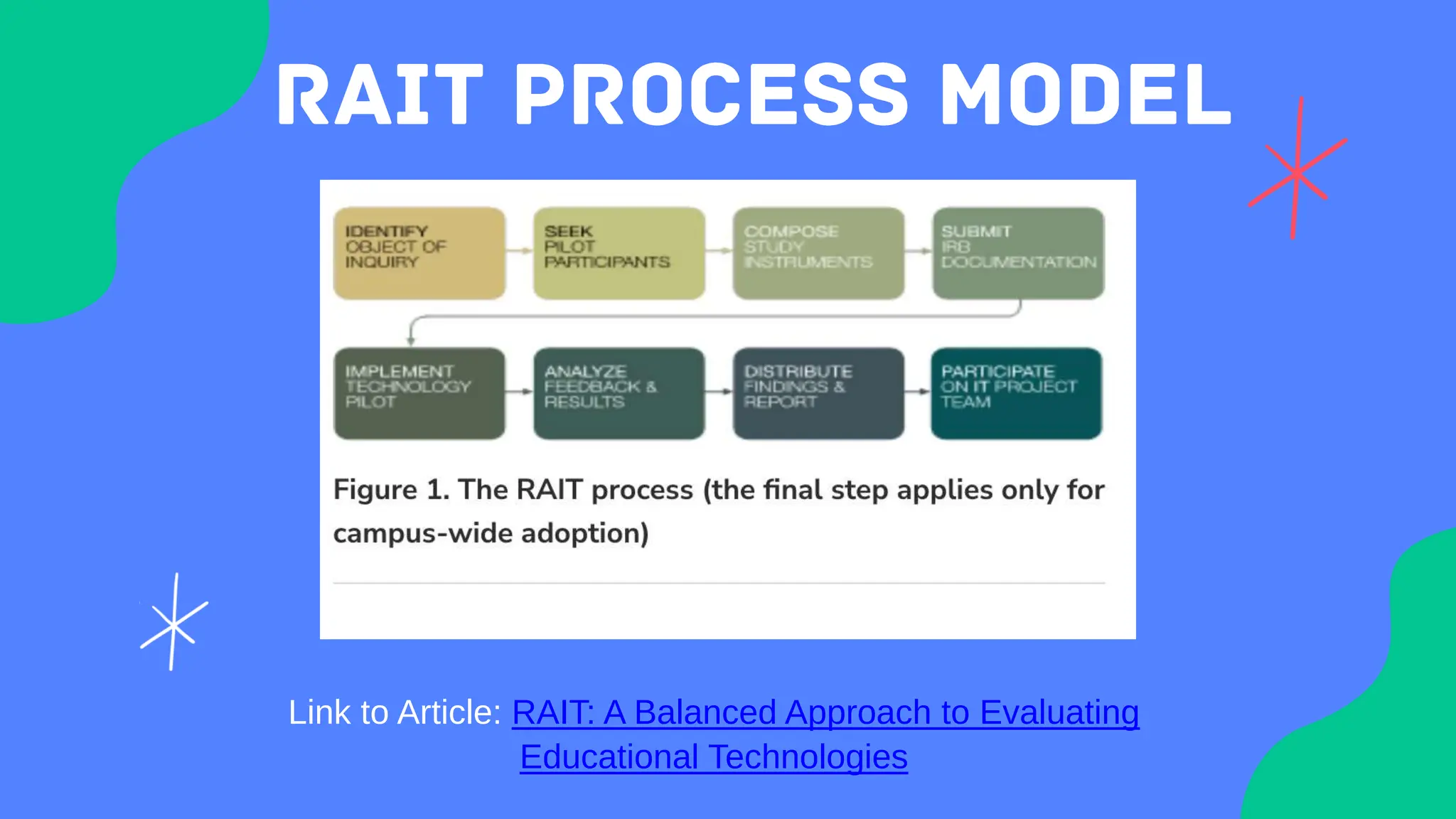
This article covered the RAIT approach to evaluating educational technologies. The
idea behind RAIT was to provide a quick tool to assess the effectiveness of an
educational technology on student learning. The model uses multiple areas to
evaluate educational technology such as usability, accessibility, and alignment to
educational goals. Based on the research carried out, using the model gave
educators a resource to make informed decisions about instructional practices and
the integration of technology into their teaching.
Link to Article: RAIT: A Balanced Approach to Evaluating
Educational Technologies
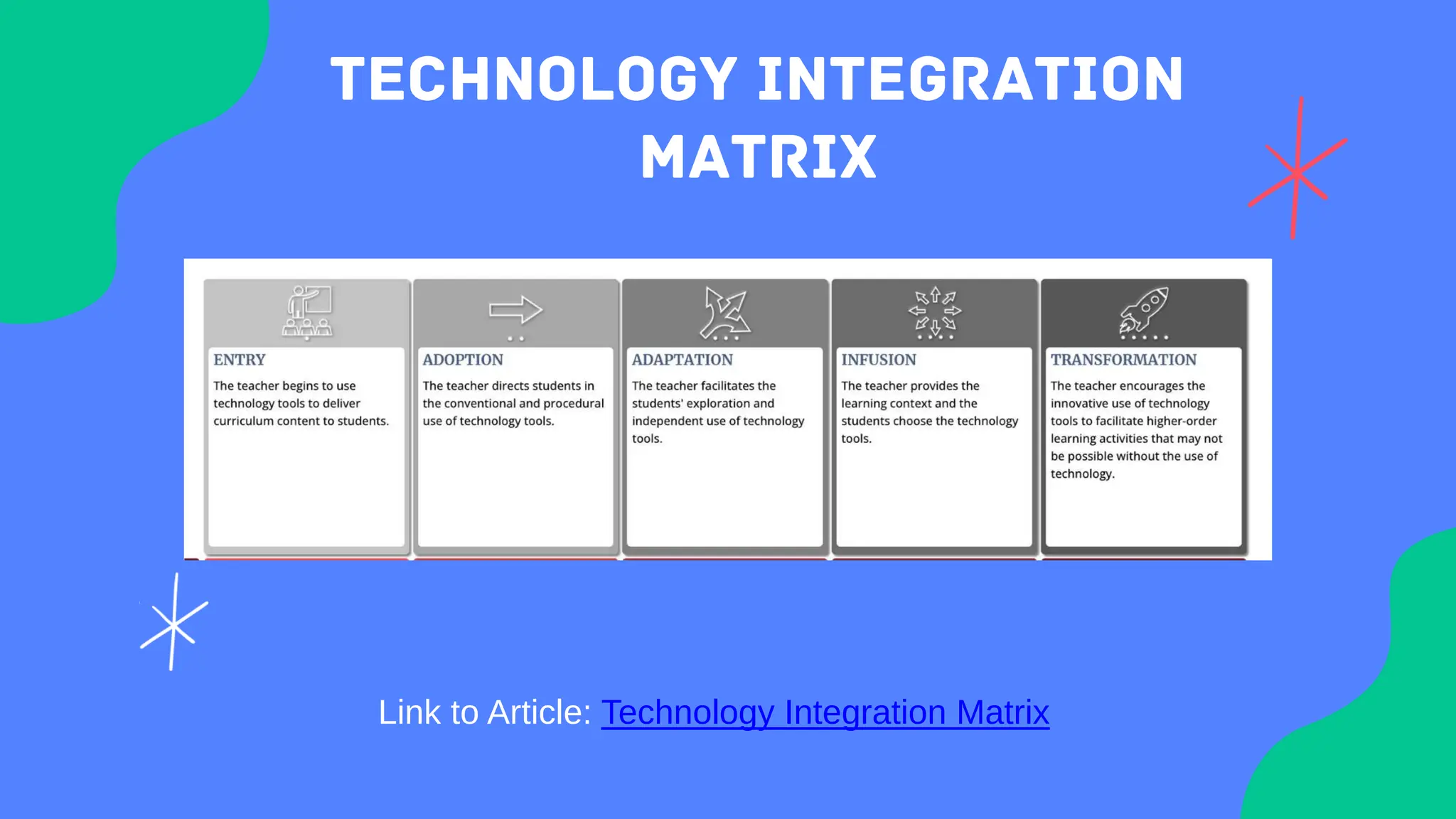
The Technology Integration Matrix is a framework that describes the use of
technology for educators and students. The goal of using this framework is to create
meaningful learning opportunities for students with the integration of technology. The
framework uses five characteristics of technology integration: entry, adoption,
adaptation, infusion, and transformation. This framework can drive face to face or
online learning.
Link to Article: Technology Integration Matrix
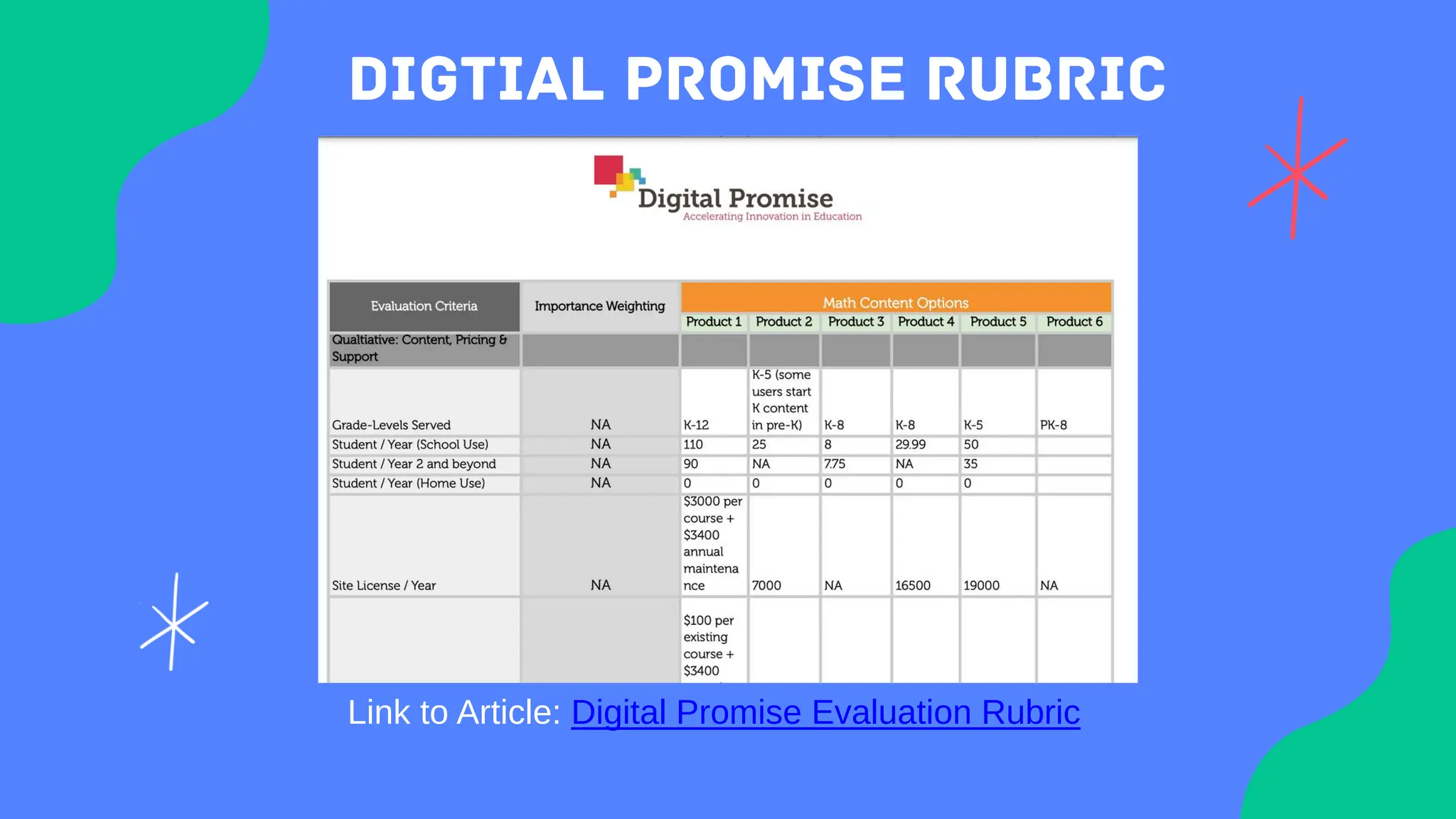
This rubric is an example of a tool an educator might use to evaluate an educational
technology tool. In this rubric, they are evaluating six different math learning tools for
effectiveness in multiple areas. Some of these areas include: training available,
assignability, teacher content, data tracking, and more. It also included notes from
user experiences, how it ties to pedagogy about math instruction best practices, and a
pros and cons breakdown. This rubric shows an example of how to evaluate tools to
find the best tool overall to implement for students.
Link to Article: Digital Promise Evaluation Rubric
2.5 Assignment: Quality Evaluation For Educational Technology

2.5 Assignment: Quality Evaluation For Educational Technology

  • 2.
    This article coveredthe RAIT approach to evaluating educational technologies. The idea behind RAIT was to provide a quick tool to assess the effectiveness of an educational technology on student learning. The model uses multiple areas to evaluate educational technology such as usability, accessibility, and alignment to educational goals. Based on the research carried out, using the model gave educators a resource to make informed decisions about instructional practices and the integration of technology into their teaching.
  • 3.
    Link to Article:RAIT: A Balanced Approach to Evaluating Educational Technologies
  • 4.
    The Technology IntegrationMatrix is a framework that describes the use of technology for educators and students. The goal of using this framework is to create meaningful learning opportunities for students with the integration of technology. The framework uses five characteristics of technology integration: entry, adoption, adaptation, infusion, and transformation. This framework can drive face to face or online learning.
  • 5.
    Link to Article:Technology Integration Matrix
  • 6.
    This rubric isan example of a tool an educator might use to evaluate an educational technology tool. In this rubric, they are evaluating six different math learning tools for effectiveness in multiple areas. Some of these areas include: training available, assignability, teacher content, data tracking, and more. It also included notes from user experiences, how it ties to pedagogy about math instruction best practices, and a pros and cons breakdown. This rubric shows an example of how to evaluate tools to find the best tool overall to implement for students.
  • 7.
    Link to Article:Digital Promise Evaluation Rubric