Download to read offline

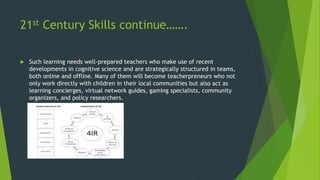
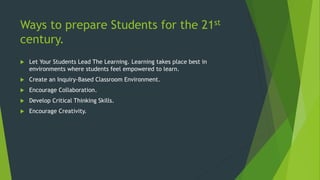
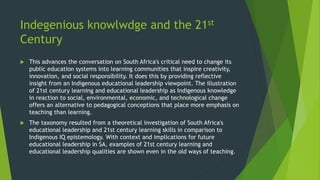


This document discusses 21st century skills which include problem solving, cooperation, digital literacy, and critical thinking. It states that students must be able to synthesize knowledge from various sources while respecting different cultures. Key 21st century skills are cooperation, communication, creativity, civic duty, and digital literacy. The document also discusses advantages of teaching these skills like engaging students and improving time management through digital learning. It provides some ways to prepare students for the 21st century like letting students lead their own learning, encouraging collaboration and creativity. Finally, it discusses how indigenous knowledge relates to 21st century learning and educational leadership.
![Notyiurtypepptbypptstudentofalltype].pptx](https://cdn.slidesharecdn.com/ss_thumbnails/inculcating-21st-century-skills-among-students1-251023051441-c22d0fd2-thumbnail.jpg?width=640&height=640&fit=bounds)


