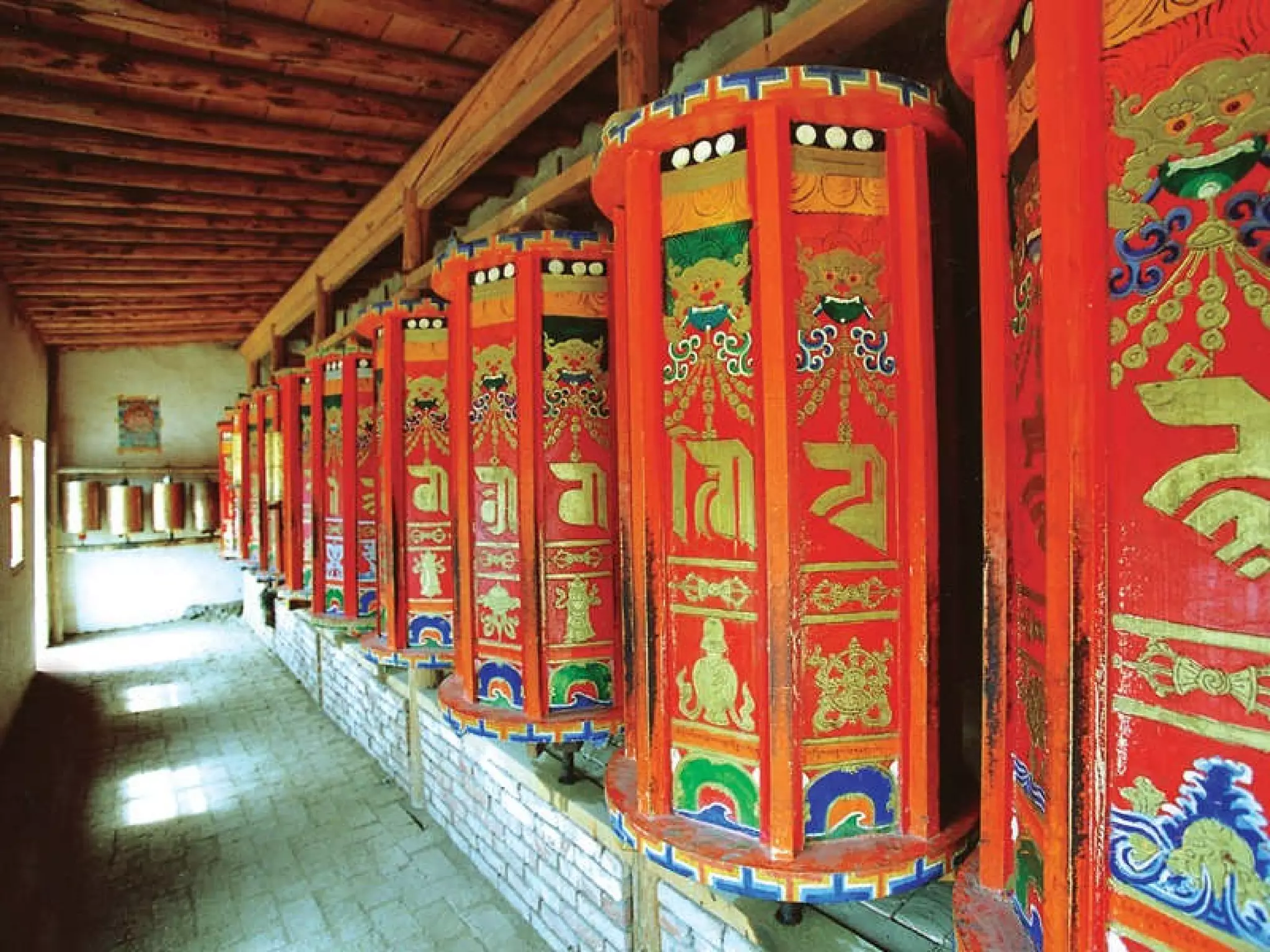
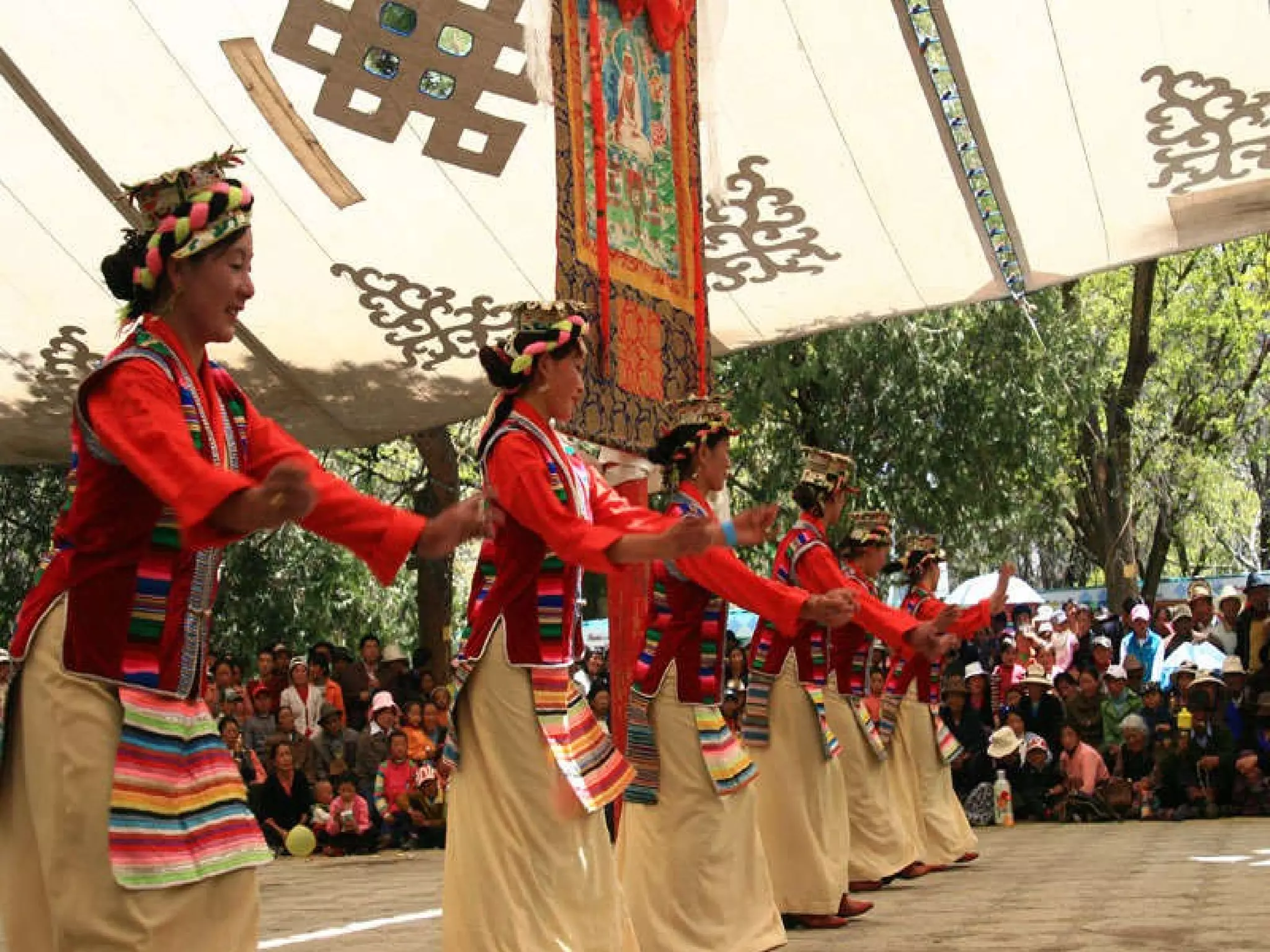
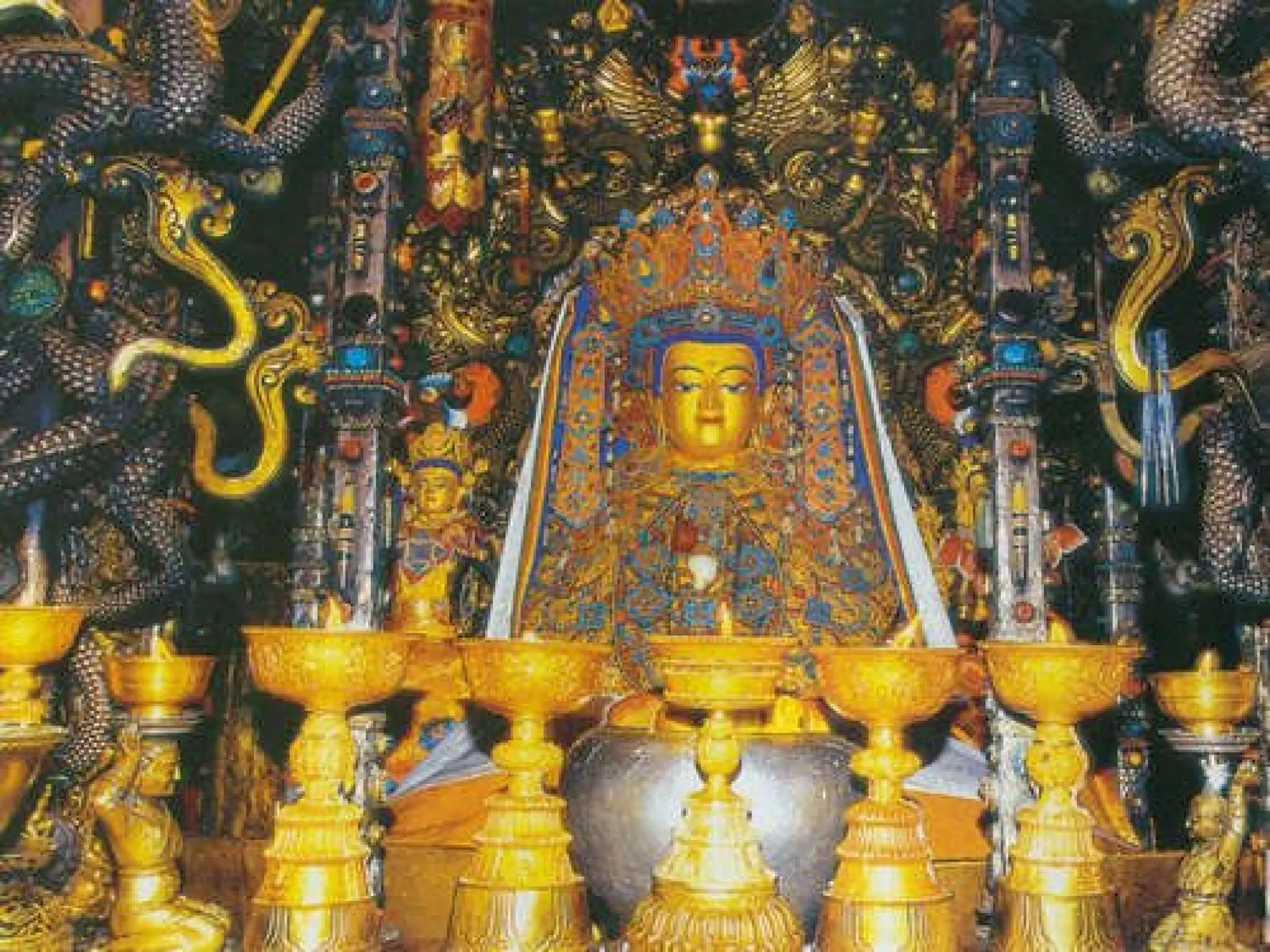
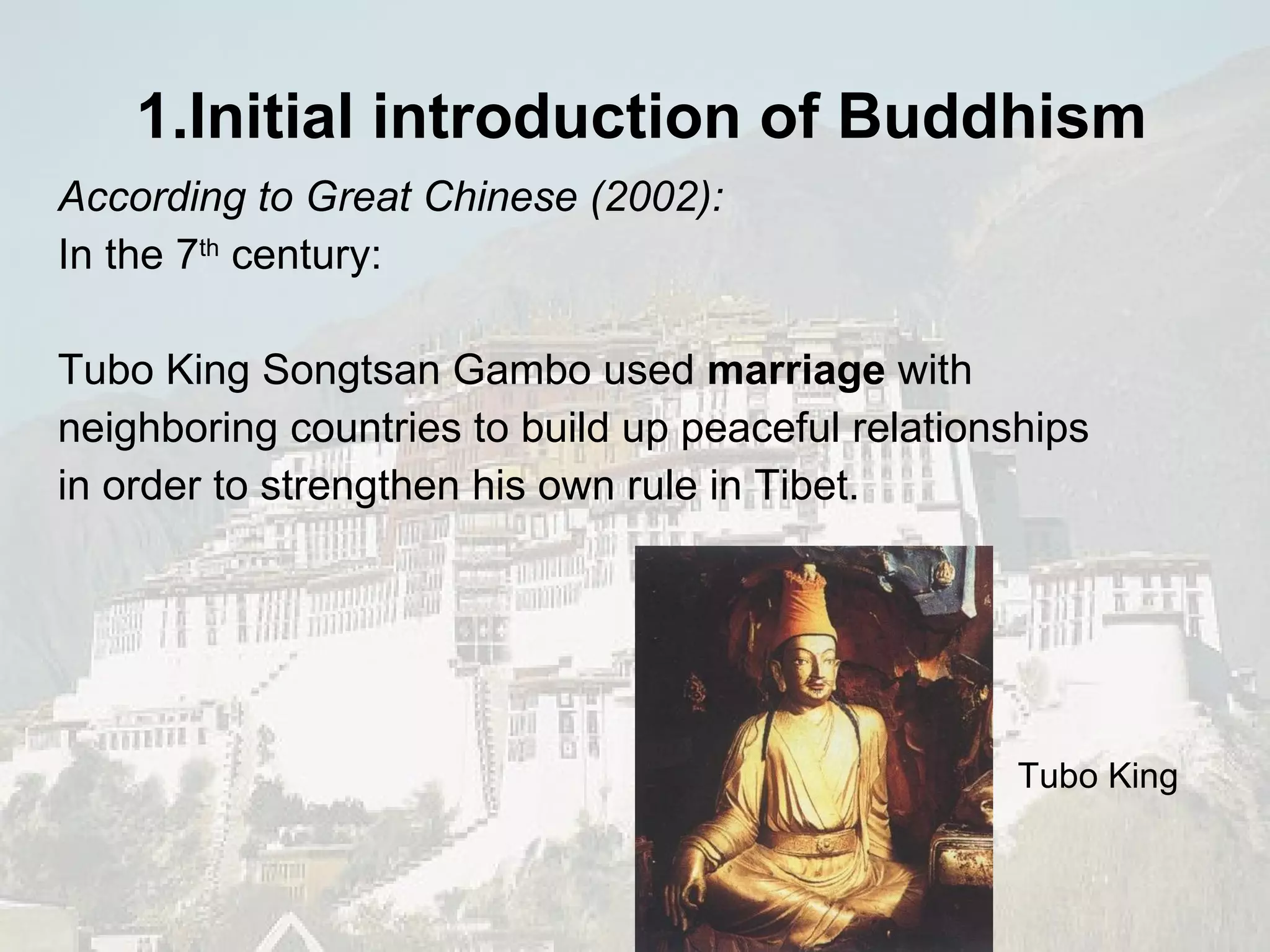
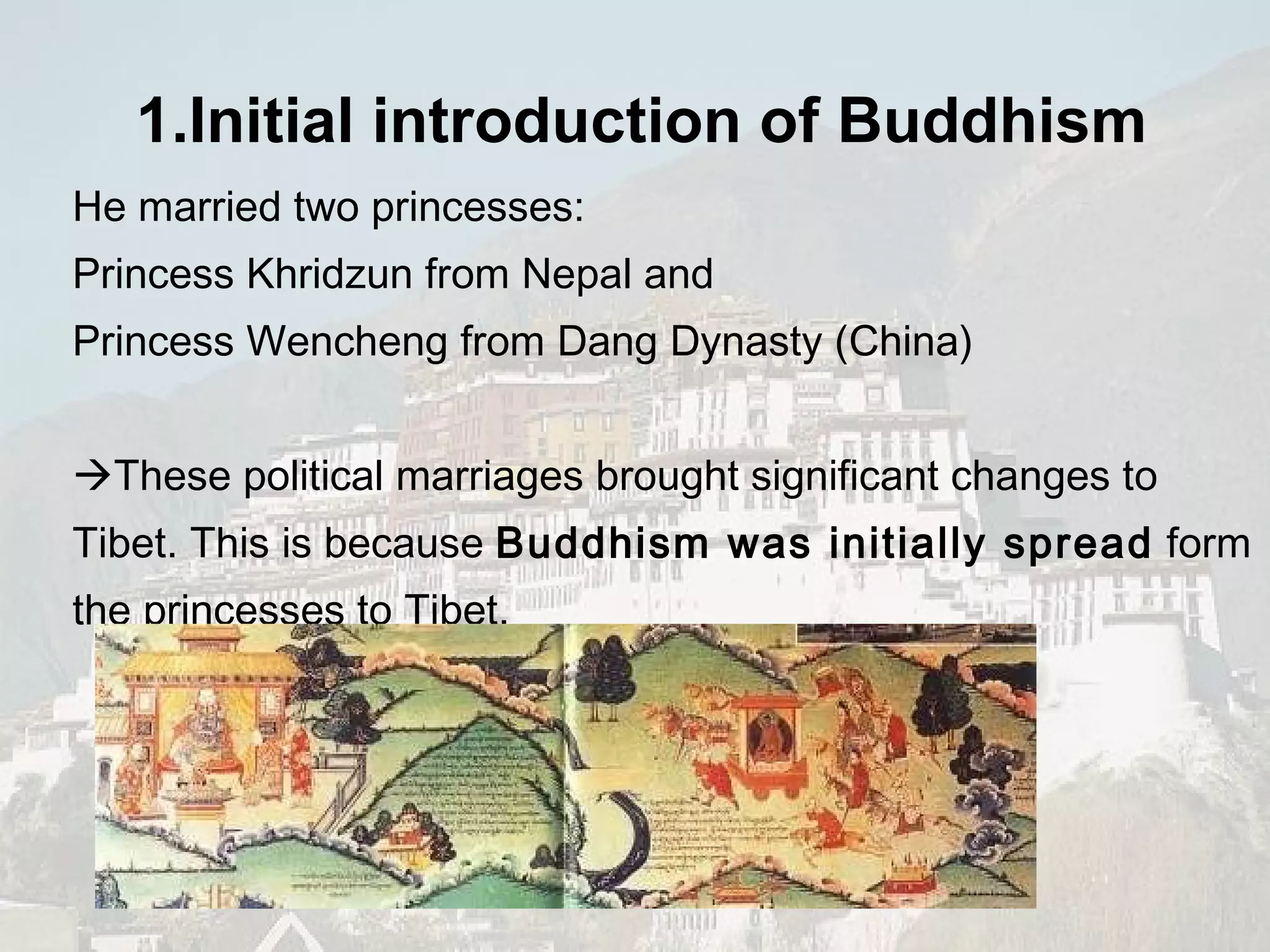
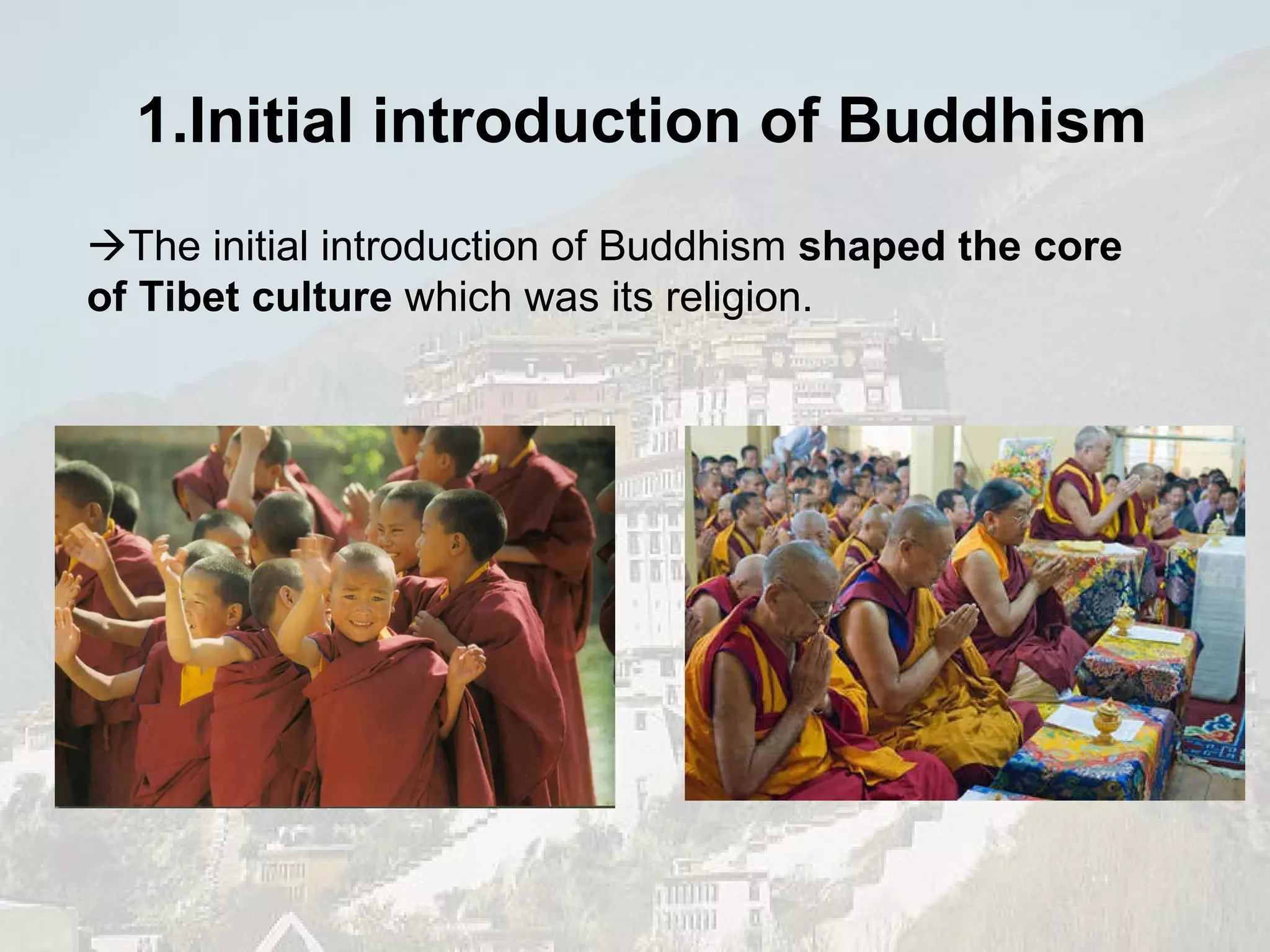
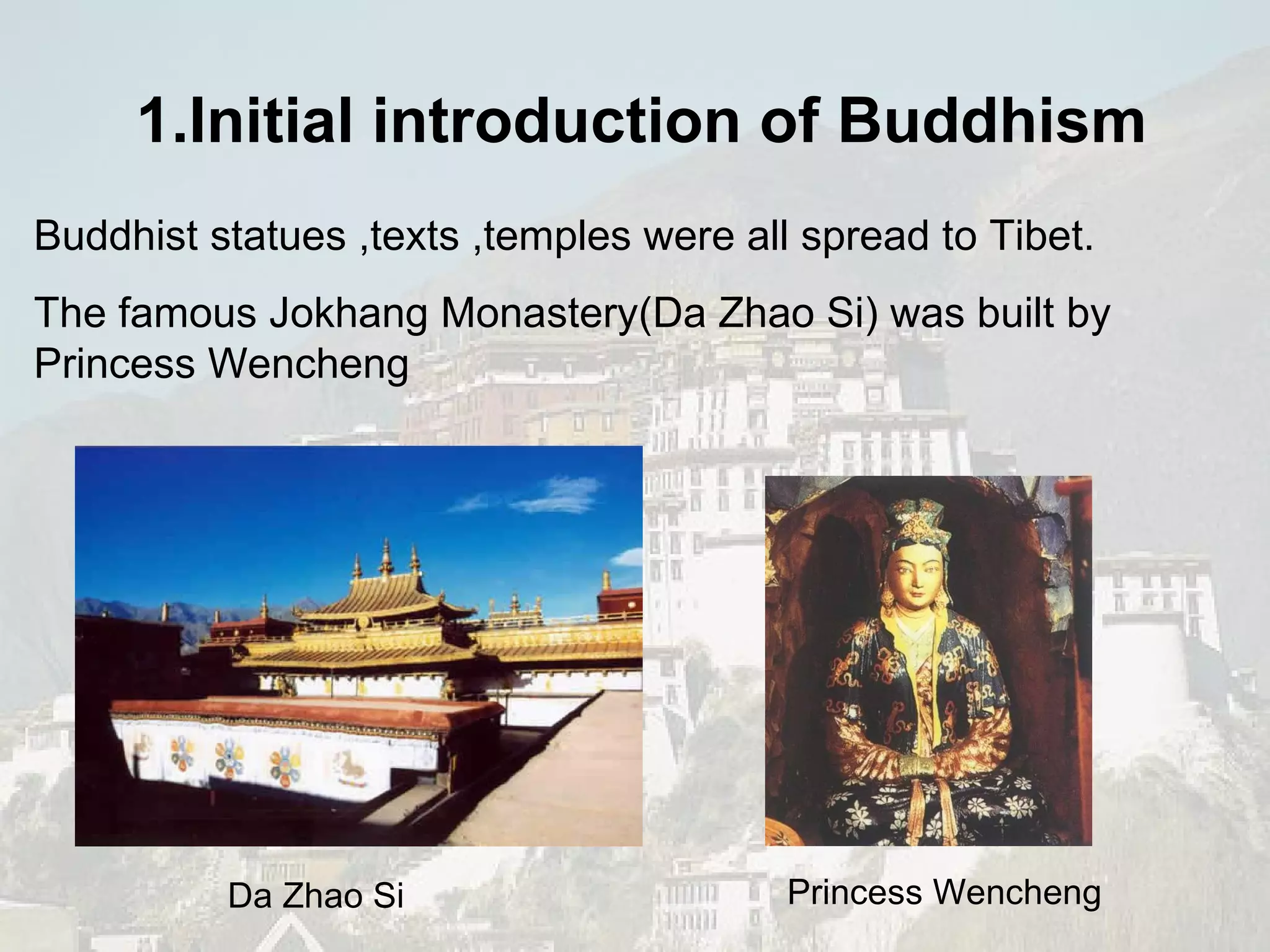
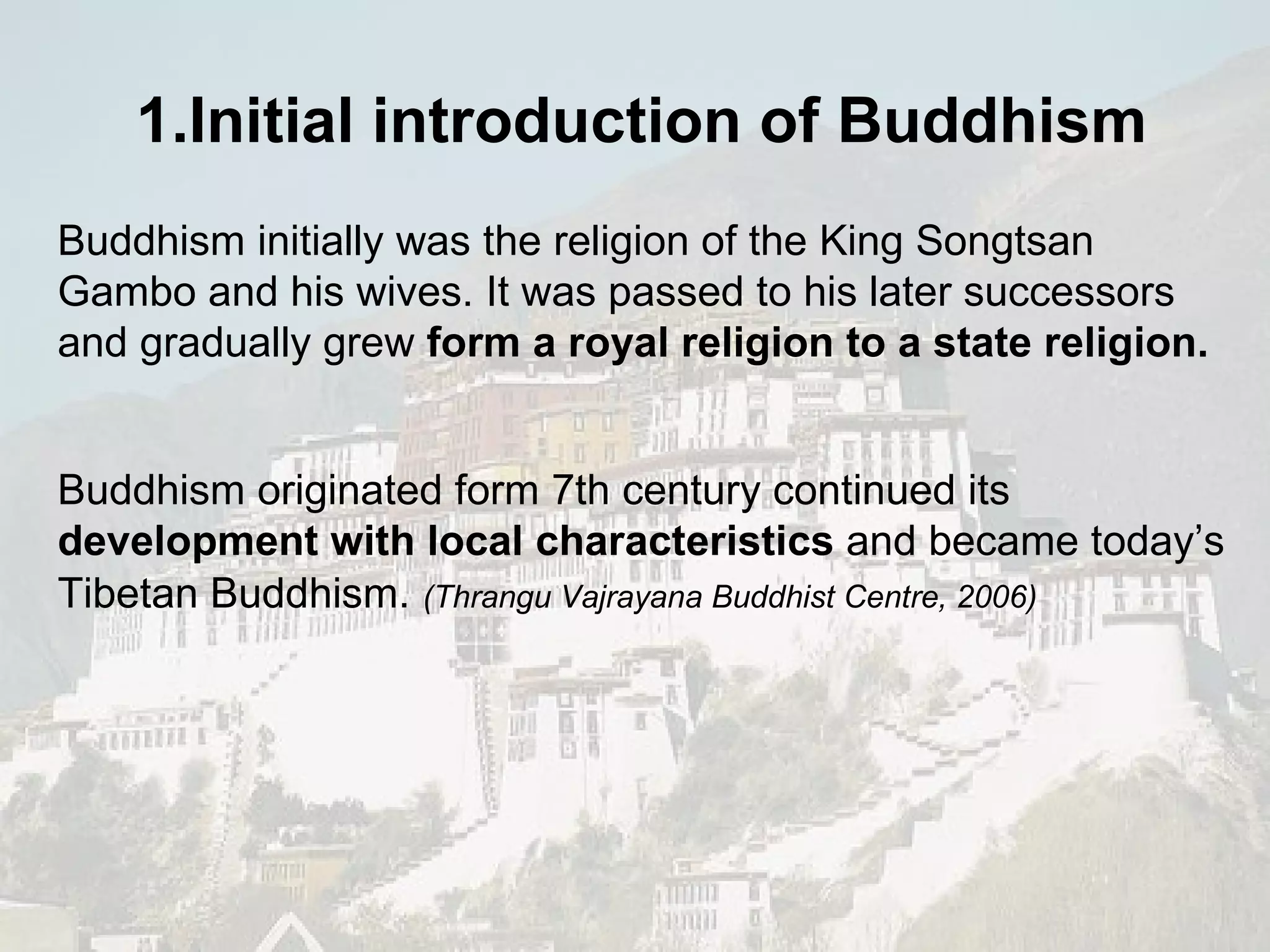
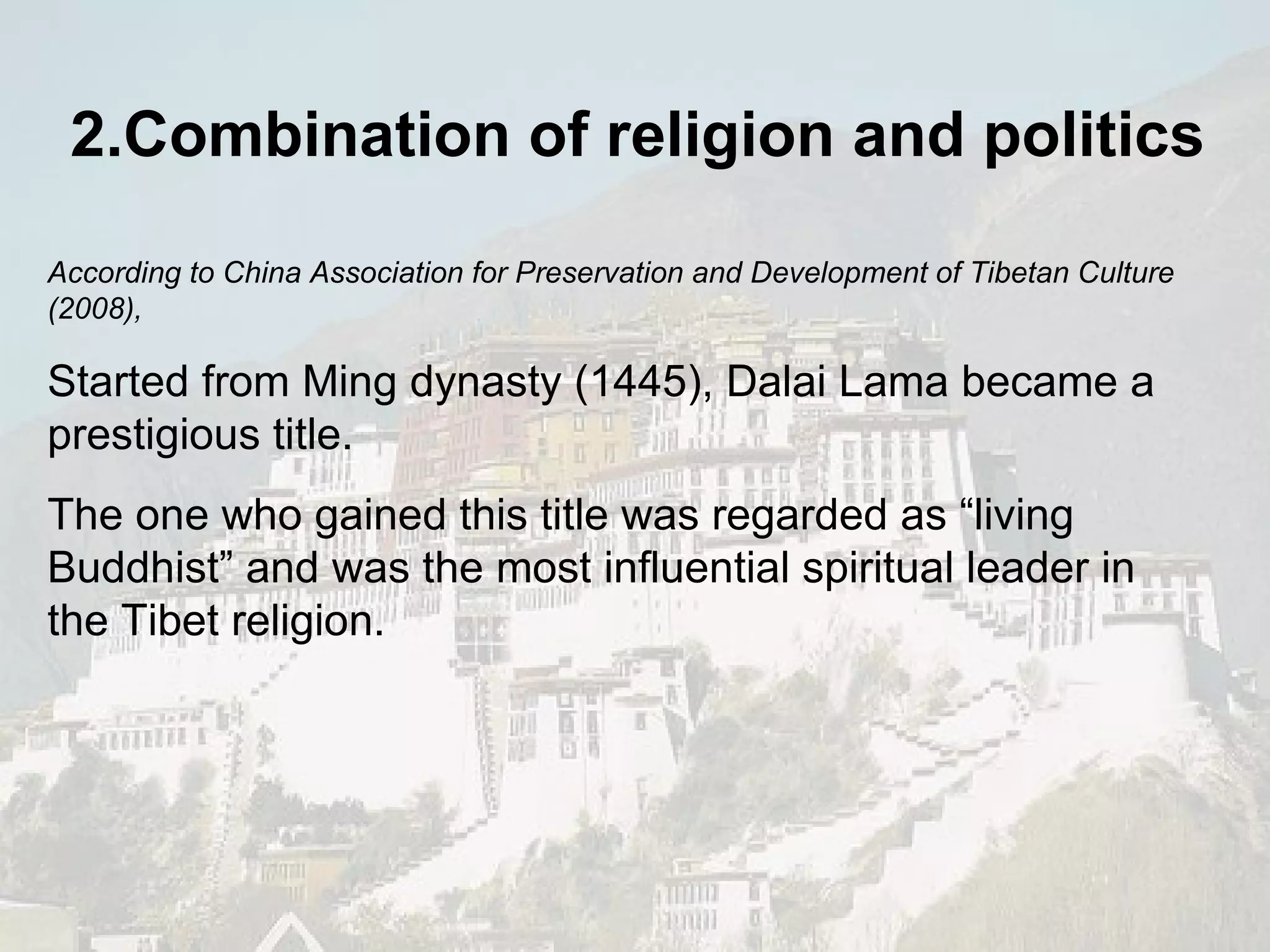
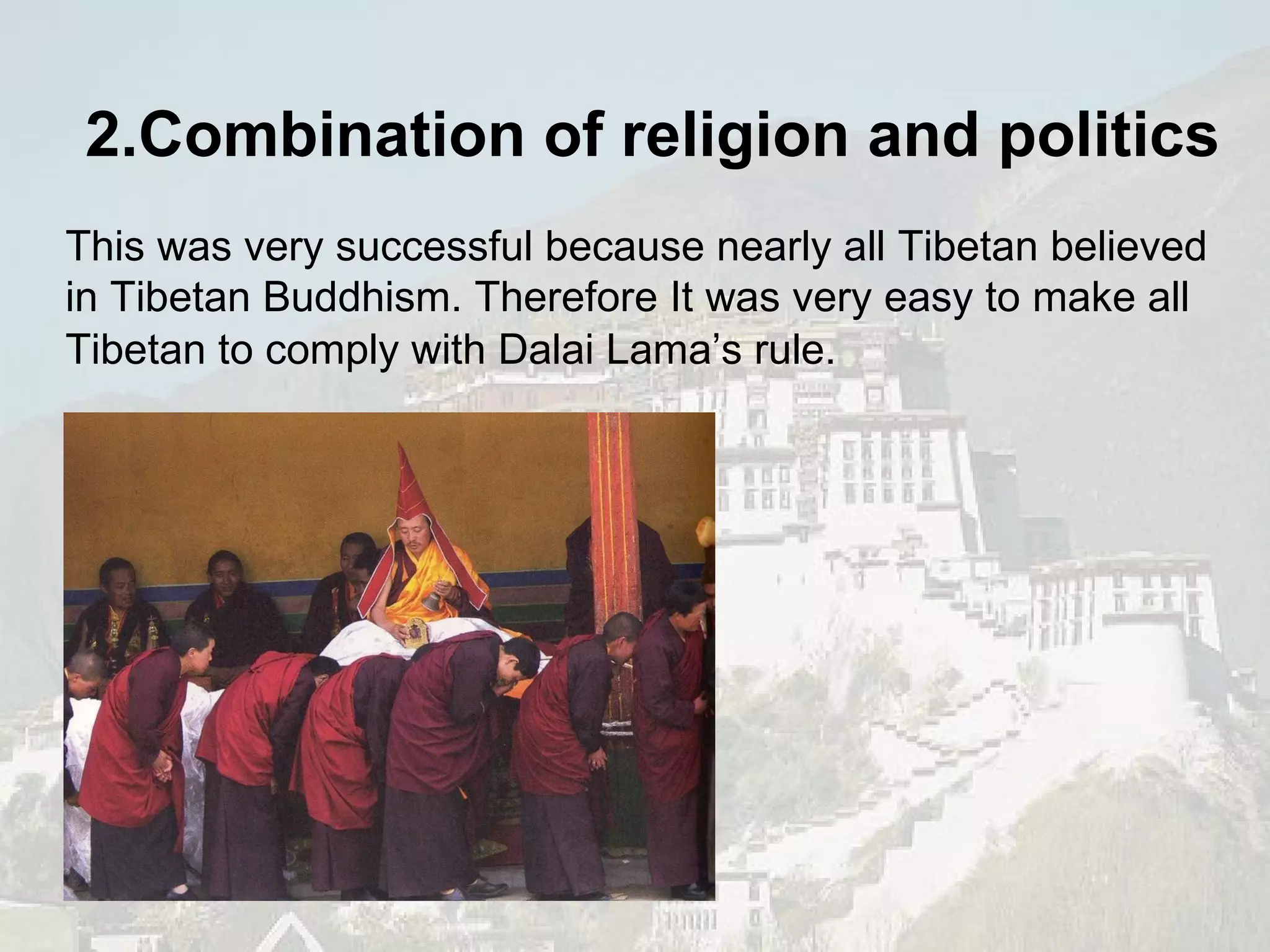
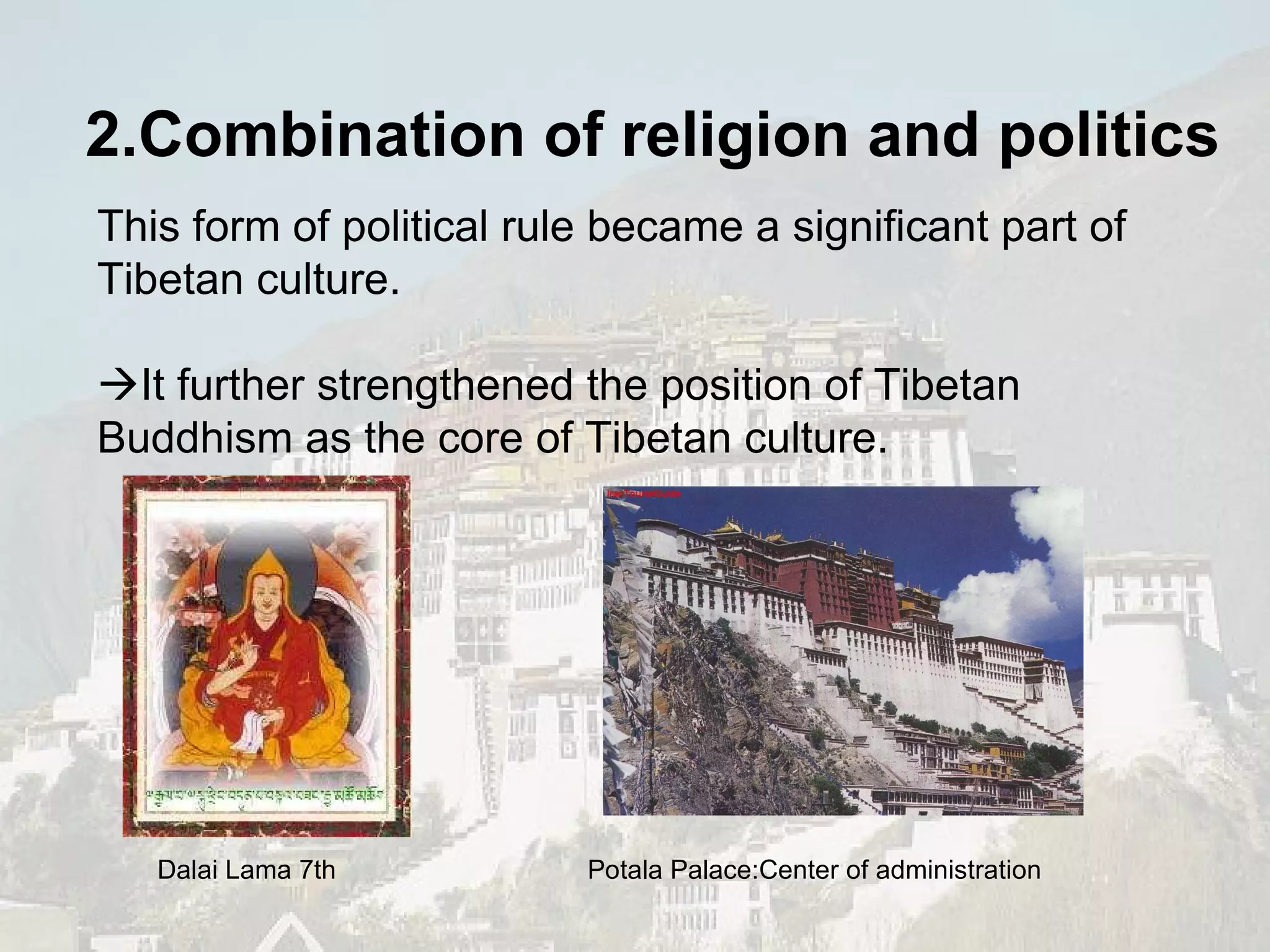
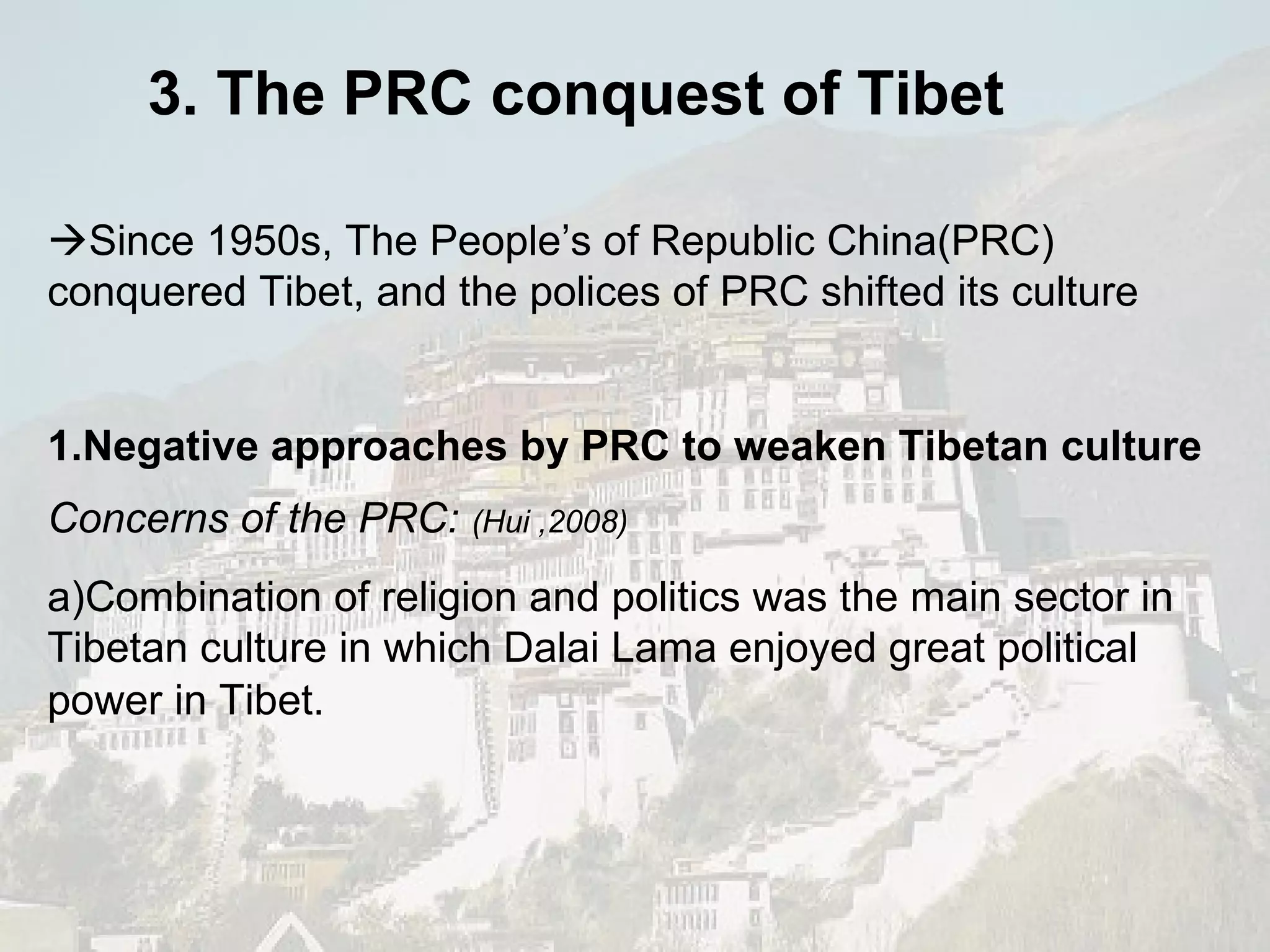
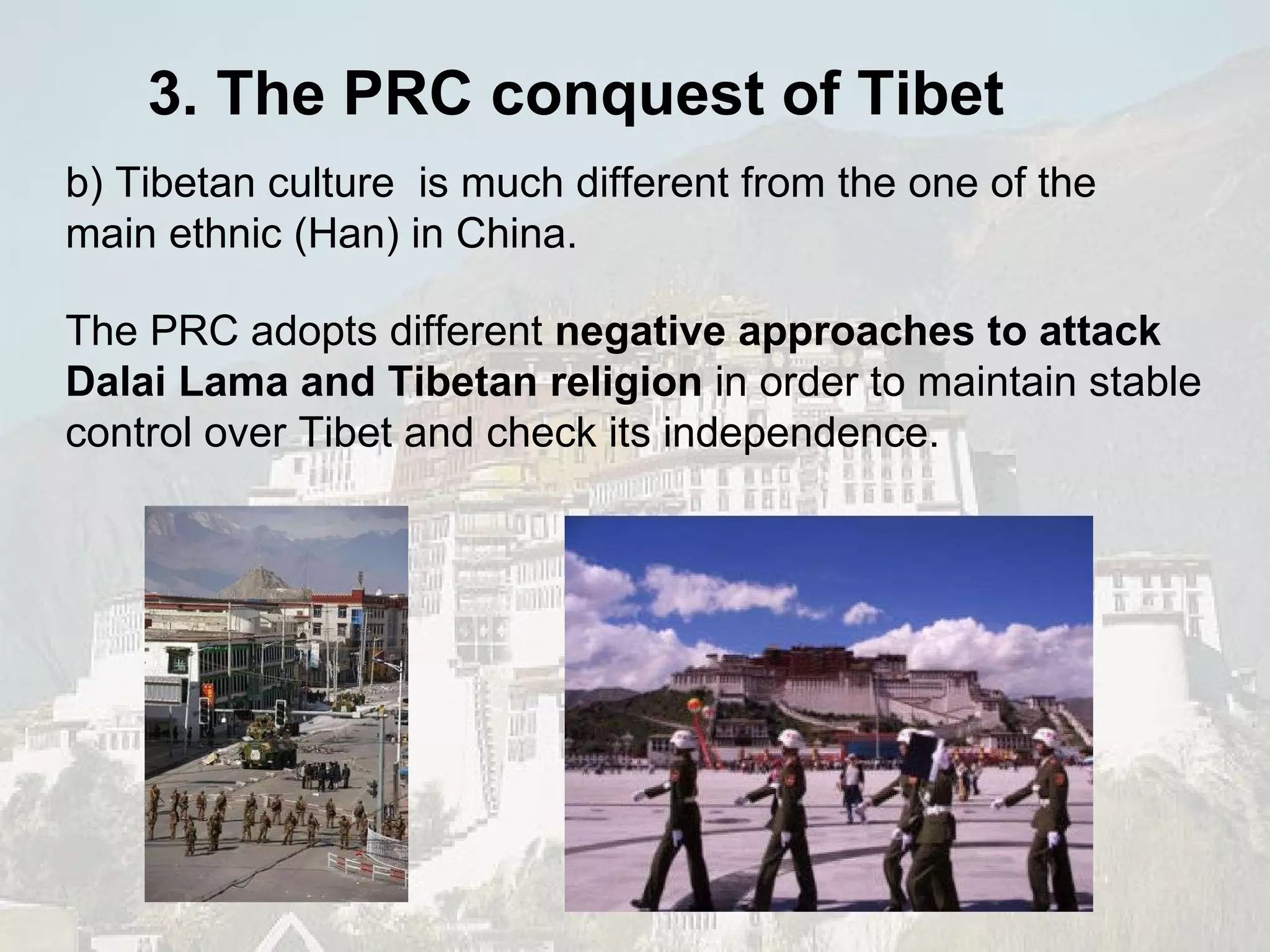
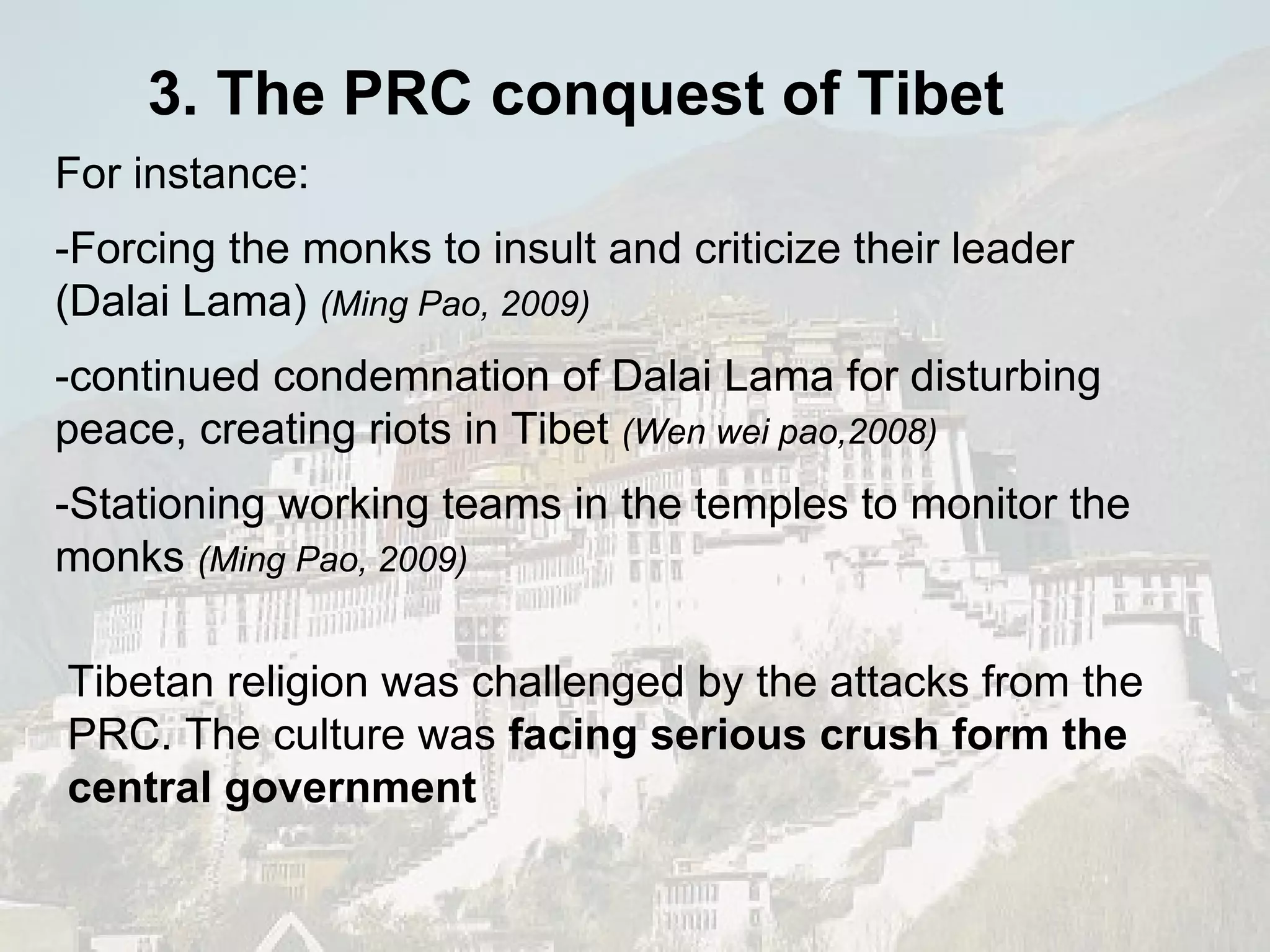
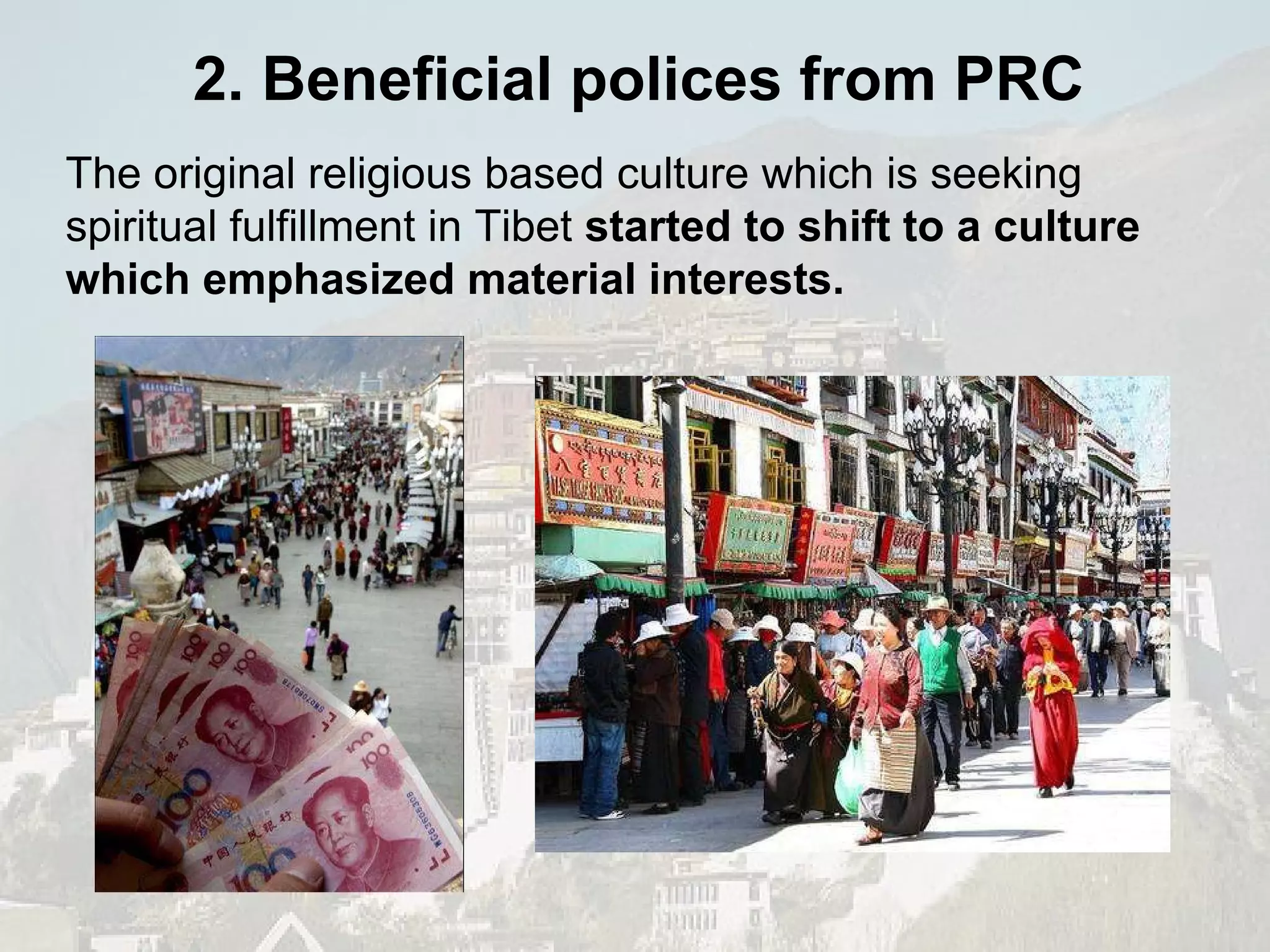
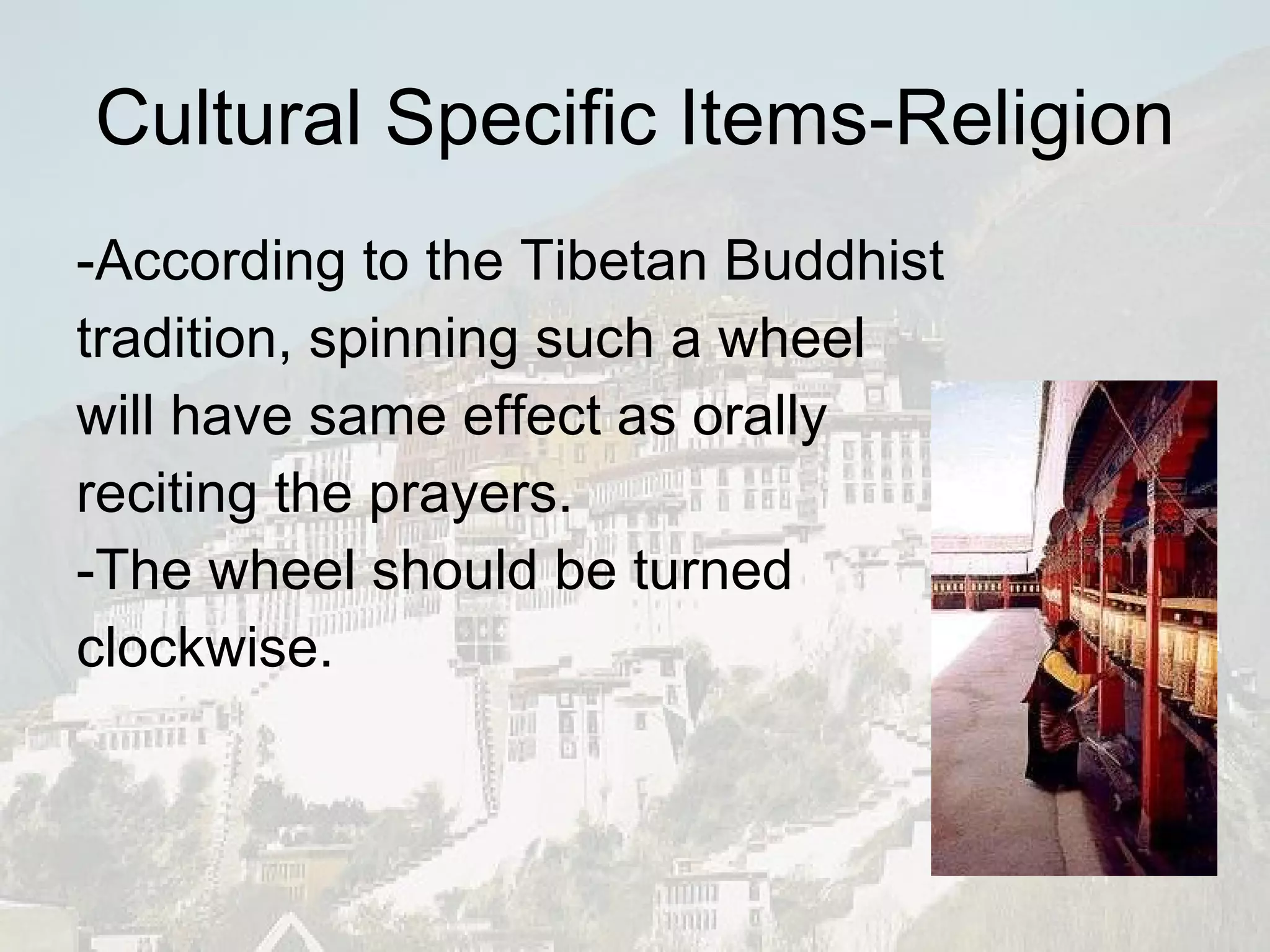
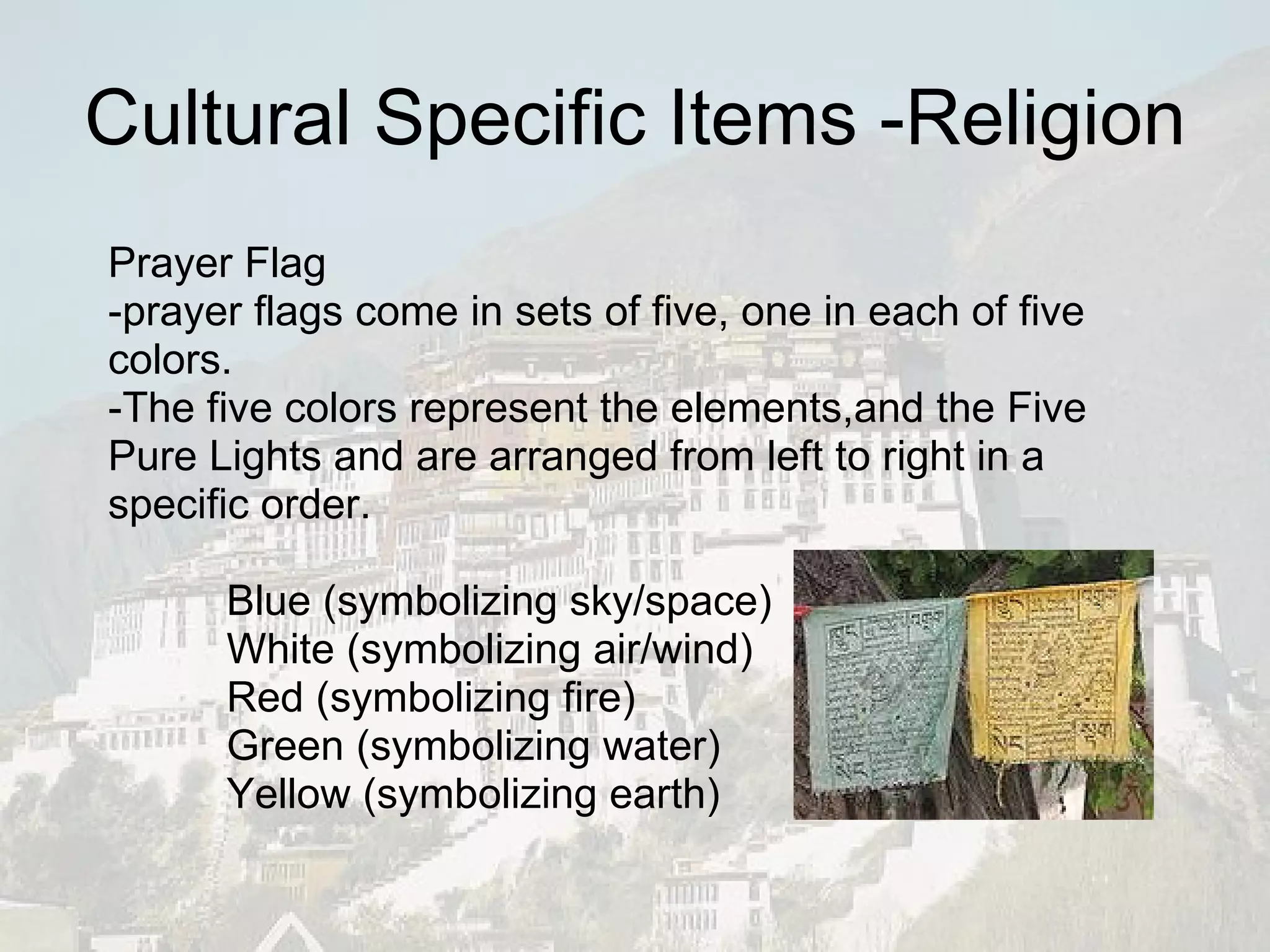
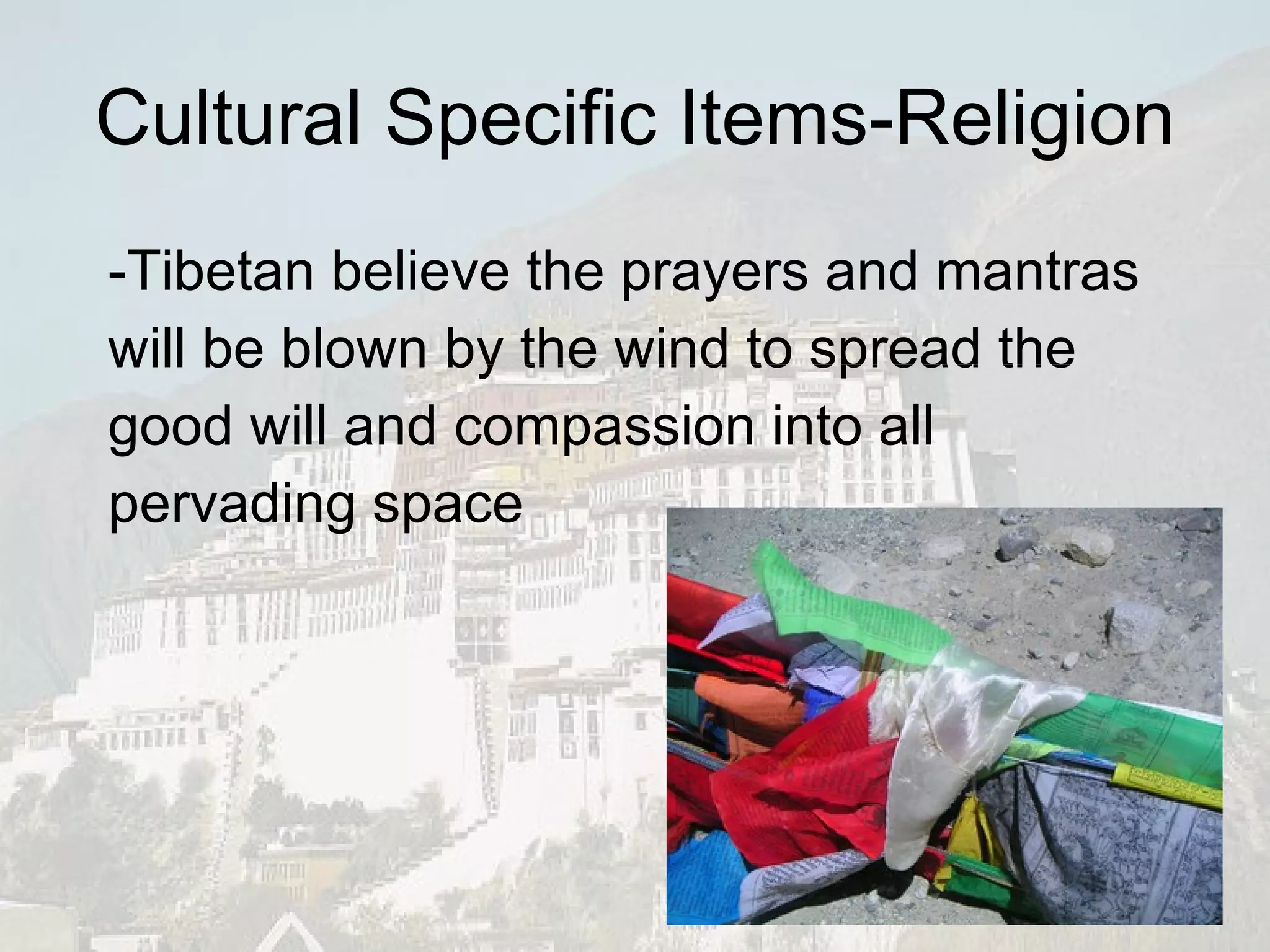
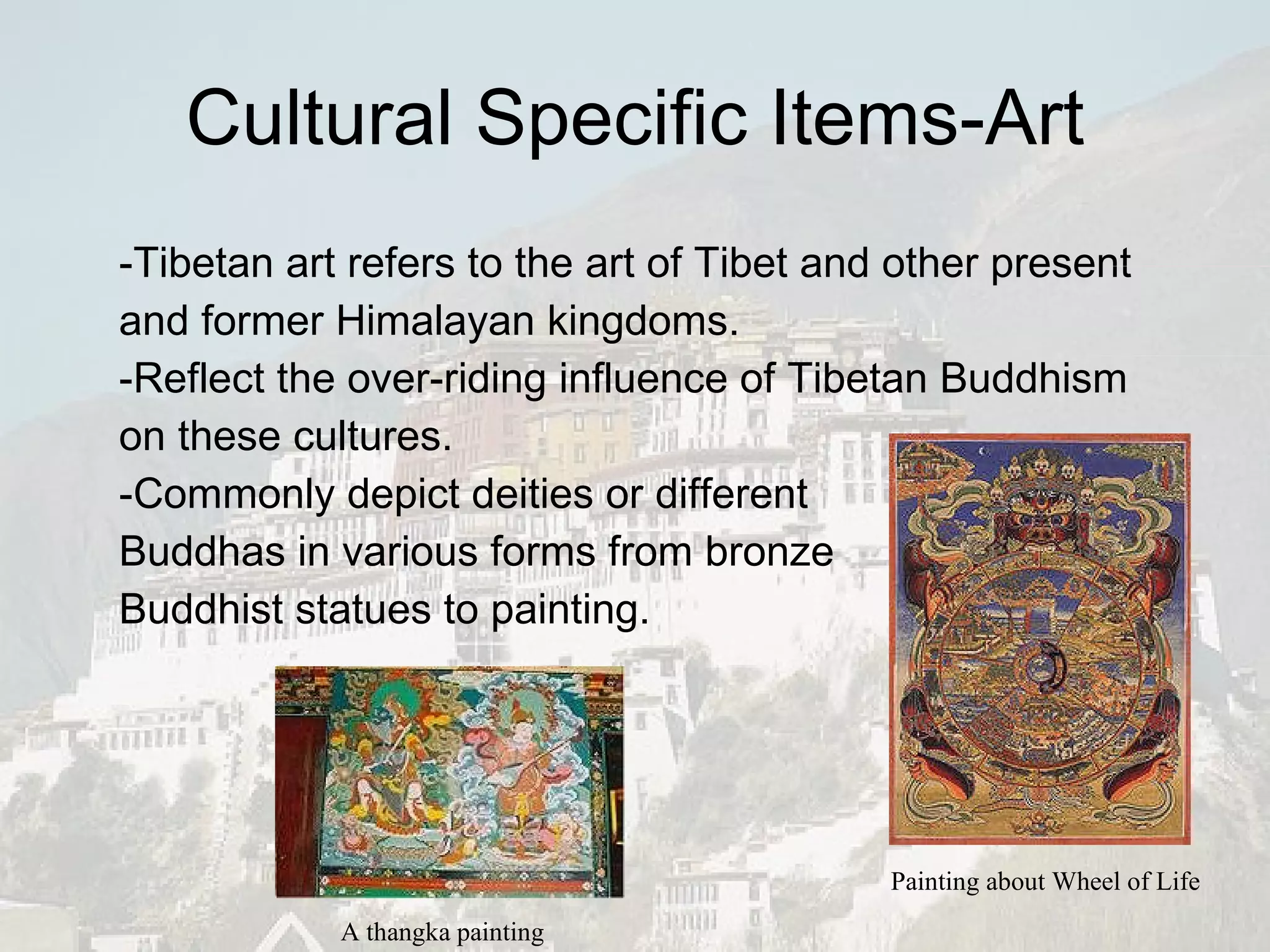
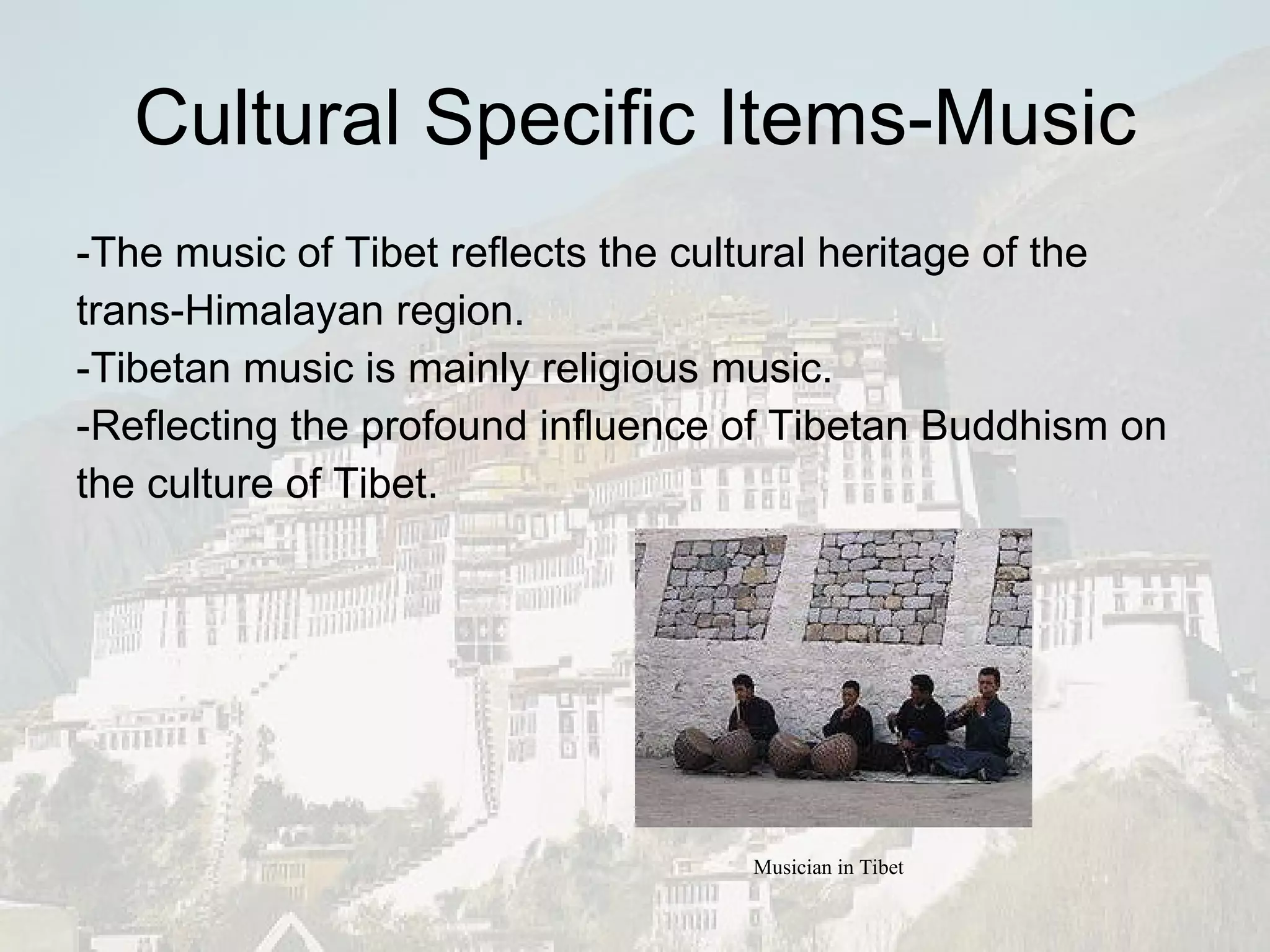
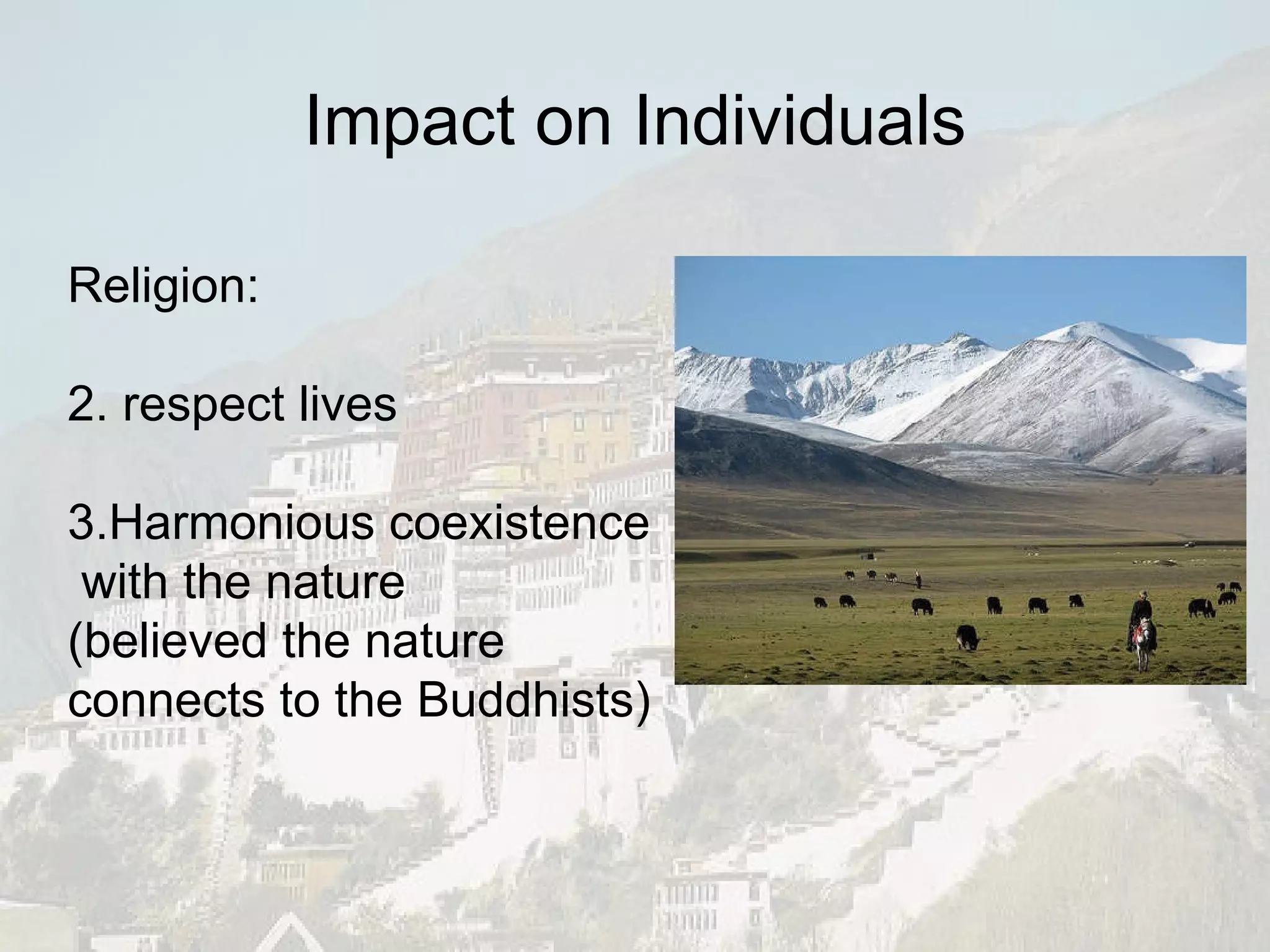
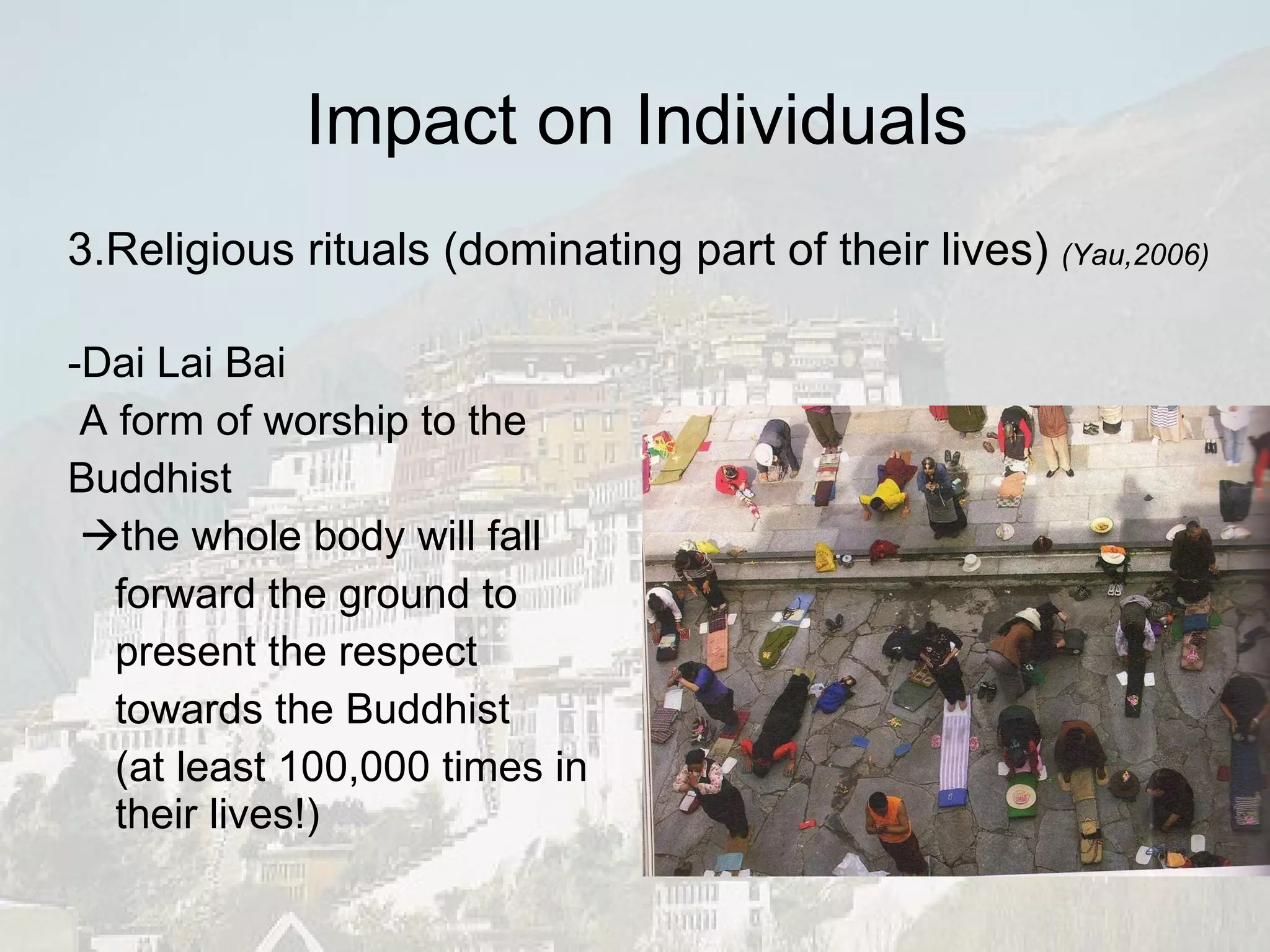
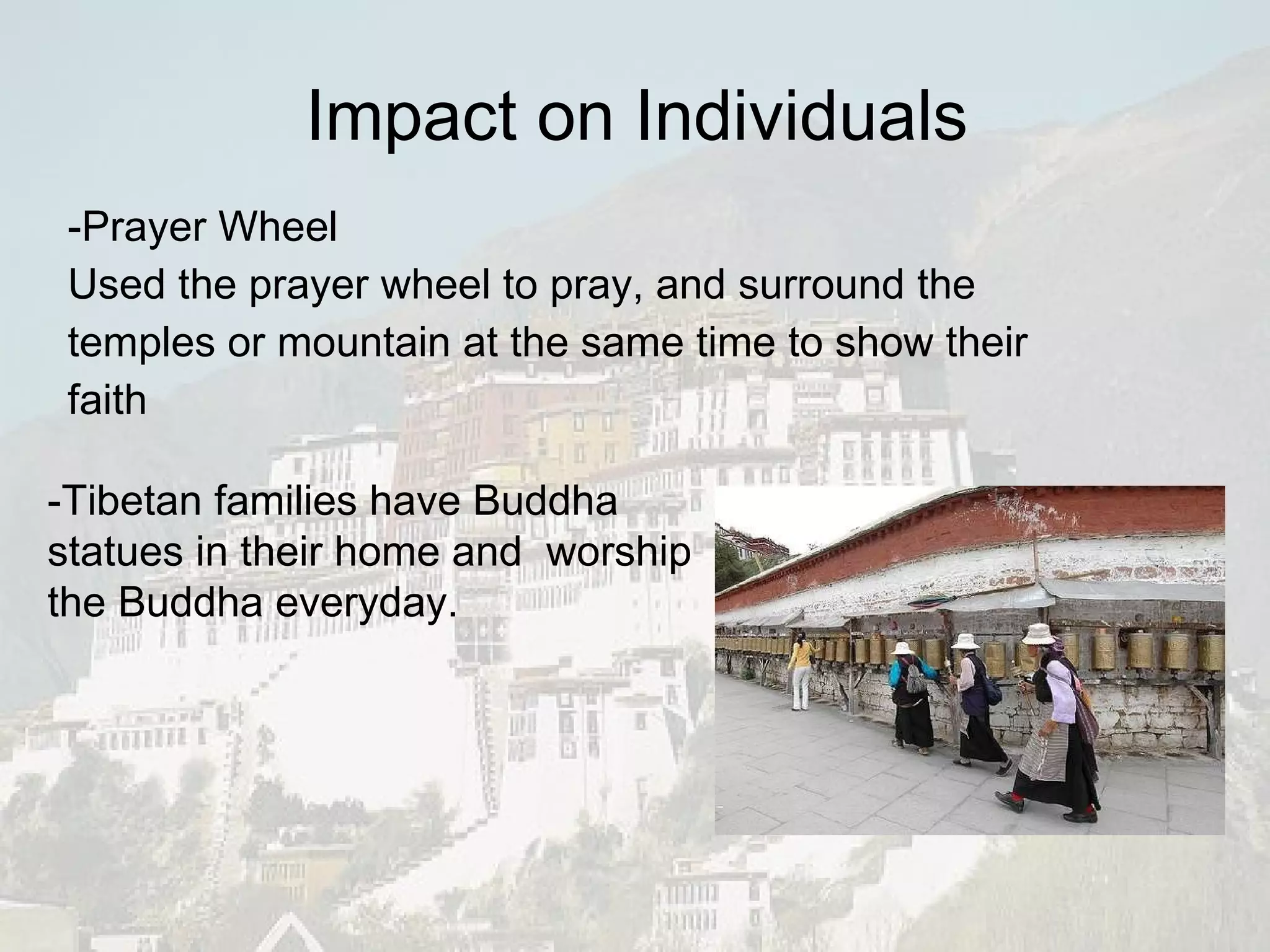
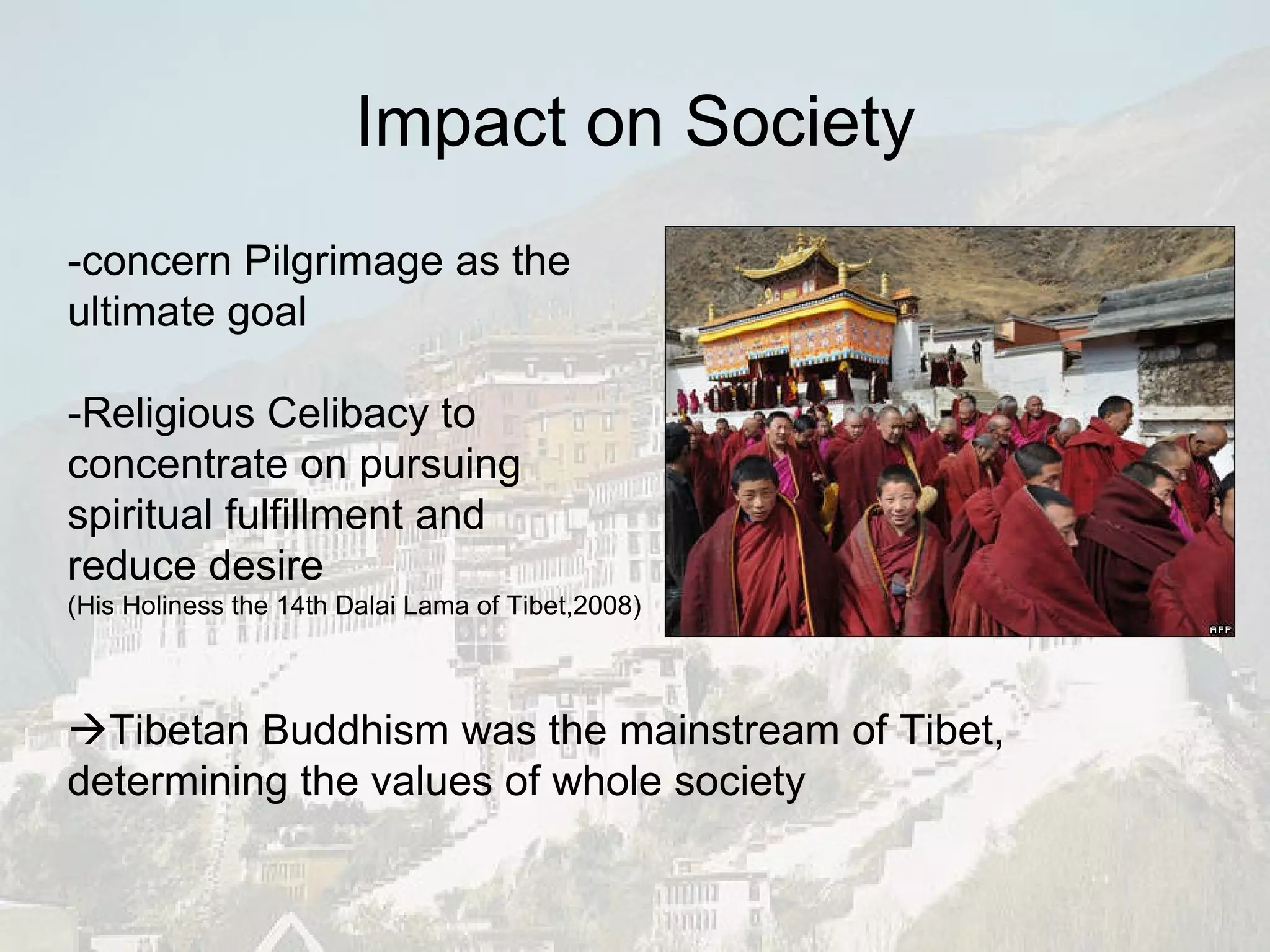
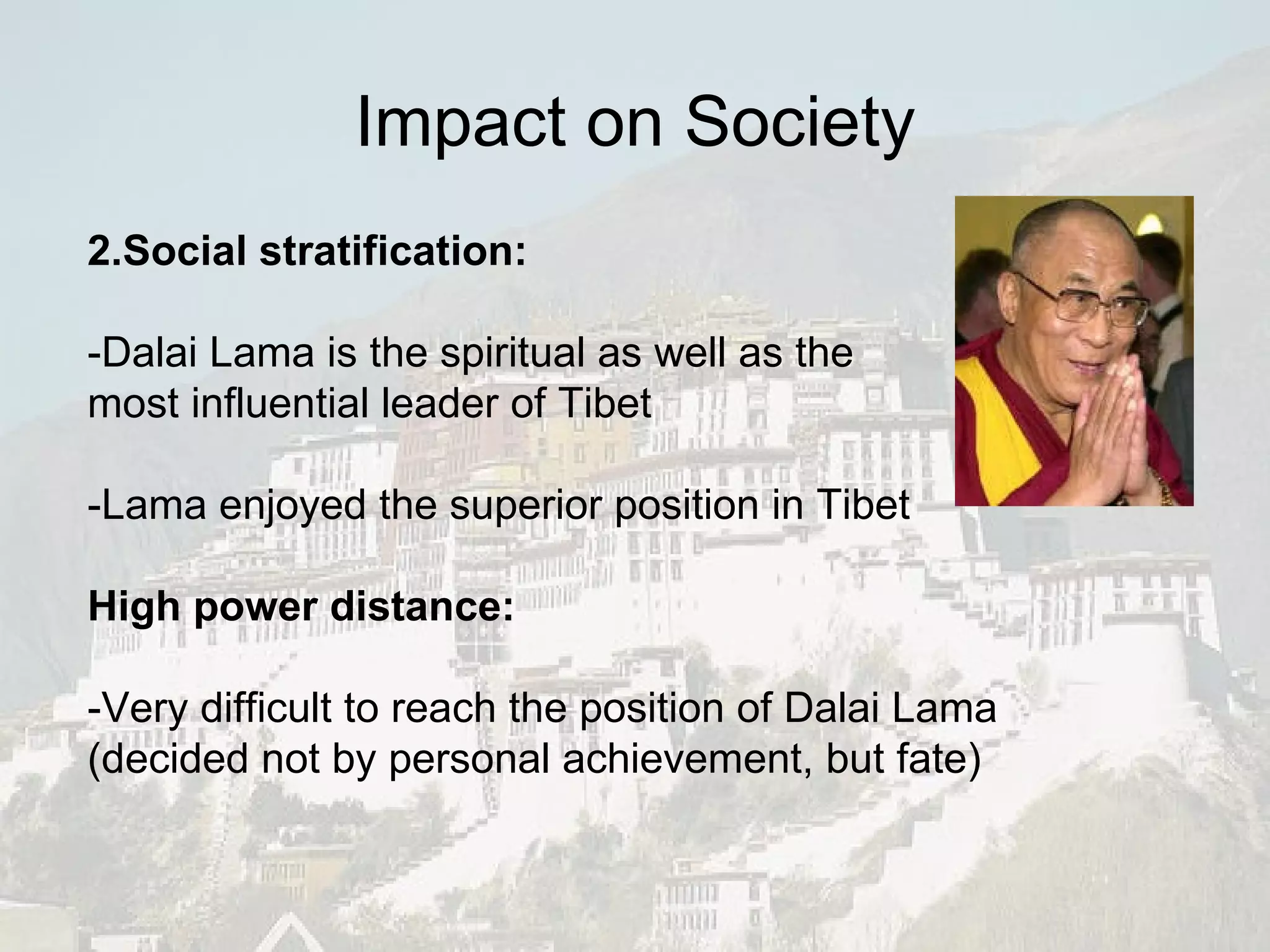
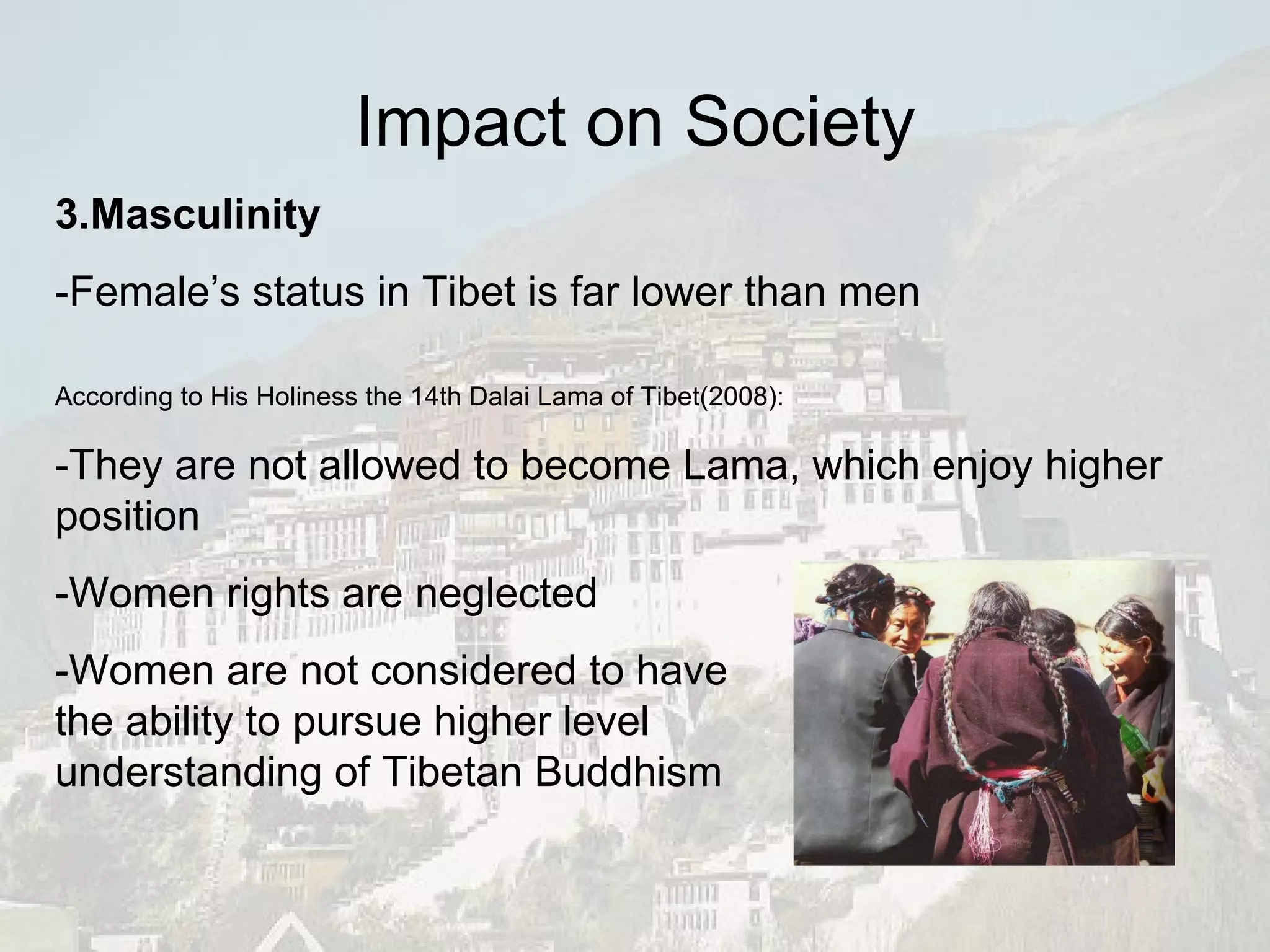
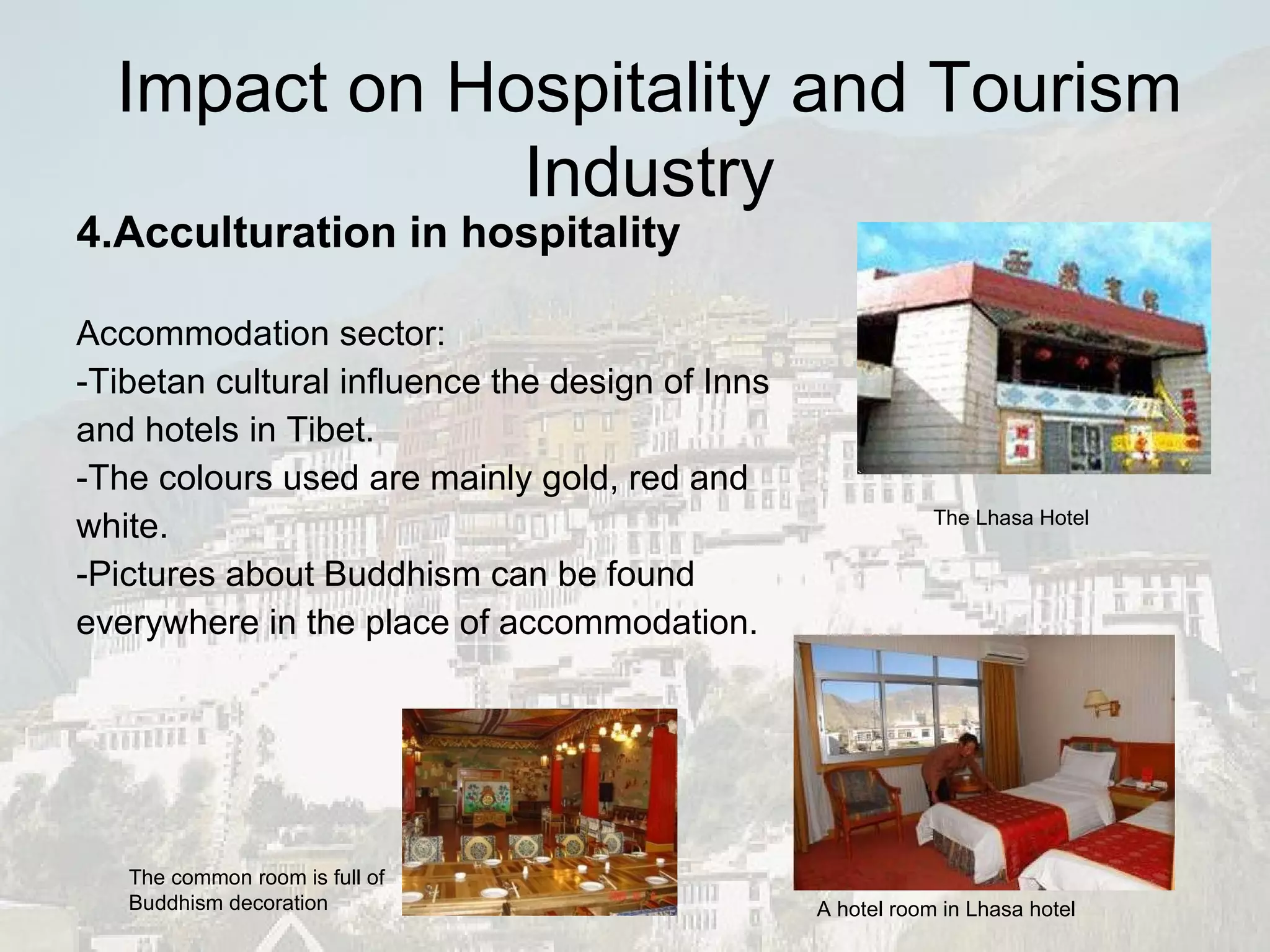
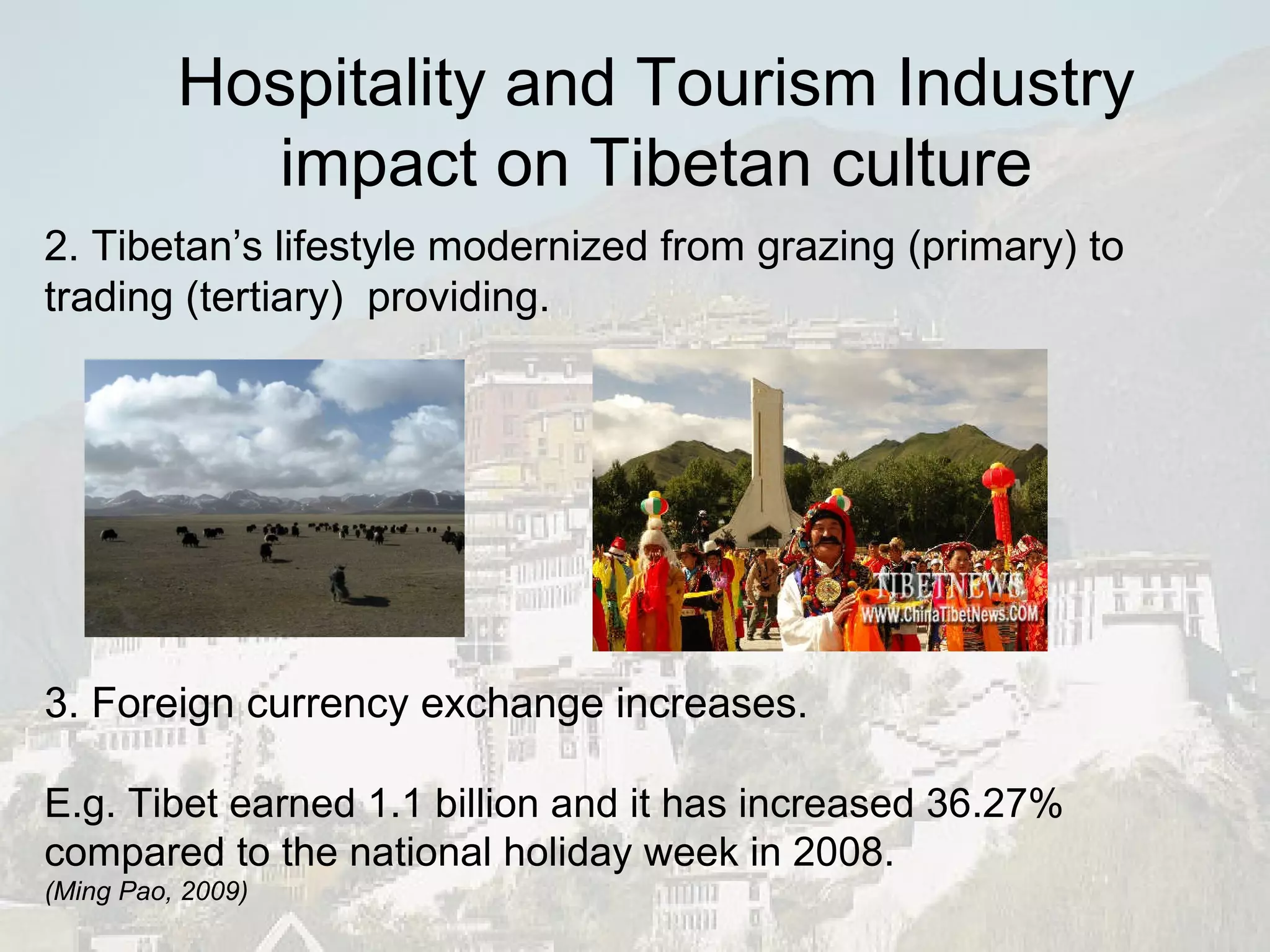
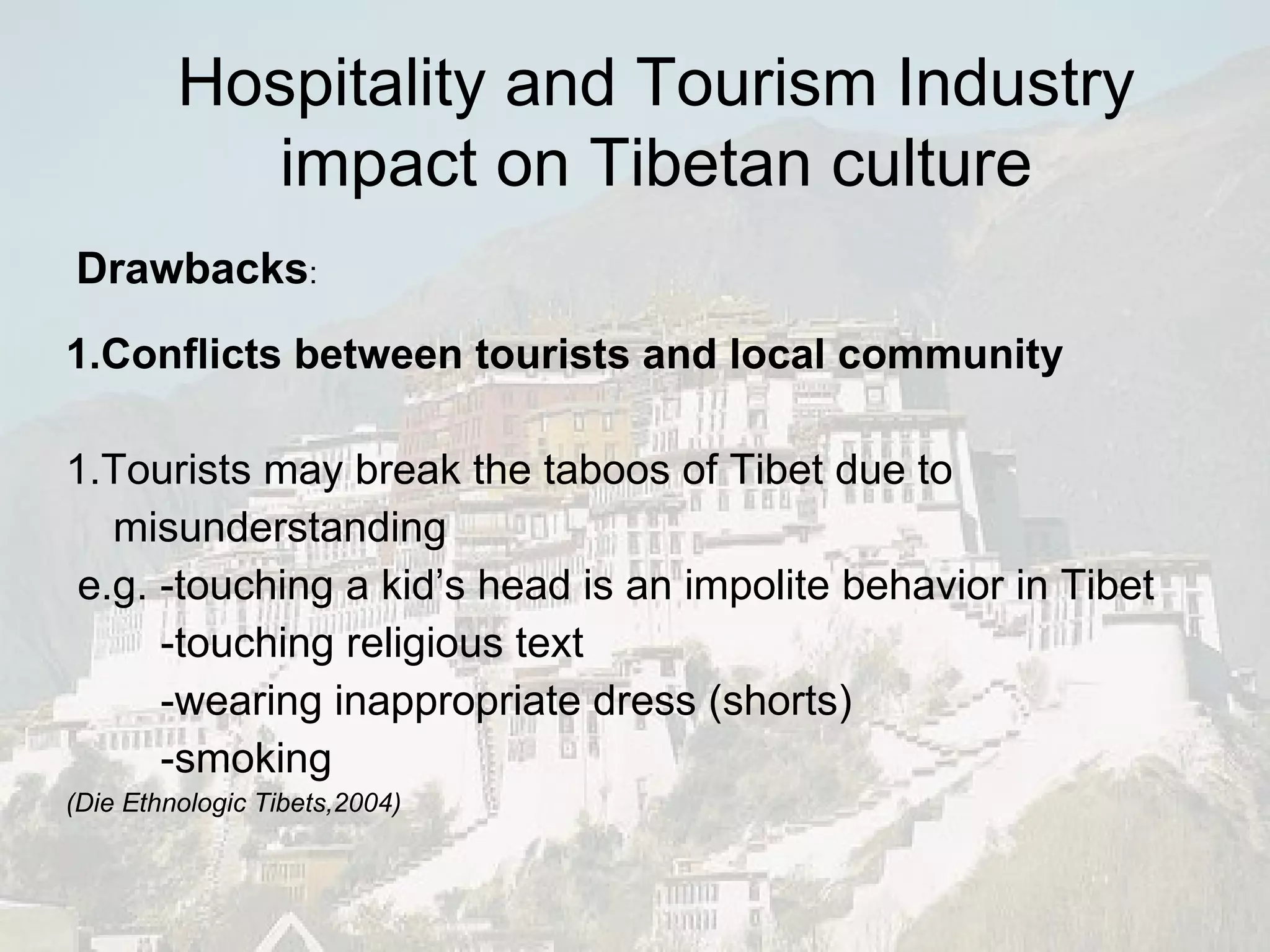
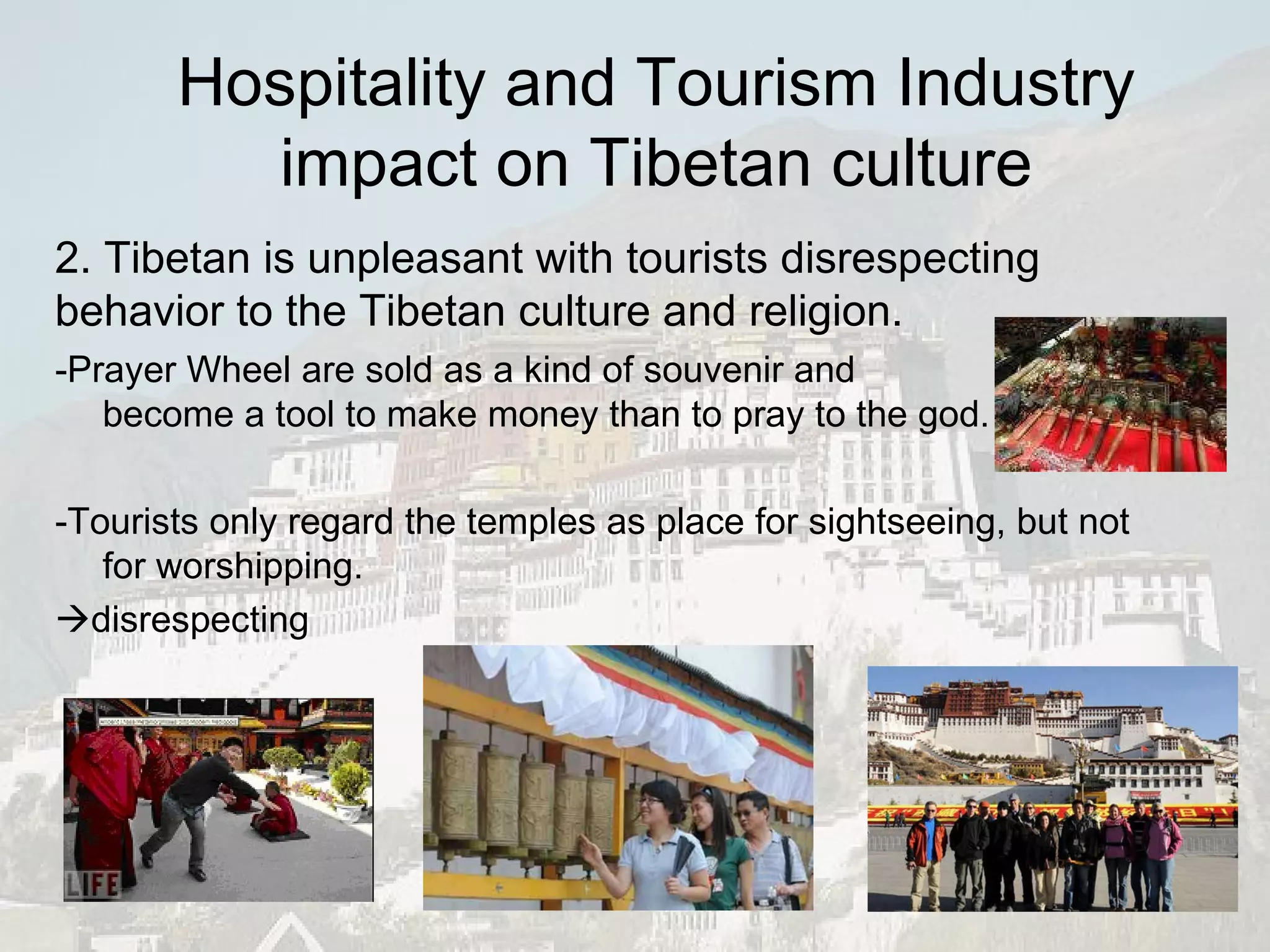
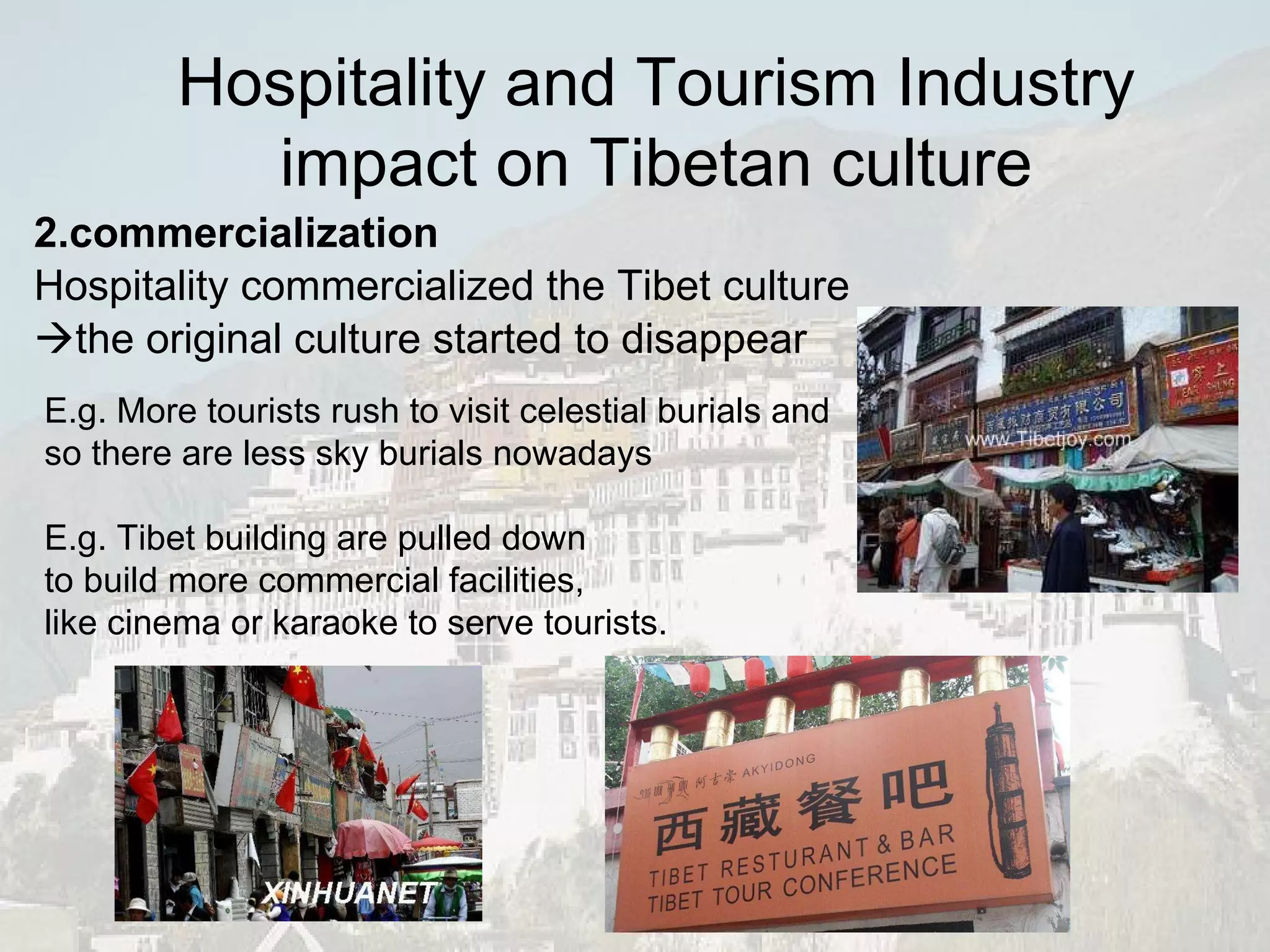
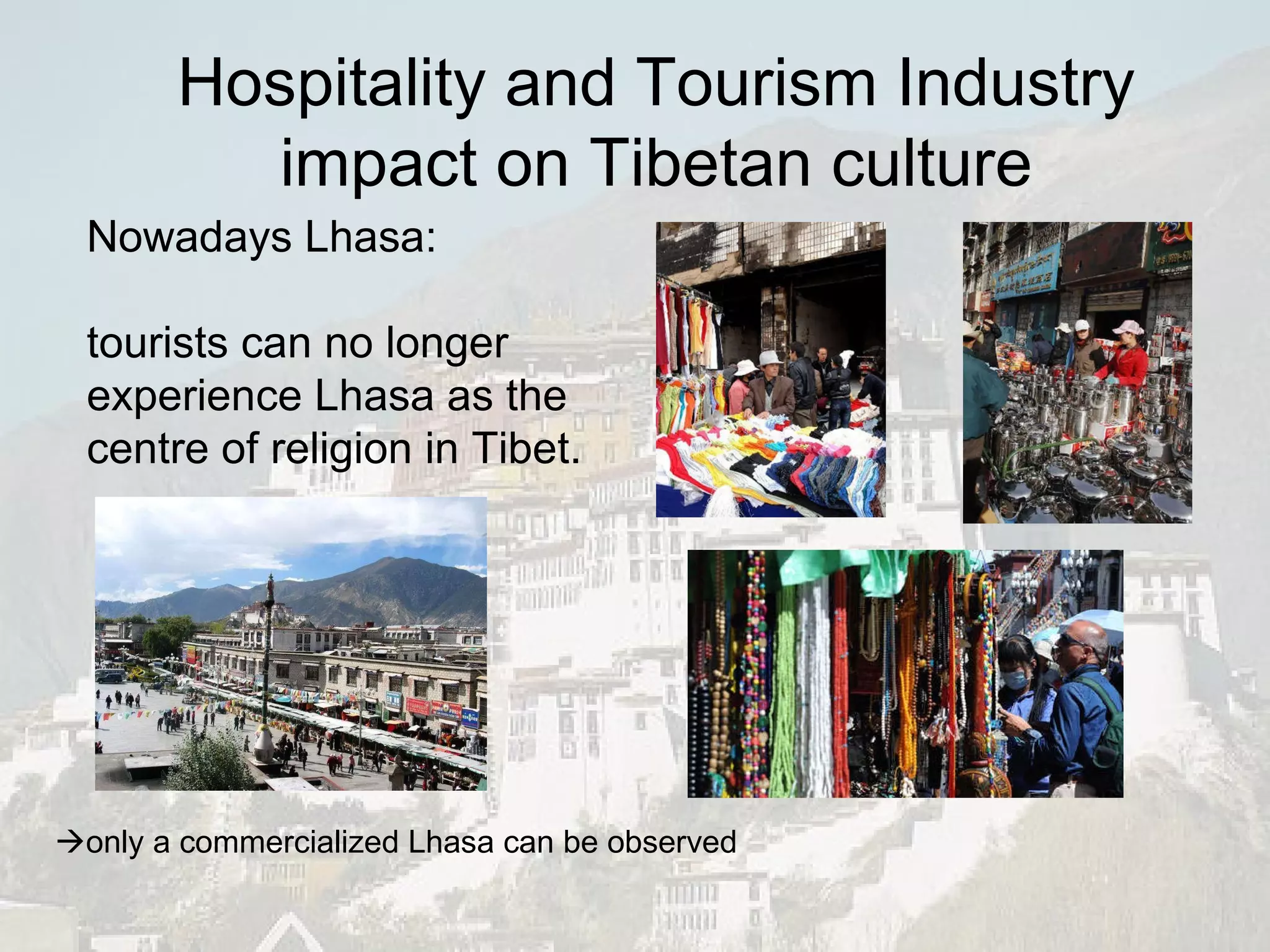
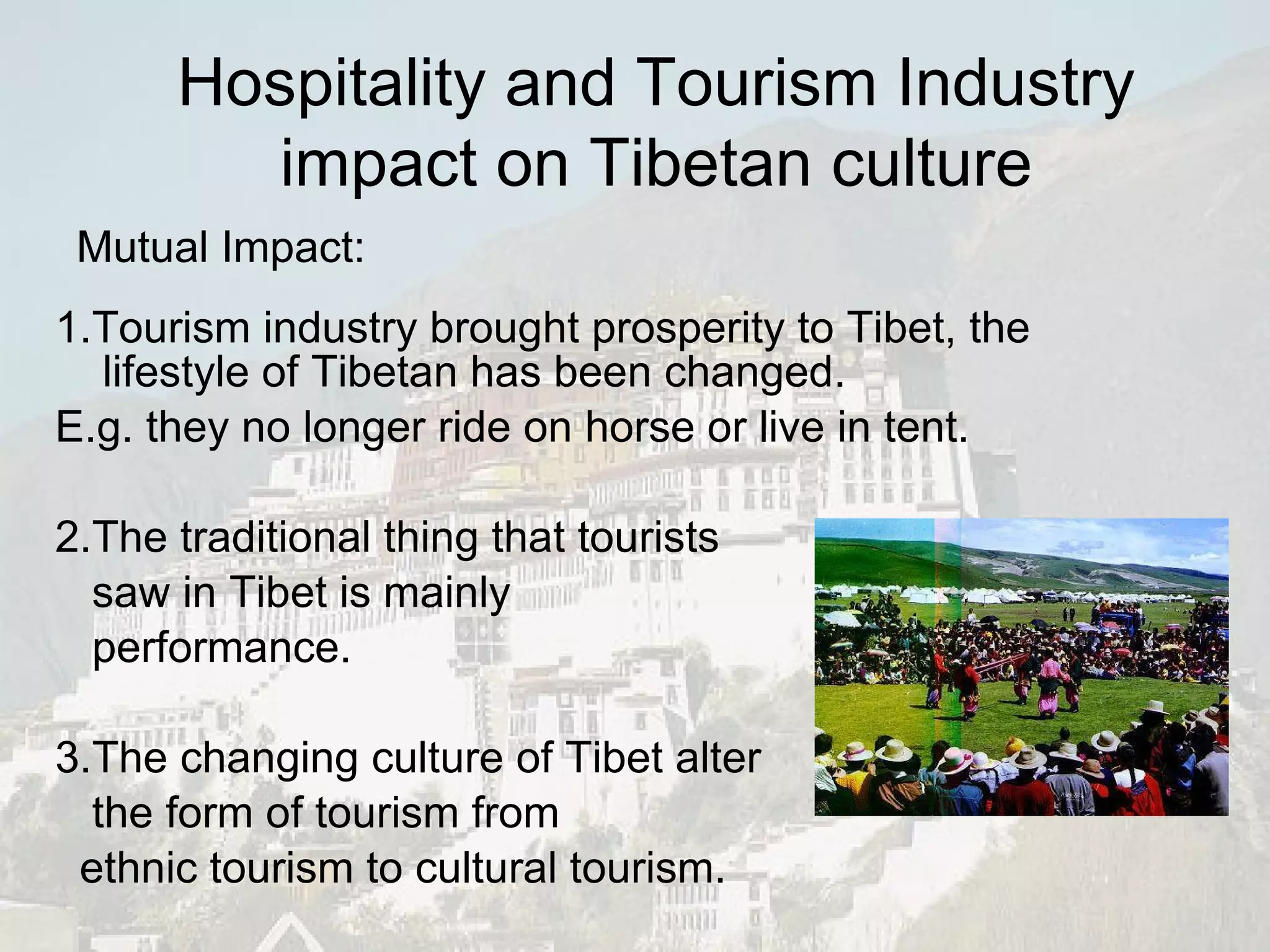
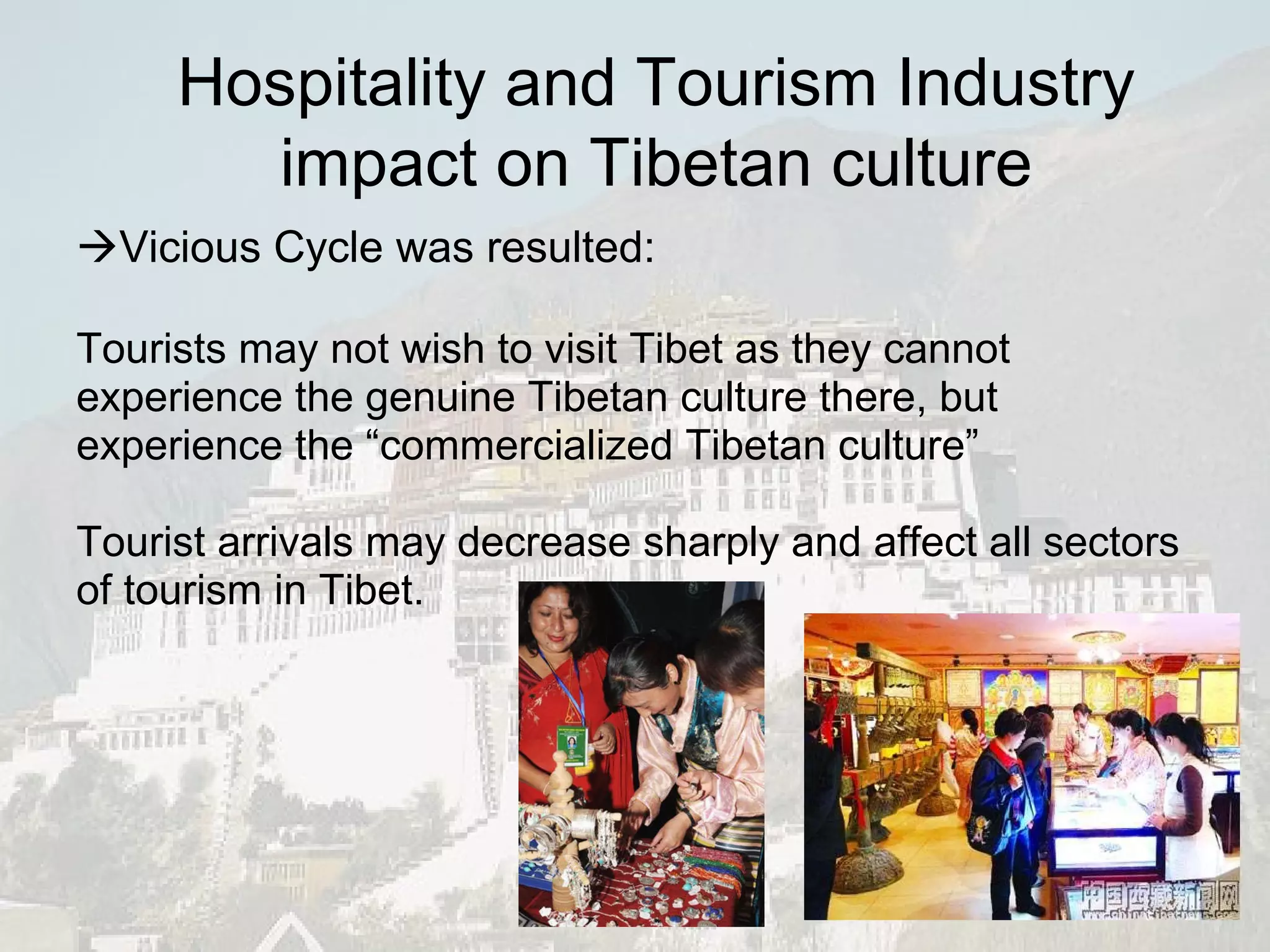
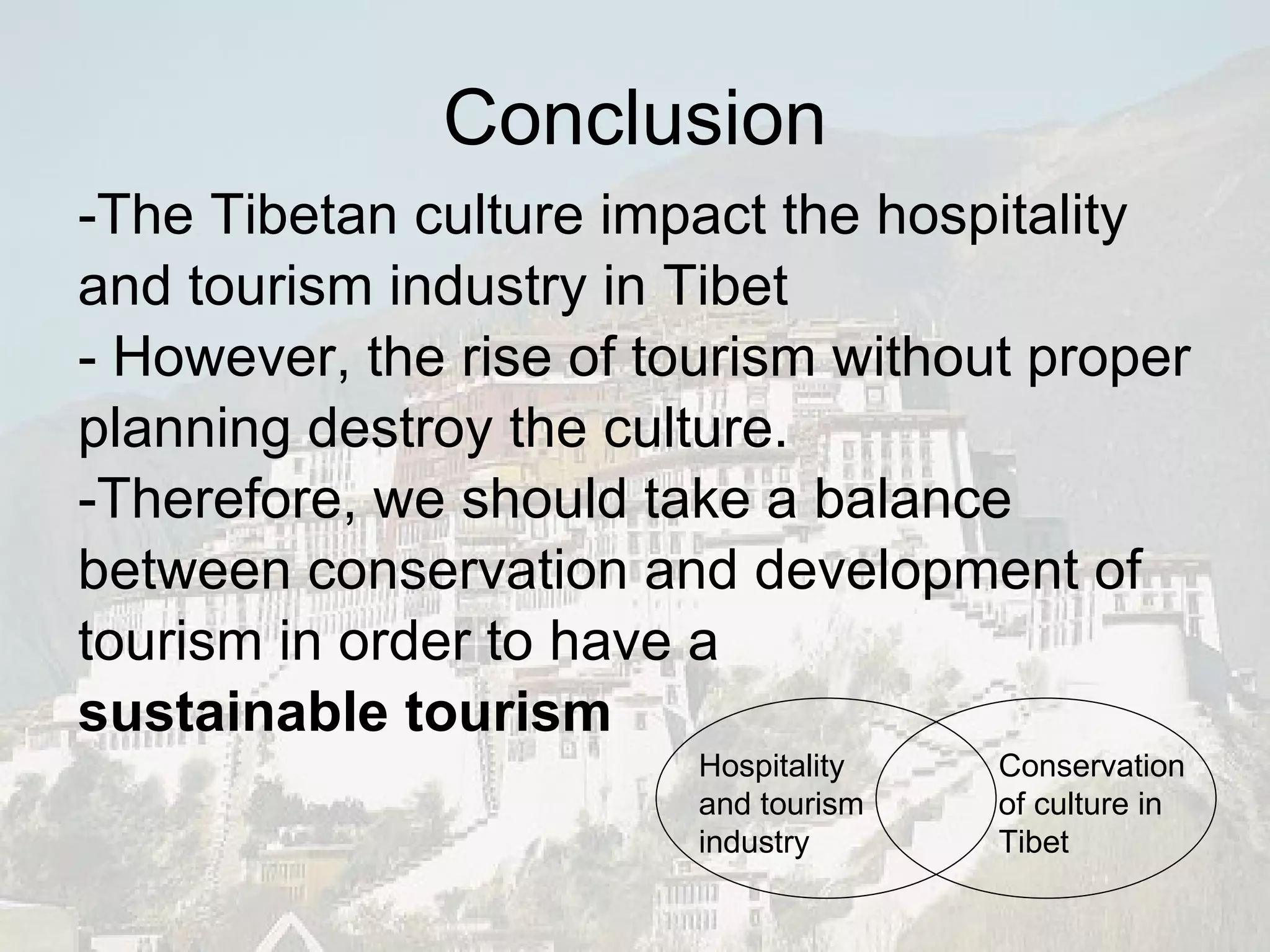
The history of Tibet and the development of Tibetan Buddhism have profoundly shaped Tibetan culture. Tibetan Buddhism was introduced in the 7th century and became the dominant religion. It later combined with politics when the Dalai Lama gained both religious and political power. After China's conquest in the 1950s, Tibetan culture faced challenges from policies aimed at weakening its religious foundations and shifting the culture. Tibetan Buddhism and its cultural practices like sky burials, prayer flags, and monastic life remain significant influences on Tibetan society, values, and identity.