
©2018YudelsonAssociates
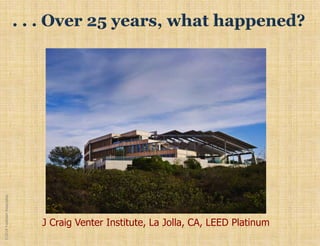
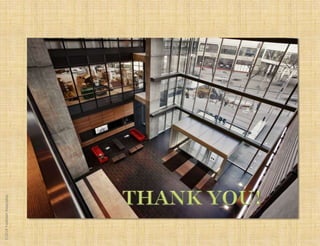
J Craig Venter Institute, La Jolla, CA, LEED Platinum
©2018YudelsonAssociates
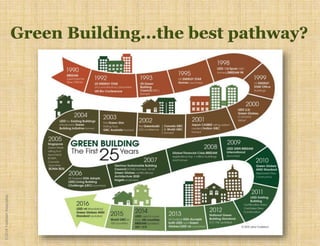
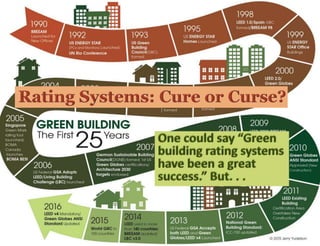
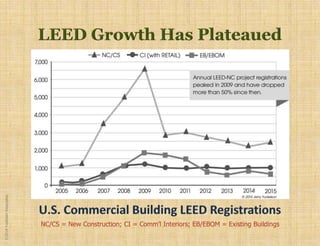
NC/CS = New Construction; CI = Comm’l Interiors; EB/EBOM = Existing Buildings
©2018YudelsonAssociates
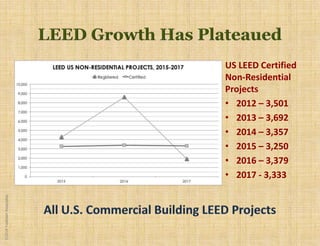
US LEED Certified
Non-Residential
Projects
• 2012 – 3,501
• 2013 – 3,692
• 2014 – 3,357
• 2015 – 3,250
• 2016 – 3,379
• 2017 - 3,333
©2018YudelsonAssociates
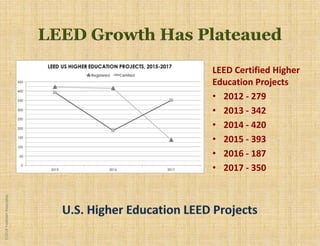
LEED Certified Higher
Education Projects
• 2012 - 279
• 2013 - 342
• 2014 - 420
• 2015 - 393
• 2016 - 187
• 2017 - 350
©2018YudelsonAssociates
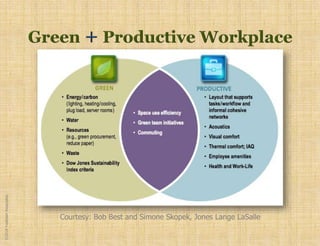
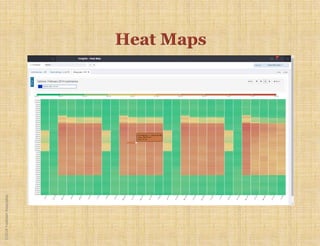
Courtesy: Bob Best and Simone Skopek, Jones Lange LaSalle
©2018YudelsonAssociates
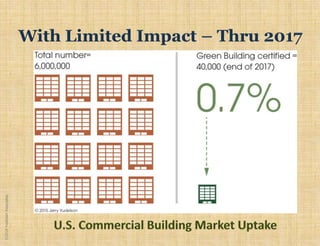
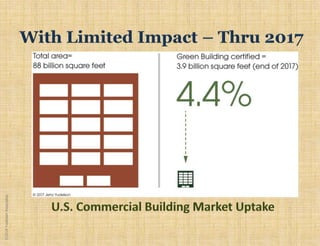
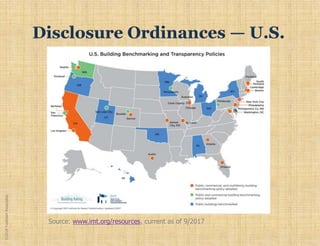
Source: www.imt.org/resources, current as of 9/2017
©2018YudelsonAssociates
Reinventinggreen-
building.com/blog
@jerryyudelson

2018 Green Building Update

Editor's Notes

  • #5 Financial/economic return Risk mitigation Marketing/public relations Productivity/health gains Recruitment/retention Environmental benefits Sustainability concerns
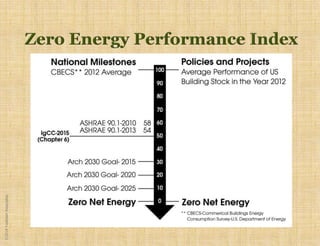
  • #32 European stretch goal: 100 kWh/sqm/a PRIMARY energy use European site use median: 135 kWh/sq.m.; 43,000 EUI U.S. Average: 400 kWh/m2/a (2003) 50% better than average still not good enough! 75% (or more) required 2030 Challenge (next slide) Solon: 34,000 Btu/sq.ft./year energy use
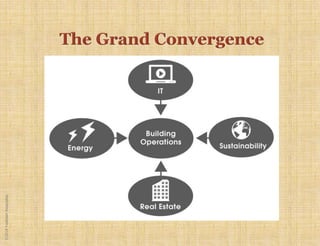
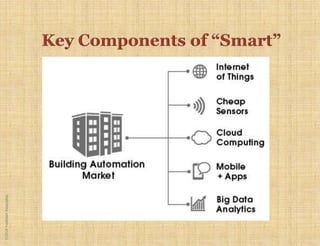
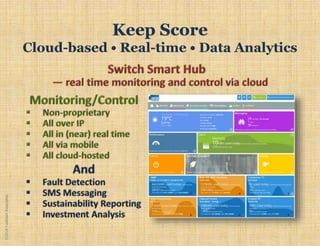
  • #33 Traditional Automation does not scale, it’s a hardware model and is too complex, too expensive, too unreliable, too many versions of firmware to support Switch were interested in how to tackle the really massive sustainable cities developments in Asia, - developments with in excess of 250k residents – we knew our solution could not deliver for that and none of our competitors could deliver for that scale of project Switch made a decision that only the cloud could scale for those kinds of numbers Our experience taught us we had to deliver a solution that could scale with a strong emphasis on energy and environmental since the need to conserve energy will be one of the key drivers for buildings to implement automation
  • #35 Traditional Automation does not scale, it’s a hardware model and is too complex, too expensive, too unreliable, too many versions of firmware to support Switch were interested in how to tackle the really massive sustainable cities developments in Asia, - developments with in excess of 250k residents – we knew our solution could not deliver for that and none of our competitors could deliver for that scale of project Switch made a decision that only the cloud could scale for those kinds of numbers Our experience taught us we had to deliver a solution that could scale with a strong emphasis on energy and environmental since the need to conserve energy will be one of the key drivers for buildings to implement automation
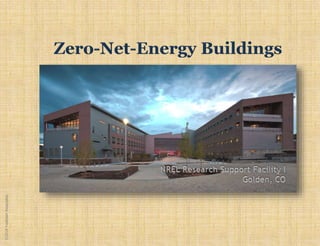
  • #39 Zero Net Energy Buildings are Feasible today; here’s an example: 35,000 Btu/sq.ft./year (measured 2011)
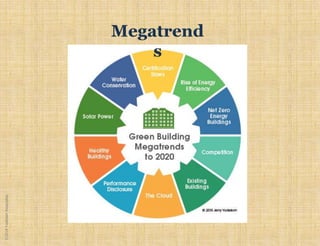
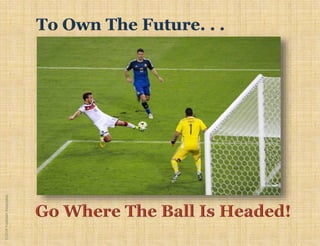
  • #40 If you want to score, run to where the ball is headed, not to where it is. Ask yourself and your clients: how green will the built environment be in 2015 to 2020? Non-performing green buildings will pay a penalty in that market! 2010 FIFA World Cup If you want to score, run to where the ball is headed, not to where it is. Ask yourself and your clients: how green will the built environment be in 2015 to 2020? What will be the competing buildings over the next 5-10 years? Non-performing green buildings will pay a penalty in that market!
  • #42 Green buildings are vital for controlling CO2 emissions Many buildings do not perform as predicted or as needed Without reporting actual performance, the entire exercise will be wasted Energy use best practices metrics are well known; make them your design standards