Stop Your Website Sending
Your Customers to Your
Competition
Move Your Business to the
Cloud
Cost-Effectively
What we will cover today
 Web
 Common web mistakes
 What SEO really is
 Cloud
 Common myths about the cloud
 Difference between cost and price
 What can you do today?
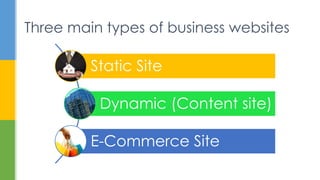
Three main types of business websites
Static Site
Dynamic (Content site)
E-Commerce Site
 Flash websites
 Websites on someone else’s domain – eg blogger.com/mybusiness
 “Free” websites using proprietary software – no access to your own
code or ability to port to another server
 Using a Gmail or Hotmail address as your business address
 Spinning and rotating kitsch
 http://www.11points.com/Web-Tech/11_Best_Old_School_Animated_GIFs
 Design that looks like (insert bad word here)
 http://www.dokimos.org/ajff/
 http://www.huntgraphic.com/moto.htm
 http://www.esupersoft.com/lips/
 http://www.arngren.net/
 http://home.comcast.net/~computerphysicians/
Really bad things
Common Missing Components
 Common web mistakes
 No easy contact details
 No benefits to customer
 No testimonials
 No calls to action
 None or very poor social media – no engagement
 Reasons
 Poor understanding on how buyers use the web
 Website designed by developer not a sales oriented marketer
 Poor understanding of business costs, breakeven and margins
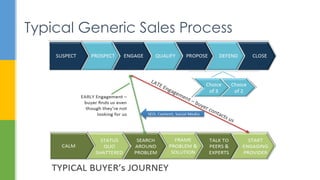
Typical Generic Sales Process
 Return on investment and goals for your site
 Does your site actually send you customers? How many –
can you track this?
 What is the marginal value of acquiring a customer using
your site?
 Total cost of site divided by number of customers is the cost per
customer – and marginal revenue is the additional revenue a
new customer is worth to you.
 Why bother spending money on something that doesn’t
return a net increase in cash?
Does your site make you money or cost
you money?
What SEO Really is
 What it isn’t – ranking on 1st page of Google for your site
name – google bombs etc
 Understanding what your site activity actually means
 Acquisition, keywords, landing and exit pages, bounce rate
 How users navigate your site is important only if you have
a site goal or call to action and need to measure it
 What use is a homepage?
 http://www.fastcompany.com/3030721/the-homepage-is-dead-long-live-the-homepage
 Content, Content, Content
 SEO cheat sheet
0
1
2
3
4
5
6
Category 1 Category 2 Category 3 Category 4
Series 1 Series 2 Series 3
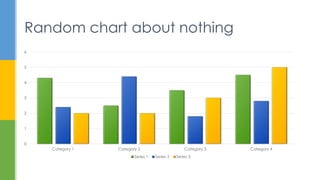
Random chart about nothing
Moving to the Cloud Cost
Effectively
Common Myths & Misconceptions
 Dropbox is a backup
 The cloud is the answer to todays business IT needs - begs the
question – what are todays IT needs?
 Everyone else is doing it - so must I – jump on the bandwagon
 I can do it myself – No IT people needed
 Its cheaper – or more expensive
 Its not reliable
 It’s a new fad, phenomenon and wont last
 http://www.microsoft.com/apac/news/cloud-
myths/all/index.html
 Public, Private, On Premise and Hybrid cloud definitions
 Enterprises are still experimenting with cloud
 A recent study found “that 58 percent of the enterprises spend more than
10 percent of their annual IT budgets on cloud services.”
 Cloud is relevant only for technology needs
 It goes well beyond the data center. “Today 56% of enterprises consider
cloud to be a strategic business differentiator that enables operational
excellence and accelerated innovation.”
 Security concerns are a thing of the past
 Security is still top of mind when it comes to cloud decisions. But it no
longer automatically means going to private cloud. Hybrid is the way
forward.
 Cloud consumption is simple
 “In actuality, more than 65% of enterprises believe they need help to
deploy cloud solutions as most lack the internal IT skills and expertise
needed.”
Misconceptions – study results
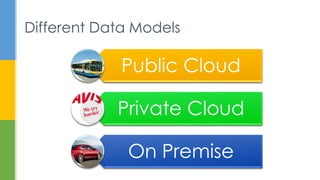
Different Data Models
Public Cloud
Private Cloud
On Premise
 Total Cost of Ownership
 Most people have a car that is their 2nd most expensive asset – and it
sits idle 23 hours a day
 Mobile workforces
 Multi device access from any location
 Common user experience across each space / device
 Seamless transition between locations
 BYOD
 Do you know how to take advantage of this in the most cost
effective way for your business?
Why use the Cloud?
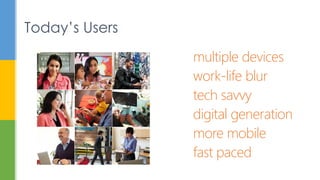
Today’s Users
work-life blur
more mobile
tech savvy
multiple devices
digital generation
fast paced
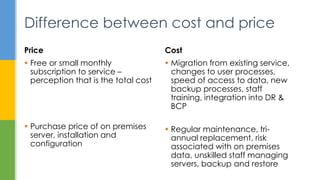
 Migration from existing service,
changes to user processes,
speed of access to data, new
backup processes, staff
training, integration into DR &
BCP
 Regular maintenance, tri-
annual replacement, risk
associated with on premises
data, unskilled staff managing
servers, backup and restore
Cost
 Free or small monthly
subscription to service –
perception that is the total cost
 Purchase price of on premises
server, installation and
configuration
Price
Difference between cost and price
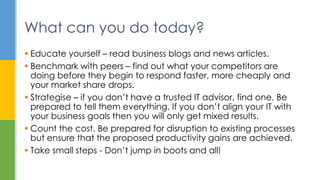
 Educate yourself – read business blogs and news articles.
 Benchmark with peers – find out what your competitors are
doing before they begin to respond faster, more cheaply and
your market share drops.
 Strategise – if you don’t have a trusted IT advisor, find one. Be
prepared to tell them everything. If you don’t align your IT with
your business goals then you will only get mixed results.
 Count the cost. Be prepared for disruption to existing processes
but ensure that the proposed productivity gains are achieved.
 Take small steps - Don’t jump in boots and all!
What can you do today?
 Email tim@jethromanagement.biz
 Blog www.spyjournal.biz
 Twitter @spyjournal
 Facebook
 https://www.facebook.com/JethroManagement
 https://www.facebook.com/JethroMarketing
 https://www.facebook.com/spyjournal.biz
Questions?

Stop Your Website Sending Your Customers to Your Competition and Move Your Business to the Cloud Cost-Effectively

  • 1.
    Stop Your WebsiteSending Your Customers to Your Competition Move Your Business to the Cloud Cost-Effectively
  • 2.
    What we willcover today  Web  Common web mistakes  What SEO really is  Cloud  Common myths about the cloud  Difference between cost and price  What can you do today?
  • 3.
    Three main typesof business websites Static Site Dynamic (Content site) E-Commerce Site
  • 4.
     Flash websites Websites on someone else’s domain – eg blogger.com/mybusiness  “Free” websites using proprietary software – no access to your own code or ability to port to another server  Using a Gmail or Hotmail address as your business address  Spinning and rotating kitsch  http://www.11points.com/Web-Tech/11_Best_Old_School_Animated_GIFs  Design that looks like (insert bad word here)  http://www.dokimos.org/ajff/  http://www.huntgraphic.com/moto.htm  http://www.esupersoft.com/lips/  http://www.arngren.net/  http://home.comcast.net/~computerphysicians/ Really bad things
  • 5.
    Common Missing Components Common web mistakes  No easy contact details  No benefits to customer  No testimonials  No calls to action  None or very poor social media – no engagement  Reasons  Poor understanding on how buyers use the web  Website designed by developer not a sales oriented marketer  Poor understanding of business costs, breakeven and margins
  • 6.
  • 7.
     Return oninvestment and goals for your site  Does your site actually send you customers? How many – can you track this?  What is the marginal value of acquiring a customer using your site?  Total cost of site divided by number of customers is the cost per customer – and marginal revenue is the additional revenue a new customer is worth to you.  Why bother spending money on something that doesn’t return a net increase in cash? Does your site make you money or cost you money?
  • 8.
    What SEO Reallyis  What it isn’t – ranking on 1st page of Google for your site name – google bombs etc  Understanding what your site activity actually means  Acquisition, keywords, landing and exit pages, bounce rate  How users navigate your site is important only if you have a site goal or call to action and need to measure it  What use is a homepage?  http://www.fastcompany.com/3030721/the-homepage-is-dead-long-live-the-homepage  Content, Content, Content  SEO cheat sheet
  • 9.
    0 1 2 3 4 5 6 Category 1 Category2 Category 3 Category 4 Series 1 Series 2 Series 3 Random chart about nothing
  • 10.
    Moving to theCloud Cost Effectively
  • 11.
    Common Myths &Misconceptions  Dropbox is a backup  The cloud is the answer to todays business IT needs - begs the question – what are todays IT needs?  Everyone else is doing it - so must I – jump on the bandwagon  I can do it myself – No IT people needed  Its cheaper – or more expensive  Its not reliable  It’s a new fad, phenomenon and wont last  http://www.microsoft.com/apac/news/cloud- myths/all/index.html  Public, Private, On Premise and Hybrid cloud definitions
  • 12.
     Enterprises arestill experimenting with cloud  A recent study found “that 58 percent of the enterprises spend more than 10 percent of their annual IT budgets on cloud services.”  Cloud is relevant only for technology needs  It goes well beyond the data center. “Today 56% of enterprises consider cloud to be a strategic business differentiator that enables operational excellence and accelerated innovation.”  Security concerns are a thing of the past  Security is still top of mind when it comes to cloud decisions. But it no longer automatically means going to private cloud. Hybrid is the way forward.  Cloud consumption is simple  “In actuality, more than 65% of enterprises believe they need help to deploy cloud solutions as most lack the internal IT skills and expertise needed.” Misconceptions – study results
  • 13.
    Different Data Models PublicCloud Private Cloud On Premise
  • 14.
     Total Costof Ownership  Most people have a car that is their 2nd most expensive asset – and it sits idle 23 hours a day  Mobile workforces  Multi device access from any location  Common user experience across each space / device  Seamless transition between locations  BYOD  Do you know how to take advantage of this in the most cost effective way for your business? Why use the Cloud?
  • 15.
    Today’s Users work-life blur moremobile tech savvy multiple devices digital generation fast paced
  • 16.
     Migration fromexisting service, changes to user processes, speed of access to data, new backup processes, staff training, integration into DR & BCP  Regular maintenance, tri- annual replacement, risk associated with on premises data, unskilled staff managing servers, backup and restore Cost  Free or small monthly subscription to service – perception that is the total cost  Purchase price of on premises server, installation and configuration Price Difference between cost and price
  • 17.
     Educate yourself– read business blogs and news articles.  Benchmark with peers – find out what your competitors are doing before they begin to respond faster, more cheaply and your market share drops.  Strategise – if you don’t have a trusted IT advisor, find one. Be prepared to tell them everything. If you don’t align your IT with your business goals then you will only get mixed results.  Count the cost. Be prepared for disruption to existing processes but ensure that the proposed productivity gains are achieved.  Take small steps - Don’t jump in boots and all! What can you do today?
  • 18.
     Email tim@jethromanagement.biz Blog www.spyjournal.biz  Twitter @spyjournal  Facebook  https://www.facebook.com/JethroManagement  https://www.facebook.com/JethroMarketing  https://www.facebook.com/spyjournal.biz Questions?