Low-Carb, High-Fat in Practice
Presented by Cliff Harvey ND
© 2014 Cliff Harveyw w w.h olistic p erforman c en u trition .com
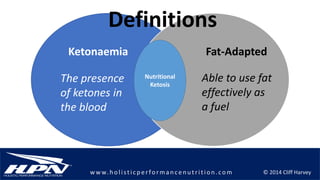
Nutritional
Ketosis
Fat-AdaptedKetonaemia
The presence
of ketones in
the blood
Able to use fat
effectively as
a fuel
Definitions
© 2014 Cliff Harveyw w w.h olistic p erforman c en u trition .com
Clinical Applications of LCHF
• Low carbohydrate, high fat (LCHF) diets are effective in the
treatment of: obesity, diabetes and metabolic syndrome
and for heart disease prevention; neurological disorders;
and may improve sports performance 1, 2
• It has been demonstrated that LCHF diets are more
effective for early weight-loss than a standard low-fat,
high-carbohydrate protocol 3-6
© 2014 Cliff Harveyw w w.h olistic p erforman c en u trition .com
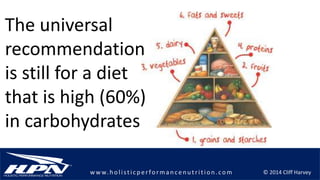
The universal
recommendation
is still for a diet
that is high (60%)
in carbohydrates
© 2014 Cliff Harveyw w w.h olistic p erforman c en u trition .com
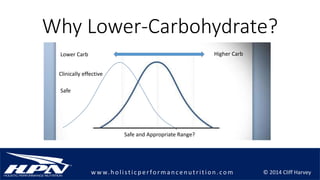
Why Lower-Carbohydrate?
Higher CarbLower Carb
Safe and Appropriate Range?
Clinically effective
Safe
© 2014 Cliff Harveyw w w.h olistic p erforman c en u trition .com
It’s not Diabetic Ketoacidosis!
• Diabetic ketoacidosis (DKA) results from
uncontrolled diabetes
• DKA is a potentially fatal condition
characterised by a triad of: hyperglycaemia,
unrestrained ketone production, and metabolic
acidosis8
© 2014 Cliff Harveyw w w.h olistic p erforman c en u trition .com
…it’s ‘functional’ or ‘nutritional’ ketosis
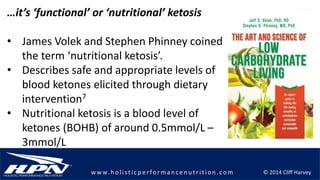
• James Volek and Stephen Phinney coined
the term ‘nutritional ketosis’.
• Describes safe and appropriate levels of
blood ketones elicited through dietary
intervention7
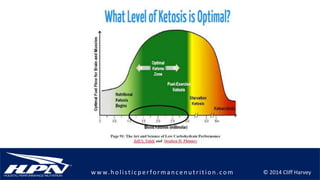
• Nutritional ketosis is a blood level of
ketones (BOHB) of around 0.5mmol/L –
3mmol/L
© 2014 Cliff Harveyw w w.h olistic p erforman c en u trition .com
It won’t cause heart disease!
Saturated fat does not appear to
increase the risk of CVD or
mortality and there is little
effect from reduced or modified
fat diets9-12
© 2014 Cliff Harveyw w w.h olistic p erforman c en u trition .com
• Ketogenic diets promote increases in HDL cholesterol and
reduced TAG and insulin with little difference in LDL,
oxidised LDL or total cholesterol13-16
• High-fat diets appear to reduce small particle LDL and
increase large particle LDL17
© 2014 Cliff Harveyw w w.h olistic p erforman c en u trition .com
A review of RCTs including 447 participants found
statistically significant reductions in triglycerides
and improved high-density lipoprotein cholesterol
in those following LCHF vs LFHC (Total cholesterol
and low-density lipoprotein cholesterol values
were reduced more in those following LFHC)18
© 2014 Cliff Harveyw w w.h olistic p erforman c en u trition .com
 Ketosis is a safe and appropriate state of human
metabolism
 There is a paucity of evidence linking saturated fat or total
fat to cardiovascular risk
 Ketogenic diets appear to favourably affect blood lipid
profiles and CVD risk markers
© 2014 Cliff Harveyw w w.h olistic p erforman c en u trition .com
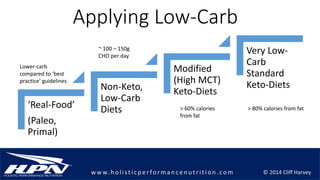
Applying Low-Carb
‘Real-Food’
(Paleo,
Primal)
Non-Keto,
Low-Carb
Diets
Modified
(High MCT)
Keto-Diets
Very Low-
Carb
Standard
Keto-Diets
Lower-carb
compared to ‘best
practice’ guidelines
~ 100 – 150g
CHO per day
> 60% calories
from fat
> 80% calories from fat
© 2014 Cliff Harveyw w w.h olistic p erforman c en u trition .com
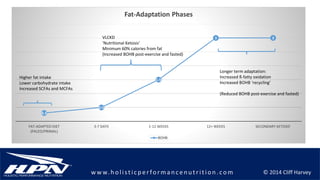
0.3
0.5
1.5
3 3
FAT-ADAPTED DIET
(PALEO/PRIMAL)
3-7 DAYS 1-12 WEEKS 12+ WEEKS SECONDARY KETOSIS'
Fat-Adaptation Phases
BOHB
Higher fat intake
Lower carbohydrate intake
Increased SCFAs and MCFAs
VLCKD
‘Nutritional Ketosis’
Minimum 60% calories from fat
(Increased BOHB post-exercise and fasted)
Longer term adaptation:
Increased ß-fatty oxidation
Increased BOHB ‘recycling’
(Reduced BOHB post-exercise and fasted)
© 2014 Cliff Harveyw w w.h olistic p erforman c en u trition .com
Applying Very Low-Carb Diets
• A diet containing around 80% calories from fat has traditionally
been used to elicit ketosis (The Johns Hopkins Protocol).19
• Diets with approximately 60% of calories from fat can induce
ketosis effectively if a significantly high proportion of Medium
Chain Triglycerides (MCTs) and perhaps SCFAs are included.20
• Dietary MCTs promote ketonaemia and ketogenesis (increased
availability and production of BOHB respectively) 21 and may
encourage a more rapid induction of functional ketosis.
© 2014 Cliff Harveyw w w.h olistic p erforman c en u trition .com
Low-Carb and Ketogenic Diet
Challenges: ‘Keto-Flu’
• ‘Keto-Flu’ results from carbohydrate withdrawal22
• Symptoms of carbohydrate withdrawal that have been
documented include:
Constipation, headache, halitosis, muscle cramps,
diarrhoea, general weakness and rash 3.
© 2014 Cliff Harveyw w w.h olistic p erforman c en u trition .com
‘Keto-Flu’ Causes
• Water, potassium and sodium loss23-26
• Transient reductions in fuel supply to the brain (glucose),
especially in the metabolically disadvantaged, i.e. those with
metabolic syndrome/pre-diabetes.
Note: This has been observed to occur on days one to three with
blood glucose normalising after day four17
© 2014 Cliff Harveyw w w.h olistic p erforman c en u trition .com
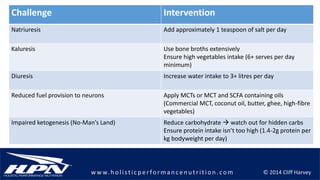
Challenge Intervention
Natriuresis Add approximately 1 teaspoon of salt per day
Kaluresis Use bone broths extensively
Ensure high vegetables intake (6+ serves per day
minimum)
Diuresis Increase water intake to 3+ litres per day
Reduced fuel provision to neurons Apply MCTs or MCT and SCFA containing oils
(Commercial MCT, coconut oil, butter, ghee, high-fibre
vegetables)
Impaired ketogenesis (No-Man’s Land) Reduce carbohydrate  watch out for hidden carbs
Ensure protein intake isn’t too high (1.4-2g protein per
kg bodyweight per day)
© 2014 Cliff Harveyw w w.h olistic p erforman c en u trition .com
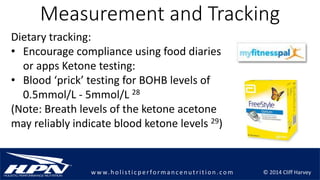
Measurement and Tracking
Dietary tracking:
• Encourage compliance using food diaries
or apps Ketone testing:
• Blood ‘prick’ testing for BOHB levels of
0.5mmol/L - 5mmol/L 28
(Note: Breath levels of the ketone acetone
may reliably indicate blood ketone levels 29)
© 2014 Cliff Harveyw w w.h olistic p erforman c en u trition .com
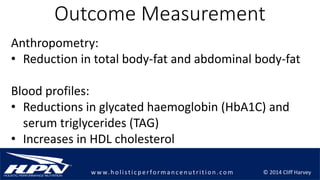
Outcome Measurement
Anthropometry:
• Reduction in total body-fat and abdominal body-fat
Blood profiles:
• Reductions in glycated haemoglobin (HbA1C) and
serum triglycerides (TAG)
• Increases in HDL cholesterol
© 2014 Cliff Harveyw w w.h olistic p erforman c en u trition .com
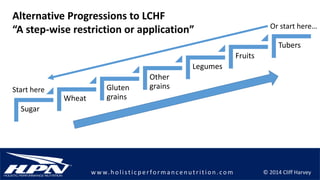
Sugar
Wheat
Gluten
grains
Other
grains
Legumes
Fruits
Tubers
Alternative Progressions to LCHF
“A step-wise restriction or application”
Start here
Or start here…
© 2014 Cliff Harveyw w w.h olistic p erforman c en u trition .com
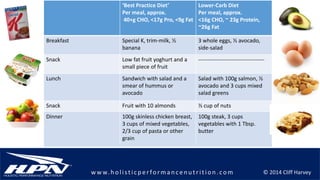
‘Best Practice Diet’
Per meal, approx.
40+g CHO, <17g Pro, <9g Fat
Lower-Carb Diet
Per meal, approx.
<16g CHO, ~ 23g Protein,
~26g Fat
Breakfast Special K, trim-milk, ½
banana
3 whole eggs, ½ avocado,
side-salad
Snack Low fat fruit yoghurt and a
small piece of fruit
------------------------------------
Lunch Sandwich with salad and a
smear of hummus or
avocado
Salad with 100g salmon, ½
avocado and 3 cups mixed
salad greens
Snack Fruit with 10 almonds ½ cup of nuts
Dinner 100g skinless chicken breast,
3 cups of mixed vegetables,
2/3 cup of pasta or other
grain
100g steak, 3 cups
vegetables with 1 Tbsp.
butter
© 2014 Cliff Harveyw w w.h olistic p erforman c en u trition .com
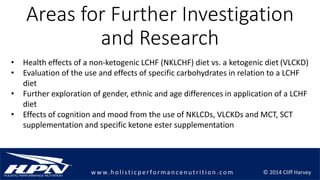
Areas for Further Investigation
and Research
• Health effects of a non-ketogenic LCHF (NKLCHF) diet vs. a ketogenic diet (VLCKD)
• Evaluation of the use and effects of specific carbohydrates in relation to a LCHF
diet
• Further exploration of gender, ethnic and age differences in application of a LCHF
diet
• Effects of cognition and mood from the use of NKLCDs, VLCKDs and MCT, SCT
supplementation and specific ketone ester supplementation
© 2014 Cliff Harveyw w w.h olistic p erforman c en u trition .com
Learn more about LCHF and
Performance Nutrition
www.hpn.ac.nz
© 2014 Cliff Harveyw w w.h olistic p erforman c en u trition .com
References
References
1. Paoli A, Rubini A, Volek J, Grimaldi K. Beyond weight loss: a review of the therapeutic uses of very-low-carbohydrate (ketogenic) diets. European
journal of clinical nutrition. 2013;67(8):789-96.
2. Sumithran P, Proietto J. Ketogenic diets for weight loss: A review of their principles, safety and efficacy. Obesity Research & Clinical Practice.
2008 3//;2(1):1-13.
3. Yancy WS, Jr., Olsen MK, Guyton JR, Bakst RP, Westman EC. A Low-Carbohydrate, Ketogenic Diet versus a Low-Fat Diet To Treat Obesity and
Hyperlipidemia: A Randomized, Controlled Trial. Annals of Internal Medicine. 2004 2004 May 18;140(10):769-77. PubMed PMID: 222260349; 15148063.
English.
4. Bueno NB, de Melo ISV, de Oliveira SL, da Rocha Ataide T. Very-low-carbohydrate ketogenic diet v. low-fat diet for long-term weight loss: a
meta-analysis of randomised controlled trials. British Journal of Nutrition. 2013;110(07):1178-87.
5. Volek JS, Quann EE, Forsythe CE. Low-Carbohydrate Diets Promote a More Favorable Body Composition Than Low-Fat Diets. Strength and
Conditioning Journal. 2010 Feb 2010;32(1):42-7. PubMed PMID: 870319324. English.
6. Sondike SB, Copperman N, Jacobson MS. Effects of a low-carbohydrate diet on weight loss and cardiovascular risk factor in overweight
adolescents. The Journal of pediatrics. 2003;142(3):253-8.
7. Volek JS, Phinney SD. The art and science of low carbohydrate living: beyond obesity. 2013.
8. Kitabchi AE, Umpierrez GE, Miles JM, Fisher JN. Hyperglycemic Crises in Adult Patients With Diabetes. Diabetes Care. 2009 July 1,
2009;32(7):1335-43.
9. Siri-Tarino PW, Sun Q, Hu FB, Krauss RM. Meta-analysis of prospective cohort studies evaluating the association of saturated fat with
cardiovascular disease. The American Journal of Clinical Nutrition. 2010 January 1, 2010.
10. Hooper L, Summerbell CD, Thompson R, Sills D, Roberts FG, Moore H, et al. Reduced or modified dietary fat for preventing cardiovascular
disease. Cochrane Database Syst Rev. 2011 (7):CD002137. PubMed PMID: 21735388. Epub 2011/07/08. eng.
© 2014 Cliff Harveyw w w.h olistic p erforman c en u trition .com
11. Siri-Tarino PW, Sun Q, Hu FB, Krauss RM. Meta-analysis of prospective cohort studies evaluating the association of saturated fat with
cardiovascular disease. The American journal of clinical nutrition. 2010 March 1, 2010;91(3):535-46.
12. Mente A, de Koning L, Shannon HS, Anand SS. A systematic review of the evidence supporting a causal link between dietary factors and
coronary heart disease. Arch Intern Med. 2009 Apr 13;169(7):659-69. PubMed PMID: 19364995. Epub 2009/04/15. eng.
13. Sharman MJ, Kraemer WJ, Love DM, Avery NG, Gómez AL, Scheett TP, et al. A Ketogenic Diet Favorably Affects Serum Biomarkers for
Cardiovascular Disease in Normal-Weight Men. The Journal of Nutrition. 2002 July 1, 2002;132(7):1879-85.
14. Yancy JWS, Olsen MK, Guyton JR, Bakst RP, Westman EC. A Low-Carbohydrate, Ketogenic Diet versus a Low-Fat Diet To Treat Obesity and
HyperlipidemiaA Randomized, Controlled Trial. Annals of Internal Medicine. 2004;140(10):769-77.
15. A Randomized Trial Comparing a Very Low Carbohydrate Diet and a Calorie-Restricted Low Fat Diet on Body Weight and Cardiovascular Risk
Factors in Healthy Women. The Journal of Clinical Endocrinology & Metabolism. 2003;88(4):1617-23. PubMed PMID: 12679447.
16. Foster GD, Wyatt HR, Hill JO, McGuckin BG, Brill C, Mohammed BS, et al. A Randomized Trial of a Low-Carbohydrate Diet for Obesity. New
England Journal of Medicine. 2003;348(21):2082-90. PubMed PMID: 12761365.
17. Westman EC, Yancy Jr WS, Olsen MK, Dudley T, Guyton JR. Effect of a low-carbohydrate, ketogenic diet program compared to a low-fat diet on
fasting lipoprotein subclasses. International Journal of Cardiology. 2006 6/16/;110(2):212-6.
18. Nordmann AJ, Nordmann A, Briel M, et al. Effects of low-carbohydrate vs low-fat diets on weight loss and cardiovascular risk factors: A meta-
analysis of randomized controlled trials. Archives of Internal Medicine. 2006;166(3):285-93.
19. Freeman JM. The ketogenic diet: a treatment for children and others with epilepsy: Demos medical publishing; 2007.
20. Huttenlocher P, Wilbourn A, Signore J. Medium‐chain triglycerides as a therapy for intractable childhood epilepsy. Neurology.
1971;21(11):1097-.
21. Courchesne-Loyer A, Fortier M, Tremblay-Mercier J, Chouinard-Watkins R, Roy M, Nugent S, et al. Stimulation of mild, sustained ketonemia by
medium-chain triacylglycerols in healthy humans: Estimated potential contribution to brain energy metabolism. Nutrition. 2013 Apr 2013;29(4):635-40.
PubMed PMID: 1315209872; 23274095. English.
22. Hartman AL, Vining EP. Clinical aspects of the ketogenic diet. Epilepsia. 2007;48(1):31-42.
© 2014 Cliff Harveyw w w.h olistic p erforman c en u trition .com
23. Hamwi GJ, Mitchell MC, Wieland RG, Kruger FA, Schachner SS. Sodium and Potassium Metabolism during Starvation. The American Journal of
Clinical Nutrition. 1967 August 1, 1967;20(8):897-902.
24. DeFronzo RA, Goldberg M, AGus ZS. The effects of glucose and insulin on renal electrolyte transport. Journal of Clinical Investigation.
1976;58(1):83.
25. DeFronzo RA. The effect of insulin on renal sodium metabolism. Diabetologia. 1981;21(3):165-71.
26. Tiwari S, Riazi S, Ecelbarger CA. Insulin's impact on renal sodium transport and blood pressure in health, obesity, and diabetes. American
journal of physiology Renal physiology. 2007 Oct;293(4):F974-84. PubMed PMID: 17686957. Epub 2007/08/10. eng.
27. Harber MP, Schenk S, Barkan AL, Horowitz JF. Alterations in carbohydrate metabolism in response to short-term dietary carbohydrate
restriction. American Journal of Physiology - Endocrinology and Metabolism. 2005;289(2):E306-E12.
28. Volek JS, Phinney SD. LOW CARBOHYDRATE LIVING. 2011.
29. Musa-Veloso K, Likhodii SS, Cunnane SC. Breath acetone is a reliable indicator of ketosis in adults consuming ketogenic meals. The American
Journal of Clinical Nutrition. 2002 July 1, 2002;76(1):65-70.

2014 FitEx Presentation: Lower-Carb, Higher-Fat in Practice

  • 1.
    Low-Carb, High-Fat inPractice Presented by Cliff Harvey ND
  • 2.
    © 2014 CliffHarveyw w w.h olistic p erforman c en u trition .com Nutritional Ketosis Fat-AdaptedKetonaemia The presence of ketones in the blood Able to use fat effectively as a fuel Definitions
  • 3.
    © 2014 CliffHarveyw w w.h olistic p erforman c en u trition .com Clinical Applications of LCHF • Low carbohydrate, high fat (LCHF) diets are effective in the treatment of: obesity, diabetes and metabolic syndrome and for heart disease prevention; neurological disorders; and may improve sports performance 1, 2 • It has been demonstrated that LCHF diets are more effective for early weight-loss than a standard low-fat, high-carbohydrate protocol 3-6
  • 4.
    © 2014 CliffHarveyw w w.h olistic p erforman c en u trition .com The universal recommendation is still for a diet that is high (60%) in carbohydrates
  • 5.
    © 2014 CliffHarveyw w w.h olistic p erforman c en u trition .com Why Lower-Carbohydrate? Higher CarbLower Carb Safe and Appropriate Range? Clinically effective Safe
  • 6.
    © 2014 CliffHarveyw w w.h olistic p erforman c en u trition .com It’s not Diabetic Ketoacidosis! • Diabetic ketoacidosis (DKA) results from uncontrolled diabetes • DKA is a potentially fatal condition characterised by a triad of: hyperglycaemia, unrestrained ketone production, and metabolic acidosis8
  • 7.
    © 2014 CliffHarveyw w w.h olistic p erforman c en u trition .com …it’s ‘functional’ or ‘nutritional’ ketosis • James Volek and Stephen Phinney coined the term ‘nutritional ketosis’. • Describes safe and appropriate levels of blood ketones elicited through dietary intervention7 • Nutritional ketosis is a blood level of ketones (BOHB) of around 0.5mmol/L – 3mmol/L
  • 8.
    © 2014 CliffHarveyw w w.h olistic p erforman c en u trition .com
  • 9.
    © 2014 CliffHarveyw w w.h olistic p erforman c en u trition .com It won’t cause heart disease! Saturated fat does not appear to increase the risk of CVD or mortality and there is little effect from reduced or modified fat diets9-12
  • 10.
    © 2014 CliffHarveyw w w.h olistic p erforman c en u trition .com • Ketogenic diets promote increases in HDL cholesterol and reduced TAG and insulin with little difference in LDL, oxidised LDL or total cholesterol13-16 • High-fat diets appear to reduce small particle LDL and increase large particle LDL17
  • 11.
    © 2014 CliffHarveyw w w.h olistic p erforman c en u trition .com A review of RCTs including 447 participants found statistically significant reductions in triglycerides and improved high-density lipoprotein cholesterol in those following LCHF vs LFHC (Total cholesterol and low-density lipoprotein cholesterol values were reduced more in those following LFHC)18
  • 12.
    © 2014 CliffHarveyw w w.h olistic p erforman c en u trition .com  Ketosis is a safe and appropriate state of human metabolism  There is a paucity of evidence linking saturated fat or total fat to cardiovascular risk  Ketogenic diets appear to favourably affect blood lipid profiles and CVD risk markers
  • 13.
    © 2014 CliffHarveyw w w.h olistic p erforman c en u trition .com Applying Low-Carb ‘Real-Food’ (Paleo, Primal) Non-Keto, Low-Carb Diets Modified (High MCT) Keto-Diets Very Low- Carb Standard Keto-Diets Lower-carb compared to ‘best practice’ guidelines ~ 100 – 150g CHO per day > 60% calories from fat > 80% calories from fat
  • 14.
    © 2014 CliffHarveyw w w.h olistic p erforman c en u trition .com 0.3 0.5 1.5 3 3 FAT-ADAPTED DIET (PALEO/PRIMAL) 3-7 DAYS 1-12 WEEKS 12+ WEEKS SECONDARY KETOSIS' Fat-Adaptation Phases BOHB Higher fat intake Lower carbohydrate intake Increased SCFAs and MCFAs VLCKD ‘Nutritional Ketosis’ Minimum 60% calories from fat (Increased BOHB post-exercise and fasted) Longer term adaptation: Increased ß-fatty oxidation Increased BOHB ‘recycling’ (Reduced BOHB post-exercise and fasted)
  • 15.
    © 2014 CliffHarveyw w w.h olistic p erforman c en u trition .com Applying Very Low-Carb Diets • A diet containing around 80% calories from fat has traditionally been used to elicit ketosis (The Johns Hopkins Protocol).19 • Diets with approximately 60% of calories from fat can induce ketosis effectively if a significantly high proportion of Medium Chain Triglycerides (MCTs) and perhaps SCFAs are included.20 • Dietary MCTs promote ketonaemia and ketogenesis (increased availability and production of BOHB respectively) 21 and may encourage a more rapid induction of functional ketosis.
  • 16.
    © 2014 CliffHarveyw w w.h olistic p erforman c en u trition .com Low-Carb and Ketogenic Diet Challenges: ‘Keto-Flu’ • ‘Keto-Flu’ results from carbohydrate withdrawal22 • Symptoms of carbohydrate withdrawal that have been documented include: Constipation, headache, halitosis, muscle cramps, diarrhoea, general weakness and rash 3.
  • 17.
    © 2014 CliffHarveyw w w.h olistic p erforman c en u trition .com ‘Keto-Flu’ Causes • Water, potassium and sodium loss23-26 • Transient reductions in fuel supply to the brain (glucose), especially in the metabolically disadvantaged, i.e. those with metabolic syndrome/pre-diabetes. Note: This has been observed to occur on days one to three with blood glucose normalising after day four17
  • 18.
    © 2014 CliffHarveyw w w.h olistic p erforman c en u trition .com Challenge Intervention Natriuresis Add approximately 1 teaspoon of salt per day Kaluresis Use bone broths extensively Ensure high vegetables intake (6+ serves per day minimum) Diuresis Increase water intake to 3+ litres per day Reduced fuel provision to neurons Apply MCTs or MCT and SCFA containing oils (Commercial MCT, coconut oil, butter, ghee, high-fibre vegetables) Impaired ketogenesis (No-Man’s Land) Reduce carbohydrate  watch out for hidden carbs Ensure protein intake isn’t too high (1.4-2g protein per kg bodyweight per day)
  • 19.
    © 2014 CliffHarveyw w w.h olistic p erforman c en u trition .com Measurement and Tracking Dietary tracking: • Encourage compliance using food diaries or apps Ketone testing: • Blood ‘prick’ testing for BOHB levels of 0.5mmol/L - 5mmol/L 28 (Note: Breath levels of the ketone acetone may reliably indicate blood ketone levels 29)
  • 20.
    © 2014 CliffHarveyw w w.h olistic p erforman c en u trition .com Outcome Measurement Anthropometry: • Reduction in total body-fat and abdominal body-fat Blood profiles: • Reductions in glycated haemoglobin (HbA1C) and serum triglycerides (TAG) • Increases in HDL cholesterol
  • 21.
    © 2014 CliffHarveyw w w.h olistic p erforman c en u trition .com Sugar Wheat Gluten grains Other grains Legumes Fruits Tubers Alternative Progressions to LCHF “A step-wise restriction or application” Start here Or start here…
  • 22.
    © 2014 CliffHarveyw w w.h olistic p erforman c en u trition .com ‘Best Practice Diet’ Per meal, approx. 40+g CHO, <17g Pro, <9g Fat Lower-Carb Diet Per meal, approx. <16g CHO, ~ 23g Protein, ~26g Fat Breakfast Special K, trim-milk, ½ banana 3 whole eggs, ½ avocado, side-salad Snack Low fat fruit yoghurt and a small piece of fruit ------------------------------------ Lunch Sandwich with salad and a smear of hummus or avocado Salad with 100g salmon, ½ avocado and 3 cups mixed salad greens Snack Fruit with 10 almonds ½ cup of nuts Dinner 100g skinless chicken breast, 3 cups of mixed vegetables, 2/3 cup of pasta or other grain 100g steak, 3 cups vegetables with 1 Tbsp. butter
  • 23.
    © 2014 CliffHarveyw w w.h olistic p erforman c en u trition .com Areas for Further Investigation and Research • Health effects of a non-ketogenic LCHF (NKLCHF) diet vs. a ketogenic diet (VLCKD) • Evaluation of the use and effects of specific carbohydrates in relation to a LCHF diet • Further exploration of gender, ethnic and age differences in application of a LCHF diet • Effects of cognition and mood from the use of NKLCDs, VLCKDs and MCT, SCT supplementation and specific ketone ester supplementation
  • 24.
    © 2014 CliffHarveyw w w.h olistic p erforman c en u trition .com Learn more about LCHF and Performance Nutrition www.hpn.ac.nz
  • 25.
    © 2014 CliffHarveyw w w.h olistic p erforman c en u trition .com References References 1. Paoli A, Rubini A, Volek J, Grimaldi K. Beyond weight loss: a review of the therapeutic uses of very-low-carbohydrate (ketogenic) diets. European journal of clinical nutrition. 2013;67(8):789-96. 2. Sumithran P, Proietto J. Ketogenic diets for weight loss: A review of their principles, safety and efficacy. Obesity Research & Clinical Practice. 2008 3//;2(1):1-13. 3. Yancy WS, Jr., Olsen MK, Guyton JR, Bakst RP, Westman EC. A Low-Carbohydrate, Ketogenic Diet versus a Low-Fat Diet To Treat Obesity and Hyperlipidemia: A Randomized, Controlled Trial. Annals of Internal Medicine. 2004 2004 May 18;140(10):769-77. PubMed PMID: 222260349; 15148063. English. 4. Bueno NB, de Melo ISV, de Oliveira SL, da Rocha Ataide T. Very-low-carbohydrate ketogenic diet v. low-fat diet for long-term weight loss: a meta-analysis of randomised controlled trials. British Journal of Nutrition. 2013;110(07):1178-87. 5. Volek JS, Quann EE, Forsythe CE. Low-Carbohydrate Diets Promote a More Favorable Body Composition Than Low-Fat Diets. Strength and Conditioning Journal. 2010 Feb 2010;32(1):42-7. PubMed PMID: 870319324. English. 6. Sondike SB, Copperman N, Jacobson MS. Effects of a low-carbohydrate diet on weight loss and cardiovascular risk factor in overweight adolescents. The Journal of pediatrics. 2003;142(3):253-8. 7. Volek JS, Phinney SD. The art and science of low carbohydrate living: beyond obesity. 2013. 8. Kitabchi AE, Umpierrez GE, Miles JM, Fisher JN. Hyperglycemic Crises in Adult Patients With Diabetes. Diabetes Care. 2009 July 1, 2009;32(7):1335-43. 9. Siri-Tarino PW, Sun Q, Hu FB, Krauss RM. Meta-analysis of prospective cohort studies evaluating the association of saturated fat with cardiovascular disease. The American Journal of Clinical Nutrition. 2010 January 1, 2010. 10. Hooper L, Summerbell CD, Thompson R, Sills D, Roberts FG, Moore H, et al. Reduced or modified dietary fat for preventing cardiovascular disease. Cochrane Database Syst Rev. 2011 (7):CD002137. PubMed PMID: 21735388. Epub 2011/07/08. eng.
  • 26.
    © 2014 CliffHarveyw w w.h olistic p erforman c en u trition .com 11. Siri-Tarino PW, Sun Q, Hu FB, Krauss RM. Meta-analysis of prospective cohort studies evaluating the association of saturated fat with cardiovascular disease. The American journal of clinical nutrition. 2010 March 1, 2010;91(3):535-46. 12. Mente A, de Koning L, Shannon HS, Anand SS. A systematic review of the evidence supporting a causal link between dietary factors and coronary heart disease. Arch Intern Med. 2009 Apr 13;169(7):659-69. PubMed PMID: 19364995. Epub 2009/04/15. eng. 13. Sharman MJ, Kraemer WJ, Love DM, Avery NG, Gómez AL, Scheett TP, et al. A Ketogenic Diet Favorably Affects Serum Biomarkers for Cardiovascular Disease in Normal-Weight Men. The Journal of Nutrition. 2002 July 1, 2002;132(7):1879-85. 14. Yancy JWS, Olsen MK, Guyton JR, Bakst RP, Westman EC. A Low-Carbohydrate, Ketogenic Diet versus a Low-Fat Diet To Treat Obesity and HyperlipidemiaA Randomized, Controlled Trial. Annals of Internal Medicine. 2004;140(10):769-77. 15. A Randomized Trial Comparing a Very Low Carbohydrate Diet and a Calorie-Restricted Low Fat Diet on Body Weight and Cardiovascular Risk Factors in Healthy Women. The Journal of Clinical Endocrinology & Metabolism. 2003;88(4):1617-23. PubMed PMID: 12679447. 16. Foster GD, Wyatt HR, Hill JO, McGuckin BG, Brill C, Mohammed BS, et al. A Randomized Trial of a Low-Carbohydrate Diet for Obesity. New England Journal of Medicine. 2003;348(21):2082-90. PubMed PMID: 12761365. 17. Westman EC, Yancy Jr WS, Olsen MK, Dudley T, Guyton JR. Effect of a low-carbohydrate, ketogenic diet program compared to a low-fat diet on fasting lipoprotein subclasses. International Journal of Cardiology. 2006 6/16/;110(2):212-6. 18. Nordmann AJ, Nordmann A, Briel M, et al. Effects of low-carbohydrate vs low-fat diets on weight loss and cardiovascular risk factors: A meta- analysis of randomized controlled trials. Archives of Internal Medicine. 2006;166(3):285-93. 19. Freeman JM. The ketogenic diet: a treatment for children and others with epilepsy: Demos medical publishing; 2007. 20. Huttenlocher P, Wilbourn A, Signore J. Medium‐chain triglycerides as a therapy for intractable childhood epilepsy. Neurology. 1971;21(11):1097-. 21. Courchesne-Loyer A, Fortier M, Tremblay-Mercier J, Chouinard-Watkins R, Roy M, Nugent S, et al. Stimulation of mild, sustained ketonemia by medium-chain triacylglycerols in healthy humans: Estimated potential contribution to brain energy metabolism. Nutrition. 2013 Apr 2013;29(4):635-40. PubMed PMID: 1315209872; 23274095. English. 22. Hartman AL, Vining EP. Clinical aspects of the ketogenic diet. Epilepsia. 2007;48(1):31-42.
  • 27.
    © 2014 CliffHarveyw w w.h olistic p erforman c en u trition .com 23. Hamwi GJ, Mitchell MC, Wieland RG, Kruger FA, Schachner SS. Sodium and Potassium Metabolism during Starvation. The American Journal of Clinical Nutrition. 1967 August 1, 1967;20(8):897-902. 24. DeFronzo RA, Goldberg M, AGus ZS. The effects of glucose and insulin on renal electrolyte transport. Journal of Clinical Investigation. 1976;58(1):83. 25. DeFronzo RA. The effect of insulin on renal sodium metabolism. Diabetologia. 1981;21(3):165-71. 26. Tiwari S, Riazi S, Ecelbarger CA. Insulin's impact on renal sodium transport and blood pressure in health, obesity, and diabetes. American journal of physiology Renal physiology. 2007 Oct;293(4):F974-84. PubMed PMID: 17686957. Epub 2007/08/10. eng. 27. Harber MP, Schenk S, Barkan AL, Horowitz JF. Alterations in carbohydrate metabolism in response to short-term dietary carbohydrate restriction. American Journal of Physiology - Endocrinology and Metabolism. 2005;289(2):E306-E12. 28. Volek JS, Phinney SD. LOW CARBOHYDRATE LIVING. 2011. 29. Musa-Veloso K, Likhodii SS, Cunnane SC. Breath acetone is a reliable indicator of ketosis in adults consuming ketogenic meals. The American Journal of Clinical Nutrition. 2002 July 1, 2002;76(1):65-70.