Big Data versus Data
Protection
jos.dumortier@timelex.eu
It’s about Variety, not Volume”
Big data typically refers to the following types of data:
• Traditional enterprise data – includes customer
information from CRM systems, transactional ERP
data, web store transactions, and general ledger data.
• Machine-generated /sensor data – includes Call Detail
Records (“CDR”), weblogs, smart
meters, manufacturing sensors, equipment logs (often
referred to as digital exhaust), trading systems data.
• Social data – includes customer feedback
streams, micro-blogging sites like Twitter, social media
platforms like Facebook
Defining Big Data
Beneficiaries
1. Individuals (example: Amazon)
2. Community (example: crash reports)
3. Organisation (example: UPS “ORION” project)
4. Society (fraud detection, anti-terrorism, ...)
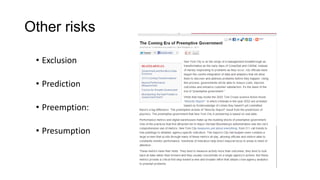
Other risks
• Exclusion
• Prediction
• Preemption:
• Presumption
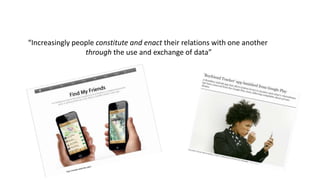
“Increasingly people constitute and enact their relations with one another
through the use and exchange of data”
Data Protection
Law
If you process personal data
- Only for explicit and
legitimate purpose
- Declare the purpose to the
supervisory authority
- Remain proportional to
this purpose
- Prohibition to process data
beyond this purpose
- ....
- Transparency / Security
EU Data Protection Directive 95/46
Electronic Privacy Law
• Specific rules for:
• online traffic data
• location data
• cookies
• commercial communications
• ...
EU ePrivacy Directive 2002/58
How do we apply this framework to “Big Data”?
• No single answer
• Legitimate ground
• Purpose limitation
• Transparency
• Security
On 25 January 2012 the European Commission has officially released
a proposal for a comprehensive reform of the 1995 data protection rules
Will the new rules affect the domain of “Big Data”?
1. One single European law
If adopted, the proposed Regulation will be valid across the EU.
As a consequence, companies established in more than one EU country
will no longer experience difficulties to cope with the divergent rules of
the EU Member States.
2. Every company supervised by one
data protection commissioner
Personal data processing by companies established in more than
one EU country will be monitored by one single supervisory
authority.
In principle this will be the data protection commission of the
country where the company has its main establishment.
3. Also applicable to companies
outside the EU
Theoretically the proposed Regulation claims to be applicable on
the processing of personal data of data subjects residing in the EU
by a controller not established in the EU,
… where the processing activities are related to the offering of
goods or services to such data subjects, or to the monitoring of
the behaviour of such data subjects.
4. Basic rules remain but would be
better implemented
The supervisory authorities will be empowered to fine
companies that violate EU data protection rules.
This can lead to penalties of up to €1 million or up to 2% of the
global annual turnover of a company.
Moreover responsibility and liability of the controller for any
processing of personal data is more clearly established.
5. Abolition of the general obligation
to notify
The general notification obligation would be abolished, and
replaced by procedures and mechanisms which focus instead on
those processing operations which are likely to present specific
risks.
6. Data protection officers
The controller and the processor would in the future be requested
to designate a data protection officer in any case where:
(a) the processing is carried out by a public authority or body; or
b) the processing is carried out by an enterprise employing 250
persons or more; or
(c) the core activities of the controller or the processor consist of
processing operations which, by virtue of their nature, their scope
and/or their purposes, require regular and systematic monitoring of
data subjects.
7. Consent: always explicit
Tacit consent will no longer be sufficient as a legal ground for
personal data processing.
Moreover consent can no longer be integrated into terms and
conditions but must be presented distinguishable in its appearance
from this other matter.
8. Right to be forgotten?
The right to erasure would be extended in such a way that a
controller who has made the personal data public would be
obliged to inform third parties which are processing such data
that a data subject requests them to erase any links to, or
copies or replications of that personal data.
9. “Data portability”
The data subject would be allowed to transmit those data, which
they have provided, from one automated application, such as a
social network, into another one.
This should apply where the data subject provided the data to the
automated processing system, based on their consent or in the
performance of a contract.
10. Security breach notification
As soon as a controller becomes aware that a personal data breach
has occurred, he would be obliged to notify this breach to the
supervisory authority without undue delay and, where
feasible, within 24 hours.
The individuals whose personal data could be adversely affected
by the breach would also have to be notified without undue delay
in order to allow them to take the necessary precautions.
Profiling (proposed definition)
“any form of automated processing of personal data intended to
evaluate certain personal aspects relating to a natural personal or
analyse or predict in particular that natural person’s performance
at work, economic situation, location, health, personal preferences,
reliability or behaviour”.
Profiling: proposed conditions
Only “profile” people where
(1) necessary to enter into or carry out a contract;
(2) expressly authorised by EU law; or
(3) based on the data subject’s consent.
Jos Dumortier
time.lex - Information & Technology Law
Congresstraat 35
B-1000 Brussel
(t) +32 (0)2 229 19 47
www.timelex.eu / jos.dumortier@timelex.eu

20131008 agoria big data vs data protection

  • 1.
    Big Data versusData Protection jos.dumortier@timelex.eu
  • 3.
    It’s about Variety,not Volume”
  • 4.
    Big data typicallyrefers to the following types of data: • Traditional enterprise data – includes customer information from CRM systems, transactional ERP data, web store transactions, and general ledger data. • Machine-generated /sensor data – includes Call Detail Records (“CDR”), weblogs, smart meters, manufacturing sensors, equipment logs (often referred to as digital exhaust), trading systems data. • Social data – includes customer feedback streams, micro-blogging sites like Twitter, social media platforms like Facebook Defining Big Data
  • 6.
    Beneficiaries 1. Individuals (example:Amazon) 2. Community (example: crash reports) 3. Organisation (example: UPS “ORION” project) 4. Society (fraud detection, anti-terrorism, ...)
  • 8.
    Other risks • Exclusion •Prediction • Preemption: • Presumption
  • 9.
    “Increasingly people constituteand enact their relations with one another through the use and exchange of data”
  • 12.
    Data Protection Law If youprocess personal data - Only for explicit and legitimate purpose - Declare the purpose to the supervisory authority - Remain proportional to this purpose - Prohibition to process data beyond this purpose - .... - Transparency / Security EU Data Protection Directive 95/46
  • 13.
    Electronic Privacy Law •Specific rules for: • online traffic data • location data • cookies • commercial communications • ... EU ePrivacy Directive 2002/58
  • 14.
    How do weapply this framework to “Big Data”? • No single answer • Legitimate ground • Purpose limitation • Transparency • Security
  • 16.
    On 25 January2012 the European Commission has officially released a proposal for a comprehensive reform of the 1995 data protection rules Will the new rules affect the domain of “Big Data”?
  • 17.
    1. One singleEuropean law If adopted, the proposed Regulation will be valid across the EU. As a consequence, companies established in more than one EU country will no longer experience difficulties to cope with the divergent rules of the EU Member States.
  • 18.
    2. Every companysupervised by one data protection commissioner Personal data processing by companies established in more than one EU country will be monitored by one single supervisory authority. In principle this will be the data protection commission of the country where the company has its main establishment.
  • 19.
    3. Also applicableto companies outside the EU Theoretically the proposed Regulation claims to be applicable on the processing of personal data of data subjects residing in the EU by a controller not established in the EU, … where the processing activities are related to the offering of goods or services to such data subjects, or to the monitoring of the behaviour of such data subjects.
  • 20.
    4. Basic rulesremain but would be better implemented The supervisory authorities will be empowered to fine companies that violate EU data protection rules. This can lead to penalties of up to €1 million or up to 2% of the global annual turnover of a company. Moreover responsibility and liability of the controller for any processing of personal data is more clearly established.
  • 21.
    5. Abolition ofthe general obligation to notify The general notification obligation would be abolished, and replaced by procedures and mechanisms which focus instead on those processing operations which are likely to present specific risks.
  • 22.
    6. Data protectionofficers The controller and the processor would in the future be requested to designate a data protection officer in any case where: (a) the processing is carried out by a public authority or body; or b) the processing is carried out by an enterprise employing 250 persons or more; or (c) the core activities of the controller or the processor consist of processing operations which, by virtue of their nature, their scope and/or their purposes, require regular and systematic monitoring of data subjects.
  • 23.
    7. Consent: alwaysexplicit Tacit consent will no longer be sufficient as a legal ground for personal data processing. Moreover consent can no longer be integrated into terms and conditions but must be presented distinguishable in its appearance from this other matter.
  • 24.
    8. Right tobe forgotten? The right to erasure would be extended in such a way that a controller who has made the personal data public would be obliged to inform third parties which are processing such data that a data subject requests them to erase any links to, or copies or replications of that personal data.
  • 25.
    9. “Data portability” Thedata subject would be allowed to transmit those data, which they have provided, from one automated application, such as a social network, into another one. This should apply where the data subject provided the data to the automated processing system, based on their consent or in the performance of a contract.
  • 26.
    10. Security breachnotification As soon as a controller becomes aware that a personal data breach has occurred, he would be obliged to notify this breach to the supervisory authority without undue delay and, where feasible, within 24 hours. The individuals whose personal data could be adversely affected by the breach would also have to be notified without undue delay in order to allow them to take the necessary precautions.
  • 27.
    Profiling (proposed definition) “anyform of automated processing of personal data intended to evaluate certain personal aspects relating to a natural personal or analyse or predict in particular that natural person’s performance at work, economic situation, location, health, personal preferences, reliability or behaviour”.
  • 28.
    Profiling: proposed conditions Only“profile” people where (1) necessary to enter into or carry out a contract; (2) expressly authorised by EU law; or (3) based on the data subject’s consent.
  • 29.
    Jos Dumortier time.lex -Information & Technology Law Congresstraat 35 B-1000 Brussel (t) +32 (0)2 229 19 47 www.timelex.eu / jos.dumortier@timelex.eu