Eurocities Integrating Cities Conference
Tampere, September 2013
URBACT Thematic Pole Manager: Sally Kneeshaw
Network Cooperation on Migrant Integration
What is URBACT?
The URBACT approach and tools
Networks exploring migrant integration
Network cooperation
Network Cooperation on Migrant Integration
What is URBACT?
The URBACT approach and tools
Networks exploring migrant integration
Network cooperation
URBACT II - Objectives
 European Programme of Territorial Cooperation 2007-2013
(jointly financed by ERDF and the Member States – budget 69 M€ )
 Main objective
To promote integrated & sustainable urban development in EU cities
 Specific objectives
- To facilitate exchange and learning activities among urban policy-
makers, decision-makers, practitioners (Exchange & Learning)
- To draw lessons and build knowledge based on ground realities
(Capitalisation)
- To support local policy-makers and practitioners to develop
integrated action plans for sustainable urban development
(Capacity building)
- To disseminate good practices and lessons drawn from the
transnational exchanges (Communication & Dissemination)
URBACT II
 3 calls for proposals
2008: 19 thematic networks & 7 working groups (completed)
2010: 9 thematic networks (completed)
2013: 15 thematic networks (starting implementation phase)
 511 partners from 28 MS/ PS
87% cities
20 metropolitan areas but predominance of small/medium size
15 regional authorities
13 Universities/ research centers
 3800 persons involved in Local Support Groups
(calls 1 & 2)
Network Cooperation on Migrant Integration
What is URBACT?
The URBACT approach and tools
Networks exploring migrant integration
Network cooperation
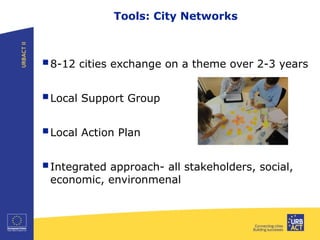
8-12 cities exchange on a theme over 2-3 years
Local Support Group
Local Action Plan
Integrated approach- all stakeholders, social,
economic, environmenal
Tools: City Networks
Thematic poles and workstreams clustering
networks along cross-cutting themes
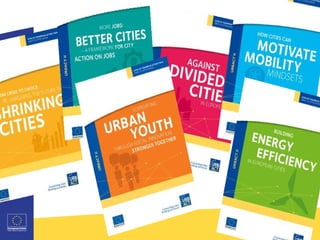
Publications building on networks’ results
(URBACT TRIBUNE, URBACT Results, etc.)
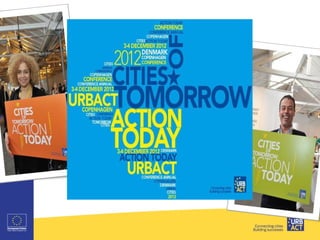
Seminars, conferences, Summer University
Tools: Building knowledge –
Capitalisation
Tools: Communication and Dissemination
A flagship website www.urbact.eu
Each network in charge of their own mini-site
National Dissemination Points
Using the social networks: blog, Facebook, Twitter
Events, publications
To promote and to disseminate
To reach practitioners throughout Europe
Tools: Capacity building
Training: national and EU level
Toolkits
Expert support
Innovative methods
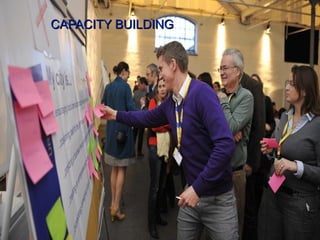
CAPACITY BUILDINGCAPACITY BUILDING
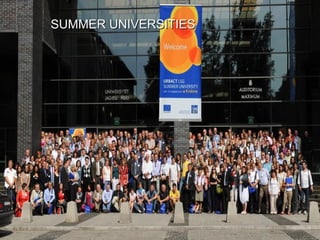
SUMMER UNIVERSITIESSUMMER UNIVERSITIES
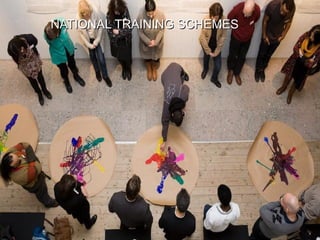
NATIONAL TRAINING SCHEMESNATIONAL TRAINING SCHEMES
Network Cooperation on Migrant Integration
What is URBACT?
The URBACT approach and tools
Networks exploring migrant integration
Network cooperation
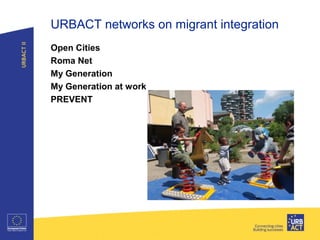
URBACT networks on migrant integration
Open Cities
Roma Net
My Generation
My Generation at work
PREVENT
Title of presentation I Tuesday 26
Network Cooperation on Migrant Integration
What is URBACT?
The URBACT approach and tools
Networks exploring migrant integration
Network cooperation
How do we cooperate better?
 Building on evidence and on experience of cities
involved in networks
 Bridging with other programmes/networks…
 Sharing information, creating links, making knowledge
accessible, easy to use
 Creating joint programmes, projects, initiatives
Title of presentation I Tuesday 26

2013 09.9 urbact network workshop compressed

  • 1.
    Eurocities Integrating CitiesConference Tampere, September 2013 URBACT Thematic Pole Manager: Sally Kneeshaw
  • 2.
    Network Cooperation onMigrant Integration What is URBACT? The URBACT approach and tools Networks exploring migrant integration Network cooperation
  • 3.
    Network Cooperation onMigrant Integration What is URBACT? The URBACT approach and tools Networks exploring migrant integration Network cooperation
  • 4.
    URBACT II -Objectives  European Programme of Territorial Cooperation 2007-2013 (jointly financed by ERDF and the Member States – budget 69 M€ )  Main objective To promote integrated & sustainable urban development in EU cities  Specific objectives - To facilitate exchange and learning activities among urban policy- makers, decision-makers, practitioners (Exchange & Learning) - To draw lessons and build knowledge based on ground realities (Capitalisation) - To support local policy-makers and practitioners to develop integrated action plans for sustainable urban development (Capacity building) - To disseminate good practices and lessons drawn from the transnational exchanges (Communication & Dissemination)
  • 5.
    URBACT II  3calls for proposals 2008: 19 thematic networks & 7 working groups (completed) 2010: 9 thematic networks (completed) 2013: 15 thematic networks (starting implementation phase)  511 partners from 28 MS/ PS 87% cities 20 metropolitan areas but predominance of small/medium size 15 regional authorities 13 Universities/ research centers  3800 persons involved in Local Support Groups (calls 1 & 2)
  • 6.
    Network Cooperation onMigrant Integration What is URBACT? The URBACT approach and tools Networks exploring migrant integration Network cooperation
  • 7.
    8-12 cities exchangeon a theme over 2-3 years Local Support Group Local Action Plan Integrated approach- all stakeholders, social, economic, environmenal Tools: City Networks
  • 8.
    Thematic poles andworkstreams clustering networks along cross-cutting themes Publications building on networks’ results (URBACT TRIBUNE, URBACT Results, etc.) Seminars, conferences, Summer University Tools: Building knowledge – Capitalisation
  • 11.
    Tools: Communication andDissemination A flagship website www.urbact.eu Each network in charge of their own mini-site National Dissemination Points Using the social networks: blog, Facebook, Twitter Events, publications To promote and to disseminate To reach practitioners throughout Europe
  • 12.
    Tools: Capacity building Training:national and EU level Toolkits Expert support Innovative methods
  • 13.
  • 14.
  • 15.
  • 16.
    Network Cooperation onMigrant Integration What is URBACT? The URBACT approach and tools Networks exploring migrant integration Network cooperation
  • 17.
    URBACT networks onmigrant integration Open Cities Roma Net My Generation My Generation at work PREVENT Title of presentation I Tuesday 26
  • 19.
    Network Cooperation onMigrant Integration What is URBACT? The URBACT approach and tools Networks exploring migrant integration Network cooperation
  • 20.
    How do wecooperate better?  Building on evidence and on experience of cities involved in networks  Bridging with other programmes/networks…  Sharing information, creating links, making knowledge accessible, easy to use  Creating joint programmes, projects, initiatives Title of presentation I Tuesday 26

Editor's Notes