Pan Pacific
Clinical Practice
Guideline for the
Prevention and
Management of
Pressure Injury
S I N G A P O R E
WOUND
HEALING
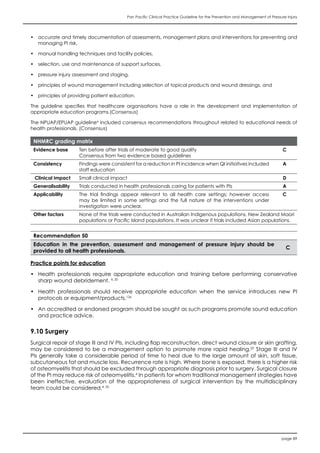
SOCIETY
Pan Pacific Guideline for the Prevention and Management of Pressure Injury (2012)
Published by the Australian Wound Management Association in collaboration with the New Zealand
Wound Care Society, Hong Kong Enterostomal Therapists Association and the Wound Healing Society
(Singapore).
Copyright © the Australian Wound Management Association Inc. 2012.
All rights reserved.
Apart from any fair dealing for the purposes of private study, research or review, as permitted under the
Copyright Act, no part may be reproduced or copied in any form or by any means without the written
permission of the Australian Wound Management Association.
For permission to reproduce information refer to the following websites:
Australian Wound Management Association: www.awma.com.au
New Zealand Wound Care Society: www.nzwcs.org.nz
Hong Kong Enterostomal Therapists Association: www.etnurse.com.hk
Wound Healing Society (Singapore): www.woundhealingsociety.org.sg
Suggested citation:
Australian Wound Management Association. Pan Pacific Clinical Practice Guideline for the Prevention
and Management of Pressure Injury. Cambridge Media Osborne Park, WA: 2012.
ISBN Print: 978-0-9807842-5-1
ISBN Online: 978-0-9807842-3-7
Contact:
The Australian Wound Management Association at secretary@awma.com.au
Disclaimer:
This guideline was developed by the Australian Wound Management Association in collaboration with
the New Zealand Wound Care Society, New Zealand Wound Care Society, Nursing Service, Hong Kong
Enterostomal Therapists Association and the Wound Healing Society (Singapore).
The guideline presents a comprehensive review of the assessment, diagnosis, management and
prevention of pressure injuries within the Australian, New Zealand, Hong Kong and Singapore healthcare
context, based on the best evidence available up to August 2011. The guideline is designed to provide
information to assist in decision-making and is based on the best information available at the date of
compilation. This document is a general guide to appropriate practice, to be implemented by a qualified
health professional subject to his or her clinical judgment of each individual case and in consideration
of the patient’s personal preferences. The guideline should be implemented in a culturally safe and
respectful manner in accordance with the principles of protection, participation and partnership.
Copies of this guideline can be downloaded from the following websites:
Australian Wound Management Association: www.awma.com.au
New Zealand Wound Care Society: www.nzwcs.org.nz
Hong Kong Enterostomal Therapists Association: www.etnurse.com.hk
Wound Healing Society (Singapore): www.woundhealingsociety.org.sg
Pan Pacific Clinical Practice Guideline for the Prevention and Management of Pressure Injury
page 1
Table of contents Page
1. INTRODUCTION 4
1.1 Acknowledgements 4
1.1.1 Guideline Development Steering Committee 4
1.1.2 Guideline Development Groups 5
1.1.3 Literature reviewers 5
1.2 Commonly used abbreviations 6
1.3 Glossary 7
1.4 Quick reference flow chart 12
2. SUMMARY OF RECOMMENDATIONS 13
3. BACKGROUND 16
3.1 Aim of the guideline 16
3.2 Scope and target population 17
3.3 Focus of the guideline 17
3.3.1 Clinical questions 17
4. GUIDELINE DEVELOPMENT PROCESS 19
4.1 Identification, appraisal & selection of existing clinical guidelines 19
4.2 Identification, appraisal and synthesis of new evidence 20
4.2.1 Search strategy 20
4.2.2 Inclusion/exclusion criteria 21
4.2.3 Critical appraisal 22
4.2.4 Data extraction 22
4.2.5 Identified research 22
4.3 Development and grading of recommendations 23
4.3.1 Process for consensus based recommendations 25
4.3.2 Development of practice points 25
4.4 Limitations of the guideline 25
4.4.1 Topical preparations and wound dressings 25
4.4.2 Search date and strategy 25
4.4.3 Outcome measures 25
4.4.4 Lack of evidence 26
4.5 Consultation 26
4.6 Dissemination 27
5. PRESSURE INJURY RISK ASSESSMENT 28
5.1 Clinical questions 28
5.2 Factors associated with an increased risk of pressure injury 28
5.3 Identifying patients at risk of pressure injury 30
5.4 Risk assessment scales 31
5.4.1 Braden Scale 31
5.4.2 Norton Scale 31
5.4.3 Waterlow Score 31
5.4.4 Reliability and validity of pressure injury risk assessment scales for adults 32
5.4.5 Reliability and validity of pressure injury risk assessment scales for children 32
5.5 Skin assessment 34
5.6 Nutritional screening and assessment 35
5.7 Psychosocial assessment 37
5.7.1 Goals of care 37
5.7.2 Education 38
6. PREVENTION OF PRESSURE INJURIES 39
6.1 Clinical questions 39
6.2 Skin protection 39
6.3 Oral nutrition 39
page 2
Pan Pacific Clinical Practice Guideline for the Prevention and Management of Pressure Injury
6.4 Support surfaces 40
6.4.1 Types of support surfaces 41
6.4.2 Reactive (constant low pressure) support surfaces 42
6.4.3 Active (alternating pressure) support surfaces 45
6.4.4 Selecting a support surface 46
6.4.5 Sheepskins 47
6.4.6 Protecting the patient’s heels in bed 48
6.4.7 Seating support cushions 48
6.5 Patient positioning 50
6.5.1 Positioning the patient in bed 52
6.5.2 Positioning the seated patient 53
6.6 Support surfaces and positioning in the operating theatre 54
6.6.1 Support surfaces in the operating theatre 54
6.6.2 Positioning the patient for surgery 55
7. ASSESSMENT AND MONITORING OF PRESSURE INJURIES 56
7.1 Clinical questions 56
7.2 Pressure injury assessment and monitoring 56
7.2.1 Microbiology and histopathology 56
7.2.2 Pressure injury healing assessment scales 56
7.2.3 Expectations of healing 56
7.3 Pressure injury classification 58
8. ADDRESSING PAIN ASSOCIATED WITH PRESSURE INJURIES 62
8.1 Clinical questions 62
8.2 The experience of pressure injury pain 62
8.2.1 Pain prevalence 62
8.2.2 Pain duration and timing 62
8.2.3 Factors associated with pain 62
8.2.4 Pain descriptions 63
8.3 Pain assessment 63
8.3.1 Pain assessment tools 63
8.4 Managing pain associated with pressure injury 65
8.4.1 Topical opioids 66
9. INTERVENTIONS FOR THE TREATMENT OF PRESSURE INJURIES 68
9.1 Clinical questions 68
9.2 Nutrition 68
9.2.1 High protein and disease-specific supplements 68
9.2.2 Vitamin or multivitamin supplements 69
9.2.3 Arginine containing supplements 71
9.3 Support surfaces 71
9.4 Patient positioning 73
9.5 Wound bed preparation 73
9.5.1 Debridement 73
9.5.2 Skin and wound hygiene 75
9.6 Treating clinical infection 76
9.6.1 Cadexomer iodine 76
9.6.2 Topical medical grade honey 77
9.6.3 Topical silver 78
9.6.4 Topical antiseptic solutions 78
9.6.5 Topical antibiotics 79
9.6.6 Systemic antibiotics 80
9.7 Wound dressing selection 81
Pan Pacific Clinical Practice Guideline for the Prevention and Management of Pressure Injury
page 3
9.7.1 Negative pressure wound therapy 83
9.8 Other interventions 85
9.8.1 Electrotherapy 85
9.8.2 Pulsed electromagnetic therapy 86
9.8.3 Ultraviolet light therapy 87
9.9 Health professional education 88
9.10 Surgery 89
10. ORGANISATIONAL AND COST IMPLICATIONS 91
10.1 Introducing pressure injury reduction initiatives in the organisation 91
10.2 Implications of a new classification system 91
10.3 Cost implications of the recommendations 91
11. INTERVENTIONS NOT CURRENTLY RECOMMENDED 93
11.1 Therapeutic ultrasound 93
12. INTERVENTIONS FOR WHICH THERE IS INSUFFICIENT EVIDENCE 94
13. EMERGING INTERVENTIONS 96
13.1 Topical biological agents 96
13.2 Support surfaces 96
14. IMPLICATIONS FOR FURTHER RESEARCH 97
15. REFERENCES 98
APPENDIX A Guideline Development Steering Committee and Guideline Development
Groups
102
APPENDIX B Excluded Literature 108
APPENDIX C Primary Search Strategy 110
APPENDIX D Critical Appraisals and Quality of Research 111
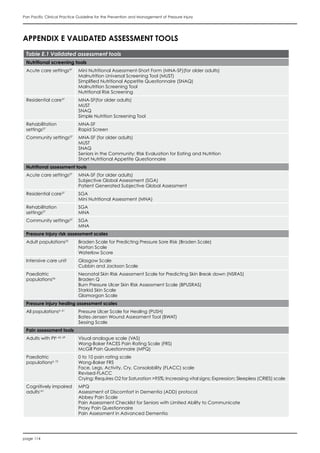
APPENDIX E Validated Assessment Tools 114
APPENDIX F Braden Scale for Predicting Pressure Sore Risk 115
APPENDIX G Norton Scale 116
APPENDIX H Waterlow Score 117
APPENDIX I Braden Q Scale 118
Table of tables and figures Page
Table 4.1 AGREE scores of appraised existing guidelines 20
Table 4.2 NHMRC levels of evidence 21
Figure 4.1 Review process 23
Table 4.3 Body of evidence assessment matrix 24
Table 4.4 Recommendation grades 24
Figure 5.1 Factors associated with increased risk of pressure injury 28
Table 5.1 Reliability and validity of pressure injury risk assessment tools for adults 32
Table 5.2 Reliability and validity of pressure injury risk assessment tools for children 32
Table 6.1 Types of support surfaces 42
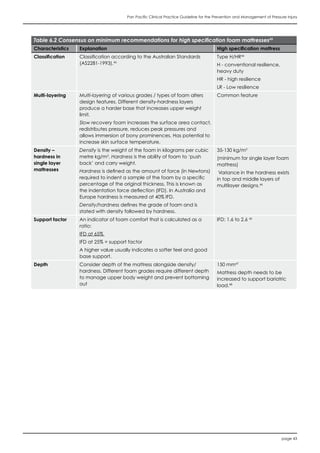
Table 6.2 Consensus on minimum recommendations for high specification foam mattresses 43
Table 6.3 Considerations in selecting a support surface 47
Table 7.1 NPUAP/EPUAP pressure injury classification system 59
Table 8.1 Factors associated with pressure injury pain 63
Table A.1 Membership of Steering Committee and Development Groups 103
Table A.2 Conflict of interest declarations 106
Table B.1 Excluded guidelines and literature 107
Table D.1: Critical appraisal of included SRs 111
Table D.2: Quality of research included in SRs 112
Table E.1: Validated assessment tools 114
page 4
Pan Pacific Clinical Practice Guideline for the Prevention and Management of Pressure Injury
1.	 INTRODUCTION
Despite a general consensus that pressure injuries (PIs) are preventable adverse events, they continue
to remain a problem in all health care settings. In addition to the significant financial costs (to health
services and patients), PIs are associated with significant social cost in terms of increased morbidity and
mortality, pain, discomfort, decreased mobility, loss of independence, social isolation and lost work
time. As health care professionals, these are factors that warrant our concern.1
The Australian Wound Management Association (AWMA) together with partners in New Zealand,
Singapore and Hong Kong aims to optimise the prevention, assessment and management of PIs via the
dissemination of this guideline that represents best available evidence, and simplify clinical decision–
making processes for health care professionals. This guideline, developed by a multidisciplinary
international team of experts, presents a comprehensive review of the prevention, assessment and
management of PIs within the Australian, New Zealand, Hong Kong, Singapore and Pan Pacific region
healthcare context, based on the best evidence available up to August 2011. The guidelines offer
recommendations to help health care professionals provide quality care for patients of all ages and
across a range of health care settings, such as acute care, post-acute care, community settings and
long term care. The guideline is designed to provide information to assist in decision-making and is
based on the best information available at the date of compilation. The guideline is not intended to
have a regulatory effect.
Management of PI requires a multidisciplinary approach. This document is a general guide to appropriate
practice, to be implemented by qualified health professionals subject to their clinical judgment of each
individual case and in consideration of the patient’s personal preferences and available resources. The
guideline should be implemented in a culturally safe and respectful manner in accordance with the
principles of protection, participation and partnership.
1.1 Acknowledgements
This project was financed by the AWMA and conducted by the AWMA experts in conjunction with
independent, multidisciplinary experts throughout Australia, New Zealand, Singapore and Hong Kong.
The Guideline Development Steering Committee had full editorial independence.
The following experts were involved in the appraisal of literature and development of the
recommendations contained in the guideline:
1.1.1 Guideline Development Steering Committee
Australia
Keryln Carville (Chair), Adj. Professor; RN; STN(Cred); PhD
Judith Barker, Nurse Practitioner (Wound Mmt); RN; NP; STN; MN(NP); BHlthSc (Nurs);
Sean Fitzgerald, Consumer Representative
Emily Haesler, Methodologist, Academic Researcher; BN, PGradDip(AdvNsg)
Judith Manning, Clinical Nurse (Wound MMt); RN; MA; BEd.
William McGuiness, AWMA President; Assoc. Professor; RN; PhD; MNS; BN; DipT
Tracy Nowicki, Clinical Nurse Consultant; RN
Jenny Prentice, RN; PhD
Robyn Rayner, Clinical Nurse (Wound Mmt); RN; M Wound Care; PGrad Health Admin; BSci(Nursing);
Jan Rice, Clinical Nurse Educator RN; M Wound Care; MRCNA; Cert. Plastic & Reconstructive Surgery;
FAWMA
Michael Woodward, Assoc. Professor; MB; BS; MD; FRACP
Catherine Young, Occupational Therapist; Wheelchair Seating Consultant; BAppSc (OT); Cert Family
Dynamics PU Prevention
Clarissa Young, Clinical Nurse Consultant (Wound Mmt); RN; MCN; MNS (NP)BN;
New Zealand
Pam Mitchell, Clinical Nurse Consultant (Wound Mmt); MN ; Dip N; PGDip WHTR (Wales);
Emil Schmidt, RN, BN Hon. PG cert. WCNS, MCNA (NZ)
Singapore
Susie Goh, RN, STN, PGrad Cert. Tissue Viability
Pan Pacific Clinical Practice Guideline for the Prevention and Management of Pressure Injury
page 5
Hong Kong
Susan Law, Advanced Practice Nurse (Wound MMt); RN; RM; MScN ; BScN; ET.
1.1.2 Guideline Development Groups
Margo Asimus, Nurse Practitioner (Wound Mmt)
Elizabeth Abraham, Occupational Therapist
Judith Barker, Nurse Practitioner (Wound Mmt); RN; NP; MN(NP) BHlthSc (Nurs); STN.
Jennifer Byrnes, Nurse Practitioner (Wound Mmt); RN; NP; MN(NP) STN; DipHlthSc (Nurs); STN
Keryln Carville (Chair), Assoc. Professor; RN; STN(Cred); PhD
Kerrie Coleman, Nurse Practitioner Complex Wound Mmt; MNclinical (Wound Mmt),MN(Chronic Disease) BNSc,
DipApSc
Monique Covey, Clinical Dietitian; APD; BSc(Nutrition) Hons
Jenny Davenport, Clinical Nurse Educator; RN; STN(Cred); Cert. Advanced Wound Management. Cert IV in
Training & Assessment
Sandy Dean, Nurse Consultant, RN; RM; MWoundCare (Mon); FAWMA
Ann Marie Dunk, Clinical Nurse Consultant (Wound Mmt); BHlthSc(Nurs)
Anne Gardner, Professor of Nursing; RN; PhD
Emily Haesler, Methodologist, Academic Researcher; BN, PGradDip(AdvNsg)
Debra Harcourt, Clinical Nurse (Wound Mmt), MHlthSci
Judith Manning, Clinical Nurse (Wound Mmt); RN; MA; BEd.
BernadetteMcNally,ClinicalNurseConsultant(WoundMmtandQualityCoordination)MEd&Wk,MNurs(Advanced
Practice)BN, Dip HSc, Grad Dip Nursing (Comm. Nurs),
Pam Mitchell, Clinical Nurse Consultant (Wound Mmt); MN Dip N; PGDip WHTR (Wales);
Pamela Morey, Nurse Practitioner; RN; STN; MN (NP); MRCNA
Wayne Naylor, Senior Analyst Palliative Care Council New Zealand; President NZWCC
Tracy Nowicki, Clinical Nurse Consultant; RN
Katrina Pace, Registered Dietitian NZRD, Bsc (hons)
Rosalind Probert, Clinical Nurse Consultant (Stomal Therapy Wound Mmt); RN
Robyn Rayner, Clinical Nurse (Wound Mmt); RN; BSci(Nursing); PGrad Health Admin; M Wound Care
Jan Rice, Clinical Nurse Educator RN; M Wound Care; AMWA Cert. Plastic & Reconstructive Surgery; FAWMA.
MRCNA;
Kerri Roberts, Supervisory OT (Neurology&Rehab); MOT; BAppSc(OT); DipBusMmt.
Emil Schmidt, RN, BN Hon. PG cert. WCNS, MCNA (NZ)
Maria Schollum, Clinical Nurse Specialist Wound Care, RN BN PG Dip Health Science, Adv Nurs
Michael Woodward, Assoc. Professor; MB; BS; MD; FRACP
Jan Wright, Clinical Nurse Consultant (Wound Mmt); RN
Catherine Young, Occupational Therapist; Wheelchair Seating Consultant; BAppSci(OT); Cert Family Dynamics
PU Prevention
Clarissa Young, Clinical Nurse Consultant (Wound Mmt); RN; MCN; MNS (NP), BN;
Seok Yee Toh, Clinical Dietitian; APD; MSc Nutrition and Dietetics.
1.1.3 Literature reviewers
Members of the Guideline Development Steering Committee and Guideline Development Groups
appraised the research identified in literature searches. In addition the contribution of the following
experts to the literature appraisal is acknowledged:
Debbie Blanchfield, Clinical Nurse Consultant (Wound Care); RN; M Wound Care
Jane Edwards, RN, BSc (Hons)
Diane Hishon, Wound Care Advisor; Ambulatory Nurse Educator; RN
Carol Tweed, Educational Consultant; MSc; BSc.
Sue Templeton, Nurse Practitioner (Wound Mmt); RN; BN; MNSci(NP)
page 6
Pan Pacific Clinical Practice Guideline for the Prevention and Management of Pressure Injury
1.2 Commonly used abbreviations
ABPI Ankle brachial pressure index
AWMA Australian Wound Management Association
AGREE Appraisal of Guidelines for Research and Evaluation
AS Australian Standard
BWAT Bates-Jensen Wound Assessment Tool
BMI Body mass index
BPUSRAS Burn Pressure Ulcer Skin Risk Assessment Scale
CRP C reactive protein
CALD Culturally and linguistically diverse
CBR Consensus based recommendation
CI Confidence interval
CRIES scale Crying; Requires oxygen for saturation >95%; Increasing vital signs; Expression; Sleepless scale
DAA Dietitians Association of Australia
EMLA Eutectic mixture of local anesthetic
EPUAP European Pressure Ulcer Advisory Panel
ETF Enteral tube feeding
FLACC Face, Legs, Activity, Cry, Consolability
FRS Wong-Baker FACES Pain Rating Scale
GIT Gastrointestinal tract
GM-CSF Granulocyte-macrophage colony-stimulating factor
HBOT Hyperbaric oxygen therapy
HRQOL Health related quality of life
IFD Indentation force deflection
ITT Intention to treat
Kcal Kilocalorie
Kg Kilograms
LLLT Low level laser therapy
m3
Metres cube
MNA-SF Mini Nutritional Assessment Short Form
N Number (of participants)
Nb Note well
MHz Megahertz
NHMRC The National Health and Medical Research Council
MPQ McGill Pain Questionnaire
NNT Number needed to treat
NPUAP National Pressure Ulcer Advisory Panel
NSRAS Neonatal Skin Risk Assessment Scale
NS Not statistically significant
NZ New Zealand
OR Odds ratio
PI / PIs Pressure injury / Pressure injuries
PEMT Pulsed electromagnetic therapy
PUSH Tool Pressure Ulcer Scale for Healing
P value (p) Probability value
pps Pulses per second
Pan Pacific Clinical Practice Guideline for the Prevention and Management of Pressure Injury
page 7
PPV Positive predictive value
QALYs Quality adjusted life years
QI Quality improvement
QOL Quality of life
r Sample correlation
RCT Randomised controlled trial
RNAO Registered Nurses Association Ontario
RR Relative risk
RRR Relative risk reduction
SCI Spinal cord injury
SIGN Scottish Intercollegiate Guidelines Network
SR Systematic review
TBPI Toe brachial pressure index
VAS Visual analogue scale
WBP Wound bed preparation
WHO World Health Organisation
WMD Weighted mean difference
WOCN Wound Ostomy Continence Nurses Society
1.3 Glossary
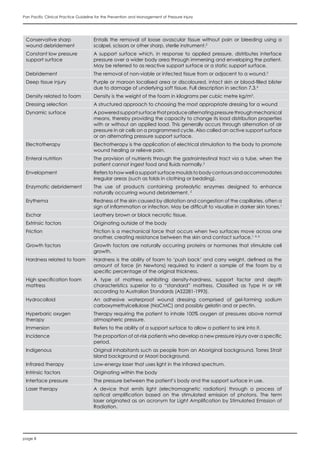
Active support surface A powered support surface that produces alternating pressure through
mechanical means, thereby providing the capacity to change its load distribution
properties with or without an applied load. This generally occurs through
alternation of air pressure in air cells on a programmed cycle time. Also called an
alternating pressure support surface or a dynamic support surface.
Air fluidised surface A reactive (constant low pressure) support surface where a gentle flow of
temperature controlled air is projected upward through numerous tiny openings
called ceramic microspheres. e.g. a Clinitron™ bed.
Alternating pressure
support surface
A powered support surface that produces alternating pressure through
mechanical means, thereby providing the capacity to change its load
distribution properties with or without an applied load. This generally occurs
through alternation of air pressure in air cells on a programmed cycle. Also called
an active support surface or a dynamic support surface.
Antibiotic Substance or compound administered systemically or applied topically that acts
selectively against bacteria.2
Antimicrobial A term used to encompass antibiotics, antiseptics and disinfectants. A substance
that inhibits the growth of, or eradicates micro-organisms.2
Autolytic debridement The selective process whereby the body releases endogenous proteolytic
enzymes and phagocytes that gradually degrade non-viable tissue.2
Blanching erythema Reddened skin that blanches white under light pressure. May be difficult to
visualise in darker skin tones.
Bioengineered skin
substitutes
Manufactured skin substitutes derived from biological (human or animal cells) or
synthetic products.
Bony prominence An anatomical bony projection.
Bottoming out When the deepest point of the patient’s immersion in a reactive or an active
support surface provides insufficient support to adequately redistribute pressure
so the patient presents as sitting or lying on the underlying structure of the bed or
chair.
Clinical infection Multiplication of bacteria that overwhelm host defences, resulting in disruption
of healing and damage to the wound. Wound infection can result in local and
systemic host responses.3
page 8
Pan Pacific Clinical Practice Guideline for the Prevention and Management of Pressure Injury
Conservative sharp
wound debridement
Entails the removal of loose avascular tissue without pain or bleeding using a
scalpel, scissors or other sharp, sterile instrument.2
Constant low pressure
support surface
A support surface which, in response to applied pressure, distributes interface
pressure over a wider body area through immersing and enveloping the patient.
May be referred to as reactive support surface or a static support surface.
Debridement The removal of non-viable or infected tissue from or adjacent to a wound.2
Deep tissue injury Purple or maroon localised area or discoloured, intact skin or blood-filled blister
due to damage of underlying soft tissue. Full description in section 7.3.4
Density related to foam Density is the weight of the foam in kilograms per cubic metre kg/m3
.
Dressing selection A structured approach to choosing the most appropriate dressing for a wound
Dynamic surface Apoweredsupportsurfacethatproducealternatingpressurethroughmechanical
means, thereby providing the capacity to change its load distribution properties
with or without an applied load. This generally occurs through alternation of air
pressure in air cells on a programmed cycle. Also called an active support surface
or an alternating pressure support surface.
Electrotherapy Electrotherapy is the application of electrical stimulation to the body to promote
wound healing or relieve pain.
Enteral nutrition The provision of nutrients through the gastrointestinal tract via a tube, when the
patient cannot ingest food and fluids normally.5
Envelopment Refers to how well a support surface moulds to body contours and accommodates
irregular areas (such as folds in clothing or bedding).
Enzymatic debridement The use of products containing proteolytic enzymes designed to enhance
naturally occurring wound debridement. 2
Erythema Redness of the skin caused by dilatation and congestion of the capillaries, often a
sign of inflammation or infection. May be difficult to visualise in darker skin tones.1
Eschar Leathery brown or black necrotic tissue.
Extrinsic factors Originating outside of the body
Friction Friction is a mechanical force that occurs when two surfaces move across one
another, creating resistance between the skin and contact surface.1, 4, 6
Growth factors Growth factors are naturally occurring proteins or hormones that stimulate cell
growth.
Hardness related to foam Hardness is the ability of foam to ‘push back’ and carry weight, defined as the
amount of force (in Newtons) required to indent a sample of the foam by a
specific percentage of the original thickness.
High specification foam
mattress
A type of mattress exhibiting density-hardness, support factor and depth
characteristics superior to a “standard” mattress. Classified as Type H or HR
according to Australian Standards (AS2281-1993).
Hydrocolloid An adhesive waterproof wound dressing comprised of gel-forming sodium
carboxymethylcellulose (NaCMC) and possibly gelatin and or pectin.
Hyperbaric oxygen
therapy
Therapy requiring the patient to inhale 100% oxygen at pressures above normal
atmospheric pressure.
Immersion Refers to the ability of a support surface to allow a patient to sink into it.
Incidence The proportion of at-risk patients who develop a new pressure injury over a specific
period.
Indigenous Original inhabitants such as people from an Aboriginal background, Torres Strait
Island background or Maori background.
Infrared therapy Low-energy laser that uses light in the infrared spectrum.
Intrinsic factors Originating within the body
Interface pressure The pressure between the patient’s body and the support surface in use.
Laser therapy A device that emits light (electromagnetic radiation) through a process of
optical amplification based on the stimulated emission of photons. The term
laser originated as an acronym for Light Amplification by Stimulated Emission of
Radiation.
Pan Pacific Clinical Practice Guideline for the Prevention and Management of Pressure Injury
page 9
Larval debridement Involves the application of sterile, green bottle fly (Lucilia sericata) maggots to
the wound.
Likert scale An interval-based multiple-choice style question frequently used in questionnaires.
Low air loss A support surface that allows air to escape from air cells to manage skin heat
and humidity. Available as overlays, replacement mattresses or within a whole
bed system.
Malnutrition Malnutrition is a broad term that refers to under-nutrition but technically it also refers
to over-nutrition. People are malnourished if their diet does not provide adequate
calories and specific nutrients for growth and maintenance or if they are unable
to fully utilize the food they eat due to illness. They are also malnourished if they
consume too many calories (over-nutrition).5
Mechanical debridement A process that removes tissue and debris via mechanical means including low
frequency ultrasound, high pressure irrigation, hydrotherapy (whirlpool) and wet-
to-dry dressings.
Medical grade honey Honey that is filtered, gamma irradiated and produced under exacting standards
of hygiene.
Medical grade sheepskin A sheepskin that complies with the internationally recognised Australian Standard
AS4480.1-1998.
Microclimate The temperature of the skin or the soft tissues and humidity or skin surface moisture
at the interface between the skin and the support surface.1
Moisture Moisturealtersresilienceoftheepidermistoexternalforcesbycausingmaceration,
particularly when the skin is exposed for prolonged periods. Moisture can occur
due to spilt fluids, incontinence, wound exudate and perspiration.1
Necrosis Devitalised or dead tissue.
Negative pressure wound
therapy
The use of controlled negative pressure to assist and accelerate wound healing.
Also known as vacuum assisted wound healing or topical negative pressure.
Non-blanching erythema Erythema that remains reddened when pressure is applied and removed.1
Nutritional assessment General assessment of nutritional status
Offload To remove pressure from a skin surface.
Oral nutritional
supplement
A commercial or other prepared food or beverage that supplements nutrient
and caloric intake.
Overlay A support surface placed onto a constant low pressure support surface or a
‘standard’ mattress. Overlays may be reactive (static) or active (dynamic)
devices.
Pain In the context of this guideline pain refers to an unpleasant sensory and emotional
experience associated with a pressure injury. Patients may use varying words to
describe pain including discomfort, distress and agony.
Patient For the purpose of this guideline, any individual receiving health assessment, care
or treatment in any setting.
pH A measure on a scale from 0 to 14 of the acidity or alkalinity of a solution, with 7
being neutral, greater than 7 is more alkaline and less than 7 is more acidic.
Period prevalence Total number of a given population with pressure injuries at any time during a
specified period (rather than at one point in time).
Point prevalence Total number of a given population with pressure injuries at a specific time.
Positioning Position of normal body alignment to promote comfort, safety and relaxation,
prevent deformities and reduce the effects of tissue strain on skin.4
Pressure injury A localised injury to the skin and/or underlying tissue usually over a bony
prominence, as a result of pressure, shear and/or friction, or a combination of
these factors.4
Pressure injury healing
assessment scale
Formal tool to assess and monitor condition of PIs.
Pressure ulcer See pressure injury.
Pressure redistribution The ability of a support surface on which the patient is placed to reduce the
pressure load on bony prominences in contact with the surface by enabling
either immersion or envelopment into the surface.
page 10
Pan Pacific Clinical Practice Guideline for the Prevention and Management of Pressure Injury
Prevalence Total number of a given population with pressure injuries.
Pulsed electromagnetic
therapy
Pulsed electromagnetic therapy (PEMT) exposes the patient to a magnetic field
effect, usually in a pulsed fashion.
Psychosocial assessment Assessment of an individual’s mental, physical, social, emotional, environmental
and cultural influences and wellbeing.
Reactive hyperaemia A reddening of the skin in response to blood reperfusing hypoxic or ischaemic
tissues when pressure is eliminated.
Reactive support surface A support surface which, in response to applied pressure, distributes interface
pressure over a wider body area through immersing and enveloping the patient.
May be referred to as constant low pressure support surface or a static support
surface.
Reliability Measure of reproducibility of a measure
Repositioning Changing a patient’s body position to redistribute the pressure on the bony
points that were in contact with the surface supporting the body. The frequency
is determined by skin response, support surface in use and patient’s general
condition.
Risk assessment scale Formal scale or score used to help determine the degree of pressure injury risk.
Risk assessment tool See risk assessment scale.
Seating cushion Static (reactive) or dynamic (active) cushions on a chair for pressure redistribution
purposes.
Skin assessment General examination of the skin.
Shear Shear is a mechanical force created from a parallel (tangential) load that causes
the body to slide against resistance between the skin and a contact surface.
The outer layers of the skin (the epidermis and dermis) remain stationary while
deep fascia moves with the skeleton, creating distortion in the blood vessels and
lymphatic system between the dermis and deep fascia. This leads to thrombosis
and capillary occlusion.1, 6, 7
Sinus tract A blind ended tract into the tissues from the skin and/or wound opening as a
result of tissue destruction.
Slough Moist soft necrotic tissue.
Specialty beds Powered beds and replacement mattresses that function as a system for
redistributing pressure and repositioning (i.e. the bed and mattress work together).
Stage I pressure injury Pressure injury presenting as intact skin with non-blanchable redness of a localised
area usually over a bony prominence. Full description in section 7.3.4
Stage II pressure injury Partial thickness loss of dermis presenting as a shallow, open wound with a red-
pink wound bed, without slough Full description in section 7.3.4
Stage III pressure injury Pressure injury presenting as full thickness tissue loss in which subcutaneous fat
may be visible but bone, tendon or muscle are not exposed. Full description in
section 7.3.4
Stage IV pressure injury Pressure injury presenting as full thickness tissue loss with exposed bone, tendon or
muscle. Full description in section 7.3.4
Standard care A term used to describe usual care, most often in research studies. Standard care
varies according to the setting and historical context. Within the context of the
guideline, a description of the standard care used in research studies has been
provided when available.
“Standard” mattress The definition of a “standard” mattress is variable, and may change between
facilities and over time. Classified as Type N according to Australian Standards
(AS2281-1993).
Static support surface A support surface which, in response to applied pressure, distributes interface
pressure over a wider body area through immersing and enveloping the patient.
May be referred to as reactive support surface or a constant low pressure support
surface.
Pan Pacific Clinical Practice Guideline for the Prevention and Management of Pressure Injury
page 11
Support surface A surface on which the patient is placed to manage pressure load by distributing
body weight pressure more effectively over the support surface. Support surfaces
are classified as reactive (constant low pressure) or active (alternating pressure)
surfaces. Includes bed, trolley and operating table mattresses and overlays;
integrated bed systems; and seat cushions and overlays.4
Surgical debridement Rapid removal of necrotic or infected tissue performed under local or general
anaesthetic.
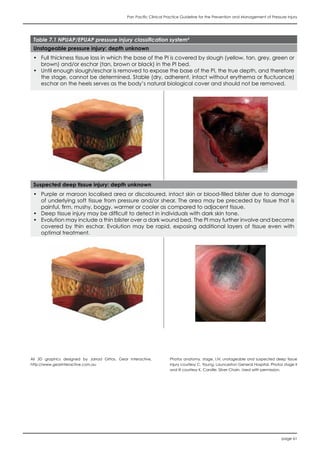
Suspected deep tissue
injury
Purple or maroon localised area of discoloured, intact skin or blood-filled blister
due to damage of underlying soft tissue from pressure and/or shear. Deep tissue
injury may be preceded by tissue that is painful, firm, mushy, boggy, or warmer
or cooler than adjacent tissue. Deep tissue injury may be difficult to detect in
individuals with dark skin tones. Evolution may include a thin blister over a dark
wound bed. The wound may further evolve and become covered by thin eschar.
Evolution to a stage 3 or 4 PI may be rapid exposing additional layers of tissue with
or without interventions.4
Therapeutic ultrasound Ultrasound therapy delivers acoustic vibrations in either a continuous or a pulsed
manner.
Topical antibiotics Antibiotics that are applied directly to a wound to reduce bacterial levels.2
Topical biological agents Topical agents that are applied directly to a wound to promote healing.2
Tissue tolerance The ability of skin and underlying tissues to endure pressure without experiencing
any adverse effects.
Topical opioids Topical application of morphine and its metabolites to skin ulcers to provide local
relief from pain.
Topical silver Application of a dressing product containing silver to a wound to manage wound
bio-burden.
Ultraviolet light therapy Ultraviolet light C is a wavelength of ultraviolet light that has been theorised to
have a role in wound healing through cell proliferation stimulation, enhancing
cutaneous blood flow and inhibiting bacterial growth.
Undermined edge/
undermining
An area of tissue destruction that extends under intact skin parallel to the wound
edges.2
Unstageable pressure
injury
Pressure injury presenting as full thickness tissue loss in which the base of the PI is
covered by slough or necrosis that prevents the determination of the true depth,
and therefore the stage. Full description in section 7.3.
Validity How well a tool measures the concept it claims to measure.
Viscoelastic foam Open cell flexible polyurethane foam with additional chemicals to increase
its density and viscosity. It is often referred to as memory, slow recovery, or low
resilience foam.
Body heat , ambient temperature and humidity affect viscoelastic foam firmness,
support and height recovery rate.
Comparative laboratory testing must match ambient testing conditions for
accurate comparisons and replicability of test results.
Whirlpool Hydrotherapy or the use of agitated water or saline used to cleanse or debride
necrotic tissue.
page 12
Pan Pacific Clinical Practice Guideline for the Prevention and Management of Pressure Injury
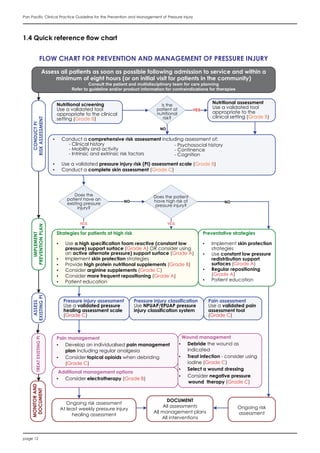
1.4 Quick reference flow chart
Assess all patients as soon as possible following admission to service and within a
minimum of eight hours (or on initial visit for patients in the community)
Consult the patient and multidisciplinary team for care planning
Refer to guideline and/or product information for contraindications for therapies
Preventative strategies
• Implement skin protection
strategies
• Use constant low pressure
redistribution support
surfaces (Grade A)
• Regular repositioning
(Grade A)
• Patient education
Wound management
• Debride the wound as
indicated
• Treat infection - consider using
iodine (Grade C)
• Select a wound dressing
• Consider negative pressure
wound therapy (Grade C)
IMPLEMENT
PREVENTIONPLAN
TREATEXISTINGPI
FLOW CHART FOR PREVENTION AND MANAGEMENT OF PRESSURE INJURY
Additional management options
• Consider electrotherapy (Grade B)
• Conduct a comprehensive risk assessment including assessment of:
- Clinical history
- Mobility and activity
- Intrinsic and extrinsic risk factors
• Use a validated pressure injury risk (PI) assessment scale (Grade B)
• Conduct a complete skin assessment (Grade C)
Ongoing risk
assessment
MONITORAND
DOCUMENT
NO
Strategies for patients at high risk
• Use a high specification foam reactive (constant low
pressure) support surface (Grade A) OR consider using
an active alternate pressure) support surface (Grade A)
• Implement skin protection strategies
• Provide high protein nutritional supplements (Grade B)
• Consider arginine supplements (Grade C)
• Consider more frequent repositioning (Grade A)
• Patient education
Ongoing risk assessment
At least weekly pressure injury
healing assessment
Pain management
• Develop an individualised pain management
plan including regular analgesia
• Consider topical opioids when debriding
(Grade C)
Pressure injury classification
Use NPUAP/EPUAP pressure
injury classification system
NO
YES
Does the
patient have an
existing pressure
injury?
Does the patient
have high risk of
pressure injury?
Pressure injury assessment
Use a validated pressure
healing assessment scale
(Grade C)
Pain assessment
Use a validated pain
assessment tool
(Grade C)
DOCUMENT
All assessments
All management plans
All interventions
CONDUCTPI
RISKASSESSMENT
ASSESS
EXISTINGPI
Nutritional screening
Use a validated tool
appropriate to the clinical
setting (Grade B)
Is the
patient at
nutritional
risk?
Nutritional assessment
Use a validated tool
appropriate to the
clinical setting (Grade B)
NO
YES
- Psychosocial history
- Continence
- Cognition
YES
Pan Pacific Clinical Practice Guideline for the Prevention and Management of Pressure Injury
page 13
2.	 SUMMARY OF RECOMMENDATIONS
Recommendation grades2
Evidence based recommendations
A Excellent evidence - body of evidence can be trusted to guide practice
B Good evidence - body of evidence can be trusted to guide practice in most situations
C Some evidence - body of evidence provides some support for recommendation(s) but care should
be taken in its application
D Weak evidence - body of evidence is weak and recommendation must be applied with caution
Evidence based recommendations
CBR
Consensus evidence –a graded recommendation could not be made due to a lack of evidence
from SRs. Consensus recommendations are generally supported by international consensus from
existing PI guidelines. The CBRs are supported by all members of Guideline Development Steering
Committee.
PRESSURE INJURY RISK ASSESSMENT Grade
1 Conduct a comprehensive assessment for all patients to identify pressure injury risk factors. A
comprehensive assessment should include:
•	 clinical history,
•	 pressure injury risk scale,
•	 skin assessment,
•	 mobility and activity assessment,
•	 nutritional assessment,
•	 continence assessment,
•	 cognitive assessment,
•	 assessment of extrinsic risk factors.
CBR
2 Use a pressure injury risk assessment scale in conjunction with a comprehensive risk assessment
to determine the patient’s risk of pressure injury and to inform the development of a prevention
plan.
CBR
3 The Braden Scale, Norton Scale or Waterlow Score are validated and reliable scales for
assessing pressure injury risk in adults.
B
4 Use a paediatric risk assessment scale in conjunction with a comprehensive risk assessment
to determine a risk of pressure injury and to inform the development of a prevention plan for
children.
CBR
5 Inspect the skin of all patients on admission and at each repositioning to identify indications of
pressure injury including:
•	 erythema,
•	 blanching response,
•	 localised heat,
•	 oedema,
•	 induration, and
•	 skin breakdown.
C
6 Conduct nutritional screening and assessment using validated screening and assessment tools
appropriate to the population and clinical setting.
B
7 Conduct a psychosocial history to identify factors that impact on pressure injury prevention
and management.
C
8 Provide patients with education on the prevention and management of pressure injuries. CBR
PREVENTION OF PRESSURE INJURIES Grade
9 Implement preventative strategies to protect the patient’s skin. CBR
10 Provide high protein oral nutritional supplements in addition to a regular diet for patients at a
high risk of pressure injury.
B
11 Use a high specification reactive (constant low pressure) support foam mattress on beds and
trolleys for patients at risk of pressure injuries.
A
12 No one specific high specification reactive (constant low pressure) support foam mattress is
better than any other.
A
page 14
Pan Pacific Clinical Practice Guideline for the Prevention and Management of Pressure Injury
13 Active (alternating pressure) support mattresses could be used as an alternative in patients at
high risk of pressure injuries.
A
14 Only consider using a medical grade sheepskin as an adjunct or when high specification
reactive (constant low pressure) or active (alternating pressure) support surface is unavailable/
not tolerated.
C
15 Any device used to prevent heel pressure injuries should be selected and fitted appropriately
to ensure pressure is adequately offloaded.
CBR
16 Use a support cushion for patients at risk of pressure injury when seated in a chair or wheelchair. C
17 Reposition patients to reduce duration and magnitude of pressure over vulnerable areas,
including bony prominences and heels.
A
18 Frequency of repositioning should consider the patient’s risk of pressure injury development,
skin response, comfort, functional level, medical condition, and the support surface used.
CBR
19 Position patients using 30° lateral inclination alternating from side to side or a 30° inclined
recumbent position. Use the prone position if the patient’s medical condition precludes other
options.
C
20 When repositioning the patient in any position always check the positioning of heels and other
bony prominences.
CBR
21 Limit the time a patient spends in seated positions without pressure relief. CBR
22 Use a high specification reactive (constant low pressure) foam mattress or an active (alternating
pressure) mattress on operating theatre tables for patients at risk of pressure injuries.
B
23 Position the patient with heels elevated, knees flexed and the weight of the leg distributed
along the calf to reduce the risk of pressure injuries in the operating theatre.
CBR
ASSESSMENT AND MONITORING OF PRESSURE INJURIES Grade
24 Assess and monitor pressure injuries using a validated pressure injury healing assessment scale. C
25 Consider using the NPUAP/EPUAP 2009 pressure injury classification system to identify and
communicate the severity of pressure injuries.
CBR
ADDRESSING PAIN ASSOCIATED WITH PRESSURE INJURIES Grade
26 All patients with pressure injuries should be regularly and routinely assessed for presence of
pain.
C
27 Use a validated pain assessment tool to assist in assessing pain associated with a pressure
injury.
C
28 Holistic management of a patient with pressure injuries includes development of an
individualised pain management plan.
CBR
29 Consider using topical opioids to reduce pain associated with stage II to IV pressure injuries. C
INTERVENTIONS FOR THE TREATMENT OF PRESSURE INJURIES Grade
30 Provide high protein oral nutritional supplements in addition to a regular diet for patients with
a pressure injury.
B
31 Consider multivitamin supplements in patients with a pressure injury who are identified as
having nutritional deficits.
D
32 Consider arginine containing supplements in patients with a stage II or greater pressure injuries. C
33 Manage patients with existing pressure injuries on a high specification reactive (constant low
pressure) or active (alternating pressure) support surface on beds and trolleys and seating
surfaces.
A
34 Continue repositioning patients with existing pressure injuries with consideration to:
•	 the patient’s risk for further pressure injury development,
•	 comfort,
•	 functional level,
•	 medical and general condition, and
•	 the support surface used.
CBR
Pan Pacific Clinical Practice Guideline for the Prevention and Management of Pressure Injury
page 15
35 When debridement is indicated, select the method of debridement with consideration to:
•	 the patient’s condition (including pain, vascular condition, and bleeding risk),
•	 comfort,
•	 type, quantity and location of non-viable tissue;
•	 goals of care;
•	 patient preferences;
•	 health professional training and experience; and
•	 availability of resources.
CBR
36 Cleanse the peri-wound skin and pressure injury when wound dressings are changed. CBR
37 Cadexomer iodine could be used to promote healing in pressure injuries when there is a known
increased microbial burden.
C
38 Consider using topical medical grade honey to promote healing in pressure injuries. D
39 Consider using topical silver to promote healing in pressure injuries. CBR
40 Toxic topical antiseptic agents should not be used in the standard care of pressure injuries.
Antiseptic solutions with no demonstrated toxicity should be considered in the treatment of
pressure injuries with clinical evidence of infection or critical colonisation.
CBR
41 Topical antibiotics are best avoided in the management of pressure injuries as there is a
concern that their use is associated with antibiotic resistance and sensitivities.
CBR
42 Use systemic antibiotics when the patient with a pressure injury has clinical evidence of
spreading and/or systemic infection.
CBR
43 Consider using a hydrocolloid dressing to promote healing in non-infected stage II pressure
injuries.
C
44 Select wound dressings based on:
•	 comprehensive ongoing clinical assessment,
•	 management of pain, malodour, exudate and infection,
•	 wound size and location,
•	 cost and availability, and
•	 patient preference.
CBR
45 Consider negative pressure wound therapy as an adjunct for treating stage III or IV pressure
injuries.
C
46 Consider using electrotherapy as an adjunct for promoting healing in pressure injuries. B
47 Pulsed electromagnetic therapy could be considered as an adjunct for promoting healing in
pressure injuries.
D
48 Ultraviolet light C therapy could be considered as an adjunct for promoting healing in pressure
injuries.
D
49 There is insufficient evidence to make a recommendation on the use of ultraviolet light C
therapy for reducing bacterial burden in pressure injuries.
CBR
50 Education in the prevention, assessment and management of pressure injury should be
provided to all health professionals.
C
51 Patients with stage III or IV pressure injuries that are non-responsive to contemporary
management strategies should be evaluated for surgical intervention.
CBR
52 Therapeutic ultrasound does not improve healing in stage I or II pressure injuries. A
53 The effectiveness of therapeutic ultrasound in treating stage III or IV pressure injuries is unknown. CBR
54 There is insufficient evidence to make a recommendation on the use of the following
interventions for treating pressure injuries:
•	 hyperbaric oxygen
•	 infrared therapy
•	 laser therapy
•	 miscellaneous topical agents
page 16
Pan Pacific Clinical Practice Guideline for the Prevention and Management of Pressure Injury
3.	 BACKGROUND
A pressure injury (PI) is a “localised injury to the skin and/or underlying tissue usually over a bony
prominence, as a result of pressure, or pressure in combination with shear and/or friction.”4 p.16
Other
contributing or confounding factors are associated with PIs; however, the role and significance of these
factors requires further research. Previous terms that have been used to describe pressure injuries include
pressure ulcers, pressure sores, decubitus ulcers, sores, pressure necrosis and ischaemic ulcers.1
International studies indicate a wide range in PI prevalence, related to the care setting and types
of patients. In Australia, one estimate of PI prevalence in acute and sub-acute health care facilities
ranged from range 5.6% to 48.4% (mean 25.5%)9
and estimates in acute care facilities range from 4.5%
to 36.7%.10, 11
Hospital acquired PIs accounted for 67.6% of PIs identified,9
with most PIs being stage I or
II and located over the sacro-coccygeal region, heels, elbows or malleoli.12
The prevalence of PIs in
Australian long term care facilities was estimated to be 26% in 2004.13
The variations in prevalence rates
appear primarily related to study methods.12
Despite being a largely preventable health problem, PIs
remain prevalent and extract a considerable fiscal and social cost.1
The most recent estimates of the prevalence of PI in New Zealand were reported in 2003 and 2005. In
2003, prevalence of PI in an acute care facility was identified at 29% and in 2005, prevalence of PI in an
intensive care unit in a major teaching hospital (determined from patient record audits) was reported
at 38.5%.12
In South East Asia, PI prevalence data dates to the 1990s. In 1998 the Ministry of Health Nursing Department
reported PI prevalence in Singaporean acute and rehabilitation settings ranged from 9 to 14%.12
A 1991
published report on PI prevalence in a Hong Kong rehabilitation setting provided an estimate of 21%.12
One 2005 Australian study14
predicted the number of cases of PI in adults, the bed days lost, and the
economic value of these losses at public hospitals. The authors reported a median of 95,695 cases
of PIs in Australian public hospitals, with a median of 398,432 bed days lost. The median opportunity
costs were AU$285 million nationally with greatest cost attributed to New South Wales and the lowest in
Australian Capital Territory.14
The significant impact of PIs on health related quality of life (HRQOL) has been investigated extensively.15
Patients with PIs report negative impact of symptoms associated with PIs such as pain, infection,
delayed healing and wound characteristics (e.g. exudate and odour). These factors impact upon the
general health of patients, are related to physical limitations and sleep deprivation, and can have a
psychological effect. Patients reported negative emotions and mood alterations, and issues related to
body image, coping and acceptance. Patient perception of the aetiology of PIs was often associated
with anger and blame, particularly when the PI was acquired in a health care facility. These factors all
contributed to personal suffering and impacted on relationships with others, including their carers.15
Management of PIs further impacts upon patient HRQOL, particularly when their preferences are
not considered in management planning. Repositioning regimens were reported as impacting upon
sleep and activities, wound dressing choices were an area of conflict between patients and health
professionals, and hospitalisation or regular attendance at health care services had social and financial
implications.15
It is evident that PIs represent a serious clinical and economic problem, and their prevention and
appropriate management is an imperative to promoting patient health outcomes and improving
international health budget efficiency.
3.1 Aim of the guideline
The aim of the guideline is to increase awareness of PIs amongst health care professionals. The primary
objectives are to promote the prevention and optimal care of patients at risk of, or with, PIs. The guideline
specifically seeks to assist health professionals to:
•	 identify patients at risk of PI,
•	 identify strategies to assess PIs and factors related to their risk,
•	 prevent or delay complications associated with PIs,
•	 optimise management of PIs, and
•	 optimise quality of life.
Pan Pacific Clinical Practice Guideline for the Prevention and Management of Pressure Injury
page 17
The guideline may also be used as an educational source and for use by policy developers in developing
local practice policies and procedures.
3.2 Scope and target population
The guideline is intended for use by health professionals including but not limited to medical and surgical
specialists, general practitioners, allied health professionals, nurse practitioners, nurses, pharmacists,
rural health workers and Indigenous health workers. The guidelines could also be used as an informative
source for consumers and unlicensed carers.
The guideline is intended for use in all health care settings in metropolitan, regional, rural and remote
areas of Australia, New Zealand, Singapore, Hong Kong and other regions in the Pan Pacific and refers
to people of all ages.
3.3 Focus of the guideline
The guideline focus is pressure injuries, excluding those of the mucosa.
The staging system for PI of the skin cannot be used to stage mucosal PIs. The reasons for this is that
nonblanchable erythema cannot be seen in mucous membranes, as shallow open ulcers indicating
superficial tissue loss of the non-keratinized epithelium are so shallow that they are visually indistinguishable
from deeper, full thickness ulcers. Soft coagulum seen in mucosal PIs, which resembles slough in Stage
III PIs, is actually soft blood clot. Exposed muscle would seldom be seen and bone is not present in
mucosa.16
Although it is agreed that mucosal injuries may be PIs, anatomically analogous tissue
comparisons cannot be made. Therefore, in keeping with the NPUAP Position Statement,16
the Guideline
Development Steering Committee concur that PIs on mucous membranes be labelled as mucosal PIs
without a stage identified. It is highly recommended that research into mucosal injuries be conducted.
3.3.1 Clinical questions
Assessment of patients and their risk of pressure injury
What strategies or tools for assessing the risk of PI have been reported in systematic reviews and evidence-
based clinical guidelines?
Which of these strategies or tools provide a reliable and valid method of assessing PIs?
Prevention of pressure injuries
What interventions for preventing PIs have been reported in systematic reviews and evidence-based
clinical guidelines?
Which of these interventions are effective in reducing the risk of PI development?
Assessment of pressure injuries
What strategies or tools for assessing PIs have been reported in systematic reviews and evidence-based
clinical guidelines?
Which of these strategies or tools provide a reliable and valid method of assessing PIs?
Addressing pain associated with pressure injury
What strategies or tools for assessing pain associated with PIs have been reported in systematic reviews
and evidence-based clinical guidelines?
Which of these strategies or tools provide a reliable and valid method of assessing pain associated with
PIs?
What interventions for managing pain associated with PIs have been reported in systematic reviews
and evidence-based clinical guidelines?
Which of these interventions are effective in managing pain associated with PIs?
page 18
Pan Pacific Clinical Practice Guideline for the Prevention and Management of Pressure Injury
Management of pressure injury
What interventions for treating PIs have been reported in systematic reviews and evidence-based
clinical guidelines?
Which of these interventions are effective in promoting healing in PIs?
Pan Pacific Clinical Practice Guideline for the Prevention and Management of Pressure Injury
page 19
4.	 GUIDELINE DEVELOPMENT PROCESS
This section outlines the process used for the development of the evidence-based the Pan Pacific
Clinical Practice Guideline for the Prevention and Management of Pressure Injury. The process consisted
of the following major phases.
•	 Formation of an international, multidisciplinary Guideline Development Steering Committee (see
Appendix A)
•	 Formation of smaller international, multidisciplinary Guideline Development Groups (see Appendix A)
to review each area of care
•	 Identification and appraisal of relevant existing clinical guidelines, leading to the selection of existing
guidelines for use as primary references
•	 Systematic literature searches to identify the most recent level I evidence
•	 Synthesis of new evidence and evidence from the primary reference guidelines into clinical
recommendations and algorithms
•	 Grading of recommendations using a matrix developed by the NHMRC
•	 Public consultation and consensus process to determine the terms used in this guideline to describe
PI staging classification
•	 Development of consensus guidelines and practice points using a peer consensus process
•	 Peer review and appraisal through a public consultation process
•	 Response to feedback and completion of final guideline
4.1 Identification, appraisal & selection of existing clinical guidelines
Due to extensive research that has been published on the prevention, assessment and management of
PIs it was not feasible for the Guideline Development Steering Committee to conduct appraisals and a
review of all the relevant research within the time and budget constraints of this project.
Numerous relevant clinical guidelines have been developed in the past. It was determined that the
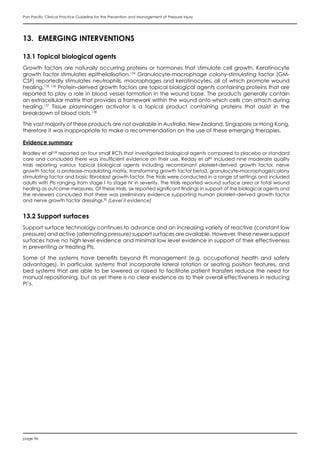
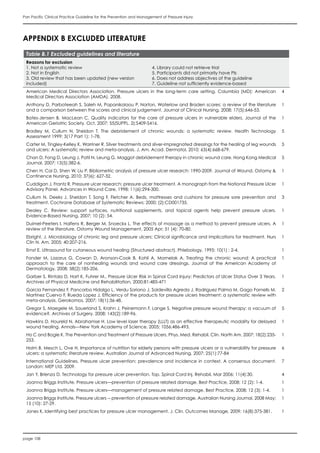
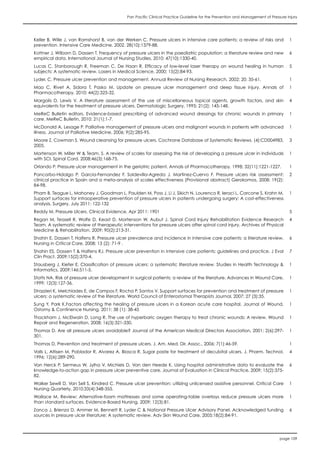
most feasible methodology would be to base the guideline of level I evidence8
and use appropriate
existing guidelines as primary references for the guideline, particularly in clinical areas for which no level
I evidence8
was available .
Existing PI guidelines were identified through a search of the National Guidelines Clearing House, those
identified in the literature searches and those known to the Guideline Development Steering Committee.
Guidelines were selected for appraisal if they were evidence-based, addressed the focus of the current
project and were published since January 2005. Identified guidelines that were excluded from the
appraisal process are listed in Appendix B. Selected guidelines were appraised using the Appraisal
of Guidelines for Research and Evaluation (AGREE) instrument (http://www.agreecollaboration.org/).
The AGREE instrument includes 21 questions (each assessed on a 4-point Likert scale) organised into six
quality domains:
•	 scope and purpose,
•	 stakeholder involvement,
•	 rigour of development,
•	 clarity and presentation,
•	 applicability, and
•	 editorial independence.
Each guideline was assessed by two reviewers and an overall percentage for each domain was
calculated using the formula outlined in the AGREE tool. The identified guidelines assessed using the
AGREE tool and the results are presented in Table 4.1.
page 20
Pan Pacific Clinical Practice Guideline for the Prevention and Management of Pressure Injury
Table 4.1 – AGREE scores of appraised existing pressure injury guidelines
(guidelines shaded white are those selected for use in the development of this guideline)
Guideline
Domain 1.
Scope &
purpose
Domain 2.
Stakeholder
involvement
Domain 3.
Rigour of
development
Domain 4.
Clarity &
presentation
Domain 5.
Applicability
Domain 6.
Editorial
independence
NPUAP/EPUAP,
20094
75% 81% 66% 88% 25% 63%
Queensland
Health, 200817
29% 56% 28% 25% 25% 25%
Whitney et al,
200618
63% 44% 25% 81% 25% 44%
ICSI, 201019
63% 63% 46% 26% 81% 88%
RNAO, 200720
100% 91% 96% 100% 92% 63%
Stechmiller et
al, 200821
33% 38% 39% 50% 25% 25%
Stockton et al,
200922
75% 38% 57% 44% 25% 88%
Pace et al,
200723
and the
TTDWCG
2011 update5, 23
100% 38% 86% 100% 92% 100%
WOCNS, 20106
50% 44% 64% 100% 25% 88%
The following guidelines were selected as primary sources of information for the following reasons:
•	 The National Pressure Ulcer Advisory Panel and European Pressure Ulcer Advisory Panel (NPUAP/
EUPAP) guideline4
was developed using a satisfactory level of rigour, was clearly presented and had
strong stakeholder involvement. The guideline included recommendations graded level A (based on
large RCTs with clear results), level B (based on clinical series evidence) or level C (indirect evidence
or consensus opinion).
•	 The Registered Nurses’ Association of Ontario (RNAO) guideline20
was developed using a very high
level of rigour, strong stakeholder involvement and was highly applicable. The guideline included
recommendations graded Ia (evidence from SRs of RCTs), Ib (at least one RCT), IIa (non-randomised
trials), IIb (non-randomised quasi-experiments), III (descriptive studies) and IV (consensus opinion).
•	 The Trans Tasman Dietetic Wound Care Group (TTDWCG) guideline5
(early edition by Pace et al23
)
was developed using a high level of rigour, was clearly presented and was highly applicable. It
provided guidance in areas where there was less evidence available from systematic reviews. The
guideline included recommendations graded using the NHMRC grading system.
•	 The Wound Ostomy and Continence Nurses Society (WOCNS)6
guideline had a satisfactory level of
rigour, was clearly presented and included appropriate tools, and was the most recently published
relevant guideline. The guideline included recommendations graded level A (based on two or more
RCTs or higher level evidence), level B (non-randomised trials or controlled trials) and level C (case
series or expert opinion).
The graded recommendations from these guidelines and the evidence underpinning them are
presented in the evidence summaries throughout this guideline and were considered in the grading of
the recommendations. The consensus recommendations from these guidelines were considered in the
development of the practice points.
4.2 Identification, appraisal and synthesis of new evidence
4.2.1 Search strategy
Searches were conducted for systematic reviews (SRs) that provided Level I evidence8
on the
prevention, assessment and management of PIs. The search was performed in OVID Medline, OVID
Embase, OVID CINAHL, the Cochrane library, the Australian Wound Management Association journal,
and reference lists of included reviews for English language publications from January 1980 to March
Pan Pacific Clinical Practice Guideline for the Prevention and Management of Pressure Injury
page 21
2011. The database search of MEDLINE, EMBASE and CINAHL combined search terms describing PIs
using filters for systematic reviews to limit the identified evidence to that of a high level. Relevant SRs
published between March 2011 and August 2011 was identified on an ad-hoc basis by members of the
Guideline Development Steering Committee. The search strategies are provided in full in Appendix C.
4.2.2 Inclusion/exclusion criteria
Types of studies
Studies that provide Level I evidence on the NHMRC Levels of evidence scale8
(see Table 4.2) were
considered for inclusion.
Types of participants
The review included research conducted in participants with PIs and participants considered at risk
of developing PIs. There were no age restrictions or restrictions to specific clinical settings; however
participants with mucosal PIs were excluded.
Table 4.2 – NHMRC levels of evidence8
Level Intervention Diagnosis
I Evidence obtained from a systematic review of
all relevant randomised, controlled trials
A systematic review of level II studies
II Evidence obtained from at least one properly
designed, randomised, controlled trial
A study of test accuracy with independent blinded
comparison with a valid reference standard,
among consecutive patients with a defined clinical
presentation
III –1 Evidence obtained from well-designed,
pseudo-randomised, controlled trials (alternate
allocation or some other method)
A study of test accuracy with independent blinded
comparison with a valid reference standard,
among non-consecutive patients with a defined
clinical presentation
III –2 Evidence obtained from comparative studies
with concurrent controls and allocation not
randomised (cohort studies), case-control
studies, or interrupted time series with a control
group
A comparison with reference standard that
does not meet the criteria for Level II or Level III-1
evidence
III –3 Evidence obtained from comparative studies
with historical control, two or more single-arm
studies, or interrupted time series without a
parallel control group
Diagnostic case–control evidence
IV Evidence obtained from case series, either post-
test or pre-test and post-test
Study of diagnostic yield (no reference standard)
Types of interventions
Evidence defined as falling within, but not limited to, the following categories was considered for
inclusion:
•	 Interventions: positioning, support surfaces, nutrition, education, health professional training and
competency, pharmacological management, complementary and/or alternative treatments,
wound management products, hyperbaric oxygen, psychosocial interventions, education and pain
management strategies.
•	 Diagnosis and assessment: risk assessment, PI assessment tools, pain assessment, health professional
education and competency, PI staging scales.
Types of outcomes
Outcome measures of interest included:
•	 Outcomes assessing wound response to the intervention: time to complete wound healing, change
in wound size, proportion of PIs healed, prevention of recurrence (e.g. number of new PIs developed
in trial period).
page 22
Pan Pacific Clinical Practice Guideline for the Prevention and Management of Pressure Injury
•	 Other outcomes related to the intervention: quality of life and global assessments, functional
outcomes, pain, compliance with therapy.
•	 Adverse events.
4.2.3 Critical appraisal
All SRs were critically appraised by two reviewers. A third reviewer appraised all papers to ensure
consistency in appraisal between reviewers. Discrepancy in appraisal was resolved through discussion
between the three reviewers until a consensus was reached. Critical appraisal tools developed by the
Scottish Intercollegiate Guidelines Network (SIGN) (www.sign.ac.uk/methodology/checklists.html) were
used to appraise all the research. The SIGN tool allows assessment against key indicators of quality
including:
•	 a well-defined clinical objective,
•	 description of methodology, including description of appropriate inclusion, criteria, systematic data
extraction and multiple reviewers,
•	 thorough and transparent search strategy,
•	 validity of included studies is appraised and reproducible,
•	 appropriate strategies are used for pooling and analysing results, and
•	 potential conflicts of interest are clearly reported.
Appendix D outlines the results of the critical appraisals and a summary of the volume, type and quality
of research included in each SR.
4.2.4 Data extraction
One reviewer systematically extracted the data from all studies using a data extraction tool that
combined NHMRC data extraction8
suggestions with information collected using the SIGN checklist
tools. Data from included studies was presented in evidence summaries.
4.2.5 Identified research
Over 200 relevant reviews and guidelines were identified in the initial searches. Papers were initially
selected for inclusion based on the title and/or the abstract by one reviewer and overseen by the Chair
of the Guideline Development Steering Committee. As shown in Figure 4.1, a total of 108 papers and
guidelines were identified for retrieval. Research subsequently excluded following initial identification is
presented in Appendix B.
Pan Pacific Clinical Practice Guideline for the Prevention and Management of Pressure Injury
page 23
Figure 4.1 – Review process
12 GUIDELINES
IDENTIFIED FOR
POTENTIAL
INCLUSION
EXCLUDED 52 SRs
2 replicated data
33 not SR
6 not PI populations
2 language other than English
4 did not address review questions
5 unable to access data
INCLUDED EVIDENCE
BASED GUIDELINES
4
PAPERS IDENTIFIED IN INITIAL SEARCHES
191 systematic reviews (SR)
12 clinical guidelines
SRs IDENTIFIED FOR
APPRAISAL
96
INCLUDED SRs
44
TITLES/ABSTRACTS REVIEWED FOR
INCLUSION CRITERIA
EXCLUDED 3 GUIDELINES
Not evidence-based
clinical guidelines or no
access
9 GUIDELINES
APPRAISED USING
AGREE TOOL
EXCLUDED 5 GUIDELINES
Insufficiently rigorous or low
AGREE score on other
domains
4.3 Development and grading of recommendations
The Guideline Development Steering Committee and Guideline Development Groups used the best
available evidence from SRs and existing clinical guidelines, together with their expert opinion to
develop recommendation statements relevant to health care practice within Australia, New Zealand,
Singapore, Hong Kong and other Pan Pacific countries.
The evidence from SRs and clinical guidelines was collated into evidence summaries, presented
throughout the guideline. A body of evidence assessment matrix outlined in NHMRC levels of evidence
and grades for recommendations for developers of guidelines8
(Table 4.3) was used to assess the
volume and consistency of evidence supporting each recommendation; as well as the clinical impact,
generalisability and applicability.
The body of evidence supporting each recommendation was given a final grading (Table 4.4)
representing its overall strength. The grades reflect the confidence and trust health professionals can
have when implementing recommendations in clinical practice.
page 24
Pan Pacific Clinical Practice Guideline for the Prevention and Management of Pressure Injury
Table 4.3 - Body of evidence assessment matrix8
Component#
A B C D
Excellent Good Satisfactory Poor
Evidence base Several level I
or level II studies
with low risk of
bias
One or two level
II studies with low
risk of bias or a SR
of multiple level III
studies with low risk
of bias
Level III studies with low
risk of bias or level II
studies with moderate
risk of bias
Level IV studies or level
I to III studies with high
risk of bias
Consistency All studies
consistent
Most studies
consistent and
inconsistencies may
be explained
Some inconsistency
reflecting genuine
uncertainty around
clinical question
Evidence is inconsistent
Clinical Impact Very large Substantial Moderate Slight or restricted
Generalisability Population/s
studied in body
of evidence
are the same
as the target
population for
the guideline
Population/s
studied in the body
of evidence are
similar to the target
population for the
guideline
Population/s studied in
the body of evidence
different to the target
population for the
guideline but it is
clinically sensible to
apply this evidence to
the target population
(e.g. results in adults that
are clinically sensible to
apply to children)
Population/s studied in
the body of evidence
different to the target
population for the
guideline and hard
to judge whether it is
sensible to generalise to
the target population
Applicability* Directly
applicable
to Australian
healthcare
context
Applicable
to Australian
healthcare context
with few caveats
Probably applicable to
Australian healthcare
context with some
caveats
Not applicable to
Australian healthcare
context
#
Where the component was unable to be graded, U (unknown) was recorded.
*Applicability to the context in other Pan-Pacific countries was also considered.
Table 4.4 – Recommendation grades8
Evidence based recommendations
A Excellent evidence - body of evidence can be trusted to guide practice
B Good evidence - body of evidence can be trusted to guide practice in most situations
C Some evidence - body of evidence provides some support for recommendation(s) but care should be
taken in its application
D Weak evidence - body of evidence is weak and recommendation must be applied with caution
Consensus based recommendations (CBR)
CBR
Consensus evidence – a graded recommendation could not be made due to a lack of evidence from
SRs. Consensus recommendations are generally supported by international consensus from existing PI
guidelines. The CBRs are supported by all members of Guideline Development Steering Committee.
The overall grade was reached through discussion within Guideline Development Groups until majority
consensuswasreached.TheGuidelineDevelopmentSteeringCommitteereviewedallrecommendations
and grading and added further consensus. Unequivocal consensus was reached on the inclusion and
grading of all the recommendation statements.
Each grading is based on a summation of the grading of individual components represented in the
body of evidence assessment matrix. In reaching an overall grade, recommendations were not graded
A or B unless the volume and consistency of evidence components were both graded either A or B.8
The wording of recommendation statements was designed to reflect their message and the grade of
evidence supporting the recommendation statement.
Evidence based graded recommendations are shaded in red throughout the guideline.
Pan Pacific Clinical Practice Guideline for the Prevention and Management of Pressure Injury
page 25
4.3.1 Process for consensus based recommendations
Consensus based recommendations have been made for areas in which no high level research
conducted in populations with PIs was identified in the literature search. These recommendations address
topics considered important by the Expert Working Committee and/or identified in the evidence-based
guidelines used as primary resources.
The NHMRC grading system does not recognise non-analytical studies, discussion, case studies or
opinion of experts, therefore fields for which this is the best available evidence fall outside the grading
system. A full search for these lower levels of evidence was not conducted; however, consensus based
recommendations in the evidence-based guidelines used as primary resources and evidence-based
guidelines conducted in similar populations (e.g. patients with chronic wounds) have been used to
support the expert opinion recommendations.
AfterconductingthefullliteraturesearchesandfailingtolocateSRs,theexpertopinionrecommendations
were developed through group discussion and email. Discussion continued until consensus was reached
regarding topics appropriate to include and the content of each recommendation.
Consensus based recommendations are shaded in blue throughout the guideline.
4.3.2 Development of practice points
Most recommendations are accompanied by practice points to assist clinicians to implement the
recommendation. The practice points were developed by the Expert Working Committee and reflect
their considerable experience in assessing and managing PIs in a range of clinical settings. A full search
of the literature was not conducted for each practice point. Practice points are supported by:
•	 studies and evidence-based guidelines included in the review,
•	 manufacturer product information, and
•	 evidence beyond the scope of the literature review (e.g. guidelines referring to general management
of chronic wounds).
4.4 Limitations of the guideline
4.4.1 Topical preparations and wound dressings
The literature search was not designed to retrieve safety trials for wound care therapies including
dressings, antimicrobials and other topical preparations. The guideline does not seek to provide full
safety and usage information; however commonly available safety and usage tips have been included.
Adverse events reported in the research included in the review have been reported in the evidence
summaries and caution statements. The Guideline Development Steering Committee recommends
consulting the National Prescribing Service (www.nps.org.au), Australian Therapeutic Guidelines (www.
tg.org.au) or New Zealand Medicines and Medical Devices Safety Authority (www.medfsafe.govt.nz)
for detailed product information. All products should be used according to manufacturer’s directions.
4.4.2 Search date and strategy
The guideline is based on SRs published from January 1980 to March 2011. The guideline is also based
on international evidence-based guidelines published from January 2005 scoring highly on the AGREE
tool. Evidence published before and after these dates has not been reviewed or considered for the
guideline.
The search was limited to NHMRC level I evidence (SRs) and existing evidence-based guidelines. The
Guideline Development Steering Committee acknowledges that other evidence may exist (e.g. RCTs
or cohort studies not reported in the included SRs); however the evidence-based recommendations in
the guideline are based on recent, well conducted SRs that report a comprehensive overview of the
available evidence.
4.4.3 Outcome measures
The outcome measure most frequently reported in the evidence was “healing of PIs”. The Guideline
Development Steering Committee acknowledges that some products or interventions may have
page 26
Pan Pacific Clinical Practice Guideline for the Prevention and Management of Pressure Injury
other beneficial outcomes (e.g. preparing the wound bed for other treatments) that have not been
investigated or reported in the research. The Guideline Development Steering Committee has attempted
to address this in the practice points.
4.4.4 Lack of evidence
For some interventions there was limited evidence from which to draw conclusions on potential
effectiveness. These interventions have received a lower grade due an insufficient body of evidence at
this stage. The Guideline Development Steering Committee considered a single low quality trial to be
insufficient evidence on which to make a recommendation.
Some interventions may provide benefit for outcomes that have not been addressed in the research
(e.g. patient well-being). The Guideline Development Steering Committee acknowledges that lack of
evidence is not evidence of lack of effect.
Some interventions were not supported, or received a lower grade, because research indicated there
was a lack of effect. The Guideline Development Steering Committee acknowledges that this refers to
lack of evidence of effect over placebo or standard therapy. That is: patients may receive beneficial
outcomes from the intervention; however, these outcomes do not exceed beneficial effects that can
be expected from a placebo therapy or standard care.
4.5 Consultation
A draft version of the Pan Pacific Clinical Practice Guideline for the Prevention and Management
of Pressure Injury was presented to the AWMA General Committee and nominated membership for
comment and feedback. Similar processes were followed by New Zealand, Singapore and Hong Kong
partners. These groups consist of professionals representing all major fields of health care including general
practice, specialist medical and surgical fields, nursing, nutrition, occupational therapy, physiotherapy,
podiatry, education and wound care.
In October 2011 the draft version of the Pan Pacific Clinical Practice Guideline for the Prevention and
Management of Pressure Injury was presented at a public forum in Canberra and placed on the AWMA
website. The public was informed of the draft guideline and the consultation period was announced
at the forum, in The Australian newspaper and on the website. Known stakeholders and peak body
groups representing health professionals were sent invitations to review the material. Feedback was
collated and the AWMA Guideline Development Steering Committee made appropriate changes to
the guideline based on the comments received and related available evidence.
The Guideline Development Steering Committee would like to thank all the all respondents who provided
feedback during the consultation phase including:
Dietitians Association of Australia Malnutrition Guideline Steering Committee
College of Nurses Aotearoa (NZ) Inc
Mary Potter Hospice Team
RBWH PUP Committee
ArjoHuntleigh
Queensland Pressure Injury Collaborative
Alana Baker, Clinical Dietitian, Auckland, NZ
Andrea Mears
Anna Campbell, Wound Care Waikato DHB
Associate Professor Andrew Jull, School of Nursing University of Auckland
Brenda Sando
Colleen O’Brien-Malone, Occupational Therapist, WA
Catherine Hammond, Clinical Nurse Specialist Wound Care, Christchurch, NZ
Annette Findlay, Quality and Risk Coordinator and Maori Cultural Advisor, Christchurch, NZ
Adrian Te Patu, Maori Cultural Advisor, Christchurch, NZCatherine Sharp, Consultant
Dr David Huber, Chief of the Department of Vascular Surgery, Illawarra Health Area Service
Dr Robert Carter
Mr Anthony Warr
Julie Betts, NP Wound Care, Waikaot DHB New Zealand
Kathy Lynch
Mandy Pagan
Pan Pacific Clinical Practice Guideline for the Prevention and Management of Pressure Injury
page 27
Margaret Gosnell, Nurse Educator, Whanganui Dstrict Health Board
Marianne Mackenzie
Michael Nestmann
Pip Rutherford
Sally Sutherland-Fraser, Clinical Nurse Consultant, Victoria
Suzanne Kapp, RN, Vctoria
Suzanne Jackson
Wendy White
Jane Edwards
M. Smith
Diane Hishon, Wound Care Advisor; Ambulatory Nurse Educator; RN
Sue Templeton, Nurse Practitioner (Wound Mmt)
4.6 Dissemination
The final version of the 2012 edition of the Pan Pacific Clinical Practice Guideline for the Prevention and
Management of Pressure Injury has been made publicly available on the following websites:
•	 AWMA website (free access), http://www.awma.com.au/
•	 New Zealand Wound Care Society website (free access), www.nzwcs.org.nz/
•	 Wound Healing Society (Singapore) www. woundhealingsociety.org.sg.
An abridged version and a consumer version of the guideline are planned for development and
dissemination.
page 28
Pan Pacific Clinical Practice Guideline for the Prevention and Management of Pressure Injury
5.	 PRESSURE INJURY RISK ASSESSMENT
5.1 Clinical questions
What strategies or tools for assessing the risk of PIs have been reported in systematic reviews and
evidence-based clinical guidelines?
Which of these strategies or tools provide a reliable and valid method of assessing PI risk?
5.2 Factors associated with an increased risk of pressure injury
An imperative in the prevention of PIs is the assessment and identification of patients at risk and
implementation of an individualised prevention plan. Risk assessment includes consideration of both
patient and environmental factors that are associated with the development of PIs.
A risk factor is any factor that either contributes to increased exposure of the skin to excessive pressure
or diminishes the skin’s tolerance to pressure (see Figure 5.1). The literature search was not designed
to retrieve research on factors associated with PI risk; however one SR provided evidence related to
patients with spinal cord injury (SCI). Risk factors were presented in previously published guidelines.
Figure 5.1 Factors associated with increased risk of pressure injury24
5.2.1 Increased exposure to pressure
Risk factors that increase exposure of the skin to pressure are related to impaired mobility, activity or
sensory perception, all of which reduce the patient’s ability to change their body position in order to
reduce pressure. Numerous prospective and retrospective studies have identified specific factors that
fall into these categories including, but not limited to:1, 6
•	 spinal cord injury (SCI),
•	 stroke,
•	 multiple sclerosis,
•	 trauma (e.g. fracture),
•	 obesity,
•	 diabetes,
•	 cognitive impairment,
Pan Pacific Clinical Practice Guideline for the Prevention and Management of Pressure Injury
page 29
•	 medication use (e.g. sedatives, hypnotics and analgesics), and
•	 surgery.
5.2.2 Reduction in tissue tolerance
Tissue tolerance is the ability of the skin and its supporting structures to tolerate the effects of pressure
by acting as a cushioning and transferring pressure loads from the skin surface to the skeleton. In the
presence of pressure, both extrinsic and intrinsic factors influence tissue tolerance.1
Extrinsic factors
Shear, friction and moisture all impact on the ability of skin to tolerate pressure. Shear is a mechanical
force created from a parallel (tangential) load that causes the body to slide against resistance between
the skin and a contact surface. The outer layers of the skin (the epidermis and dermis) remain stationary
while deep fascia moves with the skeleton, creating distortion in the blood vessels and lymphatic
system between the dermis and deep fascia. This leads to thrombosis and capillary occlusion. Shear is a
mechanical force created from parallel loads that cause the body to slide against resistance between
the skin and a contact surface. The outer layers of the skin (the epidermis and dermis) remain stationary
while deep fascia moves with the skeleton, creating distortion in the blood vessels between the dermis
and deep fascia. This leads to thrombosis and capillary occlusion.1, 6, 7
Friction is a mechanical force that occurs when two surfaces move across one another, creating
resistance between the skin and contact surface that leads to shear.1, 4, 6
Moisture alters resilience of the epidermis to external forces by causing maceration, particularly when
the skin is exposed for prolonged periods. Moisture can occur due to incontinence, wound exudate and
perspiration. Some forms of moisture, particularly faecal incontinence, create added risks by exposing
the skin to bacteria and enzymes that raise the skin pH.1, 4, 6
Intrinsic factors
Intrinsic factors reduce the skin’s tolerance through impacting its supporting structures, vascular and
lymphatic system.
Advancing age is the demographic characteristic most associated with an increased risk of PI. Patients
aged over 65 years are at a greater risk, and the risk increases in those aged over 75 years.1, 4, 6
While
some studies have identified men and Caucasians at increased risk,1
there is no consensus on the role of
these demographic characteristics.4, 25
In a SR on risk factors in patients with SCI, males were more likely
to develop PI in the chronic phase of SCI (eight studies, odds ratio [OR] 1.3, 95% CI 1.1 to 1.7). Age and
ethnicity appeared unrelated to PI risk in this population.26, 27
Chronic illnesses that influence tissue perfusion, the lymphatic system and sensation also increase PI risk.
In addition, illness and conditions that impair oxygen delivery to the tissues are also associated with an
increased PI risk. In patients in the chronic phase of SCI, past history of deep vein thrombosis, lower limb
fracture and pneumonia were all identified as risk factors for PI.27
Chronic illnesses and conditions that
impair oxygen delivery, tissue perfusion, sensation and/or lymphatic function identified as increasing PI
risk include, but are not limited to:1, 6
•	 diabetes mellitus,
•	 carcinoma,
•	 peripheral arterial disease,
•	 cardiopulmonary disease,
•	 lymphoedema,
•	 renal impairment or failure,
•	 low blood pressure,
•	 circulatory abnormalities,
•	 anaemia and
•	 smoking.
page 30
Pan Pacific Clinical Practice Guideline for the Prevention and Management of Pressure Injury
Elevation in skin temperature has also been associated with increased PI risk, although the mechanism
is not understood. It may relate to an increased oxygen demand in already compromised tissue.1
Impaired nutritional status and dehydration are both intrinsic factors that increase the risk of PI. This
includes factors such as recent weight loss, malnutrition and inadequate protein or energy intake.1, 4, 6
Poor nutrition and hydration are also related to dry skin and decreased skin turgor, which increase PI risk.
5.3 Identifying patients at risk of pressure injury
Patients exhibiting the above risk factors have an increased risk of PI. These risk factors are not
independent, and presence of multiple risk factors increases risk. Identification of risk factors is essential
in order to develop a comprehensive PI prevention plan.
Assessment should be conducted and documented by an experienced health professional. Assessment
should include a clinical and psychosocial history, a focused physical assessment for factors that affect
healing, nutritional assessment.4, 20
Evidence summary
The WOCNS guideline6
included level C recommendations that a PI risk assessment include an assessment of intrinsic
and extrinsic factors associated with PI risk including clinical history, past history, immobility, continence, nutritional
status and factors that may impede healing. (Consensus)
The NPUAP/EPUAP guideline4
included an ungraded recommendation to consider nutrition, factors that influence
perfusion and oxygenation, skin moisture, age, friction and shear, sensory perception, body temperature and
general health status when performing a PI risk assessment. (Consensus)
The RNAO guideline20
provided a level IV recommendation to conduct a history and focused physical assessment
of patients presenting with a PI. (Consensus)
Recommendation 1
Conduct a comprehensive assessment for all patients to identify pressure injury risk factors.
A comprehensive assessment should include:
•	 clinical history,
•	 pressure injury risk scale,
•	 skin assessment,
•	 mobility and activity assessment,
•	 nutritional assessment,
•	 continence assessment,
•	 cognitive assessment,
•	 assessment of extrinsic risk factors.
CBR
Practice points for risk assessment
•	 Assessment of extrinsic factors should include the impact of environmental factors on pressure, shear
and microclimate (e.g. local heating, air-conditioning, electric blankets).4, 6
•	 Findings of a comprehensive assessment should be used to inform development of a PI prevention
plan.
•	 Risk assessments should be conducted as soon as possible after admission and within a minimum
of eight hours of admission (or on initial home or clinic visit for patients seen in the community). Risk
assessments should be repeated whenever there is a change in the patient’s condition and on the
patient’s discharge.28
•	 Patients presenting with an extremity PI (particularly on the lower limb) should have a vascular
assessment to identify co-morbidities. This could include:4, 29
•	 Doppler ultrasound measurement of ankle brachial pressure index (ABPI),
•	 Toe brachial pressure index (TBPI), and/or
•	 Pulse oximetry.
•	 Consider the following patients to be at risk of PIs:1, 4
Pan Pacific Clinical Practice Guideline for the Prevention and Management of Pressure Injury
page 31
•	 Patients with reduction in mobility or activity that prevents independent movement or position
change to relieve pressure (e.g. patients with SCI or CVA).1, 4, 6
•	 Patients with alterations to intact skin.1, 4
•	 Neonates and young children, particularly in the occipital region.6
•	 Patients using equipment or devices that come in close contact with the skin (e.g. orthotics, casts,
intravenous devices, continuous positive airway pressure equipment).6
•	 Adults aged over 65 years, particularly those with restricted mobility.6
Documentation
•	 Document all risk assessments, including risk factors and at risk status as soon as possible after
admission and within a minimum of eight hours (or on initial home or clinic visit for patients seen in the
community), and whenever there is a change in the patient’s condition.1, 4
•	 Include the date and time the risk assessment was conducted.
5.4 Risk assessment scales
Although used frequently in practice, there is minimal-to-no evidence on the effectiveness of PI risk
assessment scales (also referred to as risk assessment tools) in reducing PI incidence. Indirect evidence
suggests that implementing preventative management interventions reduces PI incidence. As most
preventative interventions are initiated as a result of a risk assessment (either formal or the health
professional’s clinical judgement), indirect evidence suggests that use of a PI risk assessment tool
reduces the risk of PI development. The most commonly used assessments tools for adults include the:
•	 Braden Scale for Predicting Pressure Sore Risk© (Braden Scale),30
•	 Norton Scale©,31
and
•	 Waterlow Score©.32
Additional scales are also available for specific adult populations, including the Glasgow Scale and
Cubbin and Jackson Scale, both for patients in the intensive care unit. Appendix E contains a list of
population-specific PI risk assessment scales.
5.4.1 Braden Scale
The Braden Scale (see Appendix F) includes a 3- or 4-point Likert scale for assessment of each of six
clinical risk factors for PIs: sensory perception, moisture, activity, mobility, nutrition, friction and shear.
A cumulative score is used to qualify the patient’s PI risk as low, moderate or high.30
The Braden Scale
includes descriptive operators for each Likert point, which may relate to its higher inter-rater reliability.33
5.4.2 Norton Scale
The Norton Scale (see Appendix G) includes 4-point Likert scales for each of five clinical factors for PI
risk: physical condition, mental condition, activity, mobility and incontinence. A cumulative score is
calculated and patients scoring above 14 are considered to be at risk of PIs.31
The scale includes single
word qualifiers for each Likert point, reducing clarity factors to consider when assessing each clinical
factor.
5.4.3 Waterlow Score
Revised in 2005, the Waterlow Score (see Appendix H) includes nine clinical categories, some of which
include a two-step assessment (e.g. malnutrition). Each category includes specific scores for each
descriptor (i.e. not on a Likert scale). Clinical categories include height and build for weight, skin type
of visual risk areas, gender and age, malnutrition screening, continence, mobility, tissue malnutrition,
neurological deficit and major surgery or trauma. Each category includes options with brief descriptors,
fully described in a training manual. A cumulative score is used to identify patients as at risk, at high risk
or at very high risk of PIs.32
page 32
Pan Pacific Clinical Practice Guideline for the Prevention and Management of Pressure Injury
5.4.4 Reliability and validity of pressure injury risk assessment scales for adults
Evidence is available on the reliability and validity of specific risk assessment scales as presented detail
in in the Evidence summary below. Findings from a meta-analysis indicated that the Braden Scale had
the strongest reliability and clinical judgement had the lowest reliability (Table 5.1). However, fewer
studies investigated clinical judgement, and studies have shown that health professionals who use
clinical judgement as a sole assessment of risk are more likely to incorporate a holistic assessment of the
patient, considering up to 35 clinical factors not included on formal assessment scales.
Table 5.1 Reliability and validity of pressure injury risk assessment tools for adults33
Scales Sensitivity Specificity PPV Odds ratio 95% CI
Braden 57.1*
67.5*
22.9*
4.8+
2.56 to 6.48
Norton 46.8¥
61.1¥
8.4¥
2.16#
1.03 to 4.54
Waterlow 82.4&
27.4&
16.0&
2.05§
1.11 to 3.76
Clinical judgement 50.6#
60.1#
32.9#
1.69#
0.76 to 3.75
*
20 studies, n=6643
+16 studies, n=5847
&
6 studies, n=2246
§
5 studies, n=2215
¥
5 studies, n=200
8#
3 studies, n=302
5.4.5 Reliability and validity of pressure injury risk assessment scales for children
One review34
reported 12 paediatric PI risk assessment scales, including modifications of the Braden
Scale33
and adaptations of the Waterlow Scale.32
Other scales had been developed using the Delphi
technique, consensus opinion or findings from literature reviews. Of the presented instruments, only three
had been tested for diagnostic accuracy, and five had been tested for inter-rater reliability and validity
(see Table 5.2). Scales that had received some form of performance testing included the:
•	 Neonatal Skin Risk Assessment Scale for Predicting Skin Break down (NSRAS),
•	 Braden Q,
•	 Burn Pressure Ulcer Skin Risk Assessment Scale (BPUSRAS),
•	 Starkid Skin Scale, and
•	 Glamorgan Scale.
Table 5.2 Reliability and validity of pressure injury risk assessment tools for children34
Scales Population Sensitivity Specificity PPV Inter-rater reliability
NSRAS Neonate 0.83 0.81 0.50 r= –0.27 to 1.00 across items
Braden Q Paediatric
intensive care
0.88 0.58 0.15 —
BPUSRAS Paediatric
intensive care
(burns)
0.54 0.95 0.80 ICC=0.99
Starkid Skin scale Paediatric — — — r=0.85 for total score
Glamorgan scale Paediatric — — — 100% agreement
r = Pearson’s r ICC = intraclass correlation
Evidence summary
One Cochrane review35
investigated whether the use of a structured risk assessment scale was associated with a
decreased incidence of PIs (in any health care setting). Only one low quality RCT met the inclusion criteria. The
study compared the effectiveness of staff training and use of the Braden Scale compared to staff training and an
unstructured risk assessment. The trial was conducted in a military hospital in Saudi Arabia (n=256) over an eight
week period and found no significant difference in the incidence of PIs between patients randomly assigned to
each assessment technique (RR 0.97, 95% CI 0.53 to 1.77, p=not reported). The review concluded there is no good
quality evidence showing that a structured risk assessment scale is associated with a lower incidence of PIs than an
unstructured assessment, if staff have appropriate training.35
(Level II evidence)
Pan Pacific Clinical Practice Guideline for the Prevention and Management of Pressure Injury
page 33
Braden Scale
The validity and reliability of the Braden Scale has been reported extensively. One SR33
included 22 validation
studies. The majority of validation studies were conducted in in-patient hospital settings, with a few conducted in
home care environments. The scale is reported to have a high inter-rater reliability r=0.83 to 0.99), which the review
authors proposed as being related to strong operational definitions included in the tool. Sensitivity of the Braden
Scale ranged from 38.9% to 100% and specificity ranged from 26% and 100%. Positive predictive value (PPV) ranged
from 4.5% to 100%. Meta-analysis of the findings indicated that the Braden Scale is the most reliable structured risk
assessment scale (see table 5.1).(Level III evidence)
Norton Scale
One SR33
included two studies that reported on the reliability and validity of the Norton Scale, both conducted in
hospital settings. Both trials reported a high inter-rater reliability. Sensitivity of the scale ranged from 16% to 81% and
specificity ranged from 31% to 94%. Positive predictive value ranged from 7.1% to 98.3%. (Level III evidence)
Waterlow Scale
One SR36
investigated the rater reliability of the Waterlow Score. The review included eight studies (three described
as good quality) that investigated inter or intrarater reliability of either individual items on the Waterlow Score, or
reliability of the overall score. Across the studies raters included registered nurses, enrolled nurses, student nurses,
trained raters and research personnel. Four of the studies were conducted in clinical practice settings. The study
found that there was often disagreement between raters; however, when differences of only one or two points
were considered acceptable, concordance was between 11% and 86%. The largest discrepancies were apparent
on the items for mobility, nutrition and skin type, possibly due to the poor operational definition provided with the
tool. The researchers suggested that rater reliability could be higher in raters who had received training in use of the
scale; however this hypothesis was not analysed in the review. The SR raised the important issue of rater reliability
and its influence on overall scoring on the Waterlow Score. It was noted that depending upon individual scores, a
rater difference of only one point could achieve a different classification of risk for an item. Comparatively, it was
possible for raters to differ by three to four points but achieve the same classification. This raised limitations of relying
on a risk assessment classification to make clinical decisions on PI management.36
(Level III evidence)
Pancorbo-Hidalgo et al.33
included seven validation studies of the Waterlow Score. The studies were conducted
in a wide range of settings including hospitals, geriatric facilities, rehabilitation and home care. Only two of the
studies reported inter-rater reliability, both indicating a high correlation. Sensitivity of the score ranged from 75.8% to
100% and specificity ranged from 10.8% to 38%. Positive predictive value was reported as 33.3%. The low specificity
reduces the usefulness of the scale in clinical practice due to over-identification of patients as at-risk. (Level III
evidence)
Clinical judgement
Pancorbo-Hidalgo et al.33
reported results from three studies that investigated nurses’ clinical judgement as the
assessment for PI risk, none of which reported inter-rater reliability. Nurses were working hospital or geriatric settings.
Sensitivity and specificity were both moderate and the PPV was high. Meta-analysis of findings indicated clinical
judgement is a poor predictor of PI risk; however the experience and training of the nurses in these studies was not
reported. Other studies have shown that health professionals using clinical judgement alone consider more factors
when assessing PI risk. (Level III evidence)
Risk assessment scales for children
One SR34
focused on PI risk assessment scales for use in child populations. Fifteen papers that appeared to be of
moderate quality and reporting diagnostic accuracy, reliability and/or validity of paediatric PI risk assessment scales
were included. Although 12 risk assessment instruments were identified, only three were the subject of validation
trials—BPUSRAS, Glamorgan scale and Braden Q. Although four scales had been subjected to inter-rater reliability,
two papers used Pearson’s r, an inappropriate statistic for the study design. The findings are reported in Table 5.2.
The reviewers concluded that no specific paediatric PI risk assessment scale could be recommended over others.34
(Level III evidence)
The WOCNS guideline6
included a grade B recommendation supporting the use of risk assessment scales,
underpinned by the evidence presented in the Pancorbo-Hidalgo et al.33
review. The NPUAP/EPUAP4
also provides a
moderate grade recommendation in favour of validated risk assessment scales based on the evidence presented
above. (Level III evidence)
page 34
Pan Pacific Clinical Practice Guideline for the Prevention and Management of Pressure Injury
NHMRC grading matrix
Evidence base One MA including 36 level III studies C
Consistency Trials had consistency and inconsistencies could be explained by populations
and staff experience
B
Clinical impact Clinical impact of using a scale is unknown U
Generalisability Trials in populations with high risk of PI A
Applicability Applicable to all health care settings. A
Other factors None of the trials were conducted in Australian Indigenous populations, New Zealand Maori
populations or Pacific Island populations. It was unclear if trials included Asian populations.
Recommendation 2
Use a pressure injury risk assessment scale in conjunction with a comprehensive risk assessment
to determine the patient’s risk of pressure injury and to inform the development of a prevention
plan.
CBR
Recommendation 3
The Braden Scale, Norton Scale or Waterlow Score are validated and reliable scales for
assessing pressure injury risk in adults.
B
Recommendation 4
Use a paediatric risk assessment scale in conjunction with a comprehensive risk assessment
to determine a risk of pressure injury and to inform the development of a prevention plan for
children.
CBR
Practice points for using risk assessment scales
•	 Development of a PI prevention plan should be based on a risk assessment scale in conjunction with
a comprehensive risk assessment (see section 5.3).
•	 A risk assessment scale offers a structured approach to assessment, but does not replace a
comprehensive risk assessment.4, 6
•	 Use a risk assessment scale that is appropriate to the population (see Appendix E). Validated risk
assessment scales are included in the guideline appendices (see Appendix F, G and H).
•	 Risk assessments should be conducted as soon as possible following admission and within a minimum
of eight hours. Risk assessments should be repeated whenever there is a change in the patient’s
condition and on the patient’s discharge.28
Documentation
•	 Document all risk assessments, including risk factors and ‘at risk’ status as soon as possible following
admission and within a minimum of eight hours (or on initial home or clinic visit for patients seen
in the community). Document a new risk assessment whenever there is a change in the patient’s
condition.1, 4
•	 Document the date and time the risk assessment was conducted.
5.5 Skin assessment
Skin status is the most significant early indicator of the skin’s response to pressure exposure and the
ongoing risk of PI. As shown in Figure 5.1, numerous factors impact upon the skin and its underlying
structures to tolerate pressure exposure.
Evidence summary
The literature search did not identify any SRs reporting on the effectiveness of skin assessment strategies for identifying
PI risk.
The NPUPA/EPUAP guideline4
reported prospective and retrospective cohort studies and non-randomised trials
related to skin assessment. One prospective cohort trial (n=109) conducted in an acute care setting identified
non-blanching erythema as an independent risk factor for PI. One prevalence study identified skin tone as a factor
Pan Pacific Clinical Practice Guideline for the Prevention and Management of Pressure Injury
page 35
associated PI development, with patients exhibiting darker skin tones significantly more likely to develop stage II to
IV PIs (0.56 per person year versus 0.35 per person year in light skin tones). Another prevalence trial found stage I PIs
were less likely to be identified in patients with darker skin tones compared to those with light skin tones (13% versus
38%). Under-identification of early PI may be associated with the ease at which the skin can be visually assessed for
early signs. The NPUAP/EPUAP guideline provided a grade B recommendation that inspecting the skin for signs of
erythema, blanching response, localised heat and induration be conducted regularly. (Level III evidence)
The WOCNS guideline6
included a level C recommendation to conduct a head to toe skin assessment on the
patient’s admission to the service, with particular attention to bony prominences and high risk areas. (Consensus)
NHMRC grading matrix
Evidence base One evidence based guideline reporting level III studies of unknown quality C
Consistency The evidence was consistent that PIs increased when visual skin inspection was
more difficult.
A
Clinical impact Clinical impact of using a scale is unknown U
Generalisability Trials in populations with high risk of PI A
Applicability Applicable to all health care settings. A
Other factors None of the trials were conducted in Australian Indigenous populations, New Zealand Maori
populations or Pacific Island populations. It was unclear if trials included Asian populations.
Recommendation 5
Inspect the skin of all patients on admission and at each repositioning to identify indications
of pressure injury including:
•	 erythema,
•	 blanching response,
•	 localised heat,
•	 oedema,
•	 induration, and
•	 skin breakdown.
C
Practice points for skin assessment
•	 Conduct a head-to-toe skin assessment.
•	 Focus particular attention to skin overlying bony prominences including the sacral region, heels,
ischial tuberosities and greater trochanters.1, 4, 6
•	 Darker skin tones may be more difficult to assess visually. Pay particular attention to localised heat,
oedema and induration in patients with darker skin tones.4, 6
•	 Observe the skin for pressure damage related to medical devices (e.g. braces, splints, harnesses,
cervical collars, hip protectors). Where possible these devices should be removed to allow a
comprehensive skin assessment at least daily or more frequently in high risk patients.1, 6
•	 Ask the patient to identify areas of discomfort or pain associated with pressure and pay particular
attention to assessment of these areas.4
Documentation
•	 Document all skin assessments as soon as possible following admission and within a minimum of eight
hours (or on initial home or clinic visit for patients seen in the community), on a daily basis and whenever
there is a change in the patient’s condition.1, 4
5.6 Nutritional screening and assessment
Malnutrition significantly impacts healing and is a factor related to both the development of and
impaired healing of PIs. Nutritional screening promotes early identification of patients with or at risk
of malnutrition. The Mini Nutritional Assessment Short Form (MNA-SF) has been validated for nutritional
screening in populations with PIs.5
In addition, a range of nutritional screening tools (see Appendix E)
have been validated for use in different clinical settings.37
page 36
Pan Pacific Clinical Practice Guideline for the Prevention and Management of Pressure Injury
Patients who are identified as having malnutrition or being at risk of malnutrition should receive a
comprehensive nutritional assessment using a validated assessment tool37
(see Appendix E). These tools
usually include assessment of:
•	 weight, height and BMI,5, 6, 23
•	 history of unintended weight loss or gain,6
•	 food intake history,5, 6, 23
•	 dental and oral health,6
•	 swallowing difficulties,6
•	 drug/nutrient interactions,6
•	 ability to acquire and prepare food,
•	 cultural influences,6
and
•	 biochemistry investigations.5, 6, 23
The TTDWCG evidence-based guideline5, 23
suggested appropriate biochemical investigations to support
a nutritional assessment in patients with or at risk of PI include:5, 23
•	 electrolytes,
•	 creatinine,
•	 urea,
•	 albumin and/or pre-albumin,
•	 C reactive protein (CRP),
•	 total protein,
•	 transferrin,
•	 cholesterol,
•	 haemoglobin,
•	 vitamin B12,
•	 iron, and
•	 folate.
Evidence summary
The literature search did not identify any reviews reporting on nutritional assessment of patients with PIs.
The WOCNS guideline6
reported a cross-sectional study conducted at 1,087 international health facilities (including
acute, long term and home care). Facilities with existing nutritional guidelines were more likely to conduct nutritional
screening (p<0.001). The guideline included a consensus recommendation to use a validated tool such as the
Mini Nutritional Assessment (MNA) to assess the nutritional status of all patients on admission to a service. (Level III
evidence)
The TTDWCG evidence-based guideline5, 23
provided Grade B recommendations that nutritional screening and
assessment of patients with a PI should be conducted using validated nutritional screening and assessment tools
appropriate to the clinical setting. The guideline reported that the Mini Nutritional Assessment Short Form (MNA-
SF) has been validated for screening patients with PIs. Other nutritional screening tools have been validated for
use in a range of clinical settings. The guideline recommended that a nutritional assessment include weight, BMI,
anthropometry, biochemistry and food intake. (Level III evidence)
Pan Pacific Clinical Practice Guideline for the Prevention and Management of Pressure Injury
page 37
NHMRC grading matrix
Evidence base Level I, II and III studies reported in an evidence-based guideline
NHMRC grade B recommendation from an evidence-based guideline for
screening tools.
NHMRC Level C recommendation from an evidence based guideline for
assessment tools.
B
Consistency Findings were consistent A
Clinical impact Clinical impact is unknown but likely to be high U
Generalisability Validation trials were conducted in populations with existing PIs. A
Applicability Applicable to all health care settings. A
Other factors None of the trials were conducted in Australian Indigenous populations, New Zealand Maori
populations or Pacific Island populations. It was unclear if trials included Asian populations.
Recommendation 6
Conduct nutritional screening and assessment using validated screening and assessment
tools appropriate to the population and clinical setting.
B
Practice points for nutritional assessment
•	 Consider referring patients to a dietitian for nutritional screening and assessment.
•	 Consider consulting a dietitian on selection of appropriate nutritional screening and assessment tools
(see Appendix E).
Documentation
•	 Document all nutritional assessments, including referrals.
5.7 Psychosocial assessment
A psychosocial history identifies factors that influence the patient’s disease experience, personal
preferences, concordance with management and overall response to care.20
A comprehensive psychosocial assessment should include:4, 15, 20
•	 mental status,
•	 psychological symptoms including depression,
•	 patient preferences,
•	 goals of care,
•	 social support,
•	 culture and ethnicity,
•	 quality of life,
•	 financial support; and
•	 educational requirements.
5.7.1 Goals of care
Goals of care should be established by the multidisciplinary team including the patient and their
caregivers. Particularly in patients receiving palliative care, appropriate goals should be established
and incorporated into the patient’s management plan. Multiple risk factors and overall poor health
significantly increase the risk of PIs in palliative care patients and prevention or healing of PIs may not be
a realistic goal of care. Palliative care may have a stronger focus on managing symptoms, comfort and
quality of life.4, 6
Re-assessment of the management plan and care goals should be conducted with the
patient and their caregiver on a regular basis, guided by the patient’s progress.
page 38
Pan Pacific Clinical Practice Guideline for the Prevention and Management of Pressure Injury
5.7.2 Education
Education of the patient and their significant others is a vital component in achieving input into a PI
prevention plan and attaining cooperation in preventative strategies. Patients and their care givers
should have a clear understanding of the impact of PI and the importance of its prevention, risk factors
for PI and strategies that assist in reducing or eliminating the risk. This is of particular importance when
the patient is in a home care environment or being discharged from the service.1
Evidence summary
Psychosocial impact of pressure injury
One SR15
reported research on the impact of PIs and PI interventions on health related quality of life (HRQOL) derived
from ten good quality qualitative studies and an additional 21 quantitative trials (mainly cross-over designs).15
The review identified the significant impact PIs have on all aspects of the patients life including overall health,
functional ability; socialisation and relationships with others; sleep; finances and knowledge. The review highlighted
the importance of investigating the impact of PIs and incorporating interventions into the management plan that
address arising issues. (Level IV evidence)
Patient education
One SR27
of cross-sectional studies conducted in patients with SCI presented evidence on factors associated with
the development of PI. Five studies provided a moderate evidence base indicating that a low education level was
associated with an increased risk of PI in patients in the chronic stage of SCI. (Level IV evidence)
The WOCNS guideline6
included a consensus recommendation that patients and their caregivers receive education
about PI risk factors, wound staging and healing, nutrition, skin care and inspection, wound care, support surface
use and preventative strategies. (Consensus)
The RNAO guideline20
included consensus recommendations that patients and their caregivers receive a structured
education program aimed at an appropriate level including the same content as identified in the WOCNS guideline.
(Consensus)
No evidence was available on the effectiveness of patient education programs in reducing PI
NHMRC grading matrix
Evidence base Level IV studies on psychosocial assessment D
Consistency Findings were consistent A
Clinical impact Clinical impact is unknown U
Generalisability Studies were conducted in populations with existing PIs. A
Applicability Applicable to all health care settings. A
Other factors None of the trials were conducted in Australian Indigenous populations, New Zealand
Maori populations, Pacific Island populations or Asian populations.
Recommendation 7
Conduct a psychosocial history to identify factors that impact on pressure injury prevention
and management.
C
Recommendation 8
Provide patients with education on the prevention and management of pressure injuries. CBR
Practice points for psychosocial assessment
•	 Consider the cognitive ability of the patient and their care givers when planning and delivering
education on PI treatment and prevention.
Documentation
•	 Document all psychosocial assessments.
•	 Document patient education sessions, including the content of education provided to the patient
and their caregivers.
Pan Pacific Clinical Practice Guideline for the Prevention and Management of Pressure Injury
page 39
6.	 PREVENTION OF PRESSURE INJURIES
6.1 Clinical questions
What interventions for preventing PIs have been reported in systematic reviews and evidence-based
clinical guidelines?
Which of these interventions are effective in reducing the risk of PI development?
6.2 Skin protection
Skin protection is paramount to the prevention of skin breakdown and PI. Protection of the skin includes
management of both intrinsic and extrinsic risk factors. Elimination of shear, friction and moisture are
primary considerations in protection of the skin.
Evidence summary
The WOCNS guideline6
includes a consensus recommendation to implement measures to reduce PI risk. (Consensus)
The NPUAP/EPUAP evidence based guideline4
includes consensus recommendations to reduce the risk to skin
from extrinsic factors, particularly moisture, shear and friction. The guideline recommends protecting the skin
from moisture through continence management and skin emollients and minimising shear and friction through
appropriate manual handling. 4
(Consensus)
Recommendation 9
Implement preventative strategies to protect the patient’s skin. CBR
Practice points for skin protection
•	 Appropriate positioning (see section 6.5) and use of appropriate support surfaces (see section 6.4)
help reduce shear and friction.4, 6, 20
•	 Employ appropriate manual handling techniques in line with occupational health and safety
guidelines when repositioning and transferring patients.
•	 Provide transfer assistance devices (e.g. overhead handle) to promote independent patient
transferring and reduce shear forces and friction.4
•	 Do not vigorously rub the patient’s skin.4
•	 Develop and implement an individualised continence management plan.4, 6
•	 Use a pH appropriate skin cleanser and dry thoroughly to protect the skin from excess moisture.2
•	 Use water-based skin emollients to maintain skin hydration.4
6.3 Oral nutrition
There is no research on the general role of the patient’s regular diet in preventing PIs. The research has
focused on additional nutritional support (e.g. vitamin supplements).
Evidence summary
Three SRs38-40
reported on oral nutritional support (ONS) and enteral tube feeding (ETF) for prevention of PIs. One
SR40
included 15 trials (eight RCTs, one controlled trial, one before/after trial and five cohort trials), the second SR38
included only RCTs (n=8) and the third SR39
included 5 RCTs. The reviews all included the same RCTs. The trials were
reported to be of low quality.38-40
Four RCTs (total n=1224) investigated the effect of oral nutritional support compared to standard care (no nutritional
support) or placebo as a preventative measure in older adults in acute or long term care with no PI at baseline. Oral
nutritional support interventions in these studies generally consisted of a high protein diet delivered in addition to
the standard diet for durations ranging from 14 days up to 26 weeks.39, 40
The largest trial (n=672) found a significant
reduction (control group RR 1.57, 95% CI 1.30 to 2.38, p=0.04)39
in PIs related to the intervention after adjusting for
page 40
Pan Pacific Clinical Practice Guideline for the Prevention and Management of Pressure Injury
baseline incomparability (e.g. level of dependence, PI risk using Norton Scale).38
The other three trials were too
small to detect significant differences.38, 39
A pooling of the studies was not heterogeneous and the results showed
significantly lower incidence of PIs associated with ONS (odds ratio [OR] 0.75, 95% CI 0.62 to 0.89, p=not reported).40
An additional trial investigated using ETF (standard formula delivering 1500 k/cal daily) in addition to a standard
hospital diet. This was compared to a routine hospital diet. Adding this trial to the meta-analysis for prevention of PI
using ONS maintained the homogeneity. Pooled results from the five studies (n=1325) showed an OR of 0.74 (95%
CI 0.62 to 0.88, p=not reported), which translated to a numbers needed to treat (NNT) of 19.25 (i.e. 19.25 patients
need to be treated with ONS to prevent one PI).40
However, acceptability of the ETF intervention was questionable,
as only 40% of the intervention population agreed to have ETF in the first week of the trial, and by the second week
this had reduced to 16%.38
The results from these low quality trials indicate that high protein ONS given twice daily
may reduce the risk of developing PIs in adults at risk of PIs.38, 40
(Level I evidence)
The NPUAP/EPUAP evidence based guideline4
included a grade A recommendation supporting the use of high
protein oral nutrition support on the same trials reported above. (Level I evidence)
The WOCNS guideline6
included a consensus based recommendation supporting the use of high protein oral
nutrition support based on the recommendation included in the NPUAP/EPUAP guideline. (Consensus)
NHMRC grading matrix
Evidence base Two SRs and one MA A
Consistency Small trials did not find any significant effects B
Clinical impact Small clinical impact C
Generalisability Trials in populations with high risk of PI A
Applicability Applicable to all health care settings. A
Other factors None of the trials were conducted in Australian Indigenous populations, New Zealand
Maori populations, Pacific Island populations or Asian populations.
Recommendation 10
Provide high protein oral nutritional supplements in addition to a regular diet for patients at a
high risk of pressure injury.
B
Practice points for nutrition
•	 To reduce the risk of PI, patients who have been identified as being malnourished or at nutritional risk
require:4
•	 a minimum of 30 to 35 kcal per kg body weight per day
•	 1.25 to 1.5 g per kg body weight daily of protein
•	 1 ml of fluid intake per kcal per day
•	 Patients with SCI have reduced energy needs due to decreased activity and muscle atrophy. These
patients require:41
•	 Paraplegic patients: 29.8 ±1.2 kcal/kg body weight per day
•	 Tetraplegic patients: 24.3 ± 1.1 kcal/kg body weight per day
•	 When determining dietary intake requirements, consider concurrent diagnoses.41
•	 Refer to appropriate national clinical guidelines for strategies to improve oral dietary intake.
•	 When the decision to use enteral feeding in a person at risk of PIs has been made, practice should
be guided by relevant evidence based guidelines.
•	 Consider referring patients with identified nutritional deficits or high risk of PI to a dietitian.6
6.4 Support surfaces
A support surface is a surface on which the patient is placed to manage pressure load, shear, friction
and microclimate. This includes bed, trolley and operating table mattresses; integrated bed systems;
and seat cushions. Support surfaces are designed to reduce interface pressure through increasing the
body surface area or alternating the area of the body in contact with the support surface (i.e. pressure
reduction and pressure relief).4
Pan Pacific Clinical Practice Guideline for the Prevention and Management of Pressure Injury
page 41
Interface pressure, or the pressure between the patient’s body and the support surface, is assumed
to be related to the development of PIs. One SR42
reported seven moderate to good quality trials that
investigated the predictive and prognostic value of interface pressure for PI development. The types
of patients, measurement of pressure and outcome measures were heterogeneous and the reviewers
were unable to pool results or develop a standardised quantitative predictor for PI development based
on interface pressure. Populations included at-risk older adults (although method of risk assignment
was not defined), patients with existing PIs and surgical patients. Follow-up ranged from 48 hours to 12
months. Measurement of pressure interface was conducted with a variety of pressure measurement
devices including single cell pressure transducers and pressure mapping mats. These were used in varying
locations (e.g. sacrum, heels) and patient positions (e.g. sitting, lying). Two of the trials identified high
interface pressure being related to a higher incidence of PIs. One study identified that PIs on the feet
develop sooner with a higher interface pressure and another study determined that a lower interface
pressure was associated with faster PI healing. The review concluded that a qualitative relationship
exists between interface pressure and the development and healing of PIs; however the concurrent
influence of other factors including friction, internal pressure, patient health status and mobility prevent
the identification of a clinical threshold for interface pressure.42
6.4.1 Types of support surfaces
The two primary sorts of support surfaces are reactive (constant low pressure) support surfaces and
active (alternating pressure) support surfaces.
A reactive (constant low pressure) support surface can be powered or non-powered and has the
ability to change its load distribution properties in response to a pressure load. A reactive (constant
low pressure) support surface molds to the patient’s shape (immersion and envelopment) in order to
redistribute body weight over a larger contact area. The interface pressure remains constant while the
patient remains in the one position, but is redistributed over a wider surface area.4, 43, 44
Active (alternating pressure) support surfaces produce an alternating pressure through mechanical
means regardless of the pressure load. This is usually achieved through alternation of air pressure in
support surface air cells on a programmed cycle time. This mechanism continually changes the part of
the body supporting higher pressure loads.4, 43, 44
Table 6.1 outlines types of support surfaces and their characteristics.




interface pressure remains constant while the patient remains in the one position, but is
redistributed over a wider surface area. 4, 43, 44
Active (alternating pressure) support surfaces produce an alternating pressure through
mechanical means regardless of the pressure load. This is usually achieved through
alternation of air pressure in support surface air cells on a programmed cycle time. This
mechanism continually changes the part of the body supporting higher pressure loads.4, 43, 44
Table 6.1 outlines types of support surfaces and their characteristics.





    
High
specification
foam
Foam mattress made to
high specifications as
outlined in Table 6.2.
Light weight
Easily customisable
Minimum
maintenance
 Fast compression
 Increases insulation and
temperature

Gel Support surface made Allows posture  Heavy in weight
page 42
Pan Pacific Clinical Practice Guideline for the Prevention and Management of Pressure Injury
Table 6.1 Types of support surfaces4, 44
Name Definition Benefits Problems
Reactive(constantlowpressure)
High
specification
foam
Foam mattress made to
high specifications as
outlined in Table 6.2.
Light weight
Easily customisable
Minimum
maintenance
Fast compression
Increases insulation and temperature
Gel Support surface made
from gel filled cells.
Allows posture control
Heat conductor
Heavy in weight
Requires maintenance
Can experience leaks
Increase skin moisture
Minimal immersion
Air Support surface made
from air filled cells.
High level pressure
redistribution
Light
Customisable inflation
properties
High cost
Requires staff training
Reduced posture control
Can experience leaks
Can be difficult to transfer in and out
of bed
Low air loss pump noise may be
problematic
Low air loss may cause dehydration
Requires access to electricity
Low air loss
and other
powered
reactive
A powered, air filled
surface that allows air to
escape from air cells.
Not all powered reactive
(constant low pressure)
support surfaces are low
air loss (e.g. continuous
air flow)
Active (alternating
pressure)
Support surface that
produces alternating
pressure through
mechanical means,
generally involving
alternating air pressure
in air cells on a
programmed cycle time.
Cyclic pressure
potentially offloading
to a PI site
Customisable inflation
properties
Pump noise may be problematic
Can experience leaks
Can be difficult to transfer in and out
of bed
Some patients experience symptoms
similar to sea sickness
High cost
Overlays can result in bottoming out
Requires access to electricity
6.4.2 Reactive (constant low pressure) support surfaces
Research on support surfaces has primarily focused on investigating the effectiveness of reactive
(constant low pressure) or active (alternating pressure) support surfaces compared to “standard”
hospital mattresses; although the specifications of a “standard” hospital mattress are rarely reported.
The definition of a “standard” hospital mattress is variable, and may change between facilities and over
time, confounding the results from these analyses.
The research in this field suggests that high specification foam mattresses are most effective in reducing
risk of PIs.43
With the evolution of more affordable high specification foam mattresses the use of most
types of mattress overlay (e.g. egg crate foam) is not recommended in most settings.
The research on high specification mattresses reports a wide variety of products and their specific
specifications were generally not provided. The guideline development group has developed table 6.2
to provide an overview of characteristics considered to meet the requirement of a high specification
mattress.
Pan Pacific Clinical Practice Guideline for the Prevention and Management of Pressure Injury
page 43
Table 6.2 Consensus on minimum recommendations for high specification foam mattresses45
Characteristics Explanation High specification mattress
Classification Classification according to the Australian Standards
(AS2281-1993).46
Type H/HR46
H - conventional resilience,
heavy duty
HR - high resilience
LR - Low resilience
Multi-layering Multi-layering of various grades / types of foam alters
design features. Different density-hardness layers
produce a harder base that increases upper weight
limit.
Slow recovery foam increases the surface area contact,
redistributes pressure, reduces peak pressures and
allows immersion of bony prominences. Has potential to
increase skin surface temperature.
Common feature
Density –
hardness in
single layer
mattresses
Density is the weight of the foam in kilograms per cubic
metre kg/m3
. Hardness is the ability of foam to ‘push
back’ and carry weight.
Hardness is defined as the amount of force (in Newtons)
required to indent a sample of the foam by a specific
percentage of the original thickness. This is known as
the indentation force deflection (IFD). In Australia and
Europe hardness is measured at 40% IFD.
Density/hardness defines the grade of foam and is
stated with density followed by hardness.
35-130 kg/m3
(minimum for single layer foam
mattress)
Variance in the hardness exists
in top and middle layers of
multilayer designs.46
Support factor An indicator of foam comfort that is calculated as a
ratio:
IFD at 65%
IFD at 25% = support factor
A higher value usually indicates a softer feel and good
base support.
IFD: 1.6 to 2.6 46
Depth Consider depth of the mattress alongside density/
hardness. Different foam grades require different depth
to manage upper body weight and prevent bottoming
out
150 mm47
Mattress depth needs to be
increased to support bariatric
load.48
page 44
Pan Pacific Clinical Practice Guideline for the Prevention and Management of Pressure Injury
Table 6.2 Consensus on minimum recommendations for high specification foam mattresses45
Characteristics Explanation High specification mattress
Mattress cover Vapour permeability: the relevant measurement is
moisture vapour transmission rate (MVTR).
Increasing the MVTR potentially allows the trans-
epidermal water loss (TEWL) of intact skin to transpire
through the cover.49
Decreasing the MVTR of the
cover protects the foam from moisture degradation.
Changing the MVTR becomes a compromise between
managing local climatic conditions and the patient’s
TEWL.
Allows for partial immersion in foam
Wrinkling: may add additional pressure at skin surface
Shear resistance: can be reduced with a low friction
fabric.50
Infection control:
water proofing – prevents contamination of foam
welded seams prevent ingress of fluids
waterfall flap cover over zips
cleaning according to facility protocol and
manufacturers guidelines
Fire retardant properties: material must meet local
standards
MVTR: minimum 150-200 g/m2
/
24 hrs51
(equivalent to normal
patient TEWL)49
Often 2 way stretch
Other
considerations
Castellated foam: partial thickness cuts made in a
regular block pattern on the top section of the foam
increases surface contact area potentially reducing
friction and shear.52
Side walls: a border or stiffener along the edge
increases firmness and assists mobility and transfers
Safety sides (concave shape): may reduce risk of falls
but may also reduce bed mobility, need to consider
facility restraint policy
Hinging system: wedges removed on the inner
border to allow for folding or bending of mattress to
accommodate back rest and upper and lower leg
sections to conform to profiling beds
Common features
Evidence summary
One Cochrane SR43
investigated support surfaces for reducing risk of PIs. The reviewers identified 52 RCTs, primarily
of medium to low quality. The review updated a previous SR that included an analysis of bed surfaces,53
as well as
a previous Cochrane review.54
In the majority of trials the participants were restricted to adults over 16 or 18 years of
age considered at risk of PIs, and in 15 trials participants were adults aged over 60 years.43
In this review, eight RCTs compared the effectiveness of “standard” mattresses with various other reactive (constant
low pressure) support surfaces, including static air-filled surfaces, water-filled surfaces, contoured foam and bead-
filled supports.43
Five RCTs compared high specification (alternative foams) mattresses to “standard” hospital
mattresses. Interventions shown to be more effective than a “standard” hospital mattress were a Softform® mattress
(RR 0.20, 95% CI 0.09 to 0.45, p=not reported) and Comfortex® DeCube mattress (RR 0.34, 95% CI 0.14 to 0.85,
p=not reported, appears to no longer be marketed under this name). One RCT found a significant reduction in
grade I (but not grade II or higher) PIs associated with a high specification mattress (RR 0.78, 95% CI 0.55 to 1.11,
p=0.0004). An unpublished RCT found a significantly reduced risk of PIs for three high specification foam mattresses
compared to a “standard” hospital mattress used by UK NHS in 1994 (RR 0.36, 85% CI 0.22 to 0.59). In the fifth RCT,
no PIs occurred in either group. These trials were primarily conducted in older adults at high risk of PI, particularly
orthopaedic patients in accident and emergency wards. Pooled results for high specification foam mattresses
compared to a “standard” hospital mattress favoured high specification foam mattresses, with a 60% reduction in
PI risk (RR 0.40, 95% CI 0.21 to 0.74, p=0039).43
(Level I evidence)
Pan Pacific Clinical Practice Guideline for the Prevention and Management of Pressure Injury
page 45
Two RCTs investigated effectiveness of a low air loss bed in reducing risk of PIs. The review did not define a low air loss
bed; however one of the trials involved a KinAir™ bed that is described by the manufacturer as having four zones
of air suspension to create air flotation that redistributes pressure. In one trial the comparator support surface was a
“standard” mattress used in an intensive care unit and in the other trial the comparator was an undefined reactive
(constant low pressure) mattress overlay. Although the pooled results favoured the low air loss bed (RR 0.33, 95% CI
0.16 to 0.67, p=0.0020) the trials were of low quality with poor reporting.43
(Level I evidence)
Other reactive (constant low pressure) support surfaces that were effective in reducing risk of PIs compared to a
“standard” hospital mattress included a water-filled overlay (RR 0.35, 95% CI 0.15 to 0.79, p=not reported), a bead-
filled mattress (RR 0.32, 95% CI 0.14 to 0.76, p=not reported) and the Optima® air mattress (RR 0.06, 95% CI 0 to 0.99).
Trials comparing different reactive (constant low pressure) support surfaces to each other found no difference in
risk of PIs between surfaces; however these trials were not sufficiently powered to establish significant differences.43
(Level II evidence)
These findings indicated that reactive (constant low pressure) support surfaces, particularly high specification
foam mattresses, are more effective than a “standard” hospital mattress (as noted above, a “standard” mattress
was generally not defined in the trials). The current evidence suggests there is no significant differences in the
effectiveness of different types of high specification reactive (constant low pressure) support mattresses in reducing
risk of PI. 43
(Level I evidence)
There is insufficient evidence to make recommendations on high specification reactive (constant low pressure)
support overlays; however with the evolution of affordable high specification foam mattresses their use is generally
not recommended.
The NPUAP/EPUAP evidence-based guideline4
presented evidence from some of the trials reported above to make
a high grade recommendation that high specification foam mattresses be used in preference to a “standard”
hospital mattress in patients at risk of PIs.4
(Level II evidence)
NHMRC grading matrix
Evidence base Meta-analysis at low risk of bias including 52 RCTs
Additional RCTs at medium to high risk of bias
High graded recommendation from an evidence based guideline
A
Consistency Findings were consistent A
Clinical impact Moderate clinical impact B
Generalisability Trials in populations with high risk of PI. A
Applicability Applicable to all health care settings; however different facilities may use
different standard foam mattresses
B
Other factors None of the trials were conducted in Australian Indigenous populations, New Zealand
Maori or Pacific Islander populations. It is unknown if Asian populations were included in
trials.
Recommendation 11
Use a high specification reactive (constant low pressure) support foam mattress on beds and
trolleys for patients at risk of pressure injuries.
A
Recommendation 12
No one specific high specification reactive (constant low pressure) support foam mattress is
better than any other.
A
6.4.3 Active (alternating pressure) support surfaces
High level research on active (alternating pressure) support surfaces is limited to alternating air devices
and has focused on comparing their effectiveness to either “standard” mattresses or high specification
foam mattresses.
Active (alternating pressure) air support surfaces vary by the depth of air cells, cell cycle time and
mechanical robustness. The ideal frequency, duration, amplitude and rate of inflation and deflation
have not been determined. However, this information is important in defining active (alternating
pressure) support surfaces and determining the potential to offer cyclic offloading to different parts of
the body.
page 46
Pan Pacific Clinical Practice Guideline for the Prevention and Management of Pressure Injury
Evidence summary
One Cochrane SR43
reported 16 RCTs investigated active (alternating pressure) support surfaces. Equipment was
poorly described in these RCTs.
Two low quality RCTs compared active (alternating pressure) mattress overlays (single and double air cell overlays)
to “standard” hospital mattresses. Results from the trials were pooled using a fixed effects model and showed a
significant reduction (70%) in PI risk (RR 0.31, 95% CI 0.17 to 0.58, p=0.0022) associated with the active (alternating
pressure) support surfaces.
Ten RCTs compared active (alternating pressure) support surfaces to reactive (constant low pressure) support
surfaces. One RCT found active (alternating pressure) mattress devices to be superior (RR 0.38, 95% CI 0.22 to 0.66);
however due to methodological shortcomings this trial provided insufficient evidence to support an overall class
effect for active (alternating pressure) support surfaces. The additional nine RCTs individually found no significant
differences between reactive (constant low pressure) and active (alternating pressure) support surfaces. Pooling
of trials based on type of active support surface (e.g. air filled compared to water filled) also showed no significant
differences. Pooled results (12 RCTs) for all active (alternating pressure) support surfaces compared to all reactive
(constant low pressure) support surfaces showed no significant difference in risk of PI (RR 0.85, 95% CI 0.64 to 1.13,
p=0.28).43
The poor description of the specific active (alternating pressure) support surfaces used in these trials
and the large variability in function of active (alternating pressure) support surfaces is likely to have influenced the
finding that active (alternating pressure) support surfaces provide no additional benefits over reactive (constant
low pressure) support surfaces. (Level I evidence)
The NPUAP/EPUAP evidence-based guideline4
presented evidence from some of the trials reported above to make
a high grade recommendation that active (alternating pressure) support surfaces be used in patients at higher risk
of PIs when regular repositioning is not possible. (Level II evidence)
NHMRC grading matrix
Evidence base Meta-analysis at low risk of bias including 10 RCTs
Additional RCTs at medium to high risk of bias
High graded recommendation from an evidence based guideline
A
Consistency Findings were consistent A
Clinical impact Moderate clinical impact B
Generalisability Trials in populations with high risk of PI. A
Applicability Applicable to all health care settings, not applicable to spinal injury patients B
Other factors None of the trials were conducted in Australian Indigenous populations, New
Zealand Maori or Pacific Islander populations. It is unknown if Asian populations were
included in trials.
Recommendation 13
Active (alternating pressure) support mattresses could be used as an alternative in patients at
high risk of pressure injuries.
A
6.4.4 Selecting a support surface
The evidence provides little guidance to selection of the most appropriate high specification support
surface for various patients. Table 6.3 outlines factors to consider when selecting a support surface.
Pan Pacific Clinical Practice Guideline for the Prevention and Management of Pressure Injury
page 47
Table 6.3 Considerations in selecting a support surface1
Patient factors Risk factors - See section 5.2
Risk and skin assessment
Weight, height and BMI
Age
Incontinence needs
Cognitive ability
Mobility
Clinical condition
Comfort
Personal preference
Environmental
factors
Shear
Friction
Pressure
Moisture
Temperature
Equipment
characteristics
Durability
Ability to conform to bony prominences
without resistance
Allows immersion without “bottoming out”
Ability to offload body parts
Ability to manage microclimate at the
skin’s surface
Impermeable to fluid and bacteria
Fire retardant properties
Maximum weight, weight and width limits
Ease of use
Ease of transferring
Ease of transport
Ability to stabilise
Cleaning and maintenance
Availability
Cost
Service provider
factors
Funding provisions
Ability to provide cleaning and
maintenance
Care setting (e.g. home, residential aged
care, hospital)
6.4.5 Sheepskins
A medical grade sheepskin is one that complies with the internationally recognised Australian Standard.
The Australia Standard for medical sheepskins defines the minimum quality of leather, wool type, wool
density and length. In Australia, medical grade sheepskins are required to be labeled with:55
•	 the manufacturer’s identification,
•	 laundering requirements (e.g. temperature),
•	 designated size of the sheepskin and
•	 designation for urine resistance.
Evidence summary
A Cochrane SR43
reported four RCTs that investigated medical grade sheepskins (two trials specified natural
Australian sheepskin and the other two trials did not define the type of sheepskin) for preventing PIs. One of the
trials was too small to detect any differences between sheepskins and a standard hospital mattress. The other
three trials were conducted in an orthopaedic population, a mixed inpatient population and a predominantly
rehabilitation setting. All trials compared use of sheepskins to standard care (repositioning and other low technology
pressure relieving devices). All trials found the sheepskin to be more effective. Pooled results showed a statistically
significant reduction in risk (approximately 50%) of any PI associated with using sheepskins (RR 0.48, 95% CI 0.31 to
0.74, p=0.00077). Additionally, risk of PIs of grade II or higher also favoured sheepskins (RR 0.56, 95% CI 0.32 to 0.97,
p=0.037). This finding suggested that medical grade sheepskins are an effective intervention to reduce risk of PI in
at-risk populations.43
(Level I evidence)
The NPUAP/EPUAP evidence-based guideline4
considered the same trials and recommended that medical grade
sheepskins may have a role in reducing risk of PIs.
page 48
Pan Pacific Clinical Practice Guideline for the Prevention and Management of Pressure Injury
NHMRC grading matrix
Evidence base Three RCTs at moderate risk of bias
Additional RCTs at moderate to high risk of bias
Moderate grade recommendation from an evidence based guideline
C
Consistency Findings were inconsistent relating to size of trials B
Clinical impact Moderate clinical impact B
Generalisability Trials in populations with high risk of PI A
Applicability Applicable to all health care settings; however different facilities may use
different standard foam mattresses
B
Other factors None of the trials were conducted in Australian Indigenous populations, New Zealand Maori
or Pacific Islander populations. It is unknown if Asian populations were included in trials.
Recommendation 14
Only consider using a medical grade sheepskin as an adjunct or when a high specification
reactive (constant low pressure) or active (alternating pressure) support surface is unavailable/
not tolerated.
C
6.4.6 Protecting the patient’s heels in bed
Evidence summary
One SR56
investigated strategies to prevent heel PIs, with a focus on support surfaces and heel protection devices.
One RCT and one cohort trial were reported. No critical appraisal process was reported and the quality of these
studies is unclear. The RCT included 447 patients in acute care. One group received an active (alternating pressure)
air overlay and an air cushion when seated with no repositioning. The second group received or a reactive (constant
low pressure) visco-elastic foam mattress and an air cushion, with four hour repositioning. Overall incidence of PIs
did not differ between the groups; however there was statistically significantly fewer heel PIs in patients managed
on the active (alternating pressure) surface (p=0.006). The study was not powered to measure this effect.
The cohort trial included 235 patients from long term care facilities who were managed with a wedge-shaped
visco-elastic foam cushion (2cm at one end, 10cm at other end) that extended the width of the bed. Data from
subjects deemed to be at high risk of PIs (n=162) was compared to a cohort of acute care patients managed with
standard foam pillows. Analysis indicated a significantly lower incidence of heel PIs (p=0.03) associated with the
heel wedge pillow. Although these two trials present some evidence that support surfaces may help reduce the
incidence of heel PIs, both trials had methodological shortcomings.56
(Level II evidence)
Two moderate quality trials on heel devices were reported in the above SR56
and a Cochrane SR.43
The first trial
compared a foot elevation device (Foot Waffle®) consisting of a vinyl boot with a built in foot cradle to elevation
of feet on a hospital pillow and found no statistically significant difference in PI risk. The second trial compared three
devices—a Bunny Boot (fleece high cushion heel protector), an egg-crate foam heel lifter and an air cushion. No
significant differences were found between the devices in reducing risk of heel PIs. The Foot Waffle® was found to
triple the incidence of PIs, although the difference was not significant.43, 56
Both SRs43, 56
reached similar conclusions
regarding effectiveness; that is, that there is insufficient evidence available on devices specifically used to prevent
heel PIs. (Level II evidence)
Recommendation 15
Any device used to prevent heel pressure injuries should be selected and fitted appropriately
to ensure pressure is adequately offloaded.
CBR
6.4.7 Seating support cushions
There is a large variety of seating cushions available, ranging from low-end foam slabs to air-filled
cushions. There is currently minimal research on the effectiveness of support cushions. Most trials have
focused on comparisons of different cushion types; however these trials are small and of low quality and
provide insufficient evidence to recommend specific types of support cushions.
Evidence summary
One Cochrane SR43
reported on four RCTs that compared different seating cushions. In one RCT a slab foam cushion
was compared to a bespoke contoured foam cushion and showed no significant difference in incidence of PIs. The
second RCT compared a Jay® J-gel cushion to a foam wheelchair cushion and although the incidence of PIs was
Pan Pacific Clinical Practice Guideline for the Prevention and Management of Pressure Injury
page 49
lower (RR 0.61, 95% CI 0.37 to 1.00) the difference was not statistically significant. One RCT compared a bevelled
slab foam cushion to a contoured foam cushion with a posterior cut-out and found no significant differences; the
final RCT compared a standard egg crate foam cushion to a pressure reducing cushion for wheelchair users and
also found no statistically significant difference.43
(Level II evidence)
The NPUAP/EPUAP evidence-based guideline4
presented evidence from one RCT and one non-randomised trial,
both conducted in older adults, investigating support cushions to no use of cushions. In the small RCT (n=32) there
was no significant difference between the groups in overall rate of PIs, but a significant reduction (p<0.005) in ischial
PIs in patients on the pressure redistribution cushion. In the non-randomised trial, patients using support cushions
experienced less PIs (p<0.0001).4
(Level II and level III evidence)
NHMRC grading matrix
Evidence base Six RCTs at high risk of bias D
Consistency Findings were consistent for an effect in reducing PIs A
Clinical impact Moderate clinical impact B
Generalisability Trials in populations with high risk of PI A
Applicability Applicable to all health care settings. A
Other factors None of the trials were conducted in Australian Indigenous populations, New Zealand Maori
or Pacific Islander populations. It is unknown if Asian populations were included in trials.
Recommendation 16
Use a support cushion for patients at risk of pressure injury when seated in a chair or wheelchair. C
Practice points for support surfaces
•	 Selection of a support surface should not be based solely on the results of risk assessment scores or
interface pressure measurements.57
Consider the additional factors listed in Table 6.3.
•	 Regardless of the support surface used, regularly reposition the patient at appropriate intervals
guided by regular skin assessment.4
•	 To check for bottoming out:
•	 Reactive (constant low pressure) mattress: place the hand palm down between the support
surface and the patient’s lowest bony prominence (e.g. ischial tuberosity or sacrum) and determine
how far the patient indents the mattress. There should be at least 5cm between the lowest bony
prominence and the bed base when the patient is in a sitting and/or supine position.45
•	 Active (alternating pressure) mattress: slide the hand between the deflated air cell directly under
the patient. If there is sufficient support minimal contact should be felt.
•	 Avoid excess linen between the support surface and the patient’s skin.
•	 Consider and monitor the skin’s microclimate when selecting support surfaces. This especially
applicable in enclosed heel protection devices.
•	 Avoid use of synthetic sheepskins, cut outs/rings/donut devices and fluid filled gloves/bags.4
•	 A sheepskin or non-stretch fabric impedes the function of a high specification mattress and may be
best utilised when the primary risk factor for pressure injury is moisture and friction.
•	 Choose positioning devices and incontinence pads that are compatible with the surface and avoid
excess padding on the bed or chair.4
Where possible avoid plastic products as they increase heat
and moisture retention on the skin.44
•	 Do not leave the patient on a bedpan, commode or transferring devices longer than required.4
Lower limbs:
•	 Pillows will only be effective in offloading heel pressure when placed lengthwise under the lower limb
so heels are elevated and offloaded.4
•	 Heel protection devices should elevate the heel completely and distribute the weight of the leg
along the calf without placing undue pressure on the Achilles tendon. The knee should be in slight
flexion.4
When seated in a chair, any foot stool that is used should comply with the same principles.
page 50
Pan Pacific Clinical Practice Guideline for the Prevention and Management of Pressure Injury
•	 Foam, fibre-filled, sheepskin and air filled boots that secure to the heel should be used selectively.
They may be effective in reducing friction and shear but are ineffective if they dislodge. Use with
caution in restless patients.
•	 Consider pressure applied to toes and lower limbs from bedding, medical devices and surgical
stockings (e.g. anti-embolic stockings).
Critically ill patients:
•	 Select an alternating pressure support surface that optimises pressure offloading for patients with
poor local and/or systemic oxygenation and perfusion and in patients who cannot be repositioned
for medical reasons.4
•	 There should be special consideration to microclimate in this group.
•	 Consult a medical practitioner before positioning a patient with a recent SCI or pelvic fracture on an
active (alternating pressure) support surface.
Equipment:
•	 Check all support surfaces are functioning and correctly positioned every time a patient is repositioned
or transported.
•	 Any support surface should be used and maintained according to manufacturer instructions. Annual
safety audits to ensure the integrity devices are recommended.
•	 Support surface cushions need to be fitted to the person and the chair/wheelchair in which they are
they are seated (wheelchair, bedside chair). Seek advice from a seating therapist (e.g. occupational
therapist, physiotherapist) for chair-bound patients or those with limited mobility.4
•	 Do not use small cell (less than diameter of 10 cm) alternating pressure mattresses or overlays as they
cannot be sufficiently inflated to ensure adequate pressure redistribution.1, 4
•	 All equipment should be used with an appropriately sized, specified cover as determined by the
manufacturer.
•	 Electrical devices require electrical certification and regular electrical safety inspections.
•	 Where possible, beds should be sufficiently wide that the patient does not reach the side of bed (or
rails) when turned from side-to-side.4
•	 Ensure the support surface and bed are appropriate for use together (e.g. there are no excessive
gaps for entrapment) and appropriate for the patient.
•	 Mattress overlays must be used on top of a mattress. Overlays should never be placed directly onto
the bed base. Be aware that overlays will change the height of the bed and potentially reduce the
effectiveness of bed rails. Overlays can increase the risk of falls.
Documentation
•	 Documentation of interventions relating to the support surface, evaluations of effectiveness and
changes to the patient’s management plan is required.58
•	 Document annual equipment audits.
6.5 Patient positioning
Sustained pressure to areas of the body causes soft tissue injury leading to ischaemia. In normal
circumstances, pain resulting from sustained injury prompts a person to change position. In patients who
are unable to reposition themselves due to physical limitations, and in patients with reduced sensory
perception and impaired ability to detect pain, failure to reposition is a significant risk factor for PIs.
Regular repositioning is an essential component of PI prevention.4
Repositioning also contributes to the
patient’s comfort, dignity and functional ability.4
In addition, repositioning provides an opportunity to
interact with the patient, perform close observation of general skin condition and offer food and fluids
— basic nursing care is usually performed at these intervention periods.
Pan Pacific Clinical Practice Guideline for the Prevention and Management of Pressure Injury
page 51
Evidence summary
One SR59
investigated the effectiveness of repositioning in reducing the development of PIs, but only included
research reporting the overall incidence of PI development as an outcome measure. The researchers identified two
prior SRs and three RCTs that met inclusion criteria. 59
A second SR39
reported two of the same RCTs, and appraised
them as being of moderate to good quality.
The two SRs reported in the first SR59
came to conflicting conclusions regarding the effectiveness of repositioning for
preventing PIs. Whilst one concluded that repositioning was effective when used with other preventative strategies,
the second found little evidence to support routine repositioning and called for further research on appropriate
positions rather than comparisons of repositioning schedules.59
The first RCT compared a two hour repositioning regimen to four hour repositioning, both implemented in conjunction
with support surfaces. Participants were residents in long term care (mean age 87 years) and the primary outcome
measure was development of PIs after a mean follow up of 15 days. There was no statistically significant difference in
the rate of stage II PIs (16.4% in the two hour group compared to 21.2% in the four hour group). Thirty-four per cent of
patients in the trial spontaneously repositioned themselves from a 30° lateral position to a supine position in between
assisted repositioning.59
In the second RCT 838 long term care residents (mean age 84.4 years) were repositioning
using four different regimens (two, three, four or six hour repositioning between a 30° lateral position and a 30° semi-
Fowler’s positioning). The control group received care based on the clinician’s judgment (including alternating
pressure mattresses, sheepskins and gel cushions). Participants with longer durations between repositioning also
received a visco-elastic foam mattress. There was no significant difference between groups in incidence of stage
one PIs;39, 59
however, patients repositioned every four hours and receiving a visco-elastic foam mattress had a
statistically significant reduction in rate of PIs of grade two or higher (3% versus 14.3% to 24.1%, p=0.002).59
The use of
different support surfaces between the groups may have contributed to the findings. In the third RCT a 30° pelvic tilt
positioning regimen was compared to a 90° side-lying position regimen, with both groups repositioned as required
for regular care (in both groups, every two to three hours). Participants were long term care residents (mean age 70
years). There was no significant difference in incidence of stage I PIs in the follow up period (one night).39, 59
The two
SRs39, 59
came to different conclusions on the findings of these trials. Whilst one concluded that repositioning more
frequently than every four hours achieved no additional reduction in incidence of PIs;59
the second SR concludes
that a standard two hour turning regimen is the most appropriate management strategy.39
(Level II evidence)
The NPUAP/EPUAP evidence-based guideline4
presented evidence from RCTs to support a recommendation that
patients be repositioned to reduce exposure to and magnitude of pressure to vulnerable body areas. (Level II
evidence) Evidence from a small cross over trial (n=57) that compared seating regimens of more than and less
than two hours. Patients seated for more than two hours at a time were more likely to develop PIs (7% versus 63%,
p<0.001). The guideline makes a moderate grade recommendation to limit time spent in a chair without pressure
relief. (Level III evidence in related populations) The guideline further recommends that frequency of repositioning
be determined by the patient’s risk, mobility, overall treatment aims (Consensus) and the support surface on which
the patient is managed. (Level II evidence)
The RNAO evidence-based guideline20
uses one study to support a recommendation that patients at risk of PIs be
repositioned despite the use of any pressure management devices, but no guidance on position or frequency of
repositioning is provided. (Level II evidence)
The WOCNS guideline6
also presented the evidence above. The guideline included a grade B recommendation
that patients be repositioned. (Level II studies) The guideline recommended that as there is no evidence on the
optimal time frame for routine repositioning, repositioning frequency should be determined by the individual
patient’s medical condition, mobility and individual preferences.
page 52
Pan Pacific Clinical Practice Guideline for the Prevention and Management of Pressure Injury
NHMRC grading matrix
Evidence base For any repositioning –
Three RCTs at low risk of bias
High grade recommendation in an evidence based guideline
For routine repositioning -
Two RCTs (unknown level of bias)
A
C
Consistency There is consistency for individualised repositioning.
Findings for routine repositioning are inconsistent and may be related to concurrent
support surfaces.
A
B
Clinical impact Clinical impact of repositioning is high, but using impact of using a routine regimen
is not reported and remains unknown
A
Generalisability Trials conducted in populations with high risk of PI. A
Applicability Applicable to all health care settings and appears to be applicable regardless of
pressure surface on which patient managed.
A
Other factors None of the trials were conducted in Australian Indigenous populations, New Zealand Maori
populations, Pacific Island populations or Asian populations.
Recommendation 17
Reposition patients to reduce duration and magnitude of pressure over vulnerable areas,
including bony prominences and heels.
A
Recommendation 18
Frequency of repositioning should consider the patient’s risk of pressure injury development,
skin response, comfort, functional level, medical condition, and the support surface used.
CBR
6.5.1 Positioning the patient in bed
Evidence summary
One SR59
reported two RCTs that found patients repositioned themselves spontaneously, particularly when placed
in a 30° supine position, suggesting further investigation of this position for pressure relief may be warranted. These
patients (all older adults in long term care) were managed on a range of support surfaces described as visco-elastic
foam mattresses, static foam mattresses, low air loss beds and alternating pressure mattresses.59
(Level II evidence)
The NPUAP/EPUAP evidence-based guideline4
provided evidence from a laboratory study on healthy volunteers
that found interface pressure to be significantly lower when patients were managed in a 30° laterally inclined
position and the prone position. Highest interface pressures were found with the 90° side-lying position. The guideline
recommended patients be repositioned using the 30° side laterally inclined position alternating from right side,
back and left side; or in the prone position if the patient’s medical condition precluded other options. (Level II
evidence in related populations)
NHMRC grading matrix
Evidence base Two RCTs (unknown level of bias) in an SR
Low graded recommendation from an evidence based guideline
C
Consistency Findings were consistent A
Clinical impact Clinical impact not reported and remains unknown U
Generalisability One trial in healthy volunteers in a laboratory setting, two trials in populations with
high risk of PI.
A
Applicability Applicable to all health care settings and appears to be applicable regardless of
pressure surface on which patient managed.
A
Other factors None of the trials were conducted in Australian Indigenous populations, New Zealand Maori
populations, Pacific Island populations or Asian populations.
Recommendation 19
Position patients using 30° lateral inclination alternating from side to side or a 30° inclined
recumbent position. Use the prone position if the patient’s medical condition precludes other
options.
C
Pan Pacific Clinical Practice Guideline for the Prevention and Management of Pressure Injury
page 53
Recommendation 20
When repositioning the patient in any position always check the positioning of heels and other
bony prominences.
CBR
6.5.2 Positioning the seated patient
Evidence summary
One SR60
investigated posterior or anterior tilted seating (either compared to an upright position or comparisons
of tilt angle) for people with neurological impairment who were non-ambulant. Nineteen small, low quality studies
(randomised and non-randomised trials, primarily cross over studies with a maximum sample size of 20 participants)
were included. Ten studies were in juvenile populations primarily with cerebral palsy and nine trials were conducted
in adults primarily with spinal cord injury. Primary outcome measures were indirect measures of PI development
measured over short time frames (maximum 20 minutes) and included pressure loading at the sacrum and ischial
tuberosities. A meta-analysis using a random effects model was conducted on five studies comparing tilted and
upright seating effect on mean interface pressure. The analysis showed a reduction in pressure under ischial
tuberosities of between 24 mmHg (95% CI 4.19 to 43.80, p=0.02) and 24.80 mmHg (95% CI 7.16 to 42.44, p=0.006).
All the studies included in the analysis individually showed a reduction in pressure; however, the results were not
significant in more than half. The pooled analysis included studies in adults and children, various tilting orientations
and various additional interventions (e.g. pressurised cushions).60
This heterogeneity reduced confidence in the
appropriateness of the meta-analysis and its findings. This review60
provided some evidence that posterior tilted
seating of at least 20° may reduce pressure load at ischial tuberosities; however a direct effect in reducing
development of PIs was not demonstrated. 60
(Level I evidence)
Recommendation 21
Limit the time a patient spends in seated positions without pressure relief. CBR
Practice points for patient positioning
•	 Repositioning should be performed regardless of the support surface on which the patient is
managed.
•	 Whenever the patient is repositioned assess the patient’s skin condition and general comfort and
reconsider frequency and method of positioning if the patient is not responding as expected.4
•	 When repositioning the patient reduce friction and shear forces through use of repositioning or
transfer aids.4
•	 Where possible, avoid positioning the patient on bony prominences (including heels) with existing
erythema.4
•	 Ensure heels are free of the bed surface4 and inspect the skin of heels frequently.
•	 If sitting when head-of-bed elevation is required, use aids such as pillows that support the upper body
to reduce additional pressure on the sacrum and coccyx.
•	 Before raising the head-of-bed, move the patient up the bed and raise the knees. This assists in
avoiding shear from the patient slipping down the bed.
•	 Consider more frequent, smaller shifts in position for patients who cannot tolerate frequent and/or
major changes in body position.4
Seating in chairs/wheelchairs:
•	 Position a seated patient in a posture that minimises pressure, friction and shear forces and maintains
their usual range of activity.4
•	 When seated in non-reclining chairs ensure the patient’s lower limbs are supported in optimal
alignment (e.g. 90º at hip, knee and foot) within the patient’s range of movement.
•	 To minimise pressure under ischial tuberosities, avoid positioning hips at greater than 90º when seated.
•	 Consider adjusting the seat height and depth to improve supported body positioning. All patients
should have appropriate seat to floor height to reduce potential for shear and friction.
page 54
Pan Pacific Clinical Practice Guideline for the Prevention and Management of Pressure Injury
Documentation
•	 Document repositioning regimens, including frequency, position and evaluation of the outcome of
repositioning.4
6.6 Support surfaces and positioning in the operating theatre
Time spent in the operating theatre can have a significant impact on the development of PIs as the
patient remains immobile for extended periods and is unable to respond to pain stimulus related to
shear and pressure forces.4
Factors that influence the risk of PI development during surgery include:4
•	 Length of time spent in the operating theatre
•	 Increased intraoperative hypotensive episodes
•	 Decreased intraoperative core temperature
•	 Decreased mobility in the 24 hours following surgery
6.6.1 Support surfaces in the operating theatre
Evidence summary
One Cochrane SR43
reported four low quality RCTs on support surfaces in the operating theatre.
In one trial a high specification visco-elastic polymer pad significantly reduced the risk of PI in patients undergoing
surgical procedures of at least 1.5 hours duration compared with a “standard” operating table mattress (RR 0.53;
95% CI 0.33 to 0.85, p=0.0083).43
In a second trial an experimental group received a reactive (constant low pressure) thermo-active visco-elastic
foam overlay over a water-filled mattress and the control group received only the water-filled mattress. The trial was
terminated early due to an increase in stage one PIs associated with the overlay (17.6% vs 11.1%, p=0.22).
Two trials compared a Micropulse® Inc. active (alternating pressure) multi-segmented air filled support mattress
used both during and after surgery to a reactive (constant low pressure) gel pad overlay used in the theatre and
a “standard” mattress following surgery. Surgery duration was at least four hours. The pooled findings showed the
Micropulse® Inc. active (alternating pressure) mattress to be superior in reducing PI risk (RR 0.21, 95% CI 0.06 to
0.70, p=0.011); however, the reviewers were not confident that this effect was achieved during time spent in the
operating room.43
(Level I evidence)
The NPUAP/EPUAP guideline4
reports the above studies and two additional non-randomised lab-based studies into
interface pressure in operating theatres. The studies, conducted in healthy volunteers, indicated that interface
pressure is reduced with high-specification constant low pressure foam mattresses compared to “Standard”
operating theatre mattresses and gel mattresses.4
NHMRC grading matrix
Evidence base Four RCTs at moderate-high risk of bias
Consensus recommendation from an evidence based guideline
B
Consistency Findings were consistent for mattresses but not overlays A
Clinical impact Moderate clinical impact B
Generalisability Trials in populations with high risk of PI. A
Applicability Applicable to operating rooms B
Other factors None of the trials were conducted in Australian Indigenous populations, New Zealand Maori
or Pacific Island populations. It is unknown if Asian populations were included in trials.
Recommendation 22
Use a high specification reactive (constant low pressure) foam mattress or an active (alternating
pressure) mattress on operating theatre tables for patients at risk of pressure injuries.
B
Pan Pacific Clinical Practice Guideline for the Prevention and Management of Pressure Injury
page 55
ractice points for operating theatre support surfaces
•	 Check all support surfaces are functioning and correctly positioned every time a patient is repositioned
or transported.
•	 Any support surface should be used and maintained according to manufacturer instructions. Annual
safety audits to ensure the integrity devices are recommended.
•	 Supports will only be effective in offloading heel pressure when placed lengthwise under the lower
limb so heels are elevated and offloaded.4
•	 Heel protection devices should elevate the heel completely and distribute the weight of the leg
along the calf without placing undue pressure on the Achilles tendon. The knee should be in slight
flexion.4
Documentation
•	 Document any support surfaces and devices used during the surgical procedure.4
6.6.2 Positioning the patient for surgery
Evidence summary
The NPUAP/EPUAP guideline4
provides consensus recommendations on positioning patients in the operating room.
The recommendations are supported by a study conducted in a laboratory with healthy volunteers that found that
of all surgical positions, supine position offers the lowest interface pressure. Another study supporting the consensus
recommendations found that when the patient’s knees are extended popliteal vein compression increases,
increasing the risk of deep vein thrombosis.4
Recommendation 23
Position the patient with heels elevated, knees flexed and the weight of the leg distributed
along the calf to reduce the risk of pressure injuries in the operating theatre.
CBR
Practice points for patient positioning in the operating theatre
•	 Consider using padding to protect bony prominences.4
•	 When positioning the patient reduce friction and shear forces through use of repositioning or transfer
aids.4
Documentation
•	 Document position the patient was placed in during the surgical procedure.4
page 56
Pan Pacific Clinical Practice Guideline for the Prevention and Management of Pressure Injury
7.	 ASSESSMENT AND MONITORING OF PRESSURE INJURIES
7.1 Clinical questions
What strategies or tools for assessing PIs have been reported in systematic reviews and evidence-based
clinical guidelines?
Which of these strategies or tools provide a reliable and valid method of assessing PIs?
7.2 Pressure injury assessment and monitoring
A comprehensive assessment of the PI assists in developing the most appropriate management plan
and ongoing monitoring of wound healing.
The Guideline Development Steering Committee concurs with other expert groups that ongoing wound
assessment is crucial to the appropriate management of PIs. Pressure injuries should be assessed on
admission to the service’s care and formally assessed at least weekly or when change in healing status
indicates.4
Ongoing observation should be conducted with each dressing change.4
Pressure injury
assessment includes:2, 4, 61
•	 location of PI,
•	 measurement of the wound size and depth,
•	 amount and type of exudate,
•	 appearance of the wound bed,
•	 condition of the wound edges,
•	 signs of clinical infection,
•	 appearance of peri-wound skin,
•	 undermining, sinus tracts and tunnelling,
•	 wound odour, and
•	 level of pain and discomfort
7.2.1 Microbiology and histopathology
Microbiology assists in the identification of causative organisms and sensitivity testing determines
appropriate therapy when clinical infection is present. Histopathology can identify malignant or other
aetiologies. Investigations may include:
•	 bacterial wound swab or wound tissue biopsy for bacteriological analysis.2, 20
•	 wound tissue biopsy if malignancy or other aetiology is suspected.2
7.2.2 Pressure injury healing assessment scales
Using a validated PI healing assessment scale promotes comprehensive and consistent assessment. The
following PI healing assessment scales have been validated for use:61
•	 Pressure Ulcer Scale for Healing (PUSH©).
•	 Bates-Jensen Wound Assessment Tool (BWAT).
•	 Sessing Scale.
7.2.3 Expectations of healing
Studies investigating healing time for PIs have had inconsistent findings, likely related to contextual
variations including types of patients. Evidence is consistent that stage II PIs take less time to heal than
stage III and IV PIs, with the latter generally taking about twice as long to heal. Healing times reported
for stage II PIs were 50 to 60 days, and 140-150 days for stage III and IV PIs, although the age and
nutritional status of the long term care patients in which these studies were conducted likely influenced
healing rates.4
Pan Pacific Clinical Practice Guideline for the Prevention and Management of Pressure Injury
page 57
With optimal care, improvement in the PI condition should be evidenced within one to two weeks for
partial thickness PIs4, 6
and two to four weeks for full thickness PIs.6
Large, deep, infected wounds with
higher levels of exudate and/or covered in slough or eschar may not heal within five or six months.6
Evidence summary
Validated pressure injury healing assessment scales
One SR61
reported on the feasibility, validity, reliability and cost effectiveness of various PI healing assessment scales
for clinical use. Three scales were reported —the Pressure Sore Status Tool (PSST), PUSH© and Sessing Scale. The PSST
(now known as the BWAT) and PUSH© were also reported in the NPUAP/EPUAP evidence-based guideline4
that
recommended their use as validated scales for assessing PI healing.
The BWAT is reported to take about 30 minutes of training and 10 to 15 minutes to use,61
has good intra-rater reliability
(0.89)4
but only partial inter-rater reliability (0.70 to 0.80). Responsiveness and validation have not been reported.4, 61
The BWAT includes 15 items that assess wound characteristics (size, depth, edges, undermining, necrosis, exudate,
skin colour, oedema, granulation and epithelialisation) on Likert scales.4, 6
The PUSH Scale has good validity, strong interrater and intrarater reliability (r>0.90, p<0.01)62
and acceptable
responsiveness (between two and four weeks). The tool takes between one and five minutes to administer and
clinicians require about 50 minutes of training to use the tool. It was developed as a tool for monitoring wound
deterioration or healing over time.4, 61
The Sessing Scale has good validity and reliability, takes about one minute to use and clinicians require about 30
minutes of training. Its responsiveness was not reported. However, time to calculate patient scores on the Sessing
Scale was reported to be extensive, possibly reducing practicality.61
(Level III evidence)
Wound volume
The SR by van Lis et al.61
reported three methods for assessing wound volume– filling the cavity with warm sterile
normal saline (0.9%), filling with alginate or measuring length, width and depth using a ruler. Intrarater reliability for
saline filling was rated as good (defined as Kappa or Pearson’s r above 0.80); however interrater reliability was low
(<0.70). Reliability was not reported for the other measures. Time to implement the assessment was only reported
for saline filling (less than 15 minutes) and training time was only reported for ruler measurement (15 to 30 minutes).
Ruler measurement was reported to have the best responsiveness, with statistically significant differences in results
apparent at three weeks. All three methods were reported to have strong correlation (in this review defined as
correlation coefficients >0.60).61
(Level III evidence)
Wound surface area
Five strategies for assessment of wound surface area were reported in the SR by van Lis et al.61
Measuring length and
width with a ruler showed good inter- and intra-rater reliability and good responsiveness, with statistically significant
results evident after two weeks. Tracings using either grid paper or planimetry were also reported to have good
inter- and intra-rater reliability, and the later had also been tested for responsiveness (significant results achieved at
two weeks). Tracing with a grid sheet was reported to take five to seven minutes. Tracing with a digital stylus or with
a computer pointed device both had good intra-rater reliability, but inter-rater reliability and responsiveness have
not been reported.61
The SR athors61
considered the ruler method was the most acceptable strategy for measuring the wound size
(volume and/or surface area) of PIs. This method is simple and relatively fast and has good validity, reliability and
responsiveness to change in wounds. This method also requires the least clinician training and is likely to be the most
cost effective.61
(Level III evidence)
NHMRC grading matrix
Evidence base Level III studies reported in SRs and guidelines
Moderate graded recommendation from an evidence based guideline
C
Consistency Findings were consistent A
Clinical impact Clinical impact is unknown but likely to be high B
Generalisability Validation trials were conducted in populations with existing PIs. A
Applicability Applicable to all health care settings. A
Other factors None of the trials were conducted in Australian Indigenous populations, New Zealand Maori
populations or Pacific Island populations. It was unclear if trials included Asian populations.
Recommendation 24
Assess and monitor pressure injuries using a validated pressure injury healing assessment
scale.
C
page 58
Pan Pacific Clinical Practice Guideline for the Prevention and Management of Pressure Injury
Practice points for assessing PIs
•	 Validated PI healing assessment scales include:
•	 PUSH©.
•	 BWAT.
•	 Sessing Scale.
•	 Measurement of the wound should include length, width and depth.4
, 61
•	 Tracing the wound margins provides a reliable indication of the progress of wound healing. Other
techniques for measuring wound size include using a disposable ruler or photography including a
calibrated measure.4
, 61
•	 Computerised calculation (planimetry) of the wound area from wound tracings or digital photography
could be considered if resources are available.2, 4
•	 The patient’s position should be replicated as closely as possible when re-measuring the wound to
increase the accuracy of results.2, 4
•	 When ongoing assessment indicates that the PI is not healing at an optimal rate (improvement
evident within two to four weeks depending on initial condition of the wound4, 6) the wound dressing
choice and overall management should be reviewed.
7.3 Pressure injury classification
Pressure injury classification systems provide a consistent and accurate means by which the severity of a
PI can be communicated and documented. These classification systems are used in PI research as well
as in the clinical field to provide a description of the severity of the PI under discussion.
The first PI classification system was developed in 1975 by Shea.63
This classification system has been
modified since its original inception and it is cited as one of the most commonly used classification
systems. Also widely used, the NPUAP64
and the EPUAP65
classification systems have been modified a
number of times and most recently presented in the NPUAP/EPUAP 2009 evidence-based guideline. In
Australia, the previous classification system presented by AWMA in 20011
is widely used.
Evidence summary
One SR66
reported on 10 studies investigating inter-rater reliability of PI classification systems. The EPUAP 1998
classification system65
was investigated in two studies, both including nurse raters with specific training who assessed
patients in a range of clinical settings. Coefficients indicated ranged from kappa 0.97 (95% CI 0.92 to 1.00) to kappa
0.31. Three studies reporting on the NPUAP system64
also showed wide variation in inter-rater reliability (58% to 100%
agreement). The adapted Shea classification system had moderate inter-rater reliability (Kappa 0.42, 95% CI 0.10 to
0.74). Methodological issues in the studies prevented meaningful synthesis of the data and the reviewers determined
there was insufficient evidence to recommend one specific PI classification system.66
(Descriptive studies)
One SR67
reported on review papers that described PI classification systems. The review included 94 papers and
the search was designed to include papers by leading experts in the field. The review found that there was large
variability in descriptions of stage I PIs, terms used to describe PIs and opinion on when staging should be conducted.
Although experienced health professionals recognised the occurrence of deep tissue injury, the staging systems
most often used and cited (Shea63
, NPUAP198964
and AHCPR68
) did not identify this form of PI. The review appeared
to be a precursor to the consideration of the updated NPUAP staging system.4
(Consensus)
In consideration of the lack of evidence to recommend a specific PI classification system as being a more reliable
tool for classifying PIs, the AWMA takes the position that a consistent terminology be adopted. Opinion was sought
from AWMA members and canvassed from international health professionals via an online survey made available
on the AWMA website in the first half of 2011. The majority opinion of over 400 health professionals from Australia,
New Zealand, Singapore and Hong Kong was that the most recently published NPUAP/EPUAP classification system4
be used. Adoption of the NPUAP/EPUAP classification system within the Pan Pacific region seeks to achieve
international consensus on terminology used to describe PIs.
Recommendation 25
Consider using the NPUAP/EPUAP 2009 pressure injury classification system to identify and
communicate the severity of pressure injuries.
CBR
Pan Pacific Clinical Practice Guideline for the Prevention and Management of Pressure Injury
page 59
Skin anatomy
Table 7.1 NPUAP/EPUAP pressure injury classification system4
Stage I pressure injury: non-blanchable erythema
•	 Intact skin with non-blanchable redness of a localised area usually over a bony prominence.
•	 Darkly pigmented skin may not have visible blanching; its colour may differ from the surrounding
area.
•	 The area may be painful, firm, soft, warmer or cooler compared to adjacent tissue.
•	 May be difficult to detect in individuals with dark skin tones.
•	 May indicate “at risk” persons (a heralding sign of risk).
Stage II pressure injury: partial thickness skin loss
•	 Partial thickness loss of dermis presenting as a shallow, open wound with a red-pink wound bed,
without slough.
•	 May also present as an intact or open/ruptured serum-filled blister.
•	 Presents as a shiny or dry, shallow ulcer without slough or bruising (NB bruising indicates suspected
deep tissue injury).
•	 Stage II PI should not be used to describe skin tears, tape burns, perineal dermatitis, maceration or
excoriation.
page 60
Pan Pacific Clinical Practice Guideline for the Prevention and Management of Pressure Injury
Table 7.1 NPUAP/EPUAP pressure injury classification system4
Stage III pressure injury: full thickness skin loss
•	 Full thickness tissue loss. Subcutaneous fat may be visible but bone, tendon or muscle are not
exposed. Slough may be present but does not obscure the depth of tissue loss. May include
undermining and tunnelling.
•	 The depth of a stage III PI varies by anatomical location. The bridge of the nose, ear, occiput and
malleolus do not have subcutaneous tissue and stage III PIs can be shallow. In contrast, areas
of significant adiposity can develop extremely deep stage III PIs. Bone or tendon is not visible or
directly palpable.
Stage IV pressure injury: full thickness tissue loss
•	 Full thickness tissue loss with exposed bone, tendon or muscle. Slough or eschar may be present on
some parts of the wound bed.
•	 The depth of a stage IV pressure injury varies by anatomical location. The bridge of the nose, ear,
occiput and malleolus do not have subcutaneous tissue and these PIs can be shallow. Stage IV PIs
can extend into muscle and/or supporting structures (e.g. fascia, tendon or joint capsule) making
osteomyelitis possible. Exposed bone or tendon is visible or directly palpable.
Pan Pacific Clinical Practice Guideline for the Prevention and Management of Pressure Injury
page 61
Table 7.1 NPUAP/EPUAP pressure injury classification system4
Unstageable pressure injury: depth unknown
•	 Full thickness tissue loss in which the base of the PI is covered by slough (yellow, tan, grey, green or
brown) and/or eschar (tan, brown or black) in the PI bed.
•	 Until enough slough/eschar is removed to expose the base of the PI, the true depth, and therefore
the stage, cannot be determined. Stable (dry, adherent, intact without erythema or fluctuance)
eschar on the heels serves as the body’s natural biological cover and should not be removed.
Suspected deep tissue injury: depth unknown
•	 Purple or maroon localised area or discoloured, intact skin or blood-filled blister due to damage
of underlying soft tissue from pressure and/or shear. The area may be preceded by tissue that is
painful, firm, mushy, boggy, warmer or cooler as compared to adjacent tissue.
•	 Deep tissue injury may be difficult to detect in individuals with dark skin tone.
•	 Evolution may include a thin blister over a dark wound bed. The PI may further involve and become
covered by thin eschar. Evolution may be rapid, exposing additional layers of tissue even with
optimal treatment.
All 3D graphics designed by Jarrad Gittos, Gear Interactive,
http://www.gearinteractive.com.au
Photos anatomy, stage, I,IV, unstageable and suspected deep tissue
injury courtesy C. Young, Launceston General Hospital. Photos stage II
and III courtesy K. Carville, Silver Chain. Used with permission.
page 62
Pan Pacific Clinical Practice Guideline for the Prevention and Management of Pressure Injury
8.	 ADDRESSING PAIN ASSOCIATED WITH PRESSURE INJURIES
8.1 Clinical questions
What strategies or tools for assessing pain associated with PIs have been reported in systematic reviews
and evidence-based clinical guidelines?
Which of these strategies or tools provide a reliable and valid method of assessing pain associated with
PIs?
What interventions for managing pain associated with PIs have been reported in systematic reviews
and evidence-based clinical guidelines?
Which of these interventions are effective in managing pain associated with PIs?
8.2 The experience of pressure injury pain
Two SRs69, 70
focused on the patient’s experience of pain associated with PIs in adults. Both reviews
included both qualitative (descriptive) and quantitative (primarily cross-sectional designs) studies. The
first review69
identified 26 studies and the second SR70
presented data from ten studies, about half of
which were also reported by Girouard et al.69
8.2.1 Pain prevalence
Incidence of PI associated pain was not reported in any study. In three studies with more than 100
participants, prevalence of PI associated pain ranged from 37% to 66%. Studies using validated
assessment tools reported higher PI pain prevalence than those using non-validated assessment tools.69
Gorecki et al70
reported that the majority of patients experience pain at least some of the time.
8.2.2 Pain duration and timing
Girouard et al69
reported that time of PI associated pain occurrence was assessed in six studies, although
three of these studies only reported pain at one point in time. One large cross-sectional study found
12% of participants to have constant pain and 54% had occasional or treatment-related pain. Another
study indicated that 20% of patients had pain for less than one hour daily and 55% experienced pain at
rest.69
Gorecki et al70
reported similar variations, concurring that pain could be experienced for various
durations (patient descriptors included constant, comes and goes, persistent, intermittent) and may be
related to the time of day, activities (e.g. dressing changes, contact of the PI with bed clothes) or occur
at rest. There appeared to be no common pattern to pain duration or when it occurs.70
8.2.3 Factors associated with pain
Severity or stage of the patient’s PIs appeared to be related to the experience of pain, with increasing
pain as PI severity increased.69
Gorecki et al’s review70
reported that there was consistency across
relevant studies that patients with more severe PIs (stages III and IV) were more likely to report pain, and
the descriptors used suggested the pain was more frequent and intense.70
Although increasing pain levels were not consistently related to dressing changes,69
experience of pain
at these times was reported most commonly.70
Patients reported pain to be related to the tenderness
of the wound, the techniques used to clean the wound and dressing application or removal.70
Table 8.1
includes other factors associated with pain reported in the literature.
Pan Pacific Clinical Practice Guideline for the Prevention and Management of Pressure Injury
page 63
Table 8.1 Factors associated with pressure injury pain69, 71
Stage or severity of the
pressure injury
Increasing stage or severity associated with greater pain levels
Wound dressings Attendance of the wound associated with greater pain than at rest
Dressing types Hydrocolloid dressings associated with lower pain levels than any other dressing
types including transparent films and wet-to-dry dressings
Ethnic origin Different ethnic background (particularly non-English speaking) associated with
greater pain levels
Patient age Increasing age associated with greater pain levels
Medication Patients taking analgesia report greater pain levels
Support surface Low air loss beds associated with lower pain levels than other surfaces
8.2.4 Pain descriptions
Gorecki et al70
focused on descriptions and communication of pain by the patient. Studies included in
the review identified that the experience of pain and its qualities were difficult to describe and patients
regularly use metaphors or similes (e.g. “it hurts like the devil”70p.7
, “feel as if the skin is being pulled
backwards on it”70p.7
, a burning, throbbing sensation”70p.7
) to convey their pain experience. A wide range
of descriptors were reported, with increasing variety in descriptors noted as the severity of PIs increased.
Although more than forty words or descriptions were reported across ten studies included in Gorecki et
al’s70
review, the most commonly used pain descriptors included:
•	 tender,
•	 sharp,
•	 throbbing,
•	 aching,
•	 hot burning,
•	 stabbing,
•	 heavy, and
•	 shooting.
Girouard et al69
reported that pain was most often described as burning and that 7% to 18% patients
rated their pain as severe or excruciating.
8.3 Pain assessment
It is vital to conduct an initial assessment of wound related pain and frequently reassess. A pain
assessment should include:4, 20, 62, 69, 70, 72
•	 location of the wound-related pain,
•	 frequency, quantity and severity of the pain,
•	 quality or characteristics of the pain,
•	 when pain occurs (e.g. at dressing changes, background pain),
•	 triggers and relievers,
•	 impact of the pain on QOL.
8.3.1 Pain assessment tools
Using a validated pain assessment tool is associated with greater accuracy in identifying the presence
and severity of pain. Findings from the evidence suggested that patients may have preferences for
types of pain assessment tools (e.g. numerical versus pictorial scales) and where possible a choice
should be offered.69
Not all validated pain assessment tools assess other characteristics of pain (e.g.
quality).
page 64
Pan Pacific Clinical Practice Guideline for the Prevention and Management of Pressure Injury
The following pain assessment tools have been validated for use in adult populations with PIs:4, 62, 69
•	 Visual analogue scale (VAS)
•	 Wong-Baker FACES Pain Rating Scale (FRS)73
•	 McGill Pain Questionnaire (MPQ)74
The following pain assessment tools have been validated in child populations (not with PIs) and could
be considered appropriate for assessing PI associated pain in children:4, 72
•	 0 to 10 pain rating scale
•	 Wong-Baker FRS73
•	 Face, Legs, Activity, Cry, Consolability (FLACC) scale75
•	 Revised-FLACC76
•	 Crying; Requires O2 for Saturation >95%; Increasing vital signs; Expression; Sleepless (CRIES) scale77
Evidence summary
Three SRs62, 69, 72
reported on pain scales that have been used in PI associated pain assessment. The review by
Girouard et al.69
was based on 26 studies of various design that addressed pain assessment, prevalence, incidence
and management. Pieper et al72
identified three pain assessment scales that have been used in PI assessment in
adults, as well as numerous tools appropriate for assessing PI pain in children. The third SR62
focused on assessment
and management of pain, odour and exudate associated with PIs and included 13 studies of different design
(Level II, III and IV evidence).62
Girourard et al.69
reported on pain assessment from 26 studies and concluded that prevalence of PI associated pain
was higher in studies that used a validated assessment tool compared to those using non-validated assessment
tools. Findings from the evidence suggested that patients may have preferences for types of pain assessment tools
(e.g. numerical versus pictorial scales) and accuracy of pain assessment may be increased if the patient is offered
a choice.69, 70
(Descriptive studies)
Visual analogue scale
A standard visual analogue scale (VAS) was reported as a suitable tool for measuring pain intensity associated
with PIs. One trial reported a moderate correlation between VAS and wound stage (r=0.37, p<0.01), a moderate
correlation between VAS and generalised pain (r=0.59) and a strong correlation between the VAS and Wong-Baker
FRS (r=0.90).4, 62, 69
Girouard et al.69
reported a second trial found that there is significant variability in VAS ratings when
pain is rated at the end of the FRS scale.73
(Level III evidence)
Faces Pain Rating Scales
One cross-sectional trial conducted in 44 participants (not cognitively impaired) with PIs in an acute care setting
found a strong correlation (r=0.92, p<0.01) between the Wong-Baker FRS and VAS, and that was confirmed in a
secondary analysis of the trial.62, 69
The Wong-Baker FRS was also reported to be reliable in cognitively impaired
adults.69
Girouard et al.69
included a trial that reported on the validity of the Revised Faces Ratings Scale, a pain
scale developed by the International Association for the Study of Pain and generally referred to as the Faces Pain
Scale-Revised (FPS-R).78
The trial reported statistically significant and high correlation (r=0.90) between pain intensity
and FPS-R rating.69
(Level III evidence)
McGill Pain Questionnaire
Trials on the McGill Pain Questionnaire (MPQ)74
have focused on the different descriptors and ratings of pain given
by patients with PIs. Reliability and validity of the scale for measuring PI associated pain was established in a trial of
47 patients with stage II to IV PIs. There was a strong correlation between MPQ and FRD (r=0.90).4
Studies on general
pain have also provided evidence of the tool’s internal consistency, construct validity and sensitivity.62
One trial
found the MPQ to be a time consuming tool for clinical use.69
Use of the Present Pain Intensity subscale of the MPQ
by cognitively impaired adults was suggested.69
(Level III evidence)
Pain assessment in children
A number of pain assessment tools for use in children were reported; however, none have been specifically validated
for assessing PI associated pain. The FLACC scale75
was reported to have high inter-rater reliability [r=0.9] when used
to assess post-operative pain in children.4, 72
The CRIES scale77
was reported to be highly reliable in children up to
6 months in age.4, 72
The revised-FLACC76
was reported to have medium to high intra-class correlation coefficients
(range 0.76 to 0.90).72
(Level III evidence)
Pan Pacific Clinical Practice Guideline for the Prevention and Management of Pressure Injury
page 65
The RNAO evidence-based guideline20
provided a consensus recommendation that patients be assessed for pain.
The guideline suggests that pain be assessed routinely and regularly using the same validated tool. The MPQ, VAS,
Wong-Baker FRS and modified Functional Independence Measure (FIM) are proposed as assessment tool options.
(Consensus)
The NPUAP/EPUAP evidence-based guideline4
reported validation of the Wong-Baker FRS, MPQ and VAS and
provided a moderate grade recommendation supporting the use of validated pain assessment tools. The guideline
provided consensus recommendation on tools appropriate for assessing PI associated pain in children. (Consensus)
NHMRC grading matrix
Evidence base Five Level II studies reported in SRs
Moderate graded recommendation from an evidence based guideline
C
Consistency Findings were consistent A
Clinical impact Clinical impact is unknown but likely to be high B
Generalisability Validation trials were conducted in populations with existing PIs. A
Applicability Applicable to all health care settings. A
Other factors None of the trials included Australian Indigenous populations, New Zealand Maori populations
or Pacific Island populations. It was unclear if trials included Asian populations; however, there
are validated Asian versions of some pain assessment tools.
Recommendation 26
All patients with pressure injuries should be regularly and routinely assessed for presence of
pain.
C
Recommendation 27
Use a validated pain assessment tool to assist in assessing pain associated with a pressure
injury.
C
Practice points for assessing pain
•	 Select a validated pain assessment tool that is appropriate for the patient population (see Appendix
E).
•	 Offering patients a choice of pain assessment tools may increase accuracy of assessment.69
Some
patients may have preferences between numerical, textual and graphics based tools.
•	 Use the same pain assessment tool for ongoing pain assessment20 and reassess pain regularly.
•	 Pain assessment should include observation of body language and nonverbal cues (particularly in
cognitively impaired patients and children).4
Documentation
•	 All pain assessments, including the tool used and the assessment findings, should be documented.
8.4 Managing pain associated with pressure injury
A pain management plan should be developed and regularly reviewed. The patient should be
prescribed adequate analgesia and pain management strategies and be referred to a pain specialist
when pain is not managed effectively.4
One SR72
reported a number of descriptive studies that indicated patients experience increased pain
when dressings are attended. The review suggests using principles developed from consensus by the
World Union of Wound Healing Societies:25
•	 be aware of current wound pain,
•	 avoid unnecessary manipulation of the wound,
•	 explore patient-controlled techniques to minimise wound pain,
•	 assess the skin and surrounding tissue for infection and necrosis,
page 66
Pan Pacific Clinical Practice Guideline for the Prevention and Management of Pressure Injury
•	 consider the temperature of wound care products,
•	 avoid excessive pressure to the wound from dressing materials, and
•	 regularly evaluate the patient’s management plan.
One SR72
reported that no research was available on the use of systemic analgesia for managing pain
associated with PIs. The review suggested using the World Health Organisation’s (WHO) Analgesic Dosing
Ladder79
, proposed for use in patients with cancer-related pain, but this has not been investigated as
a strategy for managing PI associated pain specifically. The WHO recommends a three-step approach
to analgesia:80
•	 commence with non-opioid medications with or without an adjuvant,
•	 if pain persists or increases, use an opioid for mild to moderate pain +/- a non-opioid adjuvant,
•	 if pain persists or increases, use an opioid for moderate to severe pain +/- a non-opioid adjuvant,
•	 when a drug is ineffective, do not switch to a drug with similar efficacy, switch to a drug that is
stronger.
Recommendation 28
Holistic management of a patient with pressure injuries includes development of an
individualised pain management plan.
CBR
8.4.1 Topical opioids
Opioid receptors have been found on peripheral nerves and inflamed tissue, providing some support for
the theory that topically applied opioids may provide relief of PI associated pain.
Evidence summary
Two SRs62, 72
reported trials investigating topical morphine gels. In one double-blind cross over RCT (n=5) the effect
of morphine sulfate 10 mg injection in 8 g of IntraSite™ gel applied topically to PIs assessed as being stage II or III
(scale not reported). The intervention was compared with a water injection applied to IntraSite™ gel, covered
with a standard dressing and used in addition to regular analgesia (not reported). Pain scores measured on a
VAS were significantly lower (p<0.01) in the morphine group; however the clinical significance was not reported.
No systemic side effects occurred. The quality of the trial was not reported but the sample size appears to be too
small to measure significant results. The second double-blind cross over RCT (n=13) investigated the effectiveness
of diamorphine gel compared with ordinary gel for pain associated with stage II or III PIs. Pain scores on a five point
scale were reported to be significantly lower between one and 12 hours after administration (p=not reported).62, 72
(Level II evidence)
The NPUAP/EPUAP evidence-evidence based4
guideline provided a stage B recommendation that topical opioids
(e.g. diamorphine) be considered for reducing pain. The recommendation was based on two additional small trials
to those reported above, and evidence derived from patients with skin ulcers. The guideline reported one placebo-
controlled cross-over trial including seven participants with stage II to IV PIs that found significant improvement in
pain scores following debriding after one hour (p<0.003) and 12 hours (p=0.005) associated with diamorphine-
IntraSite™ gel. A retrospective trial in 15 patients with stage II to IV PIs reported a reduction of four points on a VAS
associated with diamorphine-IntraSite™ gel. 4
(Level II and III evidence)
NHMRC grading matrix
Evidence base Three RCTs at high risk of bias and a retrospective trial reported in SRs and guidelines
Moderate graded recommendation from an evidence based guideline
D
Consistency Findings were consistent A
Clinical impact Moderate clinical impact B
Generalisability Populations with existing stage II to IV PIs. A
Applicability Applicable to all health care settings, but access may be limited. B
Other factors None of the trials were conducted in Australian Indigenous populations, New Zealand Maori
populations, Pacific Island populations or Asian populations.
Pan Pacific Clinical Practice Guideline for the Prevention and Management of Pressure Injury
page 67
Recommendation 29
Consider using topical opioids to reduce pain associated with stage II to IV pressure injuries. C
Caution
The small trials reported in the literature reported that no systemic effects occurred when treating patients
with PIs with topical opioids.62, 72
Topically applied opioids may be associated with increased systemic
side effects in patients taking systemic opioids.81
Local itching and irritation has been reported, but not
more frequently than when a placebo gel is applied.81
Practice points for managing pain
•	 Refer patients with chronic pain associated with pressure injuries to a pain specialist or service.
•	 Individualised non-pharmacological interventions and patient preferences should be included in a
holistic pain management plan.
•	 Using morphine topically is off license use and requires prescription from a medical professional.
•	 Topical opioids could be considered prior to debriding the wound.
•	 Address factors associated with pain (e.g. positioning, support surfaces, incontinence and increased
muscle tone).
•	 If a patient is experiencing moderate to severe pain, the wound and its management, and the
patient’s pain management plan should be reviewed.
•	 Consultation with a pharmacist is advised before preparing a topical morphine preparation.
Documentation
•	 An individualised pain management plan and interventions implemented to manage pain should
be documented.
•	 Prescription for analgesia should be documented by an authorised health professional and all
administration should be recorded.
page 68
Pan Pacific Clinical Practice Guideline for the Prevention and Management of Pressure Injury
9.	 INTERVENTIONS FOR THE TREATMENT OF PRESSURE INJURIES
9.1 Clinical questions
What interventions for treating PIs have been reported in systematic reviews and evidence-based
clinical guidelines?
Which of these interventions are effective in promoting healing in PIs?
9.2 Nutrition
Ensuring the patient receives an adequate regular diet is an imperative in promoting PI healing. Energy
is essential for wound healing and promotes anabolism, nitrogen and collagen synthesis. A deficit in
energy does not allow protein to be used in healing. Protein is an essential dietary component for
wound healing, and consensus opinion suggests that protein requirements are higher in patients with
PIs.23, 41, 82
Hydration is also important, affecting both the healing process and skin turgor.
Oral nutrition support (ONS) includes supplements taken orally in addition to the patient’s regular diet.
The most common forms of ONS considered for patients with PIs include:
•	 high protein supplements,
•	 disease-specific supplements,
•	 vitamin or multi-vitamin supplements, and
•	 arginine containing supplements.
9.2.1 High protein and disease-specific supplements
Evidence summary
One SR40
investigated the effect of oral nutritional support in promoting PI healing. The studies investigating PI
treatment were heterogeneous and all of low quality. In one RCT, hospitalised patients (n=425) receiving a normal
diet plus a standard supplement (400kcal/day, primarily carbohydrate) for up to 26 weeks showed greater rates
of total healing (41.8% of PIs compared to 30.3%) and greater rates of PI improvement (51.3% compared to 43.9%)
than patients on the standard diet alone (2200 kcal/day). These results were not significantly different.40, 82
A second
RCT compared three diets over two weeks. Six patients received a disease-specific supplement (500kcal/day,
high protein, zinc and arginine). Five patients received a standard supplement (500kcal/day, high protein) and
five patients received a routine hospital diet. The authors reported that patients receiving supplements achieved
faster PI improvement; however, specific findings were not reported in the SR. One cohort trial (n=39) also reported
improved healing with a disease-specific supplement (up to 750 kcal/day, high protein, multivitamins) taken for
three weeks; however, comparison to a control group was not methodological sound.40
(Level I evidence)
A better quality trial was reported in the review by Reddy et al.82
In this trial, 89 patients in long term care settings
and with PIs above stage I in severity received either a collagen protein supplement or placebo for eight weeks.
There was a statistically significant association (p<0.05) between the supplement and improved wound healing
assessed using the PUSH©.82
The trials reported in these reviews indicated a trend toward improved healing with ONS
but they were generally of low quality and conducted in small populations, and both reviews concluded there was
insufficient evidence on the role of specific oral nutritional supplements.40, 82
(Level I evidence)
The TTDWCG evidence-based guideline23, 41
reported evidence from Level III studies conducted in patients with PIs
that investigated nutritional requirements. Seven trials supported the recommendation that energy requirements
be calculated as 30 to 35kcal/kg/day (125 to 145kJ/kg/day), adjusted according to the patient’s weight loss or
gain or level of obesity. Eight studies supported the recommendation that protein requirements be calculated
at 1.25 to 1.5g/kg/day to prevent/minimise muscle wastage. Eight studies supported the recommendation that
fluid requirements be calculated as 30-35ml/kg/day or 1ml/kcal/day, with additional fluids in patients at risk of
dehydration. Energy requirements for patients with SCI presented in the TTDWCG guideline are based on consensus.
(Level III studies)
Pan Pacific Clinical Practice Guideline for the Prevention and Management of Pressure Injury
page 69
NHMRC grading matrix
Evidence base Two SRs and one MA A
Consistency Small trials did not find any significant effects B
Clinical impact Small clinical impact C
Generalisability Trials in populations with high risk of PI A
Applicability Applicable to all health care settings. A
Other factors None of the trials were conducted in Australian Indigenous populations, New Zealand Maori
populations or Pacific Island populations. It was unclear if trials included Asian populations.
Recommendation 30
Provide high protein oral nutritional supplements in addition to a regular diet for patients with
a pressure injury.
B
Practice points for nutrition
•	 Patients with a PI require:4, 23, 41
•	 a minimum of 30 to 35 kcal per kg body weight per day
•	 1.25 to 1.5 g per kg body weight daily of protein
•	 1 ml of fluid intake per kcal per day
•	 Patients with SCI have reduced energy needs due to decreased activity and muscle atrophy. These
patients require:41
•	 Paraplegic patients: 29.8 ±1.2 kcal/kg body weight per day
•	 Tetraplegic patients: 24.3 ± 1.1 kcal/kg body weight per day
•	 When determining dietary intake requirements, consider concurrent diagnoses.41
•	 Refer to appropriate national clinical guidelines for strategies to improve oral dietary intake.
•	 Consider referring patients with a PI to a dietitian.6
•	 When the decision to use enteral feeding in a person with PIs has been made, practice should be
guided by relevant national evidence based guidelines, or in their absence, local policy.
Documentation
•	 Document the patient’s oral/enteral food intake and nutritional interventions, including
implementation and acceptance or tolerance of oral nutrition supplements.
9.2.2 Vitamin or multivitamin supplements
Patients with chronic wounds such as PIs often have general vitamin and mineral deficiencies, often
associated with overall malnutrition. Some evidence suggests patients with PI have low serum zinc and
vitamin C; and research to date investigating nutritional interventions has primarily focussed on these
deficits.
Evidence summary
One SR83
sought to investigate the role of supplementation with multivitamins, vitamin A and/or vitamin E in healing
PIs. After a comprehensive search the reviewers were unable to identify any RCTs or quasi-experimental studies.
Three SRs38, 82, 84
reported on effectiveness of vitamin C supplementation for increasing the healing of PIs. All three
SRs identified the same two RCTs, appraised in one SR82
as being of good and medium quality. In the medium
quality double blinded RCT participants, who appeared to be hospitalised people with PIs, were randomly assigned
to receive either 500mg vitamin C in the form of ascorbic acid or a placebo on a twice daily basis. Participants
(n=20) were cared for on a standard hospital mattress, had similar local wound care and received no other dietary
manipulations for the duration of the four week study. Wound healing was assessed on a weekly basis for 4 weeks
using wound tracings and a qualitative assessment of healing. After four weeks participants who received vitamin
page 70
Pan Pacific Clinical Practice Guideline for the Prevention and Management of Pressure Injury
C had statistically significantly greater wound healing than those receiving placebo (84% versus 42.7% reduction in
wound size, p<0.005).38, 82, 85
In the good quality double blind trial (n=88) participants received twice daily doses of
either 500 mg or 20 mg vitamin C in the form of ascorbic acid (they were also randomised to receive either high
frequency ultrasound or sham ultrasound). Participants, who were in both acute and long term care facilities, were
cared for on water beds and/or flotation pads and received daily wound care (debridement, saline wash and
dressing with paraffin or regular gauze). After 12 weeks there was no significant difference between the two vitamin
C groups for rate of wound healing (0.21cm2
/week versus 0.27cm2
/week) or healing on a 10-point global scale. It
was unclear if participants in these trials had vitamin C deficiency at commencement of the trial, but in the first RCT
supplementation was associated with a significant increase in leukocyte vitamin C levels. The inconsistent results in
these two trials may relate to baseline levels of serum vitamin C.38, 82, 85
(Level I evidence)
Three SRs38, 82, 86
reported on the effectiveness of oral zinc supplementation for healing PIs. One review86
identified five
experimental and quasi-experimental trials however, three were later excluded due to unreported methodological
concerns. The Langer et al38
review only reported one RCT, and the Reddy et al82
review reported two RCTs, both
of which were included in either of the other two SRs.82, 86
One RCT82, 86
compared the effect of zinc sulfate 220
mg daily for ten weeks to placebo. Participants were 29 males in long term care. The primary outcome measure
was change in PI area measured using serial photography and wound tracings. The baseline serum zinc status of
participants was unclear, and management interventions for PIs were not reported. The results showed no statistically
or clinically significant difference in reduction in PI area between the two groups.82, 86
A double blinded, cross-over
RCT conducted in 14 long term care patients over 24 weeks compared 600 mg zinc sulphate daily to daily placebo.
There was no significant effect of zinc on PI volume, and only 21% of the participants completed the trial.38, 39
A third
trial (it was unclear if this was randomised)86
compared zinc sulfate 220 mg daily to placebo in 14 participants over
12 weeks. The review did not report demographics or other interventions for managing PIs. Zinc supplementation
was shown to have no statistically or clinically significant effects on PI healing.86
(Level I evidence)
Studies investigating the effectiveness of vitamin and mineral supplementation were of low quality and found no
significant impact of the interventions on PI healing. In some of these trials participants had known nutritional deficits
that improved as a result of the intervention, and it is possible trials were of insufficient duration to determine effects
on wound healing.38, 82, 86
(Level I evidence)
The TTDWCG evidence-based guideline23, 41
provided evidence from Level III studies that multivitamins could be
considered in patients at high risk of malnutrition who were not receiving adequate dietary micronutrient intake.
(Level III evidence) The guideline suggested that micronutrients may only be required where a deficit was present or
suspected, and supplementation should be to levels recommended by the Nutrient Reference Values for Australia
and New Zealand. (Consensus)
NHMRC grading matrix
Evidence base RCTs at high risk of bias D
Consistency Small trials did not find any significant effects A
Clinical impact Small improvements in nutritional profile where a deficit existed at baseline. D
Generalisability Trials in populations with PIs of various severities; however most participants did not
have identified nutritional deficits.
Applicability Applicable to all health care settings. A
Other factors None of the trials were conducted in Australian Indigenous populations, New Zealand Maori
populations or Pacific Island populations. It was unclear if trials included Asian populations.
Recommendation 31
Consider multivitamin supplements in patients with a pressure injury who are identified as
having nutritional deficits.
D
Caution
High levels of zinc supplementation are associated with nausea, vomiting, diarrhoea, compromised
wound healing and copper deficiency.86
High levels of vitamin c supplementation are associated with
diarrhoea.
Practice points for oral supplements
•	 Multivitamin supplementation should be to levels recommended by the Nutrient Reference Values
for Australia and New Zealand.
Pan Pacific Clinical Practice Guideline for the Prevention and Management of Pressure Injury
page 71
9.2.3 Arginine containing supplements
Arginine is an amino acid that plays a role in collagen growth and protein accumulation at the wound
site. Although it does not appear to have an essential role in normal growth, arginine influences tissue
repair following trauma. Arginine is used by macrophages and endothelial cells to produce nitric oxide
that is used in the process of wound healing.41
Evidence summary
The TTDWCG evidence-based guideline41
reported that two RCTs and three cohort trials conducted in patients
with PI indicated that arginine supplementation for a minimum of two weeks may promote healing in stage II PIs
more effectively than high protein or high calorie diets or standard diets. The statistical significance of findings in
these trials was not consistent and the trials had methodological shortcomings. The guideline included a grade C
recommendation that arginine supplementation be considered for patients with stage II or greater PIs. (Level II and
III evidence)
NHMRC grading matrix
Evidence base Two RCTs at moderate risk of bias reported in an evidence based guideline C
Consistency Findings were inconsistent C
Clinical impact Clinical impact was not reported. U
Generalisability Trials in populations with stage II or greater PIs. A
Applicability Applicable to all health care settings, although access may be limited. B
Other factors
None of the trials were conducted in Australian Indigenous populations, New Zealand Maori
populations, Pacific Island populations or Asian populations.
Recommendation 32
Consider arginine containing supplements for patients with a stage II or greater pressure
injuries.
C
Caution
Arginine containing supplements are generally well tolerated. As nitric oxide may be involved in
development of sepsis and inflammation, caution is recommended in patients at risk of infection or
sepsis.41
Practice points for arginine
•	 With appropriate concurrent management strategies, improvements in wound healing should be
evident after two to three weeks of arginine supplementation.41
•	 Consider arginine supplementation with medical or dietetic consultation.
9.3 Support surfaces
As discussed in section 6.4 support surfaces are designed to reduce relieve and redistribute pressure.
The majority of the research in this field has been conducted in patients without existing PIs who are
at high risk and has investigated the contribution of various types of support surfaces in reducing the
development of a PI. Patients with existing PIs remain at risk of further PI development and should be
managed accordingly.
The evidence indicated that patients with existing PIs should be managed on a high specification
support surfaces. There was insufficient evidence on specific high specification support surfaces to
reach conclusions on their comparative effectiveness.
Evidence summary
Reactive (constant low pressure) support surfaces
One SR82
reported on one lower quality RCT that compared a high specification foam mattress to a water mattress
in a long term care setting (n=120) for a duration of two to four weeks and found no significant difference in total
wound healing (45% versus 48.3%, p=not significant but not reported).82
page 72
Pan Pacific Clinical Practice Guideline for the Prevention and Management of Pressure Injury
Six primarily additional RCTs that compared powered reactive (constant low pressure) support surfaces (described
as low air loss) to non-powered reactive (constant low pressure) support surfaces (described as high specification
foam mattresses or “standard” foam mattresses). Participants were adults in either acute or long term care with
PIs (generally patients with stage I PIs were excluded). Trials ranged in duration from three to 104 weeks. Four of
the RCTs compared the effect on reducing wound surface area, one reported on complete PI closure and one
reported on improvement in PI staging (scale unknown). The two higher quality trials found no significant differences
in PI healing between powered and non-powered reactive support surfaces. Three of the other studies favoured
powered reactive support surfaces (low air loss), and the fourth found no significant differences.82
Alternating pressure replacement mattresses and mattress overlays
An additional five RCTs investigated different types of active (alternating pressure) surfaces. The majority of these
trials did not find any specific powered active (alternating pressure) support surface to be superior. One trial
comparing an air fluidised mattress to an active (alternating pressure) mattress covered with foam found the air
fluidised mattress was associated with a significantly greater reduction in median wound size (median changes,
−1.2 versus 0.5 cm2
, 95% CI −9.2 to −0.6 cm2
, p=0.01). Overall, the findings on active (alternating pressure) support
surfaces were inconsistent and the reviewers concluded there was insufficient evidence to determine if these
products are more effective for promoting healing of PIs above grade I in severity.82
(Level II evidence)
Patients with existing PIs are considered to be at high risk of further PI development.4
The research presented in the
Prevention section of this guideline is therefore applicable to this population.
The RNAO evidence based guideline20
includes a grade A recommendation that patients with existing PIs be
cared for on a high specification support surface (as they remain at high risk of further PIs). This recommendation is
supported by evidence on the effectiveness of high specification support surfaces in patients without existing PIs.
NHMRC grading matrix
Evidence base Meta-analysis of 5 RCTs (see Prevention section)
High graded recommendation from an evidence based guideline
A
Consistency Findings were consistent for an effect for high specification surfaces A
Clinical impact Moderate clinical impact B
Generalisability Trials in populations with high risk of PI. A
Applicability Applicable to all health care settings; however different facilities may use different
standard foam mattresses
B
Other factors None of the trials were conducted in Australian Indigenous populations, New Zealand Maori
populations or Pacific Island populations. It was unclear if trials included Asian populations.
Recommendation 33
Manage patients with existing pressure injuries on a high specification reactive (constant
low pressure) or active (alternating pressure) support surface on beds and trolleys and when
seated.
A
Practice points for support surfaces
•	 The recommendations and practice points outlined in section 6.4 should be followed when managing
a patient with an existing PI.
•	 The use of a support surface does not negate the repositioning requirements of a patient with a PI.
•	 Select an appropriate support surface for the severity of the PI and the patient’s general condition.
•	 The effectiveness of the support surface should be regularly reassessed and reconsidered if the
patient’s skin condition is deteriorating and/or showing no signs of improvement.
Documentation
•	 Documentation of interventions relating to the support surface, evaluations of effectiveness and
changes to the patient’s management plan is required.58
Pan Pacific Clinical Practice Guideline for the Prevention and Management of Pressure Injury
page 73
9.4 Patient positioning
As discussed in section 6.5, regular repositioning is an essential component of pressure care.4
Not only
does it contribute to redistribution of interface pressure, but repositioning also promotes the patient’s
comfort, dignity and functional ability;4
allows opportunity to perform basic nursing care; and enables
regular skin assessment. Despite the recognised importance of repositioning, there is no high level
evidence on its use as an intervention for patients with existing PIs.
Evidence summary
One Cochrane review87
provided a detailed search for RCTs and CCTs investigating the effectiveness of repositioning
for treating PIs. The review was unable to identify any studies meeting inclusion criteria.
The NPUAP/EPUAP guideline4
also found no high level evidence to support recommendations on positioning
patients with existing PIs. The guideline includes recommendations based on consensus opinion on the positioning
of patients with PIs.
The Guideline Development Group reached consensus that continued repositioning is an essential component of
holistic management of a patient with an existing PI.
Recommendation 34
Continue repositioning patients with existing pressure injuries with consideration to:
•	 the patient’s risk for further pressure injury development,
•	 comfort,
•	 functional level,
•	 medical and general condition, and
•	 the support surface used.
CBR
Practice points for patient positioning
•	 The recommendations and practice points presented in section 6.5 for preventing PIs should be
applied to patients with an existing PI.
•	 Where possible patients should not be positioned directly on an existing PI or body surface that
remains damaged or erythematous from a previous episode of pressure loading.4
•	 Increase activity as rapidly as the patient with a PI can tolerate.4
•	 Implement a schedule for progressive sitting that details frequency and duration according to
tolerance and wound response.4
•	 Avoid seating a patient with an ischial PI in a fully upright position.4
•	 Select a seating cushion that effectively distributes pressure away from existing PIs.4
•	 Use alternating pressure seating devices with caution in patients with existing PIs, with consideration
to benefits of offloading compared to the risk of shear forces.4
Documentation
•	 Repositioning interventions (e.g. when and how) and the response to repositioning (e.g. skin
assessment) should be documented.
9.5 Wound bed preparation
9.5.1 Debridement
Debridement is commonly performed on wounds to remove non-viable or infected tissue and debris in
order to prepare the wound bed to receive therapeutic healing products (wound bed preparation).
The aim is to maximise the healing process. Non-viable tissue can prolong the healing process by
increasing inflammation, levels of bacteria and toxins, and inhibiting re-epithelialisation.20, 88
Non-viable
tissue generally presents as moist, yellow, green or grey in colour and over time becomes dry black or
brown eschar.4
page 74
Pan Pacific Clinical Practice Guideline for the Prevention and Management of Pressure Injury
The most commonly used methods of debridement are:20
•	 surgical sharp,
•	 conservative sharp,
•	 autolytic,
•	 enzymatic,
•	 larval, and
•	 mechanical.
Surgical debridement, which is beyond the scope of this guideline, is rapid, although it requires either
general or topical anaesthetic and can be painful. Removal of necrotic or infected tissue is rapid,
therefore is preferable for prompt management of cellulitis or sepsis.88, 89
Its use is confined to specialist
inpatient centres where there is the ability to maintain strict asepsis and control bleeding.
Conservative sharp wound debridement is the removal of loose avascular tissue with minimal pain or
bleeding using a scalpel, scissors or other sharp, sterile instrument.20
Autolytic debridement is a selective process whereby the body releases endogenous proteolytic
enzymes and phagocytes that gradually degrade non-viable tissue. 20, 88, 89
Although this process occurs
naturally in wounds, dressings with a semi-occlusive outer layer facilitate autolytic debridement.
Enzymatic debridement requires the use of products containing proteolytic enzymes designed to
enhance naturally occurring wound debridement. It is a slower debridement method, therefore not
recommended for prompt removal of infected tissue.20, 88-90
Larval debridement is a therapy that involves the application of sterile, green bottle fly (Lucilia sericata)
maggots to the wound. There is limited research on the effectiveness of this method for debriding
chronic wounds, and none conducted in patients with PIs.20
Mechanical debridement is a debridement process that removes tissue and debris via mechanical
means including ultrasound, high pressure irrigation, hydrotherapy (whirlpool) and wet-to-dry dressings.
It can be used alone, or as a preparation for conservative sharp wound debridement. Some methods
(e.g. wet-to-dry dressings) pose additional risk to viable tissue as this method of debridement is non-
selective.20
Evidence summary
One SR91
reported on methods of cleansing PIs. The review included one low quality RCT that compared whirlpool
treatment (20 minutes daily at 35.5 to 36.5ºC) to no whirlpool. Participants (n=18) had stage III or IV PIs. Pressure
injuries in both groups were irrigated with saline and dressed with saline-soaked gauze twice daily. After 14 days
there was no significant difference in PI healing (RR 2.10, 95% CI 0.93 to 4.76, p=not significant).91
One RCT at high
risk of bias was insufficient evidence on which to make a specific recommendation on this method of debriding.
Neither the RNAO evidence-based guideline20
or the NPUAP/EPUAP evidence based guideline4
identified research
on debridement conducted in patients with PIs. Both guidelines provided consensus recommendations for the
general use of debridement in preparing the wound bed, and the NPUAP/EPUAP guideline4
presented supportive
evidence from research conducted in other types of chronic wounds. These guidelines both recommend that
selection of debridement method is based on individual patient and wound characteristics, the experience of the
health professional and safety considerations.4, 20
Recommendation 35
When debridement is indicated, select the method of debridement with consideration to:
•	 the patient’s condition (including pain, vascular condition, and bleeding risk),
•	 comfort,
•	 type, quantity and location of non-viable tissue;
•	 goals of care;
•	 patient preferences;
•	 health professional training and experience; and
•	 availability of resources.
CBR
Pan Pacific Clinical Practice Guideline for the Prevention and Management of Pressure Injury
page 75
Caution
Use surgical and/or conservative sharp wound debridement with caution in patients with impaired
immunity, compromised vascular supply, with bleeding disorders or taking antiplatelet and anticoagulant
therapy.4
Practice points for debridement
•	 Debridement is often a painful intervention. Conduct a pain assessment and provide appropriate
pain relief before debriding a wound.4, 20
•	 A vascular assessment should be conducted prior to debriding lower extremity PIs.4, 20
•	 Surgical debridement is appropriate when there is an urgent need to remove non-viable tissue (e.g.
advancing cellulitis, sepsis, pain, exudate or malodour).4, 20
•	 Conservative sharp wound debridement should only be performed by health professionals with
appropriate training.4, 20
9.5.2 Skin and wound hygiene
Skin and wound hygiene is important in maintaining overall skin integrity. Regular cleansing of the ulcer
removes exudate and topical product residue that may aggravate peri-ulcer skin. Routine wound
cleansing should be performed in a way that minimises trauma to health, granulating wound tissue and
achieves a clean wound bed.4, 20
Evidence summary
One SR91
investigated the effectiveness of different cleansing agents for PIs. The review did not identify any trials
comparing cleansing to no cleansing. One low quality RCT compared cleansing with saline compared to tap
water cleansing. The participants (n=35 in analysis) were older adults (mean age 71 years) being treated outside
of the hospital environment and who had stage II or III PIs (described as having partial or full thickness skin loss
down to the fascia). Wounds were cleansed with either tap water or saline delivered at room temperature via a
syringe and cannula and a variety of dressings (including hydrocolloids and gels) were applied. After six weeks,
more wounds cleansed with tap water had healed (RR 3.00, 95% CI 0.21 to 41.89); however the sample size was too
small to draw conclusions,91
and the non-equivalent baseline size of wounds may have influenced the healing. A
second low quality RCT reported in the SR91
compared a saline spray containing aloe vera, silver chloride and decyl
glucoside (Vulnopur™) to isotopic saline. Participants (n=133) had stage I PIs. Method of application and adjunct
treatment was not reported. Ulcers were assessed using the Pressure Sore Status Tool that uses Likert scales to assess
13 items relating to ulcer condition. After 14 days the PIs treated with the saline spray product showed significantly
greater improvement (p<0.025).91
These small low quality RCTs were insufficient evidence on which to make specific
recommendations. (Level II evidence)
The NPUAP/EPUAP evidence-based guideline4
provided consensus recommendations that PIs be cleansed regularly
with saline or potable water, with minimal agitation to clean wound beds. The guideline recommended cleansing
agents with surfactants or antimicrobials only be used in PIs containing debris or suspected to have clinical infection.
Consensus)
The RNAO evidence-based guideline20
recommended that skin cleansers or antiseptics not be used for cleansing
ulcers. The guideline suggested that normal saline, Ringer’s solution, sterile water or non-cytoxic wound cleansers
are used for ulcer cleansing and that solutions be at room temperature. One recommendation based on a non-
randomised trial suggested that safe and effective irrigation pressure ranged from 4 to a 15 psi and this could be
achieved using a single use 100 ml squeeze bottle or a 35 ml syringe with a 18 gauge angiocath.20
(Consensus)
Recommendation 36
Cleanse the peri-wound skin and pressure injury when wound dressings are changed. CBR
Practice points for skin and wound hygiene
Skin hygiene
•	 Cleanse peri-wound skin with a pH neutral appropriate skin cleanser. To obtain optimal ulcer and
wound pH avoid the use of alkaline soaps and cleansers.2
•	 Applying a moisturiser contributes to the maintenance of the healthy skin.
•	 Consider applying a topical barrier preparation to the peri-wound skin to protect it from exudate.
page 76
Pan Pacific Clinical Practice Guideline for the Prevention and Management of Pressure Injury
Wound care
•	 Cleanse the wound in a manner that prevents damage of healthy granulation tissue.2, 4, 20
•	 Aseptic wound management techniques should be used when the person, the wound and/or the
environment is compromised.2
•	 Clean wound management technique (using room temperature potable water) can be used when
there is no compromise of the patient, the wound and the environment.4
9.6 Treating clinical infection
Antimicrobial therapy includes topical agents such as cadexomer iodine, silver, honey and other
topical antiseptics, as well as systemic antibiotics. All products should be used following comprehensive
assessment and in accordance with the licensing authority endorsement and the manufacturers’
directions.
Although all chronic wounds are contaminated or colonised, not all are infected. Signs of local infection
in a pressure injury include:3
•	 new wound breakdown/increased wound size,
•	 erythema localised to the peri-ulcer tissue,
•	 increased amount of exudate,
•	 increase in viscosity or purulence of exudate,
•	 increased or unexplained pain,
•	 oedema of peri-ulcer tissue,
•	 increased peri-ulcer tissue temperature,
•	 malodour; and
•	 tracking, bridging or pocketing within the tissue or probing to the bone.
9.6.1 Cadexomer iodine
Evidence summary
One SR92
reported three RCTs conducted in patients with chronic PIs (severity not reported). One of the RCTs was
conducted in 40 patients (age range 16 to 102 years) and compared povidone-iodine (n=7 patients, 11 PIs) to both
silver sulfadiazine (n =15 patients, 15 PIs) and normal saline solution (n =15 patients, 15 PIs) for reducing bacterial
count and promoting PI healing (reduction in wound surface) over 21 days. The trial was likely underpowered and
groups analysis is confounded by unequal groups (per number of patients). The second RCT included 38 hospitalised
patients (mean age over 70 years) who were treated with either cadexomer iodine or a control treatment (saline
dressings, debriding agents and a non-adhesive dressing). This was a partial cross-over trial conducted over three
weeks and the outcome measures include reduction in wound area, pain, pus and amount of debris. The trial
appeared to be of moderate quality and included an a priori power calculation. The third RCT was conducted
in 27 patients with SCI (mean age 30 in iodine group and 35 in control group). Patients received either povidone-
iodine gauze or a hydrogel dressing, and the trial continued until complete healing occurred, with the primary
outcome measure being healing rate. All three of the RCTs reported iodine products had a statistically significant
greater effect in wound healing demonstrated by reduction in wound surface using different measures. There was
no significant difference in complete wound healing rates in the single study that reported this measure. The two
trials that reported on bacterial load found that the control treatments (silver sulfadiazine, normal saline solution)
were more effective in reducing infection than iodine. Rates of erosion, ulceration, erythema and allergic dermatitis
were significantly greater in PIs treated with iodine in one study. The findings from these low and moderate quality
trials suggested that iodine may have a role in promoting wound healing and its role in managing bacterial burden
requires further investigation. These findings appeared to be supported by trials conducted in patients with different
types of chronic wounds included in the review.92
(Level II evidence)
A second SR reported the results of two of the same RCTs and concluded that although the role of antiseptics such
as iodine-based products remains controversial, the products are inexpensive and non-RCT evidence provided
some support for their use in preventing wound deterioration.82
(Opinion)
Pan Pacific Clinical Practice Guideline for the Prevention and Management of Pressure Injury
page 77
The NPUAP/EPUAP evidence-based guideline4
provided consensus recommendations suggesting cadexomer
iodine is appropriate to use in heavily exudating PIs that are not large-cavities requiring frequent dressing changes.
The guideline reported one non-RCT to support the recommendation. (Consensus)
The RNAO evidence-based guideline20
did not include a specific recommendation on the use of cadexomer
iodine; however the guideline discussion suggested it could be used in clean PIs with ongoing (after two to four
weeks) exudate. (Consensus)
NHMRC grading matrix
Evidence base Three RCTs on iodine at moderate risk of bias
Consensus recommendation in an evidence based guideline
C
Consistency There is consistency for an effect in promotion of wound healing.
There was consistency that bacterial burden is not reduced.
A
Clinical impact Positive clinical impact on wound healing, effect size not reported.
No effect on bacterial burden.
U
Generalisability Trials conducted in populations with PIs, although severity not reported. B
Applicability Applicable to all health care settings. A
Other factors None of the trials were conducted in Australian Indigenous populations, New Zealand Maori
populations or Pacific Island populations. It was unclear if trials included Asian populations.
Recommendation 37
Cadexomer iodine could be used to promote healing in pressure injuries when there is a
known increased microbial burden.
C
Caution
Cadexomer iodine ointments and impregnated dressings should not be used in patients with iodine
sensitivity, taking lithium, history of Hashimoto’s thyroiditis, Graves disease, non-toxic nodular goitre
or thyroid disorders, or impaired renal function, in children or in pregnant or lactating women. Risk of
systemic absorption increases when cadexomer iodine products are used on larger or deeper wounds
or for prolonged periods.4, 93
Practice points for iodine products
•	 Cadexomer iodine should not be used for longer than three months continuously.93
•	 Cadexomer iodine should not be covered with povidone-iodine soaked gauze/tulle gras as this
practice results in the increased release of iodine, increasing toxicity.
9.6.2 Topical medical grade honey
Honey is a supersaturated sugar solution containing glucose, fructose, sucrose and water. Honey has
been used for treating wounds for centuries.94
Honey is thought to aid in wound healing through an
osmotic effect that draws fluid from the wound to the wound tissue surface, through the promotion of
a moist healing environment and through the lowering of wound pH, all of which aid in autolysis.95
More
recently it has been proposed for use due to potential antibacterial properties.94
Evidence summary
Two SRs82, 94
reported trials investigating the effectiveness of honey for treating PIs. A Cochrane review94
identified
only one low quality RCT that met inclusion criteria. Participants were 40 hospitalised orthopaedic patients with
uninfected grade I (irregular partial thickness PI confined to epidermis and dermis) or II (full thickness) PIs of at least
2 cm in diameter who were restricted to a bed or wheelchair. Participants were randomised to receive either a
honey dressing or a saline soaked dressing, both applied daily for ten days. At three month follow up, mean time to
complete healing was 8.20 (SD 1.44) days for the honey treated group and 9.93 (SD 0.27) days in the control group.
This favoured the honey group (mean difference -1.73 days, 95% CI -2.73 to -1.09, p=not reported).94
In a second
review a different low quality trial that investigated honey compared to ethoxydiaminoacridine and nitrofurazone
was reported. The trial was conducted over up to 13 weeks with adult participants (n=26) in acute care who had
PIs classified as stage II or III in severity. The results indicated that honey was associated with a statistically significant
greater improvement in PI severity (p<0.001).82
Neither trial reported on antimicrobial outcomes or adverse events.82,
94
(Level II evidence)
page 78
Pan Pacific Clinical Practice Guideline for the Prevention and Management of Pressure Injury
The NPUAP/EPUAP evidence-based guideline4
presented results from a second RCT above to support a consensus
recommendation that medical-grade honey be considered for treating stage II and III PIs. (Consensus)
NHMRC grading matrix
Evidence base Two RCTs at high risk of bias
Consensus recommendation in an evidence based guideline
D
Consistency There is consistency for an effect in promotion of wound healing.
There was no evidence on effect on bacterial burden.
A
Clinical impact Small clinical impact on wound healing.
No effect on bacterial burden.
D
Generalisability Trials conducted in populations with grade II and III PIs. A
Applicability Applicable to all health care settings, although access may be limited. B
Other factors None of the trials were conducted in Australian Indigenous populations, New Zealand Maori
populations or Pacific Island populations. It was unclear if trials included Asian populations.
Recommendation 38
Consider using topical medical grade honey to promote healing in pressure injuries. D
Caution
Treating PIs with honey has been reported to lead to pain, deterioration of the wound and an increase in
wound exudate.96
A SR found that adverse events (e.g. pain, deterioration and increased exudate) were
more likely to occur in other types of chronic wounds treated with honey compared with those treated
with hydrogel or standard dressings and there was no difference in infection rates.96
Practice points for honey
•	 The honey should be specifically indicated for application to wounds (i.e. medical grade). Manuka
honey should be rated UMF (Unique Manuka Factor) +12 or above for topical dressing products. Use
gamma irradiated honey as other sterilising processes will destroy the UMF in the honey.
9.6.3 Topical silver
Evidence summary
The literature search did not identify any SRs investigating the role of topical silver preparations for treating PIs.
The NPUAP/EPUAP evidence-based guideline4
discussed research conducted in other wound types (e.g. burns, leg
ulcers) and identified the lack of research in patients with PIs. The guideline provided a consensus recommendation
that topical silver be considered for use in PIs with known microbial burden, particularly when infected with multiple
organisms. (Consensus)
The RNAO evidence-based guideline20
did not provide a specific recommendation on the use of silver, but suggested
that its broad spectrum properties could be considered useful in treating known microbial burden. (Consensus)
Recommendation 39
Consider using topical silver to promote healing in pressure injuries. CBR
Caution
Potential renal toxicity should be considered when using topical silver agents for extended periods (e.g.
greater than 4 weeks) on large wound beds. The risk appears to be low but caution is warranted. As with
other anti-microbial therapies there is a risk of bacterial resistance with extended use of silver products.97
9.6.4 Topical antiseptic solutions
Topical antiseptics are used either as an irrigation agent or designed to remain in contact with the
wound for longer periods (e.g. until the next time the dressing is changed). Most products come in a
range of forms or concentrations and are promoted as facilitating healing through the reduction in or
eradication of bacteria in the wound.98
As many have toxic effects to skin cells, these products should
be avoided or used prudently in the treatment of infected PI. Antiseptic solutions include:4, 20
Pan Pacific Clinical Practice Guideline for the Prevention and Management of Pressure Injury
page 79
•	 chlorhexidine,
•	 hydrogen peroxide,
•	 sodium hypochlorite,
•	 polyhexanide and betaine,
•	 povidone-iodine and
•	 acetic acid.
Evidence summary
The literature search did not identify any SRs investigating the role of topical antimicrobials in promoting healing of
PIs.
The RNAO evidence-based guideline20
recommended that the use of topical antimicrobial agents should be
avoided. Although the recommendation is based on non-experimental descriptive studies, correlation studies and
case studies, the evidence from these sources is not presented and the population characteristics are unknown.
(Consensus)
In contrast, the NPUAP/EPUAP evidence-based guideline4
provided a consensus recommendation that properly
diluted topical antiseptics are appropriate for short term use to reduce bacterial burden and inflammation. The
guideline also recommended use in PIs that are critically colonised and have a poor prognosis. (Consensus)
Recommendation 40
Toxic topical antiseptic agents should not be used in the standard care of pressure injuries.
Antiseptic solutions with no demonstrated toxicity should be considered in the treatment of
pressure injuries with clinical evidence of infection or critical colonisation.
CBR
Caution
The Guideline Development Group does not recommend the use of hydrogen peroxide in wound
management. Deaths have been reported as a result of irrigation of closed cavity wounds with hydrogen
peroxide.99, 100
Toxiceffectsofmostantisepticsolutionsonfibroblastsandmacrophagesinvitroarewelldocumented.101-103
Acetic acid at concentrations greater than 3% has been associated with pain at the wound site and skin
irritation. There is a risk of acidosis when used for extended periods over very large wound surfaces.104
It has been demonstrated that there is no dilution of acetic acid that is toxic to bacteria without being
toxic to fibroblasts.102
9.6.5 Topical antibiotics
Topical antibiotics are also designed to remain in contact with the wound for longer periods (e.g.
until the next time the dressing is changed). The overuse of topical antibiotics has contributed to the
development of antibiotic resistant bacteria.
Evidence summary
The literature search did not identify any SRs investigating the role of topical antibiotics in promoting healing of PIs.
The RNAO evidence-based guideline20
recommended that the use of topical antibiotics may be required for medical
management of PIs that are not healing or continue to exudate heavily after two to four weeks of optimal wound
care, with the recommendation supported by in-vitro studies. The guideline recommended topical antibiotics be
effective against gram-positive, gram-negative and anaerobic organisms.20
(In-vitro studies)
The NPUAP/EPUAP evidence-based guideline4
provided a consensus recommendation that use of topical antibiotics
be limited. Suggested appropriate use included wounds with a bacterial burden of ≥105
CFU/g or those infected
with beta haemolytic streptococci. The guideline highlighted that selection of topical antibiotics should be guided
by culture results and microbial sensitivities. (Consensus)
page 80
Pan Pacific Clinical Practice Guideline for the Prevention and Management of Pressure Injury
Recommendation 41
Topical antibiotics are best avoided in the management of pressure injuries as there is a
concern that their use is associated with antibiotic resistance and sensitivities.
CBR
9.6.6 Systemic antibiotics
Systemic antibiotics include penicillins, cephalosporins, aminoglycosides, quinolones. clindamycin,
metronidazole,andtrimethoprim.Cephalosporinsandpenicillinbasedantibioticsinterferewithformation
of bacterial cell walls. Aminoglycosides interfere with normal protein synthesis, whilst quinolones prevent
cell nucleus DNA synthesis.98
Antibiotic resistance is a significant concern due to the over use or inappropriate use of antibiotic
therapy.4, 98, 105
Selection of antibiotics should generally be made after wound swabs and sensitivity
testing to determine the bacteria against which treatment should be directed.
Clinical indications that the patient has spreading infection (e.g. cellulitis) include:3
•	 signs of advanced local infection,
•	 spreading erythema,
•	 fever,
•	 oedema of regional tissues, and
•	 general malaise
Clinical indications that the patient has systemic infection (e.g. bacteraemia, sepsis) include:3
•	 high fever,
•	 hypothermia,
•	 lymphangitis and regional lymphadenopathy,
•	 delirium,
•	 multiple compromise or organ failure, and
•	 circulatory shock (hypotension, tachypnoea, tachycardia).
Evidence summary
The literature search did not identify any SRs investigating the role of systemic antibiotics in promoting the healing
of PIs.
The RNAO evidence-evidence based guideline20
recommended that systemic antibiotics may be required for
medical management of PIs in patients with bacteraemia, sepsis, advancing cellulitis or osteomyelitis.20
(In-vitro
studies)
The NPUAP/EPUAP evidence-based guideline4
provided a consensus recommendation that systemic antibiotics
were appropriate when there is clinical evidence that the patient has systemic infection. (Consensus)
Recommendation 42
Use systemic antibiotics when the patient with a pressure injury has clinical evidence of
spreading and/or systemic infection.
CBR
Caution
Adverse effects for systemic antibiotics were not reported in the trials. Side effects include GIT signs
and symptoms and signs of allergic reaction (e.g. skin rash, itching and rarely, difficulty breathing).
Interactions with other medications are common.105
The development of antibiotic resistance due to
overuse of antibiotics is also of major concern.
The Guideline Development Group recommends consulting specific product information, national
licensing authorities and therapeutic guidelines before prescribing systemic antibiotics.
Pan Pacific Clinical Practice Guideline for the Prevention and Management of Pressure Injury
page 81
Practice points for antibiotics
•	 All PIs should be assessed regularly for indicators of infection.2, 3
•	 For complex, unresponsive, recalcitrant or recurrent infection, consider consulting a microbiologist or
infectious disease specialist.2, 3
•	 Patients should be advised to complete their antibiotic therapy as prescribed to reduce the risk of
antibiotic resistance.
9.7 Wound dressing selection
Wound dressings or devices are applied to a wound in order to protect the wound from contamination
and trauma, to absorb exudate, to fill dead space deficits, reduce oedema and to promote an optimal
healing environment.20
Wound healing is based on the principles of moist wound healing, which is
optimised through dressings that donate fluid to the wound or the application of occlusive or semi-
occlusive dressings, and wound bed preparation.4, 106
All products should be used in accordance with
the manufacturer’s directions.
Trials investigating the effectiveness of primary dressings were generally conducted in populations
without clinically infected wounds, severe cellulitis or erythema on admission to the trial. Some of the
trials were conducted in populations with heavily exudating wounds.
Evidence summary
The vast majority of wound dressing trials in PI have consisted of comparisons of hydrocolloid dressings to other
dressing types.82, 107-109
These trials, which included various outcome measures as indicators for healing, were reported
to be of low to moderate quality.82, 109
Hydrocolloids compared to saline soaked gauze
Four SRs82, 107-109
reported on five RCTs comparing hydrocolloid dressings (Comfeel® and DuoDerm®, which is known
as Granuflex® in some countries) to traditional treatments (saline soaked gauze or wet-to-dry dressings and Dakin’s
solution). The studies ranged in duration from 42 to 91 days, were primarily conducted in acute care settings and
ranged in size from 39 to 70 participants. When severity was reported, participants were described as having PIs
of stage II to IV (generally using Shea’s classification system63
) that ranged in size between studies from 2cm2
to
15cm2
.82, 107-109
One meta-analysis108
using a fixed effects model of the results favoured hydrocolloid dressings (OR 2.57, 95% CI
1.58 to 4.18, p=not reported). The results of this meta-analysis showed that a hydrocolloid dressing was related to
a significantly improved rate of PI healing compared to a traditional treatment.108
A second meta-analysis107
also
showed significantly improved healing rates associated with hydrocolloids, with a number need to treat (NNT) of
seven (95% CI 4 to 16, p=not reported). In this analysis, an additional trial was included that compared a hydrocolloid
to povidone-iodine dressings and there was a high degree of heterogeneity. (Level I evidence)
One of the reviews reported that dressing changes were significantly faster when a hydrocolloid was used. One
study found that a hydrocolloid dressing had greater absorptive capacity and one study reported less pain on
dressing changes for patients treated with a hydrocolloid. One study reported significantly less side effects with a
hydrocolloid dressing compared to saline gauze.109
(Level II evidence)
The findings of the meta-analyses,107, 108
although significant, are unlikely to have major implications to current
practice, where gauze-based dressings are no longer used with great frequency.
Hydrocolloid compared to other dressings
Four SRs82, 107-109
reported on four RCTs that compared a hydrocolloid dressing to a polyurethane foam dressing. The
trails ranged in size from 32 to 99 participants and were conducted for between 30 and 56 days. Participants were
recruited from a range of settings including home care, wound clinics and hospital.109
Where reported, participants
were described as having PIs of stage II to III using either the Stirling Classification System110
or the classification
system devised by NPUAP.111
In one of the reviews, the results from these trials were pooled using a fixed effects
model and the findings for wound healing were not statistically significant for either type of dressing (OR 0.80, 95%
CI 0.44 to 1.44).108
(Level I evidence)
One of the trials reported polyurethane foam was more easily applied and removed allowing for quicker dressing
changes. One trial reported that polyurethane foam has greater absorptive capabilities.109
(Level II evidence)
page 82
Pan Pacific Clinical Practice Guideline for the Prevention and Management of Pressure Injury
Three RCTs compared a hydrocolloid dressing to a hydrogel dressing for between 56 and 102 days in rehabilitation,
hospital and home care settings. No significant findings were established for either wound healing or dressing change
outcome measures.82, 109
Single trials were identified comparing a hydrocolloid to other advanced dressing types. In
most of these trials hydrocolloid dressings were either inferior for wound healing outcomes to other products (e.g.
radiant heat therapy, biosynthetic dressing, topical enzyme) or there was no significant differences. The findings
from these small low quality trials are insufficient to draw conclusions on use.82, 109
(Level II evidence)
Other dressing types
Two SRs82, 108
reported five RCTs that compared topical agents to dressings. The findings reported in one SR were
insufficient to determine whether topical agents or dressing products have a greater effect in promoting PI healing.108
The second review reported most of these trials in narrative summary and reached similar conclusions regarding the
insufficient volume and quality of evidence.82
(Level II evidence)
Two SRs82, 107
reported a number of single RCTs that investigated polyurethane foam, radiant heat dressings, an
undefined transparent moisture-permeable dressing, occlusive polyurethane, soft silicone, hydropolymer, and
collagen dressings to either moist saline gauze or undefined standard care. Although some of these dressings were
found to be related to superior healing outcome measures the trials were all low quality, generally had a small
number of participants and were considered insufficient evidence to recommend particular dressing types.82
(Level
II evidence)
Dressings for managing exudate
One review62
reported on interventions to manage PI exudate. Six RCTs have compared the ability of various
dressing products to absorb exudate, with only one trial finding a significant difference in the performance of
dressings. In this trial involving 99 patients with PIs living in the community found a hydropolymer dressing associated
with less exudate leakage than a hydrocolloid dressing; however the reviewers reported that the clinical impact
was minimal. 62
Both Bouza et al107
and Reddy et al82
concluded that there is insufficient good quality evidence to suggest a
particular dressing type is superior to others.82
Reddy et al82
recommended selecting dressings based on: (Opinion)
•	 local guidelines for wound care,
•	 cost,
•	 ease of use,
•	 goals of care, and
•	 patient comfort.
The NPUAP/EPUAP evidence-based guideline4
included consensus recommendations on selection of a dressing
that suggested ability to keep the wound bed moist was a significant consideration. The guideline included
recommendations supporting the use of hydrocolloid dressings based on the research reported above. The NPUAP/
EPUAP also provides a recommendation for using alginate or foam dressings for heavily exudating wounds, based
on the low quality evidence above. 4
NHMRC grading matrix
Evidence base Nine RCTs at moderate to high risk of bias
Recommendation in an evidence based guideline
C
Consistency There is consistency for an effect in promotion of wound healing. A
Clinical impact Small clinical impact on wound healing. D
Generalisability Trials conducted in populations with grade II and III PIs. A
Applicability Applicable to all health care settings. A
Other factors None of the trials were conducted in Australian Indigenous populations, New Zealand Maori
populations or Pacific Island populations. It was unclear if trials included Asian populations.
Recommendation 43
Consider using a hydrocolloid dressing to promote healing in non-infected stage II pressure
injuries.
C
Pan Pacific Clinical Practice Guideline for the Prevention and Management of Pressure Injury
page 83
Recommendation 44
Select wound dressings based on:
•	 comprehensive ongoing clinical assessment,
•	 management of pain, malodour, exudate and infection,
•	 wound size and location,
•	 cost and availability, and
•	 patient preference.
CBR
Practice points for wound dressings
•	 Other characteristics that are likely to influence wound dressing selection may include:
•	 condition of surrounding skin,
•	 ease of application and removal,
•	 ability to maintain moisture balance,
•	 ability to absorb exudate and odour,
•	 pain experienced on dressing changes,
•	 infection control and ability to maintain bacterial balance,
•	 cosmetic effect,
•	 skill and knowledge of the health professional,
•	 accessibility and cost effectiveness,
•	 suitability of dressing location to wound location, and
•	 comfort.
•	 Continually moist gauze should be used only when other moisture retentive dressings are not
available.4
9.7.1 Negative pressure wound therapy
Negative pressure wound therapy (NPWT) is a wound management technique that involves application
of suction to the wound using a vacuum dressing. It is reported to improve nutritional and oxygen delivery
to the wound through reduction of oedema; to remove wound exudate; to promote tissue granulation;
and to remove wound inhibitory factors. The therapy is primarily used to reduce wound volume and
may be used to prepare the wound bed for flap closure surgery.4
A foam or gauze cavity filling dressing is used to fill the wound defect and sealed with a transparent
film secondary dressing, through which a drainage tube connected to vacuum is inserted.4
All studies
presented in the literature used commercially produced NPWT systems that comply with nationally
endorsed licensing protocols.
Evidence summary
In 2008, two SRs112, 113
reported the same two RCTs as providing the best available evidence on the use of NPWT for
treating PIs. The first trial, (n=28 patients) described as being of moderate to low quality, compared NPWT (VAC®
system) changed three times weekly (n=20 PIs) to various gel dressings (Accuzyme®, Idaosorb® and Panafil®)
changed one to two times daily (n=15 PIs) in promoting total healing and reducing PI size over ten months. Patients
had a mean age of 41.7 to 54.4 years and had full thickness PIs of at least four weeks’ duration. The study found
no statistically significant difference between NPWT and gel dressings for either outcome measure after a mean
treatment period of six weeks. The second trial (n=22 patients), also described as being of moderate to low quality,
reported the effect of NPWT (VAC® system) changed every two to seven days in halving the volume of PIs. The
comparator treatment (n=11 PIs) was gauze dressings (wet-to-wet/wet-to-dry) soaked in Ringer’s solution and
changed one to three times daily. Participants were paraplegic or quadriplegic patients with deep pelvic PIs.112,
113
At follow up (0.7 to 1.7 months) there was no significant difference (=0.9)114
between the two groups in healing
rates.112, 113
One of the SRs reported safety data based on the findings from eight RCTs (all primarily poor quality)
that included trials conducted in other types of chronic wounds. Adverse events included infection, skin irritation
page 84
Pan Pacific Clinical Practice Guideline for the Prevention and Management of Pressure Injury
and pain on dressing change; however, none of these events occurred significantly more often than in control
populations. The reviewers concluded that, based on a small volume of poor quality trials, NPWT is as effective as
traditional wound management strategies.113
(Level II evidence)
A 2010 SR114
identified three RCTs ranging from low to moderate quality that evaluated NPWT. The studies involved
68 patients with 93 PIs. In the first low quality RCT (n=22) 43% of PIs were complicated by osteomyelitis. There was no
significant difference between groups in the percentage of PIs that achieved complete healing by 6 weeks and a
non-statistically significant difference in the per cent change in wound volume (NPWT –52%, control –42%, p=0.46).
The second low quality RCT was conducted in 22 patients with quadriplegia and was reported in greater detail
in the review by Vikatmaa et al.113
as reported above. The third RCT was reported to be of medium quality and
participants (n=24) had chronic wounds, 79% of which were PIs. The results showed a significant positive effect for
NWPT on both per cent change in wound volume (78% versus 30%, p=0.038) and per cent change in wound depth
(–66% versus –20%, p<0.001). Study lengths were not reported. The SR raised concerns regarding publication bias
and conflict of interest and concluded that although the evidence for NPWT in the treatment of PIs was promising,
conflicting findings necessitated more research.114
(Level II evidence)
A fourth SR115
also identified only three RCTs including participants primarily with PIs. These three studies were the
same ones identified by Xie et al.114
and reported above. The SR reached the same conclusion as Xie et al.,114
suggesting that the qualitative shortcomings of the trials prevented any confident recommendations on the use of
NPWT in treating PIs.115
(Level II evidence)
The NPUAP/EPUAP evidence-based guideline4
recommended the use of NPMT for early management of stage III or
IV PIs, based on the evidence presented above. (Level II evidence)
The RNAO guideline20
included a consensus recommendation in support of NPWT. The guideline reported that
evidence is inconsistent and no specific regimen could be identified as most effective. The guideline suggested
NPWT was most appropriate for managing wound moisture and may have some effect on reducing infection.20
(Consensus)
NHMRC grading matrix
Evidence base Three RCTs at low to moderate to high risk of bias D
Consistency Results were inconsistent but may have been explained by bias B
Clinical impact Small clinical impact D
Generalisability Trials in populations with stage III or IV PIs A
Applicability Applicable to all health care settings, although access may be restricted B
Other factors None of the trials were conducted in Australian Indigenous populations, New Zealand Maori
populations or Pacific Island populations. It was unclear if trials included Asian populations.
Recommendation 45
Consider negative pressure wound therapy as an adjunct for treating stage III or IV pressure
injuries.
C
Caution
One SR113
reported adverse events including infection, skin irritation and pain on dressing change
occurred with the use of NPWT; however, none of these events occurred significantly more often than
in control populations.113
Negative pressure wound therapy is not recommended in inadequately
debrided, necrotic or malignant wounds; where vital organs are exposed; in wounds with no exudate;
or in patients with untreated coagulopathy, osteomyelitis or local or systemic clinical infection. Cautious
use of NPWT is recommended for patients on anticoagulant therapy, in actively bleeding wounds or
where the wound is in close proximity to major blood vessels.4, 116
Practice points for NPWT
•	 Debride necrotic tissue prior to applying NPWT.4
•	 Evaluate the wound and effectiveness of therapy with each dressing change.4
•	 Comply with the health provider’s policies and protocols and the manufacturer’s instructions for the
application, maintenance and removal of NPWT.
Pan Pacific Clinical Practice Guideline for the Prevention and Management of Pressure Injury
page 85
9.8 Other interventions
9.8.1 Electrotherapy
Electrotherapy is the application of electrical stimulation to the body to promote wound healing or relieve
pain. The trials reported in the literature used a range of different therapies, including transcutaneous
electrical nerve stimulation (TENS), low intensity direct current, high voltage pulsed current and
alternating current. Specific frequencies and voltages were not reported. Therapy regimens ranged
from 2.9 to eight weeks, with electrotherapy applied twice daily (duration not specified).53
Because various cell types respond differently to electrotherapy throughout the wound healing process,
there may be a role for application of different current types at different stages of wound healing. It is
suggested that in the initial inflammatory stages of wound healing mast cells are reduced by negative
polarity and in proliferative wound stages, fibroblasts migrate to negative polarity.117
Wound moisture
is also considered to play a role in the effectiveness of electrotherapy.53, 118
However, the research
conducted in patients with PIs has not investigated these potential differences.
Evidence summary
One SR118
investigated the effect in reducing quantitative measures of wound healing through the application
of electrical stimulation (electrotherapy). The SR included 28 studies (RCTs, non-randomised trials and descriptive
studies) which were not appraised for quality. The trials were conducted in patients with chronic wounds, about half
of which were entirely patients with PIs and others of which included patients with PIs. Due to insufficient reporting
on effect sizes of treatment compared to controls in many of the included trials the reviewers used a non-standard
meta-analysis technique in which the per cent healing per week was averaged across studies and weighting was
applied according to sample size. A net difference in rate of healing between of electrotherapy treatment and
control groups was calculated. The SR did not report the reliability and validity of outcome measurement strategies
used in the trials. Control treatments varied between trials (e.g. placebo electrotherapy, whirlpool treatment,
standard dressings) and the electrotherapy systems also varied (e.g. TENS, pulsed direct current, continuous direct
current). Data was reported by study type and no difference in findings was ascertained between an analysis
combining RCTs to one combining non-RCTs. Across the 28 included studies mean age of participants was 58.8
years, mean follow up period was six weeks and mean size of wounds at baseline was 8.8cm2
(SD 6.8) for of
electrotherapy groups and 9.2cm2
(SD 6.4) for control groups (unclear if this difference was significant). In the trials in
which participants had PIs there was a net difference in healing rates between electrotherapy (n=130) compared
to control (n=86) of 13.30% in per cent healing per week, translating to a 403% increase in healing compared to the
control rate. This SR provided evidence that electrotherapy is an effective treatment for healing PIs. No guidance
was provided on the type of system (e.g. TENS, pulsed direct current, continuous direct current) or regimen (e.g.
sessions per week or duration of therapy).118
(Level I evidence)
In a second SR53
the reviewers identified three RCTs investigating the effectiveness of electrotherapy for treating
PIs. All three of these trials were included in the review reported by Gardner et al.118
The first trial was a moderate
quality RCT (n=49) conducted in participants with PIs of stage II to IV and a mean age of approximately 63 years.
The treatment group received electrotherapy twice daily for four weeks and outcomes were compared to a
group receiving sham electrotherapy. Pressure injuries in both groups were treated with normal saline and an
unspecified dressing. At four-week follow up the electrotherapy group achieved statistically significant greater
reduction in mean percentage of PI area healed (49.8% versus 23.4%, p=0.042). The second trial was a moderate
quality, double-blind RCT (n=76) conducted in in older adults (mean age approximately 75 years) with chronic PIs.
Participants were randomised to receive either electrotherapy or sham therapy, both in conjunction with whirlpool
baths and moist dressings. The groups were not were equivalent at baseline, with the PIs in intervention group being
larger. At eight weeks the treatment group had greater healing (58% versus 3%, RR 18.02, 95% CI 2.58 to 126.01,
p=not reported). The third trial was a small low quality RCT (n=17) conducted in young people with SCI. The mean
age of participants in the intervention group was 32.5 years and mean age in the placebo group was 26 years.
Participants were randomised to receive either electrotherapy or sham therapy, both in conjunction with wound
cleansing and an unspecified dressing regimen. At follow up (mean of 2.9 weeks) the intervention group had more
healed PIs (37.5% versus 22%, RR 1.69, 95% CI 0.37 to 7.67, p=not reported).53, 118
The results from the second two trials
were pooled in a meta-analysis that showed electrotherapy was superior to sham therapy (RR 7.92, CI 2.39 to 26.31,
p=not reported).53
(Level I evidence)
The NPUAP/EPUAP4
guideline provided a high grade recommendation supporting the use of electrotherapy for
treating PIs. This guideline recommended use of direct current electrical stimulation, basing the recommendation
on the research reported in the SR by Gardner et al.118
page 86
Pan Pacific Clinical Practice Guideline for the Prevention and Management of Pressure Injury
NHMRC grading matrix
Evidence base One meta-analysis at low risk of bias including 28 trials
One evidence based clinical guideline reporting the same research
A
Consistency Findings were consistent A
Clinical impact Small clinical effect D
Generalisability Trials conducted in populations with stage II to IV PIs A
Applicability The trial findings appear relevant to all health care settings; however access may
be limited.
B
Other factors None of the trials were conducted in Australian Indigenous populations, New Zealand Maori
populations or Pacific Island populations. It was unclear if trials included Asian populations.
Recommendation 46
Consider using electrotherapy as an adjunct for promoting healing in pressure injuries. B
Caution
No major adverse effects of electrotherapy were reported in the research included in this review.
Electrotherapy is contraindicated in patients with electrical implants (e.g. pacemakers), epilepsy,
malignancy or who are pregnant. Electrotherapy should be used with caution in patients with impaired
circulation.119
9.8.2 Pulsed electromagnetic therapy
Pulsed electromagnetic therapy (PEMT) exposes the patient to a magnetic field effect, usually in a pulsed
fashion. It includes pulsed short wave diathermy, pulsed electromagnetic field therapy and diapulse.120,
121
These therapies use different radio frequencies, energy frequencies, pulse lengths and energy powers.
Their effect is theorised to be an energy boost to the wound through a calculated disruption to the
ions, molecules, membranes and cells that can have physiological effects that promote healing. It is
purported that electromagnetic therapy increases white cells and fibroblasts within a wound, stimulates
osteogenesis and enhances blood flow.120
The PEMT interventions for treating PIs reported in the literature were conducted for 20 to 30 minutes
using 27.12 MHz frequency, a pulse duration of between 80 and 600 pulses per second (pps) and peak
power of between 290 and 975 W. Treatment duration was for between four and 12 weeks.120, 122
Evidence summary
One Cochrane SR122
investigated the effectiveness of PEMT for treating PIs. This review updated a previous review
conducted by the same research team.53
Two RCTs assessed as having an unclear risk of bias were included in the
SR. The two trials had different treatment durations (eight weeks and one week) preventing pooling of the results
in a meta-analysis. In the first RCT, 30 participants from a geriatric unit who had stage II or stage III PIs (scale not
reported) were randomised to one of three groups. The treatment group (n=20) received electromagnetic therapy
(Diapulse®) locally at a frequency of 600 pps at 117 V (27.12 MHz) twice daily for 30 minutes followed by hepatic
application (400 pps, 117 V, 27.12 MHz) for 20 minutes daily (only after first daily local treatment) plus conventional
local wound treatment. The second group (n=5) received sham PEMT therapy plus conventional local wound
treatment and the third group (n=5) received only conventional local wound treatment.122
The conventional local
wound treatment for all groups consisted of hydrogen peroxide cleansing and talcum powder, methylene blue in
solution and tetracycline ointment;122
however this standard therapy would be considered questionable. At five
weeks, 80% of the treatment group had achieved complete wound healing compared with 0% in both the control
groups; however, the treatment group had smaller PIs at baseline. No adverse events occurred. In the second RCT
30 participants with SCI and either stage II or stage III PIs received electromagnetic therapy (80 to 600 pps, 27.12
MHz) delivered locally twice daily for 30 minutes or sham electromagnetic therapy. Both groups received local
wound treatment consisting of a moist saline gauze dressing. After 12 weeks, 30% of the stage II PIs and 60% of stage
III PIs in the treatment group had completely healed compared to no PIs in the control group. Time to complete
healing for stage II PIs was significantly shorter in the treatment group (13 days versus 31.5 days, p<0.001). No
adverse events occurred. This result should be interpreted with caution as this is a small study and the finding may
be due to chance. Additionally, the outcome, percentage reduction in wound area, is less clinically meaningful
than complete healing.122
(Level II evidence)
A second SR120
reported four RCTs, only one of which was described as being of high quality. The high quality trial and
one of the low quality trials were reported in the Cochrane review by Aziz et al.122
The four RCTs (n=100) compared
Pan Pacific Clinical Practice Guideline for the Prevention and Management of Pressure Injury
page 87
PEMT to either sham PEMT therapy or varying PEMT regimens with conventional therapy (moist saline gauze). The
PEMT intervention was conducted for 20 to 30 minutes using 27.12 MHz frequency, a pulse duration of between
80 and 600 pps and peak power of between 290 and 975 W. Treatment duration was for between four and 12
weeks. Where reported, patients had stage II or III PIs. The good quality trial reported statistically significant healing
(percentage of wound healed at one week, median wound size at one week and median days to complete
healing, all p<0.05). One trial found significant improvements in healing at one week and in median days to heal
for stage II PIs. The other two trials found no significant differences in healing. No adverse events were reported.
This review concluded that there is moderate evidence that PEMT is effective in combination with regular care;
however this conclusion is primarily based on the findings of one good quality trial with only 30 participants which
only showed statistical improvements on some outcome measures.120
(Level II evidence)
The NPUAP/EPUAP4
guideline provided a consensus recommendation for considering use of PEMT for stage II to IV
PIs. The recommendation is based on earlier SRs conducted in patients with chronic wounds. (Consensus)
NHMRC grading matrix
Evidence base Four RCTs, only one considered to be at low risk of bias
One evidence based clinical guideline based on RCTs at high risk of bias or in
similar populations
D
Consistency Findings were inconsistent C
Clinical impact Moderate clinical effect B
Generalisability Trials conducted in populations with stage II to IV PIs A
Applicability The trial findings appear relevant to all health care settings; however access may
be limited in some settings
B
Other factors None of the trials were conducted in Australian Indigenous populations, New Zealand Maori
populations or Pacific Island populations. It was unclear if trials included Asian populations.
Recommendation 47
Pulsed electromagnetic therapy could be considered as an adjunct for promoting
healing in pressure injuries.
D
Caution
No major adverse effects of electromagnetic therapy were reported in the research included in this
review. Manufacturers of devices used to administer electromagnetic therapy do not recommend
their use in patients with pacemakers or other implanted devices, diabetes, cancer, epilepsy, cardiac
infarction less than 2 months ago, congenital pathology of central nervous system or kidney disease or
in pregnant women.123, 124
9.8.3 Ultraviolet light therapy
Ultraviolet light C is a wavelength of ultraviolet light that has been theorised to have a role in wound
healing through cell proliferation stimulation, enhancing cutaneous blood flow and inhibiting bacterial
growth.4, 20
In the one RCT reported in detail in the literature, ultraviolet light C was administered for 12 weeks for
five days per week; however administration was alternated daily with ultrasound therapy (five days per
week over 12 weeks).125
The effect of ultraviolet light therapy is unknown due to the combination of
therapies used.
Evidence summary
One Cochrane SR125
reported results from an RCT at high risk of bias that investigated ultraviolet light therapy in
combination with ultrasound therapy to promote healing in PIs (described as ‘skin wounds’). The trial was small
(n=18) and participants (all of whom had SCI) received either laser (820nm laser diode), ultrasound and ultraviolet
light treatment alternating for five days per week or standard wound care (cleansing, Jelonet™ dressing and
pressure care). At 12 weeks there was no significant difference in number of PIs healed between the therapy groups
and the standard wound care group. Relative risk of healing with ultrasound and ultraviolet light therapy compared
to standard therapy was 1.18 (95% CI 0.76 to 1.83, p=0.43). The effect of ultraviolet light therapy is unknown due to
the combination of therapies used. (Level II evidence)
The NPUAP/EPUAP4
guideline provided a consensus recommendation for considering short term use of ultraviolet
light C for stage II to IV PIs; however duration of therapy is not clearly defined. The recommendation is based on
page 88
Pan Pacific Clinical Practice Guideline for the Prevention and Management of Pressure Injury
the RCT reported above, and an additional small RCT at high risk of bias conducted in an unknown population
that found an effect (p<0.02) for ultraviolet light C therapy compared to placebo therapy.4
In addition, one RCT at
high risk of bias is cited in support of a consensus recommendation that ultraviolet light C therapy could be used to
reduce bacterial burden in PIs. (Consensus)
The RNAO guideline20
reported the same trials to support a recommendation that ultraviolet light C therapy could
be considered for treating PIs. Although it is not specific, the context suggests the therapy is recommended for
healing and reducing bacterial burden.
NHMRC grading matrix
Evidence base Two RCTs considered to be at high risk of bias reported in evidence based
guidelines
D
Consistency Findings were inconsistent C
Clinical impact Not reported U
Generalisability Trials conducted in populations with superficial PIs and in undescribed populations B
Applicability The trial findings appear relevant to all health care settings; however access may
be limited in some settings
B
Other factors None of the trials were conducted in Australian Indigenous populations, New Zealand Maori
populations or Pacific Island populations. It was unclear if trials included Asian populations.
Recommendation 48
Ultraviolet light C therapy could be considered as an adjunct for promoting healing in pressure
injuries.
D
Recommendation 49
There is insufficient evidence to make a recommendation on the use of ultraviolet light C
therapy for reducing bacterial burden in pressure injuries.
CBR
9.9 Health professional education
Given the complex nature of the PI risk assessment and the prevention of PIs, and assessment and
management of PIs, education and training is considered essential for achieving positive patient
outcomes.
Evidence summary
One SR126
reported on studies (n=39) investigating quality improvement (QI) interventions aimed at reducing PI
incidence in hospitals (including acute care, geriatric acute care and rehabilitation settings). Twenty-eight of the
studies incorporated nurse education into the QI intervention. In this review, nurse education included written,
didactic and other strategies to improve health professional (primarily nurses) understanding of PI prevention.
Education was frequently specifically associated with a new product (e.g. support surfaces) or tool (e.g.
introduction of a risk assessment scale). The studies, which ranged from six to 36 months in duration, were primarily
before-after trials appraised as having moderate to good methodology. Ten of the trials in which education was
included in the intervention reported PI incidence as an outcome measure. All of these trials showed a reduction in
PI incidence associated with the QI intervention; however, precise differences in PI incidence were unclear due to
the graphical nature of the report. The effectiveness of health professional is difficult to extrapolate from these trials
due to the concurrent use of other QI initiatives in the interventions of interest. However, three additional trials that
did not included an element of staff education in the QI initiative failed to demonstrate a reduction in incidence
associated with the intervention.126
This suggests that QI initiatives aimed at reducing PI incidence may be more
effective if health professional education is incorporated into the initiative. This interpretation should be considered
in light of the low level of evidence these studies provided and the indirect evidence they offer on effectiveness of
education programs. (Level III evidence)
The RNAO guideline20
included consensus recommendations that education programs be designed and targeted
to appropriate health professionals and knowledge be updated on a regular basis. The guideline suggested a
range of information that should be included in education programs including:
•	 aetiology and risk factors for PI,
•	 assessment of PI risk,
•	 pressure injury prevention planning,
Pan Pacific Clinical Practice Guideline for the Prevention and Management of Pressure Injury
page 89
•	 accurate and timely documentation of assessments, management plans and interventions for preventing and
managing PI risk,
•	 manual handling techniques and facility policies,
•	 selection, use and maintenance of support surfaces,
•	 pressure injury assessment and staging,
•	 principles of wound management including selection of topical products and wound dressings, and
•	 principles of providing patient education.
The guideline specifies that healthcare organisations have a role in the development and implementation of
appropriate education programs.(Consensus)
The NPUAP/EPUAP guideline4
included consensus recommendations throughout related to educational needs of
health professionals. (Consensus)
NHMRC grading matrix
Evidence base Ten before after trials of moderate to good quality
Consensus from two evidence based guidelines
C
Consistency Findings were consistent for a reduction in PI incidence when QI initiatives included
staff education
A
Clinical impact Small clinical impact D
Generalisability Trials conducted in health professionals caring for patients with PIs A
Applicability The trial findings appear relevant to all health care settings; however access
may be limited in some settings and the full nature of the interventions under
investigation were unclear.
C
Other factors None of the trials were conducted in Australian Indigenous populations, New Zealand Maori
populations or Pacific Island populations. It was unclear if trials included Asian populations.
Recommendation 50
Education in the prevention, assessment and management of pressure injury should be
provided to all health professionals.
C
Practice points for education
•	 Health professionals require appropriate education and training before performing conservative
sharp wound debridement. 4, 20
•	 Health professionals should receive appropriate education when the service introduces new PI
protocols or equipment/products.126
•	 An accredited or endorsed program should be sought as such programs promote sound education
and practice advice.
9.10 Surgery
Surgical repair of stage III and IV PIs, including flap reconstruction, direct wound closure or skin grafting,
may be considered to be a management option to promote more rapid healing.20
Stage III and IV
PIs generally take a considerable period of time to heal due to the large amount of skin, soft tissue,
subcutaneous fat and muscle loss. Recurrence rate is high. Where bone is exposed, there is a higher risk
of osteomyelitis that should be excluded through appropriate diagnosis prior to surgery. Surgical closure
of the PI may reduce risk of osteomyelitis.4
In patients for whom traditional management strategies have
been ineffective, evaluation of the appropriateness of surgical intervention by the multidisciplinary
team could be considered.4, 20
page 90
Pan Pacific Clinical Practice Guideline for the Prevention and Management of Pressure Injury
Evidence summary
The literature search did not identify any SRs investigating the effectiveness of surgical repair of PIs.
Recommendations on surgery for PIs presented in the NPUAP/EPUAP evidence-based guideline4
focus on supporting
the patient throughout the pre, intra and post-operative phases, but do not provide guidance on the effectiveness
of surgical interventions. The recommendations, which are based on consensus opinion, highlight the importance
of an appropriate pre-operative evaluation of the PI and the patient’s condition, pre-operative optimisation of
the patient’s physical condition (e.g. promotion of nutritional status and control of local infection) and ensuring
appropriate psychosocial support is in place to promote recovery. The NPUAP/EPUAP recommendations for the
intra-operative phase highlight the importance of appropriate interface pressure management, positioning and
transferring of the patient and provide guidance on surgical process. Recommendations for the post-operative
phase focus on ongoing care and evaluation of the wound, use of positioning and transferring strategies to prevent
wound breakdown related to interface pressure and trauma from repositioning and psychosocial support.4
The RNAO evidence-based guideline20
also included a consensus recommendation that patients who are medically
and nutritionally stable and able to tolerate surgical blood loss and post-operative immobility could be considered
as candidates for surgical closure of PIs.20
(Consensus)
Recommendation 51
Patients with stage III or IV pressure injuries that are non-responsive to contemporary
management strategies should be evaluated for surgical intervention.
CBR
Practice points for surgery
•	 Evaluation for surgical interventions should include multidisciplinary collaboration including the
patient and consider his or her preferences.4, 20
•	 In evaluating appropriateness for surgery consider the patient’s:4, 20
•	 medical stability,
•	 nutritional status,
•	 capacity for recovery and rehabilitation, and
•	 likelihood of improvement in overall wellbeing and QOL.
•	 Following surgery, protect the wound from pressure, sheer forces and friction using the
recommendations and practice tips outlined throughout this guideline.4, 20
Pan Pacific Clinical Practice Guideline for the Prevention and Management of Pressure Injury
page 91
10.	 ORGANISATIONAL AND COST IMPLICATIONS
10.1 Introducing pressure injury reduction initiatives in the organisation
One SR126
reported on research identifying QI interventions aimed at improving PI management
in acute care settings. Thirty-nine studies (primarily before/after designs) investigating a range of QI
interventions were reported. These interventions included protocol and/or guideline development and
implementation, staff education, use of risk assessment scales, performance monitoring, team care
management planning, use of new support surfaces, use of management feedback to care staff and
resource nurse roles. Many studies included multiple QI interventions. Studies primarily used PI incidence
(defined variably between studies) as an outcome measure. The reviewers pooled the findings from
studies reporting PI incidence (n=16) and found a statistically significant decrease in PI incidence (risk
difference –0.07, 95% CI –0.1 to –0.04, p<0.0001); however, there was significant heterogeneity across
the studies. The reviewers concluded that the use of QI interventions is associated with a decrease in PI
incidence, particularly when more than one organisational change is implemented.126
This review126
highlighted that introduction of QI initiatives for reducing PI incidence should be consistent
with QI methodology. Quality improvement processes are more likely to have a demonstrable effect
on PI incidence when the full Plan, See, Action Do (PDSA) QI cycle is implemented and performance
monitoring and feedback are incorporated into the change process. Findings from the review also
indicated that adequate health professional education may be associated with more successful PI
reduction QI initiatives.
10.2 Implications of a new classification system
In 2011 the AWMA conducted a survey in the Pan Pacific region to gauge clinician preferences for
terminology to refer to PIs. This was promoted by the release of the NPUAP/EPUAP international PI
guideline including the classification system adopted in this guideline. The proposal to adopt the NPUAP/
EPUAP classification system in the Pan Pacific regions and work towards an international consensus on
PI terminology received overwhelming support from over 400 respondents.
The survey offered a timely opportunity to canvass opinion on the adoption of the term pressure injury
as a replacement for pressure ulcer. In 2009, Dunk and Arbon127
argued for Australian adoption of
terminology that referred to condition causation (injury) to replace a range of often inaccurate terms
(e.g. pressure sore, pressure ulcer). The change in terminology is intended to more accurately reflect
cause and effects, and highlight the preventable nature of most pressure injuries. Respondents to the
2011 provided overwhelming support for this change.
The recommendation to consider using the NPUAP/EPUAP PI classification system may require
organisational changes for services using other classification systems. Health professional education
should be concurrent to any change in classification systems.
This recommendation has implication for national health coding systems. Current ICD-10-AM coding
conventions dictate how pressure injuries are defined and coded. The Guideline Development Steering
Committee recognise that until codes and definitions are changed there will be an anomaly between
clinicians documented descriptions of pressure injuries and what the coder can generate. The AWMA
is working with appropriate bodies to attain changes to the ICD-10-AM coding that reflect the NPUAP/
EPUAP PI classification system.
10.3 Cost implications of the recommendations
10.3.1 Support surfaces
The vast majority of economic modelling related to support surfaces has been conducted in the UK.
Two SRs128, 129
reported on these papers and concurred that the reduction in PI incidence associated
with high specification support surfaces was associated with an overall reduction in health care costs.
One SR128
reported on the cost-effectiveness of various support surfaces. The paper used a previously
published review53
that reported on the effectiveness of different support surfaces as the basis for
development of a decision model for cost effective pressure management. An additional study130
was
page 92
Pan Pacific Clinical Practice Guideline for the Prevention and Management of Pressure Injury
used to provide estimates of reduction on pressure risk. The pressure reduction estimates provided in
this study were established in a large population (n=2507) in UK acute care settings. Cost estimates of
support surfaces were made through contact with device manufacturers, and the paper provided
cost comparisons in UK dollars. Based on the review by Cullum et al.53
that established effectiveness of
alternating pressure mattress replacements and alternating pressure overlays, the cost of these devices
was compared to high-specification foam mattress. The analysis considered costs, PI free days and
quality adjusted life years (QALYs) for each device for one week, four weeks and 12 weeks of use.128
The SR128
concluded that alternating pressure mattress overlays appear to be cost effective for
preventing PIs (about a 45% probability of reducing costs over 12 weeks) and alternating pressure
mattress replacements appear to be cost effective for treating existing PIs (about a 60% probability of
reducing costs over 12 weeks). The “standard care” for cost comparison was a high specification foam
mattress,128
which is likely to be used in most acute care settings, but may not be used in other care
settings. Costs were relevant to the UK setting in 2005, and but are likely to represent the cost of these
treatments in other international settings.
A second SR129
presents an economic analysis of support surfaces for preventing PIs. Where there
was sufficient evidence on the comparative clinical effectiveness between alternative pressure
redistribution devices, economic modelling was undertaken to assess comparative cost effectiveness.
The review, which included three economic modelling papers, showed that managing patients at high
risk of PIs on high specification mattresses significantly reduced their risk of developing a PI compared
to management on a standard hospital mattress. The pooled estimate of the four studies yielded a
relative risk of 0.29 (95% CI 0.19–0.43), or a relative reduction in PI incidence of 71% (95% CI 57–81%). Cost
effectiveness modelling indicated that, because of savings accrued through the treatment of fewer PIs,
high specification foam mattresses are likely to cost less overall. The studies were all conducted in the UK;
however, the financial benefits reported in this SR are likely to be relevant to other first world countries.129
10.3.2 Wound dressings
One SR109
on the use of hydrocolloids in managing PIs also reported a cost analysis for the dressings.
Three comparing hydrocolloids to saline gauze found that hydrocolloids were a more cost effective
alternative when considering the cost of materials, cost of staffing and frequency and time taken for
dressing changes. Studies were conducted in a hospital and nursing home settings more than ten years
ago. Hydrocolloids were also related to statistically significant greater wound healing than saline gauze
dressings. Currency and brands of product was not reported.109
Pan Pacific Clinical Practice Guideline for the Prevention and Management of Pressure Injury
page 93
11.	 INTERVENTIONS NOT CURRENTLY RECOMMENDED
11.1 Therapeutic ultrasound
Ultrasound therapy delivers acoustic vibrations at either low (20 to 50 kilohertz [kHz]) or high (0.5 to
3.0 megahertz [MHz]) frequencies4
in either a continuous or a pulsed manner to the area under
treatment.125, 131, 132
Usually a water or gel based coupling agent is used between the wound area and
the ultrasound applicator. The benefits of ultrasound are achieved from both thermal effects and non-
thermal effects. Thermal effects, generally achieved through continuous ultrasound, are hypothesised
to increase blood flow to the area. Non-thermal effects, such as acoustic streaming and cavitation are
achieved through pulsed ultrasound.131, 132
These are variously theorised to contribute to wound healing
through enzymatic fibrinolysis; stimulation of protein synthesis; and an increase in cell proliferation that
stimulates inflammation and promotes angiogenesis. However, there is insufficient research in this area
to determine the validity of these theories. These non-thermal effects are distinguished from the use of
ultrasound for debridement.
Evidence summary
One Cochrane SR125
investigated the effectiveness of therapeutic ultrasound for healing PIs. The review updated
a previous SR53
conducted by the same research team. The SR reported three RCTs meeting the inclusion criteria,
only one of which was described as being of good quality. Two of the trials compared ultrasound therapy at a
frequency of 3 MHz to sham ultrasound. In the first, described as being of good quality, 88 patients with at least
partial thickness PIs were treated with ultrasound at a frequency of 3.28 MHz with pulse duration of 2ms and pulse
repetition of 100Hz five times per week for 12 weeks or until complete healing. There was no significant difference
in complete healing compared to patients receiving sham ultrasound (40% versus 44% of PIs, p=0.61). The relative
risk (RR)of healing at 12 weeks was not significant (RR 0.91, 95% CI 0.55 to 1.48, p=0.69). The second RCT included
40 participants with superficial PIs. Ultrasound at a frequency of 3 MHz was applied for a minimum of five minutes
to PIs up to 3 cm2
in size, with an additional one minute for each additional 0.5cm2
to a maximum of ten minutes.
The therapy was delivered three times per week and the control group received placebo ultrasound on the same
regimen. The number of PIs healed was not significantly different between groups (48% compared to 42%, p=not
reported). Relative risk of healing (mean treatment time of 34 days) was not significant (RR 1.13, 955 CI 0.57 to 2.26,
p=0.73). The findings from these trials were pooled in meta-analysis and the RR for number of PIs healed was not
significant (RR 0.97, 95% CI 0.65 to 1.45, p=0.89). In the third RCT 18 participants with SCI and PIs described as ‘skin
wounds’ received either laser (820nm laser diode), ultrasound and ultraviolet light treatment alternating for five
days per week or standard wound care (cleansing, Jelonet™ dressing and pressure care). At 12 weeks there was
no significant difference in number of PIs healed between the therapy groups and the standard wound care group.
Relative risk of healing with ultrasound and ultraviolet light therapy compared to standard therapy was 1.18 (95%
CI 0.76 to 1.83, p=0.43). Findings from this review suggested there is no benefit of using ultrasound therapy to heal
PIs.125
(Level I evidence)
The NPUAP/EPUAP4
guideline provided consensus based recommendations on the use of therapeutic ultrasound.
The guideline suggests that low frequency (40 kHz) ultrasound be considered for treating stage III and IV PIs, providing
support for the consensus opinion from a small RCT of unknown quality and two small, non-randomised trials. Use of
ultrasound is suggested for treating infected PIs,4
based on findings of one of the moderate quality trials reported in
the Cochrane review.125
(Level II evidence)
NHMRC grading matrix
Evidence base One meta-analysis at low risk of bias including 3 RCTs at low risk of bias A
Consistency Findings were consistent for no effect A
Clinical impact Low D
Generalisability Trials conducted in populations with stage I and II PIs B
Applicability The trial findings appear relevant to all health care settings; however access may
be limited.
B
Other factors None of the trials were conducted in Australian Indigenous populations, New Zealand Maori
populations or Pacific Island populations. It was unclear if trials included Asian populations.
Recommendation 52
Therapeutic ultrasound does not improve healing in stage I or II pressure injuries. A
Recommendation 53
The effectiveness of therapeutic ultrasound in treating stage III or IV pressure injuries is unknown. CBR
page 94
Pan Pacific Clinical Practice Guideline for the Prevention and Management of Pressure Injury
12.	 INTERVENTIONS FOR WHICH THERE IS INSUFFICIENT EVIDENCE
The Guideline Development Steering Committee considered one low quality study to be insufficient
evidence on which to make a graded recommendation on the effectiveness of an intervention.
There was insufficient evidence to make recommendations on the use of:
•	 hyperbaric oxygen therapy (HBOT),
•	 infrared therapy,
•	 laser therapy, and
•	 miscellaneous topical agents.
Hyperbaric oxygen therapy (HBOT) is therapy requiring the patient to inhale 100% oxygen at pressures
above normal atmospheric pressure. It has been proposed as a therapy for wound healing due to its
ability to increase blood oxygenation that may potentially increase oxygen delivered to tissue during
healing. Treatment is delivered in 1.5 to two hour sessions on a daily basis.4, 84
There is insufficient evidence
conducted in patients with PIs to make a recommendation on the therapy’s use.
Infrared is low-energy laser that uses light in the infrared spectrum. The therapy has been suggested for
use in increasing circulation and promoting healing in chronic wounds.
Laser therapy has been used as an intervention for treating chronic wounds including PIs. It is theorised
that laser therapy stimulates microcirculation and tissue oxygenation, thereby promoting healing.133
There is currently little evidence that laser therapy has these effects and it has not yet been shown to
promote superior healing outcomes.
Miscellaneous topical agents for which evidence was identified included ketanserin, barley extract,
dialysate and topical insulin. The trials on these products were very small and had inconclusive findings.
Evidence summary
Hyberbaric oxygen therapy
One SR84
reported on the use of HBOT for managing PIs. The reviewer identified only one RCT for inclusion for which
no quality appraisal was apparent. The RCT included 18 patients (38 PIs) who were treated with HBOT for a mean
of 37 treatments commencing at 1.5 hours duration and increasing to two hours. Results were compared to those
in three randomly selected control patients with six PIs. In the HBOT treatment group 58% of PIs healed completely
and 13% of PIs achieved a reduction in size of at least 50%. None of the PIs in the control group healed or reduced
in size by at least 50%. This trial appears to be of a low quality and patient demographics were not reported.84
Although the RNAO guideline20
provided a low graded recommendation for the use of HBOT, the evidence is based
on trials conducted in patients with diabetic ulcers.
The NPUAP/EPUAP4
guideline reported the same RCT reported in the SR by Gray et al.84
and concludes that this trial
provides insufficient evidence on which to make a recommendation on the use of HBOT for treating PIs.
Infrared therapy
The literature search did not identify any SRs reporting on infrared therapy. The NPUAP/EPUAP4
guideline reported
that small studies have been conducted on infrared therapy with and without heat but that there was insufficient
evidence to make a recommendation on its use.
Laser therapy
The literature search did not identify any SRs reporting on laser therapy. The NPUAP/EPUAP4
guideline reported that
evidence on laser therapy was confined to animal studies and healing in other wound types and concluded there
is insufficient evidence to make a recommendation on its use.
Miscellaneous topical agents
Two SRs82, 108
reported a small number of low quality RCTs that compared topical agents (ketanserin, barley extract,
dialysate and topical insulin) to a placebo or standard care (undefined).82, 108
Two trials reporting on topical insulin
had conflicting findings. One found that ten units of regular insulin applied topically twice daily for five days was
superior for both healing rate and number of days treatment (p=0.05 for both) in nursing home participants with PIs
Pan Pacific Clinical Practice Guideline for the Prevention and Management of Pressure Injury
page 95
between 1 cm and 7 cm of at least 14 days.82, 108
However, a second RCT in a similar population found no significant
difference for the outcome measure of wound surface area (p=0.42) over two weeks.82
Both trials were small and of
low quality.82, 108
Trials investigating the other topical products were small, of low quality and had findings on which
recommendations could not be based.(Level II evidence)
Recommendation 54
There is insufficient evidence to make a recommendation on the use of the following interventions for
treating pressure injuries:
•	 hyperbaric oxygen
•	 infrared therapy
•	 laser therapy
•	 miscellaneous topical agents
page 96
Pan Pacific Clinical Practice Guideline for the Prevention and Management of Pressure Injury
13.	 EMERGING INTERVENTIONS
13.1 Topical biological agents
Growth factors are naturally occurring proteins or hormones that stimulate cell growth. Keratinocyte
growth factor stimulates epithelialisation.134
Granulocyte-macrophage colony-stimulating factor (GM-
CSF) reportedly stimulates neutrophils, macrophages and keratinocytes, all of which promote wound
healing.135, 136
Protein-derived growth factors are topical biological agents containing proteins that are
reported to play a role in blood vessel formation in the wound base. The products generally contain
an extracellular matrix that provides a framework within the wound onto which cells can attach during
healing.137
Tissue plasminogen activator is a topical product containing proteins that assist in the
breakdown of blood clots.138
The vast majority of these products are not available in Australia, New Zealand, Singapore or Hong Kong,
therefore it was inappropriate to make a recommendation on the use of these emerging therapies.
Evidence summary
Bradley et al108
reported on four small RCTs that investigated biological agents compared to placebo or standard
care and concluded there was insufficient evidence on their use. Reddy et al82
included nine moderate quality
trials reporting various topical biological agents including recombinant platelet-derived growth factor, nerve
growth factor, a protease-modulating matrix, transforming growth factor beta3, granulocyte-macrophage/colony
stimulating factor and basic fibroblast growth factor. The trials were conducted in a range of settings and included
adults with PIs ranging from stage I to stage IV in severity. The trials reported wound surface area or total wound
healing as outcome measures. Of these trials, six reported significant findings in support of the biological agents and
the reviewers concluded that there was preliminary evidence supporting human platelet–derived growth factor
and nerve growth factor dressings.82
(Level II evidence)
13.2 Support surfaces
Support surface technology continues to advance and an increasing variety of reactive (constant low
pressure) and active (alternating pressure) support surfaces are available. However, these newer support
surfaces have no high level evidence and minimal low level evidence in support of their effectiveness
in preventing or treating PIs.
Some of the systems have  benefits beyond PI management (e.g. occupational health and safety
advantages). In particular, systems that incorporate lateral rotation or seating position features, and
bed systems that are able to be lowered or raised to facilitate patient transfers reduce the need for
manual repositioning, but as yet there is no clear evidence as to their overall effectiveness in reducing
PI’s.
Pan Pacific Clinical Practice Guideline for the Prevention and Management of Pressure Injury
page 97
14.	 IMPLICATIONS FOR FURTHER RESEARCH
The development of these guidelines highlighted the paucity of research at low risk of bias investigating
the management of PIs. Much of the research appraised in this guideline was at a moderate to high
risk of bias. The Guideline Development Steering Committee recommends that future research related
to PIs focus on:
•	 Implementation of study designs and processes that are at low risk of bias
•	 Research specific to Aboriginal and Torres Strait Island populations, New Zealand Maori populations,
Pacific Island populations and Asian populations
•	 Research on the cost effectiveness of interventions to manage PIs in the Pan Pacific region
•	 Further research into areas with limited existing consistent, good quality evidence including:
•	 The validity and reliability of non-numerical pressure injury risk assessment scales or algorithms.
•	 The most effective repositioning regimens.
•	 The most effective and cost effective support surfaces, including bed systems and lateral rotation
devices.
•	 The role of multivitamin and arginine supplementation in PI healing.
•	 The role of HBOT in PI healing.
•	 The effectiveness of infrared therapy, ultraviolet light therapy and laser therapy.
•	 The effectiveness of patient and health professional education programs in preventing the
development of PI.
•	 The most effective and cost effective wound dressings for promoting healing of PIs.
•	 The role of topical agents, particularly silver, cadexomer iodine and honey in managing PIs.
•	 The role of traditional treatments such as Chinese traditional medicine in healing PIs.
•	 The most effective strategies and analgesic regimens to manage pain associated with PIs.
•	 The importance of extrinsic factors such as moisture to the assessment and management of PIs.
•	 Further discussion on the avoidable/unavoidable nature of PIs in some patients is warranted. Following
recent publication by the NPUAP of a consensus statement139 that most PIs are avoidable and
not all PIs are unavoidable, a Pan Pacific survey or consensus conference to provide guidance on
concerns over the potentially unavoidable nature of some PIs is strongly recommended.
•	 Development of standardised approaches to measuring and reporting PI prevalence and incidence
to facilitate national and international benchmarking. A standardised approach should include:11, 140
•	 common use of a validated tool for PI prevalence or incidence  data collection on which all
definitions and data fields are the same;
•	 a common tool to educate and test surveyors’ proficiency in classifying PIs in order that PIs are
recorded correctly; and
•	 consistent use of a PI classification system and definitions (we recommend the NPUAP/EPUAPs
classification system).
page 98
Pan Pacific Clinical Practice Guideline for the Prevention and Management of Pressure Injury
15.	 REFERENCES
1.	 Australian Wound Management Association Inc, Clinical Practice Guidelines for the Prediction and Prevention of Pressure
Ulcers. 2001, West Leederville: Cambridge Publishing.
2.	 Australian Wound Management Association Inc, Standards for wound management. 2nd ed. 2010: AWMA.
3.	 Australian Wound Management Association Inc (AWMA), Position Document of the Australian Wound Management
Association: Bacterial impact on wound healing: From contamination to infection. 2011
4.	 National Pressure Ulcer Advisory Panel (NPUAP) and European Pressure Ulcer Advisory Panel (EPUAP), Prevention and
Treatment of Pressure Ulcers: Clinical Practice Guideline. 2009, Washington DC: NPUAP.
5.	 The Trans Tasman Dietetic Wound Care Group, Evidence based practice guidelines for the nutritional management of adults
with pressure injuries. 2011, http://daa.asn.au/wp-content/uploads/2011/09/Trans-Tasman-Dietetic-Wound-Care-Group-
Pressure-Injury-Guidelines-2011.pdf.
6.	 Wound Ostomy and Continence Nurses Society (WOCNS), Guideline for Prevention and Management of Pressure Ulcers.
2010, Mount Laurel (NJ): WOCNS.
7.	 Reger, S.; Ranganathan, V.; Orsted, H.; Ohura, T. and Gefen, A., Shear and friction in context, in Pressure Ulcer Prevention:
pressure, shear, friction and microclimate in context, L. MacGregor, Editor. 2010, Wounds International: London.
8.	 Merlin, T.; Weston, A.; Tooher, R.; Middleton, P.; Salisbury, J.; Coleman, K.; Norris, S.; Grimmer-Somers, K. and Hillier, S., NHMRC
levels of evidence and grades for recommendations for developers of guidelines. 2009, NHMRC: Canberra.
9.	 Victorian Quality Council, The Pressure Ulcer Point Prevalence Survey (PUPPS) Report 2003. 2003, Victorian Quality Council,:
Melbourne.
10.	 Prentice, J. and Stacey, M., Pressure ulcers: the case for improving prevention and management in Australian health care
settings. Primary Intention, 2001. 9: p. 111-120.
11.	 Prentice, J. and Stacey, M., European Wound Management Association Journal Evaluating Australian clinical practice
guidelines for pressure ulcer prevention., 2002. 2(2): p. 11-15.
12.	 Prentice, J., An Evaluation of Clinical Practice Guidelines for the Prediction and Prevention of Pressure Ulcers, in School of
Surgery and Pathology, Faculty of Medicine, Dentistry and Health Science. 2007, The University of Western Australia: Perth. p.
331.
13.	 Australian Government Department of Health and Ageing (DOHA), Clinical IT in aged care product trial. Trails of a system
for prevention and management of pressure ulcers. 2006, Canberra: DOHA. http://www.health.gov.au/internet/main/
publishing.nsf/content/AB2946CC847A1D16CA2573B5007ACD9C/$File/PRIME%20Product.pdf.
14.	 Graves, N.; Birrell, F. and Whitby, M., Modeling the economic losses from pressure ulcers among hospitalised Australians.
Wound Repair & Regeneration, 2005. 13(5): p. 462-467.
15.	 Gorecki, C.; Brown, J.; Nelson, E.; Briggs, M.; Schoonhoven, L.; Dealey, C.; Defloor, T.; Nixon, J. and European Quality of Life
Pressure Ulcer Project group, Impact of pressure ulcers on quality of life in older patients: a systematic review. Journal of the
American Geriatrics Society, 2009 57(7): p. 1175-83.
16.	 Mucous Membrane Task Force National Pressure Ulcer Advisory Panel (NPUAP). Mucosal Pressure Ulcers: An NPUAP Position
Statement. online [cited 2011 August]; NPUAP.
17.	 Queensland Health, Pressure Ulcer Prevention and Management Resource Guideline 2009 2008, Queensland: Queensland
Health, . http://www.health.qld.gov.au/patientsafety
18.	 Whitney, J.; Phillips, L.; Aslam, R.; Barbul, A.; Gottrup, F.; Lisa Gould, L.; Robson, M.; Rodeheaver, G.; Thomas, D. and Stotts, N.,
Guidelines for the treatment of pressure ulcers. Wound Rep Reg., 2006. 14: p. 663-679.
19.	 Institute for Clinical Systems Improvement (ICSI), Pressure ulcer prevention and treatment. Health care protocol. 2010,
Bloomington (MN): ICSI.
20.	 Registered Nurses’ Association of Ontario (RNAO), Assessment and management of stage I to IV pressure ulcers. 2007,
Toronto, Ontario RNAO.
21.	 Stechmiller, J.; Cowan, L.; Whitney, J.; Phillips, L.; Aslam, R.; Barbul, A. and et al., Guidelines for the prevention of pressure
ulcers. Wound Rep Reg., 2008. 16(2): p. 151-68.
22.	 Stockton, L.; Gebhardt, K. and Clark, M., Seating and pressure ulcers: Clinical practice guidelines. J Tissue Viability, 2009. 18:
p. 98-108.
23.	 Pace, K.; Little, B.; Styles, M. and van Lill, S., Dietetic Interventions in the Management of Adults with Pressure Ulcers 2007
Wellington: New Zealand Dietetic Association,.
24.	 Braden, B. and Bergstrom, N., A conceptual scheme for the study of the etiology of pressure sores. Rehabilitation Nursing,
1987. 12: p. 8-16.
25.	 World Union of Wound Healing Societies, Principles of best practice: minimising pain at wound dressing-related procedures.
A consensus document. 2004, London, UK: MEP Ltd.
26.	 Gelis, A.; Dupeyron, A.; Legros, P.; Benaim, C.; Pelissier, J. and Fattal, C., Pressure ulcer risk factors in persons with SCI: Part I:
Acute and rehabilitation stages. Spinal Cord, 2009. 47(2): p. 99-107.
27.	 Gelis, A.; Dupeyron, A.; Legros, P.; Benaim, C.; Pelissier, J. and Fattal, C., Pressure ulcer risk factors in persons with spinal cord
injury part 2: the chronic stage. Spinal Cord, 2009. 47(9): p. 651-61.
28.	 Australian Commission on Safety and Quality in Health Care (ACSQHC), National Safety and Quality Health Service Standards.
2011, Sydney: ACSQHC.
29.	 Australian Wound Management Association Inc (AWMA) and New Zealand Wound Care Society Inc (NZWCS), Australia and
New Zealand Clinical Practice Guideline for Prevention and Management of Venous Leg Ulcers. 2011, Australia: AWMA.
30.	 Braden, B. and Bergstrom, N., Braden Scale for Predicting Pressure Sore Risk. 1988. http://www2.kumc.edu/coa/Education/
GeriatricSkillsFair/Station4/BradenInstructionSheet.pdf.
31.	 Doreen Norton, D.; McLaren, R. and Exton-Smith, A., An Investigation of Geriatric Nursing Problems in the Hospital. . 1962,
London: National Corporation for the Care of Old People (now the Centre for Policy on Ageing). http://www.leika.ca/
filesNVIAdmin/571.pdf.
32.	 Waterlow, J. Waterlow Score Card. 1985, revised 2005 [cited 2011 September]. [Available from: http://www.judy-waterlow.
co.uk/downloads/Waterlow%20Score%20Card-front.pdf.
33.	 Pancorbo-Hidalgo, P.; Garcia-Fernandez, F.; Lopez-Medina, I. and Alvarez-Nieto, C., Risk assessment scales for pressure ulcer
prevention: a systematic review. Journal of Advanced Nursing., 2006. 54(1): p. 94-110.
34.	 Kottner, J.; Hauss, A.; Schluer, A. and Dassen, T., Validation and clinical impact of paediatric pressure ulcer risk assessment
scales: A systematic review. International Journal of Nursing Studies, 2011. in press.
Pan Pacific Clinical Practice Guideline for the Prevention and Management of Pressure Injury
page 99
35.	 Moore, Z. and Cowman, S., Risk assessment tools for the prevention of pressure ulcers. Cochrane Database of Systematic
Reviews, 2008. Issue 3(CD006471).
36.	 Kottner, J.; Dassen, T. and Tannen, A., Inter- and intrarater reliability of the Waterlow pressure sore risk scale: a systematic
review. International Journal of Nursing Studies, 2009. 46(3): p. 369-79.
37.	 Watterson, C.; Fraser, A.; Banks, M.; Isenring, E.; Miller, M.; Silvester, C.; Hoevenaars, R.; Bauer, J.; Vivanti, A. and Ferguson,
M., DAA Evidence Based Practice Guidelines for the Nutritional Management of Malnutrition in Adult Patients across the
Continuum of Care. Nutrition and Dietetics 2009. 66(Suppl. 3): p. S1-S34.
38.	 Langer, G.; Schloemer, G.; Knerr, A.; Kuss, O. and Behrens, J., Nutritional interventions for preventing and treating pressure
ulcers. Cochrane Database of Systematic Reviews, 2003. Issue 4(CD003216).
39.	 Reddy, M.; Gill, S. and Rochon, P., Preventing pressure ulcers: a systematic review. JAMA, 2006. 296(8): p. 974-84.
40.	 Stratton, R.; Ek, A.; Engfer, M.; Moore, Z.; Rigby, P.; Wolfe, R. and Elia, M., Enteral nutritional support in prevention and treatment
of pressure ulcers: a systematic review and meta-analysis. Ageing Research Reviews, 2005. 4(3): p. 422-50.
41.	 Trans Tasman Dietetic Wound Care Group, Evidence Based Practice Guidelines for the Dietetic Management of Adults with
Pressure Injuries. Review 1. 2011: www.ttdwcg.org
42.	 Reenalda, J.; Jannink, M.; Nederhand, M. and Izerman, M., Clinical use of interface pressure to predict pressure ulcer
development: a systematic review. Assistive Technology, 2009. 21(2): p. 76-85.
43.	 McInnes, E.; Jammali-Blasi, A.; Bell-Syer, S.; Dumville, J. and Cullum, N., Support surfaces for pressure ulcer prevention.
Cochrane Database of Systematic Reviews, 2011. Issue 4(CD001735).
44.	 Wounds International, International Review. Pressure Ulcer Prevention: Pressure, Shear, Friction and Microclimate in Context.
2010, London: Wounds International.
45.	 Dean, S. and Young, C. Pressure reduction foam mattress replacements Part 1 What are you buying ? The Product . . in 5th
National Australian Wound Management Asssociation Conference. 2004. [Available from: http://www.health.qld.gov.au/
patientsafety/documents/whatis.pdf].
46.	 Committee PL/36 on Flexible Polyurethane, Australian Standard® AS2281-1993 Flexible cellular polyurethane for seat
cushioning and bedding. 1993, Homebush, NSW.: Standards Australia.
47.	 British Standard, Hospital bedding - Part 2: Combustion modified, flexible polyurethane, general purpose foam mattress cores
- specification, BS 5223-2. 1999.
48.	 Brienza, D. and Geyer, M., Understanding Support Surface Technologies. Advances in Skin & Wound Care, 2000. 13(5): p. 237-
243.
49.	 Thomas, S., Surgical Dressings and Wound Management. 2010, Great Britain: Medetec Publications.
50.	 Rithalia, S. and Kenny, L., Review Hospital bed mattresses: an overview of technical aspects. Journal of Medical Engineering
& Technology, 2003. 24(1): p. 32-39.
51.	 Clubb, M., Water vapour permeable materials for mattress coverings. Journal of Tissue Viability, 1998. 8(1): p. 12-14.
52.	 Rithalia, S., Pressure sores: which foam mattress and why? Journal of Tissue Viability, 1996. 6(11): p. 115-119.
53.	 Cullum, N.; Nelson, E.; Flemming, K. and Sheldon, T., Systematic reviews of wound care management: (5) beds; (6)
compression; (7) laser therapy, therapeutic ultrasound, electrotherapy and electromagnetic therapy. Health Technology
Assessment (Winchester, England), 2001. 5(9): p. 1-221.
54.	 Cullum, N.; Deeks, J.; Sheldon, T.; Song, F. and Fletcher, A., Beds, mattresses and cushions for pressure sore prevention and
treatment. Cochrane Database of Systematic Reviews, 2000. Issue 2(CD001735).
55.	 CSIRO Division of Wool Technology Leather Research Centre, Australian Medical Sheepskin. 1997, Melbourne, Vic: CSIRO.
http://www.csiro.au/files/files/p8u0.pdf
56.	 Junkin, J. and Gray, M., Are pressure redistribution surfaces or heel protection devices effective for preventing heel pressure
ulcers? Journal of Wound, Ostomy and Continence Nursing, 2009. 36(6): p. 602-8.
57.	 Tissue Viability Society (TVS), Seating and Pressure Ulcers: Clinical Practice Guideline. 2009, London: TVS.
58.	 Fife, C.; Yankowsky, K.; Ayello, E.; Capitulo, K.; Krasner, D.; Mulder, G. and Sibbald, R., Legal issues in the care of pressure ulcer
patients: Key concepts for healthcare providers—A consensus paper from the International Expert Wound Care Advisory
Panel. Advances in Skin & Wound Care, 2011. Nov: p. 493-507.
59.	 Krapfl, L. and Gray, M., Does regular repositioning prevent pressure ulcers? Journal of Wound, Ostomy and Continence
Nursing, 2008. 35(6): p. 571-7.
60.	 Michael, S.; Porter, D. and Pountney, T., Tilted seat position for non-ambulant individuals with neurological and neuromuscular
impairment: a systematic review. Clinical Rehabilitation, 2007. 21(12): p. 1063-74.
61.	 van Lis, M.; van Asbeck, F. and Post, M., Monitoring healing of pressure ulcers: a review of assessment instruments for use in
the spinal cord unit. . Spinal Cord, 2010. 48(2): p. 92-9.
62.	 de Laat, E.; Scholte op Reimer, W. and van Achterberg, T., Pressure ulcers: diagnostics and interventions aimed at wound-
related complaints: a review of the literature. Journal of Clinical Nursing, 2005. 14(4): p. 464-72.
63.	 Shea, J., Pressure sores: classification and management. Clinical Orthopaedics and Related Research, 1975. 112: p. 89-100.
64.	 National Pressure Ulcer Advisory Panel (NPUAP), Pressure ulcers prevalence, cost and risk assessment: consensus development
conference statement. Decubitus, 1989. 2(2): p. 24-28.
65.	 European Pressure Ulcer Advisory Panel (EPUAP), Pressure Ulcer Treatment Guidelines. . 1998: EPUAP.
66.	 Kottner, J.; Raeder, K.; Halfens, R. and Dassen, T., A systematic review of interrater reliability of pressure ulcer classification
systems. Journal of Clinical Nursing, 2009. 18(3): p. 315-36.
67.	 Ankrom, M.; Bennett, R.; Sprigle, S.; Langemo, D.; Black, J.; Berlowitz, D.; Lyder, C. and National Pressure Ulcer Advisory Panel
(NPUAP), Pressure-related deep tissue injury under intact skin and the current pressure ulcer staging systems. Advances in Skin
& Wound Care, 2005. 18(1): p. 35-42.
68.	 Panel on the Prediction and Prevention of Pressure Ulcers in Adults, Pressure Ulcers in Adults: Prediction and Prevention.
Clinical Practice Guideline, No. 3. AHCPR Publication No. 92-0047. 1992, Rockville, MD: Agency for Health Care Policy and
Research (AHCPR).
69.	 Girouard, K.; Harrison, M. and Van Den Kerkof, E., The symptom of pain with pressure ulcers: a review of the literature. Ostomy
Wound Management, 2008. 54(5): p. 30-40.
70.	 Gorecki, C.; Closs, J.; Nixon, J. and Briggs, M., Patient-reported pressure ulcer pain: A mixed-methods systematic review.
Journal of Pain and Symptom Management, 2011. 42(3): p. 443-59.
71.	 Dallam, L.; Smyth, C.; Jackson, B.; Krinsky, R.; O’Dell, C.; Rooney, J.; Badillo, C.; Amella, E.; Ferrara, L. and Freeman, K., Pressure
ulcer pain: assessment and quantification. J WOCN, 1995. 22(5): p. 211-218.
72.	 Pieper, B.; Langemo, D. and Cuddigan, J., Pressure ulcer pain: a systematic literature review and national pressure ulcer
page 100
Pan Pacific Clinical Practice Guideline for the Prevention and Management of Pressure Injury
advisory panel white paper. Ostomy Wound Management, 2009. 55(2): p. 16-31.
73.	 Wong, D.; Hockenberry-Eaton, M.; Wilson, D.; Winkelstein, M. and Schwartz, P., Wong’s Essentials of Pediatric Nursing. 6 ed.
2001, St. Louis: Mosby Inc.
74.	 Melzack, R., The McGill Pain Questionnaire: Major properties and scoring methods. Pain, 1975. 1: p. 277-299.
75.	 Merkel, S. and et al, The FLACC: A behavioral scale for scoring postoperative pain in young children. Pediatr Nurse, 1997.
23(3): p. 293-297.
76.	 Malviva, S.; Voepel-Lewis, T.; Burke, C.; Merkel, S. and Tait, A., The revised FLACC observational pain tool: improved reliability
and validity for pain assessment in children with cognitive impairment. . Paediatr Anaesth, 2006. 16(3): p. 258-65
77.	 Krechel, S. and Bildner, J., CRIES: a new neonatal postoperative pain measurement score - initial testing of validity and
reliability. Paediatric Anaesthesia, 1995. 5: p. 53-61.
78.	 International Association for the Study of Pain. The Faces Pain Scale - Revised. 2001 [cited 2011 May ]; University of
Saskatachewan,. [Available from: http://www.usask.ca/childpain/fpsr/.
79.	 World Health Organization (WHO), Cancer pain relief and palliative care. Report of a WHO expert committee (World Health
Organization Technical Report Series, 804). 1990, Geneva, Switzerland: WHO.
80.	 World Health Organization (WHO), Cancer Pain Relief. With a Guide to Opioid Availability. 2 ed. 1996, Geneva: WHO. http://
whqlibdoc.who.int/publications/9241544821.pdf
81.	 Jacobsen, J. Topical Opioids for Pain. Fast Facts and Concepts #185. 2007 [cited 2001 May]; Medical College of Wisconsin
End of Life/Palliative Research Centre. [Available from: http://www.eperc.mcw.edu/fastFact/ff_185.htm.
82.	 Reddy, M.; Gill, S.; Kalkar, S.; Wu, W.; Anderson, P. and Rochon, P., Treatment of pressure ulcers: a systematic review. JAMA,
2008. 300(22): p. 2647-62.
83.	 Gray, M., Does oral supplementation with vitamins A or E promote healing of chronic wounds? Journal of Wound Ostomy
and Continence Nursing 2003. 30(6): p. 290-294.
84.	 Gray, M.; Ratliff, C. and Whitney, J., Is hyperbaric oxygen therapy effective for the management of chronic wounds? Journal
of Wound, Ostomy and Continence Nursing, 2006. 33(1): p. 21-5.
85.	 Gray, M. and Whitney, J., Does vitamin C supplementation promote pressure ulcer healing? J. Wound Ostomy Continence
Nurs., 2003. 30(5): p. 245-249.
86.	 Gray, M., Does oral zinc supplementation promote healing of chronic wounds? J. Wound Ostomy Continence Nurs., 2003.
30(6): p. 295-299.
87.	 Moore, Z. and Cowman, S., Repositioning for treating pressure ulcers. Cochrane Database of Systematic Reviews, 2009. Issue
2(CD006898).
88.	 Konig, M.; Vanscheidt, W.; Augustin, M. and Kapp, H., Enzymatic versus autolytic debridement of chronic leg ulcers: a
prospective randomised trial. Journal of Wound Care, 2005. 14(7): p. 320-3.
89.	 Enoch, S. and Harding, K., Wound Bed Preparation: Wound Debridement Wounds (available: http://www.medscape.com/
viewarticle/459733_6), 2003. 15(7).
90.	 Falabella, A.; Carson, P.; Eaglstein, W. and Falanga, V., The safety and efficacy of a proteolytic ointment in the treatment of
chronic ulcers of the lower extremity. Journal of the American Academy of Dermatology, 1998. 39(5 Pt 1): p. 737-40.
91.	 Moore, Z. and Cowman, S., A systematic review of wound cleansing for pressure ulcers. Journal of Clinical Nursing, 2008.
17(15): p. 1963-72.
92.	 Vermeulen, H.; Westerbos, S. and Ubbink, D., Benefit and harm of iodine in wound care: A systematic review. J. Hosp. Infect.,
2010. 76(3): p. 191-199.
93.	 Smith & Nephew. Cadexomer Iodine Dressings. 2010 [cited 2010 August]; Smith & Nephew,. [Available from: http://wound.
smith-nephew.com/au/Standard.asp?NodeId=3821.
94.	 Jull, A.; Rodgers, A. and Walker, N., Honey as a topical treatment for wounds Cochrane Database of Systematic Reviews,
2008. Issue 4.
95.	 Gethin, G. and Cowman, S., Manuka honey vs. hydrogel--a prospective, open label, multicentre, randomised controlled trial
to compare desloughing efficacy and healing outcomes in venous ulcers. Journal of Clinical Nursing., 2009. 18(3): p. 466-74.
96.	 Jull, A.; Walker, N.; Parag, V.; Molan, P.; Rodgers, A. and on behalf of the Honey as Adjuvant Leg Ulcer Therapy trial
collaborators, Randomized clinical trial of honey-impregnated dressings for venous leg ulcers. British Journal of Surgery, 2008.
95(2): p. 175-82.
97.	 White, R. and Cutting, K., Exploring the Effects of Silver in Wound Management - What is Optimal? Wounds, 2006. 18(11): p.
307-314.
98.	 O’Meara, S.; Al-Kurdi, D. and Ovington, L., Antibiotics and antiseptics for venous leg ulcers. Cochrane Database of Systematic
Reviews, 2010. Issue 1.
99.	 Haller, G.; Faltin-Traub, E.; Faltin, D. and Kern, C., Oxygen embolism after hydrogen peroxide irrigation of a vulvar abscess. Br
J Anaesth, 2002. 88: p. 597-9
100.	 Henley, N.; A., D.; Kaehr, D. and Clements, B., Air Embolism associated with irrigation of external fixator pin sites with hydrogen
peroxide. The Journal of Bone and Joint Surgery, 2004. 86: p. 821-822.
101.	 Brennan, S. and Leaper, D., The effect of antiseptics on the healing wound: a study using the rabbit ear chamber. British
Journal of Surgery, 1985. 72(10): p. 780-782.
102.	 Lineaweaver, W.; Howard, R.; Soucy, D.; McMorris, S.; Freeman, J.; Crain, C.; Robertson, J. and T., R., Topical antimicrobial
toxicity. Archives of Surgery., 1985. 120(3): p. 267-270.
103.	 Sleigh, J. and Linter, S., Hazards of hydrogen peroxide. British Medical Journal, 1985. 291(6510): p. 1706.
104.	 Ward, R. and Saffle, J., Topical agents in bum and wound care. Physical Therapy, 1995. 75: p. 526-5381.
105.	 NSW Health. NSW Health factshhet: Antibiotic use. 2005 [cited 2010 August]; NSW Health. [Available from: http://www.health.
nsw.gov.au/factsheets/general/antibiotic_use.html.
106.	 Meaume, S.; Ourabah, Z.; Cartier, H.; Granel-Brocard, F.; Combemale , P.; Bressieux, J. and Bohbot, S., Evaluation of a
lipidocolloid wound dressing in the local management of leg ulcers. Journal of Wound Care, 2005. 14(7): p. 329-34.
107.	 Bouza, C.; Saz, Z.; Munoz, A. and Amate, J., Efficacy of advanced dressings in the treatment of pressure ulcers: a systematic
review. Journal of Wound Care, 2005. 14(5): p. 193-9.
108.	 Bradley, M.; Cullum, N.; Nelson, E.; Petticrew, M.; Sheldon, T. and Torgerson, D., Systematic reviews of wound care
management: (2). Dressings and topical agents used in the healing of chronic wounds. Health Technology Assessment
(Winchester, England), 1999. 3(17 Pt 2): p. 1-35.
109.	 Heyneman, A.; Beele, H.; Vanderwee, K. and Defloor, T., A systematic review of the use of hydrocolloids in the treatment of
pressure ulcers. Journal of Clinical Nursing, 2008. 17(9): p. 1164-73.
Pan Pacific Clinical Practice Guideline for the Prevention and Management of Pressure Injury
page 101
110.	 Reid, J. and Morison, M., Towards a consensus: classification of pressure sores. Journal of Wound Care, 1994. 3: p. 157-159.
111.	 Bergstrom, N.; Allman, R.; Alvarez, O.; Bennett, M.; Carlson, C.; Frantz, R.; Garber, S.; Jackson, B.; Kaminski, M.; Kemp, M.;
Krouskop, T.; Lewis, V.; Maklebust, J.; Margolis, D.; Marvel, E.; Reger, S.; Rodeheaver, G.; Salcido, R.; Xakellis, G. and Yarkony,
G., Treatment of Pressure Ulcers. Clinical Practice Guideline, No. 15. AHCPR Publication No. 95-0652. . 1994, Rockville, MD:
U.S. Department of Health and Human Services, Public Health Service, Agency for Health Care Policy and Research,. http://
http://www.ahcpr.gov.
112.	 Ubbink, D.; Wester bos, S.; Nelson, E. and Vermeulen, H., A systematic review of topical negative pressure therapy for acute
and chronic wounds. British Journal of Surgery, 2008. 95(6): p. 685-92.
113.	 Vikatmaa, P.; Juutilainen, V.; Kuukasjarvi, P. and Malmivaara, A., Negative pressure wound therapy: a systematic review on
effectiveness and safety. European Journal of Vascular and Endovascular Surgery, 2008. 36(4): p. 438-48.
114.	 Xie, X.; McGregor, M. and Dendukuri, N., The clinical effectiveness of negative pressure wound therapy: a systematic review.
Journal of Wound Care, 2010. 19(11): p. 490-5.
115.	 Van Den Boogaard, M.; De Laat, E.; Spauwen, P. and Schoonhoven, L., The effectiveness of topical negative pressure in the
treatment of pressure ulcers: A literature review. European Journal of Plastic Surgery, 2008. 31(1): p. 1-7.
116.	 Sullivan, N.; Snyder, D.; Tipton, K.; Uhl, S. and Schoelles, K., Negative Pressure Wound Therapy Devices Technology Assessment
Report. 2009, Rockville, MD: Agency for Healthcare Research and Quality (AHRQ),. http://www.ahrq.gov/clinic/ta/
negpresswtd/npwtd02.htm.
117.	 Junger, M.; Arnold, A.; Zuder, D.; Stahl, H. and Heising, S., Local therapy and treatment costs of chronic, venous leg ulcers with
electrical stimulation (Dermapulse): a prospective, placebo controlled, double blind trial. Wound Repair & Regeneration.,
2008. 16(4): p. 480-7.
118.	 Gardner, S.; Frantz, R. and Schmidt, F., Effect of electrical stimulation on chronic wound healing: a meta-analysis. Wound
Repair and Regeneration, 1999. 7(6): p. 495-503.
119.	 Watson, T. Electrical therapy on the web: an educational resource: contraindications. 2010 [cited 2011 August]; Physio Med.
[Available from: http://www.electrotherapy.org/modalities/contragrid.htm.
120.	 McGaughey, H.; Dhamija, S.; Oliver, L.; Porter-Armstrong, A. and McDonough, S., Pulsed electromagnetic energy in
management of chronic wounds: a systematic review. Physical Therapy Reviews, 2009. 14(2): p. 132-46.
121.	Ravaghi, H.; Flemming, K.; Cullum, N. and Olyaee Manesh, A., Electromagnetic therapy for treating venous leg ulcers.
Cochrane Database of Systematic Reviews, 2006. Issue 2(CD002933).
122.	 Aziz, Z.; Flemming, K.; Cullum, N. and Olyaee Manesh, A., Electromagnetic therapy for treating pressure ulcers. Cochrane
Database of Systematic Reviews, 2010. Issue 11(CD002930).
123.	 Dbaly, J., Pulsed electromagnetic field therapy: The best option for many patients. . Swiss Medical Tribune, 2005.
124.	 Energy Medicine Developments, The EnerMed therapy. 2004, EMD.
125.	 Akbari Sari, A.; Flemming, K.; Cullum, N. and Wollina, U., Therapeutic ultrasound for pressure ulcers. . Cochrane Database of
Systematic Reviews., 2006. Issue 3(CD001275).
126.	 Soban, L.; Hempel, S.; Munjas, B.; Miles, J. and Rubenstein, L., Preventing pressure uclers in hospitals: A systematic review of
nurse-focussed quality improvement interventions. Joint Commission Journal on Quality and Patient Safety, 2011. 37(6): p.
245-16AP(-228).
127.	 Dunk, A. and Arbon, P., Is it time for a new descriptor ‘pressure injury’: a bibliometric analysis. Wound Practice and Research,
2009. 17(4): p. 201-207.
128.	Fleurence, R., Cost-effectiveness of pressure-relieving devices for the prevention and treatment of pressure ulcers. Int. J.
Technol. Assess. Health Care, 2005. 21(3): p. 334-341.
129.	 Legood, R. and McInnes, E., Pressure ulcers: guideline development and economic modelling. Journal of Advanced Nursing.,
2005. 50(3): p. 307-14.
130.	 Clark, M., Pressure ulcers and quality of life. Nurs Stand., 2002. 16: p. 74-80.
131.	 Al-Kurdi, D.; Bell-Syer, S.E. and Flemming, K., Therapeutic ultrasound for venous leg ulcers. Cochrane Database of Systematic
Reviews, 2008. Issue 1(CD001180).
132.	 Robinson, V.; Brosseau, L.; Peterson, J. and et al, Therapeutic ultrasound for osteoarthritis of the knee. Cochrane Database of
Systematic Reviews, 2001. Issue 3(CD003132).
133.	 Kopera, D.; Kokol, R.; Berger, C. and Haas, J., Does the use of low-level laser influence wound healing in chronic venous leg
ulcers? Journal of Wound Care, 2005. 14(8): p. 391-4.
134.	 Robson, M.; Phillips, T.; Falanga, V.; Odenheimer, D.; Parish, L.; Jensen, J. and Steed, D., Randomized trial of topically applied
repifermin (recombinant human keratinocyte growth factor-2) to accelerate wound healing in venous ulcers. Wound Repair
& Regeneration., 2001. 9(5): p. 347-52.
135.	 da Costa, R.; F., R.J.; Aniceto, C. and Mendes, M., Double-blind randomized placebo-controlled trial of the use of granulocyte-
macrophage colony-stimulating factor in chronic leg ulcers. American Journal of Surgery, 1997. 173(3): p. 165-8.
136.	 da Costa, R.; F., R.J.; Aniceto, C. and Mendes, M., Randomized, double-blind, placebo-controlled, dose- ranging study of
granulocyte-macrophage colony stimulating factor in patients with chronic venous leg ulcers. Wound Repair & Regeneration,
1999. 7(1): p. 17-25.
137.	 Mölnlycke Health Care. Xelma What is the extracellular matrix? 2009 [cited 2010 October]; Mölnlycke Health Care, . [Available
from: http://www.xelma.com/en/What-is-Xelma/What-is-the-extracellular-matrix/.
138.	 Falanga, V.; Carson, P.; Greenberg, A.; Hasan, A.; Nichols, E. and McPherson, J., Topically applied recombinant tissue
plasminogen activator for the treatment of venous ulcers. Preliminary report. Dermatologic Surgery., 1996 22(7): p. 643-4.
139.	 Black, J.; Edsberg, L.; Baharestani, M.; Langemo, D.; Goldberg, M.; McNichol, L.; Cuddigan, J. and National Pressure Ulcer
Advisory Panel (NPUAP), Pressure Ulcers: Avoidable or Unavoidable? Results of the National Pressure Ulcer Advisory Panel
Consensus Conference. Ostomy Wound Management, 2011. 57(2): p. 24-37.
140.	 Prentice, J.; Stacey, M. and Lewin, G., An Australian model for conducting pressure ulcer prevalence surveys. . Prim Intention,
2003. 11(2): p. 87-88,90-91,93-96,98-100,102-109.
141.	 Wilson, J.; O’Donnell, M.; McAuliffe, L.; Nay, R. and Pitcher, A., Assessment of Pain in Older Adultis with Dementia in Acute, Sub
Acute and Residential Care. 2008, Canberra: Australian Centre of Evidence Based Aged Care (ACEBAC) and Royal College
of Nursing Australia (RCNA).
page 102
Pan Pacific Clinical Practice Guideline for the Prevention and Management of Pressure Injury
APPENDIX A GUIDELINE DEVELOPMENT STEERING COMMITTEE AND
GUIDELINE DEVELOPMENT GROUPS
A.1 Guideline Development Steering Committee and Guideline Development Groups
The Guideline Development Steering Committee and Guideline Development Groups who have
overseen the development of the guideline consisted of a geriatrician, nurse practitioners, registered
nurses, consumer representatives, dietitians, occupational therapists, academics and a research
consultant. The Guideline Development Steering Committee and Guideline Development Groups is
outlined in table A.1.
Pan Pacific Clinical Practice Guideline for the Prevention and Management of Pressure Injury
page 103
TableA.1MembershipofSteeringCommitteeandDevelopmentGroups
Committee
member
Specialtyand
qualifications
Locationandsettingof
clinicalpractice
TypesofpopulationsParticipationinguidelinedevelopment
MargoAsimusNursePractitioner(WoundMmt)Newcastle,NSW
•	Community
•	Rural•	GuidelineDevelopmentGroups
•	Literatureappraisal
ElizabethAbrahamOccupationalTherapistSydney,NSW
•	Hospitalsetting
•	Urban•	GuidelineDevelopmentGroups
JudithBarkerNursePractitioner(Wound
Mmt);
RN;STN;MN(NP)BHlthSc(Nurs);
ACT
•	Communitycare
•	Outpatientclinics
•	Residentialcare
•	Urban
•	Multiculturalpopulations
•	GuidelineDevelopmentSteeringCommittee
•	Literatureappraisal
JenniferByrnesNursePractitioner(Wound
Mmt);
RN;NP;STN;MN(NP);DipHlthSc
(Nurs);
Darwin,NT
•	Hospitalsetting
•	Urban
•	Rural
•	Indigenouspopulations
•	GuidelineDevelopmentGroups
KerylnCarville
(Chair)
Adj.Professor
RN;PhD;STN(Cred);
Perth,WA
•	Communitycare
•	Education
•	Research
•	Telehealth
•	Residentialcare
•	Urban
•	Rural
•	Remote
•	AustralianIndigenous
communities
•	Chair,GuidelineDevelopmentSteeringCommittee
•	GuidelineDevelopmentGroups
•	Literatureappraisal
KerrieColemanNursePractitionerComplex
WoundMmt;
RN;MNclinical(Wound
Mmt),MN(ChronicDisease)
DipApSc,BNSc
Brisbane,Qld
•	Hospitalsetting
•	Urban•	GuidelineDevelopmentGroups
•	Literatureappraisal
MoniqueCoveyClinicalDietitian;APD;
BSc(Nutrition)Hons
Sydney,NSW
•	Hospitalsetting
•	Outpatientclinics
•	Urban
•	Rural
•	Multiculturalpopulations
•	GuidelineDevelopmentGroups
JennyDavenportClinicalNurseEducator;
RN;STN(Cred);Cert.Advanced
WoundManagement.CertIVin
Training&Assessment
Victoria
•	Education
N/A•	GuidelineDevelopmentGroups
•	Literatureappraisal
SandyDeanNurseConsultant,RN;RM;
MWoundCare;FAWMA
Werribee,Vic
•	Hospitalsetting
•	Communitycare
•	Residentialcare
•	Education
•	Urban
•	Rural
•	Multiculturalpopulations
•	Literatureappraisal
•	GuidelineDevelopmentGroups
AnnMarieDunkClinicalNurseConsultant
(WoundMmt);
RN;BHlthSc(Nurs)
Canberra,ACT
•	Hospitalsetting
•	Education
•	Research
•	Urban
•	Multicultural
•	GuidelineDevelopmentGroups
•	Literatureappraisal
SeanFitzgeraldConsumerrepresentativeN/AN/A•	GuidelineDevelopmentSteeringCommittee
AnneGardnerProfessorofNursing;
RN;PhD
Canberra,ACT
•	Education
N/A•	GuidelineDevelopmentGroups
page 104
Pan Pacific Clinical Practice Guideline for the Prevention and Management of Pressure Injury
SusieGohRN,STN,PGradCert.Tissue
Viability
•	GuidelineDevelopmentSteeringCommittee
EmilyHaeslerMethodologist,Academic
Researcher
BN,PGradDip(AdvNsg)
Canberra,ACTN/A•	ProjectOfficer
•	GuidelineDevelopmentSteeringCommittee
•	GuidelineDevelopmentGroups
•	Literatureappraisal
DebraHarcourtClinicalNurse(Wound
Management)
MHlthSci
Brisbane,QLD•	Urban
•	Multiculturalpopulations
•	GuidelineDevelopmentGroups
•	Literatureappraisal
SusanLawAdvancedPracticeNurse
(WoundMmt);
RN;RM;MScN;BScN;ET.
HongKong
•	Hospitalsetting
•	Outpatientclinics
•	Urban
•	Minorethnicgroup(e.g.
Indonesia,Pakistan,
Philippines,Thailand)
•	GuidelineDevelopmentSteeringCommittee
JudithManningClinicalNurse(Wound
Management)
RN;MA;BEd.
Adelaide,SA
•	Residentialcare
•	Education
•	Urban
•	Multiculturalpopulations
•	Projectadministration
•	GuidelineDevelopmentSteeringCommittee
•	GuidelineDevelopmentGroups
•	Literatureappraisal
BillMcGuinessAWMAPresident;Assoc.
Professor
RN;PhD;MNS;BN;DipT.
Melbourne,Vic
•	Hospitalsetting
•	Communitycare
•	Residentialcare
•	Tertiaryeducation
•	Urban
•	Multiculturalpopulations
•	GuidelineDevelopmentSteeringCommittee
•	Literatureappraisal
BernadetteMcNallyClinicalNurseConsultant
(WoundMmtandQuality
Coordination)
RN;MEd&Wk,MNurs
(AdvancedPractice)BN;Grad
DipNursing(Comm.Nurs)Dip
HSc.
ACT
•	Hospitalsetting
•	Urban
•	Multiculturalpopulations
•	Literatureappraisal
•	GuidelineDevelopmentGroups
PamMitchellClinicalNurseConsultant
(WoundMmt);
RN;MN;PGDipWHTR(Wales);
DipN;
Christchurch,NewZealand
•	Hospitalsetting
•	Urban•	GuidelineDevelopmentSteeringCommittee
•	GuidelineDevelopmentGroups
•	Literatureappraisal
PamelaMoreyNursePractitioner;RN;
STN;MN(NP);MRCNA
Perth,WA
•	Hospitalsetting
•	Education
•	Remoteconsultation
•	Urban
•	Rural
•	Remote
•	Indigenouscommunities
•	GuidelineDevelopmentGroups
WayneNaylorSeniorAnalystPalliativeCare
CouncilNewZealand;President
NZWCC
N/AN/A•	GuidelineDevelopmentGroups
TracyNowickiClinicalNurseConsultant;
RN
BrisbaneQld
•	Hospitalsetting
•	Urban
•	Adult
•	Multicultural
•	GuidelineDevelopmentSteeringCommittee
•	Literatureappraisal
KatrinaPaceNewZealandRegistered
Dietitian
NZRD
Bsc(hons)
NZ
•	Adult
•	Education
•	Urban
•	Multicultural(Maori,
NZ,European,Pacific
Islander,Asian)
•	GuidelineDevelopmentGroups
Pan Pacific Clinical Practice Guideline for the Prevention and Management of Pressure Injury
page 105
JennyPrenticeRN;PhDPerthWA
•	Education
N/A•	GuidelineDevelopmentSteeringCommittee
RosalindProbertClinicalNurseConsultant
(StomalTherapyWoundMmt);
RN
BrisbaneQld.
•	Hospitalsetting,
•	Outpatientclinics
Urban
•	Adult,multicultural,
indigenouspopulations
•	GuidelineDevelopmentGroups
RobynRaynerClinicalNurse(WoundMmt)
RN;MWoundCare);PGrad
HealthAdmin;BSci(Nursing
Bunbury,WA
•	Communitycare
Perth,WA
•	Education
•	Urban
•	Rural
•	Remote
•	Indigenouscommunities
•	GuidelineDevelopmentSteeringCommittee
•	GuidelineDevelopmentGroups
•	Literatureappraisal
JanRiceClinicalNurseEducator;
RN;MWoundCare;Cert.
Plastic&Reconstructive
Surgery;MRCNA;FAWMA
Melbourne,Vic
•	Communitycare
•	Outpatientclinics
•	Residentialcare
•	Education
•	Urban
•	Rural
•	Remote
•	Indigenouscommunities
•	3rd
worldcountries
•	GuidelineDevelopmentSteeringCommittee
•	GuidelineDevelopmentGroups
•	Literatureappraisal
KerriRobertsSupervisoryOT
(Neurology&Rehab);
MOT;BAppSc(OT);DipBusMmt.
Tasmania
•	Hospitalsetting
•	Communitycare
•	Rural•	GuidelineDevelopmentGroups
EmilSchmidtRN,BNHon.PGcert.WCNS,
MCNA(NZ)
Dunedin,NewZealand
•	Hospitalsetting
•	Urban
•	Rural
•	Indigenouspopulations
•	GuidelineDevelopmentSteeringCommittee
•	GuidelineDevelopmentGroups
•	Literatureappraisal
MariaSchollumClinicalNurseSpecialistWound
Care,
RNBNPGDipHealthScience,
AdvNurs
Hamilton,NZ
•	Hospitalsetting
•	Urban•	GuidelineDevelopmentGroups
•	Literatureappraisal
MichaelWoodwardAssoc.Professor
MB;BS;MD;FRACP
Melbourne,Vic
•	Hospitalsetting
•	Outpatientclinics
•	Urban
•	Multiculturalpopulations
•	GuidelineDevelopmentSteeringCommittee
•	GuidelineDevelopmentGroups
•	Literatureappraisal
JanWrightClinicalNurseConsultant
(WoundMmt);
RN
Perth,WA
•	Hospitalsetting
•	Urban
•	Multiculturalpopulations
•	GuidelineDevelopmentGroups
•	Literatureappraisal
CatherineYoungOccupationalTherapist;
WheelchairSeatingConsultant;
BAppSci(OT);CertFamily
DynamicsPUPrevention.
Melbourne,Vic
•	Outpatientclinics
•	Communitycare
•	Residentialcare
•	Education
•	Urban
•	Multiculturalpopulations
•	GuidelineDevelopmentSteeringCommittee
•	GuidelineDevelopmentGroups
•	Literatureappraisal
ClarissaYoungClinicalNurseConsultant
(WoundMmt);
RN;MCN;MNS(NP);BN;
Launceston,Tas
•	Hospitalsetting
•	Urban•	GuidelineDevelopmentSteeringCommittee
•	GuidelineDevelopmentGroups
•	Literatureappraisal
SeokYeeTohClinicalDietitian;APD;MSc
NutritionandDietetics.
Launceston,Tasmania
•	Hospitalsetting
•	Regional•	GuidelineDevelopmentGroups
page 106
Pan Pacific Clinical Practice Guideline for the Prevention and Management of Pressure Injury
A.2 Conflicts of Interest
Members of the Guideline Development Steering Committee and Guideline Development Groups
and experts involved in literature appraisal completed an AWMA declaration of conflict of interest and
confidentiality statement annually throughout the project. Conflicts of interest were raised at every
meeting. Although the majority of members had no conflicts of interest to declare those who did made
their conflicts of interest known, and refrained from participating in discussion where these conflicts were
relevant. Full details are outlined within the AWMA Declaration of Conflict of Interest and Confidentiality
Statement available on request from the AWMA. Declared conflicts of interest are outlined in Table A.2.
Table A.2 Conflict of interest declarations
Member Declared conflicts of interest
Margo Asimus No conflicts of interest
Elizabeth Abraham No conflicts of interest
Judith Barker No conflicts of interest
Debbie Blanchfield Presentations for Convatec, Astra Zenica and Australian Pharmacy Association
Jennifer Byrnes No conflicts of interest
Keryln Carville (Chair) Sponsored to attend Smith & Nephew and ConvaTec Forums
Kerrie Coleman No conflicts of interest
Monique Covey No conflicts of interest
Jenny Davenport No conflicts of interest
Sandy Dean No conflicts of interest
Ann Marie Dunk No conflicts of interest
Jane Edwards No conflicts of interest
Sean Fitzgerald No conflicts of interest
Anne Gardner No conflicts of interest
Susie Goh No conflicts of interest
Emily Haesler No conflicts of interest
Debra Harcourt No conflicts of interest
Diane Hishon No conflicts of interest
Susan Law No conflicts of interest
Judith Manning No conflicts of interest
Bill McGuiness Sponsored to attend Hartmann forum
Bernadette McNally No conflicts of interest
Pam Mitchell Sponsored to attend forums by both Smith & Nephew and KCI/Intermed. on
negative pressure wound therapy
Pamela Morey No conflicts of interest
Wayne Naylor No conflicts of interest
Tracy Nowicki No conflicts of interest
Katrina Pace No conflicts of interest
Jenny Prentice No conflicts of interest
Rosalind Probert No conflicts of interest
Robyn Rayner No conflicts of interest
Jan Rice No conflicts of interest
Kerri Roberts No conflicts of interest
Emil Schmidt No conflicts of interest
Maria Schollum No conflicts of interest
Pan Pacific Clinical Practice Guideline for the Prevention and Management of Pressure Injury
page 107
Carol Tweed Reimbursement from Molnlyche Health Care (UK), ArjoHuntleigh NZ to prepare and
present educational material relating to wound care including PI.
Sponsorship from ArjoHuntleigh UK and NZ to attend national and international
wound care and PI conferences.
Sue Templeton Sponsorship from manufacturers/distributors of wound management products to:
attend educational programs;
prepare and deliver unrestricted education material at conferences;
provide editorial comment of a general nature for promotional wound
management material.
Michael Woodward Membership of scientific advisory committee and advisor to Phoenix Eagle
Previous paid presenter for Coloplast, 3M and Nestle
Consultancy fees for chairing Board of Aged Care Wound Care for Hartmann
Australia
Jan Wright No conflicts of interest
Catherine Young No conflicts of interest
Clarissa Young No conflicts of interest
Seok Yee No conflicts of interest
page 108
Pan Pacific Clinical Practice Guideline for the Prevention and Management of Pressure Injury
APPENDIX B EXCLUDED LITERATURE
Table B.1 Excluded guidelines and literature
Reasons for exclusion
1. Not a systematic review
2. Not in English
3. Old review that has been updated (new version
included)
4. Library could not retrieve trial
5. Participants did not primarily have PIs
6. Does not address objectives of the guideline
7. Guideline not sufficiently evidence-based
American Medical Directors Association. Pressure ulcers in the long-term care setting. Columbia (MD): American
Medical Directors Association (AMDA). 2008.
4
Anthony D, Parboteeah S, Saleh M, Papanikolaou P. Norton, Waterlow and Braden scores: a review of the literature
and a comparison between the scores and clinical judgement. Journal of Clinical Nursing, 2008; 17(5):646-53.
1
Bates-Jensen B, MacLean C. Quality indicators for the care of pressure ulcers in vulnerable elders. Journal of the
American Geriatric Society. Oct, 2007; 55(SUPPL. 2):S409-S416.
1
Bradley M, Cullum N, Sheldon T. The debridement of chronic wounds: a systematic review. Health Technology
Assessment 1999; 3(17 Part 1): 1-78.
5
Carter M, Tingley-Kelley K, Warriner R. Silver treatments and silver-impregnated dressings for the healing of leg wounds
and ulcers: A systematic review and meta-analysis. J. Am. Acad. Dermatol, 2010; 63(4):668-679.
5
Chan D, Fong D, Leung J, Patil N, Leung G. Maggot debridement therapy in chronic wound care. Hong Kong Medical
Journal, 2007; 13(5):382-6.
5
Chen H, Cai D, Shen W, Liu P. Bibliometric analysis of pressure ulcer research: 1990-2009. Journal of Wound, Ostomy &
Continence Nursing, 2010; 37(6): 627-32.
1
Cuddigan J, Frantz R. Pressure ulcer research: pressure ulcer treatment. A monograph from the National Pressure Ulcer
Advisory Panel. Advances in Wound Care, 1998; 11(6):294-300.
1
Cullum N, Deeks J, Sheldon T, Song F, Fletcher A. Beds, mattresses and cushions for pressure sore prevention and
treatment. Cochrane Database of Systematic Reviews; 2000; (2):CD001735.
3
Dealey C. Review: support surfaces, nutritional supplements, and topical agents help prevent pressure ulcers.
Evidence-Based Nursing, 2007; 10 (2): 54.
1
Duimel-Peeters I, Halfens R, Berger M, Snoeckx L. The effects of massage as a method to prevent pressure ulcers. A
review of the literature. Ostomy Wound Management, 2005 Apr; 51 (4): 70-80.
1
Ebright, J. Microbiology of chronic leg and pressure ulcers: Clinical significance and implications for treatment. Nurs
Clin N. Am, 2005; 40:207-216.
1
Ernst E. Ultrasound for cutaneous wound healing (Structured abstract). Phlebology, 1995; 10(1) : 2-4. 1
Fonder M, Lazarus G, Cowan D, Aronson-Cook B, Kohli A, Mamelak A. Treating the chronic wound: A practical
approach to the care of nonhealing wounds and wound care dressings. Journal of the American Academy of
Dermatology, 2008; 58(2):185-206.
1
Garber S, Rintala D, Hart K, Fuhrer M.. Pressure Ulcer Risk in Spinal Cord Injury: Predictors of Ulcer Status Over 3 Years.
Archives of Physical Medicine and Rehabilitation, 2000;81:485-471
1
Garcia Fernandez F, Pancorbo Hidalgo L, Verdu Soriano J, Soldevilla Agreda J, Rodriguez Palma M, Gago Fornells M,
Martinez Cuervo F, Rueda Lopez J. Efficiency of the products for pressure ulcers treatment: a systematic review with
meta-analysis. Gerokomos, 2007; 18(1):36-48.
2
Gregor S, Maegele M, Sauerland S, Krahn J, Peinemann F, Lange S. Negative pressure wound therapy: a vacuum of
evidence?. Archives of Surgery, 2008; 143(2):189-96.
5
Hawkins D, Houreld N, Abrahamse H. Low level laser therapy (LLLT) as an effective therapeutic modality for delayed
wound healing. Annals—New York Academy of Science, 2005; 1056:486-493.
1
Ho C and Bogie K. The Prevention and Treatment of Pressure Ulcers. Phys. Med. Rehabil. Clin. North Am, 2007; 18(2):235-
253.
1
Holm B, Mesch L, Ove H. Importance of nutrition for elderly persons with pressure ulcers or a vulnerability for pressure
ulcers: a systematic literature review. Australian Journal of Advanced Nursing, 2007; 25(1):77-84
6
International Guidelines. Pressure ulcer prevention: prevalence and incidence in context. A consensus document.
London: MEP Ltd. 2009.
7
Jan Y, Brienza D. Technology for pressure ulcer prevention. Top. Spinal Cord Inj. Rehabil, Mar 2006; 11(4):30. 4
Joanna Briggs Institute. Pressure ulcers—prevention of pressure related damage. Best Practice, 2008; 12 (2): 1-4. 1
Joanna Briggs Institute. Pressure ulcers—management of pressure related damage. Best Practice, 2008; 12 (3): 1-4. 1
Joanna Briggs Institute. Pressure ulcers -- prevention of pressure related damage. Australian Nursing Journal, 2008 May;
15 (10): 27-29.
1
Jones K. Identifying best practices for pressure ulcer management. J. Clin. Outcomes Manage, 2009; 16(8):375-381. 1
Pan Pacific Clinical Practice Guideline for the Prevention and Management of Pressure Injury
page 109
Keller B, Wille J, van Ramshorst B, van der Werken C. Pressure ulcers in intensive care patients: a review of risks and
prevention. Intensive Care Medicine, 2002. 28(10):1379-88.
1
Kottner J, Wilborn D, Dassen T. Frequency of pressure ulcers in the paediatric population: a literature review and new
empirical data. International Journal of Nursing Studies, 2010; 47(10):1330-40.
6
Lucas C, Stanborough R, Freeman C, De Haan R. Efficacy of low-level laser therapy on wound healing in human
subjects: A systematic review. Lasers in Medical Science, 2000; 15(2):84-93.
5
Lyder, C. Pressure ulcer prevention and management, Annual Review of Nursing Research, 2002; 20: 35-61. 1
Mao C, Rivet A, Sidora T, Pasko M. Update on pressure ulcer management and deep tissue injury. Annals of
Pharmacotherapy, 2010; 44(2):325-32.
1
Margolis D, Lewis V. A literature assessment of the use of miscellaneous topical agents, growth factors, and skin
equivalents for the treatment of pressure ulcers. Dermatologic Surgery, 1995; 21(2): 145-148.
4
MeReC Bulletin editors. Evidence-based prescribing of advanced wound dressings for chronic wounds in primary
care. MeReC Bulletin, 2010: 21(1):1-7.
1
McDonald A, Lesage P. Palliative management of pressure ulcers and malignant wounds in patients with advanced
illness. Journal of Palliative Medicine, 2006; 9(2):285-95.
1
Moore Z, Cowman S. Wound cleansing for pressure ulcers. Cochrane Database of Systematic Reviews. (4):CD004983,
2005.
3
Mortenson W, Miller W & Team. S. A review of scales for assessing the risk of developing a pressure ulcer in individuals
with SCI. Spinal Cord. 2008;46(3):168-75.
1
Orlando P. Pressure ulcer management in the geriatric patient. Annals of Pharmacotherapy, 1998; 32(11):1221-1227. 1
Pancorbo-Hidalgo P, Garcia-Fernandez F, Soldevilla-Agreda J, Martinez-Cuervo F. Pressure ulcers risk assessment:
clinical practice in Spain and a meta-analysis of scales effectiveness (Provisional abstract) Gerokomos, 2008; 19(2):
84-98.
2
Pham B, Teague L, Mahoney J, Goodman L, Paulden M, Poss J, Li J, Sikich N, Lourenco R, Ieraci L, Carcone S, Krahn M.
Support surfaces for intraoperative prevention of pressure ulcers in patients undergoing surgery: A cost-effectiveness
analysis. Surgery, July 2011: 122-132
1
Reddy M. Pressure Ulcers. Clinical Evidence, Apr 2011: 1901 5
Regan M, Teasell R, Wolfe D, Keast D, Mortenson W, Aubut J. Spinal Cord Injury Rehabilitation Evidence Research
Team. A systematic review of therapeutic interventions for pressure ulcers after spinal cord injury. Archives of Physical
Medicine & Rehabilitation, 2009; 90(2):213-31.
4
Shahin E, Dassen T, Halfens R. Pressure ulcer prevalence and incidence in intensive care patients: a literature review.
Nursing in Critical Care, 2008; 13 (2): 71-9 .
6
Shahin ES, Dassen T & Halfens RJ. Pressure ulcer prevention in intensive care patients: guidelines and practice. J Eval
Clin Pract. 2009;15(2):370-4.
7
Stausberg J, Kiefer E. Classification of pressure ulcers: a systematic literature review. Studies in Health Technology &
Informatics, 2009;146:511-5.
1
Stotts NA. Risk of pressure ulcer development in surgical patients: a review of the literature. Advances in Wound Care,
1999; 12(3):127-36.
1
Strazzieri K, Melchiades E, de Campos F, Rocha P, Santos V. Support surfaces for prevention and treatment of pressure
ulcers: a systematic review of the literature. World Council of Enterostomal Therapists Journal, 2007; 27 (3):35.
1
Sung Y, Park K.Factors affecting the healing of pressure ulcers in a Korean acute care hospital. Journal of Wound,
Ostomy & Continence Nursing, 2011; 38 (1): 38-45
1
Thackham J, McElwain D, Long R. The use of hyperbaric oxygen therapy to treat chronic wounds: A review. Wound
Repair and Regeneration, 2008; 16(3):321-330.
1
Thomas D. Are all pressure ulcers avoidable? Journal of the American Medical Directors Association, 2001; 2(6):297-
301.
1
Thomas D. Prevention and treatment of pressure ulcers. J. Am. Med. Dir. Assoc., 2006; 7(1):46-59. 1
Valls L, Altisen M, Poblador R, Alvarez A, Biosca R. Sugar paste for treatment of decubital ulcers. J. Pharm. Technol,
1996; 12(6):289-290.
4
Van Herck P, Sermeus W, Jylha V, Michiels D, Van den Heede K. Using hospital administrative data to evaluate the
knowledge-to-action gap in pressure ulcer preventive care. Journal of Evaluation in Clinical Practice, 2009; 15(2):375-
82.
6
Walker Sewill D, Van Sell S, Kindred C. Pressure ulcer prevention: utilizing unlicensed assistive personnel. Critical Care
Nursing Quarterly, 2010;33(4):348-355.
1
Wallace M. Review: Alternative-foam mattresses and some operating-table overlays reduce pressure ulcers more
than standard surfaces. Evidence-Based Nursing, 2009; 12(3):81.
1
Zanca J, Brienza D, Ammer M, Bennett R, Lyder C & National Pressure Ulcer Advisory Panel. Acknowledged funding
sources in pressure ulcer literature: A systematic review. Adv Skin Wound Care, 2005;18(2):84-91.
6
page 110
Pan Pacific Clinical Practice Guideline for the Prevention and Management of Pressure Injury
APPENDIX C PRIMARY SEARCH STRATEGY
Search strategy for systematic reviews and practice guidelines
1	 exp “Review”/ or exp Guideline/ or exp Practice Guideline/
2	 (medline or medlars or embase or pubmed).tw,sh,ab.
3	 (scisearch or psychlit or psyclit).ti,ab,sh.
4	cinahl.ti,ab,sh.
5	 ((hand adj2 search$) or (manual$ adj search$)).tw.
6	 ((electronic adj database$) or (bibliographic adj database$)).tw.
7	 ((pooled adj analys$) or pooling).tw.
8	 (peto or dersimonian or (fixed adj effect) or mantel haenszel).tw.
9	 (psycinfo or psychinfo).ti,ab,sh.
10	 exp meta analysis/
11	 meta analys$.tw,sh.
12	 (systematic$ adj5 review$).tw,sh.
13	 (quantitativ$ adj5 review$).tw,sh.
14	 (methodologic$ adj5 review$).tw,sh.
15	 (quantitativ$ adj5 synthesi$).tw,sh.
16	 10 or 11 or 12 or 13 or 14 or 15
17	 2 or 3 or 4 or 5 or 6 or 7 or 8 or 9
18	 1 and 17
19	 pressure ulcer.mp. or decubitus ulcer.mp or exp Pressure Ulcer/
20	 pressure injury.mp.
21	 19 or 20
22	 16 or 18
23	 19 or 20
24	 22 and 23
25	 limit 24 to (English language and humans)
Pan Pacific Clinical Practice Guideline for the Prevention and Management of Pressure Injury
page 111
APPENDIX D CRITICAL APPRAISALS AND QUALITY OF RESEARCH
All SRs were critically appraised by two reviewers. A third reviewer appraised all papers to ensure
consistency in appraisal between reviewers. Discrepancy in appraisal was resolved through discussion
between the reviewers until a consensus was reached. Critical appraisal tools developed by the Scottish
Intercollegiate Guidelines Network (SIGN) (www.sign.ac.uk/methodology/checklists.html) were used to
appraise all the research. Table AD.1 outlines the critical appraisal scores of include SRs. Table AD.2
outlines the type, volume and quality of evidence included in each of the included SRs.
Table D.1: Critical appraisal of included SRs
Focused
review
question
Description
of review
methodology
Rigorous
literature
search
Critical
appraisal
Appropriate
pooling
Conflict of
interest and
funding reported
++ well covered
+ adequately addressed
– Poorly or not addressed/ not reported
N/A not applicable
Akbari et al, 2006125
++ ++ ++ ++ ++ ++
Ankrom et al, 200567
+ + ++ – – –
Aziz et al, 2010122
++ ++ ++ ++ ++ ++
Bouza et al, 2005107
++ ++ + + ++ +
Bradley et al, 1999108
+ ++ ++ ++ ++ ++
Cullum et al, 200153
++ ++ ++ ++ ++ ++
de Laat et al, 200562
+ + + – – +
Gardner et al, 1999118
++ + + – + +
Gelis et al, 200926, 27
++ + + + ++ ++
Girouard et al 200869
++ ++ ++ + ++ –
Gorecki et al, 200915
++ ++ ++ ++ ++ ++
Gorecki et al, 201170
++ ++ ++ + ++ ++
Gray and Whitney, 200385
++ + ++ – – –
Gray, 200383
++ + ++ N/A N/A –
Gray, 200386
++ – ++ + – –
Gray et al, 200684
++ – + – N/A –
Heyneman et al, 2008109
+ ++ ++ + ++ +
Jull et al, 200894
++ ++ ++ ++ ++ ++
Junkin and Gray, 200956
++ + + – + ++
Kottner et al, 200936
+ ++ ++ + + ++
Kottner et al, 200966
++ ++ ++ ++ ++ –
Kottner et al, 201134
++ ++ + ++ ++ ++
Krapfl and Gray, 200859
++ ++ ++ + ++ –
Langer et al, 200338
++ ++ ++ + – ++
Legood and McInnes, 2005129
++ ++ ++ + + ++
McGaughey et al, 2009120
++ ++ + ++ + –
McInnes et al, 201043
++ ++ ++ ++ ++ ++
Michael et al 200760
+ ++ ++ + – ++
Moore and Cowman, 200987
++ ++ ++ N/A N/A ++
Moore and Cowman, 200835
++ ++ ++ ++ N/A ++
Moore and Cowman, 200891
++ ++ ++ ++ ++ +
Pancorbo-Hidalgo et al, 200633
++ + ++ ++ ++ +
Pieper et al, 200972
+ – – – + +
Reddy et al, 200882
++ ++ ++ ++ ++ ++
Reddy et al, 200639
+ ++ + ++ + ++
Reenalda et al, 200942
++ ++ + ++ ++ –
Soban et al, 2011126
+ ++ ++ ++ – +
Stratton et al, 200540
++ ++ ++ + ++ +
Ubbink et al, 2008112
++ ++ ++ ++ ++ –
van den Boogaard et al, 2008115
++ + + ++ + –
van Lis et al, 200961
+ + – – ++ +
Vermeulen et al, 201092
++ ++ + ++ ++ ++
Vikatmaa et al, 2008113
+ ++ ++ ++ + ++
Xie et al, 2010114
++ ++ ++ + – ++
page 112
Pan Pacific Clinical Practice Guideline for the Prevention and Management of Pressure Injury
Table D.2: Quality of research included in SRs
Primary
clinical topic
Type of papers included
Number
of papers
included
Quality of studies
included in the review
Akbari et al, 2006125
Therapeutic
ultrasound
RCTs 3 1 Good
2 Low
Ankrom et al, 200567
Pressure ulcer staging Consensus and descriptive 94 Unclear
Aziz et al, 2010122
Electromagnetic
therapy
RCTs 2 Low
Bouza et al, 2005107
Wound care: topical
agents and dressings
RCTs 21 Low to medium
Bradley et al, 1999108
Wound care: topical
agents and dressings
RCTs 28 Low
Cullum et al, 200153
Electrotherapy RCTs 3 Low to medium
de Laat et al, 200562
Pain, wound exudate RCTs, cross sectional studies
and descriptive
13 Unclear
Gardner et al, 1999118
Electrical stimulation RCTs, non-RCTs and
descriptive
28 Unclear
Gelis et al, 200926, 27
Risk factors Cohort and cross-sectional 12 Low to good
Girouard et al 200869
Pain assessment Cross-sectional and
descriptive
26 Unclear
Gorecki et al, 200915
QOL Phenomenological studies
and cross over designs
31 Good for qualitative
Poor for quantitative
Gorecki et al, 201170
Pain Qualitative and
quantitative
6 qualitative
4 quantitative
Unclear
Gray and Whitney,
200385
Nutrition RCTs 2 Low
Gray, 200383
Nutrition None 0 N/A
Gray, 200386
Nutrition RCTs 2 Unclear
Gray et al, 200684
HBOT RCTs 1 Low
Heyneman et al, 2008109
Wound care:
hydrocolloid dressings
RCTs 29 Low to medium
Jull et al, 200894
Wound care: honey RCTs 1 Low
Junkin and Gray, 200956
Pressure redistribution
surfaces
RCTs and cohort 4 RCTs
1 cohort study
Unclear
Kottner et al, 200936
Risk assessment Validation and reliability
studies
8 3 good quality
5 low to medium quality
Kottner et al, 200966
PI classification scales Validation and reliability
studies
10 Medium to good
Kottner et al, 201134
Risk assessment Validation and reliability
studies
15 Medium
Krapfl and Gray, 200859
Repositioning Systematic reviews and
RCTs
2 SRs
3 RCTs
Unclear
Langer et al, 200338
Nutrition RCTs 8 Low to medium
Legood and McInnes,
2005129
Cost effectiveness RCTs 3 economic
evaluations
Unclear
McGaughey et al,
2009120
PEMT RCTs 4 1 good
3 low
McInnes et al, 201043
Pressure redistribution
surfaces
RCTs 52 Primarily low to medium
Michael et al 200760
Seating RCTs and non-randomised
trials
19 Primarily low
Moore and Cowman,
200987
Pressure redistribution
surfaces
RCTs and controlled clinical
trials
0 N/A
Pan Pacific Clinical Practice Guideline for the Prevention and Management of Pressure Injury
page 113
Table D.2: Quality of research included in SRs
Primary
clinical topic
Type of papers included
Number
of papers
included
Quality of studies
included in the review
Moore and Cowman,
200835
Risk assessment RCTs 1 Low
Moore and Cowman,
200891
Wound cleansing RCTs 3 Low
Pancorbo-Hidalgo et
al, 200633
Risk assessment Validation and reliability
studies
33 Ranged from low to high
Pieper et al, 200972
Pain Primarily descriptive 15 Unclear
Reddy et al, 200882
Support surfaces,
wound care,
adjunctive therapies
RCTs 103 Primarily low to medium
Reddy et al, 200639
Prevention
interventions
RCTs 59 Primarily low to medium
Reenalda et al, 200942
Interface pressure RCTs, controlled clinical
trials
7 Good to medium
Soban et al, 2011126
QI initiatives Before/after designs 39 Good to medium
Stratton et al, 200540
Nutrition RCTs, controlled clinical
trials, cohort trials
8 RCTs
7 additional
trials
Low
Ubbink et al, 2008112
NPWT RCTs 2 Low to medium
van den Boogaard et
al, 2008115
NPWT RCTs 3 Low to medium
van Lis et al, 200961
Assessment Cohort trials 22 (or more) Unclear
Vermeulen et al, 201092
Wound care: iodine RCTs 3 Low to medium
Vikatmaa et al, 2008113
NPWT RCTs 2 Low to medium
Xie et al, 2010114
NPWT RCTs 3 Low to medium
page 114
Pan Pacific Clinical Practice Guideline for the Prevention and Management of Pressure Injury
APPENDIX E VALIDATED ASSESSMENT TOOLS
Table E.1 Validated assessment tools
Nutritional screening tools
Acute care settings37
Mini Nutritional Assessment-Short Form (MNA-SF)(for older adults)
Malnutrition Universal Screening Tool (MUST)
Simplified Nutritional Appetite Questionnaire (SNAQ)
Malnutrition Screening Tool
Nutritional Risk Screening
Residential care37
MNA-SF(for older adults)
MUST
SNAQ
Simple Nutrition Screening Tool
Rehabilitation
settings37
MNA-SF
Rapid Screen
Community settings37
MNA-SF (for older adults)
MUST
SNAQ
Seniors in the Community: Risk Evaluation for Eating and Nutrition
Short Nutritional Appetite Questionnaire
Nutritional assessment tools
Acute care settings37
MNA-SF (for older adults)
Subjective Global Assessment (SGA)
Patient Generated Subjective Global Assessment
Residential care37
SGA
Mini Nutritional Assessment (MNA)
Rehabilitation
settings37
SGA
MNA
Community settings37
SGA
MNA
Pressure injury risk assessment scales
Adult populations33
Braden Scale for Predicting Pressure Sore Risk (Braden Scale)
Norton Scale
Waterlow Score
Intensive care unit Glasgow Scale
Cubbin and Jackson Scale
Paediatric
populations34
Neonatal Skin Risk Assessment Scale for Predicting Skin Break down (NSRAS)
Braden Q
Burn Pressure Ulcer Skin Risk Assessment Scale (BPUSRAS)
Starkid Skin Scale
Glamorgan Scale
Pressure injury healing assessment scales
All populations4, 61
Pressure Ulcer Scale for Healing (PUSH)
Bates-Jensen Wound Assessment Tool (BWAT)
Sessing Scale
Pain assessment tools
Adults with PI4, 62, 69
Visual analogue scale (VAS)
Wong-Baker FACES Pain Rating Scale (FRS)
McGill Pain Questionnaire (MPQ)
Paediatric
populations4, 72
0 to 10 pain rating scale
Wong-Baker FRS
Face, Legs, Activity, Cry, Consolability (FLACC) scale
Revised-FLACC
Crying; Requires O2 for Saturation >95%; Increasing vital signs; Expression; Sleepless (CRIES) scale
Cognitively impaired
adults141
MPQ
Assessment of Discomfort in Dementia (ADD) protocol
Abbey Pain Scale
Pain Assessment Checklist for Seniors with Limited Ability to Communicate
Proxy Pain Questionnaire
Pain Assessment in Advanced Dementia
Pan Pacific Clinical Practice Guideline for the Prevention and Management of Pressure Injury
page 115
APPENDIX F BRADEN SCALE FOR PREDICTING PRESSURE SORE RISK
page 116
Pan Pacific Clinical Practice Guideline for the Prevention and Management of Pressure Injury
APPENDIX G NORTON SCALETheNortonScale
NOTE:Scoresof14orlessratethepatientas"atrisk"
TotalScore
Good
Fair
Poor
Bad
4
3
2
1
Alert
Apathetic
Confused
Stupor
4
3
2
1
Ambulant
Walk/help
Chairbound
Bedridden
4
3
2
1
Full
SlightlyLimited
VeryLimited
Immobile
4
3
2
1
Not
Occasional
Usually-urine
Doubly
4
3
2
1
Name:Date:
Name:Date:
Name:Date:
Name:Date:
Name:Date:
Name:Date:
Name:Date:
Name:Date:
Name:Date:
Name:Date:
Incontinence
Physical
Condition
Mental
Condition
ActivityMobility
Source:DoreenNorton,RhodaMcLaren,andA.N.Exton-Smith.AnInvestigationofGeriatricNursingProblemsintheHospital.London.NationalCorporationfortheCareofOldPeople(nowtheCentreforPolicyonAgeing);1962.
Adaptedwithpermissionofthepublisher.
Reproducedwithpermission
Pan Pacific Clinical Practice Guideline for the Prevention and Management of Pressure Injury
page 117
APPENDIX H WATERLOW SCORE
Reproduced with permission of Judy Waterlow MBE SRN RCNT
page 118
Pan Pacific Clinical Practice Guideline for the Prevention and Management of Pressure Injury
APPENDIX I BRADEN Q SCALE
BRADENQSCALE:Ariskassessmenttobecompletedonadmissionandeach24hoursforpatientswithdecreasedlevelofmobilityinrelationto
developmentalage.EvidenceofpressureulcerswillbedefinedusingtheclassificationsystemstageIto4.
IntensityandDurationofPressureScore
Mobility–
Abilitytochange&controlbody
position
1.CompletelyImmobile
Doesnotmakeevenslight
changesinbodyorextremity
positionwithoutassistance
2.VeryLimited
Makesoccasionalslightchangesin
bodyorextremitypositionbutunable
tocompletelyturnselfindependently
3.SlightlyLimited
Makesfrequentthoughslight
changesinbodyorextremity
positionindependently
4.NoLimitation
Makesmajorandfrequentchangesinposition
withoutassistance
Activity–
Thedegreeofphysicalactivity
1.Bedfast
Confinedtobed
2.ChairFast
Abilitytowalkseverelylimitedor
non-existent.Cannotbearown
weight&/ormustbeassistedinto
chair
3.WalksOccasionally
Walksoccasionallyduring
daybutforveryshort
distanceswithorwithout
assistance.Spendsmajority
ofeachshiftinbedorchair
4.AllpatientstooyoungtoambulateOR
walksfrequently
Walksoutsidetheroomatleasttwicedailyand
insideroomatleastonceevery2hoursduring
wakinghours
SensoryPerception–
Theabilitytorespondina
developmentallyappropriate
waytopressurerelated
discomfort
1.CompletelyLimited
Unresponsivetopainfulstimuli
duetodiminishedlevelof
consciousnessorsedationOR
limitedabilitytofeelpainover
mostofbodysurface
2.VeryLimited
Respondsonlytopainfulstimuli.
Cannotcommunicatediscomfort
exceptbymoaningorrestlessness
ORhassensoryimpairmentwhich
limitstheabilitytofeelpainor
discomfortoverhalfofbody
3.SlightlyLimited
Respondstoverbal
commandsbutcannotalways
communicatediscomfortor
needtobeturnedORhas
sensoryimpairmentwhich
limitstheabilitytofeelpainor
discomfortin1or2
extremities
4.NoImpairment
Respondstoverbalcommands.Hasno
sensorydeficit,whichlimitsabilitytofeelor
communicatepainordiscomfort
ToleranceoftheSkinandSupportingStructure
Moisture–
Degreetowhichskinisexposed
tomoisture
1.ConstantlyMoist
Skiniskeptmoistalmost
constantlybyperspiration,
urine,drainage,etc.Dampness
isdetectedeverytimepatientis
movedorturned
2.VeryMoist
Skinisoften,butnotalwaysmoist.
Linenmustbechangedatleastevery
8hours
3.OccasionallyMoist
Skinisoccasionallymoist,
requiringlinenchangeevery
12hours
4.RarelyMoist
Skinisusuallydry,routinenappychanges,
linenonlyrequireschangingevery24hours.
Friction–Shear
Friction–occurswhenskin
movesagainstsupportsurfaces.
Shear–occurswhenskinand
adjacentbonysurfaceslide
acrossoneanother.
1.SignificantProblem
Spasticity,contracture,itching
oragitationleadstoalmost
constantthrashingandfriction
2.Problem
Requiresmoderatetomaximum
assistanceinmoving.Complete
liftingwithoutslidingagainstsheetsis
impossible.Frequentlyslidesdownin
bedorchair,requiringfrequent
repositioningwithmaximum
assistance.
3.PotentialProblem
Movesfeeblyorrequires
minimumassistance.During
amoveskinprobablyslides
tosomeextentagainst
sheets,chair,restraints,or
otherdevices.Maintains
relativegoodpositioninchair
orbedmostofthetimebut
occasionallyslidesdown.
4.NoApparentProblem
Abletocompletelyliftpatientduringaposition
change.Movesinbedandchairindependently
andhassufficientmusclestrengthtoliftup
completelyduringmove.Maintainsgood
positioninbedorchairatalltimes.
Nutrition1.VeryPoor
NBM&/ormaintainedonclear
fluids,orIV’sformorethan5
daysORalbumin<25mg/l
2.Inadequate
Isonliquiddietortubefeedings/TPN
whichprovideinadequatecalories
andmineralsforageORalbumin<
30mg/l
3.Adequate
IsontubefeedingsorTPN
whichprovideadequate
caloriesandmineralsforage
4.Excellent
Isonanormaldietprovidingadequatecalories
forage.Doesnotrequiresupplementation
TissuePerfusionand
Oxygenation
1.ExtremelyCompromised
Hypotensive(MAP<50mmHg;
<40mmHgnewborn)ORthe
patientdoesnotphysiologically
toleratepositionchanges
2.Compromised
Normotensive;
Oxygensaturationmaybe<95%OR
haemoglobinmaybe<100mg/lOR
capillaryrefillmaybe>2seconds;
SerumpHis<7.40
3.Adequate
Normotensive;
Oxygensaturationmaybe<
95%ORhaemoglobinmay
be<100mg/lORcapillary
refillmaybe>2seconds;
SerumpHisnormal
4.Excellent
Normotensive;
Oxygensaturation>95%;normal
haemoglobin;&capillaryrefill<2seconds
Patient‘AtRisk’/MildRisk‘ModerateRisk’‘HighRisk’‘VeryHighRisk’
16-2313–1510-129orbelow
Reproducedwithpermission
Pan Pacific Clinical Practice Guideline for the Prevention and Management of Pressure Injury
page 119
Notes
page 120
Pan Pacific Clinical Practice Guideline for the Prevention and Management of Pressure Injury
Notes
Australian Wound Management Association
New Zealand Wound Care Society
Hong Kong Enterostomal Therapists Association
Wound Healing Society (Singapore)

2012 awma pan_pacific_guidelines

  • 1.
    Pan Pacific Clinical Practice Guidelinefor the Prevention and Management of Pressure Injury S I N G A P O R E WOUND HEALING SOCIETY
  • 2.
    Pan Pacific Guidelinefor the Prevention and Management of Pressure Injury (2012) Published by the Australian Wound Management Association in collaboration with the New Zealand Wound Care Society, Hong Kong Enterostomal Therapists Association and the Wound Healing Society (Singapore). Copyright © the Australian Wound Management Association Inc. 2012. All rights reserved. Apart from any fair dealing for the purposes of private study, research or review, as permitted under the Copyright Act, no part may be reproduced or copied in any form or by any means without the written permission of the Australian Wound Management Association. For permission to reproduce information refer to the following websites: Australian Wound Management Association: www.awma.com.au New Zealand Wound Care Society: www.nzwcs.org.nz Hong Kong Enterostomal Therapists Association: www.etnurse.com.hk Wound Healing Society (Singapore): www.woundhealingsociety.org.sg Suggested citation: Australian Wound Management Association. Pan Pacific Clinical Practice Guideline for the Prevention and Management of Pressure Injury. Cambridge Media Osborne Park, WA: 2012. ISBN Print: 978-0-9807842-5-1 ISBN Online: 978-0-9807842-3-7 Contact: The Australian Wound Management Association at secretary@awma.com.au Disclaimer: This guideline was developed by the Australian Wound Management Association in collaboration with the New Zealand Wound Care Society, New Zealand Wound Care Society, Nursing Service, Hong Kong Enterostomal Therapists Association and the Wound Healing Society (Singapore). The guideline presents a comprehensive review of the assessment, diagnosis, management and prevention of pressure injuries within the Australian, New Zealand, Hong Kong and Singapore healthcare context, based on the best evidence available up to August 2011. The guideline is designed to provide information to assist in decision-making and is based on the best information available at the date of compilation. This document is a general guide to appropriate practice, to be implemented by a qualified health professional subject to his or her clinical judgment of each individual case and in consideration of the patient’s personal preferences. The guideline should be implemented in a culturally safe and respectful manner in accordance with the principles of protection, participation and partnership. Copies of this guideline can be downloaded from the following websites: Australian Wound Management Association: www.awma.com.au New Zealand Wound Care Society: www.nzwcs.org.nz Hong Kong Enterostomal Therapists Association: www.etnurse.com.hk Wound Healing Society (Singapore): www.woundhealingsociety.org.sg
  • 3.
    Pan Pacific ClinicalPractice Guideline for the Prevention and Management of Pressure Injury page 1 Table of contents Page 1. INTRODUCTION 4 1.1 Acknowledgements 4 1.1.1 Guideline Development Steering Committee 4 1.1.2 Guideline Development Groups 5 1.1.3 Literature reviewers 5 1.2 Commonly used abbreviations 6 1.3 Glossary 7 1.4 Quick reference flow chart 12 2. SUMMARY OF RECOMMENDATIONS 13 3. BACKGROUND 16 3.1 Aim of the guideline 16 3.2 Scope and target population 17 3.3 Focus of the guideline 17 3.3.1 Clinical questions 17 4. GUIDELINE DEVELOPMENT PROCESS 19 4.1 Identification, appraisal & selection of existing clinical guidelines 19 4.2 Identification, appraisal and synthesis of new evidence 20 4.2.1 Search strategy 20 4.2.2 Inclusion/exclusion criteria 21 4.2.3 Critical appraisal 22 4.2.4 Data extraction 22 4.2.5 Identified research 22 4.3 Development and grading of recommendations 23 4.3.1 Process for consensus based recommendations 25 4.3.2 Development of practice points 25 4.4 Limitations of the guideline 25 4.4.1 Topical preparations and wound dressings 25 4.4.2 Search date and strategy 25 4.4.3 Outcome measures 25 4.4.4 Lack of evidence 26 4.5 Consultation 26 4.6 Dissemination 27 5. PRESSURE INJURY RISK ASSESSMENT 28 5.1 Clinical questions 28 5.2 Factors associated with an increased risk of pressure injury 28 5.3 Identifying patients at risk of pressure injury 30 5.4 Risk assessment scales 31 5.4.1 Braden Scale 31 5.4.2 Norton Scale 31 5.4.3 Waterlow Score 31 5.4.4 Reliability and validity of pressure injury risk assessment scales for adults 32 5.4.5 Reliability and validity of pressure injury risk assessment scales for children 32 5.5 Skin assessment 34 5.6 Nutritional screening and assessment 35 5.7 Psychosocial assessment 37 5.7.1 Goals of care 37 5.7.2 Education 38 6. PREVENTION OF PRESSURE INJURIES 39 6.1 Clinical questions 39 6.2 Skin protection 39 6.3 Oral nutrition 39
  • 4.
    page 2 Pan PacificClinical Practice Guideline for the Prevention and Management of Pressure Injury 6.4 Support surfaces 40 6.4.1 Types of support surfaces 41 6.4.2 Reactive (constant low pressure) support surfaces 42 6.4.3 Active (alternating pressure) support surfaces 45 6.4.4 Selecting a support surface 46 6.4.5 Sheepskins 47 6.4.6 Protecting the patient’s heels in bed 48 6.4.7 Seating support cushions 48 6.5 Patient positioning 50 6.5.1 Positioning the patient in bed 52 6.5.2 Positioning the seated patient 53 6.6 Support surfaces and positioning in the operating theatre 54 6.6.1 Support surfaces in the operating theatre 54 6.6.2 Positioning the patient for surgery 55 7. ASSESSMENT AND MONITORING OF PRESSURE INJURIES 56 7.1 Clinical questions 56 7.2 Pressure injury assessment and monitoring 56 7.2.1 Microbiology and histopathology 56 7.2.2 Pressure injury healing assessment scales 56 7.2.3 Expectations of healing 56 7.3 Pressure injury classification 58 8. ADDRESSING PAIN ASSOCIATED WITH PRESSURE INJURIES 62 8.1 Clinical questions 62 8.2 The experience of pressure injury pain 62 8.2.1 Pain prevalence 62 8.2.2 Pain duration and timing 62 8.2.3 Factors associated with pain 62 8.2.4 Pain descriptions 63 8.3 Pain assessment 63 8.3.1 Pain assessment tools 63 8.4 Managing pain associated with pressure injury 65 8.4.1 Topical opioids 66 9. INTERVENTIONS FOR THE TREATMENT OF PRESSURE INJURIES 68 9.1 Clinical questions 68 9.2 Nutrition 68 9.2.1 High protein and disease-specific supplements 68 9.2.2 Vitamin or multivitamin supplements 69 9.2.3 Arginine containing supplements 71 9.3 Support surfaces 71 9.4 Patient positioning 73 9.5 Wound bed preparation 73 9.5.1 Debridement 73 9.5.2 Skin and wound hygiene 75 9.6 Treating clinical infection 76 9.6.1 Cadexomer iodine 76 9.6.2 Topical medical grade honey 77 9.6.3 Topical silver 78 9.6.4 Topical antiseptic solutions 78 9.6.5 Topical antibiotics 79 9.6.6 Systemic antibiotics 80 9.7 Wound dressing selection 81
  • 5.
    Pan Pacific ClinicalPractice Guideline for the Prevention and Management of Pressure Injury page 3 9.7.1 Negative pressure wound therapy 83 9.8 Other interventions 85 9.8.1 Electrotherapy 85 9.8.2 Pulsed electromagnetic therapy 86 9.8.3 Ultraviolet light therapy 87 9.9 Health professional education 88 9.10 Surgery 89 10. ORGANISATIONAL AND COST IMPLICATIONS 91 10.1 Introducing pressure injury reduction initiatives in the organisation 91 10.2 Implications of a new classification system 91 10.3 Cost implications of the recommendations 91 11. INTERVENTIONS NOT CURRENTLY RECOMMENDED 93 11.1 Therapeutic ultrasound 93 12. INTERVENTIONS FOR WHICH THERE IS INSUFFICIENT EVIDENCE 94 13. EMERGING INTERVENTIONS 96 13.1 Topical biological agents 96 13.2 Support surfaces 96 14. IMPLICATIONS FOR FURTHER RESEARCH 97 15. REFERENCES 98 APPENDIX A Guideline Development Steering Committee and Guideline Development Groups 102 APPENDIX B Excluded Literature 108 APPENDIX C Primary Search Strategy 110 APPENDIX D Critical Appraisals and Quality of Research 111 APPENDIX E Validated Assessment Tools 114 APPENDIX F Braden Scale for Predicting Pressure Sore Risk 115 APPENDIX G Norton Scale 116 APPENDIX H Waterlow Score 117 APPENDIX I Braden Q Scale 118 Table of tables and figures Page Table 4.1 AGREE scores of appraised existing guidelines 20 Table 4.2 NHMRC levels of evidence 21 Figure 4.1 Review process 23 Table 4.3 Body of evidence assessment matrix 24 Table 4.4 Recommendation grades 24 Figure 5.1 Factors associated with increased risk of pressure injury 28 Table 5.1 Reliability and validity of pressure injury risk assessment tools for adults 32 Table 5.2 Reliability and validity of pressure injury risk assessment tools for children 32 Table 6.1 Types of support surfaces 42 Table 6.2 Consensus on minimum recommendations for high specification foam mattresses 43 Table 6.3 Considerations in selecting a support surface 47 Table 7.1 NPUAP/EPUAP pressure injury classification system 59 Table 8.1 Factors associated with pressure injury pain 63 Table A.1 Membership of Steering Committee and Development Groups 103 Table A.2 Conflict of interest declarations 106 Table B.1 Excluded guidelines and literature 107 Table D.1: Critical appraisal of included SRs 111 Table D.2: Quality of research included in SRs 112 Table E.1: Validated assessment tools 114
  • 6.
    page 4 Pan PacificClinical Practice Guideline for the Prevention and Management of Pressure Injury 1. INTRODUCTION Despite a general consensus that pressure injuries (PIs) are preventable adverse events, they continue to remain a problem in all health care settings. In addition to the significant financial costs (to health services and patients), PIs are associated with significant social cost in terms of increased morbidity and mortality, pain, discomfort, decreased mobility, loss of independence, social isolation and lost work time. As health care professionals, these are factors that warrant our concern.1 The Australian Wound Management Association (AWMA) together with partners in New Zealand, Singapore and Hong Kong aims to optimise the prevention, assessment and management of PIs via the dissemination of this guideline that represents best available evidence, and simplify clinical decision– making processes for health care professionals. This guideline, developed by a multidisciplinary international team of experts, presents a comprehensive review of the prevention, assessment and management of PIs within the Australian, New Zealand, Hong Kong, Singapore and Pan Pacific region healthcare context, based on the best evidence available up to August 2011. The guidelines offer recommendations to help health care professionals provide quality care for patients of all ages and across a range of health care settings, such as acute care, post-acute care, community settings and long term care. The guideline is designed to provide information to assist in decision-making and is based on the best information available at the date of compilation. The guideline is not intended to have a regulatory effect. Management of PI requires a multidisciplinary approach. This document is a general guide to appropriate practice, to be implemented by qualified health professionals subject to their clinical judgment of each individual case and in consideration of the patient’s personal preferences and available resources. The guideline should be implemented in a culturally safe and respectful manner in accordance with the principles of protection, participation and partnership. 1.1 Acknowledgements This project was financed by the AWMA and conducted by the AWMA experts in conjunction with independent, multidisciplinary experts throughout Australia, New Zealand, Singapore and Hong Kong. The Guideline Development Steering Committee had full editorial independence. The following experts were involved in the appraisal of literature and development of the recommendations contained in the guideline: 1.1.1 Guideline Development Steering Committee Australia Keryln Carville (Chair), Adj. Professor; RN; STN(Cred); PhD Judith Barker, Nurse Practitioner (Wound Mmt); RN; NP; STN; MN(NP); BHlthSc (Nurs); Sean Fitzgerald, Consumer Representative Emily Haesler, Methodologist, Academic Researcher; BN, PGradDip(AdvNsg) Judith Manning, Clinical Nurse (Wound MMt); RN; MA; BEd. William McGuiness, AWMA President; Assoc. Professor; RN; PhD; MNS; BN; DipT Tracy Nowicki, Clinical Nurse Consultant; RN Jenny Prentice, RN; PhD Robyn Rayner, Clinical Nurse (Wound Mmt); RN; M Wound Care; PGrad Health Admin; BSci(Nursing); Jan Rice, Clinical Nurse Educator RN; M Wound Care; MRCNA; Cert. Plastic & Reconstructive Surgery; FAWMA Michael Woodward, Assoc. Professor; MB; BS; MD; FRACP Catherine Young, Occupational Therapist; Wheelchair Seating Consultant; BAppSc (OT); Cert Family Dynamics PU Prevention Clarissa Young, Clinical Nurse Consultant (Wound Mmt); RN; MCN; MNS (NP)BN; New Zealand Pam Mitchell, Clinical Nurse Consultant (Wound Mmt); MN ; Dip N; PGDip WHTR (Wales); Emil Schmidt, RN, BN Hon. PG cert. WCNS, MCNA (NZ) Singapore Susie Goh, RN, STN, PGrad Cert. Tissue Viability
  • 7.
    Pan Pacific ClinicalPractice Guideline for the Prevention and Management of Pressure Injury page 5 Hong Kong Susan Law, Advanced Practice Nurse (Wound MMt); RN; RM; MScN ; BScN; ET. 1.1.2 Guideline Development Groups Margo Asimus, Nurse Practitioner (Wound Mmt) Elizabeth Abraham, Occupational Therapist Judith Barker, Nurse Practitioner (Wound Mmt); RN; NP; MN(NP) BHlthSc (Nurs); STN. Jennifer Byrnes, Nurse Practitioner (Wound Mmt); RN; NP; MN(NP) STN; DipHlthSc (Nurs); STN Keryln Carville (Chair), Assoc. Professor; RN; STN(Cred); PhD Kerrie Coleman, Nurse Practitioner Complex Wound Mmt; MNclinical (Wound Mmt),MN(Chronic Disease) BNSc, DipApSc Monique Covey, Clinical Dietitian; APD; BSc(Nutrition) Hons Jenny Davenport, Clinical Nurse Educator; RN; STN(Cred); Cert. Advanced Wound Management. Cert IV in Training & Assessment Sandy Dean, Nurse Consultant, RN; RM; MWoundCare (Mon); FAWMA Ann Marie Dunk, Clinical Nurse Consultant (Wound Mmt); BHlthSc(Nurs) Anne Gardner, Professor of Nursing; RN; PhD Emily Haesler, Methodologist, Academic Researcher; BN, PGradDip(AdvNsg) Debra Harcourt, Clinical Nurse (Wound Mmt), MHlthSci Judith Manning, Clinical Nurse (Wound Mmt); RN; MA; BEd. BernadetteMcNally,ClinicalNurseConsultant(WoundMmtandQualityCoordination)MEd&Wk,MNurs(Advanced Practice)BN, Dip HSc, Grad Dip Nursing (Comm. Nurs), Pam Mitchell, Clinical Nurse Consultant (Wound Mmt); MN Dip N; PGDip WHTR (Wales); Pamela Morey, Nurse Practitioner; RN; STN; MN (NP); MRCNA Wayne Naylor, Senior Analyst Palliative Care Council New Zealand; President NZWCC Tracy Nowicki, Clinical Nurse Consultant; RN Katrina Pace, Registered Dietitian NZRD, Bsc (hons) Rosalind Probert, Clinical Nurse Consultant (Stomal Therapy Wound Mmt); RN Robyn Rayner, Clinical Nurse (Wound Mmt); RN; BSci(Nursing); PGrad Health Admin; M Wound Care Jan Rice, Clinical Nurse Educator RN; M Wound Care; AMWA Cert. Plastic & Reconstructive Surgery; FAWMA. MRCNA; Kerri Roberts, Supervisory OT (Neurology&Rehab); MOT; BAppSc(OT); DipBusMmt. Emil Schmidt, RN, BN Hon. PG cert. WCNS, MCNA (NZ) Maria Schollum, Clinical Nurse Specialist Wound Care, RN BN PG Dip Health Science, Adv Nurs Michael Woodward, Assoc. Professor; MB; BS; MD; FRACP Jan Wright, Clinical Nurse Consultant (Wound Mmt); RN Catherine Young, Occupational Therapist; Wheelchair Seating Consultant; BAppSci(OT); Cert Family Dynamics PU Prevention Clarissa Young, Clinical Nurse Consultant (Wound Mmt); RN; MCN; MNS (NP), BN; Seok Yee Toh, Clinical Dietitian; APD; MSc Nutrition and Dietetics. 1.1.3 Literature reviewers Members of the Guideline Development Steering Committee and Guideline Development Groups appraised the research identified in literature searches. In addition the contribution of the following experts to the literature appraisal is acknowledged: Debbie Blanchfield, Clinical Nurse Consultant (Wound Care); RN; M Wound Care Jane Edwards, RN, BSc (Hons) Diane Hishon, Wound Care Advisor; Ambulatory Nurse Educator; RN Carol Tweed, Educational Consultant; MSc; BSc. Sue Templeton, Nurse Practitioner (Wound Mmt); RN; BN; MNSci(NP)
  • 8.
    page 6 Pan PacificClinical Practice Guideline for the Prevention and Management of Pressure Injury 1.2 Commonly used abbreviations ABPI Ankle brachial pressure index AWMA Australian Wound Management Association AGREE Appraisal of Guidelines for Research and Evaluation AS Australian Standard BWAT Bates-Jensen Wound Assessment Tool BMI Body mass index BPUSRAS Burn Pressure Ulcer Skin Risk Assessment Scale CRP C reactive protein CALD Culturally and linguistically diverse CBR Consensus based recommendation CI Confidence interval CRIES scale Crying; Requires oxygen for saturation >95%; Increasing vital signs; Expression; Sleepless scale DAA Dietitians Association of Australia EMLA Eutectic mixture of local anesthetic EPUAP European Pressure Ulcer Advisory Panel ETF Enteral tube feeding FLACC Face, Legs, Activity, Cry, Consolability FRS Wong-Baker FACES Pain Rating Scale GIT Gastrointestinal tract GM-CSF Granulocyte-macrophage colony-stimulating factor HBOT Hyperbaric oxygen therapy HRQOL Health related quality of life IFD Indentation force deflection ITT Intention to treat Kcal Kilocalorie Kg Kilograms LLLT Low level laser therapy m3 Metres cube MNA-SF Mini Nutritional Assessment Short Form N Number (of participants) Nb Note well MHz Megahertz NHMRC The National Health and Medical Research Council MPQ McGill Pain Questionnaire NNT Number needed to treat NPUAP National Pressure Ulcer Advisory Panel NSRAS Neonatal Skin Risk Assessment Scale NS Not statistically significant NZ New Zealand OR Odds ratio PI / PIs Pressure injury / Pressure injuries PEMT Pulsed electromagnetic therapy PUSH Tool Pressure Ulcer Scale for Healing P value (p) Probability value pps Pulses per second
  • 9.
    Pan Pacific ClinicalPractice Guideline for the Prevention and Management of Pressure Injury page 7 PPV Positive predictive value QALYs Quality adjusted life years QI Quality improvement QOL Quality of life r Sample correlation RCT Randomised controlled trial RNAO Registered Nurses Association Ontario RR Relative risk RRR Relative risk reduction SCI Spinal cord injury SIGN Scottish Intercollegiate Guidelines Network SR Systematic review TBPI Toe brachial pressure index VAS Visual analogue scale WBP Wound bed preparation WHO World Health Organisation WMD Weighted mean difference WOCN Wound Ostomy Continence Nurses Society 1.3 Glossary Active support surface A powered support surface that produces alternating pressure through mechanical means, thereby providing the capacity to change its load distribution properties with or without an applied load. This generally occurs through alternation of air pressure in air cells on a programmed cycle time. Also called an alternating pressure support surface or a dynamic support surface. Air fluidised surface A reactive (constant low pressure) support surface where a gentle flow of temperature controlled air is projected upward through numerous tiny openings called ceramic microspheres. e.g. a Clinitron™ bed. Alternating pressure support surface A powered support surface that produces alternating pressure through mechanical means, thereby providing the capacity to change its load distribution properties with or without an applied load. This generally occurs through alternation of air pressure in air cells on a programmed cycle. Also called an active support surface or a dynamic support surface. Antibiotic Substance or compound administered systemically or applied topically that acts selectively against bacteria.2 Antimicrobial A term used to encompass antibiotics, antiseptics and disinfectants. A substance that inhibits the growth of, or eradicates micro-organisms.2 Autolytic debridement The selective process whereby the body releases endogenous proteolytic enzymes and phagocytes that gradually degrade non-viable tissue.2 Blanching erythema Reddened skin that blanches white under light pressure. May be difficult to visualise in darker skin tones. Bioengineered skin substitutes Manufactured skin substitutes derived from biological (human or animal cells) or synthetic products. Bony prominence An anatomical bony projection. Bottoming out When the deepest point of the patient’s immersion in a reactive or an active support surface provides insufficient support to adequately redistribute pressure so the patient presents as sitting or lying on the underlying structure of the bed or chair. Clinical infection Multiplication of bacteria that overwhelm host defences, resulting in disruption of healing and damage to the wound. Wound infection can result in local and systemic host responses.3
  • 10.
    page 8 Pan PacificClinical Practice Guideline for the Prevention and Management of Pressure Injury Conservative sharp wound debridement Entails the removal of loose avascular tissue without pain or bleeding using a scalpel, scissors or other sharp, sterile instrument.2 Constant low pressure support surface A support surface which, in response to applied pressure, distributes interface pressure over a wider body area through immersing and enveloping the patient. May be referred to as reactive support surface or a static support surface. Debridement The removal of non-viable or infected tissue from or adjacent to a wound.2 Deep tissue injury Purple or maroon localised area or discoloured, intact skin or blood-filled blister due to damage of underlying soft tissue. Full description in section 7.3.4 Density related to foam Density is the weight of the foam in kilograms per cubic metre kg/m3 . Dressing selection A structured approach to choosing the most appropriate dressing for a wound Dynamic surface Apoweredsupportsurfacethatproducealternatingpressurethroughmechanical means, thereby providing the capacity to change its load distribution properties with or without an applied load. This generally occurs through alternation of air pressure in air cells on a programmed cycle. Also called an active support surface or an alternating pressure support surface. Electrotherapy Electrotherapy is the application of electrical stimulation to the body to promote wound healing or relieve pain. Enteral nutrition The provision of nutrients through the gastrointestinal tract via a tube, when the patient cannot ingest food and fluids normally.5 Envelopment Refers to how well a support surface moulds to body contours and accommodates irregular areas (such as folds in clothing or bedding). Enzymatic debridement The use of products containing proteolytic enzymes designed to enhance naturally occurring wound debridement. 2 Erythema Redness of the skin caused by dilatation and congestion of the capillaries, often a sign of inflammation or infection. May be difficult to visualise in darker skin tones.1 Eschar Leathery brown or black necrotic tissue. Extrinsic factors Originating outside of the body Friction Friction is a mechanical force that occurs when two surfaces move across one another, creating resistance between the skin and contact surface.1, 4, 6 Growth factors Growth factors are naturally occurring proteins or hormones that stimulate cell growth. Hardness related to foam Hardness is the ability of foam to ‘push back’ and carry weight, defined as the amount of force (in Newtons) required to indent a sample of the foam by a specific percentage of the original thickness. High specification foam mattress A type of mattress exhibiting density-hardness, support factor and depth characteristics superior to a “standard” mattress. Classified as Type H or HR according to Australian Standards (AS2281-1993). Hydrocolloid An adhesive waterproof wound dressing comprised of gel-forming sodium carboxymethylcellulose (NaCMC) and possibly gelatin and or pectin. Hyperbaric oxygen therapy Therapy requiring the patient to inhale 100% oxygen at pressures above normal atmospheric pressure. Immersion Refers to the ability of a support surface to allow a patient to sink into it. Incidence The proportion of at-risk patients who develop a new pressure injury over a specific period. Indigenous Original inhabitants such as people from an Aboriginal background, Torres Strait Island background or Maori background. Infrared therapy Low-energy laser that uses light in the infrared spectrum. Intrinsic factors Originating within the body Interface pressure The pressure between the patient’s body and the support surface in use. Laser therapy A device that emits light (electromagnetic radiation) through a process of optical amplification based on the stimulated emission of photons. The term laser originated as an acronym for Light Amplification by Stimulated Emission of Radiation.
  • 11.
    Pan Pacific ClinicalPractice Guideline for the Prevention and Management of Pressure Injury page 9 Larval debridement Involves the application of sterile, green bottle fly (Lucilia sericata) maggots to the wound. Likert scale An interval-based multiple-choice style question frequently used in questionnaires. Low air loss A support surface that allows air to escape from air cells to manage skin heat and humidity. Available as overlays, replacement mattresses or within a whole bed system. Malnutrition Malnutrition is a broad term that refers to under-nutrition but technically it also refers to over-nutrition. People are malnourished if their diet does not provide adequate calories and specific nutrients for growth and maintenance or if they are unable to fully utilize the food they eat due to illness. They are also malnourished if they consume too many calories (over-nutrition).5 Mechanical debridement A process that removes tissue and debris via mechanical means including low frequency ultrasound, high pressure irrigation, hydrotherapy (whirlpool) and wet- to-dry dressings. Medical grade honey Honey that is filtered, gamma irradiated and produced under exacting standards of hygiene. Medical grade sheepskin A sheepskin that complies with the internationally recognised Australian Standard AS4480.1-1998. Microclimate The temperature of the skin or the soft tissues and humidity or skin surface moisture at the interface between the skin and the support surface.1 Moisture Moisturealtersresilienceoftheepidermistoexternalforcesbycausingmaceration, particularly when the skin is exposed for prolonged periods. Moisture can occur due to spilt fluids, incontinence, wound exudate and perspiration.1 Necrosis Devitalised or dead tissue. Negative pressure wound therapy The use of controlled negative pressure to assist and accelerate wound healing. Also known as vacuum assisted wound healing or topical negative pressure. Non-blanching erythema Erythema that remains reddened when pressure is applied and removed.1 Nutritional assessment General assessment of nutritional status Offload To remove pressure from a skin surface. Oral nutritional supplement A commercial or other prepared food or beverage that supplements nutrient and caloric intake. Overlay A support surface placed onto a constant low pressure support surface or a ‘standard’ mattress. Overlays may be reactive (static) or active (dynamic) devices. Pain In the context of this guideline pain refers to an unpleasant sensory and emotional experience associated with a pressure injury. Patients may use varying words to describe pain including discomfort, distress and agony. Patient For the purpose of this guideline, any individual receiving health assessment, care or treatment in any setting. pH A measure on a scale from 0 to 14 of the acidity or alkalinity of a solution, with 7 being neutral, greater than 7 is more alkaline and less than 7 is more acidic. Period prevalence Total number of a given population with pressure injuries at any time during a specified period (rather than at one point in time). Point prevalence Total number of a given population with pressure injuries at a specific time. Positioning Position of normal body alignment to promote comfort, safety and relaxation, prevent deformities and reduce the effects of tissue strain on skin.4 Pressure injury A localised injury to the skin and/or underlying tissue usually over a bony prominence, as a result of pressure, shear and/or friction, or a combination of these factors.4 Pressure injury healing assessment scale Formal tool to assess and monitor condition of PIs. Pressure ulcer See pressure injury. Pressure redistribution The ability of a support surface on which the patient is placed to reduce the pressure load on bony prominences in contact with the surface by enabling either immersion or envelopment into the surface.
  • 12.
    page 10 Pan PacificClinical Practice Guideline for the Prevention and Management of Pressure Injury Prevalence Total number of a given population with pressure injuries. Pulsed electromagnetic therapy Pulsed electromagnetic therapy (PEMT) exposes the patient to a magnetic field effect, usually in a pulsed fashion. Psychosocial assessment Assessment of an individual’s mental, physical, social, emotional, environmental and cultural influences and wellbeing. Reactive hyperaemia A reddening of the skin in response to blood reperfusing hypoxic or ischaemic tissues when pressure is eliminated. Reactive support surface A support surface which, in response to applied pressure, distributes interface pressure over a wider body area through immersing and enveloping the patient. May be referred to as constant low pressure support surface or a static support surface. Reliability Measure of reproducibility of a measure Repositioning Changing a patient’s body position to redistribute the pressure on the bony points that were in contact with the surface supporting the body. The frequency is determined by skin response, support surface in use and patient’s general condition. Risk assessment scale Formal scale or score used to help determine the degree of pressure injury risk. Risk assessment tool See risk assessment scale. Seating cushion Static (reactive) or dynamic (active) cushions on a chair for pressure redistribution purposes. Skin assessment General examination of the skin. Shear Shear is a mechanical force created from a parallel (tangential) load that causes the body to slide against resistance between the skin and a contact surface. The outer layers of the skin (the epidermis and dermis) remain stationary while deep fascia moves with the skeleton, creating distortion in the blood vessels and lymphatic system between the dermis and deep fascia. This leads to thrombosis and capillary occlusion.1, 6, 7 Sinus tract A blind ended tract into the tissues from the skin and/or wound opening as a result of tissue destruction. Slough Moist soft necrotic tissue. Specialty beds Powered beds and replacement mattresses that function as a system for redistributing pressure and repositioning (i.e. the bed and mattress work together). Stage I pressure injury Pressure injury presenting as intact skin with non-blanchable redness of a localised area usually over a bony prominence. Full description in section 7.3.4 Stage II pressure injury Partial thickness loss of dermis presenting as a shallow, open wound with a red- pink wound bed, without slough Full description in section 7.3.4 Stage III pressure injury Pressure injury presenting as full thickness tissue loss in which subcutaneous fat may be visible but bone, tendon or muscle are not exposed. Full description in section 7.3.4 Stage IV pressure injury Pressure injury presenting as full thickness tissue loss with exposed bone, tendon or muscle. Full description in section 7.3.4 Standard care A term used to describe usual care, most often in research studies. Standard care varies according to the setting and historical context. Within the context of the guideline, a description of the standard care used in research studies has been provided when available. “Standard” mattress The definition of a “standard” mattress is variable, and may change between facilities and over time. Classified as Type N according to Australian Standards (AS2281-1993). Static support surface A support surface which, in response to applied pressure, distributes interface pressure over a wider body area through immersing and enveloping the patient. May be referred to as reactive support surface or a constant low pressure support surface.
  • 13.
    Pan Pacific ClinicalPractice Guideline for the Prevention and Management of Pressure Injury page 11 Support surface A surface on which the patient is placed to manage pressure load by distributing body weight pressure more effectively over the support surface. Support surfaces are classified as reactive (constant low pressure) or active (alternating pressure) surfaces. Includes bed, trolley and operating table mattresses and overlays; integrated bed systems; and seat cushions and overlays.4 Surgical debridement Rapid removal of necrotic or infected tissue performed under local or general anaesthetic. Suspected deep tissue injury Purple or maroon localised area of discoloured, intact skin or blood-filled blister due to damage of underlying soft tissue from pressure and/or shear. Deep tissue injury may be preceded by tissue that is painful, firm, mushy, boggy, or warmer or cooler than adjacent tissue. Deep tissue injury may be difficult to detect in individuals with dark skin tones. Evolution may include a thin blister over a dark wound bed. The wound may further evolve and become covered by thin eschar. Evolution to a stage 3 or 4 PI may be rapid exposing additional layers of tissue with or without interventions.4 Therapeutic ultrasound Ultrasound therapy delivers acoustic vibrations in either a continuous or a pulsed manner. Topical antibiotics Antibiotics that are applied directly to a wound to reduce bacterial levels.2 Topical biological agents Topical agents that are applied directly to a wound to promote healing.2 Tissue tolerance The ability of skin and underlying tissues to endure pressure without experiencing any adverse effects. Topical opioids Topical application of morphine and its metabolites to skin ulcers to provide local relief from pain. Topical silver Application of a dressing product containing silver to a wound to manage wound bio-burden. Ultraviolet light therapy Ultraviolet light C is a wavelength of ultraviolet light that has been theorised to have a role in wound healing through cell proliferation stimulation, enhancing cutaneous blood flow and inhibiting bacterial growth. Undermined edge/ undermining An area of tissue destruction that extends under intact skin parallel to the wound edges.2 Unstageable pressure injury Pressure injury presenting as full thickness tissue loss in which the base of the PI is covered by slough or necrosis that prevents the determination of the true depth, and therefore the stage. Full description in section 7.3. Validity How well a tool measures the concept it claims to measure. Viscoelastic foam Open cell flexible polyurethane foam with additional chemicals to increase its density and viscosity. It is often referred to as memory, slow recovery, or low resilience foam. Body heat , ambient temperature and humidity affect viscoelastic foam firmness, support and height recovery rate. Comparative laboratory testing must match ambient testing conditions for accurate comparisons and replicability of test results. Whirlpool Hydrotherapy or the use of agitated water or saline used to cleanse or debride necrotic tissue.
  • 14.
    page 12 Pan PacificClinical Practice Guideline for the Prevention and Management of Pressure Injury 1.4 Quick reference flow chart Assess all patients as soon as possible following admission to service and within a minimum of eight hours (or on initial visit for patients in the community) Consult the patient and multidisciplinary team for care planning Refer to guideline and/or product information for contraindications for therapies Preventative strategies • Implement skin protection strategies • Use constant low pressure redistribution support surfaces (Grade A) • Regular repositioning (Grade A) • Patient education Wound management • Debride the wound as indicated • Treat infection - consider using iodine (Grade C) • Select a wound dressing • Consider negative pressure wound therapy (Grade C) IMPLEMENT PREVENTIONPLAN TREATEXISTINGPI FLOW CHART FOR PREVENTION AND MANAGEMENT OF PRESSURE INJURY Additional management options • Consider electrotherapy (Grade B) • Conduct a comprehensive risk assessment including assessment of: - Clinical history - Mobility and activity - Intrinsic and extrinsic risk factors • Use a validated pressure injury risk (PI) assessment scale (Grade B) • Conduct a complete skin assessment (Grade C) Ongoing risk assessment MONITORAND DOCUMENT NO Strategies for patients at high risk • Use a high specification foam reactive (constant low pressure) support surface (Grade A) OR consider using an active alternate pressure) support surface (Grade A) • Implement skin protection strategies • Provide high protein nutritional supplements (Grade B) • Consider arginine supplements (Grade C) • Consider more frequent repositioning (Grade A) • Patient education Ongoing risk assessment At least weekly pressure injury healing assessment Pain management • Develop an individualised pain management plan including regular analgesia • Consider topical opioids when debriding (Grade C) Pressure injury classification Use NPUAP/EPUAP pressure injury classification system NO YES Does the patient have an existing pressure injury? Does the patient have high risk of pressure injury? Pressure injury assessment Use a validated pressure healing assessment scale (Grade C) Pain assessment Use a validated pain assessment tool (Grade C) DOCUMENT All assessments All management plans All interventions CONDUCTPI RISKASSESSMENT ASSESS EXISTINGPI Nutritional screening Use a validated tool appropriate to the clinical setting (Grade B) Is the patient at nutritional risk? Nutritional assessment Use a validated tool appropriate to the clinical setting (Grade B) NO YES - Psychosocial history - Continence - Cognition YES
  • 15.
    Pan Pacific ClinicalPractice Guideline for the Prevention and Management of Pressure Injury page 13 2. SUMMARY OF RECOMMENDATIONS Recommendation grades2 Evidence based recommendations A Excellent evidence - body of evidence can be trusted to guide practice B Good evidence - body of evidence can be trusted to guide practice in most situations C Some evidence - body of evidence provides some support for recommendation(s) but care should be taken in its application D Weak evidence - body of evidence is weak and recommendation must be applied with caution Evidence based recommendations CBR Consensus evidence –a graded recommendation could not be made due to a lack of evidence from SRs. Consensus recommendations are generally supported by international consensus from existing PI guidelines. The CBRs are supported by all members of Guideline Development Steering Committee. PRESSURE INJURY RISK ASSESSMENT Grade 1 Conduct a comprehensive assessment for all patients to identify pressure injury risk factors. A comprehensive assessment should include: • clinical history, • pressure injury risk scale, • skin assessment, • mobility and activity assessment, • nutritional assessment, • continence assessment, • cognitive assessment, • assessment of extrinsic risk factors. CBR 2 Use a pressure injury risk assessment scale in conjunction with a comprehensive risk assessment to determine the patient’s risk of pressure injury and to inform the development of a prevention plan. CBR 3 The Braden Scale, Norton Scale or Waterlow Score are validated and reliable scales for assessing pressure injury risk in adults. B 4 Use a paediatric risk assessment scale in conjunction with a comprehensive risk assessment to determine a risk of pressure injury and to inform the development of a prevention plan for children. CBR 5 Inspect the skin of all patients on admission and at each repositioning to identify indications of pressure injury including: • erythema, • blanching response, • localised heat, • oedema, • induration, and • skin breakdown. C 6 Conduct nutritional screening and assessment using validated screening and assessment tools appropriate to the population and clinical setting. B 7 Conduct a psychosocial history to identify factors that impact on pressure injury prevention and management. C 8 Provide patients with education on the prevention and management of pressure injuries. CBR PREVENTION OF PRESSURE INJURIES Grade 9 Implement preventative strategies to protect the patient’s skin. CBR 10 Provide high protein oral nutritional supplements in addition to a regular diet for patients at a high risk of pressure injury. B 11 Use a high specification reactive (constant low pressure) support foam mattress on beds and trolleys for patients at risk of pressure injuries. A 12 No one specific high specification reactive (constant low pressure) support foam mattress is better than any other. A
  • 16.
    page 14 Pan PacificClinical Practice Guideline for the Prevention and Management of Pressure Injury 13 Active (alternating pressure) support mattresses could be used as an alternative in patients at high risk of pressure injuries. A 14 Only consider using a medical grade sheepskin as an adjunct or when high specification reactive (constant low pressure) or active (alternating pressure) support surface is unavailable/ not tolerated. C 15 Any device used to prevent heel pressure injuries should be selected and fitted appropriately to ensure pressure is adequately offloaded. CBR 16 Use a support cushion for patients at risk of pressure injury when seated in a chair or wheelchair. C 17 Reposition patients to reduce duration and magnitude of pressure over vulnerable areas, including bony prominences and heels. A 18 Frequency of repositioning should consider the patient’s risk of pressure injury development, skin response, comfort, functional level, medical condition, and the support surface used. CBR 19 Position patients using 30° lateral inclination alternating from side to side or a 30° inclined recumbent position. Use the prone position if the patient’s medical condition precludes other options. C 20 When repositioning the patient in any position always check the positioning of heels and other bony prominences. CBR 21 Limit the time a patient spends in seated positions without pressure relief. CBR 22 Use a high specification reactive (constant low pressure) foam mattress or an active (alternating pressure) mattress on operating theatre tables for patients at risk of pressure injuries. B 23 Position the patient with heels elevated, knees flexed and the weight of the leg distributed along the calf to reduce the risk of pressure injuries in the operating theatre. CBR ASSESSMENT AND MONITORING OF PRESSURE INJURIES Grade 24 Assess and monitor pressure injuries using a validated pressure injury healing assessment scale. C 25 Consider using the NPUAP/EPUAP 2009 pressure injury classification system to identify and communicate the severity of pressure injuries. CBR ADDRESSING PAIN ASSOCIATED WITH PRESSURE INJURIES Grade 26 All patients with pressure injuries should be regularly and routinely assessed for presence of pain. C 27 Use a validated pain assessment tool to assist in assessing pain associated with a pressure injury. C 28 Holistic management of a patient with pressure injuries includes development of an individualised pain management plan. CBR 29 Consider using topical opioids to reduce pain associated with stage II to IV pressure injuries. C INTERVENTIONS FOR THE TREATMENT OF PRESSURE INJURIES Grade 30 Provide high protein oral nutritional supplements in addition to a regular diet for patients with a pressure injury. B 31 Consider multivitamin supplements in patients with a pressure injury who are identified as having nutritional deficits. D 32 Consider arginine containing supplements in patients with a stage II or greater pressure injuries. C 33 Manage patients with existing pressure injuries on a high specification reactive (constant low pressure) or active (alternating pressure) support surface on beds and trolleys and seating surfaces. A 34 Continue repositioning patients with existing pressure injuries with consideration to: • the patient’s risk for further pressure injury development, • comfort, • functional level, • medical and general condition, and • the support surface used. CBR
  • 17.
    Pan Pacific ClinicalPractice Guideline for the Prevention and Management of Pressure Injury page 15 35 When debridement is indicated, select the method of debridement with consideration to: • the patient’s condition (including pain, vascular condition, and bleeding risk), • comfort, • type, quantity and location of non-viable tissue; • goals of care; • patient preferences; • health professional training and experience; and • availability of resources. CBR 36 Cleanse the peri-wound skin and pressure injury when wound dressings are changed. CBR 37 Cadexomer iodine could be used to promote healing in pressure injuries when there is a known increased microbial burden. C 38 Consider using topical medical grade honey to promote healing in pressure injuries. D 39 Consider using topical silver to promote healing in pressure injuries. CBR 40 Toxic topical antiseptic agents should not be used in the standard care of pressure injuries. Antiseptic solutions with no demonstrated toxicity should be considered in the treatment of pressure injuries with clinical evidence of infection or critical colonisation. CBR 41 Topical antibiotics are best avoided in the management of pressure injuries as there is a concern that their use is associated with antibiotic resistance and sensitivities. CBR 42 Use systemic antibiotics when the patient with a pressure injury has clinical evidence of spreading and/or systemic infection. CBR 43 Consider using a hydrocolloid dressing to promote healing in non-infected stage II pressure injuries. C 44 Select wound dressings based on: • comprehensive ongoing clinical assessment, • management of pain, malodour, exudate and infection, • wound size and location, • cost and availability, and • patient preference. CBR 45 Consider negative pressure wound therapy as an adjunct for treating stage III or IV pressure injuries. C 46 Consider using electrotherapy as an adjunct for promoting healing in pressure injuries. B 47 Pulsed electromagnetic therapy could be considered as an adjunct for promoting healing in pressure injuries. D 48 Ultraviolet light C therapy could be considered as an adjunct for promoting healing in pressure injuries. D 49 There is insufficient evidence to make a recommendation on the use of ultraviolet light C therapy for reducing bacterial burden in pressure injuries. CBR 50 Education in the prevention, assessment and management of pressure injury should be provided to all health professionals. C 51 Patients with stage III or IV pressure injuries that are non-responsive to contemporary management strategies should be evaluated for surgical intervention. CBR 52 Therapeutic ultrasound does not improve healing in stage I or II pressure injuries. A 53 The effectiveness of therapeutic ultrasound in treating stage III or IV pressure injuries is unknown. CBR 54 There is insufficient evidence to make a recommendation on the use of the following interventions for treating pressure injuries: • hyperbaric oxygen • infrared therapy • laser therapy • miscellaneous topical agents
  • 18.
    page 16 Pan PacificClinical Practice Guideline for the Prevention and Management of Pressure Injury 3. BACKGROUND A pressure injury (PI) is a “localised injury to the skin and/or underlying tissue usually over a bony prominence, as a result of pressure, or pressure in combination with shear and/or friction.”4 p.16 Other contributing or confounding factors are associated with PIs; however, the role and significance of these factors requires further research. Previous terms that have been used to describe pressure injuries include pressure ulcers, pressure sores, decubitus ulcers, sores, pressure necrosis and ischaemic ulcers.1 International studies indicate a wide range in PI prevalence, related to the care setting and types of patients. In Australia, one estimate of PI prevalence in acute and sub-acute health care facilities ranged from range 5.6% to 48.4% (mean 25.5%)9 and estimates in acute care facilities range from 4.5% to 36.7%.10, 11 Hospital acquired PIs accounted for 67.6% of PIs identified,9 with most PIs being stage I or II and located over the sacro-coccygeal region, heels, elbows or malleoli.12 The prevalence of PIs in Australian long term care facilities was estimated to be 26% in 2004.13 The variations in prevalence rates appear primarily related to study methods.12 Despite being a largely preventable health problem, PIs remain prevalent and extract a considerable fiscal and social cost.1 The most recent estimates of the prevalence of PI in New Zealand were reported in 2003 and 2005. In 2003, prevalence of PI in an acute care facility was identified at 29% and in 2005, prevalence of PI in an intensive care unit in a major teaching hospital (determined from patient record audits) was reported at 38.5%.12 In South East Asia, PI prevalence data dates to the 1990s. In 1998 the Ministry of Health Nursing Department reported PI prevalence in Singaporean acute and rehabilitation settings ranged from 9 to 14%.12 A 1991 published report on PI prevalence in a Hong Kong rehabilitation setting provided an estimate of 21%.12 One 2005 Australian study14 predicted the number of cases of PI in adults, the bed days lost, and the economic value of these losses at public hospitals. The authors reported a median of 95,695 cases of PIs in Australian public hospitals, with a median of 398,432 bed days lost. The median opportunity costs were AU$285 million nationally with greatest cost attributed to New South Wales and the lowest in Australian Capital Territory.14 The significant impact of PIs on health related quality of life (HRQOL) has been investigated extensively.15 Patients with PIs report negative impact of symptoms associated with PIs such as pain, infection, delayed healing and wound characteristics (e.g. exudate and odour). These factors impact upon the general health of patients, are related to physical limitations and sleep deprivation, and can have a psychological effect. Patients reported negative emotions and mood alterations, and issues related to body image, coping and acceptance. Patient perception of the aetiology of PIs was often associated with anger and blame, particularly when the PI was acquired in a health care facility. These factors all contributed to personal suffering and impacted on relationships with others, including their carers.15 Management of PIs further impacts upon patient HRQOL, particularly when their preferences are not considered in management planning. Repositioning regimens were reported as impacting upon sleep and activities, wound dressing choices were an area of conflict between patients and health professionals, and hospitalisation or regular attendance at health care services had social and financial implications.15 It is evident that PIs represent a serious clinical and economic problem, and their prevention and appropriate management is an imperative to promoting patient health outcomes and improving international health budget efficiency. 3.1 Aim of the guideline The aim of the guideline is to increase awareness of PIs amongst health care professionals. The primary objectives are to promote the prevention and optimal care of patients at risk of, or with, PIs. The guideline specifically seeks to assist health professionals to: • identify patients at risk of PI, • identify strategies to assess PIs and factors related to their risk, • prevent or delay complications associated with PIs, • optimise management of PIs, and • optimise quality of life.
  • 19.
    Pan Pacific ClinicalPractice Guideline for the Prevention and Management of Pressure Injury page 17 The guideline may also be used as an educational source and for use by policy developers in developing local practice policies and procedures. 3.2 Scope and target population The guideline is intended for use by health professionals including but not limited to medical and surgical specialists, general practitioners, allied health professionals, nurse practitioners, nurses, pharmacists, rural health workers and Indigenous health workers. The guidelines could also be used as an informative source for consumers and unlicensed carers. The guideline is intended for use in all health care settings in metropolitan, regional, rural and remote areas of Australia, New Zealand, Singapore, Hong Kong and other regions in the Pan Pacific and refers to people of all ages. 3.3 Focus of the guideline The guideline focus is pressure injuries, excluding those of the mucosa. The staging system for PI of the skin cannot be used to stage mucosal PIs. The reasons for this is that nonblanchable erythema cannot be seen in mucous membranes, as shallow open ulcers indicating superficial tissue loss of the non-keratinized epithelium are so shallow that they are visually indistinguishable from deeper, full thickness ulcers. Soft coagulum seen in mucosal PIs, which resembles slough in Stage III PIs, is actually soft blood clot. Exposed muscle would seldom be seen and bone is not present in mucosa.16 Although it is agreed that mucosal injuries may be PIs, anatomically analogous tissue comparisons cannot be made. Therefore, in keeping with the NPUAP Position Statement,16 the Guideline Development Steering Committee concur that PIs on mucous membranes be labelled as mucosal PIs without a stage identified. It is highly recommended that research into mucosal injuries be conducted. 3.3.1 Clinical questions Assessment of patients and their risk of pressure injury What strategies or tools for assessing the risk of PI have been reported in systematic reviews and evidence- based clinical guidelines? Which of these strategies or tools provide a reliable and valid method of assessing PIs? Prevention of pressure injuries What interventions for preventing PIs have been reported in systematic reviews and evidence-based clinical guidelines? Which of these interventions are effective in reducing the risk of PI development? Assessment of pressure injuries What strategies or tools for assessing PIs have been reported in systematic reviews and evidence-based clinical guidelines? Which of these strategies or tools provide a reliable and valid method of assessing PIs? Addressing pain associated with pressure injury What strategies or tools for assessing pain associated with PIs have been reported in systematic reviews and evidence-based clinical guidelines? Which of these strategies or tools provide a reliable and valid method of assessing pain associated with PIs? What interventions for managing pain associated with PIs have been reported in systematic reviews and evidence-based clinical guidelines? Which of these interventions are effective in managing pain associated with PIs?
  • 20.
    page 18 Pan PacificClinical Practice Guideline for the Prevention and Management of Pressure Injury Management of pressure injury What interventions for treating PIs have been reported in systematic reviews and evidence-based clinical guidelines? Which of these interventions are effective in promoting healing in PIs?
  • 21.
    Pan Pacific ClinicalPractice Guideline for the Prevention and Management of Pressure Injury page 19 4. GUIDELINE DEVELOPMENT PROCESS This section outlines the process used for the development of the evidence-based the Pan Pacific Clinical Practice Guideline for the Prevention and Management of Pressure Injury. The process consisted of the following major phases. • Formation of an international, multidisciplinary Guideline Development Steering Committee (see Appendix A) • Formation of smaller international, multidisciplinary Guideline Development Groups (see Appendix A) to review each area of care • Identification and appraisal of relevant existing clinical guidelines, leading to the selection of existing guidelines for use as primary references • Systematic literature searches to identify the most recent level I evidence • Synthesis of new evidence and evidence from the primary reference guidelines into clinical recommendations and algorithms • Grading of recommendations using a matrix developed by the NHMRC • Public consultation and consensus process to determine the terms used in this guideline to describe PI staging classification • Development of consensus guidelines and practice points using a peer consensus process • Peer review and appraisal through a public consultation process • Response to feedback and completion of final guideline 4.1 Identification, appraisal & selection of existing clinical guidelines Due to extensive research that has been published on the prevention, assessment and management of PIs it was not feasible for the Guideline Development Steering Committee to conduct appraisals and a review of all the relevant research within the time and budget constraints of this project. Numerous relevant clinical guidelines have been developed in the past. It was determined that the most feasible methodology would be to base the guideline of level I evidence8 and use appropriate existing guidelines as primary references for the guideline, particularly in clinical areas for which no level I evidence8 was available . Existing PI guidelines were identified through a search of the National Guidelines Clearing House, those identified in the literature searches and those known to the Guideline Development Steering Committee. Guidelines were selected for appraisal if they were evidence-based, addressed the focus of the current project and were published since January 2005. Identified guidelines that were excluded from the appraisal process are listed in Appendix B. Selected guidelines were appraised using the Appraisal of Guidelines for Research and Evaluation (AGREE) instrument (http://www.agreecollaboration.org/). The AGREE instrument includes 21 questions (each assessed on a 4-point Likert scale) organised into six quality domains: • scope and purpose, • stakeholder involvement, • rigour of development, • clarity and presentation, • applicability, and • editorial independence. Each guideline was assessed by two reviewers and an overall percentage for each domain was calculated using the formula outlined in the AGREE tool. The identified guidelines assessed using the AGREE tool and the results are presented in Table 4.1.
  • 22.
    page 20 Pan PacificClinical Practice Guideline for the Prevention and Management of Pressure Injury Table 4.1 – AGREE scores of appraised existing pressure injury guidelines (guidelines shaded white are those selected for use in the development of this guideline) Guideline Domain 1. Scope & purpose Domain 2. Stakeholder involvement Domain 3. Rigour of development Domain 4. Clarity & presentation Domain 5. Applicability Domain 6. Editorial independence NPUAP/EPUAP, 20094 75% 81% 66% 88% 25% 63% Queensland Health, 200817 29% 56% 28% 25% 25% 25% Whitney et al, 200618 63% 44% 25% 81% 25% 44% ICSI, 201019 63% 63% 46% 26% 81% 88% RNAO, 200720 100% 91% 96% 100% 92% 63% Stechmiller et al, 200821 33% 38% 39% 50% 25% 25% Stockton et al, 200922 75% 38% 57% 44% 25% 88% Pace et al, 200723 and the TTDWCG 2011 update5, 23 100% 38% 86% 100% 92% 100% WOCNS, 20106 50% 44% 64% 100% 25% 88% The following guidelines were selected as primary sources of information for the following reasons: • The National Pressure Ulcer Advisory Panel and European Pressure Ulcer Advisory Panel (NPUAP/ EUPAP) guideline4 was developed using a satisfactory level of rigour, was clearly presented and had strong stakeholder involvement. The guideline included recommendations graded level A (based on large RCTs with clear results), level B (based on clinical series evidence) or level C (indirect evidence or consensus opinion). • The Registered Nurses’ Association of Ontario (RNAO) guideline20 was developed using a very high level of rigour, strong stakeholder involvement and was highly applicable. The guideline included recommendations graded Ia (evidence from SRs of RCTs), Ib (at least one RCT), IIa (non-randomised trials), IIb (non-randomised quasi-experiments), III (descriptive studies) and IV (consensus opinion). • The Trans Tasman Dietetic Wound Care Group (TTDWCG) guideline5 (early edition by Pace et al23 ) was developed using a high level of rigour, was clearly presented and was highly applicable. It provided guidance in areas where there was less evidence available from systematic reviews. The guideline included recommendations graded using the NHMRC grading system. • The Wound Ostomy and Continence Nurses Society (WOCNS)6 guideline had a satisfactory level of rigour, was clearly presented and included appropriate tools, and was the most recently published relevant guideline. The guideline included recommendations graded level A (based on two or more RCTs or higher level evidence), level B (non-randomised trials or controlled trials) and level C (case series or expert opinion). The graded recommendations from these guidelines and the evidence underpinning them are presented in the evidence summaries throughout this guideline and were considered in the grading of the recommendations. The consensus recommendations from these guidelines were considered in the development of the practice points. 4.2 Identification, appraisal and synthesis of new evidence 4.2.1 Search strategy Searches were conducted for systematic reviews (SRs) that provided Level I evidence8 on the prevention, assessment and management of PIs. The search was performed in OVID Medline, OVID Embase, OVID CINAHL, the Cochrane library, the Australian Wound Management Association journal, and reference lists of included reviews for English language publications from January 1980 to March
  • 23.
    Pan Pacific ClinicalPractice Guideline for the Prevention and Management of Pressure Injury page 21 2011. The database search of MEDLINE, EMBASE and CINAHL combined search terms describing PIs using filters for systematic reviews to limit the identified evidence to that of a high level. Relevant SRs published between March 2011 and August 2011 was identified on an ad-hoc basis by members of the Guideline Development Steering Committee. The search strategies are provided in full in Appendix C. 4.2.2 Inclusion/exclusion criteria Types of studies Studies that provide Level I evidence on the NHMRC Levels of evidence scale8 (see Table 4.2) were considered for inclusion. Types of participants The review included research conducted in participants with PIs and participants considered at risk of developing PIs. There were no age restrictions or restrictions to specific clinical settings; however participants with mucosal PIs were excluded. Table 4.2 – NHMRC levels of evidence8 Level Intervention Diagnosis I Evidence obtained from a systematic review of all relevant randomised, controlled trials A systematic review of level II studies II Evidence obtained from at least one properly designed, randomised, controlled trial A study of test accuracy with independent blinded comparison with a valid reference standard, among consecutive patients with a defined clinical presentation III –1 Evidence obtained from well-designed, pseudo-randomised, controlled trials (alternate allocation or some other method) A study of test accuracy with independent blinded comparison with a valid reference standard, among non-consecutive patients with a defined clinical presentation III –2 Evidence obtained from comparative studies with concurrent controls and allocation not randomised (cohort studies), case-control studies, or interrupted time series with a control group A comparison with reference standard that does not meet the criteria for Level II or Level III-1 evidence III –3 Evidence obtained from comparative studies with historical control, two or more single-arm studies, or interrupted time series without a parallel control group Diagnostic case–control evidence IV Evidence obtained from case series, either post- test or pre-test and post-test Study of diagnostic yield (no reference standard) Types of interventions Evidence defined as falling within, but not limited to, the following categories was considered for inclusion: • Interventions: positioning, support surfaces, nutrition, education, health professional training and competency, pharmacological management, complementary and/or alternative treatments, wound management products, hyperbaric oxygen, psychosocial interventions, education and pain management strategies. • Diagnosis and assessment: risk assessment, PI assessment tools, pain assessment, health professional education and competency, PI staging scales. Types of outcomes Outcome measures of interest included: • Outcomes assessing wound response to the intervention: time to complete wound healing, change in wound size, proportion of PIs healed, prevention of recurrence (e.g. number of new PIs developed in trial period).
  • 24.
    page 22 Pan PacificClinical Practice Guideline for the Prevention and Management of Pressure Injury • Other outcomes related to the intervention: quality of life and global assessments, functional outcomes, pain, compliance with therapy. • Adverse events. 4.2.3 Critical appraisal All SRs were critically appraised by two reviewers. A third reviewer appraised all papers to ensure consistency in appraisal between reviewers. Discrepancy in appraisal was resolved through discussion between the three reviewers until a consensus was reached. Critical appraisal tools developed by the Scottish Intercollegiate Guidelines Network (SIGN) (www.sign.ac.uk/methodology/checklists.html) were used to appraise all the research. The SIGN tool allows assessment against key indicators of quality including: • a well-defined clinical objective, • description of methodology, including description of appropriate inclusion, criteria, systematic data extraction and multiple reviewers, • thorough and transparent search strategy, • validity of included studies is appraised and reproducible, • appropriate strategies are used for pooling and analysing results, and • potential conflicts of interest are clearly reported. Appendix D outlines the results of the critical appraisals and a summary of the volume, type and quality of research included in each SR. 4.2.4 Data extraction One reviewer systematically extracted the data from all studies using a data extraction tool that combined NHMRC data extraction8 suggestions with information collected using the SIGN checklist tools. Data from included studies was presented in evidence summaries. 4.2.5 Identified research Over 200 relevant reviews and guidelines were identified in the initial searches. Papers were initially selected for inclusion based on the title and/or the abstract by one reviewer and overseen by the Chair of the Guideline Development Steering Committee. As shown in Figure 4.1, a total of 108 papers and guidelines were identified for retrieval. Research subsequently excluded following initial identification is presented in Appendix B.
  • 25.
    Pan Pacific ClinicalPractice Guideline for the Prevention and Management of Pressure Injury page 23 Figure 4.1 – Review process 12 GUIDELINES IDENTIFIED FOR POTENTIAL INCLUSION EXCLUDED 52 SRs 2 replicated data 33 not SR 6 not PI populations 2 language other than English 4 did not address review questions 5 unable to access data INCLUDED EVIDENCE BASED GUIDELINES 4 PAPERS IDENTIFIED IN INITIAL SEARCHES 191 systematic reviews (SR) 12 clinical guidelines SRs IDENTIFIED FOR APPRAISAL 96 INCLUDED SRs 44 TITLES/ABSTRACTS REVIEWED FOR INCLUSION CRITERIA EXCLUDED 3 GUIDELINES Not evidence-based clinical guidelines or no access 9 GUIDELINES APPRAISED USING AGREE TOOL EXCLUDED 5 GUIDELINES Insufficiently rigorous or low AGREE score on other domains 4.3 Development and grading of recommendations The Guideline Development Steering Committee and Guideline Development Groups used the best available evidence from SRs and existing clinical guidelines, together with their expert opinion to develop recommendation statements relevant to health care practice within Australia, New Zealand, Singapore, Hong Kong and other Pan Pacific countries. The evidence from SRs and clinical guidelines was collated into evidence summaries, presented throughout the guideline. A body of evidence assessment matrix outlined in NHMRC levels of evidence and grades for recommendations for developers of guidelines8 (Table 4.3) was used to assess the volume and consistency of evidence supporting each recommendation; as well as the clinical impact, generalisability and applicability. The body of evidence supporting each recommendation was given a final grading (Table 4.4) representing its overall strength. The grades reflect the confidence and trust health professionals can have when implementing recommendations in clinical practice.
  • 26.
    page 24 Pan PacificClinical Practice Guideline for the Prevention and Management of Pressure Injury Table 4.3 - Body of evidence assessment matrix8 Component# A B C D Excellent Good Satisfactory Poor Evidence base Several level I or level II studies with low risk of bias One or two level II studies with low risk of bias or a SR of multiple level III studies with low risk of bias Level III studies with low risk of bias or level II studies with moderate risk of bias Level IV studies or level I to III studies with high risk of bias Consistency All studies consistent Most studies consistent and inconsistencies may be explained Some inconsistency reflecting genuine uncertainty around clinical question Evidence is inconsistent Clinical Impact Very large Substantial Moderate Slight or restricted Generalisability Population/s studied in body of evidence are the same as the target population for the guideline Population/s studied in the body of evidence are similar to the target population for the guideline Population/s studied in the body of evidence different to the target population for the guideline but it is clinically sensible to apply this evidence to the target population (e.g. results in adults that are clinically sensible to apply to children) Population/s studied in the body of evidence different to the target population for the guideline and hard to judge whether it is sensible to generalise to the target population Applicability* Directly applicable to Australian healthcare context Applicable to Australian healthcare context with few caveats Probably applicable to Australian healthcare context with some caveats Not applicable to Australian healthcare context # Where the component was unable to be graded, U (unknown) was recorded. *Applicability to the context in other Pan-Pacific countries was also considered. Table 4.4 – Recommendation grades8 Evidence based recommendations A Excellent evidence - body of evidence can be trusted to guide practice B Good evidence - body of evidence can be trusted to guide practice in most situations C Some evidence - body of evidence provides some support for recommendation(s) but care should be taken in its application D Weak evidence - body of evidence is weak and recommendation must be applied with caution Consensus based recommendations (CBR) CBR Consensus evidence – a graded recommendation could not be made due to a lack of evidence from SRs. Consensus recommendations are generally supported by international consensus from existing PI guidelines. The CBRs are supported by all members of Guideline Development Steering Committee. The overall grade was reached through discussion within Guideline Development Groups until majority consensuswasreached.TheGuidelineDevelopmentSteeringCommitteereviewedallrecommendations and grading and added further consensus. Unequivocal consensus was reached on the inclusion and grading of all the recommendation statements. Each grading is based on a summation of the grading of individual components represented in the body of evidence assessment matrix. In reaching an overall grade, recommendations were not graded A or B unless the volume and consistency of evidence components were both graded either A or B.8 The wording of recommendation statements was designed to reflect their message and the grade of evidence supporting the recommendation statement. Evidence based graded recommendations are shaded in red throughout the guideline.
  • 27.
    Pan Pacific ClinicalPractice Guideline for the Prevention and Management of Pressure Injury page 25 4.3.1 Process for consensus based recommendations Consensus based recommendations have been made for areas in which no high level research conducted in populations with PIs was identified in the literature search. These recommendations address topics considered important by the Expert Working Committee and/or identified in the evidence-based guidelines used as primary resources. The NHMRC grading system does not recognise non-analytical studies, discussion, case studies or opinion of experts, therefore fields for which this is the best available evidence fall outside the grading system. A full search for these lower levels of evidence was not conducted; however, consensus based recommendations in the evidence-based guidelines used as primary resources and evidence-based guidelines conducted in similar populations (e.g. patients with chronic wounds) have been used to support the expert opinion recommendations. AfterconductingthefullliteraturesearchesandfailingtolocateSRs,theexpertopinionrecommendations were developed through group discussion and email. Discussion continued until consensus was reached regarding topics appropriate to include and the content of each recommendation. Consensus based recommendations are shaded in blue throughout the guideline. 4.3.2 Development of practice points Most recommendations are accompanied by practice points to assist clinicians to implement the recommendation. The practice points were developed by the Expert Working Committee and reflect their considerable experience in assessing and managing PIs in a range of clinical settings. A full search of the literature was not conducted for each practice point. Practice points are supported by: • studies and evidence-based guidelines included in the review, • manufacturer product information, and • evidence beyond the scope of the literature review (e.g. guidelines referring to general management of chronic wounds). 4.4 Limitations of the guideline 4.4.1 Topical preparations and wound dressings The literature search was not designed to retrieve safety trials for wound care therapies including dressings, antimicrobials and other topical preparations. The guideline does not seek to provide full safety and usage information; however commonly available safety and usage tips have been included. Adverse events reported in the research included in the review have been reported in the evidence summaries and caution statements. The Guideline Development Steering Committee recommends consulting the National Prescribing Service (www.nps.org.au), Australian Therapeutic Guidelines (www. tg.org.au) or New Zealand Medicines and Medical Devices Safety Authority (www.medfsafe.govt.nz) for detailed product information. All products should be used according to manufacturer’s directions. 4.4.2 Search date and strategy The guideline is based on SRs published from January 1980 to March 2011. The guideline is also based on international evidence-based guidelines published from January 2005 scoring highly on the AGREE tool. Evidence published before and after these dates has not been reviewed or considered for the guideline. The search was limited to NHMRC level I evidence (SRs) and existing evidence-based guidelines. The Guideline Development Steering Committee acknowledges that other evidence may exist (e.g. RCTs or cohort studies not reported in the included SRs); however the evidence-based recommendations in the guideline are based on recent, well conducted SRs that report a comprehensive overview of the available evidence. 4.4.3 Outcome measures The outcome measure most frequently reported in the evidence was “healing of PIs”. The Guideline Development Steering Committee acknowledges that some products or interventions may have
  • 28.
    page 26 Pan PacificClinical Practice Guideline for the Prevention and Management of Pressure Injury other beneficial outcomes (e.g. preparing the wound bed for other treatments) that have not been investigated or reported in the research. The Guideline Development Steering Committee has attempted to address this in the practice points. 4.4.4 Lack of evidence For some interventions there was limited evidence from which to draw conclusions on potential effectiveness. These interventions have received a lower grade due an insufficient body of evidence at this stage. The Guideline Development Steering Committee considered a single low quality trial to be insufficient evidence on which to make a recommendation. Some interventions may provide benefit for outcomes that have not been addressed in the research (e.g. patient well-being). The Guideline Development Steering Committee acknowledges that lack of evidence is not evidence of lack of effect. Some interventions were not supported, or received a lower grade, because research indicated there was a lack of effect. The Guideline Development Steering Committee acknowledges that this refers to lack of evidence of effect over placebo or standard therapy. That is: patients may receive beneficial outcomes from the intervention; however, these outcomes do not exceed beneficial effects that can be expected from a placebo therapy or standard care. 4.5 Consultation A draft version of the Pan Pacific Clinical Practice Guideline for the Prevention and Management of Pressure Injury was presented to the AWMA General Committee and nominated membership for comment and feedback. Similar processes were followed by New Zealand, Singapore and Hong Kong partners. These groups consist of professionals representing all major fields of health care including general practice, specialist medical and surgical fields, nursing, nutrition, occupational therapy, physiotherapy, podiatry, education and wound care. In October 2011 the draft version of the Pan Pacific Clinical Practice Guideline for the Prevention and Management of Pressure Injury was presented at a public forum in Canberra and placed on the AWMA website. The public was informed of the draft guideline and the consultation period was announced at the forum, in The Australian newspaper and on the website. Known stakeholders and peak body groups representing health professionals were sent invitations to review the material. Feedback was collated and the AWMA Guideline Development Steering Committee made appropriate changes to the guideline based on the comments received and related available evidence. The Guideline Development Steering Committee would like to thank all the all respondents who provided feedback during the consultation phase including: Dietitians Association of Australia Malnutrition Guideline Steering Committee College of Nurses Aotearoa (NZ) Inc Mary Potter Hospice Team RBWH PUP Committee ArjoHuntleigh Queensland Pressure Injury Collaborative Alana Baker, Clinical Dietitian, Auckland, NZ Andrea Mears Anna Campbell, Wound Care Waikato DHB Associate Professor Andrew Jull, School of Nursing University of Auckland Brenda Sando Colleen O’Brien-Malone, Occupational Therapist, WA Catherine Hammond, Clinical Nurse Specialist Wound Care, Christchurch, NZ Annette Findlay, Quality and Risk Coordinator and Maori Cultural Advisor, Christchurch, NZ Adrian Te Patu, Maori Cultural Advisor, Christchurch, NZCatherine Sharp, Consultant Dr David Huber, Chief of the Department of Vascular Surgery, Illawarra Health Area Service Dr Robert Carter Mr Anthony Warr Julie Betts, NP Wound Care, Waikaot DHB New Zealand Kathy Lynch Mandy Pagan
  • 29.
    Pan Pacific ClinicalPractice Guideline for the Prevention and Management of Pressure Injury page 27 Margaret Gosnell, Nurse Educator, Whanganui Dstrict Health Board Marianne Mackenzie Michael Nestmann Pip Rutherford Sally Sutherland-Fraser, Clinical Nurse Consultant, Victoria Suzanne Kapp, RN, Vctoria Suzanne Jackson Wendy White Jane Edwards M. Smith Diane Hishon, Wound Care Advisor; Ambulatory Nurse Educator; RN Sue Templeton, Nurse Practitioner (Wound Mmt) 4.6 Dissemination The final version of the 2012 edition of the Pan Pacific Clinical Practice Guideline for the Prevention and Management of Pressure Injury has been made publicly available on the following websites: • AWMA website (free access), http://www.awma.com.au/ • New Zealand Wound Care Society website (free access), www.nzwcs.org.nz/ • Wound Healing Society (Singapore) www. woundhealingsociety.org.sg. An abridged version and a consumer version of the guideline are planned for development and dissemination.
  • 30.
    page 28 Pan PacificClinical Practice Guideline for the Prevention and Management of Pressure Injury 5. PRESSURE INJURY RISK ASSESSMENT 5.1 Clinical questions What strategies or tools for assessing the risk of PIs have been reported in systematic reviews and evidence-based clinical guidelines? Which of these strategies or tools provide a reliable and valid method of assessing PI risk? 5.2 Factors associated with an increased risk of pressure injury An imperative in the prevention of PIs is the assessment and identification of patients at risk and implementation of an individualised prevention plan. Risk assessment includes consideration of both patient and environmental factors that are associated with the development of PIs. A risk factor is any factor that either contributes to increased exposure of the skin to excessive pressure or diminishes the skin’s tolerance to pressure (see Figure 5.1). The literature search was not designed to retrieve research on factors associated with PI risk; however one SR provided evidence related to patients with spinal cord injury (SCI). Risk factors were presented in previously published guidelines. Figure 5.1 Factors associated with increased risk of pressure injury24 5.2.1 Increased exposure to pressure Risk factors that increase exposure of the skin to pressure are related to impaired mobility, activity or sensory perception, all of which reduce the patient’s ability to change their body position in order to reduce pressure. Numerous prospective and retrospective studies have identified specific factors that fall into these categories including, but not limited to:1, 6 • spinal cord injury (SCI), • stroke, • multiple sclerosis, • trauma (e.g. fracture), • obesity, • diabetes, • cognitive impairment,
  • 31.
    Pan Pacific ClinicalPractice Guideline for the Prevention and Management of Pressure Injury page 29 • medication use (e.g. sedatives, hypnotics and analgesics), and • surgery. 5.2.2 Reduction in tissue tolerance Tissue tolerance is the ability of the skin and its supporting structures to tolerate the effects of pressure by acting as a cushioning and transferring pressure loads from the skin surface to the skeleton. In the presence of pressure, both extrinsic and intrinsic factors influence tissue tolerance.1 Extrinsic factors Shear, friction and moisture all impact on the ability of skin to tolerate pressure. Shear is a mechanical force created from a parallel (tangential) load that causes the body to slide against resistance between the skin and a contact surface. The outer layers of the skin (the epidermis and dermis) remain stationary while deep fascia moves with the skeleton, creating distortion in the blood vessels and lymphatic system between the dermis and deep fascia. This leads to thrombosis and capillary occlusion. Shear is a mechanical force created from parallel loads that cause the body to slide against resistance between the skin and a contact surface. The outer layers of the skin (the epidermis and dermis) remain stationary while deep fascia moves with the skeleton, creating distortion in the blood vessels between the dermis and deep fascia. This leads to thrombosis and capillary occlusion.1, 6, 7 Friction is a mechanical force that occurs when two surfaces move across one another, creating resistance between the skin and contact surface that leads to shear.1, 4, 6 Moisture alters resilience of the epidermis to external forces by causing maceration, particularly when the skin is exposed for prolonged periods. Moisture can occur due to incontinence, wound exudate and perspiration. Some forms of moisture, particularly faecal incontinence, create added risks by exposing the skin to bacteria and enzymes that raise the skin pH.1, 4, 6 Intrinsic factors Intrinsic factors reduce the skin’s tolerance through impacting its supporting structures, vascular and lymphatic system. Advancing age is the demographic characteristic most associated with an increased risk of PI. Patients aged over 65 years are at a greater risk, and the risk increases in those aged over 75 years.1, 4, 6 While some studies have identified men and Caucasians at increased risk,1 there is no consensus on the role of these demographic characteristics.4, 25 In a SR on risk factors in patients with SCI, males were more likely to develop PI in the chronic phase of SCI (eight studies, odds ratio [OR] 1.3, 95% CI 1.1 to 1.7). Age and ethnicity appeared unrelated to PI risk in this population.26, 27 Chronic illnesses that influence tissue perfusion, the lymphatic system and sensation also increase PI risk. In addition, illness and conditions that impair oxygen delivery to the tissues are also associated with an increased PI risk. In patients in the chronic phase of SCI, past history of deep vein thrombosis, lower limb fracture and pneumonia were all identified as risk factors for PI.27 Chronic illnesses and conditions that impair oxygen delivery, tissue perfusion, sensation and/or lymphatic function identified as increasing PI risk include, but are not limited to:1, 6 • diabetes mellitus, • carcinoma, • peripheral arterial disease, • cardiopulmonary disease, • lymphoedema, • renal impairment or failure, • low blood pressure, • circulatory abnormalities, • anaemia and • smoking.
  • 32.
    page 30 Pan PacificClinical Practice Guideline for the Prevention and Management of Pressure Injury Elevation in skin temperature has also been associated with increased PI risk, although the mechanism is not understood. It may relate to an increased oxygen demand in already compromised tissue.1 Impaired nutritional status and dehydration are both intrinsic factors that increase the risk of PI. This includes factors such as recent weight loss, malnutrition and inadequate protein or energy intake.1, 4, 6 Poor nutrition and hydration are also related to dry skin and decreased skin turgor, which increase PI risk. 5.3 Identifying patients at risk of pressure injury Patients exhibiting the above risk factors have an increased risk of PI. These risk factors are not independent, and presence of multiple risk factors increases risk. Identification of risk factors is essential in order to develop a comprehensive PI prevention plan. Assessment should be conducted and documented by an experienced health professional. Assessment should include a clinical and psychosocial history, a focused physical assessment for factors that affect healing, nutritional assessment.4, 20 Evidence summary The WOCNS guideline6 included level C recommendations that a PI risk assessment include an assessment of intrinsic and extrinsic factors associated with PI risk including clinical history, past history, immobility, continence, nutritional status and factors that may impede healing. (Consensus) The NPUAP/EPUAP guideline4 included an ungraded recommendation to consider nutrition, factors that influence perfusion and oxygenation, skin moisture, age, friction and shear, sensory perception, body temperature and general health status when performing a PI risk assessment. (Consensus) The RNAO guideline20 provided a level IV recommendation to conduct a history and focused physical assessment of patients presenting with a PI. (Consensus) Recommendation 1 Conduct a comprehensive assessment for all patients to identify pressure injury risk factors. A comprehensive assessment should include: • clinical history, • pressure injury risk scale, • skin assessment, • mobility and activity assessment, • nutritional assessment, • continence assessment, • cognitive assessment, • assessment of extrinsic risk factors. CBR Practice points for risk assessment • Assessment of extrinsic factors should include the impact of environmental factors on pressure, shear and microclimate (e.g. local heating, air-conditioning, electric blankets).4, 6 • Findings of a comprehensive assessment should be used to inform development of a PI prevention plan. • Risk assessments should be conducted as soon as possible after admission and within a minimum of eight hours of admission (or on initial home or clinic visit for patients seen in the community). Risk assessments should be repeated whenever there is a change in the patient’s condition and on the patient’s discharge.28 • Patients presenting with an extremity PI (particularly on the lower limb) should have a vascular assessment to identify co-morbidities. This could include:4, 29 • Doppler ultrasound measurement of ankle brachial pressure index (ABPI), • Toe brachial pressure index (TBPI), and/or • Pulse oximetry. • Consider the following patients to be at risk of PIs:1, 4
  • 33.
    Pan Pacific ClinicalPractice Guideline for the Prevention and Management of Pressure Injury page 31 • Patients with reduction in mobility or activity that prevents independent movement or position change to relieve pressure (e.g. patients with SCI or CVA).1, 4, 6 • Patients with alterations to intact skin.1, 4 • Neonates and young children, particularly in the occipital region.6 • Patients using equipment or devices that come in close contact with the skin (e.g. orthotics, casts, intravenous devices, continuous positive airway pressure equipment).6 • Adults aged over 65 years, particularly those with restricted mobility.6 Documentation • Document all risk assessments, including risk factors and at risk status as soon as possible after admission and within a minimum of eight hours (or on initial home or clinic visit for patients seen in the community), and whenever there is a change in the patient’s condition.1, 4 • Include the date and time the risk assessment was conducted. 5.4 Risk assessment scales Although used frequently in practice, there is minimal-to-no evidence on the effectiveness of PI risk assessment scales (also referred to as risk assessment tools) in reducing PI incidence. Indirect evidence suggests that implementing preventative management interventions reduces PI incidence. As most preventative interventions are initiated as a result of a risk assessment (either formal or the health professional’s clinical judgement), indirect evidence suggests that use of a PI risk assessment tool reduces the risk of PI development. The most commonly used assessments tools for adults include the: • Braden Scale for Predicting Pressure Sore Risk© (Braden Scale),30 • Norton Scale©,31 and • Waterlow Score©.32 Additional scales are also available for specific adult populations, including the Glasgow Scale and Cubbin and Jackson Scale, both for patients in the intensive care unit. Appendix E contains a list of population-specific PI risk assessment scales. 5.4.1 Braden Scale The Braden Scale (see Appendix F) includes a 3- or 4-point Likert scale for assessment of each of six clinical risk factors for PIs: sensory perception, moisture, activity, mobility, nutrition, friction and shear. A cumulative score is used to qualify the patient’s PI risk as low, moderate or high.30 The Braden Scale includes descriptive operators for each Likert point, which may relate to its higher inter-rater reliability.33 5.4.2 Norton Scale The Norton Scale (see Appendix G) includes 4-point Likert scales for each of five clinical factors for PI risk: physical condition, mental condition, activity, mobility and incontinence. A cumulative score is calculated and patients scoring above 14 are considered to be at risk of PIs.31 The scale includes single word qualifiers for each Likert point, reducing clarity factors to consider when assessing each clinical factor. 5.4.3 Waterlow Score Revised in 2005, the Waterlow Score (see Appendix H) includes nine clinical categories, some of which include a two-step assessment (e.g. malnutrition). Each category includes specific scores for each descriptor (i.e. not on a Likert scale). Clinical categories include height and build for weight, skin type of visual risk areas, gender and age, malnutrition screening, continence, mobility, tissue malnutrition, neurological deficit and major surgery or trauma. Each category includes options with brief descriptors, fully described in a training manual. A cumulative score is used to identify patients as at risk, at high risk or at very high risk of PIs.32
  • 34.
    page 32 Pan PacificClinical Practice Guideline for the Prevention and Management of Pressure Injury 5.4.4 Reliability and validity of pressure injury risk assessment scales for adults Evidence is available on the reliability and validity of specific risk assessment scales as presented detail in in the Evidence summary below. Findings from a meta-analysis indicated that the Braden Scale had the strongest reliability and clinical judgement had the lowest reliability (Table 5.1). However, fewer studies investigated clinical judgement, and studies have shown that health professionals who use clinical judgement as a sole assessment of risk are more likely to incorporate a holistic assessment of the patient, considering up to 35 clinical factors not included on formal assessment scales. Table 5.1 Reliability and validity of pressure injury risk assessment tools for adults33 Scales Sensitivity Specificity PPV Odds ratio 95% CI Braden 57.1* 67.5* 22.9* 4.8+ 2.56 to 6.48 Norton 46.8¥ 61.1¥ 8.4¥ 2.16# 1.03 to 4.54 Waterlow 82.4& 27.4& 16.0& 2.05§ 1.11 to 3.76 Clinical judgement 50.6# 60.1# 32.9# 1.69# 0.76 to 3.75 * 20 studies, n=6643 +16 studies, n=5847 & 6 studies, n=2246 § 5 studies, n=2215 ¥ 5 studies, n=200 8# 3 studies, n=302 5.4.5 Reliability and validity of pressure injury risk assessment scales for children One review34 reported 12 paediatric PI risk assessment scales, including modifications of the Braden Scale33 and adaptations of the Waterlow Scale.32 Other scales had been developed using the Delphi technique, consensus opinion or findings from literature reviews. Of the presented instruments, only three had been tested for diagnostic accuracy, and five had been tested for inter-rater reliability and validity (see Table 5.2). Scales that had received some form of performance testing included the: • Neonatal Skin Risk Assessment Scale for Predicting Skin Break down (NSRAS), • Braden Q, • Burn Pressure Ulcer Skin Risk Assessment Scale (BPUSRAS), • Starkid Skin Scale, and • Glamorgan Scale. Table 5.2 Reliability and validity of pressure injury risk assessment tools for children34 Scales Population Sensitivity Specificity PPV Inter-rater reliability NSRAS Neonate 0.83 0.81 0.50 r= –0.27 to 1.00 across items Braden Q Paediatric intensive care 0.88 0.58 0.15 — BPUSRAS Paediatric intensive care (burns) 0.54 0.95 0.80 ICC=0.99 Starkid Skin scale Paediatric — — — r=0.85 for total score Glamorgan scale Paediatric — — — 100% agreement r = Pearson’s r ICC = intraclass correlation Evidence summary One Cochrane review35 investigated whether the use of a structured risk assessment scale was associated with a decreased incidence of PIs (in any health care setting). Only one low quality RCT met the inclusion criteria. The study compared the effectiveness of staff training and use of the Braden Scale compared to staff training and an unstructured risk assessment. The trial was conducted in a military hospital in Saudi Arabia (n=256) over an eight week period and found no significant difference in the incidence of PIs between patients randomly assigned to each assessment technique (RR 0.97, 95% CI 0.53 to 1.77, p=not reported). The review concluded there is no good quality evidence showing that a structured risk assessment scale is associated with a lower incidence of PIs than an unstructured assessment, if staff have appropriate training.35 (Level II evidence)
  • 35.
    Pan Pacific ClinicalPractice Guideline for the Prevention and Management of Pressure Injury page 33 Braden Scale The validity and reliability of the Braden Scale has been reported extensively. One SR33 included 22 validation studies. The majority of validation studies were conducted in in-patient hospital settings, with a few conducted in home care environments. The scale is reported to have a high inter-rater reliability r=0.83 to 0.99), which the review authors proposed as being related to strong operational definitions included in the tool. Sensitivity of the Braden Scale ranged from 38.9% to 100% and specificity ranged from 26% and 100%. Positive predictive value (PPV) ranged from 4.5% to 100%. Meta-analysis of the findings indicated that the Braden Scale is the most reliable structured risk assessment scale (see table 5.1).(Level III evidence) Norton Scale One SR33 included two studies that reported on the reliability and validity of the Norton Scale, both conducted in hospital settings. Both trials reported a high inter-rater reliability. Sensitivity of the scale ranged from 16% to 81% and specificity ranged from 31% to 94%. Positive predictive value ranged from 7.1% to 98.3%. (Level III evidence) Waterlow Scale One SR36 investigated the rater reliability of the Waterlow Score. The review included eight studies (three described as good quality) that investigated inter or intrarater reliability of either individual items on the Waterlow Score, or reliability of the overall score. Across the studies raters included registered nurses, enrolled nurses, student nurses, trained raters and research personnel. Four of the studies were conducted in clinical practice settings. The study found that there was often disagreement between raters; however, when differences of only one or two points were considered acceptable, concordance was between 11% and 86%. The largest discrepancies were apparent on the items for mobility, nutrition and skin type, possibly due to the poor operational definition provided with the tool. The researchers suggested that rater reliability could be higher in raters who had received training in use of the scale; however this hypothesis was not analysed in the review. The SR raised the important issue of rater reliability and its influence on overall scoring on the Waterlow Score. It was noted that depending upon individual scores, a rater difference of only one point could achieve a different classification of risk for an item. Comparatively, it was possible for raters to differ by three to four points but achieve the same classification. This raised limitations of relying on a risk assessment classification to make clinical decisions on PI management.36 (Level III evidence) Pancorbo-Hidalgo et al.33 included seven validation studies of the Waterlow Score. The studies were conducted in a wide range of settings including hospitals, geriatric facilities, rehabilitation and home care. Only two of the studies reported inter-rater reliability, both indicating a high correlation. Sensitivity of the score ranged from 75.8% to 100% and specificity ranged from 10.8% to 38%. Positive predictive value was reported as 33.3%. The low specificity reduces the usefulness of the scale in clinical practice due to over-identification of patients as at-risk. (Level III evidence) Clinical judgement Pancorbo-Hidalgo et al.33 reported results from three studies that investigated nurses’ clinical judgement as the assessment for PI risk, none of which reported inter-rater reliability. Nurses were working hospital or geriatric settings. Sensitivity and specificity were both moderate and the PPV was high. Meta-analysis of findings indicated clinical judgement is a poor predictor of PI risk; however the experience and training of the nurses in these studies was not reported. Other studies have shown that health professionals using clinical judgement alone consider more factors when assessing PI risk. (Level III evidence) Risk assessment scales for children One SR34 focused on PI risk assessment scales for use in child populations. Fifteen papers that appeared to be of moderate quality and reporting diagnostic accuracy, reliability and/or validity of paediatric PI risk assessment scales were included. Although 12 risk assessment instruments were identified, only three were the subject of validation trials—BPUSRAS, Glamorgan scale and Braden Q. Although four scales had been subjected to inter-rater reliability, two papers used Pearson’s r, an inappropriate statistic for the study design. The findings are reported in Table 5.2. The reviewers concluded that no specific paediatric PI risk assessment scale could be recommended over others.34 (Level III evidence) The WOCNS guideline6 included a grade B recommendation supporting the use of risk assessment scales, underpinned by the evidence presented in the Pancorbo-Hidalgo et al.33 review. The NPUAP/EPUAP4 also provides a moderate grade recommendation in favour of validated risk assessment scales based on the evidence presented above. (Level III evidence)
  • 36.
    page 34 Pan PacificClinical Practice Guideline for the Prevention and Management of Pressure Injury NHMRC grading matrix Evidence base One MA including 36 level III studies C Consistency Trials had consistency and inconsistencies could be explained by populations and staff experience B Clinical impact Clinical impact of using a scale is unknown U Generalisability Trials in populations with high risk of PI A Applicability Applicable to all health care settings. A Other factors None of the trials were conducted in Australian Indigenous populations, New Zealand Maori populations or Pacific Island populations. It was unclear if trials included Asian populations. Recommendation 2 Use a pressure injury risk assessment scale in conjunction with a comprehensive risk assessment to determine the patient’s risk of pressure injury and to inform the development of a prevention plan. CBR Recommendation 3 The Braden Scale, Norton Scale or Waterlow Score are validated and reliable scales for assessing pressure injury risk in adults. B Recommendation 4 Use a paediatric risk assessment scale in conjunction with a comprehensive risk assessment to determine a risk of pressure injury and to inform the development of a prevention plan for children. CBR Practice points for using risk assessment scales • Development of a PI prevention plan should be based on a risk assessment scale in conjunction with a comprehensive risk assessment (see section 5.3). • A risk assessment scale offers a structured approach to assessment, but does not replace a comprehensive risk assessment.4, 6 • Use a risk assessment scale that is appropriate to the population (see Appendix E). Validated risk assessment scales are included in the guideline appendices (see Appendix F, G and H). • Risk assessments should be conducted as soon as possible following admission and within a minimum of eight hours. Risk assessments should be repeated whenever there is a change in the patient’s condition and on the patient’s discharge.28 Documentation • Document all risk assessments, including risk factors and ‘at risk’ status as soon as possible following admission and within a minimum of eight hours (or on initial home or clinic visit for patients seen in the community). Document a new risk assessment whenever there is a change in the patient’s condition.1, 4 • Document the date and time the risk assessment was conducted. 5.5 Skin assessment Skin status is the most significant early indicator of the skin’s response to pressure exposure and the ongoing risk of PI. As shown in Figure 5.1, numerous factors impact upon the skin and its underlying structures to tolerate pressure exposure. Evidence summary The literature search did not identify any SRs reporting on the effectiveness of skin assessment strategies for identifying PI risk. The NPUPA/EPUAP guideline4 reported prospective and retrospective cohort studies and non-randomised trials related to skin assessment. One prospective cohort trial (n=109) conducted in an acute care setting identified non-blanching erythema as an independent risk factor for PI. One prevalence study identified skin tone as a factor
  • 37.
    Pan Pacific ClinicalPractice Guideline for the Prevention and Management of Pressure Injury page 35 associated PI development, with patients exhibiting darker skin tones significantly more likely to develop stage II to IV PIs (0.56 per person year versus 0.35 per person year in light skin tones). Another prevalence trial found stage I PIs were less likely to be identified in patients with darker skin tones compared to those with light skin tones (13% versus 38%). Under-identification of early PI may be associated with the ease at which the skin can be visually assessed for early signs. The NPUAP/EPUAP guideline provided a grade B recommendation that inspecting the skin for signs of erythema, blanching response, localised heat and induration be conducted regularly. (Level III evidence) The WOCNS guideline6 included a level C recommendation to conduct a head to toe skin assessment on the patient’s admission to the service, with particular attention to bony prominences and high risk areas. (Consensus) NHMRC grading matrix Evidence base One evidence based guideline reporting level III studies of unknown quality C Consistency The evidence was consistent that PIs increased when visual skin inspection was more difficult. A Clinical impact Clinical impact of using a scale is unknown U Generalisability Trials in populations with high risk of PI A Applicability Applicable to all health care settings. A Other factors None of the trials were conducted in Australian Indigenous populations, New Zealand Maori populations or Pacific Island populations. It was unclear if trials included Asian populations. Recommendation 5 Inspect the skin of all patients on admission and at each repositioning to identify indications of pressure injury including: • erythema, • blanching response, • localised heat, • oedema, • induration, and • skin breakdown. C Practice points for skin assessment • Conduct a head-to-toe skin assessment. • Focus particular attention to skin overlying bony prominences including the sacral region, heels, ischial tuberosities and greater trochanters.1, 4, 6 • Darker skin tones may be more difficult to assess visually. Pay particular attention to localised heat, oedema and induration in patients with darker skin tones.4, 6 • Observe the skin for pressure damage related to medical devices (e.g. braces, splints, harnesses, cervical collars, hip protectors). Where possible these devices should be removed to allow a comprehensive skin assessment at least daily or more frequently in high risk patients.1, 6 • Ask the patient to identify areas of discomfort or pain associated with pressure and pay particular attention to assessment of these areas.4 Documentation • Document all skin assessments as soon as possible following admission and within a minimum of eight hours (or on initial home or clinic visit for patients seen in the community), on a daily basis and whenever there is a change in the patient’s condition.1, 4 5.6 Nutritional screening and assessment Malnutrition significantly impacts healing and is a factor related to both the development of and impaired healing of PIs. Nutritional screening promotes early identification of patients with or at risk of malnutrition. The Mini Nutritional Assessment Short Form (MNA-SF) has been validated for nutritional screening in populations with PIs.5 In addition, a range of nutritional screening tools (see Appendix E) have been validated for use in different clinical settings.37
  • 38.
    page 36 Pan PacificClinical Practice Guideline for the Prevention and Management of Pressure Injury Patients who are identified as having malnutrition or being at risk of malnutrition should receive a comprehensive nutritional assessment using a validated assessment tool37 (see Appendix E). These tools usually include assessment of: • weight, height and BMI,5, 6, 23 • history of unintended weight loss or gain,6 • food intake history,5, 6, 23 • dental and oral health,6 • swallowing difficulties,6 • drug/nutrient interactions,6 • ability to acquire and prepare food, • cultural influences,6 and • biochemistry investigations.5, 6, 23 The TTDWCG evidence-based guideline5, 23 suggested appropriate biochemical investigations to support a nutritional assessment in patients with or at risk of PI include:5, 23 • electrolytes, • creatinine, • urea, • albumin and/or pre-albumin, • C reactive protein (CRP), • total protein, • transferrin, • cholesterol, • haemoglobin, • vitamin B12, • iron, and • folate. Evidence summary The literature search did not identify any reviews reporting on nutritional assessment of patients with PIs. The WOCNS guideline6 reported a cross-sectional study conducted at 1,087 international health facilities (including acute, long term and home care). Facilities with existing nutritional guidelines were more likely to conduct nutritional screening (p<0.001). The guideline included a consensus recommendation to use a validated tool such as the Mini Nutritional Assessment (MNA) to assess the nutritional status of all patients on admission to a service. (Level III evidence) The TTDWCG evidence-based guideline5, 23 provided Grade B recommendations that nutritional screening and assessment of patients with a PI should be conducted using validated nutritional screening and assessment tools appropriate to the clinical setting. The guideline reported that the Mini Nutritional Assessment Short Form (MNA- SF) has been validated for screening patients with PIs. Other nutritional screening tools have been validated for use in a range of clinical settings. The guideline recommended that a nutritional assessment include weight, BMI, anthropometry, biochemistry and food intake. (Level III evidence)
  • 39.
    Pan Pacific ClinicalPractice Guideline for the Prevention and Management of Pressure Injury page 37 NHMRC grading matrix Evidence base Level I, II and III studies reported in an evidence-based guideline NHMRC grade B recommendation from an evidence-based guideline for screening tools. NHMRC Level C recommendation from an evidence based guideline for assessment tools. B Consistency Findings were consistent A Clinical impact Clinical impact is unknown but likely to be high U Generalisability Validation trials were conducted in populations with existing PIs. A Applicability Applicable to all health care settings. A Other factors None of the trials were conducted in Australian Indigenous populations, New Zealand Maori populations or Pacific Island populations. It was unclear if trials included Asian populations. Recommendation 6 Conduct nutritional screening and assessment using validated screening and assessment tools appropriate to the population and clinical setting. B Practice points for nutritional assessment • Consider referring patients to a dietitian for nutritional screening and assessment. • Consider consulting a dietitian on selection of appropriate nutritional screening and assessment tools (see Appendix E). Documentation • Document all nutritional assessments, including referrals. 5.7 Psychosocial assessment A psychosocial history identifies factors that influence the patient’s disease experience, personal preferences, concordance with management and overall response to care.20 A comprehensive psychosocial assessment should include:4, 15, 20 • mental status, • psychological symptoms including depression, • patient preferences, • goals of care, • social support, • culture and ethnicity, • quality of life, • financial support; and • educational requirements. 5.7.1 Goals of care Goals of care should be established by the multidisciplinary team including the patient and their caregivers. Particularly in patients receiving palliative care, appropriate goals should be established and incorporated into the patient’s management plan. Multiple risk factors and overall poor health significantly increase the risk of PIs in palliative care patients and prevention or healing of PIs may not be a realistic goal of care. Palliative care may have a stronger focus on managing symptoms, comfort and quality of life.4, 6 Re-assessment of the management plan and care goals should be conducted with the patient and their caregiver on a regular basis, guided by the patient’s progress.
  • 40.
    page 38 Pan PacificClinical Practice Guideline for the Prevention and Management of Pressure Injury 5.7.2 Education Education of the patient and their significant others is a vital component in achieving input into a PI prevention plan and attaining cooperation in preventative strategies. Patients and their care givers should have a clear understanding of the impact of PI and the importance of its prevention, risk factors for PI and strategies that assist in reducing or eliminating the risk. This is of particular importance when the patient is in a home care environment or being discharged from the service.1 Evidence summary Psychosocial impact of pressure injury One SR15 reported research on the impact of PIs and PI interventions on health related quality of life (HRQOL) derived from ten good quality qualitative studies and an additional 21 quantitative trials (mainly cross-over designs).15 The review identified the significant impact PIs have on all aspects of the patients life including overall health, functional ability; socialisation and relationships with others; sleep; finances and knowledge. The review highlighted the importance of investigating the impact of PIs and incorporating interventions into the management plan that address arising issues. (Level IV evidence) Patient education One SR27 of cross-sectional studies conducted in patients with SCI presented evidence on factors associated with the development of PI. Five studies provided a moderate evidence base indicating that a low education level was associated with an increased risk of PI in patients in the chronic stage of SCI. (Level IV evidence) The WOCNS guideline6 included a consensus recommendation that patients and their caregivers receive education about PI risk factors, wound staging and healing, nutrition, skin care and inspection, wound care, support surface use and preventative strategies. (Consensus) The RNAO guideline20 included consensus recommendations that patients and their caregivers receive a structured education program aimed at an appropriate level including the same content as identified in the WOCNS guideline. (Consensus) No evidence was available on the effectiveness of patient education programs in reducing PI NHMRC grading matrix Evidence base Level IV studies on psychosocial assessment D Consistency Findings were consistent A Clinical impact Clinical impact is unknown U Generalisability Studies were conducted in populations with existing PIs. A Applicability Applicable to all health care settings. A Other factors None of the trials were conducted in Australian Indigenous populations, New Zealand Maori populations, Pacific Island populations or Asian populations. Recommendation 7 Conduct a psychosocial history to identify factors that impact on pressure injury prevention and management. C Recommendation 8 Provide patients with education on the prevention and management of pressure injuries. CBR Practice points for psychosocial assessment • Consider the cognitive ability of the patient and their care givers when planning and delivering education on PI treatment and prevention. Documentation • Document all psychosocial assessments. • Document patient education sessions, including the content of education provided to the patient and their caregivers.
  • 41.
    Pan Pacific ClinicalPractice Guideline for the Prevention and Management of Pressure Injury page 39 6. PREVENTION OF PRESSURE INJURIES 6.1 Clinical questions What interventions for preventing PIs have been reported in systematic reviews and evidence-based clinical guidelines? Which of these interventions are effective in reducing the risk of PI development? 6.2 Skin protection Skin protection is paramount to the prevention of skin breakdown and PI. Protection of the skin includes management of both intrinsic and extrinsic risk factors. Elimination of shear, friction and moisture are primary considerations in protection of the skin. Evidence summary The WOCNS guideline6 includes a consensus recommendation to implement measures to reduce PI risk. (Consensus) The NPUAP/EPUAP evidence based guideline4 includes consensus recommendations to reduce the risk to skin from extrinsic factors, particularly moisture, shear and friction. The guideline recommends protecting the skin from moisture through continence management and skin emollients and minimising shear and friction through appropriate manual handling. 4 (Consensus) Recommendation 9 Implement preventative strategies to protect the patient’s skin. CBR Practice points for skin protection • Appropriate positioning (see section 6.5) and use of appropriate support surfaces (see section 6.4) help reduce shear and friction.4, 6, 20 • Employ appropriate manual handling techniques in line with occupational health and safety guidelines when repositioning and transferring patients. • Provide transfer assistance devices (e.g. overhead handle) to promote independent patient transferring and reduce shear forces and friction.4 • Do not vigorously rub the patient’s skin.4 • Develop and implement an individualised continence management plan.4, 6 • Use a pH appropriate skin cleanser and dry thoroughly to protect the skin from excess moisture.2 • Use water-based skin emollients to maintain skin hydration.4 6.3 Oral nutrition There is no research on the general role of the patient’s regular diet in preventing PIs. The research has focused on additional nutritional support (e.g. vitamin supplements). Evidence summary Three SRs38-40 reported on oral nutritional support (ONS) and enteral tube feeding (ETF) for prevention of PIs. One SR40 included 15 trials (eight RCTs, one controlled trial, one before/after trial and five cohort trials), the second SR38 included only RCTs (n=8) and the third SR39 included 5 RCTs. The reviews all included the same RCTs. The trials were reported to be of low quality.38-40 Four RCTs (total n=1224) investigated the effect of oral nutritional support compared to standard care (no nutritional support) or placebo as a preventative measure in older adults in acute or long term care with no PI at baseline. Oral nutritional support interventions in these studies generally consisted of a high protein diet delivered in addition to the standard diet for durations ranging from 14 days up to 26 weeks.39, 40 The largest trial (n=672) found a significant reduction (control group RR 1.57, 95% CI 1.30 to 2.38, p=0.04)39 in PIs related to the intervention after adjusting for
  • 42.
    page 40 Pan PacificClinical Practice Guideline for the Prevention and Management of Pressure Injury baseline incomparability (e.g. level of dependence, PI risk using Norton Scale).38 The other three trials were too small to detect significant differences.38, 39 A pooling of the studies was not heterogeneous and the results showed significantly lower incidence of PIs associated with ONS (odds ratio [OR] 0.75, 95% CI 0.62 to 0.89, p=not reported).40 An additional trial investigated using ETF (standard formula delivering 1500 k/cal daily) in addition to a standard hospital diet. This was compared to a routine hospital diet. Adding this trial to the meta-analysis for prevention of PI using ONS maintained the homogeneity. Pooled results from the five studies (n=1325) showed an OR of 0.74 (95% CI 0.62 to 0.88, p=not reported), which translated to a numbers needed to treat (NNT) of 19.25 (i.e. 19.25 patients need to be treated with ONS to prevent one PI).40 However, acceptability of the ETF intervention was questionable, as only 40% of the intervention population agreed to have ETF in the first week of the trial, and by the second week this had reduced to 16%.38 The results from these low quality trials indicate that high protein ONS given twice daily may reduce the risk of developing PIs in adults at risk of PIs.38, 40 (Level I evidence) The NPUAP/EPUAP evidence based guideline4 included a grade A recommendation supporting the use of high protein oral nutrition support on the same trials reported above. (Level I evidence) The WOCNS guideline6 included a consensus based recommendation supporting the use of high protein oral nutrition support based on the recommendation included in the NPUAP/EPUAP guideline. (Consensus) NHMRC grading matrix Evidence base Two SRs and one MA A Consistency Small trials did not find any significant effects B Clinical impact Small clinical impact C Generalisability Trials in populations with high risk of PI A Applicability Applicable to all health care settings. A Other factors None of the trials were conducted in Australian Indigenous populations, New Zealand Maori populations, Pacific Island populations or Asian populations. Recommendation 10 Provide high protein oral nutritional supplements in addition to a regular diet for patients at a high risk of pressure injury. B Practice points for nutrition • To reduce the risk of PI, patients who have been identified as being malnourished or at nutritional risk require:4 • a minimum of 30 to 35 kcal per kg body weight per day • 1.25 to 1.5 g per kg body weight daily of protein • 1 ml of fluid intake per kcal per day • Patients with SCI have reduced energy needs due to decreased activity and muscle atrophy. These patients require:41 • Paraplegic patients: 29.8 ±1.2 kcal/kg body weight per day • Tetraplegic patients: 24.3 ± 1.1 kcal/kg body weight per day • When determining dietary intake requirements, consider concurrent diagnoses.41 • Refer to appropriate national clinical guidelines for strategies to improve oral dietary intake. • When the decision to use enteral feeding in a person at risk of PIs has been made, practice should be guided by relevant evidence based guidelines. • Consider referring patients with identified nutritional deficits or high risk of PI to a dietitian.6 6.4 Support surfaces A support surface is a surface on which the patient is placed to manage pressure load, shear, friction and microclimate. This includes bed, trolley and operating table mattresses; integrated bed systems; and seat cushions. Support surfaces are designed to reduce interface pressure through increasing the body surface area or alternating the area of the body in contact with the support surface (i.e. pressure reduction and pressure relief).4
  • 43.
    Pan Pacific ClinicalPractice Guideline for the Prevention and Management of Pressure Injury page 41 Interface pressure, or the pressure between the patient’s body and the support surface, is assumed to be related to the development of PIs. One SR42 reported seven moderate to good quality trials that investigated the predictive and prognostic value of interface pressure for PI development. The types of patients, measurement of pressure and outcome measures were heterogeneous and the reviewers were unable to pool results or develop a standardised quantitative predictor for PI development based on interface pressure. Populations included at-risk older adults (although method of risk assignment was not defined), patients with existing PIs and surgical patients. Follow-up ranged from 48 hours to 12 months. Measurement of pressure interface was conducted with a variety of pressure measurement devices including single cell pressure transducers and pressure mapping mats. These were used in varying locations (e.g. sacrum, heels) and patient positions (e.g. sitting, lying). Two of the trials identified high interface pressure being related to a higher incidence of PIs. One study identified that PIs on the feet develop sooner with a higher interface pressure and another study determined that a lower interface pressure was associated with faster PI healing. The review concluded that a qualitative relationship exists between interface pressure and the development and healing of PIs; however the concurrent influence of other factors including friction, internal pressure, patient health status and mobility prevent the identification of a clinical threshold for interface pressure.42 6.4.1 Types of support surfaces The two primary sorts of support surfaces are reactive (constant low pressure) support surfaces and active (alternating pressure) support surfaces. A reactive (constant low pressure) support surface can be powered or non-powered and has the ability to change its load distribution properties in response to a pressure load. A reactive (constant low pressure) support surface molds to the patient’s shape (immersion and envelopment) in order to redistribute body weight over a larger contact area. The interface pressure remains constant while the patient remains in the one position, but is redistributed over a wider surface area.4, 43, 44 Active (alternating pressure) support surfaces produce an alternating pressure through mechanical means regardless of the pressure load. This is usually achieved through alternation of air pressure in support surface air cells on a programmed cycle time. This mechanism continually changes the part of the body supporting higher pressure loads.4, 43, 44 Table 6.1 outlines types of support surfaces and their characteristics.     interface pressure remains constant while the patient remains in the one position, but is redistributed over a wider surface area. 4, 43, 44 Active (alternating pressure) support surfaces produce an alternating pressure through mechanical means regardless of the pressure load. This is usually achieved through alternation of air pressure in support surface air cells on a programmed cycle time. This mechanism continually changes the part of the body supporting higher pressure loads.4, 43, 44 Table 6.1 outlines types of support surfaces and their characteristics.           High specification foam Foam mattress made to high specifications as outlined in Table 6.2. Light weight Easily customisable Minimum maintenance  Fast compression  Increases insulation and temperature  Gel Support surface made Allows posture  Heavy in weight
  • 44.
    page 42 Pan PacificClinical Practice Guideline for the Prevention and Management of Pressure Injury Table 6.1 Types of support surfaces4, 44 Name Definition Benefits Problems Reactive(constantlowpressure) High specification foam Foam mattress made to high specifications as outlined in Table 6.2. Light weight Easily customisable Minimum maintenance Fast compression Increases insulation and temperature Gel Support surface made from gel filled cells. Allows posture control Heat conductor Heavy in weight Requires maintenance Can experience leaks Increase skin moisture Minimal immersion Air Support surface made from air filled cells. High level pressure redistribution Light Customisable inflation properties High cost Requires staff training Reduced posture control Can experience leaks Can be difficult to transfer in and out of bed Low air loss pump noise may be problematic Low air loss may cause dehydration Requires access to electricity Low air loss and other powered reactive A powered, air filled surface that allows air to escape from air cells. Not all powered reactive (constant low pressure) support surfaces are low air loss (e.g. continuous air flow) Active (alternating pressure) Support surface that produces alternating pressure through mechanical means, generally involving alternating air pressure in air cells on a programmed cycle time. Cyclic pressure potentially offloading to a PI site Customisable inflation properties Pump noise may be problematic Can experience leaks Can be difficult to transfer in and out of bed Some patients experience symptoms similar to sea sickness High cost Overlays can result in bottoming out Requires access to electricity 6.4.2 Reactive (constant low pressure) support surfaces Research on support surfaces has primarily focused on investigating the effectiveness of reactive (constant low pressure) or active (alternating pressure) support surfaces compared to “standard” hospital mattresses; although the specifications of a “standard” hospital mattress are rarely reported. The definition of a “standard” hospital mattress is variable, and may change between facilities and over time, confounding the results from these analyses. The research in this field suggests that high specification foam mattresses are most effective in reducing risk of PIs.43 With the evolution of more affordable high specification foam mattresses the use of most types of mattress overlay (e.g. egg crate foam) is not recommended in most settings. The research on high specification mattresses reports a wide variety of products and their specific specifications were generally not provided. The guideline development group has developed table 6.2 to provide an overview of characteristics considered to meet the requirement of a high specification mattress.
  • 45.
    Pan Pacific ClinicalPractice Guideline for the Prevention and Management of Pressure Injury page 43 Table 6.2 Consensus on minimum recommendations for high specification foam mattresses45 Characteristics Explanation High specification mattress Classification Classification according to the Australian Standards (AS2281-1993).46 Type H/HR46 H - conventional resilience, heavy duty HR - high resilience LR - Low resilience Multi-layering Multi-layering of various grades / types of foam alters design features. Different density-hardness layers produce a harder base that increases upper weight limit. Slow recovery foam increases the surface area contact, redistributes pressure, reduces peak pressures and allows immersion of bony prominences. Has potential to increase skin surface temperature. Common feature Density – hardness in single layer mattresses Density is the weight of the foam in kilograms per cubic metre kg/m3 . Hardness is the ability of foam to ‘push back’ and carry weight. Hardness is defined as the amount of force (in Newtons) required to indent a sample of the foam by a specific percentage of the original thickness. This is known as the indentation force deflection (IFD). In Australia and Europe hardness is measured at 40% IFD. Density/hardness defines the grade of foam and is stated with density followed by hardness. 35-130 kg/m3 (minimum for single layer foam mattress) Variance in the hardness exists in top and middle layers of multilayer designs.46 Support factor An indicator of foam comfort that is calculated as a ratio: IFD at 65% IFD at 25% = support factor A higher value usually indicates a softer feel and good base support. IFD: 1.6 to 2.6 46 Depth Consider depth of the mattress alongside density/ hardness. Different foam grades require different depth to manage upper body weight and prevent bottoming out 150 mm47 Mattress depth needs to be increased to support bariatric load.48
  • 46.
    page 44 Pan PacificClinical Practice Guideline for the Prevention and Management of Pressure Injury Table 6.2 Consensus on minimum recommendations for high specification foam mattresses45 Characteristics Explanation High specification mattress Mattress cover Vapour permeability: the relevant measurement is moisture vapour transmission rate (MVTR). Increasing the MVTR potentially allows the trans- epidermal water loss (TEWL) of intact skin to transpire through the cover.49 Decreasing the MVTR of the cover protects the foam from moisture degradation. Changing the MVTR becomes a compromise between managing local climatic conditions and the patient’s TEWL. Allows for partial immersion in foam Wrinkling: may add additional pressure at skin surface Shear resistance: can be reduced with a low friction fabric.50 Infection control: water proofing – prevents contamination of foam welded seams prevent ingress of fluids waterfall flap cover over zips cleaning according to facility protocol and manufacturers guidelines Fire retardant properties: material must meet local standards MVTR: minimum 150-200 g/m2 / 24 hrs51 (equivalent to normal patient TEWL)49 Often 2 way stretch Other considerations Castellated foam: partial thickness cuts made in a regular block pattern on the top section of the foam increases surface contact area potentially reducing friction and shear.52 Side walls: a border or stiffener along the edge increases firmness and assists mobility and transfers Safety sides (concave shape): may reduce risk of falls but may also reduce bed mobility, need to consider facility restraint policy Hinging system: wedges removed on the inner border to allow for folding or bending of mattress to accommodate back rest and upper and lower leg sections to conform to profiling beds Common features Evidence summary One Cochrane SR43 investigated support surfaces for reducing risk of PIs. The reviewers identified 52 RCTs, primarily of medium to low quality. The review updated a previous SR that included an analysis of bed surfaces,53 as well as a previous Cochrane review.54 In the majority of trials the participants were restricted to adults over 16 or 18 years of age considered at risk of PIs, and in 15 trials participants were adults aged over 60 years.43 In this review, eight RCTs compared the effectiveness of “standard” mattresses with various other reactive (constant low pressure) support surfaces, including static air-filled surfaces, water-filled surfaces, contoured foam and bead- filled supports.43 Five RCTs compared high specification (alternative foams) mattresses to “standard” hospital mattresses. Interventions shown to be more effective than a “standard” hospital mattress were a Softform® mattress (RR 0.20, 95% CI 0.09 to 0.45, p=not reported) and Comfortex® DeCube mattress (RR 0.34, 95% CI 0.14 to 0.85, p=not reported, appears to no longer be marketed under this name). One RCT found a significant reduction in grade I (but not grade II or higher) PIs associated with a high specification mattress (RR 0.78, 95% CI 0.55 to 1.11, p=0.0004). An unpublished RCT found a significantly reduced risk of PIs for three high specification foam mattresses compared to a “standard” hospital mattress used by UK NHS in 1994 (RR 0.36, 85% CI 0.22 to 0.59). In the fifth RCT, no PIs occurred in either group. These trials were primarily conducted in older adults at high risk of PI, particularly orthopaedic patients in accident and emergency wards. Pooled results for high specification foam mattresses compared to a “standard” hospital mattress favoured high specification foam mattresses, with a 60% reduction in PI risk (RR 0.40, 95% CI 0.21 to 0.74, p=0039).43 (Level I evidence)
  • 47.
    Pan Pacific ClinicalPractice Guideline for the Prevention and Management of Pressure Injury page 45 Two RCTs investigated effectiveness of a low air loss bed in reducing risk of PIs. The review did not define a low air loss bed; however one of the trials involved a KinAir™ bed that is described by the manufacturer as having four zones of air suspension to create air flotation that redistributes pressure. In one trial the comparator support surface was a “standard” mattress used in an intensive care unit and in the other trial the comparator was an undefined reactive (constant low pressure) mattress overlay. Although the pooled results favoured the low air loss bed (RR 0.33, 95% CI 0.16 to 0.67, p=0.0020) the trials were of low quality with poor reporting.43 (Level I evidence) Other reactive (constant low pressure) support surfaces that were effective in reducing risk of PIs compared to a “standard” hospital mattress included a water-filled overlay (RR 0.35, 95% CI 0.15 to 0.79, p=not reported), a bead- filled mattress (RR 0.32, 95% CI 0.14 to 0.76, p=not reported) and the Optima® air mattress (RR 0.06, 95% CI 0 to 0.99). Trials comparing different reactive (constant low pressure) support surfaces to each other found no difference in risk of PIs between surfaces; however these trials were not sufficiently powered to establish significant differences.43 (Level II evidence) These findings indicated that reactive (constant low pressure) support surfaces, particularly high specification foam mattresses, are more effective than a “standard” hospital mattress (as noted above, a “standard” mattress was generally not defined in the trials). The current evidence suggests there is no significant differences in the effectiveness of different types of high specification reactive (constant low pressure) support mattresses in reducing risk of PI. 43 (Level I evidence) There is insufficient evidence to make recommendations on high specification reactive (constant low pressure) support overlays; however with the evolution of affordable high specification foam mattresses their use is generally not recommended. The NPUAP/EPUAP evidence-based guideline4 presented evidence from some of the trials reported above to make a high grade recommendation that high specification foam mattresses be used in preference to a “standard” hospital mattress in patients at risk of PIs.4 (Level II evidence) NHMRC grading matrix Evidence base Meta-analysis at low risk of bias including 52 RCTs Additional RCTs at medium to high risk of bias High graded recommendation from an evidence based guideline A Consistency Findings were consistent A Clinical impact Moderate clinical impact B Generalisability Trials in populations with high risk of PI. A Applicability Applicable to all health care settings; however different facilities may use different standard foam mattresses B Other factors None of the trials were conducted in Australian Indigenous populations, New Zealand Maori or Pacific Islander populations. It is unknown if Asian populations were included in trials. Recommendation 11 Use a high specification reactive (constant low pressure) support foam mattress on beds and trolleys for patients at risk of pressure injuries. A Recommendation 12 No one specific high specification reactive (constant low pressure) support foam mattress is better than any other. A 6.4.3 Active (alternating pressure) support surfaces High level research on active (alternating pressure) support surfaces is limited to alternating air devices and has focused on comparing their effectiveness to either “standard” mattresses or high specification foam mattresses. Active (alternating pressure) air support surfaces vary by the depth of air cells, cell cycle time and mechanical robustness. The ideal frequency, duration, amplitude and rate of inflation and deflation have not been determined. However, this information is important in defining active (alternating pressure) support surfaces and determining the potential to offer cyclic offloading to different parts of the body.
  • 48.
    page 46 Pan PacificClinical Practice Guideline for the Prevention and Management of Pressure Injury Evidence summary One Cochrane SR43 reported 16 RCTs investigated active (alternating pressure) support surfaces. Equipment was poorly described in these RCTs. Two low quality RCTs compared active (alternating pressure) mattress overlays (single and double air cell overlays) to “standard” hospital mattresses. Results from the trials were pooled using a fixed effects model and showed a significant reduction (70%) in PI risk (RR 0.31, 95% CI 0.17 to 0.58, p=0.0022) associated with the active (alternating pressure) support surfaces. Ten RCTs compared active (alternating pressure) support surfaces to reactive (constant low pressure) support surfaces. One RCT found active (alternating pressure) mattress devices to be superior (RR 0.38, 95% CI 0.22 to 0.66); however due to methodological shortcomings this trial provided insufficient evidence to support an overall class effect for active (alternating pressure) support surfaces. The additional nine RCTs individually found no significant differences between reactive (constant low pressure) and active (alternating pressure) support surfaces. Pooling of trials based on type of active support surface (e.g. air filled compared to water filled) also showed no significant differences. Pooled results (12 RCTs) for all active (alternating pressure) support surfaces compared to all reactive (constant low pressure) support surfaces showed no significant difference in risk of PI (RR 0.85, 95% CI 0.64 to 1.13, p=0.28).43 The poor description of the specific active (alternating pressure) support surfaces used in these trials and the large variability in function of active (alternating pressure) support surfaces is likely to have influenced the finding that active (alternating pressure) support surfaces provide no additional benefits over reactive (constant low pressure) support surfaces. (Level I evidence) The NPUAP/EPUAP evidence-based guideline4 presented evidence from some of the trials reported above to make a high grade recommendation that active (alternating pressure) support surfaces be used in patients at higher risk of PIs when regular repositioning is not possible. (Level II evidence) NHMRC grading matrix Evidence base Meta-analysis at low risk of bias including 10 RCTs Additional RCTs at medium to high risk of bias High graded recommendation from an evidence based guideline A Consistency Findings were consistent A Clinical impact Moderate clinical impact B Generalisability Trials in populations with high risk of PI. A Applicability Applicable to all health care settings, not applicable to spinal injury patients B Other factors None of the trials were conducted in Australian Indigenous populations, New Zealand Maori or Pacific Islander populations. It is unknown if Asian populations were included in trials. Recommendation 13 Active (alternating pressure) support mattresses could be used as an alternative in patients at high risk of pressure injuries. A 6.4.4 Selecting a support surface The evidence provides little guidance to selection of the most appropriate high specification support surface for various patients. Table 6.3 outlines factors to consider when selecting a support surface.
  • 49.
    Pan Pacific ClinicalPractice Guideline for the Prevention and Management of Pressure Injury page 47 Table 6.3 Considerations in selecting a support surface1 Patient factors Risk factors - See section 5.2 Risk and skin assessment Weight, height and BMI Age Incontinence needs Cognitive ability Mobility Clinical condition Comfort Personal preference Environmental factors Shear Friction Pressure Moisture Temperature Equipment characteristics Durability Ability to conform to bony prominences without resistance Allows immersion without “bottoming out” Ability to offload body parts Ability to manage microclimate at the skin’s surface Impermeable to fluid and bacteria Fire retardant properties Maximum weight, weight and width limits Ease of use Ease of transferring Ease of transport Ability to stabilise Cleaning and maintenance Availability Cost Service provider factors Funding provisions Ability to provide cleaning and maintenance Care setting (e.g. home, residential aged care, hospital) 6.4.5 Sheepskins A medical grade sheepskin is one that complies with the internationally recognised Australian Standard. The Australia Standard for medical sheepskins defines the minimum quality of leather, wool type, wool density and length. In Australia, medical grade sheepskins are required to be labeled with:55 • the manufacturer’s identification, • laundering requirements (e.g. temperature), • designated size of the sheepskin and • designation for urine resistance. Evidence summary A Cochrane SR43 reported four RCTs that investigated medical grade sheepskins (two trials specified natural Australian sheepskin and the other two trials did not define the type of sheepskin) for preventing PIs. One of the trials was too small to detect any differences between sheepskins and a standard hospital mattress. The other three trials were conducted in an orthopaedic population, a mixed inpatient population and a predominantly rehabilitation setting. All trials compared use of sheepskins to standard care (repositioning and other low technology pressure relieving devices). All trials found the sheepskin to be more effective. Pooled results showed a statistically significant reduction in risk (approximately 50%) of any PI associated with using sheepskins (RR 0.48, 95% CI 0.31 to 0.74, p=0.00077). Additionally, risk of PIs of grade II or higher also favoured sheepskins (RR 0.56, 95% CI 0.32 to 0.97, p=0.037). This finding suggested that medical grade sheepskins are an effective intervention to reduce risk of PI in at-risk populations.43 (Level I evidence) The NPUAP/EPUAP evidence-based guideline4 considered the same trials and recommended that medical grade sheepskins may have a role in reducing risk of PIs.
  • 50.
    page 48 Pan PacificClinical Practice Guideline for the Prevention and Management of Pressure Injury NHMRC grading matrix Evidence base Three RCTs at moderate risk of bias Additional RCTs at moderate to high risk of bias Moderate grade recommendation from an evidence based guideline C Consistency Findings were inconsistent relating to size of trials B Clinical impact Moderate clinical impact B Generalisability Trials in populations with high risk of PI A Applicability Applicable to all health care settings; however different facilities may use different standard foam mattresses B Other factors None of the trials were conducted in Australian Indigenous populations, New Zealand Maori or Pacific Islander populations. It is unknown if Asian populations were included in trials. Recommendation 14 Only consider using a medical grade sheepskin as an adjunct or when a high specification reactive (constant low pressure) or active (alternating pressure) support surface is unavailable/ not tolerated. C 6.4.6 Protecting the patient’s heels in bed Evidence summary One SR56 investigated strategies to prevent heel PIs, with a focus on support surfaces and heel protection devices. One RCT and one cohort trial were reported. No critical appraisal process was reported and the quality of these studies is unclear. The RCT included 447 patients in acute care. One group received an active (alternating pressure) air overlay and an air cushion when seated with no repositioning. The second group received or a reactive (constant low pressure) visco-elastic foam mattress and an air cushion, with four hour repositioning. Overall incidence of PIs did not differ between the groups; however there was statistically significantly fewer heel PIs in patients managed on the active (alternating pressure) surface (p=0.006). The study was not powered to measure this effect. The cohort trial included 235 patients from long term care facilities who were managed with a wedge-shaped visco-elastic foam cushion (2cm at one end, 10cm at other end) that extended the width of the bed. Data from subjects deemed to be at high risk of PIs (n=162) was compared to a cohort of acute care patients managed with standard foam pillows. Analysis indicated a significantly lower incidence of heel PIs (p=0.03) associated with the heel wedge pillow. Although these two trials present some evidence that support surfaces may help reduce the incidence of heel PIs, both trials had methodological shortcomings.56 (Level II evidence) Two moderate quality trials on heel devices were reported in the above SR56 and a Cochrane SR.43 The first trial compared a foot elevation device (Foot Waffle®) consisting of a vinyl boot with a built in foot cradle to elevation of feet on a hospital pillow and found no statistically significant difference in PI risk. The second trial compared three devices—a Bunny Boot (fleece high cushion heel protector), an egg-crate foam heel lifter and an air cushion. No significant differences were found between the devices in reducing risk of heel PIs. The Foot Waffle® was found to triple the incidence of PIs, although the difference was not significant.43, 56 Both SRs43, 56 reached similar conclusions regarding effectiveness; that is, that there is insufficient evidence available on devices specifically used to prevent heel PIs. (Level II evidence) Recommendation 15 Any device used to prevent heel pressure injuries should be selected and fitted appropriately to ensure pressure is adequately offloaded. CBR 6.4.7 Seating support cushions There is a large variety of seating cushions available, ranging from low-end foam slabs to air-filled cushions. There is currently minimal research on the effectiveness of support cushions. Most trials have focused on comparisons of different cushion types; however these trials are small and of low quality and provide insufficient evidence to recommend specific types of support cushions. Evidence summary One Cochrane SR43 reported on four RCTs that compared different seating cushions. In one RCT a slab foam cushion was compared to a bespoke contoured foam cushion and showed no significant difference in incidence of PIs. The second RCT compared a Jay® J-gel cushion to a foam wheelchair cushion and although the incidence of PIs was
  • 51.
    Pan Pacific ClinicalPractice Guideline for the Prevention and Management of Pressure Injury page 49 lower (RR 0.61, 95% CI 0.37 to 1.00) the difference was not statistically significant. One RCT compared a bevelled slab foam cushion to a contoured foam cushion with a posterior cut-out and found no significant differences; the final RCT compared a standard egg crate foam cushion to a pressure reducing cushion for wheelchair users and also found no statistically significant difference.43 (Level II evidence) The NPUAP/EPUAP evidence-based guideline4 presented evidence from one RCT and one non-randomised trial, both conducted in older adults, investigating support cushions to no use of cushions. In the small RCT (n=32) there was no significant difference between the groups in overall rate of PIs, but a significant reduction (p<0.005) in ischial PIs in patients on the pressure redistribution cushion. In the non-randomised trial, patients using support cushions experienced less PIs (p<0.0001).4 (Level II and level III evidence) NHMRC grading matrix Evidence base Six RCTs at high risk of bias D Consistency Findings were consistent for an effect in reducing PIs A Clinical impact Moderate clinical impact B Generalisability Trials in populations with high risk of PI A Applicability Applicable to all health care settings. A Other factors None of the trials were conducted in Australian Indigenous populations, New Zealand Maori or Pacific Islander populations. It is unknown if Asian populations were included in trials. Recommendation 16 Use a support cushion for patients at risk of pressure injury when seated in a chair or wheelchair. C Practice points for support surfaces • Selection of a support surface should not be based solely on the results of risk assessment scores or interface pressure measurements.57 Consider the additional factors listed in Table 6.3. • Regardless of the support surface used, regularly reposition the patient at appropriate intervals guided by regular skin assessment.4 • To check for bottoming out: • Reactive (constant low pressure) mattress: place the hand palm down between the support surface and the patient’s lowest bony prominence (e.g. ischial tuberosity or sacrum) and determine how far the patient indents the mattress. There should be at least 5cm between the lowest bony prominence and the bed base when the patient is in a sitting and/or supine position.45 • Active (alternating pressure) mattress: slide the hand between the deflated air cell directly under the patient. If there is sufficient support minimal contact should be felt. • Avoid excess linen between the support surface and the patient’s skin. • Consider and monitor the skin’s microclimate when selecting support surfaces. This especially applicable in enclosed heel protection devices. • Avoid use of synthetic sheepskins, cut outs/rings/donut devices and fluid filled gloves/bags.4 • A sheepskin or non-stretch fabric impedes the function of a high specification mattress and may be best utilised when the primary risk factor for pressure injury is moisture and friction. • Choose positioning devices and incontinence pads that are compatible with the surface and avoid excess padding on the bed or chair.4 Where possible avoid plastic products as they increase heat and moisture retention on the skin.44 • Do not leave the patient on a bedpan, commode or transferring devices longer than required.4 Lower limbs: • Pillows will only be effective in offloading heel pressure when placed lengthwise under the lower limb so heels are elevated and offloaded.4 • Heel protection devices should elevate the heel completely and distribute the weight of the leg along the calf without placing undue pressure on the Achilles tendon. The knee should be in slight flexion.4 When seated in a chair, any foot stool that is used should comply with the same principles.
  • 52.
    page 50 Pan PacificClinical Practice Guideline for the Prevention and Management of Pressure Injury • Foam, fibre-filled, sheepskin and air filled boots that secure to the heel should be used selectively. They may be effective in reducing friction and shear but are ineffective if they dislodge. Use with caution in restless patients. • Consider pressure applied to toes and lower limbs from bedding, medical devices and surgical stockings (e.g. anti-embolic stockings). Critically ill patients: • Select an alternating pressure support surface that optimises pressure offloading for patients with poor local and/or systemic oxygenation and perfusion and in patients who cannot be repositioned for medical reasons.4 • There should be special consideration to microclimate in this group. • Consult a medical practitioner before positioning a patient with a recent SCI or pelvic fracture on an active (alternating pressure) support surface. Equipment: • Check all support surfaces are functioning and correctly positioned every time a patient is repositioned or transported. • Any support surface should be used and maintained according to manufacturer instructions. Annual safety audits to ensure the integrity devices are recommended. • Support surface cushions need to be fitted to the person and the chair/wheelchair in which they are they are seated (wheelchair, bedside chair). Seek advice from a seating therapist (e.g. occupational therapist, physiotherapist) for chair-bound patients or those with limited mobility.4 • Do not use small cell (less than diameter of 10 cm) alternating pressure mattresses or overlays as they cannot be sufficiently inflated to ensure adequate pressure redistribution.1, 4 • All equipment should be used with an appropriately sized, specified cover as determined by the manufacturer. • Electrical devices require electrical certification and regular electrical safety inspections. • Where possible, beds should be sufficiently wide that the patient does not reach the side of bed (or rails) when turned from side-to-side.4 • Ensure the support surface and bed are appropriate for use together (e.g. there are no excessive gaps for entrapment) and appropriate for the patient. • Mattress overlays must be used on top of a mattress. Overlays should never be placed directly onto the bed base. Be aware that overlays will change the height of the bed and potentially reduce the effectiveness of bed rails. Overlays can increase the risk of falls. Documentation • Documentation of interventions relating to the support surface, evaluations of effectiveness and changes to the patient’s management plan is required.58 • Document annual equipment audits. 6.5 Patient positioning Sustained pressure to areas of the body causes soft tissue injury leading to ischaemia. In normal circumstances, pain resulting from sustained injury prompts a person to change position. In patients who are unable to reposition themselves due to physical limitations, and in patients with reduced sensory perception and impaired ability to detect pain, failure to reposition is a significant risk factor for PIs. Regular repositioning is an essential component of PI prevention.4 Repositioning also contributes to the patient’s comfort, dignity and functional ability.4 In addition, repositioning provides an opportunity to interact with the patient, perform close observation of general skin condition and offer food and fluids — basic nursing care is usually performed at these intervention periods.
  • 53.
    Pan Pacific ClinicalPractice Guideline for the Prevention and Management of Pressure Injury page 51 Evidence summary One SR59 investigated the effectiveness of repositioning in reducing the development of PIs, but only included research reporting the overall incidence of PI development as an outcome measure. The researchers identified two prior SRs and three RCTs that met inclusion criteria. 59 A second SR39 reported two of the same RCTs, and appraised them as being of moderate to good quality. The two SRs reported in the first SR59 came to conflicting conclusions regarding the effectiveness of repositioning for preventing PIs. Whilst one concluded that repositioning was effective when used with other preventative strategies, the second found little evidence to support routine repositioning and called for further research on appropriate positions rather than comparisons of repositioning schedules.59 The first RCT compared a two hour repositioning regimen to four hour repositioning, both implemented in conjunction with support surfaces. Participants were residents in long term care (mean age 87 years) and the primary outcome measure was development of PIs after a mean follow up of 15 days. There was no statistically significant difference in the rate of stage II PIs (16.4% in the two hour group compared to 21.2% in the four hour group). Thirty-four per cent of patients in the trial spontaneously repositioned themselves from a 30° lateral position to a supine position in between assisted repositioning.59 In the second RCT 838 long term care residents (mean age 84.4 years) were repositioning using four different regimens (two, three, four or six hour repositioning between a 30° lateral position and a 30° semi- Fowler’s positioning). The control group received care based on the clinician’s judgment (including alternating pressure mattresses, sheepskins and gel cushions). Participants with longer durations between repositioning also received a visco-elastic foam mattress. There was no significant difference between groups in incidence of stage one PIs;39, 59 however, patients repositioned every four hours and receiving a visco-elastic foam mattress had a statistically significant reduction in rate of PIs of grade two or higher (3% versus 14.3% to 24.1%, p=0.002).59 The use of different support surfaces between the groups may have contributed to the findings. In the third RCT a 30° pelvic tilt positioning regimen was compared to a 90° side-lying position regimen, with both groups repositioned as required for regular care (in both groups, every two to three hours). Participants were long term care residents (mean age 70 years). There was no significant difference in incidence of stage I PIs in the follow up period (one night).39, 59 The two SRs39, 59 came to different conclusions on the findings of these trials. Whilst one concluded that repositioning more frequently than every four hours achieved no additional reduction in incidence of PIs;59 the second SR concludes that a standard two hour turning regimen is the most appropriate management strategy.39 (Level II evidence) The NPUAP/EPUAP evidence-based guideline4 presented evidence from RCTs to support a recommendation that patients be repositioned to reduce exposure to and magnitude of pressure to vulnerable body areas. (Level II evidence) Evidence from a small cross over trial (n=57) that compared seating regimens of more than and less than two hours. Patients seated for more than two hours at a time were more likely to develop PIs (7% versus 63%, p<0.001). The guideline makes a moderate grade recommendation to limit time spent in a chair without pressure relief. (Level III evidence in related populations) The guideline further recommends that frequency of repositioning be determined by the patient’s risk, mobility, overall treatment aims (Consensus) and the support surface on which the patient is managed. (Level II evidence) The RNAO evidence-based guideline20 uses one study to support a recommendation that patients at risk of PIs be repositioned despite the use of any pressure management devices, but no guidance on position or frequency of repositioning is provided. (Level II evidence) The WOCNS guideline6 also presented the evidence above. The guideline included a grade B recommendation that patients be repositioned. (Level II studies) The guideline recommended that as there is no evidence on the optimal time frame for routine repositioning, repositioning frequency should be determined by the individual patient’s medical condition, mobility and individual preferences.
  • 54.
    page 52 Pan PacificClinical Practice Guideline for the Prevention and Management of Pressure Injury NHMRC grading matrix Evidence base For any repositioning – Three RCTs at low risk of bias High grade recommendation in an evidence based guideline For routine repositioning - Two RCTs (unknown level of bias) A C Consistency There is consistency for individualised repositioning. Findings for routine repositioning are inconsistent and may be related to concurrent support surfaces. A B Clinical impact Clinical impact of repositioning is high, but using impact of using a routine regimen is not reported and remains unknown A Generalisability Trials conducted in populations with high risk of PI. A Applicability Applicable to all health care settings and appears to be applicable regardless of pressure surface on which patient managed. A Other factors None of the trials were conducted in Australian Indigenous populations, New Zealand Maori populations, Pacific Island populations or Asian populations. Recommendation 17 Reposition patients to reduce duration and magnitude of pressure over vulnerable areas, including bony prominences and heels. A Recommendation 18 Frequency of repositioning should consider the patient’s risk of pressure injury development, skin response, comfort, functional level, medical condition, and the support surface used. CBR 6.5.1 Positioning the patient in bed Evidence summary One SR59 reported two RCTs that found patients repositioned themselves spontaneously, particularly when placed in a 30° supine position, suggesting further investigation of this position for pressure relief may be warranted. These patients (all older adults in long term care) were managed on a range of support surfaces described as visco-elastic foam mattresses, static foam mattresses, low air loss beds and alternating pressure mattresses.59 (Level II evidence) The NPUAP/EPUAP evidence-based guideline4 provided evidence from a laboratory study on healthy volunteers that found interface pressure to be significantly lower when patients were managed in a 30° laterally inclined position and the prone position. Highest interface pressures were found with the 90° side-lying position. The guideline recommended patients be repositioned using the 30° side laterally inclined position alternating from right side, back and left side; or in the prone position if the patient’s medical condition precluded other options. (Level II evidence in related populations) NHMRC grading matrix Evidence base Two RCTs (unknown level of bias) in an SR Low graded recommendation from an evidence based guideline C Consistency Findings were consistent A Clinical impact Clinical impact not reported and remains unknown U Generalisability One trial in healthy volunteers in a laboratory setting, two trials in populations with high risk of PI. A Applicability Applicable to all health care settings and appears to be applicable regardless of pressure surface on which patient managed. A Other factors None of the trials were conducted in Australian Indigenous populations, New Zealand Maori populations, Pacific Island populations or Asian populations. Recommendation 19 Position patients using 30° lateral inclination alternating from side to side or a 30° inclined recumbent position. Use the prone position if the patient’s medical condition precludes other options. C
  • 55.
    Pan Pacific ClinicalPractice Guideline for the Prevention and Management of Pressure Injury page 53 Recommendation 20 When repositioning the patient in any position always check the positioning of heels and other bony prominences. CBR 6.5.2 Positioning the seated patient Evidence summary One SR60 investigated posterior or anterior tilted seating (either compared to an upright position or comparisons of tilt angle) for people with neurological impairment who were non-ambulant. Nineteen small, low quality studies (randomised and non-randomised trials, primarily cross over studies with a maximum sample size of 20 participants) were included. Ten studies were in juvenile populations primarily with cerebral palsy and nine trials were conducted in adults primarily with spinal cord injury. Primary outcome measures were indirect measures of PI development measured over short time frames (maximum 20 minutes) and included pressure loading at the sacrum and ischial tuberosities. A meta-analysis using a random effects model was conducted on five studies comparing tilted and upright seating effect on mean interface pressure. The analysis showed a reduction in pressure under ischial tuberosities of between 24 mmHg (95% CI 4.19 to 43.80, p=0.02) and 24.80 mmHg (95% CI 7.16 to 42.44, p=0.006). All the studies included in the analysis individually showed a reduction in pressure; however, the results were not significant in more than half. The pooled analysis included studies in adults and children, various tilting orientations and various additional interventions (e.g. pressurised cushions).60 This heterogeneity reduced confidence in the appropriateness of the meta-analysis and its findings. This review60 provided some evidence that posterior tilted seating of at least 20° may reduce pressure load at ischial tuberosities; however a direct effect in reducing development of PIs was not demonstrated. 60 (Level I evidence) Recommendation 21 Limit the time a patient spends in seated positions without pressure relief. CBR Practice points for patient positioning • Repositioning should be performed regardless of the support surface on which the patient is managed. • Whenever the patient is repositioned assess the patient’s skin condition and general comfort and reconsider frequency and method of positioning if the patient is not responding as expected.4 • When repositioning the patient reduce friction and shear forces through use of repositioning or transfer aids.4 • Where possible, avoid positioning the patient on bony prominences (including heels) with existing erythema.4 • Ensure heels are free of the bed surface4 and inspect the skin of heels frequently. • If sitting when head-of-bed elevation is required, use aids such as pillows that support the upper body to reduce additional pressure on the sacrum and coccyx. • Before raising the head-of-bed, move the patient up the bed and raise the knees. This assists in avoiding shear from the patient slipping down the bed. • Consider more frequent, smaller shifts in position for patients who cannot tolerate frequent and/or major changes in body position.4 Seating in chairs/wheelchairs: • Position a seated patient in a posture that minimises pressure, friction and shear forces and maintains their usual range of activity.4 • When seated in non-reclining chairs ensure the patient’s lower limbs are supported in optimal alignment (e.g. 90º at hip, knee and foot) within the patient’s range of movement. • To minimise pressure under ischial tuberosities, avoid positioning hips at greater than 90º when seated. • Consider adjusting the seat height and depth to improve supported body positioning. All patients should have appropriate seat to floor height to reduce potential for shear and friction.
  • 56.
    page 54 Pan PacificClinical Practice Guideline for the Prevention and Management of Pressure Injury Documentation • Document repositioning regimens, including frequency, position and evaluation of the outcome of repositioning.4 6.6 Support surfaces and positioning in the operating theatre Time spent in the operating theatre can have a significant impact on the development of PIs as the patient remains immobile for extended periods and is unable to respond to pain stimulus related to shear and pressure forces.4 Factors that influence the risk of PI development during surgery include:4 • Length of time spent in the operating theatre • Increased intraoperative hypotensive episodes • Decreased intraoperative core temperature • Decreased mobility in the 24 hours following surgery 6.6.1 Support surfaces in the operating theatre Evidence summary One Cochrane SR43 reported four low quality RCTs on support surfaces in the operating theatre. In one trial a high specification visco-elastic polymer pad significantly reduced the risk of PI in patients undergoing surgical procedures of at least 1.5 hours duration compared with a “standard” operating table mattress (RR 0.53; 95% CI 0.33 to 0.85, p=0.0083).43 In a second trial an experimental group received a reactive (constant low pressure) thermo-active visco-elastic foam overlay over a water-filled mattress and the control group received only the water-filled mattress. The trial was terminated early due to an increase in stage one PIs associated with the overlay (17.6% vs 11.1%, p=0.22). Two trials compared a Micropulse® Inc. active (alternating pressure) multi-segmented air filled support mattress used both during and after surgery to a reactive (constant low pressure) gel pad overlay used in the theatre and a “standard” mattress following surgery. Surgery duration was at least four hours. The pooled findings showed the Micropulse® Inc. active (alternating pressure) mattress to be superior in reducing PI risk (RR 0.21, 95% CI 0.06 to 0.70, p=0.011); however, the reviewers were not confident that this effect was achieved during time spent in the operating room.43 (Level I evidence) The NPUAP/EPUAP guideline4 reports the above studies and two additional non-randomised lab-based studies into interface pressure in operating theatres. The studies, conducted in healthy volunteers, indicated that interface pressure is reduced with high-specification constant low pressure foam mattresses compared to “Standard” operating theatre mattresses and gel mattresses.4 NHMRC grading matrix Evidence base Four RCTs at moderate-high risk of bias Consensus recommendation from an evidence based guideline B Consistency Findings were consistent for mattresses but not overlays A Clinical impact Moderate clinical impact B Generalisability Trials in populations with high risk of PI. A Applicability Applicable to operating rooms B Other factors None of the trials were conducted in Australian Indigenous populations, New Zealand Maori or Pacific Island populations. It is unknown if Asian populations were included in trials. Recommendation 22 Use a high specification reactive (constant low pressure) foam mattress or an active (alternating pressure) mattress on operating theatre tables for patients at risk of pressure injuries. B
  • 57.
    Pan Pacific ClinicalPractice Guideline for the Prevention and Management of Pressure Injury page 55 ractice points for operating theatre support surfaces • Check all support surfaces are functioning and correctly positioned every time a patient is repositioned or transported. • Any support surface should be used and maintained according to manufacturer instructions. Annual safety audits to ensure the integrity devices are recommended. • Supports will only be effective in offloading heel pressure when placed lengthwise under the lower limb so heels are elevated and offloaded.4 • Heel protection devices should elevate the heel completely and distribute the weight of the leg along the calf without placing undue pressure on the Achilles tendon. The knee should be in slight flexion.4 Documentation • Document any support surfaces and devices used during the surgical procedure.4 6.6.2 Positioning the patient for surgery Evidence summary The NPUAP/EPUAP guideline4 provides consensus recommendations on positioning patients in the operating room. The recommendations are supported by a study conducted in a laboratory with healthy volunteers that found that of all surgical positions, supine position offers the lowest interface pressure. Another study supporting the consensus recommendations found that when the patient’s knees are extended popliteal vein compression increases, increasing the risk of deep vein thrombosis.4 Recommendation 23 Position the patient with heels elevated, knees flexed and the weight of the leg distributed along the calf to reduce the risk of pressure injuries in the operating theatre. CBR Practice points for patient positioning in the operating theatre • Consider using padding to protect bony prominences.4 • When positioning the patient reduce friction and shear forces through use of repositioning or transfer aids.4 Documentation • Document position the patient was placed in during the surgical procedure.4
  • 58.
    page 56 Pan PacificClinical Practice Guideline for the Prevention and Management of Pressure Injury 7. ASSESSMENT AND MONITORING OF PRESSURE INJURIES 7.1 Clinical questions What strategies or tools for assessing PIs have been reported in systematic reviews and evidence-based clinical guidelines? Which of these strategies or tools provide a reliable and valid method of assessing PIs? 7.2 Pressure injury assessment and monitoring A comprehensive assessment of the PI assists in developing the most appropriate management plan and ongoing monitoring of wound healing. The Guideline Development Steering Committee concurs with other expert groups that ongoing wound assessment is crucial to the appropriate management of PIs. Pressure injuries should be assessed on admission to the service’s care and formally assessed at least weekly or when change in healing status indicates.4 Ongoing observation should be conducted with each dressing change.4 Pressure injury assessment includes:2, 4, 61 • location of PI, • measurement of the wound size and depth, • amount and type of exudate, • appearance of the wound bed, • condition of the wound edges, • signs of clinical infection, • appearance of peri-wound skin, • undermining, sinus tracts and tunnelling, • wound odour, and • level of pain and discomfort 7.2.1 Microbiology and histopathology Microbiology assists in the identification of causative organisms and sensitivity testing determines appropriate therapy when clinical infection is present. Histopathology can identify malignant or other aetiologies. Investigations may include: • bacterial wound swab or wound tissue biopsy for bacteriological analysis.2, 20 • wound tissue biopsy if malignancy or other aetiology is suspected.2 7.2.2 Pressure injury healing assessment scales Using a validated PI healing assessment scale promotes comprehensive and consistent assessment. The following PI healing assessment scales have been validated for use:61 • Pressure Ulcer Scale for Healing (PUSH©). • Bates-Jensen Wound Assessment Tool (BWAT). • Sessing Scale. 7.2.3 Expectations of healing Studies investigating healing time for PIs have had inconsistent findings, likely related to contextual variations including types of patients. Evidence is consistent that stage II PIs take less time to heal than stage III and IV PIs, with the latter generally taking about twice as long to heal. Healing times reported for stage II PIs were 50 to 60 days, and 140-150 days for stage III and IV PIs, although the age and nutritional status of the long term care patients in which these studies were conducted likely influenced healing rates.4
  • 59.
    Pan Pacific ClinicalPractice Guideline for the Prevention and Management of Pressure Injury page 57 With optimal care, improvement in the PI condition should be evidenced within one to two weeks for partial thickness PIs4, 6 and two to four weeks for full thickness PIs.6 Large, deep, infected wounds with higher levels of exudate and/or covered in slough or eschar may not heal within five or six months.6 Evidence summary Validated pressure injury healing assessment scales One SR61 reported on the feasibility, validity, reliability and cost effectiveness of various PI healing assessment scales for clinical use. Three scales were reported —the Pressure Sore Status Tool (PSST), PUSH© and Sessing Scale. The PSST (now known as the BWAT) and PUSH© were also reported in the NPUAP/EPUAP evidence-based guideline4 that recommended their use as validated scales for assessing PI healing. The BWAT is reported to take about 30 minutes of training and 10 to 15 minutes to use,61 has good intra-rater reliability (0.89)4 but only partial inter-rater reliability (0.70 to 0.80). Responsiveness and validation have not been reported.4, 61 The BWAT includes 15 items that assess wound characteristics (size, depth, edges, undermining, necrosis, exudate, skin colour, oedema, granulation and epithelialisation) on Likert scales.4, 6 The PUSH Scale has good validity, strong interrater and intrarater reliability (r>0.90, p<0.01)62 and acceptable responsiveness (between two and four weeks). The tool takes between one and five minutes to administer and clinicians require about 50 minutes of training to use the tool. It was developed as a tool for monitoring wound deterioration or healing over time.4, 61 The Sessing Scale has good validity and reliability, takes about one minute to use and clinicians require about 30 minutes of training. Its responsiveness was not reported. However, time to calculate patient scores on the Sessing Scale was reported to be extensive, possibly reducing practicality.61 (Level III evidence) Wound volume The SR by van Lis et al.61 reported three methods for assessing wound volume– filling the cavity with warm sterile normal saline (0.9%), filling with alginate or measuring length, width and depth using a ruler. Intrarater reliability for saline filling was rated as good (defined as Kappa or Pearson’s r above 0.80); however interrater reliability was low (<0.70). Reliability was not reported for the other measures. Time to implement the assessment was only reported for saline filling (less than 15 minutes) and training time was only reported for ruler measurement (15 to 30 minutes). Ruler measurement was reported to have the best responsiveness, with statistically significant differences in results apparent at three weeks. All three methods were reported to have strong correlation (in this review defined as correlation coefficients >0.60).61 (Level III evidence) Wound surface area Five strategies for assessment of wound surface area were reported in the SR by van Lis et al.61 Measuring length and width with a ruler showed good inter- and intra-rater reliability and good responsiveness, with statistically significant results evident after two weeks. Tracings using either grid paper or planimetry were also reported to have good inter- and intra-rater reliability, and the later had also been tested for responsiveness (significant results achieved at two weeks). Tracing with a grid sheet was reported to take five to seven minutes. Tracing with a digital stylus or with a computer pointed device both had good intra-rater reliability, but inter-rater reliability and responsiveness have not been reported.61 The SR athors61 considered the ruler method was the most acceptable strategy for measuring the wound size (volume and/or surface area) of PIs. This method is simple and relatively fast and has good validity, reliability and responsiveness to change in wounds. This method also requires the least clinician training and is likely to be the most cost effective.61 (Level III evidence) NHMRC grading matrix Evidence base Level III studies reported in SRs and guidelines Moderate graded recommendation from an evidence based guideline C Consistency Findings were consistent A Clinical impact Clinical impact is unknown but likely to be high B Generalisability Validation trials were conducted in populations with existing PIs. A Applicability Applicable to all health care settings. A Other factors None of the trials were conducted in Australian Indigenous populations, New Zealand Maori populations or Pacific Island populations. It was unclear if trials included Asian populations. Recommendation 24 Assess and monitor pressure injuries using a validated pressure injury healing assessment scale. C
  • 60.
    page 58 Pan PacificClinical Practice Guideline for the Prevention and Management of Pressure Injury Practice points for assessing PIs • Validated PI healing assessment scales include: • PUSH©. • BWAT. • Sessing Scale. • Measurement of the wound should include length, width and depth.4 , 61 • Tracing the wound margins provides a reliable indication of the progress of wound healing. Other techniques for measuring wound size include using a disposable ruler or photography including a calibrated measure.4 , 61 • Computerised calculation (planimetry) of the wound area from wound tracings or digital photography could be considered if resources are available.2, 4 • The patient’s position should be replicated as closely as possible when re-measuring the wound to increase the accuracy of results.2, 4 • When ongoing assessment indicates that the PI is not healing at an optimal rate (improvement evident within two to four weeks depending on initial condition of the wound4, 6) the wound dressing choice and overall management should be reviewed. 7.3 Pressure injury classification Pressure injury classification systems provide a consistent and accurate means by which the severity of a PI can be communicated and documented. These classification systems are used in PI research as well as in the clinical field to provide a description of the severity of the PI under discussion. The first PI classification system was developed in 1975 by Shea.63 This classification system has been modified since its original inception and it is cited as one of the most commonly used classification systems. Also widely used, the NPUAP64 and the EPUAP65 classification systems have been modified a number of times and most recently presented in the NPUAP/EPUAP 2009 evidence-based guideline. In Australia, the previous classification system presented by AWMA in 20011 is widely used. Evidence summary One SR66 reported on 10 studies investigating inter-rater reliability of PI classification systems. The EPUAP 1998 classification system65 was investigated in two studies, both including nurse raters with specific training who assessed patients in a range of clinical settings. Coefficients indicated ranged from kappa 0.97 (95% CI 0.92 to 1.00) to kappa 0.31. Three studies reporting on the NPUAP system64 also showed wide variation in inter-rater reliability (58% to 100% agreement). The adapted Shea classification system had moderate inter-rater reliability (Kappa 0.42, 95% CI 0.10 to 0.74). Methodological issues in the studies prevented meaningful synthesis of the data and the reviewers determined there was insufficient evidence to recommend one specific PI classification system.66 (Descriptive studies) One SR67 reported on review papers that described PI classification systems. The review included 94 papers and the search was designed to include papers by leading experts in the field. The review found that there was large variability in descriptions of stage I PIs, terms used to describe PIs and opinion on when staging should be conducted. Although experienced health professionals recognised the occurrence of deep tissue injury, the staging systems most often used and cited (Shea63 , NPUAP198964 and AHCPR68 ) did not identify this form of PI. The review appeared to be a precursor to the consideration of the updated NPUAP staging system.4 (Consensus) In consideration of the lack of evidence to recommend a specific PI classification system as being a more reliable tool for classifying PIs, the AWMA takes the position that a consistent terminology be adopted. Opinion was sought from AWMA members and canvassed from international health professionals via an online survey made available on the AWMA website in the first half of 2011. The majority opinion of over 400 health professionals from Australia, New Zealand, Singapore and Hong Kong was that the most recently published NPUAP/EPUAP classification system4 be used. Adoption of the NPUAP/EPUAP classification system within the Pan Pacific region seeks to achieve international consensus on terminology used to describe PIs. Recommendation 25 Consider using the NPUAP/EPUAP 2009 pressure injury classification system to identify and communicate the severity of pressure injuries. CBR
  • 61.
    Pan Pacific ClinicalPractice Guideline for the Prevention and Management of Pressure Injury page 59 Skin anatomy Table 7.1 NPUAP/EPUAP pressure injury classification system4 Stage I pressure injury: non-blanchable erythema • Intact skin with non-blanchable redness of a localised area usually over a bony prominence. • Darkly pigmented skin may not have visible blanching; its colour may differ from the surrounding area. • The area may be painful, firm, soft, warmer or cooler compared to adjacent tissue. • May be difficult to detect in individuals with dark skin tones. • May indicate “at risk” persons (a heralding sign of risk). Stage II pressure injury: partial thickness skin loss • Partial thickness loss of dermis presenting as a shallow, open wound with a red-pink wound bed, without slough. • May also present as an intact or open/ruptured serum-filled blister. • Presents as a shiny or dry, shallow ulcer without slough or bruising (NB bruising indicates suspected deep tissue injury). • Stage II PI should not be used to describe skin tears, tape burns, perineal dermatitis, maceration or excoriation.
  • 62.
    page 60 Pan PacificClinical Practice Guideline for the Prevention and Management of Pressure Injury Table 7.1 NPUAP/EPUAP pressure injury classification system4 Stage III pressure injury: full thickness skin loss • Full thickness tissue loss. Subcutaneous fat may be visible but bone, tendon or muscle are not exposed. Slough may be present but does not obscure the depth of tissue loss. May include undermining and tunnelling. • The depth of a stage III PI varies by anatomical location. The bridge of the nose, ear, occiput and malleolus do not have subcutaneous tissue and stage III PIs can be shallow. In contrast, areas of significant adiposity can develop extremely deep stage III PIs. Bone or tendon is not visible or directly palpable. Stage IV pressure injury: full thickness tissue loss • Full thickness tissue loss with exposed bone, tendon or muscle. Slough or eschar may be present on some parts of the wound bed. • The depth of a stage IV pressure injury varies by anatomical location. The bridge of the nose, ear, occiput and malleolus do not have subcutaneous tissue and these PIs can be shallow. Stage IV PIs can extend into muscle and/or supporting structures (e.g. fascia, tendon or joint capsule) making osteomyelitis possible. Exposed bone or tendon is visible or directly palpable.
  • 63.
    Pan Pacific ClinicalPractice Guideline for the Prevention and Management of Pressure Injury page 61 Table 7.1 NPUAP/EPUAP pressure injury classification system4 Unstageable pressure injury: depth unknown • Full thickness tissue loss in which the base of the PI is covered by slough (yellow, tan, grey, green or brown) and/or eschar (tan, brown or black) in the PI bed. • Until enough slough/eschar is removed to expose the base of the PI, the true depth, and therefore the stage, cannot be determined. Stable (dry, adherent, intact without erythema or fluctuance) eschar on the heels serves as the body’s natural biological cover and should not be removed. Suspected deep tissue injury: depth unknown • Purple or maroon localised area or discoloured, intact skin or blood-filled blister due to damage of underlying soft tissue from pressure and/or shear. The area may be preceded by tissue that is painful, firm, mushy, boggy, warmer or cooler as compared to adjacent tissue. • Deep tissue injury may be difficult to detect in individuals with dark skin tone. • Evolution may include a thin blister over a dark wound bed. The PI may further involve and become covered by thin eschar. Evolution may be rapid, exposing additional layers of tissue even with optimal treatment. All 3D graphics designed by Jarrad Gittos, Gear Interactive, http://www.gearinteractive.com.au Photos anatomy, stage, I,IV, unstageable and suspected deep tissue injury courtesy C. Young, Launceston General Hospital. Photos stage II and III courtesy K. Carville, Silver Chain. Used with permission.
  • 64.
    page 62 Pan PacificClinical Practice Guideline for the Prevention and Management of Pressure Injury 8. ADDRESSING PAIN ASSOCIATED WITH PRESSURE INJURIES 8.1 Clinical questions What strategies or tools for assessing pain associated with PIs have been reported in systematic reviews and evidence-based clinical guidelines? Which of these strategies or tools provide a reliable and valid method of assessing pain associated with PIs? What interventions for managing pain associated with PIs have been reported in systematic reviews and evidence-based clinical guidelines? Which of these interventions are effective in managing pain associated with PIs? 8.2 The experience of pressure injury pain Two SRs69, 70 focused on the patient’s experience of pain associated with PIs in adults. Both reviews included both qualitative (descriptive) and quantitative (primarily cross-sectional designs) studies. The first review69 identified 26 studies and the second SR70 presented data from ten studies, about half of which were also reported by Girouard et al.69 8.2.1 Pain prevalence Incidence of PI associated pain was not reported in any study. In three studies with more than 100 participants, prevalence of PI associated pain ranged from 37% to 66%. Studies using validated assessment tools reported higher PI pain prevalence than those using non-validated assessment tools.69 Gorecki et al70 reported that the majority of patients experience pain at least some of the time. 8.2.2 Pain duration and timing Girouard et al69 reported that time of PI associated pain occurrence was assessed in six studies, although three of these studies only reported pain at one point in time. One large cross-sectional study found 12% of participants to have constant pain and 54% had occasional or treatment-related pain. Another study indicated that 20% of patients had pain for less than one hour daily and 55% experienced pain at rest.69 Gorecki et al70 reported similar variations, concurring that pain could be experienced for various durations (patient descriptors included constant, comes and goes, persistent, intermittent) and may be related to the time of day, activities (e.g. dressing changes, contact of the PI with bed clothes) or occur at rest. There appeared to be no common pattern to pain duration or when it occurs.70 8.2.3 Factors associated with pain Severity or stage of the patient’s PIs appeared to be related to the experience of pain, with increasing pain as PI severity increased.69 Gorecki et al’s review70 reported that there was consistency across relevant studies that patients with more severe PIs (stages III and IV) were more likely to report pain, and the descriptors used suggested the pain was more frequent and intense.70 Although increasing pain levels were not consistently related to dressing changes,69 experience of pain at these times was reported most commonly.70 Patients reported pain to be related to the tenderness of the wound, the techniques used to clean the wound and dressing application or removal.70 Table 8.1 includes other factors associated with pain reported in the literature.
  • 65.
    Pan Pacific ClinicalPractice Guideline for the Prevention and Management of Pressure Injury page 63 Table 8.1 Factors associated with pressure injury pain69, 71 Stage or severity of the pressure injury Increasing stage or severity associated with greater pain levels Wound dressings Attendance of the wound associated with greater pain than at rest Dressing types Hydrocolloid dressings associated with lower pain levels than any other dressing types including transparent films and wet-to-dry dressings Ethnic origin Different ethnic background (particularly non-English speaking) associated with greater pain levels Patient age Increasing age associated with greater pain levels Medication Patients taking analgesia report greater pain levels Support surface Low air loss beds associated with lower pain levels than other surfaces 8.2.4 Pain descriptions Gorecki et al70 focused on descriptions and communication of pain by the patient. Studies included in the review identified that the experience of pain and its qualities were difficult to describe and patients regularly use metaphors or similes (e.g. “it hurts like the devil”70p.7 , “feel as if the skin is being pulled backwards on it”70p.7 , a burning, throbbing sensation”70p.7 ) to convey their pain experience. A wide range of descriptors were reported, with increasing variety in descriptors noted as the severity of PIs increased. Although more than forty words or descriptions were reported across ten studies included in Gorecki et al’s70 review, the most commonly used pain descriptors included: • tender, • sharp, • throbbing, • aching, • hot burning, • stabbing, • heavy, and • shooting. Girouard et al69 reported that pain was most often described as burning and that 7% to 18% patients rated their pain as severe or excruciating. 8.3 Pain assessment It is vital to conduct an initial assessment of wound related pain and frequently reassess. A pain assessment should include:4, 20, 62, 69, 70, 72 • location of the wound-related pain, • frequency, quantity and severity of the pain, • quality or characteristics of the pain, • when pain occurs (e.g. at dressing changes, background pain), • triggers and relievers, • impact of the pain on QOL. 8.3.1 Pain assessment tools Using a validated pain assessment tool is associated with greater accuracy in identifying the presence and severity of pain. Findings from the evidence suggested that patients may have preferences for types of pain assessment tools (e.g. numerical versus pictorial scales) and where possible a choice should be offered.69 Not all validated pain assessment tools assess other characteristics of pain (e.g. quality).
  • 66.
    page 64 Pan PacificClinical Practice Guideline for the Prevention and Management of Pressure Injury The following pain assessment tools have been validated for use in adult populations with PIs:4, 62, 69 • Visual analogue scale (VAS) • Wong-Baker FACES Pain Rating Scale (FRS)73 • McGill Pain Questionnaire (MPQ)74 The following pain assessment tools have been validated in child populations (not with PIs) and could be considered appropriate for assessing PI associated pain in children:4, 72 • 0 to 10 pain rating scale • Wong-Baker FRS73 • Face, Legs, Activity, Cry, Consolability (FLACC) scale75 • Revised-FLACC76 • Crying; Requires O2 for Saturation >95%; Increasing vital signs; Expression; Sleepless (CRIES) scale77 Evidence summary Three SRs62, 69, 72 reported on pain scales that have been used in PI associated pain assessment. The review by Girouard et al.69 was based on 26 studies of various design that addressed pain assessment, prevalence, incidence and management. Pieper et al72 identified three pain assessment scales that have been used in PI assessment in adults, as well as numerous tools appropriate for assessing PI pain in children. The third SR62 focused on assessment and management of pain, odour and exudate associated with PIs and included 13 studies of different design (Level II, III and IV evidence).62 Girourard et al.69 reported on pain assessment from 26 studies and concluded that prevalence of PI associated pain was higher in studies that used a validated assessment tool compared to those using non-validated assessment tools. Findings from the evidence suggested that patients may have preferences for types of pain assessment tools (e.g. numerical versus pictorial scales) and accuracy of pain assessment may be increased if the patient is offered a choice.69, 70 (Descriptive studies) Visual analogue scale A standard visual analogue scale (VAS) was reported as a suitable tool for measuring pain intensity associated with PIs. One trial reported a moderate correlation between VAS and wound stage (r=0.37, p<0.01), a moderate correlation between VAS and generalised pain (r=0.59) and a strong correlation between the VAS and Wong-Baker FRS (r=0.90).4, 62, 69 Girouard et al.69 reported a second trial found that there is significant variability in VAS ratings when pain is rated at the end of the FRS scale.73 (Level III evidence) Faces Pain Rating Scales One cross-sectional trial conducted in 44 participants (not cognitively impaired) with PIs in an acute care setting found a strong correlation (r=0.92, p<0.01) between the Wong-Baker FRS and VAS, and that was confirmed in a secondary analysis of the trial.62, 69 The Wong-Baker FRS was also reported to be reliable in cognitively impaired adults.69 Girouard et al.69 included a trial that reported on the validity of the Revised Faces Ratings Scale, a pain scale developed by the International Association for the Study of Pain and generally referred to as the Faces Pain Scale-Revised (FPS-R).78 The trial reported statistically significant and high correlation (r=0.90) between pain intensity and FPS-R rating.69 (Level III evidence) McGill Pain Questionnaire Trials on the McGill Pain Questionnaire (MPQ)74 have focused on the different descriptors and ratings of pain given by patients with PIs. Reliability and validity of the scale for measuring PI associated pain was established in a trial of 47 patients with stage II to IV PIs. There was a strong correlation between MPQ and FRD (r=0.90).4 Studies on general pain have also provided evidence of the tool’s internal consistency, construct validity and sensitivity.62 One trial found the MPQ to be a time consuming tool for clinical use.69 Use of the Present Pain Intensity subscale of the MPQ by cognitively impaired adults was suggested.69 (Level III evidence) Pain assessment in children A number of pain assessment tools for use in children were reported; however, none have been specifically validated for assessing PI associated pain. The FLACC scale75 was reported to have high inter-rater reliability [r=0.9] when used to assess post-operative pain in children.4, 72 The CRIES scale77 was reported to be highly reliable in children up to 6 months in age.4, 72 The revised-FLACC76 was reported to have medium to high intra-class correlation coefficients (range 0.76 to 0.90).72 (Level III evidence)
  • 67.
    Pan Pacific ClinicalPractice Guideline for the Prevention and Management of Pressure Injury page 65 The RNAO evidence-based guideline20 provided a consensus recommendation that patients be assessed for pain. The guideline suggests that pain be assessed routinely and regularly using the same validated tool. The MPQ, VAS, Wong-Baker FRS and modified Functional Independence Measure (FIM) are proposed as assessment tool options. (Consensus) The NPUAP/EPUAP evidence-based guideline4 reported validation of the Wong-Baker FRS, MPQ and VAS and provided a moderate grade recommendation supporting the use of validated pain assessment tools. The guideline provided consensus recommendation on tools appropriate for assessing PI associated pain in children. (Consensus) NHMRC grading matrix Evidence base Five Level II studies reported in SRs Moderate graded recommendation from an evidence based guideline C Consistency Findings were consistent A Clinical impact Clinical impact is unknown but likely to be high B Generalisability Validation trials were conducted in populations with existing PIs. A Applicability Applicable to all health care settings. A Other factors None of the trials included Australian Indigenous populations, New Zealand Maori populations or Pacific Island populations. It was unclear if trials included Asian populations; however, there are validated Asian versions of some pain assessment tools. Recommendation 26 All patients with pressure injuries should be regularly and routinely assessed for presence of pain. C Recommendation 27 Use a validated pain assessment tool to assist in assessing pain associated with a pressure injury. C Practice points for assessing pain • Select a validated pain assessment tool that is appropriate for the patient population (see Appendix E). • Offering patients a choice of pain assessment tools may increase accuracy of assessment.69 Some patients may have preferences between numerical, textual and graphics based tools. • Use the same pain assessment tool for ongoing pain assessment20 and reassess pain regularly. • Pain assessment should include observation of body language and nonverbal cues (particularly in cognitively impaired patients and children).4 Documentation • All pain assessments, including the tool used and the assessment findings, should be documented. 8.4 Managing pain associated with pressure injury A pain management plan should be developed and regularly reviewed. The patient should be prescribed adequate analgesia and pain management strategies and be referred to a pain specialist when pain is not managed effectively.4 One SR72 reported a number of descriptive studies that indicated patients experience increased pain when dressings are attended. The review suggests using principles developed from consensus by the World Union of Wound Healing Societies:25 • be aware of current wound pain, • avoid unnecessary manipulation of the wound, • explore patient-controlled techniques to minimise wound pain, • assess the skin and surrounding tissue for infection and necrosis,
  • 68.
    page 66 Pan PacificClinical Practice Guideline for the Prevention and Management of Pressure Injury • consider the temperature of wound care products, • avoid excessive pressure to the wound from dressing materials, and • regularly evaluate the patient’s management plan. One SR72 reported that no research was available on the use of systemic analgesia for managing pain associated with PIs. The review suggested using the World Health Organisation’s (WHO) Analgesic Dosing Ladder79 , proposed for use in patients with cancer-related pain, but this has not been investigated as a strategy for managing PI associated pain specifically. The WHO recommends a three-step approach to analgesia:80 • commence with non-opioid medications with or without an adjuvant, • if pain persists or increases, use an opioid for mild to moderate pain +/- a non-opioid adjuvant, • if pain persists or increases, use an opioid for moderate to severe pain +/- a non-opioid adjuvant, • when a drug is ineffective, do not switch to a drug with similar efficacy, switch to a drug that is stronger. Recommendation 28 Holistic management of a patient with pressure injuries includes development of an individualised pain management plan. CBR 8.4.1 Topical opioids Opioid receptors have been found on peripheral nerves and inflamed tissue, providing some support for the theory that topically applied opioids may provide relief of PI associated pain. Evidence summary Two SRs62, 72 reported trials investigating topical morphine gels. In one double-blind cross over RCT (n=5) the effect of morphine sulfate 10 mg injection in 8 g of IntraSite™ gel applied topically to PIs assessed as being stage II or III (scale not reported). The intervention was compared with a water injection applied to IntraSite™ gel, covered with a standard dressing and used in addition to regular analgesia (not reported). Pain scores measured on a VAS were significantly lower (p<0.01) in the morphine group; however the clinical significance was not reported. No systemic side effects occurred. The quality of the trial was not reported but the sample size appears to be too small to measure significant results. The second double-blind cross over RCT (n=13) investigated the effectiveness of diamorphine gel compared with ordinary gel for pain associated with stage II or III PIs. Pain scores on a five point scale were reported to be significantly lower between one and 12 hours after administration (p=not reported).62, 72 (Level II evidence) The NPUAP/EPUAP evidence-evidence based4 guideline provided a stage B recommendation that topical opioids (e.g. diamorphine) be considered for reducing pain. The recommendation was based on two additional small trials to those reported above, and evidence derived from patients with skin ulcers. The guideline reported one placebo- controlled cross-over trial including seven participants with stage II to IV PIs that found significant improvement in pain scores following debriding after one hour (p<0.003) and 12 hours (p=0.005) associated with diamorphine- IntraSite™ gel. A retrospective trial in 15 patients with stage II to IV PIs reported a reduction of four points on a VAS associated with diamorphine-IntraSite™ gel. 4 (Level II and III evidence) NHMRC grading matrix Evidence base Three RCTs at high risk of bias and a retrospective trial reported in SRs and guidelines Moderate graded recommendation from an evidence based guideline D Consistency Findings were consistent A Clinical impact Moderate clinical impact B Generalisability Populations with existing stage II to IV PIs. A Applicability Applicable to all health care settings, but access may be limited. B Other factors None of the trials were conducted in Australian Indigenous populations, New Zealand Maori populations, Pacific Island populations or Asian populations.
  • 69.
    Pan Pacific ClinicalPractice Guideline for the Prevention and Management of Pressure Injury page 67 Recommendation 29 Consider using topical opioids to reduce pain associated with stage II to IV pressure injuries. C Caution The small trials reported in the literature reported that no systemic effects occurred when treating patients with PIs with topical opioids.62, 72 Topically applied opioids may be associated with increased systemic side effects in patients taking systemic opioids.81 Local itching and irritation has been reported, but not more frequently than when a placebo gel is applied.81 Practice points for managing pain • Refer patients with chronic pain associated with pressure injuries to a pain specialist or service. • Individualised non-pharmacological interventions and patient preferences should be included in a holistic pain management plan. • Using morphine topically is off license use and requires prescription from a medical professional. • Topical opioids could be considered prior to debriding the wound. • Address factors associated with pain (e.g. positioning, support surfaces, incontinence and increased muscle tone). • If a patient is experiencing moderate to severe pain, the wound and its management, and the patient’s pain management plan should be reviewed. • Consultation with a pharmacist is advised before preparing a topical morphine preparation. Documentation • An individualised pain management plan and interventions implemented to manage pain should be documented. • Prescription for analgesia should be documented by an authorised health professional and all administration should be recorded.
  • 70.
    page 68 Pan PacificClinical Practice Guideline for the Prevention and Management of Pressure Injury 9. INTERVENTIONS FOR THE TREATMENT OF PRESSURE INJURIES 9.1 Clinical questions What interventions for treating PIs have been reported in systematic reviews and evidence-based clinical guidelines? Which of these interventions are effective in promoting healing in PIs? 9.2 Nutrition Ensuring the patient receives an adequate regular diet is an imperative in promoting PI healing. Energy is essential for wound healing and promotes anabolism, nitrogen and collagen synthesis. A deficit in energy does not allow protein to be used in healing. Protein is an essential dietary component for wound healing, and consensus opinion suggests that protein requirements are higher in patients with PIs.23, 41, 82 Hydration is also important, affecting both the healing process and skin turgor. Oral nutrition support (ONS) includes supplements taken orally in addition to the patient’s regular diet. The most common forms of ONS considered for patients with PIs include: • high protein supplements, • disease-specific supplements, • vitamin or multi-vitamin supplements, and • arginine containing supplements. 9.2.1 High protein and disease-specific supplements Evidence summary One SR40 investigated the effect of oral nutritional support in promoting PI healing. The studies investigating PI treatment were heterogeneous and all of low quality. In one RCT, hospitalised patients (n=425) receiving a normal diet plus a standard supplement (400kcal/day, primarily carbohydrate) for up to 26 weeks showed greater rates of total healing (41.8% of PIs compared to 30.3%) and greater rates of PI improvement (51.3% compared to 43.9%) than patients on the standard diet alone (2200 kcal/day). These results were not significantly different.40, 82 A second RCT compared three diets over two weeks. Six patients received a disease-specific supplement (500kcal/day, high protein, zinc and arginine). Five patients received a standard supplement (500kcal/day, high protein) and five patients received a routine hospital diet. The authors reported that patients receiving supplements achieved faster PI improvement; however, specific findings were not reported in the SR. One cohort trial (n=39) also reported improved healing with a disease-specific supplement (up to 750 kcal/day, high protein, multivitamins) taken for three weeks; however, comparison to a control group was not methodological sound.40 (Level I evidence) A better quality trial was reported in the review by Reddy et al.82 In this trial, 89 patients in long term care settings and with PIs above stage I in severity received either a collagen protein supplement or placebo for eight weeks. There was a statistically significant association (p<0.05) between the supplement and improved wound healing assessed using the PUSH©.82 The trials reported in these reviews indicated a trend toward improved healing with ONS but they were generally of low quality and conducted in small populations, and both reviews concluded there was insufficient evidence on the role of specific oral nutritional supplements.40, 82 (Level I evidence) The TTDWCG evidence-based guideline23, 41 reported evidence from Level III studies conducted in patients with PIs that investigated nutritional requirements. Seven trials supported the recommendation that energy requirements be calculated as 30 to 35kcal/kg/day (125 to 145kJ/kg/day), adjusted according to the patient’s weight loss or gain or level of obesity. Eight studies supported the recommendation that protein requirements be calculated at 1.25 to 1.5g/kg/day to prevent/minimise muscle wastage. Eight studies supported the recommendation that fluid requirements be calculated as 30-35ml/kg/day or 1ml/kcal/day, with additional fluids in patients at risk of dehydration. Energy requirements for patients with SCI presented in the TTDWCG guideline are based on consensus. (Level III studies)
  • 71.
    Pan Pacific ClinicalPractice Guideline for the Prevention and Management of Pressure Injury page 69 NHMRC grading matrix Evidence base Two SRs and one MA A Consistency Small trials did not find any significant effects B Clinical impact Small clinical impact C Generalisability Trials in populations with high risk of PI A Applicability Applicable to all health care settings. A Other factors None of the trials were conducted in Australian Indigenous populations, New Zealand Maori populations or Pacific Island populations. It was unclear if trials included Asian populations. Recommendation 30 Provide high protein oral nutritional supplements in addition to a regular diet for patients with a pressure injury. B Practice points for nutrition • Patients with a PI require:4, 23, 41 • a minimum of 30 to 35 kcal per kg body weight per day • 1.25 to 1.5 g per kg body weight daily of protein • 1 ml of fluid intake per kcal per day • Patients with SCI have reduced energy needs due to decreased activity and muscle atrophy. These patients require:41 • Paraplegic patients: 29.8 ±1.2 kcal/kg body weight per day • Tetraplegic patients: 24.3 ± 1.1 kcal/kg body weight per day • When determining dietary intake requirements, consider concurrent diagnoses.41 • Refer to appropriate national clinical guidelines for strategies to improve oral dietary intake. • Consider referring patients with a PI to a dietitian.6 • When the decision to use enteral feeding in a person with PIs has been made, practice should be guided by relevant national evidence based guidelines, or in their absence, local policy. Documentation • Document the patient’s oral/enteral food intake and nutritional interventions, including implementation and acceptance or tolerance of oral nutrition supplements. 9.2.2 Vitamin or multivitamin supplements Patients with chronic wounds such as PIs often have general vitamin and mineral deficiencies, often associated with overall malnutrition. Some evidence suggests patients with PI have low serum zinc and vitamin C; and research to date investigating nutritional interventions has primarily focussed on these deficits. Evidence summary One SR83 sought to investigate the role of supplementation with multivitamins, vitamin A and/or vitamin E in healing PIs. After a comprehensive search the reviewers were unable to identify any RCTs or quasi-experimental studies. Three SRs38, 82, 84 reported on effectiveness of vitamin C supplementation for increasing the healing of PIs. All three SRs identified the same two RCTs, appraised in one SR82 as being of good and medium quality. In the medium quality double blinded RCT participants, who appeared to be hospitalised people with PIs, were randomly assigned to receive either 500mg vitamin C in the form of ascorbic acid or a placebo on a twice daily basis. Participants (n=20) were cared for on a standard hospital mattress, had similar local wound care and received no other dietary manipulations for the duration of the four week study. Wound healing was assessed on a weekly basis for 4 weeks using wound tracings and a qualitative assessment of healing. After four weeks participants who received vitamin
  • 72.
    page 70 Pan PacificClinical Practice Guideline for the Prevention and Management of Pressure Injury C had statistically significantly greater wound healing than those receiving placebo (84% versus 42.7% reduction in wound size, p<0.005).38, 82, 85 In the good quality double blind trial (n=88) participants received twice daily doses of either 500 mg or 20 mg vitamin C in the form of ascorbic acid (they were also randomised to receive either high frequency ultrasound or sham ultrasound). Participants, who were in both acute and long term care facilities, were cared for on water beds and/or flotation pads and received daily wound care (debridement, saline wash and dressing with paraffin or regular gauze). After 12 weeks there was no significant difference between the two vitamin C groups for rate of wound healing (0.21cm2 /week versus 0.27cm2 /week) or healing on a 10-point global scale. It was unclear if participants in these trials had vitamin C deficiency at commencement of the trial, but in the first RCT supplementation was associated with a significant increase in leukocyte vitamin C levels. The inconsistent results in these two trials may relate to baseline levels of serum vitamin C.38, 82, 85 (Level I evidence) Three SRs38, 82, 86 reported on the effectiveness of oral zinc supplementation for healing PIs. One review86 identified five experimental and quasi-experimental trials however, three were later excluded due to unreported methodological concerns. The Langer et al38 review only reported one RCT, and the Reddy et al82 review reported two RCTs, both of which were included in either of the other two SRs.82, 86 One RCT82, 86 compared the effect of zinc sulfate 220 mg daily for ten weeks to placebo. Participants were 29 males in long term care. The primary outcome measure was change in PI area measured using serial photography and wound tracings. The baseline serum zinc status of participants was unclear, and management interventions for PIs were not reported. The results showed no statistically or clinically significant difference in reduction in PI area between the two groups.82, 86 A double blinded, cross-over RCT conducted in 14 long term care patients over 24 weeks compared 600 mg zinc sulphate daily to daily placebo. There was no significant effect of zinc on PI volume, and only 21% of the participants completed the trial.38, 39 A third trial (it was unclear if this was randomised)86 compared zinc sulfate 220 mg daily to placebo in 14 participants over 12 weeks. The review did not report demographics or other interventions for managing PIs. Zinc supplementation was shown to have no statistically or clinically significant effects on PI healing.86 (Level I evidence) Studies investigating the effectiveness of vitamin and mineral supplementation were of low quality and found no significant impact of the interventions on PI healing. In some of these trials participants had known nutritional deficits that improved as a result of the intervention, and it is possible trials were of insufficient duration to determine effects on wound healing.38, 82, 86 (Level I evidence) The TTDWCG evidence-based guideline23, 41 provided evidence from Level III studies that multivitamins could be considered in patients at high risk of malnutrition who were not receiving adequate dietary micronutrient intake. (Level III evidence) The guideline suggested that micronutrients may only be required where a deficit was present or suspected, and supplementation should be to levels recommended by the Nutrient Reference Values for Australia and New Zealand. (Consensus) NHMRC grading matrix Evidence base RCTs at high risk of bias D Consistency Small trials did not find any significant effects A Clinical impact Small improvements in nutritional profile where a deficit existed at baseline. D Generalisability Trials in populations with PIs of various severities; however most participants did not have identified nutritional deficits. Applicability Applicable to all health care settings. A Other factors None of the trials were conducted in Australian Indigenous populations, New Zealand Maori populations or Pacific Island populations. It was unclear if trials included Asian populations. Recommendation 31 Consider multivitamin supplements in patients with a pressure injury who are identified as having nutritional deficits. D Caution High levels of zinc supplementation are associated with nausea, vomiting, diarrhoea, compromised wound healing and copper deficiency.86 High levels of vitamin c supplementation are associated with diarrhoea. Practice points for oral supplements • Multivitamin supplementation should be to levels recommended by the Nutrient Reference Values for Australia and New Zealand.
  • 73.
    Pan Pacific ClinicalPractice Guideline for the Prevention and Management of Pressure Injury page 71 9.2.3 Arginine containing supplements Arginine is an amino acid that plays a role in collagen growth and protein accumulation at the wound site. Although it does not appear to have an essential role in normal growth, arginine influences tissue repair following trauma. Arginine is used by macrophages and endothelial cells to produce nitric oxide that is used in the process of wound healing.41 Evidence summary The TTDWCG evidence-based guideline41 reported that two RCTs and three cohort trials conducted in patients with PI indicated that arginine supplementation for a minimum of two weeks may promote healing in stage II PIs more effectively than high protein or high calorie diets or standard diets. The statistical significance of findings in these trials was not consistent and the trials had methodological shortcomings. The guideline included a grade C recommendation that arginine supplementation be considered for patients with stage II or greater PIs. (Level II and III evidence) NHMRC grading matrix Evidence base Two RCTs at moderate risk of bias reported in an evidence based guideline C Consistency Findings were inconsistent C Clinical impact Clinical impact was not reported. U Generalisability Trials in populations with stage II or greater PIs. A Applicability Applicable to all health care settings, although access may be limited. B Other factors None of the trials were conducted in Australian Indigenous populations, New Zealand Maori populations, Pacific Island populations or Asian populations. Recommendation 32 Consider arginine containing supplements for patients with a stage II or greater pressure injuries. C Caution Arginine containing supplements are generally well tolerated. As nitric oxide may be involved in development of sepsis and inflammation, caution is recommended in patients at risk of infection or sepsis.41 Practice points for arginine • With appropriate concurrent management strategies, improvements in wound healing should be evident after two to three weeks of arginine supplementation.41 • Consider arginine supplementation with medical or dietetic consultation. 9.3 Support surfaces As discussed in section 6.4 support surfaces are designed to reduce relieve and redistribute pressure. The majority of the research in this field has been conducted in patients without existing PIs who are at high risk and has investigated the contribution of various types of support surfaces in reducing the development of a PI. Patients with existing PIs remain at risk of further PI development and should be managed accordingly. The evidence indicated that patients with existing PIs should be managed on a high specification support surfaces. There was insufficient evidence on specific high specification support surfaces to reach conclusions on their comparative effectiveness. Evidence summary Reactive (constant low pressure) support surfaces One SR82 reported on one lower quality RCT that compared a high specification foam mattress to a water mattress in a long term care setting (n=120) for a duration of two to four weeks and found no significant difference in total wound healing (45% versus 48.3%, p=not significant but not reported).82
  • 74.
    page 72 Pan PacificClinical Practice Guideline for the Prevention and Management of Pressure Injury Six primarily additional RCTs that compared powered reactive (constant low pressure) support surfaces (described as low air loss) to non-powered reactive (constant low pressure) support surfaces (described as high specification foam mattresses or “standard” foam mattresses). Participants were adults in either acute or long term care with PIs (generally patients with stage I PIs were excluded). Trials ranged in duration from three to 104 weeks. Four of the RCTs compared the effect on reducing wound surface area, one reported on complete PI closure and one reported on improvement in PI staging (scale unknown). The two higher quality trials found no significant differences in PI healing between powered and non-powered reactive support surfaces. Three of the other studies favoured powered reactive support surfaces (low air loss), and the fourth found no significant differences.82 Alternating pressure replacement mattresses and mattress overlays An additional five RCTs investigated different types of active (alternating pressure) surfaces. The majority of these trials did not find any specific powered active (alternating pressure) support surface to be superior. One trial comparing an air fluidised mattress to an active (alternating pressure) mattress covered with foam found the air fluidised mattress was associated with a significantly greater reduction in median wound size (median changes, −1.2 versus 0.5 cm2 , 95% CI −9.2 to −0.6 cm2 , p=0.01). Overall, the findings on active (alternating pressure) support surfaces were inconsistent and the reviewers concluded there was insufficient evidence to determine if these products are more effective for promoting healing of PIs above grade I in severity.82 (Level II evidence) Patients with existing PIs are considered to be at high risk of further PI development.4 The research presented in the Prevention section of this guideline is therefore applicable to this population. The RNAO evidence based guideline20 includes a grade A recommendation that patients with existing PIs be cared for on a high specification support surface (as they remain at high risk of further PIs). This recommendation is supported by evidence on the effectiveness of high specification support surfaces in patients without existing PIs. NHMRC grading matrix Evidence base Meta-analysis of 5 RCTs (see Prevention section) High graded recommendation from an evidence based guideline A Consistency Findings were consistent for an effect for high specification surfaces A Clinical impact Moderate clinical impact B Generalisability Trials in populations with high risk of PI. A Applicability Applicable to all health care settings; however different facilities may use different standard foam mattresses B Other factors None of the trials were conducted in Australian Indigenous populations, New Zealand Maori populations or Pacific Island populations. It was unclear if trials included Asian populations. Recommendation 33 Manage patients with existing pressure injuries on a high specification reactive (constant low pressure) or active (alternating pressure) support surface on beds and trolleys and when seated. A Practice points for support surfaces • The recommendations and practice points outlined in section 6.4 should be followed when managing a patient with an existing PI. • The use of a support surface does not negate the repositioning requirements of a patient with a PI. • Select an appropriate support surface for the severity of the PI and the patient’s general condition. • The effectiveness of the support surface should be regularly reassessed and reconsidered if the patient’s skin condition is deteriorating and/or showing no signs of improvement. Documentation • Documentation of interventions relating to the support surface, evaluations of effectiveness and changes to the patient’s management plan is required.58
  • 75.
    Pan Pacific ClinicalPractice Guideline for the Prevention and Management of Pressure Injury page 73 9.4 Patient positioning As discussed in section 6.5, regular repositioning is an essential component of pressure care.4 Not only does it contribute to redistribution of interface pressure, but repositioning also promotes the patient’s comfort, dignity and functional ability;4 allows opportunity to perform basic nursing care; and enables regular skin assessment. Despite the recognised importance of repositioning, there is no high level evidence on its use as an intervention for patients with existing PIs. Evidence summary One Cochrane review87 provided a detailed search for RCTs and CCTs investigating the effectiveness of repositioning for treating PIs. The review was unable to identify any studies meeting inclusion criteria. The NPUAP/EPUAP guideline4 also found no high level evidence to support recommendations on positioning patients with existing PIs. The guideline includes recommendations based on consensus opinion on the positioning of patients with PIs. The Guideline Development Group reached consensus that continued repositioning is an essential component of holistic management of a patient with an existing PI. Recommendation 34 Continue repositioning patients with existing pressure injuries with consideration to: • the patient’s risk for further pressure injury development, • comfort, • functional level, • medical and general condition, and • the support surface used. CBR Practice points for patient positioning • The recommendations and practice points presented in section 6.5 for preventing PIs should be applied to patients with an existing PI. • Where possible patients should not be positioned directly on an existing PI or body surface that remains damaged or erythematous from a previous episode of pressure loading.4 • Increase activity as rapidly as the patient with a PI can tolerate.4 • Implement a schedule for progressive sitting that details frequency and duration according to tolerance and wound response.4 • Avoid seating a patient with an ischial PI in a fully upright position.4 • Select a seating cushion that effectively distributes pressure away from existing PIs.4 • Use alternating pressure seating devices with caution in patients with existing PIs, with consideration to benefits of offloading compared to the risk of shear forces.4 Documentation • Repositioning interventions (e.g. when and how) and the response to repositioning (e.g. skin assessment) should be documented. 9.5 Wound bed preparation 9.5.1 Debridement Debridement is commonly performed on wounds to remove non-viable or infected tissue and debris in order to prepare the wound bed to receive therapeutic healing products (wound bed preparation). The aim is to maximise the healing process. Non-viable tissue can prolong the healing process by increasing inflammation, levels of bacteria and toxins, and inhibiting re-epithelialisation.20, 88 Non-viable tissue generally presents as moist, yellow, green or grey in colour and over time becomes dry black or brown eschar.4
  • 76.
    page 74 Pan PacificClinical Practice Guideline for the Prevention and Management of Pressure Injury The most commonly used methods of debridement are:20 • surgical sharp, • conservative sharp, • autolytic, • enzymatic, • larval, and • mechanical. Surgical debridement, which is beyond the scope of this guideline, is rapid, although it requires either general or topical anaesthetic and can be painful. Removal of necrotic or infected tissue is rapid, therefore is preferable for prompt management of cellulitis or sepsis.88, 89 Its use is confined to specialist inpatient centres where there is the ability to maintain strict asepsis and control bleeding. Conservative sharp wound debridement is the removal of loose avascular tissue with minimal pain or bleeding using a scalpel, scissors or other sharp, sterile instrument.20 Autolytic debridement is a selective process whereby the body releases endogenous proteolytic enzymes and phagocytes that gradually degrade non-viable tissue. 20, 88, 89 Although this process occurs naturally in wounds, dressings with a semi-occlusive outer layer facilitate autolytic debridement. Enzymatic debridement requires the use of products containing proteolytic enzymes designed to enhance naturally occurring wound debridement. It is a slower debridement method, therefore not recommended for prompt removal of infected tissue.20, 88-90 Larval debridement is a therapy that involves the application of sterile, green bottle fly (Lucilia sericata) maggots to the wound. There is limited research on the effectiveness of this method for debriding chronic wounds, and none conducted in patients with PIs.20 Mechanical debridement is a debridement process that removes tissue and debris via mechanical means including ultrasound, high pressure irrigation, hydrotherapy (whirlpool) and wet-to-dry dressings. It can be used alone, or as a preparation for conservative sharp wound debridement. Some methods (e.g. wet-to-dry dressings) pose additional risk to viable tissue as this method of debridement is non- selective.20 Evidence summary One SR91 reported on methods of cleansing PIs. The review included one low quality RCT that compared whirlpool treatment (20 minutes daily at 35.5 to 36.5ºC) to no whirlpool. Participants (n=18) had stage III or IV PIs. Pressure injuries in both groups were irrigated with saline and dressed with saline-soaked gauze twice daily. After 14 days there was no significant difference in PI healing (RR 2.10, 95% CI 0.93 to 4.76, p=not significant).91 One RCT at high risk of bias was insufficient evidence on which to make a specific recommendation on this method of debriding. Neither the RNAO evidence-based guideline20 or the NPUAP/EPUAP evidence based guideline4 identified research on debridement conducted in patients with PIs. Both guidelines provided consensus recommendations for the general use of debridement in preparing the wound bed, and the NPUAP/EPUAP guideline4 presented supportive evidence from research conducted in other types of chronic wounds. These guidelines both recommend that selection of debridement method is based on individual patient and wound characteristics, the experience of the health professional and safety considerations.4, 20 Recommendation 35 When debridement is indicated, select the method of debridement with consideration to: • the patient’s condition (including pain, vascular condition, and bleeding risk), • comfort, • type, quantity and location of non-viable tissue; • goals of care; • patient preferences; • health professional training and experience; and • availability of resources. CBR
  • 77.
    Pan Pacific ClinicalPractice Guideline for the Prevention and Management of Pressure Injury page 75 Caution Use surgical and/or conservative sharp wound debridement with caution in patients with impaired immunity, compromised vascular supply, with bleeding disorders or taking antiplatelet and anticoagulant therapy.4 Practice points for debridement • Debridement is often a painful intervention. Conduct a pain assessment and provide appropriate pain relief before debriding a wound.4, 20 • A vascular assessment should be conducted prior to debriding lower extremity PIs.4, 20 • Surgical debridement is appropriate when there is an urgent need to remove non-viable tissue (e.g. advancing cellulitis, sepsis, pain, exudate or malodour).4, 20 • Conservative sharp wound debridement should only be performed by health professionals with appropriate training.4, 20 9.5.2 Skin and wound hygiene Skin and wound hygiene is important in maintaining overall skin integrity. Regular cleansing of the ulcer removes exudate and topical product residue that may aggravate peri-ulcer skin. Routine wound cleansing should be performed in a way that minimises trauma to health, granulating wound tissue and achieves a clean wound bed.4, 20 Evidence summary One SR91 investigated the effectiveness of different cleansing agents for PIs. The review did not identify any trials comparing cleansing to no cleansing. One low quality RCT compared cleansing with saline compared to tap water cleansing. The participants (n=35 in analysis) were older adults (mean age 71 years) being treated outside of the hospital environment and who had stage II or III PIs (described as having partial or full thickness skin loss down to the fascia). Wounds were cleansed with either tap water or saline delivered at room temperature via a syringe and cannula and a variety of dressings (including hydrocolloids and gels) were applied. After six weeks, more wounds cleansed with tap water had healed (RR 3.00, 95% CI 0.21 to 41.89); however the sample size was too small to draw conclusions,91 and the non-equivalent baseline size of wounds may have influenced the healing. A second low quality RCT reported in the SR91 compared a saline spray containing aloe vera, silver chloride and decyl glucoside (Vulnopur™) to isotopic saline. Participants (n=133) had stage I PIs. Method of application and adjunct treatment was not reported. Ulcers were assessed using the Pressure Sore Status Tool that uses Likert scales to assess 13 items relating to ulcer condition. After 14 days the PIs treated with the saline spray product showed significantly greater improvement (p<0.025).91 These small low quality RCTs were insufficient evidence on which to make specific recommendations. (Level II evidence) The NPUAP/EPUAP evidence-based guideline4 provided consensus recommendations that PIs be cleansed regularly with saline or potable water, with minimal agitation to clean wound beds. The guideline recommended cleansing agents with surfactants or antimicrobials only be used in PIs containing debris or suspected to have clinical infection. Consensus) The RNAO evidence-based guideline20 recommended that skin cleansers or antiseptics not be used for cleansing ulcers. The guideline suggested that normal saline, Ringer’s solution, sterile water or non-cytoxic wound cleansers are used for ulcer cleansing and that solutions be at room temperature. One recommendation based on a non- randomised trial suggested that safe and effective irrigation pressure ranged from 4 to a 15 psi and this could be achieved using a single use 100 ml squeeze bottle or a 35 ml syringe with a 18 gauge angiocath.20 (Consensus) Recommendation 36 Cleanse the peri-wound skin and pressure injury when wound dressings are changed. CBR Practice points for skin and wound hygiene Skin hygiene • Cleanse peri-wound skin with a pH neutral appropriate skin cleanser. To obtain optimal ulcer and wound pH avoid the use of alkaline soaps and cleansers.2 • Applying a moisturiser contributes to the maintenance of the healthy skin. • Consider applying a topical barrier preparation to the peri-wound skin to protect it from exudate.
  • 78.
    page 76 Pan PacificClinical Practice Guideline for the Prevention and Management of Pressure Injury Wound care • Cleanse the wound in a manner that prevents damage of healthy granulation tissue.2, 4, 20 • Aseptic wound management techniques should be used when the person, the wound and/or the environment is compromised.2 • Clean wound management technique (using room temperature potable water) can be used when there is no compromise of the patient, the wound and the environment.4 9.6 Treating clinical infection Antimicrobial therapy includes topical agents such as cadexomer iodine, silver, honey and other topical antiseptics, as well as systemic antibiotics. All products should be used following comprehensive assessment and in accordance with the licensing authority endorsement and the manufacturers’ directions. Although all chronic wounds are contaminated or colonised, not all are infected. Signs of local infection in a pressure injury include:3 • new wound breakdown/increased wound size, • erythema localised to the peri-ulcer tissue, • increased amount of exudate, • increase in viscosity or purulence of exudate, • increased or unexplained pain, • oedema of peri-ulcer tissue, • increased peri-ulcer tissue temperature, • malodour; and • tracking, bridging or pocketing within the tissue or probing to the bone. 9.6.1 Cadexomer iodine Evidence summary One SR92 reported three RCTs conducted in patients with chronic PIs (severity not reported). One of the RCTs was conducted in 40 patients (age range 16 to 102 years) and compared povidone-iodine (n=7 patients, 11 PIs) to both silver sulfadiazine (n =15 patients, 15 PIs) and normal saline solution (n =15 patients, 15 PIs) for reducing bacterial count and promoting PI healing (reduction in wound surface) over 21 days. The trial was likely underpowered and groups analysis is confounded by unequal groups (per number of patients). The second RCT included 38 hospitalised patients (mean age over 70 years) who were treated with either cadexomer iodine or a control treatment (saline dressings, debriding agents and a non-adhesive dressing). This was a partial cross-over trial conducted over three weeks and the outcome measures include reduction in wound area, pain, pus and amount of debris. The trial appeared to be of moderate quality and included an a priori power calculation. The third RCT was conducted in 27 patients with SCI (mean age 30 in iodine group and 35 in control group). Patients received either povidone- iodine gauze or a hydrogel dressing, and the trial continued until complete healing occurred, with the primary outcome measure being healing rate. All three of the RCTs reported iodine products had a statistically significant greater effect in wound healing demonstrated by reduction in wound surface using different measures. There was no significant difference in complete wound healing rates in the single study that reported this measure. The two trials that reported on bacterial load found that the control treatments (silver sulfadiazine, normal saline solution) were more effective in reducing infection than iodine. Rates of erosion, ulceration, erythema and allergic dermatitis were significantly greater in PIs treated with iodine in one study. The findings from these low and moderate quality trials suggested that iodine may have a role in promoting wound healing and its role in managing bacterial burden requires further investigation. These findings appeared to be supported by trials conducted in patients with different types of chronic wounds included in the review.92 (Level II evidence) A second SR reported the results of two of the same RCTs and concluded that although the role of antiseptics such as iodine-based products remains controversial, the products are inexpensive and non-RCT evidence provided some support for their use in preventing wound deterioration.82 (Opinion)
  • 79.
    Pan Pacific ClinicalPractice Guideline for the Prevention and Management of Pressure Injury page 77 The NPUAP/EPUAP evidence-based guideline4 provided consensus recommendations suggesting cadexomer iodine is appropriate to use in heavily exudating PIs that are not large-cavities requiring frequent dressing changes. The guideline reported one non-RCT to support the recommendation. (Consensus) The RNAO evidence-based guideline20 did not include a specific recommendation on the use of cadexomer iodine; however the guideline discussion suggested it could be used in clean PIs with ongoing (after two to four weeks) exudate. (Consensus) NHMRC grading matrix Evidence base Three RCTs on iodine at moderate risk of bias Consensus recommendation in an evidence based guideline C Consistency There is consistency for an effect in promotion of wound healing. There was consistency that bacterial burden is not reduced. A Clinical impact Positive clinical impact on wound healing, effect size not reported. No effect on bacterial burden. U Generalisability Trials conducted in populations with PIs, although severity not reported. B Applicability Applicable to all health care settings. A Other factors None of the trials were conducted in Australian Indigenous populations, New Zealand Maori populations or Pacific Island populations. It was unclear if trials included Asian populations. Recommendation 37 Cadexomer iodine could be used to promote healing in pressure injuries when there is a known increased microbial burden. C Caution Cadexomer iodine ointments and impregnated dressings should not be used in patients with iodine sensitivity, taking lithium, history of Hashimoto’s thyroiditis, Graves disease, non-toxic nodular goitre or thyroid disorders, or impaired renal function, in children or in pregnant or lactating women. Risk of systemic absorption increases when cadexomer iodine products are used on larger or deeper wounds or for prolonged periods.4, 93 Practice points for iodine products • Cadexomer iodine should not be used for longer than three months continuously.93 • Cadexomer iodine should not be covered with povidone-iodine soaked gauze/tulle gras as this practice results in the increased release of iodine, increasing toxicity. 9.6.2 Topical medical grade honey Honey is a supersaturated sugar solution containing glucose, fructose, sucrose and water. Honey has been used for treating wounds for centuries.94 Honey is thought to aid in wound healing through an osmotic effect that draws fluid from the wound to the wound tissue surface, through the promotion of a moist healing environment and through the lowering of wound pH, all of which aid in autolysis.95 More recently it has been proposed for use due to potential antibacterial properties.94 Evidence summary Two SRs82, 94 reported trials investigating the effectiveness of honey for treating PIs. A Cochrane review94 identified only one low quality RCT that met inclusion criteria. Participants were 40 hospitalised orthopaedic patients with uninfected grade I (irregular partial thickness PI confined to epidermis and dermis) or II (full thickness) PIs of at least 2 cm in diameter who were restricted to a bed or wheelchair. Participants were randomised to receive either a honey dressing or a saline soaked dressing, both applied daily for ten days. At three month follow up, mean time to complete healing was 8.20 (SD 1.44) days for the honey treated group and 9.93 (SD 0.27) days in the control group. This favoured the honey group (mean difference -1.73 days, 95% CI -2.73 to -1.09, p=not reported).94 In a second review a different low quality trial that investigated honey compared to ethoxydiaminoacridine and nitrofurazone was reported. The trial was conducted over up to 13 weeks with adult participants (n=26) in acute care who had PIs classified as stage II or III in severity. The results indicated that honey was associated with a statistically significant greater improvement in PI severity (p<0.001).82 Neither trial reported on antimicrobial outcomes or adverse events.82, 94 (Level II evidence)
  • 80.
    page 78 Pan PacificClinical Practice Guideline for the Prevention and Management of Pressure Injury The NPUAP/EPUAP evidence-based guideline4 presented results from a second RCT above to support a consensus recommendation that medical-grade honey be considered for treating stage II and III PIs. (Consensus) NHMRC grading matrix Evidence base Two RCTs at high risk of bias Consensus recommendation in an evidence based guideline D Consistency There is consistency for an effect in promotion of wound healing. There was no evidence on effect on bacterial burden. A Clinical impact Small clinical impact on wound healing. No effect on bacterial burden. D Generalisability Trials conducted in populations with grade II and III PIs. A Applicability Applicable to all health care settings, although access may be limited. B Other factors None of the trials were conducted in Australian Indigenous populations, New Zealand Maori populations or Pacific Island populations. It was unclear if trials included Asian populations. Recommendation 38 Consider using topical medical grade honey to promote healing in pressure injuries. D Caution Treating PIs with honey has been reported to lead to pain, deterioration of the wound and an increase in wound exudate.96 A SR found that adverse events (e.g. pain, deterioration and increased exudate) were more likely to occur in other types of chronic wounds treated with honey compared with those treated with hydrogel or standard dressings and there was no difference in infection rates.96 Practice points for honey • The honey should be specifically indicated for application to wounds (i.e. medical grade). Manuka honey should be rated UMF (Unique Manuka Factor) +12 or above for topical dressing products. Use gamma irradiated honey as other sterilising processes will destroy the UMF in the honey. 9.6.3 Topical silver Evidence summary The literature search did not identify any SRs investigating the role of topical silver preparations for treating PIs. The NPUAP/EPUAP evidence-based guideline4 discussed research conducted in other wound types (e.g. burns, leg ulcers) and identified the lack of research in patients with PIs. The guideline provided a consensus recommendation that topical silver be considered for use in PIs with known microbial burden, particularly when infected with multiple organisms. (Consensus) The RNAO evidence-based guideline20 did not provide a specific recommendation on the use of silver, but suggested that its broad spectrum properties could be considered useful in treating known microbial burden. (Consensus) Recommendation 39 Consider using topical silver to promote healing in pressure injuries. CBR Caution Potential renal toxicity should be considered when using topical silver agents for extended periods (e.g. greater than 4 weeks) on large wound beds. The risk appears to be low but caution is warranted. As with other anti-microbial therapies there is a risk of bacterial resistance with extended use of silver products.97 9.6.4 Topical antiseptic solutions Topical antiseptics are used either as an irrigation agent or designed to remain in contact with the wound for longer periods (e.g. until the next time the dressing is changed). Most products come in a range of forms or concentrations and are promoted as facilitating healing through the reduction in or eradication of bacteria in the wound.98 As many have toxic effects to skin cells, these products should be avoided or used prudently in the treatment of infected PI. Antiseptic solutions include:4, 20
  • 81.
    Pan Pacific ClinicalPractice Guideline for the Prevention and Management of Pressure Injury page 79 • chlorhexidine, • hydrogen peroxide, • sodium hypochlorite, • polyhexanide and betaine, • povidone-iodine and • acetic acid. Evidence summary The literature search did not identify any SRs investigating the role of topical antimicrobials in promoting healing of PIs. The RNAO evidence-based guideline20 recommended that the use of topical antimicrobial agents should be avoided. Although the recommendation is based on non-experimental descriptive studies, correlation studies and case studies, the evidence from these sources is not presented and the population characteristics are unknown. (Consensus) In contrast, the NPUAP/EPUAP evidence-based guideline4 provided a consensus recommendation that properly diluted topical antiseptics are appropriate for short term use to reduce bacterial burden and inflammation. The guideline also recommended use in PIs that are critically colonised and have a poor prognosis. (Consensus) Recommendation 40 Toxic topical antiseptic agents should not be used in the standard care of pressure injuries. Antiseptic solutions with no demonstrated toxicity should be considered in the treatment of pressure injuries with clinical evidence of infection or critical colonisation. CBR Caution The Guideline Development Group does not recommend the use of hydrogen peroxide in wound management. Deaths have been reported as a result of irrigation of closed cavity wounds with hydrogen peroxide.99, 100 Toxiceffectsofmostantisepticsolutionsonfibroblastsandmacrophagesinvitroarewelldocumented.101-103 Acetic acid at concentrations greater than 3% has been associated with pain at the wound site and skin irritation. There is a risk of acidosis when used for extended periods over very large wound surfaces.104 It has been demonstrated that there is no dilution of acetic acid that is toxic to bacteria without being toxic to fibroblasts.102 9.6.5 Topical antibiotics Topical antibiotics are also designed to remain in contact with the wound for longer periods (e.g. until the next time the dressing is changed). The overuse of topical antibiotics has contributed to the development of antibiotic resistant bacteria. Evidence summary The literature search did not identify any SRs investigating the role of topical antibiotics in promoting healing of PIs. The RNAO evidence-based guideline20 recommended that the use of topical antibiotics may be required for medical management of PIs that are not healing or continue to exudate heavily after two to four weeks of optimal wound care, with the recommendation supported by in-vitro studies. The guideline recommended topical antibiotics be effective against gram-positive, gram-negative and anaerobic organisms.20 (In-vitro studies) The NPUAP/EPUAP evidence-based guideline4 provided a consensus recommendation that use of topical antibiotics be limited. Suggested appropriate use included wounds with a bacterial burden of ≥105 CFU/g or those infected with beta haemolytic streptococci. The guideline highlighted that selection of topical antibiotics should be guided by culture results and microbial sensitivities. (Consensus)
  • 82.
    page 80 Pan PacificClinical Practice Guideline for the Prevention and Management of Pressure Injury Recommendation 41 Topical antibiotics are best avoided in the management of pressure injuries as there is a concern that their use is associated with antibiotic resistance and sensitivities. CBR 9.6.6 Systemic antibiotics Systemic antibiotics include penicillins, cephalosporins, aminoglycosides, quinolones. clindamycin, metronidazole,andtrimethoprim.Cephalosporinsandpenicillinbasedantibioticsinterferewithformation of bacterial cell walls. Aminoglycosides interfere with normal protein synthesis, whilst quinolones prevent cell nucleus DNA synthesis.98 Antibiotic resistance is a significant concern due to the over use or inappropriate use of antibiotic therapy.4, 98, 105 Selection of antibiotics should generally be made after wound swabs and sensitivity testing to determine the bacteria against which treatment should be directed. Clinical indications that the patient has spreading infection (e.g. cellulitis) include:3 • signs of advanced local infection, • spreading erythema, • fever, • oedema of regional tissues, and • general malaise Clinical indications that the patient has systemic infection (e.g. bacteraemia, sepsis) include:3 • high fever, • hypothermia, • lymphangitis and regional lymphadenopathy, • delirium, • multiple compromise or organ failure, and • circulatory shock (hypotension, tachypnoea, tachycardia). Evidence summary The literature search did not identify any SRs investigating the role of systemic antibiotics in promoting the healing of PIs. The RNAO evidence-evidence based guideline20 recommended that systemic antibiotics may be required for medical management of PIs in patients with bacteraemia, sepsis, advancing cellulitis or osteomyelitis.20 (In-vitro studies) The NPUAP/EPUAP evidence-based guideline4 provided a consensus recommendation that systemic antibiotics were appropriate when there is clinical evidence that the patient has systemic infection. (Consensus) Recommendation 42 Use systemic antibiotics when the patient with a pressure injury has clinical evidence of spreading and/or systemic infection. CBR Caution Adverse effects for systemic antibiotics were not reported in the trials. Side effects include GIT signs and symptoms and signs of allergic reaction (e.g. skin rash, itching and rarely, difficulty breathing). Interactions with other medications are common.105 The development of antibiotic resistance due to overuse of antibiotics is also of major concern. The Guideline Development Group recommends consulting specific product information, national licensing authorities and therapeutic guidelines before prescribing systemic antibiotics.
  • 83.
    Pan Pacific ClinicalPractice Guideline for the Prevention and Management of Pressure Injury page 81 Practice points for antibiotics • All PIs should be assessed regularly for indicators of infection.2, 3 • For complex, unresponsive, recalcitrant or recurrent infection, consider consulting a microbiologist or infectious disease specialist.2, 3 • Patients should be advised to complete their antibiotic therapy as prescribed to reduce the risk of antibiotic resistance. 9.7 Wound dressing selection Wound dressings or devices are applied to a wound in order to protect the wound from contamination and trauma, to absorb exudate, to fill dead space deficits, reduce oedema and to promote an optimal healing environment.20 Wound healing is based on the principles of moist wound healing, which is optimised through dressings that donate fluid to the wound or the application of occlusive or semi- occlusive dressings, and wound bed preparation.4, 106 All products should be used in accordance with the manufacturer’s directions. Trials investigating the effectiveness of primary dressings were generally conducted in populations without clinically infected wounds, severe cellulitis or erythema on admission to the trial. Some of the trials were conducted in populations with heavily exudating wounds. Evidence summary The vast majority of wound dressing trials in PI have consisted of comparisons of hydrocolloid dressings to other dressing types.82, 107-109 These trials, which included various outcome measures as indicators for healing, were reported to be of low to moderate quality.82, 109 Hydrocolloids compared to saline soaked gauze Four SRs82, 107-109 reported on five RCTs comparing hydrocolloid dressings (Comfeel® and DuoDerm®, which is known as Granuflex® in some countries) to traditional treatments (saline soaked gauze or wet-to-dry dressings and Dakin’s solution). The studies ranged in duration from 42 to 91 days, were primarily conducted in acute care settings and ranged in size from 39 to 70 participants. When severity was reported, participants were described as having PIs of stage II to IV (generally using Shea’s classification system63 ) that ranged in size between studies from 2cm2 to 15cm2 .82, 107-109 One meta-analysis108 using a fixed effects model of the results favoured hydrocolloid dressings (OR 2.57, 95% CI 1.58 to 4.18, p=not reported). The results of this meta-analysis showed that a hydrocolloid dressing was related to a significantly improved rate of PI healing compared to a traditional treatment.108 A second meta-analysis107 also showed significantly improved healing rates associated with hydrocolloids, with a number need to treat (NNT) of seven (95% CI 4 to 16, p=not reported). In this analysis, an additional trial was included that compared a hydrocolloid to povidone-iodine dressings and there was a high degree of heterogeneity. (Level I evidence) One of the reviews reported that dressing changes were significantly faster when a hydrocolloid was used. One study found that a hydrocolloid dressing had greater absorptive capacity and one study reported less pain on dressing changes for patients treated with a hydrocolloid. One study reported significantly less side effects with a hydrocolloid dressing compared to saline gauze.109 (Level II evidence) The findings of the meta-analyses,107, 108 although significant, are unlikely to have major implications to current practice, where gauze-based dressings are no longer used with great frequency. Hydrocolloid compared to other dressings Four SRs82, 107-109 reported on four RCTs that compared a hydrocolloid dressing to a polyurethane foam dressing. The trails ranged in size from 32 to 99 participants and were conducted for between 30 and 56 days. Participants were recruited from a range of settings including home care, wound clinics and hospital.109 Where reported, participants were described as having PIs of stage II to III using either the Stirling Classification System110 or the classification system devised by NPUAP.111 In one of the reviews, the results from these trials were pooled using a fixed effects model and the findings for wound healing were not statistically significant for either type of dressing (OR 0.80, 95% CI 0.44 to 1.44).108 (Level I evidence) One of the trials reported polyurethane foam was more easily applied and removed allowing for quicker dressing changes. One trial reported that polyurethane foam has greater absorptive capabilities.109 (Level II evidence)
  • 84.
    page 82 Pan PacificClinical Practice Guideline for the Prevention and Management of Pressure Injury Three RCTs compared a hydrocolloid dressing to a hydrogel dressing for between 56 and 102 days in rehabilitation, hospital and home care settings. No significant findings were established for either wound healing or dressing change outcome measures.82, 109 Single trials were identified comparing a hydrocolloid to other advanced dressing types. In most of these trials hydrocolloid dressings were either inferior for wound healing outcomes to other products (e.g. radiant heat therapy, biosynthetic dressing, topical enzyme) or there was no significant differences. The findings from these small low quality trials are insufficient to draw conclusions on use.82, 109 (Level II evidence) Other dressing types Two SRs82, 108 reported five RCTs that compared topical agents to dressings. The findings reported in one SR were insufficient to determine whether topical agents or dressing products have a greater effect in promoting PI healing.108 The second review reported most of these trials in narrative summary and reached similar conclusions regarding the insufficient volume and quality of evidence.82 (Level II evidence) Two SRs82, 107 reported a number of single RCTs that investigated polyurethane foam, radiant heat dressings, an undefined transparent moisture-permeable dressing, occlusive polyurethane, soft silicone, hydropolymer, and collagen dressings to either moist saline gauze or undefined standard care. Although some of these dressings were found to be related to superior healing outcome measures the trials were all low quality, generally had a small number of participants and were considered insufficient evidence to recommend particular dressing types.82 (Level II evidence) Dressings for managing exudate One review62 reported on interventions to manage PI exudate. Six RCTs have compared the ability of various dressing products to absorb exudate, with only one trial finding a significant difference in the performance of dressings. In this trial involving 99 patients with PIs living in the community found a hydropolymer dressing associated with less exudate leakage than a hydrocolloid dressing; however the reviewers reported that the clinical impact was minimal. 62 Both Bouza et al107 and Reddy et al82 concluded that there is insufficient good quality evidence to suggest a particular dressing type is superior to others.82 Reddy et al82 recommended selecting dressings based on: (Opinion) • local guidelines for wound care, • cost, • ease of use, • goals of care, and • patient comfort. The NPUAP/EPUAP evidence-based guideline4 included consensus recommendations on selection of a dressing that suggested ability to keep the wound bed moist was a significant consideration. The guideline included recommendations supporting the use of hydrocolloid dressings based on the research reported above. The NPUAP/ EPUAP also provides a recommendation for using alginate or foam dressings for heavily exudating wounds, based on the low quality evidence above. 4 NHMRC grading matrix Evidence base Nine RCTs at moderate to high risk of bias Recommendation in an evidence based guideline C Consistency There is consistency for an effect in promotion of wound healing. A Clinical impact Small clinical impact on wound healing. D Generalisability Trials conducted in populations with grade II and III PIs. A Applicability Applicable to all health care settings. A Other factors None of the trials were conducted in Australian Indigenous populations, New Zealand Maori populations or Pacific Island populations. It was unclear if trials included Asian populations. Recommendation 43 Consider using a hydrocolloid dressing to promote healing in non-infected stage II pressure injuries. C
  • 85.
    Pan Pacific ClinicalPractice Guideline for the Prevention and Management of Pressure Injury page 83 Recommendation 44 Select wound dressings based on: • comprehensive ongoing clinical assessment, • management of pain, malodour, exudate and infection, • wound size and location, • cost and availability, and • patient preference. CBR Practice points for wound dressings • Other characteristics that are likely to influence wound dressing selection may include: • condition of surrounding skin, • ease of application and removal, • ability to maintain moisture balance, • ability to absorb exudate and odour, • pain experienced on dressing changes, • infection control and ability to maintain bacterial balance, • cosmetic effect, • skill and knowledge of the health professional, • accessibility and cost effectiveness, • suitability of dressing location to wound location, and • comfort. • Continually moist gauze should be used only when other moisture retentive dressings are not available.4 9.7.1 Negative pressure wound therapy Negative pressure wound therapy (NPWT) is a wound management technique that involves application of suction to the wound using a vacuum dressing. It is reported to improve nutritional and oxygen delivery to the wound through reduction of oedema; to remove wound exudate; to promote tissue granulation; and to remove wound inhibitory factors. The therapy is primarily used to reduce wound volume and may be used to prepare the wound bed for flap closure surgery.4 A foam or gauze cavity filling dressing is used to fill the wound defect and sealed with a transparent film secondary dressing, through which a drainage tube connected to vacuum is inserted.4 All studies presented in the literature used commercially produced NPWT systems that comply with nationally endorsed licensing protocols. Evidence summary In 2008, two SRs112, 113 reported the same two RCTs as providing the best available evidence on the use of NPWT for treating PIs. The first trial, (n=28 patients) described as being of moderate to low quality, compared NPWT (VAC® system) changed three times weekly (n=20 PIs) to various gel dressings (Accuzyme®, Idaosorb® and Panafil®) changed one to two times daily (n=15 PIs) in promoting total healing and reducing PI size over ten months. Patients had a mean age of 41.7 to 54.4 years and had full thickness PIs of at least four weeks’ duration. The study found no statistically significant difference between NPWT and gel dressings for either outcome measure after a mean treatment period of six weeks. The second trial (n=22 patients), also described as being of moderate to low quality, reported the effect of NPWT (VAC® system) changed every two to seven days in halving the volume of PIs. The comparator treatment (n=11 PIs) was gauze dressings (wet-to-wet/wet-to-dry) soaked in Ringer’s solution and changed one to three times daily. Participants were paraplegic or quadriplegic patients with deep pelvic PIs.112, 113 At follow up (0.7 to 1.7 months) there was no significant difference (=0.9)114 between the two groups in healing rates.112, 113 One of the SRs reported safety data based on the findings from eight RCTs (all primarily poor quality) that included trials conducted in other types of chronic wounds. Adverse events included infection, skin irritation
  • 86.
    page 84 Pan PacificClinical Practice Guideline for the Prevention and Management of Pressure Injury and pain on dressing change; however, none of these events occurred significantly more often than in control populations. The reviewers concluded that, based on a small volume of poor quality trials, NPWT is as effective as traditional wound management strategies.113 (Level II evidence) A 2010 SR114 identified three RCTs ranging from low to moderate quality that evaluated NPWT. The studies involved 68 patients with 93 PIs. In the first low quality RCT (n=22) 43% of PIs were complicated by osteomyelitis. There was no significant difference between groups in the percentage of PIs that achieved complete healing by 6 weeks and a non-statistically significant difference in the per cent change in wound volume (NPWT –52%, control –42%, p=0.46). The second low quality RCT was conducted in 22 patients with quadriplegia and was reported in greater detail in the review by Vikatmaa et al.113 as reported above. The third RCT was reported to be of medium quality and participants (n=24) had chronic wounds, 79% of which were PIs. The results showed a significant positive effect for NWPT on both per cent change in wound volume (78% versus 30%, p=0.038) and per cent change in wound depth (–66% versus –20%, p<0.001). Study lengths were not reported. The SR raised concerns regarding publication bias and conflict of interest and concluded that although the evidence for NPWT in the treatment of PIs was promising, conflicting findings necessitated more research.114 (Level II evidence) A fourth SR115 also identified only three RCTs including participants primarily with PIs. These three studies were the same ones identified by Xie et al.114 and reported above. The SR reached the same conclusion as Xie et al.,114 suggesting that the qualitative shortcomings of the trials prevented any confident recommendations on the use of NPWT in treating PIs.115 (Level II evidence) The NPUAP/EPUAP evidence-based guideline4 recommended the use of NPMT for early management of stage III or IV PIs, based on the evidence presented above. (Level II evidence) The RNAO guideline20 included a consensus recommendation in support of NPWT. The guideline reported that evidence is inconsistent and no specific regimen could be identified as most effective. The guideline suggested NPWT was most appropriate for managing wound moisture and may have some effect on reducing infection.20 (Consensus) NHMRC grading matrix Evidence base Three RCTs at low to moderate to high risk of bias D Consistency Results were inconsistent but may have been explained by bias B Clinical impact Small clinical impact D Generalisability Trials in populations with stage III or IV PIs A Applicability Applicable to all health care settings, although access may be restricted B Other factors None of the trials were conducted in Australian Indigenous populations, New Zealand Maori populations or Pacific Island populations. It was unclear if trials included Asian populations. Recommendation 45 Consider negative pressure wound therapy as an adjunct for treating stage III or IV pressure injuries. C Caution One SR113 reported adverse events including infection, skin irritation and pain on dressing change occurred with the use of NPWT; however, none of these events occurred significantly more often than in control populations.113 Negative pressure wound therapy is not recommended in inadequately debrided, necrotic or malignant wounds; where vital organs are exposed; in wounds with no exudate; or in patients with untreated coagulopathy, osteomyelitis or local or systemic clinical infection. Cautious use of NPWT is recommended for patients on anticoagulant therapy, in actively bleeding wounds or where the wound is in close proximity to major blood vessels.4, 116 Practice points for NPWT • Debride necrotic tissue prior to applying NPWT.4 • Evaluate the wound and effectiveness of therapy with each dressing change.4 • Comply with the health provider’s policies and protocols and the manufacturer’s instructions for the application, maintenance and removal of NPWT.
  • 87.
    Pan Pacific ClinicalPractice Guideline for the Prevention and Management of Pressure Injury page 85 9.8 Other interventions 9.8.1 Electrotherapy Electrotherapy is the application of electrical stimulation to the body to promote wound healing or relieve pain. The trials reported in the literature used a range of different therapies, including transcutaneous electrical nerve stimulation (TENS), low intensity direct current, high voltage pulsed current and alternating current. Specific frequencies and voltages were not reported. Therapy regimens ranged from 2.9 to eight weeks, with electrotherapy applied twice daily (duration not specified).53 Because various cell types respond differently to electrotherapy throughout the wound healing process, there may be a role for application of different current types at different stages of wound healing. It is suggested that in the initial inflammatory stages of wound healing mast cells are reduced by negative polarity and in proliferative wound stages, fibroblasts migrate to negative polarity.117 Wound moisture is also considered to play a role in the effectiveness of electrotherapy.53, 118 However, the research conducted in patients with PIs has not investigated these potential differences. Evidence summary One SR118 investigated the effect in reducing quantitative measures of wound healing through the application of electrical stimulation (electrotherapy). The SR included 28 studies (RCTs, non-randomised trials and descriptive studies) which were not appraised for quality. The trials were conducted in patients with chronic wounds, about half of which were entirely patients with PIs and others of which included patients with PIs. Due to insufficient reporting on effect sizes of treatment compared to controls in many of the included trials the reviewers used a non-standard meta-analysis technique in which the per cent healing per week was averaged across studies and weighting was applied according to sample size. A net difference in rate of healing between of electrotherapy treatment and control groups was calculated. The SR did not report the reliability and validity of outcome measurement strategies used in the trials. Control treatments varied between trials (e.g. placebo electrotherapy, whirlpool treatment, standard dressings) and the electrotherapy systems also varied (e.g. TENS, pulsed direct current, continuous direct current). Data was reported by study type and no difference in findings was ascertained between an analysis combining RCTs to one combining non-RCTs. Across the 28 included studies mean age of participants was 58.8 years, mean follow up period was six weeks and mean size of wounds at baseline was 8.8cm2 (SD 6.8) for of electrotherapy groups and 9.2cm2 (SD 6.4) for control groups (unclear if this difference was significant). In the trials in which participants had PIs there was a net difference in healing rates between electrotherapy (n=130) compared to control (n=86) of 13.30% in per cent healing per week, translating to a 403% increase in healing compared to the control rate. This SR provided evidence that electrotherapy is an effective treatment for healing PIs. No guidance was provided on the type of system (e.g. TENS, pulsed direct current, continuous direct current) or regimen (e.g. sessions per week or duration of therapy).118 (Level I evidence) In a second SR53 the reviewers identified three RCTs investigating the effectiveness of electrotherapy for treating PIs. All three of these trials were included in the review reported by Gardner et al.118 The first trial was a moderate quality RCT (n=49) conducted in participants with PIs of stage II to IV and a mean age of approximately 63 years. The treatment group received electrotherapy twice daily for four weeks and outcomes were compared to a group receiving sham electrotherapy. Pressure injuries in both groups were treated with normal saline and an unspecified dressing. At four-week follow up the electrotherapy group achieved statistically significant greater reduction in mean percentage of PI area healed (49.8% versus 23.4%, p=0.042). The second trial was a moderate quality, double-blind RCT (n=76) conducted in in older adults (mean age approximately 75 years) with chronic PIs. Participants were randomised to receive either electrotherapy or sham therapy, both in conjunction with whirlpool baths and moist dressings. The groups were not were equivalent at baseline, with the PIs in intervention group being larger. At eight weeks the treatment group had greater healing (58% versus 3%, RR 18.02, 95% CI 2.58 to 126.01, p=not reported). The third trial was a small low quality RCT (n=17) conducted in young people with SCI. The mean age of participants in the intervention group was 32.5 years and mean age in the placebo group was 26 years. Participants were randomised to receive either electrotherapy or sham therapy, both in conjunction with wound cleansing and an unspecified dressing regimen. At follow up (mean of 2.9 weeks) the intervention group had more healed PIs (37.5% versus 22%, RR 1.69, 95% CI 0.37 to 7.67, p=not reported).53, 118 The results from the second two trials were pooled in a meta-analysis that showed electrotherapy was superior to sham therapy (RR 7.92, CI 2.39 to 26.31, p=not reported).53 (Level I evidence) The NPUAP/EPUAP4 guideline provided a high grade recommendation supporting the use of electrotherapy for treating PIs. This guideline recommended use of direct current electrical stimulation, basing the recommendation on the research reported in the SR by Gardner et al.118
  • 88.
    page 86 Pan PacificClinical Practice Guideline for the Prevention and Management of Pressure Injury NHMRC grading matrix Evidence base One meta-analysis at low risk of bias including 28 trials One evidence based clinical guideline reporting the same research A Consistency Findings were consistent A Clinical impact Small clinical effect D Generalisability Trials conducted in populations with stage II to IV PIs A Applicability The trial findings appear relevant to all health care settings; however access may be limited. B Other factors None of the trials were conducted in Australian Indigenous populations, New Zealand Maori populations or Pacific Island populations. It was unclear if trials included Asian populations. Recommendation 46 Consider using electrotherapy as an adjunct for promoting healing in pressure injuries. B Caution No major adverse effects of electrotherapy were reported in the research included in this review. Electrotherapy is contraindicated in patients with electrical implants (e.g. pacemakers), epilepsy, malignancy or who are pregnant. Electrotherapy should be used with caution in patients with impaired circulation.119 9.8.2 Pulsed electromagnetic therapy Pulsed electromagnetic therapy (PEMT) exposes the patient to a magnetic field effect, usually in a pulsed fashion. It includes pulsed short wave diathermy, pulsed electromagnetic field therapy and diapulse.120, 121 These therapies use different radio frequencies, energy frequencies, pulse lengths and energy powers. Their effect is theorised to be an energy boost to the wound through a calculated disruption to the ions, molecules, membranes and cells that can have physiological effects that promote healing. It is purported that electromagnetic therapy increases white cells and fibroblasts within a wound, stimulates osteogenesis and enhances blood flow.120 The PEMT interventions for treating PIs reported in the literature were conducted for 20 to 30 minutes using 27.12 MHz frequency, a pulse duration of between 80 and 600 pulses per second (pps) and peak power of between 290 and 975 W. Treatment duration was for between four and 12 weeks.120, 122 Evidence summary One Cochrane SR122 investigated the effectiveness of PEMT for treating PIs. This review updated a previous review conducted by the same research team.53 Two RCTs assessed as having an unclear risk of bias were included in the SR. The two trials had different treatment durations (eight weeks and one week) preventing pooling of the results in a meta-analysis. In the first RCT, 30 participants from a geriatric unit who had stage II or stage III PIs (scale not reported) were randomised to one of three groups. The treatment group (n=20) received electromagnetic therapy (Diapulse®) locally at a frequency of 600 pps at 117 V (27.12 MHz) twice daily for 30 minutes followed by hepatic application (400 pps, 117 V, 27.12 MHz) for 20 minutes daily (only after first daily local treatment) plus conventional local wound treatment. The second group (n=5) received sham PEMT therapy plus conventional local wound treatment and the third group (n=5) received only conventional local wound treatment.122 The conventional local wound treatment for all groups consisted of hydrogen peroxide cleansing and talcum powder, methylene blue in solution and tetracycline ointment;122 however this standard therapy would be considered questionable. At five weeks, 80% of the treatment group had achieved complete wound healing compared with 0% in both the control groups; however, the treatment group had smaller PIs at baseline. No adverse events occurred. In the second RCT 30 participants with SCI and either stage II or stage III PIs received electromagnetic therapy (80 to 600 pps, 27.12 MHz) delivered locally twice daily for 30 minutes or sham electromagnetic therapy. Both groups received local wound treatment consisting of a moist saline gauze dressing. After 12 weeks, 30% of the stage II PIs and 60% of stage III PIs in the treatment group had completely healed compared to no PIs in the control group. Time to complete healing for stage II PIs was significantly shorter in the treatment group (13 days versus 31.5 days, p<0.001). No adverse events occurred. This result should be interpreted with caution as this is a small study and the finding may be due to chance. Additionally, the outcome, percentage reduction in wound area, is less clinically meaningful than complete healing.122 (Level II evidence) A second SR120 reported four RCTs, only one of which was described as being of high quality. The high quality trial and one of the low quality trials were reported in the Cochrane review by Aziz et al.122 The four RCTs (n=100) compared
  • 89.
    Pan Pacific ClinicalPractice Guideline for the Prevention and Management of Pressure Injury page 87 PEMT to either sham PEMT therapy or varying PEMT regimens with conventional therapy (moist saline gauze). The PEMT intervention was conducted for 20 to 30 minutes using 27.12 MHz frequency, a pulse duration of between 80 and 600 pps and peak power of between 290 and 975 W. Treatment duration was for between four and 12 weeks. Where reported, patients had stage II or III PIs. The good quality trial reported statistically significant healing (percentage of wound healed at one week, median wound size at one week and median days to complete healing, all p<0.05). One trial found significant improvements in healing at one week and in median days to heal for stage II PIs. The other two trials found no significant differences in healing. No adverse events were reported. This review concluded that there is moderate evidence that PEMT is effective in combination with regular care; however this conclusion is primarily based on the findings of one good quality trial with only 30 participants which only showed statistical improvements on some outcome measures.120 (Level II evidence) The NPUAP/EPUAP4 guideline provided a consensus recommendation for considering use of PEMT for stage II to IV PIs. The recommendation is based on earlier SRs conducted in patients with chronic wounds. (Consensus) NHMRC grading matrix Evidence base Four RCTs, only one considered to be at low risk of bias One evidence based clinical guideline based on RCTs at high risk of bias or in similar populations D Consistency Findings were inconsistent C Clinical impact Moderate clinical effect B Generalisability Trials conducted in populations with stage II to IV PIs A Applicability The trial findings appear relevant to all health care settings; however access may be limited in some settings B Other factors None of the trials were conducted in Australian Indigenous populations, New Zealand Maori populations or Pacific Island populations. It was unclear if trials included Asian populations. Recommendation 47 Pulsed electromagnetic therapy could be considered as an adjunct for promoting healing in pressure injuries. D Caution No major adverse effects of electromagnetic therapy were reported in the research included in this review. Manufacturers of devices used to administer electromagnetic therapy do not recommend their use in patients with pacemakers or other implanted devices, diabetes, cancer, epilepsy, cardiac infarction less than 2 months ago, congenital pathology of central nervous system or kidney disease or in pregnant women.123, 124 9.8.3 Ultraviolet light therapy Ultraviolet light C is a wavelength of ultraviolet light that has been theorised to have a role in wound healing through cell proliferation stimulation, enhancing cutaneous blood flow and inhibiting bacterial growth.4, 20 In the one RCT reported in detail in the literature, ultraviolet light C was administered for 12 weeks for five days per week; however administration was alternated daily with ultrasound therapy (five days per week over 12 weeks).125 The effect of ultraviolet light therapy is unknown due to the combination of therapies used. Evidence summary One Cochrane SR125 reported results from an RCT at high risk of bias that investigated ultraviolet light therapy in combination with ultrasound therapy to promote healing in PIs (described as ‘skin wounds’). The trial was small (n=18) and participants (all of whom had SCI) received either laser (820nm laser diode), ultrasound and ultraviolet light treatment alternating for five days per week or standard wound care (cleansing, Jelonet™ dressing and pressure care). At 12 weeks there was no significant difference in number of PIs healed between the therapy groups and the standard wound care group. Relative risk of healing with ultrasound and ultraviolet light therapy compared to standard therapy was 1.18 (95% CI 0.76 to 1.83, p=0.43). The effect of ultraviolet light therapy is unknown due to the combination of therapies used. (Level II evidence) The NPUAP/EPUAP4 guideline provided a consensus recommendation for considering short term use of ultraviolet light C for stage II to IV PIs; however duration of therapy is not clearly defined. The recommendation is based on
  • 90.
    page 88 Pan PacificClinical Practice Guideline for the Prevention and Management of Pressure Injury the RCT reported above, and an additional small RCT at high risk of bias conducted in an unknown population that found an effect (p<0.02) for ultraviolet light C therapy compared to placebo therapy.4 In addition, one RCT at high risk of bias is cited in support of a consensus recommendation that ultraviolet light C therapy could be used to reduce bacterial burden in PIs. (Consensus) The RNAO guideline20 reported the same trials to support a recommendation that ultraviolet light C therapy could be considered for treating PIs. Although it is not specific, the context suggests the therapy is recommended for healing and reducing bacterial burden. NHMRC grading matrix Evidence base Two RCTs considered to be at high risk of bias reported in evidence based guidelines D Consistency Findings were inconsistent C Clinical impact Not reported U Generalisability Trials conducted in populations with superficial PIs and in undescribed populations B Applicability The trial findings appear relevant to all health care settings; however access may be limited in some settings B Other factors None of the trials were conducted in Australian Indigenous populations, New Zealand Maori populations or Pacific Island populations. It was unclear if trials included Asian populations. Recommendation 48 Ultraviolet light C therapy could be considered as an adjunct for promoting healing in pressure injuries. D Recommendation 49 There is insufficient evidence to make a recommendation on the use of ultraviolet light C therapy for reducing bacterial burden in pressure injuries. CBR 9.9 Health professional education Given the complex nature of the PI risk assessment and the prevention of PIs, and assessment and management of PIs, education and training is considered essential for achieving positive patient outcomes. Evidence summary One SR126 reported on studies (n=39) investigating quality improvement (QI) interventions aimed at reducing PI incidence in hospitals (including acute care, geriatric acute care and rehabilitation settings). Twenty-eight of the studies incorporated nurse education into the QI intervention. In this review, nurse education included written, didactic and other strategies to improve health professional (primarily nurses) understanding of PI prevention. Education was frequently specifically associated with a new product (e.g. support surfaces) or tool (e.g. introduction of a risk assessment scale). The studies, which ranged from six to 36 months in duration, were primarily before-after trials appraised as having moderate to good methodology. Ten of the trials in which education was included in the intervention reported PI incidence as an outcome measure. All of these trials showed a reduction in PI incidence associated with the QI intervention; however, precise differences in PI incidence were unclear due to the graphical nature of the report. The effectiveness of health professional is difficult to extrapolate from these trials due to the concurrent use of other QI initiatives in the interventions of interest. However, three additional trials that did not included an element of staff education in the QI initiative failed to demonstrate a reduction in incidence associated with the intervention.126 This suggests that QI initiatives aimed at reducing PI incidence may be more effective if health professional education is incorporated into the initiative. This interpretation should be considered in light of the low level of evidence these studies provided and the indirect evidence they offer on effectiveness of education programs. (Level III evidence) The RNAO guideline20 included consensus recommendations that education programs be designed and targeted to appropriate health professionals and knowledge be updated on a regular basis. The guideline suggested a range of information that should be included in education programs including: • aetiology and risk factors for PI, • assessment of PI risk, • pressure injury prevention planning,
  • 91.
    Pan Pacific ClinicalPractice Guideline for the Prevention and Management of Pressure Injury page 89 • accurate and timely documentation of assessments, management plans and interventions for preventing and managing PI risk, • manual handling techniques and facility policies, • selection, use and maintenance of support surfaces, • pressure injury assessment and staging, • principles of wound management including selection of topical products and wound dressings, and • principles of providing patient education. The guideline specifies that healthcare organisations have a role in the development and implementation of appropriate education programs.(Consensus) The NPUAP/EPUAP guideline4 included consensus recommendations throughout related to educational needs of health professionals. (Consensus) NHMRC grading matrix Evidence base Ten before after trials of moderate to good quality Consensus from two evidence based guidelines C Consistency Findings were consistent for a reduction in PI incidence when QI initiatives included staff education A Clinical impact Small clinical impact D Generalisability Trials conducted in health professionals caring for patients with PIs A Applicability The trial findings appear relevant to all health care settings; however access may be limited in some settings and the full nature of the interventions under investigation were unclear. C Other factors None of the trials were conducted in Australian Indigenous populations, New Zealand Maori populations or Pacific Island populations. It was unclear if trials included Asian populations. Recommendation 50 Education in the prevention, assessment and management of pressure injury should be provided to all health professionals. C Practice points for education • Health professionals require appropriate education and training before performing conservative sharp wound debridement. 4, 20 • Health professionals should receive appropriate education when the service introduces new PI protocols or equipment/products.126 • An accredited or endorsed program should be sought as such programs promote sound education and practice advice. 9.10 Surgery Surgical repair of stage III and IV PIs, including flap reconstruction, direct wound closure or skin grafting, may be considered to be a management option to promote more rapid healing.20 Stage III and IV PIs generally take a considerable period of time to heal due to the large amount of skin, soft tissue, subcutaneous fat and muscle loss. Recurrence rate is high. Where bone is exposed, there is a higher risk of osteomyelitis that should be excluded through appropriate diagnosis prior to surgery. Surgical closure of the PI may reduce risk of osteomyelitis.4 In patients for whom traditional management strategies have been ineffective, evaluation of the appropriateness of surgical intervention by the multidisciplinary team could be considered.4, 20
  • 92.
    page 90 Pan PacificClinical Practice Guideline for the Prevention and Management of Pressure Injury Evidence summary The literature search did not identify any SRs investigating the effectiveness of surgical repair of PIs. Recommendations on surgery for PIs presented in the NPUAP/EPUAP evidence-based guideline4 focus on supporting the patient throughout the pre, intra and post-operative phases, but do not provide guidance on the effectiveness of surgical interventions. The recommendations, which are based on consensus opinion, highlight the importance of an appropriate pre-operative evaluation of the PI and the patient’s condition, pre-operative optimisation of the patient’s physical condition (e.g. promotion of nutritional status and control of local infection) and ensuring appropriate psychosocial support is in place to promote recovery. The NPUAP/EPUAP recommendations for the intra-operative phase highlight the importance of appropriate interface pressure management, positioning and transferring of the patient and provide guidance on surgical process. Recommendations for the post-operative phase focus on ongoing care and evaluation of the wound, use of positioning and transferring strategies to prevent wound breakdown related to interface pressure and trauma from repositioning and psychosocial support.4 The RNAO evidence-based guideline20 also included a consensus recommendation that patients who are medically and nutritionally stable and able to tolerate surgical blood loss and post-operative immobility could be considered as candidates for surgical closure of PIs.20 (Consensus) Recommendation 51 Patients with stage III or IV pressure injuries that are non-responsive to contemporary management strategies should be evaluated for surgical intervention. CBR Practice points for surgery • Evaluation for surgical interventions should include multidisciplinary collaboration including the patient and consider his or her preferences.4, 20 • In evaluating appropriateness for surgery consider the patient’s:4, 20 • medical stability, • nutritional status, • capacity for recovery and rehabilitation, and • likelihood of improvement in overall wellbeing and QOL. • Following surgery, protect the wound from pressure, sheer forces and friction using the recommendations and practice tips outlined throughout this guideline.4, 20
  • 93.
    Pan Pacific ClinicalPractice Guideline for the Prevention and Management of Pressure Injury page 91 10. ORGANISATIONAL AND COST IMPLICATIONS 10.1 Introducing pressure injury reduction initiatives in the organisation One SR126 reported on research identifying QI interventions aimed at improving PI management in acute care settings. Thirty-nine studies (primarily before/after designs) investigating a range of QI interventions were reported. These interventions included protocol and/or guideline development and implementation, staff education, use of risk assessment scales, performance monitoring, team care management planning, use of new support surfaces, use of management feedback to care staff and resource nurse roles. Many studies included multiple QI interventions. Studies primarily used PI incidence (defined variably between studies) as an outcome measure. The reviewers pooled the findings from studies reporting PI incidence (n=16) and found a statistically significant decrease in PI incidence (risk difference –0.07, 95% CI –0.1 to –0.04, p<0.0001); however, there was significant heterogeneity across the studies. The reviewers concluded that the use of QI interventions is associated with a decrease in PI incidence, particularly when more than one organisational change is implemented.126 This review126 highlighted that introduction of QI initiatives for reducing PI incidence should be consistent with QI methodology. Quality improvement processes are more likely to have a demonstrable effect on PI incidence when the full Plan, See, Action Do (PDSA) QI cycle is implemented and performance monitoring and feedback are incorporated into the change process. Findings from the review also indicated that adequate health professional education may be associated with more successful PI reduction QI initiatives. 10.2 Implications of a new classification system In 2011 the AWMA conducted a survey in the Pan Pacific region to gauge clinician preferences for terminology to refer to PIs. This was promoted by the release of the NPUAP/EPUAP international PI guideline including the classification system adopted in this guideline. The proposal to adopt the NPUAP/ EPUAP classification system in the Pan Pacific regions and work towards an international consensus on PI terminology received overwhelming support from over 400 respondents. The survey offered a timely opportunity to canvass opinion on the adoption of the term pressure injury as a replacement for pressure ulcer. In 2009, Dunk and Arbon127 argued for Australian adoption of terminology that referred to condition causation (injury) to replace a range of often inaccurate terms (e.g. pressure sore, pressure ulcer). The change in terminology is intended to more accurately reflect cause and effects, and highlight the preventable nature of most pressure injuries. Respondents to the 2011 provided overwhelming support for this change. The recommendation to consider using the NPUAP/EPUAP PI classification system may require organisational changes for services using other classification systems. Health professional education should be concurrent to any change in classification systems. This recommendation has implication for national health coding systems. Current ICD-10-AM coding conventions dictate how pressure injuries are defined and coded. The Guideline Development Steering Committee recognise that until codes and definitions are changed there will be an anomaly between clinicians documented descriptions of pressure injuries and what the coder can generate. The AWMA is working with appropriate bodies to attain changes to the ICD-10-AM coding that reflect the NPUAP/ EPUAP PI classification system. 10.3 Cost implications of the recommendations 10.3.1 Support surfaces The vast majority of economic modelling related to support surfaces has been conducted in the UK. Two SRs128, 129 reported on these papers and concurred that the reduction in PI incidence associated with high specification support surfaces was associated with an overall reduction in health care costs. One SR128 reported on the cost-effectiveness of various support surfaces. The paper used a previously published review53 that reported on the effectiveness of different support surfaces as the basis for development of a decision model for cost effective pressure management. An additional study130 was
  • 94.
    page 92 Pan PacificClinical Practice Guideline for the Prevention and Management of Pressure Injury used to provide estimates of reduction on pressure risk. The pressure reduction estimates provided in this study were established in a large population (n=2507) in UK acute care settings. Cost estimates of support surfaces were made through contact with device manufacturers, and the paper provided cost comparisons in UK dollars. Based on the review by Cullum et al.53 that established effectiveness of alternating pressure mattress replacements and alternating pressure overlays, the cost of these devices was compared to high-specification foam mattress. The analysis considered costs, PI free days and quality adjusted life years (QALYs) for each device for one week, four weeks and 12 weeks of use.128 The SR128 concluded that alternating pressure mattress overlays appear to be cost effective for preventing PIs (about a 45% probability of reducing costs over 12 weeks) and alternating pressure mattress replacements appear to be cost effective for treating existing PIs (about a 60% probability of reducing costs over 12 weeks). The “standard care” for cost comparison was a high specification foam mattress,128 which is likely to be used in most acute care settings, but may not be used in other care settings. Costs were relevant to the UK setting in 2005, and but are likely to represent the cost of these treatments in other international settings. A second SR129 presents an economic analysis of support surfaces for preventing PIs. Where there was sufficient evidence on the comparative clinical effectiveness between alternative pressure redistribution devices, economic modelling was undertaken to assess comparative cost effectiveness. The review, which included three economic modelling papers, showed that managing patients at high risk of PIs on high specification mattresses significantly reduced their risk of developing a PI compared to management on a standard hospital mattress. The pooled estimate of the four studies yielded a relative risk of 0.29 (95% CI 0.19–0.43), or a relative reduction in PI incidence of 71% (95% CI 57–81%). Cost effectiveness modelling indicated that, because of savings accrued through the treatment of fewer PIs, high specification foam mattresses are likely to cost less overall. The studies were all conducted in the UK; however, the financial benefits reported in this SR are likely to be relevant to other first world countries.129 10.3.2 Wound dressings One SR109 on the use of hydrocolloids in managing PIs also reported a cost analysis for the dressings. Three comparing hydrocolloids to saline gauze found that hydrocolloids were a more cost effective alternative when considering the cost of materials, cost of staffing and frequency and time taken for dressing changes. Studies were conducted in a hospital and nursing home settings more than ten years ago. Hydrocolloids were also related to statistically significant greater wound healing than saline gauze dressings. Currency and brands of product was not reported.109
  • 95.
    Pan Pacific ClinicalPractice Guideline for the Prevention and Management of Pressure Injury page 93 11. INTERVENTIONS NOT CURRENTLY RECOMMENDED 11.1 Therapeutic ultrasound Ultrasound therapy delivers acoustic vibrations at either low (20 to 50 kilohertz [kHz]) or high (0.5 to 3.0 megahertz [MHz]) frequencies4 in either a continuous or a pulsed manner to the area under treatment.125, 131, 132 Usually a water or gel based coupling agent is used between the wound area and the ultrasound applicator. The benefits of ultrasound are achieved from both thermal effects and non- thermal effects. Thermal effects, generally achieved through continuous ultrasound, are hypothesised to increase blood flow to the area. Non-thermal effects, such as acoustic streaming and cavitation are achieved through pulsed ultrasound.131, 132 These are variously theorised to contribute to wound healing through enzymatic fibrinolysis; stimulation of protein synthesis; and an increase in cell proliferation that stimulates inflammation and promotes angiogenesis. However, there is insufficient research in this area to determine the validity of these theories. These non-thermal effects are distinguished from the use of ultrasound for debridement. Evidence summary One Cochrane SR125 investigated the effectiveness of therapeutic ultrasound for healing PIs. The review updated a previous SR53 conducted by the same research team. The SR reported three RCTs meeting the inclusion criteria, only one of which was described as being of good quality. Two of the trials compared ultrasound therapy at a frequency of 3 MHz to sham ultrasound. In the first, described as being of good quality, 88 patients with at least partial thickness PIs were treated with ultrasound at a frequency of 3.28 MHz with pulse duration of 2ms and pulse repetition of 100Hz five times per week for 12 weeks or until complete healing. There was no significant difference in complete healing compared to patients receiving sham ultrasound (40% versus 44% of PIs, p=0.61). The relative risk (RR)of healing at 12 weeks was not significant (RR 0.91, 95% CI 0.55 to 1.48, p=0.69). The second RCT included 40 participants with superficial PIs. Ultrasound at a frequency of 3 MHz was applied for a minimum of five minutes to PIs up to 3 cm2 in size, with an additional one minute for each additional 0.5cm2 to a maximum of ten minutes. The therapy was delivered three times per week and the control group received placebo ultrasound on the same regimen. The number of PIs healed was not significantly different between groups (48% compared to 42%, p=not reported). Relative risk of healing (mean treatment time of 34 days) was not significant (RR 1.13, 955 CI 0.57 to 2.26, p=0.73). The findings from these trials were pooled in meta-analysis and the RR for number of PIs healed was not significant (RR 0.97, 95% CI 0.65 to 1.45, p=0.89). In the third RCT 18 participants with SCI and PIs described as ‘skin wounds’ received either laser (820nm laser diode), ultrasound and ultraviolet light treatment alternating for five days per week or standard wound care (cleansing, Jelonet™ dressing and pressure care). At 12 weeks there was no significant difference in number of PIs healed between the therapy groups and the standard wound care group. Relative risk of healing with ultrasound and ultraviolet light therapy compared to standard therapy was 1.18 (95% CI 0.76 to 1.83, p=0.43). Findings from this review suggested there is no benefit of using ultrasound therapy to heal PIs.125 (Level I evidence) The NPUAP/EPUAP4 guideline provided consensus based recommendations on the use of therapeutic ultrasound. The guideline suggests that low frequency (40 kHz) ultrasound be considered for treating stage III and IV PIs, providing support for the consensus opinion from a small RCT of unknown quality and two small, non-randomised trials. Use of ultrasound is suggested for treating infected PIs,4 based on findings of one of the moderate quality trials reported in the Cochrane review.125 (Level II evidence) NHMRC grading matrix Evidence base One meta-analysis at low risk of bias including 3 RCTs at low risk of bias A Consistency Findings were consistent for no effect A Clinical impact Low D Generalisability Trials conducted in populations with stage I and II PIs B Applicability The trial findings appear relevant to all health care settings; however access may be limited. B Other factors None of the trials were conducted in Australian Indigenous populations, New Zealand Maori populations or Pacific Island populations. It was unclear if trials included Asian populations. Recommendation 52 Therapeutic ultrasound does not improve healing in stage I or II pressure injuries. A Recommendation 53 The effectiveness of therapeutic ultrasound in treating stage III or IV pressure injuries is unknown. CBR
  • 96.
    page 94 Pan PacificClinical Practice Guideline for the Prevention and Management of Pressure Injury 12. INTERVENTIONS FOR WHICH THERE IS INSUFFICIENT EVIDENCE The Guideline Development Steering Committee considered one low quality study to be insufficient evidence on which to make a graded recommendation on the effectiveness of an intervention. There was insufficient evidence to make recommendations on the use of: • hyperbaric oxygen therapy (HBOT), • infrared therapy, • laser therapy, and • miscellaneous topical agents. Hyperbaric oxygen therapy (HBOT) is therapy requiring the patient to inhale 100% oxygen at pressures above normal atmospheric pressure. It has been proposed as a therapy for wound healing due to its ability to increase blood oxygenation that may potentially increase oxygen delivered to tissue during healing. Treatment is delivered in 1.5 to two hour sessions on a daily basis.4, 84 There is insufficient evidence conducted in patients with PIs to make a recommendation on the therapy’s use. Infrared is low-energy laser that uses light in the infrared spectrum. The therapy has been suggested for use in increasing circulation and promoting healing in chronic wounds. Laser therapy has been used as an intervention for treating chronic wounds including PIs. It is theorised that laser therapy stimulates microcirculation and tissue oxygenation, thereby promoting healing.133 There is currently little evidence that laser therapy has these effects and it has not yet been shown to promote superior healing outcomes. Miscellaneous topical agents for which evidence was identified included ketanserin, barley extract, dialysate and topical insulin. The trials on these products were very small and had inconclusive findings. Evidence summary Hyberbaric oxygen therapy One SR84 reported on the use of HBOT for managing PIs. The reviewer identified only one RCT for inclusion for which no quality appraisal was apparent. The RCT included 18 patients (38 PIs) who were treated with HBOT for a mean of 37 treatments commencing at 1.5 hours duration and increasing to two hours. Results were compared to those in three randomly selected control patients with six PIs. In the HBOT treatment group 58% of PIs healed completely and 13% of PIs achieved a reduction in size of at least 50%. None of the PIs in the control group healed or reduced in size by at least 50%. This trial appears to be of a low quality and patient demographics were not reported.84 Although the RNAO guideline20 provided a low graded recommendation for the use of HBOT, the evidence is based on trials conducted in patients with diabetic ulcers. The NPUAP/EPUAP4 guideline reported the same RCT reported in the SR by Gray et al.84 and concludes that this trial provides insufficient evidence on which to make a recommendation on the use of HBOT for treating PIs. Infrared therapy The literature search did not identify any SRs reporting on infrared therapy. The NPUAP/EPUAP4 guideline reported that small studies have been conducted on infrared therapy with and without heat but that there was insufficient evidence to make a recommendation on its use. Laser therapy The literature search did not identify any SRs reporting on laser therapy. The NPUAP/EPUAP4 guideline reported that evidence on laser therapy was confined to animal studies and healing in other wound types and concluded there is insufficient evidence to make a recommendation on its use. Miscellaneous topical agents Two SRs82, 108 reported a small number of low quality RCTs that compared topical agents (ketanserin, barley extract, dialysate and topical insulin) to a placebo or standard care (undefined).82, 108 Two trials reporting on topical insulin had conflicting findings. One found that ten units of regular insulin applied topically twice daily for five days was superior for both healing rate and number of days treatment (p=0.05 for both) in nursing home participants with PIs
  • 97.
    Pan Pacific ClinicalPractice Guideline for the Prevention and Management of Pressure Injury page 95 between 1 cm and 7 cm of at least 14 days.82, 108 However, a second RCT in a similar population found no significant difference for the outcome measure of wound surface area (p=0.42) over two weeks.82 Both trials were small and of low quality.82, 108 Trials investigating the other topical products were small, of low quality and had findings on which recommendations could not be based.(Level II evidence) Recommendation 54 There is insufficient evidence to make a recommendation on the use of the following interventions for treating pressure injuries: • hyperbaric oxygen • infrared therapy • laser therapy • miscellaneous topical agents
  • 98.
    page 96 Pan PacificClinical Practice Guideline for the Prevention and Management of Pressure Injury 13. EMERGING INTERVENTIONS 13.1 Topical biological agents Growth factors are naturally occurring proteins or hormones that stimulate cell growth. Keratinocyte growth factor stimulates epithelialisation.134 Granulocyte-macrophage colony-stimulating factor (GM- CSF) reportedly stimulates neutrophils, macrophages and keratinocytes, all of which promote wound healing.135, 136 Protein-derived growth factors are topical biological agents containing proteins that are reported to play a role in blood vessel formation in the wound base. The products generally contain an extracellular matrix that provides a framework within the wound onto which cells can attach during healing.137 Tissue plasminogen activator is a topical product containing proteins that assist in the breakdown of blood clots.138 The vast majority of these products are not available in Australia, New Zealand, Singapore or Hong Kong, therefore it was inappropriate to make a recommendation on the use of these emerging therapies. Evidence summary Bradley et al108 reported on four small RCTs that investigated biological agents compared to placebo or standard care and concluded there was insufficient evidence on their use. Reddy et al82 included nine moderate quality trials reporting various topical biological agents including recombinant platelet-derived growth factor, nerve growth factor, a protease-modulating matrix, transforming growth factor beta3, granulocyte-macrophage/colony stimulating factor and basic fibroblast growth factor. The trials were conducted in a range of settings and included adults with PIs ranging from stage I to stage IV in severity. The trials reported wound surface area or total wound healing as outcome measures. Of these trials, six reported significant findings in support of the biological agents and the reviewers concluded that there was preliminary evidence supporting human platelet–derived growth factor and nerve growth factor dressings.82 (Level II evidence) 13.2 Support surfaces Support surface technology continues to advance and an increasing variety of reactive (constant low pressure) and active (alternating pressure) support surfaces are available. However, these newer support surfaces have no high level evidence and minimal low level evidence in support of their effectiveness in preventing or treating PIs. Some of the systems have  benefits beyond PI management (e.g. occupational health and safety advantages). In particular, systems that incorporate lateral rotation or seating position features, and bed systems that are able to be lowered or raised to facilitate patient transfers reduce the need for manual repositioning, but as yet there is no clear evidence as to their overall effectiveness in reducing PI’s.
  • 99.
    Pan Pacific ClinicalPractice Guideline for the Prevention and Management of Pressure Injury page 97 14. IMPLICATIONS FOR FURTHER RESEARCH The development of these guidelines highlighted the paucity of research at low risk of bias investigating the management of PIs. Much of the research appraised in this guideline was at a moderate to high risk of bias. The Guideline Development Steering Committee recommends that future research related to PIs focus on: • Implementation of study designs and processes that are at low risk of bias • Research specific to Aboriginal and Torres Strait Island populations, New Zealand Maori populations, Pacific Island populations and Asian populations • Research on the cost effectiveness of interventions to manage PIs in the Pan Pacific region • Further research into areas with limited existing consistent, good quality evidence including: • The validity and reliability of non-numerical pressure injury risk assessment scales or algorithms. • The most effective repositioning regimens. • The most effective and cost effective support surfaces, including bed systems and lateral rotation devices. • The role of multivitamin and arginine supplementation in PI healing. • The role of HBOT in PI healing. • The effectiveness of infrared therapy, ultraviolet light therapy and laser therapy. • The effectiveness of patient and health professional education programs in preventing the development of PI. • The most effective and cost effective wound dressings for promoting healing of PIs. • The role of topical agents, particularly silver, cadexomer iodine and honey in managing PIs. • The role of traditional treatments such as Chinese traditional medicine in healing PIs. • The most effective strategies and analgesic regimens to manage pain associated with PIs. • The importance of extrinsic factors such as moisture to the assessment and management of PIs. • Further discussion on the avoidable/unavoidable nature of PIs in some patients is warranted. Following recent publication by the NPUAP of a consensus statement139 that most PIs are avoidable and not all PIs are unavoidable, a Pan Pacific survey or consensus conference to provide guidance on concerns over the potentially unavoidable nature of some PIs is strongly recommended. • Development of standardised approaches to measuring and reporting PI prevalence and incidence to facilitate national and international benchmarking. A standardised approach should include:11, 140 • common use of a validated tool for PI prevalence or incidence  data collection on which all definitions and data fields are the same; • a common tool to educate and test surveyors’ proficiency in classifying PIs in order that PIs are recorded correctly; and • consistent use of a PI classification system and definitions (we recommend the NPUAP/EPUAPs classification system).
  • 100.
    page 98 Pan PacificClinical Practice Guideline for the Prevention and Management of Pressure Injury 15. REFERENCES 1. Australian Wound Management Association Inc, Clinical Practice Guidelines for the Prediction and Prevention of Pressure Ulcers. 2001, West Leederville: Cambridge Publishing. 2. Australian Wound Management Association Inc, Standards for wound management. 2nd ed. 2010: AWMA. 3. Australian Wound Management Association Inc (AWMA), Position Document of the Australian Wound Management Association: Bacterial impact on wound healing: From contamination to infection. 2011 4. National Pressure Ulcer Advisory Panel (NPUAP) and European Pressure Ulcer Advisory Panel (EPUAP), Prevention and Treatment of Pressure Ulcers: Clinical Practice Guideline. 2009, Washington DC: NPUAP. 5. The Trans Tasman Dietetic Wound Care Group, Evidence based practice guidelines for the nutritional management of adults with pressure injuries. 2011, http://daa.asn.au/wp-content/uploads/2011/09/Trans-Tasman-Dietetic-Wound-Care-Group- Pressure-Injury-Guidelines-2011.pdf. 6. Wound Ostomy and Continence Nurses Society (WOCNS), Guideline for Prevention and Management of Pressure Ulcers. 2010, Mount Laurel (NJ): WOCNS. 7. Reger, S.; Ranganathan, V.; Orsted, H.; Ohura, T. and Gefen, A., Shear and friction in context, in Pressure Ulcer Prevention: pressure, shear, friction and microclimate in context, L. MacGregor, Editor. 2010, Wounds International: London. 8. Merlin, T.; Weston, A.; Tooher, R.; Middleton, P.; Salisbury, J.; Coleman, K.; Norris, S.; Grimmer-Somers, K. and Hillier, S., NHMRC levels of evidence and grades for recommendations for developers of guidelines. 2009, NHMRC: Canberra. 9. Victorian Quality Council, The Pressure Ulcer Point Prevalence Survey (PUPPS) Report 2003. 2003, Victorian Quality Council,: Melbourne. 10. Prentice, J. and Stacey, M., Pressure ulcers: the case for improving prevention and management in Australian health care settings. Primary Intention, 2001. 9: p. 111-120. 11. Prentice, J. and Stacey, M., European Wound Management Association Journal Evaluating Australian clinical practice guidelines for pressure ulcer prevention., 2002. 2(2): p. 11-15. 12. Prentice, J., An Evaluation of Clinical Practice Guidelines for the Prediction and Prevention of Pressure Ulcers, in School of Surgery and Pathology, Faculty of Medicine, Dentistry and Health Science. 2007, The University of Western Australia: Perth. p. 331. 13. Australian Government Department of Health and Ageing (DOHA), Clinical IT in aged care product trial. Trails of a system for prevention and management of pressure ulcers. 2006, Canberra: DOHA. http://www.health.gov.au/internet/main/ publishing.nsf/content/AB2946CC847A1D16CA2573B5007ACD9C/$File/PRIME%20Product.pdf. 14. Graves, N.; Birrell, F. and Whitby, M., Modeling the economic losses from pressure ulcers among hospitalised Australians. Wound Repair & Regeneration, 2005. 13(5): p. 462-467. 15. Gorecki, C.; Brown, J.; Nelson, E.; Briggs, M.; Schoonhoven, L.; Dealey, C.; Defloor, T.; Nixon, J. and European Quality of Life Pressure Ulcer Project group, Impact of pressure ulcers on quality of life in older patients: a systematic review. Journal of the American Geriatrics Society, 2009 57(7): p. 1175-83. 16. Mucous Membrane Task Force National Pressure Ulcer Advisory Panel (NPUAP). Mucosal Pressure Ulcers: An NPUAP Position Statement. online [cited 2011 August]; NPUAP. 17. Queensland Health, Pressure Ulcer Prevention and Management Resource Guideline 2009 2008, Queensland: Queensland Health, . http://www.health.qld.gov.au/patientsafety 18. Whitney, J.; Phillips, L.; Aslam, R.; Barbul, A.; Gottrup, F.; Lisa Gould, L.; Robson, M.; Rodeheaver, G.; Thomas, D. and Stotts, N., Guidelines for the treatment of pressure ulcers. Wound Rep Reg., 2006. 14: p. 663-679. 19. Institute for Clinical Systems Improvement (ICSI), Pressure ulcer prevention and treatment. Health care protocol. 2010, Bloomington (MN): ICSI. 20. Registered Nurses’ Association of Ontario (RNAO), Assessment and management of stage I to IV pressure ulcers. 2007, Toronto, Ontario RNAO. 21. Stechmiller, J.; Cowan, L.; Whitney, J.; Phillips, L.; Aslam, R.; Barbul, A. and et al., Guidelines for the prevention of pressure ulcers. Wound Rep Reg., 2008. 16(2): p. 151-68. 22. Stockton, L.; Gebhardt, K. and Clark, M., Seating and pressure ulcers: Clinical practice guidelines. J Tissue Viability, 2009. 18: p. 98-108. 23. Pace, K.; Little, B.; Styles, M. and van Lill, S., Dietetic Interventions in the Management of Adults with Pressure Ulcers 2007 Wellington: New Zealand Dietetic Association,. 24. Braden, B. and Bergstrom, N., A conceptual scheme for the study of the etiology of pressure sores. Rehabilitation Nursing, 1987. 12: p. 8-16. 25. World Union of Wound Healing Societies, Principles of best practice: minimising pain at wound dressing-related procedures. A consensus document. 2004, London, UK: MEP Ltd. 26. Gelis, A.; Dupeyron, A.; Legros, P.; Benaim, C.; Pelissier, J. and Fattal, C., Pressure ulcer risk factors in persons with SCI: Part I: Acute and rehabilitation stages. Spinal Cord, 2009. 47(2): p. 99-107. 27. Gelis, A.; Dupeyron, A.; Legros, P.; Benaim, C.; Pelissier, J. and Fattal, C., Pressure ulcer risk factors in persons with spinal cord injury part 2: the chronic stage. Spinal Cord, 2009. 47(9): p. 651-61. 28. Australian Commission on Safety and Quality in Health Care (ACSQHC), National Safety and Quality Health Service Standards. 2011, Sydney: ACSQHC. 29. Australian Wound Management Association Inc (AWMA) and New Zealand Wound Care Society Inc (NZWCS), Australia and New Zealand Clinical Practice Guideline for Prevention and Management of Venous Leg Ulcers. 2011, Australia: AWMA. 30. Braden, B. and Bergstrom, N., Braden Scale for Predicting Pressure Sore Risk. 1988. http://www2.kumc.edu/coa/Education/ GeriatricSkillsFair/Station4/BradenInstructionSheet.pdf. 31. Doreen Norton, D.; McLaren, R. and Exton-Smith, A., An Investigation of Geriatric Nursing Problems in the Hospital. . 1962, London: National Corporation for the Care of Old People (now the Centre for Policy on Ageing). http://www.leika.ca/ filesNVIAdmin/571.pdf. 32. Waterlow, J. Waterlow Score Card. 1985, revised 2005 [cited 2011 September]. [Available from: http://www.judy-waterlow. co.uk/downloads/Waterlow%20Score%20Card-front.pdf. 33. Pancorbo-Hidalgo, P.; Garcia-Fernandez, F.; Lopez-Medina, I. and Alvarez-Nieto, C., Risk assessment scales for pressure ulcer prevention: a systematic review. Journal of Advanced Nursing., 2006. 54(1): p. 94-110. 34. Kottner, J.; Hauss, A.; Schluer, A. and Dassen, T., Validation and clinical impact of paediatric pressure ulcer risk assessment scales: A systematic review. International Journal of Nursing Studies, 2011. in press.
  • 101.
    Pan Pacific ClinicalPractice Guideline for the Prevention and Management of Pressure Injury page 99 35. Moore, Z. and Cowman, S., Risk assessment tools for the prevention of pressure ulcers. Cochrane Database of Systematic Reviews, 2008. Issue 3(CD006471). 36. Kottner, J.; Dassen, T. and Tannen, A., Inter- and intrarater reliability of the Waterlow pressure sore risk scale: a systematic review. International Journal of Nursing Studies, 2009. 46(3): p. 369-79. 37. Watterson, C.; Fraser, A.; Banks, M.; Isenring, E.; Miller, M.; Silvester, C.; Hoevenaars, R.; Bauer, J.; Vivanti, A. and Ferguson, M., DAA Evidence Based Practice Guidelines for the Nutritional Management of Malnutrition in Adult Patients across the Continuum of Care. Nutrition and Dietetics 2009. 66(Suppl. 3): p. S1-S34. 38. Langer, G.; Schloemer, G.; Knerr, A.; Kuss, O. and Behrens, J., Nutritional interventions for preventing and treating pressure ulcers. Cochrane Database of Systematic Reviews, 2003. Issue 4(CD003216). 39. Reddy, M.; Gill, S. and Rochon, P., Preventing pressure ulcers: a systematic review. JAMA, 2006. 296(8): p. 974-84. 40. Stratton, R.; Ek, A.; Engfer, M.; Moore, Z.; Rigby, P.; Wolfe, R. and Elia, M., Enteral nutritional support in prevention and treatment of pressure ulcers: a systematic review and meta-analysis. Ageing Research Reviews, 2005. 4(3): p. 422-50. 41. Trans Tasman Dietetic Wound Care Group, Evidence Based Practice Guidelines for the Dietetic Management of Adults with Pressure Injuries. Review 1. 2011: www.ttdwcg.org 42. Reenalda, J.; Jannink, M.; Nederhand, M. and Izerman, M., Clinical use of interface pressure to predict pressure ulcer development: a systematic review. Assistive Technology, 2009. 21(2): p. 76-85. 43. McInnes, E.; Jammali-Blasi, A.; Bell-Syer, S.; Dumville, J. and Cullum, N., Support surfaces for pressure ulcer prevention. Cochrane Database of Systematic Reviews, 2011. Issue 4(CD001735). 44. Wounds International, International Review. Pressure Ulcer Prevention: Pressure, Shear, Friction and Microclimate in Context. 2010, London: Wounds International. 45. Dean, S. and Young, C. Pressure reduction foam mattress replacements Part 1 What are you buying ? The Product . . in 5th National Australian Wound Management Asssociation Conference. 2004. [Available from: http://www.health.qld.gov.au/ patientsafety/documents/whatis.pdf]. 46. Committee PL/36 on Flexible Polyurethane, Australian Standard® AS2281-1993 Flexible cellular polyurethane for seat cushioning and bedding. 1993, Homebush, NSW.: Standards Australia. 47. British Standard, Hospital bedding - Part 2: Combustion modified, flexible polyurethane, general purpose foam mattress cores - specification, BS 5223-2. 1999. 48. Brienza, D. and Geyer, M., Understanding Support Surface Technologies. Advances in Skin & Wound Care, 2000. 13(5): p. 237- 243. 49. Thomas, S., Surgical Dressings and Wound Management. 2010, Great Britain: Medetec Publications. 50. Rithalia, S. and Kenny, L., Review Hospital bed mattresses: an overview of technical aspects. Journal of Medical Engineering & Technology, 2003. 24(1): p. 32-39. 51. Clubb, M., Water vapour permeable materials for mattress coverings. Journal of Tissue Viability, 1998. 8(1): p. 12-14. 52. Rithalia, S., Pressure sores: which foam mattress and why? Journal of Tissue Viability, 1996. 6(11): p. 115-119. 53. Cullum, N.; Nelson, E.; Flemming, K. and Sheldon, T., Systematic reviews of wound care management: (5) beds; (6) compression; (7) laser therapy, therapeutic ultrasound, electrotherapy and electromagnetic therapy. Health Technology Assessment (Winchester, England), 2001. 5(9): p. 1-221. 54. Cullum, N.; Deeks, J.; Sheldon, T.; Song, F. and Fletcher, A., Beds, mattresses and cushions for pressure sore prevention and treatment. Cochrane Database of Systematic Reviews, 2000. Issue 2(CD001735). 55. CSIRO Division of Wool Technology Leather Research Centre, Australian Medical Sheepskin. 1997, Melbourne, Vic: CSIRO. http://www.csiro.au/files/files/p8u0.pdf 56. Junkin, J. and Gray, M., Are pressure redistribution surfaces or heel protection devices effective for preventing heel pressure ulcers? Journal of Wound, Ostomy and Continence Nursing, 2009. 36(6): p. 602-8. 57. Tissue Viability Society (TVS), Seating and Pressure Ulcers: Clinical Practice Guideline. 2009, London: TVS. 58. Fife, C.; Yankowsky, K.; Ayello, E.; Capitulo, K.; Krasner, D.; Mulder, G. and Sibbald, R., Legal issues in the care of pressure ulcer patients: Key concepts for healthcare providers—A consensus paper from the International Expert Wound Care Advisory Panel. Advances in Skin & Wound Care, 2011. Nov: p. 493-507. 59. Krapfl, L. and Gray, M., Does regular repositioning prevent pressure ulcers? Journal of Wound, Ostomy and Continence Nursing, 2008. 35(6): p. 571-7. 60. Michael, S.; Porter, D. and Pountney, T., Tilted seat position for non-ambulant individuals with neurological and neuromuscular impairment: a systematic review. Clinical Rehabilitation, 2007. 21(12): p. 1063-74. 61. van Lis, M.; van Asbeck, F. and Post, M., Monitoring healing of pressure ulcers: a review of assessment instruments for use in the spinal cord unit. . Spinal Cord, 2010. 48(2): p. 92-9. 62. de Laat, E.; Scholte op Reimer, W. and van Achterberg, T., Pressure ulcers: diagnostics and interventions aimed at wound- related complaints: a review of the literature. Journal of Clinical Nursing, 2005. 14(4): p. 464-72. 63. Shea, J., Pressure sores: classification and management. Clinical Orthopaedics and Related Research, 1975. 112: p. 89-100. 64. National Pressure Ulcer Advisory Panel (NPUAP), Pressure ulcers prevalence, cost and risk assessment: consensus development conference statement. Decubitus, 1989. 2(2): p. 24-28. 65. European Pressure Ulcer Advisory Panel (EPUAP), Pressure Ulcer Treatment Guidelines. . 1998: EPUAP. 66. Kottner, J.; Raeder, K.; Halfens, R. and Dassen, T., A systematic review of interrater reliability of pressure ulcer classification systems. Journal of Clinical Nursing, 2009. 18(3): p. 315-36. 67. Ankrom, M.; Bennett, R.; Sprigle, S.; Langemo, D.; Black, J.; Berlowitz, D.; Lyder, C. and National Pressure Ulcer Advisory Panel (NPUAP), Pressure-related deep tissue injury under intact skin and the current pressure ulcer staging systems. Advances in Skin & Wound Care, 2005. 18(1): p. 35-42. 68. Panel on the Prediction and Prevention of Pressure Ulcers in Adults, Pressure Ulcers in Adults: Prediction and Prevention. Clinical Practice Guideline, No. 3. AHCPR Publication No. 92-0047. 1992, Rockville, MD: Agency for Health Care Policy and Research (AHCPR). 69. Girouard, K.; Harrison, M. and Van Den Kerkof, E., The symptom of pain with pressure ulcers: a review of the literature. Ostomy Wound Management, 2008. 54(5): p. 30-40. 70. Gorecki, C.; Closs, J.; Nixon, J. and Briggs, M., Patient-reported pressure ulcer pain: A mixed-methods systematic review. Journal of Pain and Symptom Management, 2011. 42(3): p. 443-59. 71. Dallam, L.; Smyth, C.; Jackson, B.; Krinsky, R.; O’Dell, C.; Rooney, J.; Badillo, C.; Amella, E.; Ferrara, L. and Freeman, K., Pressure ulcer pain: assessment and quantification. J WOCN, 1995. 22(5): p. 211-218. 72. Pieper, B.; Langemo, D. and Cuddigan, J., Pressure ulcer pain: a systematic literature review and national pressure ulcer
  • 102.
    page 100 Pan PacificClinical Practice Guideline for the Prevention and Management of Pressure Injury advisory panel white paper. Ostomy Wound Management, 2009. 55(2): p. 16-31. 73. Wong, D.; Hockenberry-Eaton, M.; Wilson, D.; Winkelstein, M. and Schwartz, P., Wong’s Essentials of Pediatric Nursing. 6 ed. 2001, St. Louis: Mosby Inc. 74. Melzack, R., The McGill Pain Questionnaire: Major properties and scoring methods. Pain, 1975. 1: p. 277-299. 75. Merkel, S. and et al, The FLACC: A behavioral scale for scoring postoperative pain in young children. Pediatr Nurse, 1997. 23(3): p. 293-297. 76. Malviva, S.; Voepel-Lewis, T.; Burke, C.; Merkel, S. and Tait, A., The revised FLACC observational pain tool: improved reliability and validity for pain assessment in children with cognitive impairment. . Paediatr Anaesth, 2006. 16(3): p. 258-65 77. Krechel, S. and Bildner, J., CRIES: a new neonatal postoperative pain measurement score - initial testing of validity and reliability. Paediatric Anaesthesia, 1995. 5: p. 53-61. 78. International Association for the Study of Pain. The Faces Pain Scale - Revised. 2001 [cited 2011 May ]; University of Saskatachewan,. [Available from: http://www.usask.ca/childpain/fpsr/. 79. World Health Organization (WHO), Cancer pain relief and palliative care. Report of a WHO expert committee (World Health Organization Technical Report Series, 804). 1990, Geneva, Switzerland: WHO. 80. World Health Organization (WHO), Cancer Pain Relief. With a Guide to Opioid Availability. 2 ed. 1996, Geneva: WHO. http:// whqlibdoc.who.int/publications/9241544821.pdf 81. Jacobsen, J. Topical Opioids for Pain. Fast Facts and Concepts #185. 2007 [cited 2001 May]; Medical College of Wisconsin End of Life/Palliative Research Centre. [Available from: http://www.eperc.mcw.edu/fastFact/ff_185.htm. 82. Reddy, M.; Gill, S.; Kalkar, S.; Wu, W.; Anderson, P. and Rochon, P., Treatment of pressure ulcers: a systematic review. JAMA, 2008. 300(22): p. 2647-62. 83. Gray, M., Does oral supplementation with vitamins A or E promote healing of chronic wounds? Journal of Wound Ostomy and Continence Nursing 2003. 30(6): p. 290-294. 84. Gray, M.; Ratliff, C. and Whitney, J., Is hyperbaric oxygen therapy effective for the management of chronic wounds? Journal of Wound, Ostomy and Continence Nursing, 2006. 33(1): p. 21-5. 85. Gray, M. and Whitney, J., Does vitamin C supplementation promote pressure ulcer healing? J. Wound Ostomy Continence Nurs., 2003. 30(5): p. 245-249. 86. Gray, M., Does oral zinc supplementation promote healing of chronic wounds? J. Wound Ostomy Continence Nurs., 2003. 30(6): p. 295-299. 87. Moore, Z. and Cowman, S., Repositioning for treating pressure ulcers. Cochrane Database of Systematic Reviews, 2009. Issue 2(CD006898). 88. Konig, M.; Vanscheidt, W.; Augustin, M. and Kapp, H., Enzymatic versus autolytic debridement of chronic leg ulcers: a prospective randomised trial. Journal of Wound Care, 2005. 14(7): p. 320-3. 89. Enoch, S. and Harding, K., Wound Bed Preparation: Wound Debridement Wounds (available: http://www.medscape.com/ viewarticle/459733_6), 2003. 15(7). 90. Falabella, A.; Carson, P.; Eaglstein, W. and Falanga, V., The safety and efficacy of a proteolytic ointment in the treatment of chronic ulcers of the lower extremity. Journal of the American Academy of Dermatology, 1998. 39(5 Pt 1): p. 737-40. 91. Moore, Z. and Cowman, S., A systematic review of wound cleansing for pressure ulcers. Journal of Clinical Nursing, 2008. 17(15): p. 1963-72. 92. Vermeulen, H.; Westerbos, S. and Ubbink, D., Benefit and harm of iodine in wound care: A systematic review. J. Hosp. Infect., 2010. 76(3): p. 191-199. 93. Smith & Nephew. Cadexomer Iodine Dressings. 2010 [cited 2010 August]; Smith & Nephew,. [Available from: http://wound. smith-nephew.com/au/Standard.asp?NodeId=3821. 94. Jull, A.; Rodgers, A. and Walker, N., Honey as a topical treatment for wounds Cochrane Database of Systematic Reviews, 2008. Issue 4. 95. Gethin, G. and Cowman, S., Manuka honey vs. hydrogel--a prospective, open label, multicentre, randomised controlled trial to compare desloughing efficacy and healing outcomes in venous ulcers. Journal of Clinical Nursing., 2009. 18(3): p. 466-74. 96. Jull, A.; Walker, N.; Parag, V.; Molan, P.; Rodgers, A. and on behalf of the Honey as Adjuvant Leg Ulcer Therapy trial collaborators, Randomized clinical trial of honey-impregnated dressings for venous leg ulcers. British Journal of Surgery, 2008. 95(2): p. 175-82. 97. White, R. and Cutting, K., Exploring the Effects of Silver in Wound Management - What is Optimal? Wounds, 2006. 18(11): p. 307-314. 98. O’Meara, S.; Al-Kurdi, D. and Ovington, L., Antibiotics and antiseptics for venous leg ulcers. Cochrane Database of Systematic Reviews, 2010. Issue 1. 99. Haller, G.; Faltin-Traub, E.; Faltin, D. and Kern, C., Oxygen embolism after hydrogen peroxide irrigation of a vulvar abscess. Br J Anaesth, 2002. 88: p. 597-9 100. Henley, N.; A., D.; Kaehr, D. and Clements, B., Air Embolism associated with irrigation of external fixator pin sites with hydrogen peroxide. The Journal of Bone and Joint Surgery, 2004. 86: p. 821-822. 101. Brennan, S. and Leaper, D., The effect of antiseptics on the healing wound: a study using the rabbit ear chamber. British Journal of Surgery, 1985. 72(10): p. 780-782. 102. Lineaweaver, W.; Howard, R.; Soucy, D.; McMorris, S.; Freeman, J.; Crain, C.; Robertson, J. and T., R., Topical antimicrobial toxicity. Archives of Surgery., 1985. 120(3): p. 267-270. 103. Sleigh, J. and Linter, S., Hazards of hydrogen peroxide. British Medical Journal, 1985. 291(6510): p. 1706. 104. Ward, R. and Saffle, J., Topical agents in bum and wound care. Physical Therapy, 1995. 75: p. 526-5381. 105. NSW Health. NSW Health factshhet: Antibiotic use. 2005 [cited 2010 August]; NSW Health. [Available from: http://www.health. nsw.gov.au/factsheets/general/antibiotic_use.html. 106. Meaume, S.; Ourabah, Z.; Cartier, H.; Granel-Brocard, F.; Combemale , P.; Bressieux, J. and Bohbot, S., Evaluation of a lipidocolloid wound dressing in the local management of leg ulcers. Journal of Wound Care, 2005. 14(7): p. 329-34. 107. Bouza, C.; Saz, Z.; Munoz, A. and Amate, J., Efficacy of advanced dressings in the treatment of pressure ulcers: a systematic review. Journal of Wound Care, 2005. 14(5): p. 193-9. 108. Bradley, M.; Cullum, N.; Nelson, E.; Petticrew, M.; Sheldon, T. and Torgerson, D., Systematic reviews of wound care management: (2). Dressings and topical agents used in the healing of chronic wounds. Health Technology Assessment (Winchester, England), 1999. 3(17 Pt 2): p. 1-35. 109. Heyneman, A.; Beele, H.; Vanderwee, K. and Defloor, T., A systematic review of the use of hydrocolloids in the treatment of pressure ulcers. Journal of Clinical Nursing, 2008. 17(9): p. 1164-73.
  • 103.
    Pan Pacific ClinicalPractice Guideline for the Prevention and Management of Pressure Injury page 101 110. Reid, J. and Morison, M., Towards a consensus: classification of pressure sores. Journal of Wound Care, 1994. 3: p. 157-159. 111. Bergstrom, N.; Allman, R.; Alvarez, O.; Bennett, M.; Carlson, C.; Frantz, R.; Garber, S.; Jackson, B.; Kaminski, M.; Kemp, M.; Krouskop, T.; Lewis, V.; Maklebust, J.; Margolis, D.; Marvel, E.; Reger, S.; Rodeheaver, G.; Salcido, R.; Xakellis, G. and Yarkony, G., Treatment of Pressure Ulcers. Clinical Practice Guideline, No. 15. AHCPR Publication No. 95-0652. . 1994, Rockville, MD: U.S. Department of Health and Human Services, Public Health Service, Agency for Health Care Policy and Research,. http:// http://www.ahcpr.gov. 112. Ubbink, D.; Wester bos, S.; Nelson, E. and Vermeulen, H., A systematic review of topical negative pressure therapy for acute and chronic wounds. British Journal of Surgery, 2008. 95(6): p. 685-92. 113. Vikatmaa, P.; Juutilainen, V.; Kuukasjarvi, P. and Malmivaara, A., Negative pressure wound therapy: a systematic review on effectiveness and safety. European Journal of Vascular and Endovascular Surgery, 2008. 36(4): p. 438-48. 114. Xie, X.; McGregor, M. and Dendukuri, N., The clinical effectiveness of negative pressure wound therapy: a systematic review. Journal of Wound Care, 2010. 19(11): p. 490-5. 115. Van Den Boogaard, M.; De Laat, E.; Spauwen, P. and Schoonhoven, L., The effectiveness of topical negative pressure in the treatment of pressure ulcers: A literature review. European Journal of Plastic Surgery, 2008. 31(1): p. 1-7. 116. Sullivan, N.; Snyder, D.; Tipton, K.; Uhl, S. and Schoelles, K., Negative Pressure Wound Therapy Devices Technology Assessment Report. 2009, Rockville, MD: Agency for Healthcare Research and Quality (AHRQ),. http://www.ahrq.gov/clinic/ta/ negpresswtd/npwtd02.htm. 117. Junger, M.; Arnold, A.; Zuder, D.; Stahl, H. and Heising, S., Local therapy and treatment costs of chronic, venous leg ulcers with electrical stimulation (Dermapulse): a prospective, placebo controlled, double blind trial. Wound Repair & Regeneration., 2008. 16(4): p. 480-7. 118. Gardner, S.; Frantz, R. and Schmidt, F., Effect of electrical stimulation on chronic wound healing: a meta-analysis. Wound Repair and Regeneration, 1999. 7(6): p. 495-503. 119. Watson, T. Electrical therapy on the web: an educational resource: contraindications. 2010 [cited 2011 August]; Physio Med. [Available from: http://www.electrotherapy.org/modalities/contragrid.htm. 120. McGaughey, H.; Dhamija, S.; Oliver, L.; Porter-Armstrong, A. and McDonough, S., Pulsed electromagnetic energy in management of chronic wounds: a systematic review. Physical Therapy Reviews, 2009. 14(2): p. 132-46. 121. Ravaghi, H.; Flemming, K.; Cullum, N. and Olyaee Manesh, A., Electromagnetic therapy for treating venous leg ulcers. Cochrane Database of Systematic Reviews, 2006. Issue 2(CD002933). 122. Aziz, Z.; Flemming, K.; Cullum, N. and Olyaee Manesh, A., Electromagnetic therapy for treating pressure ulcers. Cochrane Database of Systematic Reviews, 2010. Issue 11(CD002930). 123. Dbaly, J., Pulsed electromagnetic field therapy: The best option for many patients. . Swiss Medical Tribune, 2005. 124. Energy Medicine Developments, The EnerMed therapy. 2004, EMD. 125. Akbari Sari, A.; Flemming, K.; Cullum, N. and Wollina, U., Therapeutic ultrasound for pressure ulcers. . Cochrane Database of Systematic Reviews., 2006. Issue 3(CD001275). 126. Soban, L.; Hempel, S.; Munjas, B.; Miles, J. and Rubenstein, L., Preventing pressure uclers in hospitals: A systematic review of nurse-focussed quality improvement interventions. Joint Commission Journal on Quality and Patient Safety, 2011. 37(6): p. 245-16AP(-228). 127. Dunk, A. and Arbon, P., Is it time for a new descriptor ‘pressure injury’: a bibliometric analysis. Wound Practice and Research, 2009. 17(4): p. 201-207. 128. Fleurence, R., Cost-effectiveness of pressure-relieving devices for the prevention and treatment of pressure ulcers. Int. J. Technol. Assess. Health Care, 2005. 21(3): p. 334-341. 129. Legood, R. and McInnes, E., Pressure ulcers: guideline development and economic modelling. Journal of Advanced Nursing., 2005. 50(3): p. 307-14. 130. Clark, M., Pressure ulcers and quality of life. Nurs Stand., 2002. 16: p. 74-80. 131. Al-Kurdi, D.; Bell-Syer, S.E. and Flemming, K., Therapeutic ultrasound for venous leg ulcers. Cochrane Database of Systematic Reviews, 2008. Issue 1(CD001180). 132. Robinson, V.; Brosseau, L.; Peterson, J. and et al, Therapeutic ultrasound for osteoarthritis of the knee. Cochrane Database of Systematic Reviews, 2001. Issue 3(CD003132). 133. Kopera, D.; Kokol, R.; Berger, C. and Haas, J., Does the use of low-level laser influence wound healing in chronic venous leg ulcers? Journal of Wound Care, 2005. 14(8): p. 391-4. 134. Robson, M.; Phillips, T.; Falanga, V.; Odenheimer, D.; Parish, L.; Jensen, J. and Steed, D., Randomized trial of topically applied repifermin (recombinant human keratinocyte growth factor-2) to accelerate wound healing in venous ulcers. Wound Repair & Regeneration., 2001. 9(5): p. 347-52. 135. da Costa, R.; F., R.J.; Aniceto, C. and Mendes, M., Double-blind randomized placebo-controlled trial of the use of granulocyte- macrophage colony-stimulating factor in chronic leg ulcers. American Journal of Surgery, 1997. 173(3): p. 165-8. 136. da Costa, R.; F., R.J.; Aniceto, C. and Mendes, M., Randomized, double-blind, placebo-controlled, dose- ranging study of granulocyte-macrophage colony stimulating factor in patients with chronic venous leg ulcers. Wound Repair & Regeneration, 1999. 7(1): p. 17-25. 137. Mölnlycke Health Care. Xelma What is the extracellular matrix? 2009 [cited 2010 October]; Mölnlycke Health Care, . [Available from: http://www.xelma.com/en/What-is-Xelma/What-is-the-extracellular-matrix/. 138. Falanga, V.; Carson, P.; Greenberg, A.; Hasan, A.; Nichols, E. and McPherson, J., Topically applied recombinant tissue plasminogen activator for the treatment of venous ulcers. Preliminary report. Dermatologic Surgery., 1996 22(7): p. 643-4. 139. Black, J.; Edsberg, L.; Baharestani, M.; Langemo, D.; Goldberg, M.; McNichol, L.; Cuddigan, J. and National Pressure Ulcer Advisory Panel (NPUAP), Pressure Ulcers: Avoidable or Unavoidable? Results of the National Pressure Ulcer Advisory Panel Consensus Conference. Ostomy Wound Management, 2011. 57(2): p. 24-37. 140. Prentice, J.; Stacey, M. and Lewin, G., An Australian model for conducting pressure ulcer prevalence surveys. . Prim Intention, 2003. 11(2): p. 87-88,90-91,93-96,98-100,102-109. 141. Wilson, J.; O’Donnell, M.; McAuliffe, L.; Nay, R. and Pitcher, A., Assessment of Pain in Older Adultis with Dementia in Acute, Sub Acute and Residential Care. 2008, Canberra: Australian Centre of Evidence Based Aged Care (ACEBAC) and Royal College of Nursing Australia (RCNA).
  • 104.
    page 102 Pan PacificClinical Practice Guideline for the Prevention and Management of Pressure Injury APPENDIX A GUIDELINE DEVELOPMENT STEERING COMMITTEE AND GUIDELINE DEVELOPMENT GROUPS A.1 Guideline Development Steering Committee and Guideline Development Groups The Guideline Development Steering Committee and Guideline Development Groups who have overseen the development of the guideline consisted of a geriatrician, nurse practitioners, registered nurses, consumer representatives, dietitians, occupational therapists, academics and a research consultant. The Guideline Development Steering Committee and Guideline Development Groups is outlined in table A.1.
  • 105.
    Pan Pacific ClinicalPractice Guideline for the Prevention and Management of Pressure Injury page 103 TableA.1MembershipofSteeringCommitteeandDevelopmentGroups Committee member Specialtyand qualifications Locationandsettingof clinicalpractice TypesofpopulationsParticipationinguidelinedevelopment MargoAsimusNursePractitioner(WoundMmt)Newcastle,NSW • Community • Rural• GuidelineDevelopmentGroups • Literatureappraisal ElizabethAbrahamOccupationalTherapistSydney,NSW • Hospitalsetting • Urban• GuidelineDevelopmentGroups JudithBarkerNursePractitioner(Wound Mmt); RN;STN;MN(NP)BHlthSc(Nurs); ACT • Communitycare • Outpatientclinics • Residentialcare • Urban • Multiculturalpopulations • GuidelineDevelopmentSteeringCommittee • Literatureappraisal JenniferByrnesNursePractitioner(Wound Mmt); RN;NP;STN;MN(NP);DipHlthSc (Nurs); Darwin,NT • Hospitalsetting • Urban • Rural • Indigenouspopulations • GuidelineDevelopmentGroups KerylnCarville (Chair) Adj.Professor RN;PhD;STN(Cred); Perth,WA • Communitycare • Education • Research • Telehealth • Residentialcare • Urban • Rural • Remote • AustralianIndigenous communities • Chair,GuidelineDevelopmentSteeringCommittee • GuidelineDevelopmentGroups • Literatureappraisal KerrieColemanNursePractitionerComplex WoundMmt; RN;MNclinical(Wound Mmt),MN(ChronicDisease) DipApSc,BNSc Brisbane,Qld • Hospitalsetting • Urban• GuidelineDevelopmentGroups • Literatureappraisal MoniqueCoveyClinicalDietitian;APD; BSc(Nutrition)Hons Sydney,NSW • Hospitalsetting • Outpatientclinics • Urban • Rural • Multiculturalpopulations • GuidelineDevelopmentGroups JennyDavenportClinicalNurseEducator; RN;STN(Cred);Cert.Advanced WoundManagement.CertIVin Training&Assessment Victoria • Education N/A• GuidelineDevelopmentGroups • Literatureappraisal SandyDeanNurseConsultant,RN;RM; MWoundCare;FAWMA Werribee,Vic • Hospitalsetting • Communitycare • Residentialcare • Education • Urban • Rural • Multiculturalpopulations • Literatureappraisal • GuidelineDevelopmentGroups AnnMarieDunkClinicalNurseConsultant (WoundMmt); RN;BHlthSc(Nurs) Canberra,ACT • Hospitalsetting • Education • Research • Urban • Multicultural • GuidelineDevelopmentGroups • Literatureappraisal SeanFitzgeraldConsumerrepresentativeN/AN/A• GuidelineDevelopmentSteeringCommittee AnneGardnerProfessorofNursing; RN;PhD Canberra,ACT • Education N/A• GuidelineDevelopmentGroups
  • 106.
    page 104 Pan PacificClinical Practice Guideline for the Prevention and Management of Pressure Injury SusieGohRN,STN,PGradCert.Tissue Viability • GuidelineDevelopmentSteeringCommittee EmilyHaeslerMethodologist,Academic Researcher BN,PGradDip(AdvNsg) Canberra,ACTN/A• ProjectOfficer • GuidelineDevelopmentSteeringCommittee • GuidelineDevelopmentGroups • Literatureappraisal DebraHarcourtClinicalNurse(Wound Management) MHlthSci Brisbane,QLD• Urban • Multiculturalpopulations • GuidelineDevelopmentGroups • Literatureappraisal SusanLawAdvancedPracticeNurse (WoundMmt); RN;RM;MScN;BScN;ET. HongKong • Hospitalsetting • Outpatientclinics • Urban • Minorethnicgroup(e.g. Indonesia,Pakistan, Philippines,Thailand) • GuidelineDevelopmentSteeringCommittee JudithManningClinicalNurse(Wound Management) RN;MA;BEd. Adelaide,SA • Residentialcare • Education • Urban • Multiculturalpopulations • Projectadministration • GuidelineDevelopmentSteeringCommittee • GuidelineDevelopmentGroups • Literatureappraisal BillMcGuinessAWMAPresident;Assoc. Professor RN;PhD;MNS;BN;DipT. Melbourne,Vic • Hospitalsetting • Communitycare • Residentialcare • Tertiaryeducation • Urban • Multiculturalpopulations • GuidelineDevelopmentSteeringCommittee • Literatureappraisal BernadetteMcNallyClinicalNurseConsultant (WoundMmtandQuality Coordination) RN;MEd&Wk,MNurs (AdvancedPractice)BN;Grad DipNursing(Comm.Nurs)Dip HSc. ACT • Hospitalsetting • Urban • Multiculturalpopulations • Literatureappraisal • GuidelineDevelopmentGroups PamMitchellClinicalNurseConsultant (WoundMmt); RN;MN;PGDipWHTR(Wales); DipN; Christchurch,NewZealand • Hospitalsetting • Urban• GuidelineDevelopmentSteeringCommittee • GuidelineDevelopmentGroups • Literatureappraisal PamelaMoreyNursePractitioner;RN; STN;MN(NP);MRCNA Perth,WA • Hospitalsetting • Education • Remoteconsultation • Urban • Rural • Remote • Indigenouscommunities • GuidelineDevelopmentGroups WayneNaylorSeniorAnalystPalliativeCare CouncilNewZealand;President NZWCC N/AN/A• GuidelineDevelopmentGroups TracyNowickiClinicalNurseConsultant; RN BrisbaneQld • Hospitalsetting • Urban • Adult • Multicultural • GuidelineDevelopmentSteeringCommittee • Literatureappraisal KatrinaPaceNewZealandRegistered Dietitian NZRD Bsc(hons) NZ • Adult • Education • Urban • Multicultural(Maori, NZ,European,Pacific Islander,Asian) • GuidelineDevelopmentGroups
  • 107.
    Pan Pacific ClinicalPractice Guideline for the Prevention and Management of Pressure Injury page 105 JennyPrenticeRN;PhDPerthWA • Education N/A• GuidelineDevelopmentSteeringCommittee RosalindProbertClinicalNurseConsultant (StomalTherapyWoundMmt); RN BrisbaneQld. • Hospitalsetting, • Outpatientclinics Urban • Adult,multicultural, indigenouspopulations • GuidelineDevelopmentGroups RobynRaynerClinicalNurse(WoundMmt) RN;MWoundCare);PGrad HealthAdmin;BSci(Nursing Bunbury,WA • Communitycare Perth,WA • Education • Urban • Rural • Remote • Indigenouscommunities • GuidelineDevelopmentSteeringCommittee • GuidelineDevelopmentGroups • Literatureappraisal JanRiceClinicalNurseEducator; RN;MWoundCare;Cert. Plastic&Reconstructive Surgery;MRCNA;FAWMA Melbourne,Vic • Communitycare • Outpatientclinics • Residentialcare • Education • Urban • Rural • Remote • Indigenouscommunities • 3rd worldcountries • GuidelineDevelopmentSteeringCommittee • GuidelineDevelopmentGroups • Literatureappraisal KerriRobertsSupervisoryOT (Neurology&Rehab); MOT;BAppSc(OT);DipBusMmt. Tasmania • Hospitalsetting • Communitycare • Rural• GuidelineDevelopmentGroups EmilSchmidtRN,BNHon.PGcert.WCNS, MCNA(NZ) Dunedin,NewZealand • Hospitalsetting • Urban • Rural • Indigenouspopulations • GuidelineDevelopmentSteeringCommittee • GuidelineDevelopmentGroups • Literatureappraisal MariaSchollumClinicalNurseSpecialistWound Care, RNBNPGDipHealthScience, AdvNurs Hamilton,NZ • Hospitalsetting • Urban• GuidelineDevelopmentGroups • Literatureappraisal MichaelWoodwardAssoc.Professor MB;BS;MD;FRACP Melbourne,Vic • Hospitalsetting • Outpatientclinics • Urban • Multiculturalpopulations • GuidelineDevelopmentSteeringCommittee • GuidelineDevelopmentGroups • Literatureappraisal JanWrightClinicalNurseConsultant (WoundMmt); RN Perth,WA • Hospitalsetting • Urban • Multiculturalpopulations • GuidelineDevelopmentGroups • Literatureappraisal CatherineYoungOccupationalTherapist; WheelchairSeatingConsultant; BAppSci(OT);CertFamily DynamicsPUPrevention. Melbourne,Vic • Outpatientclinics • Communitycare • Residentialcare • Education • Urban • Multiculturalpopulations • GuidelineDevelopmentSteeringCommittee • GuidelineDevelopmentGroups • Literatureappraisal ClarissaYoungClinicalNurseConsultant (WoundMmt); RN;MCN;MNS(NP);BN; Launceston,Tas • Hospitalsetting • Urban• GuidelineDevelopmentSteeringCommittee • GuidelineDevelopmentGroups • Literatureappraisal SeokYeeTohClinicalDietitian;APD;MSc NutritionandDietetics. Launceston,Tasmania • Hospitalsetting • Regional• GuidelineDevelopmentGroups
  • 108.
    page 106 Pan PacificClinical Practice Guideline for the Prevention and Management of Pressure Injury A.2 Conflicts of Interest Members of the Guideline Development Steering Committee and Guideline Development Groups and experts involved in literature appraisal completed an AWMA declaration of conflict of interest and confidentiality statement annually throughout the project. Conflicts of interest were raised at every meeting. Although the majority of members had no conflicts of interest to declare those who did made their conflicts of interest known, and refrained from participating in discussion where these conflicts were relevant. Full details are outlined within the AWMA Declaration of Conflict of Interest and Confidentiality Statement available on request from the AWMA. Declared conflicts of interest are outlined in Table A.2. Table A.2 Conflict of interest declarations Member Declared conflicts of interest Margo Asimus No conflicts of interest Elizabeth Abraham No conflicts of interest Judith Barker No conflicts of interest Debbie Blanchfield Presentations for Convatec, Astra Zenica and Australian Pharmacy Association Jennifer Byrnes No conflicts of interest Keryln Carville (Chair) Sponsored to attend Smith & Nephew and ConvaTec Forums Kerrie Coleman No conflicts of interest Monique Covey No conflicts of interest Jenny Davenport No conflicts of interest Sandy Dean No conflicts of interest Ann Marie Dunk No conflicts of interest Jane Edwards No conflicts of interest Sean Fitzgerald No conflicts of interest Anne Gardner No conflicts of interest Susie Goh No conflicts of interest Emily Haesler No conflicts of interest Debra Harcourt No conflicts of interest Diane Hishon No conflicts of interest Susan Law No conflicts of interest Judith Manning No conflicts of interest Bill McGuiness Sponsored to attend Hartmann forum Bernadette McNally No conflicts of interest Pam Mitchell Sponsored to attend forums by both Smith & Nephew and KCI/Intermed. on negative pressure wound therapy Pamela Morey No conflicts of interest Wayne Naylor No conflicts of interest Tracy Nowicki No conflicts of interest Katrina Pace No conflicts of interest Jenny Prentice No conflicts of interest Rosalind Probert No conflicts of interest Robyn Rayner No conflicts of interest Jan Rice No conflicts of interest Kerri Roberts No conflicts of interest Emil Schmidt No conflicts of interest Maria Schollum No conflicts of interest
  • 109.
    Pan Pacific ClinicalPractice Guideline for the Prevention and Management of Pressure Injury page 107 Carol Tweed Reimbursement from Molnlyche Health Care (UK), ArjoHuntleigh NZ to prepare and present educational material relating to wound care including PI. Sponsorship from ArjoHuntleigh UK and NZ to attend national and international wound care and PI conferences. Sue Templeton Sponsorship from manufacturers/distributors of wound management products to: attend educational programs; prepare and deliver unrestricted education material at conferences; provide editorial comment of a general nature for promotional wound management material. Michael Woodward Membership of scientific advisory committee and advisor to Phoenix Eagle Previous paid presenter for Coloplast, 3M and Nestle Consultancy fees for chairing Board of Aged Care Wound Care for Hartmann Australia Jan Wright No conflicts of interest Catherine Young No conflicts of interest Clarissa Young No conflicts of interest Seok Yee No conflicts of interest
  • 110.
    page 108 Pan PacificClinical Practice Guideline for the Prevention and Management of Pressure Injury APPENDIX B EXCLUDED LITERATURE Table B.1 Excluded guidelines and literature Reasons for exclusion 1. Not a systematic review 2. Not in English 3. Old review that has been updated (new version included) 4. Library could not retrieve trial 5. Participants did not primarily have PIs 6. Does not address objectives of the guideline 7. Guideline not sufficiently evidence-based American Medical Directors Association. Pressure ulcers in the long-term care setting. Columbia (MD): American Medical Directors Association (AMDA). 2008. 4 Anthony D, Parboteeah S, Saleh M, Papanikolaou P. Norton, Waterlow and Braden scores: a review of the literature and a comparison between the scores and clinical judgement. Journal of Clinical Nursing, 2008; 17(5):646-53. 1 Bates-Jensen B, MacLean C. Quality indicators for the care of pressure ulcers in vulnerable elders. Journal of the American Geriatric Society. Oct, 2007; 55(SUPPL. 2):S409-S416. 1 Bradley M, Cullum N, Sheldon T. The debridement of chronic wounds: a systematic review. Health Technology Assessment 1999; 3(17 Part 1): 1-78. 5 Carter M, Tingley-Kelley K, Warriner R. Silver treatments and silver-impregnated dressings for the healing of leg wounds and ulcers: A systematic review and meta-analysis. J. Am. Acad. Dermatol, 2010; 63(4):668-679. 5 Chan D, Fong D, Leung J, Patil N, Leung G. Maggot debridement therapy in chronic wound care. Hong Kong Medical Journal, 2007; 13(5):382-6. 5 Chen H, Cai D, Shen W, Liu P. Bibliometric analysis of pressure ulcer research: 1990-2009. Journal of Wound, Ostomy & Continence Nursing, 2010; 37(6): 627-32. 1 Cuddigan J, Frantz R. Pressure ulcer research: pressure ulcer treatment. A monograph from the National Pressure Ulcer Advisory Panel. Advances in Wound Care, 1998; 11(6):294-300. 1 Cullum N, Deeks J, Sheldon T, Song F, Fletcher A. Beds, mattresses and cushions for pressure sore prevention and treatment. Cochrane Database of Systematic Reviews; 2000; (2):CD001735. 3 Dealey C. Review: support surfaces, nutritional supplements, and topical agents help prevent pressure ulcers. Evidence-Based Nursing, 2007; 10 (2): 54. 1 Duimel-Peeters I, Halfens R, Berger M, Snoeckx L. The effects of massage as a method to prevent pressure ulcers. A review of the literature. Ostomy Wound Management, 2005 Apr; 51 (4): 70-80. 1 Ebright, J. Microbiology of chronic leg and pressure ulcers: Clinical significance and implications for treatment. Nurs Clin N. Am, 2005; 40:207-216. 1 Ernst E. Ultrasound for cutaneous wound healing (Structured abstract). Phlebology, 1995; 10(1) : 2-4. 1 Fonder M, Lazarus G, Cowan D, Aronson-Cook B, Kohli A, Mamelak A. Treating the chronic wound: A practical approach to the care of nonhealing wounds and wound care dressings. Journal of the American Academy of Dermatology, 2008; 58(2):185-206. 1 Garber S, Rintala D, Hart K, Fuhrer M.. Pressure Ulcer Risk in Spinal Cord Injury: Predictors of Ulcer Status Over 3 Years. Archives of Physical Medicine and Rehabilitation, 2000;81:485-471 1 Garcia Fernandez F, Pancorbo Hidalgo L, Verdu Soriano J, Soldevilla Agreda J, Rodriguez Palma M, Gago Fornells M, Martinez Cuervo F, Rueda Lopez J. Efficiency of the products for pressure ulcers treatment: a systematic review with meta-analysis. Gerokomos, 2007; 18(1):36-48. 2 Gregor S, Maegele M, Sauerland S, Krahn J, Peinemann F, Lange S. Negative pressure wound therapy: a vacuum of evidence?. Archives of Surgery, 2008; 143(2):189-96. 5 Hawkins D, Houreld N, Abrahamse H. Low level laser therapy (LLLT) as an effective therapeutic modality for delayed wound healing. Annals—New York Academy of Science, 2005; 1056:486-493. 1 Ho C and Bogie K. The Prevention and Treatment of Pressure Ulcers. Phys. Med. Rehabil. Clin. North Am, 2007; 18(2):235- 253. 1 Holm B, Mesch L, Ove H. Importance of nutrition for elderly persons with pressure ulcers or a vulnerability for pressure ulcers: a systematic literature review. Australian Journal of Advanced Nursing, 2007; 25(1):77-84 6 International Guidelines. Pressure ulcer prevention: prevalence and incidence in context. A consensus document. London: MEP Ltd. 2009. 7 Jan Y, Brienza D. Technology for pressure ulcer prevention. Top. Spinal Cord Inj. Rehabil, Mar 2006; 11(4):30. 4 Joanna Briggs Institute. Pressure ulcers—prevention of pressure related damage. Best Practice, 2008; 12 (2): 1-4. 1 Joanna Briggs Institute. Pressure ulcers—management of pressure related damage. Best Practice, 2008; 12 (3): 1-4. 1 Joanna Briggs Institute. Pressure ulcers -- prevention of pressure related damage. Australian Nursing Journal, 2008 May; 15 (10): 27-29. 1 Jones K. Identifying best practices for pressure ulcer management. J. Clin. Outcomes Manage, 2009; 16(8):375-381. 1
  • 111.
    Pan Pacific ClinicalPractice Guideline for the Prevention and Management of Pressure Injury page 109 Keller B, Wille J, van Ramshorst B, van der Werken C. Pressure ulcers in intensive care patients: a review of risks and prevention. Intensive Care Medicine, 2002. 28(10):1379-88. 1 Kottner J, Wilborn D, Dassen T. Frequency of pressure ulcers in the paediatric population: a literature review and new empirical data. International Journal of Nursing Studies, 2010; 47(10):1330-40. 6 Lucas C, Stanborough R, Freeman C, De Haan R. Efficacy of low-level laser therapy on wound healing in human subjects: A systematic review. Lasers in Medical Science, 2000; 15(2):84-93. 5 Lyder, C. Pressure ulcer prevention and management, Annual Review of Nursing Research, 2002; 20: 35-61. 1 Mao C, Rivet A, Sidora T, Pasko M. Update on pressure ulcer management and deep tissue injury. Annals of Pharmacotherapy, 2010; 44(2):325-32. 1 Margolis D, Lewis V. A literature assessment of the use of miscellaneous topical agents, growth factors, and skin equivalents for the treatment of pressure ulcers. Dermatologic Surgery, 1995; 21(2): 145-148. 4 MeReC Bulletin editors. Evidence-based prescribing of advanced wound dressings for chronic wounds in primary care. MeReC Bulletin, 2010: 21(1):1-7. 1 McDonald A, Lesage P. Palliative management of pressure ulcers and malignant wounds in patients with advanced illness. Journal of Palliative Medicine, 2006; 9(2):285-95. 1 Moore Z, Cowman S. Wound cleansing for pressure ulcers. Cochrane Database of Systematic Reviews. (4):CD004983, 2005. 3 Mortenson W, Miller W & Team. S. A review of scales for assessing the risk of developing a pressure ulcer in individuals with SCI. Spinal Cord. 2008;46(3):168-75. 1 Orlando P. Pressure ulcer management in the geriatric patient. Annals of Pharmacotherapy, 1998; 32(11):1221-1227. 1 Pancorbo-Hidalgo P, Garcia-Fernandez F, Soldevilla-Agreda J, Martinez-Cuervo F. Pressure ulcers risk assessment: clinical practice in Spain and a meta-analysis of scales effectiveness (Provisional abstract) Gerokomos, 2008; 19(2): 84-98. 2 Pham B, Teague L, Mahoney J, Goodman L, Paulden M, Poss J, Li J, Sikich N, Lourenco R, Ieraci L, Carcone S, Krahn M. Support surfaces for intraoperative prevention of pressure ulcers in patients undergoing surgery: A cost-effectiveness analysis. Surgery, July 2011: 122-132 1 Reddy M. Pressure Ulcers. Clinical Evidence, Apr 2011: 1901 5 Regan M, Teasell R, Wolfe D, Keast D, Mortenson W, Aubut J. Spinal Cord Injury Rehabilitation Evidence Research Team. A systematic review of therapeutic interventions for pressure ulcers after spinal cord injury. Archives of Physical Medicine & Rehabilitation, 2009; 90(2):213-31. 4 Shahin E, Dassen T, Halfens R. Pressure ulcer prevalence and incidence in intensive care patients: a literature review. Nursing in Critical Care, 2008; 13 (2): 71-9 . 6 Shahin ES, Dassen T & Halfens RJ. Pressure ulcer prevention in intensive care patients: guidelines and practice. J Eval Clin Pract. 2009;15(2):370-4. 7 Stausberg J, Kiefer E. Classification of pressure ulcers: a systematic literature review. Studies in Health Technology & Informatics, 2009;146:511-5. 1 Stotts NA. Risk of pressure ulcer development in surgical patients: a review of the literature. Advances in Wound Care, 1999; 12(3):127-36. 1 Strazzieri K, Melchiades E, de Campos F, Rocha P, Santos V. Support surfaces for prevention and treatment of pressure ulcers: a systematic review of the literature. World Council of Enterostomal Therapists Journal, 2007; 27 (3):35. 1 Sung Y, Park K.Factors affecting the healing of pressure ulcers in a Korean acute care hospital. Journal of Wound, Ostomy & Continence Nursing, 2011; 38 (1): 38-45 1 Thackham J, McElwain D, Long R. The use of hyperbaric oxygen therapy to treat chronic wounds: A review. Wound Repair and Regeneration, 2008; 16(3):321-330. 1 Thomas D. Are all pressure ulcers avoidable? Journal of the American Medical Directors Association, 2001; 2(6):297- 301. 1 Thomas D. Prevention and treatment of pressure ulcers. J. Am. Med. Dir. Assoc., 2006; 7(1):46-59. 1 Valls L, Altisen M, Poblador R, Alvarez A, Biosca R. Sugar paste for treatment of decubital ulcers. J. Pharm. Technol, 1996; 12(6):289-290. 4 Van Herck P, Sermeus W, Jylha V, Michiels D, Van den Heede K. Using hospital administrative data to evaluate the knowledge-to-action gap in pressure ulcer preventive care. Journal of Evaluation in Clinical Practice, 2009; 15(2):375- 82. 6 Walker Sewill D, Van Sell S, Kindred C. Pressure ulcer prevention: utilizing unlicensed assistive personnel. Critical Care Nursing Quarterly, 2010;33(4):348-355. 1 Wallace M. Review: Alternative-foam mattresses and some operating-table overlays reduce pressure ulcers more than standard surfaces. Evidence-Based Nursing, 2009; 12(3):81. 1 Zanca J, Brienza D, Ammer M, Bennett R, Lyder C & National Pressure Ulcer Advisory Panel. Acknowledged funding sources in pressure ulcer literature: A systematic review. Adv Skin Wound Care, 2005;18(2):84-91. 6
  • 112.
    page 110 Pan PacificClinical Practice Guideline for the Prevention and Management of Pressure Injury APPENDIX C PRIMARY SEARCH STRATEGY Search strategy for systematic reviews and practice guidelines 1 exp “Review”/ or exp Guideline/ or exp Practice Guideline/ 2 (medline or medlars or embase or pubmed).tw,sh,ab. 3 (scisearch or psychlit or psyclit).ti,ab,sh. 4 cinahl.ti,ab,sh. 5 ((hand adj2 search$) or (manual$ adj search$)).tw. 6 ((electronic adj database$) or (bibliographic adj database$)).tw. 7 ((pooled adj analys$) or pooling).tw. 8 (peto or dersimonian or (fixed adj effect) or mantel haenszel).tw. 9 (psycinfo or psychinfo).ti,ab,sh. 10 exp meta analysis/ 11 meta analys$.tw,sh. 12 (systematic$ adj5 review$).tw,sh. 13 (quantitativ$ adj5 review$).tw,sh. 14 (methodologic$ adj5 review$).tw,sh. 15 (quantitativ$ adj5 synthesi$).tw,sh. 16 10 or 11 or 12 or 13 or 14 or 15 17 2 or 3 or 4 or 5 or 6 or 7 or 8 or 9 18 1 and 17 19 pressure ulcer.mp. or decubitus ulcer.mp or exp Pressure Ulcer/ 20 pressure injury.mp. 21 19 or 20 22 16 or 18 23 19 or 20 24 22 and 23 25 limit 24 to (English language and humans)
  • 113.
    Pan Pacific ClinicalPractice Guideline for the Prevention and Management of Pressure Injury page 111 APPENDIX D CRITICAL APPRAISALS AND QUALITY OF RESEARCH All SRs were critically appraised by two reviewers. A third reviewer appraised all papers to ensure consistency in appraisal between reviewers. Discrepancy in appraisal was resolved through discussion between the reviewers until a consensus was reached. Critical appraisal tools developed by the Scottish Intercollegiate Guidelines Network (SIGN) (www.sign.ac.uk/methodology/checklists.html) were used to appraise all the research. Table AD.1 outlines the critical appraisal scores of include SRs. Table AD.2 outlines the type, volume and quality of evidence included in each of the included SRs. Table D.1: Critical appraisal of included SRs Focused review question Description of review methodology Rigorous literature search Critical appraisal Appropriate pooling Conflict of interest and funding reported ++ well covered + adequately addressed – Poorly or not addressed/ not reported N/A not applicable Akbari et al, 2006125 ++ ++ ++ ++ ++ ++ Ankrom et al, 200567 + + ++ – – – Aziz et al, 2010122 ++ ++ ++ ++ ++ ++ Bouza et al, 2005107 ++ ++ + + ++ + Bradley et al, 1999108 + ++ ++ ++ ++ ++ Cullum et al, 200153 ++ ++ ++ ++ ++ ++ de Laat et al, 200562 + + + – – + Gardner et al, 1999118 ++ + + – + + Gelis et al, 200926, 27 ++ + + + ++ ++ Girouard et al 200869 ++ ++ ++ + ++ – Gorecki et al, 200915 ++ ++ ++ ++ ++ ++ Gorecki et al, 201170 ++ ++ ++ + ++ ++ Gray and Whitney, 200385 ++ + ++ – – – Gray, 200383 ++ + ++ N/A N/A – Gray, 200386 ++ – ++ + – – Gray et al, 200684 ++ – + – N/A – Heyneman et al, 2008109 + ++ ++ + ++ + Jull et al, 200894 ++ ++ ++ ++ ++ ++ Junkin and Gray, 200956 ++ + + – + ++ Kottner et al, 200936 + ++ ++ + + ++ Kottner et al, 200966 ++ ++ ++ ++ ++ – Kottner et al, 201134 ++ ++ + ++ ++ ++ Krapfl and Gray, 200859 ++ ++ ++ + ++ – Langer et al, 200338 ++ ++ ++ + – ++ Legood and McInnes, 2005129 ++ ++ ++ + + ++ McGaughey et al, 2009120 ++ ++ + ++ + – McInnes et al, 201043 ++ ++ ++ ++ ++ ++ Michael et al 200760 + ++ ++ + – ++ Moore and Cowman, 200987 ++ ++ ++ N/A N/A ++ Moore and Cowman, 200835 ++ ++ ++ ++ N/A ++ Moore and Cowman, 200891 ++ ++ ++ ++ ++ + Pancorbo-Hidalgo et al, 200633 ++ + ++ ++ ++ + Pieper et al, 200972 + – – – + + Reddy et al, 200882 ++ ++ ++ ++ ++ ++ Reddy et al, 200639 + ++ + ++ + ++ Reenalda et al, 200942 ++ ++ + ++ ++ – Soban et al, 2011126 + ++ ++ ++ – + Stratton et al, 200540 ++ ++ ++ + ++ + Ubbink et al, 2008112 ++ ++ ++ ++ ++ – van den Boogaard et al, 2008115 ++ + + ++ + – van Lis et al, 200961 + + – – ++ + Vermeulen et al, 201092 ++ ++ + ++ ++ ++ Vikatmaa et al, 2008113 + ++ ++ ++ + ++ Xie et al, 2010114 ++ ++ ++ + – ++
  • 114.
    page 112 Pan PacificClinical Practice Guideline for the Prevention and Management of Pressure Injury Table D.2: Quality of research included in SRs Primary clinical topic Type of papers included Number of papers included Quality of studies included in the review Akbari et al, 2006125 Therapeutic ultrasound RCTs 3 1 Good 2 Low Ankrom et al, 200567 Pressure ulcer staging Consensus and descriptive 94 Unclear Aziz et al, 2010122 Electromagnetic therapy RCTs 2 Low Bouza et al, 2005107 Wound care: topical agents and dressings RCTs 21 Low to medium Bradley et al, 1999108 Wound care: topical agents and dressings RCTs 28 Low Cullum et al, 200153 Electrotherapy RCTs 3 Low to medium de Laat et al, 200562 Pain, wound exudate RCTs, cross sectional studies and descriptive 13 Unclear Gardner et al, 1999118 Electrical stimulation RCTs, non-RCTs and descriptive 28 Unclear Gelis et al, 200926, 27 Risk factors Cohort and cross-sectional 12 Low to good Girouard et al 200869 Pain assessment Cross-sectional and descriptive 26 Unclear Gorecki et al, 200915 QOL Phenomenological studies and cross over designs 31 Good for qualitative Poor for quantitative Gorecki et al, 201170 Pain Qualitative and quantitative 6 qualitative 4 quantitative Unclear Gray and Whitney, 200385 Nutrition RCTs 2 Low Gray, 200383 Nutrition None 0 N/A Gray, 200386 Nutrition RCTs 2 Unclear Gray et al, 200684 HBOT RCTs 1 Low Heyneman et al, 2008109 Wound care: hydrocolloid dressings RCTs 29 Low to medium Jull et al, 200894 Wound care: honey RCTs 1 Low Junkin and Gray, 200956 Pressure redistribution surfaces RCTs and cohort 4 RCTs 1 cohort study Unclear Kottner et al, 200936 Risk assessment Validation and reliability studies 8 3 good quality 5 low to medium quality Kottner et al, 200966 PI classification scales Validation and reliability studies 10 Medium to good Kottner et al, 201134 Risk assessment Validation and reliability studies 15 Medium Krapfl and Gray, 200859 Repositioning Systematic reviews and RCTs 2 SRs 3 RCTs Unclear Langer et al, 200338 Nutrition RCTs 8 Low to medium Legood and McInnes, 2005129 Cost effectiveness RCTs 3 economic evaluations Unclear McGaughey et al, 2009120 PEMT RCTs 4 1 good 3 low McInnes et al, 201043 Pressure redistribution surfaces RCTs 52 Primarily low to medium Michael et al 200760 Seating RCTs and non-randomised trials 19 Primarily low Moore and Cowman, 200987 Pressure redistribution surfaces RCTs and controlled clinical trials 0 N/A
  • 115.
    Pan Pacific ClinicalPractice Guideline for the Prevention and Management of Pressure Injury page 113 Table D.2: Quality of research included in SRs Primary clinical topic Type of papers included Number of papers included Quality of studies included in the review Moore and Cowman, 200835 Risk assessment RCTs 1 Low Moore and Cowman, 200891 Wound cleansing RCTs 3 Low Pancorbo-Hidalgo et al, 200633 Risk assessment Validation and reliability studies 33 Ranged from low to high Pieper et al, 200972 Pain Primarily descriptive 15 Unclear Reddy et al, 200882 Support surfaces, wound care, adjunctive therapies RCTs 103 Primarily low to medium Reddy et al, 200639 Prevention interventions RCTs 59 Primarily low to medium Reenalda et al, 200942 Interface pressure RCTs, controlled clinical trials 7 Good to medium Soban et al, 2011126 QI initiatives Before/after designs 39 Good to medium Stratton et al, 200540 Nutrition RCTs, controlled clinical trials, cohort trials 8 RCTs 7 additional trials Low Ubbink et al, 2008112 NPWT RCTs 2 Low to medium van den Boogaard et al, 2008115 NPWT RCTs 3 Low to medium van Lis et al, 200961 Assessment Cohort trials 22 (or more) Unclear Vermeulen et al, 201092 Wound care: iodine RCTs 3 Low to medium Vikatmaa et al, 2008113 NPWT RCTs 2 Low to medium Xie et al, 2010114 NPWT RCTs 3 Low to medium
  • 116.
    page 114 Pan PacificClinical Practice Guideline for the Prevention and Management of Pressure Injury APPENDIX E VALIDATED ASSESSMENT TOOLS Table E.1 Validated assessment tools Nutritional screening tools Acute care settings37 Mini Nutritional Assessment-Short Form (MNA-SF)(for older adults) Malnutrition Universal Screening Tool (MUST) Simplified Nutritional Appetite Questionnaire (SNAQ) Malnutrition Screening Tool Nutritional Risk Screening Residential care37 MNA-SF(for older adults) MUST SNAQ Simple Nutrition Screening Tool Rehabilitation settings37 MNA-SF Rapid Screen Community settings37 MNA-SF (for older adults) MUST SNAQ Seniors in the Community: Risk Evaluation for Eating and Nutrition Short Nutritional Appetite Questionnaire Nutritional assessment tools Acute care settings37 MNA-SF (for older adults) Subjective Global Assessment (SGA) Patient Generated Subjective Global Assessment Residential care37 SGA Mini Nutritional Assessment (MNA) Rehabilitation settings37 SGA MNA Community settings37 SGA MNA Pressure injury risk assessment scales Adult populations33 Braden Scale for Predicting Pressure Sore Risk (Braden Scale) Norton Scale Waterlow Score Intensive care unit Glasgow Scale Cubbin and Jackson Scale Paediatric populations34 Neonatal Skin Risk Assessment Scale for Predicting Skin Break down (NSRAS) Braden Q Burn Pressure Ulcer Skin Risk Assessment Scale (BPUSRAS) Starkid Skin Scale Glamorgan Scale Pressure injury healing assessment scales All populations4, 61 Pressure Ulcer Scale for Healing (PUSH) Bates-Jensen Wound Assessment Tool (BWAT) Sessing Scale Pain assessment tools Adults with PI4, 62, 69 Visual analogue scale (VAS) Wong-Baker FACES Pain Rating Scale (FRS) McGill Pain Questionnaire (MPQ) Paediatric populations4, 72 0 to 10 pain rating scale Wong-Baker FRS Face, Legs, Activity, Cry, Consolability (FLACC) scale Revised-FLACC Crying; Requires O2 for Saturation >95%; Increasing vital signs; Expression; Sleepless (CRIES) scale Cognitively impaired adults141 MPQ Assessment of Discomfort in Dementia (ADD) protocol Abbey Pain Scale Pain Assessment Checklist for Seniors with Limited Ability to Communicate Proxy Pain Questionnaire Pain Assessment in Advanced Dementia
  • 117.
    Pan Pacific ClinicalPractice Guideline for the Prevention and Management of Pressure Injury page 115 APPENDIX F BRADEN SCALE FOR PREDICTING PRESSURE SORE RISK
  • 118.
    page 116 Pan PacificClinical Practice Guideline for the Prevention and Management of Pressure Injury APPENDIX G NORTON SCALETheNortonScale NOTE:Scoresof14orlessratethepatientas"atrisk" TotalScore Good Fair Poor Bad 4 3 2 1 Alert Apathetic Confused Stupor 4 3 2 1 Ambulant Walk/help Chairbound Bedridden 4 3 2 1 Full SlightlyLimited VeryLimited Immobile 4 3 2 1 Not Occasional Usually-urine Doubly 4 3 2 1 Name:Date: Name:Date: Name:Date: Name:Date: Name:Date: Name:Date: Name:Date: Name:Date: Name:Date: Name:Date: Incontinence Physical Condition Mental Condition ActivityMobility Source:DoreenNorton,RhodaMcLaren,andA.N.Exton-Smith.AnInvestigationofGeriatricNursingProblemsintheHospital.London.NationalCorporationfortheCareofOldPeople(nowtheCentreforPolicyonAgeing);1962. Adaptedwithpermissionofthepublisher. Reproducedwithpermission
  • 119.
    Pan Pacific ClinicalPractice Guideline for the Prevention and Management of Pressure Injury page 117 APPENDIX H WATERLOW SCORE Reproduced with permission of Judy Waterlow MBE SRN RCNT
  • 120.
    page 118 Pan PacificClinical Practice Guideline for the Prevention and Management of Pressure Injury APPENDIX I BRADEN Q SCALE BRADENQSCALE:Ariskassessmenttobecompletedonadmissionandeach24hoursforpatientswithdecreasedlevelofmobilityinrelationto developmentalage.EvidenceofpressureulcerswillbedefinedusingtheclassificationsystemstageIto4. IntensityandDurationofPressureScore Mobility– Abilitytochange&controlbody position 1.CompletelyImmobile Doesnotmakeevenslight changesinbodyorextremity positionwithoutassistance 2.VeryLimited Makesoccasionalslightchangesin bodyorextremitypositionbutunable tocompletelyturnselfindependently 3.SlightlyLimited Makesfrequentthoughslight changesinbodyorextremity positionindependently 4.NoLimitation Makesmajorandfrequentchangesinposition withoutassistance Activity– Thedegreeofphysicalactivity 1.Bedfast Confinedtobed 2.ChairFast Abilitytowalkseverelylimitedor non-existent.Cannotbearown weight&/ormustbeassistedinto chair 3.WalksOccasionally Walksoccasionallyduring daybutforveryshort distanceswithorwithout assistance.Spendsmajority ofeachshiftinbedorchair 4.AllpatientstooyoungtoambulateOR walksfrequently Walksoutsidetheroomatleasttwicedailyand insideroomatleastonceevery2hoursduring wakinghours SensoryPerception– Theabilitytorespondina developmentallyappropriate waytopressurerelated discomfort 1.CompletelyLimited Unresponsivetopainfulstimuli duetodiminishedlevelof consciousnessorsedationOR limitedabilitytofeelpainover mostofbodysurface 2.VeryLimited Respondsonlytopainfulstimuli. Cannotcommunicatediscomfort exceptbymoaningorrestlessness ORhassensoryimpairmentwhich limitstheabilitytofeelpainor discomfortoverhalfofbody 3.SlightlyLimited Respondstoverbal commandsbutcannotalways communicatediscomfortor needtobeturnedORhas sensoryimpairmentwhich limitstheabilitytofeelpainor discomfortin1or2 extremities 4.NoImpairment Respondstoverbalcommands.Hasno sensorydeficit,whichlimitsabilitytofeelor communicatepainordiscomfort ToleranceoftheSkinandSupportingStructure Moisture– Degreetowhichskinisexposed tomoisture 1.ConstantlyMoist Skiniskeptmoistalmost constantlybyperspiration, urine,drainage,etc.Dampness isdetectedeverytimepatientis movedorturned 2.VeryMoist Skinisoften,butnotalwaysmoist. Linenmustbechangedatleastevery 8hours 3.OccasionallyMoist Skinisoccasionallymoist, requiringlinenchangeevery 12hours 4.RarelyMoist Skinisusuallydry,routinenappychanges, linenonlyrequireschangingevery24hours. Friction–Shear Friction–occurswhenskin movesagainstsupportsurfaces. Shear–occurswhenskinand adjacentbonysurfaceslide acrossoneanother. 1.SignificantProblem Spasticity,contracture,itching oragitationleadstoalmost constantthrashingandfriction 2.Problem Requiresmoderatetomaximum assistanceinmoving.Complete liftingwithoutslidingagainstsheetsis impossible.Frequentlyslidesdownin bedorchair,requiringfrequent repositioningwithmaximum assistance. 3.PotentialProblem Movesfeeblyorrequires minimumassistance.During amoveskinprobablyslides tosomeextentagainst sheets,chair,restraints,or otherdevices.Maintains relativegoodpositioninchair orbedmostofthetimebut occasionallyslidesdown. 4.NoApparentProblem Abletocompletelyliftpatientduringaposition change.Movesinbedandchairindependently andhassufficientmusclestrengthtoliftup completelyduringmove.Maintainsgood positioninbedorchairatalltimes. Nutrition1.VeryPoor NBM&/ormaintainedonclear fluids,orIV’sformorethan5 daysORalbumin<25mg/l 2.Inadequate Isonliquiddietortubefeedings/TPN whichprovideinadequatecalories andmineralsforageORalbumin< 30mg/l 3.Adequate IsontubefeedingsorTPN whichprovideadequate caloriesandmineralsforage 4.Excellent Isonanormaldietprovidingadequatecalories forage.Doesnotrequiresupplementation TissuePerfusionand Oxygenation 1.ExtremelyCompromised Hypotensive(MAP<50mmHg; <40mmHgnewborn)ORthe patientdoesnotphysiologically toleratepositionchanges 2.Compromised Normotensive; Oxygensaturationmaybe<95%OR haemoglobinmaybe<100mg/lOR capillaryrefillmaybe>2seconds; SerumpHis<7.40 3.Adequate Normotensive; Oxygensaturationmaybe< 95%ORhaemoglobinmay be<100mg/lORcapillary refillmaybe>2seconds; SerumpHisnormal 4.Excellent Normotensive; Oxygensaturation>95%;normal haemoglobin;&capillaryrefill<2seconds Patient‘AtRisk’/MildRisk‘ModerateRisk’‘HighRisk’‘VeryHighRisk’ 16-2313–1510-129orbelow Reproducedwithpermission
  • 121.
    Pan Pacific ClinicalPractice Guideline for the Prevention and Management of Pressure Injury page 119 Notes
  • 122.
    page 120 Pan PacificClinical Practice Guideline for the Prevention and Management of Pressure Injury Notes
  • 124.
    Australian Wound ManagementAssociation New Zealand Wound Care Society Hong Kong Enterostomal Therapists Association Wound Healing Society (Singapore)